Willie Handler's Blog, page 4
November 6, 2023
Food Within a Holocaust Family Can Have a Different Meaning
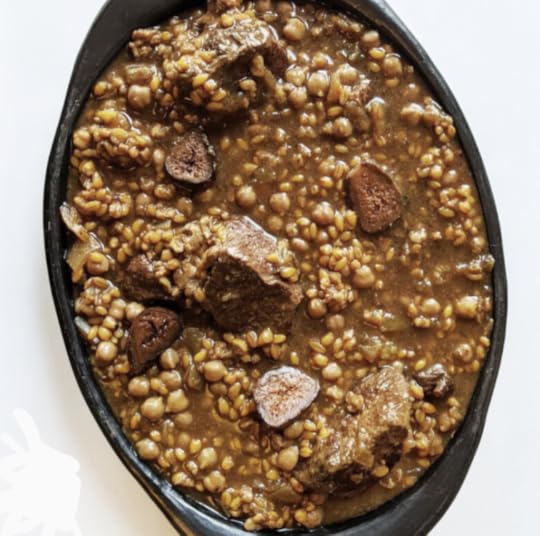
I’ve written a number of posts about Jewish food. In general, food conjures different emotions and has meanings for people.
Food can be fun.
Food can be comforting.
Food can be connected to holidays.
Food can be to sustain life.
Food can be for celebrating.
Food can be about family.
Food can be about memories.
Food can be about your history and traditions.
In a Holocaust survivor family, food is all these things and more. That’s because many Holocaust survivors developed strong feelings towards food after several years of eating very little. My mother spent years in a Ukrainian ghetto where no food was available. She would search through garbage for food scrapes such as potato peels. At one point she traded her only pair of shoes for some food. My father was in a Polish ghetto for two years on rationed food. The final three years of the war were spent in concentration camps where the daily diet consisted of imitation coffee, a piece of stale bread and soup that was mostly water.
My parents wolfed down food as quickly as humanly possible. I swear it seemed like they didn’t even chew it before swallowing. It was not a pretty sight. Dad would drink coffee and tea boiling hot, throwing it down his throat. This was a practice that they developed as prisoners. They ate their meagre rations quickly before someone tried to take it away from them. My family developed the same bad habit. The entire family would eat the same way. My wife has always complained about how quickly I eat, but I can’t help it. It’s a bad family trait. I’ve since learned that this was common among Holocaust survivors. Table etiquette was not an asset in the concentration camps.
The only vegetables my dad would eat were cooked carrots and potatoes. We never saw anything green. Mom was an excellent cook and baker, and willing to learn new things, but she could only cook the same things day after day. My dad was not ever interested in trying anything new and, as I’ve mentioned, nothing green. He would tell me, “I no eat grass.” An acceptable meal for him was salted herring with a slice of buttered rye bread. He once dropped by our house after I was married, and Mary Anne made him a tea with a slice of cake. It was a zucchini loaf. He liked it and asked what kind of cake it was. I told him it was made from zucchinis. He laughed and said, “You joking mit me!” When he got home, he told my mother, who suggested that it was probably true. He immediately called to accuse us of trying to poison him. Only years later did I understand my father’s response. Green vegetables were likely a trigger for him. Concentration camp prisoners were so hungry they would even eat grass. To my dad, a salad looked too much like a plate of grass.
Hunger and starvation traumatized my mother. For the rest of her life, food could never be wasted. She would eat food that had gone bad. There were times when dishes were ruined and none of us would eat them, but my mother would. When I was a child, our chicken came from poultry stores, and they would sell you the entire chicken. Mom would use the feet to make chicken soup and afterwards eat them. The odd time my parents would attend a wedding or banquet. The subsequent morning, I would typically ask her how the event was. She never described anything beyond the meal. She provided a detailed description of each dinner course.
Dad salted everything, whether it needed it or not. My mother used to keep a box of salt on the control panel of the stove so that it would be handy when she was cooking. One time, the box was knocked over and fell into a pot of soup. She scooped out as much salt as she could and served the soup that evening because, of course, food was never thrown out. The soup had about the same salt content as the Dead Sea. As was his custom, Dad reached for the saltshaker before even trying the soup.
“Dad, don’t you want to try it first?” I asked. “Maybe it has enough salt already?” He picked up his spoon and took a mouthful. After making a face, he grabbed the shaker again and put his normal serving of salt into the bowl.
Mom always used food to make people happy. When she baked hamantaschen cookies for the Purim holiday, she would fill them with each person’s preference—poppyseed, cherry, chocolate, and prune. When I was older, I bought my mother a wok, and she made Chinese dishes, although she had never been in a Chinese restaurant. For someone who had never tasted Chinese food, she did quite well. There was nothing she wouldn’t try, provided it was kosher. Before my mother worked out of the house, she made her own preserves. She would pickle baby cucumbers, make strawberry jam, and cooked pears that she bottled in jars and stored in the basement.
Other than bagels and rye bread, we didn’t buy any prepared foods or baked goods. All birthday cakes were made in our kitchen. I didn’t know about commercial baked breads like Wonder Bread until my parents owned a business where they sold it. I tried the pre-sliced bread and found it spongy and tasteless. I didn’t understand how people could eat that.
On some holidays we ate carp, which I found to be a foul-smelling, oily fish. The carp was always fresh. It was so fresh that it was still alive when Dad brought it home from Kensington Market. The fish was kept in the bathtub—our only bathtub—until it was ready to give up its life and take a place at our dinner table. It’s quite the spectacle to watch a large fish swimming around while you’re sitting on the toilet. As it turns out, I discovered later in life that other children of Jewish immigrant parents also had to share their bathtub with a future dinner entrée. There’s even a children’s book called The Carp in the Bathtub.


October 20, 2023
Intergenerational Trauma is Sucking the Life Out of Me
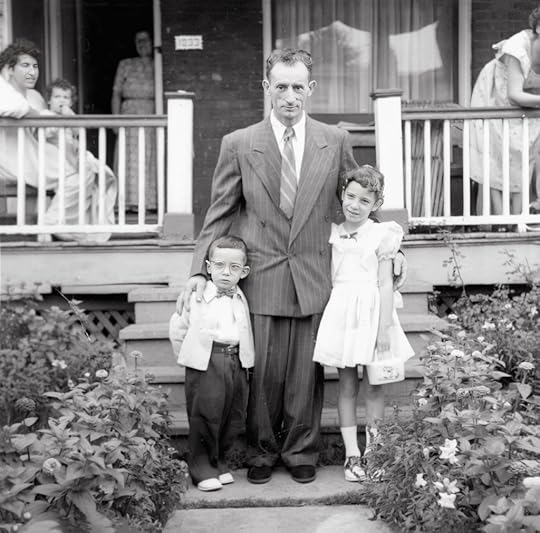
The past two weeks have not been easy for me. I’ve experienced nightly dreams, thoughts of pending disaster, and hypersensitivity to antisemitism. I’m not alone. In the numerous Facebook pages that I follow, other Jews are experiencing the same thing. I hear from friends and family. We feel afraid and alone. I’m just glad my parents are no longer alive to have to reexperience their wartime trauma.
Over the years, I earned to bury unpleasant memories. Both my parents were capable of this, but my father experienced this phenomenon to a greater extent. Memory reacts to trauma closing off access to painful events. Eventually, I began to become acquainted with the concept of intergenerational trauma.
In 1966, Canadian psychiatrist Vivian M. Rakoff, MD, and his colleagues recorded high rates of psychological distress among children of Holocaust survivors, and the concept of generational trauma was first recognized.
A 1988 study published in The Canadian Journal of Psychiatry found that grandchildren of Holocaust survivors were overrepresented by about 300 in psychiatric care referrals. Since then, Holocaust survivors and their children have been the most widely studied group, but in theory, any type of extreme, prolonged stress could have adverse psychological affects on children (referred to as just 2G) and/or grandchildren (3G), resulting in clinical anxiety, depression, and post-traumatic stress disorder (PTSD). Some patterns have emerged. Certain things seem to stand out, including a sensitivity to anti-Semitism and a general concern about their safety. It is common to see first generation survivors pass on depression and anxiety. They constantly worry about their children, which instills a higher degree of sensitivity. Studies suggest that there is some dilution by marrying a non-survivor. One study suggested that 2G are more likely to experience psychiatric conditions than the general population, and that they tend to be overachievers and to possess a finely-honed sense of humor. It’s been noted that the pandemic increased many people’s levels of anxiety, and that would include survivors and their children.
Intergenerational trauma doesn’t just affect individuals—it can impact a whole group or community, too. In this case, the definition of intergenerational trauma refers to the collective complex traumas inflicted on people who share a specific identity or affiliation. That might mean their ethnicity, nationality, or religion. This isn’t the exclusive domain of Holocaust survivors. That’s because intergenerational trauma involves what happened in the past, but also what’s happening in the present and what will continue to happen in the future. A legacy of trauma forms in which a community continues to experience distress over generations, despite never having experienced the original trauma. Events like the the current Israeli-Hamas war or past events like the Munich Olympic attack rip open those scars.
A 2015 study suggests that children of Holocaust survivors may have been marked epigenetically with a chemical coating upon their chromosomes. This would represent a kind of biological memory of what their parents experienced. As a result, some suffer from a general vulnerability to stress while others are more resilient. I see this in my own family. Previous research assumed that such transmission was caused by environmental factors, such as the parents’ childrearing behavior. New research, however, indicates that these transgenerational effects may have been also genetically transmitted to their children. Integrating both hereditary and environmental factors, epigenetics adds a new comprehensive psychobiological dimension to the explanation of transgenerational transmission of trauma.
The current hostilities will be prolonged and can easily spread. I believe that if the state of Israel does not survive, it will lead to another Holocaust. There are many people who would be happy to see that happen. I can tell you that your Jewish friends are likely not doing well. Check in with them.
October 19, 2023
The Future of Social Media

With Twitter (I refuse to use its new name) undergoing significant change, and dissatisfied users looking elsewhere, I couldn’t help but notice how many similar social media platforms there are. Just the Twitter alternatives include Mastadon, Counter.Social, Diaspora, Bluesky, T2 Social, and Threads. Who can keep up?
To think, social media is less than 30 years old. The first social networking site was Six Degrees, followed by Friendster, MySpace, and LinkedIn. Then Facebook came along in 2004, and social networking took off. Social networking began as a desktop or laptop experience. The phenomenon took another giant leap forward when they appeared on smartphones and tablets in 2008. That’s just 15 years ago.
Everyone remembers the early days of social networking which allowed you to keep in touch with friends, family and colleagues, including people you never met in person. But the good times didn’t last. As social media companies grew their user bases into the hundreds of millions, the business applications of Facebook, Twitter, and other social platforms began to take shape. Social media companies had access to some of the richest trackable user data ever conceived. Businesses were quick to jump onboard and soon we were inundated with ads as marketing pros took over. And not necessarily for stuff we would ever buy.
The large social media platforms use algorithms that do not necessarily understand end users needs and interests. Frequently I see users complaining online that they never see their closest followers anymore. Then there is the discord that seems to have taken hold of some platforms in the form of hate, harassment and online bullying. More and more, users have become reluctant to express a view publicly.
So, what is the future of social media? The brief history of the industry has proven that the rapid change — advances in technology, more-strident financial demands, shifting cultural dynamics — will transform the current social media landscape. There appears to be a move towards subscription services for social media. But people aren’t going to pay for a service unless see true value. Something that seems to eluded Twitter.
I sense that many people are leaving platforms for greener pastures. Some people are drawn by specialty social media platforms where they can network with like-minded individuals. Next Door allows people to network with those in their neighbourhood. People interested in health care are using PatientsLikeMe. There’s Catmoji for cat lovers. The large mainstream platforms will continue but they can’t provide the kind of networking that many people are interested in.
Consumers will gravitate toward services that allow them to:
Personalize content at a more granular levelReduce the amount of nastiness and conflict commonly found on public social media feedsIncrease focus on protecting privacyTake greater advantage of the utility of mobile devicesFocus more on community buildingWill Facebook, Instagram, Twitter and other major platforms go the way of Google+ and MySpace? Can social media maintain its relevance as technology evolves? Human beings are social creatures. Commerce is driven by human interaction. These two facts will continue to shape the evolution of social media into the next decade and beyond.
September 19, 2023
Yes, There Was a Swimming Pool in Auschwitz
 The entrance to Auschwitz.
Holocaust deniers will tell you there was a swimming pool in Auschwitz, hence it could not have been an extermination camp. In fact, there was a pool in the extermination camp. A water reservoir in Auschwitz I (the main camp) was converted to a swimming pool which was used for a time by the camp’s staff. The existence of a pool does not refute all the evidence that Auschwitz was the largest extermination camp operated by Nazi Germany where over 1 million people died.
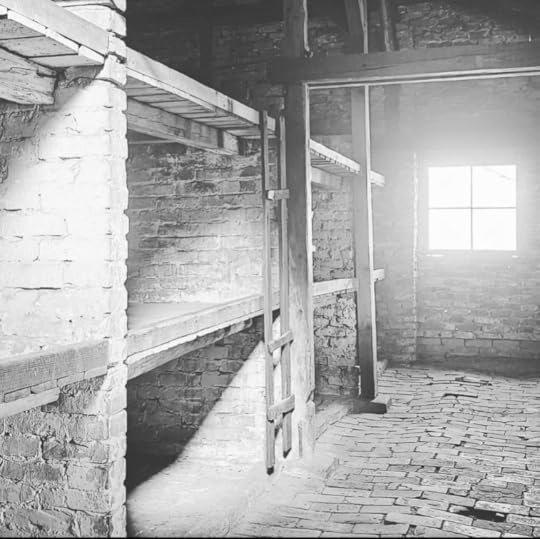 A typical unheated brick barrack. This had 60 brick partitions with 3 levels creating 180 bunks. Each bunk was to hold 4 prisoners but often held many more.
Holocaust deniers will tell you that Auschwitz inmates were taught trades. Townspeople in the surrounding area saw life at Auschwitz as “luxurious,” what with the inmates’ attractive red-brick sleeping quarters,” complete with “bunk beds with mattresses, flush toilets, porcelain-covered stoves for cozy heating, and double-paned casement windows. The paths were tree-lined, there were flowers planted before every barracks, and the Nazis regularly showed movies to the inmates.
 An Auschwitz latrine which weren’t built until 1944.
Not only that, but Auschwitz had an art museum, a library, regular concerts and sporting events, a theater for music and drama, and a brothel for lonely inmates. It also had two fine post offices because the Geneva Convention rules, strictly followed by the Germans, ensured the sending and receiving of mail by all prisoners. The kindly SS guards even provided special pre-printed cards and letter forms. And their health care system was world class — after all, for the Nazis, the health of the labor force was a prime concern.
There is a growing body of work hat disputes the Holocaust. Where does all this nonsense come from? Some of it is spread but stupid gullible people who are incapable of analytical thinking. I believe much of it is produced by antisemites.
Why would they spread such lies? Holocaust denial is one of a number of conspiracy theories directed at Jews. It is a radical form of anti-Semitism that denies Jews the ability to be considered victims and suggests that the Holocaust is part of a worldwide conspiracy. The revisionists claims Jews around the world knowingly fabricated evidence of their own genocide in order to extract reparations from Germany, gain world sympathy and facilitate the alleged theft of Palestinian land for the creation of Israel.
Holocaust denial began immediately after the end of World War II by Nazi supporters and sympathizers. It evolved in the 1970s to incorporate a new pseudo-scientific element, as right-wing extremists began making methodologically flawed but technically sophisticated arguments to challenge the historical record. With minimal or no Holocaust education in schools, the number of people who are aware of the Holocaust has been shrinking.
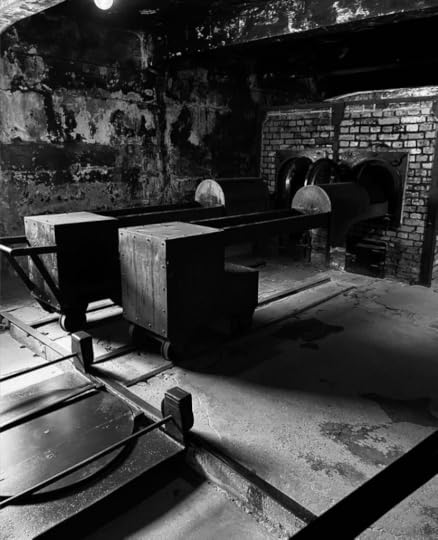 A crematorium built by Topf and Sohne that could burn 340 corpses per day.
There is much evidence left behind by the Nazis to support the existence of the Holocaust. I can tell you what happened to members of my father’s family in the summer of 1942. on August 15, 1942, about 2,000 Jewish men women and children who were selected in the Great Deportation from Bedzin and Sosnowiec arrived in Auschwitz. After the selection, only 27 men and 25 women were tattooed and admitted to the camp. The men received the numbers 59018 – 59044 and the women received the numbers 17147 – 17221. The other 1898 people were all immediately murdered in the gas chamber of the Little White House also known as bunker 2. This included my grandparents, my father’s first wife and their two little girls. There were no crematoria constructed so the bodies were burned in open pits and the ashes spread in the fields outside the camp.
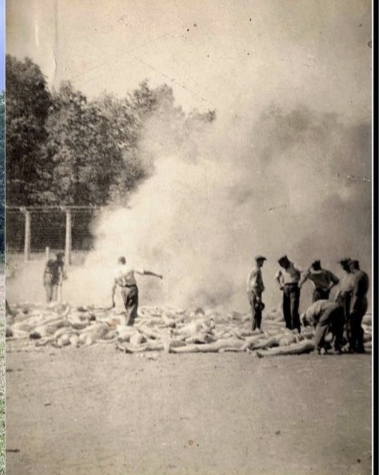 A photo smuggled out of Auschwitz showing Jewish prisoners burning corpses in a pit before the crematoria were built.
The Little White House was second gas chamber in Auschwitz. It was constructed near the Birkenau camp that at the time was still under construction. The decision to convert this building, a farmhouse of the expelled Polish owners, into a gas chamber was made in June 1942 as a result of the arrival of numerous transports of Jews designated by the Germans for extermination.
Because the walls were plastered, it was called the “Little White House.” Its interior was divided into four gas chambers with a total floor space of 120 sq. m. The system of interior doors and hatches for Zyklon B was the same as in the Little Red House, which was the first gas chamber constructed in Auschwitz.
The gas chambers in the Little White House were taken out of operation at the turn of April/May 1943. The building was demolished in the late autumn, when extermination operations in Birkenau were completed. Traces of the foundations of the gas chambers are still visible today at this location.
August 26, 2023
Why I’m leaving Twitter for Threads
Right off the bat I admit that I did not want to leave Twitter (now called X of all things). I’ve been active on the app for over 10 years and have close to 19,000 followers. That’s a big platform to promote my writing. I was willing to put up with Elon Musk’s childish rants, and his blatant attempts to coerce users to pay for premium service. But his stand on free speech including anti-Semitism and Holocaust denial has been intolerable.
I had a feeling things might go bad when Musk fired his head of safety and integrity Yoel Roth who also happens to be Jewish. Antisemitic tweets have more than doubled over the months since Musk took charge, according to tech firm CASM Technology and the Institute for Strategic Dialogue. Individuals and groups continually report antisemitic tweets that are not taken down. Here is an example of what does not violate Twitter rules.

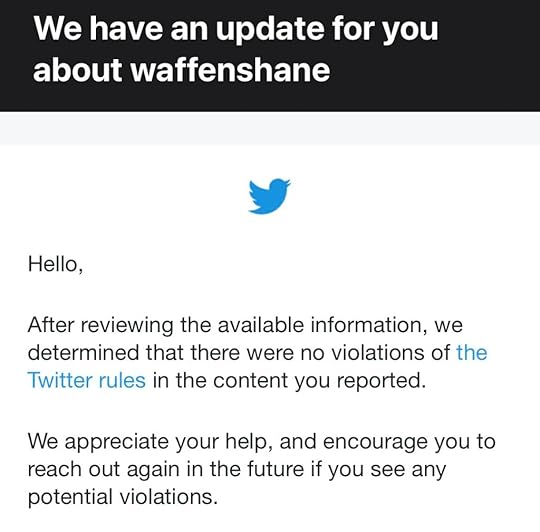
I don’t want to just shut down this account and start from scratch. Instead, I have a plan to transition from this platform to a new one over this next few months. I decided finally to move to Threads and opened up an account last week. In four days I had reached 300 followers. That took me a couple of years to reach when I first joined Twitter.
I gave some consideration to other social media platforms. In just the past three years, a host of would-be Twitter alternatives have arisen, each hoping to lure away users frustrated with the site. But they were too ideological or too complicated or just too small, and no app has been able to threaten Twitter’s dominance. Then Meta launched Threads. Meta understands that all that revenue is dependent on the content users generate, so that it’s important to court users, not alienate them. And it has a clear understanding of what advertisers mean when they talk about “brand safety”—their desire not to have their ads appear next to posts they perceive as offensive.
I discovered some advantages to Threads. First if you have an Instagram account, your followers with Threads accounts follow you onto the new app. I like it much better than Instagram which is photo/video app while Threads is a micro-blogging app like Twitter, only better.
Twitter’s character limit (unless you pay for Premium service) has always been a defining feature, forcing users to be concise in their messages. However, there are times when thoughts and ideas require more space to be fully expressed. With Threads, users can seamlessly connect multiple tweets, enabling them to share complex thoughts and ideas in a structured manner. This feature empowers individuals to delve deeper into a topic, creating a more comprehensive narrative that engages followers and fosters meaningful discussions.
Twitter has always been known for its fast-paced nature, with tweets quickly scrolling down users’ feeds. While this keeps the platform dynamic, it can also result in missed or overlooked tweets. Threads counter this by providing an option for users to expand upon a single tweet, thereby increasing its visibility and accessibility. This feature ensures that users’ messages have a higher chance of being noticed and engaged with, leading to more meaningful conversations and connections.
Threads enable users to streamline their conversations and maintain the context within a single thread. Previously, users had to reply to individual tweets, potentially causing confusion when following a discussion. With Threads, replies and subsequent conversations are neatly organized within the same thread, making it easier for both the poster and readers to navigate and contribute to the ongoing dialogue.
Now the Threads algorithm works differently than Twitter. The Threads algorithm is not too heavy on ranking posts, but recommends posts from random accounts, i.e. the ones you don’t follow. They feel this is important for a new app, as users need to follow enough people to get the algorithm working. Threads, just like Instagram, allows users to include hidden words in their posts to filter out replies that contain certain words. You can unfollow, block, restrict, and report profiles easily, and if you’ve blocked an account on Instagram, it’ll automatically be blocked on Threads.
So, Threads is currently building up its user base, and fast. If it all works out, and people stay on the platform, the algorithm will be a content creator’s dream, and be the perfect place for people to direct their influencer marketing. Plus, it’ll be a dream for advertisers, with all the potential of Twitter, without all the hate disguised as free speech, strange rants, and weird decisions. Looking at you, Elon.
August 25, 2023
Two Jews in a Canoe Loose on Moose Lake (try saying that fast 5 times)

When I was a child, my happy place was my overnight summer camp on Moose Lake in Haliburton, Ontario. Getting out of the city to a beautiful forest setting and away from the oversite of parents was the ultimate thrill.
I met my good friend Ted at the camp 57 years ago. Since 2007, I have been returning each summer when I’m able to attend an alumni weekend with my old cabin mate Ted. The weekend is a steady routine to relive those memories aided by alcohol and drugs. Included in the ritual is a one-mile lake swim for the better swimmers.
The swim is a highlight for Ted. The camp requires that each swimmer have two people in a canoe alongside them. One is watching the swimmer while the other steers the canoe. This year Ted had difficulty finding two people. I stepped forward to take on the job, or I should say jobs. I would just keep on eye on Ted and control the canoe. I mean what could go wrong?
I snap on my life vest and hop into the stern (back) of the canoe. Ted carefully gets into the bow (front) and we head out to the starting point. About 100 feet from shore Ted realizes he forgot his swimming goggles. I want to turn around and return to shore. Ted has a better idea. There’s a sailing dock right next to us and he insists that he can get out at the docks and run to the shore for the goggles. Sure. Why not? What Could go wrong?
I pull the canoe alongside the dock and grab hold to stabilize it. Ted leans over to step out of the boat and the next thing I know, I’m upside down in the water and so is the canoe. The camp’s canoe staff come running onto the dock to help these two klutzy old guys in the water with a capsized canoe. As we struggle to empty the water from the canoe, one of the staff bends down and grabs the bow. He stands up, lifting the boat out of the water which causes the water to rush out. In one motion, he flips over the empty canoe and drops onto the water.
Ted scampers to shore to retrieve his goggle and I steer the boat back to shore, not wanting to repeat the canoe flipping when Ted tried to get back in. Getting in and out of the canoe is much easier from shore than from a dock. Wet but determined we paddle our way to a camping site on the lake. I noticed the water is choppy, and there is a strong current pulling us back to the shore. I find a large flat rock to anchor ourselves so that Ted can get out without turning us over again. He pulls his google down to protect his eyes and begins the one-mile swim. The toughest part of the trek is past us. I just had to follow Ted as he slowly swam back to the camp. What could possibly go wrong?
Now when you are solo in a canoe, you do not sit in the stern. You sit in the bow facing the back of the canoe to provide better stability. Well, I had forgotten this detail. Trying to stay close to a slow swimmer while battling waves and a strong current requires in an unstable boat requires a lot skill. I may fallen a little short in this department. As the current pushed towards the shore, I struggled to keep the canoe in the middle of the lake close to Ted. Suddenly I found myself in the water with the canoe overturned. Lovely.
It takes a lot of effort to get water out of a canoe in deep water. You need to rock it from side to side trying to get the water to slosh out. We tried this for a few minutes and it only got us exhausted. Instead, we slowly pushed the canoe to the shore, making sure we didn’t lose our paddles. The shore is lined with large rocks and overhanging tree branches. I noticed a spot with a flat rock above the waterline that I could stand on. I pulled the canoe to that spot and used all my strength to lift one end of the inverted boat out of the water. Ted stood under the other end and lifted it over his head. As the water rushed out, we flipped to canoe over.
I slowly climbed back into the canoe, being extra careful about not tipping it over. I pulled the paddles back into the canoe and Ted pushed us away from the rocks on the shore. He returned to swimming and I went back to fighting the current and staying afloat. At this point, I was well aware what could go wrong. And it did go wrong. The canoe tipped again several minutes later.
An hour into the trek and we had maybe traveled 200 yards. Again, we pushed the canoe back to the shore. This spot I found had a lot of overhanging branches and I had to maneuver us so that there was enough clearance for me to stand. As I’m struggling to get us there, the camp’s pontoon boat loaded with alumni passed by about 100 yards out from the shore. We hung our heads in shame expecting the boat to come to the rescue of the two water-logged shlubs. No, that’s not what happened. The people in the boat enthusiastically waved at us as if we were having the time of our lives in a flipped canoe.
We decided it was too difficult to control the canoe alone. We were going to empty the canoe and paddle back to camp together. We followed the same process and I got in the bow this time, and Ted sat in the stern. But the strong current kept pushing back to the shore and we got tangled in tree branches which were hitting me in the head and torso. At one point I had to lie flat on my back as we passed over a 4-inch thick branch that was about to clobber me in the head. When we finally got out, the canoe was filled with twigs, branches, cedar needles.
When we were able to take control of the canoe and paddle in a straight direction, a sense of relief set in which was followed by hysterical laughter. We were soon laughing so hard that we stopped paddling and for a moment I was sure we would tip again. The lake gods felt pity for us and we finally got back to the camp. The ever vigilant canoe staff didn’t even notice the debris on us and in the canoe. The other swimmers looked at us wondering what took us so long. We would soon be telling stories about canoe tipping and flipping over a glass or two of wine.
August 16, 2023
Why I Haven’t Signed Up For Twitter Blue
I have been closely following my Twitter (or X as some people insist on calling it) account since the introduction of Twitter Blue (now just called Blue). I’m not adverse to paying for it but have yet to identify enough benefits to justify purchasing it.
Twitter Blue is relatively new but the “blue tick” predates Elon Musk’s takeover of Twitter. The blue tick was originally used to verify legitimate accounts of high profile individuals and organizations who were most susceptible to copycat accounts. Think about all the Keanu Reeves accounts you’ve seen over the years.
Twitter’s official position is that Twitter Blue is intended to improve the quality of conversation on the platform and reduce the fake or untrustworthy accounts. The reality is that the platform is struggling and Musk is looking for ways to make it more profitable. In fact, a large number of fake and paying accounts began to appear impersonating high profile individuals and organizations. So, that level of protection has been lost.
When Twitter Blue was introduced, the platform listed a number of inducements to get users to pay. Not long after, nonpaying accounts saw service levels reduced. In other words, disincentives to having a free account. Every cutback in service has been blamed on bots and fake accounts. The reality is that Twitter is “verifying” fake accounts by accepting their payments. I wouldn’t be surprised if Twitter will be even more relunctant to suspend an account that has subscribed to Twitter Blue.
Let’s look at the perks of Twitter Blue. The Twitter Blue algorithm prioritizes content, replies and mentions from Twitter Blue subscribers, meaning they will experience increased visibility. Longer tweets are provided to subscribers (up to 10,000 characters) and longer videos.
The reality is increased visibility and reach will be limited. Higher ranking of tweets does not necessarily equate to increased reach. And longer tweets will not necessarily improve engagement. On social media, clear and concise posts are always better when your audience is scrolling through their feed. A 280-character tweet takes seconds to read. Social media has affected people’s attention span. I don’t want people scrolling past my tweets because they are long.
Then I look at my own experience. I recently looked at my analytics and found that in the past month, my impressions had grown by 56.7% despite a 84.4% drop in tweets. My followers have also grown. Why do I need to subscribe to Twitter Blue if I seem to be reaching more people?
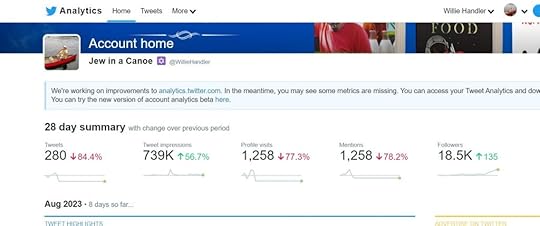
In the end, users need to do what’s best for them. I bet someone at Twitter is constantly mucking around with the algorithm so that’s something I don’t worry about. I can’t really control it. So for now, I’m not going to pay for Twitter Blue. But Twitter is undergoing constant change so my perspective may change as well.
August 12, 2023
What’s the Most Jewish Dish? It’s Not What You Think.
If you were to ask me what food is most associated with Jewish culture, it would not be bagels, knishes or even gefilte fish. It’s cholent.
You have probably never heard of cholent, but it’s been around for centuries. Cholent is a traditional slow-cooked Sabbath stew in Jewish cuisine that was developed by Ashkenazi Jews first in France and later Germany. There are references to cholent going back to the 12th century. The main ingredients are typically beans, barley, potatoes and some meat (often beef short ribs).
Shabbath stews were developed over the centuries to conform with Jewish laws that prohibit cooking on the Sabbath. The pot is brought to a boil on Friday before the Sabbath begins and left in a warm oven until the following day. In traditional observant families, cholent is the hot main course of the midday Shabbath meal typically after the morning synagogue services.
In the shtetls (Jewish village in Eastern Europe), there were communal locations, often a bakery with a large oven, where people brought their meal to be cooked. A pot with the assembled but uncooked ingredients was brought to the local baker before sunset on Fridays. The baker would put the pot with the cholent mixture in his oven, which was always kept fired, and families would come by to pick up their cooked cholent on Saturday mornings. A flour paste would be used to seal pots to prevent any tampering which could cause the meal to become treif (unkosher). Cholent has deep emotional significance. The smell exhaled when the lid is lifted is the one that filled the wooden houses in the shtetl.
There are many versions now, including meatballs, tongue, sausages, meat loaf, chicken or lamb, and a variety of beans. In the old days families who could not afford meat had cholent composed only of beans and grain. Nowadays it is vegetarians who make meatless cholent. I have always included kishke (traditionally beef intestines stuffed with a mixture of flour‑and‑onion). Today kishke is prepared with a vegan casing. It adds a lot of flavour to the stew.
RECIPE
For a vegetarian version, omit the beef and marrow bones. The dish will still be delicious. To add more depth of flavor, though, you can add dried porcini mushrooms and chestnuts.
INGREDIENTS
6-8 Yukon Gold potatoes, peeled
4 tablespoons oil
2 LB. beef chuck or 4 lbs. beef short ribs with the bone
3-4 beef marrow bones (optional)
Kosher salt
Ground black pepper
2 yellow onions, halved and thinly slices
2 tablespoons brown sugar
2 cups kidney, pinto, cannellini or cassoulet beans, soaked in water overnight and drained
DIRECTIONS
few hours before you start cooking, peel the potatoes.
Salt and pepper the meat and and marrow bones. Heat 2 tablespoons oil in a large Dutch oven over medium-high heat. When oil is hot sear meat and bones on all sides for about 8 minutes. Transfer to a platter.
Reduce heat to medium-low and add 2 more tablespoons of oil to the casserole. Add onions and sauté until golden brown, about 20 minutes. Add brown sugar and cook for a few more minutes to caramelize the onions.
Add the beans to the casserole and mix with the onions. Add 1 tablespoon of salt and 1 teaspoon black pepper and mix. Push marrow bones into the bean mixture and put beef on top of the beans. Cover with water at room temperature just to the top of the beef and bring to boil. Skim any foam.
Arrange potatoes next to the meat. Make sure the water covers the potatoes half way (about ½-1 inch of the potatoes can peak from the top.) Bring back to boil. Reduce heat to low, cover pot and cook for 30 minutes. Turn the oven to 225 F degrees.
Transfer pot to the oven. If the lid is not sealed well enough, cover pot with aluminum foil. Cook overnight.
Check cholent first thing in the morning to see that enough water are left, it should reach about quarter the height of the casserole, no more. You can spoon some of the liquid out or add a little more as needed. Cover again and cook until lunch. Remove from oven, let stand at room temperature for 15 minutes before serving
July 23, 2023
I Was Hacked and How To Protect Yourself
On July 14th, I received a email from Facebook asking if I had changed my email associated with my account. I responded that it wasn’t me but it was too late. A hacker had changed the email address, phone number and password to my account and I was locked out.
I used an online to form to notify Facebook and provided photo ID to prove who I was. They eventually sent me a code which temporarily got me into the account. I did get into the account but to make any changes to the account requires a password. The hacker’s password. Even deleting the account requires the password. So, essentially I lost my 16-year-old account and my two author pages.
I’ve painstakingly begun to rebuild my account. I will not be the same and it will be smaller with fewer impressions. That’s not a good thing when you are trying to build a brand. I have no one to blame but myself. I never used proper security because I thought, it’s just social media.
Since then, I’ve reviewed my online accounts and upgraded where necessary to a higher level of security. I suggest that anyone reading this post do the same thing. It’s actually pretty basic. The most significant change I made was introduce two-step verification. I only had it on my Google account because I can’t afford to lose my email account. But everything else is equally important. If anyone tries to change my email or even log in from a different device, I receive an email and text as a warning.
But that’s not what I chose for my social media accounts. I’m using an app called Google Authenticator as a second layer of protection. The app provides me with a code to use to verify log-ins along with my password for that account. I’m currently using it for Instagram, Twitter, Facebook, Amazon and Goodreads. I’m likely to expand it to other accounts once they introduce two-step verification. To connect this post to my social media accounts I had to provide my codes.
If I lose my phone I can log into my Google account from another device and change my Google password which prevents anyone from accessing my accounts. This isn’t foolproof but it does provide enhanced protection with little hassle.
July 11, 2023
Ode to a Writer

I bet you thought being a writer was a revered and honourable profession. People would flock to bookstores to scoop up your work and praise you for contributing to humanity. That when you walked into a restaurant, you would be immediately recognized and feted like royalty. Your book releases would be treated on par with the King’s coronation.
Like me tell you what it’s really like. The process chips away at your self-esteem and confidence. You spend countless hours sending out letters to agents and publishers begging them to consider representing you only to be largely ignored. You become a huckster, trying to charm people into shelling out money for a book that probably costs less than that fancy coffee they’re holding. At the end of the month, you’ve done well if your royalty payment will buy one of those fancy coffees.
I’ve tried it all folks. I’ve hired a publicist. Bought Facebook, Amazon, and Bookbub ads. I’ve made myself available to book clubs. I’ve used book funnels to build up my mailing list. I spend each morning posting jokes on social media hoping one or two followers might indulge in a book. I’ve rented tables at bookfairs and watch the hordes walk around me to avoid having to make eye contact with me.
Too much of my book sales are to family and friends. Well, at least those family and friends who don’t expect a free copy. And by no means do I believe that any of those people would purchase one of my books if they didn’t know me.
How did we get to this point? The literary world is a mess. Independent bookstores are as rare as the Sumatran Rhinoceros. Authors aren’t competing against each other. In this digitized world, we competing against streaming services, video games, and social media. What’s left of the mainstream media has abandoned the authors too. They no longer have staff who write literary reviews and interview authors. You want to make the news? Try walking down Main Street naked with only your book covers over your private parts.
So, why do I and my fellow authors put ourselves through this self-flagellation? Because we love what we do. We dream wonderful stories and want to share them with this reluctant world. In the end, whether our books are read by thousands or dozens doesn’t really matter too much. We’ll just hang onto our day jobs and dreams, and keep writing.