What’s the Most Jewish Dish? It’s Not What You Think.
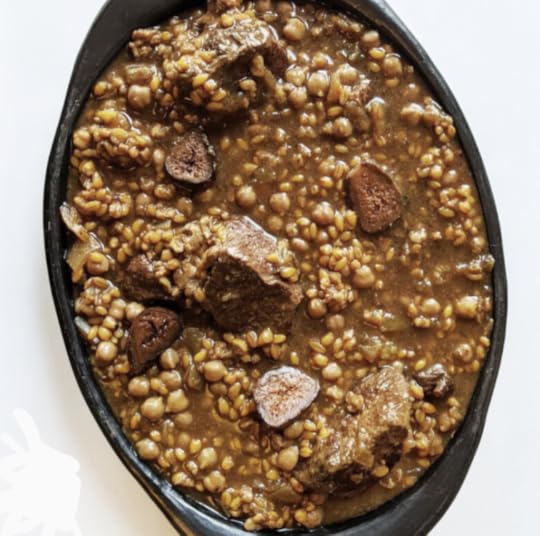
If you were to ask me what food is most associated with Jewish culture, it would not be bagels, knishes or even gefilte fish. It’s cholent.
You have probably never heard of cholent, but it’s been around for centuries. Cholent is a traditional slow-cooked Sabbath stew in Jewish cuisine that was developed by Ashkenazi Jews first in France and later Germany. There are references to cholent going back to the 12th century. The main ingredients are typically beans, barley, potatoes and some meat (often beef short ribs).
Shabbath stews were developed over the centuries to conform with Jewish laws that prohibit cooking on the Sabbath. The pot is brought to a boil on Friday before the Sabbath begins and left in a warm oven until the following day. In traditional observant families, cholent is the hot main course of the midday Shabbath meal typically after the morning synagogue services.
In the shtetls (Jewish village in Eastern Europe), there were communal locations, often a bakery with a large oven, where people brought their meal to be cooked. A pot with the assembled but uncooked ingredients was brought to the local baker before sunset on Fridays. The baker would put the pot with the cholent mixture in his oven, which was always kept fired, and families would come by to pick up their cooked cholent on Saturday mornings. A flour paste would be used to seal pots to prevent any tampering which could cause the meal to become treif (unkosher). Cholent has deep emotional significance. The smell exhaled when the lid is lifted is the one that filled the wooden houses in the shtetl.
There are many versions now, including meatballs, tongue, sausages, meat loaf, chicken or lamb, and a variety of beans. In the old days families who could not afford meat had cholent composed only of beans and grain. Nowadays it is vegetarians who make meatless cholent. I have always included kishke (traditionally beef intestines stuffed with a mixture of flour‑and‑onion). Today kishke is prepared with a vegan casing. It adds a lot of flavour to the stew.
RECIPE
For a vegetarian version, omit the beef and marrow bones. The dish will still be delicious. To add more depth of flavor, though, you can add dried porcini mushrooms and chestnuts.
INGREDIENTS
6-8 Yukon Gold potatoes, peeled
4 tablespoons oil
2 LB. beef chuck or 4 lbs. beef short ribs with the bone
3-4 beef marrow bones (optional)
Kosher salt
Ground black pepper
2 yellow onions, halved and thinly slices
2 tablespoons brown sugar
2 cups kidney, pinto, cannellini or cassoulet beans, soaked in water overnight and drained
DIRECTIONS
few hours before you start cooking, peel the potatoes.
Salt and pepper the meat and and marrow bones. Heat 2 tablespoons oil in a large Dutch oven over medium-high heat. When oil is hot sear meat and bones on all sides for about 8 minutes. Transfer to a platter.
Reduce heat to medium-low and add 2 more tablespoons of oil to the casserole. Add onions and sauté until golden brown, about 20 minutes. Add brown sugar and cook for a few more minutes to caramelize the onions.
Add the beans to the casserole and mix with the onions. Add 1 tablespoon of salt and 1 teaspoon black pepper and mix. Push marrow bones into the bean mixture and put beef on top of the beans. Cover with water at room temperature just to the top of the beef and bring to boil. Skim any foam.
Arrange potatoes next to the meat. Make sure the water covers the potatoes half way (about ½-1 inch of the potatoes can peak from the top.) Bring back to boil. Reduce heat to low, cover pot and cook for 30 minutes. Turn the oven to 225 F degrees.
Transfer pot to the oven. If the lid is not sealed well enough, cover pot with aluminum foil. Cook overnight.
Check cholent first thing in the morning to see that enough water are left, it should reach about quarter the height of the casserole, no more. You can spoon some of the liquid out or add a little more as needed. Cover again and cook until lunch. Remove from oven, let stand at room temperature for 15 minutes before serving