Willie Handler's Blog, page 7
July 20, 2022
The Story Behind My First Book
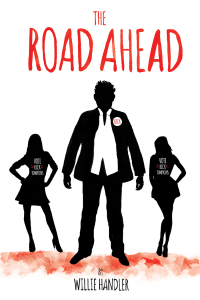
In 2016, I published my first novel, THE ROAD AHEAD. I never had ambitions to be an author like many of my writing friends. I didn’t have a fine arts or literary background, but I did enjoy reading. So, the book release came as a surprise to all of my friends.
When it all started
Back in 2012, I left full-time employment with the Ontario government to work part-time as a consultant. I did policy work for the government, specializing in auto insurance regulation, and that was what my consulting practice concentrated on. I considered consulting as temporary until I decided what my next career would be. My friend Kathy was also looking for another career move, and we met on numerous occasions to see if there were any synergies.
I remember sitting over lunch on a spring afternoon in 2014 bouncing around ideas when Kathy said, “I don’t see you go into business. I see you as a writer.”
“I’m not a writer. I don’t know the first thing about how to write a novel.”
“I’ve read the reports you’ve written. You’re an excellent writer.”
I didn’t outright reject the suggestion, but I didn’t jump at it either. But the seed had been planted. Over the coming weeks and months, I thought about it a lot. I’ve always been known as someone who likes to take on big challenges. This fell into the basket of stuff I don’t think I can do but would love to try. I was going to write a novel.
What do I write about?
I knew right away that whatever the book was going to be about, it would be funny. I couldn’t see myself writing about anything serious. But what would the story be about? I quickly decided that a first book should be something I know about. It would be enough of a challenge without having to learn about WW II espionage or oil rigging. So, I quickly decided that a political satire was the genre of my first novel. I enjoyed political satires and felt I could pull this off.
So I began generating ideas. The protagonist would be an inappropriate and somewhat bumbling politician. At first, I was going to write a story about building an unnecessary highway that went nowhere. But then I decided to just write about what I know – auto insurance.
Now that I had an idea what I would write about, I determined my next step was to learn something about writing novels. It’s not anything like writing a report on how catastrophically injured accident victims should be compensated under a no-fault system. I took an introductory course on novel writing at the University of Toronto with author Michelle Berry. Then I took another course on comedy writing with Terry Fallis. The second course went a long way toward building my confidence.
It was six months into the writing process before I even mentioned to anyone that I was working on a novel. Like many novice writers, I didn’t believe I would ever finish.
First draft blues
Back then, I had not networked with other writers and still knew little about publishing. That is one reason why I am always willing to help a new writer. I’ve been there!
When I had a finished a draft novel, I needed to figure out what my next steps would be. I decided it would be a good idea to find out if what I wrote was any good. I reached out to Michelle Berry, and she recommended a former student who was doing editing to supplement her writing. A few weeks later, she returned my manuscript with much criticism and very little positive to say about my manuscript. There was too much description and not nearly enough narrative. This has always been an issue for me as a former technical writer. I could research a topic to death. The editor also didn’t get the humour. But what got me in the dumps was that she felt some scenes in the manuscript didn’t appear believable. All of those scenes were based on events that actually happened.
I wasn’t sure what I should do. Should I abandon the book? Was the manuscript even fixable? I finally concluded that the editor and I were not a good match. That’s an important learning opportunity. Not every editor is the same and feedback can vary. I fixed the structural issues because those were things she knew well. I decided I knew about how the story should unfold and what was funny.
I edited the manuscript and found beta readers among former students from the course I had taken. Overtime, the manuscript that at one time almost ended in the trash, took shape and received positive feedback. On September 20, 2016, which was also my birthday, I released the book and hosted a launch party for my friends at a downtown Toronto bookstore.
How much of the story is based on true events?
I admit events inspired me during my days in the government and from the news because they were funny. Sometimes, I borrowed or adapted things into scenes. They would fit nicely into a political satire. I made up other scenes up.
For example, I worked with a political staffer for several years who was ambitious but not exactly an intellect. She became a Member of Parliament in Ottawa and even a Cabinet Minister. She also ran into some adverse publicity because of poor judgement and arrogance. One time, she threw a tantrum after being asked to remove her boots for security scrutiny. They barred her from boarding the flight. Another time she was attending an event at her home riding and a scrum of reporters was waiting for her to ask questions about previous controversies. She promised the reporters she would answer their questions after the event. But she slipped out a backdoor and ran to her limo. A reporter caught it on film, and it landed on YouTube.
Another time, I attended a committee meeting where Doug Ford, Sr. was a member. He asked an embarrassing question that stuck in my head for 20 years. That question (and the response) is in my book. There was a Cabinet Minister in the early 1990s who was forced to resign when the newspapers reported he was having a non-sexual affair with a woman. He was single at the time, and the reason for the resignation was that he hired this woman to work in his office. I thought that was an odd story and worked it into the book. Other meetings and legislative debates helped me develop my story.
Who did you base the characters in the book?
The novel came out during the 2016 presidential election and, not surprisingly, most people assumed I had based the main character on Donald Trump. I began writing the book before Trump announced he was running for office. In fact, when he formally announced his candidacy outside the Trump Tower in New York in June 2015, I had already completed a first draft.
No one in the book is based on any real person. The main character, Rick Tompkins, is a composite of many personalities I came across in government. There are types in politics and I observed all types, including those who were full of themselves, abusive to staff, lazy, rude, and even inappropriate. Some were in politics because they believed in public service and others were in it to further their careers afer leaving politics. I worked for rightist, leftist, and centrist governments and they weren’t much different.
I should mention that the politician previously mentioned is not a character in the books. I just adapted some of her antics and used them for Rick. Many people have asked whether I am Jerry Switzer. The answer is no. But while writing the book, I would sometimes ask myself, if I was Jerry, how would I react?
The main character says a lot of inappropriate stuff. I was concerned about offending readers. So, I included in Rick’s staff, women, people of colour, gays and religious minorites. Anytime he said something offensive, one of the staff spoke out. I did not want readers to get the impression that the author shares those same views.
After thoughts
Soon after I released THE ROAD AHEAD, I was coming up with ideas for changing the story. I don’t know if other authors go through this process, but it happens to me following the publication of each of my books. If I’m not careful, I can fall into a trap where I never stop editing a manuscript. But looking back, this story would look much different.
I didn’t consider publishing a single novel truly makes you an author. I needed to write a second novel. At first, I toyed with the idea of a sequel, in which Rick Tompkins takes a run at becoming the mayor of Brampton. I finally decided I wanted to write something entirely different. This is what led me to write LOVED MARS HATED THE FOOD.
[image error][image error][image error][image error]

July 15, 2022
Why You Don’t Get Feedback From Agents
Most query rejections look something like this:
“I didn’t connect”“just not for me” orno response at all (which means no)This is not helpful and I’ve seen many writers on Twitter complain, can’t they just tell me what’s wrong? Just a sentence or two. How long could that possibly take? One minute?
Well, it will take more than one minute. Let’s say to read your query letter and respond could take 2 minutes. With 200 queries a week, that works out to about 7 hours each week. But if a query includes r pages of your manuscript, then that eats up 10 minutes per query and suddenly that jumps to about 33 hours each week. If all agents did was read and respond to queries that might work. But they are clients to serve too. I’ve sent job applications and received rejections that say we found someone that matched what we were looking for better. Human Resources isn’t going to spend time giving you reasons for rejecting you either. They don’t have the time.
So, the first reason agents don’t provide feedback is simply you aren’t a client. Agents need to read manuscripts, pitch editors, and numerous other responsibilities related to supporting their authors.
Since agents often get to only read a query letter, synopsis, and a number of pages from your manuscript, they might not have a clue what’s wrong with your book. All they know is that they’re not interested. This why the rejection you received say I didn’t connect.
Sometimes there’s nothing wrong with your manuscript. The plot, characters, and writing may be fine. But the book doesn’t excite them enough to invest their time to pitch it. How many books have you read that you thought was okay but didn’t wow you? There must be a good connection between the book and the agent for the relationship to work.
Sometimes the agent is wrong. They may believe that there’s no market for the book. Then you become even more discouraged and abandon your manuscript. What if another agent thinks this is just what they’re looking for? But they never get to see it because you stopped querying.
So, instead of raging about agents, look for ways to improve your pitch.
Can you make your query letter better? If you pitch is weak, what does it say about your book?Does you first chapter grab the reader? If your story builds too slowly or spends too much time on backstory, it will turn off readers.Is your protagonist attractive enough to invest time with? Is he or she interesting?A rejection can mean a lot of things. But don’t expect the agent to figure it out for you. A good beta reader can answer many of these questions for you. Revise your submission and get back to querying. And good luck.
July 4, 2022
Toronto Blueberry Buns: A Hidden Treasure
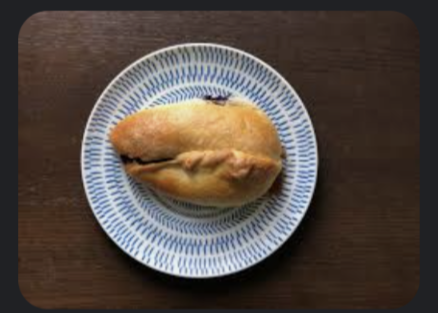
When I was a child in Toronto, a favourite treat was blueberry buns (shtitzlach in Yiddish). Until I was an adult, I never realized that these treats were unique to Jewish bakeries in Toronto.
The blueberry bun is to Toronto Jews what smoked meat is to Montreal Jews. A blueberry bun looks like a Pillsbury Pizza Pop and is a cross between a Danish and a turnover. A good blueberry bun has a sweet, yeast-based dough with a shiny egg glaze, a sticky sprinkling of course sugar on top, and a runny blueberry interior made from fresh blueberries. They were at one time only available during summer months, but you can now find them year-round, filled with blueberry pie filling or frozen berries. I’ve never seen a version filled with any other fruit but blueberries.
Local folklore has it that Annie Kaplansky brought these Ashkenazi treats to Toronto from her hometown of Rakow, Poland, when she moved here in 1913. She began serving them in her retail store Health Bread Bakery, which she opened in 1928, and they became an instant hit.
Other Jewish bakeries began baking their own blueberry buns, but they are difficult to make and weren’t as good. I have been told that Max Feig, one of the owners of Open Window Bakery, would receive complaints from his customers: “How come your blueberry buns can’t be like Health Bread’s?” My dad knew Max Feig, who was a Czech Holocaust survivor. He came to Canada in 1953, the same year my parents arrived, and opened his bakery in 1957. In 1966, he purchased the Health Bread chain from the Kaplansky family with the stipulation that the Kalplansky family provide Open Window their blueberry bun recipe. I bought buns from Open Window until they closed in 2011. It’s now difficult to find an equivalent product to satisfy my blueberry bun fix.
Dr. Jillian Gould, a professor at Memorial University in Newfoundland, published a paper on blueberry buns in 2003. She interviewed Kip Kaplansky, the son of Annie for her paper. He told her that his mother made them in Poland and brought the recipe with her to Canada. He indicated that wild blueberries grew in Poland. Dr. Gould questioned his claim and noted in her paper that wild blueberries were not native to Poland at the time. She speculated that Mrs. Kaplansky adapted a recipe from some type of fruit cake. I found other references to this claim that blueberry buns were unique to Toronto. It seems they may have all been influenced by Dr. Gould’s paper.
I mentioned this to a Polish friend who now lives in London, England. She reacted with surprise because she always visits a bakery and picks up some blueberry buns when she visits her family in Poland. She confirmed that wild blueberries have always been grown in Poland. In her Holocaust memoir, Goldie Szachter Kalib recalls how blueberry buns were served for breakfast, especially on the Sabbath. I did some research and confirmed that the three leading blueberry growing countries are United States, Canada, and Poland. Blueberry buns were popular in Southwest Poland among Jews and gentiles alike. Gentile Poles called them jagodzianki, which is blueberries in Polish. They are slightly different than the Toronto version, with a lemon glaze on the top.
So, blueberry buns are not unique to Toronto, but you will not likely find these baked treats elsewhere in Canada and the United States. Now I’m going to have to do some research on butter tarts, ketchup chips, and poutine.
June 24, 2022
The Best of Twitter (May edition)
You know what? Just fuck it. Fuck everything.
– me as a Life Coach
I was stopped at a red light when this nice lady leaned into an open window to tell me she’ll do anything for $50. So guess who’s getting his deck sanded and stained?
Someone answered the phone when I called instead of going to voicemail. I panicked and hung up. I wasn’t ready to deal with a live person.
My Jewish mom: Sigh
Me: What’s wrong mom?
Mom: You look so good in a surgical mask.
Me: So, what’s with the sigh?
Mom: I’m just imagining how much better you would look if you were a doctor wearing the mask.
My wife just tossed out bubble wrap without popping it and I’ve never been this disappointed with her.
Stop being angry at procrastinators. We didn’t do anything.
Last night we watched a news program where a woman kills her husband. I noticed my wife was taking notes. Should I be worried?
Blocking anyone who is funnier than me because my ego is that fragile.
I’m just becoming accustomed to standing naked in front of a full-length mirror which allows me to better come to terms with my imperfections. It’s not an easy thing to do though, and I feel the mall security staff could be more supportive.
Have you ever met someone that you instantly knew you would want to spend the rest of your life avoiding?
Autocorrect changed “congenial way” to “genital warts” and now my wife isn’t speaking to me.
The 3 yo invited me to dine in his restaurant. While he dined on cookies and gummy bears, I was served Lego pieces. When we finished I was handed a bill for a million dollars. Needless to say I didn’t leave a tip.
Cashier: That will be $44.56. How will you be paying?
Me: I’m using my 450,000 rewards points.
Cashier *swipes card*: Your balance is now $40.06. How will you be paying?
Me:
The AI features in my new car are remarkable. The car has learned when to honk the horn and yell asshole.
I put a bumper sticker on my car that said “Honk If You Like Me” and then I parked my car in a busy intersection. Guess what? The other drivers LOVED ME!
Last week she complained that I haven’t sacrificed enough for her. This week she complained about the dead goat.
Spoke to my doctor about my weight gain and she has narrowed it down to food.
I lost my wife yesterday. One minute she was right beside me and the next, she was gone. Then I turned around and there she was. Trying on bracelets in a jewelry store.
Stop Saying It! Just Sayin’
I’m sorry but there are few things that people can say that will put in a rage then this stupid phrase: I’m just saying. I think I first heard it in some Seinfeld episodes, and it just took off from there.
What does it even mean? Some people use it quite liberally without even understanding what impact it has on the receiving end.
For example, if you were to say “mhmm… looks like you’ve put on a little bit of weight, just saying.” So, adding “just saying” at the end, it means that you’re not trying to criticize me, I should not be offended, because telling me the truth from your perspective. Just saying. Bullshit.
Saying, “I’m just saying” at the end of a sentence is intended to be used as an escape from what preceded it. Most often, it was something rude or insulting and is trying to immediately play it down or discount it. Sure you called me fat but don’t get mad. Well, if you didn’t want me to get upset then you should have kept your mouth shut. Adding “just sayin’” just makes me more pissed off. You don’t get a pass at being rude.
Just imagine John Lennon singing: “Those freaks was right when they said you was dead. The one mistake you made was in your head. Just sayin’.”
Or how about Shakespeare: “A most notable coward, an infinite and endless liar, an hourly promise breaker, the owner of no one good quality. Just sayin’.”
How about Oscar Wilde: “He has no enemies, but is intensely dislike by his friends. I’m just saying.”
June 20, 2022
Bagels, Bagels, Bagels
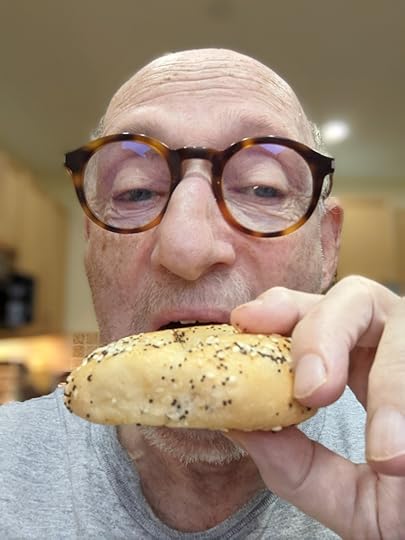
I am well known for being a bagel maven, meaning “expert” or “connoisseur.” Some call me a bagel snob. There are only two types of bagels: New York bagels and Montreal bagels. Everything else, including any commercial product, is inferior. Bagels were brought to America by immigrant Polish Jews, and their popularity grew in New York City. Polish Jews also brought the bagel to Montreal in the early 1900s, where they developed a distinctively different character. In the early days, merchants strung the bagels through the holes and sold them from pushcarts, not unlike street vendors selling pretzels today.
Baking a proper bagel is labor intensive because they are hand-rolled. A New York bagel is larger, with a small hole, and slightly salty. It’s first boiled for several minutes in water with malt barley, then baked in a conventional oven. This gives it a crusty exterior and soft chewy interior. A Montreal bagel is smaller with a larger hole. This makes it trickier to put a spread on it, such as cream cheese or egg salad. The bagel is also boiled in water, but with honey, and it is baked in a wood-burning oven. A Montreal bagel is sweeter, with a soft and chewy exterior and interior. I’m not suggesting that one style is superior to the other. I was raised on Toronto bagels, which imitated the style of those from New York. They are made to be eaten hot, straight from the bakery, which is why you will see customers lined up early on a Sunday morning in Jewish bakeries. The next day they have more similarities to hockey pucks. Both styles of bagels exist in Toronto, although the New York style is more prevalent. As I said, I’m a maven.
June 19, 2022
The Origin of Jewish Humour
In a small village in Poland, a terrifying rumor was spreading: A Christian girl had been found murdered.
Fearing retaliation, the Jewish community gathered in the synagoguel to plan whatever defensive actions were possible under the circumstances.
Just as the emergency meeting was being called to order, in ran the president of the synagogue, out of breath and all excited. “Friends,” he cried out, “I have wonderful news! The murdered girl is Jewish!”
People often ask me where my humour came from. The proper question is what is the origin of Jewish humour? There is considerable debate on this subject but what does emerge is that Jewish humor as a distinctive cultural phenomenon bloomed in 19th century Eastern Europe. There, in the marketplace, the synagogue, and in the home, the Jewish joke developed into its own recognizable species. The shtetl (village) became home for the new Jewish-humor folk tradition. Enriching this street humor were new Jewish texts. Jewish writers — including Mendele Mokher Seforim, Sholem Aleichem and I.L. Peretz, — mined the bittersweet grumbling of the Jewish ethos and produced lasting classics of Jewish humour, which in turn fed the comic banter of Jewish daily exchange.
What was the genesis of this humorous? It’s all or about coping: Jews were miserable, and laughter kept them going. Living in those shetls, Jews were always a minority and even not actually under threat from their gentile neighbours, that fear was always around. Their jokes were most often self-deprecating. They targeted themselves, their dire circumstances, and even their own religious leaders.
Jew: Rabbi, why is not acceptable to dance with my wife?
Rabbi: Dancing with the opposite sex is not considered modest.
Jew: But it’s alright to have sexual relations with my wife?
Rabbi: Yes, of course.
Jew: And what if she wants to be on top?
Rabbi: That would be permitted.
Jew: What about from behind?
Rabbi: That’s no problem.
Jew: And if we were both standing?
Rabbi: That is forbidden. It’s too much like dancing.
Self-deprecating Jewish humour is not to confused with Jewish jokes which are often meant to be demeaning and anti-Semetic. As is the case with other minority groups, it’s fine to poke fun of yourselves but not of others.
The destruction of Eastern European Jewry in the Holocaust did not bring an end to the comic Jewish spirit, but it did change both its content and style. In pre-war European Jewry, humour was predominantly an internal affair — the Jewish joke was an inside joke. The comic lines were in Yiddish, the religious allusions were familiar to all, the fears and frustrations shared across classes, and the context of the storyline shared histories. Jokes about the Holocaust were considered taboo by many Jews. It’s likely the last frontier of Jewish humour. In a humour writing course that I took several years ago, we were asked to write a short story the incorporated dark humour. I did a story that took place in a concentration camp. I was the only Jew in the class and the other people were in shock. I will share that piece in a future blog post.
Two Holocaust survivors are sharing some jokes about life in the concentration camp when God appears.
God: How can you make jokes about such a horrible event.
One of the survivors: How would you know? You weren’t there.
Then came the 20th century, where the story of American Jewish humour since World War II is largely the story the American humour since World War II. As Jews increasingly entered the American mainstream, they were not telling “insider jokes” but shaping the sense of humour of an entire country, depicting America to America.
In the early part of this Jewish humour explosion, Yiddish was part of the repertoire, but this faded along with the European memories. The mid-20th century Borsht Belt shtick–acts that thrived in New York’s Catskills region, where Jews flocked for vacations–thrived on shared immigrant histories and traditions. But by century’s end many of these Jewish references were wearing thin. The majority of American Jews are now more comfortable eating sushi than gefilte fish. Jews are not outsiders, they generally don’t cope daily with anti-Semitism, and the average Jew is not poor.
Will the Jewish humour survive assimilation? Will the old Jewish comic themes–biting social commentary discomfiting satire, the undermining of the high and mighty, arguments with everyone, including God, – continue to drive the Jewish jest? Who know?
A 40ish Jewish couple have two girls and badly want to have a son. The wife finally gets pregnant again and it’s a boy. The husband rushes to the hospital to see his new son.
Husband: Our son is so ugly, but the girls are beautiful. I feel cheated.
Wife: No, that was the first two times.
May 30, 2022
How Much You Pay?
I’ve written a lot about the trauma experienced by my parents and family. There certainly were some sad times but there were plenty of funny moments as well. I thought I would share one particular chapter in my manuscript that you might make you laugh.
Everything was my father’s business, and he had no understanding of boundaries. Dad was always commenting on a woman’s weight. He would either ask, “You put on veig?” or “You lose veig?” and no matter how many times I told him it was rude, he would continue to do it. In some cases, he would make the comment while pinching their behind.
Ever fixated on money, he would always ask, “How much you make?” I refused to tell him because it would be the equivalent of purchasing an ad in the Toronto Star and listing my salary there. Of course, he would be insulted that I wouldn’t tell him. But telling my wife that she looked like she put on weight was evidently not insulting. My nephew Dov, is an actor and when he was younger he did a commercial for pre-cooked bacon. My father wasn’t impressed. He told Dov that a nice Jewish boy shouldn’t be in bacon ads. Of course, he also asked Dove, “how they pay you?” Without skipping a beat, Dov said, “a year’s worth of bacon.”
If you bought something new, he would immediately want to know, “How much you pay?” Invariably after you told him, he would always react by sucking in air through pursed lips and remark, “Oh, so much!” In his mind, prices were forever stuck in the 1950s. His need to know your salary or spending was solely to satisfy himself that his children were doing well. It also provided him with something to brag about to his friends. That’s why I refused to tell him my salary. His fixation on money never stopped. He would drop by our house, see a bowl of cherries on the counter, and immediately ask, “how much you pay?” I would tell him, and his typical response was that they were one dollar a pound cheaper at the No Frills store. He didn’t do this just to me. Everyone in the family was given the same treatment.
My father was an endless source of embarrassment. It’s one of the reasons I avoided inviting friends over when he was home. Some of the most embarrassing moments involved taking him shopping. He would haggle over the price of everything. Once he would agree to a price, he would declare, “I no pay tax,” and the haggling would resume. I would sometimes move to the other end of the store to avoid becoming involved because often the owner would turn to me as if I could convince him to be more reasonable. If it was one of his Jewish cronies, the negotiation would involve loud cursing in Yiddish. Everyone was a ganef (thief in Yiddish). One time I went with him to purchase a new television. He went through the usual routine of knocking down the price and then refusing to pay tax. The store owner refused to waive the sales tax. When he couldn’t get his way, he turned to me and ordered, “let’s go!” He marched out of the store and into his car with me scrambling to keep up. As we were pulling out of the lot, the owner ran out to stop us and sold him the television without the tax. I was forced to witness this ritual so many times and it was always a humiliating experience.
Dad had many ways in which to embarrass you. One of things important to my dad was whether or not you were a macher. It literally translates to “maker,” but means someone who is influential or a big shot. He would frequently comment on who was a macher. If you were a macher, then you were someone. My father had accounts in the bank branches where my brother worked. One time, when he was at Irv’s branch doing, a bank vice president was visiting the branch. Another staff member introduced the executive to my father. My father shook his hand and asked, “Who is more of a big shot, you or my son?” Fortunately, the executive laughed it off.
Both money and status were important to Dad. One time, when I came for a visit, he told me that he was mad at me. I asked why and was informed it was because I had never told him I was a deputy minister (the most senior executive position in a government department). What it implied was that I was hiding from him that I was a macher. I laughed and said I wasn’t, but he continued to insist that someone had told him that I was. Dad once bragged that Irv had been to dinner with the Prime Minister, Brian Mulroney. As it turns out, Irv had attended a political fundraising dinner at which Brian Mulroney was the featured guest.
May 22, 2022
The Best of Twitter (April edition)
Not everyone follows me on Twitter which is cool. But those who aren’t on Twitter are missing out on some of my finer comedy moments So, today I’m posting the best of my Twitter account.
There’s a new internet scam going around that you need to know about. I ordered some jewelry for my wife online but power tools show up instead. This has happened three times this month.
I’ve been accepting cookies for years on my computer and have yet to see even one. I think it’s an online scam.
I had a plumber over today working on a problem. He mentioned his daughter had just gotten into medical school, so I’m guessing this is going to be an expensive job.
My wife discovered a spider in the bathroom but it disappeared before I showed up to execute it. Now I have to put the house up for sale or come up with a dead spider.
Is there anything more disappointing in life than someone saying they are speechless but then they continue to speak?
This morning I thought I had come down with COVID-19. Turns out I had accidentally made decaf coffee.
As an old white guy, I think I speak for all old white guys when I say, we don’t know what the fuck we are talking about most of the time.
My dietician told me that any fluid counts toward the 8 cups of water you are supposed to have each day. So, yesterday I had 6 cups of coffee and 2 glasses of wine.
If a husband says something in a forest and nobody hears, is he still wrong?
Someone needs to come up with an antidote for morning people.
My wife is complaining that most of the chocolate Easter eggs are gone. I blame her for making them so accessible in the back of the hall closet on the top shelf behind the scarves.
When I’m at the grocery store and I’ve forgotten the list, I will pick one dude and follow around the store, picking up whatever he puts in his cart. My wife never can tell.
I woke up at 2:30 am last night with a great story idea. I know I’d forget it by morning so this time I would get up and write it down. This is what I found in the morning:
“Heaven is next to the peanut butter so take your shirts they’re free.”
If you are looking for something to do for the next 6 hours, you could ask my 5 yo grandson about the Avengers.
I remember my math teacher telling us that we aren’t going to always have a calculator with us. That was some prediction.
PSA: Many people don’t know this but on the left side of the steering wheel column in your car is a lever. If you pull the lever up or down, it activates lights that indicate you are turning or changing lanes.
Question on a psychological test: From 1 to 10, how well do you follow instructions?
Me: True
I lost 95 Twitter followers this week and I hope these people continue to make healthy choices for themselves.
I remember my high school English teacher telling me I wasn’t very good at metaphors yet here I am an author with multiple books. So every silver spoon has a cloud around it.
May 10, 2022
Breakfast with Harold and Sylvia
Harold grabbed a bowl of cereal and a coffee and sat down at the table opposite Sylvia. He held the Globe and Mail which he had folded in half so that he was able to hold the newspaper with one hand and spoon cereal into his mouth with the other.
“It’s wonderful looking at you through several layers of newsprint.”
“Excuse me did you say something?”
“No I was actually speaking to my lover who happens to be standing behind you.”
“Well I hope he gets it more often than I do.”
“Well yes he does because he spends more time paying attention to me and less time adoring the TV. And he can last longer than a commercial timeout during one of your hockey games.”
“”That’s very sweet of you to notice. I was under the impression that you fall into a coma during love making.”
“A coma would be a good thing. It would mean I didn’t have to smell that seductive cologne that you wear. What is it called Eau de Deli Meat?”
“That could be because your two culinary specialties are ‘go out’ and ‘take out’.”
“Thank you. I’ve been very impressed with your own skills which are limited to what you can char beyond recognition on the grill or stuff into a bun.”
“Speaking of charred, if you spend any more time at the tanning salon you will begin to look like a rotisserie hot dog. It’s such an attractive look.”
“I’m sure it’s not nearly as attractive as your belly which looks like it as consumed a keg of beer that is desperately attempting to escape through your belly button. It’s no wonder you things are all over the floor. You can no longer see them.”
“Well many of them are lost in the giant dust balls that have taken over the house. I believe the dog has adopted one of them as a new playmate.”
“Yes the poor dog who yearns to discover whether the world extends beyond the confines of our backyard. The park down the street is just a fading memory and a long lost scent to poor Bart.”
“Sylvia, I would love to continue this charming conversation but I’m running late. I’ve got to be downtown by 8:30.”
“What time will you be home for dinner tonight?”
“Just after six o’clock depending on traffic.” He leans over and gives her a kiss on the cheek. “Have a good day.”
“You too dear.”