Willie Handler's Blog, page 10
April 24, 2021
So You Want To Get Published
You’ve finished your manuscript, done several rounds of editing, and sent it out to beta readers.
Congratulations!
So, you’re probably asking yourself what do you do next? That’s simple. Get your book published.
Why am I smirking? I was goofing around with you when I said, “that’s simple.” It’s really not simple at all. There are several routes that you can take on the road to being a published author, all with pros and cons. Let me run through those options to help you decide what will work best for you. There are essentially three publishing options you can choose from:
Traditional publishersIndependent publishersSelf-publishingTraditional Publishers
This option is straightforward. I wish I could say it was easy, but it’s not. Traditional publishers use literary agents to screen manuscripts. You could say literary agents are the gatekeepers to the publishing industry. You can’t approach a traditional publisher directly if you aren’t represented by an agent. So, the first step is finding an agent willing to represent you and get you a publishing contract.
That’s the hard part. An agent will only take on a limited number of clients, and there are thousands and thousands of writers looking to be published. Agents are familiar with what publishing houses are looking for. In a nutshell, agents and publishers looking for books that will be enough of a commercial success to offset the time and money they will need to put into a book. I don’t have to tell you what that means. Just look at the books released by the major publishers and you will quickly figure out what they’re looking for. They also deem a debut author to be more of a risk since they have no track record of success.
If the traditional publishing route is what you are truly want, then you need to begin the querying process. It involves searching for literary agencies and finding agents that are interested in books similar to yours. Some agents are so busy that they will not accept any submissions. They might be open to queries for only a few months each year. Each agency has different submission guidelines. You need to review them carefully. If you don’t follow their guidelines, they might use it as a reason for rejecting your submission. All agents will require a query. You might be asked to for a synopsis and a sample which might be anywhere between five pages and fifty pages. Here is a previous post on what to put in a query letter and synopsis.
Then you wait.
Each agency will let you know how long it will take to get back to you. It might be as long as twelve weeks. Some agents will respond very quickly. Many agencies have a policy where they will not get back to you unless they are interested in your manuscript. I am currently querying a manuscript. I’ve sent out 145 queries and received about 35 responses – all rejections. So, for the majority of queries I will just have to assume at some point that they are not interested. It can be a demoralizing process.
Should you receive a positive response, you will be asked to provide more of the manuscript or even the full manuscript, so be sure you’ve finished it before querying. If the agent wants to represent you, they will pitch your book to editors at the various publishers based on what the companies are looking for. The agent might first ask for another round of edits to polish your manuscript further.
Once they are ready to pitch your book, you wait some more. Get the picture. This is a long and drawn-out process. Even when your book is accepted for publishing, there is more waiting. Publishing is like an assembly line. Your book has to wait in line as they prepare the manuscripts that they’ve previously accepted for publication. So, from the time you begin to query until the release date, two or three years can pass.
What are the advantages to traditional publishing?
The prestige of being part of a well-recognized publisher.The support of a design, editing, and marketing team.Production costs are covered by the publisher.They have strong relationship with book sellers.What are also disadvantages that you should know about?
As mentioned, it’s a long, drawn-out process and is often not successful.To gain access to a publisher’s connections and services, you give up a lot of creative control.These will be a lot of pressure on you because of the money that a publisher invests into your book.Royalties are between 5% and 15%Books tend to be priced higher because the publisher takes a big cut of sales.Independent and hybrid publishers
Let’s be honest, some very good books are passed over by agents. They are not just evaluating whether your book will be a commercial success but whether the author will be a success. Do you have an established platform? Do you do public speaking which can be used to promote your book? What can the author bring to the table to ensure commercial success? That’s the reality of publishing.
Fortunately, a new breed of publishers has developed over time. They are referred to independent publishers or, in some cases, hybrid publishers. They are small presses that will accept books that traditional publishers are not interested in. The indies are often small teams of editors and publishing staff. They will not provide the level of services that the big guys provide but they will provide editing, cover design, book formatting, and copyright registration. They can get your book onto websites like Amazon, Kobo and Barnes & Noble, but they can’t get your book into bookstores. They do not have advertising budgets, so much of the marketing will be on your shoulders. You need to be able to sell in the online world.
Do not confuse the vanity press with independent publishing. They will ask you to cover the cost of publishing your book. I’ve heard stories where writers have paid money upfront, never to see a finished product or their money again. If anyone asks you to pay for anything related to your book, run away as fast as you can!
Querying an independent publisher is simple. They will often ask for a query letter and a partial or full manuscript. When they get back to you, it will either be a yes or a no. This eliminates the middleman (the agent) and you get your book published quicker. When I published with an independent, it was a little over a year from the time I sent my query until the release of my novel. I selected my book cover, and other than cleaning up the manuscript, they asked for no content changes.
What are the advantages of an independent publisher?
You much more control over content and design.The publisher provides design and editing support.Production costs are covered by the publisher.Your book will be released sooner than with a traditional publisher.What are also disadvantages that you should know about?
Your publisher has no access to bookstores, so your sales will be through online sales, book signing, and other book events.You need to have some marketing savvy and cover most of the marketing costs.Royalties are better than through traditional publishers but only between 15% and 25%.You will need to price books high enough to allow the publisher to recoup their costs and make a profit.It’s more difficult to reach reader solely online.Self-Publishing
Self-publishing is the process of undertaking all responsibilities related to publishing a book. If you decide to self-publish, you’ll be in charge of edits, cover design, formatting, and releasing and marketing your book.
The internet and online sales have been a godsend for authors. You don’t have to wait years, hoping to be published. Instead, you can bypass the publishing industry and do it yourself. This isn’t the route for losers. There are successful authors who choose this option because they are able to exploit all the advantages of self-publishing.
Of course, being in charge doesn’t mean you have to do all of this yourself. You can hire an editor, a cover designer, etc. to help you out. However, you will have to arrange and pay for these services out of your own pocket. This can cost up to $2,000 depending on how much you contract out to others. I want a polished and professional looking book, so I pay for editing, cover design and book layout. There are a lot of excellent and inexpensive freelancers out there. Many are also self-published authors who have developed these skills. You may be good at these things and don’t need to pay for others to do it for you.
You are able to maintain ownership of your book’s rights and royalties when you self-publish, which is exactly why so many people take this route. I’m not going to cover the entire process in this post, but I will be covering how to get out a book on your own in a future post. The beauty of self-publishing is that once your book is completed, you can get it published in no time at all. You decide on the price and you only share with the online sellers you select. You can get a supply of paperback or hardcover books printed to sell to friends or at book events and keep all the profits.
What are the advantages of self-publishing?
It’s guaranteed that your book gets published.You control everything including cover design, price, and release date.Your royalties on ebooks can be as high as 70% and 50% for printed books.What are also disadvantages that you should know about?
You will still have no access to bookstores, so your sales will be through online sales, book signing, and other book events.Unless you plan on doing your own editing, cover design, and book formatting, you will need to pay someone to do these things.You need to develop marketing savvy and cover all marketing costs.It’s more difficult to reach readers solely online.Bottom line
The good news is that you have options. Each option is quite different and needs to match up with the books you write, your entrepreneurial skills, and your expectations. There are many successful authors that fall into each of these options. Some people start off self-publishing and move to traditional publishing while others have moved the other direction. Whatever you choose good luck!


March 20, 2021
Grocery Shopping in the Covid Era
I hadn't entered a grocery store in over 12 months. I had perfectly planned out our needs to avoid actually shopping in person. We have a incredibly stocked pantry with backups so we would never run out. The grocery delivery was first class. That is until today.
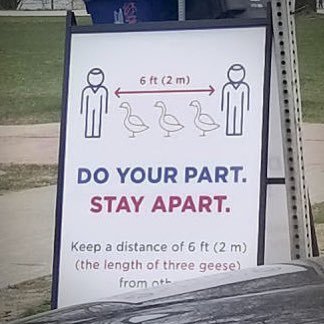
I had planned a fabulous meal for dinner, Thai Lime Chicken with garlic jasmine rice. The grocery delivery was right on time. As I unpacked the groceries, I set aside the items I would need for dinner. I pulled two lemons out a bag and was about to chuck them into the fridge when I froze. Wait. I don’t remember ordering any lemons. I grabbed the remaining bags of groceries and started tossing out the contents. Sure enough there were no limes. Some cretin had sent me two lemons instead of limes.
I hadn’t been in a grocery store in over twelve months. I was fully prepared when the pandemic struck. A well stocked pantry with plenty of backups for our more popular non-perishable and frozen groceries. Meals were planned in advance. Everything was ordered through our first-class grocery delivery service. I was going to ride out this pandemic at home.
I did a slow burn. Was the person colour blind? How the fuck can you not tell the difference between green and yellow? Calm down, Willie. Maybe this person just moved from Siberia and has never seen citrus fruit before. Or maybe it’s someone with a “I don’t give a shit” attitude. I grabbed my phone to call the grocery store.
After a 22 minute, 14 second wait, a customer care rep answered, “Hello I’m Nancy. How I can assist your shopping experience?”
“Hello Nancy. I certainly hope you can help me. I just received my grocery deliver and the idiot who packed my order sent me two lemons instead of two limes.”
“I’m very sorry that you order was not fulfilled properly. If you provide me with the order number then I will be happy to credit you the two lemons.”
“I’m sorry Nancy that doesn’t solve my problem because I need the limes for my dinner tonight. You can’t make Thai Lime Chicken with lemons. Lemony Thai chicken is just going to be gross.”
“You can pick up limes at our store and I would happy to provide you with a ten dollar credit for the inconvenience you’ve experienced.”
“You know there’s a pandemic going around? You’ve heard of COVID I hope? I can’t risk walking into a store. So, why don’t you just have someone drop off a couple of limes at my house and we’ll be square. That’s what would improve my shopping experience.”
She pauses for a few seconds. “I wish it were that easy but we can’t deliver two limes today.”
“That’s just not acceptable. I was planning to make Thai Lime Chicken but apparently your incompetent store refuses to cooperate.”
“We are sorry you haven’t had a positive shopping experience. I have credited your account for the two lemons as well as an additional ten dollars. Is there anything else I can help you with/”
“You haven’t helped me at all!”
“Thank for your loyalty during these difficult time.” Then the line goes dead.
I stared at the two lemons sitting on the counter before picking them up and tossing them across the kitchen. I debated with myself whether to just abandon the idea of cooking and just order some food. No. I had planned Thai Lime Chicken and that’s what we were having tonight. I search for my car keys, grabbed a face mask, and headed out to drive to the store.
After parking the car, I put on my mask as well as a face shield and surgical gloves. I wasn’t taking any chances. When I got to the store entrance, I stopped and looked around. I spotted a young woman walking into the store.
“Excuse me,” I said. “I was wondering if you could help me?”
She stopped walking, her suspicious eyes fixed on me. “It depends.”
“I need two limes and I’ll pay you ten dollars if you could buy them for me.”
She looked at my protective gear and shook her head. “I’m in a hurry and beside it looks like you’ll be safe with all that shit. All you’re missing is a hazmat suit,” she said, bolting into the store.
After several more failed attempts at finding someone to shop for me, I cautiously entered the store. I picked up a hand cart and meticulously wiped it down with several sanitizing wipes. Once I was satisfied that it was safe to carry, I walked into the store before being stopped by a store employee.
“Sir, I’m going to have to take your temperature.”
“Umm, okay.”
“Sir, you are going to have to remove your shield for me to take your temperature.”
“There’s no way I’m taking this off inside the store.”
“I’m sorry but we are required to take the temperature of all customers before they can shop. I can’t do that with your shield on.”
Everyone who works for this story is always sorry but totally unhelpful. I slipped off the shield and held my breath. He took my temperature and waved me inside. Putting the mask on, I continued inside and headed to the produce section.
The store wasn’t busy, so avoiding people was a simple matter. Standing in front of the limes, I ripped off a produce bag from the roll below the display, But I couldn’t seem to open the bag with my gloves on. After a couple of frustrating minutes I threw away the bag and tossed two limes into my cart. I strolled down a one-way aisle toward the front of the store to checkout. But there was a woman pushing a cart in the aisle going in the wrong direction.
“Excuse me, but you’re going in the wrong direction,” I said, maintaining a six-foot distance from her.
“So what.”
“I’m sorry but you’re going to have to turn around and come down the aisle in the correct direction,” I insisted.
“No way. Go report me to Public Health.”
In frustration, I went back up the aisle and chose another one, making sure there wasn’t anyone impeding my route. When I reached the store front, I found an empty cash register and put the two limes on the conveyor belt. The cashier said something to me but I couldn’t make out what she had said because she wore a mask and stood behind a thick layer of plexiglass.
Then I noticed the shopper behind me was ignoring the six-foot rule and loading her groceries on the belt before I was done. I spun around and recognized her as the woman in the aisle.
“We meet again,” I said. “Do you have a problem with figuring out how far six feet are?”
“I just have a problem with assholes.”
“Can you get the manager?” I asked the cashier. “I would like to report this woman.”
The cashier rolled her eyes. “Sir, just pay the $1.99 and leave the store.”
I decided the quicker I get out of the store, the safer I would be. I swiped my debit card on the card reader and scrambled out of the store. Back in my car, I pulled off the gloves and doused my hands with hand sanitizer before heading home.
I’m in the kitchen chopping peppers for the dish when my wife arrived home.
“What are you doing?” she asked.
“I’m making dinner. Remember, we’re having Thai Lime Chicken. And wait until I tell you the day I had.”
“I picked up dinner. You are supposed to make dinner tomorrow.”
February 24, 2021
Deep Into The Weeds – Preview 1
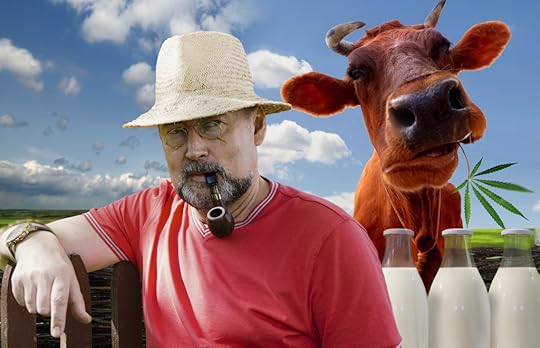
This year I hope to publish my latest novel, DEEP INTO THE WEEDS. Over the next few months I plan on posting several teasers. The protagonist Preston ‘Mac’ McPherson is a dairy farmer who with the encouragement of his brother-in-law, Fergus Becker converts his farm to growing marijuana. Below is a scene late one night following a break-in at the farm.
“I’m too tired to listen to this shit. And I could use a drink,” I say, throwing my head back against my headrest.
“I don’t have a bottle in the car, but I have this,” say Ferg, pulling a joint out of shirt pocket.”
“What the fuck is that?”
“What does it look like?”
“A marijuana cigarette.”
“Bingo!” says Ferg, pulling on an imaginary cord. “What’s with the weird look? You know it’s legal now?”
I grab the joint out of his hand. “Yeah, I know, so where did you get it?”
“We shut down an illegal dispensary in Simcoe last month and not all of the inventory made it to our evidence room,” he says with a wink.
“Then that stuff is illegal.”
“How can you tell? It all looks the same.”
“You can legally buy it, but you decide to steal some instead.” What a piece of work. Next, he’ll be offering me a big screen TV that happened to have fallen off some truck.
“I prefer not to have a record of my weed purchases, if you know what I mean.”
“Whatever,” I say, shaking my head. I hand the joint back to him. “Look, I don’t smoke the stuff.”
“It’s no different than drinking a beer, except less calories,” he says, grinning. “C’mon.”
“I don’t feel right about this.”
“Are you kidding me? You grow the stuff.”
“So what? Lots of farmers in the area used to grow tobacco, but they didn’t necessarily smoke cigarettes. It’s a crop. And I don’t have to eat broccoli just because I grow it.”
Ferg slides the entire joint into his mouth and slowly pulls it out. “Why did you do that?”
“I’m wetting it, so it doesn’t burn too fast.”
“Where did you learn that?” I ask with raised eyebrows.
“At Delhi District Secondary School.”
“Fergus Becker, are you telling me you did drugs in high school?” I ask, not even bothering to hide my surprise.
“That’s what I’m telling you,” he says while burning the end of the joint with a lighter. “Now are you going to join me? You know you want to try it.”
Ferg holds the end of the joint up to his lips with his thumb and index finger and inhales, holding it in his lungs. He stretches his hand with the joint out toward me and exhales.
“I don’t know.”
“C’mon.”
I take it from him and hold it up to my lips and draw in air. My lungs fill with smoke and I immediately break into a coughing fit.
“Don’t inhale so much smoke, and try to hold it in,” says Ferg, slapping my back.
After a minute, I stop coughing. My throat feels raw, but I try to inhale again. I draw in a little bit of smoke. My lungs hurt, and I’m forced to exhale in less than ten seconds. The coughing fit returns.
Ferg laughs. “You are pathetic.” He grabs the joint from me and takes a big, long draw.
While he’s holding it in, he hands it back and I try it again, this time with more success. After a couple of minutes, it’s burned down to a nub. Ferg lowers the window and tosses it out of the car.
“I don’t feel anything.”
“That must be what every rookie says. You will,” says Ferg as he shifts the cruiser into drive and hits the gas.
“Where are we going?”
“To the all-night diner for something to eat.”
“Wait. You can’t drive stoned.”
“Sure, I can.”
“This evening is going from bad to worse,” I say, pulling out my phone.
“What are you doing?”
“I’m calling Meryl.”
“Seriously? What are you going to tell her? You got high and now we’re driving around town?” asks Ferg. “Put that away.”
January 28, 2021
Bernie Sanders: The Meme Machine
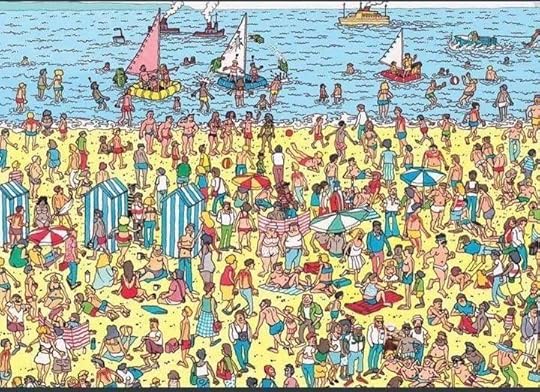
That inauguration photo of Bernie Sanders was quite the internet sensation and created a flurry of memes including the Where’s Bernie (and Waldo) meme above. The senator took it in stride and used the opportunity to raise a significant amount of cash for charities in Vermont.
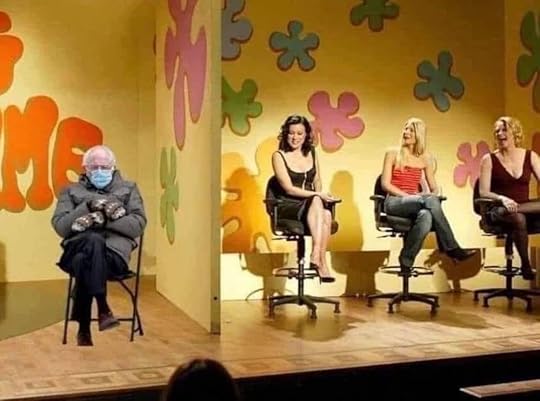
Bernie: What are your views on the Green New Deal?
Bachelorette #1: Sorry, I don’t eat at McDonald’s.
Bachelorette #2: Do you mean the guy who was once married to Drew Barrymore?
Bachelorette #3: I’m a vegan so I’m all in favour of salads.
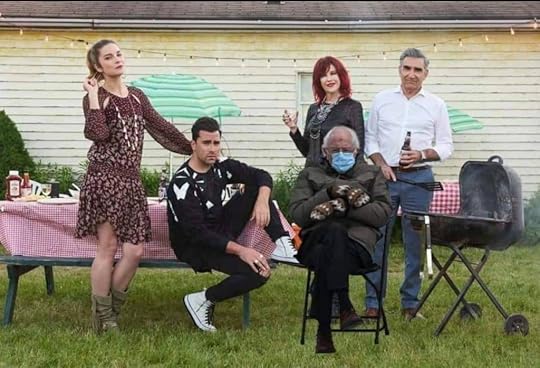
Johnny: Sir, are you planning on checking into our motel
Moira: Why look at him. He’s nothing more than a cantankerous old man.
Alexis: Is he even alive? He hasn’t blinked once.
David: I just love his mittens though.
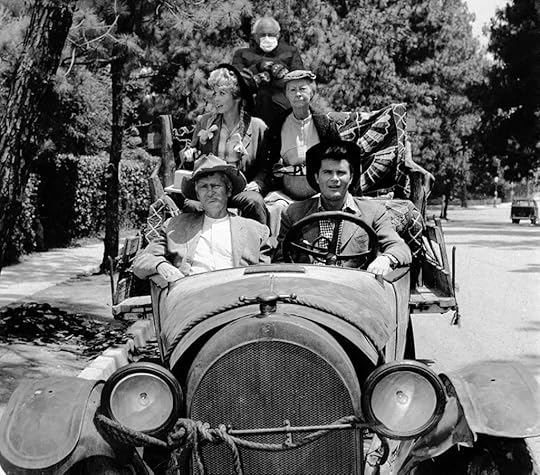
Jethro: Heehaa! Look at all them movie stars walkin the streets.
Elly May: I hope I can find me a man in Beverley Hills.
Jed: Tarnation. I’m told I got me enough money to buy one for you.
Granny: Hogwash, Elly May don’t want no high faluten Californi feller. There were plenty of beaus back home.
Bernie: For god sakes, is anyone listening to me? I need to pee. Please stop at the closest rest stop.
Jed: Anyone know who that feller is in the back of the truck?
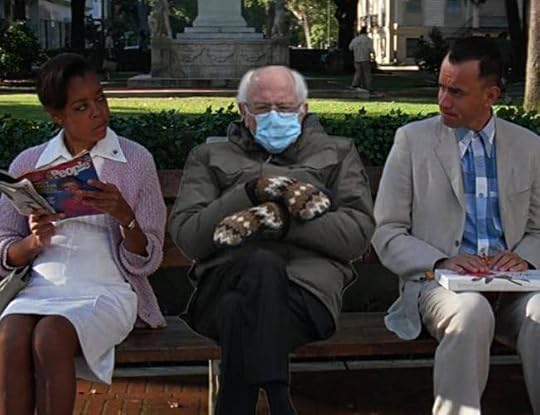
Would you like a chocolate Mr. Bernie?
You sure are bundled up for Alabama weather.
Mama says you can’t trust folks wearin’ masks but I don’t know nothin’ about that.
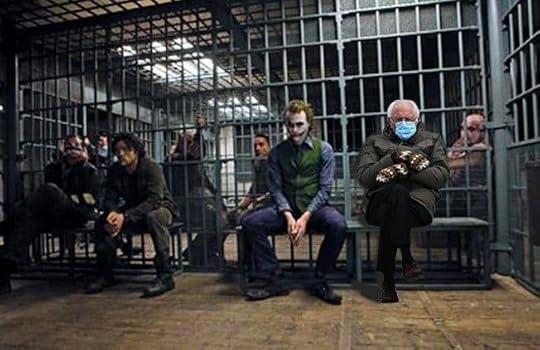
Joker: What are you in for?
Bernie: They told me for disorderly conduct. Just because some cop doesn’t like the mitts. They are perfectly appropriate for an inauguration. It’s a joke. It’s about time we defund the police. The entire system is rotten to the core.
Joker: Hey guys! Stay clear of the cranky old man with the mitts.
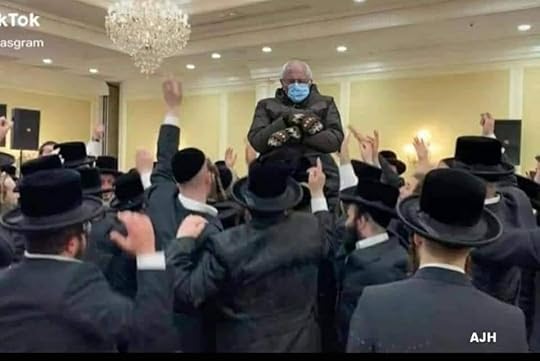
Moishe: Who’s the Kallah?
Abe: No clue. Wonder if she’s as old as the Chatan.
Everyone: Hava nagila, Hava nagila, Hava nagila, Venis mecha.
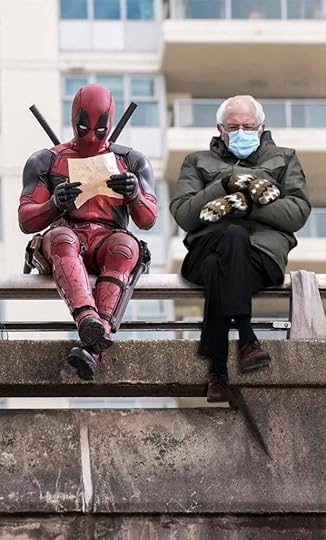
It says here you want to enlist me for your fight against corporate corruption, economic inequality and climate change.
Bernie I’m just a crime fighter. Have you considered running for president?
January 14, 2021
My Parents Were Holocaust Survivors: These Are Their Stories
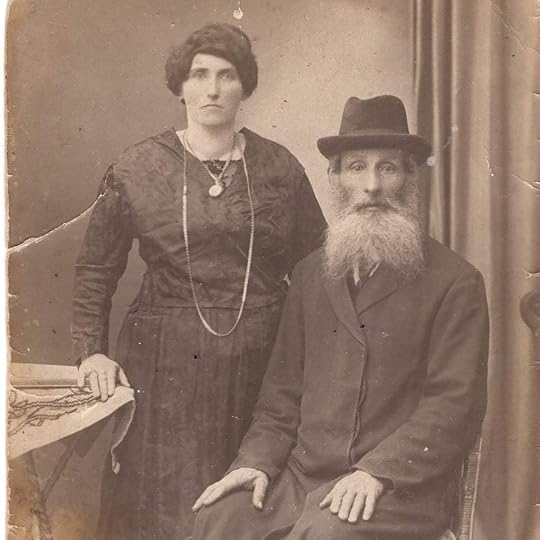 My maternal grandparents Tzipora and Zev Zloczower
I rarely post anything that isn’t funny or about my writing process. Even more rare is anything to do with my childhood or parents who were Holocaust survivors. My dad died just over twelve years ago. My mom died two and a half years later. During my mother’s shiva, a seven-day mourning period, I began to consider who would tell my parents’ stories? Do people really want to know their stories? How should they be remembered? I was busy with my job and family and put those thoughts aside.
The children of Holocaust survivors don’t typically have conventional family life. When I was a child, I often experienced bad dreams where the Nazis came to take us away. I directly attribute those dreams to the stories my parents told us as children. The dreams became less frequent and pretty much ended as an adult. In the last year, those dreams have returned. Perhaps getting these stories out will help in that respect.
The memoir I plan to write will be my first attempt at non-fiction. Right now, I only have bits and pieces of things that were told to me as a child. The challenge will be putting those pieces together to create a coherent story. I will have to rely on my two siblings to fill in the gaps in my memory. This blog post is the start of that process. These are my parent’s pre-war and wartime stories.
Dad’s Story
My dad, Ela Oksenhender was born on November 25, 1912. His parents were Tamara and Joseph. His surname was shortened to Handler when he arrived in Canada. I was told that an immigration officer suggested the new Anglicized name to them.
He was born in the Wislica, a town in the Swietokrzskie Voivodeship area, Kielce district in southcentral Poland. He was raised in Bedzin, a town in the Zaglembie Dabrowskie area, also in Kielce district and just over 100 kilometres from what is now the Czech Republic. Prior to World War II, Bedzin had a population of 50,000 about half of the residents were Jewish. Dad was the second youngest of seven children. He had little education and worked to support the family at a young age.
In the mid-1930s he was married, and he and his wife, Esther had a daughter, Leah. The most common type of employment for Jews in Bedzin was as merchants. Dad sold poultry and eggs in a small shop in the Jewish section of town. World War II was triggered by the Nazi invasion of Poland in 1939. The German army entered Bedzin on September 5th and immediately burned down the Great Synagogue in the old part of town and massacred the Jewish population. Dad and his brother, Israel fled to the East and crossed into Russia. At the time, the Russian were allied with Nazi Germany and when they realized there would be no protection from the Nazis they returned to Poland. When they returned in April 1940, they were picked up by the Nazis. Because he was young. Dad was sent to a forced labour camp in Ottmuth, Poland where he worked in a local shoe factory. The Nazis operated hundreds of such camps that stretched across German-occupied Europe.
Prisoners were under fed and clothed as they were deemed expendable. The workday was long. Every day, dad was forced to walk seven kilometers to and from the workplace. He was not there long. In the summer of 1940, he was transferred to another forced labour camp in Rattwitz, Germany where he was assigned to carry bricks and cement blocks. He was transferred two months later to Markstadt, one of the larger forced labour camps in Germany with between 3,000 to 4,000 Jewish prisoners. Markstadt was located just outside Breslau, Germany and next to several factories where war materials were manufactured.
The camp was similar to a concentration camp, surrounded with barbed wire and long wooden barracks contained five rooms administered by a Kapos, a prisoner assigned to supervise their peers by the Nazis. The Kapos often beat their fellow prisoners with rubber truncheons. Accommodating 26-40 men, every room had bunk beds and one folded blanket per straw mattress. The toilet block contained a long plank of wood with about 30 holes in it above a deep trench. Several cold-water faucets lined the wall; there was no soap, towels, or toilet paper.
Dad worked each day at one of two Krupp artillery factories manufacturing gun parts. Twice a week he had a strip shorn on his head, from his forehead to the nape. No explanation was provided, and I suspect it was just another form of humiliation that prisoners had to endure. Dad was frequently beaten and at Markstadt, all his teeth were knocked out.
In late 1941, he was again transferred and this time to Fuenfteichen, which was one of many subcamps of the Gross-Rosen concentration camp and not far from Markstadt and still under construction. There he did similar work at a Krupp munition factory until May 1943 at which time he was transferred to Gross-Rosen itself. Life was extremely harsh at Gross-Rosen where prisoners were kept on starvation diets until they died. The diet consisted of stale bread and a soup that was mostly water. Simon Weisenthal was a survivor of the Gross-Rosen concentration camp.
At Gross-Rosen, he was assigned to be a Sonderkommando, a prisoner who loaded dead bodies into the crematoriums. Sonderkommandos were replaced on a regular basis and subsequently killed because the Nazis did not want any living witnesses to these atrocities. Dad was tipped off by a sympathetic guard when it came time to be replaced and hid among the dead bodies for a several days. Shortly after coming out of hiding, he was transferred once again to another concentration camp, Buchenwald near Weimar, Germany.
At Buchenwald, dad was taken each day at 4 am and taken by rail to Weimar to work in another munition factory. In December 1943 he was again transferred to his sixth camp for which I don’t have a name. In August 1944 he was transferred for the last time to Bisingen, a forced labour camp and subcamp of the Natzweiler-Struthof concentration camp network. The camp was in southwest Germany near the city of Konstanz. Dad did similar labour until liberated by French troops on April 20, 1945.
Once liberated, he made his way to Konstanz where he dealt in the black market until he moved on to Munich in 1946. In 1948,he immigrated to Israel shortly after the state was created by the United Nations. In addition to his wife and four-year old daughter, two siblings, and my grandparents were also killed by the Nazis at Auschwitz. Those who survived were in very poor health. My Uncle Moishe was transferred to Sweden for treatment. He immigrated to Canada in 1950. Another uncle, Israel remained in Germany where he underwent treatment for tuberculosis. He settled in Germany and immigrated to Canada in the 1960s. My Aunt Sara settled in Israel.
Mom’s Story
My mom, Shifra Zloczower was born on November 4, 1924 in the town of Suceava, situated in the Bukovina region in northeast Romania. The family name is said to have derived from Zloczow, a town in the Bukovina regioin. The 1930 census reported a population of 17,000 of which about 3,000 were Jews.
Mom was the youngest of eight children. She and her sister, Rachel were born to Zev and Tzipora. The older six children were born to Zev’s first wife who had passed away early 1920s. Before the start of World War II, several of mom’s siblings had moved away. Aunts Ruth and Mary had immigrated to the United States and settled in New York City. Uncles David and Joshua settled in Palestine in the 1930s.
Romanian history through the 19th and early 20th centuries was complicated. Following the outbreak of World War I, after declaring its neutrality in 1914, Romania fought on the side of the Allied Powers beginning in 1916. Afterwards Bukovina became part of the sovereign Kingdom of Romania. In June–August 1940, as a consequence of the Molotov–Ribbentrop Pact, Nazi Germany carved up Romania and ceded parts of Bukovina to the Soviet Union. In November 1940, Romania signed the Tripartite Pact and, in June 1941 entered World War II on the Axis side, fighting against the Soviet Union until August 1944, when it joined the Allies.
Mom had just turned 16 when the war came to Romania. Although in 1940, the northern section of Bukovina fell under the control of Russia, Suceava in the south remained under Romanian administration. Still, there were numerous pogroms which was part of the arrangement between Hitler and the Romanian leader, Ion Antonescu. My grandfather was murdered in a pogrom around this time.
In 1941, after Axis forces invaded the Soviet Union during the Second World War, they defeated the Soviet troops in the region and occupied it. Romania controlled the entire region between Dniester and Southern Bug rivers (now part of Ukraine), including the city of Odessa as local capital, which was called Transnistria literally meaning “beyond the Dniester River.”
In September 1941, Antonescu decided that the Jews were an “enemy population,” and thus were to be deported to Transnistria, including mom and her family. Most were executed or died from other causes in ghettos and concentration camps administered by Romanian police. Altogether, approximately 150,000 people were sent to Transnistria. Many deportees died en route. Thousands were jammed into freight trains without food or water, causing many deaths. The Romanian guards accompanying the prisoners randomly shot at them, as well.
For the next three years, my mom, grandmother and Aunt Rachel lived in a ghetto in Transnistria with inadequate shelter and little food. Mom was billeted with a wealthier family and was treated as a servant. Typhus was rampant and killed my grandmother and other family members. Mom was fortunate to recover from typhus. They remained in Transnistria until 1944. Permission was finally granted to leave when the Soviet army began closing in on Transnistria. Mom and my Aunt Rachel returned home during this period. Their brother Srul resettled in Russia. He later became a refusenik, a Soviet Jews who were refused permission to emigrate to Israel. He was jailed in a Siberia gulag and persecuted for having asked. Srul was finally allowed to leave when the Soviet Union dissolved.
In 1946, mom and Rachel illegally immigrated to Palestine by ship. To appease the Arab population, the British restricted the number of Jewish immigrants allowed into Palestine and prevented ships from landing. Their ship was one of about 100 ships prior to and after the war that attempted to evade the British blockade. Their ship was intercepted by the British and everyone on board was interned at Atlit detainee camp. They were held there until May 1948, when Israel achieved independence.
Mom and dad met in Israel and were married on March 17, 1949. Despite wanting to return to normalcy, they would carry the burden of their experiences the rest of their lives.
My Parents Were Holocaust Survivors: This Is Their Stories
My maternal grandparents Tzipora and Zev ZloczowerI rarely post anything that isn’t funny or about my writing process. Even more rare is anything to do with my childhood or parents who were Holocaust survivors. My dad died just over twelve years ago. My mom died two and a half years later. During my mother’s shiva, a seven-day mourning period, I began to consider who would tell my parents’ stories? Do people really want to know their stories? How should they be remembered? I was busy with my job and family and put those thoughts aside.
The children of Holocaust survivors don’t typically have conventional family life. When I was a child, I often experienced bad dreams where the Nazis came to take us away. I directly attribute those dreams to the stories my parents told us as children. The dreams became less frequent and pretty much ended as an adult. In the last year, those dreams have returned. Perhaps getting these stories out will help in that respect.
The memoir I plan to write will be my first attempt at non-fiction. Right now, I only have bits and pieces of things that were told to me as a child. The challenge will be putting those pieces together to create a coherent story. I will have to rely on my two siblings to fill in the gaps in my memory. This blog post is the start of that process. This is my parent’s pre-war and wartime stories.
Dad’s Story
My dad, Ela Oksenhender was born on November 25, 1912. His parents were Tamara and Joseph. His surname was shortened to Handler when he arrived in Canada. I was told that an immigration officer suggested the new Anglicized name to them.
He was born in the Wislica, a town in the Swietokrzskie Voivodeship area, Kielce district in southcentral Poland. He was raised in Bedzin, a town in the Zaglembie Dabrowskie area, also in Kielce district and just over 100 kilometres from what is now the Czech Republic. Prior to World War II, Bedzin had a population of 50,000 about half of the residents were Jewish. Dad was the second youngest of seven children. He had little education and worked to support the family at a young age.
In the mid-1930s he was married, and he and his wife, Esther had a daughter, Leah. The most common type of employment for Jews in Bedzin was as merchants. Dad sold poultry and eggs in a small shop in the Jewish section of town. World War II was triggered by the Nazi invasion of Poland in 1939. The German army entered Bedzin on September 5th and immediately burned down the Great Synagogue in the old part of town and massacred the Jewish population. Dad and his brother, Israel fled to the East and crossed into Russia. At the time, the Russian were allied with Nazi Germany and when they realized there would be no protection from the Nazis they returned to Poland. When they returned in April 1940, they were picked up by the Nazis. Because he was young. Dad was sent to a forced labour camp in Ottmuth, Poland where he worked in a local shoe factory. The Nazis operated hundreds of such camps that stretched across German-occupied Europe.
Prisoners were under fed and clothed as they were deemed expendable. The workday was long. Every day, dad was forced to walk seven kilometers to and from the workplace. He was not there long. In the summer of 1940, he was transferred to another forced labour camp in Rattwitz, Germany where he was assigned to carry bricks and cement blocks. He was transferred two months later to Markstadt, one of the larger forced labour camps in Germany with between 3,000 to 4,000 Jewish prisoners. Markstadt was located just outside Breslau, Germany and next to several factories where war materials were manufactured.
The camp was similar to a concentration camp, surrounded with barbed wire and long wooden barracks contained five rooms administered by a Kapos, a prisoner assigned to supervise their peers by the Nazis. The Kapos often beat their fellow prisoners with rubber truncheons. Accommodating 26-40 men, every room had bunk beds and one folded blanket per straw mattress. The toilet block contained a long plank of wood with about 30 holes in it above a deep trench. Several cold-water faucets lined the wall; there was no soap, towels, or toilet paper.
Dad worked each day at one of two Krupp artillery factories manufacturing gun parts. Twice a week he had a strip shorn on his head, from his forehead to the nape. No explanation was provided, and I suspect it was just another form of humiliation that prisoners had to endure. Dad was frequently beaten and at Markstadt, all his teeth were knocked out.
In late 1941, he was again transferred and this time to Fuenfteichen, which was one of many subcamps of the Gross-Rosen concentration camp and not far from Markstadt and still under construction. There he did similar work at a Krupp munition factory until May 1943 at which time he was transferred to Gross-Rosen itself. Life was extremely harsh at Gross-Rosen where prisoners were kept on starvation diets until they died. The diet consisted of stale bread and a soup that was mostly water. Simon Weisenthal was a survivor of the Gross-Rosen concentration camp.
At Gross-Rosen, he was assigned to be a Sonderkommando, a prisoner who loaded dead bodies into the crematoriums. Sonderkommandos were replaced on a regular basis and subsequently killed because the Nazis did not want any living witnesses to these atrocities. Dad was tipped off by a sympathetic guard when it came time to be replaced and hid among the dead bodies for a several days. Shortly after coming out of hiding, he was transferred once again to another concentration camp, Buchenwald near Weimar, Germany.
At Buchenwald, dad was taken each day at 4 am and taken by rail to Weimar to work in another munition factory. In December 1943 he was again transferred to his sixth camp for which I don’t have a name. In August 1944 he was transferred for the last time to Bisingen, a forced labour camp and subcamp of the Natzweiler-Struthof concentration camp network. The camp was in southwest Germany near the city of Konstanz. Dad did similar labour until liberated by French troops on April 20, 1945.
Once liberated, he made his way to Konstanz where he dealt in the black market until he moved on to Munich in 1946. In 1948,he immigrated to Israel shortly after the state was created by the United Nations. In addition to his wife and four-year old daughter, two siblings, and my grandparents were also killed by the Nazis at Auschwitz. Those who survived were in very poor health. My Uncle Moishe was transferred to Sweden for treatment. He immigrated to Canada in 1950. Another uncle, Israel remained in Germany where he underwent treatment for tuberculosis. He settled in Germany and immigrated to Canada in the 1960s. My Aunt Sara settled in Israel.
Mom’s Story
My mom, Shifra Zloczower was born on November 4, 1924 in the town of Suceava, situated in the Bukovina region in northeast Romania. The family name is said to have derived from Zloczow, a town in the Bukovina regioin. The 1930 census reported a population of 17,000 of which about 3,000 were Jews.
Mom was the youngest of eight children. She and her sister, Rachel were born to Zev and Tzipora. The older six children were born to Zev’s first wife who had passed away early 1920s. Before the start of World War II, several of mom’s siblings had moved away. Aunts Ruth and Mary had immigrated to the United States and settled in New York City. Uncles David and Joshua settled in Palestine in the 1930s.
Romanian history through the 19th and early 20th centuries was complicated. Following the outbreak of World War I, after declaring its neutrality in 1914, Romania fought on the side of the Allied Powers beginning in 1916. Afterwards Bukovina became part of the sovereign Kingdom of Romania. In June–August 1940, as a consequence of the Molotov–Ribbentrop Pact, Nazi Germany carved up Romania and ceded parts of Bukovina to the Soviet Union. In November 1940, Romania signed the Tripartite Pact and, in June 1941 entered World War II on the Axis side, fighting against the Soviet Union until August 1944, when it joined the Allies.
Mom had just turned 16 when the war came to Romania. Although in 1940, the northern section of Bukovina fell under the control of Russia, Suceava in the south remained under Romanian administration. Still, there were numerous pogroms which was part of the arrangement between Hitler and the Romanian leader, Ion Antonescu. My grandfather was murdered in a pogrom around this time.
In 1941, after Axis forces invaded the Soviet Union during the Second World War, they defeated the Soviet troops in the region and occupied it. Romania controlled the entire region between Dniester and Southern Bug rivers (now part of Ukraine), including the city of Odessa as local capital, which was called Transnistria literally meaning “beyond the Dniester River.”
In September 1941, Antonescu decided that the Jews were an “enemy population,” and thus were to be deported to Transnistria, including mom and her family. Most were executed or died from other causes in ghettos and concentration camps administered by Romanian police. Altogether, approximately 150,000 people were sent to Transnistria. Many deportees died en route. Thousands were jammed into freight trains without food or water, causing many deaths. The Romanian guards accompanying the prisoners randomly shot at them, as well.
For the next three years, my mom, grandmother and Aunt Rachel lived in a ghetto in Transnistria with inadequate shelter and little food. Mom was billeted with a wealthier family and was treated as a servant. Typhus was rampant and killed my grandmother and other family members. Mom was fortunate to recover from typhus. They remained in Transnistria until 1944. Permission was finally granted to leave when the Soviet army began closing in on Transnistria. Mom and my Aunt Rachel returned home during this period. Their brother Srul resettled in Russia. He later became a refusenik, a Soviet Jews who were refused permission to emigrate to Israel. He was jailed in a Siberia gulag and persecuted for having asked. Srul was finally allowed to leave when the Soviet Union dissolved.
In 1946, mom and Rachel illegally immigrated to Palestine by ship. To appease the Arab population, the British restricted the number of Jewish immigrants allowed into Palestine and prevented ships from landing. Their ship was one of about 100 ships prior to and after the war that attempted to evade the British blockade. Their ship was intercepted by the British and everyone on board was interned at Atlit detainee camp. They were held there until May 1948, when Israel achieved independence.
Mom and dad met in Israel and were married on March 17, 1949. Despite wanting to return to normalcy, they would carry the burden of their experiences the rest of their lives.
January 13, 2021
Top 10 Locations For A Donald J. Trump Presidential Library
Even disgraced former U.S. presidents get a presidential library. After all, Richard Nixon has one. So, I’ve begun to collect possible locations for consideration.
Four Seasons Total Landscaping – The owners have promised to make a portion of their parking lot available for a library. The Philadelphia company was a critical part of the Trump election campaign.Attica State Prison – The prison already has a library and there’s a good chance that Donald Trump might spend some time there after leaving office. So obviously, there appears to be some converging events playing here.Trump National Golf Club, Bedminster – Just imagine the library overlooking the magnificent 18th hole of this golf course. The golf course will need to have some drawing power after losing PGA events.Proud Boys National Headquarters – They don’t actually have a national headquarters but Trump has a soft spot for this chauvinistic domestic terrorist group. They could easily combine a headquarter with a presidential library.Trump University – Many presidential libraries are associated with universities and we thought that this particular university might be one of the few eager to host the Trump Presidential Library.KFC – What better way to reach out to Trump supporters than to have KFC sponsor a Trump library. Each outlet could have a small exhibit right next to the bathrooms. Alternative to KFC – Taco Bell.TrumpWorld – Florida could be the location of a theme park called TrumpWorld and the gift shop could also serve as the presidential library. Mobile library – One proposal we’ve heard involves loading the library onto several tractor trailers and having them drive around the U.S. heartland.Trump Tower – A portion of the parking garage in the Trump Tower could house the presidential library. We think that money will be tight once the president leaves office and has to pay for his own upkeep. Monetizing the parking garage in this way is a win-win.The Kremlin – We know how fond of each other Vladimir Putin and Donald Trump have become. Adjacent to the Kremlin is likely the most ideal location for a presidential library.December 17, 2020
2020 Review: The Year The Shit Hit The Fan
January
The year started off so well. My New Year’s resolutions included traveling, keeping in touch with friends, traveling more, and eating and living healthier. Okay those resolutions didn’t work out so well.We started 2020 with a bucket list vacation, hitting stops in South America and Antarctica. While we were gazed at volcanos, waterfalls, icebergs and wildlife, people in Wuhan were coming down with a mysterious illness. Those days on the cruise ship seems so long ago. The new world began to sink in when we boarded out flight to return home and noticed the crew were all wearing masks. I thought that was odd. Welcome to the new normal.
February
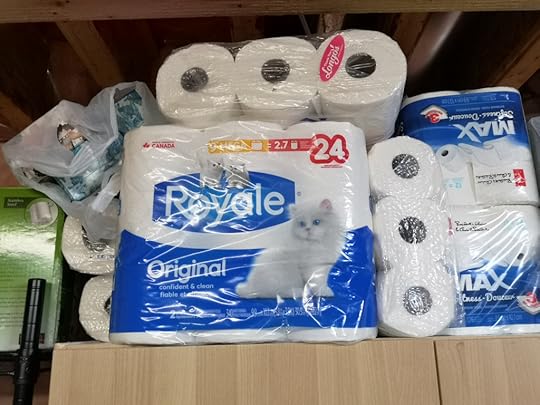
Back home everyone was unsure on how to prepare for what was coming. Each day a couple of COVID-19 cases would pop up in Toronto and Vancouver. In each instance it was someone returning from a trip from China, Iran or Italy. People were anxious but you didn’t see any panic.The Chinese response to the virus felt like a science fiction movie. We decided to prepare by streaming Contagion, 12 Monkeys, and Pandemic. After watching the films, I decide to dispose of anything in the house that was made in China. I then had to go out and purchase a new phone, two TVs, a set of pots and pans, and numerous other household items.By late February when towns in northern Italy began to quarantine, it was obvious that we were headed in the same direction. At the end of the month, there were only 5 cases identified in Ontario. Still, I began to stock up on staples like coffee, wine, bagels, Oreos, and toilet paper. Things I couldn’t live without.
March
The last time I was officially out in public was at a Toronto Maple Leaf game on March 10. The NHL shutdown the next day and the WHO declared a global pandemic. But since the Leafs won that night things weren’t so bad. The WHO announcement was like the captain of the Titanic acknowledging the ship was sinking with the water almost at the deck level.The next day my family doctor advised me to self-isolate because I was immune compromised. Too bad I’m not an introvert. This was going to be painful.Around this time, the panic shopping hit full gear. Who will ever forget the scary scenes of people fighting over rolls of toilet paper, boxes of pasta, hand sanitizer, boxes of Cinnamon Toast Crunch cereal, and whatever else they could get their hands on? I got hold of a two-year supply of peanut M&Ms. Two weeks later I ran out.On March 17, a state of emergency was declared in Ontario. Everything but the most essential services were shut down. My new wardrobe consisted of sweatpants and t-shirts.The World Health Organization announced that dogs cannot contract COVID-19. Dogs previously held in quarantine can now be released. To be clear, WHO let the dogs out.
April
I will never forget those first few weeks of the lockdown. The Toronto region has over 6 million people and some of the worst traffic in North America, but in the first month of the lockdown there was no traffic. The empty roads left you with an eerie feeling. Wildlife began to take over the neighbourhood. One morning I noticed a group of racoons lying out in the sun in the middle of the road enjoying their breakfast.I settled down to my quarantine routine: writing daily, going for walks, ordering things we needed online, and watch the news. Here in Canada, every politician took to the airwaves to provide daily updates on the pandemic. They were like cheerleaders with catchphrases like “we’re all in this together” and “these are unprecedented times.” Within weeks, half of them had tested positive.I learned that hand sanitizer could remove those telltale orange Cheetos stains from your fingers so that was a good thing.The Canadian government offered to pay people to stay at home and millions took them up on the offer.I mentioned to my wife that it’s so nice to be able to quarantine with someone I enjoyed spending time with. She said, “it must be nice.”One morning I saw a neighbor talking to her cat. It was obvious she thought her cat understood her. I came into my house, told my dog–we laughed a lot.
May
A strange phenomenon began to emerge. People found they needed to get out of the house and have some form of exercise began walking. The sidewalks were packed. It was no different on weekdays since most people were at home.People were careful to maintain a proper distance on sidewalks. One day a man and a woman walking in opposite directions met and came to a complete stop just outside their six-foot perimeter. The man signalled to the woman to step around him. She waved him off and offered to let him go first. Neither one of them would budge. The sidewalk in both directions got backed up for almost three blocks, each person remaining at least six feet behind the person ahead. It was the first Toronto traffic jam in weeks.Finally, police showed up and were able to redirect the other pedestrians and then tried to assist this pair in deciding who would go first. It was finally sorted out when the woman’s husband drove over to take her home.Thousands pack a park on a sunny day in Toronto, becoming the poster children for covidiots.I developed a quarantine coffee. It was quite good and consisted on three parts tequila and no coffee.
June
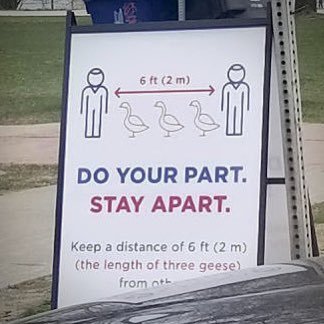
Small talk changed with the times. Canadians love to small talk about the weather. “That’s some rain we had,” or “cold enough for ya?” The pandemic dominated conversation. “How many new cases today?” was a common question these days. Then of course the discussion switched to food. “How are you getting your groceries?”We all agree that quarantine life has been boring and monotonous. Each day was more or less a repeat of the day before. I couldn’t remember if it was Monday, Friday or Saturday. So, to make things simpler, I referred to every day as Sameday. New terminology crept into our lexicon:Quarantine = 14 days during which you don’t have to deal with your spouse or children.Social distancing = It is the limit that people will tolerate you approaching them when you haven’t showered in six weeks.Herd immunity = When enough people ignore medical experts and scientists so that there are no dumb people left in a region to pass the virus on to.Essential worker = Amazon drivers, liquor store workers drug dealers and sex workers.Karen (or Kyle) = A pejorative term for a woman (or man) who screams about freedom and oxygen levels, thinks the Earth is flat, and has a trailer full of toilet paper.
July/August
The summer weather emptied the walkers from the streets and filled the parks and backyards. As new coronavirus infection rates dropped, everything began to open up. Restaurants set up patios to encourage people to dine out.After almost four months indoors, I moved out onto my deck. Invited friends I hadn’t seen in months and enjoyed the great weather. We showed off our pandemic haircuts. Some friends commented on what I was wearing. I called it COVID casual. They claimed it was pyjamas.Some people acted like the pandemic was over and dropped masks and social distancing not realizing the worst was yet to come. Stores stopped screening shoppers or limiting the number of people allowed inside at one time.All the sports leagues began to operate again because sport fans who have been cooped up inside want to spend more time indoors during the nice weather. The Toronto Blue Jays are denied permission to play in Toronto and play out of Buffalo. What could be worse than being stuck in Buffalo during a pandemic?One day I found an AA pamphlet in my recycling bin. The people picking up the garbage were getting too judgmental.I bought a Peloton because my wife claimed that the sofa wasn’t an exercise machine. I lost that argument.
September
Schools reopened after six months of virtual learning. The same schools that couldn’t control lice and strep throat infections were going to keep kids from picking up the coronavirus. Within days infections were reported in dozens of school systems. Many parents decided to continue home schooling their children. If you think things are bad now, in 20 years we’ll be run by people who were homeschooled by parents who were drinking all day.The World Health Organization announced that dogs cannot contract COVID-19. Dogs previously held in quarantine can now be released. To be clear, WHO let the dogs out.I realized my local gym had a more detailed COVID plan than the White House.Date night in 2020 is Netflix, a glass of wine and falling asleep on the couch.
October
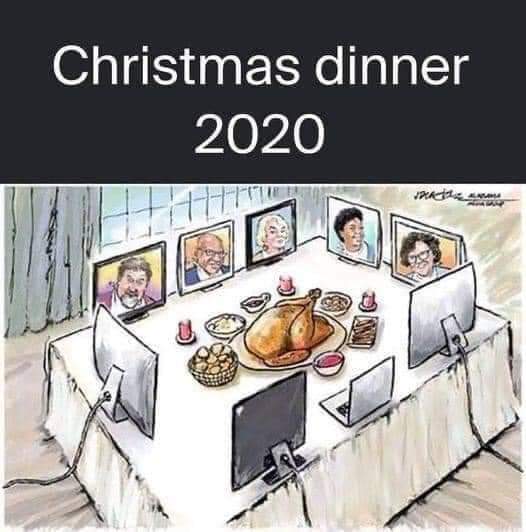
Governments across Canada advised the public to not have been gatherings for Canadian Thanksgiving and stick to their own household. There was a big sigh of relief from the Turkey community.I needed to change my routine, so I put a drink in each room and called it a pub crawl.I’ve washed my hands so many times since March that my exam notes from my university days that I had hidden on hands began to reappear.
November
As infection rates climbed, government began to shutdown some business and tighten up restrictions again with no or little impact.One morning I thought I had come down with COVID-19. Turns out I had accidentally made decaf coffee. Pandemic life was starting to get to me.One day I was skyping with my Jewish mom and she let out a big sigh. I asked her what’s wrong. She said I looked so good in a surgical mask. “So, what’s with the sigh?” I asked. She said she was just imagining how much better I would look if I was a doctor wearing the mask.
December
The government asked the public to stay at home except for essential trips. The following day malls and liquor stores were jammed with people. It seems Christmas shopping was essential.Nail salons, hair salons, waxing center and tanning places were closed again. It was about to get ugly out there.I was surprised as anyone to see Canada begin its vaccination program in the last few weeks of 2020. Makes you want to look forward to 2021. Just hope the vaccine doesn’t come in pumpkin spice or peppermint flavours.
Wishing my readers, a safe and healthy New Year and return to more normal life.
Willie
December 15, 2020
Interview on the Beyond the Trope Podcast

I had a great chat with the co-hosts of the Beyond the Trope podcast about writing humour and satire and you can listen to it right here!
December 5, 2020
Do Writers Need To Hire An Editor?
All writers quickly learn that getting a book or story published doesn’t end when they complete their first draft. There’s a lot of editing ahead before their work is considered polished. Since everyone’s drafting process is different, their editing process will likely vary as well. Some writers will undertake to edit themselves. Others will make use of beta readers to provide objective feedback. And some like me will hire a professional editor. Let’s look at the different options.
Editing on your own
Some writers are great at editing and might even operate their own editing business. I must admit I’m not one of those. Still, many writers can get by on their own with little or no outside help.
A writer needs to realistically consider how strong of an editor they are. I’ve heard some writers suggest that an agent and/or publisher will provide free editing services. That’s true but if their submission isn’t strong enough, they may not be afforded that opportunity. These days, agents and publishers do not want to invest a lot of time and money in editing. A writer’s best shot at getting published is submitting a polished manuscript.
Beta readers and critique partners
A beta reader is a person who will read a manuscript and provide feedback. They can be anyone who enjoy reading. The type of feedback one will receive will vary considerably. I use beta readers to gauge how others perceive my manuscript. I might ask readers specific questions about what they’ve read to help focus the type of feedback I’m looking for.
A critique partner is another writer with whom one has agreed to exchange work for feedback. Critique partners should be writers that can be trusted to be honest, timely and constructive. They should be familiar with the writer’s work and writing style. The feedback will be different than what one might receive from a beta reader.
What is it that editors do?
If I were to ask a writer what an editor does, I would likely get a wide range of responses. That’s because nobody out there is just an editor—there’s always a descriptive word that comes before (or instead) to describe where that individual sits on the continuum of the book-editing process. For both traditionally published and self-published authors, the continuum looks like this:
Developmental Editor → Substantive Editor → Copy Editor → Proofreaders
Generally speaking, individual editors will work in one or more of the four levels identified above—developmental editing, substantive editing, copy editing, or proofreading. It’s rare, and inadvisable, to work with a single editor through all four. Why? Not every editor is strong in all 4 levels. But if one wishes to run their manuscript past an editor more than once (eg., for developmental editing and later for copy editing), it is advisable to use someone different each time. Once an editor becomes familiar with your manuscript, it is harder for them to be as critical. A writer will benefit more from a new set of eyes.
Developmental editing
Most new writers are told to just get it down on paper and then worry about the rest later. It doesn’t matter if their manuscript has holes. That’s what developmental editing is for.
Developmental editing describes a sustained, collaborative partnership between author and editor, during which an incomplete manuscript is transformed into a complete and cohesive book. A good developmental editor will coach the writer through the principles, best practices, and practical application of writing a book in a chosen category/genre, and to help maintain a writer ’s momentum and motivation all the way to the finish line. I have found developmental editing to be a critical step and rely on the feedback to ensure I’m on the right track. I want to know where the plot holes are, which characters are underdeveloped, whether the story moves at a suitable pace, and whether the story will be interesting to readers.
Substantive editing
An experienced writer might be able to skip the developmental editing step. If one has already completed a solid rough draft, the next step is to engage a substantive editor to review the work as a whole. A substantive editor wants to see the entire manuscript, as good as it can be made. They want to know that the writer has done absolutely everything they can on their own, and that they see no other way to improve it before sharing it with the editor.
A substantive editor will be editing the complete draft from a global perspective. Like a developmental editor, they’re going to be focused on the big-picture stuff like genre, theme, character/point of view, structure, pacing, and depth of research. The difference is that they’ll have the writer’s whole best effort in front of them at once, and they’ll be making suggestions with a more concrete sense of how each of their suggestions will affect the rest of the book
Whether substantive editing is a better option for a writer than developmental editing depends on how they work as a writer. If they need feedback, course correction, and encouragement as they write, that will require a developmental editor; if they want to chart their own course and then be shown where and how to improve later, that works best with a substantive editor. As I’ve matured as a writer, I’ve found that I can get farther on my own and when I approach my editor, it is to complete a substantive edit.
Logistically speaking, substantive editing is less collaborative than developmental editing. The writer will share their manuscript with a substantive editor who will dive into it for a period of up to several weeks, during which the writer may or may not hear from them regularly about how the edit is progressing.
To facilitate that independent implementation process, a substantive editor will supplement their in-line edits with what’s called an editorial letter—a multi-page letter that explains and gives context to what one will see in the marked-up manuscript. Then it’s up to the writer to execute on all the suggestions and perhaps return the revision for another round. This may be repeated two or three times, with ever-narrowing lenses of detail each time, and you have yourself a complete substantive editing experience. The editor will price this out based on the number of run throughs they will provide. The editorial letter is an invaluable tool for a writer. I will do several runs through my manuscript. First, I’ll edit based on the mark-ups in manuscript and then move on to the letter.
Copy editing
Copy editors are laser-focused on the finer points of a manuscript, such as word choice, syntax, factual accuracy, repetition, inconsistencies, grammar, style, spelling, and repetition. Copy editors will notfix the big-picture things like structure, pacing, theme, or plot. Did I mention commas? I’m so bad at commas. I once chose the wrong person for copy editing and it was a disaster. If you plan to go the traditional publish, they still provide copy editing as well as proofreading.
Copy editing is not a thing one should leave to spell check or algorithm-based software.
Proofreading
Proofreaders are the final gatekeepers for a book. They’re the fresh pair of eyes every writer needs when neither they nor their other editors can see the typos anymore. Proofreaders are the last people to sign off on the text before it gets printed and distributed for all the world to read. Some people are outstanding proofreaders, but I wouldn’t necessarily want them for the earlier stages of editing. It’s a vastly different set of skills.
Do I really need a team of editors for my book?
No. More editors do not necessarily mean a better book. Many writers can’t justify the expense. The four kinds of editors reflect the historical process of traditional book publishing, but today, we recognize that very few writers (or even publishers) will put their books through this much work.
By way of compromise, a wrier could have one editor perform the developmental and substantive work, and a second to do the copy editing and proofreading. That’s what I do now. I don’t recommend publishing your book without having at least two professionals review it first.
How do I know what kind of editing I need?
When one contacts an independent editor, one of the things they may ask before agreeing to work with the writer is to see the manuscript. They need to see what they’re working with so they can accurately determine where the manuscript sits on the editing continuum. The kind of editing you need is not necessarily up to the writer. That said, here’s a summary guide:
If you have a partially formed idea or incomplete manuscript that you don’t know what to do with, you need a developmental editor.If you’ve finished the manuscript and think it’s rather good, you need a substantive editor.If your manuscript has been through substantive editing, you need a copy editor.If your manuscript has been through the previous levels, you need a proofreader.
But what about my beta readers and critique partners?
Beta readers and critique partners can be great. Friends and family will know the writer well, and they can almost certainly add value to the writing experience. I encourage writers to share their work-in-progress with trusted confidantes, or even take the draft to a peer workshopping class. But do these things before hiring an editor. Don’t make the mistake of thinking that reader feedback is comprehensive editorial analysis.
The problem with blindly and broadly asking for feedback, I found, is that good, generous people then feel obligated to give it—even if they’re not qualified to do so, and even if they don’t have any vested interest in, or accountability to, the outcome.
Asa a result, I find the process to be of limited help. I’ve received some great advice but will also get a lot of conflicting advice based on personal opinion, individual backgrounds, past baggage, and reading preferences. I didn’t like the names of some of your characters. Without the training to separate what they like from what actually works, beta readers simply don’t have the tools to comprehensively edit a book, and it would be unfair to expect otherwise.
So sure, go ahead and bring beta readers into the process—just keep in mind what they can and can’t do. I once asked a romance writer to read over a love scene (not one of my strengths) in a manuscript. She didn’t get the entire manuscript, just that one chapter. It worked out marvellously.
Don’t editors come free with my publishing deal?
Writers who sign on with traditional publishing houses are indeed partnered with an in-house or freelance editor of that house’s choosing, and that expense is covered by the publishing house. That said, a writer needs to go into this with realistic expectations. A few truths for today’s writers:
Having a manuscript developmentally, substantively, and/or copy edited before it is submitted doesn’t replace the work of an in-house editor, and the suggestions one gets from an independent editor can make your book a more appealing read for publishers.Once the book is under contract, the assigned editor may or may not be prepared to do a great deal of work on the manuscript. In-house editors are indeed devoted, caring professionals; they’re also overextended, and they’re more likely to go to bat for a book if it’s already good and doesn’t need major surgery from them. There are exceptions, but if a writer wants the promise of a dedicated, craft-based editing process, they may want an independent editor.Increasingly, publishers are outsourcing manuscript editing to independent editors, so there are a lot of qualified professionals available for hire.
How do I choose an editor?
Since the work is collaborative, a writer needs to ensure they and the editor are compatible. I have asked editors I am interested in working with to look over a chapter and tell me what they think. Based on the feedback I receive I will decide whether we can work together. I would not send a full manuscript to someone I’ve never worked with before without this step first. Keep in mind that if one is hiring a developmental or substantive editor who provide high level editing, the feedback will not always be that helpful but a writer will get some sense of what the editor is like to work with. Maybe a chat over the phone might be good enough to get a feel for the person.
Ask fellow writers for recommendations. Check out the editor’s experience. A lot of writers start editing on the side for some extra income. But being a writer isn’t necessarily sufficient experience to be an editor. How long have they been editing? Have they got experience with your genre? I write satire and humour and I ran into an editor once who just didn’t get the humour. Look for testimonials on their website. How many clients have received publishing contracts? I’ve also contacted other writers to ask what their experience was like with the editor. Finally, check out their prices. There’s wide range of prices out there and they don’t necessarily reflect the quality of their work. There are many inexpensive but excellent editors out there.
This post reflects my own personal experience. Others may have different perspectives, so I welcome comments to this post from other writers. And editors too!