Willie Handler's Blog, page 2
November 8, 2024
It Happened, Therefore It Can Happen Again
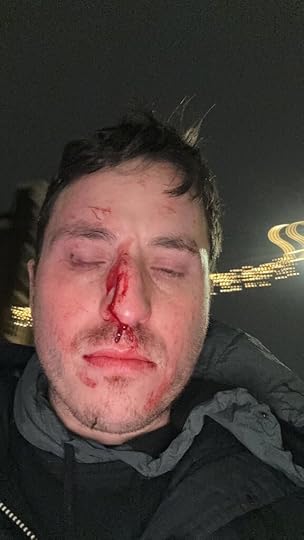
“We must be listened to: above and beyond our personal experience, we have collectively witnessed a fundamental unexpected event, fundamental precisely because unexpected, not foreseen by anyone. It happened, therefore it can happen again: this is the core of what we have to say. It can happen, and it can happen everywhere.”
This quote from Primo Levy has always stuck with me. I’ve never believed in “Never Again”. So now I’m saying, not again!
The Hamas attack on Israel on October 7, 2023, has been described by some as another Holocaust and by others a pogrom. Many people were shocked by the savagery of that attack. For me it feels more like the status quo.
Am I being fatalistic? It really depends on where you are coming from. I am a child of two Holaust survivors. Many family members were murdered only because they were Jewish. They were law abiding citizens and, in some cases, pious individuals living in Poland and Romania. The Holocaust was unique in its barbarity but not the only attack on Jews. We’ve had thousand of years of this.
It is sadly coincidental that the Amsterdam riot, pogrom or whatever you want to call it, occurred just two days before the 86th anniversary of Kristallnacht. That was a night of terror orchestrated by the Nazi Party where Jews across Germany were attacked, Jewish businesses looted, and synagogues firebombed. It is considered the start of the Holocaust.
So, what happened in Amsterdam on November 7? That evening a soccer match was played between Israel’s Maccabi Tel Aviv and the Dutch squad Ajax. Following the game, hundreds of Maccabi fans were ambushed and attacked. It is too early to say what caused the attack. There have been reports of anti-Arab chants by Maccabi fans. That Jews were asked to show their passports. Hit-and-run attacks on scooters. But this was not a protest. There were reports that the attack was planned based on posts on social media prior to the attack.
This attack was only a matter of time. Since October 7, 2023, hate for Jews has quickly become normalized. There have been people who cheered as they watched the attack on Israel unfold on TV. Regular protests against Israel sprang up on university campuses and public squares. But those protest included anti-Semitic tropes and calls for the death of Jews. Typically, officials looked the other way. The hate spread to attacks on Jewish business, Jewish organizations, Jewish schools, and synagogues. A Jewish school in Toronto was sprayed with gunfire on two separate occasions.
“We failed the Jews in World War Two, last night we failed them again.”
King Willem-Alexander of the Netherlands


October 29, 2024
Holocaust Denial is the Latest Form of Antisemitism
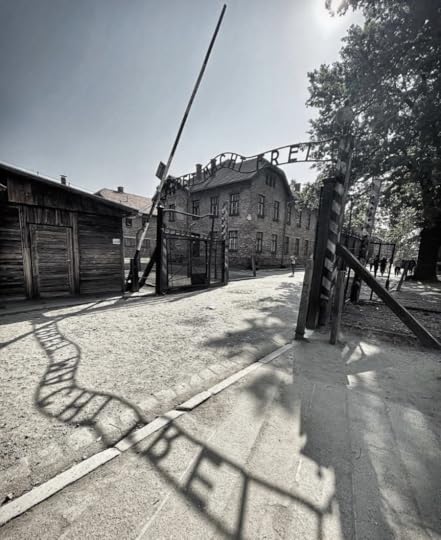
Over the past 70 years, a new form of antisemitism has emerged: denying or distorting the fact or scope of the genocide of the Jewish people at the hands of National Socialist Germany and its supporters and accomplices during World War II. This includes the number of Jews murdered and the existence of extermination camps and gas chambers. This was one of the reasons that I felt it necessary to write my memoir, Out From the Shadows.
Holocaust deniers claim that there was a swimming pool in Auschwitz, hence it couldn’t have been an extermination camp. Indeed, there was a pool in the extermination camp; a water reservoir in Auschwitz I was converted to a swimming pool which was used for a time by the camp’s staff. The existence of a pool does not refute the evidence that Auschwitz was the largest extermination camp operated by Nazi Germany, where over one million people died. Holocaust deniers will tell you that Auschwitz inmates were taught trades. Townspeople in the surrounding area saw life at Auschwitz as “luxurious,” with the inmates’ attractive redbrick sleeping quarters, complete with bunk beds with mattresses, flush toilets, porcelain-covered stoves for cozy heating, and double-paned casement windows. The paths were tree lined, flowers were planted before every barracks, and the Nazis regularly showed movies to the inmates. Not only that, but Auschwitz had an art museum, a library, regular concerts and sporting events, a theater for music and drama, and a brothel for lonely inmates. It also had two fine post offices because the Geneva Convention rules, strictly followed by the Germans, ensured the sending and receiving of mail by all prisoners. The kindly SS guards even provided special pre-printed cards and form letters. And their health care system was world class – after all, for the Nazis, the health of the labor force was a prime concern.
Where does all this nonsense come from? Some of it is spread but stupid gullible people who are incapable of analytical thinking. I believe much of it is produced by antisemites. Why would they spread such lies? Holocaust denial is one of several conspiracy theories directed at Jews. It is a radical form of antisemitism that denies Jews the ability to be considered victims and suggests that the Holocaust is part of a worldwide conspiracy. The revisionists claim Jews around the world knowingly fabricated evidence of their own genocide in order to extract reparations from Germany, gain world sympathy and facilitate the alleged theft of Palestinian land for the creation of Israel.
Jews react differently to antisemitism depending on their connection to the Jewish community. Although some Jews are angered and frightened by these events, others don’t feel concerned at all. Some are in families with non-Jews and may no longer identify as being Jewish. History has shown that racists don’t care how closely you connect with the community. They will define who is Jewish.
October 28, 2024
A Canadian View of American Politics

Come on guys you’re scaring us.
We have had polarized politics here in Canada. There was the trucker protest in 2022 that paralyzed Ottawa for 32 days. But some of the worst riots in Canadian history involved hockey. Vancouver in 1994 and again in 2011. And let’s not forget the Montreal riot in 1955 after the NHL suspended Montreal star Maurice “Rocket” Richard during the playoffs.
But political polarization in Canada does not split the country into two camps. We’re too divided for that. There’s the English v. the French. And the West v. the East. Progressives v. Conservatives. Not surprising the Canadian Parliament has representatives from 5 different political parties. And many voters will shift their vote from one party to another.
We look at the political divide in the U.S. and it looks like the Grand Canyon. Bipartisanism is dead. There are two visions for America with no room for compromise.
What is alarming is the vitriol that now exists. The language used is alarming. References to Nazis and Hitler should never be part of an election campaign. Both sides accuse the other of threatening democracy, corruption and being beholding to special interests. Policy platforms are now secondary to character assassination. Neither side is likely to accept the results of the vote on November 5. There has already been political violence and nothing to suggest it won’t happen again.
This is not something that just appeared eight years ago. It’s been slowly evolving for 30 years. It’s just getting worse.
I don’t have a solutions. I barely understand what’s happening. America is looked upon by many as the leader of the Free World. As American fight among themselves, the void left will be filled by the bad guys. That thought is utterly frightening.
September 27, 2024
The Golden Age For North American Jews Is Over
When I was interviewing descendants of Holocaust survivors for my next book, I would ask if the participants had experienced any antisemitism growing up. I expected people to rant about vile racist acts. But that’s not what happened. Most people told me that they had not experienced any antisemitism. This included Jews who lived in communities that were largely not Jewish.
It wasn’t always like this. During the 1930s and 1940s, North American Jews were exposed to considerable antisemitism and even race-inspired violence. Neo-Nazis had radio programs where they openly ranted against Jews. In 1933, one of the worst eruptions of ethnic and anti-Semitic violence in Canadian history occurred in Toronto with the Christie Pits riot. In 1939, the pro-Nazi German American Bund, which hosted youth training camps across the US, held a rally at Madison Square Garden, spewing vicious antisemitism to a crowd of 20,000.
Yale, Princeton, Columbia and many other institutions of higher learning limited their enrollment of Jews, as did numerous private academies and preparatory schools. Anti-Jewish restrictions appeared in American fraternities, clubs, resorts, hotels and particular neighborhoods in which homeowners’ associations regularly restricted the sale of property to Jews. Restrictive covenants on properties also existed in Canada which prevented them from being sold to Jews. As well, many clubs, resorts and beaches were barred to Jews. Signs warning “No Jews or Dogs Allowed” or “Christians Only!” could be found on Halifax golf courses and outside hotels in the Laurentians.
During Hitler’s reign, both America and Canada maintained highly restrictive immigration laws, turning away hundreds of immigrants daily. In 1939, for example, the USS St. Louis was turned away from a Miami port as well as Canada ultimately returning 900 refugees to Nazi Germany, where one-third would be murdered in the Holocaust.
In 1948, the US Congress passed the Displaced Persons Act. The act provided approximately 400,000 US immigration visas for displaced persons between 1949 and 1952, allowing approximately 68,000 were Jews to enter the US. Between 1947 and 1955, the Canadian Jews sponsored and resettled approximately 35,000 Holocaust survivors and their dependents.
These immigrants quickly assimilated into life in Canada and the United States free from the hate that spread across Europe. They enjoyed freedom, acceptance, and prosperity without losing their ethnic identity – something that was difficult to achieve in Europe. Jews are disproportionally represented in business, academia, and politics. About half of the ten wealthiest Americans are Jewish.
It has been referred to as the Golden Age for Jews in North America. While antisemitism existed, it rarely came to the surface. So, it comes as no surprise that those I interviewed stated that they were never exposed to antisemitism. That all changed after October 7. The next day there was an explosion of hatred towards Jews that has not subsided. This shouldn’t have been a surprise because antisemitism has been steadily growing over the past 15 years. In July 2014, during the 2014 Gaza War, there was an increase in the occurrence of antisemitic incidents across North America. In August 2017, the Unite the Right rally took place in Charlottesville, Virginia. During the rally, neo-Nazis chanted antisemitic slogans such as “Jews will not replace us!” and “Blood and soil!” On the second day, a white supremacist ran his car into a crowd of counter protestors, killing Heather Heyer and injuring 35 people. On October 27, 2018, 11 people were murdered in an attack on the Tree of Life – Or L’Simcha synagogue in Pittsburgh, Pennsylvania. In May 2021 there was another upsurge of antisemitic actions at the same time as the clashes between Israel and Hamas in Gaza reappeared.
At the same time, college campuses across North America were radicalized against Israel and Jewish students. Students for Justice in Palestine (SJP), a network of pro-Palestinian student groups across the U.S., disseminated anti-Israel propaganda, often with inflammatory rhetoric. They led Boycott, Divestment, and Sanctions (BDS) campaigns, utilizing confrontational tactics like disrupting pro-Israel events and hindering collaboration between pro-Palestinian and pro-Israel advocates.
Activities such as “Israel Apartheid Week” at Concordia (Montreal), York University (Toronto) and the University of Toronto, and boycott campaigns targeting Israel (BDS) included what some considered as “forms of antisemitism” At York University in 2009, pro-Palestinian activists attacked Jewish students, shouting “Zionism equals racism!” and “Racists off campus!” One witness stated that the attackers started banging the door and windows, intimidating Jewish students and screaming antisemitic slurs such as “Die Jew”, “Get the hell off campus”, and “Go back to Israel”.
As the war in Gaza rages on, life for Jews in North America has become very uncomfortable. Antisemitic tropes and rhetoric is everywhere – university campuses, public squares, politics, and social media. Mainstream media is largely providing a one-sided perspective of the conflict. Jewish academics, professionals, and artists are being blacklisted. In Chicago, someone has created a list of Zionist/Jewish psychotherapists and recommended providers not refer patients to those on the list. Jewish authors are finding many “one-star” reviews of their works on Amazon and other book selling sites. Others have been dropped from speaking engagements. Tenured professors on university campuses are providing a distorted view of Middle East history and politics. Pro-Palestinian rallies often include harassment of Jews, antisemitic tropes, and calling for the destruction of the Israel and Jewish people. White supremacists disseminate antisemitic and anti-Israel imagery and messages online, which they say is in support pro-Palestinian activism under the guise of their hatred for Jews and Israel. There have been more violent acts. Jewish schools have been hit by gunfire and synagogues have been subjected to acts of arson.
In many cases, participants who I interviewed were unsure of how to respond to antisemitism. Many people are pointing out that current trends are a repeat to the antisemitism that spread across Europe in the 1930s and ultimately led to the Holocaust. Certainly, there are some analogies, and the Jewish community needs to keep a close watch on antisemitic activity. But this is not the 1930s. In the lead up to the Holocaust, many European Jews felt that they were experiencing just another “normal” wave of antisemitism that would eventually die out. The attitude at the time was to keep their heads down and not draw too much attention. Today there are strong advocacy groups fighting back. In Canada, there is a group of 300 lawyers who do pro bono work to defend Jewish students. There is now a Jewish homeland that vigorously defends Jews. Unlike Nazi Germany, Canada and the United States are democracies with the rule of law. Both countries have human rights legislation that provides protection for all minorities.
Still, antisemitism has quickly become normalized and will not disappear. Systemic antisemitism has reappeared, making life difficult for Jewish students, professionals and artists. But the Jewish community is not alone. We need to reach out and work with our allies. There are some difficult days ahead, but the work must be done to ensure another Holocaust does not occur in our lifetime.
Activities such as “Israel Apartheid Week” at Concordia (Montreal), York University (Toronto) and the University of Toronto, and boycott campaigns targeting Israel (BDS) included what some considered as “forms of antisemitism” At York University in 2009, pro-Palestinian activists attacked Jewish students, shouting “Zionism equals racism!” and “Racists off campus!” One witness stated that the attackers started banging the door and windows, intimidating Jewish students and screaming antisemitic slurs such as “Die Jew”, “Get the hell off campus”, and “Go back to Israel”.
As the war in Gaza rages on, life for Jews in North America has become very uncomfortable. Antisemitic tropes and rhetoric is everywhere – university campuses, public squares, politics, and social media. Mainstream media is largely providing a one-sided perspective of the conflict. Jewish academics, professionals, and artists are being blacklisted. In Chicago, someone has created a list of Zionist/Jewish psychotherapists and recommended providers not refer patients to those on the list. Jewish authors are finding many “one-star” reviews of their works on Amazon. Others have been dropped from speaking engagements. Tenured professors on university campuses are providing a distorted view of Middle East history and politics. Pro-Palestinian rallies often include harassment of Jews, antisemitic tropes, and calling for the destruction of the Israel and Jewish people. White supremacists disseminate antisemitic and anti-Israel imagery and messages online, which they say is in support pro-Palestinian activism under the guise of their hatred for Jews and Israel. There have been more violent acts. Jewish schools have been hit by gunfire and synagogues have been subjected to acts of arson.
In many cases, participants who I interviewed were unsure of how to respond to antisemitism. Many people are pointing out that current trends are a repeat to the antisemitism that spread across Europe in the 1930s and ultimately led to the Holocaust. Certainly, there are some analogies and the Jewish community needs to keep a close watch on antisemitic acts. But this is not the 1930s. In the lead up to the Holocaust, many European Jews felt that they were experiencing just another typical wave of antisemitism that would eventually die out. The attitude was to keep their down and not draw too much attention. Today there are strong advocacy groups fighting back. In Canada, there is a group of 300 lawyers who will do pro bono work to defend Jewish students. There is now a Jewish homeland that vigorously defends Jews. Unlike Nazi Germany, Canada and the United States are democracies with the rule of law. Both countries have human rights legislation that provides protection for all minorities.
Still, antisemitism has quickly become normalized and will not disappear. Systemic antisemitism has also reappeared making life difficult for Jewish students, professionals and artists. And the Jewish community is not alone. We need to reach out and work with our allies. There are some difficult days ahead but the work must be done to ensure another Holocaust does not occur in our lifetime.
September 15, 2024
The Pain of Memoir Writing
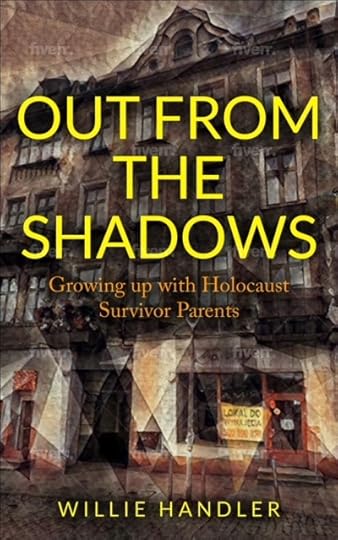
On November 9th I will be releasing my memoir Out From the Shadows. This should be a moment of triumph and celebration after 4 years of struggling to arrive at this point. It should be but it’s not.
I expected this book would be not much different than writing any of my fictions book only easier because the story is already in my head. Well it wasn’t easier and definitely and not anything like writing fiction. I’ve already documented my struggles to write the memoir and how the process exposed me to buried memories and trauma. The writing process also made me realize that I have been running away from by past. I’ve stopped running and the past has caught up with me.
I’ve been outspoken about my family’s history, the Holocaust, trauma and mental health. That also comes at a cost. The reaction from family, friends and social media followers has been extremely positive and supportive. I’ve been called so many wonderful things and treated like a mini-celebrity. I’m referred to as strong, courageous, a role model, resilient, respected, and much more.
I feel none of these things. I only feel broken and in constant survival mode. Anxiety pulsates through my body until I’m overwhelmed. I hate the pity from those who see me struggle. I keep hoping this nightmare I’m living will finally come to end. Most of all, I regret writing a book that turned my life upside down. I would love to turn back the clock and go back to 2019 when I believed that intergenerational trauma happened to other descendants of survivors but not me.
But I can’t go back. So each day, I pick up the pieces and attempt to move forward without stumbling. I’m no hero. I don’t want to be a hero. I just want my life back.
August 28, 2024
Holocaust Museums, Trauma, and Remembrance
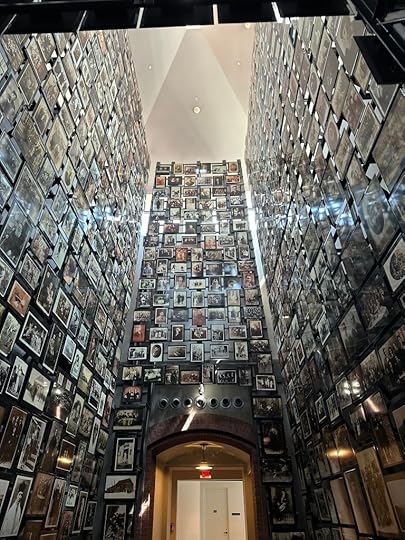
In 1998 I visited Washington DC for the first time with my wife Mary Anne and daughter Sarah. We visited as many museums as we could, making use of the hop-on-and-hop-off trolleys. Sarah was 13 at the time, and we felt she would be able to handle the United States Holocaust Memorial and Museum. After all, the Holocaust wasn’t new to Sarah since both my parents were survivors. It was a solemn day, but I can’t say it was overly emotional.
Fast forward to 2024, my memoir was to be released, and I had begun work on a new book dealing with intergenerational trauma. I decided it was the right time to return to Washington and see the Holocaust museum again.
Mary Anne and I planned a trip so that we would also meet up with two friends who were also writers, Ellie and Karen, and all go to the museum together. I really had no trepidation about the visit. I had been before and as a volunteer docent at the Toronto Holocaust Museum, I had was comfortable with the subject matter.
I was so wrong.
After clearing security, we travelled to the start of the permanent exhibit by elevator. As the metal door clanged shut on the gray-walled car, I was startled, and images appeared in my head. I imagined the metal doors of a gas chamber trapping us. It went downhill from there. Nothing in the exhibits was new to me. I had seen it all before. I had written about it. But in this place, I was being pulled into every photo and artifact. I was the boy begging in the streets of the Warsaw Ghetto. That was my father dragging heavy paving stones. My mother was being assaulted by Nazi thugs. I was in my own personal hell.
Why did I think this was a good idea? I was light-headed and clammy. I felt nauseous and several times I felt that I was going to throw up. I staggered into a washroom to splash cold water on my face. It didn’t make a difference. I wanted to bolt from the building. I could feel the eyes of others in our group looking over at me. I had no reason to be here. I had nothing to learn or prove.
When I reached the boxcar on display, I stepped inside. I was the only one standing in there, but it felt claustrophobic, and I could barely breathe. It was smaller than I had pictured. I couldn’t visualize it holding 60 or more people. Every member of my family had traveled in one of these cars – some survived and some perished after arriving at their final destination. Typically, they traveled for several days without food or water in stifling heat or frigid weather. The heaviness of this place was crushing.
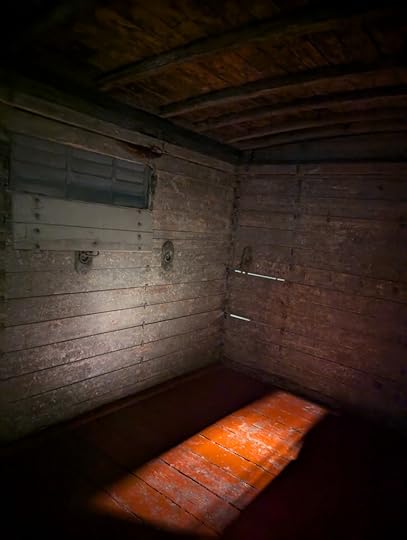
I finally left and found a brightly lit spot to sit down and clear my head. With my head in my hands, I wept. Not because of sadness because I’ve been through all that over the past few years. It was out frustration. To this day, I cannot understand why it happened. Why did people go along with it? Why did no one try to stop it? How can people live with themselves after intentionally killing babies? I have so many questions but there are no answers.
All I can do is tell my family’s story over and over again, usually to a sympathetic audience. But if I can reach even one person who doesn’t know or wasn’t aware then I have accomplished something abd honored my family.
I finally got up and walked to the Hall of Remembrance – a hexagonal structure used for public ceremonies and personal reflection. Inscribed on the walls are some of the names of concentration and death camps. I lit candles that were available and said Kaddish (Mourner’s Prayer) for my lost family.
Why would this museum bring out so much anxiety when I regularly visit our local museum? The Toronto Holocaust Museum is a wonderful facility, but it was designed more as a teaching centre then a museum. Thousands of students go through the facility to learn hopefully not be traumatized. That was done intentionally.
I will never return to the Washington museum. There is no reason to return. The facility isn’t for descendants of Holocaust survivors. We know too well what happened. The stories return to us at night or during stressful times. We are reminded on holidays and family get-togethers because there so few of us to celebrate. One day I will wrestle free from the trauma that haunts me. But I will be able to forget what happened.
July 24, 2024
Revealing My Own Mental Health Journey
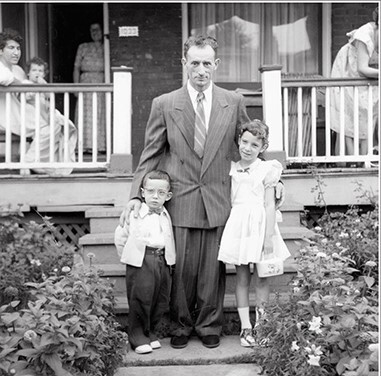
As a descendant of Holocaust survivors, I have inherited considerable trauma from my parents in additional to incurring childhood trauma. As I speak to other descendants regarding their trauma, I thought it was important that I also share my experience.
For 67 years I functioned well. I had a successful professional career, had a good family life, and had become an author with several novels. Things changed for me in early 2021. During the depths of the pandemic and while undergoing cancer treatment, I began thinking about my own legacy but also that of my family. I sensed that perhaps I was running out of time. I decided to write a memoir describing my personal journey as a child of Holocaust survivors.
I buried myself in research and writing and soon the health scares became background noise. Then the discovery that changed my life occurred in December 2021. I learned that my father had two daughters with his first wife, Estera, in the Bedzin Ghetto while under German occupation. I had already known that my father had been married and that he had a daughter named Laja (pronounced Leah). I had been searching for her birth record to determine when she was born. The records I received from Polish archives indicated that Laja was born April 30, 1940. But the shocking news was a second record indicating that Laja had a younger sister Jenta (pronounced Yenta), who was born on September 6, 1941. No one in the family knew anything about Jenta. My father was no longer around to confirm my discovery. Shortly after that I uncovered details of their murder in an Auschwitz gas chamber in August 1942. Then I found a photo of the two girls taken shortly before their death.
These discoveries unleashed a torrent of buried trauma and childhood memories and my comfortable and stable life evaporated very quickly. Trauma unleashed waves of anxiety that prevented me from sleeping. When I did sleep, my childhood nightmares returned. Writing was no longer possible because the negative images and voices in my head drowned out my creative voices. Everything felt wrong in my life, and on several occasions, I considered ditching the memoir. By the summer of 2023, I realized that the trauma was not going to go away and decided to try therapy.
I spent several weeks searching for an appropriate therapist. I knew if needed to be someone with experience with intergenerational trauma. But what else? Should the therapist be Jewish? Would they be better able to relate to me if they were also descendants of Holocaust survivors? I decided I didn’t need empathy and I didn’t want a therapist who had personal biases regarding the Holocaust. I chose a psychotherapist who wasn’t Jewish, Erica Warder. She had been in practice for only several years because her previous career was opera vocalist. Part of my logic was that she would be able to relate with a struggling writer. To be honest, their background isn’t as important as your comfort level with the therapist.
The first three sessions I did a lot of talking. I described my family’s history, and she occasionally would stop me to ask about some Holocaust or Jewish terminology that was unfamiliar to me. I didn’t really understand what this process would accomplish but just went along. I assumed I would be healed in 3 to 4 months. After several sessions, Erica pointed out that I had only talked about other family members but not about myself. I stared off into space, thinking of how to respond. I never talk about myself. Certainly not about my feelings. I didn’t even know how to start. But I gave it a stab and she would guide me into revealing more personal information.
The more I revealed, the more uncomfortable I became. After a session, I needed the rest of the day to process what had happened. I would spend the rest of the week planning what I would say the following week. Conversations would be repeated over and over in my head. I would try to control the sessions to increase my comfort level. I hated the process and would watch the clock to see how much time until each session ended.
Several weeks later I had what might be described as an epiphany and began to describe how I grew up feeling abandoned by my parents, having trust issues, unwilling to ask for help, feeling like I never fit in, and having a negative self-image. I experienced a flood of emotions and cried through the entire session. When it was over, I thought to myself, so this was it. I’ve been healed. I began to plan on when to stop therapy.
I should mention that I had one friend who I confided in. She encouraged me to try therapy. I would bounce things off her before a session and process what I had experienced after each session. When I mentioned that I was better and would stop therapy, she gently encouraged me to continue. She noted it can years to heal. I mentioned to Erica that I was better and wanted to take a break. Now Erica never disagrees with a patient’s decision, and we stopped therapy. Within 2 weeks, I crashed and returned to therapy. I stated I was committed to therapy for as long as it would take to heal. But deep down, I still believed this was a short-term need. I worked hard at talking about myself, my emotional state, and my relationships. As more memories surfaced, I found myself riding an emotional rollercoaster. There were days I felt fine, but I soon discovered how easily I could be triggered. Then I would come crashing down. My therapy sessions were weekly but there were weeks where I was struggling and had a second session.
Those crashes involved extreme emotional pain, anxiety, and irrational thoughts. It’s not something that one can easily relate to if you have never had mental health issues. Just imagine back pain so severe that you are miserable and don’t feel like doing anything. I began to have anxiety attacks. I slept even less. In my mind I blamed Erica for what was clearly a deterioration of my mental health. I loathed therapy. I decided I needed to quit. Then my friend stepped in and convinced me to stick with it. I reluctantly agreed.
One evening in May 2024, a night I will never forget, I hit rock bottom. Walking downtown with friends to a restaurant for dinner, I had a flashback that triggered a severe panic attack. That night I did not sleep. I was so desperate to get some sleep that, at one point, I called a crisis hotline. The voices in my head reminded me of every “mistake” I had made in my life, how much of a failure I was, and how everyone I knew had abandoned me. None of this was true but mental illness can make you believe almost anything.
I fell asleep from exhaustion in the morning. When I awoke, I was determined to make changes in my life because I never wanted to go through another night like that. I went to my family doctor and got a prescription for anti-anxiety medication, something Erica had suggested on several occasions. At my next session with Erica, I told her that I would no longer consider leaving therapy. I was prepared to stay in therapy for the rest of my life if necessary. I also stated that I would try to find a better life-work balance. I would limit the number of hours I worked each day, not work on weekends, walk daily, and develop strategies for getting better sleep.
I’m now 10 months into therapy. The medication has made a difference and in combination with therapy I’m doing much better. That emotional rollercoaster I was riding for months has slowed down and flattened out. I still have bad days, but I am better able to manage them.
I was 69 when I decided to try therapy. That’s likely not a time in one’s life that people turn to therapy. It’s never too late to start. I was so naïve about what it would involve. I had no idea how difficult this process was. It’s a lot of hard work. But I’ve never shied away from hard work. Still, this is one of the most difficult things I’ve ever done. Despite feeling better, I won’t be leaving therapy anytime soon. Maybe the frequency will change but I need that lifeline. There is no cure for trauma but it can be managed.
I have gone public with my struggles because there are many people like me. I implore anyone struggling with their mental health to consider getting help. Give it a chance and be prepared to feel worse before you feel better. I was fortunate to find the right therapist on my first go at it. It doesn’t always work that well. Find that right person and stick with it.
Exposing My Mental Health Journey
As a descendant of Holocaust survivors, I have inherited considerable trauma from my parents in additional to incurring childhood trauma. As I speak to other descendants regarding their trauma, I thought it was important that I also share my experience.
For 67 years I functioned well. I had a successful professional career, had a good family life, and had become an author with several novels. Things changed for me in early 2021. During the depths of the pandemic and while undergoing cancer treatment, I began thinking about my own legacy but also that of my family. I sensed that perhaps I was running out of time. I decided to write a memoir describing my personal journey as a child of Holocaust survivors.
I buried myself in research and writing and soon the health scares became background noise. Then the discovery that changed my life occurred in December 2021. I learned that my father had two daughters with his first wife, Estera, in the Bedzin Ghetto while under German occupation. I had already known that my father had been married and that he had a daughter named Laja (pronounced Leah). I had been searching for her birth record to determine when she was born. The records I received from Polish archives indicated that Laja was born April 30, 1940. But the shocking news was a second record indicating that Laja had a younger sister Jenta (pronounced Yenta), who was born on September 6, 1941. No one in the family knew anything about Jenta. My father was no longer around to confirm my discovery. Shortly after that I uncovered details of their murder in an Auschwitz gas chamber in August 1942. Then I found a photo of the two girls taken shortly before their death.
These discoveries unleashed a torrent of buried trauma and childhood memories and my comfortable and stable life evaporated very quickly. Trauma unleashed waves of anxiety that prevented me from sleeping. When I did sleep, my childhood nightmares returned. Writing was no longer possible because the negative images and voices in my head drowned out my creative voices. Everything felt wrong in my life, and on several occasions, I considered ditching the memoir. By the summer of 2023, I realized that the trauma was not going to go away and decided to try therapy.
I spent several weeks searching for an appropriate therapist. I knew if needed to be someone with experience with intergenerational trauma. But what else? Should the therapist be Jewish? Would they be better able to relate to me if they were also descendants of Holocaust survivors? I decided I didn’t need empathy and I didn’t want a therapist who had personal biases regarding the Holocaust. I chose a psychotherapist who wasn’t Jewish, Erica Warder. She had been in practice for only several years because her previous career was opera vocalist. Part of my logic was that she would be able to relate with a struggling writer. To be honest, their background isn’t as important as your comfort level with the therapist.
The first three sessions I did a lot of talking. I described my family’s history, and she occasionally would stop me to ask about some Holocaust or Jewish terminology that was unfamiliar to me. I didn’t really understand what this process would accomplish but just went along. I assumed I would be healed in 3 to 4 months. After several sessions, Erica pointed out that I had only talked about other family members but not about myself. I stared off into space, thinking of how to respond. I never talk about myself. Certainly not about my feelings. I didn’t even know how to start. But I gave it a stab and she would guide me into revealing more personal information.
The more I revealed, the more uncomfortable I became. After a session, I needed the rest of the day to process what had happened. I would spend the rest of the week planning what I would say the following week. Conversations would be repeated over and over in my head. I would try to control the sessions to increase my comfort level. I hated the process and would watch the clock to see how much time until each session ended.
Several weeks later I had what might be described as an epiphany and began to describe how I grew up feeling abandoned by my parents, having trust issues, unwilling to ask for help, feeling like I never fit in, and having a negative self-image. I experienced a flood of emotions and cried through the entire session. When it was over, I thought to myself, so this was it. I’ve been healed. I began to plan on when to stop therapy.
I should mention that I had one friend who I confided in. She encouraged me to try therapy. I would bounce things off her before a session and process what I had experienced after each session. When I mentioned that I was better and would stop therapy, she gently encouraged me to continue. She noted it can years to heal. I mentioned to Erica that I was better and wanted to take a break. Now Erica never disagrees with a patient’s decision, and we stopped therapy. Within 2 weeks, I crashed and returned to therapy. I stated I was committed to therapy for as long as it would take to heal. But deep down, I still believed this was a short-term need. I worked hard at talking about myself, my emotional state, and my relationships. As more memories surfaced, I found myself riding an emotional rollercoaster. There were days I felt fine, but I soon discovered how easily I could be triggered. Then I would come crashing down. My therapy sessions were weekly but there were weeks where I was struggling and had a second session.
Those crashes involved extreme emotional pain, anxiety, and irrational thoughts. It’s not something that one can easily relate to if you have never had mental health issues. Just imagine back pain so severe that you are miserable and don’t feel like doing anything. I began to have anxiety attacks. I slept even less. In my mind I blamed Erica for what was clearly a deterioration of my mental health. I loathed therapy. I decided I needed to quit. Then my friend stepped in and convinced me to stick with it. I reluctantly agreed.
One evening in May 2024, a night I will never forget, I hit rock bottom. Walking downtown with friends to a restaurant for dinner, I had a flashback that triggered a severe panic attack. That night I did not sleep. I was so desperate to get some sleep that, at one point, I called a crisis hotline. The voices in my head reminded me of every “mistake” I had made in my life, how much of a failure I was, and how everyone I knew had abandoned me. None of this was true but mental illness can make you believe almost anything.
I fell asleep from exhaustion in the morning. When I awoke, I was determined to make changes in my life because I never wanted to go through another night like that. I went to my family doctor and got a prescription for anti-anxiety medication, something Erica had suggested on several occasions. At my next session with Erica, I told her that I would no longer consider leaving therapy. I was prepared to stay in therapy for the rest of my life if necessary. I also stated that I would try to find a better life-work balance. I would limit the number of hours I worked each day, not work on weekends, walk daily, and develop strategies for getting better sleep.
I’m now 10 months into therapy. The medication has made a difference and in combination with therapy I’m doing much better. That emotional rollercoaster I was riding for months has slowed down and flattened out. I still have bad days, but I am better able to manage them.
I was 69 when I decided to try therapy. That’s likely not a time in one’s life that people turn to therapy. It’s never too late to start. I was so naïve about what it would involve. I had no idea how difficult this process was. It’s a lot of hard work. But I’ve never shied away from hard work. Still, this is one of the most difficult things I’ve ever done. Despite feeling better, I won’t be leaving therapy anytime soon. Maybe the frequency will change but I need that lifeline. There is no cure for trauma but it can be managed.
I have gone public with my struggles because there are many people like me. I implore anyone struggling with their mental health to consider getting help. Give it a chance and be prepared to feel worse before you feel better. I was fortunate to find the right therapist on my first go at it. It doesn’t always work that well. Find that right person and stick with it.
July 22, 2024
The Roots to Antisemitism
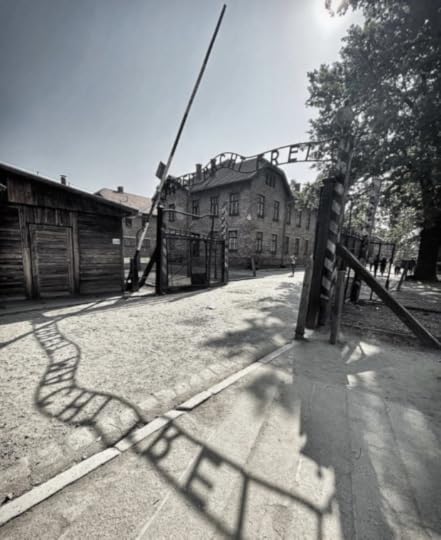
I am often asked where does antisemitism come from? Why do some people hate Jews? I have my theories. I believe it’s often created by centuries old misinformation and conspiracy theories directed at the Jewish people. Jews make up less that one percent of the Canadian population, two percent of the US population, and 0.2 percent of the world population. In many countries, including Canada, Jews are the number one target of religious hate crimes. Unlike other forms of discrimination, antisemitism is not just a social prejudice, it is a conspiracy theory centered on how the world operates. The Internet is rife with symbols and images associated with classic antisemitism, such as blood libel, to characterize Jews. Conspiracy theories allege the existence of a secret society and weaponize false accusations of child trafficking and murder; these conspiracies are built on centuries-old antisemitic tropes, including claims that the fictional deep state cabal consumes the blood of children.
Demonizing or stereotyping Jews as individuals or a collective – such as the myth about a world Jewish conspiracy that controls the media, economy, government, and other societal institutions – has become commonplace. A classic example involves Hungarian Jewish billionaire, philanthropist, and Holocaust survivor George Soros, who is widely recognized for funding progressive political and social causes. Soros has become a lightning rod for conservative and right-wing groups who object to his funding of liberal causes. In far-right circles worldwide, Soros’s philanthropy often is recast as fodder for conspiracy theories, including claims that he masterminds specific global plots or manipulates certain events to further his goals. Many of those conspiracy theories employ long-standing antisemitic myths, particularly the notion that rich and powerful Jews work behind the scenes, plotting to control countries and manipulate global events.
During the COVID-19 pandemic, the phrase “poisoning the well” re-emerged on far-right fringe platforms that blamed Jews for spreading the virus. Far-left platforms replaced the word “Jews” with “Israel” and accused the Jewish state of using the virus to hurt Palestinians or to profit off the vaccine.
Since October 7th, new conspiracy theories have appeared. One theory suggests that there was no attack by Hamas. The attack was staged by Israel to justify genocide in Gaza, and that it was the IDF that killed Israeli civilians. This campaign spread despite videos and documents posted by Hamas in which they boasted about the attack. Some are suggesting that there were no hostages or sexual violence and that the alleged kidnappings are Israeli propaganda. On several occasions following October 7th, age-old antisemitic tropes such as Jewish world domination have been seen at anti-Israel rallies. This parallels the conspiracy theories following the September 11th attacks where fringe groups claimed that Mossad was behind the attacks and Jews working in the Twin Towers were told not to show up for work that day.
October 7th denial falls in the same realm is Holocaust denial. Over the past 70 years, a new form of antisemitism has emerged: denying or distorting the fact or scope of the genocide of the Jewish people at the hands of National Socialist Germany and its supporters and accomplices during World War II. This includes the number of Jews murdered and the existence of extermination camps and gas chambers.
Holocaust deniers will tell you that Auschwitz inmates were taught trades. Townspeople in the surrounding area saw life at Auschwitz as “luxurious,” what with the inmates’ attractive redbrick sleeping quarters, complete with bunk beds with mattresses, flush toilets, porcelain-covered stoves for cozy heating, and double-paned casement windows. The paths were tree-lined, there were flowers planted before every barracks, and the Nazis regularly showed movies to the inmates. Not only that, but Auschwitz had an art museum, a library, regular concerts and sporting events, a theater for music and drama, and a brothel for lonely inmates. It also had two fine post offices because the Geneva Convention rules, strictly followed by the Germans, ensured the sending and receiving of mail by all prisoners. The kindly SS guards even provided special pre-printed cards and form letters. And their health care system was world class– after all, for the Nazis, the health of the labor force was a prime concern.
Where does all this nonsense come from? Some of it is spread but stupid gullible people who are incapable of analytical thinking. I believe much of it is produced by antisemites. Why would they spread such lies? Holocaust denial is one of several conspiracy theories directed at Jews. It is a radical form of antisemitism that denies Jews the ability to be considered victims and suggests that the Holocaust is part of a worldwide conspiracy. The revisionists claim Jews around the world knowingly fabricated evidence of their own genocide in order to extract reparations from Germany, gain world sympathy and facilitate the alleged theft of Palestinian land for the creation of Israel.
I believe there is a collective responsibility for all Jews to remember. Jewish communities around the globe have built museums and memorials to preserve that memory, from Yad Vashem in Jerusalem to the United States Holocaust Memorial Museum in Washington to the new Toronto Holocaust Museum which opened in June 2023. Every death was once a life, and their stories need to be told, because we need to honor their lives, and not their deaths. I’ve tried to contribute to that collective memory through this book. Not only are the survivors passing away, but so are the perpetrators, which will end the possibility for justice and vengeance. But what is most important is remembering the lessons of the Nazis’ rise to power. We are presently living in an era of democratic backsliding. Antisemitism is on the rise in an almost unprecedented way, both on the right and left.
May 14, 2024
Who Would Hide Me?
In the course of interviewing descendants of Holocaust survivors for my book on intergenerational trauma, a significant number of people mentioned without prompting that they had been thinking about what they would do if persecution of Jews returned. Surprisingly, some had already approached non-Jewish friends in the event they would need to go into hiding. That got me thinking. What would I do?
This was told to me by a third generation survivor, “my family had two extra freezers in our garage that my mom needed us to have in case another Holocaust broke out, and we need food to survive and hide, and my mom always has friends that understand and are not Jewish, who would be willing to hide us at any time.”
A child of survivor volunteered this, “I’ve given a lot of thought of who of my non-Jewish friends would hide me if I needed to be hidden.”
So, I posted on X, formerly known as Twitter, that I had received this feedback from some of those interviewed. That post received about 300 comments. These are some of the comments from Jews.
“I’ve asked.”
“We’ve all had to take our stock of this recently.”
“We have passports and a grab bag ready. I won’t say more than that.”
“I won’t ever hide again. I’ll Warsaw Ghetto this place.”
“I’m not sure my friends would hide me if it came to that.”
“That fear just doesn’t go away.”
“The sad part is that I suspect that people who I should be able to trust would me among the first to turn me in.”
Most comments were not from Jews. Many were shocked and horrified to learn that this sentiment exists in the Jewish community. A small number responded with attacks on the Jewish community because of the ongoing war in the Gaza. Diaspora Jews are being subjected to hate for a war that they have no say or influence. And then there are those who just don’t like the idea of Jews as victims. I’m sure this post will attract a small number of similar negative comments.
The majority of responses were from people offering to shelter my family or other Jewish families. Am I surprised? Not really. There were so many instances of Righteous Gentiles who risked their lives to hide and protect Jews. I saw many examples in my interviews with descendants of survivors. Perhaps one-third had at least one parent who was hidden for some part of the war. But I wonder how many of these offers would still be extended if this brought danger onto themselves and their families. After all, if conditions were such that Jews needed to go into hiding, then those who provide a safe haven would be equally at risk.
This is also the 85th anniversary of the St. Louis that set sail from Hamburg, providing a lifeline to Jews fleeing Nazi persecution. But when the passengers arrived at their destination in Havana, Cuba, most were not allowed to disembark. Both the U.S. and Canada denied entry to the desperate passengers.
Of the 620, St. Louis passengers who returned to continental Europe, 254 were murdered during the Holocaust, most of them in Auschwitz and Sobibor. Of the 288 passengers who managed to get to Britain, the vast majority were alive at war’s end.
The 1930s are not that long ago, and for the Jewish community, the trauma remains. The rise in antisemitism has shaken Jews around the world. Would I go into hiding if things became that bad? I don’t think I would. I can’t see myself living in fear is someone’s attic. Even at my age, I would rather die resisting then cowering in fear.