Willie Handler's Blog, page 5
June 17, 2023
The History of Jews and Alcohol

My mom used to make vishnik, a Romanian sour cherry brandy. It was an old family recipe handed down from my great-grandfather. He operated a brandy distillery, and his sons went into the business, including my grandfather, Wolf. The business mostly catered to the small Jewish community in Comanesti, Romania and the surrounding villages. The cherry brandy was sold in barrels along with home-made wine.
Selling booze was a very profitable business in Eastern Europe. One could make more money converting grain or fruit to alcohol than selling it as food. It is estimated that at one time 30% of Eastern European Jews were in the business of producing and selling booze.
Historical Context
To understand the Jewish involvement in the alcohol trade, we must first consider the historical context. Throughout much of history, Jews have faced various forms of discrimination, exclusion, and limited economic opportunities. They were often barred from owning land or pursuing certain professions, leading them to seek alternative avenues for economic stability such as becoming merchants, tradesmen, or craftsmen.
Cultural and Religious
Judaism has a long-standing tradition of wine consumption and production. Wine plays a central role in religious ceremonies and observances, such as the Sabbath and Passover. This cultural familiarity with alcohol, combined with knowledge and experience in wine-making, provided a foundation for Jews to enter the alcohol trade. It made economic sense to expand sales to the Gentile community.
Skills and Networks
Jewish communities historically fostered a culture of entrepreneurship and commerce. Jews often lived in close-knit communities, which allowed for the development of extensive networks and trading relationships. These connections, coupled with the Jewish emphasis on education, provided Jews with the skills and knowledge necessary to thrive in various industries, including alcohol.
Access to Financing
Due to societal and legal restrictions, Jews were often excluded from other sectors of the economy, such as landownership or guilds. Consequently, they turned to industries that required less initial capital, such as the alcohol trade, where small-scale operations could be established.
Legal and Social Marginalization
It was common practices in Eastern Europe, to relegate Jews to marginalized social positions, which restricted their access to certain professions or resources. Consequently, they sought opportunities in sectors that were less regulated or controlled by the majority population. The alcohol trade, at times, fell into this category, making it an attractive option for Jewish entrepreneurs.
Global Diaspora and Migration
Producing alcohol was a portable business. Jews often were forced to migrate to avoid persecution. As Jews settled in new lands, they brought with them their skills, traditions, and entrepreneurial spirit. The alcohol trade became a familiar and accessible avenue for Jewish immigrants seeking economic stability and integration in their adopted countries.
The Jewish involvement in the alcohol trade throughout history is a testament to their resilience, resourcefulness, and determination in the face of adversity. From cultural traditions and networks to economic necessity and historical circumstances, multiple factors converged to enable Jews to carve out a place for themselves in this industry.


June 13, 2023
The Quintessential Jewish New York Food: The Knish
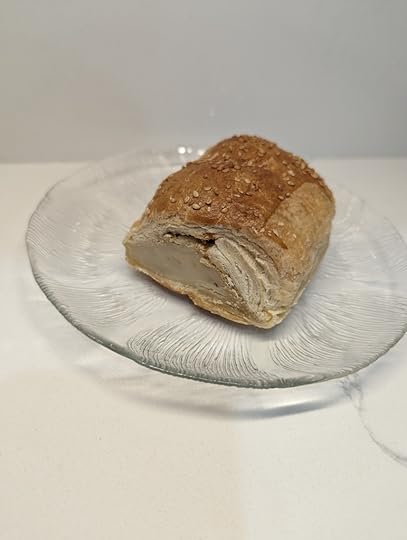
When I’m in New York City, I always try to visit the Lower East Side to treat myself to an Ashkenazi Jewish food that is quintessential New York. It’s not the bagel but the knish. It’s just that the knish has never made it big as a culinary icon.
What’s a knish? It’s a traditional Jewish pastry that originated in Eastern Europe, particularly among Jewish communities in Poland and Russia. It can be a savory snack or side dish consisting of a filling, typically made with ingredients such as potatoes, onions, meat, cheese, or vegetables, enclosed in a dough shell. The dough is usually made from flour, water, and oil or fat, and it is rolled out and filled before being baked or fried until golden brown.
In the early 1900s, immigrant Jews would open knisheries which allowed them to earn a living and to take those first steps up the social ladder. As upwardly mobile Jews left poor neighborhoods like the Lower East Side, the knisheries that boosted economies a generation ago lost business and eventually closed.
Yonah Schimmel, a Romanian Jew opened a shop on Houston Street in 1910. Yonah Schimmel’s Knish Bakery remains in continuous operation for over one hundred years and is still run by descendants of Schimmel. That it still operates at the same location in amazing since Jewish establishments abandoned the Lower East Side 60 or 70 years ago.

The exact origins of the knish are somewhat debated, as variations of similar pastries exist in other cultures. However, it is widely associated with Jewish cuisine and has become particularly popular in Jewish communities around the world. The word “knish” is derived from the Yiddish word “knishke” or “knische,” which itself is a diminutive form of the Ukrainian word “knysh” meaning “cake” or “pastry.”
The knish, when it’s done right, is just as delicious as the bagel. It’s a mass of carbs wrapped in thin, pliant dough and blistered in the oven. There is nothing sexy about a knish. It’s brownish and rotund and anything but elegantly shaped. But it is food that will make you feel good, fill you up on the cheap. That has always been the appeal. One of Schimmel’s knishes and I’m stuffed.
To find a proper knish is a challenge today. I avoid mass-produced knishes because a proper knish is baked, handmade variety with delicious fillings that explode in your mouth and fill your gut. There has been a knish migration which followed Jews to newer and affluent neighbourhoods just as the bagel and delis did. But you will run into very non-traditional flavours like curry beef and chocolate. Just give me a potato-filled knish and I’ll be happy.
June 5, 2023
The Different Forms of Humour
I’m pretty sure humour is part of my DNA. But many people are funny but can they write funny? Whether you are writing novels, screenplays or comedy monologues, there are skill sets that need to be developed. There is also a wide array of humour that resonates with diverse audiences. In this blog post, we will delve into the fascinating world of comedy and explore the various types of humour that make us laugh, from puns and slapstick to satire and dark comedy. I’ve tried to work them all into my writing.
1. Slapstick Comedy
Slapstick comedy traces its roots back to the physical humour found in vaudeville and silent films. It relies on exaggerated physical actions, such as falls, collisions, and practical jokes, to evoke laughter. Think of classic comedians like Charlie Chaplin and W.C. Fields or more recent comics like Adam Sandler and Jim Carrey. Although slapstick is visual, it is possible to portray it when writing. Here is an example of a slapstick scene from my novel LOVED MARS HATED THE FOOD.
“The next customer, a Macher, approaches Plinka and repeats the same line. He hesitates when handed his drink and looks around the café, then at his cup before throwing the contents down his throat. His face turns fiery red and his forehead slams against the counter. The caffeine-charged Martian turns to his right and takes off full speed into the wall. The impact causes fine dust particles to float around the store as he falls. I signal to two of my security staff.“
2. Satire
Satire is a form of humour used mock individuals, institutions, or society as a whole. It employs irony, hyperbole, parody, and sarcasm to expose flaws, hypocrisy, and absurdities, often with a touch of social commentary. It’s my favourite form of humour. Think “Saturday Night Live” or authors such as Mark Twain or Terry Pratchett. Many of my tweets are examples of satire including the following:
“Your password must contain an uppercase letter, a lowercase letter, a number, a symbol, be at least 10 characters long, a Cyrillic letter, a hieroglyph, has not been used in the last 7 years by anyone, and cannot rhyme with lemon.”
3. Wordplay and Puns
Wordplay and puns are really not my thing although many people appreciate a clever pun. Puns exploit multiple meanings of words or phrases, often resulting in humorous or unexpected twists. They can be found in everyday conversations, advertising slogans, or in the works of renowned comedians like Groucho Marx and Oscar Wilde. Here is an example:
“I just got over my addiction to chocolate, marshmallows and nuts. I won’t lie, it was a Rocky Road.”
4. Observational Comedy
Observational comedy hinges on the ability to find humour in everyday life situations and human behaviour. They often highlight the absurdity of mundane occurrences, making us see the humour in situations we might otherwise overlook. Jerry Seinfeld is a master of this type of comedy. Typically, these are things we can all relate to. This is a scene from my novel, THE ROAD AHEAD involving a panhandler, something that is quite common on the streets of a large city.
“Forty minutes later he has parked his car and is crossing the street after picking up a coffee from Tim Hortons. He turns to head into Ferguson Block when a voice calls out. “Can you spare some change?” It is a familiar vagrant who is usually located down the street closer to Queen’s Park Circle. His two dogs are stretched out on the sidewalk beside him. He is holding a sign that reads: ‘My EX-WIFE had a better lawyer.’”
5. Dark Comedy
Dark comedy, also known as black comedy, treads the fine line between laughter and discomfort. It explores taboo subjects, such as death, tragedy, and serious social issues, by using humour as a coping mechanism. Films like “The Menu” and “Knives Out” are good examples of dark comedy. The trick is to engage audiences while challenging their perceptions of morality and society. My most recent novel, DEEP INTO THE WEEDS, was largely a dark comedy. Here is a scene from the book.
A loud bang echoes across the property. Seconds later, there’s another one.
The beating stops. The only sound is hysterical sobbing from Sara.
Each breath sends spasms of pain shooting through my rib cage. My head throbs as I stumble to my feet and try to focus. I stagger over to a trembling Sara and take her in my arms. Tears stream down her face.
As the fog in my head clears, I look around for Ramone and Angel. Then I realize that Mum is standing in front of us. “Take that, you motherfuckers!” she shouts, pointing a shotgun at the two gangsters lying on the ground. Both have blood pouring out of head wounds.
I teeter over to the bodies and bend down. Neither have a pulse. “Mum, what have you done?”
“I’m protecting my family,” she says, frowning. “Someone has to look out for them.”
“Holy shit! You’ve killed them. Like, you’ve actually killed them.”
“You’re damn right.”
These aren’t the only types of humour. Some of these categories have subgroups. For example, there is sophomoric humour (“Dumb and Dumber” or “The 40 Year Old Virgin”) which often falls under slapstick comedy. You could say self-deprecating humour (think Rodney Dangerfield) could fall under observational comedy. This list goes on and on. I will leave you with this last joke.
Two men are waiting for a train. The younger man asks the older man for the time, but the older man ignores him. After a while, the younger man again asks for the time and again the older man ignores him. Frustrated, the younger man finally asks, “Why won’t you answer me when I ask you for the time?”
The older man sighs and explains: “Look, if I tell you the time, we’ll start to talk. Then when the train comes, you might sit down next to me. Perhaps we’ll get to know each other, and maybe I’ll eventually invite you to my house for dinner. Maybe then you and my daughter would really get along – why, you might even get engaged! And why would I want a son-in-law who can’t even afford a watch?”
May 19, 2023
The List
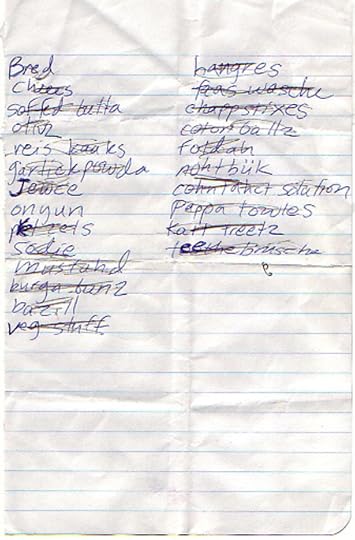
My wife hates grocery shopping. Not other types of shopping – clothes, furniture, kitchen gadgets and jewelry. Just groceries. It seems buying sustenance intimates her. So by default, I have been delegated shopping for food.
Grocery shopping is not an issue for me, provided I am given a clear, organized and legible list. There lies my problem. Her enthusiasm for grocery shopping is matched by diligence in constructing a weekly shopping list. It would be nice to know what she was thinking when she wrote out the list. Take for example, carrots. Sounds simple. But there are carrot bunches with the tops, loose carrots, bagged carrots, baby carrots, shredded carrots, frozen carrots, canned carrots. Rice could be on the list. I get to the correct aisle and look at the long shelf with every kind of rice imaginable. Sigh. I could go on and on.
It means that every trip to the supermarket requires ongoing lines of communication with my wife. Now she finds this quite humorous. I might be calling her for the third time in ten minutes asking about what type of lettuce she had in mind. I can hear the people around her snickering. “Is it your husband again?” It seems it’s my competence that’s always in question.
But the worst is the ineligible entries. I might ask. “What is the item between kidney beans and icing sugar?”
“Sorry I don’t remember. What does it look like to you?”
“If I knew what it was I wouldn’t be asking.”
So you are likely thinking why do you agree to do it? That’s just the way household duties are distributed. Believe me, it could have been worse. But things can get pretty dicey if my wife isn’t accessible by phone. That occurred recently. I was pushing my cart past the dairy case looking over the list. Then this one item jumped out at me. I hadn’t noticed it before, nor did I recognize it. It was on the list between white sugar and whole wheat English muffins. I pick up my phone for my first clarification during today’s shopping excursion. But instead of a live voice I got voicemail so I left an urgent message. “I’m at the supermarket and can’t read something on your list. Call me.”
I’m still staring at the list and a cart pulls up next to me. “Excuse me.” A woman reaches around me for some cottage cheese.
Since we have made visual and verbal contact, I decide to enlist her help. “I was wondering if you can make out this item on my shopping list?”
“Hmm. Looks like lettuce to me.”
“Can’t be lettuce. Lettuce is elsewhere on the list.”
She turns to a shopping companion. “Diane, what does this look like to you?”
“Blueberries”
“I think it’s lettuce.”
“That word does not start with an L.”
Soon another shopper joins in. “Definitely lemons” I’m trying to get my list back so that I continue shopping, but the list is being passed from one shopper to another. A shopping scrum is in the making.
Someone shouts out. “There is the produce manager. Maybe he can figure it out. Hey Marty. Take a look at this and tell us what you think.ey He”
“Let me take a look. Oh yeah that’s broccoli. It’s right over there next to the corn on the cob.”
Not only have I lost sight of my list but I can’t find my cart. Then my phone rings. It’s my wife. I turn to the crowd of shoppers and announce. “Thank you everyone for your help. I just heard from my wife and it’s butter.”
One guy shouts out from the back. “Hey I won! I had butter all the way!”
May 2, 2023
Suggestions on Building an Online Platform for Writers

Like many writers, I jumped onto social media and other platforms with no strategy whatsoever. As a result I jumped around aimlessly for over a year or two, trying to figure out the strengths and weaknesses of these platforms and how to best use them. I’m now much more experienced and ready to pass on what I learned through trial and error.
1. Who is your audience?
So, you have a Twitter account, Instagram account, and a website/blog. That’s great. Who is your audience? Readers? Other writers? Industry professionals? Friends and family? If you think about it, each has different interests although some might overlap. For example, every group I mentioned likely reads books. But getting each to follow you on regular basis might require a slightly different approach. Think about, this post is going to appeal the most to other writers.
Each social media platform is quite different with different demographics. For example, Twitter has been, up to now, a microblogging platform. It’s a great for short concise messages or info. Personally, I like it the best. I scroll through tweets until one catches my eyes. But it makes sense to be on multiple platforms because each has different demographics. Instagram requires photos and video and links for sales are difficult to do. TikTok is a video platform and has a large number of young users which works well if you write YA books.
Facebook has 3 billion users (56% male) who spend an average of 30 minutes a day on the platform. Despite the fact that largest age group is 25-34, it is largely and older crowd and usage is dropping as younger users move to TikTok and other newer platforms.
Instagram has 2 billion users (52% male) who spend an average of 30 minutes a day on the platform. The largest age group is 18-24, so it’s a younger crowd compared to Facebook and they are still experiencing growth. Instagram introduced Reels to keep up with TikTok. Reels now drive engagement on the app.
LinkedIn has 2 million users (52% male). The largest age group is 30-39, so it attracts the oldest group of social media users. There is no information on the average amount of time spent on the platform. The app has a large number of professionals and its users are the highest earners.
YouTube
YouTube has 2 billion users (51% female) who spend an average of 45 minutes a day on the platform. The largest age group is 15-35. Users are more focused on entertainment.
TikTok
TikTok has 800 million users (61% female) and growing rapidly. They spend an average of 45 minutes a day on the platform. Twitter has the youngest demographics with largest age group is 18-24.
Twitter has only 300 million users (61% male) and there is a lot of uncertainty with the new owner. They spend an average of345 minutes a day on the platform. The largest age group is 18-29. Data suggests that Twitter users are better educated and earn more. It’s an ideal app to share content and drive discussions.
2. Establish Your Online Presence
So, you’ve decided which social media platforms you will be using. Remember, you don’t have to be everywhere. If you hate Facebook then don’t bother with it. Whatever you choose, it’s about showcasing your work and connecting with readers. In addition, literary agents may take a peak at your social media accounts and their interest is whether you are building a strong platform.
3. Connect With Readers
Connecting with potential reader is the name of the game. So, I avoid posting and responding to anything related to politics because that has become a polarizing topic on society. I don’t want to turn off readers because I may support or hate a certain politicians. Establishing a connection with readers is so important because once they become engaged, they keep returning to check out your account. I have accounts that follow me for two years before diving into one of my books. That can lead to subsequent purchases and book reviews. Many writers tend to follow other writers. I fall into that group but be careful that you are not ignoring the reading public.
4. Be Strategic and Develop Your Brand
Don’t just post random things that readers may not relate to. Build a following by being predictable. My posts are a mix of jokes, info and background about my books (including books in progress) and some personal stuff. I look at what types of things attract the most views and double down on those types of posts. Social media can be an invaluable tool for writers if used correctly, so take the time to develop an effective strategy and capitalize on its potential benefits.
April 26, 2023
The Life and Crimes of a Loyal Maple Leafs Fan

I admit it, I’m a criminal. I committed a crime and was caught. It was a crime of passion. Do I have regrets? Not really.
Perhaps I should back up a bit. I’m a life-long Toronto Maple Leafs fan. As they say, I bleed blue. As a kid I had Leaf posters on my bedroom walls and dreamed about playing for the hometown team. I’ve never seen my beloved Leafs win a Stanley Cup. I’ve never seen them play in a Cup final. I barely remember watching them even win a playoff series. They’ve broken my heart countless times, but you can’t abandon a true love.
I try to make it to a few games every season. Even in a losing season, you hope to at least be entertained for a few hours and go home happy. So last January I was able to pick up a pair of corner reds for a game against the Montreal Canadiens. What could be better? Saturday night hockey. An historic rivalry. The standings don’t matter when rivals meet. It’s all about bragging rights.
I take my friend Edgar who enjoys going to the games but doesn’t get my deep-seated passion. He’s not really part of Leafs Nation. He’s a bystander waiting for the Leafs bandwagon to stop for him to get on when things get good. I’m a lifer. My pregame prep is always the same. Check the lineups to see who is playing. Work out the line match ups in my head. What’s the power play going to look like tonight.
And of course, pull out my cherished autographed Doug Gilmour jersey. Number 93 is the link to the past when things were good. In fact, had it not been for the worst officiating in the history of the NHL, the Leafs might have won the Stanley Cup in 1993. I remember it vividly. It was on May 26, with the Leafs, leading the best-of-seven Campbell Conference final 3-2 against the Los Angeles Kings. The game was in overtime when Dougie was clipped in the face by the stick blade of Wayne Gretzky. With blood oozing from his mug, no penalty was called by referee Kerry Fraser. We lost that game and the series. I felt the world coming crashing down on me that week. I’m not sure how I survived. But that’s what Leafs fans do.
Back to the game against Montreal. It was an ugly game. Leafs were down 2-0 early in the game. It could have been worse but the Leafs’ goalie was making save after save. The team was listless. The fans were restless. You could feel the mood beginning in the arena turning ugly. At the end of the first period, some of the fans booed. It wasn’t “I hate your guts” booing. Just “I’m disappointed” booing. I refrained from booing. I like to support the boys. But it was hard to find anything positive to cheer for. During the intermission we bought beer and nachos. We weren’t hungry but needed a distraction.
The second period was much the same. Edgar begins asking when we could leave. It seems he was bored while I was despondent. A bad start was developing into a bad game. The Habs go up 3-0 and the jeering begins.
“Wake up the game started over an hour ago!”
“Trade that bum, Nylander!”
“Holl, you suck!”
It was coming from everywhere. At the end of the period the booing was louder. It was no longer “I’m disappointed” booing. It was “you make me vomit” booing.
Throughout the intermission Edgar pleaded to leave, “you’re not enjoying this.”
But I’m not a quitter. I’m sticking around to the bitter end. Then early in the third period something happened to me. One of the Leafs defenseman was carrying the puck behind his net. It was a blur. I don’t even remember who it was. Instead of carrying the puck up the side boards, he cut in front of the net where he lost control. In a split second a Canadiens player pounced on the loose puck, and it was in the net. Something snapped inside me. Perhaps it was all those years of disappointment and despair. I stood up and yelled something. I’m not even sure what I said. I was like Howard Beale in Network when he leaned out that window and yelled. “I’m as mad as hell, and I’m not going to take this anymore!!” Then I pulled off my Doug Gilmour jersey. My treasured jersey that has been part of my life for almost 20 years. The jersey with Gilmour’s signature. I tossed it on the ice. It was a cathartic moment.
Edgar turned to me. “Okay that’s it. Let’s go.”
I was about to respond when an usher and a police officer appear and ask to speak to me. I’m escorted into the concourse with Edgar tagging along and then into a security office. The police officer pulls out a note pad, “you have been identified on video throwing a jersey on the ice. Do you admit to doing this?”
“Yes I do.”
“You are being charged with public mischief which is a criminal act?”
“What? You’re charging me?”
“Yes sir. I need some identification.”
“Well you should be charging the players with fraud for impersonating a professional hockey team. You should be charging MLSE for misrepresentation. I’m the victim here!”
“What you did could potentially injure a player on the ice. The Scotiabank Arena has a policy of taking action against anyone throwing anything on the ice.”
A security officer jumps in, “you are also going to be banned for life from attending games.”
I envisioned being led away in handcuffs to a jail cell. Some hardened criminal would look at me and ask what are you in for? What do I tell him? Assault? Drug possession. Sir, I was charged with throwing a hockey jersey.
They took my photo. I was handed a ticket. Finally escorted out the door but at least with no handcuffs. There is light snow swirling around us. I look up to say goodbye to the arena. I’m now a pariah and a criminal.
My life was at a low point. But things turned around for me. The criminal charges were downgraded to just trespassing. I paid a $65 fine. I wrote an apology to the team and my lifetime ban was lowered to a one-year ban. I even replaced my Doug Gilmour sweater though the new one doesn’t have his autograph.
Being a Leafs fan isn’t easy but it shouldn’t be a crime.
March 20, 2023
Strategies For Marketing Books That Go Beyond Social Media
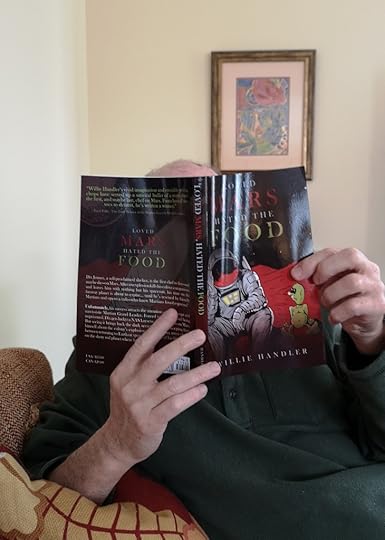
Do you do most of your book marketing on social media?
If you are a published author, how much time do you spend on my marketing relative to writing?
Marketing can be daunting for many authors. But your books will not sell on their own without a sound strategy. These are a few things that you can do to help along. But you need to invest time to sell books.
Build Your Author Platform
In some cases, writers even limit their social media presence because it takes away from their writing. Well social media should be part of your author platform. I’m not suggesting creating an account for every app. Decide which social media apps work best for you. Each is quite different and needs to match your style. For example, if you enjoy creating videos, then Tiktok and YouTube should be included in your mix. But your author platform needs to be more robust than this. You need to create a website, blog and an email list to reach as many potential readers as possible.
Giveaways
Giveaways are a great way to build buzz and promote your book. You can give away copies of your book, or e-books. I’ve done them to celebrate my birthday, a book birthday or any other milestone. This can be a great way to reach new readers and encourage people to share your book with their friends. There are platforms like Rafflecopter to organize a giveaway or you kind try to go it alone.
Reader Magnets
I’ve also used used giveaways (also called reader magnets) to build my email list like the recent Joke book I wrote. By offering a reader magnet, such as a free e-book, tips, resources, or a discount on a book, authors can attract people who are interested in their writing and get them to take the first step toward becoming loyal readers. In addition to helping authors build their audience, reader magnets can also help authors sell more books. By staying in touch with readers through an email list or other means, authors can keep their readers informed about new releases, promotions, and other events related to their writing. Again, Bookfunnel is an excellent tool that I use. In a future post I will discuss how I use Bookfunnel to gradually build an email list.
Build an Author Brand
I have spent many years on branding. I am confident that when readers see my name, they associate it with humour. I know that this is a confusing aspect of marketing. You know what you are about, but how to others know? I know an author who writes historical romance books and dresses up in vintage costumes. Maybe your social media screen name can be worked into your brand. Branding helps you connect with your ideal readers, curate value-added content, and set expectations for readers.
Guest Blogging and Podcasting
Guest blogging and podcasting can be great for reaching a wider audience and promoting your book. Podcasting seems to be extremely popular at the moment Reach out to bloggers and podcast hosts in your niche and offer to write a guest post or be a guest on their show. This can be a great way to introduce yourself and your book to a new audience and build relationships with other bloggers and podcasters in your niche.
March 14, 2023
Some Low Cost Book Marketing Tips
I’ve seen many authors on social media and their Timeline is just endless links to sales pages for their books. For many people, this becomes uninteresting and monotonous. Purchasing ads can be pricey. I’ve tried Facebook ads and they do increase the number of likes for your Facebook page but my experience was that the ads didn’t generate enough sales to cover my costs. Overtime you can play around with different ads to see what gets the most traction. It just didn’t work for me.
So, how can you mix things up while promoting your work without constantly dropping sales links? Try some of these tools.
Book Banner Ads
I have banners for each of my books and even a banner that includes all my novels together. They should include covers and where to find your books. A short pitch or blurb could be included. It doesn’t hurt to have an eye-catching cover to work with. Some have been created on Canva while others I’ve paid someone to create. If the banner ad indicates the book is available on Amazon then providing a link isn’t necessary.
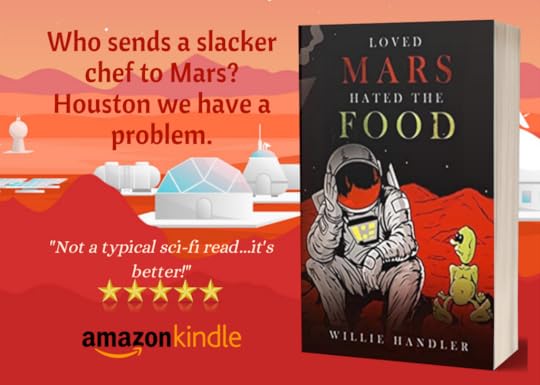
Share Reviews
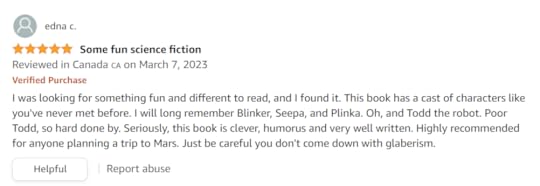
I love to share reviews on social media because followers aren’t necessary going to Amazon or Goodread to look for reviews. A social media review can serve two purposes. First, they are effective in communicating what readers think of your book. Second, I use them to encourage other readers to also post reviews. I’ll share short two-sentence reviews to signal that you don’t need to write a long essay. Something short and sweet works too. You can be creative with your reviews. For example, you can create a banner ad containing quotes from multiple reviews.
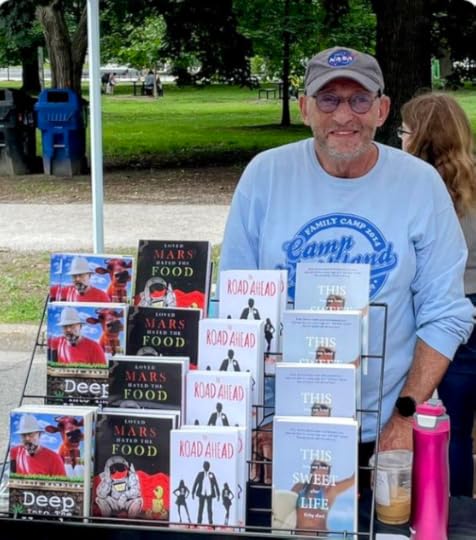
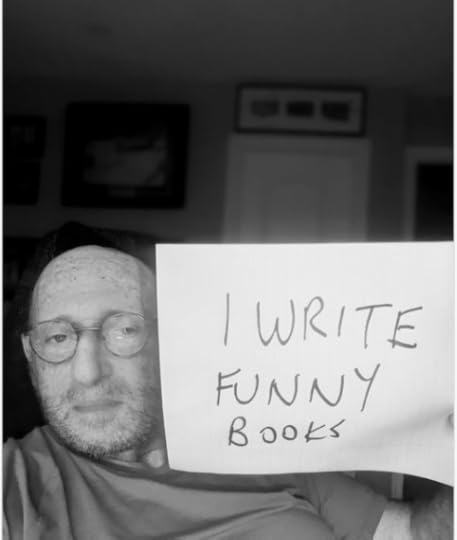
Selfies
If you’re going to post selfies on social media, why not tie in your books in some way. There are a lot of creative ways to pose with your books.
Memes
I sometimes find a meme that connects with one of my books. It’s a fun way to promote your books. Below is a meme that I’ve used. I just add in the post that the book (eg., LOVED MARS HATED THE FOOD) is available on Amazon and Kindle Unlimited. If you’ve read the book, you would definitely get the reference.

Screenshots of Book Excerpts
Instead of the book cover, you can post screenshots of book excerpts. Share a few paragraphs to let people get an idea what the writing is like. The idea is to get them to head over to Amazon and check it out.

Really there are no limits to the different ways you can promote your books. The idea is to get people scrolling through their timeline to stop and check you out. Use things that will catch the eye. Make a video about your book, yourself, or anything that will plug your work. Find ways to stand out in the clutter of social media. Book links are nice but aren’t that eye-catching.
February 19, 2023
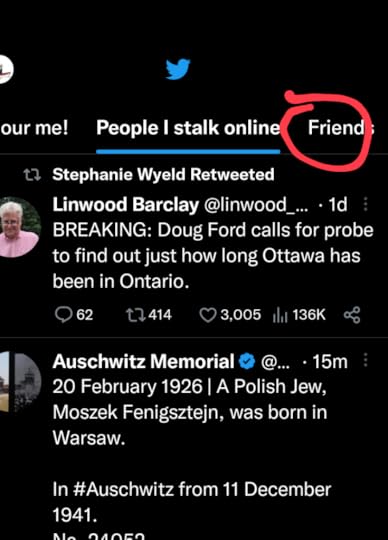
Keep Track of Your Top Twitter Follows With a List
I see a lot of people complaining they aren’t seeing the same Twitter accounts on the Timeline. Twitter is functioning as it once was and it may not improve for a while. You can address this problem by creating lists. I began doing it several years ago as the number of accounts I followed became so large, I was beginning to miss tweets from people I most wanted to see.
This is a short description on how to create a list. Step one is go to the menu bar on the left of your and select Lists.
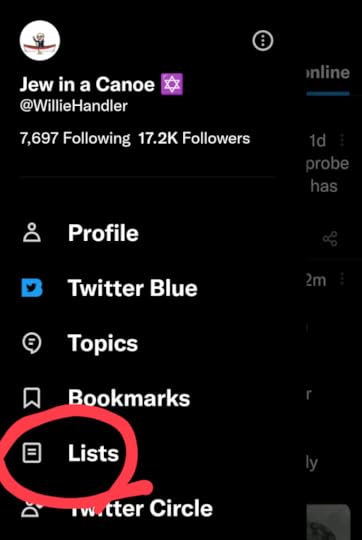
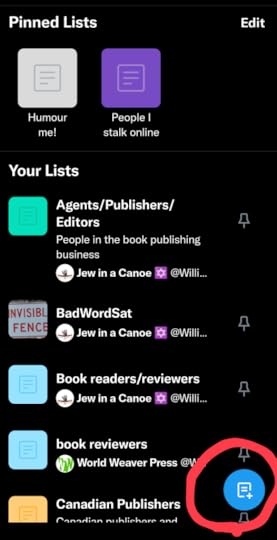
The will bring you to the List page which is blank when you don’t have lists. At the bottom right corner is a blue icon for creating a list. Click on it.
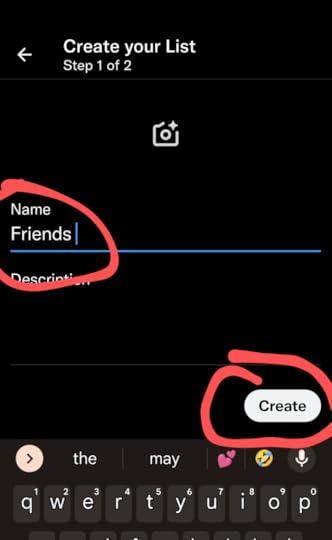
This brings you to Create Your List Page. Type om the name you want to give your list. I used Friends. The click on the Create button at the bottom right.
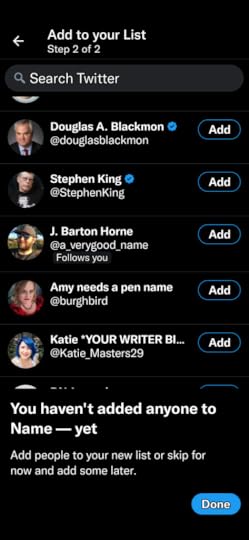
The next step is adding people to your newly created list. When you are finished, click on the Done button on the bottom right.
Now that you have a list, you will want to pin it so that it pops up next your timeline. Just click on the pin icon next to the name of the list.
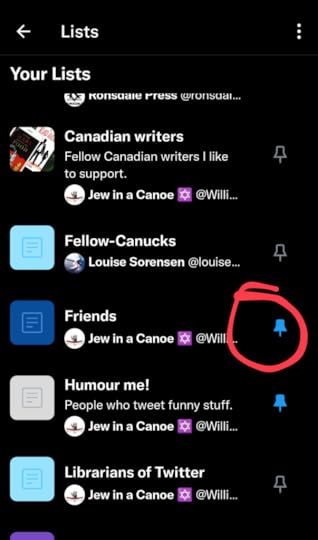
You are done. When you click on Home, the Friend list will appear to the right of your Timeline. You can now see your friends’ tweets!
January 30, 2023
Artificial Intelligence Will Replace Writers
Just imagine you are working on a novel and have a severe case of writer’s block. It’s been 5 days and you’ve written nothing. Wouldn’t it be nice to have a tool to get back on track? Well, it’s here! Artificial intelligence (AI) can be used not only to get that scene done, but it could write your entire novel. Writers could become obsolete. Many writers are already using AI to do their proofreading. It’s not a giant leap forward anymore for AI to not just edit but write that book and design your cover and any illustrations you want.
Below is a short post about AI that I didn’t write. It was entirely written by an AI program.
In recent years, artificial intelligence (AI) has been used to create content in many different forms, including with writing stories. AI can be used to help generate a narrative, create characters, and even build out an entire world for a story.
Using AI to write a story can be an incredibly useful tool for authors who are looking to explore new ideas or even create entire universes for their stories. AI can help create stories by analyzing a set of data and then constructing a narrative from it. AI can also be used to generate character profiles and relationships, allowing authors to focus on developing the world and plot of the story.
AI-generated stories can also be incredibly engaging for readers. AI-generated stories can be unpredictable and can explore ideas and concepts that authors may not have thought of. AI can also be used to discover unique plot points that readers may not have expected.
Overall, AI is an incredibly powerful tool for authors and readers alike. AI can be used to generate original stories and explore new ideas, while also providing readers with a unique and unpredictable experience.