Willie Handler's Blog, page 3
May 8, 2024
Frank Bonello Eulogy: 1933-2024
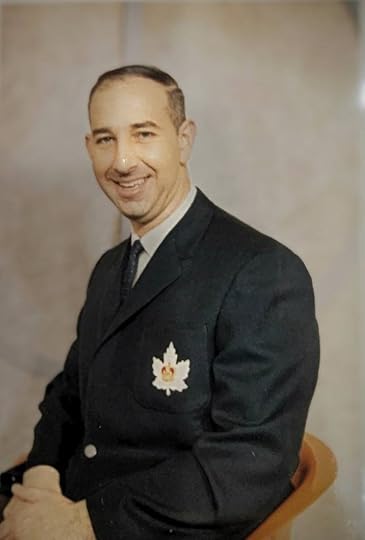
On behalf of the family, I would like to thank those who reached out to share your stories and memories of my father-in-law. It is so comforting for us to hear how he touched people’s lives.
There were three priorities in Frank Bonello’s life: family, work and hockey. To a certain extent, those three things defined who Frank was although not necessarily in that order.
I distinctly remember the first time I met Frank. It was December 1, 1979. Mary Anne and I were going up the escalator at Maple Leaf Gardens to attend a Leaf game. Frank was at the top of the escalator wearing his familiar fedora. I suspect that some people probably confused him with former Maple Leaf General Manager Punch Imlach because they both wore fedoras and hung out at the Gardens.
I think it would be safe to say that I didn’t receive a warm welcome. But things did warm up over time. Surprisingly we had common backgrounds. We both had immigrant parents who struggled in the early years. Frank’s parents came to Canada in the 1920s from Malta. Joseph Bonello came first, followed by Guiceppa and Frank’s sister Mary. My father-in-law and his brother were born in Canada. Frank was the youngest.
Frank’s dad worked on the slaughtering floor of Swift Foods. Thirty years later my dad did the same at Toronto Packing Company when he first arrived in Toronto.
The Bonellos lived on Maria Street in Little Malta which is in Toronto’s Junction District. Close by were the Ontario Stockyards, Swift where Joseph worked, and Canada Packers where Frank worked years later.
At a young age, Frank fell in love with hockey. His first hockey team was the St.Cecilia’s Pee Wees. When he was fourteen, he was recruited to play hockey for De La Salle high school.
In 1949, he played with the Toronto Marlboro Midgets. From there he spent the next two years with the Unionville Jets Junior “B” team. He graduated to the Junior “A” ranks In 1952, playing for the Galt Black Hawks.
Frank was a very good hockey player. He was a great passer and an outstanding forechecker. Unfortunately, the NHL was still a six-team league and turning pro wasn’t in the cards. He was invited to the Chicago Black Hawks training camp in 1953 but was a late cut. Instead of becoming a professional player in the minor leagues, he decided to remain an amateur and play senior hockey.
After his pro tryout, he played the next two seasons in Senior “A” hockey for the Chatham Maroons.
It was while playing hockey in Chatham, that Frank met Carol Hales. Carol was in a restaurant with friends after a hockey game when Frank walked in with a teammate. The rest was history. They were married in 1954 and were together for 69 years. They moved to Toronto in 1955 and a few months later Mary Anne was born.
For the next five years, they lived with Frank’s parents on Maria Street until they were able to purchase a bungalow on Burrows Avenue in Etobicoke. Frank worked in sales for Canada Packers but remained involved in hockey.
In 1955, he joined the Whitby Dunlops, which won the Senior “B” championship. The team moved up to Senior “A” and went on to win the Allan Cup in 1957. The Dunlops represented Canada at the World Hockey Championship in Oslo, Norway in 1958 winning the gold medal.
The team traveled to Europe on the Queen Elizabeth. Frank was sick the entire voyage. Playing hockey in Norway was quite the experience. The arenas were outdoors and there was no seating for the fans. They stood through the entire game. It was so cold that the players wore toques.
Shortly after the Worlds, Frank’s playing career ended, and he spent a few years out of hockey, concentrating on his family and work.
In 1963, he returned to hockey and started a long and successful career in coaching and managing. His first position was the manager of the Knob Hill Metro Junior “A” club. From there he was manager and coach of Neil McNeill and Markham Waxers Junior “B” teams. He led the Markham Waxers to the Metro Junior “B” title in 1968 and the OHA Junior “B” championship in 1969. The following year, his long-time friend Jim Gregory hired him to coach the Toronto Marlboros. Two years later, he became their manager, a position he held for 16 years, winning the Memorial Cup in 1973 and 1975.
Frank was a workaholic. While running hockey teams, he continued to work full-time at Canada Packers. Frank was not one to go on a vacation. He would sometimes use his vacation time to travel with the hockey team on road trips. He was not a man of leisure, always finding projects to work on at home. Although he would find time in the summer for golf.
The late Harold Ballard was fond of Frank and promised to keep the Marlboro franchise in Toronto as long as Frank was interested in running the team. In 1988, Frank retired from Canada Packers and decided to also leave the Marlboros. Jim Gregory who was now Senior Vice President of the NHL, hired Frank to run the league’s Central Scouting office in Toronto.
The following year, Harold Ballard was looking for yet another Maple Leaf General Manager after Gord Stellick resigned. He was eager to sign Frank until Harold heard how much Frank wanted to be paid. I remember Harold’s interest cooled off after they met. Harold declared, “I’ve never paid anyone that much.” While in charge of Central Scouting, he expanded the department’s scope exponentially during a significant period of domestic and international growth for the League, Frank remained with NHL until 2007. That was the end of his involvement in hockey, which stretched back 63 years.
He was very much old school. I remember he was not pleased when Sarah began playing hockey. I persuaded him to come out and watch a game. He then realized that the girls’ game is played differently than what the boys play.
He was meticulous in everything he did. Which is a nice way of saying he was somewhat OCD. He was very subconscious of how he appeared in public. His suits were always tailor-made. His closet was full of shoes, largely identical black oxfords. Those shoes were polished on a regular basis. On weekends when Sarah slept over, she would wake up to find her shoes expertly polished. Well there was the one time she had come with suede shoes.
He hand-washed his cars, even in the winter. He regularly painted the walls and floor of his garage. There was never a speck of dirt. Friends would refer to it as the operating room.
He had a very steady hand. Watching him cut a turkey at Thanksgiving was like watching someone perform surgery. He was the family painter and probably the best painter I’ve ever seen. When he arrived at my house to paint, I wasn’t allowed to pick up a paintbrush. Sometimes I was relegated to paint a closet but most of the time I was sent out to get coffee. He would arrive with Carol’s brother Bill who was assigned to do all the high painting work at the top of an extension ladder.
His last family painting job was Sarah and Arthur’s first home. He was about 80 years old at the time. When someone dared to suggest that he was getting a little old to be painting, he became visibly angry.
Like many workaholics, Frank had a difficult time dealing with things like retirement and aging. When he no longer had work or hockey to keep them occupied, he spent much of his time puttering around the house and managing his investments. I often got the impression that this wasn’t enough for him. But as he got older even these things became more challenging. Mary Anne and I would plead with him to sell their home and find something more suited for him and Carol. In 2017, he finally agreed and spent his final years in Sunrise Retirement home.
It was very sad to watch one memory after another disappear, his accomplishments and friends slowly slipping away. In the end as he struggled to keep going, Mary Anne held both his handa and told him the Leafs aren’t going to win anyways. He passed in peace surrounded by love.


April 23, 2024
So Far AI Is No Match for Professional Writers and Transcribers
As I began working on a book in intergenerational trauma, I chose to interview descendants of Holocaust survivors regarding their experience growing up with survivors. I chose to record the interviews on Zoom and used AI software called Fathom to transcribe the interview.
What I quickly discovered was that machines cannot pick up all the subtleties of the English language, accents and how to spell names properly. Background noise impacts on an AI transcription. As a result I have been constantly going back to the recording to double check what was said. It’s become time consuming and frustrating. I also understand the context of what people are saying in their interviews, something the machines fail to do.

A good writer friend, Ellie Leonard has her own transcription business called Red Pencil Transcripts. Her clients have tried to replace her services but keep running back. That’s because Ellie does things that a computer does not do such as check spelling of names and acronyms to get them right. Several years ago the New York Times did an article on AI featuring Ellie. The points made in the article are still valid in 2024. Machines can try to duplicate what we do, but like the self-driving cars, they can easily be confused.
April 21, 2024
My Encounters With Epigenetics
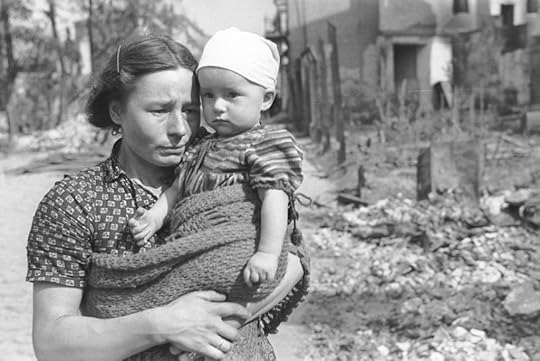
In February 2024, I began work on a book that focus on intergenerational trauma in descendants of Holocaust survivors. A large piece of this project involves interviewing a cross-section of those descendants. That process is currently underway. I have already interviewed over a dozen second generation (G2) and third generation (G3) survivors. What caught my attention is the number of instances of epigenetics that I’ve come across.
A 2015 study suggests that children of Holocaust survivors may have been marked epigenetically with a chemical coating upon their chromosomes. This would represent a kind of biological memory of what their parents experienced. As a result, some suffer from a general vulnerability to stress while others are more resilient. I see this in my own family. Previous research assumed that such transmission was caused by environmental factors, such as the parents’ childrearing behavior. New research, however, indicates that these transgenerational effects may have been also genetically transmitted to their children. Integrating both hereditary and environmental factors, epigenetics adds a new comprehensive psychobiological dimension to the explanation of transgenerational transmission of trauma.
I have been on the fence when it comes to epigenetics but I’m quickly coming around. These are several cases that I’ve already come across. I don’t have an explanation for these incidents. I’m merely reporting what I have been told.
At some point, later in life, a survivor moved in with his daughter’s family. On the first day, the family was having dinner and there was bread on the table. He picked up a piece of bread and froze, staring at the bread. His 5-year-old granddaughter reached over and interrupted his episode by touching his arm and said, “granddad I know you died many times when you were a child, but you’re safe now. Eat the bread.” Because of her young age, she had never been told about the Holocaust. Yet, she seemed to have shared his flashback.
In another case, a young boy described memories of things shortly after he began speaking. There’s no logical explanation for the things that he knew and has said. He told his mother, that he didn’t want them to pull him out of her arms and that he didn’t want to go on a train. His great grandparents lost their first child while on the platform going to Auschwitz. The child had been ripped out of the great grandmother’s arms at gunpoint and put into a separate cattle car. The child was never seen again. This story had never been shared with young boy.
One survivor had permanent scars on his back from being whipped in the camps. His son described how he experienced dreams about being in the camps. This is not unusual. But he also developed red marks on his back as a child that resembled his father’s scars. At one point, the family’s doctor brought in the family because he suspected that the young boy was being beaten at home.
Memories are not just stored in your mind but in your body and in DNA. It is theorized that genetic memory can be inherited and be present at birth in the absence of any other sensory experience. Epigenetic changes are reversible and do not change DNA sequence but they can change the way a body reads a DNA sequence. I am sure I will come across further examples in my interviews.
February 26, 2024
A Trained Monkey Could Do That Job
We’ve all heard the expression, a trained monkey could do that job. But no one is really being serious when they say it.
So, I was surprised to read last month that Rogers Communication was hiring monkeys to work in some of their stores on a trial basis. I thought to myself to what lengths will those tech companies go just to save a few bucks?
A few days ago, I dropped into my local Rogers store to exchange my cable box for an upgraded unit. There was a short line in front of the counter and I took my place at the end. I looked over at the counter and realized there was a monkey sitting on a stool, serving the customers.
A woman was having a heated argument with the monkey. She had a cellphone in her hand and was waving it around. Suddenly, the monkey grabbed it out of her hand and threw it against the wall. The enraged woman ran over to pick it up and scurried out of the store.
Maybe I should leave and go to another store. But I was already here. Who knows what that woman said to upset the monkey. The next person, an older gentleman, stepped up to the counter.
“How can I help you?” I overheard the monkey ask.
“I was told by customer service over the phone to come to a store and pick up an Internet modem,” replied the man.
“I can help you with that,” said the monkey. “What is your phone number, so I can look up your account on our system.”
“5-5-5-7-3-2-4-4-5-2”
“I’m looking at your account right now,” said the monkey, “and your aren’t eligible for a modem. You don’t have an Internet account with us.”
“That’s ridiculous,” replied the man, glaring at the monkey. “I’m a Rogers customer.”
“Sir, do not use that tone with me,” shrieked the monkey who grabbed a stapler off the desk and hurled it at the man, hitting him on the shoulder.
The man stomped to the door, but before exiting he spun around and announced, “I am through as a Rogers customer!”
I was next in line. Reluctantly, I approached the counter.
“How can I help you?” asked the monkey.
“I’ve bought a new Ultra HD TV and would like to upgrade my cable box,” I explained, placing my old box on the counter.
The monkey smiled as he picked up the box to examine it. “I can help you with that,” he said. “What is your phone number, so I can look up your account on our system.”
“5-5-5-2-9-2-6-4-5-3”
“Just one moment while I wait for the system to load your information.” The monkey strummed his fingers on the countertop while he waited. “Alright, I have your account information now. Yes, I see I can exchange your old box for an Ultra box.”
I was relieved that there was none of the drama that I observed earlier. “Thanks,” I said.
“I’ll run to the back and get a box from our inventory,” said the monkey, hopping off his stool. “I’ll be right back.”
The monkey scampered out of the showroom and about two minutes later he returned with a new box under his arm. He climbed back onto his stool, placing the box on the counter. “I just need to take down the serial number of the box and add it to your account.”
“That’s great,” I said. “I’m looking forward to using the new box.”
“There’s just one more thing,” said the monkey. He jumped onto the counter and sat on the cable box. “Did you bring me a banana?”
“No, I didn’t.”
The monkey crossed his arms against his chest. “You can’t have the box without a banana.”
“I would have brought a banana,” I said, “if I’d known that a monkey was working here.”
“I don’t really care what you know or don’t know,” he replied. “I’m out here all day, slaving away. All I ask for is a couple of bananas to get me through the day.”
“How about giving me the box and later in the day, when I’m passing by, I’ll bring you a whole bunch?”
He shoved his hairy face in mine. “How stupid do I look? You’re not coming back.”
I grabbed the monkey by the neck, shaking him up and down. He shrieked, “Let me go! Let me go!”
So, I did. I tossed him across the store and he slammed into a cell phone display case. I picked up the cable box and ran for the door. As I was about to exit, he jumped on my back. His arms were wrapped around my face, blocking my vision. I ran into the closed door and we both fell to the floor. When I got back on my feet, I realized the monkey was unconscious. I gathered up my box and left the store.
The next time someone tries to tell you a trained monkey could do that job. You tell them about the Rogers monkey.
February 24, 2024
Dedicated to Toronto Maple Leaf Fans and Haters

[sung to American Pie]
A long long time ago
I can still remember how
That hockey used to make me smile
And I knew if they had a chance
That they could make Leaf fans dance
And maybe they’d be happy for a while
But every April made me shiver
When TSN would deliver
Bad news on Sportsnet
I’d have to turn off the TV set
I can’t remember if there was ranting
When I heard about the latest Leaf pasting
Something touched me deep inside
The day the Leafs died
So
Bye, bye to the Maple Leafs
Rode the subway to the arena but the arena was empty
And them good ole Leafs were lined up at the first tee
Singin’ this’ll be the day the Leafs died
This’ll be the day the Leafs died
Did you see the 67 Cup parade?
And did you have faith in Keon’s blade?
If the Hockey News tells you so?
Do you believe in Punch Imlach?
Can the Bower save you from your funk?
And can you teach me how to take a wrist shot?
Well, I know that you were in love with Stanley
‘Cause I saw you wearin’ his jersey
You both skate with wobbly knees
Man, I dig those stay at home D’
I was a lonely teenage hockey fan
Bought a scalpers ticket from the back of a van
There I was sitting in the stands
The day the Leafs died
I started singin’
Bye, bye to the Maple Leafs
Rode the subway to the arena but the arena was empty
And them good ole Leafs were lined up at the first tee
Singin’ this’ll be the day the Leafs died
This’ll be the day the Leafs died
Now, for ten years we’ve been waiting for more
And Harold Ballard is running the store
But, that’s not how it used to be
When the Sittler sang for Harold and Clancy
In a coat he borrowed from Lanny
And a voice that came from you and me
Oh and while Ballard was looking pleased
Sittler tore off his historic “C”
Imlach looked around for some buyers
So Sittler was sent to the Flyers
And while Ballard and Imlach were cleaning house
The rest of the team practiced in the dark
And the sports scribes began to bark
The day the Leafs died
We were singin’
Bye, bye to the Maple Leafs
Rode the subway to the arena but the arena was empty
And them good ole Leafs were lined up at the first tee
Singin’ this’ll be the day the Leafs died
This’ll be the day the Leafs died
Coaches and manager came and left
If they made the playoffs it was all in jest
Finally we finished last
We landed a kid named Wendel Clark
He was good at using his fists
And landing pretty big hits
Eventually we had the big Swede and Dougie
And who can forget Curtis our new goalie
We all got up to do the wave
Oh, but we still wouldn’t be saved
‘Cause the league was going in another direction
The Maple Leafs refused to yield
Do you recall what was revealed
The day the Leafs died?
We were singin’
Bye, bye to the Maple Leafs
Rode the subway to the arena but the arena was empty
And them good ole Leafs were lined up at the first tee
Singin’ this’ll be the day the Leafs died
This’ll be the day the Leafs died
Oh, and there we were now in the ACC
Another failed team to make the scene
So we just began to rebuild again
So come on Shanahan lets hear your plan
Shanny brought in Lou and some Dapper Dan
‘Cause cleaning house was all you could do
Oh as I watched Dubas mold the team
My hands were clenched and I wanted to scream
No angel born in Hell
Could break that Ballard’s spell
And as the flames climbed high into the night
To light the sacrificial rite
I saw Ballard laughing with delight
The day the Leafs died
He was singin’
Bye, bye to the Maple Leafs
Rode the subway to the arena but the arena was empty
And them good ole Leafs were lined up at the first tee
Singin’ this’ll be the day the Leafs died
This’ll be the day the Leafs died
I ran into an ex-captain who sang the blues
And I asked him for some happy news
But he just scowled and turned away
I went down to visit Real Sports
To see if they carried jerseys from years before
But the man there said he didn’t know who they were
And in the streets the old timers screamed
The young fans cried, and the fools dreamed
Not one wise word was spoken
The team was still broken
And the three players I admire most
Keon, Sittler and Bower’s ghost
They caught the last train for the coast
The day the Leafs died
And they were singing
Bye, bye to the Maple Leafs
Rode the subway to the arena but the arena was empty
And them good ole Leafs were lined up at the first tee
Singin’ this’ll be the day the Leafs died
This’ll be the day the Leafs died
February 14, 2024
Finding the Right Agent for Your Manuscript
In the journey from manuscript to published book, one crucial step stands between the author and their dream of seeing their work in print: finding the right literary agent. I spent 18 months, querying and editing before I landed a publishing contract for my memoir. I sent out approximately 125 queries and even landed an agent. Unfortunately that didn’t work out.
Although they are not the only access point to the publishing industry, literary agents play an important role in connecting authors with publishers and navigating the complex world of the publishing industry. However, locating an agent who is not only reputable but also the perfect fit for your manuscript can seem like searching for a needle in a haystack. That was the case for my nonfiction manuscript. Fear not, aspiring authors! In this guide, we’ll explore the strategies and best practices for finding literary agents who are a great match for your work.
Understanding the Role of Literary AgentsBefore delving into the process of finding a literary agent, it’s essential to understand their role in the publishing process. Literary agents act as intermediaries between authors and publishers. They represent authors, negotiate contracts, and advocate for their clients’ best interests. A good literary agent possesses industry knowledge, connections, and the ability to provide valuable feedback to improve a manuscript.
Define Your Manuscript and Target MarketBefore you start your search for a literary agent, it’s crucial to have a clear understanding of your manuscript and its target market. Consider the genre, themes, and audience your book caters to. Understanding these aspects will help you narrow down your search and identify agents who specialize in representing books similar to yours.
Research Literary AgentsWith a clear understanding of your manuscript, it’s time to research literary agents who might be a good fit. Here are some effective ways to find them:
Literary Agent Directories: Websites like Publisher’s Marketplace, QueryTracker, and AgentQuery provide comprehensive databases of literary agents. You can search for agents based on genres they represent, client lists, and submission guidelines.Writer’s Conferences and Workshops: Attending writer’s conferences and workshops offers an excellent opportunity to meet literary agents in person. Many conferences feature agent pitch sessions or one-on-one manuscript critiques, allowing you to connect directly with agents who are actively seeking new clients.Social Media and Industry Blogs: Follow literary agents on social media platforms like Twitter, where they often share valuable insights, submission tips, and manuscript wish lists (#MSWL). Additionally, many agents maintain blogs or websites where they provide detailed information about their preferences and submission guidelines.Book Acknowledgments and Publisher Websites: Pay attention to the acknowledgments section of books similar to yours. Authors often thank their literary agents, providing you with potential leads. Furthermore, publishers’ websites may list the literary agents who represent their authors, offering insight into agents who work with books in your genre.Evaluate Literary AgentsOnce you’ve compiled a list of potential literary agents, it’s time to evaluate them to determine if they’re the right fit for you and your manuscript. Consider the following factors:
Track Record: Research the agent’s track record, including their client list, recent sales, and experience in the publishing industry. A successful track record indicates the agent’s ability to represent and sell manuscripts effectively.Communication Style: Pay attention to the agent’s communication style and responsiveness. You’ll want an agent who communicates clearly, provides timely updates, and is approachable.Client Testimonials: Look for client testimonials or endorsements from authors represented by the agent. Positive feedback from current or former clients can provide valuable insights into the agent’s working style and professionalism.Submission Guidelines: Review the agent’s submission guidelines carefully to ensure that your manuscript aligns with their preferences and requirements. Following submission guidelines demonstrates professionalism and respect for the agent’s time.Craft a Personalized Query LetterOnce you’ve identified literary agents who are a good fit for your manuscript, it’s time to craft a personalized query letter. A query letter is your opportunity to introduce yourself, provide a brief overview of your manuscript, and explain why you believe the agent would be interested in representing your work. Personalize each query letter to demonstrate that you’ve done your research and are genuinely interested in working with the agent.
ConclusionFinding the right literary agent can be a daunting task, but with thorough research, perseverance, and a well-crafted query letter, you can increase your chances of securing representation. Remember to approach the process with patience and professionalism, and don’t be discouraged by rejection. The perfect literary agent for your manuscript is out there; it’s just a matter of finding them. But always keep in mind that you always have options.
Happy querying, and may your journey to publication be filled with success and fulfillment!
January 25, 2024
Is It Okay to Borrow a Joke?

Someone recently responded to a joke I posted on Twitter, indicating that I had stolen it from a third party. He attached a screenshot of a tweet that was the same as mine. However, I had taken that joke from elsewhere on the Internet. So, it turns out this person had also borrowed the joke. The incident got me thinking.
My books are original pieces of work and copyrighted. But jokes on Twitter are another matter. Many are also my own creation., but not all of them. Sometimes I see something that is a catalyst for a joke. There are those that I would say are adapted or recycled. I’ve done many jokes about Amazon. I’ve also seen similar jokes floating around. What is original material and who came up with it first? And sometimes I post a joke that might be decades old because it’s still funny. I see memes being shared on social media. Obviously, someone created each meme but the creator is never credited.
Maybe this is wrong. But as I see it, if material isn’t copyrighted then it falls into the public domain and is free for everyone to use without permission or payment of royalties. Occasionally, a Twitter follower tells me they are using one of my jokes, and I will say go right ahead. I consider my jokes to be part of the public domain. I’ve produced two Joke ebooks for promotional purposes, and they are given out for free. The material isn’t copyrighted. However, the cover graphics I did pay for.
As for that person who tried to shame me, I consider him to be a little harsh, but people on social media can be very judgemental. I will continue to make people smile on Twitter. There’s enough negativity there.
December 29, 2023
Why There Are So Few Humour Books
When I queried my first manuscript, a political satire, one of the first things I noticed is that many literary agents don’t consider humour or satire to be a separate genre. I often found humour as a nonfiction genre. I should have clued then that I was going down the road of misery and frustration.
There are some great funny novels but there are also very few to choose from. There are many theories on why this is so but and concrete reason is in dispute. I have my theories.
There is no agreement on what is funny
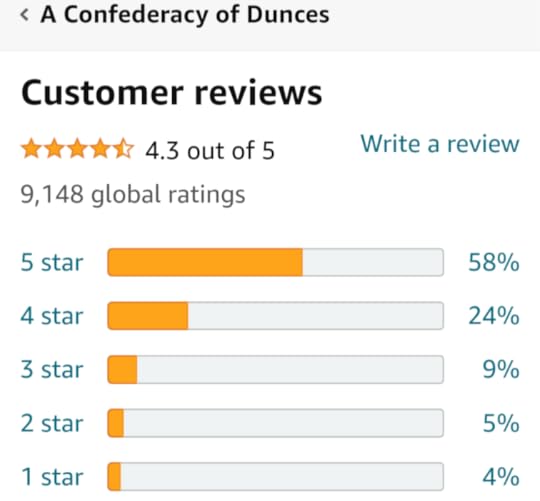
I consider the Pulitzer Prize winning novel The Confederacy of Dummies by John Kennedy Toole to be one of the funniest books every written. Many people enjoyed the book but 9% of ratings on Amazon were fewer than three stars. One person recommended that you “avoid this book at all cost.” Someone called it the “world’s longest suicide note” referring to the fact that the author killed himself before the book was published.
You need to only read some of the comments to my jokes on Twitter to understand how different people perceive humour. Every so often I add a disclaimer to my joke tweets (which in itself is humour) but the negative comments persist.
There are different forms of humour
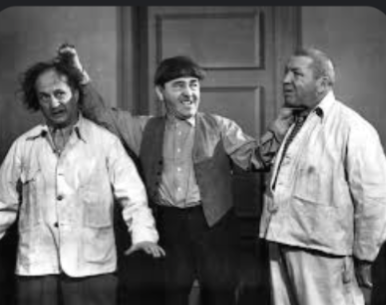
Now part of the reason that there is no agreement on what is funny is that humour has a wide range of categories. There is satire which is often in the form of social commentary. Examples include George Orwell’s Animal Farm and Saturday Night Live. There is physical comedy which includes the Three Stooges, Marx Brothers and films like National Lampoon’s Christmas Vacation. Dark comedy is they style of humour often employed by the Coen Brothers or the works of Kurt Vonnegut. Parodies spoof existing works. The film Airplane! spoofs a slew of disaster films. These and other humour categories often appeal to different audiences. I can’t help but notice is how one person will find something hysterically funny, the next person will just shrug their shoulders while a third person will cringe.
Cultural differences in humour perception

Although humour is a universal phenomenon, it is also culturally tinted. Researchers have concluded that Easterners and Westerners differ in humour perception. For centuries going back to ancient Greece, eastern cultures have embraced humour. In sharp contrast, eastern cultures’ attitudes toward humour are not that positive. The Chinese self-actualization denigrates humor while stressing restriction and seriousness. The Chinese do not think that humour is a desirable personality trait. Cultural difference in humour perception directly influences humour usage. In Western culture, humour has become an indispensable coping strategy. However, humor is not an important coping device in China or Japan. I find Canadian humour to be distinctively different that was exists in other Western cultures.
What does this all mean?
Although humour exists universally, it exists in many different forms and how it is perceived can differ considerably. As a result, humour novels are a niche market and attracts a smaller group of writers as compared to romance or fantasy. Does that mean I would turn my back on writing funny books? No, but I accept that I have to work hard at finding an audience for my books.
November 24, 2023
Is There Such a Thing as Writer’s Block?

I recently interviewed Jerome Preisler, a New York Times bestselling author, for my new podcast show. During the interview, we spent some time discussing writer’s block. He said that it doesn’t exist. Writers sometimes just have to push themselves to write.
Since the interview, I’ve given this a lot of thought. If Bo Bichette is in a hitting slump, does his coach sit him on the bench? No. You can’t get out of a slump on the bench. He might get some extra coaching between games to help him with his struggles, but he can only get over that hump by facing live pitching in real games. Similarly, an actor in a theatre company has a case of stage fright as she is about to step on the stage. Does she tell the director that she is not up to it today? No. She pulls herself together and steps out on the stage. Maybe she stumbles slightly with her first line but quickly finds her stride and continues. They don’t find other things to do until they feel up to it again. Their craft doesn’t allow for that.
Unless you have a deadline imposed on you, a writer doesn’t have fans or an audience waiting for something from you at that moment. You can wake up in the morning and say to yourself, I’m not feeling it today. I’ll do something else. I have a huge pile of laundry. I need to go through my emails. Look at this great video on TikTok. There are so many distractions and too many excuses. As writers, in many cases, we are accountable only to ourselves. Often we fail.
This is the reason why many writers take advantage of NaNoWriMo (National Novel Writing Month) in November. You join a group and commit to writing 50,000 words for the month. You have your peers to support you. There’s no failure in not meeting the target. If you mange only 34,000 words, you are farther ahead than you were on November 1. Doesn’t it come down to self-discipline and accountability? You need to find ways to motivate yourself. Turn off the phone. Get rid of distractions and crutches. Commit to writing each day. Commit to a time period each day. If you only manage 200 words. It’s progress. Like the baseball hitter who draws a walk during a slump. At least he got on base.
I went through an extended period of not writing this year. I had many reasons including health, mental state, too busy with querying, etc. It wasn’t writer’s block. It was avoidance. I had gone through an extremely productive period during the pandemic and had lost my mojo. But it will never come back if you don’t sit in front of the computer.
November 13, 2023
My Cousin Miraculously Survived Auschwitz With Only One Arm
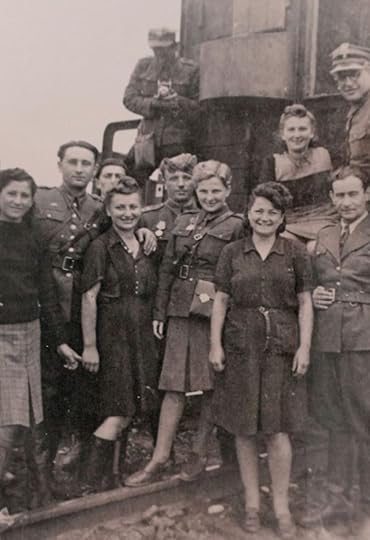 Jenny (3rd from the left) shortly after liberation
Jewish prisoners in Auschwitz who made it through the initial selection process (80% were sent directly to the gas chambers) typically only survived a few weeks. Conditions were so harsh that they quickly succumbed to disease, starvation, exhaustion, or a severe beating. Many gave up the will to live and ended their lives on the electrified fences. To survive one needed to be strategic, resourceful, and lucky.
My cousin Jenny Eisenstein’s (born Jadzia Oksenhendler) survival is so remarkable. She arrived at Auschwitz with only one arm and not only survived the initial selection at the train platform but made it through another seventeen months.
Jenny was sixteen years old when she arrived at Auschwitz on August 9, 1943, with her mother Machela, her eighteen-year old sister Regina, and her thirteen-year old brother Lemel. Because of his age and size, Lemel didn’t make it through the selection process and was sent to a gas chamber. Machela had a large shawl with her and kept Jenny close enough to her to obscure the fact that she was missing an arm. That got her through the initial selection.
The subsequent seventeen months was a cat and mouse game to avoid being noticed by the SS officers. A common practice for concentration camp survivors was to avoid standing out or being noticed. Obscurity was important to survival and Jenny became quite good at it. During the twice a day roll calls, her mother would always crowd in next to her to conceal her missing arm. During selections, she would slip away to hide in another block. Jenny was a gifted singer with a bubbly personality. She would entertain the women in her block who took a liking to her and helped protect her.
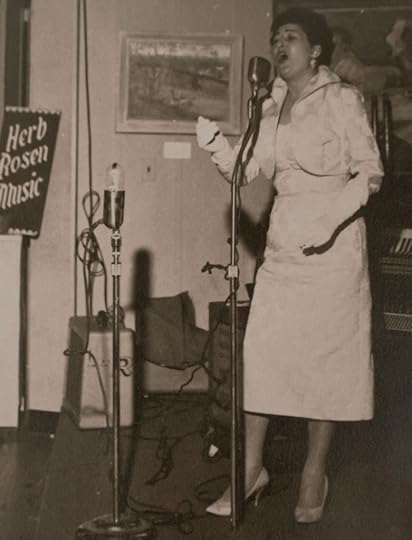 Jenny singing on the Herb Rosen radio show.
Jenny had one close encounter with Dr. Joseph Mengle. Mengele was chief physician at Birkenau, and he was frequently involved in the selection of prisoners to be sent to the gas chambers. One time, Jenny was working in the delousing and disinfection building, which was created in December 1943, to control the spread of typhus. Dr. Mengele showed up unannounced to conduct a selection of female prisoners. When he was done, he returned to his car and realized that he had left his briefcase in the building.
Mengele sent a female prisoner who was serving as an aide to go back to get it. But instead of grabbing the briefcase, she asked Jenny to bring it out to the car. The woman explained that she did not want to be blamed if something was missing from the briefcase. Naively, Jenny walked out with the woman and handed over the briefcase. After Jenny left, Mengele realized that there was something unusual about her. He asked the aide if that girl had only one arm. The woman said no, and they drove off.
Later the woman returned and slapped Jenny across the face. She was livid that Jenny had put them both in danger of being killed. Jenny and her mother finally left Auschwitz in January 1945 on a death march and were taken to Ravensbruck concentration camp where they were liberated. Her sister Regina hid and avoided the death march and was liberated by Russian troops.
Jenny recently turned 96 and continues to live a charmed life in Toronto, Canada, entertaining people with her singing.
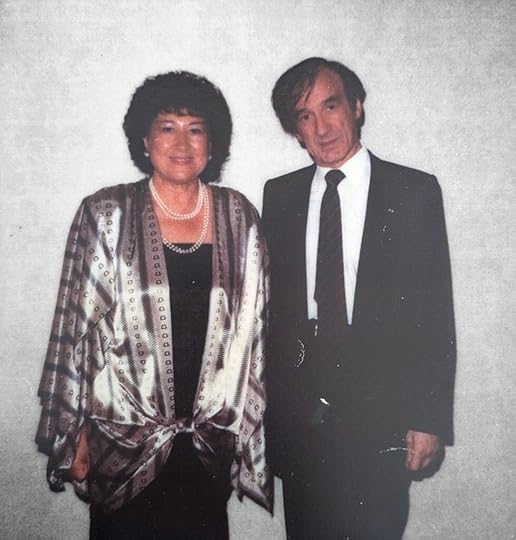 Jenny with Elie Wiesel.