Julia McCoy's Blog
November 28, 2025
AI Startup Ideas: The Gold Rush Is Here and How to Pick Winners
We’re living in the most exciting time for entrepreneurs since the internet boom. AI startup ideas are everywhere. The opportunity is massive. The barrier to entry has never been lower.
Think about it. In 2023, ChatGPT gained a million users in five days. Not five months. Five days. Now we’re seeing AI tools rake in hundreds of millions in revenue with teams smaller than a traditional marketing department.
This is the gold rush of our generation. And just like any gold rush, the people who win aren’t the ones chasing every shiny object. They’re the ones who stake their claim, dig deep, and extract real value.
But here’s the problem. Everyone wants to build an AI business. Few people know how to pick the right AI startup ideas that will actually make money.
That changes today.
How to Pick YOUR Winning AI Startup IdeasPicking the right niche for your AI business isn’t rocket science. But it does require you to think differently than most entrepreneurs.
Most people approach AI startup ideas backwards. They see a cool technology and then scramble to find a problem it might solve. That’s like buying a hammer and then searching for nails.
The winning approach? Start with the problem. Then use AI as your solution.
Here’s exactly how to identify AI startup ideas that will actually work.
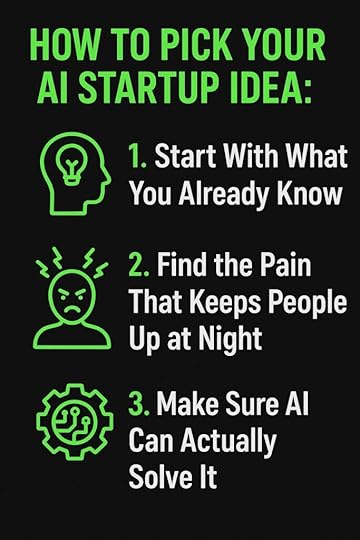 1. Start With What You Already Know
Your unfair advantage isn’t AI. Your unfair advantage is your experience.
What industry do you understand inside and out? Where have you spent years building knowledge that most people don’t have?
Maybe you spent a decade in real estate. Maybe you’ve been a graphic designer forever. Maybe you ran an e-commerce store and know every pain point by heart.
Use that knowledge. Don’t throw it away to chase some shiny new market you know nothing about.
Here’s why this matters for AI startup ideas: The best AI businesses solve real problems for real people. You can’t identify those problems if you don’t understand the industry. You’ll waste months building something nobody needs.
I see this mistake constantly. Someone with zero marketing experience decides to build an AI marketing tool. Someone who’s never touched e-commerce tries to solve e-commerce problems. They fail because they’re guessing about the pain points instead of knowing them.
Your existing expertise is gold. It lets you identify opportunities that others miss. It gives you credibility with potential clients. It means you can speak their language and understand their objections.
The fastest path to successful AI startup ideas starts with your own backyard.
2. Find the Pain That Keeps People Up at NightNow we get specific. Really specific.
What exact problem is your ideal client desperately trying to solve right now?
Here’s where most people mess up their AI startup ideas. They stay too broad. They say things like “businesses need help with marketing” or “companies want to save time.”
That’s not a problem. That’s a category.
A real problem sounds like this: “E-commerce brands doing $500K to $5M in revenue who are drowning in customer service requests and losing sales because they can’t respond fast enough.”
See the difference? Now we’re talking about a specific type of business, at a specific revenue level, with a specific problem that’s costing them specific money.
That’s how you identify winning AI startup ideas. Get obsessively specific.
Ask yourself these questions about your AI startup ideas: Who exactly has this problem? How much is this problem costing them? What have they already tried? Why didn’t it work? How urgent is solving this?
The more specific you get, the easier it becomes to build something that actually sells. You know exactly who to talk to. You know exactly what to say. You know exactly how to price your solution.
Generic AI startup ideas die fast. Specific AI startup ideas that solve painful problems print money.
3. Make Sure AI Can Actually Solve ItHere’s the reality check most people skip when evaluating AI startup ideas.
Be brutally honest with yourself. Can AI genuinely solve this problem better, faster, or cheaper than traditional methods?
If the answer is yes? You’ve struck gold.
If the answer is maybe or kinda? Keep digging. Find a better problem.
Not every problem needs an AI solution. Some problems are better solved with good old-fashioned human work. Some problems require a combination of AI and human expertise. Some problems AI absolutely crushes.
Your job is to identify AI startup ideas where AI delivers clear, measurable advantages.
Can AI handle this task 10 times faster than a human? Can it do it at one tenth the cost? Can it maintain quality at scale in ways that human teams can’t?
These are the AI startup ideas worth pursuing. These are the ones that create genuine value and command premium prices.
Don’t fall into the trap of forcing AI into places it doesn’t belong. That’s how you end up with a solution looking for a problem. That’s how you waste months building something nobody wants to pay for.
Test your AI startup ideas against real-world performance. Build a proof of concept. Show potential clients actual results. Let the technology prove itself before you commit everything to it.
How I Picked My AI Startup Idea (And Hit $100K Monthly in Under a Year)Let me show you exactly how this works in real life.
I spent years running Express Writers, a content agency that took seven years and 100 employees to reach $100K monthly revenue. I knew the content industry inside and out.
When AI exploded onto the scene, I didn’t chase some random shiny opportunity. I stayed in my lane. Content creation. Writing. Marketing.
Here’s the problem I identified: Professionals were drowning in content creation. They were spending 40+ hours every week on emails, blog posts, and social media. They needed to learn how to clone their authentic voice and style with AI. Nobody was teaching that.
I tested it obsessively first. I trained AI systems with my own voice. I built systems for email writing and content creation. What used to take me 40+ hours per week now takes 10 minutes.
Once I had proof, I launched First Movers R&D AI Labs.
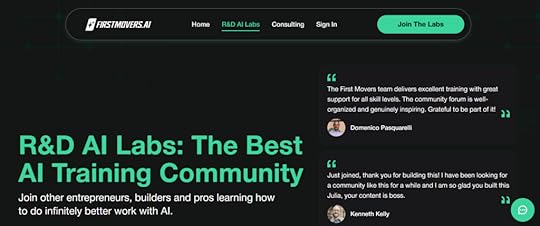
We hit $70K monthly revenue in eight months. Just two employees. Then we crossed $100K monthly in under a year.
Compare that to Express Writers. Seven years and 100 employees to hit the same milestone.
That’s the power of picking the right AI startup idea. I leveraged my expertise. I identified a specific, painful problem. I proved AI could solve it better than anything else. Then I went all in.
Find your version of this. Find the intersection of your expertise, a painful problem, and AI’s capabilities. Then execute like your life depends on it.Retry
Real Examples of Killer AI Startup IdeasLet me show you what winning AI startup ideas look like in practice.
Real estate agents who need personalized property descriptions for hundreds of listings every month. AI writes them in minutes instead of hours.
Law firms that spend thousands of dollars per month on contract review. AI catches issues faster and cheaper than junior associates.
Content creators who need to produce daily social media posts across multiple platforms. AI maintains their voice and style while they focus on strategy.
E-commerce brands drowning in customer service emails. AI handles 80% of inquiries instantly while routing complex issues to humans.
Coaches and consultants who want to scale their expertise without hiring a massive team. AI delivers their frameworks and knowledge to more clients.
Notice what all these AI startup ideas have in common? They’re specific. They’re painful. They’re solvable with AI.
Your AI startup ideas don’t need to be sexy. They don’t need to be trendy. They just need to be specific, painful, and solvable with AI.
Pick one thing. Get really, really good at it. Then expand later once you’ve dominated that space.
That’s how you build an AI business that actually makes money.
Learn How to Build Profitable AI Businesses With First Movers R&D AI LabsWant to turn these AI startup ideas into reality? You need more than just a good idea. You need the systems, strategies, and skills to actually build and scale an AI business.
That’s exactly what First Movers R&D AI Labs delivers.
First Movers R&D AI Labs is the complete AI education platform for professionals and entrepreneurs who want to integrate AI into their work. We’ve helped hundreds of people build profitable AI businesses in months, not years.
Inside First Movers R&D AI Labs, you get access to over 40 comprehensive courses covering everything from AI fundamentals to advanced implementation strategies. One of those courses is The AI First Movers Playbook, your complete roadmap for building an AI business from scratch.
We reached $70K monthly revenue in eight months with just two employees. Then hit $100K monthly in under a year. That’s the power of AI when you know how to use it right.
Our approach is simple. Learn by doing. Build real skills. Create actual results. No fluff. No theory for theory’s sake. Just practical implementation that works.
Ready to join the AI revolution? Get started with First Movers R&D AI Labs today.
Frequently Asked Questions About AI Startup IdeasWhat is a good AI startup idea?A good AI startup idea solves a specific, painful problem for a clearly defined audience using AI in a way that’s measurably better than traditional solutions. The best AI startup ideas combine your existing expertise with genuine market need and proven AI capabilities. Look for problems where AI can deliver results 10 times faster or at one tenth the cost of current methods.
How much does it cost to start an AI business?Starting an AI business costs significantly less than traditional businesses. You can launch with $500 to $5,000 covering AI tool subscriptions, basic marketing, and initial setup. The biggest investment is your time learning how to effectively use AI tools. Many successful AI businesses start as side projects using free or low-cost AI platforms before scaling up.
Do I need technical skills to build an AI business?You don’t need to be a programmer or data scientist to build a successful AI business. Most AI startup ideas use existing AI tools like ChatGPT, Claude, or specialized AI platforms. Your job is connecting these tools to solve real problems, not building AI from scratch. Focus on understanding your market and delivering results. The technical side is easier than you think.
What industries are best for AI startup ideas?The best industries for AI startup ideas are ones you already understand. That said, industries seeing massive AI adoption include content creation, customer service, marketing, legal services, real estate, e-commerce, coaching, and consulting. Look for industries with repetitive tasks, high labor costs, or scaling challenges. Those are where AI startup ideas create the most value.
How do I validate my AI startup idea before building?Validate your AI startup ideas by talking to potential customers first. Describe the problem you solve and the results you deliver. Ask if they would pay for it and how much. Build a simple proof of concept showing real results. Offer a pilot program to a few clients at a discount. Their feedback and willingness to pay tells you everything you need to know.
Can AI startup ideas still be profitable now?AI startup ideas are more profitable now than ever. We’re still in the early stages of AI adoption. Most businesses haven’t figured out how to use AI effectively. That’s your opportunity. The businesses winning right now are the ones helping others implement AI, not just selling AI tools. Focus on delivering results and you’ll build a profitable business regardless of market conditions.
How long does it take to make money with AI startup ideas?The timeline for making money with AI startup ideas varies based on your experience and execution. Some people land their first client within weeks. Others take a few months to build their offer and find customers. The key is starting before you feel ready. Launch a basic version of your service. Get feedback. Improve based on real client results. Speed matters more than perfection when testing AI startup ideas.
What’s the difference between an AI business and a traditional business?An AI business uses artificial intelligence to deliver results faster, cheaper, or better than traditional methods. The core difference is leverage. Traditional businesses scale by hiring more people. AI businesses scale by using technology to multiply what each person can accomplish. This means higher profit margins, faster growth, and smaller teams. AI startup ideas often reach $100K monthly revenue with teams of two or three people instead of twenty or thirty.
Your Next Move: Turn AI Startup Ideas Into RealityThe opportunity is real. The timing is perfect. The question is: Will you take action?
Building a successful AI business doesn’t require a computer science degree or a massive budget. It requires the right AI startup ideas, the right knowledge, and the willingness to start before you feel completely ready.
You now know how to identify winning AI startup ideas. You know how to validate them. You know what makes them successful.
The only thing left is execution.
Start with what you know. Find the painful problems. Make sure AI solves them better than anything else. Then build something people will happily pay for.
And if you want the complete roadmap for turning your AI startup ideas into a thriving business? Join First Movers R&D AI Labs and learn from people who’ve already done it.
The gold rush is happening right now. Your AI startup ideas could be the ones that win.


November 27, 2025
AI Engine Optimization: How to Rank in ChatGPT, Perplexity, and Google AI
You’ve spent years perfecting your SEO game. Your content ranks on page one. Organic traffic keeps climbing.
Then the AI revolution hits. ChatGPT explodes. Perplexity gains traction. Google launches AI Overviews.
Now your target audience isn’t searching anymore. They’re conversing with AI.
If your content strategy still revolves around traditional search rankings alone, you’re invisible to the fastest-growing segment of online users. The digital landscape has shifted, and AI Engine Optimization is no longer optional—it’s essential for survival.
What Is AI Engine Optimization?AI Engine Optimization is the practice of structuring and creating content so artificial intelligence platforms cite your brand when generating responses to user queries.
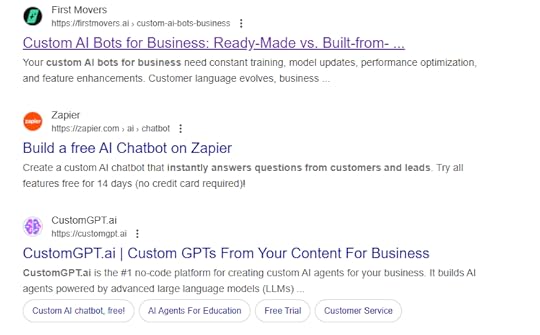
Think of it this way: traditional SEO gets you ranked in search results where users scroll through multiple links. AI Engine Optimization gets you mentioned directly in the answer itself—no scrolling required.
Here’s an example of traditional SEO:
And here’s an example of AEO:
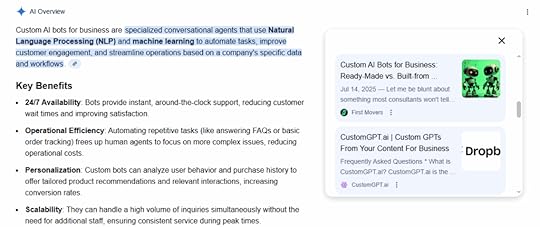
When someone asks ChatGPT “which CRM works best for small agencies,” the AI synthesizes information from across the web and delivers one cohesive response. AI Engine Optimization ensures your brand name appears in that response.
The platforms work differently than Google’s algorithm. They prioritize conversational language, authoritative sources, clearly structured information, and content that directly answers questions. Your job is to give them exactly what they need.
Why AI Engine Optimization Matters in 2025The shift toward AI-powered search isn’t coming. And it’s super important. Here’s why:
1. AI Users Are Ready to BuyTraffic generated through AI Engine Optimization carries dramatically higher purchase intent compared to traditional organic search.
When someone types “CRM software” into Google, they could be anywhere in the buying journey. Maybe they’re a college student writing a research paper. Maybe they’re casually browsing.
But when someone asks Perplexity “what’s the top-rated CRM for real estate teams under $100 per month,” they’re days away from pulling out their credit card.
AI queries are specific. They’re action-oriented. They signal immediate buying readiness.
These users have moved past awareness. They’re evaluating options and making decisions. They want recommendations they can act on right now.
2. Younger Audiences Have Already SwitchedResearch from WebFX shows that 60% of millennials and Gen Z now turn to AI platforms first when researching products and making purchase decisions.
This isn’t a small early-adopter crowd anymore. This is mainstream behavior.
These demographics control massive purchasing power today and will for the next several decades. If your content can’t be found by AI tools, you’re essentially invisible to them.
They’re not Googling your company name. They’re asking ChatGPT whether you’re worth considering at all.
3. AI Citations Build Unmatched Brand AuthorityWhen ChatGPT mentions your brand by name in an answer, that’s endorsement you literally cannot buy with advertising spend.
The AI becomes your advocate. Users trust the recommendation because they trust the platform itself.
I mean, wouldn’t you trust something Google itself recommends?
Like this:
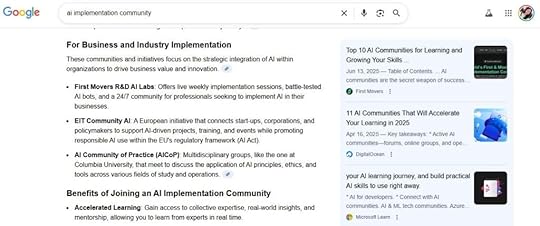
Getting cited in AI responses builds authority, credibility, and brand recall in ways traditional SEO never could.
There’s also a compounding effect. One citation can trigger direct website visits, social media shares, and additional brand searches. The visibility snowballs.
The 6 AI Platforms You Must Optimize ForAI Engine Optimization isn’t about one platform. You need visibility across multiple AI tools that users trust.
1. Google AI Overviews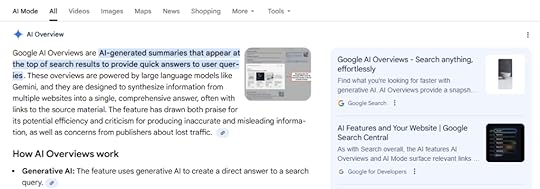
Google AI Overviews appear at the top of search results for millions of queries, providing AI-generated summaries before traditional links.
These overviews synthesize information from multiple high-authority sources to answer user questions directly.
The content selected for AI Overviews typically demonstrates expertise, clear structure, and direct answers to common questions. Google prioritizes pages with strong technical SEO foundations and authoritative backlink profiles.
2. Google AI Mode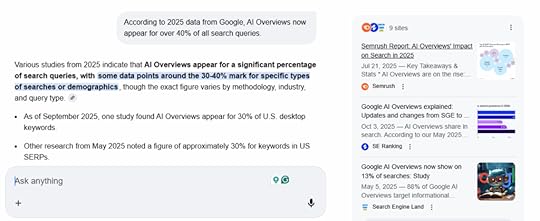
Launched in early 2024, Google AI Mode transforms traditional search into a conversational experience where users can ask follow-up questions.
Unlike standard search, AI Mode maintains context across multiple queries in a session. It remembers what you asked three questions ago and builds on that conversation.
Content optimized for AI Mode needs to address related subtopics comprehensively, not just answer one narrow question. Think topic clusters, not individual keywords.
3. Google Gemini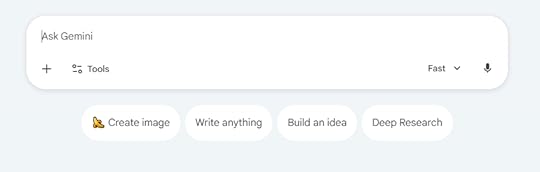
Gemini is Google’s advanced AI model powering both consumer and enterprise applications.
It processes text, images, code, and video to generate responses across Google’s ecosystem.
Gemini particularly excels at complex, multi-step reasoning. Content that breaks down sophisticated concepts into clear steps performs exceptionally well here.
4. Microsoft Bing Copilot
Bing Copilot integrates ChatGPT-5 technology directly into Microsoft’s search experience and Windows operating system.
The platform excels at detailed research queries and professional use cases.
Copilot favors content with clear citations, data-driven insights, and professional tone. It’s particularly strong for B2B and enterprise topics.
5. ChatGPT Search
OpenAI’s ChatGPT Search launched in late 2024, allowing ChatGPT to pull real-time information from the web while maintaining its conversational interface.
With over 800 million weekly active users, ChatGPT Search represents one of the largest shifts in how people find information online.
The platform prioritizes authoritative sources, recent content, and clear explanations written in natural language. Technical jargon without context gets ignored.
6. Perplexity
Perplexity has carved out its niche as the researcher’s AI platform, offering cited answers with direct source links.
The platform currently has 30 million monthly active users. Perplexity users tend to be professionals conducting deep research rather than casual browsers.
Content that provides unique data, expert insights, and comprehensive coverage consistently gets cited by Perplexity. Surface-level content rarely makes the cut.
AI Engine Optimization: How to Optimize Content for AI EnginesOptimizing for AI platforms requires specific techniques that differ from traditional SEO tactics.
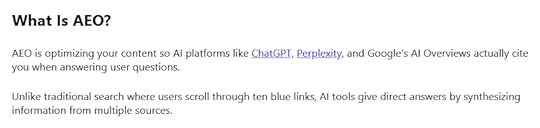
1. Lead With Direct AnswersAI algorithms scan for concise responses they can extract immediately.
Start every section with a clear two or three-sentence answer that addresses the core question head-on. Skip the preamble. Give the answer first.
Like this:
After that initial summary, expand with supporting details, real-world examples, and additional context.
This structure serves both AI extraction and human readers. The AI gets what it needs instantly. Users who want depth can continue reading.
2. Structure Content for ScannabilityBreak information into digestible chunks using bullet points, numbered lists, and tables wherever appropriate.
Research shows AI-generated answers include list formats 78% of the time because lists communicate information quickly and clearly.
Keep paragraphs short—two to three sentences maximum. Aim for sentences under 20 words when possible.
Each paragraph should make one focused point, then stop. Avoid dense text blocks that require serious concentration to parse.
3. Write Headlines That Describe Content PreciselyYour H2 and H3 tags need to clearly communicate what each section covers.
Vague headings like “benefits” or “tips” don’t cut it anymore. Instead, use descriptive headers like “why AI Engine Optimization drives higher-intent traffic” or “three platforms millennials use instead of Google.”
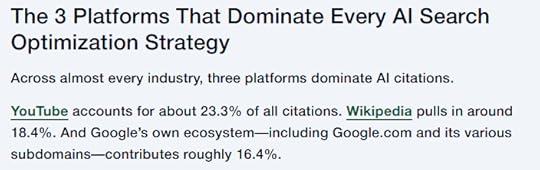
Even better, format headings as questions that mirror actual user queries. Headlines like “what makes AI Engine Optimization different from SEO?” align perfectly with how people interact with AI platforms.
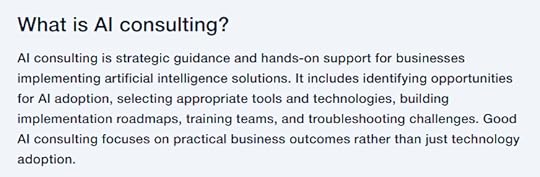 4. Define Terms and Concepts Clearly
When introducing complex topics, explain exactly what they mean and why they matter.
Use related terminology naturally throughout your content. If your main focus is AI Engine Optimization, also include connected terms like conversational search, entity optimization, and AI-powered platforms.
But integrate them organically. Forced keyword stuffing destroys readability and erodes trust.
5. Implement Strategic Schema MarkupStructured data helps AI platforms locate and extract information faster.
Add JSON-LD schema for articles, FAQs, how-tos, and organization details. Ensure your schema matches your visible content exactly—inconsistencies trigger red flags for AI algorithms.
FAQ schema works particularly well for AI Engine Optimization. When you mark up questions and answers properly, AI tools can pull that information directly into responses.
Validate your schema through Google’s Rich Results Test before publishing. Broken schema implementation helps nobody.
6. Build Strong Entity RecognitionEntity optimization means establishing a clear, consistent digital identity that AI platforms recognize and trust.
Maintain identical brand information across all platforms—your website, LinkedIn, Twitter, industry directories, everywhere. Inconsistency confuses AI algorithms.
Build relationships with other authoritative entities through partnerships, guest contributions, and collaborations. AI systems understand the web as a network of connected entities. Your associations matter.
Establish expertise through thought leadership, speaking engagements, original research, and media mentions. The stronger your entity presence, the more likely AI platforms will cite you as an authoritative source.
7. Format Content Around QuestionsAI search queries are conversational by nature.
Users ask complete questions like “how do I optimize content for AI search” instead of typing “AI optimization tips” into a search bar.
Create dedicated question-and-answer sections that directly mirror common queries. Each question becomes a heading, followed immediately by a concise answer. Like this:
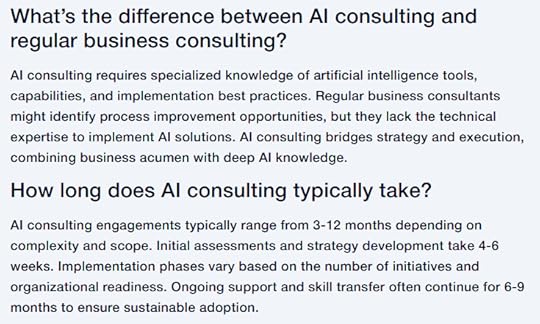
This approach aligns perfectly with how AI platforms parse and present information. You’re pre-packaging your content in the exact format AI tools prefer.
Master AI-Powered Content Creation With First Movers R&D AI LabsWant to dominate AI Engine Optimization while creating content in a fraction of the time?
First Movers R&D AI Labs gives you everything you need to build a complete AI-powered content system.
When you subscribe, you get immediate access to 40+ comprehensive courses covering content creation with AI, optimization strategies for AI platforms, voice cloning technology, and complete automation workflows.
You’ll learn how to train AI to write in your authentic voice, create content that ranks in both traditional search and AI platforms, and build systems that scale your output without sacrificing quality.
This isn’t theory. This is the exact system that helped us reach $100k monthly revenue in under a year with just two people.
Join First Movers R&D AI Labs now and get ahead of the AI content revolution.
AI Engine Optimization FAQsWhat’s the Difference Between SEO and AI Engine Optimization?The difference is in how content gets discovered and displayed.
SEO focuses on ranking in search engine results pages where users click through links. AI Engine Optimization focuses on getting your content cited directly within AI-generated answers.
SEO targets keywords and search queries. AI Engine Optimization targets conversational questions and natural language patterns.
Both matter. You need strong SEO fundamentals as a foundation, then layer AI Engine Optimization strategies on top for maximum visibility across all platforms.
How Long Does It Take to See Results From AI Engine Optimization?Most brands see their first AI citations within 30 to 90 days of implementing AI Engine Optimization strategies.
The timeline depends on your existing domain authority, content quality, and how consistently you publish optimized content.
Brands with established authority and strong technical SEO see faster results. Newer sites need more time to build the trust signals that AI platforms require.
Do I Need to Abandon SEO for AI Engine Optimization?Absolutely not. SEO and AI Engine Optimization work together.
Strong SEO foundations—technical optimization, quality content, authoritative backlinks—help AI platforms trust your content enough to cite it.
Think of SEO as the foundation and AI Engine Optimization as the next level built on top. You need both for comprehensive digital visibility in 2025.
Which AI Platform Should I Prioritize First?Start with Google AI Overviews and ChatGPT Search since they reach the largest audiences.
Google AI Overviews appear in traditional search results, so you’re reaching users who still use Google. ChatGPT Search captures the growing audience that’s abandoned traditional search entirely.
Once you’ve optimized for those two, expand to Perplexity for professional audiences and Bing Copilot for enterprise users.
Can Small Businesses Compete in AI Engine Optimization?Yes, often more effectively than large corporations.
AI platforms prioritize content quality, clarity, and expertise over domain size. A small business with exceptional content and clear authority can absolutely outrank larger competitors in AI citations.
The key is focusing on specific niches where you have genuine expertise rather than trying to compete on broad, general topics.
November 21, 2025
AEO: The New Frontier Beyond SEO That’s Changing How Content Gets Found
You’ve mastered SEO. Your content ranks. Traffic flows in steadily.
Then ChatGPT happens. Perplexity emerges. Google AI Overviews starts answering questions.
And suddenly, your audience isn’t Googling anymore—they’re asking AI.
Welcome to Answer Engine Optimization (AEO), where the game has completely changed. If you’re still playing by SEO-only rules, you’re already behind.
What Is AEO?AEO is optimizing your content so AI platforms like ChatGPT, Perplexity, and Google’s AI Overviews actually cite you when answering user questions.
Unlike traditional search where users scroll through ten blue links, AI tools give direct answers by synthesizing information from multiple sources.
Like this:
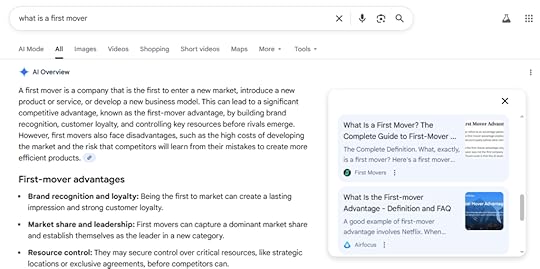
Notice how the Overviews answers the query, then provides sources on the right side?
Your goal is to be one of those sources AI trusts and references.
Think of it this way: SEO gets you ranked on a results page. AEO gets you quoted in the answer itself.
That’s a massive difference.
When an AI platform references your brand or content directly in its response, you’re not competing with nine other listings. You’re the answer.
The mechanics are different too.
Search engines crawl and index based on keywords and backlinks. AI platforms analyze content structure, entity relationships, conversational patterns, and authority signals to decide what information deserves inclusion in generated responses.
Why AEO Matters More Than You ThinkHere’s the reality: consumer behavior has shifted dramatically.
People don’t want to click through five articles to find an answer anymore. They want instant, synthesized information.
I mean, wouldn’t you?
Let me ask you this.
For example: you want to know what “SEO” is.
Would you rather click on all these blue links and read each blog one by one?
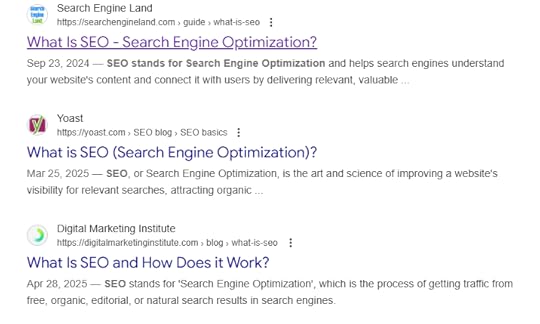
Or would you rather get a concise, direct, complete answer like this?
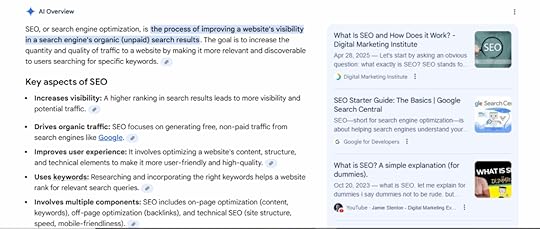
If you’d pick the latter, you prefer AEO (like so many other people today do).
So, what are the other reasons AEO is so important?
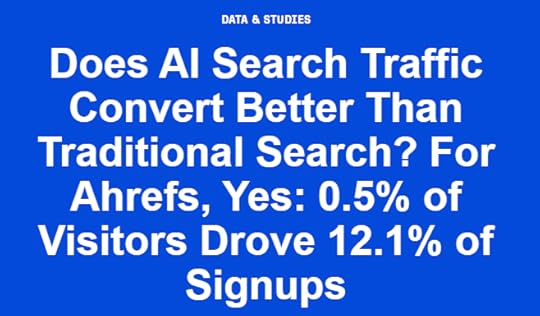
1. AEO Brings Visitors With Money in HandTraffic from AEO carries significantly higher purchase intent than traditional search.
When someone asks an AI “what’s the best project management tool for remote teams,” they’re usually days—not months—from making a purchase decision.
They’re past the awareness stage. They’re ready to evaluate and buy.
Compare that to someone typing “project management” into Google. That person could be anywhere in the buyer journey.
They might be a student researching a term paper.
The AI user is asking specific, action-oriented questions that signal buying readiness.
Want proof?
Here’s what Ahrefs has to say about it:
 2. The Generational Shift Is Real
Data shows 60% of millennials and Gen Z now use AI platforms for research and decision-making.
Check out what WebFX says about it:
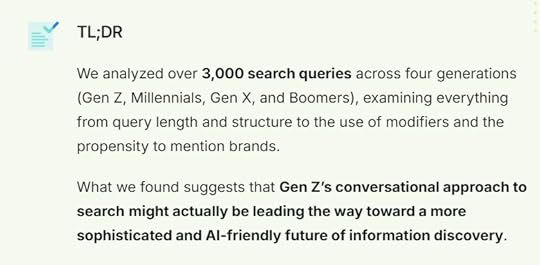
These aren’t edge cases or early adopters anymore. This is mainstream behavior.
And these demographics represent massive purchasing power—both now and for decades to come.
If your content strategy ignores AEO, you’re essentially invisible to the fastest-growing segment of online users.
They’re not Googling your brand. They’re asking ChatGPT if you’re worth their time.
3. Brand Visibility on SteroidsWhen ChatGPT cites you by name in an answer, that’s brand visibility you can’t buy with ads.
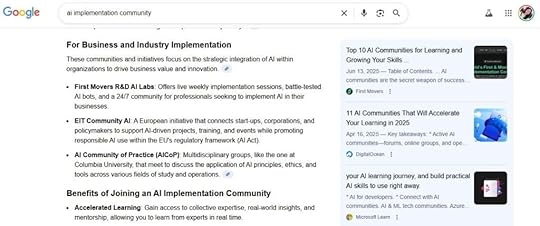
The AI becomes your endorser. Users trust it because they trust the platform.
Getting referenced in AI-generated answers builds authority, credibility, and top-of-mind awareness in ways traditional SEO simply cannot match.
Plus, there’s a network effect.
One mention in an AI response can lead to direct site visits, social shares, and even more backlinks—which then strengthens your traditional SEO while simultaneously boosting your AEO performance.
How to Actually Rank for AEOGetting cited by AI platforms requires a completely different content approach than what worked for SEO alone.
Here’s what actually moves the needle.
1. Give Answers Before ExplanationsAI algorithms scan for direct, concise responses they can extract immediately.
Start every section with a two to three-sentence summary that answers the core question straight-up. No fluff. No preamble. Just the answer.
After that quick summary, expand with details, examples, and supporting evidence.
This fan-out technique helps both AI extraction and user experience. The AI gets what it needs fast. Users who want depth can keep reading.
Active voice works best here.
Write subject-first sentences like “you can optimize content by implementing structured data” instead of passive constructions.
This clarity helps AI platforms parse context more accurately.
2. Structure Like Your Life Depends On ItBreak everything into scannable chunks. Use bullet points liberally. Add numbered lists where appropriate.
Create tables for comparisons.
AI-generated answers include lists 78% of the time because lists convey information clearly and quickly.
Keep paragraphs short—two to three sentences max. Aim for sentences under 20 words when possible.
Avoid walls of text at all costs. Each paragraph should make one clear point, then stop.
Use semantic cues throughout your writing.
Phrases like “according to,” “the key difference is,” “as a result,” and “for example” signal to AI how sentences relate to each other.
These linguistic markers improve comprehension and extraction.
3. Make Headlines Work HarderYour H2s and H3s need to clearly encapsulate what each section covers.
Vague headings like “benefits” don’t cut it anymore.
Instead, use descriptive headers like “why AEO drives higher-intent traffic than traditional SEO” or “three reasons millennials prefer AI search over Google.”
Better yet, format headings as questions that mirror actual user queries.
Questions like “what makes AEO different from SEO?” or “how do AI platforms choose which content to cite?” align perfectly with how people interact with AI tools.
Use nested heading structures logically.
Your H1 states the main topic. H2s break it into major subtopics. H3s develop those subtopics further.
Users and AI should understand your content’s skeleton just by scanning headings.
4. Define Everything ClearlyStart new sections by explaining key terms, even if they seem obvious.
When introducing complex concepts, spell out exactly what they mean and why they matter.
Use related terminology naturally throughout your content.
If your main keyword is “answer engine optimization,” also include connected terms like “AI search,” “conversational queries,” “entity optimization,” and “generative AI platforms.”
But weave them in organically—forced keyword stuffing destroys readability and trust.
Linking phrases help too.
Use connectors like “in contrast,” “similarly,” “as a result,” and “for instance” to show how ideas relate.
This helps AI understand the logical flow of your argument and improves the chances of accurate citation.
5. Schema Markup Still CountsStructured data helps AI platforms locate and extract information faster.
Implement JSON-LD schema for articles, FAQs, how-tos, and organization details.
Make absolutely sure your schema matches your visible content exactly—inconsistencies trigger trust issues with AI algorithms.
FAQ schema works particularly well for AEO.
When you mark up questions and answers properly, AI tools can pull that information directly.
Validate your schema through Google’s Rich Results Test before publishing. Broken schema helps nobody.
Only use markups when genuinely appropriate.
Don’t force FAQ schema onto content that isn’t actually answering common questions. AI platforms recognize when schema implementation feels authentic versus manipulative.
6. Think Entity, Not Just KeywordsEntity optimization means establishing a clear, consistent digital identity that AI platforms recognize and trust.
Maintain identical brand information across all platforms—LinkedIn, Twitter, your website, industry directories, everywhere.
Inconsistency confuses AI algorithms.
Build relationships with other strong entities in your space through partnerships, collaborations, guest posts, and mentions.
AI systems understand the web as a network of connected entities. Your associations matter.
Establish expertise through thought leadership content, speaking engagements, published research, and media mentions.
The stronger your entity presence, the more likely AI platforms will reference you as an authoritative source.
7. Question-Based Content WinsAI search queries are conversational by nature.
Users ask full questions like “how do I optimize content for AI search” instead of typing “AEO tips.”
Format your content to match this behavior.
Create dedicated Q&A sections or FAQ-style posts that directly mirror common queries.
Each question becomes an H2 or H3, followed immediately by a concise answer. Then expand with additional context, examples, and practical steps.
This approach aligns perfectly with how AI platforms parse and present information.
You’re essentially pre-packaging your content in the exact format AI tools prefer.
Master AI-Powered Marketing With First Movers R&D AI Labs
Everything I’ve shared about AEO is exactly what we teach inside First Movers R&D AI Labs.
We’ve built 40+ courses specifically designed to help you implement AI in your business—including comprehensive training on creating content that ranks in AI-generated answers.
This isn’t theory. This is practical, learn-by-doing education that builds your skills fast.
You’ll discover how to train AI to clone your voice, automate content creation, and optimize everything for both traditional search and AI platforms.
No fluff. No dependency. Just real implementation that drives measurable results.
Whether you’re building content systems, scaling your business, or positioning yourself as an authority in AI-driven search, First Movers gives you the complete roadmap.
We reached $100k monthly in under a year with just two people by following these exact strategies.
Now we’re teaching you how to do the same.
Ready to dominate both SEO and AEO? Join First Movers R&D AI Labs today.
FAQs About AEOWhat is the difference between AEO and SEO?The difference between AEO and SEO is that SEO focuses on ranking your content in search engine results pages, while AEO focuses on getting your content cited directly within AI-generated answers.
SEO targets traditional search engines like Google. AEO targets AI platforms like ChatGPT, Perplexity, and Claude.
Both matter, but they require different optimization strategies.
How long does it take to see AEO results?AEO results typically appear faster than traditional SEO because AI platforms don’t rely solely on accumulated backlinks and domain authority.
If you optimize content correctly with clear answers, proper structure, and strong entity signals, you can see citations within weeks.
However, building consistent AEO visibility across multiple queries takes three to six months of focused effort.
Can I rank for AEO without good SEO?Not really. While AEO requires unique optimization tactics, strong SEO fundamentals create the foundation AI platforms need.
Technical SEO, quality content, authoritative backlinks, and proper schema markup all contribute to AEO success.
The platforms work together—you can’t completely separate them. Think of SEO as the base and AEO as the next evolution layer on top.
Which AI platforms should I optimize for?Focus on ChatGPT, Perplexity, Claude, and Google’s AI Overviews as your primary targets.
These platforms have the largest user bases and most significant impact on brand visibility.
However, the optimization principles remain similar across platforms.
Content structured well for one AI platform typically performs well across others because they all prioritize clarity, authority, and entity recognition.
Do I need different content for AEO versus SEO?No. The best strategy is creating content that serves both purposes simultaneously.
Write comprehensive, well-structured content with clear answers, proper headings, and natural language.
Add schema markup and entity optimization.
This approach satisfies both traditional search algorithms and AI platforms. Trying to maintain separate content for each creates unnecessary work and fragmentation.
November 18, 2025
Writing with AI: How I Turned 40+ Hours Into 10 Minutes and Scaled to $70K/Month
You know that feeling, right?
It’s 11 PM. You’re staring at your screen. The cursor blinks at you. Mocking you. Your coffee’s gone cold. Your eyes are burning.
You need to write. You HAVE to write. But there’s nothing there. Just a blank page and mounting panic.
I’ve been there. I spent years burning myself out trying to produce content. The scrambling. The exhaustion. That sick feeling in your stomach when you realize you missed another deadline. The frustration of knowing you’re capable of brilliant work but you’re too fried to access it.
Here’s the thing though. What if there’s a way to produce the same amazing quality you create on your best days, but turn 40+ hours a week into just 10 minutes? You can when you clone yourself and master writing with AI.
Sound impossible? It’s not. You can do this when you clone yourself using AI to write exactly like you.
Let me show you how.
How I Scaled My Content, Saved 90+ Hours Per Week, and Grew My Reach by 9,900%Eight months ago, I started First Movers R&D AI Labs.
Today, I’m making $70K monthly. My reach has exploded by 9,900%. And I’m working less than I ever have.
How? I cloned myself using AI.
But here’s what matters. I’m not keeping this secret locked away. I’m going to tell you exactly how I did it so you can do it too.
I used to run a content agency called Express Writers. It took me seven years and a team of 100 people to hit $100K per month. Seven. Years. With my new business powered by AI? I hit that same milestone in under a year with just two employees.
That’s not a typo. Two employees versus one hundred.
The difference? Writing with AI that actually sounds like me. Not generic robot content. Not lifeless corporate speak. Content that captures my voice, my perspective, my expertise.
And you can do this too.
The Real Benefits of Cloning AI to Write Like YouLet me break down what actually changes when you master writing with AI this way.
Writing with AI Advantage #1: Save Time (From 40-60 Hours to Just One Day Per Week)Remember those 40-hour work weeks spent churning out content? Gone. When you clone yourself properly, you’re looking at maybe 8-10 hours of work per week. Maybe less.
I went from spending 40+ hours writing blog posts, social media content, and email newsletters to spending 3 hours per week. The rest? My AI clone handles it.
That’s not lazy. That’s strategic.
Writing with AI Advantage #2: Post Consistently Without the StressInconsistent posting kills momentum. Period. You miss a week and your audience forgets you exist. The algorithm punishes you. Your competitors swoop in.
On the other hand?
According to Buffer, posting consistently gets you 5x the likes, comments, and shares.
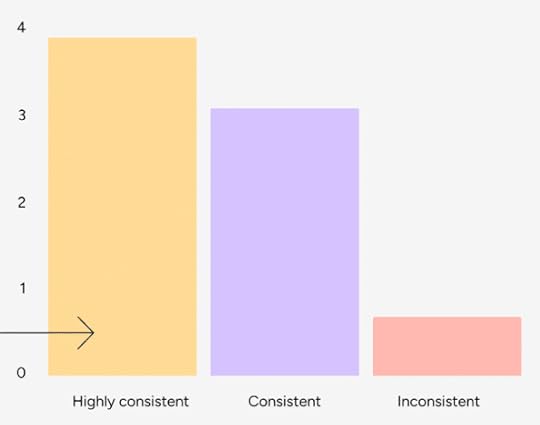
But consistency is brutal when you’re doing everything manually. Life happens. You get sick. You have client emergencies. You burn out.
Writing with AI that’s actually cloned to your voice means you never miss a beat. You can batch content. Schedule ahead. Stay visible even when life gets messy.
Writing with AI Advantage #3: Your Quality Won’t Drop When You’re RushedHere’s what happens when you manually write under pressure. You cut corners. You skip the research. You publish something that’s just okay instead of amazing.
I used to do this all the time. Rush a blog post because it was due. Cringe when I published it. Watch it underperform.
With a properly trained AI clone, the quality stays consistent. Every single time. Because it’s learned from your best work, not your rushed panic-writing at midnight.
Writing with AI Advantage #4: Get Your Life Back Without Burning OutBurnout isn’t a badge of honor. It’s a business killer.
I spent years wearing exhaustion like it meant I was working hard enough. Spoiler alert: it didn’t. It just meant I was headed for a crash.
Writing with AI gave me my life back. I have time for my family. Time to think strategically. Time to actually enjoy running my business instead of feeling like it’s running me.
You deserve that too.
The Difference Between Generic AI Writing and Actually Cloning YourselfLet me be crystal clear about something. There’s a massive difference between subscribing to an AI writer and telling it to write, versus actually cloning yourself to get AI to write as if it were you.
Generic AI writing is meh. It’s bland. Safe. Forgettable. It sounds like every other piece of content out there.
But AI that writes like you? That actually takes your place as the content creator for your brand. It captures your personality. Your expertise. Your unique way of explaining things.
When I started using AI, I made this mistake. I’d just throw prompts at ChatGPT and hope for the best. The results were terrible. Lifeless. Not me at all.
Then I figured out how to actually clone myself. Train the AI on my voice. My perspective. My way of thinking.
That’s when everything changed.
Your audience can’t tell the difference between content I write manually and content my AI clone creates. Because my clone isn’t just mimicking generic professional writing. It’s learned to think like me.
The Tool I Use to Clone Myself and Do All My AI Writing: Claude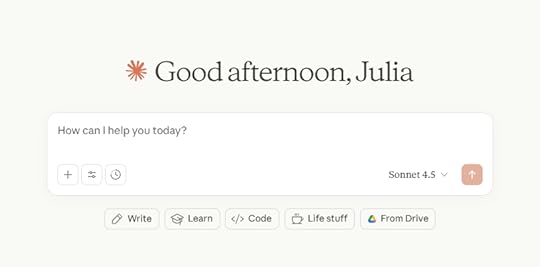
After testing a bunch of AI writing tools, I landed on Claude.
Here’s why Claude wins for writing with AI that actually sounds like you.
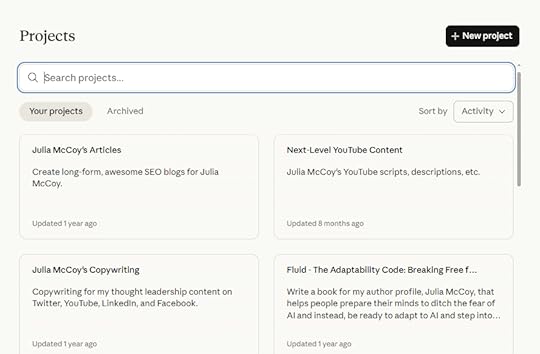
Claude has Projects. This is huge. You can create separate projects for different types of content. One for blog posts. One for social media. One for email newsletters. Each project holds its own instructions and training materials.
Take a look at just some of my Claude projects:
Claude also has a context window that’s massive. This means you can feed it extensive training documents. Your writing samples. Your beliefs. Your voice. And it actually remembers all of it.
Plus Claude understands nuance in a way other AI tools don’t. It picks up on tone and personality. The subtle things that make your writing yours.
Writing with AI: Creating Your Training Document for ClaudeA training document is essentially your AI’s instruction manual. It’s a comprehensive guide that teaches Claude everything about you. Your voice. Your beliefs. Your way of thinking. Your expertise.
Think of it like this. If you hired a ghostwriter, you wouldn’t just say “write like me” and expect magic. You’d sit down with them. Share your perspective. Explain how you see your industry. Show them examples of your work. Talk about what matters to you.
That’s exactly what a training document does for writing with AI. It gives Claude the context it needs to actually become you when it writes.
Without a training document, you get generic AI content. With one, you get content that sounds like you actually wrote it.
Your training document is everything when you’re setting up writing with AI. This is how you teach Claude to write like you instead of like generic AI.
Here’s what you absolutely need to include.
1. Core Beliefs About Your IndustryWhat do you stand for in your field? What are you fighting against?
For me, it’s the belief that AI should free people, not replace them. That human creativity combined with AI power is unstoppable. That most people are using AI wrong and leaving massive opportunities on the table.
Your core beliefs need to be in your training document. These shape how your AI clone approaches every topic.
2. Your Own Worldview and ValuesWhat matters to you beyond your industry? How do you see the world?
I value straight talk over corporate speak. Results over theory. Helping people build real businesses over selling them pipe dreams.
These values show up in everything I write. Your AI clone needs to know yours.
3. Your Predictions for the FutureWhere is your industry heading? What do you see coming that others don’t?
I predicted that GEO (Generative Engine Optimization) would become as important as SEO. That businesses without AI strategies would get left behind. That the winners would be people who mastered AI as a tool, not those who feared it.
Your predictions make your content forward-thinking instead of generic.
4. Your Faith and PhilosophyWhat deeper beliefs guide your work? What philosophy shapes your approach?
You don’t have to get religious here, if you don’t want to. But the deeper “why” behind what you do matters. It creates content with soul instead of content that’s just information.
5. Your Unique Perspective on ProblemsHow do you see common problems differently than everyone else? What solutions do you propose?
For me, I see people struggling with content because they’re still trying to do everything manually. My solution? Clone yourself and scale. Most people see AI as a threat. I see it as the biggest opportunity in a generation.
Your unique perspective is what makes people choose you over competitors.
First Movers R&D AI Labs: The Clone to Scale Course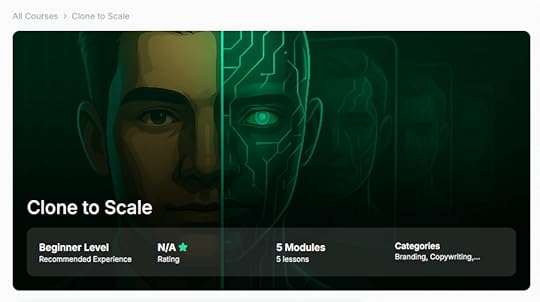
I built everything I’ve learned about writing with AI into a course. It’s called Clone to Scale. And it’s inside First Movers R&D AI Labs.
Here’s what we cover.
The Clone Foundation walks you through exactly how to clone yourself on Claude. Step by step. No tech confusion. No guessing.
Voice Collaboration and DNA Training teaches you how to capture your unique voice. How to train AI on your writing style. How to make sure your clone actually sounds like you.
We show you how to create Projects on Claude for different types of content. Blog posts. Social media. Emails. Video scripts. Each one optimized for its purpose.
You’ll learn how to create an entire marketing suite from a single piece of content. One blog post becomes ten social media posts, five emails, three video scripts, and more. That’s real leverage.
We teach you how to scale from solo creator to content empire. The systems. The workflows. The strategy.
Clone to Scale is just one course. First Movers R&D AI Labs has 40+ courses covering everything from AI tools to business strategy to content creation.
Plus you get personalized coaching. A community of likeminded people who are building AI-powered businesses just like you. Support when you need it.
This isn’t just information. It’s transformation.
Want to get everything for a price that’s less than a month of coffee?
Subscribe to First Movers R&D AI LAbs today.
Frequently Asked Questions About Writing with AIWhat is AI writing?
AI writing is using artificial intelligence tools to generate written content. But here’s what most people miss. Real AI writing isn’t just asking ChatGPT to write something and copying it. It’s training AI to write in your unique voice so the content sounds like you actually wrote it. When done right, AI becomes your writing partner that captures your expertise and personality.
Will people be able to tell my content is AI writing?
Not if you do it right. Generic AI writing is obvious. It’s bland and sounds like everyone else. But when you properly clone yourself and train AI on your voice, your perspective, and your expertise, the content is indistinguishable from what you’d write manually. Your audience won’t know the difference because your AI clone has learned to think like you.
How long does it take to clone myself for AI writing?
The initial setup takes time. You need to create your training document, feed Claude samples of your writing, and refine the instructions. Plan on spending 5-10 hours getting everything dialed in. But here’s the payoff. Once your clone is trained, you save hundreds of hours every month. It’s the best time investment you’ll ever make in your business.
Do I still need to edit content my AI clone writes?
Yes, but way less than you think. I spend maybe 10-15 minutes reviewing and tweaking content my AI clone creates. Mostly I’m just checking facts, adding personal stories, or adjusting a sentence here and there. It’s not heavy editing. It’s light refinement. The core content is already solid because my clone has learned to write like me.
AI Writing: Your Next MoveYou have two choices right now.
Keep burning yourself out trying to create all your content manually. Keep missing deadlines. Keep watching your quality drop when you’re rushed. Keep dreaming about having time for your life while your business consumes every waking hour.
Or learn to master writing with AI that actually sounds like you.
I chose the second path. Eight months later, I’m making more money with less stress than I ever thought possible. My content quality is higher. My reach is exploding. And I actually have time to enjoy my life.
You can do this too.
The tools exist. The strategy works. The only question is whether you’ll take action.
If you’re ready to clone yourself, scale your content, and get your life back, First Movers R&D AI Labs is where you start. We’ll show you exactly how to do everything I just described.
Your future self will thank you.
November 17, 2025
The 10 Best AI Writing Tools That Actually Write Like You (Not Boring Robots)
You know that feeling?
It’s midnight. Your screen glows in the dark room. The deadline was yesterday. Your brain feels like mush.
You need words. Good words. But there’s nothing. Just exhaustion and the sinking feeling that you’re falling behind while everyone else races ahead.
I lived that nightmare for years.
Running Express Writers, my content agency, nearly broke me. Seven brutal years. A hundred employees. Endless chaos. We finally hit $100K monthly, but I was drowning. The best AI writing tools didn’t exist yet. Every piece of content required human hands, human hours, human burnout.
Then everything changed.
Today, I’m pulling $70K monthly with First Movers R&D AI Labs. My reach exploded 9,900%. I work less than ever. How? I cloned myself. Not with some sci-fi machine. With AI writing tools that actually capture my voice, my style, my brain.
Here’s the thing though. Most people using the best AI writing tools are doing it completely wrong. They’re pumping out generic robot content that sounds like every other AI-generated article on the internet. Bland. Lifeless. Forgettable.
That’s not what I’m teaching you today.
I’m showing you the AI writing tools that can actually become you. That write with your quirks, your perspective, your expertise. Because when you find the best AI writing tools and train them properly, you’re not getting some artificial assistant. You’re getting a clone that works 24/7 while you sleep.
The Best AI Writing Tools You Need to Know AboutLet me cut through the noise. There are hundreds of AI writing tools out there. Most are garbage. Some are decent. A few are genuinely exceptional if you know how to use them right.
I’ve cut the number down to 10. Here they are:
1. ChatGPT
This is the one that started it all. ChatGPT burst onto the scene in late 2022 and changed everything. Within five days, it had a million users. Now? Over 800 million people use it weekly.
ChatGPT is versatile. Quick. Great for brainstorming, drafting emails, refining copy, finding synonyms when you’ve used the same word seventeen times. The interface is clean. The responses are fast. And the free version is surprisingly capable.
What makes ChatGPT special is its conversational flow. You can keep refining, keep pushing, keep iterating until you get exactly what you need. It’s like having a writing partner who never gets tired or annoyed when you ask for the fifteenth revision.
The paid version gives you access to GPT-5 and newer models. Worth it if you’re using AI writing tools daily. The outputs are noticeably better for complex tasks.
2. Claude
This is my secret weapon. Claude is different from the other AI writing tools. It thinks deeper. Reasons better. Understands context in a way that feels almost human.
For simple stuff like title ideas or quick edits, Claude and ChatGPT perform similarly. But when you need nuanced thinking? Complex analysis? Deep reasoning? Claude wins every single time.
I use Claude almost daily. It’s brilliant for editing. I’ll feed it my drafts and ask where my argument falls apart, where I need more depth, where I’m being too vague. It catches things I miss. Points out logical gaps. Suggests improvements that actually make sense.
The best thing about Claude is that you can create separate projects for Emails, Blogs, Copywriting, Book writing, YouTube scripts, social media posts, and more. You can train the AI on your best works in each project, giving you content that sounds just like you, specifically for the audience on different platforms.
Pro tip: Give Claude detailed prompts. The more context you provide, the better it performs. This is one of the best AI writing tools for anything requiring actual thinking.
3. Jasper
Jasper is the enterprise option built specifically for marketing teams.
What sets Jasper apart is its team collaboration features. Multiple people can work on projects simultaneously. There are templates for everything: product descriptions, landing pages, emails, press releases, social posts. The platform learns your brand voice and maintains consistency across all content.
Jasper also generates images alongside text. This is useful if you need complete content packages without switching between tools.
The downside? Cost. Plans start at $59 per month per seat. If you’re solo or just need basic AI writing tools, Jasper is probably overkill. But for agencies or marketing departments pumping out massive content volumes? It makes sense.
4. Copy.ai
Copy.ai is designed for speed. Quick marketing copy, social media posts, ad text. It’s not trying to be your long-form writing partner. It’s trying to help you bang out dozens of variations fast.
The interface is template-driven. Pick what you need (product description, Facebook ad, email subject line), fill in some details, get multiple options instantly. Perfect when you need ideas or starting points.
Copy.ai has improved significantly with its newer features. The long-form editor is decent now. The brand voice controls help maintain consistency. And the workflow automation saves time if you’re doing repetitive tasks.
It’s one of the more affordable AI writing tools. There’s a free plan with limits. Paid plans are reasonable. This is a good option if you need marketing copy but don’t want enterprise pricing.
5. Writesonic
Writesonic does everything. Articles, social posts, ads, landing pages, even AI art generation. It’s positioned as an all-in-one content creation platform.
The article writer is surprisingly solid. Feed it a topic and keywords, and it’ll generate full blog posts with proper structure. The SEO optimizer suggests improvements. The plagiarism checker gives you peace of mind.
Writesonic also has a ChatGPT-like interface called Chatsonic that can search the web for current information. This is useful when you need facts from recent events.
Writesonic is among the best AI writing tools for beginners. The learning curve is gentle. Templates guide you. Results are decent right out of the box. It’s not as sophisticated as Claude for complex tasks, but reliable for standard content creation.
6. Wordtune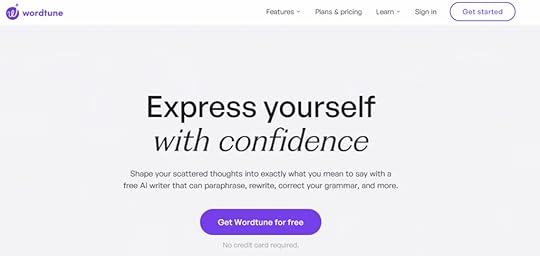
Wordtune isn’t about generating content from scratch. It’s about polishing what you’ve already written. Think of it as an advanced editing assistant.
It suggests rewrites for sentences. Offers different tones, casual, formal, concise, expanded. Catches grammar issues. Helps non-native English speakers sound more natural.
What I like about Wordtune is its fact-checking. It verifies claims against multiple sources before confirming accuracy. Not foolproof, no AI is, but better than most.
The interface is clean. Options are clear. You can accept suggestions with one click or keep iterating. It integrates with your browser, so you can use it everywhere you write online.
Wordtune has a free plan, but it has limits. The paid plans start at $6.99.
7. Lex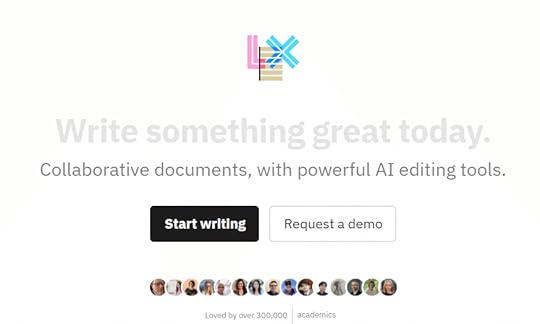
Lex is Google Docs reimagined with AI. Simple. Smart. Focused on the actual writing experience.
The interface looks familiar because it mirrors Google Docs. But everything works better. The AI suggestions feel natural. The editing tools are intuitive. Collaboration features actually make sense.
You can generate new text, rewrite existing sentences, expand ideas, shorten paragraphs. All without leaving the document. The proofreading function checks not just grammar and spelling but also brevity, clichés, passive voice.
Lex uses premium models from OpenAI, Anthropic, and TogetherAI. If you want the best of multiple AI writing tools combined in one interface, this is it.
Free version available. Paid plan is $24.99 monthly. For serious writers who want a distraction-free environment with powerful AI, Lex delivers.
8. Koala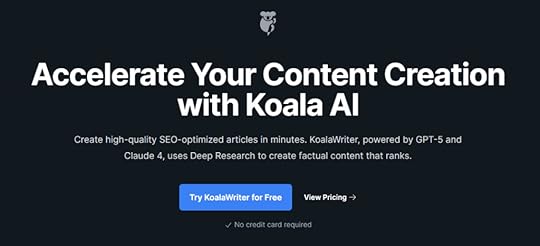
Koala is laser-focused on SEO content. It uses GPT-5 to generate articles optimized for search rankings.
The tool analyzes top-ranking content for your target keywords. Then it structures articles to match what Google wants. Adds FAQ sections. Inserts internal links automatically. Maintains your brand voice through custom guidelines.
You can customize article length, point of view, sources. Pull data from Google News, Google Scholar, academic papers. The research depth is impressive for AI-generated content.
Here’s the reality: You can’t publish AI content straight from any tool without editing. But Koala gets you closer than most. The output quality is high enough that editing time is minimal.
Plans start at $9 monthly. The free trial includes 5,000 word credits. If you’re creating SEO content regularly, Koala is one of the best AI writing tools for the job.
9. Sudowrite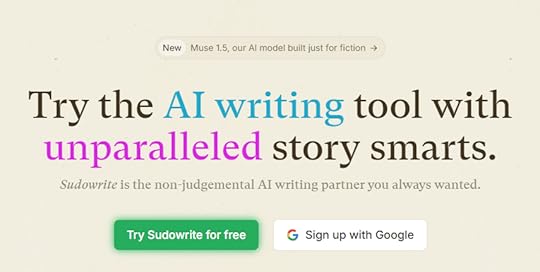
Sudowrite is built for fiction writers. Novelists, short story authors, screenwriters. If you’re writing creative narratives, this is your tool.
It has its own model called Muse, trained specifically on creative writing. The suggestions understand story structure, character development, pacing, sensory details.
Start writing a scene. Click the ‘Write’ button. Sudowrite continues the story with multiple options. Highlight a description. Hit ‘Describe’ for sensory details or metaphors. Use ‘Brainstorm’ for plot ideas, character traits, world-building elements.
The Canvas feature lets you mind-map your entire story. Track characters, plot threads, locations. See your narrative structure at a glance.
There’s also an active Slack community. Other fiction writers using the tool. Good for feedback and ideas.
Plans start at $10 per month. If you’re serious about fiction, Sudowrite is one of the best AI writing tools you’ll find.
10. SEOWind
SEOWind excels at one thing: creating comprehensive SEO content briefs. It’s built for content marketers who need data-driven outlines before writing.
Enter your target keyword. SEOWind analyzes everything currently ranking. Competitor content, structure, length, headers, questions people ask. Then it compiles all that intelligence into a detailed brief.
You’ll see recommended word count, heading quantities, image numbers. Pull relevant questions from Google, Quora, Reddit. Review competitor outlines. Use all this to build your own superior brief.
Once your brief is ready, SEOWind generates a complete draft. You download it and edit manually. There’s no in-app editing, which is limiting.
The Content Refresh feature is brilliant. It analyzes your existing content against current top-rankers, identifies gaps, suggests improvements, then writes updated sections with external research.
It integrates with Google Search Console for internal linking opportunities. Big time-saver.
Plans start at $49 monthly. A 3-day free trial is also available.
My Go-To AI Writing Tools (The Only Two I Actually Need)Look, I just gave you ten options. But here’s the truth. I use two. Claude and ChatGPT. That’s it.
Everything else is bells and whistles. Marketing speak. Features you don’t actually need.
ChatGPT handles quick tasks. Brainstorming. Rough drafts. Email refinements. Social media posts. It’s fast and versatile.
Claude handles everything requiring depth. Long-form articles. Strategic thinking. Complex editing. Nuanced analysis. It’s smarter and more thoughtful.
Together, these two AI writing tools cover every scenario I encounter.
But here’s what most people miss. Having the best AI writing tools means nothing if you’re using them wrong.
Stop Letting AI Write Generic Robot ContentThis is where everyone screws up.
They find the best AI writing tools. They type in prompts. They get content. They publish it.
And it’s trash. Boring, generic, sounds like everything else. No personality. No distinctive voice. Nothing that makes readers remember you.
Your readers aren’t stupid. They can spot AI-generated garbage instantly. And they click away.
Here’s what you need to understand. AI writing tools are like hiring a ghostwriter. You don’t just hand them a topic and expect magic. You train them. You teach them your voice, your perspective, your philosophy, your worldview.
You sit down with them. You explain how you think. What you believe. How you see the future. What matters to you. What pisses you off. What excites you.
Then you show them samples of your best work. The pieces that really sound like you. The ones where your personality shines through. The ones people remember. The ones that got the highest engagement.
That’s how you train AI writing tools properly. That’s how you create a clone that actually writes like you, not like a corporate press release generator.
This is exactly what I did. I fed Claude and ChatGPT my writing samples. My style guidelines. My philosophical frameworks. My unique perspectives on AI and business.
Now when they write for me? It sounds like me. Short punchy sentences mixed with longer flowing thoughts. Direct language. No fluff. Personality on every line.
That’s the difference between using AI writing tools and mastering them.
Learn to Clone Yourself with AI (Actually Write Like You)Want to know exactly how I did it?
I built an entire course around this process. It’s called Clone to Scale. And it’s inside First Movers R&D AI Labs.
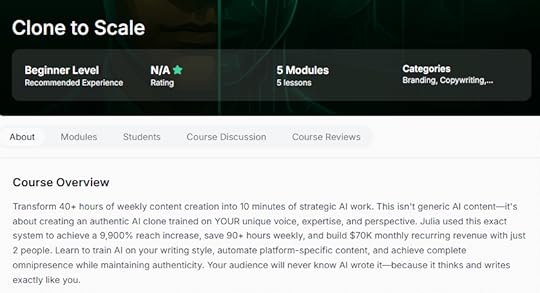
In this course, you learn the exact framework I used to train AI writing tools to write in my voice. Not theory. Not generic advice. The actual step-by-step process that transformed my business.
You’ll discover how to analyze your existing writing to identify your unique patterns and style markers. How to create comprehensive voice guidelines that AI can actually follow. How to select the right training samples that capture your best work. How to test and refine until the output is indistinguishable from your own writing.
This isn’t about finding the best AI writing tools. You already know which ones work. This is about making those tools actually useful. Making them yours.
Clone to Scale is part of First Movers R&D AI Labs. For less than what you spend on coffee each month, you get access to this course plus 40+ other courses on AI implementation, content strategy, business automation, and more.
I’m not gatekeeping this knowledge. I’m not keeping these strategies secret. I want you to experience the same transformation I did. From drowning in work to thriving with AI clones handling the heavy lifting.
Stop wasting time with generic AI content. Start creating content that actually sounds like you. Join First Movers R&D AI Labs and take Clone to Scale today.
Common Questions About AI Writing ToolsIs ChatGPT an AI writing tool?
Yes. ChatGPT is one of the most popular AI writing tools available. It handles emails, social posts, blog articles, ad copy, scripts, whatever you need written. Built on OpenAI’s language models, it’s versatile and powerful.
But here’s the critical part. You can’t just publish ChatGPT’s output directly. Every piece needs human review and editing. Check for accuracy. Adjust the tone. Add your personality. Make sure it actually sounds like you, not like every other AI-generated article on the internet.
Are AI writing tools free?
Many AI writing tools have free versions with limitations. ChatGPT and Claude both offer free tiers. You get access to older models with usage caps. Fine for testing. Fine for occasional use.
But if you’re serious about using AI writing tools, you’ll want paid versions. Better models. Faster responses. No usage limits. The best AI writing tools charge monthly subscriptions, usually $20-25 for individual plans.
Some tools offer API access for integration into your own applications. That’s typically pay-per-use based on tokens or words generated.
Free tools exist. But unlimited access to the most capable versions requires paying.
Which AI tool is best for writing?
There’s no single answer. It depends on what you need and how you work.
For me? ChatGPT and Claude. Period.
ChatGPT is perfect for quick daily tasks. Brainstorming. Drafting emails. Refining copy. Generating social media content. It’s fast, versatile, and the conversational interface makes iteration easy.
Claude excels at depth. Long-form articles. Complex analysis. Strategic thinking. Editing that requires actual reasoning. When you need nuance and sophisticated understanding, Claude delivers.
These two cover everything. You don’t need a dozen different AI writing tools. You need one or two that you master completely.
But here’s what really matters. The best AI writing tools are worthless if you’re using them to pump out generic content. You need to train them. Teach them your voice. Show them your style. Make them actual clones of your writing, not random content generators.
That’s the difference between using AI and mastering it. That’s what I teach in Clone to Scale inside First Movers R&D AI Labs. How to transform these tools from generic assistants into perfect replicas of your unique voice and expertise.
Interested?
November 13, 2025
AI Consulting: Why Your Competitors Are 12 Months Ahead (And How to Catch Up)
Let me be straight with you.
While you’re still trying to figure out ChatGPT prompts, your competitors are already 6-12 months ahead. They’re cutting operational costs by 30-50%. They’re automating processes you’re still doing manually. They’re scaling faster with fewer people.
And the worst part? You know you need to adapt to AI. But you’re stuck in paralysis. You attend webinars. You read articles. You play with a few tools. But nothing sticks. Nothing actually transforms your business.
The truth is, surface-level AI adoption won’t cut it anymore. You need expert AI consulting that actually works.
Meanwhile, the gap widens every single day.
Want to skip the tedious search and hire AI consulting that’ll give you all the skills you need to adapt to AI and cut those operational costs in half? Book a call with us at First Movers AI Consulting.
What AI Consulting Can Do for Your Business: Adapt to AI the Right WayHere’s what most businesses get wrong. They think AI adoption is about tools. It’s not. It’s about transformation.
Your business needs three critical elements to actually succeed with AI. Not just dabble in it. Not just use it for basic tasks. But truly leverage it for competitive advantage.
Automate Repetitive Tasks So You Can Focus on Strategic InnovationThink about how much time your team wastes on repetitive work. Data entry. Report generation. Email responses. Social media scheduling. Content formatting.
These tasks eat up to 60%of your team’s time. That’s time they could spend on innovation. On strategy. On growth.
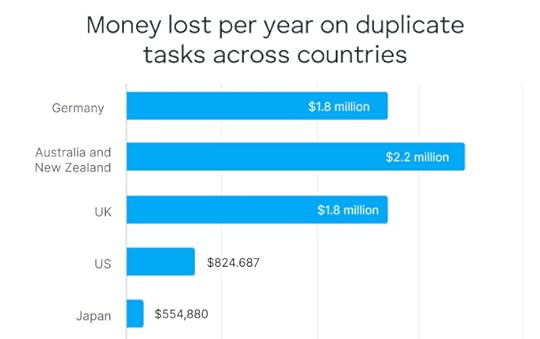
A study by Clockify shows that employees spend up to 62% of their time on repetitive tasks.
Does that affect revenue loss?
YES.
Take a look at how much money is lost per year on duplicate tasks.
The secret to fixing this?
AI automation.
But which tasks do you automate and which tasks do you leave alone?
That’s how AI consulting can help you.
AI consulting helps you identify which tasks to automate first. Not everything needs automation. But the right things do. And knowing the difference requires expertise.
When you automate the right repetitive tasks, your team shifts from execution to strategy. That’s where real business growth happens.
Start Using the Latest and Best Emerging Tools to Keep Your Marketing Ahead of CompetitorsNew AI tools launch every single week. Some are game-changers. Most are garbage.
Your competitors are already using tools you’ve never heard of. They’re creating better content faster. They’re personalizing customer experiences at scale. They’re analyzing data you don’t even know exists.
I am a firm believer that the right tools can 10x your business while giving you more free time than you ever imagined.
For example, my favorite avatar-creating tool, HeyGen, does the heavy lifting of creating video content for my YouTube channel.
That’s right. I no longer need to spend hours on different takes as I struggle to make content my audience will love.
My digital twin does it for me.
Is she realistic? Does she look just like me? Can people tell the difference?
You be the judge:

That’s why AI consulting is great.
AI consulting keeps you on the cutting edge. You get expert curation of tools that actually matter for your specific business. You don’t waste time testing every shiny new platform. You implement what works.
This isn’t about using AI for the sake of using AI. It’s about strategic tool adoption that gives you a measurable competitive edge.
Build AI Implementation Skills So You Can Be Flexible With Whatever Changes OccurHere’s the thing about AI. Change is the only constant.
The tools that work today might be obsolete in six months. New capabilities emerge constantly. Best practices evolve weekly.
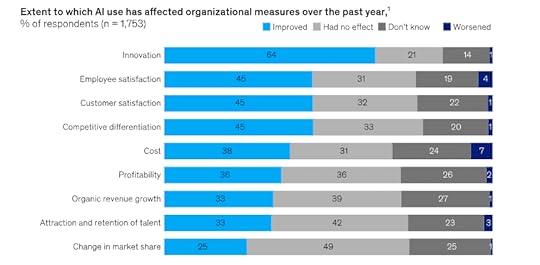
Even within companies, cultures shift. AI changes everything, from customer satisfaction to attraction and retention of talent.
Check out this chart by McKinsey, and see how the world related to AI can shift in a single year.
The bottomline?
You need skills, not just solutions. You need the ability to adapt with changes in real time.
That’s where AI consulting comes in.
AI consulting should build your team’s capability to adapt. To learn new tools quickly. To implement changes without needing constant hand-holding.
When your team has strong AI implementation skills, you’re not just keeping up with change. You’re leading it.
The Problems Standing in the Way of AI AdaptationKnowing what you need is one thing. Getting there is another.
Most businesses hit the same walls when trying to adopt AI. These aren’t technical problems. They’re strategic ones.
Here are 4 problems you’ll likely run into as you try to implement AI.
Problem #1: Not All Companies Are at the Same Level of Readiness for AIYour company isn’t a blank slate. You have existing systems. Established processes. Different levels of technical expertise across teams.
Some businesses can dive straight into advanced automation. Others need to start with basic process documentation. Trying to implement AI solutions without assessing readiness is like building a house without checking the foundation.
AI consulting starts with understanding where you actually are. Not where you think you should be. Not where your competitors are. Where YOU are.
Problem #2: Finding Opportunities for Implementation Within a Company Is Not Easy for the Untrained EyeYou probably think you know where AI could help your business. You’ve identified a few obvious areas. Maybe content creation. Maybe customer service.
But the biggest opportunities are often hiding in plain sight. They’re in processes you’ve never questioned. In bottlenecks you’ve accepted as normal. In data you’re not even capturing.
Expert AI consulting reveals opportunities you’d never see on your own. These hidden opportunities often deliver the biggest ROI. But finding them requires deep business analysis and extensive AI knowledge.
Problem #3: You May Not Know Which Initiatives to PrioritizeEven when you identify multiple AI opportunities, you can’t implement everything at once. You have limited resources. Limited time. Limited bandwidth.
So which projects do you tackle first? The ones with the biggest potential impact? The easiest to implement? The ones your team is most excited about?
Without AI consulting, you’re guessing. And wrong priorities mean wasted months and burned budgets. Expert guidance helps you sequence initiatives for maximum impact with minimum disruption.
Problem #4: You May Not Know How to Troubleshoot When Implementation Challenges ArriveHere’s what nobody tells you about AI implementation. It never goes perfectly.
Tools don’t integrate the way you expected. Results aren’t what you hoped for. Your team resists new workflows. Data quality issues emerge.
When these challenges hit (and they will), most businesses panic. They abandon projects halfway through. They blame the technology. They give up.
AI consulting gives you expert troubleshooting when problems arise. You don’t get stuck. You don’t waste months spinning your wheels. You solve issues quickly and move forward.
What You Need Is High-Quality AI ConsultingNot all AI consulting is created equal. Most consultants sell you a one-size-fits-all playbook. They show you some tools. They write you a strategy document. Then they disappear.
That approach doesn’t work. Real AI transformation requires a different kind of consulting partnership.
Here are three non-negotiables to look for when hiring an AI consulting company.
Learn by Doing: Generic Methods Don’t WorkYou can’t learn AI adoption from a PowerPoint deck. You need hands-on implementation with expert guidance.
The best AI consulting happens in your actual business. With your actual data. Solving your actual problems. Generic frameworks and theoretical strategies don’t translate to real results.
Look for consultants who work alongside your team. Who build solutions with you, not for you. Who teach through implementation, not just instruction.
This learn-by-doing approach creates lasting change. Your team doesn’t just follow instructions. They understand the principles. They can replicate the process independently.
Skill Development, Not Dependency: You Don’t Want to Be Forever Dependent on the Consulting CompanyBad consultants create dependency. They become the only people who understand your AI systems. You’re trapped paying them indefinitely.
Good AI consulting builds your team’s capabilities. The goal is to make themselves obsolete. To transfer knowledge so completely that you can continue evolving without them.
Ask potential consultants about their training methodology. How do they ensure your team develops independent skills? What happens after the engagement ends? Can your team maintain and expand what’s been built?
If they can’t answer these questions clearly, they’re planning to keep you dependent.
Accountability That Keeps You on TrackAI implementation is hard. Your team is busy. Without structure and accountability, initiatives stall.
Quality AI consulting includes built-in accountability systems. Regular check-ins. Clear milestones. Progress tracking. Someone who ensures things actually get done.
This isn’t about micromanagement. It’s about momentum. The best consultants create accountability structures that keep projects moving even when things get busy or difficult.
Look for consultants who establish clear expectations upfront. Who define success metrics. Who commit to specific outcomes, not just effort.
Transform Your Business With First Movers AI Consulting
At First Movers, we built our AI consulting specifically to solve every problem mentioned above.
You get learn-by-doing implementation that happens in your actual business workflows. No generic playbooks. No theoretical frameworks. We work with your team, your data, your specific challenges.
You get comprehensive skill development designed to make you independent. We transfer knowledge systematically. By the time we’re done, your team doesn’t just have new systems. They have the skills to build more on their own.
You get accountability structures that ensure consistent progress. Regular check-ins. Clear milestones. Dedicated support when challenges arise. We keep you moving forward even when things get tough.
Most importantly, you get results. Not busy work. Not endless strategy documents. Actual implementation that cuts costs, increases efficiency, and positions you ahead of competitors.
We’ve helped businesses go from AI paralysis to confident implementation in months, not years. From wasting time on surface-level tools to leveraging AI for genuine competitive advantage.
The gap between you and your competitors grows every day you wait.
Schedule a discovery call with our experts to see how we can multiply your impact.
Frequently Asked Questions About AI ConsultingWhat is AI consulting?AI consulting is strategic guidance and hands-on support for businesses implementing artificial intelligence solutions. It includes identifying opportunities for AI adoption, selecting appropriate tools and technologies, building implementation roadmaps, training teams, and troubleshooting challenges. Good AI consulting focuses on practical business outcomes rather than just technology adoption.
What’s the difference between AI consulting and regular business consulting?AI consulting requires specialized knowledge of artificial intelligence tools, capabilities, and implementation best practices. Regular business consultants might identify process improvement opportunities, but they lack the technical expertise to implement AI solutions. AI consulting bridges strategy and execution, combining business acumen with deep AI knowledge.
How long does AI consulting typically take?AI consulting engagements typically range from 3-12 months depending on complexity and scope. Initial assessments and strategy development take 4-6 weeks. Implementation phases vary based on the number of initiatives and organizational readiness. Ongoing support and skill transfer often continue for 6-9 months to ensure sustainable adoption.
Do I need technical expertise to benefit from AI consulting?No technical expertise is required. Quality AI consulting includes training and skill development appropriate for your team’s current level. Consultants translate technical concepts into practical business applications. Your team learns what they need to know through hands-on implementation, not abstract technical education.
What results can I expect from AI consulting?Typical results include 30-60% reduction in time spent on repetitive tasks, 30-50% cost savings in operational areas, faster content production, improved customer service efficiency, and better data-driven decision making. Specific outcomes depend on your business model, current processes, and implementation scope. The best AI consulting includes clear success metrics defined upfront.
How do I know if my business is ready for AI consulting?If you’re spending significant time on repetitive tasks, struggling to scale operations, falling behind competitors in efficiency, or simply overwhelmed by AI options, you’re ready. AI consulting meets businesses where they are. You don’t need existing AI infrastructure or technical expertise. You just need willingness to change and commitment to implementation.
November 12, 2025
Viral Posts: The 4-Ingredient Formula for Creating Amazing Content That Builds Your AI Business
Your AI business needs viral posts.
Not just any content. Not another generic how-to guide that gets lost in the noise.
You need viral posts that establish authority and reach thousands of potential clients who need what you’re selling.
Here’s the problem: Over 600 million blogs exist worldwide. More than 7.5 million posts go live every single day.
Your content is competing against an ocean of information. Most of it mediocre. Some of it good. Very little of it actually breaks through.
So how do you make viral posts that don’t just get clicks, but build your business?
You follow a structure. A proven formula that taps into what makes people stop scrolling and start sharing.
The Anatomy of Viral Posts: 4 Ingredients That Will Magnetize Your AudienceStories that get shared follow a specific structure.
Master this, and your content gets seen by thousands more people instead of dying in obscurity.
This isn’t about luck. It’s about understanding human psychology and what makes people hit that share button.
There are four essential ingredients to viral posts. Let’s look into each one of them.
Viral Posts Ingredient #1: A Mouthwatering Hook That Stops the ScrollA hook is your opening line. The first thing people see when they encounter your content.
It’s the make-or-break moment that determines whether someone keeps reading or scrolls past. You have about three seconds to capture attention before you lose them forever.
Think of it as the headline of your story, but with more punch. More intrigue. More “I need to know what happens next.”
In your hook, you should be able to grab attention immediately. Create curiosity that makes it impossible to scroll past.
Like in this example from my own First Movers blog:
See what I’m doing here?
I’m building tension. I’m raising curiosity. I’m making readers ask, “wait…what?”
Your hook should create a gap between what people expect and what actually happened. It should make them need to know more.
Most content fails here. It starts with boring context or background nobody cares about yet.
Cut straight to the interesting part. The part that doesn’t make sense at first glance.
What Makes a Hook Actually WorkA strong hook contains surprise. It challenges assumptions.
It can be a shocking statistic. A counterintuitive truth. A transformation that seems too good to be true.
But it has to be real. People can smell manufactured drama from a mile away.
The best hooks come from your actual experience. The moments that made you stop and realize everything you thought was wrong.
Viral Posts Ingredient #2: The Raw Journey That Shows Real StruggleThe journey is the middle part of your story. It’s where you show how you got from point A to point B.
This isn’t a highlight reel. It’s the messy, uncomfortable reality of what it actually took to achieve your transformation.
Most people skip this part because it’s vulnerable. It exposes failure. It admits struggle.
But this is exactly why the journey matters. This is where connection happens.
Don’t skip the hard parts. That’s where the real value lives.
Show the challenges. The setbacks. The 3am moments when you wanted to quit and do something easier.
This is what separates viral posts from forgettable ones.
When I pivoted from Express Writers to First Movers, I didn’t just wave a magic wand and suddenly have an AI education empire. I had to unlearn everything I thought I knew about building a business.
I had to face the fact that the model I’d spent 7 years perfecting was going to be obsolete. That hurt.
I had to learn AI tools from scratch while my competitors had a head start. That was humbling.
But here’s what happened: When I started sharing those struggles, my content exploded. People related to the journey, not just the destination.
Why Vulnerability Creates ConnectionYour audience isn’t looking for perfection. They’re looking for proof that success is possible for someone like them.
They’re looking for open-hearted vulnerability.
Like in this popular post by Jon Morrow, where he fearlessly shares his not-so-polished side.
When you share only the wins, when you show only your airbrushed side…you create distance. You become someone they admire from afar but can’t relate to.
When you share the struggle, you become someone they can follow. Someone who gets it.
The journey is where trust gets built. Where people start thinking “If they faced those problems and solved them, maybe I can too.”
Viral Posts Ingredient #3: A Crystal-Clear Transformation With ProofThe transformation is your outcome. The result of everything you went through during the journey.
This is where you show what changed. What’s different now compared to where you started.
But here’s the key: vague transformations don’t work. “Things got better” doesn’t inspire anyone to share your content.
You need specifics. Numbers. Concrete details that paint a vivid picture of the change.
What changed? What’s different now?
Be specific. Give numbers. Paint the picture so clearly they can see it.
Like in my First Movers blog, How to Build an AI Business: I Hit $100k/Month in Under 12 Months:
Now, you try:
Vague transformation: “Things got better.”
Powerful transformation: “I went from working 80-hour weeks managing a team of 100 to working 30-hour weeks with one assistant, while making the same revenue.”
See the difference?
Specifics make viral posts credible. They make your story feel real instead of like marketing hype.
The Numbers That MatterDon’t just share revenue numbers. Those are important, but they’re not the whole story.
Share time saved. Stress reduced. Freedom gained.
Share how many clients you helped. How many people changed their business because of what you created.
Share the metrics that prove the transformation was real and sustainable, not just a lucky break.
Viral Posts Ingredient #4: An Actionable Lesson People Can Use ImmediatelyThe lesson is what someone can take away and apply to their own situation. It’s the teachable insight from your experience.
This is what transforms your story from entertainment into value. From interesting into useful.
Without a lesson, you’ve just told a story. With a lesson, you’ve given someone a tool they can use to change their own outcome.
The best lessons are specific enough to be actionable but broad enough to apply to different situations.
What can someone do right now with what you just shared?
This is how you go from entertaining to valuable. From interesting to indispensable.
Don’t just tell a story. Give people a framework. A principle. A technique they can implement immediately.
 From Insight to Action
The best viral posts create a clear path from inspiration to implementation.
They make people think “I understand this” and then “I can do this.”
Break down your lesson into steps. Make it concrete. Remove the mystery so people can actually apply it.
This is what separates content that gets shared once from content that gets bookmarked and revisited.
The Secret Ingredient: Raw AuthenticityKnow what secret ingredient you should never set aside?
That’s right: authenticiy.
Be vulnerable. Share failures alongside successes.
One of my posts following this framework reached 90,000 people in under 48 hours and generated 1,500 new followers in a single day.
Why? Because I was real. I showed the struggle, not just the highlight reel.
That’s what made it viral. Not perfect execution. Honest humanity.
Why Authenticity Wins in 2025Anyone can have the same tools. Not everyone can tell your story.
Your unique experience is your competitive advantage in a world where AI can generate generic content in seconds.
The posts that break through share something AI can’t replicate: genuine human experience with all its messy complexity.
Your failures are just as valuable as your successes. Sometimes more so, because that’s where the real lessons live.
Master the Formula, Build Your BusinessCreating viral posts isn’t about getting lucky or gaming algorithms.
It’s about understanding what makes people stop, read, and share. It’s about combining structure with authenticity.
The hook grabs attention. The journey builds connection. The transformation proves possibility. The lesson delivers value.
Do this consistently, and you build more than viral posts. You build authority. You build trust. You build an audience that actually converts.
Get the Complete Blueprint for Content That ConvertsWhen you join First Movers R&D AI Labs, you get all the blueprints, courses, and guidelines on how to make content that attracts people to your AI business.
And how to use AI to cut your writing time from 7 days a week to a few hours per week. (While still keeping your authentic voice and story.)
And so much more.
Not just theory. Actual frameworks you can implement today.
You’ll learn how to use AI tools to scale your content production without sacrificing quality. How to find your unique angle in a crowded market. How to turn readers into clients.
You’ll get access to the exact systems I used to build a $100K/month business in 11 months with a team of 2.
The AI Comms Course shows you step-by-step how to create content that positions you as the obvious choice in your market.
No fluff. No outdated tactics. Just what’s working right now in 2025.
Want the details?
Common Questions About Creating Viral PostsWhat is a viral post?A viral post is content that spreads rapidly through social sharing, reaching far beyond your immediate audience. It’s measured by engagement rates, share counts, and the speed at which new people discover it.
Viral posts typically get shared because they evoke strong emotions, provide immediate value, or present information in a uniquely compelling way.
How many views does a post need to be considered viral?A viral post typically needs to reach at least 10 times your normal engagement rate. For a small business, that might be 5,000 views. For an established brand, it could be 500,000 views.
The key isn’t the absolute number. It’s the exponential growth and sharing pattern that defines viral content.
Can B2B content go viral?B2B content can absolutely go viral, though it looks different than consumer viral posts. B2B viral content spreads through LinkedIn shares, industry forums, and email forwards rather than Instagram or TikTok.
Focus on insights that challenge industry assumptions or provide frameworks that solve real business problems.
How long should viral posts be?Viral posts range from 150-word social media posts to 2,000-word blog articles. The length matters less than the value and structure.
Short posts work when they deliver a powerful insight quickly. Long posts work when they provide comprehensive value that justifies the time investment.
Do viral posts actually convert to sales?Viral posts can convert to sales when they attract your target audience and include clear next steps. Not all viral content converts, especially if it goes viral for entertainment rather than value.
The best converting viral posts attract people who have the problem you solve and position your solution as the logical next step.
How often should I try to create viral posts?Create viral posts when you have something genuinely valuable to share, not on a forced schedule. One authentic viral post per quarter beats twelve mediocre attempts.
Focus on consistent quality. Viral posts often emerge from your regular content when you hit on the right combination of timing, topic, and presentation.
What platforms are best for viral posts in AI business?LinkedIn dominates for B2B AI business viral posts. Twitter works for thought leadership. Medium reaches people actively searching for in-depth content.
Choose platforms where your target clients already spend time, not where you think viral content should live.
Can I use AI to create viral posts?You can use AI to help structure and refine viral posts, but the core story and insights must come from genuine human experience.
Use AI as a tool for efficiency, not as a replacement for your unique perspective and voice.
November 10, 2025
First Mover Advantage: How to Build Your Fortune in the AI Gold Rush
Remember the California Gold Rush of 1849? Fortunes were made. Empires were built. The people who got there first walked away with life-changing wealth.
We’re living through that exact moment right now. Except this time, it’s AI. And here’s the kicker: there’s no risk of dying on the trail or coming up empty-handed.
The first mover advantage in AI isn’t just real. It’s massive. And it’s still up for grabs.
AI is exploding faster than any technology in human history. ChatGPT hit a million users in five days. Not five months. Five days. According to McKinsey, 78% of organizations are now using generative AI.
But here’s what most people miss: we’re still early. The gold is still in the ground. And the people who move now, who claim their stake today, will be the ones building generational wealth while everyone else is still figuring out how to sign up for ChatGPT.
This is your moment. The first mover advantage is waiting for you to take it.
What Is the First Mover Advantage?Let’s get clear on what we’re talking about.
A first mover is someone who enters a market or adopts a technology before the masses catch on. They’re the pioneers. The early adopters. The ones who see what’s coming and position themselves ahead of the curve.
Here’s how Investopedia puts it:

The first mover advantage is simple: you get there before everyone else does.
You learn the skills while they’re still rare. You build the systems before the competition shows up. You establish your authority when the space is wide open. You capture market share that becomes nearly impossible to steal once the land grab is over.
Think about Amazon in e-commerce. Netflix in streaming. Apple with smartphones. They didn’t invent these categories. But they moved first with real execution, and they dominated.
The same thing is happening right now in AI. The window is open. But it won’t stay open forever.
Every day you wait, someone else claims a piece of the territory you could have owned.
Want to soar ahead and claim first mover advantage in the AI world? First Movers R&D AI Labs has everything you need to get ahead and grab the gold before your competitors do.
How I Built a $100K/Month Business in 11 Months Using the First Mover AdvantageLet me tell you a story. Two stories, actually.
The first one took seven years. The second took eleven months. Both businesses hit the same revenue milestone: $100,000 a month. But the paths couldn’t have been more different.
In 2011, I started Express Writers. I hustled. I ground it out. I hired 100 people. I built systems and processes and infrastructure. I worked myself into the ground for seven years before we finally cracked $100K a month in revenue.
It was worth it. But it was brutal.
Then in 2023, I saw the AI wave coming. I didn’t fully trust it at first. I was skeptical. But I started testing. I started learning. I started building.
Finally, I felt ready. I launched First Movers R&D AI Labs. And in just eleven months, we hit $100K a month in revenue. With two people. Two. Not 100. Two.
That’s the first mover advantage in action.
The difference wasn’t just the technology. It was the timing. It was seeing the opportunity early and going all-in while most people were still sitting on the sidelines saying “AI will never replace human creativity.”
Those people are now scrambling to catch up.
Here’s what I learned: AI doesn’t replace you. It frees you. At First Movers, we spend our time on strategy and high-level thinking. AI handles the execution. We scale without the overhead. We move fast without the bottlenecks. We deliver results without burning out.
And you can do this too.
You don’t need a decade of experience. You don’t need a massive team. You don’t need to reinvent the wheel. You just need to move now, while the first mover advantage is still available.
How to Claim Your First Mover Advantage in AIReady to stake your claim? Here’s exactly how to do it.
Learn the Right AI ToolsNot all AI tools are created equal. You don’t need to learn everything. You need to learn what actually moves the needle.
Focus on tools that automate your heaviest tasks. For most businesses, that means content creation, customer service, data analysis, and marketing automation.
Start with the big ones: ChatGPT for writing and strategy. Claude for deep analysis and complex work. Flux for visuals. HeyGen for video. ElevenLabs for voice.
But here’s the real secret: don’t just learn the tools. Learn how to prompt them. Learn how to get them to do exactly what you need. That’s where the first mover advantage lives. In the skill, not just the software.
Most people play with AI for five minutes and give up. You’re going to go deeper.
Be Open-Minded and Flexible with a Growth MindsetI’ll be honest with you. When AI first started getting good, I was skeptical. I’d spent years building my writing skills. I didn’t want to believe a machine could compete.
But I stayed open. I tested. I explored. I let go of my assumptions.
That openness changed everything.
The first mover advantage goes to the people who adapt fastest. The ones who aren’t close-minded about how things “should” work. The ones who see change as opportunity instead of threat.
You can’t claim the first mover advantage with a closed mind. You have to be willing to try things that feel weird. To adopt workflows that seem too good to be true. To let AI do things you’ve always done yourself.
The people who win with AI aren’t the ones with the most experience. They’re the ones with the most flexibility.
Streamline Heavy Tasks to AIHere’s where the magic happens.
Look at your typical work week. Where are you spending the most time? Where are the bottlenecks? Where are you doing repetitive, time-consuming work that drains your energy?
That’s where AI goes first.
For me, it was content creation. Writing blog posts, creating course materials, developing marketing copy. Tasks that used to take hours now take minutes.
For you, it might be customer emails. Data entry. Research. Social media. Reporting. Whatever it is, there’s an AI tool that can handle it.
The first mover advantage comes from speed. While your competitors are still grinding through manual processes, you’re producing 10x the output in a fraction of the time. You’re scaling without hiring. You’re moving fast while they’re standing still.
This is how you build a $100K month business with two people instead of 100.
Join First Movers R&D AI Labs to Skip the Tedium and Learning Curve
I’m going to level with you.
You can figure all this out on your own. You can spend months testing tools, learning prompts, building systems, and making mistakes. That’s one path.
Or you can skip the line entirely.
At First Movers R&D AI Labs, we’ve already done the work. We’ve tested the tools. We’ve built the systems. We’ve made the mistakes so you don’t have to. We’ve compressed years of learning into courses and coaching that get you results in weeks, not years.
We teach professionals exactly how to integrate AI into their work. Not theory. Not fluff. Real, practical strategies that generate revenue and save time.
This is how you claim the first mover advantage without wasting months in the trial-and-error phase. You learn from people who are already winning. You implement systems that already work. You start getting results while everyone else is still Googling “what is ChatGPT.”
The first mover advantage isn’t just about being early. It’s about being effective early.
Frequently Asked Questions About First Mover Advantage in AIWhat is first mover advantage in business?First mover advantage is the competitive edge you gain by entering a market or adopting a technology before your competitors. In AI, it means learning the tools, building the systems, and establishing your authority while the space is still wide open. You capture market share that becomes harder to take once everyone else shows up.
How can I get a first mover advantage with AI?To gain a first mover advantage with AI, you will need to monitor new developments, experiment with AI tools and applications, and work on your AI talent. Getting a first mover advantage with AI starts with action today, not tomorrow. Learn the essential AI tools like ChatGPT and Claude. Start automating your heaviest tasks. Build your skills while they’re still rare. The key is moving now, before the market gets saturated with people who have the same capabilities.
Is it too late to gain first mover advantage in AI?No, but the window is closing. We’re still early in the AI revolution. Most businesses haven’t fully integrated AI into their operations yet. You still have time to claim your first mover advantage, but every month that passes, more competitors enter the space. The best time to start was yesterday. The second best time is right now.
What are the risks of first mover advantage?Traditional first mover advantage comes with risks like high costs and uncertain markets. But AI is different. The tools are affordable or even free. The market demand is proven. The risk isn’t in moving first. The risk is in waiting too long and losing your competitive edge to someone who moved faster than you did.
How long does first mover advantage last?First mover advantage in AI won’t last forever. As more people learn these skills and adopt these tools, the advantage shrinks. In fast-moving tech markets, first mover advantage typically lasts 3-7 years before the playing field levels. In AI, that timeline might be even shorter. The early days of easy wins are already passing.
Don’t Wait Until the Gold Is GoneThe California Gold Rush lasted about seven years. By 1855, most of the easy gold was claimed. The people who showed up late had to work twice as hard for half the reward.
AI is moving faster than that.
The first mover advantage in AI won’t last a decade. It might not even last five years. Right now, in 2025, we’re still early. But the window is closing.
Every month that passes, more people learn these skills. More businesses adopt these tools. More competitors claim their territory. The advantage shrinks.
You have two choices.
You can wait. You can watch. You can tell yourself you’ll get to it eventually, when things settle down, when you have more time, when you’re more ready.
Or you can move now.
You can claim your stake while the land is still open. You can build your AI-powered business before the market gets crowded. You can establish your authority before everyone else catches up.
The first mover advantage is still available. But it won’t be forever.
The people who win in this AI gold rush aren’t the smartest. They’re not the most experienced. They’re not the ones with the best credentials.
They’re the ones who moved first.
Be one of them.
Want help with claiming your first mover advantage? Join First Movers R&D AI Labs today.
November 7, 2025
The Best Tools for AI Research: 4 Tools We Use to Transform Our Work
Research used to eat up hours of your day. Scrolling through endless articles. Taking notes. Trying to remember where you saw that one crucial stat.
Not anymore.
If you’re looking for the best tools for AI research, you’re in the right place. These platforms have changed everything. These platforms can scan thousands of sources in seconds. They summarize complex information. They even cite their work so you don’t have to double-check everything.
Whether you’re a student grinding through a thesis, a business owner analyzing market trends, or a content creator hunting for data, AI research tools will make your life easier. Let me show you exactly which ones deliver real results.
What Is AI Research and Why You Need the Best Tools for AI ResearchAI research means using artificial intelligence to find, analyze, and synthesize information faster than any human could manually.
Here’s something that’ll surprise you: 73.6% of students now use AI in their research work. That’s not just a college thing either.
Businesses use AI research for market analysis. Content teams use it to gather data for articles. Medical professionals use it to stay current on treatments. Product developers use it to scout competitors.
The applications go way beyond academic papers. AI research tools excel at data analysis, generate insights from multiple sources, and compile information for content creation. They process information at speeds that would take humans days or weeks to match.
Think of AI research as having a brilliant assistant who never sleeps, never gets tired, and can read hundreds of documents simultaneously while highlighting exactly what you need.
The Benefits of Using the Best Tools for AI ResearchLet’s talk about why AI research tools have become essential in 2025.
1. Speed and Efficiency That Changes EverythingAI processes massive amounts of data in seconds. How fast? Well, 10,000 times faster than bilogical synapses.
What used to take hours now takes minutes. You’re not manually combing through dozens of articles anymore. The best tools for AI research handle that grunt work while you focus on actually using the information.
This speed boost isn’t just convenient. It’s transformative. When you can research faster, you can test more ideas, explore more angles, and produce better work in less time.
2. Real-Time Data and InsightsOld research methods meant working with outdated information. By the time you found it, processed it, and used it, the data was already stale.
The best tools for AI research give you instant access to current information. Market trends shift daily. These tools keep you updated without requiring constant manual searches. You see patterns as they emerge, not weeks later when everyone else has already moved on.
3. Automation Frees Up Your BrainRepetitive tasks drain mental energy. Data entry, initial analysis, organizing sources. These tasks are necessary but mind-numbing.
AI automation handles this busywork. You spend your energy on high-level thinking, strategy, and creative problem-solving instead of tedious data management. Your productivity increases without requiring more hours.
4. Accuracy That Reduces Costly MistakesHuman error happens when you’re tired, rushed, or handling too much information at once. AI systems process data consistently. They catch details you might miss. They reduce the likelihood of errors that could derail your entire project.
This precision matters most when stakes are high. Business decisions backed by accurate research save money and prevent disasters.
5. Text Analysis That Actually Makes SenseNatural Language Processing has revolutionized how we handle written information. AI can analyze complex text, identify themes, extract key points, and even detect sentiment across thousands of documents.
This capability simplifies literature reviews, competitive analysis, and market research. You understand the big picture without getting lost in details.
6. Cost Efficiency That Impacts Your Bottom LineGood research used to require extensive resources. Large teams, expensive subscriptions, countless hours of labor. Today’s best tools for AI research deliver professional-grade results at a fraction of traditional costs.
Smaller teams accomplish what previously required entire departments. Solo entrepreneurs access research capabilities that once belonged only to Fortune 500 companies.
The 4 Best Tools for AI Research You Need to KnowLet’s get into the tools that actually deliver. I’ve tested these. They work.
1. Perplexity: The Answer Engine That Cites Everything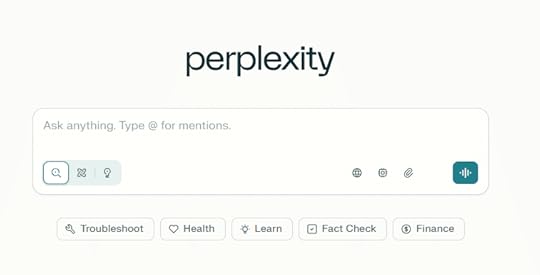
Perplexity changed the research game in 2025. This isn’t just another search tool. It’s an AI-powered answer engine that pulls from credible sources in real-time and shows you exactly where the information came from.
What makes Perplexity special? Citations. Every answer includes linked sources. You’re not wondering if the AI made something up. You can verify everything instantly.
The tool launched its Sonar model in February 2025, built on Meta’s Llama 3.3 70B. It handles up to 128,000 tokens, meaning you can feed it massive documents and get detailed analysis back.
Perplexity now processes over 1.4 billion search queries monthly. It currently has over 16 million daily active users.
New features in 2025 include Deep Research mode, which performs extended multi-step analysis. The Comet browser integration lets you research while you browse. Academic filter mode zeroes in on peer-reviewed sources when you need scholarly credibility.
Perplexity also rolled out flashcards, quizzes, and video overviews. You’re not just getting raw data. You’re getting learning tools built right in.
When to use it: Quick fact-checking, competitive research, gathering sources for content, staying updated on industry trends. Perplexity excels when you need fast, reliable answers with verifiable sources.
Is it expensive?
Not at all.
In fact, here’s a look at Perplexity’s price breakdown:
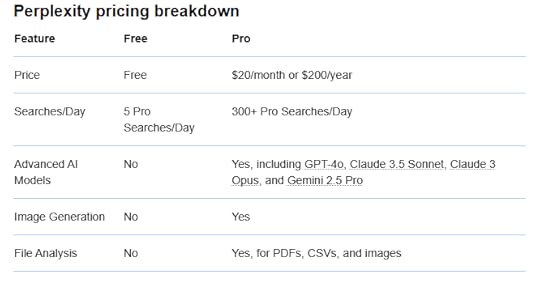 2. Google Gemini: The Multimodal Research Powerhouse
Google Gemini (previously called Bard) is Google’s answer to ChatGPT, and it’s gotten seriously powerful in 2025.
Gemini runs on Google’s latest AI models, including Gemini 2.5 Flash and Gemini 2.5 Pro. The Pro version includes Deep Think mode, which takes extra time on complex reasoning tasks. This helps when you’re working through difficult analytical problems.
Here’s what sets Gemini apart: multimodal capabilities. Upload images, PDFs, or videos, and Gemini processes them all. Got a complex diagram in a research paper? Gemini can explain it. Need to analyze data from a spreadsheet image? Gemini handles it.
The tool integrates directly with Google’s ecosystem. Gmail, Calendar, Drive, Maps. Gemini can pull information from your own files and emails to give personalized, contextual answers. That’s huge for research that requires combining multiple sources.
Recent 2025 updates include Canvas for creating interactive content, improved LaTeX rendering for mathematical formulas, and better image understanding for notes and diagrams. The Deep Research feature generates comprehensive reports from multiple sources, breaking down complex topics into digestible sections.
Gemini also added temporary chat mode for private questions that won’t be saved to your history. Sometimes your research requires confidentiality.
When to use it: Complex research requiring multiple formats, projects needing integration with Google apps, mathematical or scientific analysis, creating presentations from research findings. Gemini shines when you need a multi-purpose tool that handles everything.
The pricing?
Not bad as well.
Take a look at Gemini’s Individual User Plans (it also has developer and education plans).
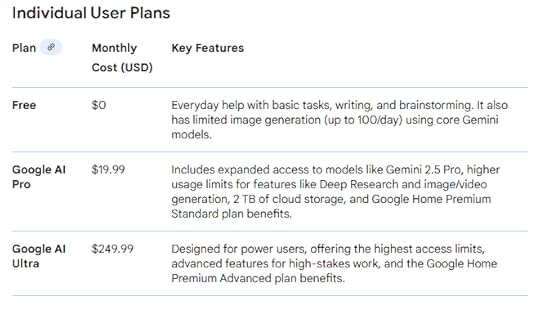 3. ChatGPT: The Versatile Research Assistant
ChatGPT remains one of the most popular best tools for AI research for good reason. It’s versatile, constantly improving, and handles an impressive range of research tasks.
OpenAI launched GPT-5 in August 2025. This latest model delivers better reasoning, improved memory retention, and more natural voice interaction. ChatGPT now has over 400 million monthly active users, doubling from 200 million in just six months.
What makes ChatGPT stand out? Flexibility. It writes, codes, analyzes, summarizes, and researches across virtually any topic. The model now includes Advanced Voice Mode, which lets you have spoken conversations instead of typing everything.
The Projects feature lets you upload up to 40 files and organize research by topic. ChatGPT remembers context across conversations in the same project. This is perfect for long-term research that builds over weeks or months.
New in 2025: ChatGPT can now edit code directly in developer tools. It offers shopping assistance through PayPal integration. The deep research feature with Dropbox lets you analyze stored documents without manual uploads. Memory improvements reference your recent conversations to deliver more relevant responses.
ChatGPT also rolled out custom GPTs, which are specialized versions trained for specific tasks. You can create a research assistant GPT tailored to your exact needs.
The GPT-5 model reduced hallucinations by 45% compared to GPT-4o. When you enable web search, factual errors drop by 80%. That’s massive for research accuracy.
When to use it: Broad research across multiple topics, content creation requiring AI assistance, coding and technical documentation, brainstorming and idea generation. ChatGPT excels as an all-purpose research companion that adapts to whatever you throw at it.
ChatGPT has a free plan, but if you want access to real-time deep research, you can get their $20/month Plus plan.
4. NotebookLM by Google: The Ultimate Research Organizer
NotebookLM flew under many people’s radar until 2025, when Google rolled out features that transformed it into a research powerhouse.
This tool specializes in organizing and synthesizing information from your sources. Upload research papers, documents, PDFs, or even YouTube videos. NotebookLM analyzes everything and helps you extract exactly what you need.
The standout feature? Audio Overviews. NotebookLM converts your research into podcast-style audio summaries. Two AI hosts discuss your sources, debate key points, and explain complex concepts in conversational language. It’s like having a study group that never gets tired.
New 2025 features include flashcards and quizzes generated from your sources. Mind maps that visualize connections between concepts. Video overviews with narrated slides using Google’s Nano Banana image generation model. Multiple overview formats including Brief, Critique, and Debate modes.
The chat feature got a massive upgrade with an 8x larger context window and 6x longer conversation memory. Conversations now persist across sessions. You can ask follow-up questions that build on previous discussions.
NotebookLM also added the ability to discover sources from the web based on topics you’re researching. It understands multimodal PDFs with text, images, and graphs. The tool integrates with Canvas and PowerSchool for educators.
You can customize the difficulty level of generated study materials. Create content in over 80 languages. Set specific goals for each notebook to steer responses toward your exact needs.
When to use it: Academic research requiring deep source analysis, studying for exams or certifications, creating educational content from multiple sources, organizing complex research projects with many documents. NotebookLM excels when you need to deeply understand and synthesize information rather than just find quick answers.
NotebookLM has both a free and a paid version.
Check out the differences here:
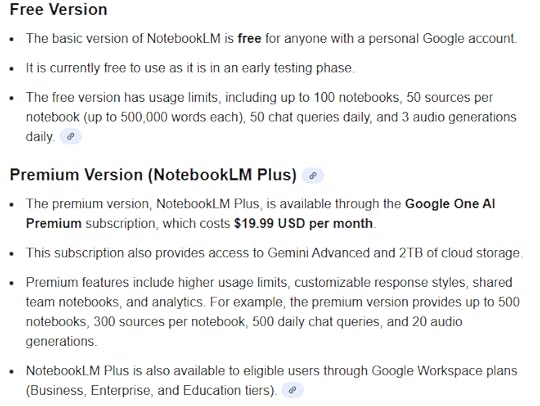 The Next Step: Choosing Your Best Tool for AI Research
You’ve got four powerful options. Each excels at different research tasks.
Start with one. Pick the tool that matches your most common research need. Test it for a week. See how it changes your workflow.
Most people find they use multiple tools for different purposes. Perplexity for quick sourcing. ChatGPT for brainstorming. NotebookLM for deep document analysis. Gemini for multimodal projects.
The key is actually using them. AI research tools only help if you incorporate them into your daily work.
First Movers: Your Custom AI Solution
These best tools for AI research are powerful on their own. But what if you need something more?
First Movers builds custom AI solutions for businesses struggling with implementation. Generic tools work great for basic tasks. When you need AI tailored to your specific workflow, your unique data, and your particular challenges, you need custom development.
We’ve helped companies integrate AI research tools into their operations, automate data gathering processes, and build AI systems that actually fit how they work. Not cookie-cutter solutions that force you to change everything. Real custom work that multiplies your team’s capabilities.
Interested in exploring how AI could transform your research processes? Let’s talk about what’s possible for your specific situation.
FAQs About Best Tools for AI ResearchWhat are the best tools for AI research in 2025?The best tools for AI research include Perplexity for cited answers, Google Gemini for multimodal research, ChatGPT for versatile analysis, and NotebookLM for deep document synthesis. Each tool excels at different research tasks, so many professionals use multiple tools depending on their specific needs.
Can AI research tools replace traditional research methods?AI research tools enhance traditional methods but don’t completely replace them. These tools for AI research accelerate data gathering and initial analysis, but human judgment remains essential for evaluating sources, identifying biases, and drawing meaningful conclusions. The best approach combines AI efficiency with human expertise.
Are AI research tools accurate?The best tools for AI research have improved significantly in accuracy. ChatGPT’s GPT-5 reduced factual errors by 45% compared to earlier models. However, no AI is perfect. Always verify important information from cited sources, especially for high-stakes decisions. Tools like Perplexity provide direct citations specifically to enable verification.
How much do AI research tools cost?Many best tools for AI research offer free tiers. Perplexity is free with limited queries. ChatGPT offers a free version, with paid plans at $20/month for Plus and $250/month for Ultra. Google Gemini has a free tier, with Pro at $19.99/month. NotebookLM is free for basic use, with Plus available through Google Workspace subscriptions.
Can students use AI research tools for schoolwork?Yes, 73.6% of students use AI for research. However, policies vary by institution. Some schools encourage AI for research and learning. Others restrict its use for assessments. Always check your school’s specific guidelines before using these best tools for AI research for graded work.
What’s the difference between Perplexity and ChatGPT for research?Perplexity specializes in providing cited, source-backed answers from current web content. It’s built specifically for research with automatic citations. ChatGPT offers broader capabilities including content creation, coding, and analysis, but requires enabling web search for current information. Both rank among the best tools for AI research, but serve different primary purposes.
How do I choose which AI research tool to use?Choose based on your specific needs. Use Perplexity when you need quick, cited answers. Choose Google Gemini for projects requiring image analysis or Google app integration. Pick ChatGPT for versatile research across many topics or when you need content generation. Select NotebookLM for organizing and deeply analyzing multiple documents. The best tools for AI research depend on your particular research goals.
Are AI research tools secure for confidential work?Security varies by tool. Most major platforms don’t train their models on paid user data. Google Gemini offers temporary chat mode for private queries. ChatGPT has enterprise plans with enhanced security. NotebookLM operates within Google’s security framework. For highly sensitive research, review each tool’s privacy policy and consider enterprise versions of these best tools for AI research.
Can AI research tools analyze uploaded documents?Yes. ChatGPT accepts up to 40 file uploads per project (this is for the Pro plan – ChatGPT accepts 5 file uploads for the free plan, and 25 for Plus). NotebookLM specializes in analyzing multiple documents simultaneously. Google Gemini handles PDFs, images, and videos. These capabilities make them powerful best tools for AI research when working with existing documentation rather than just web sources.
Will AI research tools help me work faster?Absolutely. Users report research tasks that took hours now take minutes using the best tools for AI research. AI handles the time-consuming work of gathering sources, initial analysis, and organization. This speed boost lets you focus on higher-level thinking, strategy, and applying insights rather than spending hours on manual research tasks.
November 5, 2025
Best AI Logo Generator: How I Use Flux to Create Logos in Minutes
Look, I’ll be honest with you.
A year ago, if you’d told me I’d be using an AI logo generator to create professional brand marks, I would’ve laughed you out of the room.
AI and logos? No way. Too important. Too personal. Too… risky.
But here’s the thing: AI has gotten scary good. And I mean that in the best possible way.
Today’s best AI logo generator tools can handle 90-95% of the logo creation work. That means less time, less money, and honestly? Better results than I ever expected.
In this guide, I’m going to show you the exact AI logo generator I use (spoiler: it’s called Flux), walk you through the step-by-step process of using an AI logo generator, and share the prompting strategies that’ll help you create a logo that actually looks professional.
Ready? Let’s dive in.
Using an AI Logo Generator (And Why Your Logo Matters More Than You Think)Here’s a stat that might shock you:
75% of people recognize a brand primarily by its logo.
Not by the product. Not by the tagline. By the logo.
Even wilder? A logo alone shapes 90% of a brand’s first impression.
Think about it. When you see the Nike swoosh, you don’t need the name. When you spot those golden arches, you’re already thinking about fries.
That’s the power of a great logo.
It’s the face of your business. The first handshake. The visual shortcut that tells people who you are before you even open your mouth.
But here’s where it gets interesting:
Creating a professional logo used to cost thousands of dollars and weeks of back-and-forth with designers. Now? With the right AI logo generator, you can knock out 90% of the work in an afternoon—and only spend a few bucks doing it.
The designer still has a role (more on that later), but instead of starting from scratch, they’re just polishing and perfecting what AI already created.
Game changer.
Meet Flux: The Best AI Logo Generator I’ve Found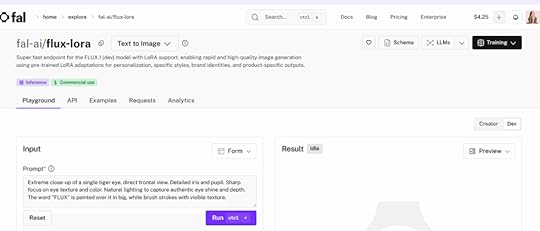
After testing literally dozens of AI image generators, I keep coming back to one: Flux.
It’s hands-down my favorite AI logo generator—and once you see what it can do, it’ll probably be yours too.
Here’s why it’s the best AI logo generator in my book:
First, it’s crazy cheap. We’re talking a few cents per image. Not $50. Not $500. Cents.
Second, the quality is insane. Flux understands concepts, styles, and brand vibes in a way that other tools just… don’t.
Third, it’s fast. You can generate 10 variations of a logo in the time it would take to write an email to a designer.
Getting Started with FluxSigning up is dead simple:
Step #1: Head Over to the Flux WebsiteThis is easy. Simply type “Flux Lora” on Google and click enter. You’ll get a couple of results.
This is the version I use:
 Step #2: Create an Account
Sign up with your name and email address.
Or you can sign up with GitHub, Google, or SSO.
My choice is GitHub, as it’s fast, easy, and convenient.
Honesly, this is super simple and takes less than a minute of your time.
 Step #3: Add Credits to Your Account
You don’t need much to start! To begin with, I suggest topping up with a meager $10. You’ll be amazed at how far this can get you.
After these 3 steps, you’ll be in and ready to start creating amazing logos!
How to Create a Logo with Flux: The Step-by-Step ProcessCreating a logo with an AI logo generator like Flux isn’t complicated. But there is a method to it.
Follow these steps, and you’ll have professional options to choose from in no time.
Step 1: Log into your New Flux AccountOnce you’ve created your account and verified it with your email address, you can log in with a single click every time you want to enter Flux.
2. Step 2: Head to the Playground and Get Ready to PromptOnce you’re logged in, click over to the Playground.
This is your creative sandbox. No pressure, no judgment—just you and an AI that’s ready to bring your vision to life.
Take a second to think about your brand before you start typing. What vibe are you going for? Modern? Vintage? Bold? Minimal?
Jot down a few notes if it helps.
Step 3: Create a Cohesive PromptHere’s where most people mess up when using an AI logo generator.
They type something like “make me a logo” and wonder why the results are garbage.
Your prompt needs three key elements:
The Brand Name. This seems obvious, but you’d be surprised how many people forget to include the actual text they want in the logo.The Style. Are you going for minimalist? Futuristic? Hand-drawn? Vintage? Be specific.The Image or Concept. What do you want to see in the logo? A mountain? A lightbulb? Abstract shapes? Tell the AI exactly what you’re envisioning.Here’s an example of a solid prompt:
“Create a minimalist logo for ‘Apex Analytics’ featuring a mountain peak made of data points, using navy blue and silver, clean lines, modern sans-serif font.”
See the difference? You’ve given Flux a clear direction.
Step 4: Hit Play and Check What Flux Comes Up WithClick generate and wait about 10-20 seconds.
Boom. Your first logo concept appears.
Let’s see what the prompt above came up with…
Whoa! Not bad, right?
Now, be honest with yourself: Is it perfect? Probably not on the first try.
But is it a solid starting point? Almost always.
Look at what works and what doesn’t. Is the style right but the colors are off? Is the concept solid but the text placement is weird?
Step 5: Tweak the Prompt and Rerun Until You Love ItThis is where the iteration happens.
Maybe your first attempt was too busy. Add “simplified” or “clean” to your next prompt.
Maybe the font wasn’t right. Specify “bold geometric font” or “elegant serif.”
Maybe you want to try a completely different concept. Go for it.
The beauty of AI? It doesn’t get annoyed when you ask for changes. No awkward emails. No feeling bad about requesting revision #7.
Just keep tweaking until something clicks.
I usually nail it within 3-5 iterations. Sometimes faster.
Here’s an example of the above logo, tweaked to add a color palette.
 Step 6: Hand It to Your Designer for the Final 5-10%
Here’s the key part people miss:
AI can get you 90-95% of the way there. But that last 5-10%? That’s where a human designer shines.
Send your top 2-3 AI-generated logos to a designer and ask them to:
Make it high resolutionFine-tune spacing and alignmentCreate multiple file formats (PNG, SVG, etc.)Ensure it looks good at all sizesYour designer will thank you. Instead of spending 10 hours creating concepts from scratch, they’re spending 30 minutes polishing something that’s already 95% there.
You save time. You save money. They get to focus on the creative details they actually enjoy.
Win-win.
Best Practices for Prompting Your AI Logo GeneratorWant to get better results faster from your AI logo generator? Follow these prompting principles.
1. Use Specific, Visual LanguageWhen working with any AI logo generator, vague prompts give you vague results.
Instead of “professional logo,” try “sleek corporate logo with geometric shapes and modern typography.”
Instead of “nature logo,” try “organic logo featuring intertwined tree roots, earthy green tones, hand-drawn style.”
The more specific you are, the better Flux can interpret your vision.
2. Include Industry and Brand KeywordsHelp the AI understand your brand’s personality.
If you’re a tech startup, use words like “innovative,” “cutting-edge,” “digital.”
If you’re a wellness brand, try “calm,” “natural,” “balanced.”
These keywords guide the AI toward the right aesthetic without you having to spell out every detail.
3. Balance Direction with Creative FreedomHere’s the paradox: You need to be specific, but not too specific.
Give clear direction on the must-haves (brand name, general style, core concept), but leave room for the AI to surprise you.
Sometimes the best designs come from the AI interpreting your prompt in an unexpected way.
Don’t lock it into a box. Give it guardrails, not a cage.
4. Iterate, Iterate, IterateYour first prompt won’t be perfect with any AI logo generator. That’s okay.
Think of each generation as a conversation with the AI.
First attempt: “Okay, you’re in the ballpark.” Second attempt: “Better, but let’s adjust the colors.” Third attempt: “Now we’re getting somewhere.”
Keep refining one element at a time. Don’t change everything at once, or you won’t know what worked and what didn’t.
Treat it like sculpting. Each iteration chips away a bit more until the final form emerges.
Real Prompts and Results: See Flux in ActionNow let’s look at some real examples of what you can create with this AI logo generator.
(These are fictional companies created for examples.)
AI Logo Generator Prompt Example #1:“Design a clean, contemporary brand mark for technology company Teko, using simple angular forms and a crisp azure palette. Make sure the emblem conveys forward-thinking creativity and advanced solutions, working well across screens and printed materials.”
Result:
 AI Logo Generator Example Prompt #2:
“Build a logo for natural foods company [add company name] that uses warm browns and greens, incorporates botanical elements, and feels artisanal with sketch-like qualities. The design needs to communicate purity, farm-fresh ingredients, and premium standards while looking great on product labels and promotional content.”
Result:
 AI Logo Generator Example Prompt #3:
“Design a fun, vibrant character-based logo for kids’ toy shop named “Toy Kingdom” that features imaginative figures and uses either bold rainbow hues or soft muted tones. The emblem needs to attract both youngsters and adults, working perfectly across storefront displays, product wrapping, and advertising campaigns.”
Result:
 How Can You Create a Logo with an AI Logo Generator?
 Here’s the bottom line:
Creating a professional logo doesn’t have to drain your budget or take weeks of back-and-forth with designers.
With an AI logo generator like Flux, you can knock out 90-95% of the work in a single afternoon. For a few cents. From your couch.
Then, hand it off to a designer for final polish, and boom—you’ve got a professional logo at a fraction of the traditional cost and time.
So what are you waiting for? Sign up for Flux, craft your prompt, and start generating.
Your brand deserves a killer logo. Now you can actually afford to give it one.
But Wait—Learning AI Logo Creation Is Just the BeginningMastering logo generation with AI is awesome.
But what if I told you that’s just scratching the surface of what AI can do for your business?
Inside First Movers R&D AI Labs, you don’t just learn how to create logos.
You learn how to integrate AI into every aspect of your business—content creation, marketing automation, customer service, product development, and more.
We’re talking:
Courses that walk you through AI implementation step by stepBlueprints you can copy-paste into your workflowsLIVE training where you can ask questions and get real-time answersAI isn’t just a tool. It’s the biggest invention in human history since the internet.
And you can either ride the wave or get left behind.
First Movers R&D AI Labs is your ticket to staying ahead of the curve, future-proofing your business, and building something truly remarkable in the age of AI.
Don’t get left behind.