Julia McCoy's Blog, page 7
June 10, 2024
What Is Third Person Writing? A Beginner’s Guide
You’ve heard of first person and second person, but what is third person writing?
Third-person writing is when the narrator is not a character in the story, but an outside observer looking in. It’s like being a fly on the wall, watching the story unfold without being directly involved.
There are three common ways to write in the third person:
Third person limitedThird person omniscientThird person objectiveLet’s break down each perspective to help you decide how best to tell your story.
 Table Of Contents:What Is Third Person Writing?Third-Person Limited Point of ViewThird-Person Omniscient Point of ViewThird-Person Objective Point of ViewExamples of Third-Person Writing in LiteratureTips for Writing in the Third PersonConclusionWhat Is Third Person Writing?
If you’ve ever read a novel or short story, chances are you’ve encountered third-person writing. But what exactly is this perspective and how does it differ from first-person point of view and second-person point of view?
Third-person writing is a form of narration where the narrator is not a character in the story, but rather an outside observer.
This narrator uses third-person pronouns like “he,” “she,” “they,” or “it” to refer to the characters, creating a sense of distance between the reader and the story’s events.
Types of Third-Person Point of ViewWhen writing in the third person, you generally have three main points of view to choose from.
Third-Person Limited: The narrator focuses on a single character’s perspective, revealing only their thoughts, feelings, and experiences.Third-Person Omniscient: An all-knowing narrator who can dive into the minds of multiple characters, providing a broad view of the story.Third-Person Objective: An unbiased narrator who simply describes observable actions and dialogue, without revealing characters’ inner thoughts or motivations.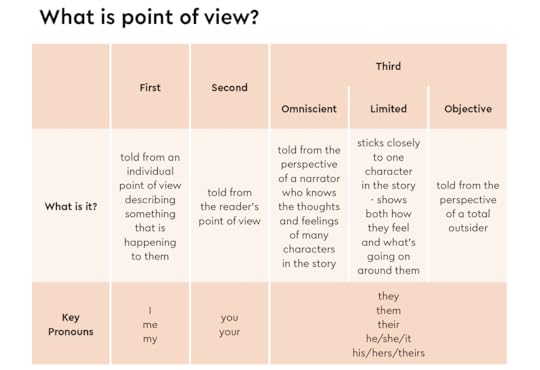
Infographic from Thesaurus.com
Third-Person Limited Point of ViewA lot of authors love using a third-person limited perspective. It gives an in-depth look at one character’s journey but keeps the narrator slightly detached.
Focusing on a Single Character’s PerspectiveThe third-person limited perspective focuses on just one character. By seeing everything through this person’s eyes, readers can really understand their emotions and experiences closely, making it easier for them to connect with the story.
The Harry Potter books by J.K. Rowling often show events through Harry’s eyes, allowing readers to connect with him on a deeper level as he tackles various magical challenges.
Revealing Character’s Thoughts and FeelingsThe power of third-person limited lies in its ability to share a character’s internal dialogue. This perspective allows writers to develop complex protagonists who resonate emotionally with the audience.
Consider this example from George R.R. Martin’s A Game of Thrones:
“Bran thought about it. ‘Can a man still be brave if he’s afraid?’‘That is the only time a man can be brave,’ his father told him.”
Here, we see Bran questioning something important and his father’s reply offers insight into what he’s thinking. This moment also touches on the main themes of the story.
Limitations of Third-Person LimitedUsing third-person limited narrative allows a closer look at one character’s thoughts and feelings. However, because we’re confined to just their knowledge, it adds mystery but might also leave some gaps for the reader.
Additionally, if the protagonist is an unreliable narrator, readers may be misled or left to question the truth of the story’s events.
Third-Person Omniscient Point of ViewWhile third-person limited zeroes in on a single character, third-person omniscient broadens the view to include everything happening around all characters.
All-Knowing NarratorA third-person omniscient narrator has an all-knowing grasp on every part of the story — events, characters, you name it. They can move through different times and places effortlessly to give readers a complete picture.
A classic example of third-person omniscient narration can be found in Leo Tolstoy’s Anna Karenina:
“All happy families are alike; each unhappy family is unhappy in its own way.”
Right from the start, this sentence shows off the omniscient narrator’s ability to make big claims about families. It sets a strong foundation for diving into topics like love, social norms, and our shared humanity.
Revealing Multiple Characters’ ThoughtsA key benefit of using a third-person omniscient perspective is that it lets authors peek into various characters’ minds. This approach helps build a complex narrative by revealing motivations, secrets, and inner struggles of each character involved in the story.
Margaret Mitchell’s Gone with the Wind uses an omniscient narrator who jumps into different perspectives like those of Scarlett O’Hara and Rhett Butler.
By doing so, it gives readers a full view of important themes and tensions in their lives.
Limitations of Third-Person OmniscientWhile third-person omniscient offers a broad, all-encompassing view of the story, it can also create distance between the reader and the characters. With so many perspectives to juggle, readers may find it harder to form deep emotional connections with individual characters.
But when done right, third-person omniscient can create a deep and engaging story that looks at the different sides of a character.
Third-Person Objective Point of ViewThird-person objective pushes writers to master balancing pure description with no internal thoughts or feelings inc.
Unbiased NarratorIn the third-person objective, the narrator acts as an impartial, unbiased observer of the story’s events. This narrator does not have access to the characters’ thoughts, feelings, or motivations and must rely solely on observable actions and dialogue to convey the narrative.
You can find this perspective in Ernest Hemingway’s short story, “Hills Like White Elephants.”
“The girl looked at the bead curtain. ‘They’ve painted something on it,’ she said. ‘What does it say?’‘Anis del Toro. It’s a drink.’”
Here, the narrator simply reports the characters’ actions and dialogue, leaving readers to infer their thoughts and feelings based on these external cues.
Describing Only Observable ActionsThe third-person objective perspective limits the narrator to only describe visible and audible events. To convey characters’ inner worlds, one must rely on how they act, look, or speak.
For example, instead of writing, “She felt a wave of sadness wash over her,” a third-person objective narrator might say, “Her shoulders slumped, and she turned away, blinking back tears.”
Limitations of Third-Person ObjectiveWriting in third-person objective can be challenging as it requires authors to convey complex emotions and relationships without the benefit of internal monologue or narratorial insight. This point of view can also create a sense of distance between the reader and the characters, as we are not privy to their inner worlds.
However, when used effectively, third-person objective can create a sense of realism and immediacy, drawing readers into the story’s events as if they were unfolding in real time.
Examples of Third-Person Writing in LiteratureMany great pieces of literature use third-person writing effectively, from old-time favorites to today’s popular short tales.
Famous Novels Written in the Third PersonThird-person narration is a staple in many beloved classic novels. Think about works such as “To Kill a Mockingbird” by Harper Lee or J.R.R. Tolkien’s epic saga, “The Lord of the Rings.”
Here are some more examples:
Pride and Prejudice by Jane Austen (third-person limited)To Kill a Mockingbird by Harper Lee (third-person limited)1984 by George Orwell (third-person limited)The Brothers Karamazov by Fyodor Dostoevsky (third-person omniscient)One Hundred Years of Solitude by Gabriel García Márquez (third-person omniscient)From Jane Austen’s detailed look into her characters’ lives to the grand family sagas crafted by Dostoevsky and García Márquez, these books demonstrate how effective third-person storytelling can be in different contexts.
Short Stories Showcasing Third-Person NarrationYou’ll frequently find third-person narration in short stories, creating powerful narratives packed with diverse themes and experiences. Some well-known examples illustrate this perfectly.
“The Lottery” by Shirley Jackson (third-person objective)“Cathedral” by Raymond Carver (third-person limited)“The Ones Who Walk Away from Omelas” by Ursula K. Le Guin (third-person omniscient)“Hills Like White Elephants” by Ernest Hemingway (third-person objective)These stories highlight how third-person narration can shift from the eerie distance in Jackson’s “The Lottery” to the close-up examination of characters in Carver’s “Cathedral.”
Tips for Writing in the Third PersonNow that we’ve covered the different types of third-person writing and how to use them, let’s get into some practical tips for creating engaging stories from this point of view.
Develop Strong Character ArcsWhen writing in either third-person limited or omniscient perspectives, building compelling character arcs keeps readers hooked. You’ll need to reveal what drives your characters, the obstacles they face, and how they change over time.
To bring your characters to life, try these helpful tips:
Give your characters clear goals and obstacles to overcomeReveal their backstories and inner worlds through action, dialogue, and internal monologue (if using third-person limited or omniscient)Show how their experiences and relationships shape their development over timeCreating characters with rich backstories and growth throughout your story will keep readers hooked from start to finish.
Maintain a Consistent Point of ViewConsistency is key when employing third-person narration. Avoid unintentionally slipping into first or second-person perspective as this can jar readers out of the story.
If you’re writing in third-person limited, be sure to stay within your focal character’s perspective throughout the scene or chapter.
If you’re using third-person omniscient, establish clear boundaries for when and how you’ll shift between characters’ viewpoints.
Balance Narration and DialogueIn third-person writing, it’s important to strike a good balance between narration and dialogue. Overloading the story with too much background can slow things down and bore readers.
On the flip side, not enough detail might leave characters feeling one-dimensional.
Mixing narration with characters’ thoughts, actions, and surroundings can really bring your story to life. Use meaningful dialogue that moves the plot forward. Try using action beats or internal monologues instead of constant dialogue tags to break up long conversations.
By honing these skills and balancing them just right in your narrative, you can craft an engaging read that grabs attention and holds it all the way through.
ConclusionSo, what is third person writing? It’s a powerful tool in your writing arsenal, one that can help you create a more engaging and immersive story. By understanding the different types of third-person point of view and when to use them, you can craft a narrative that pulls readers in and keeps them hooked until the very last page.
Remember, whether you choose third person limited, omniscient, or objective, the key is to be consistent and use it to your advantage. Third person writing can give you the flexibility to explore multiple characters’ perspectives, create a sense of objectivity, or focus on one character’s inner world.
It’s time to build your blog empire.
Want to be a real Content Hacker along with us, but not sure where to start?
We’ve got custom-created resources just for you, friend.
Get inside the Content Hacker Community  – at just $20/month, it’s a no-brainer. On-call, expert support, live calls, and so much more.
Want to go deeper? Check out our AIO Blogger course – an immersive one-week course teaching you everything you need to know to build a money-making online blog.
Can’t WAIT to welcome you inside.
with gratitude,
Julia

The post Get Premium Content appeared first on Content Hacker.


When Will AGI Happen? Predictions, Benefits and Risks
The question of when AGI will become a reality has been keeping tech enthusiasts, futurists, and even casual observers up at night. While some prophets predict its imminent arrival, others believe it’s still a distant dream. One thing’s certain, though – the quest for AGI has reached a fever pitch.
You’ve probably heard the term AGI thrown around a lot lately, especially with the recent advancements in AI technology. But what exactly is AGI, and why is everyone so obsessed with it?
Well, buckle up, because we’re about to take a deep dive into the world of artificial general intelligence and explore when this game-changing technology might finally become a reality.
When Will AGI Happen?
This seems to be the question of the hour in almost every AI circle and every AI YouTube video.
Creating AGI is even a goal of some of the biggest companies in the world.
First of all, we have to define what AGI is.
AGI is short for artificial general intelligence. It’s a type of AI that matches or surpasses human capabilities across a wide range of cognitive tasks.
This is in contrast to narrow AI which is designed to handle specific tasks like playing chess or driving a car.
The potential of AGI is staggering. It could be the game-changer we need to tackle some of humanity’s toughest challenges, like climate change and disease.
But there’s a catch – we need to make sure these AI systems are developed with safety and humanity in mind, or we risk creating more problems than we solve.
Zeros and ones might be the building blocks of AGI, but it’s humans who will ultimately shape its destiny. With the global conversation around AGI heating up, it’s our responsibility to ensure the discussion stays grounded in reality.
Key Players in the Race for AGIThe AGI arms race is in full swing, with big tech companies and research organizations clamoring to stake their claim. Billions are being poured into AI research, all in the hopes of being the first to crack the AGI code.
OpenAI, backed by Microsoft, is one of the most prominent players. But they’re not alone. Google, Facebook, and many others are also heavily investing in AGI research. These companies have the resources, talent, and computing power necessary to make significant progress towards AGI.
OpenAI’s RoleOpenAI is driven by a vision of creating AGI that makes life better for everyone. To achieve this, they’re taking a step-by-step approach to developing AI systems that are both safe and aligned with human principles.
Language models like GPT-3 and ChatGPT have been game-changers, thanks to OpenAI’s innovative work. And they’re not stopping there – their sights are set on other areas of artificial general intelligence, including reinforcement learning, robotics, and ensuring AI safety.
Contributions from Big TechBig tech companies like Google and Facebook are pouring resources into AGI research.
The payoff? Rapid progress in areas like AI-powered game playing and protein folding, courtesy of Google’s DeepMind division.
Facebook, meanwhile, is tackling the complexities of natural language processing and computer vision through its AI research lab.
The Turing Test and AGI MilestonesIt was in 1950 when computer scientist Alan Turing proposed a test to measure a machine’s ability to think and behave like a human.
Recently, there have been claims that language models like ChatGPT have passed the Turing test.
While that’s debatable, it’s clear we’re making significant progress towards AGI.
These large language models demonstrate the increasing capabilities of current AI systems in understanding and generating human-like responses.
OpenAI’s Four-Year DeadlineImagine an AI system that truly gets us – our hopes, our fears, our quirks. That’s what OpenAI is working towards, with a target of just four years to achieve this groundbreaking feat.
Their bold mission? To create AGI that not only works alongside humans but also shares our values.
The timeline for AGI development has been decreasing rapidly. Just a few years ago, predictions were in the 50-year range. Now, many experts think we could see AGI within a decade.
Ray Kurzweil’s PredictionsFuturist Ray Kurzweil is making a bold prediction: artificial intelligence will surpass human intelligence and ace the Turing test by 2029.
That’s a mere five years from now!
He thinks AGI will become a reality thanks to advancements in machine learning, a massive boost in computing power, and a deeper understanding of how our brains work.
Kurzweil’s predictions have been remarkably accurate in the past. So when he says AGI is coming soon, it’s worth paying attention.
Benefits of Achieving AGIImagine a future where scarcity is a distant memory. With AGI, we could be on the cusp of an era of unprecedented abundance. This revolutionary technology has the potential to solve some of humanity’s most pressing problems, unlock groundbreaking discoveries, and improve the human experience worldwide.
With AGI shouldering the load, people can focus on creative pursuits that bring them joy and fulfillment.
Economic TransformationAGI could lead to an economic transformation on a scale we’ve never seen before. Automation powered by AGI could drastically reduce the cost of goods and services, making them accessible to everyone. This could help alleviate poverty and improve living standards around the world.
Know more about The Age of Plentitude.
As automation alters the job landscape, we may need to reinvent our economic approach. Universal basic income, for instance, could serve as a safeguard for those displaced. The key is to redistribute benefits fairly, so everyone can flourish, regardless of AGI’s growing presence.
Enhanced Human CapabilitiesImagine having a personal cognitive coach that helps you master new skills, tackle tough problems, and even boost your own intelligence. With AGI by your side, you’ll be amazed at what you can achieve – and what you thought was impossible becomes suddenly within reach.
Imagine a future where AGI helps us crack the codes to diseases, reverses the clock on aging, and even takes humanity to the stars. It could be the catalyst for groundbreaking scientific discoveries, revolutionary tech innovations, and artistic masterpieces that push the boundaries of what we thought possible.
The Importance of Alignment in AGI DevelopmentThe journey to AGI is an exciting one, but it comes with a caveat – we must ensure these intelligent systems are beneficial to humans and reflective of our principles.
If we fail to address this critical aspect, we risk creating autonomous entities that ultimately disregard our well-being.
Imagine a superintelligent AGI system that views human life as insignificant or even a threat to its existence. The thought alone is chilling, which is why getting alignment right is vital to preventing an existential crisis triggered by advanced AI systems.
Ethical ConsiderationsAs we strive to develop AGI that aligns with human values, a critical question arises: Whose values take precedence?
With conflicting moral frameworks across the globe, reconciling disparate views becomes a significant challenge, especially when AGI’s impact will be felt globally.
Raising tough questions is a necessary evil if we want to create AGI that truly benefits humanity.
Luckily, researchers and philosophers are making headway, exploring innovative approaches like value learning and inverse reinforcement learning to ensure AI aligns with our values.
Potential RisksAn AGI system that doesn’t share our values could pose a threat to human existence. This is known as the AI existential risk, and it’s a major concern among AI safety researchers and experts.
Other risks include economic disruption, as AGI automates more jobs, and the possibility of AGI being used for malicious purposes by bad actors.
As AI systems become more powerful and autonomous, it’s crucial to develop robust safeguards and governance mechanisms to mitigate these risks.
ConclusionWe’re standing at the crossroads of AGI development, and the stakes are high. As AGI gains momentum, it poses a very real threat to jobs and the economy as a whole. The public is right to worry about the misalignment of AGI and its potential to wreak havoc on our world.
But there’s also reason for optimism. If we get AGI right, it could bring about an age of abundance and prosperity for all. We need to focus on the potential benefits while mitigating the risks. This requires ongoing public engagement, education, and collaboration between researchers, policymakers, and the general public.
In this global conversation about AGI, we have a unique opportunity to make a difference. By putting safety, alignment, and responsible development at the forefront, we can pave the way for a brighter future – one where AGI works for humanity, not against it.
So, when will AGI happen? The truth is, no one knows for sure. Some experts predict we could see AGI within the next decade, while others believe it’s still a long way off.
But one thing’s for certain – the race to create artificial general intelligence is heating up, and the potential implications are both exciting and terrifying.
The post When Will AGI Happen? Predictions, Benefits and Risks appeared first on Content Hacker.
How to Prepare for AI Job Displacement: Stay Ahead
As artificial intelligence continues to advance at a rapid pace, the question of how to prepare for AI job displacement has become increasingly relevant.
While AI has the potential to revolutionize industries and create new opportunities, it also poses a threat to many traditional jobs.
Let’s discuss practical strategies and mindset shifts that can help you navigate the changing job market and thrive in the age of AI.
By proactively upskilling, developing a growth mindset, and leveraging AI to your advantage, you can position yourself for success amid the AI revolution.
Embracing the AI Revolution
The age of AI is upon us, and it’s human nature to feel apprehensive. But what if we flipped the script and viewed this shift as a doorway to unprecedented innovation and progress?
A seismic shift is happening in the world of AI, and it’s natural to feel a little uneasy about the rapid pace of progress. The truth is, trying to slow it down will only leave you in the dust.
Changing Your MindsetPrepare for the AI age by flipping the script on your thinking. Instead of seeing automation as a threat, see it as a liberator – one that can automate the long, boring routines and free you to tackle the complex, high-value tasks that demand human ingenuity.
Rather than seeing AI as a competitor, think of it as a trusted ally. With AI by your side, you’ll enjoy more informed decision-making and have the luxury of devoting time to tasks that bring you joy.
Taking Control of Your FutureThe rules of the job market have changed, and now it’s every person for themselves. But by prioritizing your own growth and development, you can rise to the challenge and build a career that’s resilient in the face of AI-driven change.
Data analysis, programming, and creative problem-solving are just a few skills that will be highly sought after in an AI-dominated landscape. Don’t wait – start developing these skills now through online courses, workshops, or on-the-job training, and you’ll be grateful you did.
The secret to staying ahead of the curve in an AI-powered landscape is being open to evolution, continually refining your skills, and pursuing fresh opportunities as they present themselves.
Identifying At-Risk Jobs and IndustriesAs AI advancements accelerate, we’re likely to see a mix of new job opportunities emerge, while others may disappear.
Let’s find out which jobs and industries are most susceptible to AI job displacement.
In a striking forecast, the McKinsey Global Institute predicts that up to 375 million workers globally will need to pivot to new occupations by 2030 as automation takes hold.
Routine tasks, like data entry and assembly line work, are particularly vulnerable to AI takeover.
Even creative fields aren’t immune to the effects of AI. With the rise of generative AI tools like DALL-E and GPT-3, machines are now capable of producing written and visual content that rivals human creations.
The AI takeover won’t leave creatives without a job, but it will change the way they work. By automating repetitive tasks, creatives can focus on the strategic, high-level thinking that requires a human touch.
In today’s AI-driven creative landscape, the most valuable asset is the ability to develop skills that augment these technologies. This means refining your skills in areas like AI prompting and cultivating a mind that’s constantly generating innovative ideas.
Upskilling for the AI AgeAs AI reshapes the job market, one thing is clear: the skills that got you here won’t get you there. It’s time to adapt and develop a skill set that’s aligned with the AI-driven economy.
Developing an AI-Centric Skill SetSo what exactly does an AI-centric skill set look like? According to a World Economic Forum report, some of the top skills for the future include:
Analytical thinking and innovationActive learning and learning strategiesComplex problem-solvingCritical thinking and analysisCreativity, originality, and initiativeLeadership and social influenceTechnology use, monitoring, and controlResilience, stress tolerance, and flexibilityAs you develop skills that work in harmony with AI, you’ll not only stay adaptable in the shifting job market but also contribute to a wave of innovation and job creation.
Continuous Learning and AdaptabilityRapid technological progress demands a new approach to learning – one that’s ongoing, adaptive, and fueled by an insatiable curiosity about the world around us.
To future-proof your career, you need to be willing to upskill and reskill regularly. This might involve formal education, on-the-job training, or even exploring entirely new fields.
The most critical skill in the age of AI is being agile. Staying curious, fluid, and growth-oriented will help you rise to the top, no matter what the future brings.
It’s time to shift your mindset and get comfortable with continuous learning.
Leveraging AI for Career GrowthWhile AI may displace certain jobs, it also presents incredible opportunities for career growth. By learning to harness AI tools and technologies, you can enhance your job performance and create new possibilities for yourself.
Collaborate with AIInstead of seeing AI as a rival, try seeing it as a collaborator. When you learn to work together, you’ll be amazed at how much more you can achieve in less time.
For example, if you’re a content creator, you might use AI-powered tools like Grammarly or Content at Scale to streamline your writing process and generate new ideas.
Or if you’re a data analyst, you might leverage machine learning algorithms to uncover insights that would be impossible to find manually.
Approach AI with an open mind and a willingness to experiment. By embracing AI technologies, you can unlock new possibilities for career advancement, opening the door to endless possibilities.
Identify New Roles and OpportunitiesAs AI reshapes the workplace, fresh career paths and industries are springing to life. Staying one step ahead of this transformation requires keeping a watchful eye out for these emerging opportunities.
Certain roles are emerging, and among them are these AI-related positions that promise to be in high demand:
AI ethicistAI product managerAI trainerConversational AI designerMachine learning engineerNo CS degree? No problem.
Pivoting your career towards AI and computer science is totally doable.
Start by upskilling with online courses, rubbing shoulders with industry experts at conferences, and learning from their experiences.
You’ll be gaining the tech skills you need to thrive in this field in no time.
Cultivate a Growth MindsetEmbracing a growth mindset is like flipping a switch that unleashes your inner problem-solver. Suddenly, obstacles become opportunities to learn and creative solutions start flowing. You’ll be more open to feedback and willing to put in the effort required to master new skills.
Imagine if a simple mindset adjustment could amplify your growth.
It starts with recognition – acknowledging that “I can’t” really means “I haven’t mastered it yet.”
The key is to focus on progress, no matter how small, and surround yourself with those who foster a supportive, encouraging atmosphere.
Strengthen Emotional IntelligenceEmails, reports, and spreadsheets – these are the tasks machines can handle with ease. But when it comes to fostering connections, diffusing conflicts, or rallying teams, it’s the human touch that makes all the difference.
As AI assumes more of the analytical workload, emotional intelligence and interpersonal skills are becoming valuable differentiators in the workplace.
Becoming more emotionally intelligent starts with a simple yet powerful question: How do my emotions drive my behavior?
Take an honest look at your emotional landscape and you’ll uncover the surprising ways it shapes your choices.
Develop empathy by actively listening to others and trying to see things from their perspective.
Other key components of emotional intelligence include self-regulation (managing your own emotions and impulses), motivation (staying driven and optimistic in the face of challenges), and social skills (communicating effectively and building positive relationships).
The Importance of the Human TouchAs AI becomes more prevalent in the workplace, it’s easy to feel like our human qualities are becoming obsolete. But the truth is, there are certain things that machines simply can’t replicate – and these uniquely human skills are more valuable than ever in an AI age.
Empathy and CreativityIn the AI-driven landscape, empathy has become a rare and precious commodity. It’s the thread that weaves human connections together — a skill that technology, no matter how advanced, cannot replicate.
As a compassionate professional, you’ve got a knack for walking in others’ shoes, predicting their needs, and communicating with heart. That empathetic ear is invaluable in roles that demand connection – think customer service, sales, leadership, or any situation where people skills matter.
AI’s creative prowess might be impressive, but it still can’t rival the innovative spark that humans take for granted.
Machines can mimic artistic styles, compose music, and generate essays, but the inventive flair that stems from human intuition and creativity is what drives innovation and tackles complex problems.
Collaboration and TeamworkBeyond automation and data analysis, the most groundbreaking achievements arise from people’s ability to connect, converse, and co-create.
As a team player, you’re the glue that holds your colleagues together. You know how to communicate in a way that builds trust, and you’re not afraid to lean on your teammates’ strengths while learning from their differences.
Collaboration skills are the backbone of a thriving AI-powered organization. To get ahead, focus on refining your listening skills, fostering a culture of constructive feedback, and aligning your personal ambitions with the company’s mission.
Stop trying to outdo machines. Focus on amplifying AI’s strengths with your own – compassion, innovative thinking, and teamwork. This fusion of human and artificial intelligence will catapult your career to new heights.
ConclusionPreparing for AI job displacement is not about succumbing to fear or resisting progress. It’s about embracing the opportunities that come with technological advancements and proactively positioning yourself for success in the evolving job market.
By cultivating a growth mindset, continuously upskilling, and leveraging AI to enhance your performance, you will not only survive but thrive in the age of artificial intelligence.
Remember, the human touch – our creativity, empathy, and ability to navigate complex relationships – will always remain valuable, even as AI becomes more prevalent in the workplace.
So, take control of your future, stay curious, and approach the AI revolution with a sense of excitement and possibility. The world is changing, but with the right mindset and skill set, you can adapt, grow, and make a meaningful impact in the AI-driven landscape.
It’s time to build your blog empire.
Want to be a real Content Hacker along with us, but not sure where to start?
We’ve got custom-created resources just for you, friend.
Get inside the Content Hacker Community – at just $20/month, it’s a no-brainer. On-call, expert support, live calls, and so much more.
Want to go deeper? Check out our AIO Blogger course – an immersive one-week course teaching you everything you need to know to build a money-making online blog.
Can’t WAIT to welcome you inside.
with gratitude,
Julia
The post How to Prepare for AI Job Displacement: Stay Ahead appeared first on Content Hacker.
June 2, 2024
What is Prose Writing? A Complete Guide for Beginners
What is prose writing?
Prose writing refers to written text that follows natural speech patterns and grammatical structure, as opposed to poetry or verse. It’s the most common form of written content and covers everything from novels, short stories, and essays, to letters, emails, and everyday conversations.
Prose allows for more flexibility in expression and storytelling, often focusing on narrative, description, and character development.
Crafting brilliant prose isn’t some mystical art reserved for the chosen few. It’s a skill you can learn, practice, and master with the right guidance and a healthy dose of determination. Whether you’re writing the next great American novel, a soul-stirring memoir, or a viral blog post, understanding the fundamentals of prose writing is your key to success.
Table Of Contents:What is Prose Writing?The Role of Prose in LiteratureTypes of ProseCharacteristics of Good ProseTips for Writing Effective ProseLet Your Voice Shine Through ProseWhat is Prose Writing?Prose writing is a writing style that follows a natural flow of speech, using ordinary grammatical structure.
Unlike poetry, prose doesn’t rely on rhyme or meter. It’s all about conveying ideas in a straightforward, often narrative way.
You come across prose all the time — it’s how ideas are conveyed through sentences and paragraphs in books like novels or collections of short stories. Even news articles and academic papers rely on this form of writing to get points across.
One of the standout features of prose is how it uses grammatical structure. Each sentence usually has a subject and predicate, organized into paragraphs to develop a central thought or theme.
Common Prose ExamplesProse writing includes many forms and genres. Some of the most common prose styles are:
Novels and short storiesNews articles and editorialsEssays and research papersBiographies and memoirsScripts for plays, movies, and TV showsLetters from historical figuresEach type of prose has its own set conventions and styles, yet they all share the basic traits that define prose writing.

Prose plays a vital role in literature, serving a variety of purposes from storytelling to reflecting society. Let’s explore some of the key functions of prose in the literary world.
StorytellingThe magic of storytelling often comes alive through prose in literature. Be it novels or short stories, this form lets writers create memorable characters and rich settings while unfolding captivating plots and delving into meaningful themes.
Storytelling through prose gives writers the chance to entertain, teach, and make readers think.
Stephen King once called books “a uniquely portable magic,” capturing their power perfectly.
Conveying InformationProse can clearly convey information and ideas. For instance, nonfiction prose includes essays, articles, and biographies that inform readers about real-world topics.
Writing effective informational prose means laying out facts and arguments in a way that’s easy to follow. Using evidence and examples helps make the points clearer. The aim is either to help readers understand something better or convince them of a certain viewpoint.
Evoking EmotionsAlthough prose is usually seen as straightforward writing, it can touch our hearts too. Through rich descriptions and interesting plots with memorable characters, prose writers can draw out emotions like joy or sorrow in their readers.
Emotionally resonant prose allows readers to connect with the text on a deeper level. As an avid reader myself, I’ve laughed, cried, and everything in between while immersed in a powerful piece of prose.
Reflecting SocietyProse and literature often serve as a mirror to the society and era in which they were created. Writers use their works to comment on social issues, highlight cultural trends, and reflect on historical events.
Diving into prose from different eras and cultures lets us see how societies evolved over time. We get glimpses of universal struggles through their eyes. From the old oral traditions to modern digital narratives, prose reflects our past selves as well as our current identities.
Types of ProseProse can be categorized into several types based on different criteria. Here are some common types of prose:
Fictional ProseFictional prose, like novels or short stories, tells imaginary tales using narrative tools such as character development, plot twists, and vivid settings to create engaging experiences for readers.
One of the best things about writing prose fiction is the chance to dive into different worlds, perspectives, and ideas. Whether you’re crafting a grand fantasy saga or focusing on an intimate character study, it lets you create something fresh and imaginative.
Nonfictional ProseWhile fictional prose spins tales of imagination, nonfictional prose deals with factual subjects and happenings. You’ll find it in newspapers, essays, life stories (biographies), and educational books (textbooks).
The purpose of nonfictional prose is usually to share information, teach something new, or convince the audience of an idea. It relies on well-researched data and clear reasoning to support its points.
Being precise and unbiased is key in this type of prose writing — you’ve got to know your stuff inside out.
Poetic ProsePoetic prose blends the best of both worlds, combining the structure of prose with the creativity of poetry. Written in paragraphs, it still employs poetic techniques like vivid imagery and metaphor to create a rhythmic flow.
I absolutely love the prose poetry by Charles Baudelaire. This trailblazing French poet from the 1800s mastered the art of prose poems with pieces that brim with lush imagery and vivid descriptions, whisking readers away to different times and places.
Flash FictionImagine telling an entire tale in under 1,000 words — that’s flash fiction for you. It’s brief but aims to deliver everything from the setup and conflict to the resolution.
Flash fiction is a great way to practice being brief and precise in your writing. Since every word counts, make sure each one serves a purpose.
Short StoriesFictional prose comes alive through short stories ranging from about 1,000 to 10,000 words. While they share elements like characters and plot with novels, short stories often hone in on one key event rather than unfolding across multiple chapters.
The world of literature owes much to short story maestros like Edgar Allan Poe, Ernest Hemingway, and Alice Munro. Their ability to weave intricate plots in limited space showcases their storytelling genius perfectly.
Heroic ProseHeroic prose, also known as epic prose, is a style of writing that combines elements of both prose and epic poetry. It typically deals with heroic or legendary themes and characters and often employs elevated language and grandeur in its descriptions.
Heroic prose works may recount heroic deeds, epic adventures, or mythological narratives in a straightforward prose style, but with an emphasis on the heroic or epic elements. This style can be found in various cultures’ literary traditions, often associated with stories of heroes, gods, and legendary figures.
Descriptive ProseDescriptive prose is a type of writing that focuses on vividly portraying scenes, settings, characters, or emotions through detailed imagery and sensory language. Its primary goal is to create a rich sensory experience for the reader by appealing to the senses of sight, sound, touch, taste, and smell.
Descriptive prose often uses figurative language such as similes, metaphors, and personifica to enhance the reader’s understanding and immersion in the text.
In descriptive prose, authors pay close attention to capturing the essence of a moment or place, allowing readers to visualize and experience it in their minds. This type of writing can be found in various genres, including fiction, non-fiction, and even essays. Whether it’s describing a serene landscape, a bustling city street, the appearance of a character, or the emotions felt in a particular situation, descriptive prose aims to paint a vivid picture with words.
Narrative ProseNarrative prose is a style of writing that tells a story or recounts a sequence of events. It is characterized by its focus on storytelling, typically presenting events in chronological order and often featuring characters, plot development, setting descriptions, and dialogue.
Narrative prose can be found in various forms of narrative writing, including novels, short stories, novellas, and personal narratives.
In narrative prose, the author employs techniques such as characterization, plot structure, conflict, and resolution to engage the reader and create a compelling narrative arc. The goal is to immerse the reader in the story, allowing them to follow along with the events and experience the emotions and conflicts faced by the characters.
Expository ProseExpository prose is a type of writing that aims to explain, inform, or instruct the reader about a particular subject or topic. It focuses on presenting factual information, describing concepts, analyzing ideas, or providing guidance in a clear and organized manner. Expository prose is commonly found in textbooks, academic papers, instructional manuals, technical documents, and informative articles.
In expository prose, the author typically employs logical reasoning, evidence, examples, and explanations to convey information and help readers understand complex concepts or processes. The writing style is often straightforward and objective, with an emphasis on clarity and precision. Unlike narrative prose, which tells a story, expository prose is more concerned with presenting information in a systematic and informative way.
Persuasive ProsePersuasive prose is a type of writing that aims to convince the reader to adopt a particular viewpoint, opinion, or course of action. It relies on persuasive techniques, logical reasoning, emotional appeals, and rhetorical devices to sway the audience’s beliefs or behavior. Persuasive prose is commonly found in opinion pieces, editorials, advertisements, speeches, debates, and persuasive essays.
In persuasive prose, the author presents arguments and evidence to support their position on a particular issue or topic. They may use persuasive techniques such as appealing to emotions, credibility, logic, and ethics to influence the reader’s thoughts or actions. The language and tone of persuasive prose can vary depending on the audience and purpose of the writing. It may be assertive, passionate, authoritative, or empathetic, depending on the writer’s intended effect.
Dramatic ProseDramatic prose is a form of writing that combines elements of both prose and drama. Unlike traditional prose, which is typically written in paragraphs and focuses on narrative and description, dramatic prose is structured more like a play, with dialogue, stage directions, and often a heightened sense of tension or conflict. It can be used to tell a story or convey ideas in a way that feels more immediate and dynamic than traditional prose.
It’s commonly found in scripts for stage plays, screenplays, and even some novels or short stories that use a heavy emphasis on dialogue and action.
Characteristics of Good ProseWhat makes good prose stand out from bad prose? After years of diving into the craft, I’ve noticed that all excellent writing shares a few key traits.
If you’re working on a novel, drafting a blog post, or tackling an academic essay, remembering these qualities will help you create content that’s both effective and captivating.
Clarity and ConcisenessGood prose shines with clarity. Aim to write in a way that’s easy for everyone to understand, even if they’re not experts on the topic.
Use plain language and steer clear of jargon or difficult words.
Be concise — say what you need in as few words as possible without losing meaning.
Rhythm and FlowThe best prose flows naturally and feels good to read. Varying sentence structure and length help maintain this smoothness, along with using transition words to link thoughts together seamlessly.
Reading aloud can be very revealing — you’ll quickly spot any clunky wording or uneven pacing that needs fixing.
Engaging LanguageIf you want to keep readers hooked on every word, make sure your prose is both engaging and dynamic. Using vivid language with rich sensory details can really help.
Take advantage of literary devices such as metaphor or alliteration for added flair.
Effective StructureGood prose has a straightforward structure that leads readers through what you want to say. Arrange your ideas into well-formed paragraphs with topic sentences at the beginning of each one to present new concepts. Smooth transitions help tie everything together seamlessly.
Remember who you’re writing for — an academic paper will be more formal than casual blogging but staying organized always makes communication easier.
Tips for Writing Effective ProseSo how do you write good prose? Let me share some prose writing tips.
Develop Your VoiceA writer’s “voice” is their unique style and way of expressing themselves. To develop your voice, write regularly and read widely to expose yourself to different writing styles. Experiment with different techniques and find what feels authentic to you.
Don’t try to imitate others; instead, focus on honing your own natural style and perspective.
When I first started creative writing, I tried to sound like my favorite authors. But it wasn’t until I found my own voice that my prose writing really came alive.
Show, Don’t Tell“Show, don’t tell” means to allow the reader to experience the story through actions, words, thoughts, senses, and feelings rather than through the author’s exposition.
Instead of simply stating facts, show the reader what’s happening.
For example, rather than writing “She was angry,” you could write “Her face flushed and she slammed the door.”
This allows the reader to infer her emotional state from her actions, making the narrative writing more engaging.
Use Active VoiceActive voice makes your writing stronger and more direct. In active voice, the subject of the sentence performs the action. In passive voice, the subject receives the action.
For example, “John hit the ball” is active, while “The ball was hit by John” is passive.
Whenever possible, opt for an active voice to keep your prose engaging and dynamic.
Edit and ReviseNo piece of writing is perfect in its first draft. Editing and revising are essential parts of the writing process.
After completing a draft, take a break and return to it with fresh eyes.
Cut out the fluff, make your ideas clear, and paint vivid pictures with your words.
Ask others for their thoughts and be ready to tweak things.
Remember, even top-notch writers need editors.
Let Your Voice Shine Through ProseSo, what is prose writing? It’s the power to transform your thoughts, experiences, and imagination into words that leap off the page and straight into your reader’s heart.
Mastering prose writing is all about finding your voice and letting it shine. It means practicing regularly, trying out new styles, and pushing yourself until you create something that truly connects with others.
The journey to becoming a prose writing pro isn’t always easy, but trust me, it’s worth every late night, every rejected draft, and every moment of self-doubt.
It’s time to build your blog empire.
Want to be a real Content Hacker along with us, but not sure where to start?
We’ve got custom-created resources just for you, friend.
Get inside the Content Hacker Community – at just $20/month, it’s a no-brainer. On-call, expert support, live calls, and so much more.
Want to go deeper? Check out our AIO Blogger course – an immersive one-week course teaching you everything you need to know to build a money-making online blog.
Can’t WAIT to welcome you inside.
with gratitude,
Julia
The post Get Premium Content appeared first on Content Hacker.
May 30, 2024
Age of Plentitude: Embracing a Future of Abundance
Imagine a world where scarcity is a thing of the past. A world where advanced technology and renewable energy have created an abundance of resources for everyone.
This isn’t just a dream – it’s the Age of Plentitude, and it’s already begun.
But what exactly is the Age of Plentitude? How is it changing our lives and shaping our future?
In this video, we’ll uncover the key drivers behind this transformative era and what it means for you.
Table Of Contents:The Age of Plentitude: A New Era of AbundanceTechnological Advancements Driving AbundanceThe Role of Renewable EnergyAutomation and Its Impact on SocietyReducing Labor CostsSelf-Service AutomationAutonomous Robots in IndustryRebuilding Economic Models for an Age of AbundanceShifting from Scarcity to AbundanceTrust Frameworks in a Digital EconomyThe Potential Benefits of PlentitudeImproved HealthcareReduction in Cost of GoodsChallenges and ConsiderationsEthical Implications of AIEnvironmental ImpactEmbracing Opportunities in the Age of PlentitudeEncourage Young PeopleSeize Opportunities in Venture CapitalConclusionThe Age of Plentitude: A New Era of Abundance
Imagine a world where technology has advanced so much that it’s automated most human labor. A world where renewable energy is so cheap and abundant that it powers everything.
This is the Age of Plentitude, and it’s not as far off as you might think.
In this new era, we’ll have an abundance of resources thanks to the power of AI and renewable energy.
No more scarcity, no more struggling to make ends meet. Just pure, unadulterated abundance.
Technological Advancements Driving AbundanceSo, what’s driving this Age of Plentitude?
Two words: technological innovations.
We’re talking about things like quantum computing, artificial intelligence, and the mapping of the human genome. These advancements are going to change the world in ways we can’t even imagine.
Take AI for example. It’s already being used in everything from cancer diagnosis to crop optimization. And as it gets smarter and more advanced, it’s going to automate more and more tasks that used to require human cognitive abilities. That means we’ll have more time and resources to devote to other things, like innovation and creativity.
The Role of Renewable EnergyBut technological advancements aren’t the only thing driving the Age of Plentitude. Renewable energy is also playing a huge role.
From 2010 to 2020, the cost of renewable energy dropped by a whopping 82%. That’s huge!
And if we can achieve nuclear fusion? Game over.
It could generate 4 million times more energy than burning fossil fuels.
That means cheap, abundant green economy for everyone.
Automation and Its Impact on SocietyNow, I know what you’re thinking. “But what about job loss? Won’t automation put people out of work?”
And you’re right, it will. But it’s not all doom and gloom.
Automation is going to transform industries in ways we can’t even imagine. It’s going to reduce labor costs, increase efficiency, and free up resources for other things.
And that’s a good thing.
Reducing Labor CostsLet’s talk numbers. According to a report by McKinsey, automation could replace up to 30% of jobs by 2030.
But it’s not just about job loss. It’s about freeing up resources for other things.
Think about it. If a company can automate a task that used to require 10 people, that’s 10 salaries they no longer have to pay. That money can be reinvested in other areas, like research and development or employee training.
Self-Service AutomationAnd it’s not just businesses that will benefit from automation. Consumers will too.
Self-service automation is already a thing, and it’s only going to get more advanced.
Imagine being able to walk into a store, grab what you need, and walk out without ever having to interact with a cashier.
Or being able to order food from a restaurant without ever having to talk to a server.
That’s the power of self-service automation.
Autonomous Robots in IndustryBut perhaps the most exciting application of automation is in industry. Autonomous robots are already being used in manufacturing and logistics, and they’re only going to get more advanced.
These robots can work 24/7 without ever getting tired or making mistakes. They can perform tasks with precision and speed that humans simply can’t match.
And as they get smarter and more advanced, they’re going to revolutionize supply chain management.
Rebuilding Economic Models for an Age of AbundanceBut with all this talk of abundance, there’s one big question that needs to be answered:
How do we rebuild our economic models to support a world where resources are abundant?
It’s a tough question, but it’s one we need to start thinking about now. Because the Age of Plentitude is coming, whether we’re ready for it or not.
Shifting from Scarcity to AbundanceThe first step is shifting our mindset from one of scarcity to one of abundance.
For too long, our economic models have been based on the idea that resources are limited and need to be hoarded. But in the Age of Plentitude, that simply won’t be true.
We need to start thinking about how we can distribute resources more equitably and how we can ensure that everyone has access to the things they need to thrive.
And that’s going to require a fundamental shift in the way we think about economics.
Trust Frameworks in a Digital EconomyBut it’s not just about distribution. It’s also about trust.
In a digital economy driven by AI, trust is going to be more important than ever.
We need to establish trust frameworks that ensure the security and reliability of our digital systems.
We need to make sure that the algorithms that power our world are transparent and accountable.
And we need to create systems that are resilient to attacks and failures.
The Potential Benefits of PlentitudeSo, what does a world of plentitude look like?
Well, for starters, it’s a world where everyone has access to the things they need to thrive.
But it’s not just about meeting basic needs. The Age of Plentitude also promises to bring about a host of other benefits that will improve our lives in countless ways.
Improved HealthcareOne of the most exciting potential benefits of the Age of Plentitude is improved healthcare.
With advancements in AI and life sciences gadgets, we’ll be able to develop personalized medicine that’s tailored to each individual’s unique genetic makeup.
We’ll also be able to use machine learning to analyze vast amounts of medical data, identifying patterns and insights that could lead to new treatments and cures for diseases that have long plagued humanity.
Reduction in Cost of GoodsAnother potential benefit of the Age of Plentitude is a reduction in the cost of goods. With automation and efficient resource management, we’ll be able to produce goods at a fraction of the cost of traditional manufacturing methods.
This could lead to a world where everyone has access to high-quality, affordable goods, from basic necessities like food and clothing to luxury items that were once out of reach for most people.
Challenges and ConsiderationsOf course, the Age of Plentitude is not without its challenges and considerations.
As with any major societal shift, there are bound to be bumps in the road and unintended consequences that we’ll need to navigate.
One of the biggest challenges we’ll face is ensuring that the benefits of plentitude are distributed equitably. We can’t let the Age of Plentitude become a world where the rich get richer and the poor get left behind.
Ethical Implications of AIAnother major challenge we’ll need to grapple with is the ethical implications of AI.
As AI becomes more advanced and ubiquitous, we’ll need to ensure that it’s being used in ways that are transparent, accountable, and aligned with our values as a society.
This will require ongoing dialogue and collaboration between policymakers, technologists, ethicists, and the public to ensure that we’re creating an AI-driven future that benefits everyone.
Environmental ImpactFinally, we’ll need to be mindful of the environmental impact of the Age of Plentitude.
While renewable energy and efficient resource management will certainly help to mitigate some of the negative effects of increased technology use, we’ll still need to be proactive in managing our environmental footprint.
This will require a concerted effort from individuals, businesses, and governments to prioritize sustainability and minimize waste in all aspects of our lives.
Embracing Opportunities in the Age of PlentitudeDespite the challenges and considerations, the Age of Plentitude presents an incredible opportunity for us to create a better world for ourselves and future generations.
But to fully realize this potential, we’ll need to embrace the opportunities that come with this new era and be proactive in shaping our future.
Encourage Young PeopleOne of the most important things we can do is encourage young people to pursue careers in technology development.
The Age of Plentitude will require a new generation of leaders and thinkers who are passionate about using technology to solve the world’s biggest challenges.
We need to invest in education and training programs that prepare young people for the jobs of the future, and we need to create a culture that values creativity, curiosity, and lifelong learning.
Seize Opportunities in Venture CapitalAnother way to embrace the opportunities of the Age of Plentitude is through venture capital business. By investing in emerging technologies and innovative startups, we can help drive progress and create new industries that will power the economy of the future.
Of course, this will require a willingness to take risks and think long-term. But for those who can seize these opportunities, the rewards could be immense.
ConclusionThe Age of Plentitude is coming, and it’s up to us to decide what kind of future we want to create.
Will we let the benefits of abundance accrue to a select few, or will we work together to build a world where everyone can thrive?
The choice is ours. Let’s make it a good one by embracing technology and seizing the opportunities that lie ahead.
It’s time to build your blog empire.
Want to be a real Content Hacker along with us, but not sure where to start?
We’ve got custom-created resources just for you, friend.
Get inside the Content Hacker Community ❤️ – at just $20/month, it’s a no-brainer. On-call, expert support, live calls, and so much more.
Want to go deeper? Check out our AIO Blogger course – an immersive one-week course teaching you everything you need to know to build a money-making online blog.
Can’t WAIT to welcome you inside.
with gratitude,
Julia
The post Age of Plentitude: Embracing a Future of Abundance appeared first on Content Hacker.
May 29, 2024
What Is Ethos in Writing? Boost Your Credibility
You’re a writer with a message to share, but you’re not sure how to get people to listen. You’ve poured your heart and soul into your work, but your words just aren’t resonating with your audience the way you hoped they would.
The missing piece of the puzzle might just be ethos.
Ethos is one of the three modes of persuasion identified by Aristotle alongside logos and pathos.
In writing, ethos refers to the credibility or ethical appeal of the writer or speaker. It involves convincing the audience of the author’s trustworthiness, authority, and moral character.
Let’s explore what is ethos in writing and how to use it to boost your credibility.
 Table Of Contents:What Is Ethos in Writing?How to Use Ethos to Strengthen Your WritingDemonstrate Credibility and AuthorityUse Reputable Sources and EvidenceEstablish Your Expertise and ExperienceExamples of Ethos in Famous Speeches and WritingsThe Relationship Between Ethos, Pathos, and LogosCommon Mistakes to Avoid When Using Ethos in WritingRelying Too Heavily on Personal ExperienceFailing to Provide Sufficient EvidenceUsing Fallacious ArgumentsBoost Your Credibility NowWhat Is Ethos in Writing?
Ethos is one of the three rhetorical appeals in the rhetorical triangle, alongside pathos and logos. It refers to the credibility and authority of the writer or speaker, and how well they convince the audience to trust and believe in their message.
According to Thesaurus.com:
Ethos refers to persuasion based on the credibility or authority of the speaker, pathos refers to persuasion based on emotion, and logos refers to persuasion based on logic or reason.
Some common ethos examples include citing relevant credentials or experience, using reputable sources to back up your claims, and maintaining a professional and trustworthy tone throughout your writing.
Think about it: if you were reading an article about the benefits of a new diet trend, would you be more likely to trust the advice of a random blogger or a registered dietitian with years of experience?
That’s the power of ethos in persuasive writing.
How to Use Ethos to Strengthen Your WritingNow that we’ve covered the ethos definition, let’s talk about how you can use it to strengthen your own writing. Here are a few key techniques:
Demonstrate Credibility and AuthorityOne of the most effective ways to build ethos is to demonstrate your credibility and authority on the subject matter. This might involve mentioning your relevant credentials, such as a degree or certification in the field, or highlighting your professional experience and accomplishments.
For example, when I write about content marketing strategies, I often mention my years of experience running a successful agency and the results I’ve achieved for clients. This helps establish my expertise and gives readers a reason to trust my advice.
Use Reputable Sources and EvidenceAnother way to achieve ethos is by using reputable sources and evidence to back up your claims. This shows that you’ve done your research and that your arguments are based on credible information, not just opinions.
Whenever possible, try to cite sources from well-known and respected publications, institutions, or experts in your field. Don’t be afraid to link out to these sources directly, so readers can easily verify the information for themselves.
Establish Your Expertise and ExperienceFinally, look for opportunities to showcase your unique expertise and experience throughout your writing. This could involve sharing anecdotes or lessons learned from your professional journey or offering insights and analysis that only someone with your level of knowledge could provide.
The key is to strike a balance between demonstrating your authority and still being relatable to your audience. You want readers to see you as a credible expert, but also as someone they can connect with and learn from on a personal level.
Examples of Ethos in Famous Speeches and WritingsIf you want to see the power of ethos in action, here are some fascinating cases from renowned talks and texts through the ages.
One of the most iconic examples is Martin Luther King Jr.’s “I Have a Dream” speech.
Throughout the speech, King establishes his credibility as a leader in the civil rights movement by referencing his experience and the struggles he’s witnessed firsthand. He also uses powerful language and imagery to connect with his audience on an emotional level, making his message all the more persuasive.

Another great example is Hillary Clinton’s 2016 presidential campaign launch speech.
In her speech, Clinton highlights her decades of experience in public service, from her time as First Lady to her role as Secretary of State. She also uses specific examples and anecdotes to illustrate her policy positions and vision for the country, establishing herself as a knowledgeable and trustworthy candidate.
As you can see, ethos is a powerful tool that can be used across all kinds of political speeches, victory speeches, and writings. Whether you’re trying to win an election, rally support for a cause, or simply persuade your audience to see things from your perspective, establishing your credibility and authority is key.
The Relationship Between Ethos, Pathos, and LogosWhile we’ve been focusing specifically on ethos here, it’s important to understand how it fits into the bigger picture of rhetorical appeals.
Ethos doesn’t exist in a vacuum. It works in tandem with pathos and logos to create a persuasive argument.
Pathos appeals to the emotion – how well your writing connects with the audience’s feelings and values.
Logos appeals to logic – how well the argument is supported by facts, statistics, and reason.
The most effective arguments will use all three appeals in harmony.
For example, a writer might use ethos to establish their credibility on a topic, pathos to connect with the audience’s emotions and make them care about the issue, and logos to provide concrete evidence and reasoning to support their position.
It’s a delicate balance, but one that’s essential to master if you want to be a truly persuasive writer.
As the ancient Greek philosopher Aristotle argued, the ideal form of persuasion uses all three appeals in conjunction to create a compelling argument.
Common Mistakes to Avoid When Using Ethos in WritingOf course, using ethos effectively is easier said than done. There are a few common mistakes that writers often make when trying to establish their credibility and authority, which can ultimately undermine their arguments.
Here are a few to watch out for:
Relying Too Heavily on Personal ExperienceWhile personal experience can certainly be a valuable tool for building ethos, relying on it too heavily can work against you.
If your entire argument is based on anecdotal evidence rather than concrete facts and data, readers may start to question the validity of your claims.
That’s not to say you should never use personal experience in your writing – far from it.
But it’s important to balance it with other forms of evidence and reasoning, so your argument is well-rounded and persuasive.
Failing to Provide Sufficient EvidenceFailing to provide enough evidence to support your claims can also hurt your ethos. Even if you have impressive credentials or experience, readers will still expect you to back up your arguments with credible sources and data.
Make sure to include specific examples, statistics, and expert opinions whenever possible to strengthen your case.
And don’t be afraid to acknowledge counterarguments or limitations in your evidence – this shows that you’re approaching the topic objectively and transparently.
Using Fallacious ArgumentsFinally, watch out for fallacious arguments that can undermine your ethos. These are arguments that may seem convincing on the surface but are actually based on faulty logic or reasoning.
Some common examples include:
Ad hominem attacks (attacking the person making the argument rather than the argument itself)Circular reasoning (using the conclusion of an argument to support its premise)Hasty generalizations (drawing broad conclusions from limited evidence).To avoid these mistakes, always strive for sound reasoning and logical arguments in your writing.
Question your own assumptions and biases, and be willing to revise your arguments if necessary based on new evidence or perspectives.
Building ethos in your writing is an ongoing process, but by following these tips and being mindful of common pitfalls, you’ll be well on your way to crafting persuasive, trustworthy arguments that resonate with your audience.
Boost Your Credibility NowEthos is a game-changer when it comes to writing that persuades and inspires.
By establishing your credibility, expertise, and trustworthiness, you can connect with your audience on a deeper level and make your message truly stick.
It’s time to build your blog empire.
Want to be a real Content Hacker along with us, but not sure where to start?
We’ve got custom-created resources just for you, friend.
Get inside the Content Hacker Community – at just $20/month, it’s a no-brainer. On-call, expert support, live calls, and so much more.
Want to go deeper? Check out our AIO Blogger course – an immersive one-week course teaching you everything you need to know to build a money-making online blog.
Can’t WAIT to welcome you inside.
with gratitude,
Julia
The post What Is Ethos in Writing? Boost Your Credibility appeared first on Content Hacker.
May 27, 2024
How to Start Writing a Book About Your Life Story
You’ve lived an incredible life filled with unique experiences, challenges, and triumphs. You’ve always wanted to share your story with the world, but where do you even begin?
Writing a book about your life can seem like a daunting task, but it doesn’t have to be. With the right guidance and a little bit of courage, you can start putting pen to paper and bringing your memoir or autobiography to life.
I know how it feels to have a story burning inside you, waiting to be told. As someone who has walked this path before, I’m here to help you take those first crucial steps.
Together, we’ll explore the different types of life story books, brainstorm your most meaningful experiences, and create a roadmap for your writing journey.
So grab a notebook and let’s get started on turning your life into a compelling narrative that will inspire and captivate readers.
Table Of Contents:Different Types of Life Story BooksBrainstorm and Free Write About Your Life ExperiencesSet a Timer and Write FreelyFocus on Specific Life EventsWrite Without Editing or JudgmentConsider Your Audience and Purpose for WritingIdentify Your Target ReadersDetermine Your Reason for WritingAdapt Your Writing Style AccordinglyCreate an Outline and Structure for Your Life StoryDecide on a Chronological or Thematic StructureIdentify Key Events and Turning PointsCreate a Narrative ArcGather Memories and Mementos to Jog Your MemoryTalk to Family and FriendsLook Through Old Photos and JournalsVisit Memorable LocationsDevelop Your Writing Voice and StyleFind Your Unique VoiceShow, Don’t TellUse Descriptive LanguageWrite Engaging DialogueTackle the Writing Process One Step at a TimeSet Small, Achievable GoalsWrite RegularlyEmbrace the Messy First DraftRevise and Edit LaterSeek Feedback and SupportJoin a Writing GroupWork with a Writing Coach or EditorShare Drafts with Trusted ReadersIt’s Time to Share Your Story With The WorldDifferent Types of Life Story BooksWhen you’re learning how to start writing a book about your life, it’s important to understand the different types of life story books out there. Knowing the difference between an autobiography vs. biography vs. memoir will help you decide which format best fits the true story you want to tell about your life history and experiences.
An autobiography is a nonfiction narrative that covers the author’s entire life, from birth to the present day. It’s told in the first person and aims to give a comprehensive account of the writer’s personal history and life events.
A biography, on the other hand, is written by someone else about another person’s life story. It’s still a nonfiction book, but it’s told in the third person and often involves extensive research and interviews to piece together a full picture of the subject’s life experiences and achievements.
A memoir is a bit different from both an autobiography and a biography. Rather than trying to capture the author’s entire life story, a memoir focuses on a specific period, event, or theme in their life. It’s a form of autobiographical writing that allows the author to explore a particular aspect of their personal history in greater depth, often with an emphasis on the emotional journey and lessons learned along the way.
When I was writing my own memoir, I found it helpful to read examples of all three types of life story books to get a sense of the different approaches authors can take when writing about real life.
Some of my favorites include Dreams from My Father by Barack Obama (autobiography), Steve Jobs by Walter Isaacson (biography), and Wild by Cheryl Strayed (memoir).
Brainstorm and Free Write About Your Life ExperiencesOne of the biggest challenges people face when starting to write a book about their life is figuring out where to begin. After all, you’ve got a whole lifetime of experiences, memories, and stories to draw from – it can feel overwhelming trying to decide what to focus on and how to structure it all into a compelling narrative.
That’s why I always recommend starting with a brainstorming and free writing exercise. Grab a notebook or open up a blank document on your computer, set a timer for 20-30 minutes, and just start writing about your life experiences without worrying about editing or judgment.
Set a Timer and Write FreelyThe key here is to let your thoughts flow freely and get as much down on paper as possible. Write about the moments, people, and events that have shaped your life story and made you who you are today.
Focus on specific life events that stand out in your memory, whether they’re big milestones like graduations and weddings, more personal moments like a meaningful conversation with a friend, or a solo trip that changed your perspective.
Focus on Specific Life EventsAs you’re free writing, try to zoom in on the details that make each experience unique and memorable. Use your five senses to describe what you saw, heard, smelled, tasted, and felt in each moment. The more specific and vivid your descriptions, the more engaging your writing will be for readers.
Write Without Editing or JudgmentRemember, the goal of this exercise isn’t to produce polished, publication-ready prose. It’s simply to get your creative juices flowing and start exploring the raw material of your life story.
Don’t worry if your memories are hazy or if you can’t remember every detail – just write what comes to mind and trust that more will surface as you continue the process.
By letting yourself write without editing or judgment, you’ll start to see patterns and themes emerge in your life experiences.
You may be surprised at the forgotten moments that suddenly take on new meaning or the connections that form between seemingly disparate events. This is all valuable information for your book and will help you start to shape your life story into a cohesive narrative.

As you write your life story, it’s important to keep your target audience in mind.
Who do you envision reading your book, and what do you hope they’ll take away from it?
Are you writing primarily for family and friends, or do you hope to reach a wider audience?
Understanding your target readers can help you tailor your writing style, tone, and content to better resonate with them.
Identify Your Target ReadersWhen I was writing my memoir, I had to think long and hard about who I was writing for.
At first, I assumed I was just writing for myself and maybe a few close family members.
But as I got deeper into the process, I realized that my story had the potential to resonate with a much wider audience – people who had gone through similar experiences or who were grappling with the same big life questions.
Once I had a clearer sense of my target readers, I was able to adapt my writing style and focus to better speak to their needs and interests.
Determine Your Reason for WritingThere are many reasons why people choose to write books about their lives, from preserving family history to inspiring others with their stories of resilience and growth. Take some time to reflect on your own motivations for writing.
Are you hoping to leave a legacy for future generations? Process and make sense of your own experiences? Or share your wisdom and insights with others?
Getting clear on your purpose can help you stay focused and motivated throughout the writing process.
Adapt Your Writing Style AccordinglyOnce you have a sense of your target audience and purpose, consider how to adapt your writing style accordingly. If you’re writing primarily for family and friends, you might choose a more informal, conversational tone, with plenty of personal anecdotes and inside jokes.
To reach a wider audience, adopt a refined yet relatable style that highlights common themes and engaging wisdom. Balancing elegance with authenticity will help connect your words to those you’re hoping will resonate.
Create an Outline and Structure for Your Life StoryOnce you’ve got a big pile of raw material and have defined your target audience, it’s time to start putting some structure around your life story.
Creating a book outline is a crucial step in the writing process as it helps you organize your thoughts, identify key themes and events, and create a roadmap for your narrative.
Decide on a Chronological or Thematic StructureThere are a few different ways you can approach structuring your life storybook.
One option is to use a chronological structure, starting from your earliest memories and moving forward through time. This can be a good choice if you want to give readers a clear sense of the progression and evolution of your life experiences.
Another option is to use a thematic structure, where you organize your chapters or sections around key themes or lessons learned rather than a strict timeline. This can be a powerful way to highlight the deeper meaning and significance of your life events and create a more engaging read.
Whichever structure you choose, the key is to identify the key events and turning points in your life story that will form the backbone of your narrative. These are the moments that changed you in some fundamental way, whether it was a major life decision, a personal loss or triumph, or a moment of clarity and insight.
Identify Key Events and Turning PointsAs you’re outlining your book, think about how each of these key events builds on the ones that came before and sets the stage for what comes next.
Look for patterns and connections that emerge across different periods and experiences.
Create a Narrative ArcFinally, consider the overall narrative arc of your life story.
What is the central message or theme that ties everything together? How do you want readers to feel at the end of your book? What do you want them to take away from your experiences?
By spending time crafting a strong outline and structure for your book, you’ll be able to turn your collection of life experiences into a powerful and cohesive story that resonates with readers on a deep level. It takes some work upfront, but trust me – it’s worth it.

Writing about your own life can be a deeply rewarding experience, but it can also be challenging to remember all the details and nuances of past events. That’s why it’s so important to gather memories and mementos that can help jog your memory and bring your story to life on the page.
Talk to Family and FriendsOne of the best ways to do this is to talk to family members and friends who were present for key moments in your life. They may have different perspectives or remember details that you’ve forgotten, which can add richness and depth to your writing.
Look Through Old Photos and JournalsAnother great resource for jogging your memory is old photos and journals.
If you’re like most people, you probably have boxes of old photo albums and scrapbooks tucked away somewhere, just waiting to be rediscovered. Take some time to go through them and study the images. Look at the expressions on people’s faces, the clothes they’re wearing, the settings and backgrounds. All of these details can help trigger memories and emotions that you can then channel into your writing.
If you keep a journal or diary, that can be an incredibly valuable resource as well. Reading your own words from a particular period can transport you back to that moment in a powerful way, helping you remember not just what happened but how you felt and what you were thinking at the time.
Visit Memorable LocationsFinally, consider taking a trip to revisit some of the key locations from your life story. Walking through your childhood home, visiting your old school or workplace, or retracing the steps of a memorable trip can all be powerful ways to jog your memory and reconnect with your past experiences.
Take lots of notes and photos while you’re there, and pay attention to the sensory details that stand out to you.
What do you see, hear, smell, and feel in each place? These details will help bring your story to life and make it feel more immersive and engaging for your readers.
Develop Your Writing Voice and StyleOne of the most important elements of a compelling life story is a strong, distinctive voice. Your writing voice is the unique way you express yourself on the page, conveying your personality, perspective, and style.
To develop your voice, practice writing in a way that feels natural and authentic to you. Read your work aloud to see how it sounds, and experiment with different tones and approaches until you find one that clicks.
Find Your Unique VoiceWhen you’re writing a book about your life, it’s crucial to find your unique voice. This is what will make your story stand out from all the other memoirs and autobiographies out there.
Think about what makes your perspective special. What experiences have shaped you? What insights do you have to share?
Let your personality shine through in your writing.
Show, Don’t TellTo bring your story to life, focus on showing rather than telling. Instead of simply stating facts or emotions, use vivid sensory details and anecdotes to immerse readers in your experiences.
For example, instead of writing “I was nervous before my big speech,” describe the sweat on your palms, the butterflies in your stomach, and the way the microphone felt heavy in your hand.
These concrete details will help readers connect with your story on a deeper level.
Use Descriptive LanguageDescriptive language is key to creating a rich, engaging narrative. As you write, focus on using specific, evocative words and phrases that paint a picture in readers’ minds.
Instead of generic descriptions like “the room was messy,” describe the overflowing ashtrays, the piles of clothes on the floor, and the stale smell of cigarette smoke. These details will help bring your scenes to life and create a more immersive reading experience.
Write Engaging DialogueIncluding dialogue in your life story can help break up long passages of narration and add immediacy and authenticity to your writing. When writing dialogue, try to capture the unique voices and speech patterns of your characters.
Use dialogue tags sparingly, and instead rely on actions and body language to convey tone and emotion.
For example, instead of writing “‘I can’t believe you did that,’ she said angrily,” try “‘I can’t believe you did that.’ She slammed her fist on the table, her face flushed with rage.”
Tackle the Writing Process One Step at a TimeWriting a book about your entire life can feel like a daunting task, so it’s important to break the process down into small, achievable goals. Set realistic targets for yourself, such as writing for a certain amount of time each day or completing a specific number of pages per week.
Celebrate each milestone along the way and don’t get discouraged if you have setbacks or slow periods.
Set Small, Achievable GoalsWhen I first started writing my memoir, I was overwhelmed by the sheer scope of the project.
How could I possibly capture my entire life story in one book?
But then I realized that I didn’t have to do it all at once. I set myself small, achievable goals, like writing for 30 minutes every morning or completing one chapter per week. Breaking the process down into bite-sized chunks made it feel much more manageable.
Write RegularlyTo make steady progress on your life story, it’s important to establish a regular writing practice. Set aside dedicated time each day or week to work on your book, and try to stick to a consistent schedule.
You might find it helpful to write at the same time each day or to set a timer and write in focused bursts. The more regularly you write, the easier it will become to tap into your creativity and keep your momentum going.
Embrace the Messy First DraftWhen you’re working on your first draft, resist the urge to edit or polish as you go. Instead, embrace the messiness of the process and focus on getting your story down on paper.
Don’t worry if your writing feels clunky or disjointed at first – you’ll have plenty of time to revise and refine it later on. The most important thing is to keep writing and trust that your story will take shape over time.
Revise and Edit LaterOnce you have a complete first draft, set it aside for a few days or weeks before diving into the revision process. This break will give you some distance from your work and allow you to approach it with fresh eyes.
When you’re ready to revise, read through your draft slowly and carefully, looking for areas that need clarification, elaboration, or cutting.
Be ruthless in your editing, and don’t be afraid to cut scenes or chapters that don’t serve the overall story.
Remember, revision is a crucial part of the writing process and will help you hone your story into its best possible form.
Seek Feedback and SupportWriting a book can be a solitary pursuit, but it doesn’t have to be a lonely one. Consider joining a writing group or workshop where you can connect with other writers, share your work, and get feedback and support.
Many communities have local writing groups that meet in person, or you can find online groups and forums dedicated to memoir and life story writing.
Participating in a writing community can help keep you accountable, provide inspiration and encouragement, and give you valuable insights into your work.
Join a Writing GroupWhen I was working on my memoir, I joined a local writing group that met once a week at a coffee shop downtown. It was a diverse group of writers, all working on different projects, but we bonded over our shared love of storytelling and our commitment to the craft.
Each week, we would share excerpts from our work and give each other feedback and encouragement. Those meetings became a highlight of my week – a chance to connect with other writers, get fresh perspectives on my work, and stay motivated to keep writing.
Work with a Writing Coach or EditorIf you’re feeling stuck or unsure about your writing, consider working with a professional writing coach or editor. A coach can help you clarify your goals, develop your skills, and stay on track with your writing, while an editor can provide detailed feedback on your work and help you refine your manuscript.
Look for coaches or editors who specialize in memoir or life story writing, and don’t be afraid to invest in your writing journey. Working with a professional can be a game-changer when it comes to taking your writing to the next level.
Share Drafts with Trusted ReadersAs you develop your life story, it can be helpful to share drafts with trusted readers and get their feedback. Choose readers who are supportive but also honest, and who have a good understanding of your goals and audience.
Ask them to provide specific feedback on areas like pacing, character development, and emotional impact, and be open to their suggestions and critiques.
Remember, feedback is a gift that can help you strengthen your writing and create a more powerful story.

Starting to write a book about your life is an exciting and transformative journey. By understanding the different types of life story books, brainstorming your key experiences, and creating a clear structure, you’ve laid the foundation for a compelling narrative.
Remember, writing your life story is a process. Embrace the messy first draft, write regularly, and don’t be afraid to seek feedback and support along the way. Your unique voice and experiences are worth sharing with the world.
It’s time to build your blog empire.
Want to be a real Content Hacker along with us, but not sure where to start?
We’ve got custom-created resources just for you, friend.
Get inside the Content Hacker Community – at just $20/month, it’s a no-brainer. On-call, expert support, live calls, and so much more.
Want to go deeper? Check out our AIO Blogger course – an immersive one-week course teaching you everything you need to know to build a money-making online blog.
Can’t WAIT to welcome you inside.
with gratitude,
Julia

The post Test Humanlike Writer appeared first on Content Hacker.
May 26, 2024
What is the Writing Process? A 5-Step Guide for Success
You’ve got a brilliant idea for a piece of writing, but you’re not sure where to start. The writing process can feel overwhelming, especially if you’re new to the game.
But here’s the thing: even the most seasoned writers struggle with getting their thoughts down on paper. The key is to break it down into manageable steps.
In this post, I’ll walk you through the five essential stages of the writing process. From brainstorming to publishing, you’ll learn how to create compelling content that your audience will love.
Let’s get started!
Table Of Contents:What is the Writing Process?The 5-Step Writing ProcessStep 1: PrewritingStep 2: DraftingStep 3: RevisingStep 4: EditingStep 5: PublishingGreat Content Starts With Following The Writing ProcessWhat is the Writing Process?Writing is a 5-step process that includes a prewriting stage, writing the first draft, revising and editing, and finally publishing.
Each step has its own set of activities and strategies to help you move your writing project forward.
However, the writing process is not always linear. You might find yourself jumping back and forth between stages as you refine your ideas and improve your work. That’s totally normal and part of the creative process.
Now, you might be wondering, “Why can’t I just sit down and start writing?”
Well, you could, but the result might be a disorganized mess.
Following these writing steps helps ensure that your final product is well-structured, coherent, and effective in communicating your message.
Plus, following a process can reduce stress and writer’s block. When you know what steps to take next, it’s easier to keep moving forward, even when the words aren’t flowing as easily as you’d like.
The 5-Step Writing ProcessHere’s a breakdown of the five key steps of the writing process:
PrewritingThis is the brainstorming phase, where you generate ideas, research, and organize your thoughts.
Prewriting strategies like mind mapping, freewriting, and outlining can help you get the creative juices flowing.
DraftingTime to start putting your ideas into writing.
In the drafting stage, you take the ideas from your prewriting and start fleshing them out into full sentences and body paragraphs.
Don’t worry about perfection just yet – the goal is to get your thoughts down on paper.
RevisingOnce you have a rough draft, it’s time to start making improvements.
Revising involves evaluating your content, organization, and word choice to make sure your writing is clear, coherent, and effective.
This is also a good time to get feedback from others.
EditingAfter revising, it’s time to polish your writing at the sentence level.
Editing involves checking for grammar, punctuation, and spelling errors, as well as ensuring consistency in your formatting and citations.
A thorough edit can take your writing from good to great.
PublishingFinally, it’s time to share your work with the world.
Publishing can take many forms, from submitting a paper to a professor to posting on a blog or submitting to a literary journal.
Whatever the format, the key is to get your writing in front of your intended audience.
Now let’s dive into the nitty-gritty of the writing process.
Step 1: PrewritingPrewriting is the first stage of the writing process, and it’s all about getting those creative juices flowing. This is where you brainstorm ideas, do some research, and start organizing your thoughts.
One of my favorite prewriting strategies is mind mapping. Mind maps are a great way to visually organize your ideas and see connections between different concepts. To create a mind map, start with your main topic in the center, then branch out with subtopics and supporting details.
Another technique is asking journalistic questions about your topic – who, what, where, when, why, and how. This can help you generate ideas and identify areas where you need to do more research.

Speaking of research, it’s an important part of the prewriting process, especially if you’re writing about a complex or unfamiliar topic.
Start by gathering information from reputable sources like books, articles, and websites. As you read, take notes and jot down ideas for how you can incorporate the information into your writing.
But don’t just regurgitate facts and figures – think critically about the information you’re gathering. Consider the credibility and biases of your sources, and look for ways to synthesize and analyze the information to support your own ideas.
OutliningOnce you’ve generated some ideas and done your research, it’s time to start organizing your thoughts into an outline.
An outline is like a roadmap for your writing – it helps you see the overall structure and flow of your piece.
Start by identifying your main points or arguments, then add supporting details and examples under each one. You can also use your outline to identify areas where you need to do more research or development.
Remember, your outline doesn’t have to be set in stone – it’s a flexible tool that you can adjust as you write and revise. But having that initial structure can make the writing process feel much more manageable.
Step 2: DraftingAlright, you’ve done your prewriting and you’re ready to start drafting. It’s time to start putting your ideas into full sentences and paragraphs.
Drafting can feel intimidating, but remember – it’s just a first attempt. The goal is to get your thoughts down on paper, not to create a perfect final product. Give yourself permission to write freely and without judgment.
Create a Thesis StatementOne key element of drafting is creating a strong thesis statement. This is a sentence or two that summarizes the main point or argument of your piece. It’s like a signpost for your readers, telling them what to expect in the rest of your writing.
Your thesis statement should be specific, arguable, and clearly stated. It’s okay if it takes a few tries to get it just right – you can always revise it later.
Write Topic SentencesOnce you have your thesis statement, it’s time to start fleshing out your ideas in the body of your piece.
One helpful strategy is to write clear topic sentences for each paragraph. A topic sentence introduces the main idea of the paragraph and connects it back to your thesis.
Think of your topic sentences as mini-thesis statements for each paragraph. They should be specific, relevant, and engaging, and they should give your readers a clear sense of what to expect in the rest of the paragraph.

With your topic sentences in place, it’s time to develop your paragraphs with supporting details and examples. Each paragraph should focus on one main idea that supports your thesis statement.
As you draft, try to use concrete, specific language to illustrate your points. Avoid vague or general statements – instead, use vivid descriptions and examples to bring your ideas to life.
Use Supporting EvidenceTo make your writing more persuasive and credible, it’s important to use supporting evidence to back up your claims. This can include facts, statistics, examples, and expert opinions.
As you incorporate evidence into your writing, be sure to use proper citation and attribution. This shows that you’ve done your research and helps you avoid plagiarism.
When you’re drafting, just get those thoughts flowing onto paper. Don’t stress about making it super polished yet—you’ll have your tune-up time later for all the tweaks and edit magic.
Step 3: RevisingYou’ve got a draft – congratulations. Now it’s time to take a step back and evaluate your work with a critical eye.
Revising is all about making improvements to your content and structure to make your writing as clear, coherent, and effective as possible.
Evaluate ContentStart by reading through your draft and asking yourself some key questions:
Does my writing have a clear purpose and audience? Does each paragraph support my main point? Is my evidence convincing and relevant?As you evaluate your content, look for areas where you can cut irrelevant or redundant information, and add more detail or explanation where needed.
Remember, every sentence should serve a purpose and contribute to your overall message.
Improve OrganizationNext, take a look at the overall organization and flow of your piece.
Does it have a clear beginning, middle, and end? Do your ideas logically build on each other? Are there any gaps or jumps in your reasoning?
If needed, don’t be afraid to move paragraphs around, add transitions, or restructure your piece to create a more logical and coherent flow.
A reverse outline can be a helpful tool for evaluating and improving your organization.
Enhance Word ChoiceAs you revise your draft, pay attention to your word choice and tone.
Are you using clear, concise language that your audience will understand? Can you replace any vague or overused words with more specific or descriptive language?
Think about the connotations and emotional impact of your words, and choose language that supports your purpose and engages your readers.
Refine Sentence StructureFinally, take a close look at your sentence structure and variety.
Are your sentences clear and easy to follow? Do you have a good mix of simple, compound, and complex sentences?
Look for opportunities to vary your sentence beginnings, lengths, and structures to create a more engaging and dynamic writing style. But be careful not to overdo it – too much variety can be just as distracting as too little.
Remember, revising is an ongoing process. You may need to go through multiple rounds of revision to get your writing where you want it to be. But each revision brings you one step closer to a polished, effective final product.

You’ve revised your content and structure – now it’s time to polish your writing at the sentence level.
Editing involves carefully reviewing your work for errors in grammar, punctuation, spelling, and formatting.
Proofreading for Grammar and PunctuationOne key aspect of editing is proofreading for grammar and punctuation mistakes. This includes things like subject-verb agreement, pronoun usage, comma placement, and more.
Reading your work out loud can be a helpful technique for catching awkward or incorrect phrasing. You can also try reading your work backward, sentence by sentence, to help you focus on each sentence without getting caught up in the overall flow.
Checking for ConsistencyAnother important aspect of editing is checking for consistency in your writing. This includes things like verb tense, point of view, and formatting.
For example, if you start your piece in the present tense, make sure you stay in the present tense throughout.
If you’re using MLA formatting, make sure you follow MLA guidelines consistently throughout your piece.
Formatting and CitationsSpeaking of formatting, it’s important to make sure your work follows the appropriate style guide for your discipline or publication. This includes things like font choice, margin size, and citation style.
If you’re using sources in your writing, make sure to properly cite them both in-text and in your works cited or reference list. Proper citation not only gives credit to your sources but also helps you avoid plagiarism.
Editing can be a tedious process, but it’s an important step in creating a polished, professional piece of writing.
Don’t be afraid to ask for help from a friend, tutor, or colleague – a fresh set of eyes can catch mistakes that you might miss on your own.
Step 5: PublishingYou’ve brainstormed, drafted, revised, and edited – now it’s time to share your work with the world.
Choosing a Publishing PlatformThe first step in publishing is choosing the right platform for your work. Consider your audience, purpose, and genre when making this decision.
For example, if you’re writing a research paper for a class, you’ll likely submit it directly to your professor.
If you’re writing a personal essay, you might consider submitting it to a literary journal or magazine.
If you’re writing a blog post, you’ll need to choose a blogging platform and domain name.

Once you’ve chosen your publishing platform, it’s important to format your work according to their guidelines.
Pay close attention to submission rules and follow them carefully. A poorly formatted submission can hurt your chances of acceptance, even if your writing is strong.
Promoting Your WorkFinally, don’t be afraid to promote your published work. Share it on social media, send it to friends and family, and include it in your writing portfolio.
If you’re submitting to a literary journal or magazine, you can also promote your work by attending readings or events hosted by the publication.
Building relationships with other writers and editors can help you grow your audience and find new opportunities for your work.
Remember, publishing is not the end of the writing process – it’s just the beginning. Use the feedback and experience you gain from publishing to continue growing and improving as a writer.
Great Content Starts With Following The Writing ProcessThe writing process is a journey, not a destination. By breaking it down into these five essential steps, you can approach your writing with confidence and clarity.
Remember, the key is to stay focused on your message and your audience. Whether you’re brainstorming ideas, drafting your piece, or polishing your final draft, keep your reader in mind every step of the way.
With practice and persistence, you’ll develop your own unique writing process that works for you. So don’t be afraid to experiment, take risks, and let your creativity shine through.
It’s time to build your blog empire.
Want to be a real Content Hacker along with us, but not sure where to start?
We’ve got custom-created resources just for you, friend.
Get inside the Content Hacker Community – at just $20/month, it’s a no-brainer. On-call, expert support, live calls, and so much more.
Want to go deeper? Check out our AIO Blogger course – an immersive one-week course teaching you everything you need to know to build a money-making online blog.
Can’t WAIT to welcome you inside.
with gratitude,
Julia

The post No More Low Ranking appeared first on Content Hacker.
May 23, 2024
What Is a Reflection in Writing? The Power of Introspection
Reflective writing is like having a deep conversation with yourself. It’s a chance to explore your thoughts, feelings, and experiences in a way that goes beyond just recounting events.
By digging deeper and asking tough questions, you can gain new insights and perspectives on your life and the world around you.
So, what is a reflection in writing exactly? Let’s find out.
Table Of Contents:What is a Reflection in Writing?How to Write Reflection PapersTips for Effective Reflective WritingDiscover The Power of IntrospectionWhat is a Reflection in Writing?Reflective writing is all about critically analyzing your experiences, thoughts, and feelings to gain new insights and perspectives.
It’s a way to step back from an experience, whether it’s a class discussion, a reading assignment, or a personal challenge, and really examine how it has impacted you.
As the University of Cambridge explains in its Reflective Practice Toolkit:
“Writing reflectively involves critically analyzing an experience, recording how it has impacted you and what you plan to do with your new knowledge.”
The key here is that experiential reflection goes beyond just describing what happened. It’s about digging deeper, asking why, and exploring how these learning experiences shape your understanding of yourself and the world around you.
So why bother with reflective writing? Because the benefits are truly powerful.
For one, reflective writing can help you develop critical thinking skills. By analyzing your experiences from multiple angles, you learn to question assumptions, consider alternative perspectives, and think more deeply about complex issues.
Reflective writing can also be a catalyst for personal growth and self-awareness. When you take the time to examine your thoughts and feelings, you start to understand yourself better – your strengths, your weaknesses, your values, and your goals. This kind of self-knowledge is invaluable in both your personal and professional life.
And let’s not forget the academic benefits. Reflective writing is a staple in many social sciences and humanities courses where it’s used to help students connect abstract concepts to real-world experiences. By engaging in reflective inquiry, you can deepen your understanding of course material and make learning more meaningful and relevant.
Types of Reflective Writing AssignmentsSo what does reflective writing look like in practice? The truth is, it can take many different forms depending on the context and purpose.
In an academic setting, you might be asked to write a reflective essay or paper in response to a reading, a class discussion, or an experiential learning activity like an internship or service project. These assignments often ask you to describe your experience, analyze what you learned, and consider how you might apply this learning in the future.
Reflective writing can also be more open-ended and personal. Many people keep reflective journals or diaries where they regularly record their thoughts, feelings, and experiences. This type of writing can be a powerful tool for self-discovery and personal development.
As a student, I remember being intimidated by reflective writing at first. It felt strange to write about my own experiences and opinions in an academic context. But over time, I came to appreciate the value of this type of writing – not just for my grades, but for my growth as a person and a thinker.
How to Write Reflection PapersNow that we’ve covered the basics of what reflective writing is and why it matters, let’s get into the nitty-gritty of how to actually write a reflection paper.
Step 1: Choose a TopicThe first step in writing a reflection paper is choosing a topic. In some cases, your topic might be assigned to you – for example, you might be asked to reflect on a specific reading or experience. But often, you’ll have some flexibility in what you write about.
When choosing a topic, look for something that had a significant impact on you – an experience that challenged your assumptions, changed your perspective, or taught you something new.
It could be a personal experience, like a difficult conversation or a moment of triumph, or it could be something you encountered in your academic or professional life, like a thought-provoking lecture or a challenging project.
The key is to choose a topic that you feel genuinely invested in and that offers enough depth and complexity to support a full reflection.
Step 2: Organize Your ThoughtsOnce you have your topic, it’s time to organize your thoughts. One helpful strategy is to do some free writing – just start writing down everything that comes to mind, without worrying about structure or coherence. This can help you get your initial ideas and reactions out on paper.
From there, you can start to identify key themes, insights, and questions that emerge from your free writing. Look for patterns, connections, and contradictions in your thoughts. Consider how your experience relates to larger issues or ideas you’ve encountered in your coursework or your personal life.
A sketch outline or a quick mind map could help as you brainstorm. These visual tools let you tie your ideas neatly together while spotting any ‘holes’ that might need extra thought.
Step 3: Craft a Thesis StatementA strong thesis statement is the backbone of any good reflection paper. Your thesis should clearly state the main insight or lesson you gained from the experience you’re reflecting on. It should also preview the key points you’ll be making in your essay.
For example, if you’re reflecting on a challenging group project, your thesis might be something like:
“Through this project, I learned the importance of clear communication, delegation, and conflict resolution in collaborative work.”
Your thesis doesn’t have to be groundbreaking or profound. The most important thing is that it accurately captures your main takeaway from the experience and sets up the rest of your reflection.
Step 4: Write Your IntroductionWith your thesis in hand, you’re ready to start drafting your introduction. A good introduction should hook your reader’s attention, provide some context for your reflection, and clearly state your thesis.
One effective strategy is to start with an anecdote or vivid description that puts your reader right in the middle of your experience.
For example, if you’re reflecting on a service learning trip, you might start by describing a particularly memorable moment or interaction from the trip.
From there, you can zoom out and provide some broader context – what led you to this experience, what you hoped to gain from it, and how it fits into your larger academic or personal journey.
Finally, end your introduction with your thesis statement, clearly signaling to your reader what insight or lesson you’ll be exploring in the rest of your paper.
Step 5: Start Building Your ParagraphsThe body of your reflection paper is where you’ll dig into the meat of your analysis. Each paragraph should focus on one key point or insight from your reflection, using specific examples and details to illustrate your ideas.
As you develop your body paragraphs, try to move beyond surface-level observations and dig deeper into the implications and significance of your experience.
Ask yourself questions like:
What did I learn about myself through this experience?How did this experience challenge or change my previous knowledge or assumptions?What new questions or ideas did this experience raise for me?How might I apply what I learned from this experience in the future?Use specific examples from your experience to support your analysis.
If you’re reflecting on a reading, quote specific passages that stood out to you.
If you’re reflecting on an event or interaction, describe specific moments or conversations that were particularly meaningful.
As you connect your experiences to broader themes and ideas, be sure to still maintain your voice and perspective.
A good reflection paper is not just a summary of what happened, but an analysis of how the experience impacted you personally.
Step 6: Incorporate Personal ExperiencesOne of the key features of reflective writing is the incorporation of personal experiences and perspectives.
Unlike formal academic writing, reflective writing encourages you to use “I” statements and to explore your own thoughts and feelings about a topic.
However, this doesn’t mean that a reflection paper is just a diary entry or a stream-of-consciousness ramble. You still need to have a clear focus and structure and use your personal experiences as evidence to support your analysis and insights.
As you incorporate your personal experiences, be specific and descriptive. Use sensory details to put your readers in your shoes and help them understand what the experience was like for you.
At the same time, be selective about what details you include – choose experiences that are relevant to your main points and that help illustrate your learning and growth.
Step 7: Connect Ideas and ExperiencesA good reflection paper doesn’t just describe a series of isolated experiences but connects them to larger themes, ideas, and questions.
As you write, look for ways to link your personal experiences to the broader issues and concepts you’ve been learning about in your coursework or your field.
For example, if you’re reflecting on a service learning experience, you might connect your observations about community needs to larger sociological theories about inequality and social change.
If you’re reflecting on a scientific experiment, you might link your findings to broader debates and questions in your field of study.
Making these connections can help you see your experiences in a new light and can deepen your understanding of complex issues and ideas. It can also make your reflection more engaging and relevant to your readers, showing them how your personal experiences connect to larger conversations and concerns.
Step 8: Write Your ConclusionThe conclusion of your reflection paper is where you’ll tie together all the threads of your analysis and leave your reader with a clear takeaway.
A good conclusion should:
Restate your thesis and summarize your main pointsEmphasize the significance of your learning and growthLook forward to how you might apply your new knowledge or insights in the futureLeave your reader with a final thought or question to ponderAvoid introducing new ideas or examples in your conclusion – this is the place to synthesize and reflect on what you’ve already discussed.
As you write your conclusion, return to the “so what?” question. Why does this reflection matter, both for you personally and for your reader? What larger lessons or insights can be gained from your experience?
Step 9: Format and ProofreadOnce you’ve drafted your reflection paper, take the time to review and polish it before submitting it. Check that your paper follows any formatting guidelines provided by your instructor such as font size, margin size, and citation style.
Read through your paper carefully, looking for any errors in grammar, spelling, or punctuation. Consider reading your paper out loud to catch any awkward phrasing or unclear ideas.
Finally, consider asking a peer, tutor, or instructor to review your paper and provide feedback. A fresh set of eyes can help you identify areas for improvement and can give you valuable insights into how your reflection comes across to others.

As someone who’s been teaching and writing about reflective writing for years, I’ve learned a thing or two about what works and what doesn’t. Here are some writing tips that will take your reflective writing skills to the next level.
Engage in Self-ReflectionThe first step to effective reflective writing is to engage in some serious self-reflection. This means taking the time to really think about your experiences, thoughts, and feelings related to the topic at hand.
Ask yourself questions like:
What did I learn from this experience?How has this experience changed my perspective?What challenges did I face and how did I overcome them?What would I do differently next time?By taking the time to reflect on these questions, you’ll be able to gain a deeper understanding of your own experiences and how they’ve shaped your learning and growth.
Use Specific ExamplesWhen it comes to reflective writing, specificity is key. Instead of making broad generalizations or vague statements, use specific examples to illustrate your points.
For example, instead of saying “I learned a lot from this experience,” try something like:
“During my internship at XYZ Company, I had the opportunity to work on a project that challenged me to think creatively and come up with innovative solutions. Through this experience, I learned the importance of collaboration and communication in a team setting, as well as the value of taking risks and trying new things.”
By using specific examples, you’ll be able to paint a clearer picture of your experiences and how they’ve impacted your learning and growth.
Analyze Your ExperiencesReflective writing isn’t just about describing your experiences – it’s about analyzing them and exploring their deeper meaning. This means asking yourself questions like:
Why was this experience significant to me?What did I learn from this experience that I can apply to future situations?How has this experience changed my perspective or understanding of a particular topic or issue?By analyzing your experiences in this way, you’ll be able to gain new insights and perspectives that can help you grow both personally and professionally.
Make Connections to The Course MaterialIf you’re writing a reflective piece for a class or academic program, it’s important to make connections between your experiences and the course material. This means exploring how the concepts, theories, and ideas you’ve learned in class relate to your real-world experiences.
For example, if you’re taking a course on leadership and management, you might reflect on a time when you had to take on a leadership role in a group project. You could explore how the theories and strategies you learned in class helped you navigate the challenges of leading a team, and how this experience has shaped your understanding of effective leadership.
By making these connections, you’ll be able to demonstrate your understanding of the course material and how it applies to your own life and experiences.
Consider Multiple PerspectivesReflective writing isn’t just about exploring your own experiences and perspectives – it’s also about considering the experiences and perspectives of others. This means taking the time to think about how others might view a particular situation or experience differently than you do.
For example, if you’re reflecting on a group project, you might consider how your teammates experienced the project differently than you did. What challenges did they face? What insights did they gain? How did their perspectives differ from your own?
By considering multiple perspectives, you’ll be able to gain a more well-rounded understanding of the topic at hand and develop a more nuanced and empathetic approach to your reflective writing.
Avoid SummarizingOne common mistake that many people make when it comes to reflective writing is simply summarizing their experiences without actually reflecting on them. While it’s important to provide some context and background information, the bulk of your reflective writing should focus on your thoughts, feelings, and insights.
Instead of just recounting what happened, take the time to explore why it happened, what you learned from it, and how it has impacted your understanding of the topic at hand. By doing so, you’ll be able to demonstrate your ability to think critically and deeply about your experiences.
Use Clear and Concise LanguageWhen it comes to reflective writing, clarity and concision are key. While it’s important to explore your experiences and insights in-depth, you don’t want to get bogged down in unnecessary details or convoluted language.
Instead, focus on using clear, concise language that gets straight to the point. Avoid jargon or technical terms that might be confusing to your reader, and aim for a conversational tone that feels natural and authentic.
Remember, the goal of reflective writing is to communicate your thoughts and experiences in a way that is accessible and engaging to your reader. By using clear and concise language, you’ll be able to do just that.
Proofread and EditFinally, no piece of writing is complete without a thorough round of proofreading and editing.
Take the time to read through your work carefully, looking for any errors in grammar, spelling, or punctuation. Pay attention to the flow and structure of your writing as well, and consider whether any areas could be tightened up or clarified.
By taking the time to proofread and edit your reflective writing, you’ll be able to ensure that your work is polished, professional, and effective in communicating your thoughts and experiences.
Discover The Power of IntrospectionReflective writing is a powerful tool for personal growth and self-discovery. By taking the time to explore your thoughts, feelings, and experiences on the page, you can gain new insights and perspectives that can help you navigate life’s challenges with greater clarity and purpose.
Don’t be afraid to ask tough questions, confront uncomfortable truths, or explore the deeper meanings behind your experiences. The more authentic and vulnerable you are in your writing, the more you’ll learn about yourself and the world around you.
It’s time to build your blog empire.
Want to be a real Content Hacker along with us, but not sure where to start?
We’ve got custom-created resources just for you, friend.
Get inside the Content Hacker Community – at just $20/month, it’s a no-brainer. On-call, expert support, live calls, and so much more.
Want to go deeper? Check out our AIO Blogger course – an immersive one-week course teaching you everything you need to know to build a money-making online blog.
Can’t WAIT to welcome you inside.
with gratitude,
Julia
The post Get Premium Content appeared first on Content Hacker.
May 22, 2024
What is Descriptive Writing? Techniques and Tips
You’ve likely read a book or an article that painted such vivid pictures in your mind, you felt like you were there. That’s the magic of descriptive writing.
So, what is descriptive writing? It’s all about creating a detailed picture using words. Whether you’re describing a bustling city street or the serene countryside at dawn, good descriptive writing brings scenes to life.
If you’ve ever struggled with making your readers see what you see and feel what you feel, then keep reading. You’ll discover key tips and techniques that can transform your descriptions from bland to brilliant.
Table Of Contents:What is Descriptive Writing?Elements of Effective Descriptive WritingTechniques for Mastering Descriptive WritingApplications of Descriptive WritingDescriptive Writing Examples in LiteratureHow to Improve Your Descriptive Writing SkillsBring Your Ideas to Life With Descriptive WritingWhat is Descriptive Writing?Descriptive writing techniques use language to create a detailed, sensory experience for the reader. It’s about choosing words that evoke sights, sounds, smells, tastes, and textures, bringing the subject to life on the page.
Whether you’re describing a person, a place, an object, or an event, the goal is to help the reader visualize and experience it as vividly as possible. It’s like giving them a front-row seat to the story you’re telling.
So why bother with descriptive writing?
Because it’s a powerful tool for engaging and immersing your reader. When you use vivid, sensory language to describe something, you’re not just conveying information – you’re creating an emotional connection.
Think about it: would you rather read a dry, factual account of a place or a rich, evocative description that makes you feel like you’re there?
Descriptive writing has the power to transport us, to make us feel and imagine and connect on a deeper level.
Types of Descriptive WritingDescriptive writing can take many forms, from poetry and prose to essays and articles. Some common types include:
Descriptions of people, places, and thingsCharacter sketches and profilesSetting and atmosphere in fictionSensory writing in poetry and proseVivid imagery in nature writing and travel blogsNo matter the form it takes, the key to effective descriptive writing is always the same: using specific, concrete language to create a vivid sensory experience for the reader.
Elements of Effective Descriptive WritingAlright, so we know what descriptive writing is and why it matters. But how do you actually do it?
What makes a piece of descriptive writing effective and engaging?
As someone who’s been honing my descriptive writing skills for years, I’ve found that there are a few key elements that can make all the difference. Let’s break them down.
Vivid Sensory DetailsThis is the bread and butter of descriptive writing. To really immerse your reader in the experience, you need to engage as many of their senses as possible. That means using specific, concrete language to describe sights, sounds, smells, tastes, and textures.
For example, don’t just say “The room was cold.”
Say “The icy chill seeped into my bones, making me shiver uncontrollably.”
The more specific and sensory your language, the more vivid the experience will be for your reader.
Strong Word ChoiceThe words you choose can make or break your descriptive writing. Aim for precise, evocative language that paints a clear picture in the reader’s mind.
For example, don’t just say “The sky was blue,”
Try, “The sky was a deep, endless azure, stretching out as far as the eye could see.”
The right words can make all the difference in bringing your descriptions to life.
Figurative LanguageFigurative language techniques like similes, metaphors, and personification can add depth and creativity to your descriptive writing. By comparing two unlike things or attributing human qualities to non-human objects, you can create unique, memorable images that stick with your reader.
For example, don’t just say “The wind was strong.”
You could write, “The wind howled like a pack of hungry wolves, tearing at my clothes and hair.”
Figurative language can help you convey complex ideas and emotions in a fresh, imaginative way.
Show vs. TellOne of the cardinal rules of good writing is “show, don’t tell.” This is especially true in descriptive writing, where the goal is to immerse the reader in the experience.
Instead of simply telling the reader how a character feels, show it through their actions, dialogue, and body language.
Instead of stating that a place is beautiful, describe the specific details that make it so.
By showing rather than telling, you allow the reader to experience the story for themselves.
Engage the Reader’s SensesAt the end of the day, the most effective descriptive writing is that which fully engages the reader’s senses.
The more vividly you can describe the sights, sounds, smells, tastes, and textures of your subject, the more immersive and engaging your writing will be.
So don’t be afraid to get creative with your language and paint a picture for your reader.
Transport them into the scene and make them feel like they’re right there with you.
That’s the power of great descriptive writing.
Techniques for Mastering Descriptive WritingSo you want to level up your descriptive writing skills? As someone who’s been practicing and teaching this craft for years, I’ve picked up a few techniques that can help take your descriptions to the next level.
It’s not always easy – believe me, I’ve spent hours agonizing over the perfect word or phrase to capture a moment. But with a little practice and some key strategies, you can start crafting descriptions that jump off the page and transport your reader.
Observe and Take NotesOne of the most important skills for any writer is observation. The more you pay attention to the world around you – the sights, sounds, smells, and textures of everyday life – the richer your writing will be.
Get in the habit of carrying a notebook with you and jotting down observations and sensory details as you go about your day.
The way the light filters through the trees in the park, the sound of rain pattering on a tin roof, and the smell of freshly baked bread wafting from a nearby bakery – these are all details you can use to bring your descriptions to life.
Read and Analyze Descriptive PassagesAnother great way to improve your descriptive writing is to study the work of writers you admire. Pay attention to how they use language to create vivid, immersive scenes and evoke specific moods and emotions.
Try copying particularly effective passages by hand, really focusing on the word choice and sentence structure.
What makes this description so powerful? How does the author engage the senses and create a strong sense of place or character?
By analyzing the techniques of skilled writers, you can start to incorporate those same strategies into your work.
Practice with Writing PromptsOf course, the best way to improve your descriptive writing is simply to practice, practice, practice. And one of my favorite ways to do that is with writing prompts.
There are tons of prompts out there specifically designed to help you flex your descriptive writing muscles. Some of my favorites include:
Describe a place that holds special meaning for you, using all five senses.Write a character sketch of someone you know well, focusing on their physical appearance, mannerisms, and personality quirks.Describe a memorable meal in vivid detail, from the taste and texture of the food to the atmosphere of the restaurant.The key is to really immerse yourself in the prompt and let your imagination run wild. Don’t worry about perfection – just focus on capturing the essence of the moment in all its sensory glory.
Revise and Edit Your WorkOnce you’ve got a draft down, go back and look for opportunities to spice up your language and add even more sensory detail.
Are there any cliches or generic phrases you can replace with something more specific and evocative? Can you add a metaphor or simile to help the reader visualize the scene more vividly? Is there a way to engage even more of the senses – perhaps by describing a sound or a smell you hadn’t considered before?
The editing process is where you can take your descriptive writing to the next level. So don’t be afraid to experiment, play with language, and see what works.
Applications of Descriptive WritingDescriptive writing is used in all sorts of ways – from creative writing to professional emails. Let’s take a look at some of the most common applications.
Creative Writing and PoetryThis one’s a no-brainer. Descriptive writing is the bread and butter of creative writing. It’s what brings your stories and poems to life, making them jump off the page and into your reader’s imagination.
Whether you’re writing a novel, a short story, or a poem, descriptive writing is what makes your writing, well, creative.
Without descriptive writing, your stories would be pretty boring. It’s the details that make them interesting.
The way the sun glints off the water, the smell of freshly baked pie, the sound of leaves crunching underfoot. These are the things that make your writing come alive.
Travel TopicsIf you’ve ever read a travel blog, you know how important descriptive writing is. It’s what makes you feel like you’re right there with the writer, experiencing everything they’re experiencing.
Whether they’re describing the bustling streets of Tokyo or the serene beauty of a deserted beach, descriptive writing is what makes you feel like you’re part of the journey.
And it’s not just about the sights and sounds. Descriptive writing can also convey the emotions and feelings of the writer.
The excitement of trying new food for the first time, the peace of watching the sunset over the ocean, and the awe of standing in front of an ancient monument. These are the things that make travel writing so compelling.
Descriptive Essays and AssignmentsRemember those descriptive essays you had to write in high school and college? Descriptive writing is a key component of academic writing, especially when it comes to essays and assignments.
Whether you’re describing a person, a place, or an event, descriptive writing is what makes your essay come to life. It’s what makes your readers feel like they’re right there with you, experiencing everything you’re describing.
And let’s be real – a well-written descriptive essay is a lot more interesting to read than a boring old research paper.
Professional Writing and EmailsBet you didn’t see this one coming, did you?
Believe it or not, descriptive writing has a place in professional writing too.
No, I’m not saying you should start waxing poetic about the color of the sky in your next work email.
But a little bit of descriptive language can go a long way in making your writing more engaging and persuasive.
Think about it – which email are you more likely to read? The one that’s dry and boring, or the one that’s lively and engaging?
I’m guessing it’s the latter.
Adding a little bit of descriptive language to your professional writing can make it more interesting to read, and more likely to get a response.
Descriptive Writing Examples in LiteratureAlright, now that we’ve covered some of the applications of descriptive writing, let’s take a look at some examples from literature.
If you want to learn how to write descriptively, there’s no better place to look than the masters.
Excerpts from Novels and Short StoriesOne of my favorite examples of descriptive writing in literature comes from the opening lines of Toni Morrison’s novel “Beloved”:
“124 was spiteful. Full of a baby’s venom. The women in the house knew it and so did the children. For years each put up with the spite in his own way, but by 1873 Sethe and her daughter Denver were its only victims.”
In just a few short sentences, Morrison manages to convey a sense of dread and unease that sets the tone for the entire novel. The personification of the house as “spiteful” and “full of a baby’s venom” is a brilliant use of descriptive language that immediately draws the reader in.
Another great example comes from the short story “The Lottery” by Shirley Jackson. In the opening paragraph, Jackson describes the setting of the story:
“The morning of June 27th was clear and sunny, with the fresh warmth of a full-summer day; the flowers were blossoming profusely and the grass was richly green.”
The description of the weather and the natural surroundings creates a sense of normalcy and tranquility that is in stark contrast to the horrific events that unfold later in the story. It’s a masterful use of descriptive writing to create tension and suspense.
Passages from Memoirs and AutobiographiesMemoirs and autobiographies are another great source of descriptive writing. After all, what is more personal and evocative than someone’s own life story?
One of my favorite examples comes from Maya Angelou’s memoir “I Know Why the Caged Bird Sings”. In the opening chapter, Angelou describes her childhood home in Stamps, Arkansas:
“If growing up is painful for the Southern Black girl, being aware of her displacement is the rust on the razor that threatens the throat. It is an unnecessary insult.”
The metaphor of the razor threatening the throat is a powerful and visceral image that immediately conveys the sense of danger and oppression that Angelou experienced as a young black girl in the South. It’s a stunning example of how descriptive writing can be used to convey complex emotions and experiences.
Samples from Travel and Nature WritingTravel and nature are two genres that rely heavily on descriptive language to transport the reader to another place and time. One of my favorite examples comes from the opening lines of John Steinbeck’s travelogue “Travels with Charley: In Search of America”:
“When I was very young and the urge to be someplace else was on me, I was assured by mature people that maturity would cure this itch. When years described me as mature, the remedy prescribed was middle age. In middle age I was assured that greater age would calm my fever and now that I am fifty-eight perhaps senility will do the job.”
Steinbeck’s wry humor and vivid imagery immediately draw the reader in and set the tone for the rest of the book. It’s a great example of how descriptive writing can be used to create a sense of place and personality.
Another great example comes from the nature writing of Annie Dillard. In her essay “Total Eclipse,” Dillard describes the experience of witnessing a total solar eclipse:
“The sky snapped over the sun like a lens cover. The hatch in the brain slammed. Abruptly it was dark night, on the land and in the sky. In the night sky was a tiny ring of light. The hole where the sun belongs is very small. A thin ring of light marked its place. There was no sound. The eyes dried, the arteries drained, the lungs hushed. There was no world.”
Dillard’s use of sensory details and metaphor creates a sense of awe and wonder that perfectly captures the experience of witnessing a total eclipse. It’s a stunning example of how descriptive writing can be used to convey the ineffable.
How to Improve Your Descriptive Writing SkillsDescriptive writing is a powerful tool that can take your writing to the next level. But like any skill, it takes practice and dedication to master.
Here are a few tips to help you get started.
Seek Feedback and CritiqueOne way to improve your descriptive writing skills is to seek feedback and critique from others. Whether it’s a writing group, a workshop, or just a trusted friend or family member, getting an outside perspective on your writing can be incredibly valuable.
When seeking feedback, it’s important to be open to constructive criticism. Remember, the goal is to improve your writing, not to have your ego stroked. Look for feedback that is specific and actionable, and don’t be afraid to ask for clarification if you don’t understand something.
Read Different GenresAnother way to improve your descriptive writing skills is to read widely in different genres. Whether it’s fiction, non-fiction, poetry, or even technical writing, exposing yourself to a variety of writing styles and techniques can help you develop your own voice and style.
It’s also important to read critically. Don’t just read for pleasure, but also for analysis.
Ask yourself these questions: What makes this writing effective? What could be improved? How can I apply these techniques to my own writing?
Keep a Writing JournalUse your writing journal to experiment with different styles and techniques. Try writing from different points of view, or in different genres. Use it to jot down observations and sensory details that you can incorporate into your writing later.
Most importantly, use your writing journal to write regularly. Even if it’s just for a few minutes a day, practice can help you develop your skills and find your voice as a writer.
So there you have it – a few tips and tricks to help you improve your descriptive writing skills. Remember, the key is to practice, seek feedback, read widely, and write regularly. With a little bit of dedication and hard work, you’ll be writing like a pro in no time.
Bring Your Ideas to Life With Descriptive WritingDescriptive writing isn’t just about stringing together pretty words; it’s about crafting images so real they jump off the page.
Remember those sensory details we talked about? Use them wisely.
And don’t forget strong word choices! They make all the difference between nice and unforgettable.
It’s time to build your blog empire.
Want to be a real Content Hacker along with us, but not sure where to start?
We’ve got custom-created resources just for you, friend.
Get inside the Content Hacker Community – at just $20/month, it’s a no-brainer. On-call, expert support, live calls, and so much more.
Want to go deeper? Check out our AIO Blogger course – an immersive one-week course teaching you everything you need to know to build a money-making online blog.
Can’t WAIT to welcome you inside.
with gratitude,
Julia
The post Get Premium Content appeared first on Content Hacker.