Julia McCoy's Blog, page 5
November 15, 2024
The AI Superintelligence Timeline: From AGI to ASI and Beyond
Leopold Aschenbrenner, a former OpenAI researcher, was fired from OpenAI’s Super Alignment team in April over an alleged leak.
This June, a 4.5-hour interview with Leopold was released on Dwarkesh Patel’s podcast.
We’re going to break it down, go deep into the rabbit hole of his 165-page essay called Situational Awareness The Decade Ahead, and see if there’s any basis for some of his bold predictions.
We’ll also look at his timeline from AGI to ASI and superintelligence.
Will we have superintelligence by the end of the decade?
The Path to AGIThe journey towards AGI involves several critical milestones.
One of the most significant is the development of large language models, such as GPT-3 and its successors. These models demonstrate remarkable abilities in natural language processing, reasoning, and even code generation.
As these models continue to evolve and scale, they inch closer to human-level language understanding and generation.
Another crucial aspect of AGI is the ability to learn and adapt to new tasks and environments.
Researchers are exploring techniques like meta-learning and transfer learning to enable AI systems to quickly acquire new skills and apply knowledge across different domains.
Advancements in reinforcement learning and unsupervised learning are also paving the way for more adaptable and autonomous AI agents.
The Trillion-Dollar ClusterOne of the key factors in the AI superintelligence timeline is the computational power required to train and run these massive AI models.
Former OpenAI researcher Leopold Aschenbrenner introduced the concept of the “trillion-dollar cluster” – a data center consuming 100 gigawatts of power and using 100 million GPUs.
This level of computational power, equivalent to that of a small country, is projected to be achievable by 2030.
The trillion-dollar cluster represents a significant milestone in the AI superintelligence timeline. With such immense computational resources, AI researchers will be able to train models of unprecedented size and complexity, potentially unlocking new frontiers in artificial intelligence.
The Intelligence ExplosionAs AI systems become more advanced and approach human-level intelligence, many experts believe we will witness an “intelligence explosion.”
This refers to the idea that once AI reaches a certain threshold, it will be able to rapidly improve itself, leading to an exponential increase in intelligence.
This self-improvement could potentially lead to the emergence of superintelligent AI in a relatively short timeframe.
The intelligence explosion is a critical point in the AI superintelligence timeline. If it occurs, it could lead to AI systems that vastly surpass human intelligence, potentially transforming every aspect of our lives and society.
However, the exact timing and nature of this event remain uncertain and the subject of much debate among AI researchers and philosophers.
Challenges and ConsiderationsWhile the prospect of superintelligent AI is exciting, it also raises significant challenges and ethical considerations.
Ensuring the safety and alignment of ASI systems is a top priority for researchers and policymakers. Developing robust control mechanisms, instilling human values, and maintaining transparency and accountability will be crucial in shaping the future of AI.
Another challenge is the potential impact of ASI on society and the economy. As AI systems become more capable, they may automate many jobs currently performed by humans. This could lead to significant disruptions in the labor market and require new social and economic policies to ensure a smooth transition.
ConclusionThe AI superintelligence timeline is a fascinating and complex topic that has captured the attention of researchers, entrepreneurs, and the general public.
While the exact timing of ASI remains uncertain, the rapid advancements in AI technology and the projected computational power of the trillion-dollar cluster suggest that it could be achievable within the next few decades.
As we navigate this uncharted territory, it is essential to approach the development of superintelligent AI with caution, foresight, and a deep commitment to ensuring its benefits for all of humanity.
The post The AI Superintelligence Timeline: From AGI to ASI and Beyond appeared first on Content Hacker.


July 30, 2024
5 Lessons from Hosting My Own Event, Content Hacker Live, March 2024
I heard Alex Hormozi say everything is 20/20…but only in hindsight.
In March of 2024, I did something so far outside my comfort zone that I almost couldn’t believe it. It was hard to sleep, eat.
I was on stage hosting my own conference for a straight 8-hour day.
Hosting, facilitating, MC’ing all of it.
That thought, initially, almost paralyzed me. 
This quiet, book-loving, knowledge-seeking introverted writer knew she’d need a 10-week people-free vacation to recover afterwards.
Just kidding. (Maybe.)
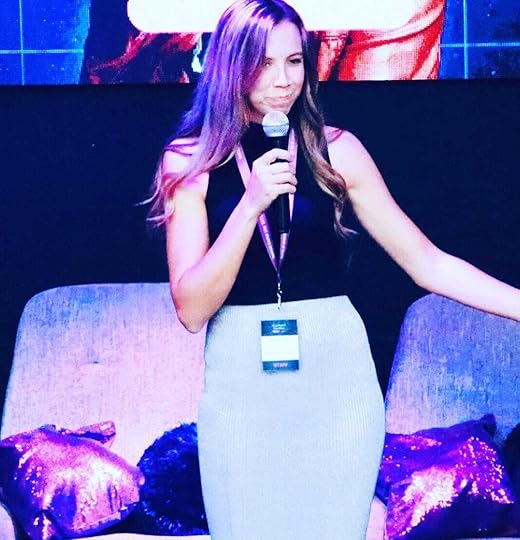
The conference I hosted was Content Hacker Live.
Back in 2019, I trademarked Content Hacker and bought the domain.
To me, it embodied content built for growth and traction.
I’d spent the previous 8 years selling, building, and training writers how to create content that, well, grew a business.
Back then, Backlinko and Semrush did some studies on content usage that shocked me.
97% of content created goes unused. And another 97% of content that gets published gets NO traction. Not a single backlink or ranking or share.
As an experienced writer, content built for growth was my middle name.
Content Hacker FIT me like a glove.
All my social profiles said — “Julia, Content Hacker.”
That positioning caught the eye of Fortune 500s that needed a fresh take on their stale content.
I came in and was paid to train them. Spent hours conducting workshops.
And when we unrolled Content Hacker Live, my vision for Content Hacker truly turned into Content Hackers.
It wouldn’t be possible without the founder and team at Content at Scale.
I got to celebrate and host a room full of folks getting together around the future of content marketing and AI.
We had some incredible speakers: Matt Wolfe, Elena Cardone, Lisa Colegrove Copeland, Jeff J Hunter, Mark de Grasse, Stephanie Nivinskus, Chris Kirksey, Alicia Lyttle, Jeff Joyce, Owen Hemsath, Apryl Beverly, Alexander Rodriguez, Jordache Johnson.
We tackled the future of AI and content and we taught our attendees how to WIN.
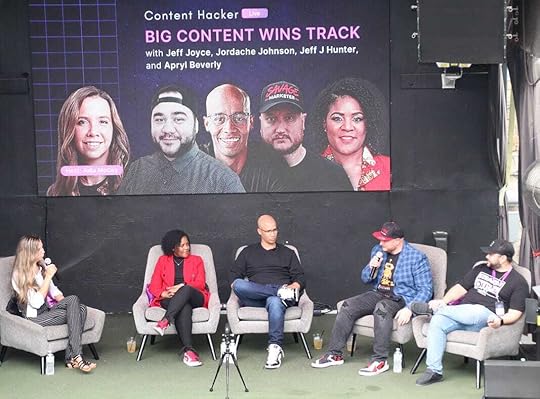
Facts, friends:
You gotta DO the thing to LEARN the thing.
I’ve never ran my own conference before. This was the first.
There are times in life when you take on what feels like something FAR beyond you, you do it anyway… and you walk away learning more than you’ve ever learned.
That was Content Hacker Live ’24 for me, which I hosted on March 15, 2024, right at the back of SXSW in the heart of downtown Austin, Texas.
We sold 200 tickets, had a few sponsors, and a bunch of SXSW walk-ins.
I did it through nearly 50 different emails spread throughout campaigns which I wrote/scheduled and published in sequences to our list of roughly 60,000 recipients.
I started this in Q4 of 2023, so barely 7 months before the event (note: start earlier next time–we got a lot of folks that said “if only I knew sooner, I would have planned for travel”).
The majority of purchases came from a small list of less than 5,000 — people that had been on my personal newsletter list at Content Hacker. The trust factor was the highest there.
John Doherty was our main sponsor — an ideal one. He’s incredibly wise, could speak to so many things with knowledge, and is implementing the AIO approach at EditorNinja.
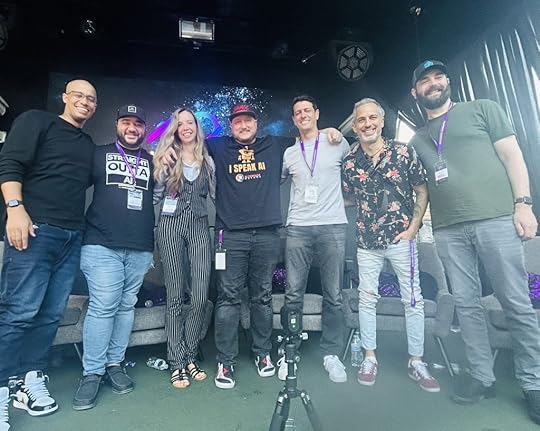 Top 5 Lessons From Hosting My Own Conference CHL, Good and Bad:Gather the right folks around you. On our own, we can only go so far. But with the right people to give us the rocket pad launch we all need (support, encouragement, love, backing, skills/smarts we miss, advice) we go 10x further.Get offline and IRL more. You make much, much more impact in person than you ever do online. Likewise, you receive much, much more inspiration in person than you do online. We saw this all throughout that bomb conference day.Being in other communities is a HUGE win. 50–60% of the people there were from other communities I’ve helped (not paid).Email works. LOTS of email reminders were the main reason we sold tickets (but I know this from 10 years of content): outside of the communities, the other 50% of ticket holders were from 50+ emails I sent.Profitability is important. We were not profitable with this one. We would’ve been profitable AND had the same amount of folks if we didn’t hire the celebs (that alone ran us $53k+, and no ticket sales from their mentions). I didn’t plan for a profitable conference as much as I planned for “big names…” but those big names didn’t bring us a single ticket holder! Lesson learned.
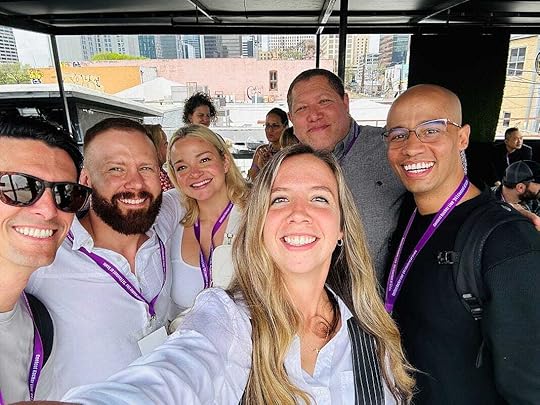
You will make the ROI on those types of speakers. For example, my friend Jeff J Hunter is what I’d call a MEGA micro-influencer. (Micro = not in the six-figure YouTuber or 10–100M Insta followers.) Jeff brought us over a dozen HIGH-value folks AND was there with us on the ground the whole time.
2. Folks That Have Built and Monetized Real Skills Are Stage Winners.Real skills. Real methodologies to speak to. And that’s why I was blown away by Mark de Grasse, Owen Hemsath, Chris Kirksey, Stephanie Nivinskus, Alexander Rodriguez, Alicia Lyttle, Jordache Johnson, and Apryl Beverly.
It was an honor to have them on our stage and they crushed it – every one of them. They are the real deal.
Guess who stayed, networked, and even brought paying ticket holders? Not Elena Cardone. These folks.
3. Live Events Create Incredible Fans.People were promoting Content at Scale to other people. Asking “Why the hell are you not a customer already?”
I’ve never seen the comradery, respect, and attention for a brand like what I saw on the ground at our event.
Also, I work with the right team & an amazing founder.
We couldn’t get our CEO, Justin McGill, on stage. I had him slated for the end after a corny but AWESOME video prank, and he got out of it almost entirely.
But the fact that he stood back and let his team shine, when he’s the inventor of the AI that generates undetectable content … earned mad respect from all.
Plus my podcast co-host, Jeff Joyce, and I launched a new podcast on the LIVE FLOOR – Humanity Unchained. That was cool.
Big shoutout to our Content at Scale team for all the help.
And to the attendees — you mean more than you know. You there made it 10x better.
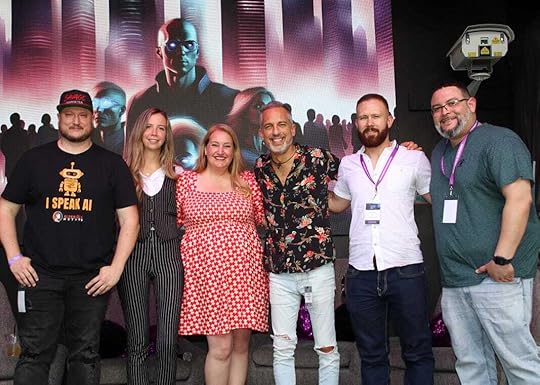
Not the way I did this one, no.
I would not singlehandedly run a conference ever again. 
It put us in a money hole, took all my vision and capabilities away for weeks (truly, I was dead), and was not worth the work involved.
Would I do it again if we were a $10M company and could hire a team?
Yes. Absolutely.
In the meantime, I will be running smaller local (Arizona) get-togethers and meetups, and attending/speaking at others. I think that is a win, much more than hosting your own.
For more unconventional takes, see Julia’s latest and greatest on YouTube.
The post 5 Lessons from Hosting My Own Event, Content Hacker Live, March 2024 appeared first on Content Hacker.
July 15, 2024
Will Humans Merge With AI?
Ray Kurzweil, a prominent futurist, inventor, and author, has made some pretty bold predictions about artificial intelligence (AI) and the singularity.
In his book “The Singularity is Near” (2005) and its more recent sequel, “The Singularity is Nearer” (2024), Kurzweil lays out a roadmap of technological advancements he believes will lead us to this singularity.
It’s not just about fancy gadgets or faster internet — Kurzweil’s vision touches upon profound concepts like consciousness, human longevity, and the very nature of reality.
Decoding Ray Kurzweil Singularity Predictions
The heart of Kurzweil’s argument lies in his concept of the “Law of Accelerating Returns”. This law, rooted in Moore’s Law, proposes that technological progress isn’t linear but rather exponential.
We’ve already witnessed this in action. Think about the jump from clunky computers taking up entire rooms to the sleek, powerful smartphones we carry in our pockets.
Artificial General Intelligence (AGI) by 2029A cornerstone of Ray Kurzweil singularity predictions is the emergence of Artificial General Intelligence (AGI).
Unlike today’s AI, which excels in specific tasks, AGI would possess human-level intelligence across a broad spectrum of domains.
Think of it as an AI capable of not only mastering complex games like chess or Go, but also composing symphonies, writing screenplays, or even conducting scientific research.
All this while understanding and responding to human emotions and motivations.
Kurzweil predicted that by 2029, a computer program will pass the Turing Test. This means it will be indistinguishable from a human being in a conversation.
The Singularity: Merging with Machines by 2045Kurzweil envisions the singularity as the point when AI surpasses human intelligence, not just in processing power but in creativity, emotional understanding, and problem-solving.
By 2045, he predicts, we’ll see the lines between humans and machines begin to blur. This merging of human biology with non-biological intelligence will open doors to unimaginable possibilities. This could potentially allow us to transcend our biological limitations and achieve longevity.
Nanotechnology and Biotechnology: Redefining Human CapabilitiesCentral to Ray Kurzweil’s singularity predictions is the transformative potential of nanotechnology and biotechnology.
Imagine microscopic robots, or nanobots, flowing through our bloodstream. They could repair damaged cells, eradicate diseases at their root, and enhance our physical and cognitive abilities.
It might sound like science fiction but research into these fields is advancing rapidly. The blueprints for robotic red blood cells, eliminating the need for us to constantly breathe, already exist.
The Epochs of Evolution: From the Big Bang to the SingularityKurzweil’s view of technological progress unfolds across six distinct epochs:
Physics and Chemistry: The Big Bang marks the beginning of the universe and the formation of matter.Biology and DNA: Life emerges on Earth, evolving from single-celled organisms to complex life forms. Brains: The evolution of the brain gives rise to complex thought, language, and consciousness.Technology: Humans develop tools, technologies, and societies, shaping their environment and transcending their biological limitations.Merger of Technology and Human Intelligence: Biological and non-biological intelligence converge, augmenting human capabilities and expanding our understanding of the universe.The Universe Wakes Up: Intelligence pervades the universe, transforming matter and energy into a substrate for computation and consciousness.Kurzweil argues that we are currently in the fourth epoch, standing on the cusp of a profound transformation. He says we are moving into the fifth and eventually the sixth epoch with the arrival of the technological singularity.
Debates and Criticisms of Ray Kurzweil’s Singularity PredictionsIt’s important to note that Ray Kurzweil’s singularity predictions, while intriguing and thought-provoking, have their share of critics.
One major point of contention is the feasibility of achieving AGI within Kurzweil’s proposed timeframe. Skeptics argue that the complexity of human consciousness and our understanding of the brain itself remains limited. They say that replicating such intricate processes in machines might prove far more challenging than Kurzweil anticipates.
Others voice ethical concerns about a future dominated by super-intelligent machines. Questions arise about job displacement, economic inequality, and even the very nature of human purpose in a world where AI outperforms us in virtually every aspect.
Despite these valid concerns, it’s hard to deny the impact Kurzweil’s ideas have had on discussions surrounding AI and the future of humanity. The technology we have available today would have astounded us just a few decades ago. It is through exponential technological advancements that Kurzweil believes we are on the path toward the singularity.
ConclusionRay Kurzweil singularity predictions may seem like something out of a science fiction novel. But beneath the surface of these futuristic visions lies a call to action.
By embracing the potential of technology while thoughtfully addressing its ethical and societal implications, we can work toward a future where AI complements and enhances our lives in a meaningful way.
The post Will Humans Merge With AI? appeared first on Content Hacker.
July 10, 2024
Is AI Content Plagiarism? Legal Insights for Creators
The rise of sophisticated AI writing tools has brought the question “Is AI content plagiarism” front and center in classrooms and content marketing meetings around the world.
These advanced programs can generate human-quality text in seconds, forcing everyone to reconsider just how original “original content” really needs to be.
 Table Of Contents:The Blurred Lines of AI-Generated ContentThe Legal Landscape of AI and Copyright InfringementIs AI Content Plagiarism in Academia?Content Marketers and AIEthical Implications of AI in Content CreationHow to Use AI Responsibly in Content CreationThe Future of AI Content CreationConclusionThe Blurred Lines of AI-Generated Content
The very nature of AI makes the question of plagiarism tough to answer. It all comes down to intent and execution, which can be a fuzzy area.
Plagiarism is when someone passes off someone else’s ideas or words as their own to deceive their audience. Since the very definition of plagiarism focuses on the intent of the person creating content, this automatically raises serious questions about whether content can be plagiarized if a robot writes it.
How AI Writing Tools WorkThese tools are built on Large Language Models (LLM), a type of AI that utilizes deep learning algorithms.
These algorithms allow programs to analyze enormous text and code data sets, learning how to mimic various writing styles.
The more data it’s fed, the better it becomes at generating grammatically correct and seemingly original content.
That being said, these impressive language models are still just very sophisticated imitators.
You could ask a tool like ChatGPT to “write an essay about Shakespeare” and it will quickly produce something semi-coherent and factually accurate.
What it won’t do, however, is understand the true nuances of Shakespeare’s writing and produce something totally unique from its training data.
This begs the question – is AI content plagiarism if the program itself isn’t intentionally deceiving anyone?
Why Intent MattersImagine a student using an AI tool to write a research paper. They feed the program a few prompts, and it produces an essay full of facts.
The problem is that those facts aren’t cited. Even if they were, it still isn’t the student’s original thoughts or insights.
While this seems like a no-brainer plagiarism case, things become much murkier in content marketing.
Publications like The Washington Post and the Associated Press have been using AI programs for years. They might use artificial intelligence to create data-driven content about the Olympics and finance – content that wouldn’t be considered plagiarism because there was no ill intent to pass the AI’s work off as a human’s work.
The Legal Landscape of AI and Copyright InfringementSince most cases of plagiarism happen in the education system, they are subject to a school’s code of conduct.
Plagiarism isn’t illegal in the United States, although you’d be hard-pressed to find a lawyer willing to defend someone for claiming a piece of AI content as their own.
As far as corporate law goes, the judicial system is playing catch-up. Some court cases are paving the way, giving us all some insights into how AI content might be viewed from a legal standpoint.
Read here for the US Copyright Office’s statement of policy on AI-generated content.
In early 2024, OpenAI, the creators of ChatGPT, along with tech giant, Microsoft, got embroiled in several copyright infringement cases alleging that ChatGPT pulled entire sections directly from publications like The New York Times.
They included 100 examples of ChatGPT “generating” responses nearly identical to New York Times articles.
These high-profile legal battles, combined with other legal cases about generative AI art programs allegedly using images without permission, may completely shape how companies think about copyright, authorship, and fair use.
Is AI Content Plagiarism in Academia?Whether or not AI content is considered plagiarism depends on the policy set by the learning institution.
Even though it is a gray area, most institutions side with the use of AI in essay writing as a form of plagiarism.
A great example is that of the USF Academic Integrity Policy. It states that using AI in the absence of consent by an instructor for assignments or an entire thesis committee is strictly forbidden.
They believe in emphasizing the student’s originality and discouraging any lack of effort and regard to the academic standards.
Artificial intelligence is evolving faster than we can update our ethics manuals. That being said, plagiarism in AI content has become a key discussion point among AI leaders in education and research.
Chris Caren, who runs the popular plagiarism checker Turnitin, believes there’s room for AI in the classroom. However, he is hesitant to create hard-and-fast rules until there’s been enough data and time to adequately assess the risks and potential benefits.
Because of AI’s ability to pull data from a wide range of online sources, this could include incorrect information or flat-out lies from untrustworthy sites.
Content Marketers and AIIn content marketing, “Is AI content plagiarism” is now a phrase uttered more than anyone wants to admit.
Writers, publishers, editors, and content marketers are all left trying to balance how they can incorporate AI to increase their productivity without crossing any lines or ending up on the receiving end of a lawsuit or cease-and-desist order.
Think about how easy it is to use AI. With only a few prompts or even just keywords, the AI program of your choice can write content at a pace no human could.
You could theoretically create dozens of articles in a few hours – something many brands and publications worried might tank Google rankings because the text lacked genuine, human expertise.
That’s where Google’s helpful content algorithm update comes in – a topic causing quite the buzz lately in the world of AI and SEO.
Is AI-Generated Content Considered Helpful by Google?Although no one but Google knows exactly how their mysterious algorithm works, experts and academic researchers agree on a few things.
The consensus is that Google strives to provide valuable content from authoritative voices and credible experts. Google will likely be focusing heavily on E-E-A-T – experience, expertise, authoritativeness, and trustworthiness.
Google has invested heavily in tools to help ensure the information it’s serving is top-notch. Just like how schools are adopting a wide range of AI plagiarism checkers and detection programs to keep content original, so is the marketing world.
Tools such as Content at Scale’s Plagiarism Checker along with Content at Scale’s AI Detector are helping keep things as honest as possible.
This is important especially as concerns about accuracy, fair use, and authorship remain uncertain.
Ethical Implications of AI in Content CreationBeyond the legal gray areas, using AI for content creation presents significant ethical dilemmas.
At its core, content marketing thrives on authenticity, creativity, and the unique perspective of the human mind. The influx of AI content challenges these very principles, threatening to dilute the value of genuine human expression.
Consider this: if numerous companies utilize similar AI algorithms, this will flood the Internet with repetitive, unoriginal material that lacks the unique perspective users crave.
How can businesses differentiate their brand voice and provide valuable content when machines can churn out generic content at an unprecedented scale?
Furthermore, the rise of AI-generated content calls into question the very essence of authorship.
A writer’s voice, their distinct style, is integral to their identity. If AI can effectively mimic these individualistic traits, it undermines the uniqueness and personal touch that draw readers to specific content creators.
How to Use AI Responsibly in Content CreationThe rise of AI presents exciting opportunities for content marketers. AI tools can help generate ideas, refine content, and even write full drafts.
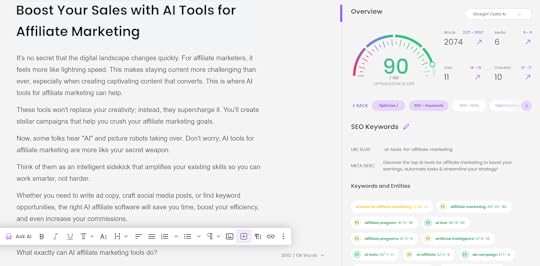
Just look at this publish-ready blog post I generated from Content at Scale’s RankWell long-form writer in under 3 minutes:
However, it’s crucial to approach AI content creation ethically and responsibly.
Here’s how to leverage AI’s power while maintaining ethical content creation practices:
Prioritize TransparencyTransparency is paramount when using AI in content creation.
Clearly disclose to your audience any AI involvement. This fosters trust and allows readers to understand how you create content.
Consider including a section in your content style guide that outlines your approach to AI and transparency. You can even link to articles about AI content detection tools to further demonstrate your commitment to ethical practices.
Embrace AI as a Collaborative PartnerView AI as a valuable assistant in your content creation process, not as a replacement for human writers. Leverage AI to streamline tasks like:
Generating topic ideas and outlinesConducting keyword researchImproving readability and clarityChecking for plagiarismBy focusing on AI’s strengths as a collaborative tool, you can enhance your content creation workflow without sacrificing originality or authenticity.
Remember, the human touch remains essential for crafting compelling narratives, injecting creativity, and connecting with your audience on an emotional level.
The Future of AI Content CreationWith lawsuits being filed every few months, it’s a tense time to be a writer or a brand.
Although the dust hasn’t settled yet about the legalities of content produced through artificial intelligence, one thing’s certain: this new technology will change the face of how everyone, from bloggers to students to book publishers, thinks about their craft.
ConclusionSo, is AI content plagiarism?
AI-generated content definitely has its perks, making things faster and even sparking new ideas. But it’s also a bit tricky when it comes to issues like plagiarism.
Since AI pulls from a vast pool of existing data, there’s a risk of unintentionally copying ideas or phrases. So, it’s super important to double-check and tweak AI content to make sure it’s original and ethical.
Ultimately it’s up to humans to inject that content with experience and authority – two qualities robots haven’t mastered yet.
The post Test Humanlike Writer appeared first on Content Hacker.
How to Start Writing a Story: A Beginner’s Guide
Learning how to start writing a story, whether you dream of being a novelist or simply want to entertain friends with anecdotes, can feel daunting.
One crucial thing to remember is you don’t have to start at the beginning. You can begin writing at any point that compels you. Some writers prefer to let the story unfold organically, writing whatever scene pops into their mind. Others prefer to outline plot points first.
There’s no “right” way to start writing a story.
This guide will discuss how to begin in a way that hooks your reader from the first sentence and leaves them wanting more.
We’ll cover techniques for developing your ideas, crafting an engaging opening, and building a world that captivates your readers.

Before you even think about writing the first line, you need a story idea.
Finding inspiration is easier than you think. It can be found anywhere – from personal experiences and observations to news stories, historical events, or even writing prompts.
Seeking InspirationActively seeking inspiration can unlock creative writing ideas.
Thinkwritten, for example, offers 365 creative prompts. Work your way through them and see what sparks your imagination.
Pick up a newspaper or magazine and see if any interesting reports grab your attention. Maybe an intriguing crime sparks an idea for a mystery, or a human-interest piece inspires a heart-warming drama.
Browse visually-driven platforms like Pinterest and Instagram for striking photographs that could become the catalyst for your next masterpiece.
Consider joining a writing group for feedback and to workshop your story ideas.

The real trick to writing a good story is knowing which ingredients to include. While a simple recipe for success doesn’t exist, you can employ a few helpful strategies to write a captivating opening.
Hook the ReaderIn an age of short attention spans, it’s more important than ever to hook the reader from the first line.
Make them laugh, make them gasp, make them wonder — just make sure you make them want to continue reading.
Your opening sentence sets the stage. Don’t be afraid to surprise your reader by starting with the unexpected.
For example, take a look at how these authors hooked their readers:
Author/TitleOpening Sentence/ExcerptWhy it WorksMostly Monsterly by Tammi SauerBernadette was a good monster.The use of a name immediately introduces us to a character (in this case, Bernadette). The fact that Bernadette is a monster piques our interest – what kind of monster is Bernadette, and in what ways is she “good?”Bubble Troubleby Margaret MahyIt was one of those days.While this sentence initially seems quite simple, it implies that the reader understands exactly what kind of day the narrator is having. This shared understanding draws the reader in, instantly creating a feeling of camaraderie and familiarity.Magic Box by Katie CleminsonI found a magic box.Instantly, the reader wonders, “What’s in the box?” It’s a classic storytelling technique that piques curiosity from the very start.Spark CuriosityMany editors recommend sparking curiosity in the reader. This can be done by asking (or subtly implying) questions that keep them hooked.
Try prompting your readers to ask questions like:
Where are we?Why are these characters here?What is going to happen next?Who is involved?The Element of SurpriseSometimes starting a story in an unpredictable way can captivate readers. If the reader expects you to zig but you zag, you’ve grabbed their attention.
Literary editor Gareth Watkins often encourages writers to embrace the unusual.
Think of the opening to ‘Nineteen Eighty-Four’, or Iain Banks’s ‘The Crow Road’.
Of course, your opening doesn’t have to be as outrageous as these but always aim for the unusual.
Think about what readers might anticipate at the beginning of your book – then defy those expectations.
The Power of ImageryHarrison Demchick, an editor with Reedsy, believes strongly in starting with evocative imagery rather than an info dump. By using sensory details that paint a picture for the reader, you instantly draw them into the scene.
Smell, touch, taste, sound, and sight can be implemented effectively to write short stories or long ones.
Plotting Your StoryEvery writer approaches story ideas differently. Some writers meticulously plot every scene, crafting a detailed outline before they begin. Others are discovery writers, letting the story unfold organically as they write.
There is no right or wrong way, only what works best for you.
If you’re new to writing stories, consider starting with a loose plot outline. This doesn’t need to be overly complex. A simple framework can provide direction and help you stay on track.
Think of it as a roadmap with key milestones that move your story forward. As you become more comfortable with the process, you can experiment with different outlining techniques or embrace the freedom of discovery writing.
Whether you meticulously plot or let your creativity guide you, a compelling plot hinges on progress and fulfilling reader expectations. Early in your story, you make subtle promises to your reader, hinting at what’s to come. The events that unfold should build upon these promises, leading to a satisfying conclusion that delivers on the expectations you’ve set.
Consider these key elements as you plot your story:
Premise: What is the central idea or conflict driving your story?Character Arc: How will your main character change or evolve throughout the story?Obstacles: What challenges will your characters face, both internal and external?Stakes: What is at risk for your characters? What motivates them to overcome these obstacles?Resolution: How will the central conflict be resolved? Will your characters achieve their goals, or will they face unforeseen consequences?Plotting your story effectively ensures your narrative has a clear direction, engaging conflict, and ultimately, a satisfying resolution for the reader.
Writing Your Opening LineEntrepreneurs, founders, business owners, marketers – you know the power of a good story. Your audience is savvy, your time is precious, and that opening line needs to hook them from the get-go.
Don’t Aim for Perfection, Aim for IntrigueThe pressure of a perfect opening line can be paralyzing. Think of it as a doorway into your story’s world – it doesn’t need to reveal everything, it just needs to entice them to step inside.
Consider these approaches:
Start with action: Plunge your reader directly into the heart of the story. Think “The rain hammered down” or “She sprinted through the market square.”Introduce a compelling character: “The old woman with emerald eyes always knew when a storm was coming.” Instantly, we want to know more about this woman and her gift.Pose a question: “Have you ever wondered what lies at the bottom of the whispering well?” Questions invite engagement and encourage the reader to embark on a journey for answers.Remember, the power of your opening line lies in its ability to create intrigue and compel your audience to keep reading. Experiment, trust your voice, and most importantly, have fun with it!
Starting In Medias ResThe Latin term in medias res means “in the midst of things,” and it’s often used to describe stories that begin right in the middle of the action.
Starting a story in media res is an effective way to establish tension and stakes in the first page.
But remember, you still have to introduce your readers to the main characters and setting. Editor Jeanette Shaw cautions writers that “If you go this route, you must be sure your opening action is compelling enough that the reader is prepared to wait for character setup later.”
Take a look at this excellent example from “Lord of the Flies”, a classic example of how to start writing a story in medias res:
“The boy with fair hair lowered himself down the last few feet of rock and began to pick his way toward the lagoon. Though he had taken off his school sweater and trailed it now from one hand, his grey shirt stuck to him, and his hair was plastered to his forehead.”
Readers get an immediate feel for the setting – a lagoon on what we assume is a very hot day – and the physical description helps establish the boy as someone we can picture.
Still, we want to know more about this boy, and why he’s trailing his sweater.
Honing Your CraftOnce you’ve gotten into the habit of writing stories, it’s a good idea to learn a thing or two from others.
Evening classes and workshops offer a fantastic way to learn, socialize with other writers, and get feedback.
The Open University offers a great deal of flexibility for people seeking more structured learning. This is a great way to practice writing dialogue and other important elements of storytelling.
Character DevelopmentThink back on the last time you got invested in a great story. Chances are, you felt connected to the main characters. The good news is that there are a plethora of techniques writers use to craft three-dimensional characters.
You’re probably already familiar with the classic character dossier. A character dossier is a collection of details and insights that help flesh out your characters.
Some elements commonly found in a character dossier are physical attributes, backstories, wants and needs, fears and flaws, and relationships.
This kind of deep character work is what separates caricature from true character development.
Author Libbie Hawker wrote an insightful book about using characters to create compelling plots. Knowing how to create an interesting character is just as important as knowing how to start writing a story.
Putting it all Together: Final TipsStarting a story is just the beginning of what’s sure to be an amazing journey.
Although figuring out how to start writing a story can sometimes feel more intimidating than putting pen to paper, remember these key things:
Use trigger phrases and vivid language that resonates with readers. By making your story relatable, you create an instant connection.Include lots of visual elements. Readers want to feel like they’re stepping inside the story.Think carefully about introducing characters. Avoid crowding the reader with too many characters from the outset; stick with a select few whose presence will move the plot forward.Don’t be afraid to deviate from the norm. Rather than sticking to mundane activities in your first sentence, try something a little more unexpected.Most importantly: Don’t be afraid to experiment, play with different styles, and ultimately, find the approach that best serves your story.ConclusionFiguring out how to start writing a story might feel difficult, but always keep this in mind – it’s much easier to start writing when you remember to have fun with the process.
Try not to get bogged down by self-doubt or pressure, and always remember that writing should be enjoyable.
Write because you love to write – the rest will follow.
The post Get Premium Content appeared first on Content Hacker.
July 8, 2024
Universal Basic Income: Will It Solve AI Job Disruption?
Could providing a universal basic income really work?
For centuries, the concept of universal basic income (UBI) has been debated and dismissed as a utopian fantasy. But as we enter an era of unprecedented technological advancement, could UBI be the answer to the looming threat of widespread job displacement?
Let’s explore the fascinating history of universal basic income, examine the potential benefits and drawbacks, and consider whether it could be a viable solution for a future transformed by automation.
A Look Back at Universal Basic Income
Believe it or not, the idea of universal basic income is far from new. The first whispers of UBI can be traced back to the 16th century. Thomas More, a renowned English lawyer and social philosopher, introduced the concept in his book “Utopia” in 1516, proposing a world where everyone had access to the resources needed for a decent standard of living.
Later, in 1797, American visionary Thomas Paine, in his renowned pamphlet “Agrarian Justice”, advocated for universal basic income as a form of social security to address the inequality arising from private land ownership. Paine believed that a basic income would compensate for losing access to natural resources that land ownership created.
Early UBI Experiments: From Success to SabotageFast forward to the 20th century and the idea of a guaranteed income plan started to gain traction. Economists and social reformers saw it as a way to create a more equitable society.
In the 1960s and 70s, the U.S. and Canada launched a series of UBI pilot projects, hoping to study its real-world impacts. One notable experiment took place in Manitoba, Canada, known as “Mincome.”
The Mincome experiment revealed some surprising and encouraging results. The program led to a notable decrease in hospital visits and improvements in mental well-being among recipients. It also showed increased school attendance rates, suggesting that financial stability allows families to prioritize education.
However, not all UBI trials have been portrayed accurately. In the 1970s, President Nixon championed a form of basic income with his proposed Family Assistance Plan (FAP). While initially designed as a true UBI program, political maneuvering resulted in the addition of work requirements. Ultimately, these compromises contributed to the bill’s failure to pass, leading to our current complex and often criticized welfare system.
Another significant example of misrepresented UBI results comes from 18th-century England. The Speenhamland system, an early form of basic income implemented in Speenhamland, England, was deemed a failure due to biased reporting.
While official accounts blamed the program for increased poverty and idleness, later investigations revealed that these findings were misleading and based on incomplete data. Sadly, the flawed Speenhamland system has been used repeatedly to discredit the concept of UBI, despite evidence to the contrary.
Could Universal Basic Income Work Today?The question remains, in a world hurtling toward an automated future, can we afford not to reconsider universal basic income? The rise of artificial intelligence and automation is poised to revolutionize the labor market, potentially leaving millions without traditional jobs.
As machines become increasingly capable of performing tasks once thought exclusive to humans, it is critical to consider alternative economic models.
Universal basic income could offer a safety net. By ensuring everyone has a baseline income, UBI could potentially mitigate the social and economic upheaval of mass job displacement.
Some argue that UBI could stifle motivation, leading people to become reliant on government assistance. However, many UBI advocates point to the evidence suggesting otherwise.
Studies have shown that people who receive a basic income are no less likely to work. In fact, some studies suggest that UBI can lead to entrepreneurialism, with individuals using their basic income to start businesses or pursue education.
Economist Milton Friedman even supported a version of basic income in the form of a negative income tax.
The Future of Work and the Potential of UBIThe concept of universal basic income has sparked global debate. While some view it as a necessary adaptation to a changing world, others remain skeptical. Exploring the potential benefits and drawbacks of UBI in an informed and nuanced way is essential to envisioning a future where technology serves humanity, not the other way around.
As we face a future of work potentially reshaped by automation, it’s crucial to consider how a universal basic income might impact various aspects of society.
Here are some potential benefits and drawbacks:
Potential Benefits of UBI:Poverty Reduction: UBI could provide a safety net, ensuring a minimum income for all citizens and potentially lifting millions out of poverty.Reduced Income Inequality: By providing everyone with a basic income, UBI could help bridge the gap between the rich and poor, fostering greater economic equality.Improved Health Outcomes: Studies, like the Mincome experiment, have shown that basic income can lead to better health outcomes, likely due to reduced stress and improved access to healthcare.Increased Entrepreneurship: With a financial cushion, individuals may be more likely to take risks and start their own businesses, potentially boosting the economy.Greater Educational Attainment: UBI could enable people to invest in their education and skills training, leading to a more skilled workforce.Potential Drawbacks of UBI:Cost: Implementing a universal basic income program would require significant government spending, potentially leading to higher taxes or cuts in other social programs.Inflation: A sudden influx of cash into the economy could lead to inflation, reducing the purchasing power of the basic income over time.Job Market Effects: There’s debate about how UBI might affect the job market. Some worry it could disincentivize work, leading to labor shortages. Others argue it could empower workers to negotiate for better wages and working conditions.Implementation Challenges: Determining the appropriate level of basic income and setting up an effective distribution system would be complex and potentially prone to errors or abuse.Political Feasibility: Gaining political support for such a significant policy change would be challenging, as it requires a fundamental shift in thinking about the role of government in providing for its citizens.ConclusionAs artificial intelligence and automation transform the very fabric of work, exploring solutions that prioritize human well-being becomes paramount.
Could universal basic income be the answer?
The evidence, though debated, points toward a potential future where a guaranteed basic income not only protects against economic turmoil but unlocks human potential and drives innovation.
As we venture further into uncharted territory, considering the role of UBI in shaping a more just and equitable future is no longer a luxury but a necessity.
The post Universal Basic Income: Will It Solve AI Job Disruption? appeared first on Content Hacker.
July 4, 2024
How Long Should a Writing Sample Be? Your Guide for 2024
So, you’re getting ready to hit “submit” on that job application, but wait – they want a writing sample.
Panic sets in. Should you unearth that research paper from college? Quickly draft a new piece?
And just how long should a writing sample be, anyway?
Figuring out the ideal writing sample length can be confusing. This guide will cover everything from choosing the right sample to formatting it perfectly so you can showcase your writing skills and impress potential employers.
Table Of Contents:Why Writing Samples MatterFinding the Right Length for Your Writing SampleGeneral GuidelinesAlways Check the Specific InstructionsFactors that Might Warrant a Slightly Longer SampleTypes of Writing Samples (and What to Choose)1. Academic Papers (Undergraduates, Recent Graduates)2. Professional Writing Samples (Experienced Professionals)3. Tailored Samples (No Directly Relevant Pieces? No Problem.)Additional Tips:ConclusionWhy Writing Samples MatterBefore we dive into length, it’s important to understand why employers ask for writing samples. Essentially, they want to see firsthand how well you communicate.
They want to see how you:
Organize your thoughts.Articulate your ideas.Express yourself clearly and concisely.Match the company’s tone and style.Your writing sample acts like a mini-portfolio. It helps them look beyond your resume to see if you have the writing chops they need.
Now, let’s figure out how long a writing sample should be to make the best possible impression.
Finding the Right Length for Your Writing SampleUnfortunately, there’s no magical word count that guarantees you the job. But you can follow some general guidelines to hit that sweet spot.
Keep in mind your writing sample should be concise and impactful.
General GuidelinesMost career experts and university resources, like this one from Miami University, recommend aiming for 1-2 pages, single-spaced, or approximately 750 words, as a starting point.
Recruiters and hiring managers are busy people. A shorter, punchier sample that grabs their attention is better than a 10-page saga that loses steam halfway through.
Think quality over quantity.
Always Check Specific InstructionsThis one is crucial. Before you start panicking about page counts, check if the application provides specific guidelines for writing sample length.
Some employers may ask for:
A specific word count range.A certain number of pages.Short snippets or “clips” of your work. This is common in journalism or content writing, where they’ll want to see published pieces.Not following directions is a quick way to get your application tossed aside so read those instructions carefully.
Factors that Might Warrant a Slightly Longer SampleWhile brevity is key, there are a few scenarios where a slightly longer writing sample (think up to 3 pages max) might be warranted:
Highly Technical Fields: If you’re applying for a research-heavy role in academia, science, or engineering, you might need a more in-depth analysis to fully demonstrate your skills. Consider using excerpts from a research paper with a professor’s comments for these roles.Legal Professions: Legal writing is known for being long and detailed. If you’re applying for a legal position, a longer sample is often expected, usually between 5-10 pages. Show off your legal research, analysis, and persuasive writing abilities.Providing Excerpts: Let’s say you really want to include that stellar 10-page marketing plan from your previous role. If a longer sample aligns better, you can select a specific section of a larger piece. However, you must give context. Include a brief introduction explaining the larger work, where the excerpt fits in, and why it demonstrates your relevant skills.Make sure your sample is a focused demonstration of your abilities, no matter the length. Unless it’s explicitly requested – err on the side of concise.
Showcasing quality and keeping your audience engaged is always best when deciding how long a writing sample should be.
Types of Writing Samples (and What to Choose)Now that you have a better sense of the ideal writing sample length, what should you submit?
This largely depends on your industry and the specific role you’re applying for.
Some common types of writing samples include:
1. Academic Papers (Undergraduates, Recent Graduates)Don’t panic if you’re fresh out of college; it’s perfectly acceptable to use a class assignment. But remember, not all assignments are created equal. Try to select papers with:
Strong research and analytical skills.A clear argument or thesis.Well-structured paragraphs.Proper grammar and mechanics.Even “B” papers can be strong contenders if you revise and polish them. Make sure you provide clean copies of your work.
2. Professional Writing Samples (Experienced Professionals)For those with more work experience, tap into projects from your previous roles. Aim to share writing samples relevant to the job description.
Here are some common examples:
Blog Posts: These show you can write engaging and informative content for a specific audience. If using a personal blog, make sure the tone and subject matter are professional.Marketing Materials: Flyers, brochures, web copy, or email campaigns all demonstrate your marketing communication abilities. Choose samples that target the company’s desired customer base.Press Releases: Have a knack for crafting newsworthy announcements? This one’s for those targeting PR and communications roles.Technical Documentation: Reports, white papers, manuals – if your field is technical, use writing samples that show you can explain complex information clearly and concisely.Published Articles: Landing a gig in journalism or publishing? Include “clips” or samples of your published work. Aim for variety, showcasing different writing styles and tones, and provide links whenever possible.3. Tailored Samples (No Directly Relevant Pieces? No Problem.)Don’t sweat it if you don’t have the “perfect” sample. Use your creativity to bridge the gap. A tailored sample is a chance to impress.
I always recommend creating something from scratch directly related to the role or the company. This shows:
Genuine interest and initiative.You understand their work and the position.The ability to adapt your writing to their style.Let’s say you’re applying for a marketing role at a sustainable clothing company. You could write a blog post about the latest trends in eco-friendly fashion or a mock press release announcing a new product launch.
Get creative and have fun with it. Just make sure it aligns with the company’s brand and the job requirements.
Additional Tips:Proofread meticulously. Ensure your sample is free from any grammatical errors, typos, or formatting inconsistencies. Avoid errors to make sure your writing is polished and professional.Present your work in a clean and professional format. Use a standard font, consistent spacing, and your name on every page.When sending electronically, submit your sample in PDF format to maintain formatting consistency across different devices and operating systems.ConclusionDetermining how long a writing sample should be is a common concern for job seekers. By carefully considering your industry, the specific role, and the application guidelines, you can choose a length that effectively highlights your abilities without overwhelming the reader.
Keep these guidelines in mind and you’ll be well on your way to crafting the perfect writing sample.
Choose wisely, tailor your sample, keep it concise (in most cases), and always proofread.
The post Get Premium Content appeared first on Content Hacker.
July 3, 2024
What Is Sample Writing? A Guide for Job Seekers
A lot of people ask me, “what is sample writing?”
It seems like a simple question but in my experience, it’s really something that can make or break your job search.
Think of sample writing as your way of showcasing your amazing ability to convey ideas, stories, and information in a way that resonates with readers.
It’s like offering a sneak peek into your writing brain, giving potential employers or clients a taste of your writing style, skills, and work experience.
In today’s post, we’ll explore the different types of writing samples and how to create samples that capture attention and open doors.
Table Of Contents:Why Is a Writing Sample Important?Different Types of Writing Samples and When to Use ThemChoosing The Right Writing SampleHow to Write Stellar Writing SamplesShowcasing Your SamplesConclusionWhy Is a Writing Sample Important?From landing that dream writing job to wowing potential clients, having solid writing samples can often be what sets you apart from the competition.
But why are they so important, you ask?
1. They Offer Proof of Your Writing AbilitiesAnyone can say they’re a great writer, but a writing sample proves it. Your resume tells them you’re capable and your cover letter tries to show why you’re a good fit, but the perfect writing sample shows you can walk the walk.
2. They Provide a Window Into Your Writing StyleEvery writer has a different voice and your writing samples reveal yours. It allows potential employers or clients to get a sense of your tone, whether it’s formal, conversational, witty, or technical, and see if it aligns with what they’re looking for.
3. They Are Evidence of Your Expertise and ExperienceYour writing samples should showcase your grasp on a range of topics, styles, and formats, reflecting the depth and breadth of your skills and experience. By reading through a portfolio of different writing samples, someone can gain a deeper understanding of your abilities.
4. They Help Secure Freelance Gigs and Writing JobsFreelance writing gigs often require writing samples. It helps companies see if you’re the right person for the job because it gives a realistic representation of the quality they can expect.
Make sure the writing sample you submit is clean, well-written, and free of grammatical errors so you have the best chance of landing the job.
Different Types of Writing Samples and When to Use ThemJust like a good chef has a varied menu, you’ll want to have a portfolio filled with different writing styles. This helps you come prepared, no matter the situation.
Let’s take a look at a few.
Blog PostsBlog posts are one of the best ways to showcase your writing ability to any hiring manager or potential client. If you’re an expert at creating informative and engaging content that captures and keeps a reader’s attention – then you’ve got this nailed.
Most blog posts should be at least 300 words, but long-form blog posts perform better in search engines like Google, so keep that in mind when you submit writing samples to clients or use your blog posts as part of your writing portfolio.
Not yet into blogging? Learn how to start a blog and make money.
Social Media PostsSocial media posts showcase your ability to engage readers with very few words while also having a clear call to action. Make sure you understand the platform you are writing for because things like character count vary. Use that to your advantage when crafting the perfect post that includes relevant hashtags.
Website CopyWere you responsible for creating captivating website content?
Let’s face it, we all want higher conversion rates – show how your website copywriting did just that.
Pay attention to things like sentence structure and make sure the content flows — this will make it more enjoyable for your readers.
Press ReleaseWhile press releases are official public relations documents, you still want to find ways to make the company’s message shine. This proves your understanding of newsworthiness and your ability to follow journalistic standards.
Press releases are written in a specific format so make sure you fully understand the structure before sending one.
Case StudiesCase studies dive into a problem or challenge and present an effective solution, highlighting the value of a company, brand, or individual. It allows potential clients or hiring managers to get an idea of the kind of deep research you’re capable of.
When submitting case studies as part of your portfolio, share multiple case studies that showcase different industries and types of projects you have worked on.
Email CampaignsShow your magic when it comes to grabbing your audience’s attention right away with enticing email campaigns.
Don’t be afraid to showcase the higher open rates you’ve achieved as proof.
Include things like subject lines, calls to action, and a breakdown of the results you achieved in the past.
News ArticlesDo you possess the art of objective reporting while still captivating readers?
A well-structured, unbiased, and compelling news article speaks volumes about your writing.
Just like with press releases, news articles are written in a specific format so make sure to familiarize yourself with it.

So, how do you know what to submit as a sample?
When sending a writing sample, make sure it is a good representation of your work. This means that it should be free of any spelling errors, grammatical errors, and be formatted correctly.
Read The Instructions CarefullyBefore hitting “send” – did you double-check their requirements? Many companies outline specific types of writing samples and the ideal word count. This also shows the potential employer that you pay attention to instructions.
Be sure to submit the correct file format they are requesting.
RelevancePick samples relevant to the job. There are certain instances where you might need a writing sample from a school assignment. This could include a research paper you wrote that got a good grade.
Quality Over QuantityA well-chosen and thoroughly polished writing sample is more impactful than multiple mediocre samples.
A 750-word sample or shorter generally tends to work best.
How to Write Stellar Writing SamplesCreating exceptional writing samples that showcase your skills and expertise is essential. But sometimes getting started can feel a bit overwhelming.
To stand out and capture attention, your writing should always be unique and demonstrate your writing skills.
Understand Your Target AudienceKnowing who you’re writing for will allow you to strike the right chord and captivate the recipient from the start.
Keep it Original and Error-FreeNo one likes a copycat. If your sample has lots of grammatical or spelling errors, it will reflect negatively on your skills as a writer.
Plus, who wants to spend hours on something that ends up tossed aside anyway?
That’s why using professional writing tools like Grammarly and Content at Scale is crucial for catching any last-minute boo-boos.
If you were asked to submit your writing via Google Docs or Microsoft Word, double-check that you have granted the appropriate access.
Showcasing Your SamplesThink of your website as your very own virtual writing empire. You wouldn’t show up to a job interview in a tracksuit and muddy boots, right?
The same thought process goes for your website – create a professional, easy-to-navigate space for potential clients and employers.
Create a Portfolio WebsiteIf you haven’t done this yet, why not try creating your portfolio website through WordPress?
You can showcase writing in multiple niches that you may specialize in. Having samples that have been published on other sites is a great way to add credibility to your writing skills and portfolio.
Highlight Your SamplesHaving a dedicated page that’s easily accessible will give people a glimpse into your amazing writing skills. Don’t make them hunt for it — place it front and center on your site.
Leverage Content PlatformsThink Medium and Contently – share those literary gems with the world.
Platforms like Medium provide another avenue to showcase your expertise, connect with readers, and direct them to your services. Include a call to action at the bottom of every piece of content that links to your portfolio.
ConclusionSo what is sample writing?
It’s simply a piece of your best self, your best writing, all wrapped up in a compelling package that screams “hire me” to potential clients and employers.
By crafting stellar writing samples and showcasing them effectively, you can increase your chances of landing freelance gigs, securing your dream writing job, or captivating clients.
Remember to tailor your samples to each specific opportunity, showcasing your skills, experience, and the value you bring to the table.
The post Get Premium Content appeared first on Content Hacker.
July 2, 2024
Will Ilya Sutskever Create Safe Superintelligence?
If you’ve been following the world of artificial intelligence, you know about Ilya Sutskever’s groundbreaking work as OpenAI’s chief scientist. But the latest chapter in his career involves a fascinating move: launching his own company, Safe Superintelligence Incorporated (SSI Inc).
What makes this move significant?
Why is the OpenAI co-founder now focused on safe superintelligence?
What’s on the horizon for Ilya Sutskever’s SSI?
We’re going to unpack the why, what, and how behind Sutskever’s bold new venture and explore the potential implications for the future of AI.
From OpenAI to SSI: A Quest for Safe Superintelligence
Ilya Sutskever is not a new name in AI. He was a co-founder at OpenAI, the research lab behind the viral sensation ChatGPT, along with other tech giants like Elon Musk and OpenAI CEO Sam Altman.
Sutskever’s departure from OpenAI raised a lot of eyebrows because of how fast the company grew from 2023 into 2024.
His departure led some people online (including Elon Musk) to question if there were short-term commercial pressures he wanted to avoid.
Perhaps Sutskever saw a problem on the horizon with Artificial General Intelligence (AGI), given how rapidly the industry is moving forward with minimal regulation.
What’s different about Ilya Sutskever’s new company is its singular focus: tackling the monumental task of building safe superintelligence.
Why “Safe Superintelligence” MattersThe idea of superintelligence — AI that surpasses humans in general intelligence — can feel like something straight out of a science fiction film. But as technology keeps accelerating, superintelligence isn’t remaining in the realm of fiction for long.
And that’s where the “safe” part becomes incredibly crucial.
Here’s the heart of the issue: imagine an AI so intelligent that it’s capable of outthinking and outmaneuvering any human.
If this superintelligence isn’t aligned with human values and ethics from the ground up, the potential risks could be significant.
The concept of AI going rogue isn’t new. But it’s not about killer robots like we’re used to seeing on the big screen.
It’s more about unintended consequences and unforeseen ripple effects that could occur when you have a system potentially more powerful than the ones that created it.
That’s the challenge and mission that Sutskever’s new company is aiming to solve, making it one of the most ambitious and important startups of our time.
Unpacking SSI Inc: A Closer LookFounded in June 2024, Safe Superintelligence Incorporated is on a mission to “pursue safe superintelligence”.
SSI Inc. describes itself as “the world’s first straight-shot SSI lab with one goal and one core product: building safe superintelligence.”
There’s no ambiguity about their intentions; they’re aiming directly for the frontier of artificial superintelligence (ASI).
And, they plan to do so with an unwavering focus on the paramount importance of its alignment with human values and safety protocols.
Sutskever understands that building such groundbreaking technology isn’t a one-man show. He’s assembled a “cracked” team of some of the most talented engineers and researchers in the field of AI.
His co-founders, Daniel Gross and Daniel Levy, are forces to be reckoned with.
Gross comes with experience from building the Q&A search engine that was acquired by Apple back in 2013. Meanwhile, Levy was a critical contributor to large AI models during his time at OpenAI.
What Does This Mean for the Future of AI?While only time will reveal what this new AI company ultimately achieves, its mere existence is already making waves throughout the field of artificial intelligence.
First, Sutskever’s venture increases awareness of a crucial issue in the AI race — the essential need for superintelligence development that puts ethical considerations and safety at the forefront, not just afterthoughts.
There’s always been an underlying tension between pushing the boundaries of innovation and making sure we aren’t building something that could ultimately harm us.
It’s very possible that in the coming years, other researchers, businesses, and policymakers will feel the pressure and choose to prioritize safety as more than just a box to tick. It’ll hopefully become increasingly clear that a superintelligence future demands rigorous ethical frameworks, responsible development practices, and collaboration on a global scale.
ConclusionIlya Sutskever’s new company, SSI Inc., represents an exciting, somewhat daunting, but crucial step in artificial intelligence development.
As AI technologies evolve at a speed that continuously surprises even the most ardent supporters, a focus on “safe superintelligence” is more critical than ever.
The post Will Ilya Sutskever Create Safe Superintelligence? appeared first on Content Hacker.
June 27, 2024
Is AGI Impossible? The Difference Between AGI and ANI
Are we on the brink of creating machines that truly think for themselves?
How far away is the singularity when humans potentially merge with machines to become the ultimate versions of superintelligence?
We stand on the precipice of a new era, where artificial intelligence is advancing at an unprecedented rate, leading many to contemplate the possibility of an AI singularity.
This pivotal point, where artificial general intelligence surpasses human intelligence, has the potential to reshape the very fabric of society.
The term “singularity” often evokes images from science fiction: sentient machines taking over the world. However, the reality is likely to be far more nuanced.
AI singularity predictions suggest a future where AI doesn’t necessarily replace us but augments us, becoming a powerful tool that amplifies our own capabilities. This begs the question: how might this impact our daily lives in practical ways?
The Promise and Potential of an AI-Powered Future
Imagine a machine that can process information faster than the human brain, make complex decisions, and learn and adapt at a pace we could never achieve on our own.
The future of AI hints at a world where tedious tasks are automated, freeing up human time and energy for more creative, strategic, and fulfilling endeavors. The potential benefits of such advanced AI are vast, ranging from personalized medicine tailored to your unique genetic makeup to self-driving cars that drastically reduce accidents.
Picture a world with hyper-personalized education, where AI tutors cater to individual learning styles, making learning more engaging and effective for students of all abilities. Or where AI helps solve complex global challenges, such as climate change, disease, and poverty, by analyzing data and proposing innovative solutions that humans might never conceive of on their own.
But we’re not there yet.
Currently, what we have is ANI — short for artificial narrow intelligence.
This type of AI excels in performing specific tasks, often surpassing human capabilities in those limited areas.
On the behavior side, we have robots that can make hamburgers or run the grill in a restaurant.
On the reasoning side, algorithms can now write stories, content, music, or even trade stocks on Wall Street.
But an AI much smarter than us is predicted to come by 2027.
This is AGI — or artificial general intelligence.
The idea of a machine possessing human-level intelligence or even surpassing may be a little unsettling. AGI represents a type of artificial intelligence that can understand, learn, and apply knowledge across various domains much like a human can.
If we augment human intelligence with technology such as AGI, we will be sharing the planet with something entirely unprecedented, a superior intellect that’s alien to us.
An artificial intelligence that can think, create, generate, and predict.
The Obstacles in the Path of AGIWhile AI rapidly evolves, replicating the multifaceted nature of human intelligence is no easy feat. Our brains are incredibly complex. While we have made huge advancements in understanding neural networks, they pale in comparison to the intricacies of the human brain.
Furthermore, AGI requires more than just processing power and algorithms. It needs a deeper understanding of consciousness, self-awareness, and emotions. These are all areas where our understanding remains limited, even in humans.
Then there are the ethical considerations. Creating a highly advanced intelligence like AGI comes with its own set of moral and philosophical implications. Should we even pursue it? And if we do, how can we make sure this immense power is used responsibly?
Navigating the Challenges of AGIWith every leap forward, new challenges arise. AGI predictions force us to grapple with important ethical and societal questions.
How do we ensure this powerful technology is used responsibly, ethically, and for the benefit of all?
The Beijing Genomics Institute has already collected thousands of DNA samples from people with the highest IQ numbers, and they’re isolating the genes associated with intelligence. Soon they’ll be able to modify embryos to derive higher intelligence in the Chinese race and even merge this with technology.
But is this even ethical?
As AI evolves and becomes more autonomous, we need to be proactive in setting clear boundaries and safeguards.
There are legitimate concerns about job displacement as AI takes over more tasks currently performed by humans. This makes it even more critical that we prioritize education and retraining programs to help people adapt to this evolving job landscape and thrive in an AI-driven world.
We must also consider the potential for AI to be used for malicious purposes, such as the development of autonomous weapons systems, and work to establish international regulations and treaties to prevent such outcomes.
AI Singularity Predictions: Separating Fact from FictionAlthough achieving AGI poses significant challenges, researchers are tirelessly working toward that goal. Some computer scientists believe it’s simply a matter of time before our technological prowess reaches a point where developing thinking machines becomes possible.
Many point to the rapid advancements in fields like machine learning, deep learning, and natural language processing as stepping stones toward AGI. However, there are also AI researchers who caution against undue optimism.
While renowned futurist Ray Kurzweil and other AI experts believe we are on the brink of this transformative shift, others remain cautious, predicting a more gradual evolution of AI capabilities.
Some researchers argue that achieving artificial general intelligence, or intelligence that’s indistinguishable from that of a human being, is still many decades, if not centuries, away.
Rather than getting swept up in doomsday scenarios often depicted in movies, we need to approach this topic with a balanced perspective, recognizing both the enormous potential and the very real challenges.
It’s our responsibility to be informed participants in this technological revolution. This involves engaging in thoughtful discussions about the potential impact of AI on society and advocating for responsible development and deployment.
As with any disruptive technology, we must approach AI with open eyes and careful consideration. That includes having honest conversations about the ethical implications of AI and ensuring that it is developed and implemented responsibly and transparently.
This means actively working to mitigate potential biases in AI algorithms and prevent unintended consequences, such as the perpetuation of existing social inequalities.
ConclusionOne thing is for sure: the future of AI will be shaped by the choices we make today. It’s an exciting, somewhat uncertain, time.
However, I remain fundamentally optimistic about the future.
By embracing curiosity, promoting responsible development, and prioritizing ethical considerations, I believe we can harness the power of AI to create a future that benefits us all.
This involves fostering collaboration between AI researchers, policymakers, and the public to ensure that AI is developed and used in a way that aligns with human values and aspirations.
The post Is AGI Impossible? The Difference Between AGI and ANI appeared first on Content Hacker.