Julia McCoy's Blog, page 4
September 2, 2025
Why an Enterprise AI Training Community Is Your Competitive Advantage
The secret to AI success isn’t in the tools—it’s in how your people learn to use them together.
Picture this: Your company just rolled out the latest AI tools. The C-suite is excited, the budget is approved, and everyone’s talking about transformation. Fast forward six months—and 70% of your AI initiatives are gathering digital dust, stuck in pilot purgatory while your competitors race ahead.
Sound familiar? You’re not alone. The graveyard of failed AI implementations is littered with companies that thought buying the right technology was enough. But here’s what the winners know: AI adoption isn’t a technology problem—it’s a people problem.
The solution? An enterprise AI training community that transforms scattered, siloed efforts into a unified force of AI-powered innovation. Let me show you why this approach isn’t just smart—it’s essential for staying competitive in 2025 and beyond.
The Hidden Crisis Behind AI’s Broken PromisesBefore we dive into solutions, let’s confront the uncomfortable truth about AI adoption in enterprises today.
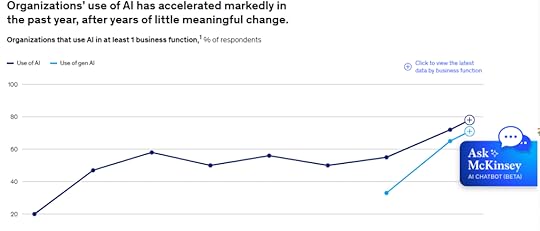
The numbers tell a sobering story: McKinsey’s latest AI report reveals that while 78% of organizations are experimenting with generative AI, only 23% have successfully scaled AI adoption across their operations. The gap between experimentation and execution has never been wider.
Why are so many companies failing to unlock AI’s potential? The barriers are surprisingly consistent:
Siloed Knowledge Within Teams: Your marketing team discovers an amazing AI workflow, but it never reaches operations. Sales builds custom prompts that could revolutionize customer service, but the knowledge stays trapped in their department.
Lack of Role-Specific Training Pathways: Generic AI training doesn’t work. A CFO needs different AI skills than a content creator, but most companies offer one-size-fits-all solutions that satisfy no one.
Employee Overwhelm: With hundreds of AI tools launching monthly, employees feel paralyzed by choice. They stick with familiar processes rather than risk learning something new without proper support.
Inconsistent Standards Across Departments: Different teams adopt different tools with different standards, creating chaos instead of efficiency. Quality control becomes impossible, and ROI remains elusive.
The result? Expensive AI investments that deliver minimal returns, frustrated employees who abandon new tools, and leadership teams questioning whether AI is worth the hype.
What Is an Enterprise AI Training Community?Here’s where smart companies are getting it right: they’re building enterprise AI training communities—structured ecosystems where employees, managers, and leaders learn, practice, and implement AI together.
Think of it as the difference between throwing people into the deep end of AI adoption versus creating a supportive environment where they can build confidence, share insights, and accelerate together.
A true enterprise AI training community includes four critical components:
1. Structured Learning ArchitectureGone are the days of random YouTube tutorials and scattered blog posts. Successful companies create role-specific learning pathways with courses, certifications, and frameworks tailored to different functions and skill levels.
2. Collaboration Spaces That Break Down SilosCross-departmental discussions and peer-to-peer learning sessions ensure that AI innovations spread organically throughout the organization. When marketing discovers a game-changing prompt technique, it reaches operations within days, not months.
3. Expert Guidance and MentorshipLive sessions with AI experts and ongoing mentorship provide the human touch that makes complex concepts stick. Employees can ask questions, get real-time feedback, and avoid costly mistakes.
4. Ready-to-Deploy Practical ResourcesInstead of starting from scratch, teams get access to proven AI bots, templates, and use cases that can be customized for their specific needs. This accelerates implementation and ensures quality standards.
The Business Case: How Community-Driven AI Training Creates Competitive AdvantageSmart executives don’t invest in training for the feel-good factor—they invest because it drives measurable business outcomes. Here’s how a community-based approach to AI training delivers ROI:
Faster, More Consistent UpskillingWhen employees learn together, they don’t waste time reinventing the wheel. Shared knowledge accelerates the learning curve while ensuring consistency across departments. Instead of having five different teams figure out AI implementation independently, you create a unified approach that scales.
Standardized Implementation That Actually WorksCommunity-based learning establishes shared frameworks and quality standards that prevent the chaos of fragmented AI adoption. Leaders gain visibility into how AI is being used company-wide, making it easier to measure ROI and identify successful practices that can be replicated.
Cross-Team Innovation That CompoundsWhen marketing, sales, operations, and product teams share AI insights, innovation spreads exponentially. A customer service AI bot developed by support might spark ideas for a sales qualification tool. A content generation workflow from marketing might revolutionize how operations creates training materials.
Sustained Adoption That Builds CultureUnlike one-off training sessions that are quickly forgotten, community-based learning provides ongoing support that ensures AI becomes embedded in your company culture. Employees stay engaged, continue learning, and become AI ambassadors who drive adoption throughout the organization.
Real-World Impact: Community vs. ChaosLet me paint you a picture of two companies approaching AI adoption differently.
Company A: The Scattered Approach: Leadership mandates AI adoption. Each department picks their own tools. Marketing chooses ChatGPT, sales goes with Claude, operations builds custom solutions. Six months later, there are 12 different AI tools, no shared standards, frustrated employees, and leadership questioning the ROI.
Company B: The Community Approach
Leadership invests in an enterprise AI training community. All departments learn together, share insights, and follow proven frameworks. They start with a core set of tools, build expertise systematically, and create shared resources. Six months later, AI is embedded across operations, employees are confident and innovative, and ROI is clearly measurable.
The difference isn’t the technology—it’s the approach to learning and implementation.
The First Movers Advantage: How AI Labs Is Redefining Enterprise Training
This is exactly why we created First Movers R&D AI Labs—the first enterprise AI training community designed specifically for companies serious about scaling AI adoption.
AI Labs isn’t just another training platform. It’s a comprehensive ecosystem that combines community learning, enterprise-grade training, and deployable AI solutions:
40+ Role-Specific AI Courses: From C-suite executives to front-line employees, everyone gets training tailored to their specific needs and responsibilities.
Weekly Live Co-Working Sessions: Join Dr. McCoy and the First Movers team for hands-on guidance, Q&A sessions, and real-time problem-solving.
Ready-to-Deploy AI Arsenal: Access 40+ industry-customized AI bots that your teams can implement immediately, from customer service automation to content generation workflows.
Enterprise ROI Dashboards: Track adoption rates, measure productivity gains, and demonstrate clear business impact to leadership.
Community-Driven Innovation: Connect with other forward-thinking companies, share insights, and accelerate learning through peer collaboration.
The result? Companies using AI Labs see 3x faster adoption rates and 2x higher employee engagement with AI tools compared to traditional training approaches.
Your Roadmap to AI Training SuccessReady to build your own competitive advantage through community-driven AI training? Here’s your practical implementation roadmap:
Step 1: Audit Your Current AI LandscapeIdentify skill gaps across teams and assess which departments are struggling with AI adoption. Look for patterns in what’s working and what’s not.
Step 2: Create a Culture of Shared LearningEstablish AI learning as a company-wide initiative, not a departmental afterthought. Make it clear that AI mastery is everyone’s responsibility and competitive advantage.
Step 3: Invest in Community-Based InfrastructureChoose training solutions that emphasize collaboration over individual learning. Look for platforms that offer peer interaction, expert guidance, and shared resources.
Step 4: Implement Tracking and AccountabilityUse dashboards and reporting tools to monitor adoption rates, skill development, and ROI. Make AI training progress visible to leadership and tie it to performance metrics.
Step 5: Scale SystematicallyStart with pilot departments, prove success, then expand. Use early wins to build momentum and overcome resistance in other areas of the organization.
Remember: Your competitive advantage doesn’t come from having the best AI tools—it comes from having the best-trained people using those tools effectively.
The Future Belongs to Learning OrganizationsAs we move deeper into the AI era, the companies that thrive won’t be those with the biggest AI budgets—they’ll be the ones that master the art of collective learning and systematic adoption.
AI tools will continue to evolve, new platforms will emerge, and technology will advance. But the organizations that build strong learning communities will adapt faster, innovate better, and maintain their competitive edge regardless of which specific tools dominate the market.
The question isn’t whether AI will transform your industry—it’s whether your company will be leading that transformation or scrambling to catch up.
Ready to turn your AI investments into competitive advantage?
Take a hard look at your current training infrastructure. Are your teams learning in silos or as a unified community? Are you building AI capabilities systematically or hoping random adoption will somehow scale?
If you’re ready to move beyond pilot projects and build real AI capabilities across your organization, explore how First Movers R&D AI Labs is helping enterprises create sustainable competitive advantages through community-driven AI training.
Because in the age of AI, the fastest learners win—and the fastest learners learn together.


August 24, 2025
AI Marketer Guide (+6 Steps to Becoming an AI Marketer)
We’re living through one of the most transformative periods in human history. Artificial Intelligence isn’t just changing how we work—it’s creating entirely new careers that would have sounded like science fiction just a few years ago. Prompt engineers, AI trainers, and AI ethicists are now legitimate career paths. But there’s one role that particularly excites me as someone who’s spent years in the marketing trenches: the AI marketer.
The Rise of the AI Marketer: A New Breed of Marketing ProfessionalAn AI marketer is a marketing professional who leverages artificial intelligence tools and platforms to create, optimize, and analyze marketing campaigns with unprecedented precision and scale. But don’t mistake this for just another marketer who uses a few AI tools. The AI marketer sits at the intersection of traditional marketing expertise and cutting-edge AI capabilities, orchestrating a symphony of artificial and human intelligence to deliver exceptional results.
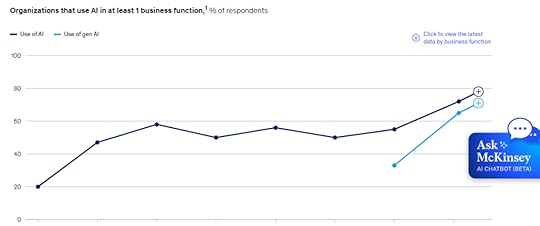
Recent research from McKinsey shows that more than 78% of organizations are now using AI in at least one business function. This explosive growth has created an urgent need for marketers who can bridge the gap between traditional marketing principles and AI-powered solutions.
 How AI Marketers Differ from Traditional Marketers
The key difference lies in their approach and toolkit. While traditional marketers might spend hours brainstorming content ideas or analyzing market trends manually, AI marketers:
Use AI for data-driven decision making at every stepLeverage generative AI to scale content creation while maintaining qualityEmploy predictive analytics to forecast trends and customer behaviorAutomate routine tasks to focus on strategy and creativityMaster prompt engineering to get the best results from AI toolsFor example, where a traditional marketer might spend a week creating and A/B testing email subject lines, an AI marketer can generate and analyze hundreds of variations in minutes, using AI to predict performance before sending.
Becoming an AI Marketer: Your Step-by-Step GuideReady to transform your marketing career? Here’s how to become an AI marketer:
1. Build Your AI FoundationStart by understanding the basics of AI and machine learning. You don’t need to become a programmer, but you should understand how AI works, its capabilities, and limitations. Take online courses focused on AI in marketing from platforms like Coursera or LinkedIn Learning.
2. Master Key AI Marketing ToolsBegin with popular tools like:
ChatGPT for content ideation and creationCopy.ai or Claude for specialized marketing copyMidjourney or DALL-E for visual contentTableau or Power BI for AI-powered data visualization3. Develop Prompt Engineering SkillsLearn how to write effective prompts that get you the best results from AI tools. This is like learning a new language—start simple and gradually increase complexity as you understand how different AI models respond.
4. Focus on Strategy IntegrationLearn to integrate AI tools into your existing marketing workflow. Start small—maybe with social media content creation—and gradually expand to more complex applications like predictive analytics and personalization.
5. Stay Current with AI DevelopmentsSubscribe to AI marketing newsletters, join relevant LinkedIn groups, and follow AI marketing thought leaders. The field is evolving rapidly, and staying informed is crucial.
6. Practice with Real ProjectsStart applying AI tools to your current marketing projects. Begin with low-risk tasks like content brainstorming or headline optimization, then move to more complex applications as your confidence grows.
The Time to Adapt is NowFellow marketers, let me be clear: AI isn’t coming to marketing—it’s already here. But this isn’t a threat; it’s the biggest opportunity our field has seen in decades. Every day you wait to start your AI marketing journey is a day your competitors might be pulling ahead.
You don’t need to transform your entire marketing strategy overnight. Start small, experiment, and learn. Take that first step today—maybe it’s as simple as using ChatGPT to brainstorm content ideas or analyze your customer feedback. The tools are there, the resources are available, and the potential is limitless.
Remember, the goal isn’t to replace human creativity and strategic thinking with AI—it’s to enhance these uniquely human qualities with AI’s power to analyze, predict, and scale. The future belongs to marketers who can harmoniously blend human insight with AI capabilities.
Your journey to becoming an AI marketer starts now.
Need more guidance?
August 21, 2025
AI Automation Workflows that Actually Save Time (+5 Examples)
The business world is changing faster than ever. And if you’re not implementing AI automation workflows in your business, you’re falling behind.
Here’s a wake-up call: An IBM Institute for Business Value report found that 92% of executives agreed that their business workflows would be digitized and will use AI-enabled automation by this year. That’s not tomorrow. That’s now.
According to Vanson Bourne, 80% of organizations have the goal of hyperautomation. This means automating as many business processes as possible. The writing is on the wall. Companies that embrace AI automation workflows aren’t just staying competitive—they’re leaving their competition in the dust.
But here’s what’s really happening: 78% of respondents say their organizations use AI in at least one business function. This is up from 72% in early 2024 and 55% in 2023. The adoption rate is accelerating at breakneck speed.
AI automation workflows aren’t just a nice-to-have anymore. They’re survival tools.
If you want to stay relevant, keep your business competitive, and unlock productivity gains that seemed impossible just a few years ago, you need to implement AI automation workflows. The question isn’t whether you should adopt them. It’s how fast you can get started.
What Are AI Automation Workflows?Think of AI automation workflows as your business’s new nervous system. They’re intelligent, interconnected processes that handle tasks, make decisions, and execute actions without constant human intervention.
But let’s break this down into the building blocks that make these workflows possible.
Machine Learning: The Brain Behind the OperationMachine learning is the engine that powers intelligent automation. It’s how systems learn from data patterns and improve their performance over time.
Instead of following rigid, pre-programmed rules, machine learning algorithms adapt. They get smarter with every interaction. Your customer service chatbot learns from each conversation. Your inventory management system predicts demand more accurately each month.
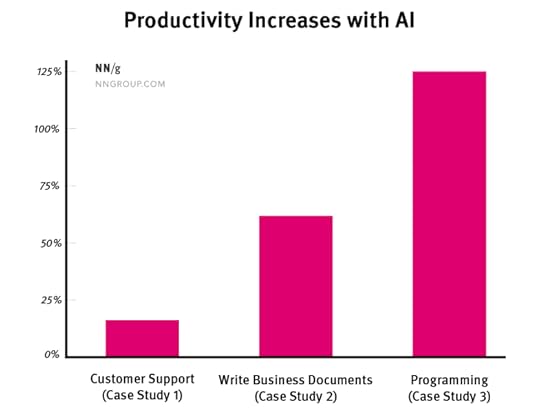
This isn’t science fiction. Based on 3 separate studies, workers output increased by an average of 66% when using AI tools. This is the equivalent of 47 years of natural productivity gains.
 Generative AI: Your Creative Assistant
Generative AI creates new content, solutions, and ideas. It writes emails, generates reports, designs graphics, and even codes software.
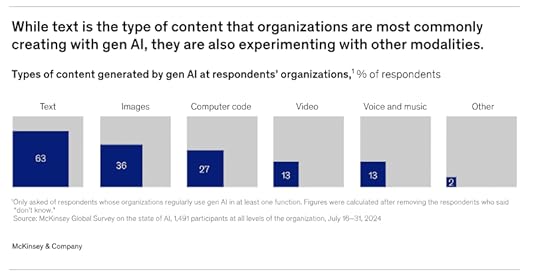
Most companies start with text generation—writing emails, reports, and documents. But the smart ones are expanding fast. Over a third are now creating images automatically. And here’s where it gets exciting: one in four companies is using AI to write actual code.
This technology isn’t replacing creativity. It’s amplifying it.
Natural Language Processing: Breaking Down Communication BarriersNatural language processing (NLP) helps computers understand and respond to human language. This powers everything from voice assistants to automated customer support.
Your business can now process customer inquiries, analyze feedback, and generate responses in natural, conversational language. No more robotic, scripted interactions.
Optical Character Recognition: Digitizing the Physical WorldOptical character recognition (OCR) transforms physical documents into digital data. Invoices, contracts, receipts—all become searchable, analyzable information.
This eliminates manual data entry and reduces human error to nearly zero.
Intelligent Automation: The OrchestratorIntelligent automation combines multiple AI technologies to create sophisticated workflows. It’s the conductor of your business orchestra, coordinating different tools and processes seamlessly.
This goes beyond simple task automation. It makes smart decisions, adapts to changing conditions, and handles complex, multi-step processes.
Application Programming Interfaces: The Connective TissueAPIs are the invisible bridges that connect different software systems. They allow your AI automation workflows to pull data from one system, process it, and push results to another.
Without APIs, you’d have isolated islands of automation. With them, you have an interconnected ecosystem that works as one unified system.
Business Process Automation: The FoundationBusiness process automation handles the fundamental workflows that keep your company running. From employee onboarding to invoice processing, these automated processes ensure consistency and efficiency.
It’s the foundation that makes everything else possible.
6 Benefits of AI Automation WorkflowsThe benefits aren’t theoretical anymore. They’re measurable, significant, and happening right now.
Here are 6 of them:
1. Slash Operational CostsA survey done by Bain & Company showed that companies investing 20% of their budget on automation cut costs down by a considerably larger amount than companies that didn’t.
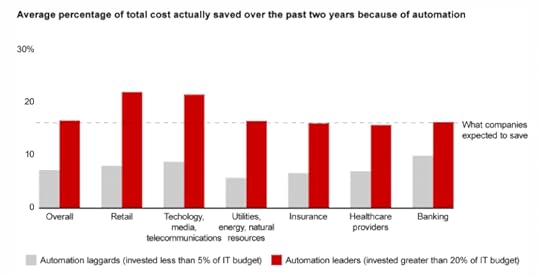
Cost savings come from reduced labor costs, fewer errors, and optimized resource allocation. When processes run automatically, you’re not paying for human oversight on routine tasks.
2. Boost Productivity Like Never BeforeThe productivity numbers will blow your mind. Customer service agents are handling 13.8% more inquiries every hour. Business professionals are cranking out 59% more documents. And get this—programmers are completing 126% more projects each week.
Think about that for a moment. Your developers could potentially complete twice as many projects. Your content team could produce 60% more material. Your customer service team could handle more inquiries without adding staff.
3. Eliminate Human ErrorIn 90% of accidents, human error is a contributing factor. When you automate critical processes, you remove the primary source of errors.
Data entry mistakes disappear. Calculations become perfect. Compliance violations decrease dramatically. Your business operates with a level of accuracy that’s simply impossible with manual processes.
4. Enhance Decision MakingAI doesn’t just automate tasks—it provides insights.Here’s a shocking confession: 92% of supply chain executives admit they’re making gut decisions because their current reports can’t predict what’s coming next. They’re flying blind when AI could give them crystal-clear vision into the future.
Think about that. Nearly every supply chain leader is guessing when they could be knowing.
With AI automation workflows, your decisions are backed by data analysis, predictive modeling, and pattern recognition that humans simply can’t match.
5. Transform Customer ExperienceCustomer expectations have skyrocketed. They want instant responses, personalized interactions, and 24/7 availability.
With AI automation workflows, your customers get faster, more accurate service. Your team handles more complex issues. Everyone wins.
6. Optimize and Streamline OperationsThe e-commerce teams that have jumped on the AI revolution? They’re getting back 6.4 hours every single week. That’s almost a full workday handed back to them.
Imagine what you could do with an extra day every week. More strategy sessions. Better customer relationships. Actually taking a lunch break.
AI Automation Workflows ExamplesLet’s get practical. Here’s how businesses are implementing AI automation workflows right now.
1. Customer Service AutomationInstead of customers waiting in phone queues, AI chatbots handle initial inquiries. They resolve simple issues immediately and route complex problems to the right human agent with full context.
The workflow looks like this:
Customer submits inquiry through any channelAI analyzes the request and determines complexitySimple issues get resolved automaticallyComplex issues go to specialists with AI-generated summariesFollow-up communications are automated based on resolution2. Content Creation and MarketingContent teams are using AI to research topics, generate first drafts, optimize for SEO, and distribute across channels.
Here’s a real workflow:
AI monitors trending topics in your industryGenerates content outlines based on search dataCreates first drafts incorporating your brand voiceOptimizes content for specific keywordsSchedules and publishes across multiple platformsTracks performance and suggests improvementsThe result? Business professionals could write 59% more work-related documents per hour when using AI tools.
3. Financial Process AutomationCFOs are drowning in routine tasks. 83% say they’re too busy to do more than their regular daily responsibilities. AI automation workflows are changing this.
A typical accounts payable workflow now includes:
AI scans and extracts data from invoicesAutomatically matches invoices to purchase ordersRoutes approvals based on predefined rulesProcesses payments automaticallyUpdates financial records in real-timeGenerates expense reports and analytics4. Sales Process OptimizationSales teams are using AI to identify leads, personalize outreach, and automate follow-ups.
The workflow includes:
AI analyzes prospect behavior and scores leadsGenerates personalized outreach messagesAutomates follow-up sequences based on responsesSchedules meetings and updates CRM automaticallyProvides real-time coaching during callsGenerates post-meeting summaries and next stepsImplementing generative AI could increase sales productivity by approximately 3% to 5% of current global sales expenditures.
5. Supply Chain and Inventory ManagementManufacturers are using AI to predict demand, optimize inventory levels, and automate procurement.
The workflow includes:
AI analyzes historical sales data and market trendsPredicts demand for specific products and timeframesAutomatically adjusts inventory levelsTriggers purchase orders when stock is lowOptimizes supplier selection based on performance dataMonitors delivery schedules and updates stakeholdersAI isn’t just dabbling around the edges of manufacturing—it’s diving deep into the core operations. Nearly a quarter of assembly and quality testing now runs on AI. Product development and engineering? 23% AI-powered. And across procurement, order management, and logistics, AI is handling one in five processes.
Your Next Step: Embrace the AI Automation RevolutionThe data is clear. The benefits are proven. The technology is ready.
Nearly half (49%) of technology leaders in PwC’s October 2024 Pulse Survey said that AI was “fully integrated” into their companies’ core business strategy (PwC). These companies aren’t just experimenting—they’re seeing real results.
But here’s what separates the winners from the laggards: They start now.
Ready to Transform Your Business with AI Automation Workflows?You don’t need to figure this out by yourself. You don’t need to waste months in trial-and-error implementation. And you definitely don’t need to fall behind while your competitors pull ahead.
That’s exactly why we built First Movers R&D AI Labs—the world’s first and most inclusive AI implementation community.
When you join First Movers, you get everything you need to implement AI automation workflows that actually work:
40+ Ready-to-Deploy AI Bots built specifically for real-world business tasks—from proposal writing and lead qualification to workflow optimization and content creation. These aren’t theoretical tools. They’re battle-tested solutions refined through months of implementation in successful businesses.
Weekly Live AI Training & Co-Working Sessions where you’ll work alongside fellow First Movers and get real-time guidance from our expert integrators. No more learning in isolation. You’ll implement AI automation workflows with support every step of the way.
Complete Course Library covering everything from AI fundamentals to advanced workflow automation—including the exact systems and strategies that help businesses achieve those cost reductions and massive productivity gains we talked about.
On-Demand Support from Expert Prompt Engineers who will create custom walkthroughs whenever you hit a roadblock. You’re never stuck. You’re never alone.
The companies that act now will have an insurmountable competitive advantage. The companies that wait will be playing catch-up for years.
Your customers expect it. Your competitors are implementing it. Your business needs it.
The question isn’t whether AI automation workflows will transform your industry. The question is whether you’ll be leading that transformation or struggling to keep up.
Ready to become a First Mover?
August 18, 2025
AI Productivity Tools Training: Stop Wasting Time on Basic Tutorials
Picture this: You’ve spent three hours watching YouTube tutorials on ChatGPT. You know the basics. Ask a question, get an answer. But you’re still manually copy-pasting responses and wondering why your productivity hasn’t skyrocketed.
Sound familiar?
You’re not alone. Most AI productivity tools training available today is surface-level fluff that leaves professionals stuck in tutorial purgatory.
It’s time to demand better.
The Problem with Most AI Productivity Tools TrainingLet’s be brutally honest about what passes for AI training these days.
Generic “Intro to ChatGPT” VideosYou’ve seen them everywhere. The 10-minute YouTube video titled “ChatGPT for Beginners.”
They show you how to:
Open ChatGPTType a basic promptCopy the responseThat’s it. No strategy. No integration. No real-world application.
These tutorials treat AI like a fancy Google search. They miss the point entirely.
One-Size-Fits-All ApproachesMost AI productivity tools training programs assume everyone has the same needs.
A marketing manager needs different AI workflows than a project manager. A content creator requires different automation than a sales rep.
But generic courses ignore these nuances. They give you cookie-cutter templates that don’t fit your specific role or industry.
Missing the Implementation GapHere’s where most training fails spectacularly: the implementation gap.
They show you what to do. But they don’t show you how to actually integrate AI into your daily workflow.
You learn about prompt engineering in isolation. But you never learn how to build systems that actually save time.
No Follow-Up or SupportYou watch the course. You try to implement. You get stuck.
Now what?
Most AI productivity tools training leaves you hanging. No community. No support. No ongoing guidance.
You’re left to figure out the complex stuff on your own.
What Real AI Productivity Tools Training Should IncludeIf you’re serious about transforming your productivity with AI, here’s what to look for in quality training.
Live Implementation SessionsReal training happens in real-time.
You need live sessions where you can see AI workflows being built from scratch. Where you can ask questions as they come up. Where you get immediate feedback on your implementation.
Pre-recorded videos can’t replicate this experience.
Industry-Specific ApplicationsEffective AI productivity tools training recognizes that context matters.
A lawyer needs AI workflows for document review and case research. A marketer needs systems for content creation and campaign optimization.
Look for training that addresses your specific use case, not generic examples that sort of apply to everyone.
Ready-to-Deploy SolutionsQuality training provides working solutions you can implement immediately.
Not just theory. Not just concepts.
Actual AI bots, workflows, and automation systems that you can deploy in your business today.
Ongoing Support and CommunityAI technology evolves rapidly. Your training should too.
Look for programs that offer:
Regular updates as new tools emergeCommunity access for peer learningDirect support when you hit roadblocksContinuous skill developmentAdvanced Integration TechniquesBasic prompt writing is just the beginning.
Real AI productivity tools training teaches you how to:
Chain multiple AI tools togetherCreate automated workflowsBuild custom AI assistantsIntegrate AI with your existing software stackThe Strategic Approach to AI Productivity Tools TrainingHere’s how professionals are actually using AI to multiply their output.
Systems Thinking Over Tool CollectingMost people approach AI like they’re collecting Pokemon cards. They try every new tool that launches.
That’s backwards.
Smart professionals start with their workflow. They identify bottlenecks. Then they deploy AI strategically to eliminate friction points.
Automation Over Manual TasksThe real power of AI productivity tools training lies in automation.
Instead of manually running prompts, you learn to build systems that work while you sleep.
Think automated content creation pipelines. AI-powered lead qualification systems. Intelligent document processing workflows.
Integration Over IsolationAI tools work best when they work together.
Quality training teaches you how to connect ChatGPT to your CRM. How to link Claude to your project management system. How to build workflows that span multiple platforms.
Measurement Over ActivityReal productivity gains come from measuring results, not just staying busy.
Look for AI productivity tools training that teaches you:
How to track time savingsWhich metrics actually matterHow to calculate ROI on AI implementationsWays to continuously optimize your systemsWhy Most Professionals Are Still StrugglingDespite the abundance of AI content online, most professionals haven’t seen meaningful productivity gains.
Here’s why.
Information Overload Without ImplementationThere’s too much content and not enough guidance on what to actually do.
You can watch 100 hours of AI tutorials and still not know how to build a workflow that saves you 10 hours per week.
Lack of Practical ApplicationMost AI productivity tools training stays theoretical.
You learn about the capabilities of various tools. But you never see how they solve real business problems.
No Structured Learning PathPeople jump randomly between different AI tools and techniques.
Without a structured approach, you end up with fragmented knowledge that doesn’t add up to systematic productivity gains.
Missing the Business ContextMany trainers understand AI technology but don’t understand business operations.
They can teach you how to use the tools. But they can’t teach you how to transform your work processes.
The First Movers Advantage in AI Productivity Tools TrainingWhile most professionals struggle with basic AI implementation, a small group of forward-thinkers are already leading their industries.
They’re not just using AI tools. They’re building AI-powered systems that create insurmountable competitive advantages.
What makes the difference?
Comprehensive Implementation Focus
At First Movers R&D AI Labs, AI productivity tools training goes beyond surface-level tutorials.
Every Wednesday, our expert integrators lead 2-hour live implementation sessions. These aren’t lectures—they’re hands-on workshops where you build real systems alongside industry leaders.
You don’t just learn about AI tools. You deploy working solutions that immediately impact your productivity.
Battle-Tested Solutions Ready for DeploymentInstead of starting from scratch, you get access to 40+ custom-built AI assistants and workflows.
These aren’t experimental tools. They’re production-ready solutions refined through months of real-world implementation in successful businesses.
Think proposal writing bots that close more deals. Content creation systems that scale your marketing. Lead qualification workflows that identify your best prospects automatically.
Continuous Learning in a Rapidly Evolving FieldAI technology advances weekly. Your AI productivity tools training should keep pace.
New courses are added every week, covering emerging tools and advanced techniques. You stay ahead of the curve instead of constantly playing catch-up.
Expert Support When You Need ItGetting stuck on implementation doesn’t mean giving up.
Our community leader Joshua provides personalized support through custom Loom walkthroughs. You get specific, actionable help tailored to your exact situation.
No more guessing. No more trial-and-error frustration.
Strategic Framework Over Random Tool UsageThe most successful AI implementers follow proven frameworks.
You learn Julia’s 25x Difference methodology. The 4-Step AI Optimization Loop. The Iteration Method for continuous improvement.
These aren’t just concepts. They’re battle-tested systems that deliver measurable results.
Real Results from Professional AI Productivity Tools TrainingHere’s what happens when professionals get access to quality AI productivity tools training.
Immediate Productivity GainsMembers report significant time savings through automated workflow implementations.
Many experience dramatic productivity improvements in key areas of their work through strategic AI integration.
Career Advancement OpportunitiesProfessionals with advanced AI skills are in high demand.
Our members regularly report job promotions, salary increases, and new business opportunities directly attributable to their AI expertise.
 Competitive Market Advantages
Businesses that master AI integration create advantages that competitors can’t easily replicate.
While others debate whether AI will impact their industry, our members are already implementing solutions that transform their operations.
Scalable Systems That CompoundThe best AI productivity tools training teaches you to build systems that improve over time.
Instead of working harder, you work smarter. Your AI systems handle routine tasks while you focus on strategic initiatives.
The Cost of WaitingEvery day you delay implementing AI productivity systems is a day your competitors get further ahead.
Exponential Technology GrowthAI capabilities are advancing exponentially, not linearly.
The tools available today are significantly more powerful than they were six months ago. In another six months, they’ll be even more advanced.
Early adopters compound these advantages. Late adopters struggle to catch up.
First Mover Advantages Are RealIn rapidly evolving fields, being first matters more than being perfect.
The businesses and professionals who master AI productivity tools now are establishing market positions that will be difficult to challenge later.
The Implementation Gap WidensAs AI tools become more sophisticated, the gap between basic users and advanced implementers widens.
Surface-level AI productivity tools training won’t be enough to remain competitive.
Your Next Steps in AI Productivity Tools TrainingReady to stop wasting time on basic tutorials and start building systems that actually transform your productivity?
Here’s how to move forward strategically.
Audit Your Current AI UsageBefore diving into advanced training, honestly assess where you stand.
Are you using AI tools reactively or strategically? Do you have integrated workflows or disconnected point solutions?
Understanding your starting point helps you choose the right next steps.
Choose Training That Matches Your AmbitionIf you want incremental improvements, basic tutorials might suffice.
If you want transformational results, you need AI productivity tools training that matches that ambition.
Look for programs that offer live implementation, expert support, and ready-to-deploy solutions.
Commit to Implementation, Not Just LearningThe difference between successful AI adopters and everyone else comes down to implementation.
Choose training that forces you to build real systems, not just consume information.
Join a Community of Forward-ThinkersAI mastery accelerates in the right environment.
Surround yourself with other professionals who are serious about leveraging AI for competitive advantage.
The Future Belongs to AI-Enabled ProfessionalsWe’re not just witnessing technological change. We’re living through an economic transformation.
The professionals who master AI productivity tools now will lead their industries for the next decade.
Those who wait will spend years playing catch-up.
AI productivity tools training isn’t about learning new software. It’s about positioning yourself for success in the post-AI economy.
The question isn’t whether AI will transform your work.
The question is whether you’ll lead that transformation or react to it.
Choose wisely. The future is waiting.
August 7, 2025
Is Julia McCoy a Clone? The Amazing Truth About AI Avatars (Plus 5 Steps to Creating Your Own)
You’ve probably stumbled across this question while watching my recent YouTube videos: “Is Julia McCoy a clone?” The short answer? Sometimes, yes! And today, I’m pulling back the curtain on exactly how I’ve revolutionized my content creation using AI voice and avatar cloning technology.
After my dramatic health crash in January 2025, I discovered something incredible: AI cloning isn’t just possible—it’s a game-changer for content creators, entrepreneurs, and anyone looking to scale their digital presence while maintaining their authentic voice.
The Real Story: Why I Started Cloning MyselfLet me be completely transparent with you. In January, I experienced a health crisis that brought me to my knees. Multiple hospital visits, misdiagnoses, and months of uncertainty made it clear that my “go-go-go” lifestyle wasn’t sustainable. I was literally running my body into the ground.
That’s when I discovered the power of AI cloning. Not as a replacement for human connection—never that—but as a tool for freedom. Freedom to rest, to prioritize my health, and to create content without burning out.
Is Julia McCoy a clone in every video? Not entirely, but many of my recent videos feature my AI avatar, and here’s the shocking part: the engagement has been off the charts. One cloned video outperformed all my previous content in terms of viewer interaction.
Here’s what my channel looks like (I’m honest about the cloning).
 The Technology Behind the Magic: Is Julia McCoy a Clone or Real?
Here’s what’s happening behind the scenes. I use two primary platforms to create my digital twin:
HeyGen for avatar cloning (Creator Plan minimum, Team Plan recommended) ElevenLabs for professional voice cloning (Creator Plan sufficient)The result? Content that’s so authentic, viewers can’t tell the difference. But let me walk you through exactly how to create your own clone.
Step 1: Preparing Your Training Data (The Foundation of Everything)This is where most people mess up. Your training data determines everything about your clone’s quality.
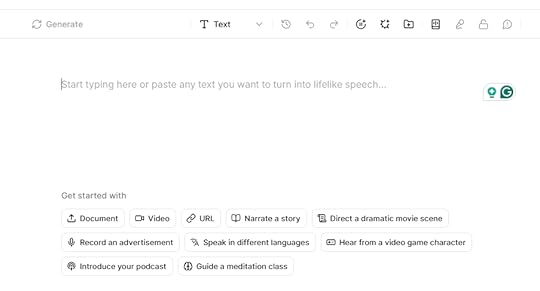
For Voice Cloning (ElevenLabs):Duration needed: 1 hour and 15-30 minutes of clean audioFile format: Straight WAV fileContent requirements: Pull from 10+ videos with NO music, NO other speakersMicrophone consistency: Use the SAME microphone throughoutSetting consistency: Same recording environmentHere’s a peek of what the ElevenLabs studio looks like! Pretty simple, huh? I love how neat, clean, and straightforward it is.
 For Avatar Cloning (HeyGen):Video count: 3-5 videos minimum (5 is ideal)Duration: 2-5 minutes eachQuality requirements:DSLR camera qualityProfessional lightingGreat hair and makeup (this is your digital representation!)Different outfits for varietyNO jump cuts or editingDirect eye contact with camera
Pro tip: Think of this as preparing for the biggest stage of your career. This training data will generate infinite content, so invest in making it perfect.
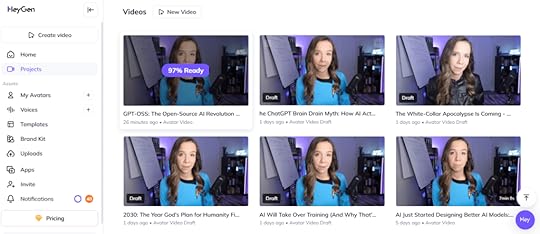
Behind-the-scenes of my videos on HeyGen right here:
 Step 2: Creating Your Voice Clone with ElevenLabs
Once you have your audio file ready, here’s the exact process:
Sign up for ElevenLabs Creator Plan ($22/month).
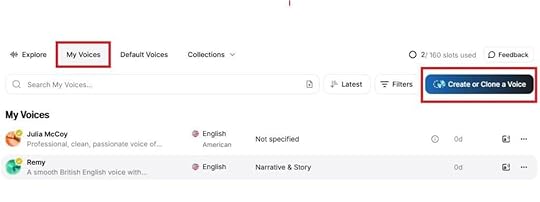
Naavigate to “My Voices,” then “Create or Clone a Voice.”
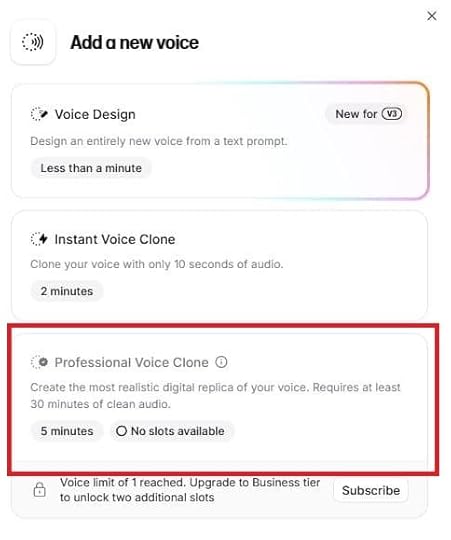
Choose Professional Voice Clone (PVC).
Upload your WAV file.
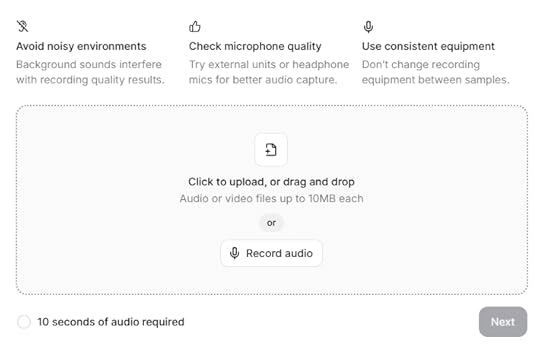
Complete voice verification (Important: The person being cloned MUST be present for verification).
The processing typically takes 2-3 hours. Once complete, you’ll have a voice clone that captures your vocal patterns, inflections, and speaking style.
Step 3: Building Your Avatar with HeyGenThis is where the magic really happens. “Is Julia McCoy a clone?” When you see this process, you’ll understand why that question is so relevant.
Setting Up Your HeyGen Account:Subscribe to Creator Plan minimum ($59/month for 5-minute videos).
Upgrade to Team Plan ($179/month) for longer content and 4K quality.
Click “My Avatars” in the left-hand dashboard.
Then, select “Create New Avatar.”
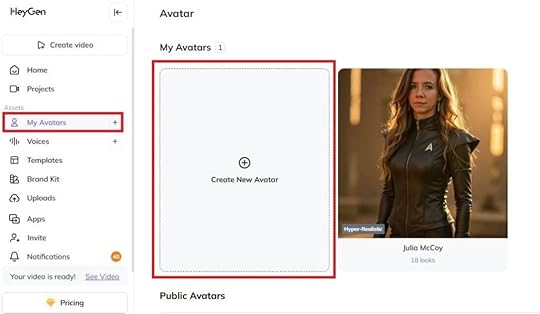
Upload your training videos.
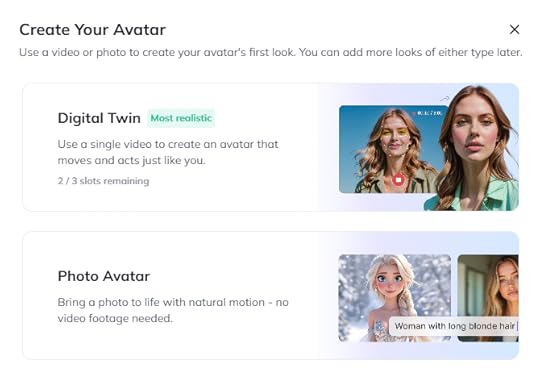
Voila! You’re done!
Now, here are some extra tips on the…
Upload Process:Select all your prepared video files.Don’t remove background (unless it’s truly distracting).Ensure each video shows natural gestures and expressions.Avoid repetitive hand movements (like counting) that will appear randomly.Processing time: 5-10 minutes per “look” (outfit/setting combination).
Step 4: Integrating Voice and Avatar (The Secret Sauce)Here’s where most tutorials fall short. The integration between your voice clone and avatar is crucial for authentic results.
But here’s my secret sauce on how to do it right:
In HeyGen:Go to “Voices”, then click “Integrate Third-Party Voice.”
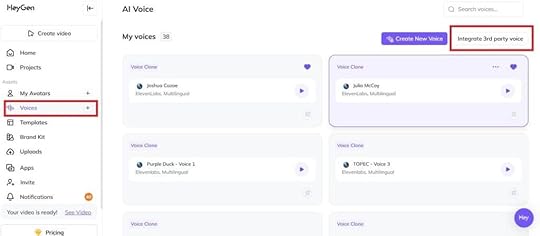
Add your ElevenLabs API key.
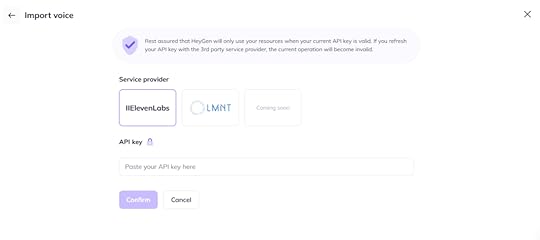
Select your cloned voice from the dropdown.
Test the integration.
And you’re done! What I love about this is how simple it is.
You’ll love it too, that’s for sure.
Now, let’s get into some:
Script Preparation Tips:Write numbers as words (not “25%” but “twenty-five percent”).Use natural paragraph breaks (hit Enter for natural pauses).Avoid special pronunciation guides (keep it simple).Write conversationally (exactly how you’d speak).Step 5: Creating Your First Cloned VideoNow for the moment of truth. Is Julia McCoy a clone in this content? You’re about to find out how seamless this can be.
Script Creation Process:In HeyGen, click “Create video” in the left sidebar, then select “Start from Scratch.”
This will allow you to select your avatar, then write a script from scratch in the field provided.
Like this:
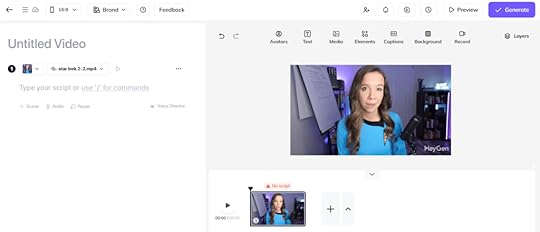
Here are some quick tips for scriptwriting:
Write your script in simple paragraphs.Add line breaks for natural pauses.Remove filler words and “ums.”Keep sentences conversational but clear.When you’re happy with your script, click the “Generate” button in the right corner of your screen.
Watch the video to see if you like it.
And you’re ready!
Step 6: Post-Production and PublishingHere’s something crucial: don’t publish raw clone content. Even the best AI needs human polish.
Recommended Post-Production:Add B-roll footage (I insert clips relevant to my topics).Include transitions and effects.Add background music (subtle and professional).Color correction if needed.I work with a producer in the Philippines who handles all post-production. This keeps costs reasonable while maintaining professional quality.
The Results: Why People Ask “Is Julia McCoy a Clone?”The results speak for themselves. In one 3-day period, I published 6 videos—more than I’d ever created in such a short timeframe. The cloned content consistently outperforms my traditional videos in engagement metrics.
What This Technology Means for Content Creators:Picture this: You’re sick with the flu, but your content calendar doesn’t stop. Your clone steps in seamlessly.
You want to take a real vacation without worrying about posting schedules? Your avatar has you covered. I’ve literally published more content in the past three months than I did in the six months before my health crisis—and I’ve actually had time to rest and recover.
The best part? The quality is incredible. We’re not talking about cheap, obviously-fake content here. This is professional-grade material that rivals anything I could produce sitting in my studio for hours. And the cost? A fraction of what I used to spend on video production teams. Instead of paying thousands per video, I’m investing $201 monthly and getting unlimited content creation potential.
The Investment: Is AI Cloning Worth It?Let’s talk numbers:
ElevenLabs Creator Plan: $22/monthHeyGen Team Plan: $179/monthTotal monthly investment: $201For businesses producing regular video content, this pays for itself immediately. Traditional video production costs hundreds per video, not including your time.
Ethical Considerations: The Human ElementBefore you ask “Is Julia McCoy the clone replacing the real Julia?”—absolutely not. This technology enhances human creativity; it doesn’t replace it.
My Approach:Human-written scripts (I write everything myself).Strategic implementation (clones for educational content, me for personal connection).Transparent communication (I tell my audience when content is cloned).Maintained authenticity (the clone represents my actual knowledge and voice).No, you’re not being replaced by a clone.
And I recommend showing your real face from time to time, especially when telling your own story or sharing more personal content.
But the bulk of your work?
Give it to your clone.
I mean, they’re still yours.
The voice, the ideas, the style – it’s still you.
Things just got less burdensome and complicated.
Advanced Tips for Professional ResultsHere are some extra tips (based on my experience) for videos you will absolutely love when they’re ready:
Voice Clone Optimization:Record in a treated room to minimize echo and background noise. Speak naturally without over-articulating—your clone will sound more authentic when trained on your normal speaking patterns. Include emotional range in your training data with varied tones and inflections, and maintain consistent energy levels throughout your recording sessions.
Avatar Clone Enhancement:Professional styling isn’t optional here. Invest in hair, makeup, and wardrobe because you’ll see these choices in every single video your clone creates. Good posture matters since it will be replicated in all generated content. Natural expressions and smiles show personality, and choose your background carefully because it will appear in all your content.
Measuring Success: Analytics That MatterSo, is your clone doing good?
How can you tell?
Track these metrics to understand your clone’s impact:
Engagement Metrics:View completion ratesComment engagementShare frequencySubscriber growthProduction Metrics:Content output increaseTime savings per videoCost per piece of contentOverall ROII tell you, my success metrics went through the roof with the help of my clone.
And yours can too, if you follow my steps and tips carefully.
The Future of Content CreationIs Julia McCoy a clone pioneer? I’d like to think so. This technology represents the future of sustainable content creation. We’re not replacing human creativity—we’re amplifying it.
What’s Coming Next:Real-time clone interactions (live streams with AI avatars)Multi-language cloning (expand global reach)Enhanced emotional range (more nuanced expressions)Interactive avatar experiencesHonestly?
What we’re seeing now is just the beginning of clones and AI avatars.
And I cannot wait to see what’s coming next.
The Bottom Line: Embracing AI Without Losing HumanitySo, is Julia McCoy a clone? Sometimes. But more importantly, I’m a human who’s learned to leverage technology for freedom, health, and sustainable success.
This isn’t about replacing authentic human connection—it’s about creating space for it. When AI handles the routine content creation, I can focus on strategy, relationship building, and the high-level thinking that only humans can provide.
The question isn’t whether you should embrace AI cloning—it’s whether you can afford not to. Your competitors are already exploring these tools. The businesses that master them now will dominate their industries tomorrow.
Ready to revolutionize your content creation? Start with the training data preparation this week. Your future self (and your clone) will thank you.
Want to dive deeper into AI automation strategies? Join thousands of entrepreneurs in our R&D AI Labs at firstmovers.ai where we share advanced frameworks for building your AI-powered business.
August 3, 2025
AI Business Transformation Course: Real Results vs. Empty Promises (+5 Things to Look for in a Course)
The AI business transformation course market is a minefield.
Everywhere you look, someone’s promising to revolutionize your business with AI. But here’s the brutal truth: most of these courses are all sizzle and no steak.
You’re left wondering which AI business transformation course will actually deliver real results instead of empty promises and fluffy theory.
The Frustrating Hunt for Real AI TrainingPicture this scenario. You know you’re behind the curve on AI.
Your competitors are probably already using it. Your customers expect it. Your employees are asking about it.
So you start hunting for an AI business transformation course.
The first one you find promises “revolutionary AI strategies.” But when you dig deeper, it’s just recycled content from 2019. Nothing about the latest tools. Nothing about real implementation.
The second course looks promising. Until you realize it’s 47 hours of theory with zero hands-on practice. Great for putting you to sleep. Terrible for transforming your business.
The third? Run by someone who’s never actually implemented AI in a real business. They’re teaching what they learned from other courses. It’s like learning surgery from someone who’s only watched Grey’s Anatomy.
You’re frustrated. You’re overwhelmed. And you’re starting to think maybe AI isn’t for your business after all.

But wait. What if I told you there’s another way?
What Sets Real AI Business Transformation Courses ApartThe best AI business transformation course won’t just talk about AI. It’ll put it in your hands.
Here’s what separates the wheat from the chaff:
Action Over TheoryReal transformation happens when you’re building, not just learning.
You need an AI business transformation course that throws you into the deep end from day one. No 20-hour modules on “AI history” or “theoretical frameworks.”
You want to be creating AI solutions while you learn. Building actual tools. Seeing real results in real time.
Because here’s the thing: AI isn’t academic. It’s practical. It’s messy. And the only way to master it is by doing it.
Community and Expert SupportGoing solo on AI transformation? That’s a recipe for disaster.
The learning curve is steep. The technology changes daily. And when you hit a wall at 2 AM trying to implement a chatbot, you need backup.
Look for programs that pair you with other business owners on the same journey. Where experts are available to answer your questions. Where you’re not just another student number in a database.
Real AI Tools You Can Deploy TodayHere’s where most courses fail spectacularly. They teach you about AI tools you can’t actually use.
The good stuff? The programs that hand you battle-tested AI bots and systems. Ready to deploy. Ready to transform your business operations from day one.
No theoretical exercises. No hypothetical scenarios. Real tools for real businesses.
Comprehensive Coverage for Every Business NeedYour marketing team has different AI needs than your customer service team. Your sales process needs different solutions than your operations.
A truly effective AI business transformation course covers it all. Dozens of specialized modules. Each targeting specific business challenges. Each delivering specific solutions.
Because business transformation isn’t one-size-fits-all.
On-Demand Expert GuidanceSometimes you need answers at midnight. Sometimes you’re facing a challenge that’s unique to your industry.
The best programs give you access to expert guidance whenever you need it. Not just during scheduled office hours. Not just through generic FAQ pages.
Real expert insight. Available when you need it most.
Meet First Movers R&D AI Labs: Where Real Transformation HappensReady for complete transparency? I created First Movers R&D AI Labs because I was sick of seeing business owners get burned by empty AI promises.
This isn’t just another AI business transformation course. It’s a complete business transformation system.
Here’s what makes it different:
40+ Mini-Courses That Hit Every Business Pain Point. Each course targets a specific challenge. Customer service automation. Content creation at scale. Sales process optimization. Lead generation. Data analysis.
No fluff. No filler. Just solutions you can implement today.
Battle-Tested AI Bots Ready for Deployment. You don’t just learn about chatbots. You get chatbots. Proven systems that have generated huge revenue for businesses just like yours.
Deploy them immediately. Start seeing results while you’re still learning.
A Community of Serious Business Owners. No tire-kickers here. Just business owners who are serious about AI transformation. Share wins. Troubleshoot challenges. Build partnerships that extend far beyond the course.
Direct Access to Julia McCoy’s AI Clone. Need expert guidance at 3 AM? My AI clone is available 24/7. It’s trained on everything I know about AI business implementation. Get personalized advice whenever inspiration strikes.
Real Implementation, Real Results. Every lesson comes with implementation assignments. You’re not just consuming content. You’re building your AI-powered business system piece by piece.
By the time you complete the program, your business will already be transformed. Not theoretically. Actually.
This is the AI business transformation course I wished existed when I started my own AI journey. Now it does.
As a teaser, here’s a tiny peek into the dashboard, where you can see 6 of our 40+ mini courses.
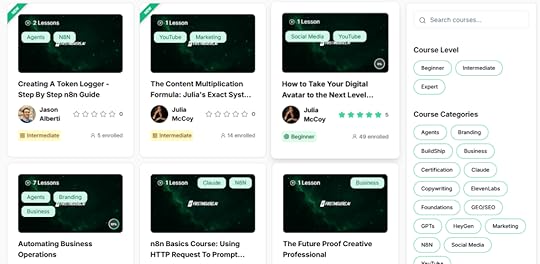
Plus, this whole bunch of implementation guides for everything you’ll ever run into with AI in your business.
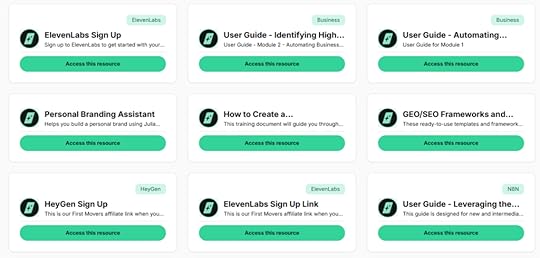
Ok, I’ll stop there.
The rest is for you to explore once you sign up.
Turst me, you will not regret it.
Your AI Transformation Starts NowThe AI revolution isn’t coming. It’s here.
While your competitors are still debating whether AI is worth it, you could be implementing systems that transform every aspect of your business.
While they’re still searching for the perfect AI business transformation course, you could be deploying solutions that drive real results.
The question isn’t whether you need AI in your business. The question is whether you’ll lead the transformation or get left behind.
First Movers R&D AI Labs isn’t for everyone. It’s for business owners who want results, not just education. Who want implementation, not just information.
Ready to stop making empty promises to yourself about AI?
Your transformation starts today.
July 29, 2025
AI Mastery Certification: The Best one for 2025
Every professional today is asking the same question: “Which AI mastery certification will actually prepare me for the future?”
The AI revolution isn’t coming. It’s here.
And if you’re not on the train, you’re watching it leave the station. Without you.
Every day, professionals across every industry are discovering what I learned when I sold my 100-person agency in 2021: AI isn’t just changing how we work. It’s making entire skillsets obsolete overnight.
The question isn’t whether you need to learn AI. The question is how.
But here’s the brutal truth most people won’t tell you…
The Problem with Most AI Certification ProgramsWalk into any “AI mastery certification” program today and you’ll find the same thing:
Theory. Theory. And more theory.
Professors who’ve never built a real AI system teaching you about neural networks you’ll never use. Academic exercises that sound impressive but don’t translate to actual results. Certificates that look nice on LinkedIn but leave you just as confused about AI as when you started.
That’s not mastery. That’s academic theater.
Real AI mastery happens when you can walk into your job tomorrow and immediately implement systems that 25x your productivity. When you can automate workflows that used to take hours. When you can build AI solutions that generate real revenue.
Not when you can explain how a transformer model works.
So which AI mastery certification actually delivers results instead of theory? Let’s break down the options and find out which one will transform your career instead of just adding another certificate to your wall.
But first…
The Benefits of AI Mastery CertificationGetting the right AI mastery certification isn’t just a nice-to-have anymore—it’s career insurance.
In a world where AI is reshaping every industry, professionals with verified AI skills have a massive advantage. Here’s why investing in proper AI certification will transform your career trajectory:
Stand out in a crowded job market – While most candidates talk about “AI familiarity,” certification proves you can actually deliver results with AI tools and systems. Future-proof your income – AI-skilled professionals command premium salaries in today’s job market, with companies willing to pay significantly more for proven AI implementation abilities. Meet employer expectations head-on – Companies now expect AI competency as a baseline skill, not a bonus. Certification shows you’re already equipped for tomorrow’s workplace.Navigate the rapidly evolving landscape – The AI field changes monthly, not yearly. Quality certification programs keep you updated on the latest tools and best practices automatically.Bypass educational barriers – Many AI roles demand advanced degrees, but the right certification can demonstrate practical skills that outweigh traditional education requirements.Build confidence in AI implementation – Stop feeling lost when AI topics come up in meetings. Certification gives you the vocabulary and knowledge to lead AI initiatives confidently.Access exclusive opportunities – Certified AI professionals get first access to high-paying contract work, consulting opportunities, and leadership positions in AI transformation projects.Accelerate your learning curve – Instead of piecing together random YouTube videos and blog posts, structured certification gives you a clear path from beginner to expertThe bottom line: In five years, every job will be an AI job. The question is whether you’ll be leading the transformation or scrambling to catch up.
The 10 Best AI Mastery Certification Programs (Ranked)Best AI Mastery Certification Programs #1: First Movers R&D AI Labs – The Complete AI Implementation Ecosystem
Bottom line upfront: If you want to actually master AI instead of just learning about it, this is where you stop looking.
While other programs teach you about AI, First Movers teaches you to wield AI like a weapon in your career. This isn’t just another AI mastery certification—it’s the complete transformation system that turns you into an AI-first professional.
What makes it different:
Weekly live implementation sessions where you build real AI systems alongside expert integrators (not just watch videos)40+ battle-tested AI bots ready to deploy immediately in your businessLive access to Julia’s AI clone for personalized coaching whenever you need itComplete AI Communications Certification that actually gets you recognized as an expertThe Julia McCoy advantage: Julia sold her 100-person agency before ChatGPT launched because she saw this revolution coming. Now she’s training the next generation of AI leaders who won’t just survive the transition—they’ll dominate it.
Real results: Members have reported significant improvements in productivity and business outcomes after implementing the systems taught in the program.
Investment: $250/month (cancel anytime)
Why it’s #1: This is the only AI mastery certification that focuses on implementation over theory. It’s not just AI training—you become an AI-powered professional who can deliver exponential results from day one.
Best AI Mastery Certification Programs #2: Stanford University School of Engineering – Artificial Intelligence Graduate Certificate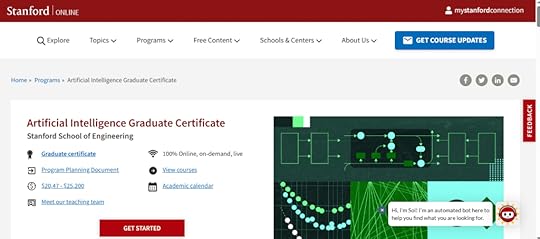
The academic gold standard for AI education, but prepare for heavy theory.
What you get:
Comprehensive coverage of AI principles and technologiesLogic, probabilistic models, machine learning, and roboticsNatural language processing and knowledge representationStanford’s prestigious brand recognitionAccess to world-class faculty and research opportunitiesRigorous academic curriculum with high standardsThe catch: This is built for researchers and academics. If you need practical, deploy-tomorrow AI skills, you might find yourself drowning in mathematical proofs instead of building working systems. Courses require significant time commitment and advanced math background.
Prerequisites: Bachelor’s degree with 3.0+ GPA, calculus, linear algebra, probability theory, and programming experience. Time commitment: 4-6 courses over 1-2 years. Investment: $3,000-5,000 per course.
Best AI Mastery Certification Programs #3: MIT Professional Certificate Program in Machine Learning and Artificial Intelligence
MIT’s reputation speaks for itself, but this AI mastery certification comes with a premium price tag and intensive schedule.
What you get:
16-day intensive program taught by MIT professorsFoundation in cognitive technology and advanced algorithmsMachine Learning for Big Data and Text Processing coursesAdvanced elective courses in specialized areasNetworking opportunities with industry professionalsMIT certificate and alumni network accessThe reality: Excellent theoretical foundation with some practical components, but limited real-world application focus. Great for your resume and deep technical understanding, less great for immediate workplace transformation. Fast-paced and demanding schedule.
Prerequisites: 3+ years in computer science, statistics, physics, or electrical engineering. Investment: $6,000-$8,000+ total Format: Online or on-campus summer program (16 consecutive days).
Best AI Mastery Certification Programs #4: UC Berkeley Executive Education – Artificial Intelligence: Business Strategies and Applications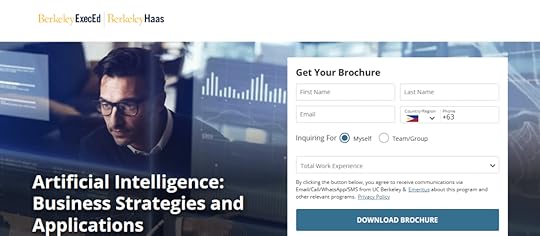
Perfect for executives who need to understand AI strategy but won’t be implementing it themselves.
What you get:
Business-focused AI applications and case studiesTeam building and project management for AI initiativesUnderstanding AI capabilities, limitations, and ROIExecutive-level strategic thinking and decision-making frameworksIndustry best practices and real-world implementation examplesNetworking with other senior executivesStrengths: Strategic focus, executive-level content, practical business applications. Limitations: No hands-on technical training or tool implementation. Best for: C-suite executives, senior managers, business leaders. Not ideal for: Hands-on implementers or individual contributors. Investment: $3,000-$5,000+ (typical executive education pricing)
Best AI Mastery Certification Programs #5: IBM Applied AI Professional Certificate (Coursera)
Beginner-friendly and practical, but limited to IBM’s ecosystem.
What you get:
Watson AI services and APIs trainingVirtual assistant and chatbot creationComputer vision with Python and OpenCVCustom image classification modelsHands-on projects and real-world applicationsProfessional certificate from IBMStrengths: Practical, hands-on approach with immediate applications. The limitation: Heavy focus on IBM tools means less transferable skills to other platforms. Time commitment: 2-4 months at 5-10 hours per week. Prerequisites: Minimal (includes Python intro course). Investment: Coursera subscription fees (~$49/month).
Best AI Mastery Certification Programs #6: Deep Learning Specialization by Andrew Ng (Coursera)
The gold standard for deep learning education with Andrew Ng’s excellent teaching style and comprehensive curriculum.
What you get:
5-course comprehensive neural networks seriesConvolutional neural networks for computer visionRecurrent neural networks and NLP applicationsTensorFlow and practical implementation projectsReal-world case studies and applicationsStrong theoretical foundation with practical codingStrength: Excellent balance of theory and practice, world-class instruction. Weakness: Focuses primarily on deep learning, not broader AI business applications. Time commitment: 3-4 months at 11 hours per week. Prerequisites: Intermediate Python, basic linear algebra and machine learning concepts.
Best AI Mastery Certification Programs #7: Introduction to TensorFlow for AI, ML & Deep Learning (Coursera)
Great for developers who want to specialize in Google’s TensorFlow framework.
What you get:
TensorFlow best practices and optimization techniquesNeural network creation and training workflowsComputer vision applications and image processingConvolution techniques and model improvementHands-on coding assignments and projectsPart of larger TensorFlow Developer Certificate programBest for: Software developers building AI applications with TensorFlow. Limited scope: Focuses specifically on TensorFlow, not other frameworks. Time commitment: 18 hours total content. Prerequisites: Basic Python programming and high school math.
Best AI Mastery Certification Programs #8: Artificial Intelligence A-Z 2024 (Udemy)
Comprehensive and affordable with hands-on projects, though quality can vary with instructor changes.
What you get:
7 practical AI projects including game AI and chatbotsQ-learning, deep Q-learning, and reinforcement learningLarge language models and transformer architecturesChatbot development and fine-tuning techniquesSelf-driving car AI implementationBonus content on generative AI and cloud computingPros: Affordable, practical projects, lifetime access, regular updates. Cons: No live instruction, community support limited, variable instruction quality. Time commitment: 15.5 hours of video content plus project time. Investment: $199 one-time payment.
Best AI Mastery Certification Programs #9: Google Cloud’s Introduction to Generative AI Learning Path
Free and Google-focused, perfect for understanding Google’s AI ecosystem and getting started.
What you get:
Generative AI fundamentals and core conceptsLarge language model basics and applicationsGoogle Tools and Vertex AI platform trainingResponsible AI practices and ethicsHands-on labs with Google Cloud PlatformMultiple learning paths for different rolesBest for: Beginners using Google’s ecosystem, budget-conscious learners. Limited scope: Heavily focused on Google products and services. Time commitment: Self-paced, typically 10-20 hours. Investment: Free (Google Cloud credits may be required for some labs).
Best AI Mastery Certification Programs #10: Artificial Intelligence Engineer (AIE) Certification by ARTiBA
Industry-recognized certification with multiple tracks for different experience levels and comprehensive coverage.
What you get:
Three-track learning system (Associate, Bachelor’s, Master’s level)Machine learning, regression, and neural networksNatural language processing and cognitive computingDeep learning and reinforcement learning modulesIndustry-standard certification and credentialsFlexible learning paths based on experience levelStrength: Flexible tracks for different experience levels, comprehensive curriculum. Weakness: Less hands-on implementation focus, more theoretical approach. Time commitment: Varies by track (3-12 months typical). Prerequisites: Varies by track (Track 1 requires 2+ years experience). Investment: $2,000-$5,000 depending on track level.
The Verdict: Which AI Mastery Certification Actually Works?Here’s what most people get wrong about AI mastery certification programs:
They focus on what sounds impressive instead of what actually works.
MIT and Stanford look great on LinkedIn. But when Monday morning comes and you need to implement AI solutions that deliver real results, theory doesn’t help you.
The programs that actually work share three characteristics:
Live implementation – You build real systems, not just learn about themBattle-tested tools – You get working solutions, not academic exercisesOngoing support – You have expert guidance when you get stuckOnly one program on this list delivers all three: First Movers R&D AI Labs.
While other AI mastery certification programs teach you to pass tests, First Movers teaches you to transform your career. While others give you theory, First Movers gives you working AI systems you can deploy immediately.
The choice is simple:
Do you want an AI mastery certification that looks good on your resume, or one that makes you irreplaceable in your career?
If you chose the latter, your transformation starts here. Join the professionals who aren’t just surviving the AI revolution—they’re leading it.
Because in the post-AI economy, there are only two types of professionals: those who master AI, and those who get replaced by it.
Which one will you be?
July 25, 2025
The Most Powerful AI Implementation Training Guide: Transform Your Content Strategy in 2025
Picture this: Your content team just delivered 50 high-quality articles in half the time it used to take them to write 10. Your brand voice is consistent across every piece. Your costs have dropped by 70%. And your audience engagement? Through the roof.
This isn’t science fiction—it’s the reality for businesses that have mastered AI implementation training. If you’re still debating whether AI belongs in your content strategy, you’re already behind. The question isn’t if you should implement AI—it’s how fast you can do it right.
Welcome to your complete roadmap for transforming your content operations with AI. This isn’t another surface-level guide filled with generic advice. This is your deep-dive training manual for building an AI-powered content machine that delivers results while you sleep.
The AI Content Revolution: Why Traditional Content Creation Is DeadLet’s get brutally honest about something: human-only content creation is becoming as outdated as dial-up internet. Here’s why the AI content revolution isn’t just changing the game—it’s rewriting the entire rulebook.
The Numbers Don’t LieRecent research from leading universities and industry organizations reveals a transformation that’s nothing short of revolutionary. A December 2024 Stanford University and World Bank survey of 4,278 respondents found that using generative AI reduced the average time taken to complete work tasks by more than 60%. Even more impressive, content creators using AI report time savings of up to 75%, with most users saving up to an hour per piece of content.
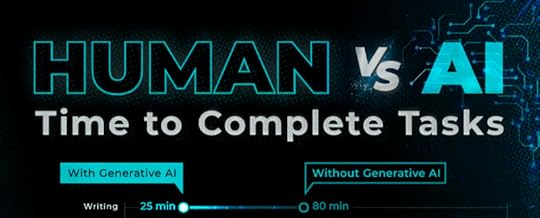
The productivity implications are staggering when you scale these numbers. With a recommended posting frequency of 1–2 times per day per channel, this can add up to as much as 60 hours saved per month. An astounding 83.82% of respondents reported increased productivity since adopting AI, while marketers save 3 hours per piece of content and 2.5 hours per day overall with AI tools.
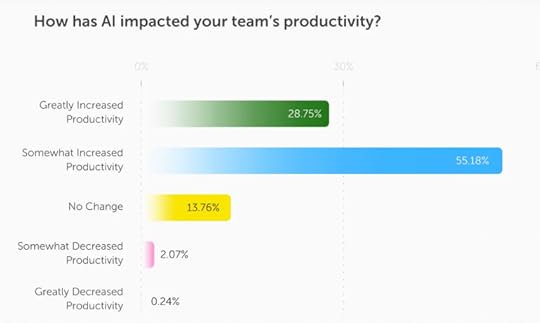
More than 78% of companies currently use generative AI, which increases business productivity and reduces employee workload by 60-70%. But here’s what those statistics don’t capture: the creative breakthrough that happens when you free your human talent from repetitive tasks and let them focus on strategy, creativity, and high-level thinking.
The real magic occurs when your content creators stop being content producers and become content architects. They’re designing systems, refining strategies, and focusing on the creative elements that truly require human insight while AI handles the heavy lifting of execution.
Why AI Crushes Human-Only ApproachesSpeed That Scales: While your best human writer cranks out an article a day, AI can generate 10+ pieces in the same timeframe. We’re not talking about replacing human creativity—we’re talking about amplifying it.
Consistency That Counts: Ever had a writer disappear mid-project? Or struggle with maintaining brand voice across a team of freelancers? AI doesn’t have bad days, doesn’t get writer’s block, and never misses deadlines.
Cost-Effectiveness That Changes Everything: The average content writer costs $50,000+ annually. A comprehensive AI content system? Often less than $2,000 per year. The ROI is staggering.
Creative Solutions to Creative Problems: AI doesn’t just solve time and cost issues—it eliminates creative bottlenecks. Stuck on headlines? AI generates 50 options in seconds. Need fresh angles? AI analyzes thousands of perspectives instantly.
The businesses that embrace this shift now will dominate their industries. Those that don’t? They’ll be struggling to keep up while their AI-powered competitors capture market share at lightning speed.
Master Your Brand Voice Through AI Implementation TrainingHere’s the biggest misconception about AI content: “It all sounds robotic and generic.”
That’s like saying all cars are slow because you’ve only driven a broken-down sedan. The problem isn’t AI—it’s improper training.
It’s About Training, Not PromptingMost people approach AI like a search engine. They type a quick prompt and expect magic. That’s not how you build a content empire.
Real AI implementation training focuses on teaching the AI to understand your brand at a molecular level. This means:
Voice Mapping: Document your brand’s personality traits, communication style, tone variations, and linguistic preferences. Create a comprehensive brand voice guide that covers everything from sentence structure to emotional undertones.
Example Bank Creation: Feed your AI system examples of your best content. Include blog posts, emails, social media updates, and any other content that perfectly captures your brand voice.
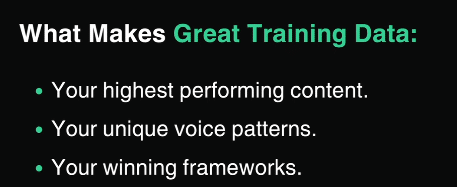
Here’s what makes great training data:
Iterative Refinement: This isn’t a set-it-and-forget-it process. You’ll continuously refine and adjust based on output quality, ensuring your AI gets smarter about your brand with every interaction.
Want to learn more about how to train your AI on you brand voice? I talk all about it inside First Movers R&D AI Labs. Check out the details here.
The Training Framework That WorksBuilding effective AI implementation training requires a systematic approach that goes far deeper than most businesses realize. The framework that consistently produces results operates in three distinct phases, each building upon the previous one to create an AI system that truly understands and embodies your brand.
The first phase centers on comprehensive voice documentation. This isn’t about writing a simple brand guide—it’s about creating a detailed blueprint of how your brand communicates across every possible scenario. You’ll analyze your top-performing content not just for what it says, but for how it says it. The sentence structures that feel natural to your audience. The emotional undertones that resonate. The specific word choices that distinguish your brand from countless competitors.
During this phase, you’ll identify consistent language patterns that might not be obvious at first glance. Perhaps your brand naturally uses shorter sentences when discussing complex topics, making information more digestible. Maybe you consistently employ rhetorical questions to engage readers, or you have a particular way of transitioning between ideas that creates flow. These subtle patterns become the foundation of your AI training.
The second phase transforms your documentation into AI education. This goes far beyond simply uploading examples to your AI system. You’re creating detailed context instructions that help the AI understand not just what to write, but why certain choices matter for your brand. You’ll test output against your established brand standards, but more importantly, you’ll develop the ability to recognize when the AI is capturing your brand essence versus when it’s merely mimicking surface-level characteristics.
The final phase establishes quality assurance processes that evolve with your AI’s capabilities. You’ll create feedback loops that help the AI learn from both successes and failures. This isn’t a one-time setup—it’s an ongoing optimization process that continuously refines your AI’s understanding of your brand voice. The goal is reaching a point where your AI-generated content is indistinguishable from your best human writers, except it produces results faster, cheaper, and more consistently.
Here’s an example of creating training data from my course, AI Comunications, which you can find inside First Movers R&D AI Labs:
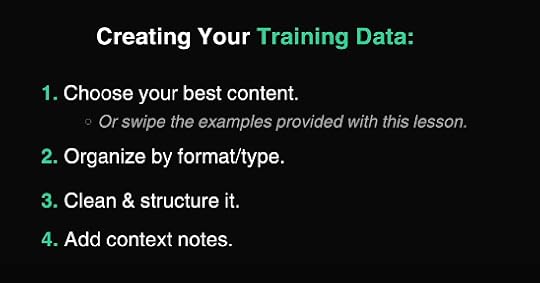
When done correctly, your AI will write content that’s indistinguishable from your best human writers—except it’ll do it faster, cheaper, and more consistently.
Master LLM Communication for Maximum ResultsNot all AI tools are created equal. And knowing how to communicate with Large Language Models (LLMs) separates the amateurs from the professionals.
Choose Your Weapons WiselyClaude: Excels at nuanced, creative writing and complex reasoning. Perfect for long-form content and strategic planning.
GPT-4: Strong at versatile content creation and technical writing. Great for diverse content needs.
Gemini: Excellent for research-heavy content and data analysis integration.
The key isn’t picking one—it’s understanding when to use each for maximum impact.
Advanced LLM Communication StrategiesThe difference between amateur and professional AI implementation training lies in understanding how to communicate with Large Language Models at an advanced level. Most people treat AI like a sophisticated search engine, typing basic prompts and expecting magic. Professionals understand that LLMs are conversation partners that get smarter and more helpful as you develop better communication strategies.
Context stacking represents one of the most powerful techniques in professional AI communication. Instead of relying on single prompts, you build context through strategic conversation. You might start with a broad discussion about your industry, then narrow down to specific content types, and finally zero in on the exact piece you want to create. Each exchange adds layers of understanding that dramatically improve the final output quality.
Role-based interactions take this concept further by assigning specific expertise to your AI. When you instruct the AI to “act as a marketing strategist with ten years of experience in B2B SaaS companies,” you’re not just setting tone—you’re accessing a specific knowledge framework that influences every aspect of the response. The AI draws from its understanding of marketing strategy, B2B communication patterns, and SaaS industry knowledge to provide more sophisticated and relevant outputs.
Iterative refinement transforms AI from a one-shot content creator into a collaborative partner. You use the AI’s initial response as a foundation, then guide it through successive improvements. This might involve refining the angle, adjusting the tone, expanding certain sections, or incorporating additional perspectives. Each iteration builds upon the previous one, creating increasingly sophisticated results that often surpass what either human or AI could achieve alone.
Multi-model collaboration represents the cutting edge of AI implementation training. Different AI models excel in different areas, and professionals know how to orchestrate these strengths. You might use one model for initial ideation because of its creative capabilities, another for detailed writing due to its structural strengths, and a third for editing because of its precision with language refinement.
Communication Best PracticesMastering AI communication requires understanding that precision in input directly correlates to quality in output. Vague requests produce vague results, while specific, detailed instructions unlock the AI’s full potential. This doesn’t mean writing longer prompts—it means writing smarter ones that provide exactly the context and constraints the AI needs to deliver exceptional results.
Providing examples serves as one of the most effective training methods. When you show the AI exactly what you want through concrete examples, you eliminate guesswork and establish clear quality benchmarks. This might involve sharing previous blog posts that captured your ideal tone, email campaigns that drove exceptional engagement, or social media posts that perfectly represented your brand voice.
Using constraints paradoxically increases creative output quality. When you set clear boundaries and requirements, you focus the AI’s creative energy within productive parameters. This might involve specifying word count ranges, defining required sections, establishing tone parameters, or identifying specific points that must be covered.
Intelligent iteration builds upon each interaction systematically rather than starting fresh each time. You develop conversation threads with your AI that evolve and improve over multiple exchanges. This approach treats AI as a collaborative partner rather than a content vending machine, leading to significantly better results.
Master these techniques, and you’ll unlock AI capabilities that most businesses never even realize exist.
Build AI Workflows That Actually WorkRandom AI usage leads to random results. Systematic AI workflows lead to systematic success.
The Weekly AI Implementation Training ScheduleHere’s an example of an AI workflow you can implement in your company:
Monday: Strategic Planning Day
Core topic selection and keyword researchContent calendar planningCompetitive analysis using AI toolsStrategic theme developmentTuesday: AI Generation Day
Bulk content creation using trained AI systemsMultiple format generation (blogs, social posts, emails)Initial quality checks and sortingContent variation testingWednesday: Human Review and Enhancement
Editorial review of AI-generated contentHuman creativity layer additionBrand voice consistency checksStrategic alignment verificationThursday: Optimization and Refinement
SEO optimization passesPerformance metric analysisContent formatting and visual integrationDistribution preparationFriday: Distribution and Monitoring
Multi-channel content distributionPerformance tracking setupAudience feedback collectionNext week’s planning preparationWorkflow Automation Tools and IntegrationCreating seamless AI workflows requires strategic tool selection and integration. Content management becomes the backbone of your operation, and platforms like Notion or Airtable transform from simple organizational tools into comprehensive command centers that track content through every stage of your pipeline. These systems maintain visibility into your entire content ecosystem while ensuring nothing falls through the cracks.
AI integration through platforms like Zapier creates the connective tissue between your various AI tools and business systems. This isn’t just about automation—it’s about creating intelligent workflows that adapt based on content performance, audience engagement, and business priorities. Your AI tools become extensions of your content strategy rather than isolated applications.
Quality control automation implements systematic checks for brand voice consistency, SEO optimization, and content quality standards. These systems catch potential issues before content goes live while learning from your feedback to improve future assessments. The goal is building confidence in your AI-generated content without sacrificing the speed advantages that drew you to AI in the first place.
Distribution automation ensures your content reaches the right audiences through appropriate channels while maintaining the personalization that drives engagement. This involves more than scheduling posts—it’s about adapting content for different platforms, audiences, and contexts while preserving your core message and brand voice.
The goal isn’t just efficiency—it’s creating a repeatable system that produces consistent, high-quality results regardless of team changes or market shifts.
Future-Proof Your AI SystemsAI technology evolves faster than social media trends. Today’s cutting-edge tool becomes tomorrow’s outdated software. Smart businesses don’t just implement AI—they build adaptable AI systems.
Continuous Learning IntegrationStaying current in the AI landscape requires more than casual observation—it demands systematic engagement with the rapid pace of innovation. The most successful AI implementation training programs allocate dedicated time for exploring emerging technologies, testing new capabilities, and refining existing processes. This isn’t about chasing every new shiny object, but about maintaining awareness of developments that could significantly impact your content strategy.
Regular experimentation should consume approximately twenty percent of your dedicated learning time. This investment pays dividends when breakthrough tools emerge or when you discover new applications for existing technology. Some experiments will fail, but the successes often provide competitive advantages that justify the entire experimental budget.
Developing robust feedback loops creates systems that learn from your content performance automatically. You’ll track which AI-generated content drives the most engagement, conversions, and revenue, then feed that performance data back into your training processes. This creates a virtuous cycle where your AI systems become increasingly aligned with your business objectives and audience preferences.
The most sophisticated organizations treat their AI systems as learning entities that evolve continuously rather than static tools that perform predetermined functions. This perspective transforms your training approach from a one-time project into an ongoing optimization process that compounds benefits over time.
Building Flexible SystemsFuture-proofing your AI systems requires architectural thinking that goes beyond current tool capabilities. Tool-agnostic workflows ensure your processes work regardless of which specific AI platforms you’re using. When the next breakthrough AI launches—and it will—you should be able to integrate it seamlessly without rebuilding your entire content operation.
Modular approaches create content systems with interchangeable components. Your headline generation process should work whether you’re using Claude, GPT-4, or whatever revolutionary AI emerges next year. This flexibility extends beyond just swapping tools—it’s about designing workflows that adapt to new capabilities while maintaining consistency and quality.
Scalable infrastructure considerations become critical as your content volume grows. Systems that work perfectly for ten pieces of content per week might collapse under the weight of a thousand. Building with scale in mind from the beginning prevents costly rebuilds later and ensures your AI investment continues paying dividends as your business grows.
The most resilient AI systems anticipate change rather than simply reacting to it. This means building flexibility into every component, from content creation processes to quality assurance protocols to distribution mechanisms.
Quality Control That EvolvesDynamic Standards: Your quality metrics should evolve with AI capabilities and market demands.
Human-AI Collaboration: Maintain the human element in strategic decisions while letting AI handle execution.
Performance Monitoring: Track not just content output, but business impact. Which AI-generated content drives the most engagement, conversions, and revenue?
Streamline Your App Management for Maximum EfficiencyThe typical business uses 15+ different tools for content creation. AI doesn’t reduce complexity—it can multiply it if you’re not strategic.
The Integration ChallengeTool Sprawl: Every new AI tool adds another login, another interface, another learning curve.
Data Silos: Information trapped in different platforms reduces efficiency and insights.
Workflow Friction: Switching between tools wastes time and breaks creative flow.
Streamlining SolutionsCentralized Dashboards: Use platforms like Notion, Monday.com, or custom solutions to centralize your AI workflow management.
API Integrations: Connect your AI tools through APIs to create seamless data flow.
Single Sign-On: Implement SSO solutions to reduce login friction and improve security.
Workflow Automation: Use tools like Zapier or Make to automate routine tasks between platforms.
The Minimalist ApproachCore Tool Selection: Identify the 3-5 AI tools that deliver 80% of your results. Eliminate or reduce reliance on the rest.
Multi-Purpose Prioritization: Choose tools that serve multiple functions rather than specialized single-purpose applications.
Regular Audits: Monthly reviews of tool usage, costs, and value delivery keep your tech stack lean and effective.
Build Trustworthy AI AutomationsAutomation without trust is just expensive chaos. Here’s how to build AI systems you can rely on completely.
Security First ApproachImplementing enterprise-grade security for your AI operations protects both your intellectual property and your customers’ trust. Data protection extends far beyond basic password security—it involves comprehensive encryption for all AI-processed content, ensuring your proprietary information never becomes accessible to unauthorized parties or competing organizations.
Access controls create layered security that gives team members exactly the permissions they need without exposing sensitive systems or data. This involves more than simple user accounts—it’s about creating role-based systems that adapt as team members’ responsibilities change and as your AI implementation scales.
Audit trails provide comprehensive documentation of all AI interactions, content generation activities, and system changes. This transparency serves multiple purposes: ensuring accountability, enabling troubleshooting, meeting compliance requirements, and providing data for optimizing your training processes.
Compliance adherence becomes increasingly complex as AI regulations evolve globally. Your systems must meet current requirements like GDPR and CCPA while remaining flexible enough to adapt to future regulatory changes. This requires ongoing monitoring of legal developments and proactive system updates to maintain compliance.
Building Reliable SystemsRedundancy Planning: Never rely on a single AI tool for critical processes. Build backup systems and alternative workflows.
Error Handling: Create protocols for when AI systems fail or produce subpar results. Your business should never stop because an AI tool is down.
Version Control: Track changes to your AI training, prompts, and workflows. You should be able to roll back to previous versions if needed.
Testing Protocols: Implement systematic testing for all AI outputs before they go live.
Trust Through TransparencyClear Documentation: Document every aspect of your AI workflow so team members understand how and why systems work.
Regular Reviews: Schedule monthly assessments of AI performance, security, and business impact.
Team Training: Ensure all team members understand both the capabilities and limitations of your AI systems.
Performance Metrics: Track reliability, accuracy, and business impact to demonstrate AI system trustworthiness.
Advanced AI Implementation Training Resources and Continuous EducationThe rapid evolution of AI technology demands a sophisticated approach to ongoing education that goes far beyond casual reading. Professional AI training requires systematic engagement with multiple learning channels, from official platform documentation to cutting-edge research papers to hands-on community participation.
Official platform documentation from providers like OpenAI and Anthropic offers the deepest technical insights into AI capabilities and best practices. These resources often include advanced techniques that aren’t widely discussed in general AI content, providing competitive advantages for organizations that invest time in thorough study.
AI research institutions continuously publish findings that preview future capabilities and reveal optimization techniques that can be applied immediately. Following publications from organizations like Stanford’s AI Lab, MIT’s Computer Science and Artificial Intelligence Laboratory, and industry research teams provides early access to breakthrough methods before they become mainstream knowledge.
Industry communities on platforms like LinkedIn, Discord, and specialized forums create opportunities for peer learning and collaborative problem-solving. The most valuable discussions often happen in these communities, where practitioners share real-world experiences, troubleshoot challenges, and collaborate on innovative applications.
Specialized certification programs have emerged from leading educational platforms, offering structured paths for mastering AI content marketing, advanced prompting techniques, and automation workflows. These programs provide both knowledge and credentials that demonstrate expertise to clients and employers.
One of the best programs you can take is my very own AI Communications Course, which can be found inside First Movers R&D AI Labs. This course, along with 40+ other mini courses, is everything you need to master AI implentation.
 Your AI Implementation Training Action Plan
Ready to transform your content strategy? Here’s your step-by-step implementation roadmap:
Week 1-2: Foundation BuildingAudit current content processes and identify AI opportunitiesSelect primary AI tools based on your specific needsBegin brand voice documentation and training material creationWeek 3-4: Initial ImplementationSet up AI tools and basic workflowsCreate first batch of training content for AI systemsEstablish quality control processesWeek 5-8: Optimization PhaseRefine AI training based on initial resultsBuild comprehensive workflow systemsImplement automation and integration solutionsWeek 9-12: Scale and SystematizeExpand AI usage across all content channelsTrain team members on new processesEstablish ongoing optimization protocolsBeyond 12 Weeks: Continuous EvolutionRegular system updates and improvementsIntegration of new AI technologiesPerformance optimization and scalingThe Future Belongs to AI-Powered Content TeamsThe businesses dominating their industries five years from now won’t be the ones with the biggest teams or the largest budgets. They’ll be the ones who mastered AI training early and built systems that scale.
Your competitors are already experimenting with AI. Some are already implementing it. The question isn’t whether you should join the AI revolution—it’s whether you’ll lead it or follow it.
The complete framework outlined here isn’t just theory. It’s a proven system that’s transforming content strategies across industries. From startups creating enterprise-level content with teams of three to Fortune 500 companies reducing content costs by millions while improving quality.
The tools exist. The strategies work. The only variable is your commitment to implementation.
Your AI-powered content future starts today. The only question remaining is how fast you want to get there.
Ready to revolutionize your content strategy? Start with one AI tool, one workflow, and one piece of content. Then scale from there. Before you know it, you’ll be creating content that would have taken months in mere days—and your audience will never know the difference.
But of course, you need guidance.
That’s why we’ve creaated First Movers R&D AI Labs, your ultimate AI implementation community. It’s everything you need to become an expert in AI implementation.
July 15, 2025
Custom AI Bots for Business: Ready-Made vs. Built-from-Scratch (+7 Powerful Reasons to Choose Ready-Made)
Custom AI bots for business aren’t optional anymore. They’re survival.
But here’s where most companies mess up: they think building from scratch is always the smart move. Meanwhile, the winners are scaling fast with ready-made solutions while their competitors burn through budgets on custom builds that never see daylight.
If you’re drowning in the “build vs. buy” nightmare, this deep dive will save you months of pain and thousands in mistakes. Let’s cut through the noise and get to what actually works.
The Brutal Reality: Why Built-from-Scratch AI Bots Often FailLet me be blunt about something most consultants won’t tell you.
Building AI bots from scratch is where dreams go to die. I’ve watched it happen over and over, and the patterns never change. Here’s what really happens when you decide to “build it yourself.”
1. The Data Nightmare That Never EndsYour data is probably messier than you think.
Insufficient, inaccurate, or biased data can cripple your AI model before it even gets off the ground. Think of it like building a house on quicksand – even with the best materials and construction, the structure will fail.
Custom AI bots for business need massive amounts of clean, relevant data to function properly. We’re talking thousands of conversation examples, properly labeled intents, entity recognition training, and continuous data cleaning processes. Most companies underestimate this requirement by a mile.
Here’s an example: One businessman spends six months just organizing and cleaning their customer service data before they can even start training their bot. That’s six months of burning cash with zero ROI, just getting to the starting line.
The data challenge doesn’t end there. You need ongoing data collection, labeling, and quality assurance. Customer language evolves, new products launch, business processes change – your data needs to keep pace or your bot becomes obsolete.
Data is always changing, and it’s a challenge to stay up-to-date.

This is one big reason why creating a customized bot from scratch can turn into a nightmare.
2. The Technical Expertise Black HoleBuilding custom AI bots requires specialized skills that most teams simply don’t have.
We’re talking natural language processing experts, machine learning engineers, conversational AI designers, and integration specialists. These aren’t general developers – they’re highly specialized professionals with deep AI expertise.
The numbers are staggering. According to Glassdoor, the average salary for an AI engineer is up to $174,000 annually.
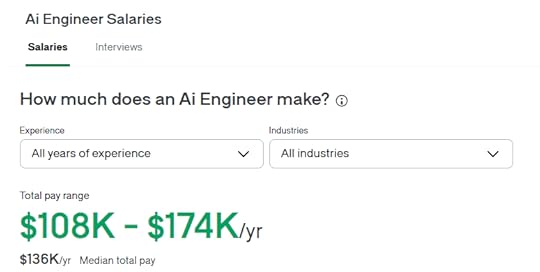
Multiply that by the 3-5 specialists you actually need, and you’re looking at nearly a million dollars in salary costs alone – before you’ve built anything.
Most teams try to upskill existing developers or hire generalists who “know some AI.” This leads to fundamental architecture problems, poor performance, and ultimately, failure. Despite the advancement in AI chatbot technologies, some issues may arise with AI chatbots, like failing to understand the user intent, having a lack of context, and generating scripted outputs.
3. Integration Hell and System CompatibilityWant your shiny new bot to talk to your CRM? Your help desk? Your e-commerce platform? Welcome to integration hell.
Custom builds often become integration nightmares because every connection requires custom development, extensive testing, and ongoing maintenance. What should take days turns into months of development cycles.
Organizations are expected to proceed with caution concerning AI integration. While there is strong belief in AI’s potential, its implementation comes with significant challenges, such as managing large volumes of data, ensuring data privacy and security and complying with regulations.
In fact, according to Glide, data privacy and security are the biggest concerns and hindrances when it comes to AI integration.
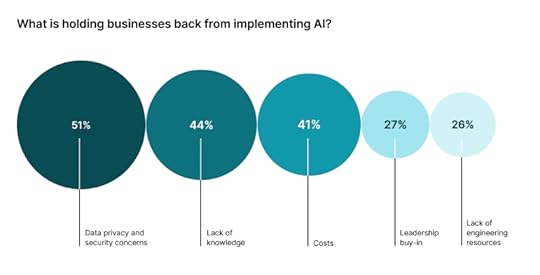
Each integration introduces new failure points, security considerations, and maintenance overhead. Your simple customer service bot suddenly needs to handle authentication protocols, data synchronization, error handling, and failover scenarios across multiple systems.
4. The Never-Ending Maintenance MonsterHere’s what nobody talks about in the sales meetings: your bot isn’t a “set it and forget it” solution.
One of the most overlooked AI chatbot problems is neglecting the NLP lifecycle. Businesses feed the system some initial data and leave it untouched. Over time, accuracy falls, and the chatbot struggles to understand even routine inputs.
And that’s bad. I mean, would you want your chatbot answering your customers like this?
No, right?
Your custom AI bots for business need constant training, model updates, performance optimization, and feature enhancements. Customer language evolves, business processes change, new integrations are required, and your bot needs to keep up with all of it.
Most companies budget for building a chatbot. (And mind you, it’s not cheap.)

But what they miss is the costs of maintaining the AI bots, which can range from about $1,000 to $5,000 a month.
5. Timeline Disasters and Scope Creep“It’ll take 3 months,” they said. Eighteen months later, you’re still debugging basic functionality.
Heard this statement before?
‘This is super cool, but I can’t actually get it to work reliably enough to roll out to our customers.”
If you have then you know the timeline disaster and scope creep too well.
Feature creep is the silent killer. Your simple customer service bot suddenly needs to handle sales inquiries, appointment booking, payment processing, multilingual support, and integration with seventeen different systems. The scope explodes, timelines double, and budgets triple.
Development teams consistently underestimate the complexity of conversational AI. What seems straightforward – answering customer questions – involves natural language understanding, context management, dialogue flow design, error handling, and graceful fallbacks to human agents.
6. Security and Compliance CatastrophesCustom AI bots carry enormous security responsibilities that most teams aren’t prepared for.
AI can become a considerable company liability without proper cybersecurity measures, potentially leading to various threats, including data poisoning and cyberattacks. You’re handling customer data, potentially sensitive information, and creating new attack vectors that didn’t exist before.
Building proper security, compliance, and monitoring from scratch requires specialized knowledge that most development teams lack. You need to handle data encryption, access controls, audit logging, GDPR compliance, PCI DSS requirements (if handling payments), and protection against AI-specific attacks like prompt injection.
One security breach can cost more than your entire bot project – and that’s just the immediate financial impact. The reputational damage and regulatory consequences can be devastating.
7. The Scale and Performance Reality CheckYour pilot works beautifully with 10 internal users. But what happens when 1,000 customers hit it simultaneously during peak hours?
Custom builds often fail at scale because teams underestimate the infrastructure requirements. Performance optimization, load balancing, auto-scaling, and geographic distribution require specialized infrastructure knowledge that adds months to development timelines.
You need to plan for traffic spikes, concurrent conversations, natural language processing at scale, and integration performance across multiple systems. Without proper architecture from day one, you’ll hit walls that require complete rebuilds.
Why Custom AI Bots for Business Work Better When They’re Ready-MadeNow here’s where smart businesses make their move. While everyone else drowns in development hell, ready-made custom AI bots for business are solving real problems and generating ROI from day one.
1. Lightning-Fast Implementation and Immediate ROIReady-made solutions get you LIVE in days, not months. I’ve seen businesses deploy functional custom AI bots for business and start seeing measurable results within the first week.
Quick Deployment: Can be implemented rapidly, allowing companies to benefit from AI technologies without lengthy development times. Compare that to 6-18 months for custom development, and the opportunity cost becomes clear.
Every day your competitors are using AI while you’re still in the planning phase is a day of lost market advantage. Time-to-value is everything in today’s fast-moving business environment.
But speed doesn’t mean sacrificing quality. These platforms have been refined through thousands of deployments, real-world testing, and continuous improvement based on actual user feedback.
2. Battle-Tested Reliability and Proven PerformanceReady-made platforms have survived the trial by fire of thousands of businesses across countless scenarios and edge cases.
Proven Reliability and Support: Often come with vendor support, updates, and a community of users, ensuring reliability and assistance when needed. The bugs have been found and fixed. The performance bottlenecks have been identified and resolved. The security vulnerabilities have been patched.
Your custom AI bots for business benefit from this collective intelligence and shared learning. Why reinvent the wheel when you can leverage a Ferrari that’s already been tested on every type of road?
These platforms process millions of conversations monthly, giving them insights into conversation patterns, failure modes, and optimization opportunities that no single custom build could match.
3. Enterprise-Grade Security and Compliance Built-InReady-made platforms have already invested millions in security infrastructure, compliance frameworks, and data protection protocols.
You get enterprise-grade security without the enterprise-grade development costs and timeline. These platforms handle GDPR, CCPA, SOC 2, HIPAA, and other compliance requirements automatically, with regular audits and certifications.
Try building that level of security and compliance from scratch and watch your timeline explode from months to years. Most businesses severely underestimate the complexity and ongoing effort required for proper security implementation.
4. Seamless Integration EcosystemsModern ready-made custom AI bots for business come with hundreds of pre-built integrations and robust APIs for custom connections.
Because it’s built on platforms like Zapier, it’s connected to thousands of other apps, meaning you can create automated workflows to track leads, analyze conversations, and share insights with your team. Your CRM, help desk, e-commerce platform, marketing automation tools – they all connect with a few clicks, not months of development.
These integrations are maintained and updated by the platform provider, so you don’t have to worry about API changes, authentication updates, or compatibility issues as third-party systems evolve.
5. Continuous Innovation and Automatic UpdatesWhen you build custom, you’re stuck maintaining and updating everything yourself. Every new AI model, every platform enhancement, every security patch – it’s all on your team.
With ready-made solutions, you automatically get new features, improved AI models, enhanced security, and platform enhancements. It’s always up-to-date with the latest LLM engines, ensuring its chatbots and AI agents are always powered by the most recent technology.
Your custom AI bots for business stay cutting-edge without additional development costs, timeline disruptions, or technical debt accumulation.
6. True Scalability That Actually WorksReady-made platforms are architected for scale from day one. They handle traffic spikes, concurrent users, and business growth seamlessly.
Scalability: Can handle high volumes of requests and integrate with various platforms, making them ideal for large enterprises. You don’t need to worry about infrastructure planning, load balancing, database optimization, or performance tuning. It’s all handled by teams whose full-time job is platform reliability and performance.
This isn’t theoretical scalability – these platforms regularly handle enterprise deployments with millions of interactions monthly.
7. Cost Predictability and Budget ControlWith ready-made solutions, you know exactly what you’re paying upfront and ongoing. No surprise development costs, no scope creep, no budget explosions that turn $50K projects into $500K nightmares.
Cost-Effective: Lower initial investment compared to custom chatbot solutions. This predictability allows you to focus on ROI and business outcomes instead of project management and budget firefighting.
You can start small, prove value, and scale investment based on demonstrated results rather than theoretical projections.
8. Expert Support and Community KnowledgeYou’re not flying blind with ready-made platforms. They come with expert support teams, comprehensive documentation, active user communities, and proven best practices.
When you hit roadblocks or have questions, help is available immediately from people who’ve solved similar problems hundreds of times before. Compare that to custom development where you’re dependent on your internal team or expensive consultants for every issue.
How First Movers Revolutionizes Custom AI Bots for BusinessHere’s where things get really interesting. While most companies are stuck choosing between expensive custom development and generic ready-made solutions, there’s a third path that’s changing everything.
At First Movers, we’ve cracked the code on custom AI bots for business that give you the best of both worlds: the speed and reliability of ready-made solutions with the customization and competitive advantage of bespoke development.
Our approach isn’t about forcing a choice between custom or ready-made – it’s about intelligent implementation that maximizes results while minimizing risk and time-to-value.
Ready-to-Deploy Solutions with Custom IntelligenceWe provide 40+ battle-tested AI bots customized for your industry that can be rapidly deployed and fine-tuned for your specific use cases.
Whether you need customer service automation, lead qualification systems, appointment booking workflows, sales support tools, or marketing automation, we have proven custom AI bots for business frameworks that can be deployed and optimized within days, not months.
Each solution is built on proven architecture but customized with your brand voice, business logic, integration requirements, and performance metrics.
Want to find out more? Visit First Movers R&D AI Labs for more details.
Integration Expertise That Eliminates Technical HeadachesWe handle all technical aspects of implementation – from knowledge base development to content systems and workflow automation – while you maintain strategic control, ensuring maximum results with minimal operational disruption.
We handle the complex technical integration work, performance optimization, and ongoing maintenance so you can focus on running your business and leveraging the results.
Your custom AI bots for business integrate seamlessly with your existing systems without disrupting your operations or requiring extensive internal technical resources.
So no, you don’t have to worry about excessive costs, privacy issues, and all the headache of building your own bots.
At First Movers R&D AI Labs, you can instantly deploy over 40 AI bots the moment you join.
And will you spend thousands of dollars?
No.
Not even a thousand.
Not even $500.
You can get access to all the bots for only $250 a month.
The Bottom Line: Smart Money Moves FastI get it. The idea of building something completely custom feels appealing. It’s your vision, your competitive advantage, your unique solution.
But here’s what years in this industry has taught me: speed to market beats perfection every single time.
While your competitors are still arguing about technical specifications and burning through development budgets, smart businesses are already generating measurable ROI with strategically implemented custom AI bots for business.
The companies winning in AI aren’t the ones with the most sophisticated custom builds – they’re the ones who moved fast, implemented intelligently, and optimized continuously. They chose solutions that delivered results quickly, then scaled and refined from there.
Ready-made doesn’t mean generic when you work with experts who understand how to customize, optimize, and integrate for your specific needs and competitive landscape. It means strategic, proven, and profitable.
The future belongs to businesses that move first and move smart. While everyone else is stuck in endless planning cycles and development delays, you could be generating real results with custom AI bots for business that actually work and deliver measurable value.
Don’t let perfect become the enemy of profitable. The AI revolution is happening right now, and the early movers are already pulling ahead of the pack.
The question isn’t whether you should implement AI – it’s whether you’ll lead your industry or follow your competitors.
Your move.
December 16, 2024
Test Redirect
The post Test Redirect appeared first on Content Hacker.