The Most Powerful AI Implementation Training Guide: Transform Your Content Strategy in 2025
Picture this: Your content team just delivered 50 high-quality articles in half the time it used to take them to write 10. Your brand voice is consistent across every piece. Your costs have dropped by 70%. And your audience engagement? Through the roof.
This isn’t science fiction—it’s the reality for businesses that have mastered AI implementation training. If you’re still debating whether AI belongs in your content strategy, you’re already behind. The question isn’t if you should implement AI—it’s how fast you can do it right.
Welcome to your complete roadmap for transforming your content operations with AI. This isn’t another surface-level guide filled with generic advice. This is your deep-dive training manual for building an AI-powered content machine that delivers results while you sleep.
The AI Content Revolution: Why Traditional Content Creation Is DeadLet’s get brutally honest about something: human-only content creation is becoming as outdated as dial-up internet. Here’s why the AI content revolution isn’t just changing the game—it’s rewriting the entire rulebook.
The Numbers Don’t LieRecent research from leading universities and industry organizations reveals a transformation that’s nothing short of revolutionary. A December 2024 Stanford University and World Bank survey of 4,278 respondents found that using generative AI reduced the average time taken to complete work tasks by more than 60%. Even more impressive, content creators using AI report time savings of up to 75%, with most users saving up to an hour per piece of content.
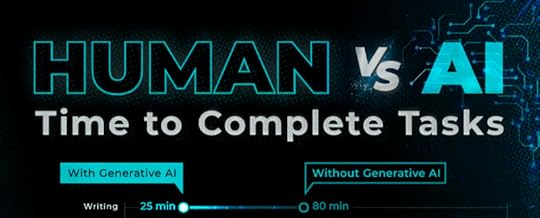
The productivity implications are staggering when you scale these numbers. With a recommended posting frequency of 1–2 times per day per channel, this can add up to as much as 60 hours saved per month. An astounding 83.82% of respondents reported increased productivity since adopting AI, while marketers save 3 hours per piece of content and 2.5 hours per day overall with AI tools.
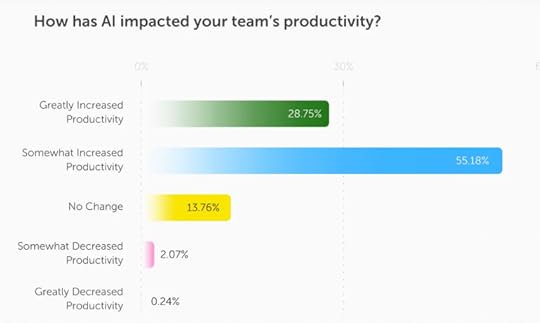
More than 78% of companies currently use generative AI, which increases business productivity and reduces employee workload by 60-70%. But here’s what those statistics don’t capture: the creative breakthrough that happens when you free your human talent from repetitive tasks and let them focus on strategy, creativity, and high-level thinking.
The real magic occurs when your content creators stop being content producers and become content architects. They’re designing systems, refining strategies, and focusing on the creative elements that truly require human insight while AI handles the heavy lifting of execution.
Why AI Crushes Human-Only ApproachesSpeed That Scales: While your best human writer cranks out an article a day, AI can generate 10+ pieces in the same timeframe. We’re not talking about replacing human creativity—we’re talking about amplifying it.
Consistency That Counts: Ever had a writer disappear mid-project? Or struggle with maintaining brand voice across a team of freelancers? AI doesn’t have bad days, doesn’t get writer’s block, and never misses deadlines.
Cost-Effectiveness That Changes Everything: The average content writer costs $50,000+ annually. A comprehensive AI content system? Often less than $2,000 per year. The ROI is staggering.
Creative Solutions to Creative Problems: AI doesn’t just solve time and cost issues—it eliminates creative bottlenecks. Stuck on headlines? AI generates 50 options in seconds. Need fresh angles? AI analyzes thousands of perspectives instantly.
The businesses that embrace this shift now will dominate their industries. Those that don’t? They’ll be struggling to keep up while their AI-powered competitors capture market share at lightning speed.
Master Your Brand Voice Through AI Implementation TrainingHere’s the biggest misconception about AI content: “It all sounds robotic and generic.”
That’s like saying all cars are slow because you’ve only driven a broken-down sedan. The problem isn’t AI—it’s improper training.
It’s About Training, Not PromptingMost people approach AI like a search engine. They type a quick prompt and expect magic. That’s not how you build a content empire.
Real AI implementation training focuses on teaching the AI to understand your brand at a molecular level. This means:
Voice Mapping: Document your brand’s personality traits, communication style, tone variations, and linguistic preferences. Create a comprehensive brand voice guide that covers everything from sentence structure to emotional undertones.
Example Bank Creation: Feed your AI system examples of your best content. Include blog posts, emails, social media updates, and any other content that perfectly captures your brand voice.
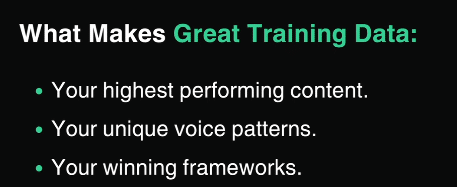
Here’s what makes great training data:
Iterative Refinement: This isn’t a set-it-and-forget-it process. You’ll continuously refine and adjust based on output quality, ensuring your AI gets smarter about your brand with every interaction.
Want to learn more about how to train your AI on you brand voice? I talk all about it inside First Movers R&D AI Labs. Check out the details here.
The Training Framework That WorksBuilding effective AI implementation training requires a systematic approach that goes far deeper than most businesses realize. The framework that consistently produces results operates in three distinct phases, each building upon the previous one to create an AI system that truly understands and embodies your brand.
The first phase centers on comprehensive voice documentation. This isn’t about writing a simple brand guide—it’s about creating a detailed blueprint of how your brand communicates across every possible scenario. You’ll analyze your top-performing content not just for what it says, but for how it says it. The sentence structures that feel natural to your audience. The emotional undertones that resonate. The specific word choices that distinguish your brand from countless competitors.
During this phase, you’ll identify consistent language patterns that might not be obvious at first glance. Perhaps your brand naturally uses shorter sentences when discussing complex topics, making information more digestible. Maybe you consistently employ rhetorical questions to engage readers, or you have a particular way of transitioning between ideas that creates flow. These subtle patterns become the foundation of your AI training.
The second phase transforms your documentation into AI education. This goes far beyond simply uploading examples to your AI system. You’re creating detailed context instructions that help the AI understand not just what to write, but why certain choices matter for your brand. You’ll test output against your established brand standards, but more importantly, you’ll develop the ability to recognize when the AI is capturing your brand essence versus when it’s merely mimicking surface-level characteristics.
The final phase establishes quality assurance processes that evolve with your AI’s capabilities. You’ll create feedback loops that help the AI learn from both successes and failures. This isn’t a one-time setup—it’s an ongoing optimization process that continuously refines your AI’s understanding of your brand voice. The goal is reaching a point where your AI-generated content is indistinguishable from your best human writers, except it produces results faster, cheaper, and more consistently.
Here’s an example of creating training data from my course, AI Comunications, which you can find inside First Movers R&D AI Labs:
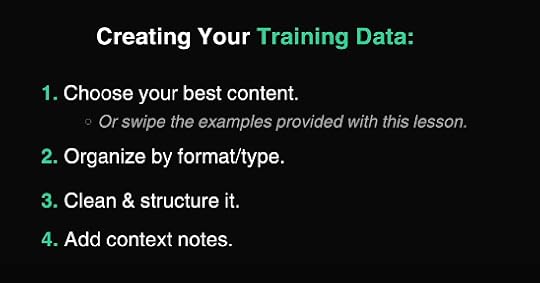
When done correctly, your AI will write content that’s indistinguishable from your best human writers—except it’ll do it faster, cheaper, and more consistently.
Master LLM Communication for Maximum ResultsNot all AI tools are created equal. And knowing how to communicate with Large Language Models (LLMs) separates the amateurs from the professionals.
Choose Your Weapons WiselyClaude: Excels at nuanced, creative writing and complex reasoning. Perfect for long-form content and strategic planning.
GPT-4: Strong at versatile content creation and technical writing. Great for diverse content needs.
Gemini: Excellent for research-heavy content and data analysis integration.
The key isn’t picking one—it’s understanding when to use each for maximum impact.
Advanced LLM Communication StrategiesThe difference between amateur and professional AI implementation training lies in understanding how to communicate with Large Language Models at an advanced level. Most people treat AI like a sophisticated search engine, typing basic prompts and expecting magic. Professionals understand that LLMs are conversation partners that get smarter and more helpful as you develop better communication strategies.
Context stacking represents one of the most powerful techniques in professional AI communication. Instead of relying on single prompts, you build context through strategic conversation. You might start with a broad discussion about your industry, then narrow down to specific content types, and finally zero in on the exact piece you want to create. Each exchange adds layers of understanding that dramatically improve the final output quality.
Role-based interactions take this concept further by assigning specific expertise to your AI. When you instruct the AI to “act as a marketing strategist with ten years of experience in B2B SaaS companies,” you’re not just setting tone—you’re accessing a specific knowledge framework that influences every aspect of the response. The AI draws from its understanding of marketing strategy, B2B communication patterns, and SaaS industry knowledge to provide more sophisticated and relevant outputs.
Iterative refinement transforms AI from a one-shot content creator into a collaborative partner. You use the AI’s initial response as a foundation, then guide it through successive improvements. This might involve refining the angle, adjusting the tone, expanding certain sections, or incorporating additional perspectives. Each iteration builds upon the previous one, creating increasingly sophisticated results that often surpass what either human or AI could achieve alone.
Multi-model collaboration represents the cutting edge of AI implementation training. Different AI models excel in different areas, and professionals know how to orchestrate these strengths. You might use one model for initial ideation because of its creative capabilities, another for detailed writing due to its structural strengths, and a third for editing because of its precision with language refinement.
Communication Best PracticesMastering AI communication requires understanding that precision in input directly correlates to quality in output. Vague requests produce vague results, while specific, detailed instructions unlock the AI’s full potential. This doesn’t mean writing longer prompts—it means writing smarter ones that provide exactly the context and constraints the AI needs to deliver exceptional results.
Providing examples serves as one of the most effective training methods. When you show the AI exactly what you want through concrete examples, you eliminate guesswork and establish clear quality benchmarks. This might involve sharing previous blog posts that captured your ideal tone, email campaigns that drove exceptional engagement, or social media posts that perfectly represented your brand voice.
Using constraints paradoxically increases creative output quality. When you set clear boundaries and requirements, you focus the AI’s creative energy within productive parameters. This might involve specifying word count ranges, defining required sections, establishing tone parameters, or identifying specific points that must be covered.
Intelligent iteration builds upon each interaction systematically rather than starting fresh each time. You develop conversation threads with your AI that evolve and improve over multiple exchanges. This approach treats AI as a collaborative partner rather than a content vending machine, leading to significantly better results.
Master these techniques, and you’ll unlock AI capabilities that most businesses never even realize exist.
Build AI Workflows That Actually WorkRandom AI usage leads to random results. Systematic AI workflows lead to systematic success.
The Weekly AI Implementation Training ScheduleHere’s an example of an AI workflow you can implement in your company:
Monday: Strategic Planning Day
Core topic selection and keyword researchContent calendar planningCompetitive analysis using AI toolsStrategic theme developmentTuesday: AI Generation Day
Bulk content creation using trained AI systemsMultiple format generation (blogs, social posts, emails)Initial quality checks and sortingContent variation testingWednesday: Human Review and Enhancement
Editorial review of AI-generated contentHuman creativity layer additionBrand voice consistency checksStrategic alignment verificationThursday: Optimization and Refinement
SEO optimization passesPerformance metric analysisContent formatting and visual integrationDistribution preparationFriday: Distribution and Monitoring
Multi-channel content distributionPerformance tracking setupAudience feedback collectionNext week’s planning preparationWorkflow Automation Tools and IntegrationCreating seamless AI workflows requires strategic tool selection and integration. Content management becomes the backbone of your operation, and platforms like Notion or Airtable transform from simple organizational tools into comprehensive command centers that track content through every stage of your pipeline. These systems maintain visibility into your entire content ecosystem while ensuring nothing falls through the cracks.
AI integration through platforms like Zapier creates the connective tissue between your various AI tools and business systems. This isn’t just about automation—it’s about creating intelligent workflows that adapt based on content performance, audience engagement, and business priorities. Your AI tools become extensions of your content strategy rather than isolated applications.
Quality control automation implements systematic checks for brand voice consistency, SEO optimization, and content quality standards. These systems catch potential issues before content goes live while learning from your feedback to improve future assessments. The goal is building confidence in your AI-generated content without sacrificing the speed advantages that drew you to AI in the first place.
Distribution automation ensures your content reaches the right audiences through appropriate channels while maintaining the personalization that drives engagement. This involves more than scheduling posts—it’s about adapting content for different platforms, audiences, and contexts while preserving your core message and brand voice.
The goal isn’t just efficiency—it’s creating a repeatable system that produces consistent, high-quality results regardless of team changes or market shifts.
Future-Proof Your AI SystemsAI technology evolves faster than social media trends. Today’s cutting-edge tool becomes tomorrow’s outdated software. Smart businesses don’t just implement AI—they build adaptable AI systems.
Continuous Learning IntegrationStaying current in the AI landscape requires more than casual observation—it demands systematic engagement with the rapid pace of innovation. The most successful AI implementation training programs allocate dedicated time for exploring emerging technologies, testing new capabilities, and refining existing processes. This isn’t about chasing every new shiny object, but about maintaining awareness of developments that could significantly impact your content strategy.
Regular experimentation should consume approximately twenty percent of your dedicated learning time. This investment pays dividends when breakthrough tools emerge or when you discover new applications for existing technology. Some experiments will fail, but the successes often provide competitive advantages that justify the entire experimental budget.
Developing robust feedback loops creates systems that learn from your content performance automatically. You’ll track which AI-generated content drives the most engagement, conversions, and revenue, then feed that performance data back into your training processes. This creates a virtuous cycle where your AI systems become increasingly aligned with your business objectives and audience preferences.
The most sophisticated organizations treat their AI systems as learning entities that evolve continuously rather than static tools that perform predetermined functions. This perspective transforms your training approach from a one-time project into an ongoing optimization process that compounds benefits over time.
Building Flexible SystemsFuture-proofing your AI systems requires architectural thinking that goes beyond current tool capabilities. Tool-agnostic workflows ensure your processes work regardless of which specific AI platforms you’re using. When the next breakthrough AI launches—and it will—you should be able to integrate it seamlessly without rebuilding your entire content operation.
Modular approaches create content systems with interchangeable components. Your headline generation process should work whether you’re using Claude, GPT-4, or whatever revolutionary AI emerges next year. This flexibility extends beyond just swapping tools—it’s about designing workflows that adapt to new capabilities while maintaining consistency and quality.
Scalable infrastructure considerations become critical as your content volume grows. Systems that work perfectly for ten pieces of content per week might collapse under the weight of a thousand. Building with scale in mind from the beginning prevents costly rebuilds later and ensures your AI investment continues paying dividends as your business grows.
The most resilient AI systems anticipate change rather than simply reacting to it. This means building flexibility into every component, from content creation processes to quality assurance protocols to distribution mechanisms.
Quality Control That EvolvesDynamic Standards: Your quality metrics should evolve with AI capabilities and market demands.
Human-AI Collaboration: Maintain the human element in strategic decisions while letting AI handle execution.
Performance Monitoring: Track not just content output, but business impact. Which AI-generated content drives the most engagement, conversions, and revenue?
Streamline Your App Management for Maximum EfficiencyThe typical business uses 15+ different tools for content creation. AI doesn’t reduce complexity—it can multiply it if you’re not strategic.
The Integration ChallengeTool Sprawl: Every new AI tool adds another login, another interface, another learning curve.
Data Silos: Information trapped in different platforms reduces efficiency and insights.
Workflow Friction: Switching between tools wastes time and breaks creative flow.
Streamlining SolutionsCentralized Dashboards: Use platforms like Notion, Monday.com, or custom solutions to centralize your AI workflow management.
API Integrations: Connect your AI tools through APIs to create seamless data flow.
Single Sign-On: Implement SSO solutions to reduce login friction and improve security.
Workflow Automation: Use tools like Zapier or Make to automate routine tasks between platforms.
The Minimalist ApproachCore Tool Selection: Identify the 3-5 AI tools that deliver 80% of your results. Eliminate or reduce reliance on the rest.
Multi-Purpose Prioritization: Choose tools that serve multiple functions rather than specialized single-purpose applications.
Regular Audits: Monthly reviews of tool usage, costs, and value delivery keep your tech stack lean and effective.
Build Trustworthy AI AutomationsAutomation without trust is just expensive chaos. Here’s how to build AI systems you can rely on completely.
Security First ApproachImplementing enterprise-grade security for your AI operations protects both your intellectual property and your customers’ trust. Data protection extends far beyond basic password security—it involves comprehensive encryption for all AI-processed content, ensuring your proprietary information never becomes accessible to unauthorized parties or competing organizations.
Access controls create layered security that gives team members exactly the permissions they need without exposing sensitive systems or data. This involves more than simple user accounts—it’s about creating role-based systems that adapt as team members’ responsibilities change and as your AI implementation scales.
Audit trails provide comprehensive documentation of all AI interactions, content generation activities, and system changes. This transparency serves multiple purposes: ensuring accountability, enabling troubleshooting, meeting compliance requirements, and providing data for optimizing your training processes.
Compliance adherence becomes increasingly complex as AI regulations evolve globally. Your systems must meet current requirements like GDPR and CCPA while remaining flexible enough to adapt to future regulatory changes. This requires ongoing monitoring of legal developments and proactive system updates to maintain compliance.
Building Reliable SystemsRedundancy Planning: Never rely on a single AI tool for critical processes. Build backup systems and alternative workflows.
Error Handling: Create protocols for when AI systems fail or produce subpar results. Your business should never stop because an AI tool is down.
Version Control: Track changes to your AI training, prompts, and workflows. You should be able to roll back to previous versions if needed.
Testing Protocols: Implement systematic testing for all AI outputs before they go live.
Trust Through TransparencyClear Documentation: Document every aspect of your AI workflow so team members understand how and why systems work.
Regular Reviews: Schedule monthly assessments of AI performance, security, and business impact.
Team Training: Ensure all team members understand both the capabilities and limitations of your AI systems.
Performance Metrics: Track reliability, accuracy, and business impact to demonstrate AI system trustworthiness.
Advanced AI Implementation Training Resources and Continuous EducationThe rapid evolution of AI technology demands a sophisticated approach to ongoing education that goes far beyond casual reading. Professional AI training requires systematic engagement with multiple learning channels, from official platform documentation to cutting-edge research papers to hands-on community participation.
Official platform documentation from providers like OpenAI and Anthropic offers the deepest technical insights into AI capabilities and best practices. These resources often include advanced techniques that aren’t widely discussed in general AI content, providing competitive advantages for organizations that invest time in thorough study.
AI research institutions continuously publish findings that preview future capabilities and reveal optimization techniques that can be applied immediately. Following publications from organizations like Stanford’s AI Lab, MIT’s Computer Science and Artificial Intelligence Laboratory, and industry research teams provides early access to breakthrough methods before they become mainstream knowledge.
Industry communities on platforms like LinkedIn, Discord, and specialized forums create opportunities for peer learning and collaborative problem-solving. The most valuable discussions often happen in these communities, where practitioners share real-world experiences, troubleshoot challenges, and collaborate on innovative applications.
Specialized certification programs have emerged from leading educational platforms, offering structured paths for mastering AI content marketing, advanced prompting techniques, and automation workflows. These programs provide both knowledge and credentials that demonstrate expertise to clients and employers.
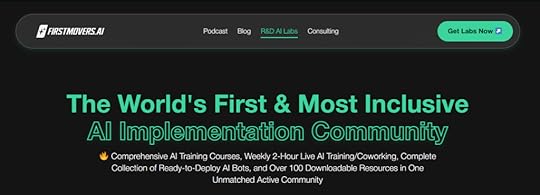
One of the best programs you can take is my very own AI Communications Course, which can be found inside First Movers R&D AI Labs. This course, along with 40+ other mini courses, is everything you need to master AI implentation.
 Your AI Implementation Training Action Plan
Ready to transform your content strategy? Here’s your step-by-step implementation roadmap:
Week 1-2: Foundation BuildingAudit current content processes and identify AI opportunitiesSelect primary AI tools based on your specific needsBegin brand voice documentation and training material creationWeek 3-4: Initial ImplementationSet up AI tools and basic workflowsCreate first batch of training content for AI systemsEstablish quality control processesWeek 5-8: Optimization PhaseRefine AI training based on initial resultsBuild comprehensive workflow systemsImplement automation and integration solutionsWeek 9-12: Scale and SystematizeExpand AI usage across all content channelsTrain team members on new processesEstablish ongoing optimization protocolsBeyond 12 Weeks: Continuous EvolutionRegular system updates and improvementsIntegration of new AI technologiesPerformance optimization and scalingThe Future Belongs to AI-Powered Content TeamsThe businesses dominating their industries five years from now won’t be the ones with the biggest teams or the largest budgets. They’ll be the ones who mastered AI training early and built systems that scale.
Your competitors are already experimenting with AI. Some are already implementing it. The question isn’t whether you should join the AI revolution—it’s whether you’ll lead it or follow it.
The complete framework outlined here isn’t just theory. It’s a proven system that’s transforming content strategies across industries. From startups creating enterprise-level content with teams of three to Fortune 500 companies reducing content costs by millions while improving quality.
The tools exist. The strategies work. The only variable is your commitment to implementation.
Your AI-powered content future starts today. The only question remaining is how fast you want to get there.
Ready to revolutionize your content strategy? Start with one AI tool, one workflow, and one piece of content. Then scale from there. Before you know it, you’ll be creating content that would have taken months in mere days—and your audience will never know the difference.
But of course, you need guidance.
That’s why we’ve creaated First Movers R&D AI Labs, your ultimate AI implementation community. It’s everything you need to become an expert in AI implementation.