AI Automation Workflows that Actually Save Time (+5 Examples)
The business world is changing faster than ever. And if you’re not implementing AI automation workflows in your business, you’re falling behind.
Here’s a wake-up call: An IBM Institute for Business Value report found that 92% of executives agreed that their business workflows would be digitized and will use AI-enabled automation by this year. That’s not tomorrow. That’s now.
According to Vanson Bourne, 80% of organizations have the goal of hyperautomation. This means automating as many business processes as possible. The writing is on the wall. Companies that embrace AI automation workflows aren’t just staying competitive—they’re leaving their competition in the dust.
But here’s what’s really happening: 78% of respondents say their organizations use AI in at least one business function. This is up from 72% in early 2024 and 55% in 2023. The adoption rate is accelerating at breakneck speed.
AI automation workflows aren’t just a nice-to-have anymore. They’re survival tools.
If you want to stay relevant, keep your business competitive, and unlock productivity gains that seemed impossible just a few years ago, you need to implement AI automation workflows. The question isn’t whether you should adopt them. It’s how fast you can get started.
What Are AI Automation Workflows?Think of AI automation workflows as your business’s new nervous system. They’re intelligent, interconnected processes that handle tasks, make decisions, and execute actions without constant human intervention.
But let’s break this down into the building blocks that make these workflows possible.
Machine Learning: The Brain Behind the OperationMachine learning is the engine that powers intelligent automation. It’s how systems learn from data patterns and improve their performance over time.
Instead of following rigid, pre-programmed rules, machine learning algorithms adapt. They get smarter with every interaction. Your customer service chatbot learns from each conversation. Your inventory management system predicts demand more accurately each month.
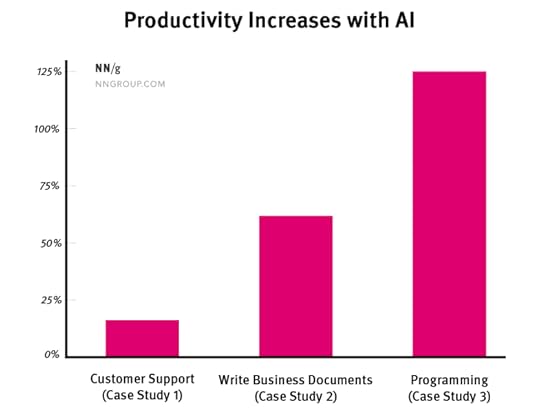
This isn’t science fiction. Based on 3 separate studies, workers output increased by an average of 66% when using AI tools. This is the equivalent of 47 years of natural productivity gains.
 Generative AI: Your Creative Assistant
Generative AI creates new content, solutions, and ideas. It writes emails, generates reports, designs graphics, and even codes software.
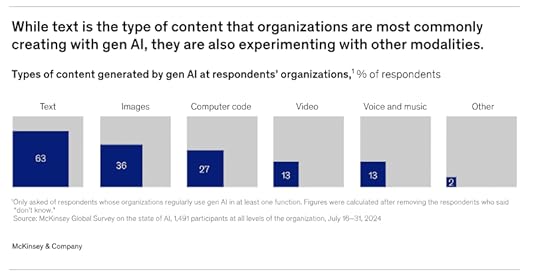
Most companies start with text generation—writing emails, reports, and documents. But the smart ones are expanding fast. Over a third are now creating images automatically. And here’s where it gets exciting: one in four companies is using AI to write actual code.
This technology isn’t replacing creativity. It’s amplifying it.
Natural Language Processing: Breaking Down Communication BarriersNatural language processing (NLP) helps computers understand and respond to human language. This powers everything from voice assistants to automated customer support.
Your business can now process customer inquiries, analyze feedback, and generate responses in natural, conversational language. No more robotic, scripted interactions.
Optical Character Recognition: Digitizing the Physical WorldOptical character recognition (OCR) transforms physical documents into digital data. Invoices, contracts, receipts—all become searchable, analyzable information.
This eliminates manual data entry and reduces human error to nearly zero.
Intelligent Automation: The OrchestratorIntelligent automation combines multiple AI technologies to create sophisticated workflows. It’s the conductor of your business orchestra, coordinating different tools and processes seamlessly.
This goes beyond simple task automation. It makes smart decisions, adapts to changing conditions, and handles complex, multi-step processes.
Application Programming Interfaces: The Connective TissueAPIs are the invisible bridges that connect different software systems. They allow your AI automation workflows to pull data from one system, process it, and push results to another.
Without APIs, you’d have isolated islands of automation. With them, you have an interconnected ecosystem that works as one unified system.
Business Process Automation: The FoundationBusiness process automation handles the fundamental workflows that keep your company running. From employee onboarding to invoice processing, these automated processes ensure consistency and efficiency.
It’s the foundation that makes everything else possible.
6 Benefits of AI Automation WorkflowsThe benefits aren’t theoretical anymore. They’re measurable, significant, and happening right now.
Here are 6 of them:
1. Slash Operational CostsA survey done by Bain & Company showed that companies investing 20% of their budget on automation cut costs down by a considerably larger amount than companies that didn’t.
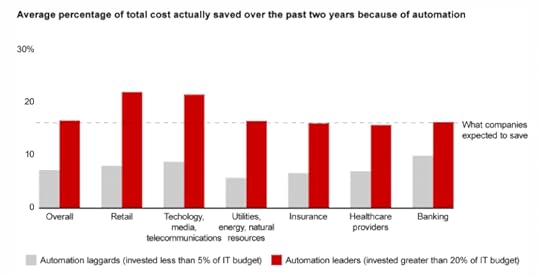
Cost savings come from reduced labor costs, fewer errors, and optimized resource allocation. When processes run automatically, you’re not paying for human oversight on routine tasks.
2. Boost Productivity Like Never BeforeThe productivity numbers will blow your mind. Customer service agents are handling 13.8% more inquiries every hour. Business professionals are cranking out 59% more documents. And get this—programmers are completing 126% more projects each week.
Think about that for a moment. Your developers could potentially complete twice as many projects. Your content team could produce 60% more material. Your customer service team could handle more inquiries without adding staff.
3. Eliminate Human ErrorIn 90% of accidents, human error is a contributing factor. When you automate critical processes, you remove the primary source of errors.
Data entry mistakes disappear. Calculations become perfect. Compliance violations decrease dramatically. Your business operates with a level of accuracy that’s simply impossible with manual processes.
4. Enhance Decision MakingAI doesn’t just automate tasks—it provides insights.Here’s a shocking confession: 92% of supply chain executives admit they’re making gut decisions because their current reports can’t predict what’s coming next. They’re flying blind when AI could give them crystal-clear vision into the future.
Think about that. Nearly every supply chain leader is guessing when they could be knowing.
With AI automation workflows, your decisions are backed by data analysis, predictive modeling, and pattern recognition that humans simply can’t match.
5. Transform Customer ExperienceCustomer expectations have skyrocketed. They want instant responses, personalized interactions, and 24/7 availability.
With AI automation workflows, your customers get faster, more accurate service. Your team handles more complex issues. Everyone wins.
6. Optimize and Streamline OperationsThe e-commerce teams that have jumped on the AI revolution? They’re getting back 6.4 hours every single week. That’s almost a full workday handed back to them.
Imagine what you could do with an extra day every week. More strategy sessions. Better customer relationships. Actually taking a lunch break.
AI Automation Workflows ExamplesLet’s get practical. Here’s how businesses are implementing AI automation workflows right now.
1. Customer Service AutomationInstead of customers waiting in phone queues, AI chatbots handle initial inquiries. They resolve simple issues immediately and route complex problems to the right human agent with full context.
The workflow looks like this:
Customer submits inquiry through any channelAI analyzes the request and determines complexitySimple issues get resolved automaticallyComplex issues go to specialists with AI-generated summariesFollow-up communications are automated based on resolution2. Content Creation and MarketingContent teams are using AI to research topics, generate first drafts, optimize for SEO, and distribute across channels.
Here’s a real workflow:
AI monitors trending topics in your industryGenerates content outlines based on search dataCreates first drafts incorporating your brand voiceOptimizes content for specific keywordsSchedules and publishes across multiple platformsTracks performance and suggests improvementsThe result? Business professionals could write 59% more work-related documents per hour when using AI tools.
3. Financial Process AutomationCFOs are drowning in routine tasks. 83% say they’re too busy to do more than their regular daily responsibilities. AI automation workflows are changing this.
A typical accounts payable workflow now includes:
AI scans and extracts data from invoicesAutomatically matches invoices to purchase ordersRoutes approvals based on predefined rulesProcesses payments automaticallyUpdates financial records in real-timeGenerates expense reports and analytics4. Sales Process OptimizationSales teams are using AI to identify leads, personalize outreach, and automate follow-ups.
The workflow includes:
AI analyzes prospect behavior and scores leadsGenerates personalized outreach messagesAutomates follow-up sequences based on responsesSchedules meetings and updates CRM automaticallyProvides real-time coaching during callsGenerates post-meeting summaries and next stepsImplementing generative AI could increase sales productivity by approximately 3% to 5% of current global sales expenditures.
5. Supply Chain and Inventory ManagementManufacturers are using AI to predict demand, optimize inventory levels, and automate procurement.
The workflow includes:
AI analyzes historical sales data and market trendsPredicts demand for specific products and timeframesAutomatically adjusts inventory levelsTriggers purchase orders when stock is lowOptimizes supplier selection based on performance dataMonitors delivery schedules and updates stakeholdersAI isn’t just dabbling around the edges of manufacturing—it’s diving deep into the core operations. Nearly a quarter of assembly and quality testing now runs on AI. Product development and engineering? 23% AI-powered. And across procurement, order management, and logistics, AI is handling one in five processes.
Your Next Step: Embrace the AI Automation RevolutionThe data is clear. The benefits are proven. The technology is ready.
Nearly half (49%) of technology leaders in PwC’s October 2024 Pulse Survey said that AI was “fully integrated” into their companies’ core business strategy (PwC). These companies aren’t just experimenting—they’re seeing real results.
But here’s what separates the winners from the laggards: They start now.
Ready to Transform Your Business with AI Automation Workflows?You don’t need to figure this out by yourself. You don’t need to waste months in trial-and-error implementation. And you definitely don’t need to fall behind while your competitors pull ahead.
That’s exactly why we built First Movers R&D AI Labs—the world’s first and most inclusive AI implementation community.
When you join First Movers, you get everything you need to implement AI automation workflows that actually work:
40+ Ready-to-Deploy AI Bots built specifically for real-world business tasks—from proposal writing and lead qualification to workflow optimization and content creation. These aren’t theoretical tools. They’re battle-tested solutions refined through months of implementation in successful businesses.
Weekly Live AI Training & Co-Working Sessions where you’ll work alongside fellow First Movers and get real-time guidance from our expert integrators. No more learning in isolation. You’ll implement AI automation workflows with support every step of the way.
Complete Course Library covering everything from AI fundamentals to advanced workflow automation—including the exact systems and strategies that help businesses achieve those cost reductions and massive productivity gains we talked about.
On-Demand Support from Expert Prompt Engineers who will create custom walkthroughs whenever you hit a roadblock. You’re never stuck. You’re never alone.
The companies that act now will have an insurmountable competitive advantage. The companies that wait will be playing catch-up for years.
Your customers expect it. Your competitors are implementing it. Your business needs it.
The question isn’t whether AI automation workflows will transform your industry. The question is whether you’ll be leading that transformation or struggling to keep up.
Ready to become a First Mover?