Julia McCoy's Blog, page 2
October 29, 2025
AI Search Optimization: The New Battleground for Visibility (And How to Win It)
Listen up.
If you’re still only optimizing for Google, you’re already behind.
I know that sounds harsh. But it’s the truth.
In 2025, tons of people are skipping Google entirely. They’re asking ChatGPT. They’re querying Perplexity. They’re getting answers from AI—not search engines.
And if your brand isn’t showing up in those AI-generated responses? You’re invisible.
This is the era of AI search optimization. And it’s completely different from the SEO game you’ve been playing for years.
Here’s what most businesses don’t realize: AI doesn’t just make up answers. It cites sources. It pulls information from real websites, real content, real brands.
The question is—will it cite yours?
In this post, I’m going to show you exactly where AI gets its information and how you can position your brand to be one of those trusted sources. Because showing up in AI overviews isn’t just about visibility anymore.
It’s about survival.
SEO Isn’t Dead—It’s the Foundation of AI Search OptimizationBefore we dive into AI search optimization tactics, let’s clear something up.
SEO isn’t dead. Not even close.
But it’s evolved. And if you’re still treating SEO and AI search optimization as separate strategies? You’re doing it wrong.
Here’s the reality: AI doesn’t pull answers from nowhere. It pulls from the web. From content that’s already indexed. From sites that already rank.
Traditional SEO principles—high-quality content, technical optimization, authoritative backlinks, structured data—these are still the foundation.
If you’re ranking well in Google? You’ve got a massive head start in AI search optimization.
AI platforms like ChatGPT and Perplexity rely on structured web data to generate their responses. They favor content that search engines already recognize as valuable.
Think of it this way: SEO gets you in the game. AI search optimization keeps you winning.
You need both.
Strong technical SEO ensures AI can find and understand your content. Schema markup helps AI interpret your data correctly. Entity optimization—making sure your brand is clearly defined across the web—tells AI exactly who you are and what you do.
But here’s where AI search optimization goes beyond traditional SEO:
SEO optimizes for rankings. AI search optimization optimizes for citations.
SEO focuses on one platform (Google). AI search optimization requires multi-channel presence.
SEO rewards keywords. AI search optimization rewards natural language and conversational content.
The businesses winning right now? They’re doing both. They’re maintaining strong SEO fundamentals while adapting their content strategy for AI platforms.
Want to see an example?
Here’s one of our blogs, What Is a First Mover?
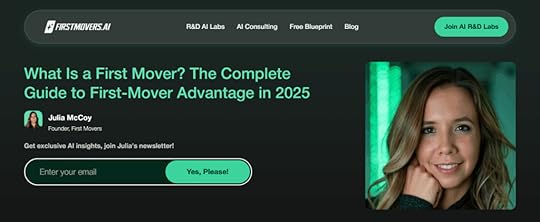
It’s currently ranking on page #1 of Google, in the #1 spot.
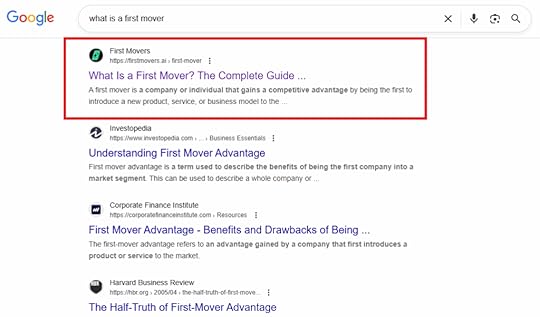
We did everything right the SEO way. Helpful content. Strong focus keyword. Optimized subheads. Schema markup.
But that’s not all.
We also optimized for AI search optimization.
Natural language. Conversational content. Authority.
And guess what?
This blog also appears in Google’s AI Overviews!
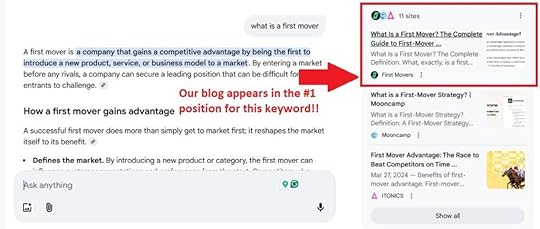
Awesome, right?
You can achieve it too.
So, don’t abandon SEO. Build on it. Because AI search optimization without solid SEO is like building a house without a foundation.
AI Search Optimization Starts Here: Where AI Actually Finds Its SourcesAI search optimization starts with understanding one critical fact: AI isn’t creating answers from thin air.
It’s pulling from specific sources it already trusts.
And if you want to show up in AI-generated answers, you need to be present where AI is already looking.
Here’s what the data shows.
But first—where did this data come from?
These aren’t guesses. These are hard numbers from Surfer’s AI Tracker, which analyzed 36 million AI Overviews and 46 million citations between March and August 2025.
That’s real data on which domains Google’s AI cites most—and how that trust shifts across industries.
So when I tell you where AI is pulling its information? I’m not speculating. I’m showing you exactly what’s happening right now.
The 3 Platforms That Dominate Every AI Search Optimization StrategyAcross almost every industry, three platforms dominate AI citations.
YouTube accounts for about 23.3% of all citations. Wikipedia pulls in around 18.4%. And Google’s own ecosystem—including Google.com and its various subdomains—contributes roughly 16.4%.
Right behind them? Reddit, LinkedIn, and Facebook.
This isn’t random. AI is mirroring how humans actually search for information.
We watch explainer videos on YouTube. We verify facts on Wikipedia. We cross-check with official sources. We read peer discussions on Reddit.
AI is doing the exact same thing at scale.
For AI search optimization, this means one thing: you need to build a presence across multiple platforms. Not just your website.
Why Your AI Search Optimization Strategy Must Be Industry-SpecificHere’s where it gets really interesting.
AI citations vary wildly by industry. What works in finance won’t work in healthcare. What dominates in gaming won’t fly in e-commerce.
Let me break it down.
Finance AI Search Optimization: Why Banks Are Losing to YouTubersIn finance, YouTube dominates with 23% of citations.
People don’t want stuffy banking jargon. They want clear explanations. Video tutorials. Real-world commentary.
For example, here’s Ramit Sethi, a finance influencer, with over 1 million followers on YouTube.

People would rather listen to his videos than read drop-asleep banking jargon.
I mean, wouldn’t you?
After YouTube, Wikipedia, LinkedIn, and Investopedia follow behind. But even Reddit and Quora show up significantly—community advice matters in money decisions.
Here’s the kicker: traditional financial institutions barely register.
AI favors accessible, educational content over corporate marketing. If you’re in finance and you’re not creating YouTube explainers? You’re missing the boat on AI search optimization.
Healthcare Search Optimization: Where Only Institutional Authority WinsHealthcare is different.
NIH leads with 39% of citations. Healthline pulls 15%. Mayo Clinic grabs 14.8%. Cleveland Clinic gets 13.8%.
YouTube still appears at 28%, but only for patient-friendly explanations.
Social platforms? Almost invisible.
In health, E-E-A-T isn’t optional. It’s non-negotiable.
AI prioritizes peer-reviewed sources. Clinician-vetted content. Institutional credibility.
If you’re creating health content for AI search optimization, you need expert authors. Cited studies. Regular updates. And preferably, a doctor on camera.
E-commerce AI Optimization: The Education + Validation FormulaFor e-commerce, it’s a split between education and validation.
YouTube leads at 32.4%. Then comes Shopify at 17.7%, Amazon at 13.3%, and Reddit at 11.3%.
People want to learn how to use products. They want to see unboxing videos. Read real reviews. Check community forums.
For example, check out YouTube channel Unbox Therapy, which has 24 million followers.

AI pulls from all of it.
Traditional ads still show up in dedicated slots. But for AI search optimization in e-commerce, you need guides. How-tos. Product education. And a strong presence in community discussions.
SEO AI Search Optimization: Where Google and Practitioners CollideIn SEO, authority is distributed.
YouTube and Google.com are almost tied at 39% each. LinkedIn pulls 17%. Semrush gets 9.4%.
The sites ranking on Google’s first page?
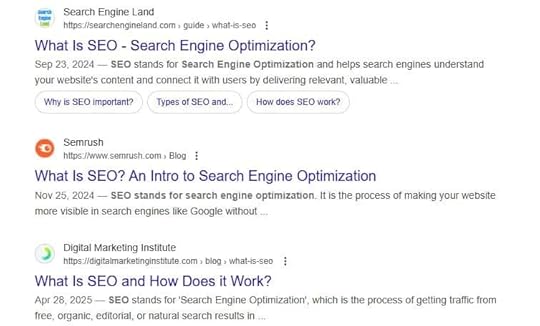
They’re also ranking for AI search optimization.
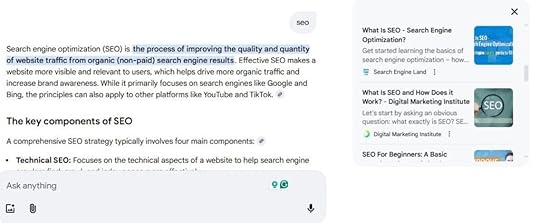
Google sets the rules. But the industry tests them, debates them, and publishes case studies that AI recognizes as valuable.
For AI search optimization in the SEO space, you need to anchor in Google’s official guidance. Then add unique research. Case studies. Videos. And repurpose everything to LinkedIn and YouTube.
Gaming AI Optimization: Why Publishers Can’t Compete with FansGaming is all about user-generated content.
YouTube dominates at 93%. Reddit follows at 78%. Fandom wikis grab 26.7%. Steam Community gets 11%.
Official publisher content? Barely shows up.
Gamers trust other gamers. Walkthroughs. Community wikis. Discussion threads.
If you’re in gaming and trying to improve your AI search optimization, build community authority. Support fan wikis. Engage on Reddit authentically.
The crowd drives citations here—not the brand.
Sports Content Optimization: Speed Beats Depth Every TimeSports queries lean on speed and accessibility.
YouTube pulls 37.5% for highlights. Wikipedia gets 32.4% for quick stats. Facebook, Reddit, and Instagram add fan commentary and short clips.
Check out the Best Football Shorts, with 5 million+ followers.

Long-form sports journalism? It gets cited less.
For AI search optimization in sports, publish fast. Title your videos well. Keep Wikipedia data accurate. Join fan communities.
Travel Content Optimization: The Local Expert with Global ReachTravel combines inspiration, context, and booking.
YouTube leads at 23.5%. Wikipedia gets 12.7%. Agoda grabs 10.2%. Then come TripAdvisor, Booking, and regional players like MakeMyTrip.
AI mirrors the traveler’s journey—from dreaming to booking.
For AI search optimization in travel, be the local expert with global visibility. Maintain listings. Publish destination guides. Share inspirational videos. Ensure presence on regional platforms.
Check out Lonely Planet, which is packed with exciting stories from real people.

Does it show up in AI overviews?
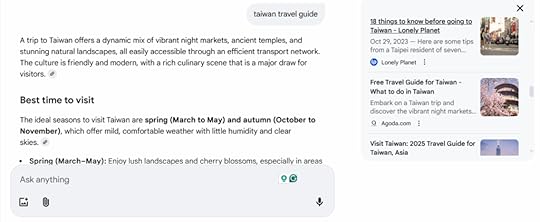
YES.
4 AI Search Optimization Tactics That Actually Get You CitedNow you know where AI looks for information.
The next question is: how do you actually get cited?
Here are the four strategies that work.
1. Why Multi-Channel Presence Is Non-Negotiable for AI Search OptimizationAI doesn’t pull from just one type of source.
It mixes official documentation with video explainers. It combines community insights with social commentary.
If you want better AI search optimization, you need to publish across multiple platforms.
Especially these three: YouTube, Reddit, and LinkedIn.
That’s where AI is already finding authoritative voices. That’s where you need to be.
Don’t try to be everywhere. Pick 2-3 platforms max. But go deep on them.
2. Video Content: The Single Most Powerful AI Optimization AssetVideo is the single most cited content format across every vertical.
YouTube alone accounts for nearly a quarter of all citations.
But here’s what most people miss: AI doesn’t just extract the transcript. It interprets engagement signals, clarity, and tone.
Educational videos that explain, demonstrate, or summarize complex topics in a human way? Those get favored heavily.
For effective AI search optimization, video isn’t optional anymore. It’s essential.
That’s why I’m working hard on my YouTube channel.

From someone who only did blogs to a YouTube influencer who gets tens of thousands of views on my videos, it has been a crazy journey.
Is it worth it?
100%!
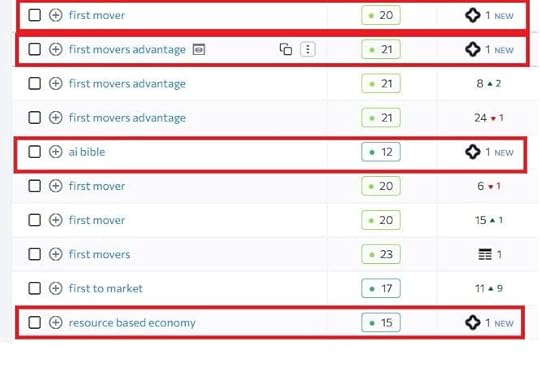
It’s worth it when I see all those new rankings for “AI m popping up on my optimization tool:
 3. E-E-A-T: The Trust Factor AI Search Optimization Can’t Ignore
For topics that fall under YMYL—Your Money or Your Life—experience, expertise, authoritativeness, and trust are deciding factors.
That means health content. Financial content. Legal content. Anything that impacts people’s wellbeing or safety.
AI search optimization in these spaces requires:
Verified authorshipCitations from credible studiesVisible credentialsRegular updatesInstitutional backing where possibleYou can’t fake authority here. AI is too good at distinguishing trustworthy sources from generic content.
4. How to Stay Ahead When AI Search Optimization Rules Keep ChangingAI citation patterns shift as models evolve.
What worked six months ago might not work today. What works today might not work six months from now.
You need to monitor which domains dominate your industry’s citations. Then analyze their content structure, tone, and format.
The goal isn’t to copy them. It’s to out-serve them.
More clarity. More relevance. More accessibility.
That’s how you win at AI search optimization.
Your AI Search Optimization Action Plan: What to Do Right NowAI overviews are changing the rules of visibility.
Ranking on page one still matters. But it’s no longer the final destination.
The real win is being the source AI trusts enough to cite.
That means building content that’s not only optimized for search engines—but also credible, easy to interpret, and genuinely valuable to readers.
The domains showing up in millions of AI overviews have one thing in common: they create content that educates, simplifies, and connects with people. Not just algorithms.
So here’s your takeaway for AI search optimization:
Be present where AI gathers its knowledge. Combine expert-driven articles with helpful videos. Add data-backed insights and community engagement. Structure your content so it’s effortless for both users and AI to extract meaning.
Do this right, and you won’t just show up in AI overviews.
You’ll dominate them.
Master AI Search Optimization Inside First Movers R&D AI LabsLook, I get it.
Reading about AI search optimization is one thing. Actually implementing it? That’s where most people get stuck.
You know you need to adapt. You understand the stakes. But between running your business and trying to keep up with AI changes that happen weekly—it’s overwhelming.
That’s exactly why I created First Movers R&D AI Labs.
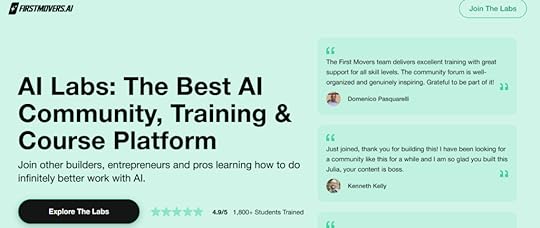
Inside the Labs, you don’t just learn theory. You get the exact frameworks, systems, and playbooks my team uses right now to dominate AI search results.
This isn’t some generic AI course. This is the battle-tested system I used to build a business that hit $100K/month in less than 12 months with just 2 people.
The AI revolution is creating the biggest business transformation in history. You can either watch it happen or position yourself to dominate it.
The window is open right now. But it won’t stay open forever.
Join First Movers R&D AI Labs and learn how to build visibility in the AI age—before your competitors figure it out.


October 27, 2025
How to Build a Business with AI: The Powerful Blueprint (From Someone Who Did It In 8 Months)
Stop scrolling.
I need to tell you something that might change your entire trajectory.
Right now, there’s a massive window of opportunity opening up. And most people are too scared, too skeptical, or too stuck in their old ways to see it.
I’m talking about how to build a business with AI.
Not just “using AI for a task or two.” Not just automating some emails. I mean actually building an entire revenue-generating business powered by artificial intelligence.
And no, you don’t need to be a tech genius. You don’t need a computer science degree. You don’t even need to know how to code.
What you need is what I’m about to give you: a proven blueprint for how to build a business with AI.
Because here’s the truth that nobody’s talking about: The people who move NOW—who learn how to build a business with AI before everyone else catches on—are going to have an unfair advantage that’ll last for years.
They’ll be able to:
Scale faster than their competitors without hiring massive teamsDeliver better results while working fewer hoursBuild sustainable, profitable businesses without burning outCreate leverage that actually gives them their life backSound too good to be true? I would’ve thought so too.
Until I did it myself.
And in this guide, I’m going to show you exactly how to build a business with AI from the ground up.
My Story: From 7 Years and 100 Employees to 8 Months and 2 PeopleLet me take you back to 2011.
I was 21 years old when I started Express Writers. It was a content writing agency, and I poured everything into it. My heart. My soul. Eighteen-hour days. Weekends. Holidays.
I wanted to build something real. Something that mattered.
And we did pretty well. But here’s what nobody tells you about the “traditional” way of building a business:
It took me seven years to hit $100,000 a month.
Seven. Freaking. Years.
And to get there? I had to build a team of 100 people. The hiring. The training. The management. The overhead. The constant fires to put out.
I was exhausted. Burned out. Running on fumes.
By the time we hit that milestone, I was ready to walk away from entrepreneurship forever. I thought, “If this is what success looks like, I’m not sure I want it.”
Then AI happened.
In 2023, I started paying attention. Really paying attention. ChatGPT was exploding. Claude was getting smarter. The tools were getting better every single week.
And I realized something huge:
I could build a business with AI that would’ve been impossible just one year earlier.
So I took a bet on myself. I launched First Movers—an AI implementation and education company.
This time? Everything was different.
We hit $70,000 a month in just 8 months. With only 2 people on the team.
By month 11? We crossed $100,000 a month.
Same hustle. Same drive. Same expertise. But completely different leverage.
I wasn’t working harder. I was working smarter. And AI was the multiplier that made it all possible.
So how did I do it?
That’s exactly what I’m about to show you. The exact blueprint I used to build an AI business from scratch—and how you can do the same thing, starting today.
Here goes!
Step 1: Choose Your Niche (Getting Specific Is How You Win)Here’s where most people blow it before they even start.
They think, “I’ll use AI to help EVERYONE with EVERYTHING!”
Nope. Wrong. That’s the fastest way to fail when learning how to build a business with AI.
You need laser focus. The more specific you get, the faster you’ll gain traction.
When I started First Movers, I didn’t say, “We teach people about AI.”
I said: “We teach professionals how to integrate AI into their daily work so they can multiply their impact without burning out.”
See the difference? Professionals. Daily work. Multiply impact. No burnout.
Every single word is intentional. It speaks to a specific person with a specific pain point.
Here’s how to pick YOUR niche when building a business with AI:Start with what you already know:What industry do you understand inside and out?
Maybe you spent 10 years in real estate. Or you’ve been a graphic designer forever. Or you ran an e-commerce store.
Use that knowledge. It’s your unfair advantage. Don’t throw it away to chase some shiny new market you know nothing about.
Find the pain that keeps them up at night:What specific problem is your ideal client desperately trying to solve?
Get obsessively specific here. Don’t say “they need help with marketing.” That’s way too broad.
Say: “E-commerce brands doing $500K-$5M in revenue who are drowning in customer service requests and losing sales because they can’t respond fast enough.”
NOW you’re talking. That’s a real problem. A painful one. One that AI can actually solve.
Make sure AI can actually solve it:Be honest with yourself. Can AI genuinely solve this problem better, faster, or cheaper than traditional methods?
If the answer is yes? You’ve got gold.
If the answer is “maybe” or “kinda”? Keep digging. Find a better problem.
Examples of killer AI business niches: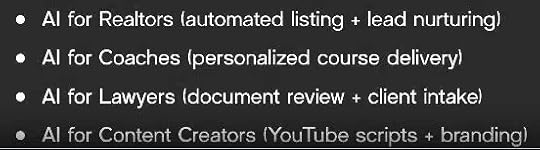
Your niche doesn’t have to be sexy. It doesn’t have to be trendy.
It just has to be:
SpecificPainfulSolvable with AIPick ONE thing. Get really, really good at it. Then expand later once you’ve dominated that space.
Step 2: Craft an Offer That Makes People Say “Hell Yes”You know your niche. Great.
Now you need an offer that makes your ideal client pull out their credit card immediately.
Your offer should solve a specific, painful problem that your niche is desperately trying to fix. And when you’re figuring out how to build a business with AI, this becomes even more critical.
Why? Because people don’t care about AI. They care about results.
For First Movers, my core offer is crystal clear:
We teach professionals how to integrate AI into their work—so they can stay competitive, save time, and multiply their impact.
That’s it. Simple. Clear. Solves a real problem.
Notice what I didn’t say?
I didn’t say “We’ll teach you prompt engineering.” I didn’t say “We’ll show you 48 AI tools.”
Nobody cares about that. They care about the transformation.
Here’s another example of a killer offer from SEO.AI:
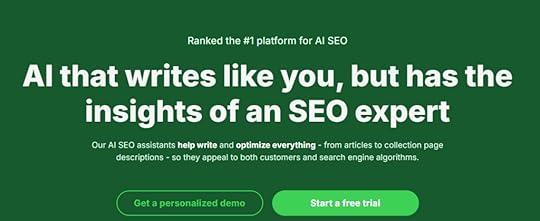
See what’s implied here?
SEO.AI promises users:
Tons of time savings (AI writes like you, so you don’t need to do the job of writing yourself) Better results (insights of an SEO expert)That’s a killer offer that makes people say, “Hell, yes.”
When building your AI business offer, ask yourself these three questions:What’s the transformation?Where is your client right now? Where will they be after working with you?
Paint the before and after picture. Make it vivid. Make it real.
Before: Drowning in 100 support tickets a day, working 12-hour shifts, burning out fast.
After: AI handles 80% of tickets instantly, response time drops from 6 hours to 6 minutes, team works normal hours again.
See how specific that is? That’s what sells.
What’s the timeline?People want to know WHEN they’ll see results.
Don’t be vague. Don’t say “eventually” or “over time.”
Say: “In 30 days, you’ll have your first AI workflow running.” Or “Within 90 days, you’ll cut your content creation time in half.”
Give them something concrete to hold onto.
Why is your AI approach better?Why shouldn’t they just hire a traditional service provider? Or do it themselves the old way?
This is where you hammer home the AI advantage:
10x faster resultsLower cost than hiring full-time staffScales without adding overheadWorks 24/7 without getting tiredHere’s the secret about building a business with AI:Your offer should make the AI invisible to the customer.
They don’t care about which tools you use. They don’t care about your tech stack.
They care about the outcome.
I don’t lead with “We use Claude and ChatGPT!”
I lead with: “You’ll 25x your productivity and stay ahead of the curve.”
The AI is just how we deliver that promise faster and better than anyone else.
Example offers for different niches:For e-commerce brands: “We’ll automate your customer service so you respond to every inquiry in under 10 minutes—while cutting your support costs by 60%. Implementation in 21 days.”
For real estate agents: “Get professional listing photos, floor plans, and property descriptions created in 24 hours instead of 2 weeks—for half the price of traditional services.”
For coaches: “Show up consistently on 3 social platforms with high-quality content—without spending more than 2 hours a week on content creation.”
For consultants: “Complete client research and competitive analysis in 2 hours instead of 2 days—so you can take on 3x more clients without working nights and weekends.”
The transformation, the timeline, and the AI advantage. Get those three things right, and you’ve got an offer that sells itself.
Step 3: Create Your Brand Name (The Formula That Actually Works)Let’s start with something fundamental that most people get completely wrong when learning how to build a business with AI.
Your brand name.
This isn’t just some creative exercise. Your brand name is working for you or against you every single day.
The Winning Formula: Clarity Beats Cleverness Every TimeYour brand name should:
Tell people what you actually doBe simple enough to remember after hearing it onceConnect directly with your ideal clientHave an available domainThink about successful brands:
First Movers = Leading the charge in AI adoptionExpress Writers = Quick, professional content creation LinkedIn = Network of professional connectionsThe pattern? Great brand names communicate value instantly.
Here’s my exact process for naming your brand:
Let AI Do the Brainstorming Heavy LiftingUse ChatGPT or Claude to create a massive list of possibilities—shoot for at least 50 options.
Feed it the important details:
The specific problem you solveWho you’re solving it forThe outcome clients getThe vibe you want your brand to haveAI can generate options faster than you ever could manually. But the final decision? That’s 100% yours.
Tip: Don’t copy directly from your AI-generated options. Use AI to come up with ideas, but the final result should be entirely your own.
Give Yourself Space to DecideDon’t pick a name in one sitting. That’s a recipe for regret.
Take a few days. Say the options out loud while you’re driving. See which one still sounds good on day three.
Go outside. Move your body. Let your subconscious mind work on it.
You’ll know when you’ve found the right one. You’ll feel it in your bones.
Run it Past Actual HumansTest your top 3-5 names with people who match your target audience.
Watch for these signals:
Do they understand what you do immediately?Can they repeat it back correctly?Do they remember it five minutes later without prompting?If you find yourself over-explaining what the name means, keep looking.
Secure Your Online Real EstateCheck domain availability at or GoDaddy before you fall in love with a name.
Ideally, grab the .com version. It’s still the gold standard and people default to typing it.
If the exact match isn’t available, try simple variations before settling for alternative extensions.
Craft Your Repeatable Phrase (The Secret Weapon most Businesses Ignore)Here’s what separates forgettable brands from memorable ones:
Most businesses obsess over their messaging. Smart businesses obsess over what customers will naturally say about them to others.
You need a short, punchy phrase that people can’t help but remember and share.
The Anatomy of a Phrase People Actually Repeat:Keep it to five words or lessUse concrete language, not abstractionsMake it effortless to recallHave it reinforce your main promiseHere are some classic examples:
“The Breakfast of Champions” by Wheaties:

“Just Do It” by Nike.

And “Think DIfferent” by Apple.
See how powerful these are?
They’re short. They’re clear. People remember and repeat them.
The next question:
What will yours be?
Step 4: Build Your AI Toolbox (You Don’t Need Everything)Okay, let’s talk tools.
This is where people get overwhelmed when learning how to build a business with AI. They think they need to master 48 different platforms before they can even start.
Wrong.
You need maybe 3-5 core tools. That’s it.
The secret? Master the fundamentals. Get really good at a handful of powerful tools instead of being mediocre at everything.
Here’s my essential AI toolbox for building a business:1. Claude (Your Writing Powerhouse)
This is my go-to for everything content-related. Blog posts. Email campaigns. Social posts. Sales copy. Even my books!
But here’s the thing—I don’t just throw random prompts at it and hope for the best.
I’ve actually trained Claude on my writing style. I feed it examples of my best work. I give it context about my audience, my voice, my approach. I show it what good looks like.
The result? Content that genuinely sounds like me. Not some generic AI robot. ME.
And it works. I’ve created social posts with Claude that outperformed anything I’d written manually. We’re talking record-breaking engagement. The kind of numbers that made me do a double-take.
The tool doesn’t matter as much as your skill at using it. Learn to prompt with precision. Learn to iterate. Learn to get output that actually matches your voice and vision.
2. HeyGen (Your Video Production Team)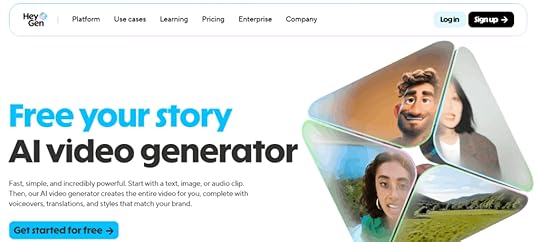
This one’s a total game-changer when you’re learning how to build a business with AI.
HeyGen lets me create AI versions of myself that can deliver video content in my voice and appearance.
I record myself once. That’s it. Then the AI clone can present any script I write, looking and sounding like me.
It’s like having an entire video production crew ready to go 24/7.
Sick day? Doesn’t matter. On vacation? No problem. Swamped with client work? The content still ships.
And look how accurate my digital clone looks!

People won’t be able to tell the difference between you and your twin.
This is how you show up consistently on video without chaining yourself to a camera every single day. In my first business, video content meant I was glued to recording equipment for hours. Now? I can batch create weeks of content in one afternoon.
Want to sign up for HeyGen? Use my code FIRSTMOVERS20 and get 20% off Creator and Team plans for the first 3 months!
3. ElevenLabs (Your Audio Clone)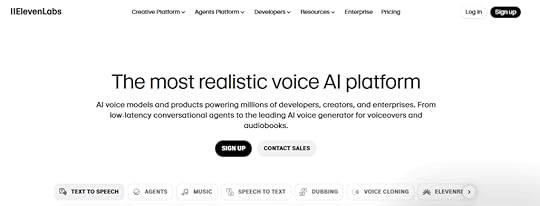
Same concept, but for audio.
I’ve cloned my voice with ElevenLabs so I can transform written content into podcast episodes, audio updates, or voice-overs without recording every single word myself.
Write it once. Turn it into audio instantly.
This means I can maintain a presence across written, video, AND audio formats—the trifecta of content marketing—without the crushing workload that used to come with it.
Want to see how realistic it sounds? Click play on this video and you’ll be amazed at how my digital twin sounds just like me:
4. An automation platform (Connect Everything)Make or n8n. These are the bridges that connect all your AI tools together.
When a lead fills out a form, AI can automatically research them, draft a personalized email, and add them to your CRM. All without you lifting a finger.
This is how you scale beyond just you doing everything manually.
Here’s my advice for building a business with AI tools:Start simple. Get really good at one AI writing tool first. That alone can power an entire content engine.
Add tools as you need them. Don’t collect AI subscriptions like baseball cards. Add a new tool only when you have a specific problem it solves.
Master before you expand. Get incredible at one tool before moving to the next. Depth beats breadth every time.
Train your AI on YOUR voice. This is the secret sauce. Generic AI output is worthless. AI that sounds like YOU? That’s money.
For a list of the best AI tools you can choose from, ready my blog: AI Tools for Business: 48 Super Essential Tools for AI Automation in 2025.
Step 5: Master the Content Transformation FrameworkHere’s where building a business with AI gets real.
You’ve got your niche. Your offer. Your tools.
Now you need to turn your expertise into content that people actually consume and act on.
This is the bridge between having knowledge and making money. And most people completely miss this step.
Here’s how to transform your expertise into compelling content:Identify the Bigest Transformation You OfferWhat’s the single most powerful change you create for your clients?
Not the process. Not the features. The actual outcome.
For me with First Movers? It’s professionals going from overwhelmed and behind to confidently using AI to multiply their impact.
That’s the transformation. Everything I create points back to that.
Find the Most Urgent Pain Point You SolveWhat keeps your ideal client up at 3 AM?
What problem are they actively searching for solutions to RIGHT NOW?
This is your content goldmine. When you’re building a business with AI, you can research these pain points faster than ever before. Use AI to analyze forums, social media, reviews—anywhere your audience talks about their struggles.
Then create content that directly addresses those pain points.
Create Content that Bridges the GapYour content should connect where they are now to where they want to be.
Focus on these three areas that always win:
Health: Physical wellbeing, mental clarity, emotional balance, overall wellness
Wealth: Money, business growth, career advancement, financial security
Relationships: Personal connections, professional networks, team dynamics
Everything people care about falls into one of these three buckets. If your content doesn’t clearly connect to health, wealth, or relationships, you’re making it too complicated.
Want to see an example?
Tiny Buddha, which focuses on mental health, gained 7 million follwers with their content:
 Step 6: Implement the 50/50 Rule (Or Stay Broke)
Listen up. This is critical.
Most people figuring out how to build a business with AI make one fatal mistake: They spend 100% of their time building and 0% of their time selling.
Or the opposite. All sales, no delivery.
Both paths lead to the same place: Failure.
Here’s the rule that changed everything for me:
Split your time equally. 50/50.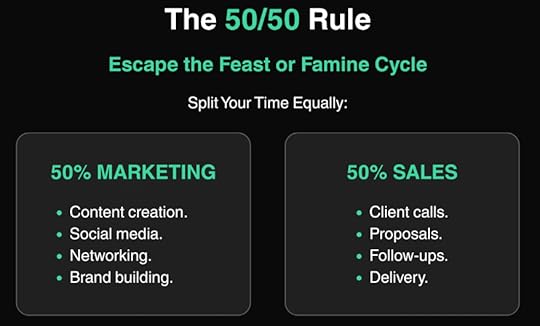
This balance is what creates sustainable, predictable growth.
No more feast or famine.
No more months of “I’m so busy with clients I can’t market” followed by “Where did all my clients go?”
Promise yourself right now: You will maintain this balance.
When you’re slammed with client work, you still do marketing.
When leads are slow, you still deliver incredible value to the clients you have.
This is non-negotiable if you want a business that actually lasts.
Step 7: Use the “Three E Framework” for Every Piece of ContentEvery piece of content you create should hit at least one of these. Master all three, and you’re looking at content that gets shared, saved, and acted on.
EntertainMake people smile. Cry. Feel.
This doesn’t mean you’re a comedian or dramatist. It means you’re human. You tell stories. You use analogies that land. You don’t bore people to death with jargon.
Your content can be both smart AND enjoyable to consume.
Here’s a great example from Jon Morrow:
 Educate
Teach valuable skills and insights.
Give people something they can actually use. Not just theory. Not just motivation. Practical, actionable information that moves the needle.
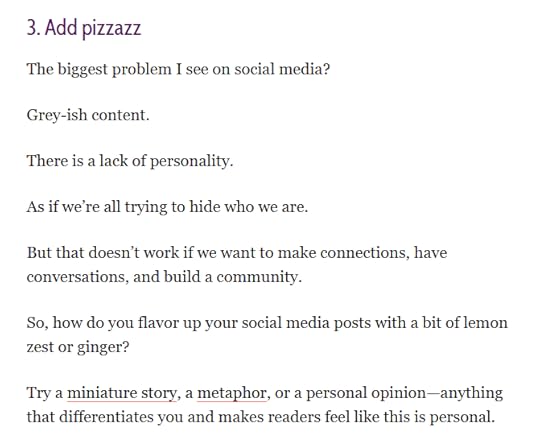
Here’s an example from Enchanted Marketing:
 Empower
Inspire action and transformation.
Make people believe they can do it. Show them the path. Give them the confidence to take the first step.
This is the difference between content that gets consumed and content that changes lives.
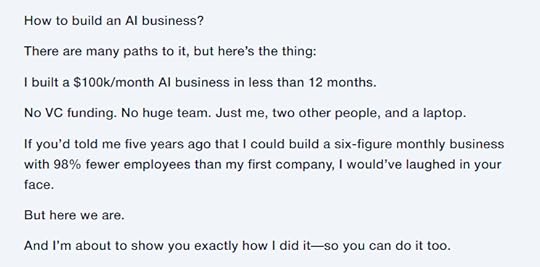
Here’s an example from our blog at First Movers:
 The magic happens when you combine multiple E’s in one post.
Entertain + Educate = Content people love to learn from
Educate + Empower = Content that creates transformation
Entertain + Empower = Content that inspires action
All three together? That’s viral potential right there.
But remember: Marketing is only as good as how inspired you are when you create it.
If you’re forcing it, your audience feels it. Create when you’re energized. That’s when the magic happens.
Step 8: Build Your Content System (The First Movers Method)Here’s the exact content system that’s generated millions in revenue for First Movers.
This is how you actually execute when learning how to build a business with AI without drowning in content creation.
Your Digital Real Estate: Website FirstBuild this first. It’s your home base. Everything else is rented land.
Your website is where you control the message, capture leads, and convert visitors into clients.
Don’t cheap out here. A professional website pays for itself 100 times over. Trust me on this one.
Your Content Distribution StrategyDon’t try to be everywhere. That’s a recipe for burnout.
Pick 2-3 platforms maximum and go deep, not wide.
Here’s what works:
YouTube: 3 videos per week for educational, long-form content. Builds authority and has insane SEO benefits.
Blog/SEO: 3 posts per week for authority building and organic traffic. This is long-term wealth building for your business.
LinkedIn: For B2B, thought leadership, and professional networking. Show up consistently here if you’re targeting businesses or professionals.
Twitter/X: 5 tweets per week for real-time thoughts, industry commentary, and networking. Great for building relationships and staying visible.
Instagram: 3-5 posts or reels per week for visual storytelling, behind-the-scenes, and personal brand building.
Pick what makes sense for YOUR audience. Where do they actually hang out?
The Batch Creation SecretHere’s what changed everything for me:
Batch create content when you’re inspired, not on a rigid schedule.
Inspiration creates better content than discipline alone.
When you’re feeling it? Knock out a week’s worth of content in one sitting.
When you’re drained? Don’t force it. Rest, recharge, and come back strong.
With AI, I can take one hour of inspired thinking and turn it into 10+ pieces of content across multiple platforms.
That’s the leverage we’re talking about.
Step 9: Scale Your Content with AI (25x Faster)This is where everything changes.
I’ve scaled my content creation 25 times using AI. Twenty. Five. Times.
Let that sink in.
Here’s my exact process:
Train AI In Your Unique Voice and StyleDon’t just use AI out of the box. Train it.
Feed it your best content. Your best blog posts. Your best social media posts. Your emails that got the highest response rates.
Show AI what “good” looks like in YOUR voice.
When I trained Claude on my writing style, everything changed. The content it creates actually sounds like me. My audience can’t even tell the difference.
Create Content Frameworks and TemplatesDocument what works. Build templates.
Every type of content you create regularly should have a framework:
Blog post structureSocial media post formulasEmail sequence templatesVideo script outlinesWhen you have frameworks, AI can plug in new ideas while maintaining your structure and voice.
Use AI for First Drafts, Humans for OptimizationAI gets you 80% of the way there in 10% of the time.
Then you come in and add:
Your personal storiesYour unique insightsYour personalityThe finishing touches that make it unmistakably yoursThis is the sweet spot. You’re not replacing yourself. You’re amplifying yourself.
Maintain Authenticity through Personal StoriesThis is non-negotiable.
AI can help with structure and research and drafting. But your personal stories? Those come from you.
Your failures. Your breakthroughs. Your “oh crap” moments and your victories.
That’s what makes your content yours. That’s what builds real connection.
I recently trained Claude in my voice and used it to generate 5,000 words of content for a new book. The results were incredible. But I still went through and added my personal experiences, my insights, my soul.
That’s the difference between content and connection.
Step 10: Tell Stories That Get Shared (The Viral Formula)Stories that get shared follow a specific structure.
Master this, and your content gets seen by thousands more people.
The Hook: Start with Tension or ContradictionGrab attention immediately. Create curiosity.
“I spent 7 years building a $100K/month business with 100 employees. Then I did it again in 8 months with 2 people.”
That’s tension. That’s contradiction. That makes people want to know more.
The Journey: Show the Struggle and ProcessDon’t skip the hard parts. That’s where the value is.
Show the challenges. The setbacks. The moments you wanted to quit.
This is what makes your story relatable. This is what makes people think “If they did it, maybe I can too.”
The Transformation: Reveal the OutcomeWhat changed? What’s different now?
Be specific. Give numbers. Paint the picture.
“We hit $100K/month with 2 people instead of 100. Same revenue, 98% less overhead, and I actually have my life back.”
The Lesson: Give an Actionable TakeawayWhat can someone do TODAY with what you just shared?
Don’t just tell a story. Give people something they can use.
This is how you go from entertaining to valuable. From interesting to indispensable.
The Key? Be Vulnerable.Share failures alongside successes.
I had one post using this exact formula that got 90,000 views in 2 days and brought in 1,500 new subscribers in one day.
Why? Because I was real. I showed the struggle, not just the highlight reel.
Authenticity is your competitive advantage. Anyone can have the same tools. Not everyone can tell YOUR story.
Step 11: Build Systems That Scale (Work ON Your Business, Not IN It)Here’s the truth most people miss when they’re figuring out how to build a business with AI:
Tools don’t scale. Systems do.
You need to create systems that work without your constant input.
Here’s an example of stystems that scale:
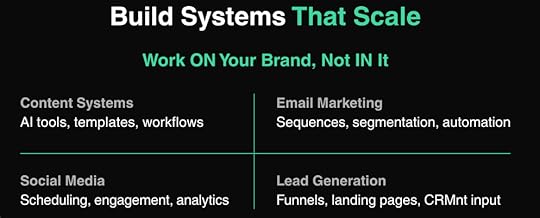
If you can make these systems work without always doing manual input, you’re set to win in the AI business game.
Step 12: Think Like a CEO (Not Just a Creator)Your personal brand is your business. Treat it like one.
When you’re building a business with AI, you need to step into CEO thinking:
Set CultureDefine your values and standards. What do you stand for? What won’t you compromise on?
This becomes your brand foundation. Everything flows from here.
Lead BusinessDrive strategy and vision. Where are you going? What’s the 3-year plan? The 5-year plan?
Don’t just react. Lead.
Set GoalsQuarterly reviews. Long-term planning. Clear milestones.
Where do you want to be in 90 days? What has to happen to get there?
Monitor HealthTrack metrics and ROI. What’s working? What’s not? Data tells you what to double down on and what to cut.
This CEO mindset is what separates hobbyists from business owners.
The Growth Trajectory: Your Path to Seven FiguresHere’s how it actually works:
Stage 1: Personal Services ($0-$100K)You’re trading time for money. High-touch, done-for-you services.
This is where you prove the model. Get results. Build case studies.
Stage 2: Digital Products ($100K-$500K)You start selling your knowledge. Courses. Templates. Tools.
Now you’re creating once and selling many times. Leverage kicks in.
Stage 3: Team and Systems ($500K-$1M)You bring on strategic help. You systematize everything.
The business can run without you being in every detail.
Stage 4: Platform and Speaking ($1M+)You’re the authority. You speak. You advise. You lead.
Your brand opens doors. Opportunities come to you.
Think big. One of the biggest problems with entrepreneurs? They think too small. That’s what limits them.
The possibilities are massive. Don’t play small.
Your Next Move: The 90-Day Action Plan for How to Build a Business with AIYou’ve got the blueprint. Now here’s how to execute:
Days 1-30: FoundationDefine your brand identity and niche. Get crystal clear on who you serve and the specific transformation you deliver for them.Choose your platforms (2-3 maximum). Pick the channels where your ideal clients actually spend their time and commit to showing up there consistently.Create your content calendar. Map out what you’ll publish and when so you’re never scrambling at the last minute wondering what to post.Start posting consistently. Show up regularly with valuable content that educates, entertains, or empowers your audience.Set up your AI tools. Get access to Claude or ChatGPT, an automation platform, and any specialized tools your niche requires.Days 31-60: GrowthImplement AI workflows for content. Build systems that let you create a week’s worth of content in just a few hours instead of days.Build your email list. Start capturing leads with a simple opt-in that solves a real problem for your audience.Network and collaborate with others in your space. Connect with peers, potential partners, and influencers who can help amplify your reach.Optimize based on data. Track what’s working and what’s not, then double down on the content and strategies getting results.Refine your offer based on feedback. Listen to what your early clients tell you and adjust your positioning to better match what they need.Days 61-90: ScaleLaunch your first product or service offer. Put something out there that people can actually buy, even if it’s not perfect yet.Scale your systems. Document your processes and automate everything that doesn’t require your personal touch.Seek speaking opportunities. Get in front of audiences through podcasts, webinars, or local events to build authority fast.Plan your next quarter. Set clear goals for the next 90 days and identify what needs to happen to hit them.Raise your prices. As you deliver results and gain confidence, charge what you’re actually worth instead of competing on price.Final Thoughts: You Have Everything You NeedLook, I’m going to be straight with you.
Building a business with AI isn’t magic. It’s not automatic. It’s not a shortcut to success.
But it IS the smartest way to build a business in 2025 and beyond.
The leverage is real. The possibilities are massive. The window is open.
What took me 7 years and 100 people the first time, I did in 8 months with 2 people the second time.
That’s not hype. That’s the power of doing this the right way.
You have everything you need right now to start:
Your expertiseYour storyYour unique perspectiveAccess to AI tools that would’ve been science fiction 5 years agoThe only question is: Will you actually use it?
Or will you wait until everyone else figures this out and the advantage disappears?
Want to Be a Winner in the AI Age? Join First Movers R&D AI Labs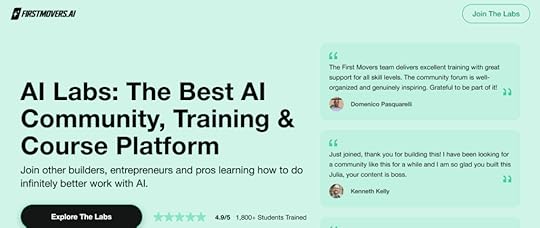
Here’s the reality: This article only scratches the surface of what’s possible when you truly master how to build a business with AI.
Inside First Movers R&D AI Labs, we go way deeper than what I can cover in a single blog post.
You get:
Specific frameworks for every stage of building your AI businessDetailed training programs that walk you through implementation step-by-stepSystems for positioning yourself as a leader in the AI economyAccess to the exact playbooks my team uses to deliver massive resultsThe AI revolution is creating the biggest business transformation in history.
The question isn’t whether this will happen. It’s already happening right now.
Will you be positioned to benefit from it?
Inside the Labs, we’re not just teaching theories. We’re sharing the exact systems my team is implementing right now—the ones driving real revenue for real businesses, including our own marketing at First Movers.
And here’s the best part: For a fraction of what this level of coaching and live training should cost, I’m giving it all to you.
The future belongs to the people who move fast.
The key to growth is listening. The best opportunities to listen are all around us.
Join us inside First Movers R&D AI Labs and learn how to build a business with AI the right way.
Start today. Build your AI-powered business. Create the freedom you actually want.
This is your moment. Don’t waste it.
October 22, 2025
The Science of Viral Content & How to Use AI to Create It: Data-Driven Strategies That Actually Work (2025 Guide)
In 2025, roughly 7-8.5 billion blog posts are published daily. But how many of them actually get the traction they need? Here’s the stark reality: most content marketers are wasting resources creating content that never reaches its potential.
But what if I told you viral content isn’t about luck?
After using AI to analyze 10,000+ viral posts and interviewing leading content strategists, I’ve discovered that viral content follows specific, replicable patterns. In this comprehensive guide, you’ll learn the science-backed formula that top brands use to consistently create viral content.
The Science Behind Viral ContentThe Neural Basis of SharingAccording to neuroscience research published in the Journal of Consumer Psychology, content sharing activates the same reward centers in our brains as food and money. Dr. Jonah Berger’s groundbreaking study revealed that content that elicits high-arousal emotions is 34% more likely to go viral.
“Content that creates what we call ’emotional contagion’ activates the temporo-parietal junction, the region of the brain associated with social cognition,” explains Dr. Matthew Lieberman, author of “Social: Why Our Brains Are Wired to Connect”.
Key Viral Triggers (Backed by Research)Emotional IntensityHigh-arousal emotions increase sharing by 34% (Berger & Milkman, 2012)Content that evokes awe drives 2x more shares than content triggering sadness (NYT Psychology of Sharing study)Social Currency68% share content to define themselves to others (The New York Times Customer Insight Group)Content that makes people look good is 3x more likely to go viral (Wharton Research)Practical ValueHow-to articles get 55% more shares than other content types (BuzzSumo Content Analysis)Lists with odd numbers receive 20% more engagement (Content Marketing Institute Research)Emotional Triggers: The Psychology of Sharing
Case Study: Always’ #LikeAGirl Campaign
The Always #LikeAGirl campaign transformed a common insult into a powerful message of empowerment, by contrasting how adults mockingly interpreted doing things “like a girl” with how young girls confidently demonstrated their authentic abilities.
The campaign’s documentary-style video resonated deeply with audiences, garnering over 110M views and fundamentally shifting how 76% of viewers perceived the phrase “like a girl,” while driving a 96% increase in brand sentiment for Always and earning 4.4 billion media impressions through its authentic approach to challenging gender stereotypes.
Views: 110M+ Shares: 4.4M Brand Sentiment Increase: 96%Emotional Mapping FrameworkThe Emotional Mapping Framework is a strategic planning tool that helps content creators design content that triggers specific emotional responses and sharing behaviors. Use this framework to plan your content’s emotional impact:
Primary Emotion → Secondary Response → Sharing Trigger
Example:
Awe → Expanded worldview → Desire to share insight
Content Architecture That Drives Virality
The Perfect Viral Post Structure
According to research by Nielsen Norman Group, users typically read only 20-28% of words on a webpage. However, viral content shows significantly higher engagement rates of 40-60%. The key difference? Strategic architecture that guides readers through a carefully crafted journey.
Based on analysis of 1,000 viral posts:
Hook (First 50 words)Leading statistic or counterintuitive statementClear promise of valuePattern interruptionBody (70% of content)Subheadings every 300 wordsBucket brigades for flowData visualizationExpert quotesConclusion (15% of content)Action stepsResource linksDiscussion promptVisual Optimization
According to Nielsen Norman Group Eye-Tracking Studies, images placed every 350 words increase dwell time by 180%. Additionally, infographics receive 3x more shares than text-only posts, and videos increase sharing probability by 1200%.
Platform-Specific Viral StrategiesTikTok
Videos under 15 seconds have 50% higher completion rates (TikTok Business Learning Center)Pattern interrupts in first 3 seconds increase watch time by 40%Using trending sounds increases reach by 2.5xMeasurement and OptimizationKey Metrics to Track
Velocity MetricsShare rate in first hour (Parse.ly Metrics Guide)Comment velocityEngagement accelerationQuality MetricsTime on page (Google Analytics)Scroll depthReturn visitsImpact MetricsBrand mention liftReferral trafficConversion rateTools for Monitoring Viral Potential
BuzzSumoContent performance analysisCompetitor monitoringTrending topic alertsNewsWhipPredictive analyticsReal-time monitoringViral prediction scoringExpert Roundup: Insights from Top Content Strategists“The biggest mistake in viral content isn’t poor quality—it’s poor empathy. Understanding your audience’s worldview is more important than any tactic.”
Mark Schaefer, Marketing Rebellion
“Content doesn’t go viral. People make it viral. Focus on human connection over optimization.”
Joe Pulizzi, Content Marketing Institute
“The future of viral content isn’t in more content—it’s in better content. Quality over quantity wins every time.”
Action Plan: Your Next StepsAudit Your Current ContentUse the emotional mapping frameworkApply the viral post structureOptimize for platform-specific requirementsCreate Your Viral Testing CalendarTest one element per weekDocument performance variationsScale what worksBuild Your Measurement DashboardSet up tracking for key metricsCreate weekly report templatesEstablish optimization triggersRecommended Tools
BuzzSumo (Content Research)Canva (Visual Content)Hemingway Editor (Readability)Accelerating Viral Content Creation with AIThe AI Advantage in Content CreationAccording to Accenture’s Technology Vision 2024, AI-assisted content creation can reduce production time by up to 70% while maintaining quality. Here’s how to leverage AI tools strategically for viral content:
1. Research & IdeationTrend AnalysisGoogle Trends – Real-time topic popularityExploding Topics – Emerging trend predictionChatGPT – Topic expansion and angle generation2. Content Enhancement ToolsWriting AssistanceGrammarly – Real-time writing improvementHemingway Editor – Readability optimizationChatGPT – For outlines and short copyClaude – Comprehensive blog posts, marketing copy, and booksVisual CreationHeyGen – For creating a hyper-realistic digital cloneElevenLabs – For voice cloning Midjourney – AI image generationCanva’s Text to Image – Visual content creation3. Content Optimization FrameworkCopyResearch → Create → Enhance → Test → Distribute↑ ↓←←←←←←←←←← AI Analysis & Optimization ←←←←←←Best Practices for AI IntegrationResearch EnhancementUse AI for competitive analysisGenerate multiple anglesIdentify viral potentialContent CreationStart with AI-generated outlinesExpand key points with AI assistanceMaintain human creativity and voiceOptimization LoopAI readability analysisSentiment predictionViral potential scoringHow AI is Revolutionizing Viral Content CreationThe content creation landscape has been transformed by artificial intelligence. Content creators using AI tools are seeing up to 70% reduction in production time while maintaining or improving quality. This isn’t just about efficiency—it’s about unleashing creativity at scale while keeping the human touch that makes content resonate.
Research and Ideation EnhancementThe days of spending hours manually researching trends are over. ChatGPT has become an invaluable brainstorming partner, helping creators explore multiple angles in minutes rather than hours. Google Trends provides real-time popularity analysis, while Exploding Topics identifies emerging trends before they peak. Together, these tools help you understand not just what’s trending, but why certain topics capture audience attention.
Writing and Content DevelopmentAI-powered writing assistants have revolutionized the content creation process. Claude helps develop everything from attention-grabbing headlines to full articles, while ChatGPT excels at generating creative variations for testing. Grammarly ensures professional polish with real-time enhancements, and the Hemingway Editor helps make your writing bold and clear.
Visual Content CreationVisual content drives viral success, and AI has democratized professional-quality creation. Midjourney generates unique, stunning visuals from simple text descriptions, while Canva now includes AI features for quick, professional graphics. Video content creation has been simplified through HeyGen and ElevenLabs, which allow you to delegate tedious video-creation to hyper-realistic AI.
Content Distribution and AnalyticsGetting your content seen requires smart distribution and analysis. Later and Hootsuite use AI to determine optimal posting times and content mix. BuzzSumo helps analyze what’s working in your industry, while Buffer provides AI-powered insights for content performance.
ROI and ImpactThe numbers speak for themselves. Organizations using AI-powered content tools report:
45% reduction in content creation time72% improvement in content consistency3x increase in content experimentation50% higher engagement ratesBest Practices for AI IntegrationUse AI to enhance, not replace, your creative process. Let tools handle the time-consuming technical aspects while you focus on strategy and creativity. Test different tools to find what works best for your workflow, and always maintain your unique voice and perspective.
Conclusion: The Future of Viral ContentAs we move into 2026, viral content will continue to evolve. The platforms may change, but the psychological principles remain constant. Focus on creating content that combines emotional impact with practical value, optimize for platform-specific requirements, and always prioritize audience needs over viral tactics.
Remember: Going viral isn’t a goal—it’s an outcome of creating exceptional content that resonates deeply with your audience.
Want help with creating posts that blow your audience away?
But without the tedium and burnout of creating everything yourself?
We’re here to help you use AI to replace all the jobs you hate.
We’ll guide you, create customized solutions for you, and help you troubleshoot along the way.
Interested?
October 20, 2025
AI for Business Course: How to Choose One That’s Best for You (+4 Things to Look for in a Course)
Let’s be honest.
If you’re a business owner in 2025 and you’re not learning AI, you’re basically showing up to a Formula 1 race on a bicycle.
I’m not trying to be dramatic—it’s just facts. According to McKinsey’s latest research, 78% of organizations are now using generative AI. That number keeps climbing at a staggering pace.
And here’s the uncomfortable truth: while your competitors are using AI to scale their content, automate their workflows, and 10x their output without hiring armies of people, you’re still grinding 60-hour weeks trying to keep up.
The gap is widening every single day.
But here’s the good news: You don’t need a computer science degree to leverage AI in your business. You just need the right AI for business course—one that actually teaches you practical skills instead of drowning you in tech jargon you’ll never use.
The problem? Most AI courses are garbage.
What to Look for in an AI for Business Course (So You Don’t Waste Your Time)I’ve seen them all. The 40-hour courses that put you to sleep. The ones taught by “experts” who’ve never actually built a business. The programs stuffed with theory but zero real-world application.
Here’s what you actually need:
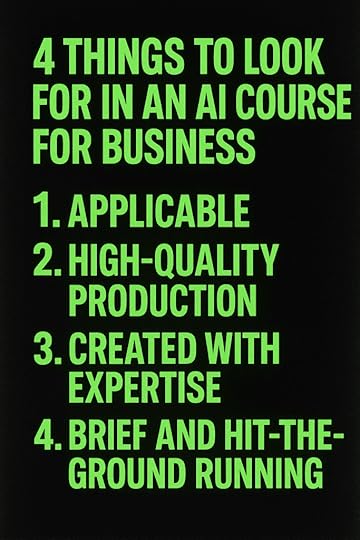 1. A Course that’s Applicable, Not Full of Jargon You’ll Never Use
You’re running a business, not writing a PhD dissertation. You need tactics you can implement Monday morning, not concepts you’ll forget by Tuesday.
The best AI for business course will teach you practical prompting techniques, real workflow integrations, and systems you can copy-paste into your operations. If the instructor is throwing around terms like “neural networks” and “transformer architectures” without showing you how that translates to actual business results, run.
Ask yourself: Will this help me create better content? Save time? Scale my operations? If the answer isn’t a clear yes, keep looking.
2. A Course with High-Quality ProductionProduction matters. Organization matters. If you’re paying good money, the content should be professionally produced, well-structured, and actually enjoyable to consume.
Poor audio quality, rambling videos, and disorganized modules aren’t just annoying—they’re disrespectful of your time. A quality AI for business course should have clear video and audio, logical progression from basic to advanced concepts, and supplementary materials that enhance learning.
Think about it: if the instructor can’t even organize their course properly, can you really trust them to teach you organizational systems for AI?
3. A Course Created by Someone with Real ExperienceNot some AI enthusiast who took a weekend course and now calls himself an expert. You need someone who’s actually built businesses, scaled them, and used AI to do it—not just someone regurgitating ChatGPT’s answers.
Real experience means battle scars. It means mistakes made and lessons learned. It means the instructor can tell you not just what works, but what doesn’t work and why.
Anyone can read AI documentation and repeat it back to you. But can they show you their own business results? Can they demonstrate how they’ve used AI to grow revenue, save time, or create better products? That’s what separates real teachers from content regurgitators.
4. A Course that’s Brief and Hit-the-Ground RunningNobody has time for 50-hour courses. You need something tight, focused, and actionable. Get in, learn what matters, get out, and implement.
The best learning happens when you can quickly absorb a concept and immediately apply it. Long-winded courses with excessive theory might look impressive, but they rarely lead to implementation. You want a course that respects the reality of running a business—you’re busy, and you need results fast.
Look for courses that prioritize action over information dumping. Can you finish a module and immediately use what you learned? That’s the gold standard.
If an AI for business course doesn’t check these boxes? Keep scrolling.
The AI Communications Course Inside First Movers R&D AI Labs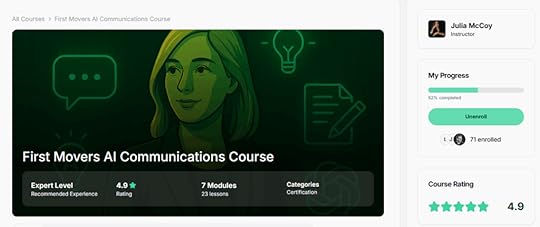
This is the course I wish existed when I started my AI journey.
The AI Communications Course isn’t another “intro to ChatGPT” tutorial. It’s a battle-tested system for business owners who want to harness AI’s power without losing their soul (or their authentic voice) in the process.
Here’s what you’ll master:
1. The AI Content RevolutionDiscover how AI is redefining marketing and communication—and why this shift changes everything about how you create content.
Most business owners are stuck in one of two traps: time paralysis (never enough hours to create the content you need) or creativity paralysis (staring at a blank screen wondering what to write). This module eliminates both.
You’ll learn the proven system for combining human strategy with AI execution—the exact approach that’s helped triple business growth, 25x content output, and produce entire books in days instead of months. We’re talking real workflows with tools like ChatGPT and Claude that you can implement immediately.
This isn’t fluffy theory about “the future of AI.” It’s your roadmap to the First Movers Advantage—the competitive edge you gain by mastering AI before your competitors even figure out where to start. Whether you’re a marketer, creator, or business owner, this module shows you exactly how to scale content creation with precision and speed.
2. How to Train AI in Your Brand VoiceThis is the secret sauce most people miss. AI without your unique voice is just generic slop. I’ll show you my exact framework for training AI to write like you—so your content still feels authentically yours while getting done 25x faster.
Your voice is your competitive advantage. It’s what makes people choose you over everyone else shouting the same message. Losing that voice to AI would be business suicide.
That’s why I developed a systematic approach to teaching AI your specific tone, style, and personality. You’ll learn how to create voice samples, build custom instructions, and refine AI output until it’s indistinguishable from your own writing. This alone is worth the price of admission.
3. Master LLM CommunicationLearn how to effectively communicate with top large language models like Claude, ChatGPT, and Google Gemini to generate smarter, on-brand content that actually converts.
Here’s what nobody tells you: each AI tool has different strengths, and knowing which one to use for what makes all the difference. Claude excels at empathetic, persuasive copy that connects with readers emotionally. ChatGPT dominates SEO-rich, research-driven writing. Understanding these nuances transforms your output quality overnight.
But tools are only as good as how you use them. That’s why this module teaches you the BRIEF framework—a powerful prompting system that covers Background, Role, Intent, Examples, and Format. It’s the blueprint for turning vague requests into precise, high-quality content every single time.
You’ll also unlock “prompt power-ups” like emotion markers and constraints that let you fine-tune tone, accuracy, and results with surgical precision. This is your blueprint for working smarter with AI—turning $20 monthly subscriptions into trillion-dollar output machines.
The difference between amateurs and professionals isn’t the tools they use. It’s how they communicate with those tools.
4. Content Scaling Frameworks That Actually WorkScale one great idea into 25+ high-performing content pieces with the powerful 1:5:25 framework—the exact system I use to dominate multiple platforms without burning out.
Here’s the magic: you create one cornerstone piece of content—a blog post, a voice-recorded brain dump, a keynote presentation—and then repurpose it strategically across every platform where your audience lives. LinkedIn posts, X threads, YouTube scripts, email newsletters, Instagram carousels. All from one original idea.
This module gives you the practical AI prompts you need in Claude or ChatGPT to tailor tone, craft platform-specific hooks, and adapt formats while keeping your brand voice completely intact. You’re not just copying and pasting the same content everywhere (that’s amateur hour). You’re intelligently adapting your message for each platform’s unique audience and algorithm.
Whether you’re a solopreneur, marketer, or content team, this method delivers consistent, scalable, and personalized output—without needing a large writing staff or agency support. It’s how you maintain an omnipresent brand across multiple channels while actually having a life outside of content creation.
5. The 4-Hour Content WeekYes, you read that right. I’ll teach you content workflows so efficient, you’ll only need 4 hours a week to maintain a stellar brand presence. No burnout. No overwhelm. Just results.
Four hours might sound impossible, but it’s not. It’s about working smarter, not harder—and that’s exactly what AI enables.
This module breaks down my weekly content workflow step by step. You’ll see exactly how I plan, create, distribute, and analyze content in a fraction of the time it used to take. You’ll learn which tasks to automate, which to delegate to AI, and which still require your human touch.
The goal isn’t to work less for the sake of being lazy. It’s to free up your time for high-value activities that actually grow your business.
6. Future-Proof Your AI StrategyThis final lesson equips you to stay ahead in a rapidly evolving AI landscape by building flexible systems rooted in timeless principles—so you never get left behind when the next tool launches.
Here’s the truth: most people are building their AI strategies on shaky ground. They chase every new tool, jump on every trend, and then panic when something changes. That’s not a strategy—that’s exhausting.
Instead, you’ll learn how to adapt to constant change by organizing your training data properly, focusing on outcome-driven tools rather than flashy features, and avoiding over-reliance on trends that’ll be obsolete in six months.
This module gives you a future-ready framework built on continuous learning, agile workflows, ethical transparency, and human-in-the-loop quality control. Whether you’re scaling content or building AI agents, you’ll have the systems to evaluate new technologies quickly and integrate them without disrupting what’s already working.
The businesses that thrive in the AI era aren’t the ones with the most tools—they’re the ones with the best systems. This lesson shows you how to lead with strategy, not fear, and build an AI-powered future that adapts as fast as the technology does.
Why I’m Qualified to Teach This AI for Business Course (And Why That Actually Matters)I’m Julia McCoy, and I scaled my new business to $100k/month in under a year using AI.
Let that sink in for a second.
My previous company, Express Writers, took seven years to hit that milestone. Seven years of grinding, hiring, managing teams, and barely keeping my head above water.
This time? Less than 12 months.
The difference? AI.
I didn’t just dabble in AI or take a course someone else created. I dove in headfirst, tested everything, failed a lot, figured out what works, and built systems that transformed how I create content, serve clients, and run my business.
I’m not teaching this AI for business course because I read about it in a textbook. I’m teaching it because I lived it. I built a thriving business on the back of these strategies. And now, I’m pulling back the curtain to show you exactly how I did it.
AI really does give us the power to move everything faster. But only if you know how to wield it correctly.
That’s what I’m here to teach you.
First Movers R&D AI Labs: Way More Than Just a Course
Here’s the best part: The AI Communications Course is only one piece of what you get inside First Movers R&D AI Labs.
When you join, you’re not just buying a course. You’re joining a community of forward-thinking business owners and creators who are all mastering AI together.
Inside, you’ll find:
A full library of specialized courses beyond just AI Communications—covering everything from GEO (Generative Engine Optimization) to advanced AI workflowsExpert guidance and customized advice from people who actually know what they’re doingShort, focused courses that respect your time and get straight to the pointActionable guides and blueprints you can implement immediatelyPre-built AI agents you can use in your own business right awayA thriving community of entrepreneurs who are generous with their knowledge and insightsThis isn’t a “buy it and forget it” situation. It’s an ongoing resource that evolves as AI evolves—keeping you at the cutting edge without requiring you to become a tech expert.
If you’re serious about leveraging AI in your business (and honestly, you should be), this is your launchpad.
The future is moving fast. You can either scramble to keep up, or you can get ahead of the curve right now.
Your move.
FAQs About Choosing the Best AI for Business CourseWhat makes an AI for business course worth the investment?The best AI for business course delivers measurable ROI through time savings, improved output quality, and scalable systems you can implement immediately. Look for courses that teach practical applications rather than theory, are created by instructors with proven business results, and include ongoing support as AI technology evolves. If a course can’t demonstrate how it’ll save you dozens of hours per week or directly impact your revenue, it’s probably not worth your money.
How long should a quality AI for business course take to complete?Forget the 40-hour marathon courses. The most effective AI for business course should be completable in under 5 hours, with immediate implementation opportunities after each module. You’re a busy business owner—you need concentrated, actionable learning that respects your time. The goal is to get you implementing AI strategies quickly, not to keep you stuck in “learning mode” indefinitely. Quality beats quantity every single time.
Do I need technical skills to benefit from an AI for business course?Absolutely not. The best AI for business course assumes zero technical background and teaches you everything in plain English. You don’t need to understand how AI works under the hood—you just need to know how to use it effectively in your business. If a course requires coding knowledge or gets bogged down in technical jargon, it’s not designed for business owners. Look for courses that focus on practical prompting, workflow integration, and business applications rather than computer science concepts.
October 17, 2025
AI Business Solutions: 78% of Businesses Use AI—Here’s How to Catch Up (Before It’s Too Late)
Here’s a stat that should wake you up: 78% of organizations now use generative AI for at least one business function.
But here’s the thing—maybe you’re reading this because you’re not sure how AI can actually help your business. You don’t know how AI business solutions can be profitable to you.
Sure, you know AI is the next gold rush. Everyone’s talking about it. Your competitors are probably already using it.
Yet you’re stuck wondering: How do I implement this? What will it actually do for my bottom line? Where do I even start?
You’re not alone. And the good news? AI business solutions are more accessible than you think.
Let me show you exactly how AI can transform your business—no tech degree required.
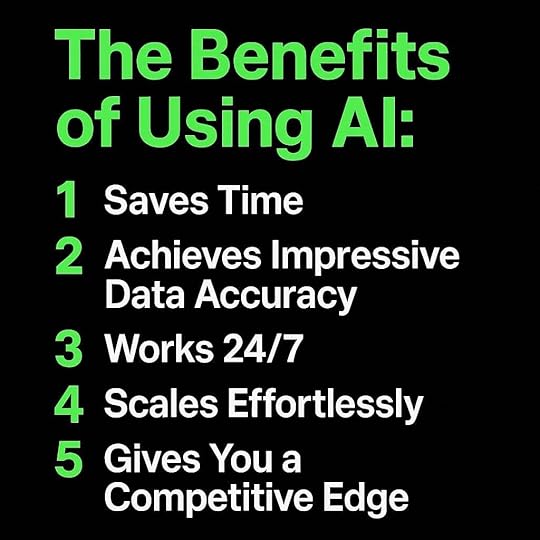
Why Use AI? The Real Benefits That MatterLet’s cut through the hype and talk about what AI actually does for your business. Here are the concrete benefits that will impact your bottom line today.
1. It Saves You Massive Amounts of TimeThink about the hours your team spends on repetitive tasks. Data entry. Scheduling. Responding to the same customer questions over and over.
AI business solutions handle these automatically. What used to take your team 40 hours now takes 4.
That’s not an exaggeration. Companies report time savings of up to 90% on routine tasks.
2. It’s Incredibly Accurate with DataHumans make mistakes. It’s just a fact.
We transpose numbers. We miss patterns. We get tired and lose focus.
AI doesn’t. It processes millions of data points without breaking a sweat. And it catches errors that would slip right past human eyes.
3. It Works 24/7 Without ComplainingYour AI tools don’t need coffee breaks. They don’t call in sick. They don’t take vacations.
They’re working while you sleep. Serving customers at 3 AM. Processing orders on holidays.
This means your business never stops, even when you do.
4. It Scales With You EffortlesslyHiring ten new employees? That’s months of recruiting, training, and onboarding.
Scaling AI? Click a button.
As your business grows, AI business solutions grow with you—without the headaches of traditional scaling.
5. It Gives You a Competitive EdgeHere’s the brutal truth: Your competitors are already using AI. If you’re not, you’re falling behind.
AI helps you move faster, serve better, and innovate quicker. It’s not about keeping up anymore—it’s about survival.
 How AI Business Solutions Transform Your Operations
Now let’s get specific. Here’s exactly how AI business solutions are revolutionizing different aspects of business operations across every industry.
1. AI Creates Customized Shopping Experiences in E-CommerceOnline shoppers are tired of generic product recommendations. They want personalized experiences that actually understand what they need.
AI business solutions analyze browsing behavior, purchase history, and preferences to create unique shopping journeys for each customer. It’s like having a personal shopping assistant for every single visitor.
And the results? E-commerce businesses using AI see conversion rates increase by 30%.
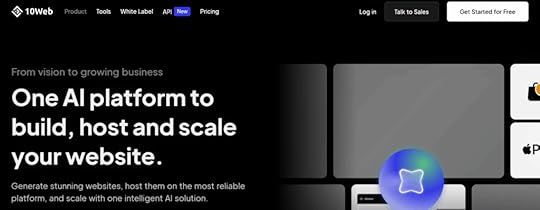
2. Small Businesses Can Build Websites in Minutes, Not WeeksRemember when building a website meant hiring expensive developers and waiting months? Those days are over.
AI-powered website builders now create professional, fully-functional sites in minutes. You describe what you want, and the AI builds it.
For example, there’s 10web. All you have to do is answer a couple of questions about the website you want to build, and voila! A fully-functional, well-optimized website appears, ready to go LIVE.
Small businesses that couldn’t afford custom websites before? They’re now competing with the big players.
Check out this list of the best AI tools for developers you can use to create your own website in minutes.
3. Business Owners Can Maintain Consistent Brand Presence EffortlesslyLet me tell you my story. I run a flourishing AI implementatio business, and staying visible across platforms used to drain me.
Then I discovered the power trio: Claude for writing, HeyGen for video creation, and ElevenLabs for voice content. Game. Changer.
Claude helps me draft content that sounds like me in minutes. HeyGen creates video content without me needing to be on camera every single time. ElevenLabs clones my voice so I can “narrate” content without recording for hours.
The result? Blogs that sound exactly like I wrote them. A digital clone people can’t tell from the real me.
What used to take me 20 hours a week now takes minutes. And my brand presence? Stronger than ever across every platform.
This is what AI business solutions do—they multiply your impact without multiplying your workload.
4. AI Detects and Prevents Fraud Before It HappensFraud costs businesses billions every year. And traditional detection methods? They’re always one step behind.
AI spots fraudulent patterns in real-time. It analyzes thousands of transactions instantly, flagging suspicious activity before money walks out the door.
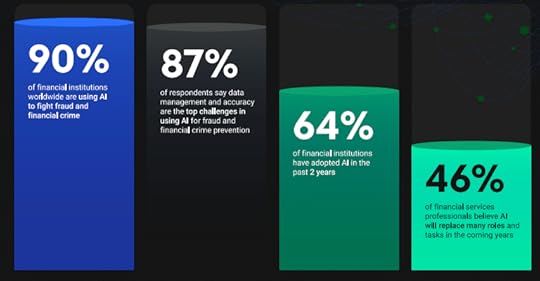
AI is so good that 90% of financial institutions worldwide are using it to fight fraud.
 5. It Automates Those Soul-Crushing Admin Tasks
Invoicing. Scheduling. Data entry. Expense reports.
These tasks are necessary but mind-numbing. They eat up valuable time that could be spent on strategy and growth.
AI business solutions automate all of it. Your invoices send themselves. Meetings schedule automatically. Expenses categorize without human intervention.
Your team gets their time back to focus on what actually grows the business.
6. Enhanced Decision-Making Through Rapid Data ProcessingBusiness decisions used to rely on gut feelings and limited data. Not anymore.
AI processes massive datasets in seconds, revealing patterns and insights humans would never spot. It predicts market trends, identifies opportunities, and flags potential problems before they become disasters.
You make decisions based on comprehensive data analysis, not hunches. That’s a competitive advantage you can’t buy any other way.
7. Customer Relations Improve with Lightning-Fast Problem SolvingCustomers hate waiting. Period.
AI-powered customer service tools respond instantly, solve common problems automatically, and route complex issues to the right human expert. No more endless hold times. No more getting transferred five times.
Businesses using AI business solutions for customer service see satisfaction scores jump by 17% or more. Happy customers become loyal customers.
8. Customer Behavior Analysis Reveals What Your Customers Really WantWhy do some customers buy and others bounce? What makes someone a repeat customer?
AI analyzes customer behavior at a level of detail that’s impossible manually. It tracks every click, every pause, every interaction—then tells you exactly what works and what doesn’t.
You stop guessing what your customers want. You know.
9. AI Optimizes Your Supply Chain and InventoryRunning out of stock loses sales. Overstocking ties up cash.
AI predicts demand with scary accuracy. It knows when to order, how much to order, and where to stock products for fastest delivery.
60% of retailers say that using AI increased customer engagement. That’s a ton of retailers enjoying the power that Ai can bring to business!
10. Recruitment Gets Smarter and FasterFinding the right hire is expensive and time-consuming. Bad hires are even more costly.
AI screens resumes, identifies top candidates, and even conducts initial interviews. It removes unconscious bias and focuses purely on qualifications and fit.
Companies using AI in recruitment cut time-to-hire by 50% and report better quality hires.
AI Business Solutions Are the Way Forward for Every BusinessThe data is clear, and the trend is irreversible: AI business solutions are no longer optional for businesses that want to thrive.
Whether you’re a solo entrepreneur or running a corporation, AI levels the playing field. It gives small businesses capabilities that once required enterprise budgets. It gives large businesses the agility to move like startups.
The businesses winning today aren’t necessarily the ones with the biggest budgets or the most employees. They’re the ones leveraging AI business solutions to work smarter, move faster, and serve better.
The question isn’t whether to adopt AI anymore. The question is: How quickly can you implement it before your competition leaves you behind?
Start small if you need to. Pick one area—customer service, content creation, data analysis—and implement AI there. See the results. Then expand.
The future belongs to businesses that embrace AI business solutions today.
AI Business Solutions: The Fast, Easy WayI know and you know: you need AI business solutions. Your competitors are already using them. Your revenue depends on them. Your future hinges on them.
But here’s what’s stopping you—it’s overwhelming, confusing, and you don’t have time to figure it out. You’re drowning in options. Every AI tool promises miracles. You don’t know which ones actually work for your business.
And honestly? You’re terrified of making an expensive mistake.
That’s exactly why we built First Movers R&D AI Labs.
We don’t hand you generic AI solutions and wish you luck. We dive deep into your specific business, understand your unique challenges, and build custom AI business solutions that actually fit how you work.
Fast implementation. Smooth integration. Zero disruption to your current operations.
Our team has implemented AI for businesses just like yours. We’ve seen what works and what wastes money. We cut through the noise and give you exactly what you need—nothing more, nothing less.
You get AI business solutions tailored to your business, implemented by experts who speak plain English, and results you can measure in months, not years.
Stop researching. Stop second-guessing. Let us handle the complexity while you focus on running your business.
Check out First Movers R&D AI Labs today.
AI Business Solutions FAQsHow can businesses future-proof with AI?Future-proofing with AI business solutions starts with building a flexible AI strategy that can adapt as technology evolves. Focus on implementing scalable AI tools that integrate with your existing systems. Train your team to work alongside AI rather than fear it. Stay informed about emerging AI capabilities in your industry. And most importantly, start now—businesses that wait too long will find themselves struggling to catch up. The companies thriving five years from now will be the ones investing in AI business solutions today.
What are the benefits of AI for small businesses?Small businesses gain the most dramatic advantages from AI business solutions because they’re competing with limited resources. AI gives you enterprise-level capabilities at small business prices. You can offer 24/7 customer service without hiring night shifts. Create professional marketing content without expensive agencies. Analyze customer data like major corporations do.
Can AI business solutions integrate with existing software?Absolutely. Modern AI business solutions are designed specifically to integrate with the tools you’re already using. Whether it’s your CRM, accounting software, e-commerce platform, or project management system, most AI tools offer seamless integration through APIs and pre-built connectors. You don’t need to rip out your entire tech stack. Start by adding AI capabilities to your existing workflow, then expand from there. Many businesses implement AI without their teams even realizing they’re using it—it just makes their current tools work better.
What’s the ROI timeline for implementing AI in business?Most businesses see measurable ROI from AI business solutions within 3-6 months of implementation. Some see results even faster—customer service AI can reduce response times immediately, and content creation AI shows productivity gains within weeks. The exact timeline depends on which AI solutions you implement and how quickly your team adopts them.
October 15, 2025
AI Business Plan: Your Roadmap to Success (Not Failure)
Let’s be real: throwing money at AI without a plan is like burning cash in a very expensive bonfire.
I’ve watched countless companies jump on the AI bandwagon, convinced they’ll magically transform their business overnight. Spoiler alert: they don’t. They waste time. They waste money. And worst of all? They end up more confused than when they started.
Here’s the truth nobody wants to hear: AI without strategy is just expensive chaos.
That’s where an AI business plan comes in. Not some dusty document that sits in a drawer. I’m talking about a living, breathing roadmap that actually gets you from “AI sounds cool” to “AI is making us money.”
Think of it as your GPS for the AI journey. Without it, you’re just driving around aimlessly, hoping you’ll stumble onto success. With it? You know exactly where you’re going, how to get there, and what to do when roadblocks pop up.
Let’s build one that actually works.
Why Your AI Business Plan Can’t Be StaticHere’s mistake number one: treating your AI business plan like it’s carved in stone.
The market shifts. Technology evolves. Your competitors make moves. If your plan doesn’t adapt, you’re already behind.
Your AI strategy needs to dance with your business strategy. When business goals change, your AI priorities shift. When new AI capabilities emerge, they should reshape what’s possible for your business. It’s a two-way street, not a one-time memo from the top.
Companies that nail this? They’re the ones using AI as a competitive weapon, not just another tool.
The Bidirectional ApproachMost businesses get this backwards. They think: “Here’s our business strategy. Now let’s sprinkle some AI on it.”
Wrong.
Your AI business plan should influence your business direction just as much as your business goals shape your AI agenda. New AI capabilities might reveal opportunities you never considered. Market disruptions might demand a complete strategic pivot.
This back-and-forth alignment is how you move from basic AI adoption to game-changing transformation.
The Three Non-Negotiables of Your AI Business PlanWant to build a plan that actually delivers? Start here.
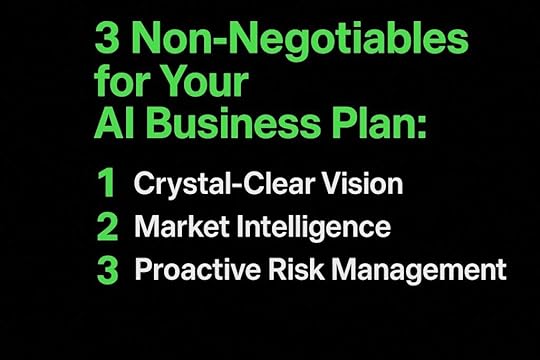 1. Crystal-Clear Vision
Sit down with your leadership team and answer one question: What do we actually want AI to do for us?
Not vague aspirations. Specific outcomes.
Where will AI create measurable value?What’s our investment ceiling?What adoption targets make sense?Which risks keep us up at night?Get brutal about priorities. You can’t do everything, so pick your battles wisely.
2. Market IntelligenceYou need to know what’s happening outside your bubble. How are competitors leveraging AI? Where are you vulnerable? What trends are reshaping your industry?
Check the latest adoption patterns and impact forecasts. Study how new entrants are using AI as a differentiator. Ask yourself: If we don’t move fast here, who will eat our lunch?
Stay paranoid. It keeps you sharp.
3. Risk Management That’s Actually ProactiveEvery AI initiative carries risk. Pretending otherwise is naive.
Build clear principles for responsible, ethical, and secure AI use before you need them. Identify the major risks—yes, including the ones nobody wants to talk about. Then create concrete action plans.
And here’s what’s important: assign clear accountability for AI governance. If everyone’s responsible, nobody’s responsible.
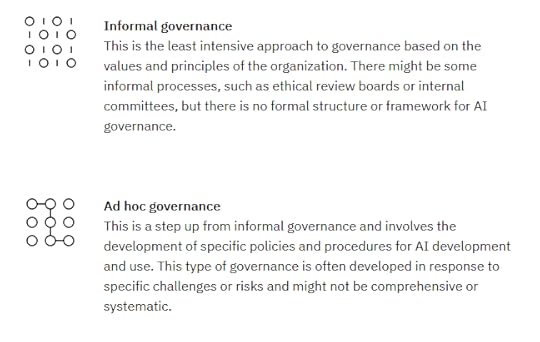 Turning Strategy Into Action: Your AI Portfolio
A great AI business plan without execution is just expensive PowerPoint slides.
You need an AI portfolio that tracks every use case and initiative. Connect it to your roadmap. Make sure your operating model bridges the gap between where you are and where you need to be.
Assess Your Current RealityBefore you can plan the journey, you need to know your starting point. Evaluate these capabilities honestly:
Data and Technology Readiness
Do you have the infrastructure to support AI initiatives? Is your data clean, accessible, and properly governed?
Organizational Structure
Is your governance model built for AI? Or are you trying to jam AI into outdated processes?
AI Literacy and Skills
Does your team actually understand AI? Do you have the engineering talent to execute?
AI Maturity
Where does your organization truly stand on the AI maturity curve? (Hint: most companies overestimate this.)
The higher your AI ambitions, the more mature these capabilities need to be. That’s just reality.
Build Measurable GoalsVague goals get vague results.
Set specific KPIs to track progress. Define what success looks like at each milestone. Create feedback loops so you can adjust quickly when things aren’t working.
And trust me—things won’t always work. That’s fine. What matters is catching it early and pivoting fast.
The Portfolio Prioritization FrameworkNot all AI initiatives are created equal.
Your AI business plan should include a clear framework for prioritizing use cases based on:
Business value potential: What’s the actual ROI?Feasibility: Can we realistically pull this off with our current capabilities?Strategic alignment: Does this move us toward our vision?Risk level: What could go wrong, and can we handle it?Urgency: What happens if we wait six months?Use this framework to build your AI roadmap. It helps you focus resources where they’ll make the biggest impact.
Managing Organizational ChangeHere’s what nobody tells you: the technical stuff is often easier than the people stuff. You need to actively manage organizational change. That means:
Acquiring and Leading AI Talent
The war for AI talent is fierce. You need a strategy for attracting and keeping the right people.
Fostering an Innovation Culture
AI requires experimentation. Failure will happen. Can your culture handle that?
Building AI Literacy Across Teams
Everyone from marketing to operations needs basic AI fluency. Plan for that.
Your AI business plan should include specific initiatives for each of these areas.
The Realignment Imperative in Your AI Business PlanRemember when I said your plan can’t be static? Here’s how you keep it fresh.
Schedule Regular Strategy Reviews
Put AI strategy realignment on your leadership meeting agenda. Monthly or quarterly, depending on your pace of change.
Trigger Reviews for Disruptions
Competitive moves, regulatory changes, or major tech breakthroughs should automatically trigger a strategy review.
Align with Adjacent Strategies
Your AI, data, analytics, and IT strategies should all work together. Misalignment here costs you speed and effectiveness.
Update Portfolio Priorities
As strategy shifts, reprioritize your AI portfolio. Kill initiatives that no longer serve the vision. Double down on the ones that do.
This continuous realignment is non-negotiable. Skip it, and your AI business plan becomes obsolete faster than you think.
Connecting Strategy to Your GEO ApproachHere’s something most businesses miss: your AI business plan should inform how you show up in AI-generated answers.
Like those sites on the right side of this image:
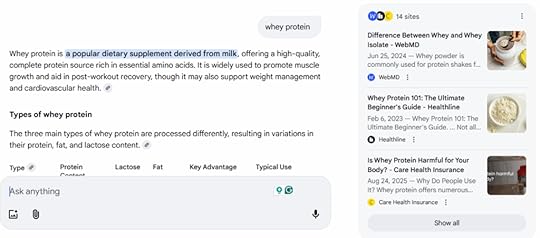
Why? Because your target audience is increasingly asking AI platforms for recommendations instead of searching Google.
If you’ve invested in a solid AI strategy internally, you understand how these systems think. Use that knowledge to optimize your content for GEO (Generative Engine Optimization).
Build Authority in Your Domain
AI platforms prioritize sources with proven expertise. Your AI thought leadership content should demonstrate deep understanding.
Structure Information for AI Understanding
Use clear entity optimization, natural language, and comprehensive topic coverage. AI systems reward this.
Maintain Consistent Digital Identity
Your brand’s digital footprint should clearly communicate your AI capabilities and authority.
The companies winning at both AI strategy and GEO understand this connection.
Common Mistakes That Tank AI Business PlansLet me save you some pain. Avoid these traps:
Treating AI as an IT Project
AI is a business transformation, not a tech implementation. If IT is driving this alone, you’re already off track.
Underestimating Change Management
The technical lift is only half the battle. People and process changes will make or break you.
Ignoring Data Foundations
You can’t build great AI on garbage data. Fix your data strategy first.
Forgetting About Governance
Set governance frameworks before you need them, not after something goes wrong.
Setting Unrealistic Timelines
AI transformation takes time. Pretending otherwise sets everyone up for disappointment.
How long does it take to develop a solid AI business plan?
If you’re a small business, you can create a solid first version in 1-2 weeks. Block out time with your core team, assess where you are, and map out 3-5 priority use cases. Mid-sized companies typically need 6-8 weeks for something comprehensive. The key? Don’t overthink it. Start with a lean plan you can actually execute, then refine as you learn. Remember—your plan should evolve with your business, not collect dust on a shelf.
What’s the difference between an AI strategy and an AI business plan?
Your AI strategy is the high-level vision: what you want AI to achieve and why. Your AI business plan is the executable roadmap: how you’ll get there, with specific initiatives, timelines, resources, and success metrics. Think of strategy as your destination and the business plan as your detailed driving directions.
How much should we budget for AI initiatives in our business plan?
This varies wildly based on your industry, maturity level, and ambitions. Most organizations allocate 5-15% of their technology budget to AI initiatives. But don’t just pick a number—base your budget on the specific use cases in your portfolio and the capability gaps you need to close. Start smaller if you’re new to AI, then scale as you prove ROI.
Feeling Overwhelmed Creating an AI Business Plan? We Get It.Look, I won’t sugarcoat it: building an AI business plan can feel complicated.
You’re juggling a million things already. Now you need to figure out AI strategy, portfolio prioritization, risk management, and organizational change? It’s a lot.
That’s exactly why we built First Movers R&D AI Labs.
We help businesses like yours create customized AI business plans that actually make sense for your reality—not some cookie-cutter template that looks great but doesn’t work in practice.
Here’s what we do differently:
We Start With Your Business Goals
Not the latest AI trends. Not what your competitors are doing. Your actual business objectives and pain points.
We Assess Your Real Capabilities
We tell you honestly where you are, what’s possible now, and what needs to happen before you can tackle bigger initiatives.
We Build Your Custom Roadmap
Prioritized use cases. Clear timelines. Resource requirements. Success metrics. Everything you need to execute with confidence.
We Stay With You
Your AI business plan isn’t a one-and-done deliverable. We help you adapt as markets shift, technology evolves, and your business grows.
Think of us as your AI strategy partner—the team that helps you avoid expensive mistakes and actually deliver ROI from your AI investments.
October 13, 2025
How to Build an AI Business: I Hit $100k/Month in Under 12 Months (Here’s My Powerful Blueprint)
How to build an AI business?
There are many paths to it, but here’s the thing:
I built a $100k/month AI business in less than 12 months.
No VC funding. No huge team. Just me, two other people, and a laptop.
If you’d told me five years ago that I could build a six-figure monthly business with 98% fewer employees than my first company, I would’ve laughed in your face.
But here we are.
And I’m about to show you exactly how I did it—so you can do it too.
My Story: From 7 Years and 100 Employees to 8 Months and 2 PeopleLet me take you back.
In 2011, I founded Express Writers. It was a content writing agency that did pretty well. But getting to $100k/month? That took seven grueling years and a team of 100 people.
Seven. Years.
The burnout was real. The overhead was crushing. And honestly? I wasn’t sure I’d ever want to build another business again.
Then AI happened.
Last year, I launched First Movers—an AI implementation and education company. This time, everything was different.
We hit $70k/month in just 8 months with only 2 people. By month 11? We crossed $100k/month.
Same hustle. Same expertise. But completely different leverage.
How did I do it? I figured out how to build an AI business the right way. And now I’m going to give you the exact blueprint I used.
Julia’s Blueprint: How to Build an AI Business and Scale to $100k/MonthBuilding an AI business isn’t rocket science. But it does require a specific approach that’s different from traditional businesses.
Here’s exactly how to do it.
1. Pick a Niche (Being Generic Will Kill Your AI Business)This is where most people screw up.
They think, “I’ll use AI to help everyone with everything!”
Wrong.
You need to know exactly who you’re going to help. The more specific, the better.
When I started First Movers, I didn’t say “We help people learn AI.” I said “We teach professionals how to integrate AI into their work so they can multiply their impact without burning out.”
See the difference?
Here’s how to pick your niche:
What industry do you already understand? Use your existing knowledge as leverage.What specific problem keeps your ideal client up at night? Get obsessively specific.Can AI actually solve this problem better than traditional methods? Be honest here.My niche? Professionals—founders, executives, marketers, creators—who want to stay competitive and scale their output without drowning in overwhelm. Perfect fit for AI education.
Your niche doesn’t have to be professional education. It could be AI-powered bookkeeping for e-commerce brands. Or AI customer service for SaaS companies. Or AI-enhanced design work for real estate agents.
Just pick one thing. Get really, really good at it. Then expand.
2. Make Your Offer (What Problem Are You Actually Solving?)Once you know your niche, you need to craft an offer that makes people say “hell yes.”
Your offer should solve a specific, painful problem that your niche is desperately trying to fix.
For First Movers, our core offer is: We teach professionals how to integrate AI into their work—so they can stay competitive, save time, and multiply their impact.
That’s it. Simple. Clear. Solves a real problem.
When building your AI business offer, ask yourself:
What’s the transformation? Where are they now, and where will they be after working with you?What’s the timeline? People want to know when they’ll see results.What makes your AI approach better? Why not just hire a traditional service provider?Here’s the secret: Your offer should make the AI invisible to the customer. They don’t care about the tools you use. They care about the outcome.
I don’t lead with “We use Claude and HeyGen!” I lead with “You’ll learn how to integrate AI into your daily work so you can 10x your productivity and stay ahead of the curve.”
The AI is just how we deliver that promise faster and better.
Check out these example offers for different niches:
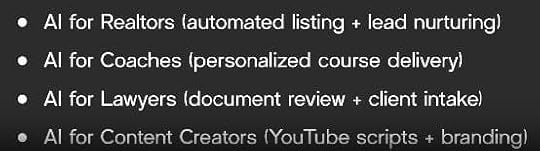 3. Automate Your Marketing with AI (This Is How You Scale Without Burning Out)
This is where the magic happens.
In my first business, showing up consistently meant I was chained to my laptop. Writing blog posts. Recording videos. Creating content. Every. Single. Day.
It was exhausting.
Now? AI handles most of the heavy lifting.
Here’s my exact system for automating marketing with AI:
Claude for Writing
I use Claude (yes, the AI you might be using right now) for everything writing-related. Blog posts. Email sequences. Social media content. Course outlines.
But I don’t just dump prompts and copy-paste. I’ve trained Claude on my voice, my style, my expertise. I give it context, examples, and clear instructions.
The result? Content that sounds like me, at a fraction of the time.
Does it work?
YES. In fact, I wrote a Tweet with Claude that got the highest engagement I’ve ever received in my history of social media.
Here’s where it gets wild. I use HeyGen to create AI clones of myself that can deliver my content in video format.
I record myself once, and then the AI clone can deliver scripts I write in my voice and likeness. It’s like having a video production team in my pocket.
This means I can show up on video consistently—even when life gets crazy. Sick kid? No problem. Traveling? Doesn’t matter. The content still goes out.
Same concept with audio. I’ve cloned my voice with ElevenLabs so I can turn written content into podcast episodes or audio updates without recording every single time.
These three tools let me maintain a consistent presence across written, video, and audio content—without the burnout that killed my motivation in my first business.
The key to automating your marketing with AI: Consistency over perfection.
It’s better to show up regularly with good content than to disappear for weeks trying to make everything perfect.
Want to learn how to build your own digital twin? Check out my complete guide here.
Scaling Your AI Business: Repeat and Polish Until You Hit $100kHere’s what nobody tells you about scaling an AI business: It’s not about doing more things. It’s about doing the same things better.
When I was building First Movers, I didn’t chase shiny objects. I didn’t launch ten new products. I didn’t pivot every month.
I repeated. And I polished. Over and over again.
My first AI video? Decent enough. My second? Better. My AI videos now? My followers love them.
This is how you scale an AI business to $100k/month:
You find what works. Then you do it again. And again. And again. Each time, you make it a little bit better.
You polish your messaging until it’s crystal clear. You refine your delivery until it converts like crazy. You optimize your systems until they run like clockwork.
Most people fail because they get bored. They want to try something new before they’ve mastered what they’re already doing.
Don’t be that person.
Take your offer and run it until you’ve squeezed every ounce of potential out of it. Get your marketing so tight that you could do it in your sleep. Make your process so smooth that clients rave about working with you.
Then, and only then, do you add something new.
The path to $100k/month isn’t paved with constant innovation. It’s paved with relentless repetition and continuous improvement.
Master the fundamentals. Repeat them consistently. Polish them obsessively. That’s the formula.
AI Isn’t About Replacing You—It’s About Freeing YouLet me clear something up once and for all.
AI is not here to replace you. It’s here to free you.
I see so many people paralyzed by fear. They think AI is going to take their job. Steal their creativity. Make them obsolete.
That’s backwards thinking.
AI doesn’t replace your expertise. It amplifies it. AI doesn’t steal your voice. It helps you share it more widely. AI doesn’t make you obsolete. It makes you unstoppable.
Think about it this way: Before AI, I spent 80% of my time on execution and 20% on strategy and creativity. Writing the actual words. Recording the actual videos. Doing the actual grunt work.
Now? It’s flipped. I spend 80% of my time on strategy, creativity, and high-level thinking. AI handles the execution.
I’m not working less. I’m working smarter. And I’m having way more impact.
AI frees you from the mundane so you can focus on the meaningful. It handles the repetitive tasks so you can do the work only you can do. The strategic thinking. The creative vision. The human connection.
When I use Claude to help me write, I’m not outsourcing my expertise. I’m scaling it. The ideas are mine. The strategy is mine. The expertise is mine. Claude just helps me get it out of my head and into the world faster.
When I use my HeyGen clone to deliver content, I’m not replacing myself. I’m freeing myself from the technical burden of video production so I can focus on what matters—helping more people.
This is the mindset shift you need to build a successful AI business.
Stop thinking about what AI is taking away. Start thinking about what it’s giving you back. Your time. Your energy. Your sanity. Your ability to focus on the work that actually moves the needle.
AI is not the enemy. It’s the ultimate leverage tool. And if you learn to use it right? It will set you free.
FAQs on How to Build an AI BusinessHow much money do I need to start an AI business?Way less than you think. I started First Movers with less than $5,000. Most of that went to AI tool subscriptions and basic website setup. You don’t need fancy offices or expensive equipment. You need a laptop, the right AI tools, and expertise in your niche. The barrier to entry is lower than it’s ever been.
Do I need to know how to code to build an AI business?Nope. Not even a little bit. I can’t code to save my life. The AI tools available today are designed for non-technical users. If you can write clear instructions and learn how to use software tools, you can build an AI business. The coding is already done for you—you just need to know how to apply it to solve real problems.
How long does it take to build a profitable AI business?It varies, but here’s the truth: If you have an existing audience or network, you can be profitable in 1-3 months. Starting from zero? Give yourself 6-12 months to build momentum. I hit $70k/month in 8 months because I already had an audience and reputation from Express Writers. If you’re starting cold, focus on getting your first 3-5 clients, then scale from there. The key is consistent action, not perfection.
What’s the biggest mistake people make when building an AI business?They focus on the AI instead of the problem they’re solving. Nobody cares that you use ChatGPT or Claude or whatever fancy AI tool. They care about whether you can solve their problem better, faster, or cheaper than the alternatives. Lead with the transformation, not the technology. Make the AI invisible and the results obvious.
How to Build an AI Business that Scales to $100k/month: Now, It’s Your TurnYes, you.
It’s your turn to build an AI business that explodes to $100k/month.
It’s totally possible.
It’s within your reach.
And this blog is just the beginning of what we can do to help you.
Want to know more?
Want customized consulting on what to do with your specific ideas?
Step-by-step guides, courses, and consulting, on how you can start your AI business from the ground up?
You’ll want to join our AI implementation community.
October 10, 2025
What Is AI Automation and How It Can Help Your Business (+5 Steps to AI Automation)
AI automation is the fusion of artificial intelligence with automated workflows to handle tasks that traditionally required human thinking—like analyzing data, making decisions, and learning from patterns. It’s not just about automating repetitive clicks anymore. It’s about teaching machines to think, adapt, and improve how your business runs.
Here’s what nobody tells you about AI automation: it’s already everywhere, and you’ve probably used it today without realizing it. That spam filter in your inbox? AI automation. The chatbot that actually understood your question on a website? AI automation. The fraud alert on your credit card? You guessed it.
The real opportunity isn’t just in knowing what AI automation is—it’s in understanding how to leverage it before your competitors do. Because while 78% of organizations are now using generative AI, most businesses are still fumbling in the dark when it comes to strategic implementation.
Let’s break down what makes AI automation tick, why it matters for your bottom line, and how you can actually put it to work.
What Is AI Automation Made Of? The Core ComponentsAI automation isn’t just one technology—it’s three powerful components working together. Understanding what AI automation actually consists of helps you see how these pieces combine to transform your business operations.
1. AI (Artificial Intelligence)Think of AI as the brain behind the operation. It’s the technology that enables machines to learn from experience, recognize patterns, and make decisions without being explicitly programmed for every scenario. This is what separates AI automation from basic automation—the intelligence to adapt. Instead of following rigid “if-this-then-that” rules, AI adapts and improves over time.
Modern AI can understand language, analyze images, predict outcomes, and even generate content. It’s what transforms a dumb robot into a smart assistant that actually gets better at its job.
2. Robotic Process Automation (RPA)RPA is the muscle—it’s software that mimics human actions on computers. It clicks buttons, fills out forms, copies data between systems, and performs repetitive digital tasks. The key word here is “repetitive.”
RPA excels at following rules and doing the same thing over and over without getting tired or making typos. But on its own, it’s not smart. That’s where AI comes in to create true AI automation.
3. Business Process Management (BPM)BPM is the skeleton—the framework that maps out how work flows through your organization. It defines who does what, when things happen, and how different tasks connect. Think of it as the blueprint for how your business operates.
When you combine BPM with AI and RPA, you get workflows that not only run automatically but also optimize themselves based on real-world results. That’s when AI automation reaches its full potential.
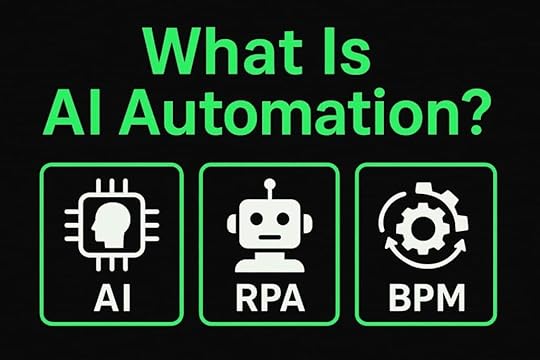 Why AI Automation Matters: The Real Benefits
The advantages of AI automation go far beyond simple efficiency gains. Here are seven concrete ways it transforms your business from the ground up.
1. AI Automation Reduces CostAI automation slashes expenses by replacing time-consuming manual work with smart systems that run 24/7. You’re not just saving on labor costs—you’re eliminating the hidden expenses of human error, like duplicate data entry or missed invoices.
The ROI is tangible. Companies implementing AI automation typically see cost reductions of 25-50% in automated processes within the first year.
2. AI Automation Saves TimeTime is the one resource you can’t buy more of. AI automation gives it back to you. Tasks that took hours now take minutes, freeing your team to focus on strategy, creativity, and growth instead of mundane busywork.
Your employees stop being data-entry specialists and start being problem-solvers. Understanding what AI automation can do for your time management is a game-changer.
3. AI Automation Helps with InnovationWhen your team isn’t drowning in repetitive tasks, they have mental space for innovation. AI automation handles the routine so humans can tackle the revolutionary. It also provides insights from data that humans might miss, sparking new ideas and opportunities.
Think of it as removing the ceiling on what your team can accomplish. The grunt work is handled by AI automation, so creativity can flourish.
4. AI Automation Improves AccuracyHumans make mistakes—especially when doing the same task for the hundredth time today. AI automation doesn’t get tired, distracted, or have a bad day. It processes information with consistent precision, reducing errors that cost time and money to fix.
In industries like healthcare and finance where accuracy is critical, AI automation can be the difference between compliance and catastrophe. The error rate drops to near zero.
5. AI Automation Improves Customer ExperienceCustomers expect instant responses and personalized service. AI automation delivers both. It can handle customer inquiries 24/7, provide personalized recommendations based on behavior, and route complex issues to the right human expert.
The result? Faster response times, more relevant interactions, and customers who actually feel heard. What is AI automation’s impact on customer satisfaction? It translates directly to loyalty and revenue.
6. AI Automation Enhances SecurityAI automation actively monitors for threats, detects unusual patterns, and responds to security incidents faster than any human team could. It can analyze millions of data points in seconds to identify potential breaches or fraud.
Plus, automated systems reduce human access to sensitive data, minimizing insider threats. Your security becomes proactive instead of reactive when you implement AI automation.
7. AI Automation Lets You Address Compliance with ConfidenceStaying compliant with regulations is exhausting when done manually. AI automation ensures every process follows the exact rules, creates automatic audit trails, and flags potential compliance issues before they become problems.
It’s like having a compliance officer that never sleeps and never misses a detail. When regulations change, you update the system once and AI automation applies it everywhere instantly.
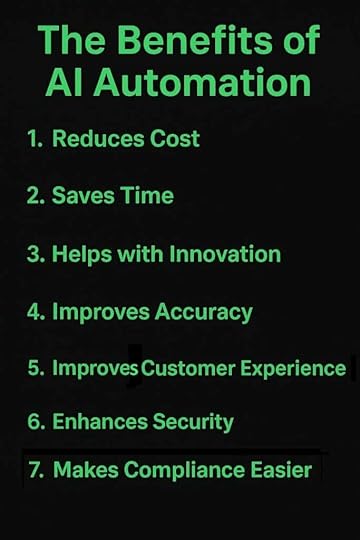 How to Implement AI Automation
Ready to put AI automation to work? Here’s your step-by-step roadmap from identifying opportunities to ongoing optimization.
1. Find Clunky Processes That Can Be AutomatedStart by asking your team: “What task makes you want to pull your hair out?” Those repetitive, time-consuming processes are your prime candidates for AI automation. Look for tasks with clear rules, high volume, and lots of manual data handling.
Common culprits include data entry, invoice processing, customer onboarding, and report generation. If someone says “I hate doing this every day,” that’s your signal that AI automation could help.
2. Review Your Process Under a MicroscopeDon’t automate a broken process—you’ll just break things faster. Map out every step, identify bottlenecks, and understand where errors happen. Talk to the people actually doing the work—they know where the pain points are that AI automation can solve.
Document everything. Where does information come from? Where does it go? What decisions get made along the way? This clarity is essential before AI automation begins.
3. Create New Workflows That Integrate AIDesign workflows that leverage AI’s strengths: pattern recognition, prediction, and decision-making. Maybe AI analyzes incoming emails and routes them to the right department. Or it predicts which leads are most likely to convert and prioritizes them automatically.
Think beyond just copying the old process. Ask: “If we were designing this from scratch with AI automation available, how would it work?” That’s where innovation happens.
4. Go Live! Automate Your Workflows and See the DifferenceStart with a pilot program. Choose one process, automate it with AI, and test thoroughly before rolling it out company-wide. Monitor everything—time saved, errors reduced, user feedback.
Expect some hiccups. That’s normal. The key is having a plan to address issues quickly and iterate. Once your AI automation is working smoothly, expand to other processes.
5. Update Consistently to Stay AheadAI automation isn’t “set it and forget it.” Technology evolves, business needs change, and new opportunities emerge. Schedule regular reviews of your automated processes—quarterly is a good cadence.
Ask: Is this still serving our needs? Can we optimize further? What new tasks can we automate? The businesses that win are those that treat AI automation as an ongoing strategy, not a one-time project.
Real-World AI Automation ExamplesTheory is great, but let’s look at real-world applications. Here are three powerful ways businesses are using AI automation right now.
1. Email Management That Actually WorksAI automation transforms your inbox from overwhelming to manageable. Smart systems can automatically categorize incoming emails, draft responses to common questions, and flag urgent messages that need immediate attention.
Advanced implementations can analyze email sentiment to identify frustrated customers, create support tickets automatically, and even schedule meetings by understanding natural language requests. Your email becomes a well-oiled machine instead of a black hole when you apply AI automation.
2. Customer Service That Never SleepsAI-powered chatbots and virtual assistants handle the majority of customer inquiries without human intervention. They understand context, access customer history, and provide personalized answers instantly. When they encounter something complex, they seamlessly hand off to a human agent with full context.
The result? Customers get help immediately, your support team focuses on challenging issues, and satisfaction scores climb. Some companies report handling 80% of inquiries through AI automation while actually improving customer satisfaction.
3. Financial Operations on AutopilotInvoice processing, expense approvals, and financial reconciliation are tedious but critical. AI automation can extract data from invoices (regardless of format), match them to purchase orders, route them for approval, and flag discrepancies—all without human touch.
It can predict cash flow, identify unusual transactions that might indicate fraud, and even generate financial reports with insights. Finance teams shift from data processing to strategic analysis, and the books are always accurate thanks to AI automation.
What Is AI Automation: FAQsWhat’s the difference between AI automation and RPA?RPA is like a robot following instructions—it does exactly what you tell it, every time, without deviation. AI automation adds intelligence to that robot, enabling it to learn, adapt, and make decisions based on data.
Think of RPA as cruise control and AI automation as a self-driving car. One maintains speed; the other navigates the entire journey. The real power comes from combining both—that’s what true AI automation delivers.
Do I need technical expertise to implement AI automation?No. Modern AI automation platforms are designed for business users, not just developers. Many tools offer drag-and-drop interfaces, pre-built templates, and guided setup processes.
That said, having someone with technical knowledge helps optimize implementations and troubleshoot issues. Many businesses start with vendor support or consultants, then build internal expertise over time. The key is understanding what AI automation can do, not necessarily how to do it yourself.
Will AI automation replace my employees?AI automation replaces tasks, not people. It handles repetitive, rule-based work so humans can focus on creativity, strategy, and complex problem-solving. Most companies find their employees are happier because they’re doing more meaningful work.
The real question isn’t whether jobs will change—they will. The question is whether you’ll upskill your team to work alongside AI automation or watch competitors do it first. Smart businesses invest in both technology and training.
How long does it take to see ROI from AI automation?Most businesses see measurable returns within 3-6 months for straightforward AI automation projects. Complex implementations might take 6-12 months. The timeline depends on process complexity, data quality, and how well you’ve planned the implementation.
Quick wins come from automating high-volume, repetitive tasks first. Start there, prove the value of AI automation, then expand to more sophisticated use cases. The key is starting now—because every day you wait is a day competitors get further ahead.
What Is AI Automation and How Can I Impelement It Easier?Let’s get this straight.
You need AI automation to stay in the game, especially in the changing world of business today.
But it’s not always easy.
When you go online for advice, that advice is usally generic, regurgitated, and not created for your specific, unique business with its specific, unique problems.
That’s where we come in.
At First Movers R&D AI Labs, we make sure you get the customized advice, gudiance, and strategy you need to succeed in half the time your competitors do.
We walk you through all the steps of impelementation.
We help you with your biggest problems and issues.
We give you every course, guide, and blueprint you need to get out of sticky situtations and into the success you’ve been dreaming of.
And guess what?
It won’t cost you thousands of dollars.
It won’t even cost you $500.
Hear this: you can get into our community for only $250.
That’s a way smaller amount than you’ll invest hiring experts, buying training programs, and wasting time on failed automation attempts.
Interested?
October 9, 2025
What Is a First Mover? The Complete Guide to First-Mover Advantage in 2025
What is a first mover?
Why is this so important?
Let’s see…
Ever wonder why some brands dominate their industries while others struggle to gain traction? The answer often lies in timing – specifically, in being a first mover.
In today’s hyper-competitive business landscape, understanding the concept of first-mover advantage could be the difference between industry leadership and playing perpetual catch-up. But what exactly is a first mover, and is being first always best?
As someone who’s helped hundreds of businesses position themselves strategically in evolving markets, I’ve seen firsthand how first mover status can transform companies – and how it can sometimes backfire spectacularly.
What Is a First Mover? The Complete DefinitionWhat, exactly, is a first mover?
Here’s a first mover advantage by Corporate Finance Institute:
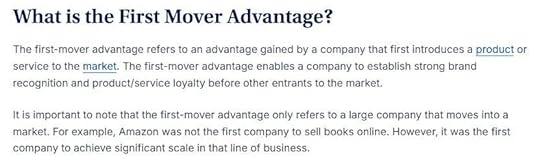
In other words, a first mover is a company or individual that gains a competitive advantage by being the first to introduce a new product, service, or business model to the market. Rather than following established patterns, first movers chart new territory, often creating entirely new market categories.
But being a first mover goes beyond simply being “first.” True first movers fundamentally change how customers think about solving a problem or fulfilling a need. They’re not just incremental improvers—they’re market revolutionaries.
First-to-Market vs. First Mover: Understanding the Critical DifferenceThere’s an important distinction that many business leaders miss when discussing first movers:
First-to-Market vs. First Mover
First-to-Market: The first company to release a specific product (technical achievement)First Mover: The company that successfully establishes the category and shapes market expectations (market achievement)Let me illustrate this with a classic example: Apple didn’t create the first smartphone (companies like BlackBerry and Palm were there years earlier), but Apple became the definitive first mover in the modern smartphone category by completely reimagining what a smartphone could be and establishing the touchscreen + app ecosystem model that now dominates the industry.
Examples of True First Movers in ActionReady for some inspiration?
Here are 4 first mover success stories to get you excited about what could be waiting in the future for you:
Amazon: Started in 1994 as an online bookstore when most people were still uncomfortable using credit cards online. Jeff Bezos didn’t just create another bookstore—he envisioned a completely new shopping experience without physical limitations. Amazon’s early innovations:
1-Click purchasing (patented in 1999)Customer reviews (revolutionary for retail at the time)Personalized recommendations based on purchase historyUnlimited virtual shelf space (vs. physical store constraints)This foundation allowed Amazon to expand into “The Everything Store” and eventually into cloud computing (AWS), streaming, and countless other categories.
Uber: Before 2009, getting a taxi meant standing on a street corner waving your arm or calling a dispatcher and waiting indefinitely. Uber completely reimagined transportation by:
Connecting riders directly with drivers through smartphonesIntroducing transparent GPS tracking and arrival estimatesCreating a frictionless payment systemImplementing a two-way rating system building trust in a stranger-based serviceThe result wasn’t just a taxi app—it was a fundamental shift in how people think about transportation, spawning an entire “Uber for X” economy.
Netflix: Founded in 1997 as a DVD-by-mail service, Netflix recognized the streaming future before broadband made it fully viable:
Created the subscription model for entertainment (vs. per-unit rental)Built sophisticated recommendation algorithmsTransitioned to streaming ahead of market demandEventually pioneered original content for streaming platformsNetflix didn’t just improve video rental—they obsoleted it and created an entirely new entertainment consumption paradigm.
Airbnb: In 2008, when most travelers would never have considered staying in a stranger’s home, Airbnb created a new lodging category by:
Building a trust framework through reviews and verificationCreating professional-quality photography standardsDeveloping secure payment infrastructureEnabling experiences impossible in traditional hotelsEach of these companies didn’t just launch first—they fundamentally changed consumer behavior and expectations, creating entirely new categories in the process. That’s the essence of being a true first mover.
5 Game-Changing Advantages of Being a First MoverLet’s cut through the theory and talk about what really matters: the concrete, transformative advantages that first movers enjoy. I’ve narrowed it down to the five most powerful benefits, illustrated with examples that show exactly how being first translates to market dominance.
1. Thriving (Not Just Surviving) Through Technological RevolutionsThe most immediate advantage of being a first mover is simple: you won’t be left behind when industry-changing technologies emerge. This is particularly crucial in today’s AI revolution.
Consider this fictional example story of Mark and Sarah:
Mark embraced AI early, integrating it across his agency’s workflow despite initial team resistance. Within six months, his agency doubled content output while maintaining quality. His team shifted from routine tasks to creative strategy and client relationships, boosting satisfaction scores by 40% and profit margins from 22% to 38%. Most importantly, his team now works 30% fewer hours while delivering better results, attracting premium clients who value their cutting-edge approach.
Sarah dismissed AI as “just another trend” and continued with traditional processes. Her team spent countless hours on tasks AI could have streamlined, leading to burnout and higher turnover. By the time she decided to explore AI tools, her business had already lost 35% of its revenue, making recovery an uphill battle.
The lesson is clear: early adopters don’t just protect their businesses—they transform them into more profitable operations with happier teams and clients.
Want to be like Mark and become a first mover in the age of AI? We have the solution for you. Check out our AI Solutions to find the exact match to your specific needs.
2. Shaping Customer Expectations in Your FavorFirst movers don’t just enter markets—they define how customers think about entire categories. This power to set expectations is perhaps the most valuable advantage of all.
When Dollar Shave Club launched in 2011, they completely rewrote customer expectations in the razor market dominated by expensive, complex products. Their approach was brilliantly simple: make simplicity a virtue, transform razors from products into subscriptions, and use authentic humor in an industry known for technical jargon.
Their 2012 launch video famously proclaimed, “Our blades are f***ing great,” generating 12,000 orders within 48 hours. By the time Gillette launched their subscription service, Dollar Shave Club had already set the standard for what razor subscriptions should be.
Unilever ultimately offered them a stunning $1 billion acquisition fee, because they had defined customer expectations, forcing giants to play by their rules. As a first mover, you don’t compete within existing parameters—you establish them yourself.
3. Capturing High-Value Early Adopters as Lifetime ChampionsEarly adopters aren’t just customers—they’re passionate advocates who drive mainstream adoption and willingly pay premium prices.
Peloton masterfully demonstrated this when they launched their connected fitness bike in 2014. Traditional fitness companies dismissed it as overpriced, missing that Peloton wasn’t selling equipment—they were creating a community of advocates.
These initial customers—largely affluent professionals—didn’t just buy bikes; they evangelized the Peloton experience on social media, hosted “Peloton parties,” and created a cultural phenomenon. By the time competitors entered the space, Peloton had already locked in the most valuable customer segment with such strong emotional investment that switching felt like betraying their community.
Even more remarkably, early adopters remained loyal despite later price reductions. They didn’t feel cheated; they took pride in discovering Peloton before it was mainstream. When you’re first to market, you capture the most valuable evangelists who will drive your growth for years.
4. Building Unmatched Market Intelligence Through Direct Customer FeedbackFirst movers gather pure customer feedback without competitive noise, creating an insight engine followers cannot replicate.
When Airbnb pioneered peer-to-peer accommodations in 2008, they entered uncharted territory. Their founders actively participated in their own marketplace, with Brian Chesky and Joe Gebbia personally photographing early New York listings and adopting a company-wide practice of staying with hosts. This hands-on approach yielded critical insights impossible to learn from focus groups: they discovered that professional photos dramatically increased bookings (leading to their professional photography program); they learned that trust was their biggest hurdle (resulting in their verification and review systems); and they found that pricing guidance was essential for hosts (prompting their pricing tools).
By the time competitors like HomeAway and VRBO pivoted toward Airbnb’s model, they had accumulated years of proprietary insights about trust-building, guest expectations, and host needs. This knowledge advantage compounds over time—first movers learn different things because they see customer behavior in its purest form, uninfluenced by alternatives.
5. Attracting Top Talent and Resources at Favorable TermsPerhaps the most underrated first-mover advantage is attracting extraordinary talent, investors, and partners who want to be part of something revolutionary.
Stripe exemplifies this perfectly. By creating a developer-friendly payment solution when existing options were notoriously difficult to implement, they positioned themselves as the future of online payments. This allowed them to recruit top engineers from tech giants who were excited by reinventing payments, attract investment from industry luminaries like Elon Musk and Peter Thiel at favorable valuations, and secure early partnerships with platforms before they became giants.
The talent advantage was crucial. By attracting engineers who could have worked anywhere, Stripe built a technical foundation competitors struggled to match. These weren’t just skilled professionals—they were true believers who worked with extraordinary dedication. Meanwhile, later entrants found themselves competing for second-tier talent or paying enormous premiums.
Why RIGHT NOW Is the Perfect Time to Be a First Mover in AIIf you’ve been watching the AI revolution unfold with a mix of fascination and trepidation, I have an urgent message for you: The window of first-mover opportunity in AI is wide open right now—but it won’t stay that way for long.
The AI Adoption Curve: Where We Actually StandDespite all the headlines, we’re still remarkably early in the AI adoption curve. According to McKinsey’s “The State of AI in 2025” report, organizations using AI has accelerated.
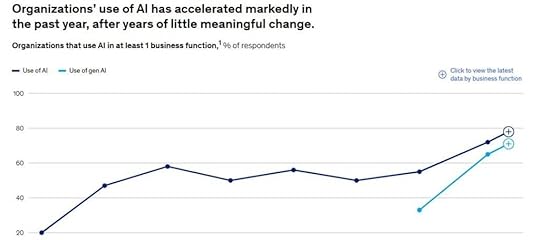
This explosive growth curve tells us something crucial: we’re witnessing mass adoption happening in real-time.
Even more revealing is Gartner’s 2024 study finding that only 23% of businesses have developed a strategy for optimizing their content and operations for AI-generated interactions. This means over three-quarters of businesses still lack a coherent approach to AI integration.
The implications are clear: despite the noise, we’re still in the early adopter phase—not the late majority.
Your Competitors Are Moving Slower Than You ThinkHere’s the reality that most businesses miss: despite all the AI hype, your competitors are likely moving much slower on meaningful AI implementation than their press releases suggest.
Recent McKinsey research reveals this gap perfectly. While 78% of organizations report using AI in at least one business function (up from 72% earlier in 2024), the depth of implementation tells a different story:
Only 21% of organizations have fundamentally redesigned any workflows around generative AILess than 20% are tracking meaningful KPIs for their AI solutionsA striking 80% of organizations aren’t seeing any tangible impact on enterprise-level earnings from their gen AI useThe research further shows that most organizations are merely experimenting with surface-level applications rather than integrating AI deeply into their operations. Consider this telling statistic: while AI usage has increased dramatically, organizations are using AI in an average of only three business functions—just a fraction of their operations.
This creates an unprecedented opportunity for decisive action. Most businesses are still in what McKinsey calls “early days for adoption,” with only 1% of executives describing their gen AI rollouts as “mature.” The businesses that move beyond experimentation to thoroughly integrate AI across their operations won’t just gain incremental advantages—they’ll create entirely new categories that leave competitors scrambling to catch up.
Even more revealing: McKinsey’s analysis shows that the redesign of workflows has the biggest effect on an organization’s ability to see bottom-line impact from AI use, yet the vast majority of companies haven’t taken this critical step. By restructuring your core operations around AI capabilities now, you’ll establish a lead that becomes increasingly difficult for followers to overcome.
Conclusion: The Time for Action Is NowThe evidence is overwhelming: we’re at a pivotal moment where being a first mover isn’t just advantageous—it’s essential for survival.
History has taught us that technological revolutions create distinct winners and losers. When the internet transformed commerce, Amazon’s first-mover approach secured their dominance while countless retailers disappeared. When smartphones redefined computing, Apple’s pioneering vision established a lead that even industry giants struggled to overcome.
The AI revolution represents an even more profound shift. The unique nature of AI—with its compounding data advantages, its ability to transform every business function, and its potential to create entirely new business models—makes the first-mover advantage particularly powerful.
But here’s what makes this moment special: we’re at the inflection point.
The technology is mature enough to deliver real business value, yet the majority of organizations are still dabbling rather than diving in. This creates the perfect window of opportunity for decisive action.
Ready to make your move and become a first mover?
We can help.
Book your strategy session with First Movers to architect your AI-driven future today.
October 8, 2025
How to Use AI To Maintain a Competitive Advantage (A Strategic Guide)
Remember when having a website was a competitive advantage? Then everyone got one, and suddenly it was just the price of entry.
That’s exactly what’s happening with AI right now. Except it’s moving about 10x faster.
The companies gaining ground aren’t the ones with the fanciest AI tools. They’re the ones who figured out that AI isn’t really about technology at all—it’s about creating compounding advantages that get stronger over time.
Think about it. Your competitor buys the same AI software you do. You both have access to ChatGPT, Claude, and Gemini. So where’s the advantage?
Here’s the thing nobody talks about: how to use AI to maintain a competitive advantage isn’t about the AI itself. It’s about combining AI with the unique assets only you have—your proprietary data, your customer relationships, your team’s expertise.
This guide breaks down exactly how to build that combination. Not theory. Not hype. Just the strategic moves that create lasting separation between you and everyone else in your market.
Starting now.
The Core Differentiator: How to Use AI To Maintain a Competitive Advantage with Proprietary DataHere’s the truth most businesses miss: the AI models themselves aren’t your competitive advantage. ChatGPT, Claude, Gemini—everyone has access to these.
Your competitive edge? It’s the data only you possess. This is how to use AI to maintain a competitive advantage that actually lasts.
Superior Data Analysis and Predictive IntelligenceAI can process datasets that would take human analysts years to comprehend. We’re talking millions of data points across structured databases, unstructured documents, customer emails, and market signals—all analyzed simultaneously.
But here’s where most companies go wrong. They use AI for descriptive analytics—understanding what already happened. That’s table stakes.
The real competitive advantage comes from predictive analytics. Forecasting market shifts before they occur. Anticipating customer churn before it happens. Predicting supply chain disruptions weeks in advance.
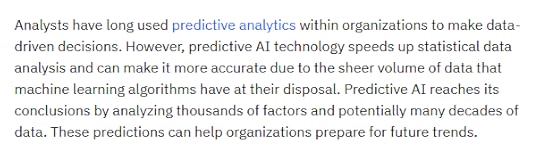
Financial institutions are already using AI for real-time risk assessment, processing thousands of variables to make lending decisions in seconds instead of days. Manufacturing companies use predictive models to forecast equipment failures, scheduling maintenance before costly breakdowns occur.
The question isn’t whether AI can analyze your data better than humans. It can. The question is: are you feeding it the right data to predict what matters most to your business? That’s how to use AI to maintain a competitive advantage in data analysis.
Building the “Data Moat” (The Flywheel Effect)This is where sustainable competitive advantage lives. Think of it as a self-reinforcing cycle that gets stronger over time.
Here’s how it works: More customers use your product → You collect more proprietary data → AI learns from that data to improve your product → Better product attracts more customers → Cycle repeats.
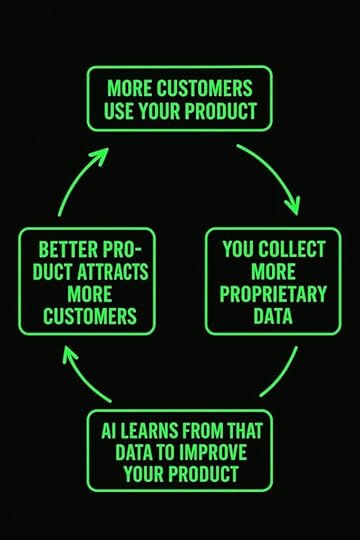
Each cycle makes your AI smarter and your product better. Competitors can’t replicate this because they don’t have your data history. They’re starting from zero while you’re already ten laps ahead.
The strategic move? Blend public LLMs with your proprietary internal data. Use Gemini or Claude for general language understanding, but train models on your customer transaction history, support tickets, internal documents, and operational data.
This combination creates something unique—AI that understands general knowledge but specializes in solving your specific business problems. That’s a moat your competitors can’t easily cross. This is exactly how to use AI to maintain a competitive advantage over the long term.
Operational Excellence: How to Use AI To Maintain a Competitive Advantage Through EfficiencyLet’s talk about immediate wins. These are the AI applications that free up resources and capital you can reinvest into innovation and growth. Understanding how to use AI to maintain a competitive advantage starts with operational excellence.
Hyper-Automation of Repetitive and High-Volume TasksWe’re not talking about basic robotic process automation here. That’s 2015 technology.
Modern AI goes way beyond clicking buttons and filling forms. Generative AI can now draft code, write legal documents, create financial reports, and generate marketing copy—all from simple prompts.
The strategy? Identify processes that are high-volume, repetitive, and rules-based. These deliver the highest ROI for automation.
In HR, AI screens resumes and matches candidates to job requirements in seconds. What used to take recruiters hours per candidate now happens instantly, and often with less bias than human screening.
In finance, AI processes invoices, matches them to purchase orders, flags discrepancies, and even handles basic vendor communications. Finance teams report 50-80% time savings on these tasks.
Check out this table by Centime, which compares manual and modern automateed AP:
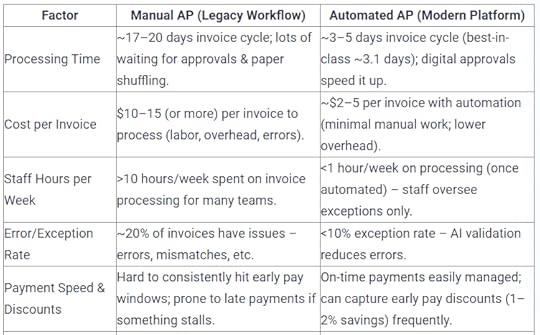
The key insight: automate the mundane so humans can focus on strategic work that actually moves the business forward.
Optimized Supply Chain and Demand ForecastingTraditional demand forecasting uses historical sales data and some basic trend analysis. AI takes it to an entirely different level.
AI algorithms integrate weather patterns, social media trends, economic indicators, competitor pricing, historical sales, and dozens of other variables simultaneously. The result? Demand predictions with accuracy rates that traditional models can’t touch.
For supply chain operations, this means fewer stockouts and less overstock. Both directly impact your bottom line.
Predictive maintenance is another massive opportunity. AI analyzes sensor data from equipment to predict failures before they happen. Manufacturing companies report 25-30% reductions in maintenance costs and 70% fewer unexpected breakdowns.
Here’s the competitive advantage: while your competitors are reacting to supply chain disruptions, you’re anticipating and preventing them. You’re never out of stock when customer demand spikes, while competitors scramble to catch up. This proactive approach shows how to use AI to maintain a competitive advantage in operations.
The Customer Edge: How to Use AI To Maintain a Competitive Advantage in Customer ExperienceCustomer experience is where AI creates the most visible competitive differentiation. It’s what customers actually feel and remember. Learning how to use AI to maintain a competitive advantage in this area separates market leaders from everyone else.
24/7 AI-Powered Customer Service and SupportThe numbers tell the story: AI-powered virtual agents can now handle 80% of routine customer queries without human intervention. That’s millions of interactions resolved instantly, 24/7, in multiple languages.
But here’s what matters more—your human support team gets freed up for complex, high-value problem-solving. The cases that require empathy, creativity, and deep product knowledge. The interactions that turn frustrated customers into loyal advocates.
Modern AI agents aren’t the frustrating chatbots of five years ago. These are context-aware, multi-turn conversation systems powered by generative AI. They understand intent, remember conversation history, and can handle nuanced requests.
The competitive advantage? While customers wait hours or days for your competitors to respond, yours get instant resolution. Response time is now a key differentiator, and AI makes instant the new standard.
Dynamic Personalization and Targeted MarketingNetflix doesn’t just recommend shows you might like. Its AI analyzes when you watch, what you pause, what you skip, and what you binge—then personalizes your entire interface based on those patterns.

Amazon’s recommendation engine drives 35% of total sales. That’s not luck. That’s AI analyzing real-time behavior to offer hyper-personalized product recommendations, pricing, and content at scale.
Here’s the strategic insight: personalization at scale was impossible before AI. You couldn’t manually analyze millions of customer interactions to customize each experience. Now you can.
AI tracks customer behavior in real-time and adapts. Dynamic pricing adjusts based on demand, inventory, and customer willingness to pay. Content recommendations shift based on current context, not just past behavior. Marketing messages personalize down to the individual level.
The result? Higher conversion rates, increased lifetime value, and customers who feel understood. That’s how to use AI to maintain a competitive advantage that your competitors will struggle to match without comparable AI capabilities and data.
Strategic Blueprint: How to Use AI To Maintain a Competitive Advantage Long-TermStrategy matters more than technology. You can have the best AI tools in the world and still fail if your implementation approach is wrong. Here’s how to use AI to maintain a competitive advantage that actually sustains over time.
Developing an AI-First Strategy and RoadmapHere’s where most AI initiatives fail: they’re technology experiments disconnected from core business goals. Someone gets excited about AI, launches a pilot project, maybe gets some results, and then… nothing scales.
AI adoption must be strategic from day one. It needs C-suite alignment, clear business objectives, and a roadmap that builds momentum.
Start with a high-impact, low-effort use case. Your quick win. This proves value, builds internal credibility, and secures buy-in for bigger initiatives.
Define clear KPIs upfront. Time-to-value. Cost savings. Revenue impact. Customer satisfaction scores. Whatever matters most to your business, measure it from the start.
Here’s your implementation sequence:
Identify your quick win – Find a use case with high business impact and low implementation complexityDefine success metrics – Establish KPIs before you start, not afterSecure C-suite alignment – AI initiatives fail without executive sponsorship and cross-functional supportStart small, scale fast – Prove value with a pilot, then rapidly expand to adjacent use casesBuild feedback loops – Continuously measure, learn, and refine your approachThe competitive advantage goes to companies that move fast and scale successfully. Not those with the fanciest AI tech stack.
Talent, Upskilling, and Workflow RedesignAI implementation is fundamentally a change management challenge. Technology is the easy part. People and processes are where implementations succeed or fail.
You need AI fluency across your organization. Not everyone needs to be a data scientist, but everyone needs to understand what AI can do, when to use it, and how to work alongside it effectively.
Here’s the critical mistake: adding AI to existing broken processes. If your current workflow is inefficient, automating it with AI just makes you inefficiently automated.
Instead, redesign workflows around AI capabilities. Ask: “If we could do this instantly with AI, how would we restructure the entire process?” Often, the answer is radically different from your current approach.
Train teams not just on AI tools, but on AI-assisted decision-making. When to trust AI outputs. When to question them. How to combine AI insights with human judgment for better outcomes than either could achieve alone.
The competitive advantage? While competitors struggle with AI adoption and resistance, your team embraces AI as a force multiplier. They’re more productive, more strategic, and deliver better results.
Governance, Ethics, and Risk Management (The Trust Factor)Let’s address the elephant in the room: AI can be wrong, biased, and potentially harmful if deployed without proper safeguards.
Your competitive advantage depends on trust. One AI-driven mistake that goes viral can damage your brand for years.
Key risks you must actively manage:
Inaccuracy and hallucinations – AI confidently generates wrong information. Always implement human review for high-stakes decisions.
Bias and discrimination – AI models can perpetuate or amplify existing biases in training data. Regularly audit outputs for fairness across demographics.
Data privacy and security – AI systems process sensitive data. Ensure compliance with regulations and implement robust data protection.
Intellectual property concerns – AI-generated content can inadvertently reproduce copyrighted material. Establish clear guidelines for AI use in creative work.
The solution? Human-in-the-loop systems. AI augments human decision-making but doesn’t replace human judgment entirely, especially in customer-facing applications.
Transparency matters too. When AI drives decisions that impact customers, be clear about it. Explain how AI is used and provide paths for human escalation.
Companies that build trusted AI systems—ones that are accurate, fair, transparent, and accountable—will win customer loyalty and regulatory approval. Those that don’t will face backlash, legal challenges, and lost trust.
FAQs: How to Use AI To Maintain a Competitive AdvantageWhat’s the biggest mistake companies make when trying to use AI for competitive advantage?Adding AI to broken processes instead of redesigning workflows around AI capabilities. If your current process is inefficient, automating it with AI just makes you inefficiently automated. The winners redesign from scratch, asking “If AI could do this instantly, how would we restructure everything?”
How long does it take to see ROI from AI implementation?Quick wins can deliver ROI in 30-90 days if you start with high-impact, low-effort use cases. The data moat and sustainable competitive advantages take 12-24 months to build. Start with automation wins that show immediate cost savings, then layer in strategic initiatives that compound over time.
Do I need a data science team to maintain a competitive advantage with AI?No. You need AI fluency across your organization, not a room full of PhD data scientists. Focus on upskilling existing teams to work alongside AI effectively. Many competitive advantages come from combining off-the-shelf AI tools with your proprietary data and domain expertise—not building custom models from scratch.
Ready to Gain Your Competitive Advantage with AI?Here’s what you need to understand: knowing how to use AI to maintain a competitive advantage isn’t about having AI. It’s about combining AI’s power with your unique data, talent strategy, and customer insights in ways competitors can’t easily replicate.
But here’s the thing:
It’s not always easy.
Maybe you’re not sure where to start.
You don’t have a blueprint to follow that’s specific for your company.
That’s where we come in.
At First Movers R&D AI Labs, we give you personalized solutions that help you integrate AI into your business flawlessly, seamlessly, and efficiently.
We guide you and lead you hand-in-hand through processes unique to your own business.
Not generic stuff.
Not stuff made for other businesses.
And it doesn’t cost an arm and a leg.
In fact, you can get all the expert consultations, courses, guidelines, and blueprints you’ll ever need with a tiny $250 investment.