The 10 Best AI Writing Tools That Actually Write Like You (Not Boring Robots)
You know that feeling?
It’s midnight. Your screen glows in the dark room. The deadline was yesterday. Your brain feels like mush.
You need words. Good words. But there’s nothing. Just exhaustion and the sinking feeling that you’re falling behind while everyone else races ahead.
I lived that nightmare for years.
Running Express Writers, my content agency, nearly broke me. Seven brutal years. A hundred employees. Endless chaos. We finally hit $100K monthly, but I was drowning. The best AI writing tools didn’t exist yet. Every piece of content required human hands, human hours, human burnout.
Then everything changed.
Today, I’m pulling $70K monthly with First Movers R&D AI Labs. My reach exploded 9,900%. I work less than ever. How? I cloned myself. Not with some sci-fi machine. With AI writing tools that actually capture my voice, my style, my brain.
Here’s the thing though. Most people using the best AI writing tools are doing it completely wrong. They’re pumping out generic robot content that sounds like every other AI-generated article on the internet. Bland. Lifeless. Forgettable.
That’s not what I’m teaching you today.
I’m showing you the AI writing tools that can actually become you. That write with your quirks, your perspective, your expertise. Because when you find the best AI writing tools and train them properly, you’re not getting some artificial assistant. You’re getting a clone that works 24/7 while you sleep.
The Best AI Writing Tools You Need to Know AboutLet me cut through the noise. There are hundreds of AI writing tools out there. Most are garbage. Some are decent. A few are genuinely exceptional if you know how to use them right.
I’ve cut the number down to 10. Here they are:
1. ChatGPT
This is the one that started it all. ChatGPT burst onto the scene in late 2022 and changed everything. Within five days, it had a million users. Now? Over 800 million people use it weekly.
ChatGPT is versatile. Quick. Great for brainstorming, drafting emails, refining copy, finding synonyms when you’ve used the same word seventeen times. The interface is clean. The responses are fast. And the free version is surprisingly capable.
What makes ChatGPT special is its conversational flow. You can keep refining, keep pushing, keep iterating until you get exactly what you need. It’s like having a writing partner who never gets tired or annoyed when you ask for the fifteenth revision.
The paid version gives you access to GPT-5 and newer models. Worth it if you’re using AI writing tools daily. The outputs are noticeably better for complex tasks.
2. Claude
This is my secret weapon. Claude is different from the other AI writing tools. It thinks deeper. Reasons better. Understands context in a way that feels almost human.
For simple stuff like title ideas or quick edits, Claude and ChatGPT perform similarly. But when you need nuanced thinking? Complex analysis? Deep reasoning? Claude wins every single time.
I use Claude almost daily. It’s brilliant for editing. I’ll feed it my drafts and ask where my argument falls apart, where I need more depth, where I’m being too vague. It catches things I miss. Points out logical gaps. Suggests improvements that actually make sense.
The best thing about Claude is that you can create separate projects for Emails, Blogs, Copywriting, Book writing, YouTube scripts, social media posts, and more. You can train the AI on your best works in each project, giving you content that sounds just like you, specifically for the audience on different platforms.
Pro tip: Give Claude detailed prompts. The more context you provide, the better it performs. This is one of the best AI writing tools for anything requiring actual thinking.
3. Jasper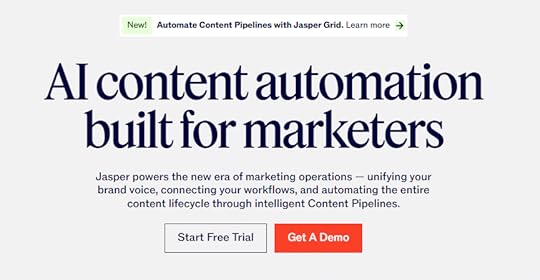
Jasper is the enterprise option built specifically for marketing teams.
What sets Jasper apart is its team collaboration features. Multiple people can work on projects simultaneously. There are templates for everything: product descriptions, landing pages, emails, press releases, social posts. The platform learns your brand voice and maintains consistency across all content.
Jasper also generates images alongside text. This is useful if you need complete content packages without switching between tools.
The downside? Cost. Plans start at $59 per month per seat. If you’re solo or just need basic AI writing tools, Jasper is probably overkill. But for agencies or marketing departments pumping out massive content volumes? It makes sense.
4. Copy.ai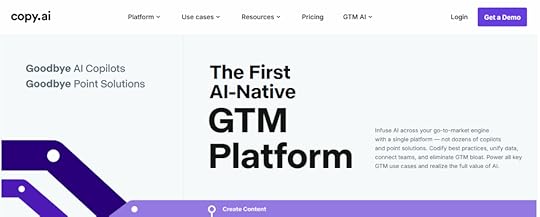
Copy.ai is designed for speed. Quick marketing copy, social media posts, ad text. It’s not trying to be your long-form writing partner. It’s trying to help you bang out dozens of variations fast.
The interface is template-driven. Pick what you need (product description, Facebook ad, email subject line), fill in some details, get multiple options instantly. Perfect when you need ideas or starting points.
Copy.ai has improved significantly with its newer features. The long-form editor is decent now. The brand voice controls help maintain consistency. And the workflow automation saves time if you’re doing repetitive tasks.
It’s one of the more affordable AI writing tools. There’s a free plan with limits. Paid plans are reasonable. This is a good option if you need marketing copy but don’t want enterprise pricing.
5. Writesonic
Writesonic does everything. Articles, social posts, ads, landing pages, even AI art generation. It’s positioned as an all-in-one content creation platform.
The article writer is surprisingly solid. Feed it a topic and keywords, and it’ll generate full blog posts with proper structure. The SEO optimizer suggests improvements. The plagiarism checker gives you peace of mind.
Writesonic also has a ChatGPT-like interface called Chatsonic that can search the web for current information. This is useful when you need facts from recent events.
Writesonic is among the best AI writing tools for beginners. The learning curve is gentle. Templates guide you. Results are decent right out of the box. It’s not as sophisticated as Claude for complex tasks, but reliable for standard content creation.
6. Wordtune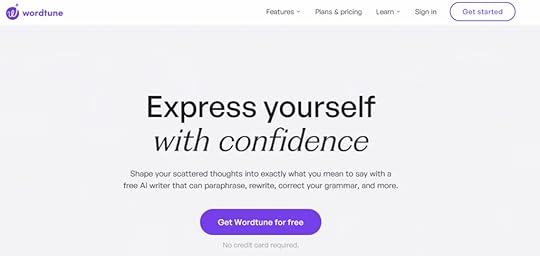
Wordtune isn’t about generating content from scratch. It’s about polishing what you’ve already written. Think of it as an advanced editing assistant.
It suggests rewrites for sentences. Offers different tones, casual, formal, concise, expanded. Catches grammar issues. Helps non-native English speakers sound more natural.
What I like about Wordtune is its fact-checking. It verifies claims against multiple sources before confirming accuracy. Not foolproof, no AI is, but better than most.
The interface is clean. Options are clear. You can accept suggestions with one click or keep iterating. It integrates with your browser, so you can use it everywhere you write online.
Wordtune has a free plan, but it has limits. The paid plans start at $6.99.
7. Lex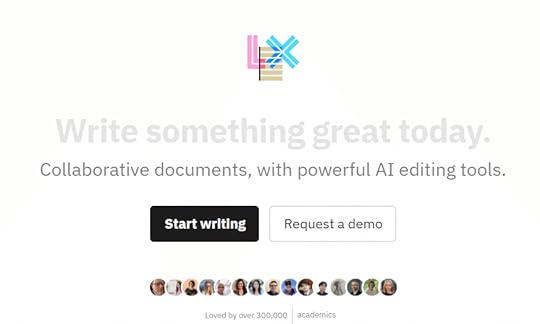
Lex is Google Docs reimagined with AI. Simple. Smart. Focused on the actual writing experience.
The interface looks familiar because it mirrors Google Docs. But everything works better. The AI suggestions feel natural. The editing tools are intuitive. Collaboration features actually make sense.
You can generate new text, rewrite existing sentences, expand ideas, shorten paragraphs. All without leaving the document. The proofreading function checks not just grammar and spelling but also brevity, clichés, passive voice.
Lex uses premium models from OpenAI, Anthropic, and TogetherAI. If you want the best of multiple AI writing tools combined in one interface, this is it.
Free version available. Paid plan is $24.99 monthly. For serious writers who want a distraction-free environment with powerful AI, Lex delivers.
8. Koala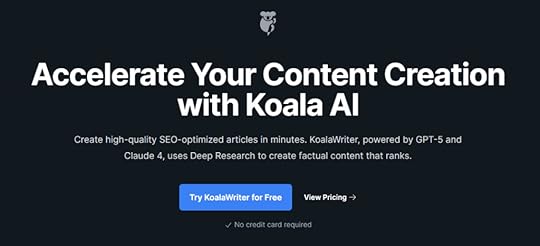
Koala is laser-focused on SEO content. It uses GPT-5 to generate articles optimized for search rankings.
The tool analyzes top-ranking content for your target keywords. Then it structures articles to match what Google wants. Adds FAQ sections. Inserts internal links automatically. Maintains your brand voice through custom guidelines.
You can customize article length, point of view, sources. Pull data from Google News, Google Scholar, academic papers. The research depth is impressive for AI-generated content.
Here’s the reality: You can’t publish AI content straight from any tool without editing. But Koala gets you closer than most. The output quality is high enough that editing time is minimal.
Plans start at $9 monthly. The free trial includes 5,000 word credits. If you’re creating SEO content regularly, Koala is one of the best AI writing tools for the job.
9. Sudowrite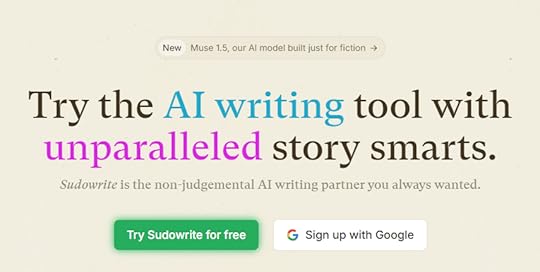
Sudowrite is built for fiction writers. Novelists, short story authors, screenwriters. If you’re writing creative narratives, this is your tool.
It has its own model called Muse, trained specifically on creative writing. The suggestions understand story structure, character development, pacing, sensory details.
Start writing a scene. Click the ‘Write’ button. Sudowrite continues the story with multiple options. Highlight a description. Hit ‘Describe’ for sensory details or metaphors. Use ‘Brainstorm’ for plot ideas, character traits, world-building elements.
The Canvas feature lets you mind-map your entire story. Track characters, plot threads, locations. See your narrative structure at a glance.
There’s also an active Slack community. Other fiction writers using the tool. Good for feedback and ideas.
Plans start at $10 per month. If you’re serious about fiction, Sudowrite is one of the best AI writing tools you’ll find.
10. SEOWind
SEOWind excels at one thing: creating comprehensive SEO content briefs. It’s built for content marketers who need data-driven outlines before writing.
Enter your target keyword. SEOWind analyzes everything currently ranking. Competitor content, structure, length, headers, questions people ask. Then it compiles all that intelligence into a detailed brief.
You’ll see recommended word count, heading quantities, image numbers. Pull relevant questions from Google, Quora, Reddit. Review competitor outlines. Use all this to build your own superior brief.
Once your brief is ready, SEOWind generates a complete draft. You download it and edit manually. There’s no in-app editing, which is limiting.
The Content Refresh feature is brilliant. It analyzes your existing content against current top-rankers, identifies gaps, suggests improvements, then writes updated sections with external research.
It integrates with Google Search Console for internal linking opportunities. Big time-saver.
Plans start at $49 monthly. A 3-day free trial is also available.
My Go-To AI Writing Tools (The Only Two I Actually Need)Look, I just gave you ten options. But here’s the truth. I use two. Claude and ChatGPT. That’s it.
Everything else is bells and whistles. Marketing speak. Features you don’t actually need.
ChatGPT handles quick tasks. Brainstorming. Rough drafts. Email refinements. Social media posts. It’s fast and versatile.
Claude handles everything requiring depth. Long-form articles. Strategic thinking. Complex editing. Nuanced analysis. It’s smarter and more thoughtful.
Together, these two AI writing tools cover every scenario I encounter.
But here’s what most people miss. Having the best AI writing tools means nothing if you’re using them wrong.
Stop Letting AI Write Generic Robot ContentThis is where everyone screws up.
They find the best AI writing tools. They type in prompts. They get content. They publish it.
And it’s trash. Boring, generic, sounds like everything else. No personality. No distinctive voice. Nothing that makes readers remember you.
Your readers aren’t stupid. They can spot AI-generated garbage instantly. And they click away.
Here’s what you need to understand. AI writing tools are like hiring a ghostwriter. You don’t just hand them a topic and expect magic. You train them. You teach them your voice, your perspective, your philosophy, your worldview.
You sit down with them. You explain how you think. What you believe. How you see the future. What matters to you. What pisses you off. What excites you.
Then you show them samples of your best work. The pieces that really sound like you. The ones where your personality shines through. The ones people remember. The ones that got the highest engagement.
That’s how you train AI writing tools properly. That’s how you create a clone that actually writes like you, not like a corporate press release generator.
This is exactly what I did. I fed Claude and ChatGPT my writing samples. My style guidelines. My philosophical frameworks. My unique perspectives on AI and business.
Now when they write for me? It sounds like me. Short punchy sentences mixed with longer flowing thoughts. Direct language. No fluff. Personality on every line.
That’s the difference between using AI writing tools and mastering them.
Learn to Clone Yourself with AI (Actually Write Like You)Want to know exactly how I did it?
I built an entire course around this process. It’s called Clone to Scale. And it’s inside First Movers R&D AI Labs.
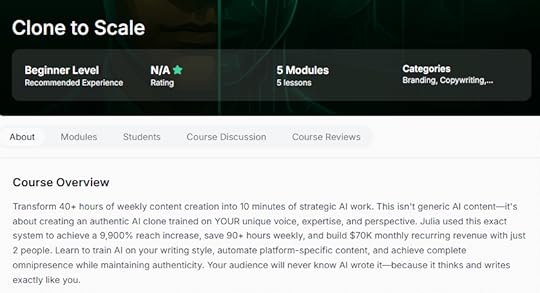
In this course, you learn the exact framework I used to train AI writing tools to write in my voice. Not theory. Not generic advice. The actual step-by-step process that transformed my business.
You’ll discover how to analyze your existing writing to identify your unique patterns and style markers. How to create comprehensive voice guidelines that AI can actually follow. How to select the right training samples that capture your best work. How to test and refine until the output is indistinguishable from your own writing.
This isn’t about finding the best AI writing tools. You already know which ones work. This is about making those tools actually useful. Making them yours.
Clone to Scale is part of First Movers R&D AI Labs. For less than what you spend on coffee each month, you get access to this course plus 40+ other courses on AI implementation, content strategy, business automation, and more.
I’m not gatekeeping this knowledge. I’m not keeping these strategies secret. I want you to experience the same transformation I did. From drowning in work to thriving with AI clones handling the heavy lifting.
Stop wasting time with generic AI content. Start creating content that actually sounds like you. Join First Movers R&D AI Labs and take Clone to Scale today.
Common Questions About AI Writing ToolsIs ChatGPT an AI writing tool?
Yes. ChatGPT is one of the most popular AI writing tools available. It handles emails, social posts, blog articles, ad copy, scripts, whatever you need written. Built on OpenAI’s language models, it’s versatile and powerful.
But here’s the critical part. You can’t just publish ChatGPT’s output directly. Every piece needs human review and editing. Check for accuracy. Adjust the tone. Add your personality. Make sure it actually sounds like you, not like every other AI-generated article on the internet.
Are AI writing tools free?
Many AI writing tools have free versions with limitations. ChatGPT and Claude both offer free tiers. You get access to older models with usage caps. Fine for testing. Fine for occasional use.
But if you’re serious about using AI writing tools, you’ll want paid versions. Better models. Faster responses. No usage limits. The best AI writing tools charge monthly subscriptions, usually $20-25 for individual plans.
Some tools offer API access for integration into your own applications. That’s typically pay-per-use based on tokens or words generated.
Free tools exist. But unlimited access to the most capable versions requires paying.
Which AI tool is best for writing?
There’s no single answer. It depends on what you need and how you work.
For me? ChatGPT and Claude. Period.
ChatGPT is perfect for quick daily tasks. Brainstorming. Drafting emails. Refining copy. Generating social media content. It’s fast, versatile, and the conversational interface makes iteration easy.
Claude excels at depth. Long-form articles. Complex analysis. Strategic thinking. Editing that requires actual reasoning. When you need nuance and sophisticated understanding, Claude delivers.
These two cover everything. You don’t need a dozen different AI writing tools. You need one or two that you master completely.
But here’s what really matters. The best AI writing tools are worthless if you’re using them to pump out generic content. You need to train them. Teach them your voice. Show them your style. Make them actual clones of your writing, not random content generators.
That’s the difference between using AI and mastering it. That’s what I teach in Clone to Scale inside First Movers R&D AI Labs. How to transform these tools from generic assistants into perfect replicas of your unique voice and expertise.
Interested?