
Terri Cole's Blog, page 15
February 11, 2025
From Burnout to Balance: How to Redefine Success + Feel Fulfilled
Are you considered “successful” by societal standards, but can’t enjoy your success because you’re busy moving on to whatever’s next?
Or do you constantly feel behind, like you could be doing more?
Have you checked all the ‘big’ boxes in life (degree, career, love, stuff), but still feel unfulfilled or uninspired by what you’ve achieved?
If you answered yes, this episode is for you because I am talking about the power of redefining success for less burnout, especially for high-functioning codependents (HFCs). I’m also giving you real-life examples of how our stories about success can lead us astray and practical steps to take to clarify what success means to you.
Prefer the audio? Listen here.
Successful + UnfulfilledTwo things inspired this episode: grappling with what success meant for me after ‘making it’ as a bi-coastal talent agent and feeling unsatisfied, and talking to a woman in my mastermind (applications are open!) who wasn’t able to enjoy her success because she was exhausted and burnt out from over-functioning. (She got into recovery as an HFC during her time in the mastermind and is thoroughly enjoying her life and success right now!)
Can you relate to this feeling of being successful, but feeling exhausted or unfulfilled? Like there has to be more to life than…this?
To change the way we relate to success, we need to first examine where our beliefs about success come from.
Your Downloaded Success Blueprint (What Stories Do You Tell Yourself?)Growing up, what did you learn about being successful?
Was success good or bad in your family of origin?
It’s not always straightforward, and societal, family, and cultural norms influence us in different ways.
For example, a working-class family may look down upon someone who gets a degree and works on Wall Street.
A family that owns a business may expect all members to work there by a certain age.
A farming family may not accept someone dreaming of becoming an engineer.
Other cultures value education and success over almost everything else.
We all have our reasons why we relate to success the way we do and whether we enjoy it or not.
Download the guide to answer questions you can use to uncover your downloaded trust blueprint.
My Downloaded Success BlueprintI learned what ‘success’ was from watching my father’s career, but I was also influenced by my mother’s advice to get an education and make my own money if I wanted to be free.
My mother’s advice came from her own experience of working two years to save up for college and, once there, getting pregnant with my oldest sister before Thanksgiving break.
My parents married quickly, and my mother dropped out of college. She never returned.
My father seemed to have the power in my parents’ marriage because he had the education and made all the money. I followed in his path.
Shortly after graduating, I began working in a talent agency and soon became an agent. My ambition told me success was all about making money and having lots of famous clients (which I eventually did).
While I would have been considered ‘traditionally’ successful, I wasn’t satisfied or happy, and I felt like I had become too mentally healthy to stay in the entertainment business.
It became clear I was in a misogynistic business where women were expected to be a size 0 and stay young forever.
Yet, what lit me up was helping them with their mental health. Not the brand or movie deals I was negotiating for them.
Eventually, I couldn’t deny the truth of what was driving my behavior. I had to break free from my ingrained idea of success and leave my ‘fancy’ job behind, even if no one understood why.
This looked like going back to school to become a psychotherapist with $900 in the bank (my lousy money management back then is a topic for another blog  ). It was scary but so worth it.
Many years ago, my friend, Kris Carr, received a literal prescription from her long-term oncologist to take one week off per month.
He was very clear she had been working too much. To be truly successful, she needed to have balance.
I remember being so impressed with him. Prescribing one week off a month was serious!
It also caused me to reflect on my own life and how much I was working.
While I had stopped drinking when I was 21, workaholism and striving for success had become my new addiction.
Years of therapy have helped me be in the present moment rather than looking for the next thing to do and to be grateful for the success I do have.
Not Letting Others Dictate the Terms of Your SuccessIn my therapy practice, several clients let others dictate what success meant for them.
I remember one client who became a lawyer because it was the path everyone in her family followed.
She was in her early 30s, extremely smart, and miserable. Art was her true calling.
She didn’t see a long-term future for herself as a lawyer, so we worked together to figure out how she could fulfill her artistic pursuits.
She began painting on the side and eventually opened an Etsy shop. In time, she began earning as much from her art as she did from being a lawyer. She then reduced her hours at the law firm (they weren’t happy) and transitioned out.
I was proud of her for making the move- she’s still painting and creating today.
If you’re stuck in a similar position, I want you to realize that one day, our parents will transition, and their approval or disapproval will matter way less than our level of satisfaction and joy in what we are doing.
We’ll be left with the lives we’ve created for ourselves and likely regret the degree to which we self-abandoned to please a parent (or anyone else for that matter).
Steps to Figure Out Your Definition of SuccessIt took courage for my client to decide what success meant to her.
I now believe success is only real if you enjoy it, have a balanced life, rest when you’re tired, and take care of your health.
The first step to figuring out your definition of success is to slow down and self-reflect. We must slow down. We can’t just be on autopilot or reactive mode.
Think about how you want to feel and how you want to spend your time.
As my pal Danielle LaPorte would say, what is your core desired feeling?
Mine has always been freedom. Want to know yours? Download the guide, which includes a few questions to help you get clarity here.
We also need to figure out what we feel resentful about.
Often, when it comes to success, work, or entrepreneurship, we’re resentful because we’re over-functioning, over-giving, and overdoing.
Once you figure out where you’re resentful, you can begin setting boundaries around your time, energy, and bandwidth.
When someone asks you to do something, two questions to ask yourself are:
Do I have the bandwidth to do this without becoming resentful?Do I even want to do it?You are one person with finite energy. Be mindful of where it’s going.
Prioritize doing things simply because they’re fun. Make time for play. When you slow down, you’ll gain more capacity to notice the small things that bring you joy.
When we don’t slow down, and we’re constantly onto the next thing, we’re not in the present moment. We’re focused on the future, uninspired, and doing things just to get them done. It’s important to be here now.
Getting into recovery from high-functioning codependency can help us reclaim bandwidth, too.
Another woman in my mastermind was codependent in her relationship with her brother, who had addiction problems.
On the surface, she had a successful business, but the situation with her brother took a toll on her emotional and physical bandwidth.
In our time together, she disentangled herself, set better boundaries, and stopped trying to control him and over-function for him.
As a result, she gained so much bandwidth and a greater depth of intimacy in the relationship. (He’s also sober!) She’s a different person than she was when we began and now enjoys her success.
If you find yourself living other people’s lives for them, too exhausted to take care of yourself, know that this freedom is possible for you, too. It’s why I wrote my book, Too Much: A Guide to Breaking the Cycle of High-Functioning Codependency. 
I hope this episode inspired you to consider your definition of success and how you relate to it. If it did, let me know in the comments or on Instagram!
Have an amazing week and as always, take care of you.
P.S. Applications for my mastermind, Flourish, are open! We begin March 1st and if you’re a woman healer, helper, or entrepreneur, I’d love to have you. We focus on both personal and professional growth. I can teach you how to create a highly-rated podcast, get a book deal, and write and sell a bestselling book. But I can also help with the psychological and emotional challenges that come with success and building/growing a business.
Flourish is the only way to work 1:1 with me, and it’s intimate- there are only 10-12 spots. We stay together for 9 months and during that time, we gather in person twice for three days of intensive transformation.
If you join us in Flourish, your life will change for the better. If you’re interested, the details and application are on this page, and once you apply, you can hop on a call with me to make sure it’s a good fit!


688 From Burnout to Balance: How to Redefine Success + Feel Fulfilled
Listen & Subscribe on iTunes/Apple Podcasts
Listen & Subscribe on Spotify
Listen & Subscribe Stitcher.
Listen & Subscribe Google.
Listen & Subscribe PlayerFM.
“None of us have endless energy to give, so you really want to be mindful of where you are giving it.” – Terri Cole
Intro
Are you considered “successful” by societal standards, but can’t enjoy your success because you’re busy moving on to whatever’s next?
Or do you constantly feel behind, like you could be doing more?
Have you checked all the ‘big’ boxes in life (degree, career, love, stuff), but still feel unfulfilled or uninspired by what you’ve achieved?
If you answered yes, this episode is for you because I am talking about the power of redefining success for less burnout, especially for high-functioning codependents (HFCs). I’m also giving you real-life examples of how our stories about success can lead us astray and practical steps to take to clarify what success means to you.
Highlights:4:15 My personal experiences around ambition and burnout5:50 Your downloaded success blueprint13:30 Recognizing that this is your one and only life15:20 Identifying your core desired feelingLinks Mentioned:Find the downloadable guide I made to go along with today’s episode here.
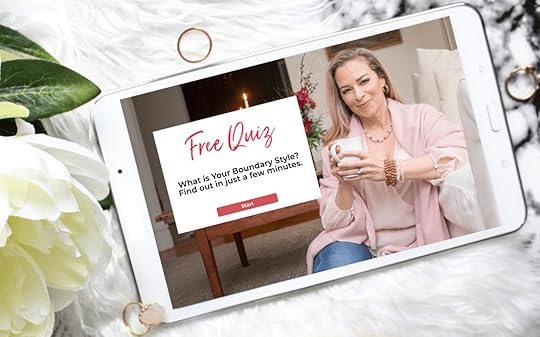
Take the boundary quiz and learn more about your Boundary Style
I WROTE A BOOK ABOUT BOUNDARIES! Boundary Boss is THE essential guidebook for authentically expressing your desires, setting healthy limits and bringing more satisfaction, joy and peace into all of your personal and professional relationships. Purchase your copy now!
TAKE THE BOUNDARY STYLE QUIZ I always say, ya can’t change anything until you become aware of it, so take the quiz and discover your unique boundary style!
FOLLOW ME ON SOCIAL Instagram is my jam and one of my favorite ways to connect with you. I put out new content there every, single day ?
JOIN OUR FREE FACEBOOK GROUP Become a part of our powerful community of real love revolutionaries!
SIGN UP FOR THE NEWSLETTER Want love notes from me delivered straight to your inbox? I share things to inspire and empower you each week, plus what I’m reading, watching, cooking…you get the idea ?
February 6, 2025
687 Healing Your Relationships with Dr. Thema Bryant
Listen & Subscribe on iTunes/Apple Podcasts
Listen & Subscribe on Spotify
Listen & Subscribe Stitcher.
Listen & Subscribe Google.
Listen & Subscribe PlayerFM.
Intro“Sometimes, we’re choosing people based on potential instead of who they are in the present. And then instead of picking a partner, you’re picking a project. What would it be like to be with a peer?” – Dr. Thema Bryant
I first found Dr. Bryant on Instagram, where her approachable wisdom about partnerships reeled me in. Today, I’m sharing it with all of you! This conversation is a real talk about why we sometimes seek relationships where people need us instead of want us and overcoming the urge to control everything instead of co-creating with a partner. Plus, we chat about when to cut someone out and when continuing to improve your 50% of the relationship might be a viable choice.
Highlights:3:45 Dr. Bryant’s origin story5:10 Taking responsibility for your part in relationships7:35 Releasing complete control in relationships to co-create10:15 Choosing relationship partners based on potential instead of the present12:40 Why people with traumatic pasts can be attracted to those who need them rather than those who want them17:30 How socialization contributes to gender roles in communication, and how to meet in the middle23:00 Moving on from people who don’t reciprocate love27:40 Why now is the time for Dr. Bryant’s brand new book, Matters of the Heart: Healing Your Relationship with Yourself and Those You LoveConnect with Dr. Thema BryantDr. Thema Bryant is a psychologist, author, professor, sacred artist, and minister who is leading the way in creating healthy relationships, healing traumas, and overcoming stress and oppression. Dr. Thema is the author of the soon to be released book Matters of the Heart, which aims to empower readers to connect with themselves and to others, delving into topics such as: control issues, emotional unavailability, practical activation activities, case studies, and teaching how to shift mindset and patterns around romance.
Dr. Thema Bryant completed her doctorate in Clinical Psychology at Duke University and her post-doctoral training at Harvard Medical Center’s Victims of Violence Program. Upon graduating, she became the Coordinator of the Princeton University SHARE Program, which provides intervention and prevention programming to combat sexual assault, sexual harassment, and harassment based on sexual orientation. She is currently a tenured professor of psychology in the Graduate School of Education and Psychology at Pepperdine University, where she directs the Culture and Trauma Research Laboratory. Dr. Thema is an ordained elder in the African Methodist Episcopal Church and leads the mental health ministry at First A.M.E. Church in Los Angeles. Most recently, she was the 2023 president of the American Psychological Association (APA) and is the host of The Homecoming Podcast.
Order Dr. Bryant’s brand new book here: https://drthema.com/matters-of-the-heart/
Website: https://drthema.com
IG: https://instagram.com/dr.thema
I WROTE A BOOK ABOUT BOUNDARIES! Boundary Boss is THE essential guidebook for authentically expressing your desires, setting healthy limits, and bringing more satisfaction, joy, and peace into all of your personal and professional relationships. There are super JUICY bonuses when you pre-order, so what are you waiting for?
TAKE THE BOUNDARY STYLE QUIZ I always say, ya can’t change anything until you become aware of it, so take the quiz and discover your unique boundary style!
FOLLOW ME ON SOCIAL Instagram is my jam and one of my favorite ways to connect with you. I put out new content there every, single day.
JOIN OUR FREE FACEBOOK GROUP Become a part of our powerful community of real love revolutionaries!
SIGN UP FOR THE NEWSLETTER Want love notes from me delivered straight to your inbox? I share things to inspire and empower you each week, plus what I’m reading, watching, cooking…you get the idea?
February 4, 2025
The Best Way to Celebrate Valentine’s Day (Single or Partnered!)
How do you feel about Valentine’s Day?
Do you often find yourself disappointed? Does it make you feel alone and down?
Does your partner forget about it, even though you ask to make plans? Do they give you gifts that feel hollow?
Whether you’re single or partnered, I invite you to put a self-consideration spin on Valentine’s Day with my favorite three-step self-love ritual. All the steps are below along with tips on how to avoid disappointment on the day.
Prefer the audio? Listen here.
The Problem With Valentine’s DayI’ve never been a fan of Valentine’s Day.
Hallmark popularized it in 1913 when it began selling Valentine’s cards, and according to the National Retail Federation, consumers are expected to spend $27.5 billion celebrating this year. 
I don’t know about you, but to me, the over-commercialization of it feels excessive. It puts undue pressure on people to meet societal expectations of romance, gift-giving, and love.
There’s also a disconnect between what healthy love actually is and the ‘idealized’ love promoted by Valentine’s Day.
For those who are single and looking, every sappy ad is often yet another reminder that you’re not partnered.
Those who are partnered may face unrealistic expectations of having the ‘perfect’ evening or finding the ‘perfect’ gift, which is stressful and can lead to disappointment.
How to Avoid Disappointment on Valentine’s DayI used to tell my partnered therapy clients who liked celebrating Valentine’s Day to think about what truly feels like a gift to them.
What is one thing, coming from your beloved, that would make you feel loved and valued?
Some people love chocolate, flowers, and gifts, while others (like me) prefer quality time or words of affirmation.
If Vic and I celebrate, I like going to a nice restaurant for a meal together or going away for a short trip.
Other quality time ideas are snuggling for three hours watching movies, spending all day in bed together, or getting a babysitter and enjoying a night away.
Maybe you need ‘me’ time and the biggest gift your partner could give you is watching the kids so you can have a night alone or with your friends.
Spend time thinking about it, and then talk about it. Ask your partner for what you need. Repeated disappointment is avoidable!
A 3-Step, Inclusive Self-Love RitualSelf-love is the foundation for any other healthy love (according to me).
I truly believe how we relate to ourselves sets the bar for every other relationship in our lives.
Think about it: if we treat ourselves like crap, talk badly about ourselves, or put ourselves last on our own list, we will inevitably attract people who agree with our low self-assessment.
We don’t want that!
Self-love is an inside job. No one else can do it for us.
When we prioritize self-consideration, it raises our love vibe and increases our confidence.
That is why I designed this inclusive, 3-step self-love ritual. Whether you’re single, partnered, looking for love, not looking, or something in between, it will help you uplevel your relationship with yourself.
Let’s dive in.
Step 1: Create a Zen DenA zen den is a little sacred space in your home, almost like an altar, where you can sit and be comfortable.
It doesn’t need to be big, it just needs to be cozy. It can be the table next to your bed or in the corner of a room.
Part of the self-loving experience is intentionally creating a safe, external space, where you can tend to your internal sacred space.
A zen den also serves as a visual reminder to prioritize self-care and helps keep it top of mind. It’s a beautiful way to honor yourself and your preferences.
My zen den contains different items I love: my favorite blanket, pen, journal, candles, fairy lights, etc. I journal, meditate, and rest there when needed.
What makes a space feel cozy and inviting to you? You may want to include essential oils, crystals, plants, outdoor elements like leaves and flowers, or photos of loved ones.
Step 2: Journal for Self-DiscoveryOnce you’ve created your zen den, you’re ready to journal and dream. Carve out time to write and get in touch with your thoughts.
Go through the journal prompts in the guide to illuminate how you want to be loved, what kind of love you like, and how you relate to yourself.
Some questions you can ask are: what currently makes you feel loved? What would make you feel loved? What do you want love to look like? (This can be romantic or platonic love.)
I’m a ritual girl, so when I journal, I love having a candle lit and a cup of tea nearby. Caring for myself and prioritizing my comfort primes me to tap into the truest part of my heart before I journal.
Feeling loved by someone releases feel-good hormones, and we can get the same results by doing something loving (like this ritual) for ourselves.
Step 3: Think of a Meaningful Gift For YourselfUsing what you discovered from journaling in the previous step, what would feel like a beautiful, meaningful gift for yourself?
The goal is to do something special just for you that makes you feel how you want to feel. It doesn’t need to be big or expensive! It just needs to make you feel nurtured, joyful, and satisfied.
The guide contains a few ideas, but here are some to get you started: take yourself out for a meal, order in, go for a mani/pedi, plan a solo R+R trip or relaxing staycation, take lessons for something new that interests you (music, dance, language, art), or take a luxurious tub with oils, candles, and flower petals.
You can also give yourself the gift of being in the present moment by taking a tech break and unplugging. (Less tech, more life in general, please! Who’s with me?)
Is your love language gifts? Buy a meaningful piece of jewelry or clothing that makes you feel beautiful.
Treat yourself like the amazing person you are, because you are so worthy and deserving of it.
Does this ritual leave you feeling inspired to take your understanding of love and how you relate to it and yourself to the next level?
I’d love for you to join me in my free 5-day Raise Your Love Vibe Kickstart, happening February 9-13! It’s all about amplifying and attracting more love into your beautiful, one-of-a-kind life. It’s for everyone because I think we can all use more love in our lives and the world. Just go to terricole.com/love to sign up and join!
What are your thoughts on Valentine’s Day? Do you celebrate it at all? How would it feel to focus on yourself for the day? Will you join me for five days of love, or do this ritual? Let me know in the comments or on Instagram, and remember to download the guide so you can take this ritual with you.
Have an amazing week and as always, take care of you.
686 The Best Way to Celebrate Valentine’s Day (Single or Partnered!)
Listen & Subscribe on iTunes/Apple Podcasts
Listen & Subscribe on Spotify
Listen & Subscribe Stitcher.
Listen & Subscribe Google.
Listen & Subscribe PlayerFM.
“We’re intentionally creating a safe and comforting external space where you can then tend to your internal sacred space.” – Terri Cole
Intro
How do you feel about Valentine’s Day?
Do you often find yourself disappointed? Does it make you feel alone and down?
Does your partner forget about it, even though you ask to make plans? Do they give you gifts that feel hollow?
Whether you’re single or partnered, I invite you to put a self-consideration spin on Valentine’s Day with my favorite three-step self-love ritual. All the steps are below along with tips on how to avoid disappointment on the day.
Highlights:4:30 The history of Valentine’s day and my personal qualms about it5:30 Alternate ways to celebrate Valentine’s day to focus on community, friendship, and growth11:00 A step-by-step self-love ritual15:00 Make time for self-love, self-consideration, and self-care18:50 Come up with a special gift for yourselfLinks Mentioned:Find the downloadable guide I made to go along with today’s episode here.
Take the boundary quiz and learn more about your Boundary Style
I WROTE A BOOK ABOUT BOUNDARIES! Boundary Boss is THE essential guidebook for authentically expressing your desires, setting healthy limits and bringing more satisfaction, joy and peace into all of your personal and professional relationships. Purchase your copy now!
TAKE THE BOUNDARY STYLE QUIZ I always say, ya can’t change anything until you become aware of it, so take the quiz and discover your unique boundary style!
FOLLOW ME ON SOCIAL Instagram is my jam and one of my favorite ways to connect with you. I put out new content there every, single day ?
JOIN OUR FREE FACEBOOK GROUP Become a part of our powerful community of real love revolutionaries!
SIGN UP FOR THE NEWSLETTER Want love notes from me delivered straight to your inbox? I share things to inspire and empower you each week, plus what I’m reading, watching, cooking…you get the idea ?
January 30, 2025
685 Lessons from the Mystic Jesus with Marianne Williamson
Listen & Subscribe on iTunes/Apple Podcasts
Listen & Subscribe on Spotify
Listen & Subscribe Stitcher.
Listen & Subscribe Google.
Listen & Subscribe PlayerFM.
Intro“We go to therapy and say, “can we get real, can we get deep?” But real and deep shouldn’t be just one hour a week!” – Marianne Williamson
Some say you should never talk about politics, religion, or money in polite company – But today’s guest doesn’t agree! On today’s episode, Marianne Williamson contextualizes Christianity and Christ to offer insight into modern challenges: Personal hardships, disconnection from others, and even the growing polarization of the political climate. She offers a perspective that harmonizes Christianity with other religious and spiritual ideologies that can guide us to cultivate healthy minds. Plus, Marianne shares the human moments that bring her joy despite her concern about world events.
Highlights:4:40 Marianne’s origin story7:00 What her course, A Course in Miracles, hopes to teach us in today’s world13:00 Society’s problem with depth and disagreement 17:50 How Marianne recontextualizes some Christian terms to provide insight on mental health and wellbeing25:00 A Christian perspective on the illusion of separateness30:00 What it means to be excited vs. happy as today’s world faces challengesConnect with Marianne WilliamsonFor more than four decades, Marianne Williamson has been a leader of spiritually progressive circles. She is the author of 16 books, four of which have been #1 New YorkTimes best sellers. A quote from the mega-bestseller A Return to Love, “Our deepest fear is not that we are inadequate. Our deepest fear is that we are powerful beyond measure…” is considered an anthem for a contemporary generation of seekers.
Her other bestsellers have included A Woman’s Worth, The Law of Divine Compensation, Tears to Triumph and The Gift of Change.With her books and online classes she has taught millions of people the universal spiritual principles at the heart of miracle-minded thinking.
Williamson founded Project Angel Food, a non-profit organization that has delivered more than 18 million meals to ill and dying homebound patients in the Los Angeles area since1989. The group was created to help people suffering from the ravages of HIV/AIDS. She has also worked throughout her career on poverty, anti-hunger and racial reconciliation issues. In 2004, she co-founded The Peace Alliance and supported the creation of a U.S. Department of Peace.
Williamson’s latest book, titled THE MYSTIC JESUS: The Mind of Love, is available online and at bookstores everywhere.
Instagram: @MarianneWilliamson
Website: Marianne.com
Substack: MarianneWilliamson.Substack.com
Link to purchase THE MYSTIC JESUS: The Mind of Love: https://www.harpercollins.com/products/the-mystic-jesus-marianne-williamson?variant=41001460138018
I WROTE A BOOK ABOUT BOUNDARIES! Boundary Boss is THE essential guidebook for authentically expressing your desires, setting healthy limits, and bringing more satisfaction, joy, and peace into all of your personal and professional relationships. There are super JUICY bonuses when you pre-order, so what are you waiting for?
TAKE THE BOUNDARY STYLE QUIZ I always say, ya can’t change anything until you become aware of it, so take the quiz and discover your unique boundary style!
FOLLOW ME ON SOCIAL Instagram is my jam and one of my favorite ways to connect with you. I put out new content there every, single day.
JOIN OUR FREE FACEBOOK GROUP Become a part of our powerful community of real love revolutionaries!
SIGN UP FOR THE NEWSLETTER Want love notes from me delivered straight to your inbox? I share things to inspire and empower you each week, plus what I’m reading, watching, cooking…you get the idea?
January 28, 2025
Stop Letting Fear of Rejection Drive Your Life With These Simple Steps
Is setting boundaries intimidating because you worry that people will get mad or abandon you if you do?
Do you avoid telling the truth or setting limits out of fear?
Or do you people to keep the peace and avoid rejection?
If you’re nodding your head, this episode is for you because I’m talking about how fear of rejection is the common root of many of our self-abandoning behaviors, what this fear costs us, and steps you can take to overcome it.
Prefer the audio? Listen here.
Why Are We Afraid of Rejection?Fear of rejection is extremely common in humans. From a biological and physiological perspective, back in the cave people days, we needed the community to survive. Rejection meant death. This fear is a survival mechanism for us.
We can also develop a fear of rejection based on what we witnessed in childhood.
If you come from a long line of people-pleasers who placate others or walk on eggshells, you may have learned to avoid rejection or anger early on.
Sometimes, we can be so sensitive to rejection that we’re not even discerning about the quality of the human who might be rejecting us!
Here’s an example.
Years ago, a therapy client was freaking out because she thought a guy she had just started texting was going to ghost her.
I suggested we back up and asked her why she liked him. At the end of the session, it became clear she didn’t. She was just hypersensitive to any perceived amount of potential rejection.
Based on how amplified her fear was, I suspected that her fear wasn’t really about a guy she didn’t even like. I thought she was having a transference from an old injury. I was right- she had a rejecting mother and a punitive father.
Our family of origin influences our relationship with rejection in different ways.
I was like my client when I was younger, trying hard not to be judged or rejected.
I was such a people-pleaser that I wanted everyone in my high school to like me, even if I didn’t like them. And if they didn’t, I took it personally. Why don’t they like me? I’m perfectly likable. Everyone likes me!
Why? Because I felt rejected by my father after feeling like I was born the wrong gender. (You can read about my father wound here.)
Regardless of what we experienced in our family of origin, most of us don’t want to be rejected because it doesn’t feel good!
Cost of Living with Fear of RejectionIt’s costly to let our fear of rejection drive our decisions.
When we make decisions from this place of fear, we people-please, self-abandon, over-function, and end up resentful.
Our decision-making suffers, too. Our fear of rejection can override the desire to know the truth of how we feel like my client freaking out before questioning whether she liked the guy.
One of the most significant costs of living with fear of rejection is not being authentically known.
We often give people corrupted data about ourselves by not telling the truth to avoid rejection. It matters, even if it’s small.
The other day, I showed one of my sons a TikTok video of tap-dancing brothers I like. He said, “I’ve never really been into tap. It’s not my thing.”
He wasn’t saying anything bad about me liking it, but him telling the truth allowed me to know him more authentically.
Have you been in this situation? Did you tell the truth or feign enthusiasm only for a pal to continue sharing stuff with you that you have no interest in? (I think a lot of us do the latter!)
Being authentically known has to be one of your top priorities in life because it’s the thing that makes life satisfying and deepens the intimacy in your relationships.
Think about the relationships in your life where you don’t feel known. Isn’t it painful to feel like it’s either all about the other person, or like they have a misperception of you?
“Let them misunderstand you” energy is circulating online, which I get, but I also don’t want you to behave in ways that encourage people to misunderstand or not know you.
Fear of rejection also comes at the expense of our self-worth. Even when we disagree, ‘ ‘Going along to get along’ reinforces the idea that we must hide parts of ourselves.
Eventually, this behavior wears away at our self-esteem. It also creates anxiety because trying to avoid rejection at every turn requires hypervigilance.
We may have a fear-based narrative running through our minds about things that haven’t even happened. There’s all this anticipatory planning that goes into avoiding rejection when it might not even occur.
This takes a lot of bandwidth. I usually tell my therapy clients, “Let’s try to manage this if it happens, once, rather than mentally running through it dozens of times.”
We want to be mindful of this negative, fearful, catastrophic voice and narrative to prevent it from overly informing our behaviors and decisions.
Overcoming Fear of RejectionYou may live your life trying to avoid rejection for many reasons. To overcome this fear, you first need to raise your awareness around why you relate to it the way you do.
In the guide, you’ll find questions to uncover your rejection blueprint. The more you understand your relationship with rejection, the easier it becomes to change your behavior.
I also want you to consider embracing the idea that you and your relationships are not that fragile. It’s okay to disagree with someone or set a boundary.
The child within us often drives and amplifies our fears of abandonment or rejection. The fear is more about them than it is about the adult you.
Looking at what you’ve experienced and accomplished as an adult can help you recognize how resilient you are. We’ve all survived rejections in some form or another and we’re still here.
To assure your inner kid that you’ll be okay, find evidence of times when you’ve asserted yourself and it worked out or wasn’t a big deal. Most of us have this proof, but it can be harder to access when we’re in a state of fear.
And if a relationship ends because you’re no longer willing to self-abandon, it has to be okay because any relationship built on your self-abandonment is not healthy.
This is why we need to prioritize our relationship with ourselves over our fears of rejection. Doing so empowers us to make better decisions, talk true, and be true to ourselves. And we’re the only ones who can!
The right people and circumstances will find you when you’re authentic. When you’re acting ‘as if,’ placating, or walking on eggshells, you’re not being yourself. You’re attempting to manage or control other people’s feelings, thoughts, or judgments of you, which is exhausting.
If our relationships inspire us to act this way, we have to question whether they’re right for us.
Another way to raise awareness around your fear of rejection is to take an inventory. In which relationships does this fear come up the most?
To get to the bottom of it, you can use the 3 Qs, which I’ve included in the guide. Ask yourself, 1) who does this person remind me of? 2) where have I felt like this before? 3) how or why is this behavioral dynamic familiar to me?
Those 3 Qs can help you figure out whether you’re having a transference like my client was. For example, if you had a rejecting and cold parent, and you’re particularly sensitive to rejection from your boss, your boss may remind you of that parent.
The last idea I have for you comes from my mother. She taught me to take my fears down the “what if?” highway when I was younger.
If I had done this with my client, who was afraid of being ghosted, it might have looked like this:
“I’m so afraid; I feel like this person is stepping away from me!”
“Okay, if they are stepping away, then what?”
“I’m going to feel bad.”
“Okay, then what?”
“I’ll feel sad I didn’t get to know them.”
“Okay, then what?”
“I’ll feel rejected and embarrassed.”
“Okay, then what?”
Eventually, the answer is then nothing. Life goes on. You swipe left or right on the next person. The sun still comes up tomorrow.
Walking down the “what if?” highway and repeatedly asking, then what? regarding things that feel catastrophic can help you gain perspective.
Even in terrible scenarios, unless something is life-threatening, the sun will come up tomorrow. You’ll make it through.
I hope this episode empowers you to start taking steps to overcome living in fear of rejection. If it did, let me know in the comments or on Instagram!
Have an amazing week and as always, take care of you.
P.S. If you enjoy the topics I cover here, I invite you to join my membership where I host four Q&A calls every month and answer your questions on boundaries, relationships, codependency, and more. When you join, you also get access to my four signature courses. Get all the details and sign up here! I’d love to have you.
684 Stop Letting Fear of Rejection Drive Your Life With These Simple Steps
Listen & Subscribe on iTunes/Apple Podcasts
Listen & Subscribe on Spotify
Listen & Subscribe Stitcher.
Listen & Subscribe Google.
Listen & Subscribe PlayerFM.
“Another cost of living with the fear of rejection in the front of your mind is not being authentically known. To avoid rejection, we’re giving corrupted data about ourselves to other people.” – Terri Cole
Intro
Do you reluctantly agree to things you’d rather not do because you don’t know how to say no?
When you’re annoyed about something, do you say everything is FINE rather than saying what’s bothering you?
Do you also tend to judge someone if they don’t pick up on how you really feel?
In these situations, there’s an expectation that people will intuit our true emotions from the clues we drop.
However, relying on indirect communication can cause stress and resentment in our relationships because how we feel isn’t always apparent to others, even if we feel like it is.
The solution is authentic and direct communication, which is usually less comfortable, and why we often act rather than talk things out!
I want to empower you to choose to talk and assert your needs, which is what this episode is about. I’ll cover why we find it hard to speak our minds, why we may find it easier to judge and blame others, and ideas for being more authentic in our communication.
Highlights:3:55 How fear of rejection leads to difficulty setting boundaries9:00 Honesty allows you to be authentically known12:25 Anticipatory planning for events that have only happened in your fear mind16:50 Strategies to cope with your fear of rejectionLinks Mentioned:Find the downloadable guide I made to go along with today’s episode here.
Take the boundary quiz and learn more about your Boundary Style
I WROTE A BOOK ABOUT BOUNDARIES! Boundary Boss is THE essential guidebook for authentically expressing your desires, setting healthy limits and bringing more satisfaction, joy and peace into all of your personal and professional relationships. Purchase your copy now!
TAKE THE BOUNDARY STYLE QUIZ I always say, ya can’t change anything until you become aware of it, so take the quiz and discover your unique boundary style!
FOLLOW ME ON SOCIAL Instagram is my jam and one of my favorite ways to connect with you. I put out new content there every, single day ?
JOIN OUR FREE FACEBOOK GROUP Become a part of our powerful community of real love revolutionaries!
SIGN UP FOR THE NEWSLETTER Want love notes from me delivered straight to your inbox? I share things to inspire and empower you each week, plus what I’m reading, watching, cooking…you get the idea ?
January 23, 2025
683 Attracting Real Love into Your Life with Christine Hassler
Listen & Subscribe on iTunes/Apple Podcasts
Listen & Subscribe on Spotify
Listen & Subscribe Stitcher.
Listen & Subscribe Google.
Listen & Subscribe PlayerFM.
Intro“Nothing shifts in judgement, nothing heals in judgement, and nothing regulates in judgement. When we can get out of judgement, we can shift.” – Christine Hassler
Today I have the pleasure of sharing a chat with my long-time friend and repeat guest Christine Hassler. She shares the incredible story of how she pursued a healthy, mature partnership– And how you can also call that love into your life if you want to be partnered and you’re not. We also chat about ways to self-regulate and soothe your immune system and how to seek love from a mindset of growth rather than suffering or lack.
Highlights:2:10 Jillian’s origin story around love6:20 How Jillian pulled herself out of her dark night of the soul11:15 Who should read Jillian’s new book,13:00 What it means for someone to be the right partner14:35 Hard truths about love17:30 What it means to love yourself25:45 Why do we think we can change our partners?31:10 Jillian’s most difficult boundary struggleConnect with Christine HasslerChristine Hassler is a Master coach, spiritual psychologist, facilitator and speaker with 20 years of experience. She is the best-selling author of three books, most recently Expectation Hangover: Free Yourself From Your Past, Change your Present and Get What you Really Want and is the host of top rated podcast “Over it and On With It” where she coaches people live on the show. Christine is known globally for her ability to identify what is holding someone back and compassionately guiding them to clarity. She also works with companies and organizations to increase productivity and decrease the stress of their employees.
Christine has a Masters degree in Spiritual Psychology and implements elements of NLP, psychology, spirituality, science and her own diverse life experience into her work. She’s appeared on: The Today Show, CNN, ABC, CBS, FOX, E!, Style, and The New York Times. Christine believes once we get out of our own way, we can show up to make the meaningful impact we are here to make.
Website: https://christinehassler.com
I WROTE A BOOK ABOUT BOUNDARIES! Boundary Boss is THE essential guidebook for authentically expressing your desires, setting healthy limits, and bringing more satisfaction, joy, and peace into all of your personal and professional relationships. There are super JUICY bonuses when you pre-order, so what are you waiting for?
TAKE THE BOUNDARY STYLE QUIZ I always say, ya can’t change anything until you become aware of it, so take the quiz and discover your unique boundary style!
FOLLOW ME ON SOCIAL Instagram is my jam and one of my favorite ways to connect with you. I put out new content there every, single day.
JOIN OUR FREE FACEBOOK GROUP Become a part of our powerful community of real love revolutionaries!
SIGN UP FOR THE NEWSLETTER Want love notes from me delivered straight to your inbox? I share things to inspire and empower you each week, plus what I’m reading, watching, cooking…you get the idea?
January 21, 2025
Less Assuming, More Speaking Up – For People-Pleasers, Codependents + Empaths
Do you reluctantly agree to things you’d rather not do because you don’t know how to say no?
When you’re annoyed about something, do you say everything is FINE rather than saying what’s bothering you?
Do you also tend to judge someone if they don’t pick up on how you really feel?
In these situations, there’s an expectation that people will intuit our true emotions from the clues we drop.
However, relying on indirect communication can cause stress and resentment in our relationships because how we feel isn’t always apparent to others, even if we feel like it is.
The solution is authentic and direct communication, which is usually less comfortable, and why we often act rather than talk things out!
I want to empower you to choose to talk and assert your needs, which is what this episode is about. I’ll cover why we find it hard to speak our minds, why we may find it easier to judge and blame others, and ideas for being more authentic in our communication
Prefer the audio? Listen here.
Why Are We Afraid to Speak Up?Before we get into how to speak up, let’s cover why we don’t.
One of the most common reasons is fear of rejection. From a physiological and biological perspective, this fear is visceral and real.
Back in the cave people days, being kicked out of your group likely meant death. Avoiding rejection meant survival, and our fear of it makes sense- it’s baked into being human.
Being afraid to speak up can also be a result of learned behavior.
If you come from a long line of people-pleasers, or if keeping the peace is what you saw in your family of origin, you may have learned it was impolite to assert yourself.
How many of you heard, “If you don’t have anything nice to say, don’t say anything at all”?  We may not say no to someone because it doesn’t seem nice. Our home training can run deep.
In addition to family norms, societal and cultural norms also influence us.
For example, in the southern United States, the saying “bless his heart” is shorthand for “he’s an idiot” or “she’s a mess.”
This shorthand allows people to avoid talking true and saying what they actually mean.
Another reason we avoid speaking up is because we don’t want to be judged, especially as high-functioning codependents or people-pleasers. We don’t want to appear selfish, greedy, or pushy.
The Problem With Not Saying What You MeanSpeaking truthfully is the only way to create the life and relationships you want and deserve. It’s the only way for those you love to know you authentically.
Not saying what you really mean, agreeing to things you don’t want to do, or not setting limits creates unclear expectations in your relationships on both sides.
If you’re doing something you don’t want to do and then feel resentful, the other person may be confused about why because you agreed to it! We can’t expect people to read our minds.
Where Do You Feel Resentful?Setting healthy boundaries is foundational for talking true, but first, we need to understand where we’re not speaking up.
To quickly figure out where you may need to set boundaries or assert yourself, take a resentment inventory, which is in the guide (download it here).
By answering these questions, you’ll become more aware of where you’re self-abandoning in relationships and can course correct.
Of course, we can still compromise. But we need to be mindful about when we do it, rather than it being automatic.
This is especially true if you’re a high-functioning codependent. Even when you’re in recovery, you may still feel an urge for all people to like you and act accordingly.
Becoming Aware of Positive Projection HelpsPositive projection is when we project our positive qualities onto other people, even though we don’t necessarily know or have proof that they possess them.
As high-functioning codependents, we’re adept at spotting and solving problems. We may think problems and solutions are as evident to others as they are to us and feel resentful when no one else notices.
We need to give people a chance to let us know who they are. And when they show us, we need to believe them- not continue to assume they’re like us.
When Judging and Assuming Is EasierLet’s say you come home from work visibly exhausted, and your partner asks, “What are you thinking about for dinner?” as if it’s on you.
In your mind, you may think, “Isn’t it obvious I’m tired?” You want them to intuit your exhaustion because it’s easier than speaking up.
Depending on the relationship, the fix could be as simple as saying, “You know what, babe, I’ve had a long day at work. Can you please figure out dinner?”
But for high-functioning codependents, judging others and making assumptions about their behavior is easier, faster, and more comfortable.
Let’s look at another example: the friend who keeps you on the phone forever, no matter what you say.
You might think their behavior is rude. “I told them I had to go! Why are they continuing to talk as if I said nothing?”
That’s the wrong question because it keeps us stuck in inaction.
Their reasons are their side of the street. You need to focus on what you can do.
When I’m in this situation with a friend, I say, “Okay, I’m hanging up, I’ll talk to you soon!” and follow through.
I couldn’t do this 25 years ago when I was actively codependent. Instead, I’d seethe, thinking, How self-absorbed are they?! (Jumping to judgment.)
As high-functioning codependents, we’re constantly approving, disapproving, and judging. It creates an illusion of control, which doesn’t help us. (I talk more about this concept, called yum-yucking, in my book, Too Much: A Guide to Breaking the Cycle of High-Functioning Codependency.)
If you can relate, I invite you to speak up rather than judge or assume that people can read your mind.
Steps to Start Talking TrueThe first step to shifting from expecting people to read your mind and not speaking up is looking at your 50% of the frustration.
As you review the resentment inventory in the guide, look at your half of the equation and what you’re responsible for.
In the scenario where someone comes home exhausted from work and their partner asks about dinner, they need to ask for what they need and assert their desire. Speaking up allows their partner to step up.
Asking for what you need may seem scary, and you may not even know how to voice it. I’ve included scripts in the guide to help you. My favorite sentence starter is, “I’d like to make a simple request,” because it’s a simple way to broach the topic.
It’s also important to practice saying and setting your boundaries out loud before having the conversation. You can practice in the mirror or with a trusted friend.
Setting boundaries or asking for what we need for the first time often elicits strong emotions. Getting the words in your body beforehand discharges emotions so you’re not overwhelmed by them.
You may have to have these conversations more than once, too. If so, you can say, “Hey, remember our conversation about this last week? That still holds.”
Only you get to decide when enough is enough. It may be that someone is unwilling or incapable of caring about how you feel, in which case, you have other decisions to make. But we can’t know where we stand with people unless we clearly communicate what we want or how we feel with them.
When our needs aren’t met, it can be easy to assume the person doesn’t care, isn’t into you, or doesn’t value you. Often, the reality is they’re simply unaware or can’t read the room.
Addressing the Fear of Speaking UpFeeling afraid of speaking up is natural and understandable- again, it’s baked into us.
However, we need to recognize that someone in the Parent Teacher Organization group not liking us isn’t life-threatening.
The easiest way to begin talking true is with low-priority relationships or people you interact with regularly, like waiters, baristas, or cashiers.
It’s also helpful to examine your fear. Does the level of your fear match the reality of the situation?
A lot of times, the little kid in you is the one with the amplified fear. Talking to the little kid, journaling, and having self-compassion can accelerate your healing.
Another accelerator for your healing could be my new membership! If you enjoy my content or how I answer questions, I host four Q&A calls for members each month. I also just added a special call for those in the healing arts as there’s an added layer of pressure in those professions and I want to offer more specialized support. And in the membership, you also get access to my four signature courses. You can get all the details and join here.
I hope this episode gave you some ideas for how you can begin speaking up and being authentically known in your relationships. If it did, let me know in the comments or on Instagram!
Have an amazing week and as always, take care of you.
Terri Cole's Blog

- Terri Cole's profile
- 101 followers

