
Jonathan Chait's Blog, page 34
July 5, 2011
&c
-- What is “constitutional conservatism”?
-- The difficulties with a properly-sized stimulus.
-- Frank Foer picks five books on the roots of liberalism.
-- The new conservative talking point on the stimulus is bunk.
-- The Ryan Plan remains unpopular.


The 14th Amendment Solution
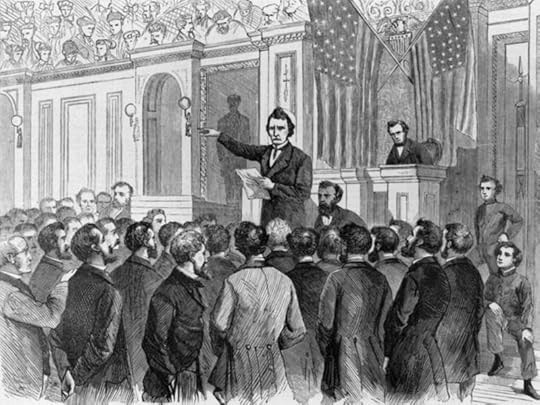
Jack Balkin has delved into the legislative history of the provision of the 14th Amendment requiring the federal government to honors all debts, which the Obama administration may invoke if Congress refuses to lift the debt ceiling. He has a fascinating follow up post replying to some objections. He's arguing that the prospect of a debt default ceiling is extermely similar to the precise scenario the prvovision was designed to stop. Here's his historical example:
Imagine that the Democrats regained power in 1874 (In fact, they won the House that year and almost won the Presidency in 1876.) The economy had gone into free fall in the Panic of 1873, which was one reason why the Democrats rebounded politically.
Now imagine that the Democrats do not officially repudiate the Union war debt. They agree that these debts are legally valid. Nevertheless, they argue, the economy is in a bad way, and something must be done about the enormous waste and fraud involved in Union pensions, bounties, and defense expenditures, or to use a modern expression-- the exploding "entitlements" created by the former tax-and-spend Republican government. Therefore, they deliberately appropriate less than is necessary to pay the debts as they come due, and they prevent the government from issuing new debt to help pay off existing obligations.
The Democrats are careful to stop short of officially repudiating these debts. They do not say that they will never pay them. Instead, they argue that in the middle of a recession, the government simply does not have enough money to pay its debts to Union pensioners and widows, and fiscal prudence counsels against allowing Congress to raise additional monies to do so.
Of course, the Democrats say, they would be willing to consider changing their minds, but only if the Republicans agree to repeal the Civil Rights Acts of 1866, 1870, and 1871 and remove federal troops from the South (the latter actually occurred as a result of the Compromise of 1877, which smoothed over the disputed election of 1876.). The Republicans respond that this is blackmail, and that the ex-rebels are threatening to crash the economy in order to win concessions on civil rights and Reconstruction. The Democrats respond that they are only being fiscally prudent, that the costs of Reconstruction are bankrupting the country, and besides, they have never said they would actuallyrepudiate the federal debt. They are just putting it off for awhile until the country gets on its financial feet, or the Republicans change their minds about Reconstruction.
Under this set of facts, would section 4 be violated? Stern seems to suggest that it would not be, because all the Democrats are doing is threatening default and they are not repudiating federal debt. But I would suggest that this is very sort of thing that the Republicans were worried about. They feared that the Democrats would use a future economic crisis over the debt to wring political concessions. The Republicans believed that the ex-rebels and their sympathizers would someday return to power, and they wanted to prevent them from making payment of the public debt into a weapon of political threat and reprisal. If the practices I have just described would not constitute a violation of section 4, then the section is practically meaningless.
Again, I'm not saying this is op-and-shut legally. Indeed, it seems pretty likely that pursuing this course would lead to an impeachment crisis. But it still may be the least-bad alternative.
The Debt Ceiling Hostage Crisis Gets Scarier

John Cornyn suggests it may already be too late for a debt ceiling deal, and floats a six- and eight-month extension. This seems deeply worrisome. An extension is going to expose everybody in Congress who votes for it and make them more reluctant to support the next debt ceiling vote. And it will locate the next debt ceiling vote during the peak of the GOP presidential primary, when candidates will start staking out anti-extension views and forcing the rest of the party to follow suit. Cornyn's idea may be necessary, but if it is necessary, we're in trouble.
Meanwhile, libertarian writer Megan McArdle reports that numerous right-wingers have a completely blithe attitude about default:
I am getting the same sinking feeling that Brooks is having--that there is a sizeable faction on the right, and worse, in the GOP caucus, that is willing to default rather than make any deal at all. In fact, I think it's worse than Brooks suggests. It would be bad enough if these people were simply against higher taxes, because then you might persuade them by pointing out that if we default, we're probably going to end up with higher taxes, right now, in order to close the current gap between spending and tax revenue.
But when I point this out, the response in my comments and email and twitter is "Fine, I'll accept higher taxes, as long as they come with radical changes in spending." The BATNA (best alternative to negotiated agreement) is default on either our debt, or entitlements like Social Security that people have planned their lives around; the Democrats properly view this as a disaster. But I'm hearing from people who seem to think that it's better than raising one thin new dime in taxes. This makes me very much afraid of where this is headed.
If you ignore the financial effects of debt default, then failing to lift the debt ceiling is a lot like immediately implementing a balanced budget amendment that rules out tax hikes. Now, I think that's a crazy idea. But many Republicans are in fact demanding a balanced budget amendment that rules out tax hikes. It's not just the lunatic fringe that believes this. Mitt Romney, paragon of sane Republicanism, has signed a pledge to support this.
Now, maybe Romney understands that it's crazy, and he's playing politics. The mere fact that he has to play this game, though, signals how strongly extreme right-wing economics has captured the conservative mind. The voices of sanity on the right exist, but for the most part, they're speaking quietly behind closed doors. It seems almost inevitable that any debt ceiling deal will expose any Republican supporter to a right-wing primary challenge. You have the countervailing power of the business lobby pushing for a deal, and that's nothing to sneeze at. But this may simply have grown into a problem that has no legislative solution, at least not until financial consequences have been felt.
Apply to Be a TNR Web Intern!
The New Republic Online is looking for college students and recent graduates for its fall 2011 Web internship program. Internships are unpaid but offer substantial experience in the production of a daily online publication. Interns must be able to work in our Washington, D.C. office. Responsibilities include:
Preparing and updating TNR's homepage
Helping to maintain TNR's blogs and other aspects of the site
Research projects
Writing articles and blog posts, and helping to create multimedia content
Participating in TNR staff meetings
Helping update and maintain TNR's online archives
Political journalism experience is preferred, but not imperative; some familiarity with HTML is helpful, but not crucial; and fluency in search techniques like LexisNexis is mandatory. A full-time commitment is preferred.
Applications for our fall internship (August/September through December/January) will be accepted until Friday, August 5. To apply for the Web internship program, please e-mail a cover letter and résumé to Seyward Darby and Jesse Zwick.
David Brooks' Lisa Simpson Moment
David Brooks today has an important column, important not in the sense that it contains an intellectual breakthrough -- those are hard to pull off in 700 words -- but that it's a Cronkite-esque statement about the Republican Party's radicalism:
A normal Republican Party would seize the opportunity to put a long-term limit on the growth of government. It would seize the opportunity to put the country on a sound fiscal footing. It would seize the opportunity to do these things without putting any real crimp in economic growth.
The party is not being asked to raise marginal tax rates in a way that might pervert incentives. On the contrary, Republicans are merely being asked to close loopholes and eliminate tax expenditures that are themselves distortionary.
This, as I say, is the mother of all no-brainers.
But we can have no confidence that the Republicans will seize this opportunity. That’s because the Republican Party may no longer be a normal party. Over the past few years, it has been infected by a faction that is more of a psychological protest than a practical, governing alternative.
The members of this movement do not accept the logic of compromise, no matter how sweet the terms. If you ask them to raise taxes by an inch in order to cut government by a foot, they will say no. If you ask them to raise taxes by an inch to cut government by a yard, they will still say no.
The members of this movement do not accept the legitimacy of scholars and intellectual authorities. A thousand impartial experts may tell them that a default on the debt would have calamitous effects, far worse than raising tax revenues a bit. But the members of this movement refuse to believe it.
Perhaps the best comparison is not Walter Cronkite (whose turn against the Vietnam War was seminal because Cronkite was saying it, not because it was the best analysis of Vietnam) but Lisa Simpson:
Lisa: You, sir are a baboon!
Homer: [gasp] Me?
Lisa: Yes, you! Baboon, baboon, baboon, baboon!
Homer: I don't think you realize what you're saying.
Lisa: Baboon!
Bart: Woah. Somebody was bound to say it one day, I just can't believe it was her.
I'm with Bart Simpson. Somebody was bound to say this eventually -- I just didn't think it would be Brooks.
I'm particularly interested in the debt ceiling showdown, and the reaction of Brooks (and those of like mind) because it encapsulates the argument of my book, which I wrote in 2007. (For sale here, New York Times review here.) The book attempted to explain how anti-tax fundamentalism, which did not exist in any form until the mid-1970s, completely took control of the Republican Party. I also tried to address a more difficult question, which is how the Republicans managed to shift so far from the center and fail to suffer significant adverse consequences. Part of the answer to the second question lay in the fuzzy way in which "the center" has been defined, not rooted to any specifics of policy but rather assumed to simply be the midpoint between the two parties. And so, as the GOP has lurched rightward for three decades, the general notion of what constitutes centrism has moved right along with it, at least on economic questions.
The debt ceiling hostage fight offers a perfect case study. Here you have Republicans not only rejecting a proposal to shrink the size of government, but threatening to cripple the economy in order to get their way -- all out of fidelity to anti-tax orthodoxy. It is noteworthy to see a centrist like Brooks assign unilateral blame for these circumstances, when the general pattern of centrist pundits is to assume the sensible position occupies the midpoint between the two parties at any given time. Over the next year, we'll see two events that could deepen this kind of conclusion. The first is the debt ceiling showdown, when Republicans might actually default on the debt, and the second is the GOP presidential primary, in which they could nominate Michelle Bachmann or Rick Perry. Either of these events could cement a conclusion among right-thinking moderates that the failure of right-thinking moderation is not evenly divided between the two parties but a unilateral consequence of Republican extremism.
Will it last? On that score, consider me pessimistic. The general pattern of these things is immediate shock, followed by a slow redefinition of what is reasonable. In the wake of the 2000 election recount, pundits asserted that George W. Bush would have to abandon his huge tax cut and other partisan goals. He ignored them, and passed his tax cut, and now preserving the Bush tax cuts is no longer considered radical. To be radical today, you need to advocate something like Tim Pawlenty's tax cut plan. The GOP's willingness to undermine the full faith and credit of the Treasury in pursuit of anti-tax fundamentalism is shocking now, but eventually it will come to be seen as simply part of the process.
Rick Perry, Michelle Bachmann, And The Christian Right
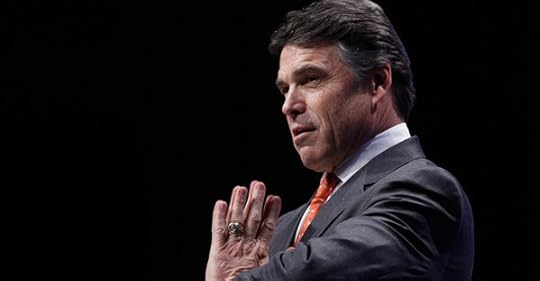
Amy Sullivan has some good reporting on the evangelical infatuation with Rick Perry, who's the top choice of the Christian Right leadership. One interesting question she veers into is why they haven't flocked to Michelle Bachmann:
[W]hile Bachmann has been on a hot streak since the first candidate’s debate, Christian Right leaders continue to be far less willing to embrace her (or Sarah Palin, for that matter) than the rank-and-file or more secular politicos. Is that sexism at work? Possibly. Maybe even probably. But geography is an important factor as well. Many Christian Right leaders think the GOP primary schedule favors a Southern candidate.
Hmm. So the putative rationale is that Bachmann isn't Southern, and Sullivan suspects the real reason is sexism. Could be a mix of both. It could also reflect the quiet sense among Republican insiders that Bachmann is crazy.
Meanwhile, Sullivan also details Perry's Christian right credentials, which are theocratically impressive:
Sarah Posner of Religious Dispatches recently outlined Perry’s social conservative bona fides and they’re impressive:
Signed a gay marriage ban into law at a Christian school in Fort Worth with evangelical heavyweights Tony Perkins (Family Research Council), Rod Parsley (Ohio mega-church pastor), and Don Wildmon (American Family Association) in attendance
The Sunday before his 2006 re-election, Perry attended Cornerstone Church and sat by the side of controversial pastor John Hagee (in 2008, John McCain had to reject Hagee’s endorsement after critics pointed out the pastor’s many extreme statements, including calling the Catholic Church “the whore of Babylon”)
Supported and was a primary beneficiary of the Texas Restoration Project, an effort to increase the electoral involvement of conservative pastors
All of this, however, pales beside Perry’s current project–a Christian all-day prayer event called “The Response” on August 6 in Houston. The governor is sponsoring the event along with the American Family Association, which is footing the estimated $1.5 million tab for the gathering. The Response is intended for Christians only, although one spokesman said that if people of other faiths attend, he hopes they will see the light and “seek out the living Christ” for their lives.
I suspect a Perry candidacy would put an end to the "will Jews abandon Obama" question.
A Bold New Plan To Save The Economy
This bit of rhetoric -- from the Republican weekly address -- reveals what's become a completely typical sleight-of-hand embedded in the economic and budget debates:
Republicans used their weekly address to criticize Obama on the economy and renew their opposition to tax increases.
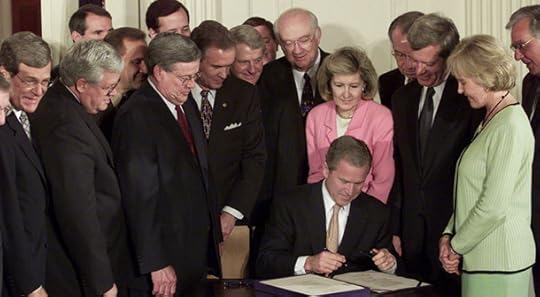
“The president and Democrats in Congress must recognize that their game plan is not working. It’s time to acknowledge that more government and higher taxes is not the answer to our problem,” said Sen. Dan Coats, R-Ind. “It’s time for bold action and a new plan to address our current crisis.”
What we see here are two clashing imperatives delicately melded together. Imperative number one is to stick Obama with the blame for the consequences of the economic crisis. Imperative number two is to keep tax increases out of any fiscal solution. Imperative number two requires presenting tax cuts as a solution to our economic woes. And thus the "game plan" that's "not working" is to change the status quo, and the "new plan" is to keep the status quo in place.
Sandra Day O'Connor's Secret Shame
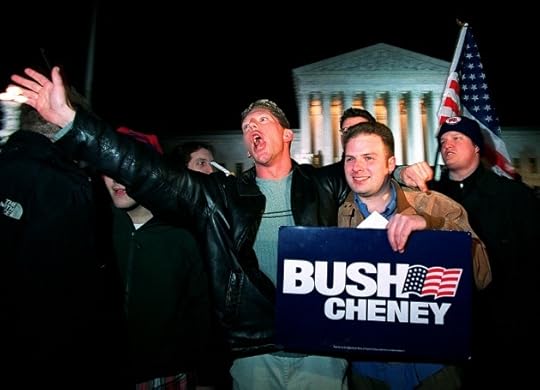
I enjoyed Jeff Rosen's defense of Sandra Day O'Connor, but wanted to add a bit of detail to this part at the end:
O’Connor was prickly and defensive about Bush v.Gore in Aspen: “It wasn’t the end of the world,” she said impatiently. “They had recounts of the votes in four counties by the press, and it did not change the outcome at all. So forget it. It’s over!”
O'Connor's recollection of the media recount is false, though understandably so. The media recount was released shortly after the September 11 attacks, at the height of George W. Bush's popularity and in the midst of massive pressure to affirm his legitimacy. The newspapers spun the recount as an affirmation of Bush's victory. In fact, it proved the opposite. The newspapers assumed that the recount would only focus on "undervotes," or ballots that registered no presidential vote. But the judge overseeing the recount that the Supreme Court halted stated that he would have counted "overvotes," too -- ballots that register more than one vote for president. Many of those ballots registered a clear preference -- usually, the voter both checked the box and wrote in the name of the same candidate. And if those ballots were counted, Gore would have won.
Second, even if O'Connor was right that Bush would have won, it hardly justifies the ruling. After all, halting a legal statewide recount and eliminating any chance that your favored candidate might lose is wrong even if he wouldn't have lost anyway. I wrote at the time:
At the time, nobody knew who would win the recount, but everybody knew it was Gore's only chance of victory. The trouble with Bush v. Gore was that it distorted the law to bring about a desired political outcome. (Alternatively, if you believe Bush v. Gore got the law right, as the Journal does, then a subsequent recount wouldn't "vindicate" it.) That the Court's intervention may, in retrospect, have been unnecessary hardly exonerates it. You're no less guilty of burglary if you break into a bank vault that turns out to be empty.
O'Connor's defensiveness suggests a recognition that she supported a partisan, wildly activist, and legally bizarre ruling. People who are proud of a vote don't shout down any questions by declaring "forget it, it's over!" They're happy to discuss their role in a great legal moment! The justices who voted for Bush v. Gore don't act that way.
Clarifying The GOP Debt Hostage Stance

The New York Times this weekend published what seems like a straightforwardly wrong report about Republican willingness to consider higher revenue in a budget deal:
“I think it’s clear that the Republicans are opposed to any tax hikes, particularly during a fragile economic recovery,” Mr. Cornyn said on “Fox News Sunday.” “Now, do we believe tax reform is necessary? I would say absolutely.”
But he insisted that any changes in taxes be “revenue neutral,” meaning that the government would not take in any more money from individuals or businesses than it does now. ...
Mr. Kyl said last week that he would be willing to consider some revenue increases to help bring down the deficit.
“We’re perfectly willing to consider those kinds of issues in the context of tax reform, which we would very much like to do,” Mr. Kyl said a week ago on “Fox News Sunday.” “But we’re not going to have the time to do it or be able to do it in order just to raise revenue as part of the exercise which should be about reducing spending.”
A couple points. First, the headline -- "2 Republicans Open Door To Increase In Revenue" -- pretty much gets this backward. What the Republicans are saying here is that they're willing to close certain tax expenditures, but they insist that the revenue be used to reduce tax rates. When you say it has to be "revenue neutral," you're saying it can't raise revenue. That's closing the door to higher revenue, not opening it.
Second, it's worth exploring the policy implications of this position. Last week, President Obama cited a handful of completely indefensible subsidies through the tax code. Conservatives have made no real effort to defend these. Rather than stand behind these regressive and economically inefficient tax subsidies, they're instead saying they'll close them but only if the revenue is plowed back into lower tax rates. The demand for lowering corporate tax rates is the main philosophical point of difference, in a negotiation supposedly triggered by the imperative of reducing the national debt.
To pull back, then, the Republican position is this. They agree with Obama on spending cuts. They agree on closing indefensible corporate tax loopholes. But they're willing to risk financial catastrophe if Obama does not agree to cut corporate tax rates.
July 2, 2011
David Brooks Is Slightly Too Nice To Diane Ravitch
I thought David Brooks' column yesterday on education reform was generally quite good. But he conceded a point to critics of education reform that should not be conceded:
If you orient the system exclusively around a series of multiple choice accountability assessments, you distort it.
If you make tests all-important, you give schools an incentive to drop the subjects that don’t show up on the exams but that help students become fully rounded individuals — like history, poetry, art and sports.
The assumption that schools have had to make tests "all important" has deeply penetrated the debate, but it's not accurate. Different states have different ways of measuring teacher performance. But none of them use student test scores as more than 50% of the measure. Classroom evaluations and other methods account for half or more of the measures everywhere. I've also noticed, anecdotally, that many people assume test measures use a single, blunt scale so that poor children are measured against the same standard as wealthy ones. That's not true, either. Test measures account for socioeconomic status, and measure student improvement over the school year.
Now, this isn't to deny that some schools and teachers over-emphasize a narrow curriculum. But the non-test components of a teacher evaluation method can easily incorporate broader measures of student performance.
It's important to keep in mind that the debate here is not whether tests should be the entire measure of teacher performance, but whether tests ought to count at all.
Jonathan Chait's Blog

- Jonathan Chait's profile
- 35 followers

