
Jonathan Chait's Blog, page 36
June 30, 2011
&c
Ramesh Ponnuru says I went too far
Bill Clinton: “you can’t balance the budget in a busted economy.”
Ideas may not be are all that important, but Mark Schmitt says there are some good ones in the Breakthrough Journal.
Timothy Geithner on why prioritizing government obligations is risky.
The IMF thinks we are in for years of sluggish growth


Who Will Replace Tim Geithner?
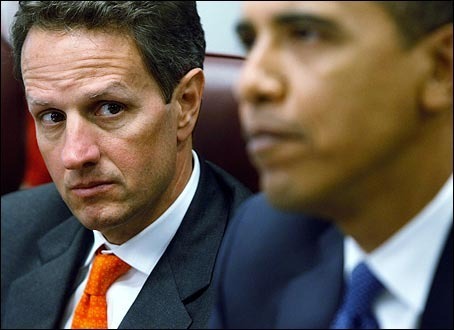
With Tim Geithner apparently stepping down after the debt ceiling showdown, it's worth pondering just who the Obama administration could confirm to replace him. The almost-universal assumption is that the replacement will have to be moderate, or even right-of-center, left the Republicans filibuster his confirmation. Before we work within that assumption, though, it's worth putting some pressure on it. Obama could not appoint a Treasury secretary who is ideologically as liberal as Barack Obama. Someone with Obama's policy preferences could be elected president, but he can't be appointed Treasury Secretary by Obama. Sort of crazy, isn't it?
The Weekly Standard's Thoughtful Perspective on Transgender Rights
[Guest post by Eliza Gray]
The Monday after my cover story on transgender rights went to print, I was eagerly awaiting feedback on how it was received. I figured there would be positive and negative reactions. But I wasn't expecting the kind of feedback I got when, a few minutes after I sat down at my computer, a colleague plunked an issue of The Weekly Standard on my desk. On the last page of the issue, the magazine had simply reprinted TNR's cover, labeling it "Not A Parody"--the joke apparently being that the very notion of transgendered people deserving rights is inherently ludicrous, so much so that the argument in my piece does not require refutation.
I emailed Bill Kristol, the magazine's editor, thinking that perhaps he could tell me why the Standard found this particular human rights issue so hilarious. His response was terse and tepid: "I've found over the years that it's best not to try to explain jokes or parodies--and I think it makes sense to extend this rule to a 'not a parody.' It stands (or falls) on its own."
The Standard's view of these questions is well within the tradition of its position on sexual minorities of all kinds, exemplified by this August 2003 cover on gay marriage:

The lack of any argument whatsoever in the Standard's "parody" is telling. It's the "philosophy" of a junior high school bully, for whom pointing and laughing is the only argument required. The joke here is that political magazines are supposed to be able to make intellectual arguments.
MEDIA WATCH >>
What The Bachmann Skeptics Get Wrong
 I think Michelle Bachmann has a real shot to win the Republican nomination, but many commentators continue to view her as a fringe candidate bound to implode. Here' :
It will not surprise me if Ms Bachmann is able to parlay her tea-party popularity and Iowa roots into a victory in Iowa's first-in-the-nation caucuses. But conservative voters aren't as blinkered as Mr Chait implies. As the campaign wears on, and Republican voters grow more familiar with the candidates, the advantages of experience and electability will become ever more salient.
And here's former Republican campaign consultant Mike Murphy:
the billion-volt electron microscopes of the national media will soon be trained on Bachmann now that she’s the official Iowa front runner. I’ll bet dollars to Minnesota lutefisk that despite her new squad of professional handlers, we are in for more of Bachmann’s factual fumbles. Her latest mix-up, confusing the birthplace of beloved American icon John Wayne with that of serial killer John Wayne Gacy, hints that Michele’s next moves on the national stage may receive more than a few boos and flying vegetables from the voting public. While media criticism of her factually erroneous rhetoric will only help her with her populist base, what is gold for America’s comedians is a 500-ton lead sinker for any candidate trying to build enough party-wide support to actually win the Republican nomination. ...
Make no mistake: faced with the terrifying prospect of nominating Bachmann and handing the presidency to Obama, the Republican establishment would rally hard and fast behind Romney. And while a unified Republican establishment in full combat mode cannot compete with the Tea Party when it comes to making cardboard Uncle Sam hats, GOP Inc. can easily crush a candidate like Bachmann over the full series of primaries.
Let me start by reiterating something I've said before, which is that predicting future election outcomes is inherently difficult, and punditry about this (by me or anybody) should inherently be taken with a grain of salt. That said, I think the Bachmann skeptics are making some analytic errors here:
1. They assume that Bachmann will say a bunch of obviously crazy/ignorant things and expose herself as unpresidential. It could well happen. But it could also not. So far, Bachmann is disciplined. And, whatever lack of gravitas Wilkinson detects in person, I don't think it comes across on television.
The interesting thing about her is that insiders who have worked with hr seem convinced she's our of her gourd, but she manages to contain the crazy in public. The John Wayne gaffe cited by Murphy is a nothing-burger, smaller than gaffes committed by other candidates routinely. (Imagine if Bachmann had discussed Iraq policy at length while referring constantly to the country as "Iran" and its people as "Iranians.") Now, if Bachmann does make a lot of Palin gaffes, she'll be discredited. On the other hand, if the press pillories her for pseudo-gaffes in a way that seems sexist or condescending, and it doesn't have the goods on her, Bachmann could benefit from what clearly appears to be a double standard. I continue to suspect that the Bachmann skeptics think she'll implode largely because she reminds them of Palin, when in fact she has a professional staff and is far more in control than Palin. The continued assumption that she will necessarily humiliate herself will have the added benefit of making it easy for her to surpass expectations.
2. While Republican voters care about electability, I'm not convinced they have an accurate sense of which candidates are more electable. Maybe they'll decide the more electable candidate is the one who can challenge the horror that is Obamacare and hang it around Obama's neck, and isn't compromised by having implemented the same plan at the state level. In 2000, polls showed that Republicans considered George W. Bush more electable than John McCain even though McCain was almost certainly a more potent general election prospect.
3. I suspect Murphy's view of the power the the Republican establishment is colored by his experience working for McCain in 2000, when the party establishment united and crushed the McCain insurgency. But of course it's different in important ways. McCain was challenging the party power structure from the left, violating the party's central tenet by attacking Bush's proposed tax cut as unfair and unaffordable. Thus Bush benefited from a concerted effort by Republicans in Congress and K Street along with all manner of right-wing pressure groups, like the Christian Coalition, Rush Limbaugh and so on. This time around, a great many of those groups are working to defeat Mitt Romney.
I don't doubt that a substantial and powerful part of the GOP coalition would unite around Romney against Bachmann for electability reasons. But Bachmann will have plenty of organizational and media support of her own in such a scenario. She has extensive Tea Party backing, and would enjoy support from the aforementioned anti-Romney crusade. Limbaugh and many other conservative commentators love her. She may lose, but she won't be like McCain, standing alone against the overwhelming force of the conservative movement and the party apparatus.
Defusing The Debt Ceiling Bomb

In response to my item advocating that the Obama administration use the Constitutional option, or the Zeitlin Option, of asserting the Constitutional prerogative of paying its debts in the event of a failure to raise the debt ceiling, Ezra Klein objects:
So long as bond traders are calling their political fixers and hearing reassuring things about how they’ve seen this before and this is just how Washington works and there’s no way that Boehner and Obama won’t come to a deal before Social Security checks stop going out, they’ll give us time to work it out. What we don’t want them to do is call their political fixers and, after a long silence, hear, “No. I’ve never seen anything this before. I don’t know how this is going to play out.”...
Bond rates aren’t spiking. The market hasn’t been caught by surprise and forced to dramatically reassess its confidence that this will ultimately be resolved. Now’s not the time to overturn the chess board.
Now? Who said anything about now? I think Obama should try the Constitutional/Zeitlin Option if we're approaching the debt ceiling and there's no deal -- i.e., in circumstances when we'd be looking at a bond market freakout anyway.
Would the freakout be worse if bond markets had to pile the uncertainty of a Constitutional showdown on top of the uncertainty of failed debt ceiling negotiations that have become tied together with Republican anti-tax theology and complicated by conservative default denialism? Maybe yes, maybe no.
But a second point of my item is that the new factor of the debt ceiling being an ongoing opportunity for the minority party to demand policy concessions with the national credit rating as hostage is a large new source of political instability. A deal on the debt ceiling just defuses the bomb until the next time we have to lift the debt ceiling, when the fuse lights again. If Obama succeeds in making the debt ceiling vote meaningless -- that is, putting the U.S. in line with every other country in not requiring a separate vote to authorize the paying of already-incurred debt -- then we defuse the bomb forever.
Dickgate (The Other Dickgate)
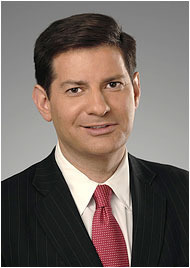 In an appearance on "Morning Joe" today, Mark Halperin called President Obama "a dick," in reference to his press conference appearance. Halperin apologized, but MSNBC has suspended him.
The merits of Halperin's political commentary skills aside, this seems like a wild overreaction. Halperin acknowledged in his apology that he was 'disrespectful." Since when do political commentators owe the president respect? He works for the American people, not vice versa. This is not a monarchy, and we aren't supposed to speak of the president as if he's the national father. If Halperin thinks Obama is a dick, he should go ahead and say so.
Put another way: Would Halperin be apologizing and facing suspension if he called, say, Donald Trump a dick? If not -- and I'm pretty sure he would not -- why the different rules for a president?
Today's WSJ Supply-Side Nonsense
[image error]
The Wall Street Journal's editorial today plumping for higher economic growth through -- you'll never guess -- regressive tax cuts exposes the largest current logical problem at the heart of the anti-tax argument: a failure to acknowledge that the Bush tax cuts are currently in place. Here's the Journal insisting that Bush tax cuts in 2003 -- the really regressive ones, the ones that didn't waste any precious dollars on the middle class -- produced big revenue gains:
After the Bush investment tax cuts of 2003, tax revenues were $786 billion higher in 2007 ($2.568 trillion) than they were in 2003 ($1.782 trillion), the biggest four-year increase in U.S. history. So as flawed as it is, the current tax code with a top personal income tax rate of 35% is clearly capable of generating big revenue gains.
And here's the Journal insisting that the problem with the budget right now is that we're growing too slowly:
Mr. Obama has a point that tax receipts are near historic lows, but the cause isn't tax rates that are too low. As the nearby table shows, as recently as 2007 the current tax structure raised 18.5% of GDP in revenue, which is slightly above the modern historical average. Even in 2008, when the economy grew not at all, federal tax receipts still came in at 17.5% of the economy.
Today's revenue problem is the result of the mediocre economic recovery. Tax collections in 2009 fell below 15% of GDP, the lowest level since 1950. But remarkably, tax receipts stayed that low even in the recovery year of 2010. So far this fiscal year tax receipts are growing at a healthy 10% clip, so the Congressional Budget Office (CBO) January estimate of 14.8% of GDP is probably low. We suspect revenues will be closer to 16%, but even that would be the weakest revenue rebound from any recession in 50 years, and far below the average tax take since 1970 of 18.2%.
Right. We're growing really slowly even though the Bush tax cuts have been in place since 2001, and the beloved super-regressive second round of Bush tax cuts since 2003. That would suggest that the Bush tax cuts are not the cure for slow economic growth.
Indeed, that conclusion is so obvious the Journal concocts a convoluted rationale to get around it. The structure of the editorial is that it begins with the second point -- revenues are really low because of growth -- and then works to the first point -- the Bush tax cuts produced big revenue gains! -- before arriving at the conclusion: "A tax increase won't help growth—or revenues." That way the Journal can treat the 2003 tax cuts as some distant historical aspiration rather than current tax policy.
What about the revenue gains after 2003? Revenue tends to fluctuate wildly during upturns or downturns in the economy -- fluctuations that dwarf any secular effect from tax cuts. After 2003, supply-siders endlessly hyped the revenue gains -- not mentioning the massive revenue collapse that followed the 2001 tax cuts -- as evidence of the success of the tax cuts. It wasn't just that we happened to cut taxes at the trough of the business cycle, they argued. We were experiencing the "Bush boom." It was a miracle! Then things kind of went bad and revenue collapsed. To buy into the Journal's logic, you have to assume that the 2003 Bush tax cuts had an enormous effect on growth right away, and then zero effect on growth ever since.
The more plausible interpretation is that tax rates at current levels have a trivial impact on economic growth. Otherwise we're stuck with the Journal's claim that we're experiencing slow growth due to sub-optimal tax policy, and the solution to this is to keep current tax rates in effect.
June 29, 2011
Obama's Truman Show
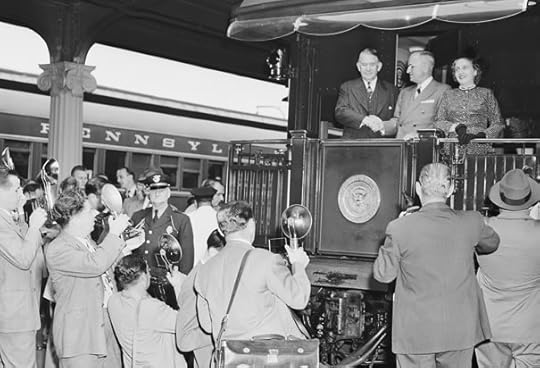
News reports of President Obama's press conference focused on his portrayal of himself as the responsible adult vis a vis the child-like Republicans, and on his insistence that a debt deal include shared sacrifice. But I think the most important theme was the way Obama castigated Congress for failing to act to stimulate the economy:
In addition to the steps that my administration can take on our own, there are also things that Congress could do right now that will help create good jobs. Right now, Congress can send me a bill that would make it easier for entrepreneurs to patent a new product or idea –- because we can’t give innovators in other countries a big leg up when it comes to opening new businesses and creating new jobs. That's something Congress could do right now.
Right now, Congress could send me a bill that puts construction workers back on the job rebuilding roads and bridges –- not by having government fund and pick every project, but by providing loans to private companies and states and local governments on the basis of merit and not politics. That's pending in Congress right now.
Right now, Congress can advance a set of trade agreements that would allow American businesses to sell more of their goods and services to countries in Asia and South America -– agreements that would support tens of thousands of American jobs while helping those adversely affected by trade. That's pending before Congress right now.
And right now, we could give middle-class families the security of knowing that the tax cut I signed in December will be there for one more year.
So there are a number of steps that my administration is taking, but there are also a number of steps that Congress could be taking right now on items that historically have had bipartisan support and that would help put more Americans back to work.
This is a kind of Obama-ized version of Harry Truman's famous campaign against the "do-nothing Republican Congress." It's Obama-ized in that he precedes the above passage by touting various pro-business initiatives his administration has taken unilaterally, and because he takes care to note that the proposals he touts for Congress have all enjoyed bipartisan support.
But the thrust of the passage is to assail Congress for failing to act. This is -- and has to be -- a major component of Obama's political message through the 2012 election. The economic recovery is going to be too long and difficult to run a "see how great things are" campaign. The only real alternative is to shift the blame for the status quo onto Republicans who have blocked his economic recovery agenda. The other portion of his campaign has to be contrasting his priorities on taxes and spending, which line up relatively closely with those of most Americans, against those of his Republican opponent, which will not. That theme, too predominated in Obama's remarks, and was presaged in his April budget speech.
The truth is that none of Obama's proposals would have more than a marginal boost for growth. (That makes them better than the Republican proposals, which would worsen the economy.) But he needs a theme, and castigating Republicans for failing to act on his moderate, pro-business agenda seems like a useful way to combine Clintonian and Trumanite themes.
&c
The Rick Perry for President burblings ought to consider the fact that Texans hate Perry so much they'd vote for Obama over him.
Rudy Giuliani ducks promise to gay friend. Not cool, man.
Ramesh Ponnuru's anti-union argument relies on a since-repudiated study.
Chris Christie has some corrupt Democratic allies.
The New Yorker compiles all the hottest GOP candidate tunes.
Rush Limbaugh attacks a TNR intern.
The Debt Ceiling Hostage Vote Is Systemic Risk

Matthew Zeitlin recently interviewed several law professors who argued that the debt ceiling is unconstitutional, or at the very least, that the Obama administration could make a constitutional argument for ignoring the debt ceiling and paying the Treasury's debts. Several Democratic Senators have expressed interest in the idea. Ezra Klein, though, warns against the strategy:
The danger of the debt limit isn’t that America won’t eventually make good on its debts. We have more than enough money to cover our bills, and the market knows that perfectly well. It’s that the fight over paying our debt will be so brutal, so irresponsible, and so unsettling that the market will reevaluate the faith it puts in America’s political system to pay our bills, reduce our deficit and make sound economic decisions in the years to come. Put slightly differently, the danger isn’t that investors never get paid, but that the way they get paid makes them lose faith in the country’s management, which in turn forces the entire financial system to reevaluate the safety of a bedrock asset — which is essentially exactly what happened in the last financial crisis, but on a much larger scale.
Layering a constitutional crisis over political gridlock may work in the sense that the Obama administration will win the court case. But it’ll fail terribly in terms of sustaining the market’s confidence in our political system. That’s a step toward total breakdown, not evidence that agreement can eventually be reached and economic renewal achieved.
The logic here makes sense against an alternative world in which Obama and the Republicans can cut a nice deal to lift the debt ceiling and reduce the deficit. But is that the world we live in? Klein is now arguing, in a post published a few hours after the previous one, that the negotiations appear to have failed. We're struck in a standoff where neither party may be able to give in.
Compared to that outcome, a constitutional fight that establishes the Treasury's ability to pay its already-committed debts without a separate vote from Congress -- that is, to do what every other advanced country does -- seems rather tame. Indeed, even aside from the prospects that these particular negotiations succeed, it seems to me that the existence of a debt ceiling vote in Congress is itself a large, ongoing risk factor. The debt ceiling vote was always a stick of dynamite lying around, but as long as the opposition party used it only to embarrass the president, it contained little systemic risk. The novel practice of the debt ceiling as a threat to force other parties to accept otherwise-unacceptable policy goals is completely new, and itself a kind of Constitutional crisis. Matthew Yglesias puts it well:
The basic idea here is that since the federal government will ultimately need to default on the national debt unless all three branches agree on a debt ceiling increase, the two branches controlled by Democrats should surrender entirely to the one branch controlled by Republicans. These things do happen. Once upon a time, the United Kingdom had a three branched system composed of King, Lords, and Commons. But over time it became established that all the real decision-making authority rested with the House of Commons, and we had a de facto unicameral system. The Lords and King lacked the democratic legitimacy to prevail in standoffs, so all power goes to the Commons.
But that would obviously be a total revolution in American constitutional practice, and nobody has laid the groundwork for it or offered an explanation of why you should think of President Obama as similar to a king. After all, if Cantor, McConnell, and Boehner are able to say “national default unless we have an all-cuts deficit reduction package,” then why not also say “national default unless we bomb North Korea” or “national default unless we reinstate Don’t Ask Don’t Tell?” Over the longer term, I don’t think serious people of any ideological persuasion seriously think it’ll be a good thing for America to turn all public policy debates into a series of hostage scenarios with debt default as the price.
Indeed, it's not even clear that the Republican leadership actually wants the enormous and destructive power it now demands. Its base may be demanding a debt ceiling showdown, out of specific opposition to Obama and general ignorance of how the debt ceiling works. But John Boehner knows full well that we can't just ignore the debt ceiling. If Obama successfully asserts the power to ignore the debt ceiling vote, then he'll allow the debt negotiations to proceed in a less fraught environment, and have defused a massive source of ongoing political instability. Cutting a deal to lift the debt ceiling may soothe the markets more in the short term, but it merely pushes the political risk further back.
Jonathan Chait's Blog

- Jonathan Chait's profile
- 35 followers

