
Jonathan Chait's Blog, page 2
September 6, 2011
Obama's Katrina Was Also Boehner's Katrina
Gerald Seib pinpoints the cause of President Obama's summer polling collapse:
To grasp the importance of the summer's debt negotiations—which produced a plan to cut the federal deficit by at least $2.1 trillion over the next decade just in time to avoid a default by the federal government—look at both how the deal affected Americans' confidence, and how it is judged by them in a new Wall Street Journal/NBC News poll.
As Mr. McInturff notes, consumer confidence in the wake of the debt deal sunk to its fourth-lowest reading since 1952, as measured by University of Michigan consumer confidence index. Moreover, this drop in confidence wasn't some slow decline, but an immediate plunge clearly related to the debt deal and financial markets' reaction to it.
Between June and August—the stretch run of the debt talks—the Michigan confidence index plunged to 55.7 from 71.5.
That 15.8-point drop matches almost precisely the drop in consumer confidence seen after the Iranian hostage crisis, Iraq's invasion of Kuwait and the collapse of Lehman Brothers, and is close to the one seen after Hurricane Katrina.
"Make no mistake," Mr. McInturff says, "this collapse of economic confidence is not an independent event driven only by economic reality. This sharp a drop in consumer confidence is a direct consequence of the lack of confidence in our political system and its leaders."
The debt ceiling hostage crisis was a political catastrophe for both Obama and Congressional Republicans. He came away looking weak. They came away looking crazy. The episode, though, had more than political ramifications. It had economic ramifications. Confidence in the economy -- the number one conservative explanation for economic weakness -- took a real and justified plunge.
The Republicans pursued a strategy that torpedoed the economic recovery, and, indeed, may well bring about a double-dip recession. Voters may punish House republicans at the polls in 2012, but they're at least as likely to punish Obama. That Republicans may gain the White House on the shoulders of a Republican-induced recession offers lessons about the incentive structure of our divided system of government that are frightening to contemplate.
JONATHAN CHAIT >>


Obama's Electoral Paradox
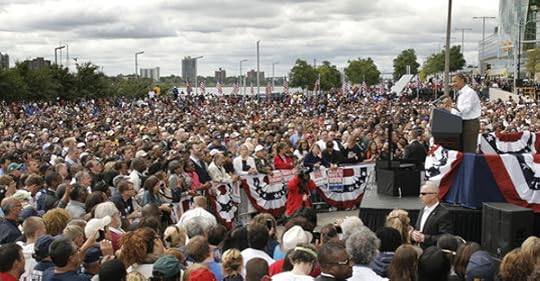
Two new public polls out this morning, from NBC/WSJ and the Washington Post, illustrate the curious nature of President Obama's electoral standing. The top-line number is completely abysmal. Obama's approval rating sits in the low 40s, at a point in his presidency when, as the Post notes, Presidents Reagan and Clinton were both over 50 (and both enjoying strong economic recoveries.) Historically, that number tells you most of what you need to know about the president's fate in the next election.
However, Obama's continuing political paradox is that he remains at once quite unpopular by absolute measures and highly popular by relative measures. The approval rating for Republicans in Congress is far worse -- just 28% approve, against 68% disapproval. And Obama still hangs in there against the Republican leaders:
[I]n a hypothetical general election contest, Obama leads Texas Gov. Rick Perry by five points, 47 percent to 42 percent. And he leads former Massachusetts Gov. Mitt Romney by one, 46 percent to 45 percent, though that margin is down five points since June.
One explanation for these paradoxical results is that Obama now has a serious problem with his base:
The sense of deflation is particularly apparent among Democrats, with nearly two-thirds saying things are pretty seriously off on the wrong track. The percentage of Democrats saying things are headed in the right direction has cratered from 60 percent at the start of the year to 32 percent now.
For the first time, fewer than half of Americans between the ages of 18 and 29 give the president positive marks. Young voters broke overwhelmingly for Obama in 2008, but just 47 percent of those under age 30 now approve of the way he is doing his job; just as many disapprove.
Fewer than three-quarters of Democrats approve of the president.
This looks like a large segment of the electorate that likes Obama, wants him to succeed, is skeptical that he has succeeded or will succeed, but still favors him over the Republican opposition. This is a key chunk of the electorate -- voters who disapprove of Obama's job performance but still prefer him over the Republicans. Can Obama mobilize them? A Rick Perry nomination probably wouldn't hurt.
The WSJ/NBC poll also underscores the degree to which Obama's position in the debt debate commands overwhelming support vis a vis the Republican position:
In the poll, 60 percent say it would be acceptable if the "super committee" considers reducing the deficit by ending the so-called Bush tax cuts for families earning $250,000 or more per year. Moreover, 56 percent say it would be acceptable if it considers reducing the deficit by a combination of tax increases and spending cuts.
By comparison, just 37 percent believe it’s acceptable for the committee to reduce the deficit by only cutting spending and not raising taxes on corporations and the wealthy. And only 20 percent say it’s acceptable to lower the deficit by reducing spending on Medicare.
A deal to "resolve" the long-term deficit problem carries some obvious problem-solver upside for Obama. But taking the issue off the table would have a serious opportunity cost, as well. His best issue is to make the election a contrast in priorities -- his preference for shared sacrifice over the Republicans' cuts-only approach. Indeed, this is also his best opportunity to demonstrate to voters what they have to legitimately fear from the prospect of Republican control. Maybe Obama should make a deal if he can obtain favorable terms, but the calculation is far from clear.
September 2, 2011
Romney Death Watch

Via Alexander Burns, a new poll has him trailing in Nevada, a heavily Mormon state previously viewed as a firewall:
Magellan Strategies today released the results of an autodial survey of 631 likely 2012 Nevada Republican Presidential caucus attendees. The survey finds Rick Perry leading Mitt Romney by 5 points. Among all voters, Rick Perry has 29% support and Mitt Romney has 24% support. The rest of the Republican field rounds out with Herman Cain with 7%, Michele Bachmann with 6%, Ron Paul with 6%, Newt Gingrich with 5%, Rick Santorum and Jon Huntsman both with 1%
As I've noted before, supporters of Bachmann, Cain and Gingrich -- who may all be gone by the Nevada Caucus -- are probably easier for Perry than Romney to pick up.
Obama vs. The Left on Stimulus
I have a column in this weekend's New York Times magazine arguing that the criticism that Obama did too little on the economy is overstated and counterhistorical:
President Obama underestimated the depth of the crisis in 2009 and left himself with bad options in the event the economy failed to recover as quickly as he hoped. And yet the wave of criticism from the left over the stimulus is fundamentally flawed: it ignores the real choices Obama faced (and the progressive decisions he made) and wishes away any constraints upon his power.
Appointments And The Evolving Constitutional Crisis
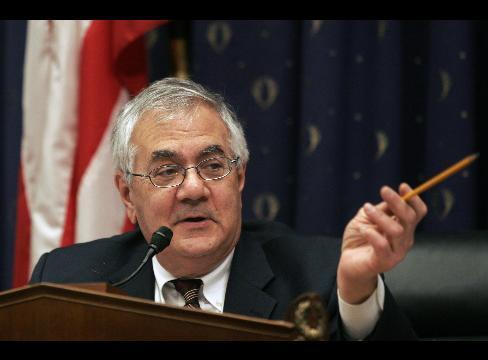
When a politician writes an op-ed, it's usually death. Barney Frank, on the other hand, is unusually interesting for an elected official, and his op-ed today is worth your time:
[Richard] Cordray is just the latest capable, dedicated public servant to fall victim to a Republican mugging. He joins Joseph Smith, the banking commissioner of North Carolina who recently drew unanimous bipartisan support from the North Carolina General Assembly for his renomination; Peter Diamond, a Nobel laureate in economics who was nominated to serve on the Federal Reserve System’s Board of Governors; and others as collateral damage of the Senate Republicans’ war on financial regulation in particular and the Obama presidency in general. Cordray’s record as attorney general of Ohio puts him in a small group of people able to act effectively to deal with the mortgage crisis. No one has raised any questions about his intelligence, integrity or dedication.
Yet his nomination will not even be fairly considered by the full Senate. Forty-four Republicans have announced that in disregard of their constitutional duty to consider nominations on the merits. They will not confirm anyone until the Senate majority reverses itself to once again put bank regulators in a position to overrule virtually all of the policies that would be set by the consumer agency. The president is being told that the price of having a nominee confirmed is reversing himself on a major policy initiative that has already been enacted.
I have a slightly less moralistic take on this than Frank does. What we have here is another gap between rules and norms. The rules say that the Senate can block large swaths of executive branch appointees for any reason it chooses. Social norms say the Senate should let the president confirm administrative appointees who share his views, blocking only the most corrupt, incompetent, drunk, or extreme cases.
It's hard to begrudge the opposition party for playing within the rules, not the norms. And the truth is that there's little reason for the opposition to stop playing it this way. Republicans are saying they won't confirm anybody to run the Consumer Protection Agency unless Democrats agree to weaken financial regulations. Democrats could just as easily tell Rick Perry they won't confirm a single economic official unless he agrees to end the Bush tax cuts for the rich.
In a recent TRB column, I argued that we're headed for an era of more or less regular crises stemming from the system's reliance on social norms, not rules, to continue to basic functioning of the government. What Frank describes today is one more signpost on a journey that, frighteningly, is closer to the beginning than the end.
Republicans And The Immigration Trap
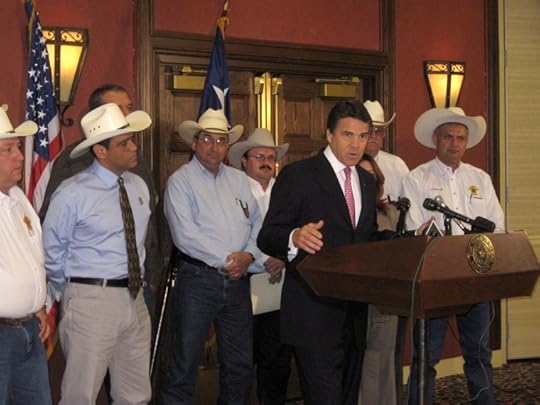
The Republican Party desperately needs to change its image among Latinos, who remain a bulwark of strength for the Democrats as as their numbers collapse among whites. But conservatives keep trying to force their candidates to talk tough on illegal immigration:
Mitt Romney opened his town hall meeting here talking about the economy — his thoughts on growing business, getting government out of the way — just as he does nearly every other campaign event. But when he opened last week’s forum for questions, the first voter he called on didn’t seem concerned about any of that. He wanted to know the Republican presidential candidate’s stance on border security.
A similar scene played out in South Carolina a few days later, when Rep. Michele Bachmann (R-Minn.) attended a town hall meeting she assumed would center on the economy, jobs and the federal deficit — only to see the assembled voters react most passionately to her comments on illegal immigration. ...
“Immigration is not even close to the top issue for most Republicans today, but it is an issue that is heavy with symbolic importance to Republican voters,” said GOP pollster Jon Lerner, who advised Tim Pawlenty until he dropped out of the race last month. “If a candidate is squishy on immigration, that symbolically suggests that he’s probably unreliable on a whole host of other conservative issues.”
It will be interesting to see whether, and to what degree, the eventual nominee can get through the primary without having committed himself substantively or rhetorically to positions that will alienate the Hispanic vote. Mitt Romney's best opening against Rick Perry is to attack the Texas governor for his reasonable position on illegal immigration. Does Romney take that line? And if Michelle Bachmann is to avoid what looks like a slow slide into eclipse by Perry, immigration may be her best issue, too.
Update: Somehow I missed Ed Kilgore making this point better and firster.
Obama's Best Hope on the Jobs Crisis: Convincing Us He's Not in Charge
The August jobs report casts in sharper relief the Obama administration's proposal next week to boost the economy. As I've argued before, this is a political move. House Republicans have neither the political nor the ideological incentive to adopt any new expansionary fiscal policy. But to call it political is not to dismiss its importance. Obama's speech, if it succeeds, can help clarify something that Republicans have successfully obscured: Obama is not in charge of the economy. The policies in place represent a compromise between the two parties, and with government jobs steadily shrinking month after month, it can even be said that the Republicans have the larger half of control.
Obama's strategy here seems to reflect the eternal truth that Americans oppose government in the abstract but favor it in the specific. Economic stimulus has been terrible politics since 2009 because people don't buy the idea that the government should lean against the wind -- opposition to deficit spending rises when the economy struggles and falls when it expands, which is of course backwards.
Yet the specific elements of stimulus fare better. Temporary middle class tax cuts? Sure! More roads and bridges? Good stuff! The administration's proposal seems to recognize that "stimulus" failed because it easily allowed the debate to be conducted in abstract terms. Next week's speech is a do-over of sorts:
“You won’t hear the word ‘stimulus’ — the ‘s word’ — because that just is politically unappealing right now,” Jared Bernstein, who left his post as Vice President Joe Biden’s top economist in June, told us on ABC’s “Top Line” today. “But you will hear targeted measures, which I think is actually a more apt description of what I think the president will talk about.”
“He’ll want extend the payroll tax holiday. He’ll want to extend unemployment insurance. He’ll have some ideas for infrastructure. Maybe something to help repair the schools — that’s an idea that a number of us have been pushing – a program called FAST: Fix America’s Schools Today, which could get hundreds of thousands of construction workers back to work repairing the backlog of maintenance in the nation’s stock of public schools.”
Jackie Calmes has more detail:
Mr. Obama is expected to again propose an infrastructure bank to support work on roads, bridges, airports, schools and other public works. Because such a bank would take up to 18 months to get under way, Mr. Obama has indicated he will propose other innovative ways to support such work quickly.
To hold down overall federal costs, and to avoid having to go to Congress, Mr. Obama and his advisers have been looking for ways to divert existing government money to purposes that will create jobs, especially in the hard-hit construction industry. School repairs and retrofitting buildings for energy efficiency will be a focus. And Mr. Obama is expected to argue that to the extent that states and local governments are relieved of school construction costs, they must avoid further layoffs of teachers.
For the long-term unemployed, the White House is considering a program like one in Georgia, which had Republican support there. The idea is to find temporary jobs for people at no expense to employers, providing them with on-the-job training while they receive unemployment compensation or a government stipend, in hopes of ultimately getting hired or finding a similar job elsewhere.
The political struggle here will be between Obama's desire to present these measures as separate ideas, against the Republican desire to lump them together under the rubric of "stimulus." The endgame will involve a debate over the Republican Party's decision to block Obama's plan. How that plan is defined -- middle class tax cuts, infrastructure, re-training, or simply "stimulus" -- will determine who wins that debate.
AUGUST JOBS REPORT >>
How Obama's Economic Plan Defines The Political Fight
The August jobs report casts in sharper relief the Obama administration's proposal next week to boost the economy. As I've argued before, this is a political move. House Republicans have neither the political nor the ideological incentive to adopt any new expansionary fiscal policy. But to call it political is not to dismiss its importance. Obama's speech, if it succeeds, can help clarify something that Republicans have successfully obscured: Obama is not in charge of the economy. The policies in place represent a compromise between the two parties, and with government jobs steadily shrinking month after month, it can even be said that the Republicans have the larger half of control.
Obama's strategy here seems to reflect the eternal truth that Americans oppose government in the abstract but favor it in the specific. Economic stimulus has been terrible politics since 2009 because people don't buy the idea that the government should lean against the wind -- opposition to deficit spending rises when the economy struggles and falls when it expands, which is of course backwards.
Yet the specific elements of stimulus fare better. Temporary middle class tax cuts? Sure! More roads and bridges? Good stuff! The administration's proposal seems to recognize that "stimulus" failed because it easily allowed the debate to be conducted in abstract terms. Next week's speech is a do-over of sorts:
“You won’t hear the word ‘stimulus’ — the ‘s word’ — because that just is politically unappealing right now,” Jared Bernstein, who left his post as Vice President Joe Biden’s top economist in June, told us on ABC’s “Top Line” today. “But you will hear targeted measures, which I think is actually a more apt description of what I think the president will talk about.”
“He’ll want extend the payroll tax holiday. He’ll want to extend unemployment insurance. He’ll have some ideas for infrastructure. Maybe something to help repair the schools — that’s an idea that a number of us have been pushing – a program called FAST: Fix America’s Schools Today, which could get hundreds of thousands of construction workers back to work repairing the backlog of maintenance in the nation’s stock of public schools.”
Jackie Calmes has more detail:
Mr. Obama is expected to again propose an infrastructure bank to support work on roads, bridges, airports, schools and other public works. Because such a bank would take up to 18 months to get under way, Mr. Obama has indicated he will propose other innovative ways to support such work quickly.
To hold down overall federal costs, and to avoid having to go to Congress, Mr. Obama and his advisers have been looking for ways to divert existing government money to purposes that will create jobs, especially in the hard-hit construction industry. School repairs and retrofitting buildings for energy efficiency will be a focus. And Mr. Obama is expected to argue that to the extent that states and local governments are relieved of school construction costs, they must avoid further layoffs of teachers.
For the long-term unemployed, the White House is considering a program like one in Georgia, which had Republican support there. The idea is to find temporary jobs for people at no expense to employers, providing them with on-the-job training while they receive unemployment compensation or a government stipend, in hopes of ultimately getting hired or finding a similar job elsewhere.
The political struggle here will be between Obama's desire to present these measures as separate ideas, against the Republican desire to lump them together under the rubric of "stimulus." The endgame will involve a debate over the Republican Party's decision to block Obama's plan. How that plan is defined -- middle class tax cuts, infrastructure, re-training, or simply "stimulus" -- will determine who wins that debate.
AUGUST JOBS REPORT >>
September 1, 2011
Is Obama's Campaign Deluded?
 Michael Scherer, via Mike Allen, reports that the White House is listening to cheerful historical analogies:
In June, ... White House chief of staff Bill Daley arranged a secret retreat for his senior team at Fort McNair ... Historian Michael Beschloss went along as a guest speaker to help answer the one question on everyone’s mind: How does a U.S. President win re-election with the country suffering unacceptably high rates of unemployment? The historian’s lecture provided a lift for Barack Obama’s team. No iron law in politics is ever 100% accurate, Beschloss told the group. Two Presidents in the past century—Franklin Delano Roosevelt in 1936 and Ronald Reagan in 1984—won re-election amid substantial economic suffering. Both used the same two-part strategy: FDR and Reagan argued that the country, though in pain, was improving and that their opponents, anchored in past failures, would make things worse. ... The President’s aides, all but resigned to unemployment above 8% on Election Day, now see in Roosevelt and Reagan a plausible path to victory. They intend to make sure voters believe a year from now that their fortunes are improving, and they plan to persuade the American people that a Republican in the White House would be a step backward. ...
This is a reporter summarizing another's reporter's summary of an event no reporter actually attended, so we are looking through the glass darkly. That caveat aside, this sounds like pure delusion. Roosevelt in 1936 and Reagan in 1984 had high unemployment, yes. But they also had very rapid economic growth. Here's the picture in 1936:

And 1984:
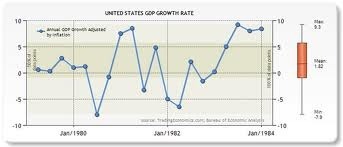
These were situations where the public could discern rapid improvement from a bad situation. No such thing is likely to be the case next year. 1936 and 1984 are not good lessons. They're counter-examples, like learning how to handle a drought by studying what happened during Hurricane Katrina.
Again, it's hard to say exactly what the administration thinks these examples mean. The article does report, "Obama will try to divert the public’s frustration with Washington toward his main enemy, the GOP." That is the obviously correct strategy. Americans are very, very unhappy. Obama's task is to persuade them to blame Republicans. Running an election taking credit for, well, anything is a terrible idea.
Shelby Steele's Latest Embarrassment
Shelby Steele today has an extremely amusing broadside against President Obama. The general flavor is captured well in its opening:
If I've heard it once, I've heard it a hundred times: President Obama is destroying the country. Some say this destructiveness is intended; most say it is inadvertent, an outgrowth of inexperience, ideological wrong-headedness and an oddly undefined character.
So you can see that Steele really takes in the full spectrum of viewpoints.
Perhaps the most interesting quality of this particular column is that it is an vaporous emission of generalized complaints against Obama and the left -- they hate America, and so on -- lacking any grounding whatsoever. I was able to identify one sentence containing anything close to a concrete reference to an actual decision or statement by Obama:
Mr. Obama did not explicitly run on an anti-exceptionalism platform. Yet once he was elected it became clear that his idea of how and where to apply presidential power was shaped precisely by this brand of liberalism. There was his devotion to big government, his passion for redistribution, and his scolding and scapegoating of Wall Street—as if his mandate was somehow to overcome, or at least subdue, American capitalism itself.
This is the sum of the specific references to Obama's record in Steele's column: he hates America because he criticized Wall Street. Does Steele realize how many Americans hate America by this standard?
In any case, there's no other reference to anything Obama has done. It's an entire column built on the assumption that Obama is a radical leftist who hates America. Apparently everybody Steele talks to believes this anyway, so why bother to demonstrate it?
Jonathan Chait's Blog

- Jonathan Chait's profile
- 35 followers

