
Jonathan Chait's Blog, page 6
August 19, 2011
In Which I Try To Restrain My Nasty Impulses, With Limited Success
I have a bit of a weakness for insulting people's intelligence. I recognize this and try to restrain myself. When I read Stephen Moore's op-ed in the Wall Street Journal today, I thought that I would give restraint a try. There's simply no way to honestly analyze this piece without commenting on the author's intelligence. I suppose, to be charitable, I should refine that to mean Moore's analytic intelligence; there are many kinds of intelligence, and perhaps Moore is gifted with great social intelligence, or artistic intelligence. And yet the relevant point is that Moore is the lead economic editorial writer for the country's leading economic newspaper and yet he lacks even a rudimentary understanding of economics.
What makes this point especially hard to resist is that Moore's lack of understanding of rudimentary economics is the subject of his op-ed. Here is his thesis:
Christina Romer, the University of California at Berkeley economics professor and President Obama's first chief economist, once relayed the old joke that "there are two kinds of students: those who hate economics and those who really hate economics." She doesn't believe that, but it's true. I'm surprised how many students tell me economics is their least favorite subject. Why? Because too often economic theories defy common sense. Alas, the policies of this administration haven't boosted the profession's reputation.
Moore believes the entire economics field is composed of idiots who fail to grasp obvious realities. Their theories defy "common sense," which is to say Moore doesn't understand them, which is to say they must all be wrong. For instance:
Mr. Carney explained that unemployment insurance "is one of the most direct ways to infuse money into the economy because people who are unemployed and obviously aren't earning a paycheck are going to spend the money that they get . . . and that creates growth and income for businesses that then lead them to making decisions about jobs—more hiring."
That's a perfect Keynesian answer, and also perfectly nonsensical. What the White House is telling us is that the more unemployed people we can pay for not working, the more people will work. Only someone with a Ph.D. in economics from an elite university would believe this.
Right. The theory holds that a lack of demand is creating a high level of unemployment. Unemployed people have a high marginal propensity to consume -- which is to say, they're generally desperate to pay the bills. If you let them keep drawing uninsurance claims, they will spend that money on things like repairing their car and buying clothes, creating more employment in the fields of auto repair and clothing retailers. Moore seems to think either that unemployment benefits can only have the effect of discouraging people from working -- that apparently, our economy suffers from a surplus of jobs that have gone unfilled because applicants would prefer to stay on unemployment. I suppose you could argue that this is the case, and that this effect overwhelms the demand-side boost from maintaining consumption for the unemployed who would not otherwise be obtaining work.
But Moore doesn't make that case. He just thinks it's obviously dumb to think that unemployment benefits could have an effect other than to discourage work. I have not omitted from his op-ed any portion where he makes this case.
Moore continues:
A few months ago Mr. Obama blamed high unemployment on businesses becoming "more efficient with a lot fewer workers," and he mentioned ATMs and airport kiosks. The Luddites are back raging against the machine. If Mr. Obama really wants to get to full employment, why not ban farm equipment?
But Obama is not proposing to ban farm equipment, or ATMs, or airport kiosks. So, hey, maybe there is more to the argument! Indeed, there is an entire economic debate about the degree to which technological trends have impacted employment. Over the last three economic expansions, unemployment has taken much longer to come down than in previous cycles. Economists believe that technological changes have a great deal to do with this. That is the debate Obama was referencing. Moore, again, appears totally unaware of it.
More Moore:
Or consider the biggest whopper: Mr. Obama's thoroughly discredited $830 billion stimulus bill. We were promised $1.50 or even up to $3 of economic benefit—the mythical "multiplier"—from every dollar the government spent. There was never any acknowledgment that for the government to spend a dollar, it has to take it from the private economy that is then supposed to create jobs. The multiplier theory only works if you believe there's a fairy passing out free dollars.
Moore is at least referencing an economic theory here, albeit an extremely old one believed by very few economists any more. The theory holds that borrowing money in the short term must always lead to an immediate reduction in short-term spending. Economists have answers to this objection that do not rely on fairies. Moore genuinely seems to think that the entire field is filled with idiots unfamiliar with his "common sense" objection.
One more piece of Moore's argument:
Keynesians believe that the economic problem is abundance: too much production and goods on the shelf and too few consumers. Consumers lined up for blocks to buy things in empty stores in communist Russia, but that never sparked production. In macroeconomics today, there is a fatal disregard for the heroes of the economy: the entrepreneur, the risk-taker, the one who innovates and creates the things we want to buy. "All economic problems are about removing impediments to supply, not demand," Arthur Laffer reminds us.
Let's take the last part first. He cites supply-side guru Art Laffer, who claims that all economic problems are supply-side problems. Moore is not just saying that marginal tax rates matter. He is ascribing them total importance, reducing all economics to the supply-side. No real economist believes this. Moore is epitomizing the pure crankery of supply-side economics, the belief that it has discovered simple truths that have elided the entire profession.
In the first part of the paragraph, he assumes that Keynesian economics is simply the mirror image of his own belief system. He thinks that government discouragement of wealth is the only possible economic problem. Therefore, Keynesians must believe that a failure of demand is the only possible economic problem. But look, he says -- there were shortages under communism! He has refuted Keynesian economics! That Keynesians do not believe that a failure of demand is the only possible economic problem genuinely does not occur to him.
I have been following Moore for years, and I have met him -- yes, it was awkward -- and I can assure you that this is not just some oddball rhetorical game he's playing. He genuinely has no idea what he's talking about. And I'm sorry to be mean to what seems to be a fairly nice guy, but it does matter that there are completely ignorant people wielding great influence over the policy debate.


The Meta-Commission Will Save Us
Okay, so the bipartisan commission led by Erskine Bowles and Alan Simpson failed to come up with a mutually acceptable deficit reduction plan. This lead to the creation of the Gang of Six to give it another try, which also failed, because House Republicans won't accept any increase in revenue. This led to a deal to create yet another bipartisan commission -- the supercommission! -- which must cut the deficit or else trigger automatic cuts. But the supercommission is expected to deadlock as well for the same reason.
It's pretty obvious what the situation calls for, isn't it? Right: another bipartisan deficit commission:
Sen. Mark Warner is hoping to form a bipartisan, bicameral post-Gang of Six group to pressure the already bipartisan, bicameral supercommittee to “go big or go home,” his spokesman told POLITICO Thursday.
The Virginia Democrat, who first spoke of his vague plan during a Virginia Beach meeting Wednesday of the local Filipino American Community Action Group, said his new group would build on the efforts of the Gang of Six, a group of which he was a member.
“I’m not going to give up the fight. This problem is not going to go away,” Warner said, the Virginian-Pilot of Norfolk reported.
Warner spokesman Kevin Hall said Thursday the idea is for the nascent group to serve as a cheerleadering corps for the 12-member supercommittee “to speak out to encourage the new supercommittee to ‘go big, or go home.’” Hall said Warner has not developed details of the new group, which he called a “very preliminary concept.”
A bipartisan deficit commission commission! I don't see how this could fail.
Well, I do see one possible problem, come to think of it. How do we decide who gets to be on the meta-commission? It could easily get political. What if we determined the membership of the meta-committee via some non-political selection method -- perhaps through the creation of a new group containing, Republicans and Democrats, dedicated to finding the right mix of politicians of both parties, who would be tasked with coming up with a bipartisan plan to lobby the bipartisan supercommission to come up with a bipartisan plan to reduce the deficit?
A New Name At TNR
I've been admiring Alec MacGillis's work at the Washington Post for years. Now he's joining us, which is a huge coup for TNR and a treat for our readers. Alec is both an excellent reporter and a deeply incisive analyst. Look for his campaign coverage beginning this fall.
You Know Who Else Favored Monetary Expansion?
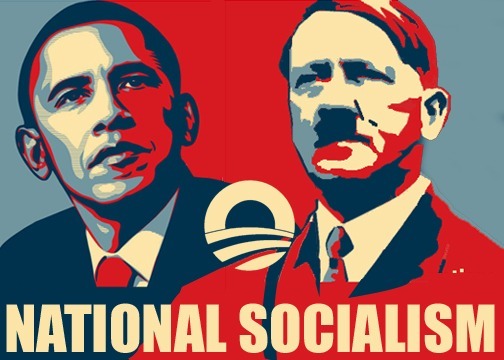
Nazi monetary policy fan Matthew Yglesias reviews the exploits of Hjalmar Schacht:
FDR’s first move was to devalue the dollar relative to gold. Hitler’s parallel move was devised by the very clever Hjalmar Schacht who (as you can read in his Nuremberg Trials indictment) essentially introduced a parallel currency called “Mefo bills” by setting up a government-backed shell company that issued scrip. FDR’s second move was to have people panic that Hitler was going to conquer them and shift their gold to the USA. Hitler’s second move, by contrast, was to conquer Austria and the modern-day Czech Republic and take their gold.
Then came the actual war, during which period all participating governments adopted what amounts to large-scale central planning of the economy. Centrally planned economies have a lot of problems, but since military supplies are always a case of monopsony purchasing by the government, if military supplies are the only thing you care about, this is what you do. Centrally planned economies have the useful side effect of essentially eliminating unemployment, because you’d have to be an extremely sloppy planner to simply not notice that 9 percent of your labor force isn’t doing anything.
Right-wingers spent much of 2009 infrequently comparing President Obama's agenda with fascism. The usual liberal response was to hand-wring over the comparisons, but I kind of like the way Yglesias just charges ahead and dares the critics to trigger Godwin's Law.
If you're looking for a different view of Schacht, the late supply-side guru Jude Wanniski provided it in his seminal tome "The Way The World Works." Supply-side ideology revolves around ascribing fantastical powers to marginal tax rates, and thus arguing that even minor tax changes can so change the incentive structure of the economy as to trigger recessions or booms. Wanniski's book was the first real attempt to flesh out this theory, using it not only to the polemical end of arguing for lower taxes on the rich in the United States but applying it to the entire history of the world. Here's the explanation of how World War II started:
When Hitler came to power in 1933, fascinated with Mussolini’s syndicalist style, he—like Roosevelt—left the tax rates where he found them. There was no way, then, for the private economy to expand as it had in Italy. There was, however, immediate economic relief from the mere fact that the cloud of war reparations disappeared with Hitler’s ascendancy. The Lausanne agreement of July 9, 1932, was the last try by the allies to arrange payment of at least a part of the war debts, and Hitler immediately announced that within months the agreement would not be worth three marks.
Although he left the explicit tax rates high, Schacht did chip away at the domestic and international wedges. The economy expanded, but in so distorted a fashion that it compressed the tension between agriculture and industry into an explosive problem that Hitler sough to solve through Lebensraum, or conquest.
This may sound completely deranged. But Wanniski was a deeply influential figure within American conservatism.
Krauthammer Is Making It Too Easy
[image error]Charles Krauthammer expresses indignation that President Obama would suggest that Republicans in Congress would rather defeat Obama than compromise:
In Obama’s recounting, however, luck is only half the story. His economic recovery was ruined not just by acts of God and (foreign) men, but by Americans who care nothing for their country. These people, who inhabit Congress (guess which party?), refuse to set aside “politics” for the good of the nation. They serve special interests and lobbyists, care only about the next election, place party ahead of country. Indeed, they “would rather see their opponents lose than see America win.” The blaggards!
For weeks, these calumnies have been Obama staples. Calumnies, because they give not an iota of credit to the opposition for trying to promote the public good, as presumably Obama does, but from different premises and principles. Calumnies, because they deny the legitimacy to those on the other side of the great national debate about the size and scope and reach of government.
Charging one’s opponents with bad faith is the ultimate political ad hominem. It obviates argument, fact, logic, history. Conservatives resist Obama’s social-democratic, avowedly transformational agenda not just on principle but on empirical grounds, as well — the economic and moral unraveling of Europe’s social-democratic experiment, on display today from Athens to the streets of London.
Let's ignore the wild comparison between Obama's agenda and Greece, and the merely stupid comparison between Obama's agenda and Great Britain, which is imposing massive fiscal contraction. It is surely true that accusing an opponent of putting electoral success ahead of the national interest is a nasty accusation, as well as an unprovable one, given the difficulty of establishing motive.
Still, the circumstantial evidence strongly suggests that Republicans have decided they'd rather defeat Obama than agree to a compromise that might benefit him politically while advancing their agenda. The economic consensus overwhelmingly holds that looser money and fiscal stimulus are the appropriate policy response to the Great Recession. In 2001, when we had a Republican president and a much less dire economic emergency, Republicans demanded looser money and more stimulus. They have undergone an intellectual conversion at a time that makes very little sense given economic circumstances but a great deal of sense given the partisan circumstances.
Like I said, this is circumstantial evidence. Some element of the GOP embrace of what most economists consider contractionary policies during the greatest economic disaster in eighty years may reflect genuine intellectual conversion. Other parts no doubt reflect intellectual conversion as rationalization for partisan self-interest, and others still as self-conscious partisanship.
Luckily, we don't have to guess about the Congressional GOP's motive. Republican leader Mitch McConnell has openly said that his top priority is defeating Obama. McConnell didn't go so far as to openly say he would turn down a bargain that he believed to be in the national interest on the grounds that it would improve Obama's standing. But it is the straighforward implication of his statement, especially in light of McConnell's stated belief that the crucial factor in making Obama's policies unpopular with the public is to deny them bipartisan support. Krauthammer is furiously defending Republicans from something they publicly admit to be true.
If you recall, John McCain made his willingness to put country ahead of party, and his opponent's alleged refusal to do the same, the primary theme of his 2008. This did not cause Krauthammer to cry calumny! and challenge McCain to a duel. Instead it resulted in Krauthammer himself repeating that slogan on behalf of McCain.
Reading a Charles Krauthammer column used to be a challenging exercise. To be sure, it frequently involved sophistry, but the deception was always clever. You read through the column nodding your head until the conclusion, and you'd have to read through it a second time to discover the trick, like a condition which was possibly true in the third paragraph had become necessarily true by the seventh. It was like having your money taken by a skilled three card monte artist. But those days are long gone, and now Krauthammer just hits you ever the head and takes your wallet.
The Perry Panic And the Draft Ryan Movement
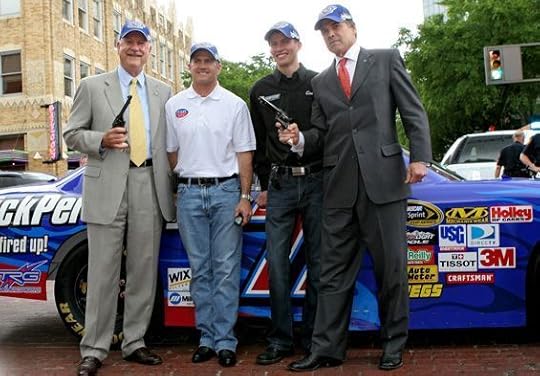
The first week of the Rick Perry presidential campaign has put the Republican establishment in a full panic. Perry has defined himself as a full right-wing stereotype, an over-the-top George W. Bush impersonator. Much of the tension between Perry and party elites in Washington has been portrayed as the continuation of a longstanding grudge between him and the Bush circle. But the opposition of the Bush circle mostly reflects the fact that the Bush circle dominates the GOP establishment these days; Karl Rove, in particular, sits at the nexis of a massive fundraising and message operation that is essentially a shadow Republican Party. And the party has seen enough of Perry to worry.
Jonathan Martin and Jake Sherman have a great report about Congressional Republicans openly fretting about Perry's out-of-control campaign style:
In a series of interviews, uncommitted Republican members praised the Texas governor’s economic record but called his suggestion that Federal Reserve Chairman Ben Bernanke is guilty of treason a serious misstep and said that kind of inflammatory talk could scare off swing voters.
House Republicans from heavily suburban districts were particularly uneasy about the Bernanke remark and Perry’s refusal to say whether President Obama is a patriot. These members, some of them facing potentially tough re-election campaigns next year, urged the White House hopeful to stick to core issues of jobs and spending.
“You can’t be calling Bernanke a traitor and you can’t be questioning whether or not Barack Obama loves America, that type of thing,” said Rep. Peter King (R-N.Y.), the chairman of the House Homeland Security Committee and veteran Long Island incumbent. “I’ve been with Perry a few times, and I can see how he could project, again, if it’s done the right way. But no, if he continues this, he’ll have a tough time.”
Rep. Charlie Bass (R-N.H.), who lost his seat in the 2006 Democratic sweep only to win it back in last year’s Republican resurgence, represents the Boston suburbs that line his state’s southern border and bridled at the Bernanke statement.
A lot of liberals consider Perry a formidable candidate because, after all, it wasn't long ago that another swaggering, anti-intellectual, culturally divisive Texas governor won the White House. But it's worth recalling that Bush ran in 2000 as a moderate -- a compassionate conservative who would continue the basic thrust of the Clinton policy agenda, only with a more bipartisan touch. Even in 2004, when he had largely abandoned that pose, Bush was not running around questioning evolution. It's not just that Perry is a regional candidate. He's a very conservative one. A PPP poll earlier this summer showed that President Obama would run slightly ahead of Perry in Texas -- not because he's popular there (he trailed other GOP contenders) but because Perry is extreme even for Texas. I wouldn't take this poll as to mean that Obama could carry the state, but I would take it as a sign that Perry does not wear especially well.
Hence the party's panic. The current presidential field puts the Republican Party in a terrible bind. The putative front-runner, Mitt Romney, is wildly vulnerable to attack from the right, while Perry and Michelle Bachmann wear their conservatism on their sleeve in a way that repels swing voters. That is the context in which to understand the establishment's fervent desire to draft Paul Ryan into the race.
Some liberals say the notion of a Ryan candidacy is nuts, because his economic program is too extreme or because his resume is too light. Those are valid objections. But Ryan has created a public persona for himself that commands unassailable prestige within the Republican Party and turns political reporters into fawning groupies.
Conservative talk radio host Michael Medved, who reports that literally every conservative he knows wants Ryan to run, sums up the political benefit:
Ryan offers the ideal combination of conservative substance and moderate style. I’ve argued for years that the perfect formula for a unifying GOP nominee isn’t to split the difference between the so-called moderate and conservative wings of the party, or between the establishment and the Tea Party. Today’s Republicans remain a party of unequivocally conservative principles (as evidenced by near-unanimous GOP congressional votes against all elements of the Obama big-government agenda). Most Republicans, however (like most of their Democratic and independent neighbors), prefer a moderate, nonthreatening style to the explosive personality of some rhetorical bomb-thrower. Reagan exemplified the necessary blend to perfection: his clear-cut, unwavering conservative values won wide acceptance because they matched a sunny, agreeable, easygoing disposition. Mike Huckabee captured some of the same magic with his classic formulation: “I’m a conservative, but I’m not angry about it.” George W. Bush succeeded with a similar presentation, positioning himself in 2000 as a rock-ribbed religious right-winger who nonetheless respected the other side as a nice-guy “compassionate conservative” and a “uniter, not a divider.” The least-effective Republican nominees get the formulation exactly backwards: Bob Dole and John McCain, both admirable war heroes with impressive Senate records, worried righties (with their imperfect conservative credentials) and everyone else (with an edgy, occasionally angry and explosive, personal style). This year both Perry and Bachmann offer plenty of conservative substance, but without the reassuring moderate style; Romney provides the suave, comforting moderate style, but his Massachusetts record leaves Tea Party partisans uncertain of his conservative substance. Among this candidate crop, Ryan alone (with Pawlenty and Mitch Daniels out of the race) could provide the right formula in terms of both tough solid principle and agreeable personality.
If you think the substantive radicalism of Ryan's agenda is more of a liability than the on-the-surface craziness of a Rick Perry, you have a much higher estimation of the electorate than I do.
August 18, 2011
&c
-- Why Iowa and New Hampshire have undue power.
-- Jon Huntsman "believe[s] in evolution and trust[s] scientists on global warming. Call [him] crazy."
-- Only 10 percent of people know about CTRL-F.
-- Rick Perry isn't necessarily a great campaigner.
-- It turns out people don't actually mind spending on public programs.
Today In Crazy
I've already covered Rick Santorum arguing that gay marriage helped cause the economic crisis. Since then Rick Perry, recently having expressed skepticism of climate science, is also expressing skepticism toward evolution. And Tom Coburn has some really wild beliefs on a wide-ranging field of subjects, including:
"As an African-American male," Coburn said, Obama received "tremendous advantage from a lot of these programs."
Coburn went on to say that most of the country's problems were created by Congress and that "I don't think presidents matter that much."
Keep in mind that the only area where Obama has attempted to create a new entitlement is health care, which is the same goal pursued by Bill Clinton, Richard Nixon, Harry Truman, and other non-black politicians.
The day isn't done yet! What other craziness is in store? Any chance of asking Michelle Bachmann her opinion of the Trilateral Commission?
I'm sure bringing all these stray quotes together sounds partisan. There is certainly craziness on the left just as on the right. By "craziness" I don't mean opinions I find unsound or morally questionable, but rather analytical claims that are simply wrong. In American politics today, there seems to be quite a bit more craziness on the right than on the left -- or, at least, left-wing craziness lies mainly outside the two-party system while right-wing craziness is firmly ensconced within it.
When conservatives want to establish a parallel with the left, they'll usually go and find something like Alan Grayson saying that the Republican plan is for people without insurance to die. There's certainly plenty of hyperbolic or offensive rhetoric in the Democratic Party. But when it comes to factual beliefs totally at odds with reality, there's just no comparison right now between the two parties.
JONATHAN CHAIT >>
Did Gay Marriage Cause The Economic Crisis?
[image error]
Rick Santorum draws the connection:
Letting the family break down and in fact encouraging it and inciting more breakdown through this whole redefinition of marriage debate, and not supporting strong nuclear families and not supporting and standing up for the dignity of human life. Those lead to a society that’s broken. …
If you think that we can be a society that kills our own, and that disregards the family and the important role it plays, and doesn’t teach moral values and the important role of faith in the public square, and then expect people to be good, decent and moral when they behave economically, if you look at the root cause of the economic problems that we’re dealing with on Wall Street and Main Street I might add, from 2008, they were huge moral failings. And you can’t say that we’re gonna take morality out of the public square, morality out of our schools, God out of our schools, and then expect people to behave decently in a country that requires, capitalism requires some strong modicum of moral consciousness if it’s gonna be successful.
Interesting theory. Hey, stimulus didn't work -- maybe we should give stigmatizing the gays a shot.
In all seriousness, there is a long history of moralizing economic catastrophe. Most people don't understand economics, and economics tends anyway to explain economic disaster as a result of relatively prosaic factors that don't satisfy the public's desire for a grand moral narrative that matches the level of disaster people experience. The economics field has advanced to the point where Santorum-esque explanations are less common, but they still exist and probably always will.
A Portrait Of Rick Perry's Mind At Work
Here is Rick Perry, as governor, being presented with the contrast between Texas's abstinence-only sex education program which he supports, and the state's very high teen pregnancy rate. watch him grapple with the question:
Perry appears completely unable not only to answer the question but even to think in empirical terms.
This speaks a bit to the point I made earlier about conservative identity politics. Liberals frequently believe that Republican leaders -- George W. Bush, Sarah Palin -- lack analytical intelligence. Conservatives reply that this is merely liberal snobbery against plain-spoken folks from the heartland. I'd reply that conservatives seem to gravitate toward anti-intellectual figures.
Perry is sort of a case in point. If Republicans were to nominate Mitt Romney, liberals won't be calling him dumb. That's because Romney is obviously very smart. But Perry's anti-intellectualism is much better suited to capture the party id.
Jonathan Chait's Blog
- Jonathan Chait's profile
- 35 followers

