
Jonathan Chait's Blog, page 156
November 12, 2010
The Charlie Sheen Is Too Damn High Party
I see real populist appeal here.


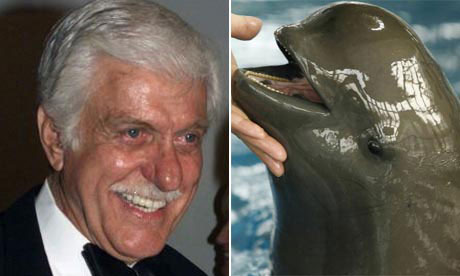
Everything Happens For A Porpoise
In 1998, when conservatives were losing their mind over the Clinton administration's decision to return Elian Gonzales to his family in Cuba, Peggy Noonan wrote a column in the Wall Street Journal arguing that if Ronald Reagan were president, he would have endorsed the hypothesis that Gonzales had been rescued by dolphins acting on orders from God:
Mr. Reagan would not have dismissed the story of the dolphins as Christian kitsch, but seen it as possible evidence of the reasonable assumption that God's creatures had been commanded to protect one of God's children. And most important, the idea that he would fear Mr. Castro, that he would be afraid of a tired old tyrant in faded fatigues, would actually have made him laugh. Mr. Reagan would fear only what kind of country we would be if we took the little boy and threw him over the side, into the rough sea of history.
He would have made a statement laying out the facts and ended it, "The boy stays, the dream endures, the American story continues. And if Mr. Castro doesn't like it, well, I'm afraid that's really too bad."
But then he was a man.
I admit it: I found this about as plausible as the Journal's view that tax cuts cause revenue to rise. But now it appears that porpoises have rescued Dick Van Dyke:
Van Dyke's ordeal began during an ill-fated trip to his local beach. "I woke up out of sight of land," the 84-year-old actor told reporters. "I started paddling with the swells and I started seeing fins swimming around me and I thought 'I'm dead!'"
Van Dyke was wrong. "They turned out to be porpoises," he said. "And they pushed me all the way to shore." The porpoises were unavailable for comment.
Perhaps I've misjudged supply-side economics as well.
November 11, 2010
Liberals and the Debt Commission
How should liberals respond to the debt commission? The correct answer, I think, is to see it as an opportunity for a policy success or a political win. The wrong answer is to reject it out of hand.
One category of out-of-hand rejection is insistence that we don’t need to do anything about the long-term deficit. The "real" problem, according to this line of reasoning, is the economy, not the deficit. Here's Dean Baker writing in TNR:
Given the state of the economy, the co-chairs’ report reads like a document from Mars. Just to remind those of us who earn their living on planet earth (outside of Wall Street), the country is suffering from 9.6 percent unemployment. More than 25 million people are unemployed, underemployed, or have given up looking for work altogether. Tens of millions of people are underwater in their mortgage and millions face the prospect of losing their home to foreclosure.
We did not get here because of government deficits, contrary to what Mr. Bowles seemed to suggest at the co-chairs’ press conference today. We got here because of the bursting of an $8 trillion housing bubble. This bubble was fueled by the reckless and possibly unlawful practices of the Wall Street banks, like Morgan Stanley, the bank on whose board Mr. Bowles sits.
I don't follow the logic here at all. We have a short-term economic crisis that requires higher deficit spending to boost demand. And we have a long-term deficit crisis that requires, well, lower deficit spending. I wish there was legislation to address both problems. Indeed, I think the structural deficit ranks well below both the economic crisis and climate change. But that isn't a reason to ignore it.
A more common objection is that we do need to address the long-term deficit, but not this way. Kevin Drum complains that the commission’s plan ignores rising health care costs, the main driver of higher deficits:
Any serious long-term deficit plan will spend about 1% of its time on the discretionary budget, 1% on Social Security, and 98% on healthcare. Any proposal that doesn't maintain approximately that ratio shouldn't be considered serious. The Simpson-Bowles plan, conversely, goes into loving detail about cuts to the discretionary budget and Social Security but turns suddenly vague and cramped when it gets to Medicare. That's not serious.
Well, that’s true as far as it goes. But we did just pass a major health care reform law that is going to go pretty far in holding down the growth of health care costs. But the Affordable Care Act is not going to solve the deficit by itself. You also need some other budget changes. The commission plan builds upon the cost savings of the PPACA, but focuses its energies elsewhere. First we did the health care piece, shoving as much cost saving through the system as possible. Now we can turn mainly to the non-health care piece.
Another category of opposition, put forward by a broad swath of liberals, simply criticizes specific provisions in the plan as if invoking unattractive elements is sufficient refutation. Higher retirement age, bad! Slashing the federal workforce, bad! (You can see a lot of these lines here.) I agree! We could design a budget that reaches an attainable deficit and does a far better job of reflecting liberal priorities.
But that option is not on the table. The premise here is that reducing the long-term deficit is very hard. All the options are unpopular. If you try to do it while imposing your party's ideal vision of federal priorities, the other party will demagogue you to death and you'll fail. So you need to find some way to reduce the deficit that falls short of your ideal while constituting an improvement over a status quo of letting the deficit run unchecked.
And the deficit commission’s blueprint does have aspects liberals can get behind. It ends all manner of regressive tax subsidies, including the tax preference for capital gains and dividends. That’s a huge policy triumph. It protects retirement benefits for low-income workers. It slashes agriculture subsidies. This may not be the best way to reduce the deficit, but it’s far from the worst.
Now, this doesn’t mean it’s imperative that we address the long-term deficit right away. As Matthew Yglesias notes, we might expect that the fiscal adjustment will take place at the moment when deficits cause actual economic consequences. Why not wait until then? An added benefit of waiting is that, while the liberal way to reduce the deficit is unpopular, it’s clearly less unpopular than the conservative way to reduce the deficit. People hate tax hikes, except on the rich, but they hate cuts in social programs even more. In theory, liberals could just wait it out until the deficit causes an actual economic crisis, then wait for corporate America to pressure Republicans to accept a fiscal adjustment which will probably take place on more liberal terms.
That’s not a crazy plan. But it is a risky plan. Sometimes these kinds of crises spiral out of control very fast. And we don’t know who will be running the government if and when the crisis occurs.
An under-discussed factor for acting now is that it could help President Obama’s re-election chances. I don’t subscribe to the view that President Obama “needs to move to the center.” But I do think that his signing a major package of legislative reforms that has bipartisan support and would all but solve the medium-term deficit problem would be a political boon. Furthermore, it would probably help make public opinion somewhat more receptive to further stimulus. The deficit may not account for all or even most of the Democrats’ political predicament, but it is certainly an element of it.
Now, this doesn’t mean that liberals should unconditionally support whatever the commission ends up proposing. The smart answer is to signal conditional support. A few priorities are crucial. The tax reform must not make the tax code less progressive. (It cuts tax rates, but closes loopholes, a structure that could easily result in a more progressive effective tax distribution. I await analysis of the commission’s proposal.) Second, the commission’s cap on revenue is either dangerous or toothless – it has to remain the latter to be supportable. The plan should not foreclose the possibility of either side winning future policy battles. Liberals should have the chance to win a higher tax, higher-service equilibrium, and conservatives a lower tax, lower-service equilibrium. The point of the compromise is to align revenues with expenditures and reset the political battles from there, not to end all future battles.
Obviously, the plan is probably going to fail anyway. Republicans filibustered President Obama’s proposal to force Congress to make an up-or-down vote on the commission’s plan. These things work by forcing members into a binary choice of supporting a difficult plan to reduce the deficit, or nothing, with no amendments allowed. By shutting down that pathway, Republicans forced the commission’s plan to go through normal legislative channels, where even if it comes close to coming to a vote, it will probably die a death of a thousand cuts. (A vote here to restore agriculture subsidies; a vote there to lower the Social Security retirement age.)
But while the chance of success is remote, it isn’t zero. Engaging with the commission is a way of maximizing the odds of its success. If it loses? Well, then, Democrats can sit back and let the Republicans either try to unilaterally impose wildly unpopular budget cuts or else demonstrate once again their utter fiscal fraudulence.
TNR Readers Pick Some of Their Favorite Articles
Last weekend, The New Republic turned 96, and, to celebrate, we ran a collection of our editors’ favorite pieces from the magazine’s archives of essays, criticism, and investigative features. We had pieces by Michael Lewis, Herbert Croly, Michael Kinsley, and other fantastic journalists—even one by blogger extraordinaire Jonathan Chait. In response, TNR readers told us about some of their own favorite pieces. We liked the suggestions so much that we decided to run a few of them here. Enjoy!
“The Global Zeitgeist Checklist: England,” by Michael Kinsley
“Feelings of Warmth,” by Michael Kinsley (on the American edition of A. S. Byatt's Possession)
“A Groom of One’s Own,” by Brent Shaw (on John Boswell's Same Sex Unions in Pre-Modern Europe)
“Greek to Him: An Open Letter to Ex-Professor Newt,” by Peter Green
“Here Comes the Groom: A (Conservative) Case for Gay Marriage,” by Andrew Sullivan
“Human, All Too Inhuman,” by James Wood (on Zadie Smith’s White Teeth)
“Warren Beatty’s Triumph,” by Stanley Kauffmann (on the film Reds)
“Rogue State: A Case Against Delaware,” by Jonathan Chait
TNR TURNS 96 >>
Jonathan Chait's Blog

- Jonathan Chait's profile
- 35 followers

