
Jonathan Chait's Blog, page 148
November 29, 2010
The Federal Pay Freeze Gimmick
I get the politics behind the Obama administration's plan to freeze federal pay. The public thinks government should trim back during bad times, and while the public is wrong, sometimes you have to cater to pubic prejudices, especially when the cost is minimal.
I'm just not sure the politics will actually work so neatly. A policy like that only works through the context in which it is communicated to the public. And the context will be that liberals and moderates dismiss because it's a stupid policy, and conservatives attack it because they're partisan Republicans. The end result will be Obama proposing a policy initiative that's mildly harmful and panned by all sides.
There's a certain class of moderate Democratic strategist that thinks symbolic moves like this brilliantly capture the center, but I'm not sure it really works like that. Instead, it will be reported on the evening news, with a complaining comment from a liberal, a sneering comment from a conservative, and a dismissive comment from a Centrist Budget Wonk who says you have to cut entitlement spending. If you're going to do something like this, at least do it during the State of the Union address so you can get the message out unfiltered.


Apply to Be a TNR Web Intern!
**We are now accepting applications for our winter internships. Please apply by December 10, 2010.**
The New Republic Online is looking for college students and recent graduates for its winter 2010 Web internship program. Internships are unpaid but offer substantial experience in the production of a daily online publication. Interns must be able to work in our Washington, D.C. office. Responsibilities include:
Research projects and assisting TNR's senior writers
Writing articles and blog posts, and helping to create multimedia content
Participating in TNR staff meetings
Preparing and updating TNR's homepage
Helping to maintain TNR's blogs and other aspects of the site
Political journalism experience is preferred, but not imperative; some familiarity with HTML is helpful, but not crucial; and fluency in search techniques like LexisNexis is mandatory. A full-time commitment is preferred.
Applications for our winter internship (December/January through May/June) are currently being accepted on a rolling basis. For the Web internship program, please e-mail a cover letter and résumé to Seyward Darby and Barron YoungSmith.
Bush v. Gore Ten Years Later
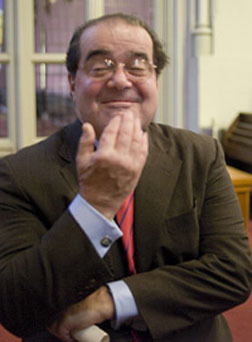 Jeffrey Toobin editorializes for the New Yorker:
Momentous Supreme Court cases tend to move quickly into the slipstream of the Court’s history. In the first ten years after Brown v. Board of Education, the 1954 decision that ended the doctrine of separate but equal in public education, the Justices cited the case more than twenty-five times. In the ten years after Roe v. Wade, the abortion-rights decision of 1973, there were more than sixty-five references to that landmark. This month marks ten years since the Court, by a vote of five-to-four, terminated the election of 2000 and delivered the Presidency to George W. Bush. Over that decade, the Justices have provided a verdict of sorts on Bush v. Gore by the number of times they have cited it: zero.
Both sides had their reasons for consigning the decision to history and leaving it there. In his concession speech on the day after the decision, Al Gore said simply, “It’s time for me to go.” He meant it, and he left politics for a life of entrepreneurship and good works. George W. Bush, for his part, found little reason to dwell on the controversial nature of his ascension to office, and in his memoir, “Decision Points,” he devotes less than a page to the Supreme Court decision. (“My first response was relief,” he writes of his reaction.) In public appearances, Antonin Scalia, a member of the majority in Bush v. Gore, regularly offers this message to people who question him about the decision: “Get over it!”
I think the Republican justices who decided Bush v. Gore, while justifiying it to themselves as necessary to save the country, understood at some level that it was a highly partisan exercise in judicial activism. You don't angrily tell people to get over a decision you're proud of.
The "American Exceptionalism" Smear And Epistemic Closure
The Washington Post has a story today about the common conservative meme that President Obama dismissed American exceptionalism:
But with Republicans and tea party activists accusing President Obama and the Democrats of turning the country toward socialism, the idea that the United States is inherently superior to the world's other nations has become the battle cry from a new front in the ongoing culture wars. Lately, it seems to be on the lips of just about every Republican who is giving any thought to running for president in 2012.
"This reorientation away from a celebration of American exceptionalism is misguided and bankrupt," former Massachusetts governor Mitt Romney writes in his campaign setup book, "No Apology: The Case For American Greatness."
On Monday, Rep. Mike Pence (R-Ind.), who is also considering a White House bid, is scheduled to address the Detroit Economic Club on "Restoring American Exceptionalism: A Vision for Economic Growth and Prosperity."
For former Alaska governor Sarah Palin, the concept is a frequent theme in her speeches, Facebook postings, tweets and appearances on Fox News Channel. Her just-published book, "America by Heart," has a chapter titled "America the Exceptional."
Newt Gingrich, the former House speaker, contends in his speeches that Obama's views on the subject are "truly alarming."
In an interview in August with Politico, former Arkansas governor Mike Huckabee went so far as to declare of Obama: "His worldview is dramatically different than any president, Republican or Democrat, we've had. . . . To deny American exceptionalism is in essence to deny the heart and soul of this nation."
And last week, Rick Santorum, the former senator from Pennsylvania, told a group of College Republicans at American University: "Don't kid yourself with the lie. America is exceptional, and Americans are concerned that there are a group of people in Washington who don't believe that any more."
The entire root of this attack line stems from a single sentence by Obama, endlessly repeated on the right: "I believe in American exceptionalism, just as I suspect that the Brits believe in British exceptionalism and the Greeks believe in Greek exceptionalism." You see!, conservatives say -- he thinks American exceptionalism is no more valid than any other country's national pride!
In fact, Obama's remark was a nuanced defense of the idea. He began by acknowledging other forms of national pride, but proceeded to argue for American exceptionalism anyway:
"I believe in American exceptionalism, just as I suspect that the Brits believe in British exceptionalism and the Greeks believe in Greek exceptionalism. I'm enormously proud of my country and its role and history in the world. If you think about the site of this summit and what it means, I don't think America should be embarrassed to see evidence of the sacrifices of our troops, the enormous amount of resources that were put into Europe postwar, and our leadership in crafting an Alliance that ultimately led to the unification of Europe. We should take great pride in that.
"And if you think of our current situation, the United States remains the largest economy in the world. We have unmatched military capability. And I think that we have a core set of values that are enshrined in our Constitution, in our body of law, in our democratic practices, in our belief in free speech and equality, that, though imperfect, are exceptional.
"Now, the fact that I am very proud of my country and I think that we've got a whole lot to offer the world does not lessen my interest in recognizing the value and wonderful qualities of other countries, or recognizing that we're not always going to be right, or that other people may have good ideas, or that in order for us to work collectively, all parties have to compromise and that includes us.
"And so I see no contradiction between believing that America has a continued extraordinary role in leading the world towards peace and prosperity and recognizing that that leadership is incumbent, depends on, our ability to create partnerships because we create partnerships because we can't solve these problems alone."
There's been a debate about epistemic closure on the right, and this is a prominent example. Conservatives repeat Obama's single sentence over and over, seemingly unaware that the context of his remarks leads to a conclusion very nearly the opposite of the one they claim. You could wade through this discussion in the right-wing media for hours and hours without ever coming across any excerpt of Obama's remark that goes beyond the one cherished sentence. It's pure epistemic closure. The other possibility, I suppose, is that all these people are dishonest hacks.
McCain Still Bitter About Defeat
I don't really like to dismiss the arguments of a defeated candidate as "sore loser" syndrome, as the phrase implies that losing an election weakens the merits of one's beliefs. Yet it is so blindingly obvious that John McCain remains bitter and unreconciled to his electoral defeat in 2008. Here he is explaining his opposition to letting gays serve openly in the military:
The fact is, this was a political promise made by an inexperienced President or candidate for Presidency of the United States.
That's the kind of ad hominem attack line you'd use during a campaign. But the campaign is over. Barack Obama is president of the United States. He has more presidential experience than John McCain.
And, of course, "political" is hardly a persuasive epithet here, either. Changes in public policy that require legislative approval or encounter opposition are political. That's what politics is. McCain is calling the change "political" as a way of ascribing crass motives to his opponent, an especially comic touch. Nobody regards him as a statesman anymore.
November 28, 2010
Leslie Nielsen, RIP
[Guest post by Isaac Chotiner]
The great Leslie Nielsen passed away today at the age of 84. Nielsen is best known for his roles in The Naked Gun series and Airplane!, the laugh-a-second comedies from the Zucker/Abrahams/Zucker team. But before his breakout success as a comic actor, he starred in a number of films and television shows, often as a straight-man. And, indeed, Nielsen's most visible skill in the roles that eventually made him a star was the ability to deliver ridiculous lines with a serious face. ("Surely you can't be serious?" "Of course I am. And stop calling me Shirley.") But the greatness of the Naked Gun films also lies in the character Nielsen created. Lt. Frank Drebin is more than a buffoon (although he is definitely an idiot)--he's also a morally upstanding, and extremely likeable figure who is compelling enough to make the films better than they otherwise would be. (The comparison here would be to Hot Shots, another amusing Zucker/Abrahams/Zucker film that doesn't rise to the Naked Gun level because the Charlie Sheen character is much more dull than Drebin).
Nielsen eventually made too many silly comedies (although Wrongfully Accused--really!--had some funny moments). But he will be sorely missed. Thankfully, his films will survive.
November 27, 2010
Thanksgiving Reading
[Guest post by Isaac Chotiner]
If you are feeling sick from family or overeating, and you are just dying to read one big article during Thanksgiving weekend, I would recommend this fantastic piece from Sunday's New York Times Business section. I don't want to reveal too much, but David Segal's completely fascinating article manages to raise interesting questions about the internet while simultaneously telling a riveting, disturbing story with two vivid characters. It's long, but well worth your time.
Ingrid Pitt, RIP
 I had never heard of the acclaimed horror film actress before reading her obituary this morning. What a life!
She was born Ingoushka Petrov on November 21 1937 in Poland, interrupting attempts by her father, a Prussian engineer, and Polish-Jewish mother to escape from Nazi Germany to Britain. Her parents were on a train to leave the country when Ingrid Pitt's mother went into labour, forcing them to get off and seek medical help. Unable to escape afterwards, they were eventually rounded up by the Germans in 1943, when Ingrid and her mother were separated from her father and interned at the Stutthof concentration camp.
In 1945, with the Red Army closing in, the Nazis marched survivors towards Germany; but when Allied aircraft strafed the roads, Ingrid and her mother managed to escape into a snowbound forest. By the time they were found by the American Red Cross, the war had been over for several weeks without their realising it.
Diagnosed with tuberculosis, Ingrid spent three months in hospital and was not expected to recover. But she survived to be reunited with her elderly father in Berlin. ...
But the political climate in East Germany was not to her liking; neither did her outspoken criticism of communist officials impress the government there.
Her dissent brought her to the attention of the Volkspolizei and she determined to flee Berlin on the night of her planned stage debut, diving into (and nearly drowning in) the river Spree, which runs through the city. In a romantic twist, she was rescued by Laud Pitt, a handsome lieutenant in the US Army, whom she later married. ...
Outside acting, Ingrid Pitt qualified as a black belt in karate, and in the 1960s trained in a Hollywood gym, or dojo, with Elvis Presley. She also had a passion for cricket and Second World War aircraft, and held a private pilot's licence. After mentioning her interest in aviation on a radio programme, she was invited by the museum at RAF Duxford to fly in a Lancaster bomber.
She also wrote ten books, including an autobiography, which just has to be a fun read.
November 24, 2010
Palin's Unintended Admission
[Guest post by Noam Scheiber:]
Well, as long as we're highlighting nuggets from the recent Robert Draper profile of Palin, here's my nominee for most telling:
“I am,” Sarah Palin told me the next day when I asked her if she was already weighing a run for president. “I’m engaged in the internal deliberations candidly, and having that discussion with my family, because my family is the most important consideration here.” Palin went on to say that there weren’t meaningful differences in policy among the field of G.O.P. hopefuls “but that in fact there’s more to the presidency than that” and that her decision would involve evaluating whether she could bring unique qualities to the table [emphasis added].
Wait, what? Isn't Palin supposed to be the Tea Party candidate in the GOP field? As such, aren't there potentially enormous policy differences between her and some of her rivals? For example, from what I gather, she's very much against Obama's signature health care law, whereas Mitt Romney championed a close relative of the law when he was governor of Massachusetts. Likewise, Indiana governor Mitch Daniels, another presidential hopeful, has mused about the utility of a value-added tax; Palin is almost certainly against that. As the Tea Party standard bearer, Palin would presumably want to rein in the Fed's cherished independence. I'm guessing more establishment Republicans like Romney and Daniels would be reluctant to climb on board that train. Etc., etc.
Obviously, the issue here isn't a lack of policy differences. The issue is that Palin doesn't feel comfortable elaborating on them--even though most would play to her advantage in the GOP primaries--because she doesn't feel remotely comfortable talking policy of any kind. And, if I'm reading her correctly, she has no plans to get more comfortable talking policy. In case you needed more evidence that Palin is laughably unfit to be president, this would seem to be it.
Palin's Self-Sustaining Paranoia

I'm a little late to Robert Draper's profile of Sarah Palin's inner circle, but there's good stuff there that merits some attention. The bizarre character of the Palin operation has to be seen to be believed. She seems to operate like some kind of rebel leader surrounded by cult-like devotees. This description of the process of getting to meet Palin...
Davis and his colleagues recognize that the issue of trust informs Sarah Palin’s every dealing with the world beyond Wasilla since her circular-firing-squad experience at the close of the 2008 presidential campaign. Her inner circle shuns the media and would speak to me only after Palin authorized it, a process that took months. They are content to labor in a world without hierarchy or even job descriptions — “None of us has titles,” Davis said — and where the adhesive is a personal devotion to Palin rather than the furtherance of her political career.
...reminds me of trying to meet the elusive mutant leader Kuato in Total Recall:
And the sheer dysfunctionality of the operation boggles the mind:
I asked her political adviser whether there would be a summoning of the troops in the coming days to discuss what the next moves will be. Davis laughed and replied, “That’s not going to happen.” Each of them, he said, would simply be doing the work that was in front of them that day, the way things always operated in Palin World. I brought up an ABC News/Washington Post poll taken three weeks before, which concluded that Palin’s favorability rating among registered voters stood at 39 percent, while 54 percent viewed her unfavorably and a whopping 67 percent saw her as unqualified to be president. “On a staff level, we all think about ways we can improve her numbers,” Davis said. “It’s politics — that’s our job.” But, I pressed, had he discussed the subject with her? “I’m not going to sit around and ask her, ‘What do you think of your approval rating?’ ” Davis said. “I’m just not.” ...
the inefficiency of her network has allowed numerous opportunities to slip through the cracks. Several influential Republican legislators reached out to her in late 2008 and early 2009 but never heard back. Among them, Roy Blunt and Orrin Hatch requested that she attend particular functions and were rebuffed. George W. Bush’s former media strategist, Mark McKinnon, offered to chat. The Beltway doyenne Juleanna Glover volunteered a “low-key media luncheon.” The National Review’s editorial board sent word that Palin should swing by for a get-together during one of her trips to New York. Which of these proposed encounters ever came to Palin’s attention is unclear. But for other possible 2012 Republican candidates — say, Senator John Thune of South Dakota or Gov. Tim Pawlenty of Minnesota — most of these opportunities would be worth planning an entire day around.
Draper describes how this crazy setup derives from Palin's paranoia of Washington in particular and the outside world in general. Of course, it's a self-sustaining dynamic. Palin distrusts the establishment and shuts it out; the establishment concludes she's a nutty amateur; Palin takes their hostility as more reason to shut them out.
Jonathan Chait's Blog
- Jonathan Chait's profile
- 35 followers

