
Jonathan Chait's Blog, page 146
December 2, 2010
How The Dems Blew It On Taxes
Ezra Klein on how the Democrats had the upper-hand on taxes and threw it away:
It's very important to realize how strong of a hand Democrats had -- and to some degree, have -- on the Bush tax cuts. Right or wrong, the Democrats' original position on this was that the tax cuts for income under $250,000 should be extended, and the tax cuts for income over $250,000 should expire. The public agrees: 49 percent share the Democrats' position, 14 percent want all the tax cuts to go, and 34 percent want to see all the tax cuts extended. Put another way, 63 percent of Americans don't want the tax cuts for the rich extended.
The GOP understood this just fine: Back in July, Rep. Dave Camp, then the ranking Republican on the House Ways and Means Committee, admitted that his party couldn't hold tax cuts for the middle class hostage in order to secure tax cuts for the rich. "I'll probably vote for it myself," he said of the Democrats' proposal. In September, John Boehner joined him. "If the only option I have is to vote for some of those tax reductions," he told Bob Schieffer, "I'll vote for it."
Democrats, it seemed, had won this one. They had the popular position, the president's veto pen and control of the Congress. But they simply refused to carry the ball over the goal line. Instead, they began negotiating with themselves, talking about millionaires' brackets and short-term extensions. Republicans noticed the Democrats' disarray and lost their fatalism: "Incoming House Majority Leader Eric Cantor (R-Va.) said on Bloomberg Television he was ready to instruct GOP members to vote down legislation Democrats plan to bring to the floor that would extend the expiring Bush-era tax cuts only for the middle class."
The counter-argument is that Democrats couldn't risk letting the tax cuts expire. Here's how David Leonhardt made the case in the New York Times the other day:
Much of the recent commentary about the tax cuts has skipped over this political reality. It’s instead focused on how tough the Democrats should be and whether they should insist on the expiration of all the Bush tax cuts on income above $250,000 a year. But that’s no longer one of their options. Unless they believe they will benefit more than Republicans from a standoff in which taxes go up, which is hard to believe with a Democrat in the White House, their only choice now is among various versions of retreat.
So the idea here is that, if taxes go up, Democrats will get stuck with the blame because everybody knows Republicans hate taxes. It's not that Democrats wimped out, it's that any party has to tread carefully on an issue where the other party holds a historic advantage.
I think that's the wrong analysis for a couple reasons.
First, Republicans may have more credibility on taxes in general, but they also have the liability of being seen as too close to the rich and big business. Throughout the debate, Republicans have made it perfectly clear that they do not want to be in a position to have to vote for an unpopular tax cut solely for income over $250,000 a year. Indeed, all the maneuvering is to avoid putting the GOP in that position. That's a weakness Democrats have failed to exploit.
Second, we can test this by looking at analogous issue where the shoe was on the other foot. In 2003, Republicans were trying to pass the Medicare prescription drug benefit that George W. Bush had promised during the 2000 campaign. For various reasons, the bill was not to Democrats' liking -- it was basically designed to maximize profits for insurers and the prescription drug industry, rather than to deliver a needed benefit at the most affordable price. I remember asking Senate Democratic sources if they would filibuster the bill, and they replied that they wouldn't dare oppose popular legislation like that.
If they were thinking like Republicans think today, they would have blocked the bill, and then in 2004 campaign against Bush for failing to pass the bill he had promised. They didn't do that. Perhaps they feared Bush's power, as president, to shape the terms of the debate and put them on the spot. That would be a valid fear. But that would also be reason for them to hold tough on tax cuts today.
The fact is, blame for failing to extend the popular elements of the Bush tax cuts should be placed on Republicans. They're the ones who won't extend a bill like that without getting something (unpopular) in exchange. Instead, Democrats have simply assumed that they'll get stuck with the blame and there's nothing they can do about it.
I think the sense among liberals that Democratic leaders simply need to get tougher is generally overblown. It's usually not that simple. In this case, it really is. They took a strong hand and threw it away because they assumed in advance they can't win at politics.


Why Are Republicans More Disciplined Than Democrats?
John Cornyn threatens Republican Senators who oppose the earmark bans with right-wing primary challengers. Kevin Drum notes:
John Cornyn is the chairman of the National Republican Senatorial Committee. Can you even imagine his Democratic counterpart saying something like that? Any Democratic counterpart? And no, alternate universes don't count.
It's very easy to fall into the trap of assuming the other party is well-organized and clever while your party is disorganized and weak. But even while maintaining a healthy suspicion of that instinct, it seems to me that Drum is right. Until very recently, even the threat of right-wing primary challengers supported by pressure groups outside the party was rare. Now you have a member of the party leadership explicitly using this as a tool to enforce party discipline. At the moment it is completely impossible to imagine leading Democrats doing the same.
Which is to say, the Republican Party really is more disciplined than the Democratic Party. In part, this reflects the fact that the former is a straight conservative party while the latter is an amalgamation of moderates and liberals. Likewise, the Democrats' economic base is split between business, labor, and environmentalist or consumer groups, while the Republican economic base is purely business.
But I think it also reflects the fact that the Senate (and, to a lesser degree, the House) is tilted toward Republican control. In 2000, a year when the parties were very close to parity, George W. Bush won 30 states to Al Gore's 20. As a result, Democrats have a far greater need than Republicans to move to the center in order to be competitive.
Deficit Reduction As Ideology
One of the oddities of Washington establishment thought is that the Pete Peterson ideology -- the belief that deficits are the most serious problem in America -- is so pervasive that those who share it don't realize it's an ideological belief at all. As a result, efforts to advance the cause of deficit reduction are frequently portrayed not as an ideological decision but as a simple good. Look at this passage from the Washington Post:
Members of President Obama's bipartisan deficit commission expressed a surprising willingness Wednesday to compromise on issues that have long divided Republicans and Democrats, including raising taxes and cutting Social Security.
Confronted with a deficit-reduction plan loaded with political dynamite, members from both parties set aside ideological orthodoxy at least briefly, sparking hope that their work could ignite a serious effort to reduce government debt and spare the nation from a European-style fiscal crisis.
This is the lead of a news story! It's a shockingly positive spin on a commission whose plan is very likely to fail. What's more, it accepts purely at face value the commission's premises about the merits and importance of deficit reduction.
To be sure, I am relatively sympathetic to those goals. I think the long-term deficit is a problem, and, if possible, it would be worthwhile for Democrats to compromise with Republicans to produce a deficit reduction agreement even if it did a lot of things Democrats wouldn't like. But those are opinions. People like Pete Peterson have had a shocking amount of success in turning their opinions into the unquestioned ideology of the political establishment.
December 1, 2010
Wiki! Wiki! Wiki!
Can't get enough of Wikileaks? Wonder what it will mean for U.S. foreign policy? Want to see a slideshow of the silliest, craziest, and most NSFW leaks? Check out all of TNR's obsessive coverage of the juicy State Department cables here.
Hillary's Secrets >>
&c
-- John Judis defends Wikileaks, but James Rubin thinks it undermines the left.
-- Mike Pence does his best John Shadegg impression.
Chris Dodd vs. Filibuster Reform
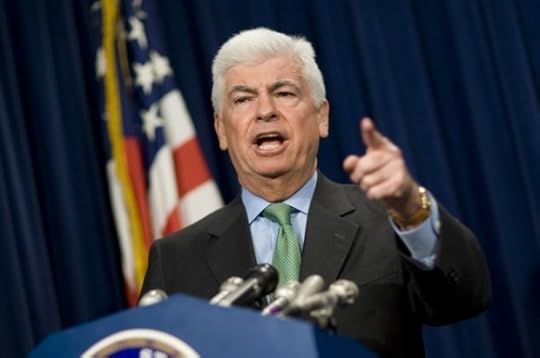
Chris Dodd's farewell address to the Senate offers a perfect encapsulation of the mindset of the Senate institutionalist. Dodd, the son of a Senator, was literally reared in the folkways of the institution. No amount of evidence can persuade him that the rules of the place don't work. The Senate cannot fail, it can only be failed. Here is is urging his colleagues not to reform the filibuster:
I appreciate the frustration many have with the slow pace of the legislative progress. And I certainly share some of my colleagues’ anger with the repetitive use and abuse of the filibuster. Thus, I can understand the temptation to change the rules that make the Senate so unique—and, simultaneously, so frustrating.
But whether such a temptation is motivated by a noble desire to speed up the legislative process, or by pure political expedience, I believe such changes would be unwise.
We one hundred Senators are but temporary stewards of a unique American institution, founded upon universal principles. The Senate was designed to be different, not simply for the sake of variety, but because the framers believed the Senate could and should be the venue in which statesmen would lift America up to meet its unique challenges.
As a Senator from the State of Connecticut—and the longest serving one in its history—I take special pride in the role two Connecticut Yankees played in the establishment of this body.
It was Roger Sherman and Oliver Ellsworth, delegates from Connecticut to the Constitutional Convention in 1787 who proposed the idea of a bicameral national legislature.
There are a couple common delusions here. The first is that a routine supermajority requirement is part of the design of the Senate. This is not true. It evolved accidentally, and indeed, the Constitution specifies a few specific kinds of votes that should require a supermajority, suggesting that the rest should not.
The second is that it's okay to let the minority have a powerful weapon of obstruction, but the minority simply shouldn't use it. Dodd offers no explanation of why he thinks the minority would sometimes willingly allow itself to lose votes it could win. His implicit answer is that it happened in the old days -- when Dodd was a child and political parties lacked ideological coherence -- so it can happen again.
Dodd offers a prediction:
Our economy is struggling, and many of our people are experiencing real hardship – unemployment, home foreclosures, endangered pensions.
Meanwhile, our nation faces real challenges: a mounting national debt, energy, immigration, nuclear proliferation, ongoing conflicts in Afghanistan and Iraq and so much more. All these challenges make the internal political and procedural conflicts we face as Senators seem small and petty.
History calls us to lift our eyes above the fleeting controversies of the moment, and to refocus our attention on our common challenge and common purpose. ...
I am not naïve. I am aware of the conventional wisdom that predicts gridlock in the Congress.
But I know both the Democratic and Republican Leaders. I know the sitting members of the Senate. And my confidence is unshaken.
In theory, you'd think that Dodd's prediction would offer an opportunity to revise his beliefs. Cynics argue that allowing rules that require a party to ignore its own political self-interest is untenable. Dodd counters that the minority will, out of some grand sense of the national interest, choose to work cooperatively to solve national problems. If this fails to happen, Dodd will revise his views about filibuster reform, right?
The Gay Airport Security Threat
Fact: The Transportation Safety Administration is carrying out an intrusive policy of pat-down searches at airport security lines.
Fact: The Transportation Safety Administration does not discriminate on the basis of sexual orientation in its hiring.
Are you thinking what I'm thinking? No? Eugene Delgaudio is:
A conservative Loudoun County lawmaker says controversial airport pat-downs by the Transportation Security Administration are part of a "wide-scale homosexual agenda."
Eugene Delgaudio, a Republican representing Sterling on the Loudoun County Board of Supervisors, made the comments in a widely distributed e-mail sent in his capacity as president of the conservative nonprofit Public Advocate of the United States.
In the e-mail -- reported by WUSA9 -- Delgaudio also says the TSA's non-discrimination hiring policy is "the federal employee's version of the Gay Bill of Special rights."
"That means the next TSA official that gives you an enhanced pat-down could be a practicing homosexual secretly getting pleasure from your submission," he wrote.
The best of right-wing libertarianism meets the best of right-wing social conservatism. Fusionism!
The Little Emirate and the World Cup
[Guest post by James Downie]
Today, the talk of the soccer world is Barcelona’s sublime 5-0 destruction of Real Madrid. Come Thursday, though, for a brief moment at least, international soccer will grab the spotlight once again, as FIFA announces the hosts for the 2018 and 2022 World Cups. Political leaders and celebrities—from David Cameron to Elle MacPherson—from eleven prospective host countries have descended on FIFA’s Geneva headquarters for last-minute lobbying of the 22 executive committee voters.
There are many intriguing storylines around the 2018 bids: England’s push for its first World Cup since 1966, the Netherlands-Belgium joint “green World Cup” bid, Spain and Portugal hoping to secure the tournament together even though their finances are far from secure. But, while the 2018 winner will just be whichever European country tickles FIFA’s fancy, the choice for 2022 will be of far greater importance.
Five countries are bidding for that tournament: the United States, Australia, Japan, South Korea, and Qatar. On paper, the United States should be the runaway favorite. Logistics are the key to pulling off a successful World Cup: South Africa was only barely ready in time for the 2010 tournament, and, already, officials have expressed concerns about Brazil’s preparations for 2014. The United States, by contrast, has the best facilities of all the candidates. The country is so well-prepared that FIFA has frequently designated it as a short-notice backup host for various smaller tournaments. As for profitability, again nobody can compete with the United States: The 1994 World Cup remains the best-attended in the tournament’s history, American stadiums would be able to charge higher ticket prices, and the country’s immigrant make-up would guarantee support for all 32 participating countries. McKinsey & Co., enlisted by FIFA to evaluate each bid’s revenue potential, gave the U.S. a perfect score of 100 percent, far ahead of its 2022 competitors.
Nonetheless, Qatar has managed to make a surprise move ahead of the United States and Australia (which has another strong bid) in some bookmakers’ odds. Qatar’s bid is objectively weak: The nation of two million—it would be the smallest ever to host a World Cup—has little infrastructure to speak of. What’s more, FIFA’s technical report on the 2022 bidders has deemed Qatar’s summer heat (with an average temperature of 106 degrees) “a potential health risk.”
How, then, has Qatar become a strong contender to host? Some observers argue that the Middle East deserves a World Cup. But the real answer, as with many questions pertaining to FIFA, is money. Qatar hopes to get around the odds against it by promising to go on a spending spree. It says it will devote $50 billion to new infrastructure (including an entirely new metro system), plus twelve new stadiums around the capital of Doha. (World Cups typically take place in ten to twelve cities in the host country.) Acknowledging that the stadiums will be of little use after the tournament ends, Qatar has pledged to dismantle those structures and use the materials to build stadia in other developing countries. It has also promised all its stadia will, with air-conditioning, be 30-40 degrees cooler than it is outside. (Still, there’s the problem of outdoor screening areas and other fan accommodations; as FIFA executive committee member Chuck Blazer said, “[Y]ou can’t air condition an entire country.”)
Qatar has also signed up a host of managers and retired stars to lobby for its bid. French legend Zinedine Zidane, for example, is featured in a TV ad campaign running on Geneva television. (Zidane stands to earn almost $15 million from the Qatari bid committee if Qatar is awarded the cup, and $3 million even if they are not.) Other big names, such as former Argentina star Gabriel Batistuta and current Barcelona manager Pep Guardiola, who were lured to Qatari clubs with big contracts in the twilight of their playing careers, are now on the emirate’s bid payroll, too.
That Qatar is throwing around so much money (and promises of more of it) is worrisome, given how vulnerable FIFA is to the lure of cash. To host a World Cup, a country has to submit to a “comprehensive tax exemption” for FIFA’s staging of the event, and in some cases even agree to waive any prosecutions for money-laundering. Senior FIFA officials, including North American confederation president Jack Warner and Brazilian confederation president (and 2014 World Cup chair) Ricardo Teixeira, have skimmed money off of teams and leagues in their regions. Two years ago Swiss investigators put together a 200-plus page complaint detailing hundreds of cases in which FIFA officials took bribes. And even World Cup voting is vulnerable to corruption: Just recently, two members of the committee voting on the 2018 and 2022 bids were caught by London’s Sunday Times offering to sell their World Cup votes. FIFA has since suspended the pair, but other voting members were then implicated in past bribery scandals by the BBC’s Panorama program.
While no Qatari officials have been linked to any scandals yet, the chairman of the country’s bid has already had to deny reports that Qatar promised to trade votes with the Spain/Portugal 2018 bid. Anti-corruption watchdog Transparency International, noting the misconduct and rumors surrounding Thursday’s vote, asked FIFA to postpone it—but the group declined. So the soccer world will be watching Geneva to see who wins out: a country (be it the U.S. or another contender) actually able to host the 2022 tournament, or the one willing to flash the most money in the face of an organization perpetually dazzled by it.
FIFA WATCH >>
McCain vs. The Constitution
[image error]
Howard Kurtz interviews John McCain:
“The Marine commandant is opposed to [dropping] Don’t Ask Don’t Tell. I know for a fact the other three service chiefs have serious reservations.”
As for their superiors, McCain casually mentions the commander in chief and defense secretary, “neither of which I view as a military leader.”
The message: John McCain may have lost his chance to command the U.S. military, but he’s still practiced in the art of trench warfare.
Uh, isn't the message that John McCain does not respect civilian control of the military?
Egomaniacal Jerk Endorses Fellow Egomaniacal Jerk
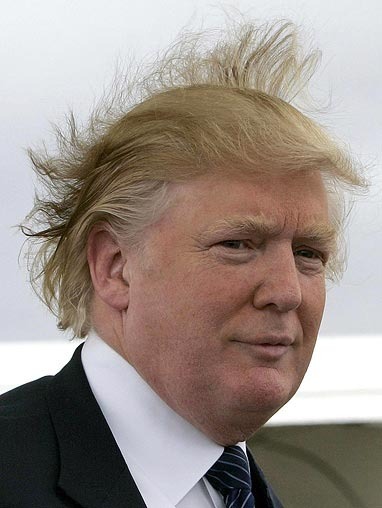
Mike Leach is a football coach who was fired by Texas Tech because he punished a player for reporting a concussion by forcing him to stand in a dark equipment shed. Naturally, Donald Trump wants to get him another coaching job:
Donald Trump sent a letter to University of Miami president Donna Shalala this week, suggesting the Hurricanes hire the former Texas Tech coach to lead their football program.
Trump wrote the note on a copy of The Palm Beach Post's Sunday sports section, scrawling it over the newspaper's story announcing Randy Shannon's firing.
University officials confirmed the authenticity of the note Wednesday.
"You made a big mistake when you did not take my advice and hire Mike Leach of Texas Tech ... and you can now get him for the right price," Trump wrote to Shalala.
I'm not sure what explains this, other than some natural affinity that horrible people have for each other.
Jonathan Chait's Blog
- Jonathan Chait's profile
- 35 followers

