
Jonathan Chait's Blog, page 143
December 8, 2010
&c
-- Changes at The New Republic.
-- Mark Zandi on the tax cut deal.
-- Even Dubya's dad is urging Republicans to ratify the START treaty.


Blasphemy In The Cult Of Reagan
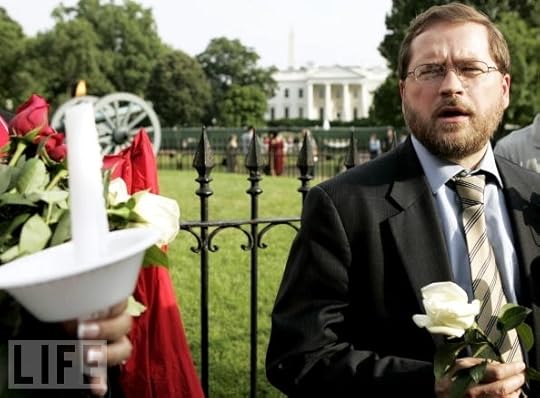
Americans for Tax Reform has always been Ground Zero of the Ronald Reagan cult, with ATR President Grover Norquist making it a personal mission to name as many airports, schools, bridges, battleships, and anything else after Reagan as humanly possible. So it is odd to see ATR belittle the Bowles-Simpson deficit reduction plan by noting, "It was bad enough when President Reagan got tricked into a 3-1 spending-tax ratio in 1982."
Tricked? As if he were some dopey, senile ex-actor? How has this sinister liberal myth penetrated the temple of the Reagan cult?
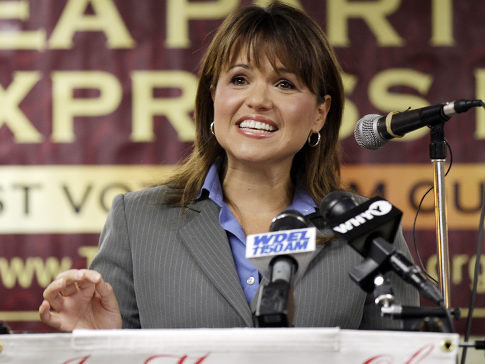
Christine O'Donnell Opposes Tax Cut Deal, Japanese Militarism, Cancer
You know, I think she has a point here:
Christine O'Donnell on Tuesday compared the "tragedy" of extending unemployment benefits to Pearl Harbor and the death of Elizabeth Edwards.
"Today marks a lot of tragedy," O'Donnell, the Tea Party-backed GOP Senate candidate from Delaware, said Tuesday night during an appearance in Virginia.
"Tragedy comes in threes," O'Donnell said. "Pearl Harbor, Elizabeth Edwards's passing and Barack Obama's announcement of extending the tax cuts, which is good, but also extending the unemployment benefits."
Today! TNR Livestream With Noam Scheiber and Richard Just
In the newest issue of TNR, on newsstands this week, senior editor Noam Scheiber has an article that takes readers inside Obama's shaken and divided White House, asking whether its "failings could unravel Obama's re-election chances":
Team Obama may also be insufficiently attentive to the left, which has erupted over the tax-cut deal. The Friday after the midterms, a senior administration official convened a meeting with representatives of several dozen prominent progressive organizations. When the meeting began at 9 a.m., the official announced the discussion would have to be quick as the White House needed the room by ten o’clock. “The White House is having a meeting with all its important allies, and the initial message is, ‘We couldn’t get a room for more than an hour,’ ” says one participant. “You’ve got to be shitting me.”
Today at 3 p.m. EST, join Scheiber and TNR executive editor Richard Just here for a livestream discussion of the article, the White House in turmoil, and Obama's prospects in 2012.
LIVESTREAM >>
Fiscal Responsibility Is Risky
[image error]
John F. Harris and Alexander Burns channel Mark Penn and argue that Democrats shouldn't tax the rich:
In a CBS poll conducted last week, 53 percent of adults said they wanted the tax cuts extended for middle-class households, versus 26 percent who said they wanted all the cuts extended. In late November, an Associated Press/CNBC poll pegged those numbers at 50 percent and 34 percent.
At second blush, however, polling suggests some more nuanced answers about why an old-fashioned Democratic economic class conflict over sticking it to the rich never materialized during Obama’s first two years – no matter how much the liberals in Obama’s base might have wanted it.
Polls show the most appealing option is protecting middle-class tax cuts. But the second most appealing option is protecting tax cuts for all – what Obama and Republicans just agreed to do for two years – and that makes it a pretty close call, politically.
Well, George McGovern was the second-most appealing option in 1972. I'm not sure what that tells us.
It's certainly true that people favor tax cuts for themselves far more strongly than they oppose tax cuts for the rich. What does that tell us? It tells us a couple things. First, fighting against tax cuts for the rich is only really a popular issue if you can argue that the other side is blocking your tax cuts so they can give a tax cut to the rich instead. Sadly, Democrats didn't try to make that argument. They ought to do it in 2012.
Second, most people are pretty bad at thinking in terms of trade-offs and limited resources. That's why tax cuts for the rich as an abstract proposition don't provoke much outrage -- people don't get why they're bad unless you point out that they imply higher taxes for other people or less spending on popular programs. But almost any deficit-reducing proposal is unpopular. Most are intensely unpopular. Raising taxes on the rich is unusual in that it's an actually popular way to reduce the deficit, even though the intensity of support is weak and the intensity of opposition is white hot.
So if you want to apply Harris and Burns' logic to every proposal to bring revenue in line with outlays, you'll conclude that they're all risky because they're all either unpopular with the public as a whole or they arouse intense opposition from a well-organized interest group. So then you can follow the George W. Bush governing model of following the fiscal path of least resistance, or at least draw the line on issues where the public supports you.
Richman, Poor Man

Commentary's says opponents of tax cuts for the affluent have had an "intellectual collapse:
[I]t is not too soon to note the intellectual collapse of one of Obama’s principal arguments. For the past two years, he castigated the Bush tax cuts as breaks for “millionaires and billionaires,” even though the across-the-board cuts primarily benefited people in the lower brackets (the proportion of millionaires and billionaires among taxpayers is one-third of 1 percent, according to the latest IRS statistics). In order to raise any real money from “millionaires and billionaires,” Obama had to define them as individuals making one-fifth of a million dollars (one-fourth in the case of couples) – because there were 10 times as many people in that group as real millionaires, and therefore (applying the Willy Sutton principle of public policy) that was the place to go.
The White House ended up opposing a “compromise” under which taxes would be raised only on real millionaires, since there was not enough money in that group to make that resolution sufficiently remunerative for the government. More than taxing millionaires and billionaires, the White House really wanted to tax the non-millionaires. When that proved impossible, the White House went in a different direction.
In contrast, the Republicans were unified around a set of principles easier to explain and defend: don’t raise taxes in a recession; don’t increase taxes on employers if you want more employment; don’t ask the public, which is fairly crying out for you to cut spending, to send you $700 billion more to spend. These principles are unlikely to be proved wrong in two years.
An intellectual collapse would mean that economists had come to agree with the Republican view that the 1993 Clinton tax hike destroyed the work incentive for the rich and dampened growth, and that the Bush tax cuts sparked a wave of rapid job growth from 2001-2010. That, uh, hasn't happened.
Now, it's true that rich people care more about the issue of tax cuts for the rich than anybody else does, and their pressure on key Democrats led the party to agree to an extension of the Bush tax cuts. By "intellectual collapse," Richman means "political collapse." His confusion between the two concepts is telling.
Republicans Think Obama Agrees With Them
I understand why liberals are so angry about the tax deal, despite the fact that President Obama won far more economic stimulus than he gave away in upper-class tax cuts. It's the culmination of a huge blown political opportunity. But the conservative glee is, on the other side, bizarre. The Republican spin is that Obama has given up on his economic strategy and embraced the Republican approach.
Here's Karl Rove gloating that Obama gave Bush's supply-side tax cuts the thumbs-up:
The fact that these have been identified as right policies by an administration that has [had] a knee-jerk response that if Bush promulgated it, we have to be against it — it’s a recognition of how sound these policies are and how necessary they are
Identified as right policies by Obama? Here is what Obama said as his press conference:
I’m as opposed to the high-end tax cuts today as I’ve been for years. In the long run, we simply can’t afford them. And when they expire in two years, I will fight to end them, just as I suspect the Republican Party may fight to end the middle-class tax cuts that I’ve championed and that they’ve opposed. ...
the fact of the matter is the American people already agree with me. There are polls showing right now that the American people, for the most part, think it’s a bad idea to provide tax cuts to the wealthy. ...
I’ve said before that I felt that the middle-class tax cuts were being held hostage to the high-end tax cuts. I think it’s tempting not to negotiate with hostage-takers, unless the hostage gets harmed. Then people will question the wisdom of that strategy. In this case, the hostage was the American people and I was not willing to see them get harmed.
I really don't see how this could be more clear. Explicitly comparing a policy to a ransom payment is not what we call an endorsement, unless gnized the Rove thinks that the Reagan administration's arms-for-hostages deal in the 1980s was a public recognition that U.S. reconized the need to qualitatively upgrade the Iranian military.
Likewise, John Podhoretz and the Wall Street Journal editorial page exhult that Obama is utterly changing course:
Mr. Obama has implicitly admitted that his economic strategy has flopped. He is acknowledging that tax rates matter to growth, that treating business like robber barons has hurt investment and hiring, and that tax cuts are superior to spending as stimulus. It took 9.8% unemployment and a loss of 63 House seats for this education to sink in, but the country will benefit.
In this sense, the political symbolism is as important as the policy. Mr. Obama is signaling that businesses must be encouraged to make profits again so they can hire more workers, that "the rich" he so maligns should be able to keep more of what they earn, and even that wealth built up over a lifetime shouldn't be confiscated wholesale at death. In policy if not in Presidential rhetoric, class war and income redistribution are taking a two-year holiday.
A two year holiday? Obama is preserving the same policies that are already in place! Do they really not realize that the Bush tax cuts have been in effect the last two years? I've seen some Republicans attempt to wave away this fact by suggesting the fact that they're being phased out causes "uncertainty" and therefore cancels out the massively positive incentive effect that supposedly has been in place since 2001. But they're still being phased out, so the policy is no less uncertain than before, the only change is the timing of the uncertainty.
I don't know if this is a pathetic attempt at spin or merely a total lack of understanding as to what Obama's policy goals actually are. I lean toward the latter. Look at this logic from Podhoretz:
How to explain the extent to which Barack Obama moved toward a Republican position on the Bush tax cuts he clearly detests, especially considering a major, major cave-in on estate taxes? It can’t be because he so wanted the extension of unemployment benefits that he gave in over and over again. Nor can it be because he was so desperate for the one-year lowering of the payroll tax.
Why would they be paying a ransom to terrorists? It can't be because they want to release the hostages!
December 7, 2010
Obama's Deal: A Huge Win (Or Maybe A Major Defeat)
First Read makes a great point -- in pure dollar terms, the Republicans got way less out of the tax deal than Democrats did:
Despite being billed as a great debate over the Bush tax cuts, the struggle between President Barack Obama and congressional Republicans appears to have ended with an extension of the 2001 and 2003 tax cuts representing only about 37 percent of the total cost of the agreement Obama announced Monday night.
And keep in mind, most of that 37% is for families making less than $250,000 a year. In pure numeric terms, the vast majority of the money in this deal is for things the White House (and most Democrats) actually want.
How did Democrats get a deal like that? Ezra Klein's source confirms what I speculated without any information -- Republicans love them some rich folk. They're willing to bargain away a lot to help the very rich:
For one thing, the things [Republicans] wanted were things they really, really wanted. A number of sources with direct knowledge of the negotiations have fingered the estate tax as the major player in the size of the deal. "Republicans were extremely eager to get benefits for the top tenth of a percent of Americans," says one senior administration official.
The only thing that can overwhelm the GOP's partisanship is its overwhelming desire to increase the incomes of the top 1%.
Like I've been saying, however, this doesn't mean Democrats got a good deal. It all depends on how this story ends in 2012. The White House won a pretty substantial amount of stimulus, and a bipartisan agreement that shows its centrist bona fides. (Plus a free set of luggage!) Those things both increase the chances that Obama will win reelection.
But the deal won't be a good one unless it really was a tactical retreat, and Obama fights to phase out the upper-bracket tax cuts. It won't require much fight -- all he needs to do is veto bills that extend the tax cuts, which is way better than having to muster majorities or super-majorities in two houses. That would be rational, it would be good politics and good policy, and if they do it this will be a huge win. It will also be the opportunity to bring back the liberals who are currently furious at the administration. If they decide to cut another deal in 2012, then this will be a huge policy defeat. I don't expect that, but we'll have to see what happens.
TAX CUTS >>
George Voinovich, Fiscal Chicken Hawk
[image error]
My friend Dana Milbank has an encomium to retiring Senator George Voinovich, Deficit Hawk:
What has lighted Voinovich's fuse is the legislature's utter inability to do anything about the looming debt crisis. As the lame-duck Congress draws to a close, the only debate is about whether to add $4 trillion to the national debt (as the Republicans' tax-cut plan would do) or only $3 trillion (as the Democrats' plan would do).
"I'm voting against everything," declared Voinovich, one of the last of the old-school deficit hawks.
I'm willing to stipulate that Voinovich disagrees with his party's direction and that the deficit would be lower if Voinovich could rule by fiat. That said, Voinovich's record is simply not that of a deficit hawk. He did vote against the 1999 Republican tax cuts. But then he voted for the larger 2001 Bush tax cuts. He voted for the Medicare prescription drug benefit. He voted against the deficit-reducing Affordable Care Act, and at no point seems to have offered support in return for strengthening the cost-saving provisions.
He did have a moment in the deficit hawk sun by briefly opposing the 2003 tax cuts, but that proved ineffectual, as I wrote at the time:
Earlier this year, it appeared the moderates had dealt a serious blow to Bush's tax cut when they voted to restrain its ten-year cost to $350 billion rather than the president's preferred $726 billion. Perhaps the most prominent advocate of this plan was Ohio Republican George Voinovich, who had made his name as a deficit-hawk mayor and governor and had voted against a $792 billion GOP tax cut in 1999. In a recent appearance on NBC's "Meet the Press," Voinovich spoke at length about the growing deficit and asserted that further tax cuts will "undermine our economy instead of stimulating it." By this logic, he should have opposed any tax cut. But, after yet another soliloquy against deficit-financed tax cuts, he concluded, "So the point I'm making is that this three hundred fifty billion dollar package is a responsible package." In fact, the point he made suggested just the opposite. Voinovich's incoherance undermines his self-proclaimed principles.
The other fatal flaw in the position embraced by Voinovich and fellow moderates is that the condition they demanded--holding the tax cut to $350 billion--meant essentially nothing. This is because in recent years the GOP has perfected the art of rapidly phasing in and phasing out tax cuts in order to lower their official costs. The 2001 tax cut, for instance, delayed implementation of many tax cuts and ended others abruptly. This year, Senate Republicans again made full use of such gimmickry, passing a "$350 billion" tax cut that, realistically accounted for, would drain perhaps as much as $1 trillion from federal coffers during the next ten years. Unsurprisingly, arch-conservative Tom DeLay gladly acceded to the "$350 billion" ceiling, explaining to The New York Times, "Numbers don't mean anything."
Take its most obvious gimmick: the decision to have the dividend-tax repeal end after just four years. Voinovich, pathetically, says this will "force us to look at what we have done and make us study whether it has an impact on the economy." In fact, it will do no such thing: The only purpose of the phase-out is to keep down the apparent cost of the tax bill; once the dividend repeal is in place, Republicans will argue overwhelmingly that allowing it to expire would constitute a "tax increase."
So basically Voinovich cooperated with every major bill to increase the deficit, and opposed the most important effort to curtail it. He is widely described as a deficit hawk, and I assume he must be criticizing the GOP's tax cuts uber alles approach off the record to the media in order to earn this label. What counts is how he voted, and Voinovich voted to make the deficit bigger. And that is a big part of the story of the Republican moderates -- overwhelmingly, they have simply lacked the guts to put their principles into action.
Torture Chambers
Jeanne Cummings has a really interesting story about local Chambers of Commerce chafing at the U.S. Chamber of Commerce's staunch pro-Republican agenda:
The U.S. Chamber of Commerce is under fire from some local chambers over its hard-hitting $75 million ad campaign to elect a Republican House, with dozens of hometown groups distancing themselves from the effort and a handful even quitting the national group in protest.
“We were getting pounded. We felt here, in Central Pennsylvania, that the ads they were running were not professional ads,” said David Wise, president of the Chamber of Business and Industry of Centre County, which is considering dropping its national membership. “This was not a unifying event. It was divisive.”
More than 40 local chambers issued statements during the midterms distancing themselves from the U.S. Chamber’s campaign — including nearly every major local Chamber in Iowa and New Hampshire, key states in the presidential campaign.
Other chambers plan to take the extraordinary step of ending their affiliation with the U.S. Chamber, including The Greater Philadelphia Chamber of Commerce.
The U.S. Chamber of Commerce has been walking a bit of a tightrope. Its lobbying clout derives in large part from the perception that it's simply the national equivalent of the local Chamber of Commerce -- which is to say, the most appealing image of small, practical, non-ideological business. But the Washington organization is primarily run by professional Republicans, and it operates mainly as an arm of the party.
Some businesses withdrew from the Chamber last year in protest of its recalcitrant opposition to any bill to mitigate climate change. (It's not as if unchecked carbon emissions are good for business.) How long the Chamber can continue walking the tightrope of using the credibility of local Chambers of Commerce to leverage a hard right agenda is an interesting question.
Jonathan Chait's Blog

- Jonathan Chait's profile
- 35 followers

