Polly Campbell's Blog, page 30
December 4, 2013
Are You Looking for the Perfect Gift? Try this.
 My husband gave me one of the best presents ever at Christmas three years ago.
Our daughter was four and I was burned out from cooking, and playing princess and picking up underpants and headbands and holding conversations through the bathroom door.
That Christmas, instead of getting me perfume, or fancy jewelry, or a blender (which I was told later was on his A list of possibilities. Er, he made the right call), he gave me 24-hours off and a night in a beautiful downtown hotel — alone.
He created an experience for me with a love note I found when I unpacked, and a People magazine, and a piece of good chocolate. I felt well-loved and came back relaxed and restored.
Even today, years later, I feel better just thinking about the experience of it all. Those lingering good feelings are part of the reason most people, 57 percent, according to a study in the journal of Personality and Social Psychology, say they’d rather make an “experiential purchase” rather than buy a material one.
According to two other surveys by Leaf Van Boven and Thomas Gilovich, our experiences make us happy long after the event is over because we continue to think about them, assign meaning to them and reflect and reinterpret the good feelings. As a result, the good feelings last long after the material items we buy wear out.
Are you looking to give the perfect gift this holiday season? Well, take a pass on the fruitcake and consider creating an experience for the one you love.
Choosing the Right Experience
One year my nephew got a fishing weekend with his grandfather – those two still talk about it. For another gift, I took my husband Mr. J to a comedy show of a comedian he loves, which was a blast. And, we also had some uninterrupted time together which meant a lot to both of us. Last year, my sister gave my mother, who is an artist, a class at a glass blowing studio, so she could try something new.
In every case these experiential gifts worked because they took into account the preferences and desires of the person receiving the gift.
Here are some things to consider when creating your own gift experience:
Customize the experience. Think about your loved one, what they care about, what matters to them, their schedule, their desires and create an experience that they can appreciate.
In other words, my husband knows better than to send me to a WWE event, but after he gave me that quiet evening in a hotel, he was the hero.
Get creative, and cost-effective. Make a special home-cooked meal with his favorite foods and music playing in the background. Or schedule a lunch with your mom. No kids, no husbands, just go to lunch with your mom and enjoy the time together. If your son loves astronomy, take him out to view the stars at a nearby science museum or observatory. Often there are volunteers on-site helping amateur astronomers view the cosmos.
Or, write down 20 of your daughter’s favorite things to do and throw them in a hat. Let her pick out five of those things and then spend the day together doing them. You don’t have to go big and fancy to have a great experience.
Don’t go overboard. Make sure you don’t overspend or over commit your loved one. For example setting up a weekend trip isn’t going to be great if she has to figure out the childcare and time off from work and how to afford the other details to make it happen. Don’t give plane tickets, if you can’t also pay for the hotel room.
I would freak out, for example, if my husband committed me money-wise and time-wise to a big trip that we hadn’t budgeted for. Or one where I needed to juggle work and kid schedules before I could leave. Those decisions and tasks we need to take on together. But he knows this, because he knows me.
Again, keep the interests and concerns of the person you are creating the gift for firmly in mind, if they don’t like big surprises don’t give them one. In this case, choose an event that they can schedule a time that works for them. If they love you to handle the details, then plan the event complete with childcare and activity from start to finish.
When you take time to consider the person you love and the reason they mean so much to you, you’ll know just what to do to create a special experience.
Creating a meaningful experience is about engaging in life and with each other. It is more powerful than anything you can buy and will add meaning and memory for years to come.




December 2, 2013
How Our Beliefs About Money Keep Us Poor
 I’m paying the bills today and thinking about the cost of the present I just ordered from the catalogue and how much the cat food for my geriatric, diabetic cat is going to run me and I’m starting to feel stressed. Those old beliefs about money are rising up on their hind legs again, threatening to maul me with feelings of lack.
At some point a long time ago, I absorbed the belief that writers don’t make any money. Of course I know plenty who do. Many who pay their bills, live in comfortable homes, and even take a vacation now and again – and I am one of them.
But, for decades I’ve held an unconscious belief that sabotaged my real-world success. My belief was this: I could never do the work that I love to do, the work that I’m passionate and be financially secure.
That mindset caused me to pick the work over the wealth. I figured as long as I was happy and doing good work, I’d have enough money, but nothing more. That belief, like all the notions we hold, created tangible results that kept me from every getting ahead.
Every time I would get the big job, or finish up the lucrative project, business would dry up. This created a lifestyle of enough, and I did live within my means, but there was nothing left over. I felt worn living month-to-month. I had big issues about money and I needed to deal with them if I was ever going to get ahead.
How Ideas About Money Keep Us Trapped
I’m not the only one, numerous studies by Kathleen Vohs and others indicate that just thinking about money causes us negative feelings in most people. We have this weird psychological connection to money — kind of like one with a toxic friend that we don’t want to be with but can’t stay away from – that causes us to become a bit anti-social, less likely to help others and do other things that make us unhappy when we think about our finances. Though most of us value philanthropy and freedom – our beliefs about money often keep us worried and trapped rather than living close to those values.
When I started to identify that it was my belief about money – how I thought about that little green wad of ones stuffed in my purse – that was causing all this stress, I decided to change it. When we can recognize that it isn’t money, but our thoughts about it that can be problematic, we can take a new approach that will help us find peace even while paying the bills or buying the presents.
Here are three quickies you can use to immediately vanquish the dollar demons when they crop up. I know because I use them myself.
1. Celebrate paying the bills. The roof began leaking just before winter a couple of years ago and I was distraught. We covered the cost with our vacation money and a small loan. On the day the roof was done, my husband took me outside, put his arm around me and looked up. “Well, there it is,” he said. “Enjoy your vacation.”
And in that second something shifted. Though, it was a bummer we had to buy a roof, it was so great that we had one. A roof over our head, a home. A warm, safe place to live and when I realized that — gratitude flowed.
When I was young and just starting out there were many times when I worried whether I’d be able to pay my bills. Now, I celebrate that I can pay them each month. The shift in mindset has eased my love/hate relationship with the mighty buck.
2. Buy something for somebody else. For years I felt constricted around money. I was careful not to overspend or do anything extra. I also stopped helping others if it cost anything more than my time. And I felt crappy about that.
Not anymore. I still operate from a budget, because security is one of my values, but now, sometimes I’ll leave a bigger tip than I need, or buy the coffee for a friend, or contribute to a cause we care about. It isn’t as though our financial situation has changed a great deal, but my attitude has. For me, the reason I appreciate money is because of the freedom and possibility it represents. I realized that I can experience those feelings at any time, no matter how much money I have in the bank.
This realization helped me to see money as a gift rather than liability. It lifted a weight and I felt more comfortable helping others out and giving some of it away. Then, amazing things happened. Not only did unexpected funds flow into my life, but I felt better about myself and my life.
Research from Dunn and Aknin at the University of British Columbia has shown repeatedly that people who give money or purchase gifts for others (even if it’s a small amount like $5) are markedly happier than those who don’t. In fact, researchers say “how people spend their money may be at least as important as how much money they earn.”
I absolutely get this now and it doesn’t take big bucks to make a difference. Just spare a little for someone else, and experience the good feelings that flow in. The practice will change your relationship with money.
3. Don’t buy now and pay later. Buying what we want, when we want it doesn’t make us as happy as holding off and anticipating the purchase, according to research from Fred Bryant and Loyola University. Anticipation is a huge factor in our well-being, and we tend to derive more satisfaction from anticipating the good things to come rather than satisfying every need. So put off that next big purchase. Live in the state of anticipation for a month or two. Then, if you still decide to buy, you’ll be clear it’s something you truly want and you’ll feel good just thinking about it.
This holiday season, instead of getting wrapped up in stress about all the expenses, challenge yourself to understand the beliefs you hold about money. Once you know what they are, you can change how you think and that will change your bottom line.
Next up: Wednesday, check out my post on the one gift everyone will want this holiday season.

November 27, 2013
Thanks Giving Graces from The Grateful Table
 Thank You. It’s a simple phrase. Sometimes a prayer. Sometimes a love note. Always, a noticing of the goodness.
Go looking for the gratitude in your life. Call it out. Allow the emotion of Thanks Giving to wash over you. Experience it. Be grateful for your breath. And the food. And the music. Be grateful for what is, no matter.
Instead of comparing your experience to something else, something bigger or better, just be grateful for what is and you will feel a shift as gratitude begins working in your life.
In honor of gratitude and Thanksgiving and the blessings in life, please enjoy more blessings, prayers and graces from some of the world’s greatest thinkers excerpted from the book: The Grateful Table: Blessings, Prayers and Graces for the Daily Meal by Brenda Knight.
All We Need Is Love
I will not wait to love as best as I can. We thought we were young and that there would be time to love well sometime in the future. This is a terrible way to think. It is no way to live, to wait to love.
—Dave Eggers
Food for the Soul
Flowers are sunshine, food, and medicine to the soul.
—Luther Burbank
West with the Night
And the night of darkness
And the dawn of light,
Meeting, joining one another,
Helpmates ever, they.
All is beautiful,
All is beautiful,
All is beautiful, indeed.
—From “The Navajo Song of the Earth”
Live Your Way to the Answers
Have patience with everything unresolved in your heart and to try to love the questions themselves as if they were locked rooms or books written in a very foreign language. Don’t search for the answers, which could not be given to you now, because you would not be able to live them. And the point is, to live everything. Live the questions now. Perhaps then, someday far in the future, you will gradually, without even noticing it, live your way into the answer.
—Rainer Maria Rilke
The Soul’s True Worth
You have not lived a perfect day, even though you have earned your money, unless you have done something for someone who will never be able to repay you.
—Ruth Smeltzer
Fields of Barley
For the Lord your God is bringing you into a good land, a land of flowing streams, with springs and underground waters welling up in valleys and hills, a land of wheat and barley, of vines and fig trees and pomegranates, a land of olive trees and honey, a land where you may eat bread without scarcity, where you will lack nothing, a land whose stones are iron and from whose hills you may mine copper. You shall eat your fill and bless the Lord your God for the good land he has given you.
—Deuteronomy 8:7–10
Blossom Where You Are
Every flower about a house certifies to the refinement of somebody. Every vine climbing and blossoming tells of love and joy.
—Robert Ingersoll
Catch Them If You Can
During difficult transitions, our natural tendency is often to contract and grow rigid. In this state we seem to only be able to focus on the negatives. We think about the despair and torment of the death of a loved one, but not the wonderful moments spent together. We think of the heartbreak of a relationship ending, but not of the exhilaration and freedom of being unattached. We might even scold our loved ones, or our friends, or coworkers for something minor or insignificant when we wallow in such negativity. But it is in these moments specifically that gratitude can be used to alter this way of thinking. Finding positives and accentuating them is the easiest way to turn those proverbial frowns upside down and gray skies back to blue. Try catching someone doing something right for a change, not something wrong. Giving praise for a job well done lifts all parties involved and is the easiest way to say, “Thank You,” without actually having to say it.
—Brenda Knight
Philosophy 101
Gratitude is not only the greatest of virtues, but the parent of all the others.
—Cicero
Giving Yourself Permission
I’ve permitted myself to learn and to fail with some regularity. And that is probably the one thing I was given, and that I’m still grateful for.
—John Malkovich
Excerpted from The Grateful Table: Blessings, Prayers and Graces for the Daily Meal by Brenda Knight, 978-1-936740-56-7, $ 15.95, published by Viva Editions, www.vivaeditions.com 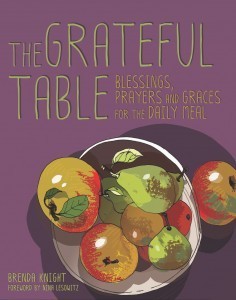

November 25, 2013
Gratitude, Blessings and Grace from The Grateful Table
 Every night , as we sit down to dinner, we share our goodnesses. Each one of us recounts something we are grateful for, something good that happened and in our own way, we give thanks. It’s a bit like a grace, I suppose. A recognition the things that are working, of what we have. An appreciation for the food before us and the people we share it with. When we gather for Thanksgiving too, we will start by Giving Grace. Then again, we will speak our gratitude. It’s never failed to make the meal, and the moment better.
Gratitude is like that. When you begin to notice the goodnesses, and give thanks, you find even more to be grateful for. I think that’s why this book “The Grateful Table, by my friend and publisher Brenda Knight spoke to me. Not only is it fascinating to read how some of our most famous personalities and deepest thinkers show grace and gratitude through their words, but it also reminded me again, of how we can all find moments, no matter what the circumstance, to be grateful.
In honor of Thanksgiving and in gratitude, please enjoy these words from The Grateful Table: Blessings, Prayers and Graces for the Daily Meal by Brenda Knight, today and in Wednesday’s post. –pc
From the introduction to The Grateful Table, by Brenda Knight:
I come from humble circumstances, and for this, I am grateful. My extended family lived on nearby farms in our sylvan part of West Virginia, so there were always aunts and uncles and cousins stopping by with an extra bushel of corn or some freshly canned tomatoes for a sit-down and a nice, long “chin wag.” It may have been my great-aunts and uncles, however, who most influenced my childhood mind. To these survivors of the Great War and the Great Depression, even modern conveniences such as ready-baked bread you could buy in a store were the stuff of amazement. They had to grow their own food, bake their own bread, make their own clothes. They were D.I.Y. when it was not fashionable but essential. Aunt Stella and Ida and Uncle Arthur were up with the sun milking cows and tending vegetable patches. Whatever needed doing to keep food on the table and a roof overhead, they did so, and happily. I can imagine my Uncle Delbert’s roar of laughter that butchery is now a trendy new hobby undertaken by hipsters in Brooklyn, Portland, San Francisco, and other foodie meccas. I had to help with the sausage-making and I have to agree with my forebears—butchering your own livestock is not glamorous (especially when some were your four-legged farm friends)!
I do think my aunties and uncles would appreciate the recent return to “the homely arts,” and not because of any cultural zeitgeist but for this simple reason—what you make with your own hands, you’ll appreciate more.
You see, they were grateful for the little things in life—nice weather, good health, an abundant harvest. I feel a sense of pride that my family also did a lot of “inner work” and were fairly accomplished. Aunt Stella was a great dancer and made lace the Etsy crowd would go crazy for. Uncle Wilber was a theologian and great orator—people would come from miles around to hear him preach. Pretty much everybody played piano or organ and all were avid readers who did not bat an eye when I started reading and never stopped. (I even managed to escape a few chores this way by disappearing inside a book and becoming oblivious to all else.)
My elders also said grace at every meal over food they had grown and cooked themselves, sometimes adding a poetic or biblical quote to the mealtime prayer. I learned to be thankful back then on the farm by listening to stories of hard times when folks “did without,” a rather stoic all-purpose phrase these Depression-era veterans employed to encompass the lack of food, very little money, no new clothes or shoes, and only hand-me-downs. When I think back to those stories, which seemed mythological to me, they were not complaining. Instead, my elderly relatives related these stories with humor and, surprisingly, gratitude.
I am writing this on Thanksgiving Day, after enjoying a bountiful meal shared with cherished loved ones. And for that, I am filled with gratitude.
I also learned from my dear mother Helen that you only get what you give. I remember well her tithing even when we were having hard times. She would not hear of skipping a week, and I witnessed her do without new things for herself. So, I too will share some of the proceeds from this book to those who might be in need of a helping hand.
Blessings, graces and prayers from the book:
Be Bigger
Life is a series of experiences, each one of which makes us bigger, even though sometimes it is hard to realize this. For the world was built to develop character, and we must learn that the setbacks and grieves which we endure help us in our marching onward.
—Henry Ford
Balancing Act
We also deem those happy, who from the experience of life, have learned to bear its ills and without descanting on their weight.
—Juvenal
Quiet Mind
Surely there is something in the unruffled calm of nature that overawes our little anxieties and doubts; the sight of the deep-blue sky and the clustering stars above seems to impart a quiet to the mind.
—Jonathan Edwards
By the Light of the Moon
As the moon brings sun to those turned from the light, the opened heart brings love to those struggling through darkness. It is important to remember here that the moon is not the source of light but a reflection.
—Mark Nepo
Excerpted from The Grateful Table: Blessings, Prayers and Graces for the Daily Meal by Brenda Knight, 978-1-936740-56-7, $ 15.95, published by Viva Editions, www.vivaeditions.com

November 20, 2013
Six Ways to Ease Holiday Stress Without Wine
 It’s that time again. We are about to embark on the Holiday Season, and I know several people who are already stressing about the fact that the season is so stressful. This year try these six tips to lower your stress level and raise your spirits during the next month and beyond.
1. Determine the basics and let the rest go. Decide who you are going to celebrate with and how. Pick a location and volunteer to bring mushy green bean casserole or whatever, or commit to doing the things that are most important to you and then let the rest ride. Too often we meddle, try to control, and add items we don’t actually want to do, to our to do list. Don’t do it. Commit to what you want, then let the rest go.
2. Accept what shows up. What if the parents fight or the turkey is too dry or grandma decides not to come? We spend our lives what-iffing, preparing for every outcome. We focus on managing situations rather than living them. This is amps up our stress. Most of what we worry about never happens anyway. So, this year, just be in the moment. Accept whatever comes. You don’t have to like it or dislike it. You don’t need to judge it. You don’t have to do anything at all. Just observe it. Notice it. Stop predicting, planning and projecting and just be present and you’re going to feel better. Plus, acceptance breeds appreciation and gratitude.
3. Act with compassion. Oddly enough, compassion is very self-serving. When you act with kindness, you will benefit in a big way, and so will crazy Aunt Edna and everyone else you share time with this season. If you can slow down long enough to extend empathy, to perhaps understand the experience of another, and to recognize that they may be stressed and difficult to deal with, but, still have this this deep need to feel valued – just like you do –it will help create a more peaceful, better feeling holiday. Really. We all just want to feel like we belong. We want to fit in. And the people who are the most difficult to deal with, often need our compassion the most. If you can meet each moment with compassion, even when piqued, you’ll be surprised how well others behave. It’s a game changer.
4. Get curious. People are fascinating. They are complex and each moment with them – even those people we’ve known forever – can be an act of discovery. Treat the holiday like this, as an exploration. Don’t take people for granted. Challenge yourself to learn something new about everyone at the table. To open to who they are and what they are saying without judgment, but as an archaeologist uncovering some secret key to a lost civilization. We tend to look at those we are familiar with as one dimensional. We focus on the flaws and miss their gifts. This year look for the gifts. Reacquaint yourself with the people you celebrate with. Don’t presume to know. Do this, and you’ll find greater meaning in the time you spend together and greater meaning in the holiday.
5. Change any traditions that no longer bring joy. Before the holiday sit down with your family and decide which traditions are meaningful and which can be eliminated. Often we outgrow our traditions, but keep them simply because we think it matters to the kids or the mother-in-law. If you find that the traditions are a source of stress or no longer important, hit delete. The holidays might be busy, but if they are filled with things that matter to you they don’t have to be depleting.
6. Give thanks. Seriously people. How many time have I said it? Gratitude is a life changer. Stop worrying about what might happen, and give thanks for the house it is happening in and the food that is in the oven and the paper plates you are using. Give thanks for the breath in your body, or the ability to smile, or smell, or love. Give thanks for the people you have in your life – those who are flawed and may be crotchety and challenging at times. Give thanks for those people who love you, who show up even when you are flawed and crotchety and challenging at times. Seek out the goodness and give thanks for it, often.
Follow these tips and start accepting whatever shows up with compassion, curiosity, and gratitude and you might just back yourself into a joyful holiday season.

November 18, 2013
Can You Give Up the Quest for a Happy Holiday?
 Should you invite his mom and dad, even though haven’t spoken since the divorce?
Which mashed potato recipe should you follow?
Paper plates or the good china? You want the ease of paper plates but your mom did give you the china…
What if Aunt Edna drinks too much, the turkey is too dry, or the cable goes out during the football game?
What if the holiday isn’t perfect?
Seriously, let’s all just get over it. If you invite actual people to your holiday dinner, you can also anticipate a bit of uncertainty, chaos even. But, we certainly don’t need to add more stress or drama by serving up a helping of unrealistic expectations.
Really want to make the holidays happier? Then, set the tables how you want, serve the meal when you choose, and invite whoever you feel like then Let. It. Be.
Stop Micro-Managing and Let it Be
Let be what will be. Let go all the judgments, expectations, and attitude. Lead with acceptance and compassion for yourself and others. Do this and the holiday will be interesting, authentic, and dare I say it, enjoyable, instead of a series contrived moments filled with disappointment when people don’t measure up to your expectations, or they diss your sweet potatoes.
Many of us attempt to create a great holiday by micro-managing details and people and place settings (yes, my husband has been the victim of this strategy). We try to control every outcome so that nobody feels left out or stressed out. We strive for really good, perfect even — instead of good enough, authentic and fun. And by doing all this we create a set of arbitrary rules and behaviors and expectations that we ourselves and our guests must live up to.
The Danger of Secret Expectations
Often, we even keep these expectations a secret – I mean people should just know that you always pass food to the left, right? And how dare you take a bite before I sit down. And seriously, do we really need to go into a discussion about how you feel about your ex, now?
While we are imposing our secret little judgments, we talk about the importance of coming together as family and friends to share time and food and gratitude. We talk about love. And we believe, deeply and sincerely, that family is the most important thing. Just as long as that family behaves, fosters pleasant mealtime conversation, chews with its mouth closed and doesn’t offer up any “liberal” views that will get the father-in-law going. At this meal, we are all going to be smiley, happy and grateful. And everyone, yes everyone is going to eat the Brussels sprouts without fuss. Dammit.
Sound fun? Of course not. Instead of enjoying the afternoon, we are vigilant, constricted, making sure the husband doesn’t say anything off color, checking off the Rules of Thanksgiving Comportment in our head, evaluating whether the expectations we’ve set for ourselves and others are being met.
Stop Trying for a Happy Holiday
This year, stop trying to make the holidays happy, stop trying to make the perfect meal, stop trying to make others get along – heck, the only thing you should be making is your favorite recipes (and that’s only if you want to) and be curious about whatever does show up. Be engaged, alive, grateful, open.
This year, let’s create a gathering that is interesting, meaningful. Let’s strive to stay aware and open; accepting and compassionate to whatever occurs. The result of all of this is you might actually have a good time no matter what happens.
Start by releasing all outcomes and expectations. Drop the rules. Let people be who they are. Let things unfold as they will and be open and present. Of course some crazy will come out. Don’t judge it, just notice, respond consciously and deliberately with compassion instead of reacting emotionally with anger or disappointment. The subtle shift will take the stress out of the day leaving you and your guests feeling better.
Wednesday, I’ll offer up some other tips to help you actually enjoy the holidays no matter how they turn out.
Photo by Stock.xchng

November 13, 2013
How You Can Help Create Connection
Having a sense that we matter here, that we belong, that we are a valued part of something bigger, a family, a group of friends, or people unified by a shared mission, a community is one of our basic needs. We strive for it. Our desire to belong to something motivates us, builds resilience and boosts our physical and mental health.
Without this sense of belonging we are less likely to persist, we have more stress and have less meaning in life. We just don’t do as well, says Stanford social psychologist Gregory Walton. And the times we have felt excluded or separate weigh heavy in our minds even as we move on to pursue other goals.
In Monday’s post I wrote about the research behind that need to belong and how to create that sense in your own life. But, it’s also important to help each other out here. In fact, one way to create a sense of connection in your own life is by reaching out to others.
My seven year-old Sweet P and I talk about this a lot. Of course she wants to fit in at school. But she is also clearly, adamantly herself. How do you belong and maintain your unique individualism?
The trick is to find the group that allows you to be who you are, as you are, one that share your interests and values. I don’t think belonging is about changing who you are to fit in. It’s finding the people who you fit in with and hanging with those guys. But it’s also about leaving room for others to do the same. About creating a place where everyone is valued for their unique individualism while still belonging to the whole. We can create that for each other and in turn, we all become better.
How to Help Other Feel Like They Belong
1. Encourage involvement. Everybody has a unique ability or talent or expertise, invite them to share it. When people join a group or a neighborhood or a family let them help. Let them bring something to Thanksgiving dinner. When you are sick as them to mow the lawn, or pick up the kid or bring a meal. Find ways for them to become a part, to get involved. Allow them to help and you will not only develop a connection that will aid your own growth, but you will be reinforcing that they are a valued contributor and an important member of the group. Nothing says belonging like that.
2. Listen and validate. You don’t have to agree with everything your husband says, or the ideas of the committee member on the PTC or the head of the church group, but you can allow them to be heard, by listening to their ideas and validating their experience. Validation is not an endorsement of their behavior, but it is recognition of the experience they are having. Everyone should be allowed their experience, and validation is a way to indicate “hey, I hear you; I understand where you are coming from.”
3. Allow for mistakes. Well, this is a no-brainer. We’re all going to blow it. In fact our imperfections are the one thing that tie us all together. Show your kids, friends and group members that nobody is cast out for an inadvertent mistake or screw up. Sure they need to own them, be accountable and fix them – but nobody needs to be ridiculed or disowned because they didn’t do it right. If you create an environment where mistakes are forgiven, you create a sense of belonging for every member. More than that, you foster creativity, innovation and growth.
4. Respect, accept, include. Don’t disparage or demean, interrupt or act with contempt. Don’t joke at another’s expense. Instead, solicit the opinions of the others you care about, accept the differences, and involve them in decisions and projects. Let them influence you and appreciate the differences, as well as, the things you share.
5. Reach out. There are so many people who are left out – excluded by illness, or finances or other life circumstances that make it hard for them to get involved. You can reach out to them. Write letters of support to a homebound friend, drop by food, offer to drive a senior to the doctor or grocery store, take by a holiday wreath as a gift to someone who needs a gift. Find little ways of giving to others and you’ll help foster that feeling that people are valuable, worthwhile and has something valuable to contribute – even if it’s a hug or thank you. We all have our struggles, by acting with empathy we can make sure that no one feels like they don’t belong.
When we actively work to connect and engage with others, we help them develop a sense of belonging in their lives and that goes along ways toward helping us to feel that connection in our own lives. That is the seed of meaning, peace, and resilience. And you know what, it just makes life more fun.

November 11, 2013
Where Do You Belong?
 At the top of the page, that one she printed out from the pc, it says in 18 point, pink letters: Form For Art Club. Meets Saturday and Sunday.
On the lines below are four, cramped little signatures from the club’s newest members — the girls who live in the neighborhood. One name is written with a backwards e, another nearly illegible from the 7-year-old scribe, then the precise penmanship of the older girl who lives down the block. All the names are there.
My seven-year-old started this club last weekend. Everyone wanted to join. And, at the end of the day when I tucked her in with her stuffed baby kitty and rainbow cheetah, she was reveling in her success.
“I was just so happy the club succeeded,” she said, though she pronounced it “seceded,” as in leaving the union . “I didn’t know. I thought maybe no one would want to join, but they all wanted to belong.”
Belonging is a Basic Need
Of course they did. We all do. Whether we are six or 60 we all just want to be a part of something. To be included. To be valued and loved. That need to belong is third on Maslow’s famed list of needs and recent research shows that when we feel like we belong our lives have greater meaning and less stress. We are more motivated and resilient and more likely to persist despite adversity. When we feel as though we belong we are healthier, happier, more powerful.
New research led by Nathaniel Lambert at Brigham Young University shows that when people feel like they fit in with others in a group, their lives have greater meaning – which is a good thing since meaning promotes emotional and physical well-being.
People who feel excluded, report finding less meaning in life. That can lead to depression.
Stanford University social psychologist Gregory Walton has studied this need to belong and developed a strategy that creates a sense of belonging to help people through difficult times. He calls it “belonging intervention.”
Instead of looking at negative events in life as something that happens to you and you alone, Walton encourages people to recognize that they are not alone. That they are part of this collective where others too are facing challenges. The coping strategy promotes a sense of connection by recognizing that really, when it comes to this life experience or parenting or divorce, or illness or whatever, we are all in this together. Bad things don’t happen to us because we are uncool or separate or bad or wrong. They don’t happen because we don’t belong to the “in crowd.” They happen because life is expansive and dynamic and changing and so you are you. You are a human being who belongs to the human race where we all experience challenges. You are a part, we are all connected.
This concept in spiritual terms is called non-duality, or oneness and it refers to this concept that we are all connected to each other and the divine or universal energy that is a part of everything. Nothing is separate. I like that. We all belong.
Finding Your Place
But belonging on Terra Firma is something that must be cultivated and nurtured. Most of us are part of some network or group or neighborhood or club. Take a minute to consider where you feel as though you belong. Are you part of a close family unit? Do you hang with colleagues at work? Are you part of a team or a troop, volunteer group, senior center, or neighborhood association? Do you meet the girls at the gym every morning? Are you involved with the PTC?
Then, if you feel as though you don’t have the kind of connection you’d like, a place where you really fit, start creating that in your life.
Join a club or volunteer group with a mission you believe in. Volunteer at the school or organization that is contributing to the community in a meaningful way. Take a class or participate in a group that is focused on art or books or bowling or another activity you enjoy and engage with others who share your interests. Help out at a youth group.
Seek out the groups and people that share you beliefs and attitudes. Share yourself, put yourself out there a bit and listen and connect with others. Too often, we stand along the sidelines waiting to be asked, hoping others will reach out to us, but our feeling that we are a part of something bigger, a group or an idea or a mission that is important is dependent on our participation. Our willingness to get involved.
And when you are feeling lonely or isolated, remember that everybody has challenges and struggles it’s not just you. You are part of all of this humanity; everybody belongs. We are all connected.

November 7, 2013
Fulfill your desires by living close to your values
 Can a clean house really contribute to a meaningful life and the happiness that comes from that? Sure can, but it all depends on what you value and how you fulfill those values.
Plenty of science supports the Bigwigs who say our deepest sense of happiness comes from living a values-based life. This means that we are happier when we live in alignment with the values that give our lives meaning. And, our desires help us do that.
Seems straightforward. You know what you value. You desire the things that help you live close to those values and when those desires are fulfilled – you are, waa laa, happy.
But, here’s the thing: I don’t think a lot of people know what they truly value anymore. And I think we’ve been taught that to desire anything, is selfish and wrong.
Our values are clearly influenced by our life experiences, how we feel and also how we were raised. They are influenced by our sense of right and wrong; our education and beliefs; by what our parents say; and by how we behave when life gets messy.
And, like anything, they can become outdated. We can outgrow our values as we change and grow. And, without even knowing it we lose sight of the values that truly guide our lives. When we don’t know what we value; or when we act out of alignment with our values, we feel off balance. Stuck. Out of sorts. Confused. And, to get technical, icky.
When you know what you value, you’re more likely to know what you want and need. Then, you can pursue those desires. The process – your life – becomes creative, energizing, inspiring. It becomes infused with purpose, meaning, and joy – even when you’re experiencing struggle.
Here is how you can uncover your values and desires.
>>Answer this one question. What matters most to me? There are no wrong answers. Don’t judge yourself. Just answer the question, on paper. Honestly. It’s about getting clear. And really seeing the life you’re creating as compared to the life you want to create. Value money more than your health, write it down. Value fun more than work. Make a note. This is about awareness.
>>Rank the things you wrote. Put a number one by the thing you value most today. Recognize that while your core values are likely to remain the same, their ranking may change from time to time. If you rank your health #5 on the list, for example, and then you’re doc says you need to lower your cholesterol, your health value may shoot to numero uno.
>>Now, evaluate how you support your top five. List a couple of the things you will do today to live in alignment with those values.
My family holds the second spot, behind my health. In keeping with that value we had a family dinner last night and I made lunch for my husband. I worked out and ate a salad for lunch in keeping with my number one health value.
Seem selfish to put my physical health in the first slot? Maybe. But, I realized real quick during a cancer scare that I couldn’t care for my family, do my work, or inspire others (according to my other values) in the best way if my physical body weren’t strong and healthy.
>>Leave room for variety. This isn’t about absolutes. And the way your values and desires play out in your life will shift and fluctuate as your life changes. There are myriad ways to live in alignment. But too often we say one thing when we’re doing another because we are unaware of what we are really doing. We are unconscious. We say we value our work, but gripe about it when we’re on the job. We value family, but spend more time at work than anywhere else. We say we value our health, but choose to eat foods that make us fat.
I still eat a hamburger from time to time, just not as often as I used to before balance and health became among my top values.
Be open minded and aware of all the creative ways you can pursue your desires AND live in alignment with those values.
>>Know the why. You’re more likely to get what you desire when you know why you desire it. Want more money? Why? Perhaps it’s because of the freedom and relief wealth will offer you – that is the why and freedom is the value behind the desire.
Want to lose weight? Why? Maybe because you believe a healthy body will help you live longer so that you can support your family and go on the adventures you desire. Perhaps then health and vitality is the value behind the desire for weight loss. Knowing the why behind what you want will supercharge your efforts to get there.
What do you value? What matters to you? What do you want? If you’re no longer sure sit down and run through the exercises above. When your desires and values align not only will your life take on greater meaning and joy, but you will soar toward your greatest desires, dreams and wishes. And en route, you’re likely to connect with your greatest purpose.
Photo by: Stock.xchng
Post originally ran in June 2012

November 4, 2013
Coming Through in the Clutch
 You’ve got to get the soccer jersey washed, pick up the ingredients for dinner, finish the proposal for work and get home in time for the kid’s piano lessons. Oh, and the bills are due.
Many of us have days filled with a random assortment of jobs and chores that keep our lives organized, but the pressure of trying to get it all done can keep us from performing our best. It also amps our stress and leaves us feeling that scattered, I-can’t-remember-what-I-was-just-about-to-do-next feeling.
In the last couple of weeks I’ve written about how to pare down that to do list to put more emphasis on doing the things that matter and keeping up on the essentials, while letting the non-essentials go.
Even then I know your list will be long. But there are several tips you can use to step up and deliver even under pressure and it starts by reaffirming what matters.
Knowing Your Values Can Help You Deal with Stress
Research by JD Cresswell, psychologist at Carnegie Mellon University indicates that when we are clear about our life values and reflect or affirm them we tend to feel more grounded and able to perform better during those times we feel pressured, or inadequate. We also become better problem solvers.
Getting clear and staying close to those values is also a way to live with greater meaning which prompts what Steven Weiss call values-based happiness. This is a sustainable happiness – it stays with us when we believe we are doing what’s important.
Affirming your values – remember these are the things that matter to YOU, not the things your mom or partner or boss say you should care about — also builds self-control, eases stress, and helps us to be more open to negative information so that we can learn from our mistakes, according to University of Toronto Scarborough psychology professor Michael Inzlicht who has studied the affect.
But how do you start? How do uncover the guiding principles of your life and live close to those you deem most important?
Take an Inventory
Start by doing an inventory of what you are doing now. How do you spend your day? Where do you put your time?
Then, on a separate page, write down what you consider your top 10 values.
Take a look at the list and the inventory. Do they jive? Are you spending time, each day on the things that you say you value?
Look for the discrepancies, the places where your values don’t match up with how you spend your time, and make a note of them. Then, rewrite your values, or restructure your schedule.
For example, several years ago, I said I valued my health. But, I never worked out, didn’t pay too much attention to what I ate, and rarely went to the doc. My behavior was not in sync with what I said I valued. What I gave lip service to – good health — didn’t match up with how I spent my time – watching too much television with a side of ice cream.
Then I got sick, and I immediately realized, without good physical health I got nothin’ so, I put that as number one on my values list, joined a gym, and synced my behavior with my value system. That just feels better. When you live in alignment with what you care about, life has greater meaning, authenticity, joy and this crazy, wonderful sense of flow.
Of course our values do shift as we change and grow. Sometimes we even outgrow them without realizing. For example, being a good parent was not on my dance card 10 years ago — until I had a kid. I’m growing into that value now, it’s near the top, and I’ve moved my other values, like my once-top value of career, down just a bit.
Now, you try it: Look for the mismatches between what you value and what you do — on your own list. Consider what you want to keep, and which, perhaps you’ve grown out of or away from. It’s o.k. – there are no right or wrong answers here — but get really clear about what matters to you. Then, in Wednesday’s post, I’ll show you how to work with what you’ve got.
Photo by: Stuart Miles