Polly Campbell's Blog, page 47
April 16, 2012
A little self-control eases edginess and aggression
 Last night we had pizza for dinner and I wanted to eat the whole thing. This is no exaggeration. I wanted to power down every single slice.
But, I exercised a little self-control, settled on a second slice and a big serving of salad and felt filled up rather than guilty.
It doesn’t always go like this. Sometimes I do reach for the extra slice and end up feeling too full and sick. Or, I say the thing I shouldn’t say; buy the notebook, (I’m a writer office supplies are the ultimate indulgence), though I have two new ones in the drawer.
But instead of following every whim – every time — I’m working on building my self-control. Turns out you can actually do this and the more self-control you have, the less edgy and reactive you’ll be.
Big Problems With Little Self-Control
We all know people who tend to react impulsively. Those who buy too much, drink too much, eat too much or fly into a fit of rage over the smallest annoyances. We call those who take violent or aggressive action when ticked off, well, uh, criminals. I mean who hasn’t wanted to haul off and smack someone who’s acting like a jerk – but most of us have enough self-control NOT to do that. Those who don’t, end in deep trouble for doing things they can’t take back.
Still, the rest of us struggle with self-control issues all the time. It’s part of the human experience and it’s exhausting. That is why it can be so hard hard to resist family-sized bag of M&M’s at the end of a stressful day.
Whether you gobble every last one up, or not, depends on how depleted your reserves of self-control are, according to science bigwigs like Thomas Denson, a psychologist at the University of New South Wales.
Denson’s studies show that people who were under duress for a period of time have less self-control. In one experiment participants sat in front of a plate of cookies but were told not to eat any. Later, these same people demonstrated more aggressive behavior after receiving negative feedback from a loved one than those whose self-control hadn’t been tested.
When Self-Control Takes a Hit
Think about how this phenomena shows up in daily life then. A nit-picking boss drives you all day to make ridiculous changes to a report you authored. You nod your head, put up with his remarks, and do what you’re told without making trouble. In the end though, you might indulge in the extra cookie at lunch time or snipe at your husband over a stupid comment he makes at dinner, or you sit on Facebook rather than finishing the work you need to get done. You’ve worked to keep your self-control in check all day and you’ve had ENOUGH already.
This can happen with food or shopping or anything. While I’m disciplined and will eat healthy for weeks at a time, I may overindulge when somebody brings in a bag of potato chips. Sound familiar?
With a bit more self-control, though, we can feel calmer and less reactive even when stress levels do rise or temptations appear – which they always do. In Wednesday’s post, I’ll tell you how to do it.


April 11, 2012
Six questions that can shape your life
For many, the art of asking questions is part of a spiritual contemplation.
Contemplation is a spiritual practice that has been used for centuries to tease out universal truths and personal insights that can only arrive when we get quiet, align with our spirit or inner voice, and become aware.
It works like this: you settle down for a time of planned quiet. Then, you pose a question aloud or silently. At this point, some people journal their thoughts or impressions. Others sit silent and mindfully and notice the thoughts coming in and out. Still others might just make up a mental grocery list – or maybe that's just me. No matter, when you get quiet, ponder a question for which there may be no obvious, logical answers, profound insights or awareness can occur. Epiphanies, even. Or there can be nothing at all.
Answers may reveal themselves in the weeks or months to come through impressions or synchronicities, or through a deep sense of intuitive knowing. Or they may burrow into your brain in such a clear way that it feels as though you've known the answers all along.
Contemplation then is really about living with the question.
As I explained in Monday's post, the quality of the questions shape your life more distinctly than any answer you'll get – so it's worth giving a little attention to the questions.
Here are six questions that will provide interesting insights and launch your life in a powerful way.
1. What would you do if you weren't afraid?
Fears often evolve out of our own patterns of limiting beliefs. Once you identify what they are keeping you from, you are more able to embrace the fears, move through them and live your best life.
2. Who am I?
Only by contemplating this question can we move closer to our essence as a spiritual being.
3. What is my life's purpose?
Remember you don't have to know the answers, nor will they necessarily reveal themselves to you instantaneously. But by asking the question you set in motion a ton of factors that will help you begin the exploration.
4. What do you want to experience next?
This is a question asked by intuitive consultant and teacher Sonia Choquette. Desire is the heart of creativity and inspired action. It's expansive and joyful. By contemplating this question, you're bound to move closer to your passions and purpose.
5. What am I grateful for?
You could also ask: What or whom do I love? Simply seeking the answers to either or both of these questions will boost your energy and your mood and remind you of what is working in your life.
6. Imagine that you are on your deathbed and answer this question: If my life has not been a success what do I wish I'd done to make it a success?
This is the question posed by author and teacher Gay Hendricks in his book The Five Wishes. It's worth thinking about it now, while you have an opportunity to take inspired action. Don't judge or punish yourself over any answers just take note of them. You are now in a position to take right action to insure that you have no regrets and can live a life deemed successful by your standards.
You may want to pick a question for a contemplative session or a journaling prompt. Ask it in your mind's eye. Sit with the question a moment, take three deep breaths and then begin writing any impressions or begin mindfully noticing what comes.
Then, after you gain this awareness, ask one more question of the answers you get: "Is that true?"
If you're getting any answers that tend to be negative or constrictive or judgmental or limiting it's either because you have started a less-than-powerful inquiry, or because you are answering from your brain beliefs – the limiting beliefs or expectations implanted by ourelves, and teachers, parents, and other influences during our lives. They are almost always false, or at least inaccurate. If you are getting caught up in limiting beliefs or negative feelings let them go, reframe the question, and put your brain on the business of creating your life rather than sabotaging it.
Once you've contemplated these questions it's likely they'll spawn a whole slew of inspired actions or ideas that you may never have considered before.
I love that! This is a creative way of engaging in your life. From the questions, more questions will arise. Contemplate those too. Be diligent in asking good questions and be okay with not knowing the answers. Then notice as your life experience shifts on a positive trajectory as it moves in search of the answers.
April 9, 2012
How the questions you ask shape your life
 Who am I?
What do I desire?
What is the meaning of this?
Should I have the red or the white?
The sea bass or the steak?
Questions. We answer probably a hundred a day (triple that if you live with a five-year-old) and ask dozens more. This kind of inquiry is part of our lives. But usually, we're focused on finding the answers. We seldom stop to think about the impact the questions themselves have on our experience.
The questions we ask — and those we don't ask — matter much more than the answers we seek and they shape our lives in a big way.
Here's why: when you ask a question, your brain fires off a bunch of neurons to find answers. It is wired to seek and find solutions, answers to the questions you ask. So, the second a question is posed, the brain starts sorting through a Rolodex of relevant information in search of the answers. It flips through memories and emotions, visual cues and explicit memory, the information we learn and store so that can be recalled later.
If it doesn't find what it is looking for, it often comes up with something anyhow – "I'm pretty sure I ordered the steak," or "I guess I didn't get the job because I'm not very good." Whether the answer is actually true, doesn't always matter.
If it can't come up with a good response, the brain sets out on a new course, prompted by curiosity, to discover the answer.
Why it's important to ask powerful questions
Notice then, what happens if you ask the wrong questions: Why am I so stupid? How could have I gotten myself into this mess? Why am I so fat? Why am I failure? Why doesn't he love me?
Try it. Use one of the questions above or pick your own and ask yourself aloud or internally. Then, pay attention to what comes.
Your brain, as it is wired to do, sets off on a journey of discovery. It's thrashing about trying to find the right answers. So, if you ask "Why am I so stupid?" Your brain is going to find the answers to that question by pulling up a long list of all the stupid things you've ever done, as well as a litany of moments that others belittled you and left you feeling stupid. This is what the brain does, seeks answers to your questions. If you question your stupidity, you'll get lots of evidence. This is so not helpful, nor is it productive.
If you ask: Why am I not successful? You will get plenty of evidence to explain your failures, but you'll get little information about how to actually become successful, which is probably what you really want to know.
Notice then what happens if you reframe the question. If you become clear about what you really want to know, and shape a specific question designed to cull that information – you'll get helpful answers and the data you need to grow.
For example, instead of saying: "Why am I not successful?" "You may ask, what can I do today to become more successful?" Now, feel your brain and behavior moving to the launch pad?
Instead of asking why am I so fat? Which will only get you an onslaught of negative and irrelevant explanations to what you already know like "you ate the whole pizza, dummy." Ask: "What can I do to create optimal health?" Then, pay attention to the answers that show up.
Feel how much more productive and useful and active this line of questioning is?
Instead of asking "Why does he not love me?" Ask "How can I become a more loving person?"
When we send our brains off in search of answers it's bound to come back with something. Make sure it's information you can use by pausing long enough to contemplate what you truly want to know, posing the right questions and then paying attention to the insights you get.
Wednesday's post will include some of the Biggie Questions that I (and other experts) think are worth asking.
Photo by: Stock.xchng
April 4, 2012
Consistent practice nourishes the spirit
 Spiritual rehab is about being plugged in to our True Essence for guidance, wisdom and peace and that's essential if we are going to align with mind/body/spirit and become whole.
But, how do we do this?
Consistent spiritual practice is one way we can learn the tools we need to slow down our busy lives and be reflective about the things that deeply matter to us.
For many spiritual practice involves mediation. For others it's prayer, journal writing, yoga. Any mindful practice that allows us to slow down, observe our thoughts, and quiet the mental chatter is valuable.
It's helpful to establish a daily routine or habit that incorporates aspects of these spiritual practices. I recommend that you establish a Spiritual Check-in, a time each day where you take on a quiet practice designed to quiet your thoughts and reconnect with your higher self.
Five Practices to Use For A Spiritual Check-in
1. Meditate. By this I mean sit quietly, breathe, notice your breath and let your thoughts come and go like clouds. Try this twice a day, for five minutes each time.
2. Journal. Using a prompt or contemplative questions like "What would I do if I weren't afraid?" Or, "If it didn't matter what people thought I would…" and get writing.
3. Give thanks. Make a gratitude list. Get specific and try to include new things each day.
4. Offer compassion. Be kind to yourself, or compassionate to another – even if she is difficult to deal with. This allows us to transcend our ego's need to be right and helps us connect to the highest part of ourselves.
5. Experience life. Become mindful of your body and explore life through your senses. Buy some flowers and enjoy their scent. Look at them often and take in their vibrant colors. Listen to a piece of music without any other distractions. Immerse yourself in life and experience it through every sensation.
Integrate a few of these practices into your everyday life experience and couple them couple them with some physical movement and attention on your breath.
Stay curious and open to any insights that emerge.
What aspect of your life keeps gnawing at you? Ask your Higher Self to provide information that will guide you to meaning and wholeness.
Moments spent in quiet reflection, like those mentioned above, can illuminate the things that deeply matter to us. Then, we can begin moving toward them and moving closer to spirit.
Suggested Reading: The Power of Your Spirit by Sonia Choquette
Julie Rudiger, LCSW, is a licensed psychotherapist practicing in the Denver area. She specializes in couples/relationship issues, and adult mental health
April 2, 2012
Check in with spirit to prevent malnourishment
Feeling down? Hurt and distressed? I t could be time for a little spiritual rehab.
I wrote about this in August and talked about the importance of making a course correction in your life when we're feeling off-kilter and unhappy.
Spiritual rehab is a way to get back to your core self. It's a way back to spirit and that place where we feel accepted and valued just as we are.
Spiritual malnourishment
One of my clients, Beverly, decided to embark on the spiritual rehab process. From the outside looking in, Beverly had a great life. She was a successful attorney and a single mom of two teenagers. But, while she felt her life was a "success" she experienced feelings of emptiness and dissatisfaction when she wasn't busy managing all of the details.
Beverly, like so many, was experiencing a form of spiritual malnourishment. When she slowed down, she noticed a few things mission from her life.
If you have to stay busy and distracted to feel okay, that's a sign that you are also separating from spirit and that never feels good.
When Beverly recognized this in herself, she began a Daily Spiritual Check-In.
Getting quiet to hear inner guidance
In Beverly's process she would do some short meditations and contemplative exercises. At first, she felt uncomfortable. But after about two weeks, the quiet time actually got easier and her life dreams – to be more active in her community, to have a loving relationship – became clear again.
This prompted her to ask her Higher Self for guidance about how to pursue these two goals. From there inspiration took over and she took some specific actions toward her dreams.
When you set-up your own Spiritual Check-in you may want to choose two or three daily practices – journaling, meditation, yoga, that help you get quiet so that you can hear your inner voices speak. This not only nourishes your spirit but it fills the emptiness you're experienced and leads you toward inspired action.
In Wednesday's post, I'll include some tips and strategies that will help you develop your own Spiritual Check-In practice.
Julie Rudiger, LCSW, is a licensed psychotherapist practicing in the Denver area. She specializes in couples/relationship issues, and adult mental health.
March 28, 2012
Forget about balance, find a way to center yourself

Stop trying for balance. Life is more like a teeter-totter moving up and down rather than sitting placidly suspended in the middle. But, no matter your circumstance, no matter how intense life feels, you can center yourself and move through the challenge with grace and calm.
Four ways to get centered:
1. Root yourself physically. Stand tall, align your feet with your shoulders and stand strong. As you do this, take a deep breath and imagine your energy emitting a beam of light into the core of the earth. This light empowers you, keeps you rooted in your space so that negative forces cannot bowl you over. Changing our physiology is one way to change our mood and by visualizing yourself aligned with the power of the Universe, you will literally feel more grounded.
2. Connect with nature. When we remind ourselves that we are a part of the natural environment, it's easier to put things in perspective and center ourselves in our reality rather than the drama surrounding our lives. Go outside, and give attention to a tree in the yard, or the bee on the flower petal. Notice that nature, is perfect, in all of its complexity and know that you are a part of that perfection too. There is nothing to be fixed; it is all perfect as is. Even the trouble spots hold meaning.
3. Work from the heart. Get quiet. Take a deep breath and imagine everything emanating from the heart. In reality, most everything does, but we often lead with our heads rather than the pulsing source of energy in our chest. When you're feeling out of whack, slow down and imagine filtering everything through your heart center. Do only the things that make it beat fast and strong in a rhythmic cadence. Eliminate all else. A sure way to find your center is to remember where it is and work from there.
4. Change the story. It's easy to become disconnected and stressed when we focus on the difficulties in life. So, stop doing that. It's so not helpful and most of the time, it isn't even accurate. Often we create a story around our circumstance, embellishing the truth, projecting into the future, playing the "what if" game of life — you know the one where we start thinking "what if, the electricity goes out and I lose all the data on my computer and can't turn in the report and the boss sends me to an outpost in Siberia, where my husband can't cable so he divorces me…"
Embellishing the truth with usually implausible scenarios only contributes to our stress and stifles the productivity and creativity we need to deal with the duties at hand. You don't have to create any story at all. Instead, take a clear-eyed look at the reality, without judgment or opinion. See the facts and consolidate it to a single sentence, then work with that. Take the drama out of your story and you diminish the drama in your life. Then you are grounded in the truth.
When you are centered within you are strong and clear despite the external factors that come into play. This is a power position and one that allows you to remain calm and find peace despite the craziness of everyday life.
And, if you're interested in living your best life:
Sign up now! For this e-class to help you discover your passion and purpose. Pick how much you want to pay, start whenever your ready, study when it's convenient — can't get any easier.
*Photo by: Stock.xchng
March 26, 2012
Get centered and ease the drama of daily life
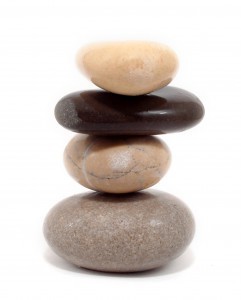
I just finished a book project – or at least the really hard part.
My daughter is at a friend's house. My husband at work and for the first time in nearly five months I'm alone at home without a deadline looming.
I'm trying to regroup and get centered again I'm letting things settle. My thoughts, my energy. I'm taking deep breaths. Becoming present in my body.
I think balance is a myth in this life, but centering is essential.
Nothing is ever even-Steven. There are weeks when work requires more attention than family demands. Then, there are weeks of birthday parties and doctor's appointments and t-ball games, and work doesn't get all the attention.
Of course, you tend to it all, but your focus and intensity shifts back and forth depending on what needs to happen and when.
Marriage is like this too. There are weeks when I've got to step up and work harder to connect with Mr. J because he's working long days or not feeling up to snuff. Then, he steps into gear when I'm feeling uninspired.
Life goes back and forth like this. It is fluid.
Centering in the moment
But there is never a time when life is suspended in perfect balance. And I'm fine with that. I think people work too hard to balance it all. Instead, your greatest power comes from centering in the moment.
When things are completely out of whack – you aren't connecting with your partner, work is demanding and the remote doesn't work and you have nothing for dinner – you can still root yourself in the moment and find peace.
Centering is about stepping out of the eye of the storm. You can feel the storm raging all around you, but you are unaffected, aware, focused, and mindful. You are present in the moment which allows you to separate from the stress and become conscious of your personal power. Then, you can take inspired action to move forward without creating more drama around the daily routine.
For example, when I center myself, I am able to gain some perspective over my long to-do list. I can step away from the stress of deadline – though it still looms – and find moments for peace and fun and expansion.
I become conscious of who I am – a person who loves her work and meets her deadlines. I become aware of the sensations in my body and the moment – instead of creating "what if" scenarios around unfounded anxieties.
When you become centered, it's a conscious pause that roots yourself back in the reality, back in your body. It won't solve the world's problems, but it insures that you don't create more. And it eases stress by helping you to become conscious of what is, rather than tied into some doomsday scenario.
This gives you strength, energy, and awareness to deal with whatever is happening, more gracefully.
In Wednesday's post, I'll tell you how to do it.
In the meantime, if you're ready to tap into your passions and connect with your life's purpose, please sign up for Live the Life You Are Meant to Live — a new e-class from the Daily Om. Start whenever you're ready and each week — for eight weeks — you'll receive a new lesson in your in-box that will help you tap into the best side of yourself. Join us!
Photo by Stock.xchng
March 21, 2012
How we are connect to all the universe
I have always written about this greater connection — the thread that extends between all creatures and the Universe. No one is separate — though we think we are at times. Nor, are we separate from the Universal Source. The power is both within and outside of us.
This nondual or single perspective is an aspect of enlightenment. It is said that we become enlightened or fully awakened we unify with higher consciousness or this universal source. It's a concept that cannot be fully described and can only truly be known through experience. But science has its own take on the subject and Astrophysicist Dr. Neil DeGrasse Tyson has a great perspective.
He was asked in an interview with TIME magazine, "What is the most astounding fact you can share with us about the Universe?" Here is his answer.
March 19, 2012
Slow down and make your interactions matter

One aspect of spirituality is the belief that we are all connected. It's an easy idea to swallow, when you get to thinking about this.
We share the same molecular structure. I can use your blood or tissue or organs or you can use mine and it will sustain us. We all have the same needs. What you do clearly impacts me – if you side-swipe my car, I'm touched in a very real way by you, just as I am if you send me flowers. And, science explains how, through emotional contagion – the spreading of emotions – we can uplift or deflate the feelings of people we've never even met. We truly are connected.
Yet, we don't often go through the day thinking about that. We go through the day busy. We're working through our to-do list, trying to figure out what to make for dinner and how to get more money in the bank. We go through the day thinking about our own needs.
Open to the interaction
What if instead, you focused your attention on having the best, most sincere interactions you can with everyone you meet from the checker at Safeway to the partner who comes home at night?
How would it change their day – and yours – if you looked at them when they spoke? If you waited until they finished saying "have a good day" before you walked away. What effect would it have, if everyone you encountered felt seen and heard by you? How would it change your experience if you really saw the people you pass by every day and reached out to them silently – or with kind words – from your heart center, to connect with them.
Of course this all requires awareness. It requires slowing down. And you're going to have to listen before you speak, and lift your head up to make eye contact even when you'd rather hide away and avoid talking. But, for one day see what it's like to really connect from a place of acceptance and respect with the others you encounter and notice how it changes your experience.
I've tried this myself.
No one is insignificant
One particular day when I was feeling a bit lonely and isolated, (normally I love to be alone and quiet — probably one reason I love to write) I decided to open up to every interaction I had instead of taking my usual approach and dropping my eyes in an attempt to avoid communication. I'd listen, look at people, smile even. And, if they said something to me, I'd respond with something other than a cliché.
During the exercise, I realized that interactions take place constantly – even when I think I'm avoiding them. When we drop our eyes, disregard, or fail to notice, we are connecting with others just the same, it's just that the messages we're sending out speak of insignificance rather than importance. I don't want anyone who comes into my life to feel insignificant.
I looked at the woman at Starbucks, during my interaction exercise, and smiled when I said 'Thank You.' I stood quietly and smiled too at the overwhelmed Safeway clerk, and joked with the guy at the gas station while I was waiting for the tank to fill. I got up to greet my husband when he came home though I was in the middle of something else. And, when my daughter came into the room, I put down my work to listen.
I reached out silently or verbally to every person I encountered and by the end, I was reminded how vast this community is and again how connected we all are – whether we realize it or not. I realized how responsible I am for the energy I bring and how I want to bring the good stuff. And, by the end of the day, I felt a whole lot less alone.
ON ANOTHER NOTE: I'm really excited about my newest e-class Live the Life You Are Meant To Live. This class shows you how to tap into your greatest self to live the life you desire and make a positive difference in the world. I really believe in this and I think you'll have a blast going through the exercises. Sign-up here: The Daily Om — Live the Life You Are Meant to Live
March 14, 2012
Three tips to make change stick
 I just finished a 10-day detox diet. It called for the gradual elimination of different food groups – wheat, meat, sugar, and others – so that my body could have a break. Then, during the reintroduction of those foods, I was able to identify any allergies or other effects that help or hinder our bodies.
While, the detox focused primarily on diet, seeing it through became a mental exercise. Early on, there was a certain anxiety around the changes I needed to make. Then it became about planning and figuring out how to do things differently. Now it's about forming new habits to make the changes stick.
We all have points in our life where we need a detox program. Whether that's detoxing your mind of mental clutter, cleaning out the excess in your home closets, or cleaning the toxins out of your body, here are a few tips that can help you make lasting changes.
1. Prep and plan. For any change to stick you must prepare and plan before ever beginning. We had much of the detox food purchased and prepared in advance making it easy to eat a carrot stick on carrot days. Mental and spiritual growth requires this same kind of prep. Contemplate what you'd like to learn about yourself, what you want free yourself from. Consider the things it will take to support you in that change – inspirational books, an appointment with a therapist, support groups, meal plan, meditation time – and plan for these things before you begin. This makes follow through a whole lot easier.
2. Engage in the practice. Be aware of the things you do en route to your goal and be willing to adapt. I made a vegetarian chili while on detox and it was good, but I'd do a few things differently next time. By modifying your moves and behaviors along the way to those that are more efficient and practical, you're more likely to fit the new habit into your lifestyle and that will help it stick.
3. Make a commitment. On the third day of kale and lettuce, I was ready to be done, but I made a commitment to my own spiritual and physical growth and kale and lettuce was part of it. Within the adversity there is great wisdom. Make a commitment to your own growth. Devote yourself to meditation, or exercise, or study, or healthy eating, or non-smoking, or whatever you need to do to make healthy changes. Then, see it through. There is much to be learned when you keep going, even when you're ready to quit.
When you release mental and physical clutter you'll feel revitalized. Lighter physically and psychically.
Today find something that feels as if it's holding you back and resolve to release it, or change your habits around it. Set a start date to clean those closets or change your diet or to start exploring limiting beliefs, gather information and support, then play with the process along the way, all the while sticking to your commitment. Do these things and your positive changes are bound to become good habits.
**Are you ready to make positive changes? Are ready to Live the Life You Are Meant to Live? If you answered yes, my newest class now available on The Daily Om can help. This class – Live the Life You Are Meant to Live — is all about helping you rediscover your passions to ignite your life's purpose. When we are living with passion and purpose, we are revitalized and clear about how we can contribute to the world. This makes this whole life thing a lot more fun and interesting. Ready to find your purpose, go to The Daily Om for more info.