Amy Julia Becker's Blog, page 138
August 1, 2019
Normie – A Down Syndrome Coming of Age Film
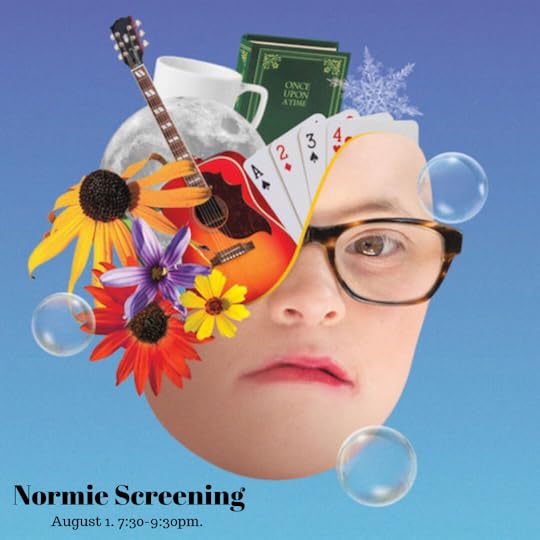 I experienced such deep joy at the Normie screening at the Five Senses Festival.
Not only did I get to sit outside under the stars in our lovely little town and watch a beautiful, poignant, funny, moving film about what it means to be a human wrestling with loneliness, belong, love, and limitations, but I got to do so surrounded by an intergenerational mix of people from all the corners of my life and beyond.
I had seen Normie before, but watching it on a big screen in the context of a group of people only made me appreciate this film more. The main character, Anne Marie, is a funny, honest, articulate, young woman who insists on grappling with some of the deepest questions of life and meaning and purpose. Yes, she has Down syndrome, and yes, that defines her in some ways.
But I would also call this a coming-of-age story about a young woman who–like so many of us–longs to be loved for who she is and also wrestles with doubts about whether God has a purpose for her and even self-hatred. Through interviews with her, her parents, other parents of children with Down syndrome (including us!), and a physician, a magician, and a pastor, this film takes us on a journey of self-discovery, connection, beauty, and love. I’m so grateful I got to participate in it and share it with our local community Thursday night.
As I mentinoed, my family has a small cameo in the film, so keep an eye out in the trailer for Penny ballet dancing in a pink tutu! (see photo below, too)
Check out the Normie trailer here.
PS: You can also reach out to the film-makers about screening the film in your area. I’d love for as many people as possible to see Anne-Marie’s story. 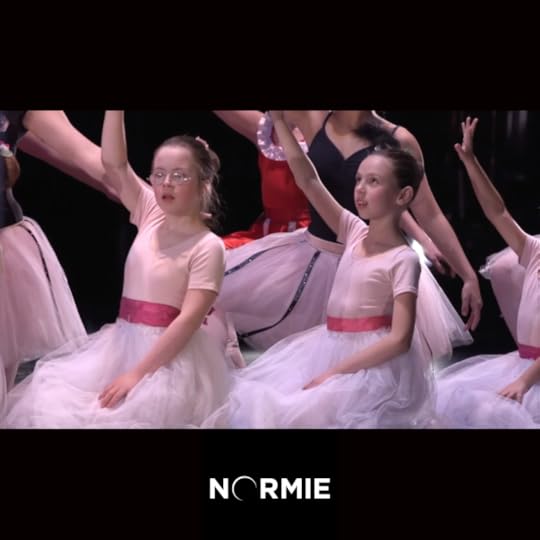
If you aren’t already, please subscribe to my newsletter to receive regular updates and news. You can also follow me on Facebook , Instagram and Twitter .
The post Normie – A Down Syndrome Coming of Age Film appeared first on Amy Julia Becker.


July 31, 2019
Guest Podcast: White Picket Fences at Mockingbird Conference 2019
One of the great joys of being invited to speak from White Picket Fences about the power of love to heal social divisions is getting to talk with people afterwards and hear their questions, their thoughts, and their personal experiences.
This spring, David Zahl invited me to speak at the Mockingbird Conference in New York City. When I got to my breakout session, the room was packed (literally packed, but before I puff myself up too much let me also mention that it was a Sunday school classroom. There’s something wonderfully humbling about speaking to adults who are squatting on colorful chairs designed for 3-year olds). There were men and women who ranged in aged from 20-something to 80-something and who came from multiple countries, various ethnic groups, and a wide range of income.
But all of us had something to learn from each other about what it means to come together through our common humanity while also honoring the diverse identities God has given us.
Listen to the talk here: https://talkingbird.fireside.fm/84
The post Guest Podcast: White Picket Fences at Mockingbird Conference 2019 appeared first on Amy Julia Becker.
Summer Rewind: Learning what happiness is (and isn’t) from my daughter with Down syndrome
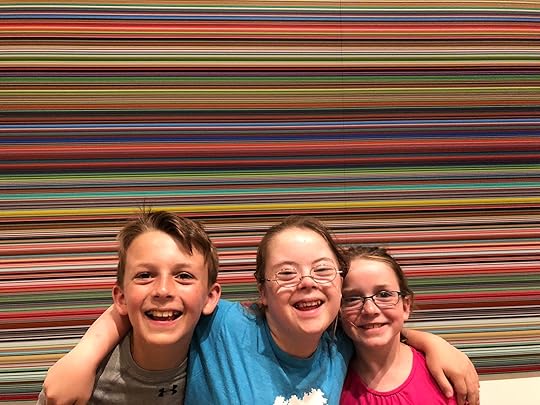
I started thinking about the words in 1 Corinthians 13–Paul’s famous passage about the nature of love–many years ago when Penny was first born. I started to understand what Paul meant when he said that even if I have all the intellectual prowess and fancy sounding spiritual truths in the world at my command, it all means nothing without love. Last spring, that same passage came back to me as I looked at our daughter Penny and recognized the ways in which her life embodies love–she is patient, and kind, and she keeps no record of wrong. (Which is not to say she doesn’t also behave in unloving ways sometimes!) I wrote this post in honor of World Down Syndrome Day 2019 and in honor of the ways in which Penny has helped me to better understand the nature of love.
This post originally appeared on the Christian Century website.
Our daughter Penny is 13 years old. She is in seventh grade. She loves Taylor Swift and Fuller House and wedding dresses. She says her most embarrassing moment in life was when she found out the boy she has a crush on didn’t like her back. The first question she asks every morning when I wake her up is, “Did anyone text me?” She’s a middle school girl who applies too much makeup when she wants to look fancy, who begs for a smartphone and the latest copy of Vogue when she sees it on the rack at CVS.
Penny also has Down syndrome. When she was an infant, I remember a friend saying (as if it were a consolation), “At least she won’t know if she’s being left out when she gets older.” My friend was assuming that Penny’s intellectual disability would inhibit her understanding of social rejection. Over the years, I’ve heard other versions of the same line: “They are all so happy, so sweet, such angels.”
When Penny is viewed from the outside, those statements might seem to apply. She is ready with a hug for anyone who will receive it. She’s quick to write a note of encouragement, quick to express concern for anyone in pain, and quick to forgive. She still grabs my hand whenever we walk anywhere together, and I am always struck by how small and soft it is. She still has the hand of a child.
And yet, Penny wept over the loss of a friend earlier this year. She wrote about the anger she feels when her younger brother doesn’t listen to her. Fear courses through her body whenever she hears a dog bark. She knows the hurt of adolescence. She reported the sting of overhearing an older kid say, “You’re such a retard”—even though the words weren’t directed at Penny herself. She has felt the ache of loneliness. She tells me how hard the lunch table can be: “I just don’t know when it’s the right time to say what I’m thinking.” She sits in silence most of the time. Penny is rarely, if ever, mocked. Most of her peers are kind to her, if not welcoming. But it hurts to be passed over.
Most people with Down syndrome report a high level of happiness with their lives. I suspect that their happiness, like Penny’s, doesn’t come from a failure to understand pain or rejection. Penny is happy in the midst of pain and rejection. Her attitude does not arise out of a lack of emotional depth or from an inability to feel rejected, abused, or depressed. Rather, it emerges out of an ability to hold onto hope in the midst of suffering, redemption in the midst of pain, and forgiveness in the midst of hurt. Penny embodies the great poem about love penned so many years ago by Paul in his letter to the Corinthians—that love is patient and kind, always believing, always forgiving.
If this is what love looks like, then I have spent much of my life rejecting love. I have been too busy and too careless to be inconvenienced, challenged, slowed down by it. I have been too ready to grab knowledge rather than receive wisdom. I have been too eager to prove myself, to receive accolades rather than turn my gaze beyond myself to the beauty of my neighbors.
Jean Vanier, founder of the L’Arche communities in which people with and without intellectual disabilities live side by side, has reflected upon the “smallness” of Jesus’ love. This kind of love, he says, is often visible in people with intellectual disabilities. In Signs: Seven Words of Hope, Vanier writes,
“We are discovering that those who are rejected by society on account of their weakness and their apparent uselessness are a presence of God. If we welcome them, they lead us progressively away from an over-competitive world where people need to accomplish great things, toward a world of hearts in communion, a simple and joyful life, where you accomplish little things with love.”
In the morning, I hurry Penny to the front door, and I receive a hug. She walks herself to the bus stop, all four foot five inches of her plodding a deliberate rhythm. I know that every moment of the day—the icy sidewalk, the big backpack and the steps onto the bus, the lesson about cell membranes in science class, the rapid-fire conversation in the cafeteria—will be more challenging for her than it ever was for me.
Today is World Down Syndrome Day, a day to celebrate the lives of people with Down syndrome all over the globe. It’s a day when I celebrate our daughter in the midst of the hardships and beauty of who she is. I’m confident that she will navigate the challenges, the rejections, and the giddy energy of middle school. She will navigate it all with love. And I will hold onto the promise that love never fails.
The post Summer Rewind: Learning what happiness is (and isn’t) from my daughter with Down syndrome appeared first on Amy Julia Becker.
July 24, 2019
Summer Rewind: Reflections on Peace and Overcoming Anxiety

There is little I love more than sitting on the porch in the summertime with a glass of wine, a plate of appetizers, and a group of happy family members all around. And yet when I repeat the wine part of that scene every night of the week (even when the setting isn’t so lovely and the kids are eating mac n cheese and watching a show and I have work to do), I can slip back into old patterns. I wrote about my wine-drinking habit a few years ago and the surprising discovery that I am an anxious person who uses wine to numb that anxiety. (Note: I’m not talking about clinical anxiety here. Just the run-of-the-mill type.) This post was a good reminder to me this summer to take delight in the good gifts I’ve been given–including wine–and to continue to turn to God for peace.
This post originally appeared on my blog in December 2016.
In The Power of Habit, Charles Duhigg describes the way habits change. You don’t really break a habit, according to Duhigg. You just replace it with something else. And if you want to replace a bad habit with a good one, you have to identify the cue, the response, and the reward associated with the habit. So when I wanted to change my habit of having a glass of wine (or two, or three…) every single night of the week, Duhigg’s advice was not to try to stop drinking the glass of wine but rather to observe myself drinking it and ask all sorts of questions about the habit. Did I do it at the same time or place? With the same people? Did I do it because of how I was feeling? What did I receive from it?
Over the course of a few weeks, I noticed that I drank wine for two different reasons: for peace, and for pleasure. Once or twice a week, I drank wine because I liked it. When I was out to dinner with Peter. When I was at a party with good friends. When we were celebrating something monumental, like Christmas or an anniversary. I rarely drank too much in those situations. I rarely felt guilty or dissatisfied by it the next day. The wine was a little bonus to an already delightful situation. It was a habit I was happy to hold on to.
But I also found that I drank wine in response to low-level anxiety, when I was looking for peace. On a Monday night, when Marilee was ready for dinner and Penny needed help with homework and William wanted me to listen to him practice piano, a glass of wine inserted a little tranquility into the chaos of the situation. Or when Peter and I headed out to a party with a group of people I didn’t know, or a group of people who I thought wouldn’t be interested in the same topics I like to talk about, a glass of wine softened my sharp edges. I could float through the conversations without feeling bored or insecure. It was these nights when I was tempted (and often succumbed to the temptation) to drink too much, when I woke up at 1 a.m. in sweaty sheets, with a dry mouth and a slightly queasy feeling in my gut. It was these nights when wine did not deliver, when the peace it promised turned to guilt and grumbling. It was this habit I sought to replace.
Not all of us respond to anxiety with wine, but all of us face anxiety and look for peace. Becoming anxious is easy. Name a topic, and we will be able to come up with reasons to worry about it: cars, houses, jobs, national security, global conflicts, kids, health, fitness, the weather. I could go on. Even though by many measures we live in a world with greater stability and longevity than ever before, the number of people who report feeling anxious has doubled in the past few decades. Unless we do something to interrupt it, we will naturally live in a place of anxiety most of the time. And when we do, we live in fear, we live in anger, and we live for ourselves.
Although statisticians tell us that levels of anxiety are on the rise, it’s not a new problem. Anxiety comes up throughout the Bible, and over and over again God offers peace.
When I was trying to change my wine habit, my yoga teacher suggested I start the day with seven minutes of meditative breathing. I sat cross-legged and breathed in as slowly and gently as I could, and I told myself that I was breathing in God’s peace. Sometimes it was a general invitation for peace to enter in, others it was very specific: peace in my household when we are yelling at each other, peace in my shoulders when I am responding to email, peace in my tone of voice when I am talking with my friend who annoyed me yesterday, peace when I write, peace when I sleep, peace about my body, peace about my purpose, peace in Syria, peace amidst America’s racial divides, peace for my neighbors in the midst of their divorce. And then I would exhale, as slowly and gently as I could, and again I would tell myself that I was exhaling worry. Breathing out anxiety about my children, my exercise regimen, my career, the world we live in. Breathing out anxiety about the future, the present, the past.
The Apostle Paul writes in his letter to the church in Philippi: “Do not be anxious about anything, but in everything, by prayer and petition, present your requests to God.” Paul isn’t saying we should handle anxiety with denial, or with wine. He is inviting us to replace whatever way we deal with anxiety by instead handing over our anxiety to God. He then writes, “And the peace of God, which transcends all understanding, will guard your hearts and minds in Christ Jesus.” He promises that when we consciously offer our anxiety to God, God responds with peace that stands sentinel. I have often envisioned a small man in a military uniform marching back and forth before the entrance to my heart, shielding me from the intrusion of worry. And that practice of seven minutes of breathing in peace and breathing out worry is a signal to my heart and my mind about who is in charge. Not wine. Not worry. But the Prince of Peace.
If you’re looking for tools to relax without the help of wine, read my recent post, Rhythms of Rest.
The post Summer Rewind: Reflections on Peace and Overcoming Anxiety appeared first on Amy Julia Becker.
July 17, 2019
Summer Rewind: Why my Bad Experience of Barbie as a White Woman Does Not Actually Compare to my Friend’s Bad Experience of Barbie as a Black Woman
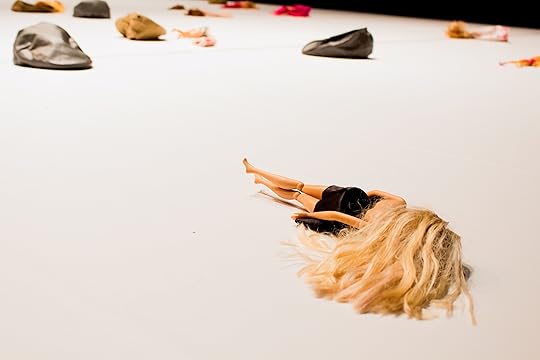 Photo by Shi Min Teh on Unsplash
I write a lot about understanding our common humanity as a basis for understanding, exploring, and even celebrating our diverse identities. But sometimes it is equally important to recognize the way we can falsely equate our lives/experiences to those of other people, as I did when I compared my experience of Barbie as a kid to my friend Mardi’s experience. I so appreciated the conversation that ensued between us.
This post originally appeared on Auburn Seminary’s Voices.
It felt like a point of connection. My friend Mardi, who is a black woman, commented on how Barbie had messed with her self-image. “When I was four years old, I chopped all the hair off of my Barbie dolls because I was angry that I had nappy hair rather than cornsilk hair,” she wrote to me in an email.
I immediately thought, “Me too!” I mean, not the hair part, but the anger as an adult at the standards of beauty that taught me how I was supposed to look. I thought back to the eating disorder I had developed in high school, the magazines with women with unattainable bodies and faces on their covers, the insecurity I feel even as a middle-aged adult when comparing myself to other women. Pretty much the same thing. Right?
Mardi didn’t reply to my comment immediately, which gave me some time to think about it.
My thoughts went to our daughter. Penny is twelve years old, and in many ways, she’s a typical twelve-year old. She resists getting out of bed in the morning. She races through her homework so she can watch Netflix. She giggles with her friends and spends long stretches every day stealing my phone so she can send texts about upcoming dances and sleepovers and shopping expeditions. But in some significant ways, Penny is different from her peers. Every cell of Penny’s body has three copies of the 21st chromosome. Penny has Down syndrome.
I appreciate the parallels between Penny’s life and the lives of her typically-developing peers. But there are also times when I recognize the difference she experiences as a result of having Down syndrome. Some of them are mundane—we have far more doctors’ appointments over the course of a year than most kids; it can be tricky for strangers to understand her speech.
But there are other situations that arise that really are different. Penny’s position as a child with Down syndrome, for instance, makes her far more vulnerable to sexual abuse than the general population. She’s far more likely to be lonely and experience depression and anxiety as an adult due to lack of friendship. Statistically speaking, she will have a hard time finding a job, living independently, and getting married.
So when I mention to a friend how I’m anxious about how middle school will go for Penny, and my friend responds with her own anxiety about her own child, I am not sure we are talking about the same situation. Yes, both of our daughters could get hurt by their peers. And yes, both of them might be left out. But there’s a difference at work as well, a difference in degree, if not in kind.
Making the point that Penny is just as much a kid as any other kid in middle school is helpful. Pretending that her challenges are the same is another way of ignoring or denying who she is and the pain that arises when growing up in a world that is inclined to reject her.
And maybe that’s the real danger of false equivalence—that in saying (and believing) that my white experience of Barbie is the same as Mardi’s black experience, I am denying the history and contemporary reality of disdain for and prejudice against black bodies and black beauty. When my friends pretend (and believe) that Penny’s experience is really the same as their own daughters’, they are perpetuating a notion that we live in a culture that doesn’t discriminate against people with intellectual disabilities, where we all face the same struggles.
If there is anything I have learned from having a child with an intellectual disability in my life, it is that we share a deep and profound common humanity in both our human frailty and our human giftedness. But to pretend that our social situation is the same disregards the daily barriers she encounters.
Being black and having Down syndrome are not the same thing, but I had a window into Mardi’s experience when I thought about my experience as Penny’s mom. I wrote another email after I’d spent some time thinking these things through, and I apologized for conflating my experience with white standards of beauty and her experience with them. She wrote back, “Yes, it’s a false equivalence, and you totally get it, based on what you wrote about Penny. But I wasn’t offended, I know that overall you’re working towards an understanding of black and brown humanity.”
I didn’t like Barbie as a kid. I absorbed negative messages about my body from the white models I saw on the covers of magazines. But my social experience of growing up in a white body does not compare to my friend’s experience of growing up in America with a black one. Honoring her humanity requires me to see the differences, to recognize the painful gap between our lives, and to listen without trying to take away the pain when she is willing to entrust it to me.
__
PS – If you’re not following already, please consider following me on Facebook, Instagram and Twitter.
The post Summer Rewind: Why my Bad Experience of Barbie as a White Woman Does Not Actually Compare to my Friend’s Bad Experience of Barbie as a Black Woman appeared first on Amy Julia Becker.
July 14, 2019
5 Ways to Receive God’s Love – Open Door Sisterhood Guest Post – Amy Julia Becker
I’ve just written a guest blog post on The Open Door Sisterhood called 5 Ways to Receive God’s Love. Spoiler alert: it’s not about just trying really hard.
My friends Alexandra Kuykendall and Krista Gilbert’s started The Open Door Sisterhood to encourage women of faith to live out their calling to love and serve others. They offer wisdom on faith, motherhood and leadership. Topics range from marriage to time management to dealing with pain and more.
A few months ago I had the opportunity to appear on an episode their podcast. I share my own story and how am seeking God to help me know how to use my heart, head and hands to heal the social divisions we experience in our culture. It’s slightly different in topic from this blog post, but perhaps you’ll see how God’s love is important to enable us to love others – especially people who are different from us. You can listen to it on iTunes here.
PS – If you’d like to read more of my posts on love, you can check out Love That Never Fails, Love is Patient, and What Keeps Us From Love?

The post 5 Ways to Receive God’s Love – Open Door Sisterhood Guest Post – Amy Julia Becker appeared first on Amy Julia Becker.
July 11, 2019
Podcast: How Do I Figure out Where to Go?

Listen to Amy Julia speak as a guest on a recent podcast
In my latest blog post, I listed ten recommended podcasts covering topics including race, justice culture and spiritual growth. If you’re still looking for more, I recently had the opportunity to be a guest on The Ride Home with John and Kathy radio show discussing the topic “How Do I Figure out Where to Go?” This conversation was based on a blog post I wrote a few weeks ago that you can read here. In the podcast we discuss decisions, discernment and listening to God.
You can find the June 11th conversation with John and Kathy as a podcast here.
The relevant section starts at about minute 12.
If you’re interested in listening to other podcasts I have been on (including The Lucky Few Podcast discussing disability and Typology with Ian Cron talking about my enneagram type) you can see the full list here.
The post Podcast: How Do I Figure out Where to Go? appeared first on Amy Julia Becker.
July 10, 2019
10 Podcasts Recommended for Summer 2019
I listen to a lot of podcasts. Whether I’m doing laundry, driving to the store, washing dishes, or even just walking around the house, chances are you will find me consuming audio media. Most days in the summer start with a walk or a run, complete with headphones and miles of listening. My podcast interests vary, but I tend towards content that challenges me and makes me think about myself and my perspective on the world. There’s an overwhelming number of podcasts out there, but here are ten of my current and/or longtime favorites and why I think they are worth checking out:
Five Podcasts on Race, Justice, and Cultural Concerns:
Seeing White (from Scene on Radio) by John Biewen with Chenjerai Kumanyika
I want to highly highly highly recommend the series Seeing White, a 13-part podcast series for the show Scene on Radio. Listen to the first episode and see if you’re convinced, as I am, that this is essential information for anyone who wants to understand where we are as a nation when it comes to racial divisions. I learned about how white people became white (Really–there was a lot of legal debate over this concept, starting in the 1600s but continuing into recent history as well. For anyone who was puzzled in reading Ta Nehisi-Coates’ book Between the World and Me with his language of “those who think they are white,” this will help you understand). I heard stories about Native Americans, African Americans, and European Americans; the difference between northern racism and southern racism, and I wrestled with the question (as does John Biewen, the host) of what it means for white people to understand ourselves as white when our history has been so filled with discrimination against others.
Cape Up by Jonathan Capehart
Capehart ran a series of nine episodes interviewing icons of the Civil Rights movement. They were each short, informative, and moving. My favorite of the series was about how repentance and forgiveness can lead to healing and hope through the story of former segregationist George Wallace.
Serial Season 3 by Sarah Koenig
The first season of Serial was a riveting true crime investigation. The second season was not quite as fabulous. Season 3 was equally riveting as the first season, but also by far the most important of the bunch. Host Sarah Koenig spends a year inside a courthouse in Cleveland, Ohio and she traces stories of lawyers and defendants, judges and juries, police officers and citizens in this community. It’s a sobering commentary on our criminal “justice” system and an even-handed look at the ways race, class, and education factor into that system.
The Redemptive Edge by Praxis with Andy Crouch
This is a new podcast, but so far it contains great stories of people who are seeking to use their gifts and abilities to build businesses and nonprofits that bless their communities.
On Being by Krista Tippett
Although I recommend this podcast in general, there are specific episodes related to race, justice, and spirituality that have offered transformative wisdom for me: Derek Black and Matthew Stevenson, John A Powell, Isabel Wilkerson, Greg Boyle, Ruby Sales, Annette Gordon-Reed and Titus Kaphar
Five Podcasts for Spiritual Growth:
Strengthening the Soul of Your Leadership with Ruth Haley Barton
I’m a little embarrassed to admit that I am binge-listening this podcast. For anyone who desires spiritual growth, I highly recommend this entire podcast (there are seven seasons) as well as Barton’s many books about spiritual transformation. But this specific episode–about transformation through self-knowledge–is the one that spoke to me the most deeply and clearly.
Contemplative at Home with Lissy Clarke
Peter and I both love this gentle guided prayer experience. Lissy Clarke takes a passage from the Bible and reads it (in her lilting Irish way that either puts you to sleep or just feels incredible peaceful and soothing) slowly, giving the listener time to contemplate its meaning. That’s pretty much all there is to it. I look forward to taking 20 minutes to pray alongside this podcast every week. Some of my favorite episodes include an introduction to the Ignatian examen and also the recent one on Psalm 16.
The Bible for Normal People
Reading the Bible is intimidating, boring, and everything in between for lots of people, and it also can be fascinating, lifegiving, and life-changing. As a person who loves literature and loves Jesus, I am drawn to anything I can learn about how the Bible was written and what it means for us today. Some of my favorite episodes include a conversation with Hebrew Bible translator Robert Alter and a conversation about the Gospel of Mark.
Nomad
The men on the Nomad podcast ask great questions and, as formerly evangelical Christians trying to figure out how to follow Jesus, I appreciate their honesty, transparency, and the breadth of experience and insight their guests bring. I don’t always agree with what they or their guests are saying, and they always give me a lot to think about. Favorite episodes include Thomas Oord on the Uncontrolling Love of God, Brad Jersak on The Orthodox Way, and Walter Brueggemann on Sabbath as Resistance.
Third Church, Richmond
I listen to Corey Widmer’s weekly sermon podcasts from Third Church in Richmond, Virginia regularly. They are funny, accessible, intellectual, and applicable all at once. Corey (who is a good friend of ours) draws upon his life experience and personal story and always teaches from the Biblical text itself in a way that challenges and comforts me every week.
If you’re interested in reading more than listening, you can find some of my recent book recommendations here and here.
What are your favorite podcasts? I’m always open to suggestions. Happy listening!
The post 10 Podcasts Recommended for Summer 2019 appeared first on Amy Julia Becker.
July 3, 2019
Rhythms of Rest: An Invitation
Before you read this post, I need to preface it with a big caveat. It’s a post about taking regular time for silence and solitude, but before I write about that practice, I want to note that there are seasons in which prolonged (by which I mean, longer than a few hours) retreats are impossible. This seems especially true with very young children. (Ironically, this also may be the times of life when retreats are desperately necessary. If you are feeling that sense of desperate need, I do encourage you to consider ways to receive what you need–whether that’s paying a babysitter for help, asking a friend or relative for help, or, especially if you are in a long-term care situation, looking for official respite care.) But this post is intended for people who could take time to rest and, like me, forget or neglect to do so.
A few months back, I heard a podcast interview with Ruth Haley Barton. She was talking about her latest book, Invitation to Retreat, and she mentioned her practice of taking a workday once a month, a 24-hour period once a quarter, and 3 or more days once a year of silence and solitude. I nodded along as I listened, as if I too had a practice of taking time away to rest, to listen, and to respond to the whispers of God’s Spirit. I’m an introvert, and I’m a writer. I spend a fair amount of time in solitude. I could happily curl up with a book and a journal and a cup of tea all day every day. Regular rhythms of rest through retreat? I’m all over that, or so I thought.
And then I realized that I was deluding myself.
Here’s the thing. I’m a planner. I diligently use a daily calendar. On Saturday or Sunday morning, I take the time to review the goals from the past week, make sure I did everything on the to do lists, record victories and setbacks from the week, and set intentions for the week ahead. Once a quarter, I schedule a work day with my calendar and my planner to think and pray about goals, to review the past few months, and to plot out major events and plans for the season ahead. (For what it’s worth, the one I use is the Full Focus Planner designed by Michael Hyatt. I like it a lot.)
I had tricked myself into thinking that quarterly planning was the same as regular times of silence and solitude.
Barton says that solitude–time alone–is a container that holds many of the other spiritual disciplines. Solitude holds space for silence. And silence is a posture of trust, of openness, of patience, of listening.
But solitude can also be a container for something else. Instead of showing up and looking and listening for God’s presence, I was looking and listening for myself. Turning off the wifi signal and abstaining from email for the day with my planner at my side is not silence. It’s a healthy and helpful practice, and I’m glad I do it. But planning and goal setting is not the same as waiting and listening.
So I heard Ruth Haley Barton on this podcast and looked at my calendar and decided that I needed 24 hours away. I asked a friend if I could use her beach house. I arranged child care with Peter. I packed up a cooler of food. I gathered the books I’ve read and journals I’ve written and planners I’ve planned for the past few months, and I drove to the shore.
The first thing I learned was that I was tired. I sat in the window seat of our friend’s living room, with the sun warming the cushion and a view of marsh grass and a tidal river in the distance, and I fell asleep. A few hours later, with plans for a productive evening of self-discovery, I found myself yawning so often that I decided to go to bed. And then I slept for nine hours (I typically sleep for 7 at the most, and I don’t usually wake up to an alarm). I woke up, went back to that cozy window seat, read the Bible, prayed, and . . . you guessed it. I fell asleep again.
Nearly half of my dedicated hours away were spent asleep.
He makes me lie down in green pastures.
In the course of that time, I also went for some walks. I took a run. I prepared food. I read a book.
He leads me beside the still waters.
Already, It was time to go, and I felt like I hadn’t even gotten started. I hadn’t become uncomfortable with the state of my own soul, which Barton warned would happen at some point. I hadn’t explored all the things I had learned in the previous months. I hadn’t read through parts of the Bible like I thought I would. I hadn’t spent any time praying for other people.
He restores my soul.
It was a start, with the God who is patiently and tenderly calling to me, the God who cares far more about shaping and forming my heart than about what I produce for Him.
So now one of my stated goals for 2019 in my Full Focus Planner is a regular rhythm of retreat.
Two other notes. One, I’m writing in my newsletter this month about what to do while on retreat. Sign up here to receive my newsletter and read about 11 tips on taking time away to listen to God’s voice in your life.
And two, in keeping with the need for seasons of rest and refreshment, I’m taking the next two months off from writing new blog posts. I’ll be posting guest posts as well as older content, so you can continue to check in, but I’m also taking God’s invitation to rest this summer. I’ll be back in September.
The post Rhythms of Rest: An Invitation appeared first on Amy Julia Becker.
June 25, 2019
10 Tips for Raising a Cool Kid with Down Syndrome (even if you’re a nerdy parent like me)
By Guest Contributor Stephanie Meredith
A note from Amy Julia: I am grateful for Stephanie Meredith for all sorts of reasons. One, she’s the force behind the Lettercase booklets that provide up-to-date and accurate information for families and medical professionals about Down syndrome and other genetic conditions. Two, she’s a lovely human being. And three, she’s a mother of a child with Down syndrome who is farther down the road than we are, so I can look to her for advice and guidance. Recently, she posted about the friendships her son Andy had formed over the course of his school years, and I asked her if she would be willing to write about what her family did in order to create a structure where those friendships could thrive. She’s offered ten tips for moms and dads who want to help our kids with Down syndrome (and other disabilities) have thriving social lives. I’m so glad she can be here with us today.
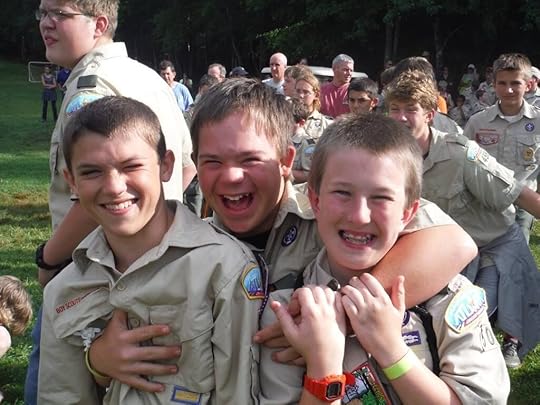
When my son was born with Down syndrome, one of my biggest concerns was how kids would treat him. I worried about kids teasing him or pretending to be his friend and then hurting him. But I’m happy to share that the vast majority of kids have been wonderful, and I have photographic evidence that Andy is much cooler than I was in high school.
People are drawn to Andy because he’s genuinely fun, charismatic, and funny. He’s the kind of guy who invents catchy phrases, invites people to lunch and bowling, and makes funny videos on Instagram. But what people appreciate the most about him is that when he loves you, he makes you feel like you’re the most important person in the world. In fact, when he really loves his friends, they sometimes rise to the level of becoming “brothers” and “sisters.”
For a while, we tried to correct him when he gave people these labels. It can make for awkward conversations when teachers or grocery store clerks think you have 10-15 kids, and those kids don’t actually belong to you. But then I finally asked Andy what the difference was between friends and siblings, and he said, “Brothers and sisters don’t go away.”
He’s right. These particular kids meet up for lunch and give him rides home from work, and they have come back to visit him from college and invited him to participate in their weddings. Each year he’s added new “brothers” and “sisters” so that by the time he graduated from high school, he had built a strong family of support.
And while Andy and his wonderful friends deserve most of the credit, I do think his nerdy mom helped along the way. While I recognize we have been incredibly lucky to be surrounded by wonderful people, I’ve made a list of what we did to help create conditions for Andy’s social experience:
Inclusion. Andy goes to school with these kids, and he also participates in church, Scouts, lacrosse, weight lifting, and Unified basketball with them. They played soccer as little kids and took yearbook and athletic medicine classes together in high school.
Organized activities. Participating in some of these organized activities, like church and sports, has meant that even if some of the spontaneous social invitations drop off in middle school, our kids still have opportunities to hang out with friends.
A stable place. Another key for us, which we know is unique and that we are lucky, is that Andy was able to go from pre-K to 12th grade in the same place, so the kids have known each other their whole lives. It was amazing at his graduation party this month to see kids who I could identify as his “brothers” from 5th grade and 8th grade and his church and lacrosse “brothers.”
A fun house. In the early years, I invited other kids over for play dates and birthday parties, and I found that other parents would also invite us over. As the kids got older, we made a huge homemade slip and slide for a party to celebrate the end of school, and Andy received a low budget movie projector one year for Christmas so that we could invite kids over to watch outdoor movies on our garage.
School support. We were also very fortunate to have a school-wide peer education program about disabilities already in place at our elementary school. This program helped us talk to kids about how to be good friends, how to be understanding of differences, and how to be helpful as needed. This program required significant volunteer support from parents, and those parents became invested in the program just as much as the parents of kids with disabilities.
Friends with disabilities, too. We have participated in Special Olympics Unified sports and Challenger League Baseball. There are certainly friends from inclusive settings who really connect with Andy, but sometimes his friends with disabilities just seem to really understand where he’s coming from.
Supportive parents. When Andy stopped getting invited to hang out with friends in middle school and the early high school years, I told some of my mom friends from church about my frustrations, and they jumped in to help by talking to their kids. It turned out that it had become difficult because their kids had started making plans on their own using media Andy didn’t have, so Andy’s friends needed help to know how to be more intentional about including him.
Access to social media. It’s scary, but we’ve tried to give Andy access to as much supervised social media as he can handle, and teach him how to use it. It’s really hard to be included if our kids can’t communicate in the medium their friends are using. And yes, we’ve had to have conversations about not posting dozens of photos of Batman and shirtless selfies, but all parents have to do that, and these tools can be vital for building relationships.
Supporting others. We’ve also found it important to support other kids by going to their games, their concerts, their parties, and their events when we can so that they know we genuinely care about them too. People want to be around people who they know care about them
Empowering Andy. We also encouraged Andy to make plans and helped him set them up. I would help Andy coordinate with parents and girls, and he invited a date to almost every dance in high school. We found out that for some of these girls, Andy was a true friend they needed in the moment, and he’s always a fun dancer. He just needed to be given the tools to take the initiative and make the plans himself. He will also text his friends to ask them out to lunch and bowling, and we’re working on calendaring so he knows how to pick days and times.
It turned out that one of our biggest concerns when Andy was born has turned into one of his greatest sources of strengths: his support network of friends, brothers, and sisters. They have been examples to him in going to college, getting jobs, and being part of a team, but he’s also given back in turn and been a loyal friend and a source of strength for them.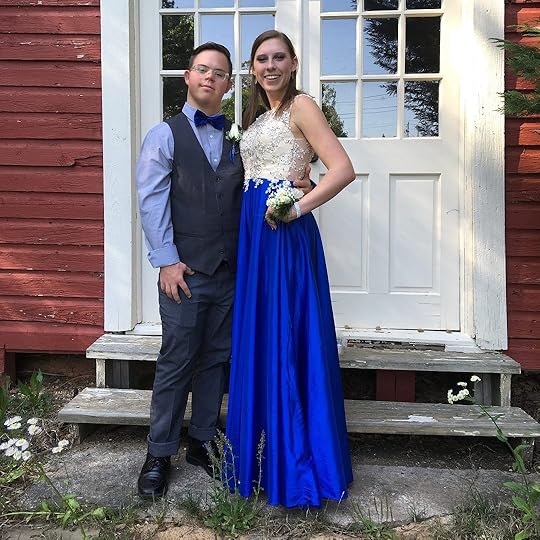
The post 10 Tips for Raising a Cool Kid with Down Syndrome (even if you’re a nerdy parent like me) appeared first on Amy Julia Becker.