Amy Julia Becker's Blog, page 135
September 23, 2019
William Becker Reviews “This is What Democracy Looks Like”
My son William is a curious and inquisitive eleven year old. He loves to learn and to discuss big ideas. I wrote a book called Small Talk a few years ago and in it you can read how he, like his sisters, often asked questions that caught me off guard. The classic question William asked was, after hearing the story of the Nativity, “Does Santa love me?” He hasn’t stopped asking questions since. I love his sharp mind and big ideas.
A family friend recently came for a visit and gave my children a few comic books. Interestingly, despite all being readers, none of my kids were particularly interested in the Archie or even the Star Wars comic. William was, however, intrigued by the comic book she brought called This is What Democracy Looks Like. My friend Elizabeth and William read and discussed the comic book together, and she suggested he make a video review of it.
The comic book is the work of The Center for Cartoon Studies an art school based in Vermont. This Is What Democracy Looks Like was made via a successful Kickstarter campaign this summer. You can download a free pdf version or even order copies for classrooms as an educational tool. As you can see from William’s review, he is a fan.
And if you’d like to see some (older) book picks by William go here.
If you haven’t already, please subscribe to my newsletter to receive regular updates and news. You can also follow me on Facebook , Instagram and Twitter .
The post William Becker Reviews “This is What Democracy Looks Like” appeared first on Amy Julia Becker.


September 20, 2019
AJB Recommends: Nomad Podcast with Gregory Boyle
“I go to the margins because that’s where the joy is.” –Father Gregory Boyle, in an interview on Nomad Podcast
I have loved reading and listening to Father Greg Boyle over the course of the past few years. His books, Tattoos on the Heart and Barking to the Choir, are both excellent, winsome, accessible narratives about decades of serving as a priest in an impoverished neighborhood in Los Angeles. Father Greg’s experiences among gang members of Los Angeles carries a very strange resonance for me because it parallels my experiences with our daughter Penny, who has Down syndrome, and among people with intellectual disabilities (ID).
While at first I saw people with ID as “other”, and as people in need of my help, in time I came to understand that although there were real differences and although there were some things I might be able to offer, the beauty of my relationships was in the understanding of our common humanity, our mutual need, and the ways we could, in Father Greg’s words, “return each other to ourselves.”
Father Greg hasn’t come out with a new book, but I was reminded of his work because of an interview on Nomad Podcast in which he reflects on his 35 years in Los Angeles. He tells lots of stories and offers many words of wisdom. The one that has stayed with me is when he was reflecting on a woman who asked him, “Do you bring gang members to Christ?” He said, “No. They bring me to Christ.”
If you haven’t already, please subscribe to my newsletter to receive regular updates and news. You can also follow me on Facebook , Instagram and Twitter .
The post AJB Recommends: Nomad Podcast with Gregory Boyle appeared first on Amy Julia Becker.
September 19, 2019
Guest Podcast: Amy Julia Becker on Susie Larson
 Earlier this week, I spoke on the Midday with Susie Larson Radio Show on Faith Radio. Here I share some thoughts on that interview and a link where you can listen to the show!
What is racism and is it still active in our nation? What if I say the wrong thing when I’m trying to talk about race and privilege? What is the harm of privilege? How can we have hope and love instead of shame and helplessness in the face of social division?
I had the great pleasure of speaking with Susie Larson of Faith Radio earlier this week, and that live interview has now been released as a podcast. We cover the questions above and so much more. We talk about the journey I took to write White Picket Fences, the surprising and beautiful experience of generosity and grace in talking with people about privilege, and the way God’s healing works through small, hidden, decisions to take the next step in love.
Listen here.
If you haven’t already, please subscribe to my newsletter to receive regular updates and news. You can also follow me on Facebook , Instagram and Twitter .
The post Guest Podcast: Amy Julia Becker on Susie Larson appeared first on Amy Julia Becker.
September 18, 2019
Responding to the Immigration Crisis with Your Head, Heart, and Hands
This post, one in a series about my time in El Paso (check out the other posts here and here), offers ways that you can respond to the immigration crisis, regardless of where you live. These responses engage your head, your heart and your hands.
“We are treating a humanitarian crisis with a military response.”
Bri Stensrud, one of the organizers of the trip I took to El Paso a few weeks ago, said those words on our first night together. Bri works for Welcome, a collaborative effort between World Relief and the National Immigration Forum that seeks to put a human face on the immigration situation at the southern border of the United States.
I’ve written a few posts already that explain the trip itself and emphasize the ongoing humanitarian needs, especially of children. I’m also working on a post for Christianity Today about reframing the narrative around immigration in order to change our laws and policies. If we can believe in America as the land of plenty, if we can become people who want to welcome the stranger, then we can transform our system so that it protects us against threats while also caring for those in need.
But what can, and should, we do now?
As I think through my own response to what I have seen and learned about immigration, I also think back to the response many readers had upon finishing White Picket Fences. In that book, I write about social divisions, with a focus on race, class, and disability. Those same dividing lines of privilege and exclusion can be extended to other topics, including that of immigration.
It has been helpful for me to think about responding with my head, heart, and hands. (I’ve written more about this holistic response and also written discussion questions for WPF that guide readers through this response.) When it comes to immigration, if you are called to respond, I wanted to offer a list of suggested resources and actions that could help you with that response.
For your head–
If you want to learn more so that you are informed about the problem– here are 3 books and 2 podcasts that could help:
Immigration: Tough Questions, Direct Answers (The Skeptic’s Guide) by Dale Hanson Bourke
Love Undocumented by Sarah Quezada
Welcoming the Stranger: Justice, Compassion and Truth in the Immigration Debate by Matt Soerens and Jenny Yang
Only in America Podcast
Fresh Air interview with Terry Gross on Border Control
Also see my previous post with additional reading resources on immigration.
For your heart–
If you want to get spiritually and personally connected to the humanitarian need– you can
Ask God for direction about what to do next
Join the Welcome Facebook community
Find or gather a group of other people who are concerned about these issues and commit to praying together (perhaps from your church)
Research and find a local community of immigrants and refugees and look for ways to hear their stories, share a meal, and build relationships. For example, Friends of Refugees based in Clarkston, Georgia, has a number of ways to connect. Do a search for something similar in your local area.
For your hands–
If you want to act with care on behalf of immigrants– you can:
Make a financial contribution to people supporting migrants:
KIND (Kids in Need of Defense), an organization that protects the rights of refugee & immigrant children throughout their migration journey.
Melvin & Ada Valiente, local pastors whose local Spanish speaking church (Maywood Church) is supporting migrants with housing/legal needs/etc:
Matthew 25/ Mateo 25, a grassroots movement standing with vulnerable immigrant and refugee communities, and working to stop unjust deportations.
Catholic Charities of the Rio Grande Valley, the local branch of Catholic charities that is deeply involved in the immigration crisis, primarily through their Humanitarian Respite Center.
Annunciation House, a nonprofit that has three houses dedicated to taking care of migrants and refugees through living out the gospel.
Ciudad Nueva, a charity that seeks to embody the gospel of Jesus Christ by advancing the renewal and development of central El Paso’s Rio Grande neighborhood through empowering and transforming its residents.
Sponsor a refugee family upon their arrival in the United States
Contact your local representative to advocate for immigration reform – it’s so easy – look below to find some scripts to start these conversations!
To email, click here: http://worldrelief.good.do/wewelcome/write-congress/
To call: http://worldrelief.good.do/wewelcome/call-congress/
Write a note (in Spanish) to a local church leader helping migrants on the border.
Abara, a non-profit ministry in El Paso, will bundle these notes and take them to church and non-profit leaders in Juarez. Mail them to 810 N. Campbell, El Paso, TX 79902.
Even a small step is still a step
And if this feels overwhelming, let me just encourage you (and me!) to simply take the next small step. It’s hard enough to get my kids out the door to school in the morning, much less try to save the world. The good news is that we aren’t tasked with saving the world, but we are invited to participate in social healing.
Not all of us will be deeply involved in anti-racism efforts, or disability rights advocacy, or immigration reform. But all of us have a part to play in acknowledging the way human beings and human systems harm one another. And all of us have a part to play in healing those hurts.
Want to learn more about the situation at the border? Read about the crisis here. Interested in the plight of children and families? Read this.
If you haven’t already, please subscribe to my newsletter to receive regular updates and news. You can also follow me on Facebook , Instagram and Twitter .
The post Responding to the Immigration Crisis with Your Head, Heart, and Hands appeared first on Amy Julia Becker.
September 13, 2019
The Kids are Not Okay – Reflections from the Southern Border
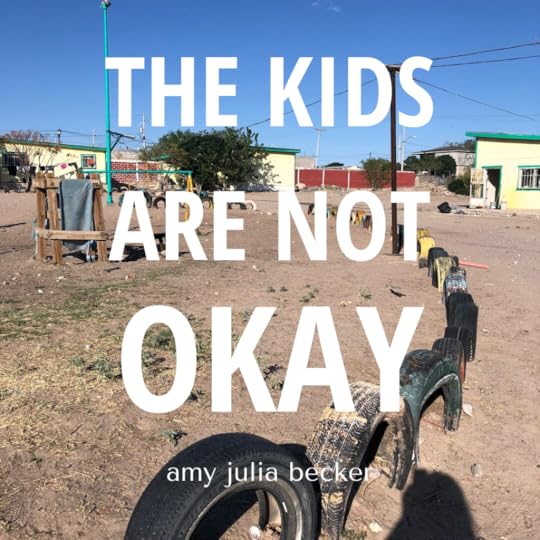 The kids are not okay
is the quickest way to say it. Despite changes, when it comes to the impact of US policy on immigrant children we must realize there are many who are being harmed — but out of our view. Wherever you land on immigration policy, I hope you’ll take a look and consider what is truly loving towards these kids, these human beings, and what we might need to do about it. This is my second post in a series about my trip to the U.S. border between El Paso, TX and Juarez, Mexico.
The kids are not okay
is the quickest way to say it. Despite changes, when it comes to the impact of US policy on immigrant children we must realize there are many who are being harmed — but out of our view. Wherever you land on immigration policy, I hope you’ll take a look and consider what is truly loving towards these kids, these human beings, and what we might need to do about it. This is my second post in a series about my trip to the U.S. border between El Paso, TX and Juarez, Mexico.
It’s better than it was, right?
A few months ago, the headlines were filled with images and stories of children separated from their parents. Now that we are keeping families together it would be easy to conclude that now we are caring for the kids. Certainly, keeping children with their parents is better than the inexcusable and devastating truth that our country changed its policies and procedures and as a result children became orphans and were subject to traumatizing, dehumanizing conditions.
But anyone who cares about vulnerable children worldwide needs to continue to pay attention to the children at risk in the current humanitarian crisis at our southern border.
Changing Immigrant Populations and Policy
Recent years have seen a dramatic influx of children—unaccompanied minors as well as children traveling with their parents or other relatives—trying to enter the United States. In 2008, 90% of the people trying to enter the US were adult males. In 2018, over 40% were children. The Obama administration responded to this problem by allowing the children to enter the country, request asylum, and then take refuge with friends or relatives already living in the United States. This process had problems—due to insufficient funding and personnel, the immigration court system was so backed up that many people waited years for a hearing, while others intentionally evaded court hearings. Millions of people grow up “in the shadows” in America, arriving here as children and never receiving official permission to live here. The kids are not okay.
The Trump administration changed the procedure to a “zero tolerance” policy. No one was allowed to enter the country without a visa. No one requesting asylum could go stay with a relative and wait for a hearing. At the same time, federal law requires that minors be released from immigration detention within 72 hours. Therefore, children were separated from their parents and, in some cases, never reunited.
The outcry among Americans about this inhumane treatment prompted policy change. The Administration calls it the “remain in Mexico” policy. Currently, children and their family members seeking asylum are being sent back to Mexico indefinitely. They are not able to connect with their networks of support here in the United States. They are not guaranteed legal representation as they attempt to navigate the American immigration court system.
Out of Detention, But Only Out of Sight
When I came back from my trip to El Paso, a number of friends commented on the relief they felt when I reported that there weren’t any children in detention centers any more. They were glad to see my photo of a playground, albeit a playground amidst spare tires and dirt. They were glad to hear my reports of people living in family units. And yet I couldn’t shake my sense that rather than addressing the needs of these kids we had simply absolved ourselves of responsibility for it, literally kicking them out of our country and out of the national spotlight.
These children are far from home. They are in need. They are in limbo. But we Americans do not see them anymore.
We could respond to the human need of our geographic neighbors (and our country’s role in the instability in the nations they are feeling). Instead, we have removed the visual reminder of their need. Thousands of children are now enduring a long, uncertain, and potentially dangerous wait in Mexico.
The kids are not okay.
If you are interested, please check out my previous post on my trip to the US b order here and here. And I have video and photos from the trip on my saved Instagram stories (the circles at the top of my page).
If you haven’t already, please subscribe to my newsletter to receive regular updates and news. You can also follow me on Facebook , Instagram and Twitter .
The post The Kids are Not Okay – Reflections from the Southern Border appeared first on Amy Julia Becker.
September 12, 2019
How the Spiritual Imagination Moves Us Towards Hope
There’s a lot of goodness in learning how to be present, how to sink deeply into this moment, how to let go of the regrets of the past and the anxieties of the future and live for this day.
But I’m struck by the way a Judeo-Christian understanding of time differs from the injunction to live only in the present. There are Jesus’ words to let the future worry for itself in Matthew 6:28 (Consider the lilies of the field, how they grow; they toil not, neither do they spin). But there’s also the invitation to see all of time–past, present, and future–as a part of God’s good plan.
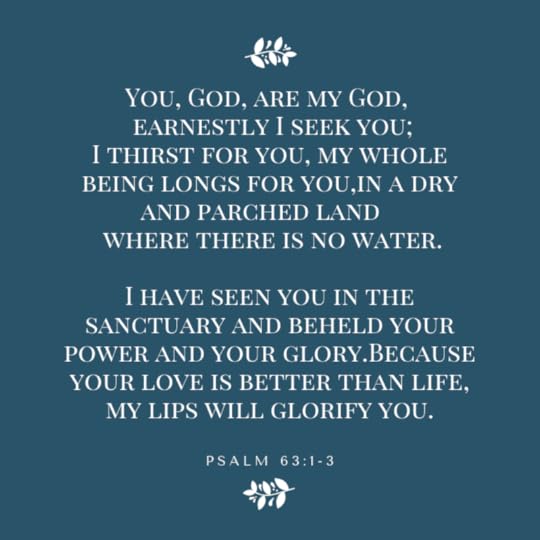
My favorite example of this is Psalm 63, where David comes to God in a state of desperation. He is longing for God, but his soul is dry. The present experience is terrible and even hopeless–”a dry and weary land where there is no water.”
But then the Psalm moves to the past, to the times when God has demonstrated faithfulness, goodness, love. He remembers not just who God is in an abstract way, but who God has been in his own life. He remembers encounters with God’s power, glory, and love.
The past of course stands in dramatic contrast to the present, but it also gets him out of that despair. This memory of the past gives him a vision of justice and fullness in the future.
David is using his “spiritual imagination” here, both to remember the past and to apply it to the future. And once he does that, he is able to move out of a place of despair and dryness. The spiritual imagination is the vehicle for hope.
If you haven’t already, please subscribe to my newsletter to receive regular updates and news. You can also follow me on Facebook , Instagram and Twitter .
The post How the Spiritual Imagination Moves Us Towards Hope appeared first on Amy Julia Becker.
September 11, 2019
Good Samaritan – Welcome the Stranger
The United States’ immigration crisis is on the forefront of my mind after a recent visit to El Paso, Texas and Juarez, Mexico. In this post (the first of a series) I want to share about the trip, who I met, what I saw, and how I think about this as an American Christian, and in particular, how I think about loving my neighbor through Jesus’ story of the Good Samaritan.
Last week, I flew 2,300 miles from Hartford to El Paso to join a group of Christian women to learn more about the border crisis our nation has faced in recent years. We were invited by Welcome a collaboration between World Relief and the National Immigration Forum. We spoke with local pastors and non-profit leaders, volunteers, and border patrol agents. We traveled into Juarez to visit a shelter filled with families from Central America seeking asylum. We stood at a newly constructed section of the border wall and talked through the slats with two women on the other side. What struck me most over the course of our time was how much I still have to learn about what it means to love my neighbor.
How Immigration Has Changed in Recent Years
Our trip started with an information session that explained a significant shift in migration patterns. Twenty years ago, 90% of the people apprehended at the southern border were young men from Mexico trying to sneak into the country. Today, 65% of the people coming to the border arrive as part of family units from the “northern triangle” of Guatemala, Honduras, and El Salvador. They aren’t trying to sneak in. They are announcing themselves at a port of entry and requesting help, seeking asylum.
In a recent change, the United States no longer allows asylum seekers to enter the country, but instead requires people to take a number and return to Mexico (though this policy is being contested in court). On the one hand, this policy means that children are no longer being separated from their parents. (Of course, this type of family separation was not happening until the current administration changed the process.)
On the other hand, it means that Juarez, Mexico has received an influx of 15,000 immigrants in recent months and that tens of thousands of people in need are in limbo for an indefinite period of time. Again, many of them have friends and family in the United States who would be willing to house and support them until their court hearing.
We visited one shelter housing about 100 immigrants, mostly families. We heard the story of a young man fleeing for his life. He had left his family behind and stood in line to request asylum back in May. He has been given a court hearing date in the US in November, at which point he will try to demonstrate that he has a “credible fear of persecution” in his home country. Eighty percent of immigrants with legal representation are able to make their case and receive asylum. But no immigrant–even a very young child who is alone–is guaranteed legal assistance. The vast majority receive no legal advice or representation. The vast majority are denied our aid.
The Border Patrol Has a Really Hard Job
We also talked with members of the border patrol, and hearing from them directly underscored the deep complexities involved in trying to make short and long term changes that will benefit all the people involved. Every day, these men and women go to work with two almost diametrically opposed objectives: One, to apprehend the “bad guys” (their words) who are bringing drugs and smuggling people into the United States. Two, to search for and rescue immigrants who are lost and in need and in danger, crossing the Rio Grande or coming into the country through the desert. Then there’s the third, administrative, job of processing the incredibly high volume of people who are presenting themselves at ports of entry and requesting asylum. The agents expressed the fear that comes with their position, the frustration over lack of funding and support, and their anger at the cartels who send people and drugs our way.
Love God. Welcome the Stranger.
On this trip, I learned about the intricacies of the system. I witnessed the helplessness experienced on both sides of the border. But what struck me most was the claim one pastor made when she was teaching us about the theology of immigration throughout the Bible. “Love the Lord your God” is the most often repeated command in the Old Testament. The second most repeated commandment? Not keeping the Sabbath. Not a food prohibition. Not don’t lie or cheat or steal or commit sexual sins. The second most repeated commandment in the Old Testament: “Welcome the stranger.”
Love God. Welcome the stranger.
Jesus echoes this pattern when he is asked about the most important commandment. “Love God,” he says, and then he adds that the second greatest commandment is to “love your neighbor.” In the Gospel of Luke, Jesus describes loving your neighbor as offering above-and-beyond, at-great-risk-to-yourself, loving aid to the foreigner in need. He tells the parable of the Good Samaritan, in which a Jewish man is left for dead at the side of a road, and two Jewish religious leaders ignore his need. He is saved only because of the excessive generosity and care of a Samaritan, a hated member of a different people group. In other words, Jesus does not define neighbor as the person living in the house next door. He defines neighbor as the stranger, the foreigner, the immigrant. There it is again: Love God. Welcome the stranger.
I have always felt a great deal of sympathy for the two religious leaders who leave the man in the ditch. I have imagined them heading to a “Co-dependents Anonymous” meeting after their journey on the Jericho road, and reporting with a sense of accomplishment that they had maintained good boundaries. That even when they saw someone in need, they knew they didn’t have to be the savior. They trusted that God was in charge and God would provide. They remembered how tempting it was to try to solve other people’s problems instead of confronting their own issues. They received encouragement on their personal growth.
But the men with good boundaries are not the good neighbors in Jesus’ story.
What Does Love Look Like?
I did not come away from this trip with the sense that we should open our borders to anyone who wants to come in. Of course our government needs to keep the border secure against terrorism, fight against the smuggling of drugs and people, and establish orderly and humane processes for the people who desire to enter for work and opportunities for a better life.
I did come away certain that we as Americans, and especially those of us who call ourselves Christians, have a responsibility to participate in caring for these vulnerable people who need help. This trip brought me back to the conversations I’ve had about my book White Picket Fences over the past year. I’ve talked with countless people about how we respond to the injustices within our own borders and the overwhelming and overlapping congruence of problems that inevitably seem to create disparities and suffering here. The dividing lines of immigrant and native-born, asylum-seeker and citizen are just as pronounced as those of race and economic status.
But in all these situations, I return to three conclusions: One, an insistence that if God is love, then those of us who are people of faith can lean into the truth that love is stronger than fear. Two, that while we should acknowledge the diversity and disparities among us, we also can remember our common human identity as those created in God’s image, beloved and able to love in return. And finally, that active response is possible through a humble and holistic combination of using our heads, hearts, and hands. We can seek to learn more, connect to others sharing the same concerns, and discern our own call to loving action.
As with any contentious issue, this one requires thought, prayer, and action, and those actions may be as small as voting in a local or federal election, making a financial donation, or volunteering to serve meals to families in need. It may be as large as signing up to sponsor a family seeking refuge. It may even require sacrifice, just as the man we now call the Good Samaritan risked his own life and gave his own money and time to the stranger on the side of the road.
My time in El Paso was a time of learning, connecting and prayer, and considering my own call to respond with love to my brothers and sisters in need of refuge around the globe.
If you haven’t already, please subscribe to my newsletter to receive regular updates and news. You can also follow me on Facebook , Instagram and Twitter .
The post Good Samaritan – Welcome the Stranger appeared first on Amy Julia Becker.
September 9, 2019
Back to School for the Becker Family – Fall 2019
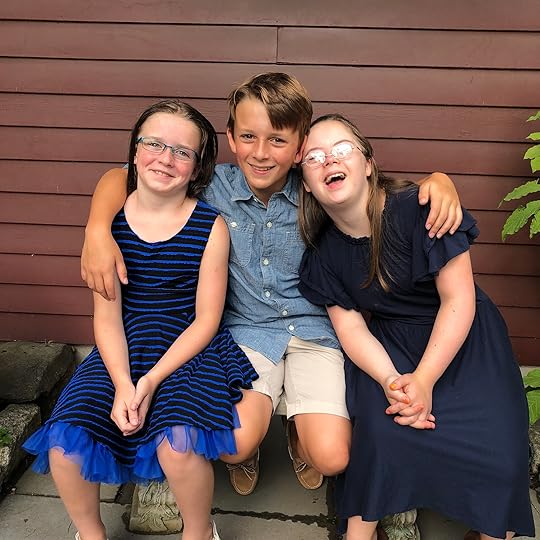 We celebrated going back to school last week with a dinner out at our local tavern. I used to ask the kids pretty regularly how they’ve grown in their bodies, minds and spirits, and that soon became an occasion for lots of eye rolling and audible moans. But they seemed somewhat willing to indulge me when I asked them if they think they grew at all this summer. Marilee (age 8) mentioned her new ability to do a handstand into a bridge. William (age 11) talked about learning how to chop wood at camp. Penny (age 13) celebrated swimming out to the raft at our local beach at high tide.
It led me to ask myself the same thing. In this different season, where did I learn or grow? My first thought was that I ran a mile faster than I have in decades, but more importantly I learned something about keeping an easy pace most of the time and only pushing every so often.
And I spent a lot of time (for me!) sitting in silence, opening myself up to listen to God’s gentle whisper throughout my days. It’s that practice–of setting a timer for 10-20 minutes, holding my palms open on my lap, and repeating a phrase like “I am open to love” or “God is love” that has anchored my days and expanded my soul. Certainly worth celebrating with a salad and some french fries and this gift of a family.
The post Back to School for the Becker Family – Fall 2019 appeared first on Amy Julia Becker.
September 7, 2019
In The News: Refugee Admissions May Be Drastically Reduced or Eliminated
I learned this morning that the Trump Administration is considering drastically reducing and restricting the refugee admissions program, a program that has established our country over the past 40 years as a leader on the world stage in welcoming and caring for some of the most vulnerable people in the world. There is even conversation in the administration around reducing refugee admissions to zero.
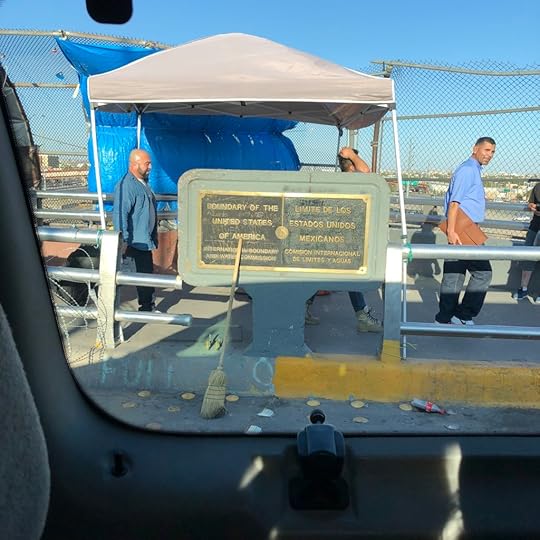
Last week I was invited by Welcome Women to join a group of about a dozen Christian women including writers/podcasters/advocates to visit the border between El Paso, Texas and Juarez, Mexico to meet with asylum seekers and border agents as well as visit shelters and the wall itself. We heard heartbreaking stories; we prayed; we learned so much. The hope is that each of us who attended will use our various platforms to reach a wider audience to inform and encourage them to respond to this crisis and reach out in love to the people whose lives are impacted by it.
Before my trip last week, I didn’t understand the difference between a refugee, a person seeking asylum, and an undocumented immigrant.
I learned that refugees are people fleeing persecution, violence, and danger in their native countries who are granted the status of refugee and then admitted to the United States.
People seeking asylum are also people fleeing persecution and violence, but in this case they have not been already designated as a refugee before their arrival in the US. We have seen an unprecedented number of families from Central America seeking asylum in recent years. We have simultaneously reduced the number of refugees admissions by more than half.
On a pragmatic level, resettling refugees helps stabilize regions of global instability, and demonstrates our responsibility— our ability to respond— in the face of the violence and suffering that has happened in places like Iraq and Afghanistan. On a more basic human level, this program supports an understanding of our nation as a place of refuge, a nation of hope, and a land of plenty. The administration has already reduced the number of refugees admitted to the country by 70 percent, to 30,000.
If you’re like I was – severely uninformed about the crisis – let me recommend to you this reading list the organizers gave us.
I’ve also posted some video and photos from my trip in my saved Instagram stories (those little circles at the top of my page).
I will write more about what I’m processing from my trip to the US/Mexico border soon, but today’s news struck home. Below are two news articles about the recent developments in refugee admissions.
Trump Administration Considers a Drastic Cut in Refugees Allowed to Enter U.S. – NY Times
White House Considers Allowing Fewer Refugees to Enter U.S. – Bloomberg
If you haven’t already, please subscribe to my newsletter to receive regular updates and news. You can also follow me on Facebook , Instagram and Twitter .
The post In The News: Refugee Admissions May Be Drastically Reduced or Eliminated appeared first on Amy Julia Becker.
September 6, 2019
Backstage Thoughts on Privilege: Q Ideas
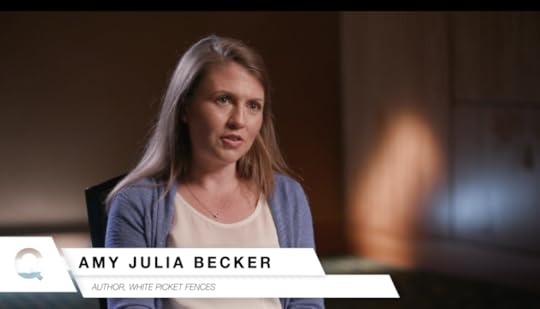
I had a chance to share “backstage thoughts” at the Q conference. After I shared with the crowd, I spoke more about living life behind white picket fences and the ways that privilege can harm us.
One of the things I love about Q Ideas is that assumption that it’s important to ask the big questions and to engage with diverse viewpoints–from the past and present, across the political spectrum, and from different social groups–to try to formulate some answers. They bring together different thought leaders who are interested and knowledgeable in a myriad of topics and engage them in meaningful conversation. During the conference, we heard from 40 different speakers speak on topics as far ranging as gun violence, personal health and well being, disability, education, and justice.
I was grateful that I got to contribute a little bit to both the questions and the attempts at answers in a backstage interview about the reality of privilege and the possibilities of hopeful response, especially within churches.
One of the ideas I’m most interested in these days is of creating collaborative spaces in which diverse groups of people work side by side to pursue a common goal. I got to talk about this and all sorts of other things in this interview:
https://qideas.org/qmoments/q-backstage-thoughts-on-privilege/
“The notion that some might have it better than others, for no good reason, offends our sensibilities. Yet, until we talk about privilege, we’ll never fully understand it or find our way forward.” – Amy Julia Becker
The post Backstage Thoughts on Privilege: Q Ideas appeared first on Amy Julia Becker.