Amy Julia Becker's Blog, page 132
October 31, 2019
Dear Doctor Video from NothingDown.org
As Down Syndrome Awareness Month 2019 comes to a close, I wanted to share this touching video from NothingDown.org that highlights the experience of parents receiving the Down syndrome diagnosis and their difficult interactions with doctors and medical professionals.
As NothingDown says:
It is our goal to change the narrative and to work with the medical community to ensure that EVERY parent is delivered their child’s Down syndrome diagnosis with compassion, up-to-date education, proper resources, and hope. We believe that this film has the strong potential to ignite a much needed change for future parents.
This wasn’t exactly our experience with doctors and nurses, as I share in my book A Good and Perfect Gift, but I can relate to their stories as I wrestled with grief and fear especially in the first weeks and months.
But as I shared in my post 5 Things I Wish I Had Known When My Daughter Was Diagnosed with Down Syndrome:
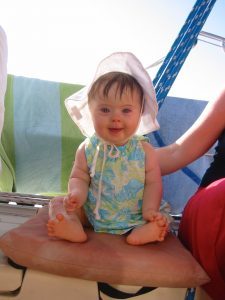
Now, I look back on that young mother, and I want to be able to hold her hand and look into her frightened, angry, sorrowful eyes and tell her not just that it will all be okay. I want to tell her why it will be more than okay. I want to tell her how her daughter will change her life in ways she never could have expected. I want to take her worry and grief and confusion.
And nearly 14 years later, my daughter Penny is a thriving, kind, funny kid who loves books (like her mom!) and ballet. She wrote a letter to a new mom of a baby with Down syndrome recently and ended the letter with the line, “Do not be afraid.” Wisdom and truth from my teenager to all of the new parents out there.
If you haven’t already, please subscribe to my monthly newsletter to receive regular updates and news. You can also follow me on Facebook , Instagram and Twitter .
The post Dear Doctor Video from NothingDown.org appeared first on Amy Julia Becker.


5 Things I Wish I Had Known when Our Daughter Was Diagnosed with Down Syndrome
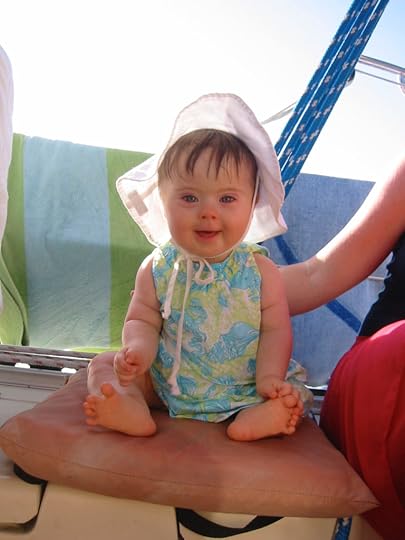 On December 30th, 2005, our firstborn daughter came into the world. It was an easy delivery—a little early, but not premature, no signs of distress or trouble, just a shock of black hair and a puffy face, and eyes the color of the sea on a cloudy day. But two hours after Penny was born, we learned that she had Down syndrome, the presence of a third copy of chromosome 21 in every cell of her body. We thought we had been given terrible news.
Now, I look back on that young mother, and I want to be able to hold her hand and look into her frightened, angry, sorrowful eyes and tell her not just that it will all be okay. I want to tell her why it will be more than okay. I want to tell her how her daughter will change her life in ways she never could have expected. I want to take her worry and grief and confusion. If I could, here is what I would say:
1. You think Down syndrome means tragedy.
And people will compare your experience to that of losing a child in a car accident or to cancer or some other horrible fate. And though you will experience a sense of loss, you will realize eventually that you have lost a hypothetical child, and that the child right in front of you, this child, with her sparkling eyes and crooked teeth and warm soft hand, this child is a blessing. In time, because of the privilege of knowing and loving her, you will realize that your grief has turned to gratitude and that your worry has turned to wonder.
2. You think Down syndrome means isolation.
But you will discover that it brings a world of connections. It’s not only that you will now feel a bond with other parents of children with Down syndrome throughout the country and around the globe. It’s that having a child who looks and acts somewhat different from what you expected, a child who you see as beautiful and funny and kind and smart and brave, will help you to recognize that same beauty in everyone else. You will think your world has become smaller, when it has only begun to grow.
3. You think that Down syndrome means hardship for you and your daughter.
As with any child, you’re right. There will be sleepless nights. There will be doctor’s visits. There will be a time when you find her sitting up in bed with eyes sunken into her head from dehydration after a stomach flu, and you will rush her to the hospital and she will stay for two days. There will be meetings with her teachers who talk about behavior plans. You will worry about her health, her ability to make friends, her future. And yet you will also realize that every life arrives with hardship. And every life arrives with the potential for inexpressible joy.
4. You think Down syndrome means special treatment.
And other people will, with very good intentions, treat her as if she can’t learn and can’t sit still and can’t communicate. But you will believe in her abilities, and you will discover that she can sit in time out just like her little brother. That she can communicate through sign language before she is able to talk with words. That she will work harder than any kid you’ve ever known as long as she is motivated, and that even though it takes longer for her, she will learn—to read, to swim, to tie her shoes, to use gentle hands with her baby sister. You will learn not to treat her as special, but as her own person, with particular struggles and particular gifts.
5. You think Down syndrome means giving more than you have to give.
And some days it will feel that way, as it will with each of your children. But then she will come over to you, with your head in your hands after a fight with your son, and she will say, “Mom, should we pray?” She will come home from school and embrace you and say, “I had a happy day Mom!” She will give back far more than she has ever taken.
She will break your heart. Wide open. And you will be forever forever grateful.
I wrote this post a few years ago for a website that no longer exists. I didn’t want it to be lost, so I am reposting it here today. If you know Penny through my writing, you’ll know that she’s 13 now, and some of these examples are from when she was a lot younger. But I stand by every word of this post, and I hope it will be an encouragement to other parents.
I also wrote a book about the experience called A Good and Perfect Gift.
For the month of October 2019 anyone who joins my mailing list will receive a free pdf of my ebook Missing Out on Beautiful: 7 Essays About Down Syndrome. Sign up in the sidebar to get your copy today!
You can also follow me on Facebook , Instagram and Twitter .
The post 5 Things I Wish I Had Known when Our Daughter Was Diagnosed with Down Syndrome appeared first on Amy Julia Becker.
October 30, 2019
Sara Groves Endorses A Good and Perfect Gift
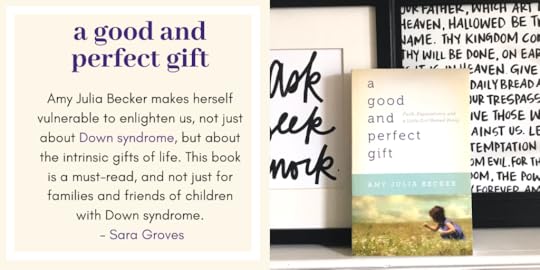
As I read this book, I realized what a gift it is to walk through this story with such an incredibly candid guide! Amy Julia Becker makes herself vulnerable to enlighten us, not just about Down syndrome, but about the intrinsic gifts of life. Amy Julia’s daughter Penny is the pure heart by which many assumptions are exposed. My favorite moments are the conversations with friends and family that flesh out the important difference between pity and compassion. This book is a must-read, and not just for families and friends of children with Down syndrome. — Sara Groves
I wrote A Good and Perfect Gift: Faith, Expectations and Little Girl Named Penny back in 2011. I am grateful for the many people who have not only enjoyed, but been impacted and encouraged by my memoir including artists like singer/songwriter Sara Groves. As she points out, I didn’t just write this book for people personally touched by Down syndrome. I hope instead that through this book we are all reminded that we are limited in our own ways and loved more than we can imagine.
Since Sara Groves wrote this endorsement, we had the chance to be a part of The Porter’s Gate project together. She and other musicians created songs based in part on the conversation that I and others led about what it means to build community and love our neighbors. I highly recommend giving the new album a listen.
If you haven’t read my book already (or even if you have), I am giving away three copies on October 31, 2019. To enter to win, you must submit by October 30 at 9pm EST over on Instagram (full details there). That only leaves a few hours from when this post goes live, so get on it! Penny and I will both write personal notes to all the winners. Good luck!
If you haven’t already, please subscribe to my newsletter to receive regular updates and news. You can also follow me on Facebook , Instagram and Twitter .
The post Sara Groves Endorses A Good and Perfect Gift appeared first on Amy Julia Becker.
October 29, 2019
Three Reasons Why I Don’t Use the Term Ableism
 I’m a fan of the concepts behind political correctness. I think it’s important to use language with intention and care. I think language reflects reality, but I also think language can shape reality. For me, the shift from calling Penny a “Down syndrome baby” to a “baby with Down syndrome,” for instance, was more than a linguistic shift. It was a reflection of a shift in my thinking about who counted as fully human. And yet I avoid certain politically correct words most of the time, including the word “ableism,” which the dictionary defines as “discrimination in favor of able-bodied people.” I believe this concept is both true and helpful in perceiving the world. But I never use that word. Here are three reasons why I don’t use the word ableism.
1. It alienates people who don’t know what the word means.
As a result, it’s a word that can be used as a weapon or a wall rather than a path for mutual engagement and potential connection and understanding. Every academic discipline, every cultural community, every group of specialists, have “insider” language. Within the disability community in particular and the liberal/progressive political community more broadly, words like “ableism” and “ability culture” can easily become a way to identify the people who are knowledgeable and/or on the same side. But there are whole groups of people who might be interested in the concept of ableism and who might recognize the value of people with disabilities but become automatically excluded based on not knowing what the word “ableism” is referring to.
For me, coming to understand and believe in the concept of ableism was kind of like the scene in the movie The Matrix where Keanu Reeves’ character first sees that the world is not as it appears. Ableism emerges out of the idea that social norms create what we call disability. We don’t think of people who wear glasses as disabled, for instance. If our culture didn’t have ready access to opticians and optometrists, however, people in need of glasses would be at significant disadvantages. Similarly, a city that has accessible public transportation and curbs with ramps makes mobility easier for a person in a wheelchair. My friend Jessica, who has cerebral palsy and walks with canes, experiences “disability” very differently from place to place, depending on the architecture and attitudes of the structures and cultures she visits.
The same is true on an intellectual level. In a culture that assumes academic achievement is the key to a successful and meaningful life, having an IQ below the average range is a severe disadvantage. In a culture that assumes that every human being has both needs and gifts, however, then a person with an intellectual disability can participate meaningfully out of his or her own distinct abilities and perspectives even as s/he expresses need. (The L’Arche communities and Friendship House serve as examples of places where this is possible.)
2. It alienates people who will stop listening as soon as a politically correct term enters the conversation.
While there are certainly many people who are dismissive of the concept of ableism and other politically correct terms, there are others who have an automatic negative reaction to the words but not to the concepts behind them. If I can use language to convey the concept without using words that trigger automatic rejection, I will.
3. It’s a linguistic shortcut.
If I use words like “ableism” without defining what I mean, I can easily forget what it is that I’m talking about. But if I force myself to speak and write without using the word but while explaining and offering examples of the concept, then I am sharpening my own understanding, inviting other people into conversation, and contributing to the cause of elevating the typical population’s perception of people with disabilities.
In sum, I want the language I use to build bridges rather than erect barriers. I want to champion the common humanity of people across social divides so that we can celebrate diversity instead of feeling threatened by it.
If you haven’t already, please subscribe to my newsletter to receive regular updates and news. You can also follow me on Facebook , Instagram and Twitter .
The post Three Reasons Why I Don’t Use the Term Ableism appeared first on Amy Julia Becker.
October 28, 2019
In Her Own Words: Penny on Independence and Self-Advocacy
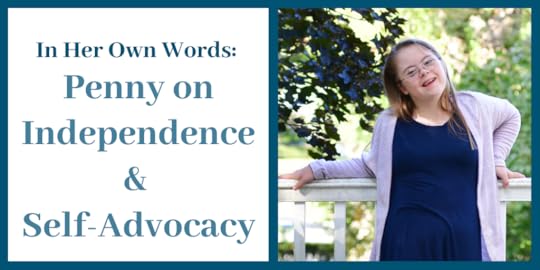 When Penny was first born and diagnosed with Down syndrome, Peter and I went through a hard season in which we felt like our expectations for parenting were overturned now that we had a child with a disability. We had both seen parenting as a decades-long interruption in our plans for our lives, after which we would return to independent living.
But now, we faced the possibility that we would never experience an empty nest. We thought we might need to provide physical and emotional and social care for Penny forever. We talked about living somewhere when we were older and building a guest house for Penny, or living in a city so that she could use public transportation. We assumed she would always live with us. At first, that felt like a loss.
In time, as our love for her grew, we started to question our own assumptions about the goodness of “freedom.” We began to understand that love does not involve conditions, and that love grows and expands as we give ourselves to one another. We began to look forward to our future, living alongside our grown daughter.
But then we started to meet adults with Down syndrome who lived and worked on their own or among peers. We started to learn about programs that equip people with intellectual disabilities for life in community apart from their parents.
We don’t know what the future will bring. We are still very open to the possibility of Penny living at home with us for decades to come. But she is now nearing 14, and she continues to grow in independence and self-advocacy, as she writes about below. We now assume there is a good chance we will face an empty nest after all. Come what may, we are excited to see the ways Penny will continue to grow into her own person, teach us to let go of expectations, and hold on to love.
(As with previous essays, I have not corrected Penny’s spelling or grammar)
Independence is important to me and this is why.
Independence means do everything by myself. These are what i can do independently. Making a snack and taking walks. I can read out loud to the whole church. I pick out my outfit and get dressed, brush my teeth, and pack up my backpack. I could make my breakfast and lunch, but I don’t because then I would be late for school.
These are what i can’t do yet but maybe i could. Putting rubber bands in my invisaligns. Jumping into conversation at the lunch table. Going out for a meal by myself. Make my lunch.
It was hard the first time I made a quesadilla. Because I didn’t know the right moment to put the cheese on. It was hard to flip my quesadilla. I do feel proud of myself for making these happen.
I want to be able to paint my own fingernails,and walk down to Washington Primary School when my friends have a soccer game or softball game, i would also want to live independently but without my parents i mean they could check on me via text, but it would be fun if i could live with my friends in Chicago
If i am going to be independent i can speak up for myself
Sometimes I speak up for myself, but sometimes it is hard.
Advocate means talk and express how i am feeling using words.
I need to speak up when i don’t want to be late for a class.
I need to learn to speak up for myself. When i ask for help and maybe they don’t hear me or just keep doing what they are doing, they might be in the middle of conversation with the teacher. So i need to learn to wait for a break and then step in.
if you don’t speak up for yourself people don’t know what you need. Sometimes i speak to fast i think this has to do with Down syndrome
This is how i talked to Kerry my ballet teacher when i started a higher challenging class. My belly was hurting all of a sudden so i just sat down. I didn’t know how to speak up for myself because we were in the middle of an exercise and i also felt worried about what kerry would say. And then after class i went up to Kerry and said my belly was actually not hurting and i talked to her about how the class was challenging for me. She helped me strategize how i could do the class and all in all i enjoyed it.
This is how i advocate for myself in the beginng and now i will give some advice to people
Take it one step at a time and never give up.
Penny has written several other posts recently including thoughts on entering 8th grade, a letter to a new mom of a baby with Down Syndrome, her attitudes about healthy eating and exercise and ideas about God and church. Her younger siblings have also shared their thoughts on having a sister with Down syndrome.
If you haven’t already, please subscribe to my newsletter to receive regular updates and news. You can also follow me on Facebook , Instagram and Twitter .
The post In Her Own Words: Penny on Independence and Self-Advocacy appeared first on Amy Julia Becker.
October 27, 2019
A New Meaning of Perfection & Book Giveaway
 I feel really honored and grateful whenever new mothers, fathers, and extended family members of kids with Down syndrome tell me that they have read A Good and Perfect Gift and that it resonated with their experience. I’ve heard over and over again that they also felt the confusing mix of love and grief, fear and wonder, guilt and hope, that coursed through me in the early weeks and months of receiving Penny into the world and that this book was like a friend sitting with them through that journey.
That said, my primary intention in writing A Good and Perfect Gift was not to walk alongside people who had children with Down syndrome. My primary intention was to convey to people who would never have the experience of raising a child with Down syndrome all the good gifts we received when Penny came into our lives. I wanted to explain to my over-acheiving perfectionist peers how much we have to gain when we recognize the value of the diverse and glorious human beings all around us, how much we have to learn when we trade competition for community, how much we have to celebrate when we understand perfection in a new way.
Penny taught me that perfection was not about conforming without flaw or blemish to an objective standard. Perfection was about becoming who I was created to be, living into my God-given purpose. Perfection was helping her live into who she was created to be, in her own vulnerable and beautiful humanity.
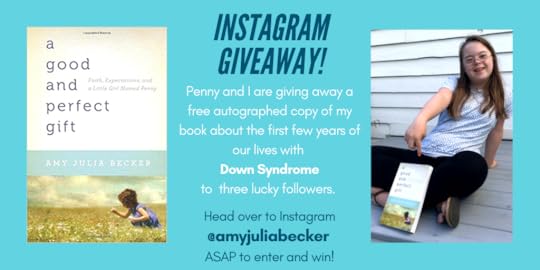
In honor of Down Syndrome Awareness Month, I’m giving away three copies of A Good and Perfect Gift. Now that my daughter is 13, she’s been doing a bit of writing herself and she and I will both include personal notes to the winners of the giveaway. If you’re a new family member of a child with Down syndrome, I hope this book blesses you on your journey and gives you a peek of the joy that awaits. But if you are not a family member of a person with Down syndrome, and especially if you’re ever identified as a perfectionist or over-acheiver, I wrote this book for you.
Details for Giveaway:
Head over to my Instagram account. Follow me and like the post entitled “Giveaway.” Then comment on the post tagging two Instagram friends who might be interested and use the hashtag #GoodandPerfectGiveaway. You have to October 30, 2019 at 9pm EST to enter. Winners will be announced the next day!
If you haven’t already, please subscribe to my newsletter to receive regular updates and news. You can also follow me on Facebook , Instagram and Twitter .
The post A New Meaning of Perfection & Book Giveaway appeared first on Amy Julia Becker.
October 26, 2019
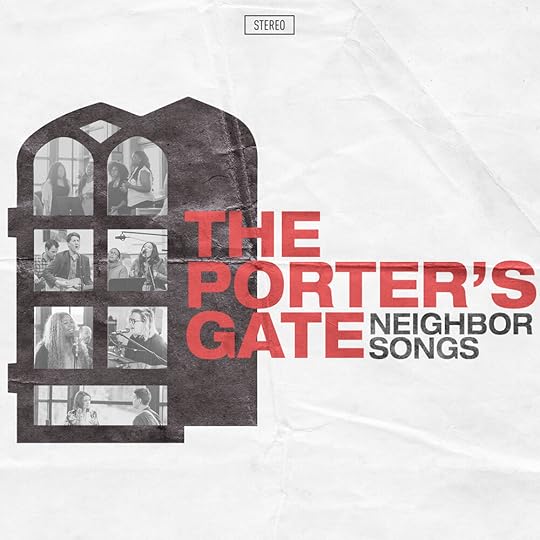
Porter’s Gate Worship Album – Neighbor Songs
I had the great privilege of participating in the Porter’s Gate songwriting project last January in Nashville, Tennessee.
Wait, you didn’t know I’m a songwriter? (I’m not.)
But I was invited to participate in the conversations this diverse group of Christians were having about race, disability, friendship, and the church. I was invited to attend to give a talk at the gathering about how race and privilege impact community as one of several speakers who came to share ideas that would set the tone for the weekend and set the stage for writing the music.
The people who are singer/songwriters (Sara Groves, Audrey Assad, the folks from Urban Doxology, Fernando Ortega, and more) wrote songs (not me!). I got to have a front-row seat to their creative and collaborative process. They developed beautiful and thoughtful songs about community and loving our neighbor. The album of songs from our time together, called Neighbor Songs, was released yesterday.
Check it out here.
(or wherever you listen to music!)
The post Porter’s Gate Worship Album – Neighbor Songs appeared first on Amy Julia Becker.
October 25, 2019
Amy Julia Recommends: 6 Books About Down Syndrome
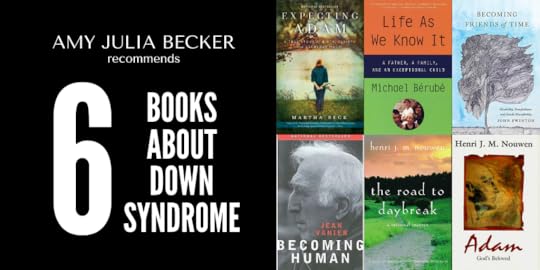 As we near the end of Down Syndrome Awareness Month 2019, I want to offer 6 recommendations of memoirs and (accessible) theological books about people with intellectual disabilities, including Down syndrome, as a way to invite you to consider what it means to be a human being.
What connects us to one another? What distinguishes us from one another? And what do we stand to gain if we begin to believe that we are all created in the image of God and capable of giving and receiving one to another?
MEMOIRS
1. Expecting Adam – Martha Beck
2. Life as We Know It – Michael Berube
My two favorite memoirs of parents of children with Down syndrome are Expecting Adam by Martha Beck and Life as We Know It by Michael Berube. There are many other beautiful books about raising kids with Down syndrome (The Lucky Few, The Year My Son and I Were Born, and Road Map to Holland all spring to mind), but I particularly resonated with Beck and Berube. I might love these simply because they are the first two memoirs I read after Penny was born.
Both are written by people who were in highly intellectualized contexts (Berube is a professor and Beck was a PhD student at Harvard) when they discovered they were having children with intellectual disabilities. Berube’s is filled with big ideas about philosophy and identity. Beck’s is more of a spiritual memoir about letting go of control and surrendering to the givenness of life. Both were beautiful, kind, wise guides for me into receiving our own daughter with Down syndrome as a gift.
THEOLOGY
3. Becoming Human – Jean Vanier
When it comes to the more straightforward theology of disability (neither Beck nor Berube is a Christian), I’ll narrow it down to three recommendations among the many noteworthy options: Jean Vanier’s Becoming Human is a wonderful introduction to Vanier, who founded the L’Arche communities, and his understanding of common humanity. (I also loved his book Signs, and his book in partnership with Stanley Hauerwas Living Gently in a Violent World is also well worth reading.)
4. Adam – Henri Nouwen
5. The Road to Daybreak – Henri Nouwen
Then there’s Henri Nouwen, who is well known as a spiritual teacher more broadly. Nouwen also wrote Adam and The Road to Daybreak , both books about his experience as an intellectual priest who had taught at Yale and Harvard and discovered his own humanity as he encountered people with intellectual disabilities (who didn’t care about his intellect, just about his capacity for love) at a L’Arche community in Canada.
6. Becoming Friends of Time – John Swinton
And finally, John Swinton’s Becoming Friends of Time, a meditation on what typical people like me, who live in the midst of the rush of modern life, can learn about living more slowly and attending to the present moment from people with intellectual disability and dementia.
I recommend these 6 books about Down syndrome for anyone who is concerned with ways of thinking and responding to problems of social justice and social divisions. I’ve found that stories and books about disability are a gentle way for typical people to enter into thoughts and stories about what makes us human.
If you haven’t already, please subscribe to my newsletter to receive regular updates and news. You can also follow me on Facebook , Instagram and Twitter .
The post Amy Julia Recommends: 6 Books About Down Syndrome appeared first on Amy Julia Becker.
October 24, 2019
Clips from the Film Normie & Grappling with “Normal”
“What is normal?” is a question that runs throughout the documentary film Normie. The film traces Annemarie, a young woman with Down syndrome, as she explores her identity and grapples with the notion of normal. Our family had the privilege of participating in this film, and I want to share a few clips from it for two reasons.
One, if you missed my previous post, I want to introduce you to the film (you can bring it to your area by hosting a screening).
Two, these clips offer a spoken version of themes I’ve been writing about for many years.
Penny’s birth, and her diagnosis with Down syndrome, catapulted me into a whole new world of thoughts. In what way was Penny like me? In what way were we different? I wondered this, not so much as far as our characteristics. I knew our kids would be different than me in what they enjoyed and how they looked and their tastes and interests. Did we share a common humanity? Or did Down syndrome put Penny in a different category of human being?
Before Penny was born, I had always seen human beings as broken and beloved, capable of great evil and great good. But Penny’s life helped me to see another aspect of our common humanity.
Humans are broken and beloved, yes, but we are also limited. We are needy, vulnerable, dependent creatures. And being limited is not the same as being broken. In these two clips, not only do you get to see clips of Penny (and Marilee) performing in the Nutcracker two years ago, but I also talk about the difference between brokenness and limitations and the way limitations lead to love.
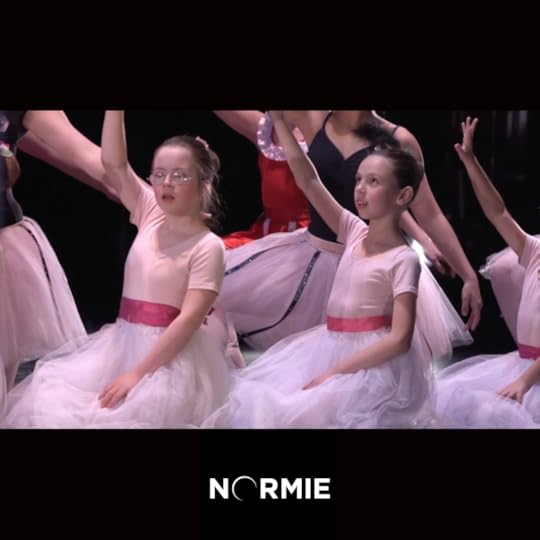
My children and I have written several posts about Down syndrome and disability this month that you might want to check out on this blog. Penny wrote a letter to a new mom of a baby with Down syndrome and shared about eating healthy and her faith in God, and her siblings shared about having a sister with DS.
If you haven’t already, please subscribe to my newsletter to receive regular updates and news. You can also follow me on Facebook , Instagram and Twitter .
The post Clips from the Film Normie & Grappling with “Normal” appeared first on Amy Julia Becker.
October 23, 2019
Why I Don’t Get Mad Anymore When People Don’t Use Person-First Language
Early on in Penny’s life, I learned the concept of ” person-first ” language. At that point, I was calling Penny a “Down syndrome baby,” and the words felt off to me. They felt inaccurate, even slightly offensive, but I couldn’t figure out why. Within weeks, I had read enough about Down syndrome to recognize that many people who had kids with Down syndrome were employing language that emphasized the personhood of their children. They didn’t shy away from the fact that their kids had Down syndrome. But they used language to convey the significance of their kids as kids.
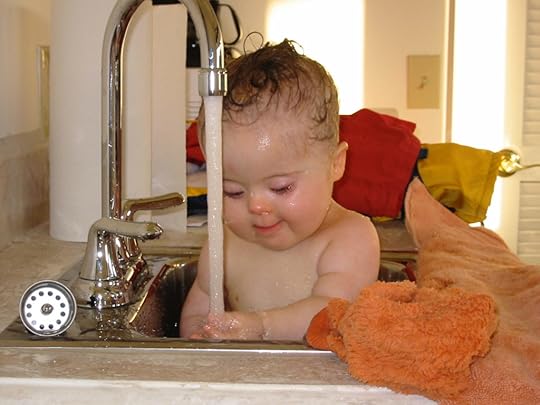 Penny in the sink many years ago. A baby with a Down syndrome diagnosis.
People first. Diagnosis later. That linguistic shift helped me not only to feel comfortable in how I talked about our daughter. It also helped me make a mental shift. It helped me see Penny through the lens of our common humanity first, and only then to name our distinctions.
For a while, I cringed every time I heard someone else use the words “Down syndrome child” (or whatever other variation of this phrase came out). Sometimes I felt offended. Other times I felt critical or even dismissive of the people who said those words. I put people in boxes as a result of their language. Depending on the tone, or on my mood, I wrote people off as ignorant or as biased. Of course, before Penny was born, I would have thought badly of myself.
Over time, I began to recognize the ways that many people who loved Penny used language that didn’t line up with my expectations. I still noticed, but I also became more comfortable with letting our lives speak for Penny’s personhood. I didn’t correct other people’s language anymore. I didn’t cut off relationships because of it.
The shift came not because I became less convinced of the significance of person-first language, but because I grew more confident in Penny’s personhood, in her common humanity. I became more convinced of the existential reality of her being as equal to mine and everyone else we encountered.
I love it when language reflects the reality that Penny is just as much a full human being as any other typical kid. But language itself cannot change the reality of who she is, in her brokenness and her belovedness. I care a lot about language. But remaining in relationships of mutual love and care with other human beings matters far more than policing ” person-first ” and the language around what it means to have Down syndrome.
If you would like to read more about the early years in our journey with a child with Down syndrome check out my memoir A Good and Perfect Gift.
If you haven’t already, please subscribe to my newsletter to receive regular updates and news. You can also follow me on Facebook , Instagram and Twitter .
The post Why I Don’t Get Mad Anymore When People Don’t Use Person-First Language appeared first on Amy Julia Becker.