Amy Julia Becker's Blog, page 130
December 1, 2019
#1: Why Bodies Matter
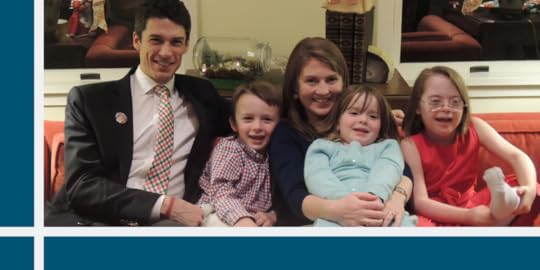
EPISODE #1: Why Bodies Matter—Today’s podcast comes from Matthew 1:1-17 , which might seem boring because it’s a genealogy, but Jesus’ story starts here, and this list of names is important. It reminds us that Jesus—the one who in just a few verses will be named God with us —came to us in a body. It reminds us why bodies matter.
The Genealogy
I am inclined to skip over this section of the story—a list of largely unpronounceable names of people that I don’t remember, even after sitting through years of Sunday School as a kid. But Jesus’ story starts here, and this list of names matters for a host of reasons. One, it connects Jesus to the history of Israel and the promises made to the nation of Israel starting with Abraham all the way back in Genesis 12 (the first book of the Bible). Second, it is not a list of Israel’s finest. It includes outcasts and foreigners as well as luminaries of the faith. Jesus’ family history included prostitutes and adulterers and exile and deception. Jesus’ genealogy offers a subtle reminder of exactly the people Jesus comes into the world to care for. (To that point, take a look at the women included in this list!)
Bodies Matter
But another reason this part of the story matters is that it reminds us that Jesus was a real human being. It reminds us that Jesus was a kid with parents and grandparents. It reminds us that Jesus—the one who in just a few verses will be named God with us—came to us in a body.
In a general sense, we as a culture would like to avoid, ignore, deny, overcome, our bodies….
There’s More!
I’d love for you to listen to the rest of this episode over on my podcast. Or you can read along with the entire Prepare Him Room podcast season by downloading my FREE ebook!
If you haven’t already, please subscribe to receive regular updates and news. You can also follow me on Facebook , Instagram , and Twitter, and you can subscribe to my podcast on Apple Podcasts , Google Podcasts , and Spotify , as well as other platforms.
The post #1: Why Bodies Matter appeared first on Amy Julia Becker.


November 30, 2019
Prepare Him Room: An Introduction
Today’s episode on Prepare Him Room, “An Introduction,” sets the stage for our journey together through the season of Advent.
Commercialism and a Time of Waiting
Lights and bells and trees and wreaths. Music and eggnog and stockings and gifts. Candy canes and “Jingle Bells” and “Silent Night” and gingerbread. The list of delights (and excesses) at Christmastime could go on for hours, and these delights usually start right around the first of December (or earlier if the Santa-themed candy at our local CVS in October was any indication).
I used to feel some degree of indignation at the commercialism and extravagance of this time of year. And I used to protest that we’ve gotten the timing all wrong. According to the church calendar, the party doesn’t start until December 24th, and then we should enjoy twelve days of feasting, from December 25th to January 5th.
I’ve lightened up over the years, especially as I have watched our children’s joy emerge during this season. We make gingerbread houses at the library and trim the tree and sit on Santa’s lap and listen to both secular and religious Christmas music throughout the month of December. But I still want to acknowledge these weeks leading up to Christmas as a time of waiting—a time of eager expectation and a time of mournful longing—for Jesus to come into the world.
An Introduction to Prepare Him Room
Over the years, I have written again and again about Advent and Christmas. And so a few years ago, I decided to gather many of those thoughts into one place. I edited them into an ebook so they could accompany the Biblical stories of Jesus’ coming and birth.
This year, I took that ebook and decided to read it out loud. To you. One day at a time.
Read Along
So if you would like to read along, you can download a free copy of the ebook Prepare Him Room: Advent Reflections on What Happens When God Shows Up.
Or you can just tune into this podcast every day this month. If you read or listen one day at a time over the course of the 25 days ahead, you will hear Jesus’ birth story in Matthew, Luke, and John (and the very brief introduction to Jesus’ life in the Gospel of Mark). I hope and pray these reflections will deepen and widen your experience of Christmas this year.
If you haven’t already, please subscribe to receive regular updates and news. You can also follow me on Facebook , Instagram , and Twitter, and you can subscribe to my podcast on Apple Podcasts , Google Podcasts , and Spotify , as well as other platforms.
The post Prepare Him Room: An Introduction appeared first on Amy Julia Becker.
November 29, 2019
‘Tis the Season for Stress: Bonus Episode

On the podcast today, I’m giving you a bonus episode, “Tis the Season for Stress,” which I hope will provide a sense of where we’re heading together this Advent season. This podcast emerged from an ebook I published with reflections for every day of Advent, and this is a bonus episode because it cannot be found in the ebook. Still, it sets the stage for the theme of this time together as we prepare for love to show up. Yes, we are preparing for love to show up on Christmas morning in the form of a baby boy, but we are also longing for love to show up in the midst of the everyday stress and mess and wonder and joy of the holiday season.
‘Tis the Season for Stress
I woke up at 4:32 this morning. I had set the alarm for 5:30, but my body seemed to think that would not do. There was the knowledge that American Girl orders had to be processed by today in order to ensure delivery by Christmas. There was the overflowing email inbox. There was the intention to exercise regularly throughout this season, especially after two nights in a row (and early on in the week, no less) with parties that involved two glasses of wine.
‘Tis the season for stress, and yet I also love this time of year. Yes, I love the lights on the trees and the scent of wood burning fires and the almond cake our neighbors send. Yes, I love the cards and music and festivities. Yes, I love Marilee’s elf pajamas and William’s Carol of the Bells on the piano and Penny’s desire to buy gifts for all her friends. But beneath it all, beneath the noise and lights and clutter and busyness, I also love the story of the baby in the manger, the story of God with us.
God with Us
I’ve been thinking this year about what this phrase—God with us—actually means. It comes from the word “Emmanuel,” first mentioned in the Old Testament book of Isaiah, and later given to Jesus by Matthew. John hints at the same idea when he says that “the Word became flesh and made his dwelling among us.”
I have been thinking about how easy it is to pretend to be with other people. I pretend to be with our kids every time I nod as if I’m listening but wander away in my thoughts or allow my eyes to linger on my phone. In the years when we considered moving into a low-income, predominantly black neighborhood, I wondered whether in moving there I would be pretending to be with those neighbors, pretending to experience life in a different socio-economic sphere. I imagined transporting myself—with the furniture and paintings we’ve inherited from grandparents—into a new house and new location, and I wondered whether I would really be moving into the neighborhood or just pretending to be there and then heading off to the shore for a vacation with my family.
I remember hearing a story about a missionary who went to a leper colony in order to tell the lepers about Jesus. According to the story, it was only once that missionary contracted leprosy himself, only when he was truly with them, that he understood them, that they listened to him.
God Living with Us
God with us. God not pretending, but actually living with us. Not going on vacation from being human. Not escaping the reality of poverty and discomfort and danger but fully immersing himself in human suffering and joy, learning and loving. God with us, from birth to death.
And so I get to the end of days that feel consumed by incidental stresses—wrapping paper and gingerbread houses and remembering to pay the life insurance bill—and I consider what it means for Jesus to be with me. In this. In the waking up early and the to do list and the food and drink. In the busyness and the stress and the delight of it.
The Invitation
I pray for Christ to once again enter in to the humanity of my sleepless nights and my anxious days, to be with me where I am. And I trust that somehow, his presence will change me. He is willing to be with me where I am, but he also invites me to be with him where he is. He invites me out of 4:30 am wake ups and into rest, out of relentless to do lists and into peace, out of overindulgence and into joy.
If you haven’t already, please subscribe to receive regular updates and news. You can also follow me on Facebook , Instagram , and Twitter, and you can subscribe to my podcast on Apple Podcasts , Google Podcasts , and Spotify , as well as other platforms. New podcast episodes will drop every day throughout the season of Advent! Be sure to listen in!
The post ‘Tis the Season for Stress: Bonus Episode appeared first on Amy Julia Becker.
November 26, 2019
How a Baby with Down Syndrome from Brazil is Changing Lives in Zambia
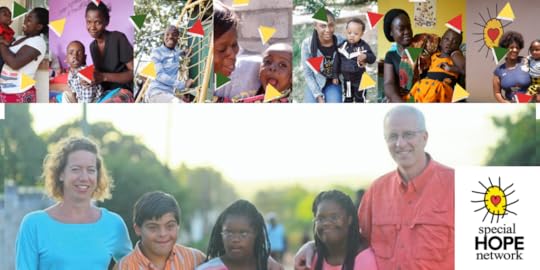
As we move towards a season of thanks and of giving, I invited my friend Holly Nelson to tell the story of the Special Hope Network, a ministry that equips local families in Lusaka, Zambia, to care for their children with special needs. I’m so grateful for a small way to participate in the work Special Hope Network is doing to change lives in Zambia and help families and kids with special needs thrive across the globe. It all started with a baby with Down syndrome from Brazil who is now changing lives in Zambia. In Holly’s words:
A Baby with Down Syndrome from Brazil
I will not forget the day I was handed a bundle of blanket-wrapped-boy that was far too light. Boston. Logan airport. March 13, 1996. Me, handing the bundle back because I was sure this could not be the right boy, shockingly emaciated and nothing like the baby in the picture we had received and were expecting.
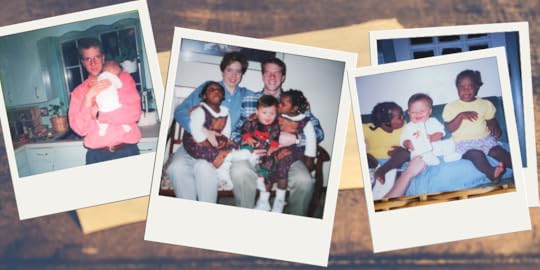
Looking back now, that was the day that Special Hope Network began as a glimmer in the furthest corners of my husband Eric’s and my thoughts. You see, this tiny, barely alive bundle’s name at the time was Rafael Junior Santos da Silva, and he was flown to us from Brazil, from an orphanage that wasn’t willing to take or keep children with special needs. Rafael had Down syndrome.
And though Brazilians are well-known for their respect and care for children, this orphan home did not feed Rafael and care for him like they would a typically developing child. They were slowly reducing his food and letting him die. We began the process of adoption, and that little boy is now a young man ministering to kids with intellectual disabilities in Zambia alongside his twin sisters who also have Down syndrome, Maggie and Mollie, and my husband Eric and me.
Moving to Zambia
Having grown up in the United States at the end of the twentieth century, I hadn’t realized that there are places in the world that don’t know how to care for children with intellectual disabilities. We spent our days driving our kids to OT, PT, SLP, swim lessons, Special Olympics, and every type of medical appointment you can imagine, including three catheterizations and open-heart surgeries in Boston. But as we neared the end of the first decade of the 2000s, we realized, in the words of my husband, Eric,
“The world’s greatest orphan crisis is happening, which means kids with special needs are most likely suffering even more than typically developing kids. I think we are living on the wrong continent!”
Eric flew to check out what was being provided to kids with intellectual disabilities in countries where the HIV/ AIDS epidemic was at its worst, and found each place he visited needing more help than the last.
Special Hope Network in Zambia
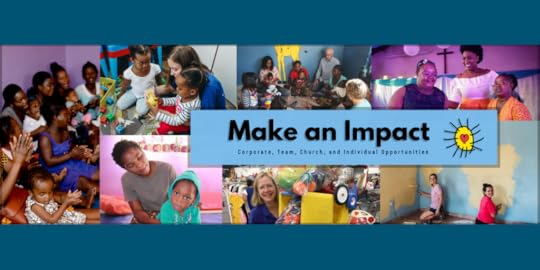
From May 2010 until the present, Special Hope Network has been on the ground in Lusaka, Zambia. We have worked to set up Community Care Centers in densely populated areas. At these CCCs, parents are trained in every aspect of their child’s development, as well as what their child’s disability is, what it is not, and what they can do to care for whatever medical issues the child has. As of today, we have 436 children with intellectual disabilities and a matching number of caregivers (usually a mom, auntie, or big sister) attending sessions weekly.

We employ over 50 staff trained to work with children and their caregiver at our Centers. We equip churches and Pastors who are working toward a certificate to be a ‘welcoming community’ for children with special needs. We invite traditional healers to learn about disability, since they are usually the first place a family takes their child when they begin to develop differently. We offer resources to schools who are encouraging us to come train their teachers so they can keep current students and accept new kids with special needs.
Sam’s Ministry
And it all started with Rafael, a 13-month old boy with Down syndrome from rural Brazil who weighed 10.2 lbs, and who by God’s grace ‘found’ us and became Samuel Rafael. Sam now has a fan club everywhere he goes. He remembers people’s names, the compound where they live, their birthday, and often their family members’ names. He reminds people of their importance and value with his great memory and constant interpersonal interaction. He studies his Bible and prepares to teach Bible study or preach alongside Eric, his Dad.
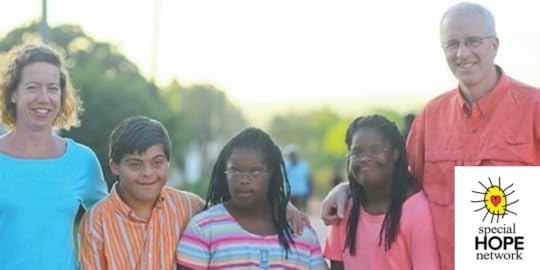
Sam is incredibly helpful and does household jobs willingly and even joyfully (even the repetitive jobs others get tired of, like putting dishes away). Most people we know love to have Sam around. When we go to churches to speak about including people who have intellectual disabilities, Sam, Maggie, and Mollie go along with us, and Sam often convinces the Pastor and congregation that adding people with special needs would be the best decision they could make. His ministry of interacting with people is an integral part of our work here.
How You Can Participate
Many of you who are reading this may be American moms of children with Down syndrome or other special needs. The scope of need in Zambia can be overwhelming, and if you are already spending yourself on behalf of your child with a disability, a whole other country’s broken system is certainly too much to take on. But when many of us join together, the load becomes so much lighter.
I’m writing today to share our story but also to invite you to sponsor a family for $50 each month. You can support another mom of a child with special needs in Zambia so that she can learn and grow as an advocate for her child. Amy Julia and her husband, Peter, financially support Special Hope Network and in that way, are advocating for many, many parents and children. We hope and pray that you will want to join them, and us, in this enormous endeavor.
When I was handed that incredibly malnourished, sick and tiny Rafael, I thought about handing him back, but I didn’t. Similarly, we hope you don’t hand back this opportunity to support a parent advocate and increase the understanding and inclusion of a child with special needs into Zambian society. Your love, your advocacy, and your assurance in the value of the vulnerable can extend to families the world over.
Thank you for reading and considering your participation with Special Hope Network.
If you haven’t already, please subscribe to receive my regular updates and news. You can also follow me on Facebook , Instagram , and Twitter .
The post How a Baby with Down Syndrome from Brazil is Changing Lives in Zambia appeared first on Amy Julia Becker.
November 25, 2019
Gratitude and Growth: How to Practice Gratitude
I’ve been writing about gratitude for the past two weeks in honor of the season of Thanksgiving. Today, as we look at gratitude and growth (or how to practice gratitude), I want to turn our attention to the word we use to denote this holiday, the word thanksgiving. It is a synonym of gratitude, and yet it is also made up of two words—thanks, giving—that offer a guide to the practice and growth of gratitude. Recognizing that for which we are thankful is one aspect of practicing gratitude. Giving to others as a result of that thankfulness is another aspect of gratitude.
Practicing gratitude means expressing thanks. Practicing gratitude also means giving.
Gratitude and Expressing Thanks
“Five minutes a day that can change your life.”
That’s how I once heard the Examen described. It sounds far too good to be true, but I’ve been practicing this five-minute exercise daily for a few months now, and it has indeed changed me.
The Examen originates with St. Ignatius back in the 16th century. The simple version is this: Take five minutes to reflect on your day.
To be more specific: At the end of the day, or in the morning, close your eyes and scan through the past 24 hours as if your life were a movie. What scenes come to mind? As you look back, look for times when you felt particularly alive, good, connected, and times when you felt stuck, disconnected, bad. Where did you experience love, joy, peace, patience (and on down the list of what Paul calls the fruit of the Spirit in Galatians 5)? Where did you experience fear, anger, guilt, anxiety? Ignatius called these moments “consolations” and “desolations.” The purpose of the practice is to begin noticing when you are experiencing the presence of God and when you are feeling as if God is absent.
Daily Consolations
For me, this practice of daily examen has helped me to notice God’s active presence in my life, and that recognition has led naturally into expressions of thanks. I thank God for the chance to use my body and see the beauty of my surroundings when I run. I thank God for car rides with our kids when we happen to have an important conversation. I thank God for the chance to use my gifts to write and speak and teach. I thank God for connecting with friends.
Daily Desolations
This practice has also led me to recognize the circumstances when I am likely to reject, ignore, or deny God’s active presence. Somewhat surprisingly, these moments of “desolation” have also led me to give thanks.
I am incredibly grateful that I have begun to see the moments when I am separating myself from the love of God. When I look back at a day and I notice not only that I snapped at Marilee for expressing disappointment, or I grumbled at Penny for not clearing her breakfast dishes, again, I start to ask questions about what led me to that place. When I notice my tight shoulders or other aches and pains that signal stress and anxiety, I wonder why I’ve turned towards worry when God invites me into trust.
In other words, noticing the “desolations” leads me back into God’s presence. I notice myself wandering away from God, which often leads me to confession. Confession leads me to give thanks for God’s love and mercy. Confession also leads me to give thanks that there is a way out of these places of despair and anger and fear.
There are plenty of ways to practice offering thanks to God. Writing a list at the end of each day. Sharing at the dinner table. Finding formal prayers of thanks. But for me, this practice of Examen has led me to a deeper expression of thanks both for the moments of deep connection to God and in the midst of my own daily inclinations to wander away from God’s forgiving love.
Gratitude and Generosity
Our son William has been playing soccer on the same local team for the past five years. It’s a scrappy, co-ed group of kids, and we often need to pull players from younger teams to fill our roster. But this season our team went undefeated, and after a come-from-behind win in the final game, the head coach summed it all up. He named each player and extolled them not only for their technical abilities but also for their hard work and their good attitudes.
As a parent, I was proud—of the team and of William’s contributions to it. But more than proud, I was grateful. And how did I want to express that gratitude? By giving the coaches gifts.
Gratitude prompts response, and that response begins with an expression of thanks (see above). It often continues through giving gifts.
The God of the cosmos, to whom we give thanks, invites us to express our gratitude not only with words of thanks but also through acts of generosity. Acts of generous giving offer us a way to let go of thinking that we deserve what we own. Giving changes our mindset from that of owners to that of stewards. (For more on this concept, I highly recommend Corey Widmer’s recent sermon series on stewardship.) And giving offers us a way to participate in God’s ongoing healing work within the broken places in our world.
Practice Generosity
Tomorrow, I’m going to run a guest post by Holly Nelson, one of the founders of the Special Hope Network, an organization we’ve been grateful to participate in from afar through financial support. Next week, I’m going to explain why we give where we give, not so that you’ll be compelled to do the same, but so that you can start thinking about where and how you might be called to give.
As I’ve written these past few weeks, gratitude is the antidote to grumpiness, true gratitude leaves room for grief, and gratitude emerges out of an understanding of grace, not in response to our own goodness. Finally, gratitude is a practice of both reflection and action that invites us into God’s abundant loving action in this world.
We are approaching the actual holiday we call Thanksgiving, where we commemorate a meal first celebrated hundreds of years ago. We will reflect on reasons to be thankful for our lives. We will pause to be together with friends and family. Thanksgiving is a time to respond to the gracious, good, ongoing provision of a God who loves us. Thanksgiving is also a time to remember that we are invited to practice gratitude all year long.
If you haven’t already, please subscribe to receive regular updates and news. You can also follow me on Facebook , Instagram , and Twitter .
The post Gratitude and Growth: How to Practice Gratitude appeared first on Amy Julia Becker.
November 24, 2019
Gratitude and Grace
Superficial gratitude can distort the reality of grace. It’s easy for people in relative comfort to compare ourselves to other needy individuals, pity them, and offer gratitude to God for our good fortune. The God of grace invites us to recognize our own neediness so that we can live with gratitude, compassion, and mercy .
“There but for the grace of God go I.”
It sounds like a humble statement. It’s usually uttered when we see someone in dire straits—someone who has lost a job, is grieving a family member, or who has made a terrible decision or a series of minor bad choices that have led to some disastrous conclusion.
On one level, “there but for the grace of God go I” is a way to indicate solidarity. Even if I’m in a position of wealth, power, or health, I recognize that I didn’t earn my good fortune. All could be lost in a heartbeat. It’s also a statement that can signal humility, a recognition that I could sin just as readily, could fall just as far.
The Problems with Thoughtless Grace
And yet, that statement has some insidious implications. First, there’s the sense that God’s grace is arbitrary. That it happened to be bestowed upon me, which explains my good fortune or wealth or power or health.
Second, it’s a statement of pity, not compassion. Pity is a posture of the heart that distances me from the unfortunate one. “I’m so glad I’m not you,” might be another way to say it. Compassion, which at its root means suffering with, is a posture of the heart that moves towards the person currently in need. “How can I stand with you in your pain?” might be another way to express the meaning of compassion.
Third, “there but for the grace of God go I” implies that misfortune, loss, and suffering can all be explained by God’s grace, or by God’s withholding of grace. In either case, attributing human suffering and human security to the grace of God can oversimplify the complicated relationship between God’s grace and human choices.
“There but for the grace of God go I” makes God’s grace arbitrary, allows me to distance myself from whoever is experiencing need, and gets other human beings off the hook for human suffering.
God’s Grace is for All
Biblical writers puzzle through this dynamic often. The Psalmist doesn’t understand why the wicked seem to prosper (see Psalm 73:3). Jesus talks about how God’s blessings of rain fall on good and bad (Matt 5:45). He explains that towers fall and affect the just and the unjust alike (Luke 13:4). Suffering comes to all. God’s grace is available to all. And yet God’s grace is not coercive. It does not manipulate. It simply, and always, invites us into God’s love.
Human beings are invited to participate in God’s love, by God’s grace. Human beings are invited to be God’s hands and feet, God’s body, in the world. We are invited to stand up against oppression and injustice, to work for healing and order and truth, to offer our time and abilities and passions to the work that God is already doing.
Luke records a story that Jesus tells of a religious man and a self-acknowledged “sinner” coming before God. The religious man “stood by himself and prayed, ‘God, I thank you that I am not like other people’ . . .” (Luke 18:10-11). The “sinner,” who Jesus commends, simply asks God for mercy.
Giving Thanks for Grace
As we enter into this season of Thanksgiving, we are not to give thanks like the religious man. We are not to compare ourselves to other needy individuals, distance ourselves, pity them, and thank God for our good fortune. Rather, we are invited to be like the “sinner,” the one who knows his own need, the one who trusts in God’s mercy, and the one who Jesus says goes home justified. We give thanks out of our awareness of our need.
The grace of God does not protect us from misfortune. But the God of grace does invite us into lives of compassion, mercy, and blessing.
I am writing about gratitude in the month of November. Last week, I wrote about gratitude and grumpiness and about how superficial gratitude can distort our understanding of grief . Tomorrow, I’ll write about gratitude and growth, offering a “how to” practice gratitude in the midst of the grumpiness, grief, and grace of the everyday.
If you haven’t already, please subscribe to receive regular updates and news. You can also follow me on Facebook , Instagram, and Twitter .
The post Gratitude and Grace appeared first on Amy Julia Becker.
November 21, 2019
Announcing Love is Stronger Than Fear Podcast
 The short version of the super exciting announcement is that I started a podcast called Love is Stronger Than Fear. The first season of Love is Stronger Than Fear podcast will drop next week, starting on November 29th. This first season is called Prepare Him Room: Advent Reflections on When God Shows Up.
You can listen to the trailer here. And go ahead and subscribe wherever you get your podcasts so that you will receive new episodes each day of the Advent season.
Love is Stronger Than Fear
The longer version of this story is that I put together an Advent ebook that I’ve offered for free over the past few years. (It’s still available, here.) I love reflecting on the meaning of Christmas and Advent, and I’ve received lots of positive feedback on this little book. Last year, my friend Elizabeth said, “You should just record it, so people can listen to it as well.”
The thought lodged in my brain, and I kept thinking it was a great idea. I also kept not doing anything about it. I don’t have any recording equipment. I don’t know how to create a podcast. I don’t know how to title it or find music for it or deal with the technological side of it.
But then I ended up hiring that same friend, Elizabeth, to manage my website overhaul (for which I am eternally grateful), and along the way she said she would also figure out who to hire and how to make the podcast happen. She helped title it and think through the episodes and create the website for it. She even whipped off the design for the Love is Stronger Than Fear logo. Yes, I am in awe of her abilities.
Advent Reflections
All of this is to say that for the month of December (starting on November 30th, in fact), every day I will release a new short episode of the Love is Stronger Than Fear podcast with Advent Reflections. The episodes are anywhere from four to eight minutes long. They will walk you through the Biblical stories about Jesus’ birth, and they will connect those events from thousands of years ago to the stress and joy of the everyday holiday season here and now.
So please subscribe, share, and listen along!
The post Announcing Love is Stronger Than Fear Podcast appeared first on Amy Julia Becker.
November 20, 2019
Sabbatical Announcement and Learning to Rest
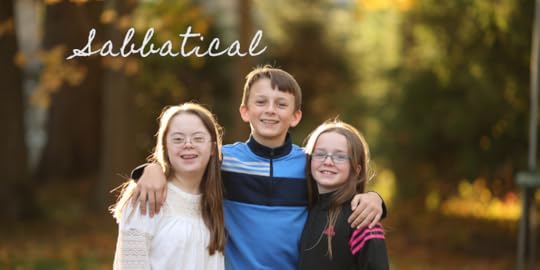
Our family is walking away from the daily routines of life and learning to rest. What’s behind our sabbatical announcement and learning to rest? Here are the details about our sabbatical.
“What do you want me to do for you?”
If you were as honest as you possibly could be, how would you answer that question? Two things to note: the person asking wouldn’t judge you, and the person asking would like to give you what you want.
It’s a tricky question. Even the way it’s phrased involves humility. It isn’t, “What do you want?” or “What do you want to do for yourself?” but “What do you want me to do for you?”
In a state of helplessness and dependence, when you know you can’t give yourself what you need, what do you want me to do for you?
The Question
Jesus asks this question of a blind man named Bartimaeus. Bartimaeus begins by crying out to Jesus for mercy, but when Jesus asks, “What do you want me to do for you?” Bartimaeus says, “I want to see.” And Jesus restores his sight.
I’ve been meeting with a spiritual director once a month this fall, and in one of our sessions she drew my attention to this passage. She asked me how I would respond if Jesus posed the same question to me.
My Answers
The first few things that came to mind felt false, like I was saying what I thought I was supposed to say. I want your love. I want you to teach me. I want you to lead me, guide me, protect me. Nothing wrong with any of that. But those thoughts didn’t emerge from a place of helplessness. They didn’t rise up from a place of need.
So then I went in a different direction. I want success. I want book sales. I want recognition. Again, honest. But I know there are needs underneath those surface desires. I know there’s more.
My Heart’s Whisper
Then there was a whisper: I want to learn how to rest.
As quickly as I heard it, I rebuked it. You get plenty of sleep and have a comfortable life. How could you ask for rest? You don’t work on Sundays (mostly) and don’t work full time. How could you need rest? And finally, if I learn how to rest, what if that means I have to say no to things? What if that means I have to disappoint people? What if that means I don’t get to work as much? What if that means failure?
It will come as no surprise for me to say that the whisper was the truth, the desire underneath the desires, the request that felt vulnerable and messy and uncomfortable to admit to Jesus, much less to myself. But there it is.
Sabbatical Announcement
Meanwhile, my husband, Peter, was offered a 3-month sabbatical from his job. To condense the timeline a bit, he said no to taking three months away, but he did propose an unusual family trip. He asked if I would consider pulling the kids out of school and traveling for six weeks. “You can work from the road if you like,” he offered. (Peter wrote his own version of how this trip came to be and what we’ll be doing on his blog for school here.)
We crafted the time together—ten days in Louisiana, Mississippi, Alabama, and Georgia to see family and follow a trail of Civil Rights museums and memorials. Then flying west for some vacation time as well as more travel, this time in an RV through five national parks and then visits to some of the major coastal cities of California. We’ll have a chance to attend churches from multiple traditions all over the country. We’ll have lots of family time and hopefully good personal time too.
Learning to Rest
I thought about blogging our way through it all. I thought about pitching magazines and compiling notes as we traveled. I even entertained the thought of hiring someone to film some of our time. But I came back to that question from Jesus and my hesitant answer: I want to learn how to rest.
So in a few days I will be walking away from email and social media (though my new social media coordinator will check in on my behalf!). I will take a break from bill paying and supervising homework and driving to ballet class and teaching Sunday School. I’m leaving my beloved planner behind. I’m bringing my Bible and journal and a Kindle. I’m also bringing a commitment to take whatever time is needed every day to be. To be with God. To be with each other. To be outside. To be. To learn. To rest.
Podcast
Still, you might not notice that I’m gone. I’m excited to announce that starting next week, with a bonus episode on November 29th, I’ll be offering a podcast that runs every day until December 26th. There’s some new material, but mostly it’s an audio version of me reading the daily reflections from my ebook that walks through the season of Advent. You can check out the podcast here and subscribe wherever you typically find your podcasts. (More details about my podcast tomorrow!)
The Weeks Ahead
In the weeks ahead, I’ll also be sharing a series of guest posts about how people have responded to White Picket Fences. I have a few posts of my own planned for while I’m away. And I have another new ebook (an Action Guide to WPF) coming out soon. (Clearly, I need to learn how to rest instead of do since I have now planned blog posts into 2020!)
All this is to say, please keep checking in, but I wanted to let you know that I’ll be away for this time. And I wanted to invite you to dig down into that place of need within yourself and offer it to Jesus. You might be surprised, as I was, to discover that desire. And you might be surprised to discover that Jesus wants to give you what you need.
If you haven’t already, please subscribe to receive regular updates and news. You can also follow me on Facebook , Instagram and Twitter .
The post Sabbatical Announcement and Learning to Rest appeared first on Amy Julia Becker.
November 19, 2019
Prepare for Christmas with My Advent Ebook
 Christmas 2017
The calendar might say November, but many of us will soon be preparing for Christmas throughout the season of Advent. I love reflecting on the meaning of Christmas and Advent, and I hope you’ll prepare for Christmas with me by downloading my free ebook – Prepare Him Room: Advent Reflections on What Happens When God Shows Up.
 Christmas 2017
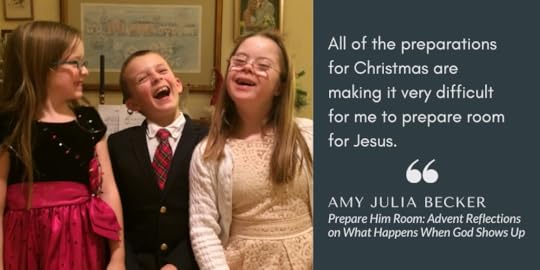
All of the preparations for Christmas are making it very difficult for me to prepare room for Jesus.
In the midst of holiday bustle, let’s acknowledge together these weeks leading up to Christmas as a time of waiting – a time of eager expectation and a time of mournful longing – for Jesus to come into the world.
I also have an exciting announcement coming soon about a brand new podcast to accompany this Advent ebook, so please check back soon!
The post Prepare for Christmas with My Advent Ebook appeared first on Amy Julia Becker.
November 18, 2019
Gratitude and Grief
At its best, gratitude is a way to live in the midst of a world of pain and grief , not a way to cut ourselves off from that grief. Gratitude is a practice that can fortify us for the work of love, but gratitude is not meant to be a practice that cuts us off from the grief and needs of our fellow human beings.
I drive Penny back and forth to her dance classes four days a week, usually in the evening. The ride easily becomes tedious. She takes five classes at a studio twenty minutes away, which amounts to many hours of driving over the course of a week. We make the most of it—I give thanks for the time we have to talk with each other. I am grateful for podcasts and music and the chance to catch up with faraway friends by phone. Every so often, I silence the noise and notice the beauty of the drive. We live in the foothills of the Berkshire mountains, and the road to Penny’s dance classes take me up a small mountain with farmland and rolling hills stretching out as far as I can see. I often catch the sunset, and the beauty of it hits me in the chest like an embrace.
Gratitude and Dependence
But one day last year, when I was driving across that ridge line on my own, and when the orange light of the sun glowed through the gray clouds and turned them to purple and I wondered if I should stop the car and kneel down in thanks right then and there, I was also struck with a thought. How much did my ability to see this beautiful sight depend upon being a white person living in a small town with enough money to pay for my child to go to dance class every day? Were other people excluded from this beauty? Was my sense of gratitude linked to willful ignorance about the needs of other people?
The practice of gratitude at its best reminds me that I am a dependent creature who lives under the loving care of God and who depends upon the loving care of my fellow human beings.
Gratitude and Pain
But giving thanks in all circumstances, as Paul instructs in Philippians, does not mean denying the dark, hard, painful realities of human life. When a loved one dies. When a child suffers. When an innocent person goes to prison. When a guilty person receives an unjust sentence. When a young woman is raped. When a young man is killed.
For people like me, in relatively comfortable, white, affluent social positions, a superficial practice of gratitude can be a way to avoid the injustice, pain, and suffering of the world all around me. What’s worse, a superficial practice of gratitude can lull me into thinking I don’t’ participate in that injustice, pain, and suffering.
Gratitude and the Work of Love
I still give thanks when I see the sunset. But I also engage more regularly in prayer and action related to the hardship in the world. Gratitude is a practice that can fortify us for the work of love, but it is not meant to be a practice that cuts us off from the needs of our fellow human beings. At its best, gratitude is a way to live in the midst of a world of pain and grief, not a way to cut ourselves off from that grief.
I will be writing more about gratitude in the weeks to come. Yesterday, I wrote about gratitude and grumpiness. Next week, we’ll look at how superficial gratitude can distort the reality of grace. And finally, I’ll write about gratitude and growth, offering a “how to” practice gratitude in the midst of the grumpiness, grief, and grace of the everyday.
If you haven’t already, please subscribe to receive regular updates and news. You can also follow me on Facebook , Instagram and Twitter .
The post Gratitude and Grief appeared first on Amy Julia Becker.