Amy Julia Becker's Blog, page 148
May 25, 2017
When Facts Fail (Reflection One on Love and Knowledge and a Baby Girl with Down Syndrome)
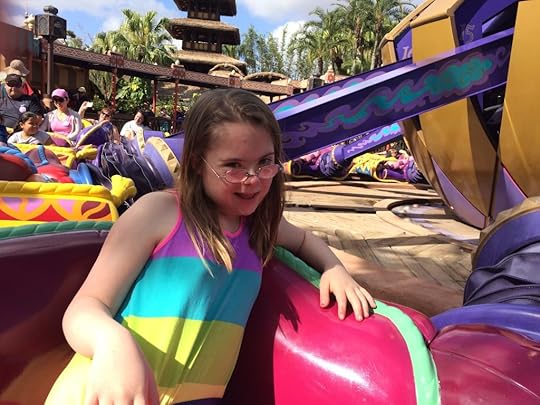
I was invited to share some thoughts on disability and theology with the student body of St. Paul’s School, a boarding school in Concord, New Hampshire. I offered three reflections on the theme of love and knowledge, along with three readings. I have modified them slightly for this blogging format, but I wanted to share the thoughts with you. Here’s the first post (and here are links to the second and third):
One of the ways we combine love and knowledge is by putting facts in the context of experience. I’ve included photos of Penny and our family here to demonstrate what the abstract factual knowledge about Down syndrome looks like in the context of love.
There is a lack of synchronicity between our society and people with disabilities. A society that honours only the powerful, the clever, and the winners necessarily belittles the weak. It is as if to say: to be human is to be powerful. Those who see the heart as a place of weakness will be fearful of their own hearts. For them, the heart is a place of pain and anguish, of chaos and of transitory emotions. So they reject those who live essentially by their hearts, who cannot develop the same intellectual and rational capacities as others. People with intellectual disabilities are excluded; it was never intended that they be included as equal partners with the powerful, with you and me. Our notions of society and our belief systems flow from our own fundamental experiences of life, of death, of joy, and of anguish. If we have never experienced a love that is liberating, how can we talk of love as valuable? –Jean Vanier, Becoming Human
Reflection One:
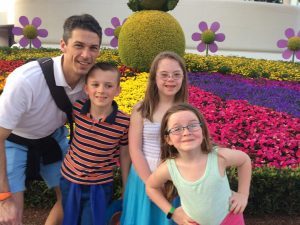
Penny and her family at Epcot, or what love and knowledge together look like
When I was his age, I liked lists of facts too. That’s part of growing up—gathering information about the world around us, assembling a list of things we know, and sharing our knowledge when we can. As we get older, we build on that earlier knowledge. We learn how to use facts and information to make arguments and take action in the world. So by the end of high school, I knew how to analyze poetry and how to solve quadratic equations. I knew how to identify paintings from different eras of art history and how to write essays with a thesis statement. Figuring out the facts and how to use them was a helpful tool for life.
Ten years later, when I first became pregnant, I knew what to do. I bought books that told me what was happening inside my body as the baby grew. Again, I gathered fun facts—the baby is as big as a lemon, an apple, a cantaloupe! I showed up for all my doctor’s appointments. My husband and I learned halfway through the pregnancy that we were having a girl, and we decided we would name her Penny. Once we knew she was a little girl named Penny, we thought we knew all sorts of other things about her. We thought we knew she would have blonde hair, because I had blonde hair as a baby. We thought we knew she would walk and talk early, like her mom and dad. We thought we knew what her future would look like. What we didn’t know was that our baby girl had Down syndrome.
Two hours after Penny was born, we learned from the doctors that they suspected she had a third copy of the 21st chromosome in every cell of her body instead of the typical pair. Over the next few hours and days, information about that extra chromosome piled up. A nurse printed off pages from a website with statistics about babies with Down syndrome. I learned our daughter’s likelihood of childhood leukemia, hearing loss, low muscle tone, heart defects, and developmental delays. Within the next few months I learned that she would need speech therapy, occupational therapy, physical therapy, and many doctors’ visits.
My education up to that point—at boarding school, in college, in seminary—had taught me how to analyze information, how to apply it to the problem at hand, and how to come up with a solution. I tried to approach Penny with that same analytical attitude, but I eventually realized that she was not a problem to be solved. She was a baby. And a baby is a person to be loved.
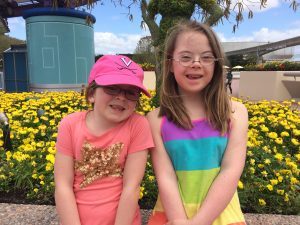 You see, the doctors and the websites and the therapists and the lists of delays could give me some knowledge about Down syndrome. But all the doctors and websites and therapists and lists I could ever find couldn’t tell me that our daughter would have green eyes, or that she would rest her head against my chest as if it was the safest place in the entire world, or that she would love books just like her mom, or that she would care about people so much that as soon as she heard someone was hurting or in need she would rush out of the room to write them a note of sympathy, or that she would work for three years to be able to do the monkey bars, or that she would have friends, or that she would obsess over weddings, or that her favorite color would be blue.
Doctors and nurses and websites and books could give me all sorts of knowledge about Penny. But all the knowledge in the world couldn’t give me what I needed in order to be Penny’s mom, and what I needed in order to grow as a human being. Books and professionals gave me knowledge, but they couldn’t give me what I needed most: love.


When Facts Fail (Reflection One on Love and Knowledge and a Baby Girl with Down Syndrome)
I was invited to share some thoughts on disability and theology with the student body of St. Paul’s School, a boarding school in Concord, New Hampshire. I offered three reflections on the theme of love and knowledge, along with three readings. I have modified them slightly for this blogging format, but I wanted to share the thoughts with you. Here’s the first post (and here are links to the second and third):
One of the ways we combine love and knowledge is by putting facts in the context of experience. I’ve included photos of Penny and our family here to demonstrate what the abstract factual knowledge about Down syndrome looks like in the context of love.
There is a lack of synchronicity between our society and people with disabilities. A society that honours only the powerful, the clever, and the winners necessarily belittles the weak. It is as if to say: to be human is to be powerful. Those who see the heart as a place of weakness will be fearful of their own hearts. For them, the heart is a place of pain and anguish, of chaos and of transitory emotions. So they reject those who live essentially by their hearts, who cannot develop the same intellectual and rational capacities as others. People with intellectual disabilities are excluded; it was never intended that they be included as equal partners with the powerful, with you and me. Our notions of society and our belief systems flow from our own fundamental experiences of life, of death, of joy, and of anguish. If we have never experienced a love that is liberating, how can we talk of love as valuable? –Jean Vanier, Becoming Human
Reflection One:
Penny and her family at Epcot, or what love and knowledge together look like
When I was his age, I liked lists of facts too. That’s part of growing up—gathering information about the world around us, assembling a list of things we know, and sharing our knowledge when we can. As we get older, we build on that earlier knowledge. We learn how to use facts and information to make arguments and take action in the world. So by the end of high school, I knew how to analyze poetry and how to solve quadratic equations. I knew how to identify paintings from different eras of art history and how to write essays with a thesis statement. Figuring out the facts and how to use them was a helpful tool for life.
Ten years later, when I first became pregnant, I knew what to do. I bought books that told me what was happening inside my body as the baby grew. Again, I gathered fun facts—the baby is as big as a lemon, an apple, a cantaloupe! I showed up for all my doctor’s appointments. My husband and I learned halfway through the pregnancy that we were having a girl, and we decided we would name her Penny. Once we knew she was a little girl named Penny, we thought we knew all sorts of other things about her. We thought we knew she would have blonde hair, because I had blonde hair as a baby. We thought we knew she would walk and talk early, like her mom and dad. We thought we knew what her future would look like. What we didn’t know was that our baby girl had Down syndrome.
Two hours after Penny was born, we learned from the doctors that they suspected she had a third copy of the 21st chromosome in every cell of her body instead of the typical pair. Over the next few hours and days, information about that extra chromosome piled up. A nurse printed off pages from a website with statistics about babies with Down syndrome. I learned our daughter’s likelihood of childhood leukemia, hearing loss, low muscle tone, heart defects, and developmental delays. Within the next few months I learned that she would need speech therapy, occupational therapy, physical therapy, and many doctors’ visits.
My education up to that point—at boarding school, in college, in seminary—had taught me how to analyze information, how to apply it to the problem at hand, and how to come up with a solution. I tried to approach Penny with that same analytical attitude, but I eventually realized that she was not a problem to be solved. She was a baby. And a baby is a person to be loved.
You see, the doctors and the websites and the therapists and the lists of delays could give me some knowledge about Down syndrome. But all the doctors and websites and therapists and lists I could ever find couldn’t tell me that our daughter would have green eyes, or that she would rest her head against my chest as if it was the safest place in the entire world, or that she would love books just like her mom, or that she would care about people so much that as soon as she heard someone was hurting or in need she would rush out of the room to write them a note of sympathy, or that she would work for three years to be able to do the monkey bars, or that she would have friends, or that she would obsess over weddings, or that her favorite color would be blue.
Doctors and nurses and websites and books could give me all sorts of knowledge about Penny. But all the knowledge in the world couldn’t give me what I needed in order to be Penny’s mom, and what I needed in order to grow as a human being. Books and professionals gave me knowledge, but they couldn’t give me what I needed most: love.
April 21, 2017
The Gift of Reading
January 2015
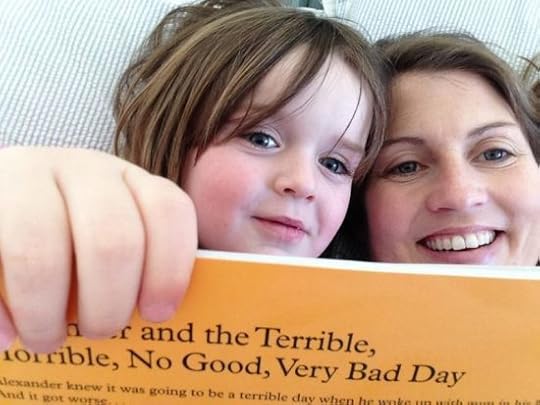
Reading has been a gift to our family. It’s a gift when the kids read on their own! But also when we get to snuggle up together and enjoy a story that takes us to unusual times or places and yet still connects to who we are as humans right here and now. Every month, we offer some of our favorite books–sometimes read-aloud and sometimes read-on-our-own. Here’s a list of last month’s picks:
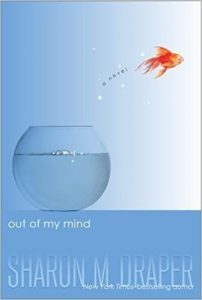 Penny, age 11
Out of My Mind by Shannon Draper
It’s about a girl who has a disability. Her name is Melody. She likes words. And I think a family will like this book because if someone has a disability she or he will like the book.
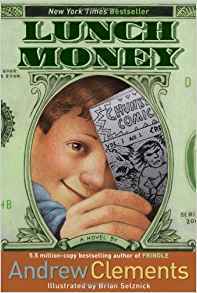
William, age 8
Lunch Money by Andrew Clements.
It is about a boy named Greg and Greg loves money. And he wants to make more and more of it but his next door neighbor Mura also wants to make money and copies his idea. Then he finds out that kids at school carry around lots of money and he decides to sell toys at school. I like this book because there is a lot of action and a lot of money.
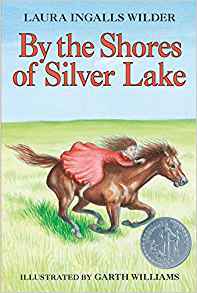 Marilee, age 6
By the Shores of Silver Lake by Laura Ingalls Wilder
I like about it that Grace has been born and that there’s a really fun Christmas for them so they have a really happy Christmas that year. And that Carrie is now a big girl.
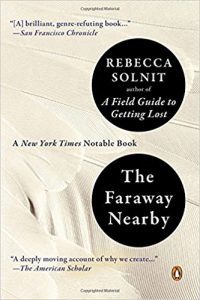 Amy Julia
The Faraway Nearby by Rebecca Solnit
I am about halfway through this memoir reflecting on life and loss and what it means to have a story to tell. For anyone who likes beautiful language, compelling storytelling, and reflection on big ideas, I highly recommend this book.
Click here for a full list of our family’s reading recommendations.
The Gift of Reading
January 2015
Reading has been a gift to our family. It’s a gift when the kids read on their own! But also when we get to snuggle up together and enjoy a story that takes us to unusual times or places and yet still connects to who we are as humans right here and now. Every month, we offer some of our favorite books–sometimes read-aloud and sometimes read-on-our-own. Here’s a list of last month’s picks:
Penny, age 11
Out of My Mind by Shannon Draper
It’s about a girl who has a disability. Her name is Melody. She likes words. And I think a family will like this book because if someone has a disability she or he will like the book.
William, age 8
Lunch Money by Andrew Clements.
It is about a boy named Greg and Greg loves money. And he wants to make more and more of it but his next door neighbor Mura also wants to make money and copies his idea. Then he finds out that kids at school carry around lots of money and he decides to sell toys at school. I like this book because there is a lot of action and a lot of money.
Marilee, age 6
By the Shores of Silver Lake by Laura Ingalls Wilder
I like about it that Grace has been born and that there’s a really fun Christmas for them so they have a really happy Christmas that year. And that Carrie is now a big girl.
Amy Julia
The Faraway Nearby by Rebecca Solnit
I am about halfway through this memoir reflecting on life and loss and what it means to have a story to tell. For anyone who likes beautiful language, compelling storytelling, and reflection on big ideas, I highly recommend this book.
Click here for a full list of our family’s reading recommendations.
March 21, 2017
On World Down Syndrome Day, Some Thoughts on Beauty, Vulnerability, and Love
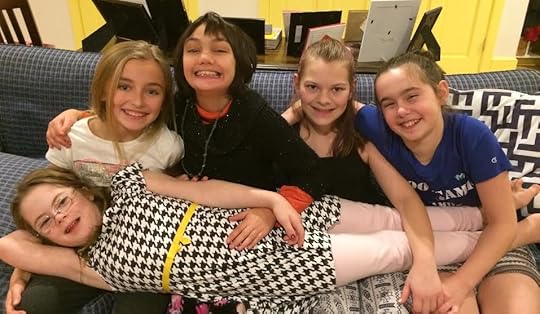
Penny’s friends celebrate her on her 11th birthday
Dear friends,
Last week I told our kids that today is World Down Syndrome Day, a day across the globe to celebrate the lives of those living among us with Down syndrome. Marilee promptly suggested that Penny should receive breakfast in bed, presents, and no chores for the day. William promptly protested that he doesn’t have a comparable day of leisure and celebration. Penny just shrugged.
I’ve written for two different publications today about what we celebrate when we celebrate Down syndrome. For Christianity Today, I’ve reflected on the temptation to defend Penny’s life because it is useful rather than because it is valuable. For OnScripture, I’ve written about the temptation to see people with disabilities as object lessons rather than those who share in our common humanity.
In both cases, as much as I try to ground my thinking in ethics and data and theology, I know that my passion for this topic emerges most of all out of our own lived experience with a little girl who was diagnosed eleven years ago with Down syndrome. It would be easy to claim that I am biased, subjective, unable to see clearly because of my love for her. I’ve been struck recently, though, by the writing of the Apostle Paul about love and knowledge. He writes to the Philippians, “this is my prayer: that your love may abound more and more in knowledge and depth of insight…” and to the Galatians, “The only thing that counts is faith expressing itself through love,” and again to the Corinthians, “If I have all knowledge…but have not love…I am nothing.” Paul isn’t discrediting knowledge, but he is saying that the only knowledge that matters is the knowledge that emerges out of love. Today is a day where a lot of people around the world are proclaiming the knowledge that has grown out of love for their children, sisters, brothers, and friends, the knowledge that people with Down syndrome are worth celebrating as they are.
Blessings,
Amy Julia
Sign up today if you’d like to receive my monthly newsletter.
On World Down Syndrome Day, Some Thoughts on Beauty, Vulnerability, and Love
Penny’s friends celebrate her on her 11th birthday
Dear friends,
Last week I told our kids that today is World Down Syndrome Day, a day across the globe to celebrate the lives of those living among us with Down syndrome. Marilee promptly suggested that Penny should receive breakfast in bed, presents, and no chores for the day. William promptly protested that he doesn’t have a comparable day of leisure and celebration. Penny just shrugged.
I’ve written for two different publications today about what we celebrate when we celebrate Down syndrome. For Christianity Today, I’ve reflected on the temptation to defend Penny’s life because it is useful rather than because it is valuable. For OnScripture, I’ve written about the temptation to see people with disabilities as object lessons rather than those who share in our common humanity.
In both cases, as much as I try to ground my thinking in ethics and data and theology, I know that my passion for this topic emerges most of all out of our own lived experience with a little girl who was diagnosed eleven years ago with Down syndrome. It would be easy to claim that I am biased, subjective, unable to see clearly because of my love for her. I’ve been struck recently, though, by the writing of the Apostle Paul about love and knowledge. He writes to the Philippians, “this is my prayer: that your love may abound more and more in knowledge and depth of insight…” and to the Galatians, “The only thing that counts is faith expressing itself through love,” and again to the Corinthians, “If I have all knowledge…but have not love…I am nothing.” Paul isn’t discrediting knowledge, but he is saying that the only knowledge that matters is the knowledge that emerges out of love. Today is a day where a lot of people around the world are proclaiming the knowledge that has grown out of love for their children, sisters, brothers, and friends, the knowledge that people with Down syndrome are worth celebrating as they are.
Blessings,
Amy Julia
Sign up today if you’d like to receive my monthly newsletter.
March 2, 2017
My latest piece for CT Today, “Give Your Kids the Gift of Absence”
I have a new post over at Christianity Today. Click here to read my latest piece, “Give Your Kids the Gift of Absence.”
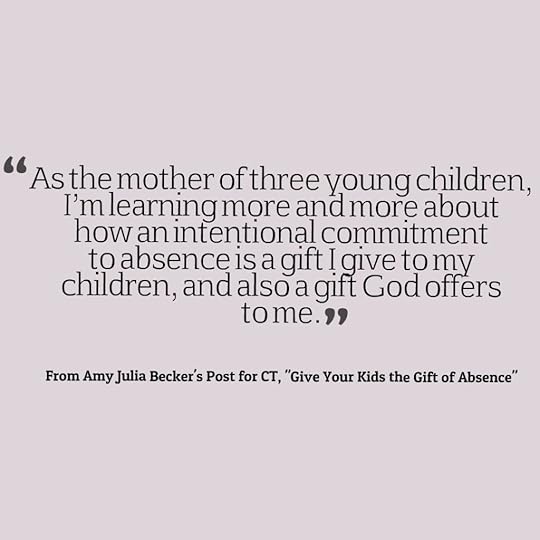
My latest piece for CT Today, “Give Your Kids the Gift of Absence”
I have a new post over at Christianity Today. Click here to read my latest piece, “Give Your Kids the Gift of Absence.”
January 31, 2017
In a National Moment of Fear, Persevere in Love
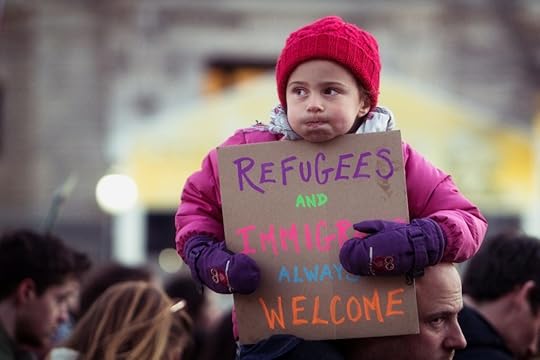
Photo Courtesy of Lorie Shaull
“Trust your love instead of your fear.” I wrote those lofty words back in November, on the heels of President Trump’s election. Now, a few short days after President Trump took office, I’ve been asked whether I stand by the sentiment. Shouldn’t I be afraid for my daughter, who has an intellectual disability? Shouldn’t I be afraid for my friends who don’t fit into favored identity groups? Shouldn’t I be afraid on behalf of freedom and justice? Despite the many ways in which I disagree with Trump’s cabinet selections, executive orders, and particularly his policy on immigration so far, I continue to advocate for love as the critical agent in overcoming fear.
Trump’s policies themselves emerge out of a place of fear—fear that America is no longer “great,” fear that immigrants steal jobs and bring terror, fear that women and people with disabilities and people with different racial and ethnic backgrounds than his represent the incomprehensible and threatening “other” rather than a diverse and glorious array of beloved humanity.
We are seeing fear in action right now. It is chaotic and cruel. It is also irrational. Fear of radical Islamic terrorism on American soil has been the cause of big scary headlines, but not the cause of many deaths (According to the Huffington Post, an average of two people die each year in this country as a result of radical Islamic terrorism enacted by immigrants. 21 die due to “armed toddlers.” 69 due to lawnmowers. Over 700 due to falling out of bed. And, a number that raises its own terror: over 11,000 die due to being shot by another American.).
So if you are with me in feeling concerned about the chaos and fear in our nation right now, I want to offer a few ways to persevere in love. If you want to “trust your love instead of your fear,” perhaps you will join me in:
Talking with our children about kindness and forgiveness and love, teaching them how to share, showing them what love looks like in action so that they will become citizens who grow up with love as their default response, even their default response to chaos and fear.
Finding small but meaningful actions that demonstrate love towards others and love towards creation. For me, this includes actions like recycling. It includes writing emails and making phone calls to local legislators. It includes advocating for inclusion of children with disabilities in our schools.
Challenging ourselves. As a white person in Northwestern Connecticut, it is easy for me to feel insulated from people of color, from the problems and possibilities of my neighbors who live in cities, from people in other states without the same access to health care or education. For me, this means reading books that expand my world (I recently read The New Jim Crow, which deals with problems related to mass incarceration, for example. I also have Charles Murray’s Coming Apart, about the decline of white America, at the top of the queue for books up next.) and my kids’ worlds (We just finished reading The Birchbark House, a beautiful story about the Ojibwa tribe of Native Americans). It also means I am scanning the headlines of both the New York Times and the Wall Street Journal to try to balance my understanding of the political scene.
Considering ways our circles of influence—family, community, work—can support love. For me, this means writing a new book to acknowledge my own privilege and how it operates and to look for ways to respond to that privilege with hope and love rather than guilt and fear.
Praying and fasting for justice in our nation. I recently purchased a book called Praying for Justice, which offers daily passages from the Bible as a prompt for prayer. I have also joined a group which invites fasting for one meal on Mondays in order to direct attention towards prayer for our nation in general and for racial reconciliation and justice in particular. (You can join this group here.)
The political process is at work. Judges and lawyers are challenging Trump’s decrees. Individual citizens are giving money towards organizations that defend freedom (the ACLU raised 24 million dollars in the past few days—six times what it raises in a typical year!). People are protesting and praying.
Trump’s actions have shown us what fear of “the other” looks like. It looks like despotism, chaos, injustice, and pain. Now it is our turn to show what love looks like.
In a National Moment of Fear, Persevere in Love
Photo Courtesy of Lorie Shaull
“Trust your love instead of your fear.” I wrote those lofty words back in November, on the heels of President Trump’s election. Now, a few short days after President Trump took office, I’ve been asked whether I stand by the sentiment. Shouldn’t I be afraid for my daughter, who has an intellectual disability? Shouldn’t I be afraid for my friends who don’t fit into favored identity groups? Shouldn’t I be afraid on behalf of freedom and justice? Despite the many ways in which I disagree with Trump’s cabinet selections, executive orders, and particularly his policy on immigration so far, I continue to advocate for love as the critical agent in overcoming fear.
Trump’s policies themselves emerge out of a place of fear—fear that America is no longer “great,” fear that immigrants steal jobs and bring terror, fear that women and people with disabilities and people with different racial and ethnic backgrounds than his represent the incomprehensible and threatening “other” rather than a diverse and glorious array of beloved humanity.
We are seeing fear in action right now. It is chaotic and cruel. It is also irrational. Fear of radical Islamic terrorism on American soil has been the cause of big scary headlines, but not the cause of many deaths (According to the Huffington Post, an average of two people die each year in this country as a result of radical Islamic terrorism enacted by immigrants. 21 die due to “armed toddlers.” 69 due to lawnmowers. Over 700 due to falling out of bed. And, a number that raises its own terror: over 11,000 die due to being shot by another American.).
So if you are with me in feeling concerned about the chaos and fear in our nation right now, I want to offer a few ways to persevere in love. If you want to “trust your love instead of your fear,” perhaps you will join me in:
Talking with our children about kindness and forgiveness and love, teaching them how to share, showing them what love looks like in action so that they will become citizens who grow up with love as their default response, even their default response to chaos and fear.
Finding small but meaningful actions that demonstrate love towards others and love towards creation. For me, this includes actions like recycling. It includes writing emails and making phone calls to local legislators. It includes advocating for inclusion of children with disabilities in our schools.
Challenging ourselves. As a white person in Northwestern Connecticut, it is easy for me to feel insulated from people of color, from the problems and possibilities of my neighbors who live in cities, from people in other states without the same access to health care or education. For me, this means reading books that expand my world (I recently read The New Jim Crow, which deals with problems related to mass incarceration, for example. I also have Charles Murray’s Coming Apart, about the decline of white America, at the top of the queue for books up next.) and my kids’ worlds (We just finished reading The Birchbark House, a beautiful story about the Ojibwa tribe of Native Americans). It also means I am scanning the headlines of both the New York Times and the Wall Street Journal to try to balance my understanding of the political scene.
Considering ways our circles of influence—family, community, work—can support love. For me, this means writing a new book to acknowledge my own privilege and how it operates and to look for ways to respond to that privilege with hope and love rather than guilt and fear.
Praying and fasting for justice in our nation. I recently purchased a book called Praying for Justice, which offers daily passages from the Bible as a prompt for prayer. I have also joined a group which invites fasting for one meal on Mondays in order to direct attention towards prayer for our nation in general and for racial reconciliation and justice in particular. (You can join this group here.)
The political process is at work. Judges and lawyers are challenging Trump’s decrees. Individual citizens are giving money towards organizations that defend freedom (the ACLU raised 24 million dollars in the past few days—six times what it raises in a typical year!). People are protesting and praying.
Trump’s actions have shown us what fear of “the other” looks like. It looks like despotism, chaos, injustice, and pain. Now it is our turn to show what love looks like.