Amy Julia Becker's Blog, page 144
June 2, 2018
The Difference between Hardship and Suffering, and Why It Matters
Here are some of my thoughts from this past week, which include my thoughts and questions about hardship and suffering, a video about what it means to follow people in general and Jesus in particular, and some recommendations for listening and reading. Enjoy!
May 30,2018
Recently I have been thinking about hardship and about suffering and how often we confuse the two and how that can get us into trouble. In almost any area of life, there’s a line between suffering and hardship. Suffering always involves hardship, but I don’t think hardship always involves suffering.
So in the physical realm I would put most injury and disease in the category of suffering and most discomfort in the category of hardship. When it comes to the emotions, there’s a distinction to be made between the suffering of severe emotional loss and the hardship we experience when we are disappointed about something. And in the social realm, social rejection and exclusion and bullying might count as suffering whereas learning how to navigate the drama of the middle school lunch table might count as hardship.
We (I!) too often conflate suffering with hardship. When we do this, we can err in two directions. One, we can think that suffering is necessary for our growth as human beings. Now, suffering certainly can help us grow as humans. But it also can crush us. Some of the worst platitudes come in the midst of horror and tragedy. “What doesn’t kill you only makes you stronger”-type sayings are an attempt to pretend that suffering is just hardship, just an opportunity for growth rather than a manifestation of brokenness and evil in the world.
Hardship, on the other hand, does seem necessary to our growth. Necessary, and even good. But since we want to avoid suffering (for good reason) in our own lives and particularly for our children, we might end up avoiding hardship at the same time and cutting ourselves off from growth.
We cannot avoid suffering (though I wish we could and I think it is good to try to protect ourselves and our children from suffering in many cases). But we often can avoid hardship, and I see the ways that avoiding hardship has ended up harming me and our kids.
I recognize that even talking about the CHOICE to avoid hardship is a sign of living with an unprecedented amount of economic stability and with education and opportunity most of the world does not know and has never known. But that’s my reality and the reality of many Americans. We have to choose what has usually been assumed.
Still, I’m trying to choose hardship, at least sometimes–the little things like walking in the rain (unpleasant rain, not lovely spring rain) and being wet and cold and getting through it. Or making our children endure the disappointment of not getting the same amount of dessert as their sibling when the sibling’s friend has a birthday party at school. Or pushing through an awkward social situation. Or pushing through an illness or a bad night of sleep or the disorienting news of an unexpected diagnosis.
When I have chosen to avoid hardship, I thought I was keeping us from suffering when really I was keeping us from growing up.
May 31, 2018
Who do you follow? Why do you follow them? Where are they leading you? Today I’m talking about whether following Jesus is like following someone on social media or like following a guide up a mountain (or both).
June 1, 2018
I have read and listened to so many things this week that I want to share and recommend. First, Fleming Rutledge’s essay for Christianity Today about why she is neither spiritual nor religious. Here’s her summary of why:
“Spirituality, too, like religion, is essentially a human activity or trait that stands in stark contrast to faith. To put it in the simplest terms possible, spirituality is all too easily understood as human religious attainment, whereas faith itself is pure gift, without conditions, and nothing can be done from our side to increase it or improve upon it. On the contrary, we throw ourselves upon the mercy of God, saying, “Lord, I believe; help my unbelief!””
As someone who is easily caught up in both spirituality and religion, her words were a helpful corrective to point me back to gratitude for God’s grace rather than thinking I can achieve my own spiritual growth or well being.
The second is John Powell’s interview with Krista Tippett on On Being. Powell is a law professor and an African American who talks so graciously and powerfully about what racism has done to the psyches of white and black Americans and how healing can come from a desire for mutual well-being. I will be listening to this one again:
And finally, I want to recommend Jesmyn Ward’s memoir Men We Reaped (I actually want to recommend everything by Jesmyn Ward, who is primarily known as a novelist). It is the story of her life as a young girl on the coast of Mississippi through the lens of four young men, including her brother, who were killed during her early 20s. She is a masterful writer, and she puts stories to the statistics of despair about low-income black America.
What are you reading, watching, or listening to that is changing the way you see yourself and the world right now?


May 28, 2018
Can Stories with Disability Have a Happy Ending?
Once a week I compile the thoughts I’ve shared on my Facebook Author Page into one blog post. As it happened, last week on Monday I wrote a post (see May 21 below) about what it takes for people to change their minds. Then on Wednesday, I received a message from a woman whose family has decided to travel around the United States for a year (they sold their house, quit their jobs, and bought an RV) in order to get to know people who they have only thought of in stereotypical terms in the past. You can watch a video explaining their journey here. As for the rest of the week’s thoughts:
May 21, 2018
What does it take for minds to change? Can you think of a time when you changed your mind about something that really mattered to you? Maybe it was a political issue or a religious ideal or even an attitude towards a group of people.
I listened to this interview that On Being host Krista Tippett did with Derek Black, a former white nationalist, and Matthew Stevenson, an orthodox Jew who befriended Derek, and I highly recommend taking the time to hear their whole conversation.
Many things struck me about it, but one was that Derek said three things combined to change his mind. One, he was welcomed by “the other” as a friend, not as a project and not as an enemy, because Matthew decided to invite Derek to a weekly Shabbat dinner for two years. In those dinners, they didn’t discuss white nationalism. Two, individuals from that dinner asked Derek if they could discuss his ideas about white nationalism in private. Three, his ideas were adamantly and vocally opposed on campus.
This combination of friendship, private disagreement, and public disagreement all combined so that Derek eventually saw the flaws in his own arguments about white nationalism and came to renounce those views even though it meant a severe break from his past and even his family.
This story speaks in many ways to our current moment. There’s an important place for vocal disagreement, protest, and outrage. There’s an equally important place for friendship, quiet but honest disagreement, and love and care for one another. For any of us who have passionate opinions about religion, politics, or other controversial topics, these young men are a model of how we can learn from and grow with each other.
So here’s my question–when is the last time you’ve had dinner with someone you knew you disagreed with about something really important to you? How did it go?
May 23, 2018
So I’ve been thinking about contentment. The dictionary tells me it is a “state of happiness and satisfaction.”
Five years ago, I was at a low point of discontentment: yelling at the kids, unhappy with my body, lonely, directionless.
Now I feel really grateful for our kids, my body, my friendships, my vocation as a writer and thinker and speaker. What changed?
In some ways, not much. I live in the same house, though we’ve been here longer so I’ve gotten settled and met people. I live in the same body, though I’ve drastically changed my eating (and drinking!) habits and I exercise regularly now. I have the same vocation, though I think it is now tethered to a desire to be faithfully fulfilling my purpose rather than a desire to succeed.
I used to think that being content meant being apathetic, not wanting to grow, just staying the same. I’ve learned that contentment is more akin to gratitude, and therefore that it actually spurs growth. It allows me to take risks and try things because who I am is not dependent upon success (or failure). These days I’m more willing to try new things because I’m happy and satisfied with where I am now.
There’s a place in the Bible where Paul writes about learning how to be content in all circumstances. Contentment, he writes, comes from being strengthened by God. Not by apathy, but by an ongoing relationship with the power that created us, the power that strengthens and grows us up into who we are meant to be.
For any of you who are struggling with discontentment right now, I write further about my own struggles and growth in this area in Small Talk, which happens to be on sale on Amazon today for $5.95.
In the chapter on waiting, I write about how Penny has taught me about contentment:
“When Penny was born with Down syndrome, people said she would help me learn patience. I assumed I would learn patience because it would take a long time for her to accomplish things. Books and doctors told me I would have to wait for her to talk and walk and learn her colors and use scissors.
“They were right, I suppose. Penny walked when she was two, and even then she wobbled. She spoke a few words by the time she was three. But I never felt as though I was sitting around waiting for those things to happen. She was always learning the next thing, whether it was a new sign language word or a new sound or the next motion in pulling herself up. I rarely felt impatient for her to do more or for her to do it more quickly, mainly because she seemed so content with where she was.”
There it is again–growth connected to contentment, happiness with where I am right now being the fuel for change in the future. I can’t say there was a magic formula to get to this place. Circumstances changed for the better. But prayer and saying thank you also played a big part. So if you’re struggling with unhappiness or dissatisfaction, maybe prayer, or Paul’s words to the Philippians, or even Small Talk can help you move to a place of contentment and growth.
May 23, 2018
I am hoping to write a long-form personal essay about reading The Trumpet of the Swan with our kids. I read it five years ago with Penny and William, and Marilee and I are reading it together now. If you haven’t read it, it’s by E.B. White (who is more famous for Charlotte’s Web, but in my opinion Trumpet is even better), and it tells the story of a “defective” trumpeter swan named Louis. Louis can’t speak. In today’s words, he has a disability.
Again, more to write about this somewhere, but you all get the early pieces, and as I was reading tonight, Marilee said, “Well I know he gets a voice by the end of the book even though you won’t tell me that.”
“How do you know he gets a voice?” I asked.
“Because how can it be a happy ending if Louis doesn’t learn to speak?” she said.
Well, my dear, wait and see. It turns out happy endings are possible even with disabilities.
May 19, 2018
Why I Won’t Tell You What Happened When Penny, Our Daughter with Down Syndrome, Went to the Middle School Dance
May 14, 2018
This video is another 6-minute take on Luke 15, the story of two sons who don’t understand their father. Greg Boyle, author of Tattoos on the Heart and Barking to the Choir, says that we behave in the world according to who we believe God is. If God is judging us and disapproving, we will judge ourselves and others. If God is indifferent to our needs, we will be indifferent to the needs of others. If God is indulgent… If God is generous and loving… Jesus’ whole ministry is an invitation to reimagine who God is and to live out of that new understanding.
May 15, 2018
I’m looking ahead to next fall when White Picket Fences releases, and I’m starting to line up speaking events. As I work to plan the fall calendar, I’m thinking about talks I could give related to the themes that come up within the book. I’m curious which of these topics appeal to you:
1. Turning toward Love: How God’s Love Transforms Us and Heals Our Broken World (or A Foundation of Love, Love is the Answer)
2. Healing the Wounds of Privilege
3. How Children’s Books Helped Me Understand Privilege
4. How My Daughter with Down Syndrome Helped Me See the Problems of Privilege
5. Every Life is a Gift: Discovering Our Common Humanity as a Way to Embrace Diverse Identities
6. What Ineffective Prayer Taught Me about Social Justice
Which ones intrigue you? (Or which ones make your eyes glaze over?)
May 18, 2018
I’ve read a few comments over the years about how parents stop writing about their kids with disabilities once they are out of the elementary years. Some people suggested it was because their kids weren’t “so cute” anymore. Others said it was because things got hard.
For a while, I was writing less about Penny because everything just felt really normal. It was hard to come up with anything interesting to say about a girl who sometimes struggled with math concepts and sometimes didn’t want to participate in gym class and sometimes fought with her siblings but mostly just did typical things like listen to Taylor Swift and read Judy Blume books and go to ballet class.
And then came middle school. Honestly, for Penny it has continued to feel pretty typical. She’s had a few tiffs with friends. She’s worried once or twice (though not nearly as often as her mom and dad) about being left out. She’s learned a ton and grown up more than we could ever dream. There is plenty of interesting material I could write about, from the reminders of my own super-awkward middle school days to the parenting issues that come up when deciding whether a hard situation has to do with middle school in general or Down syndrome in particular.
In the past week, she ran in her first track meet and braved her first middle school dance (thus the photo) and signed up for sleepaway camp. I have thought and prayed and had hours of conversations with friends about all three of those events, but I’m not going to write more here about them.
Penny now has her own story to tell. She’s as cute as ever, and more complicated and nuanced and beautiful than ever too.
So if you ever feel like you only read/see/hear about little kids with Down syndrome, don’t assume it’s because we parents of older kids have nothing good to say. It’s just because our kids are like all the other kids out there–growing and changing and awkwardly and beautifully becoming themselves.
May 12, 2018
Is the Word “Buddy” Helpful in Programs for Kids with Disabilities?
Once a week I compile the short reflections I’ve offered on my Facebook Author Page into one blogpost. Last week I didn’t do this because I couldn’t figure out how to embed videos. So this week, you get two weeks of material, including two video posts. If you benefit from these thoughts, please pass them along to your friends:
Monday, April 30, 2018
I decided to try something new–here’s a video clip with some of my thoughts about how Jesus welcomes people who are new and might be feeling uncomfortable and pushes people who have been around for a while into a less comfortable space:
Tuesday, May 1, 2018
I think I am currently reading this book for the third time, and I think I will read it again someday. Yes, I got to read some early drafts because I was at a writer’s workshop with the author. And yes, she’s my friend. But that’s not why I’m reading it again. I’m reading it again because the prose is lyrical and compelling and surprising and beautiful, because the stories span generations and the globe and yet remain clear and relevant, and because the insistence that in a world of darkness and despair, we have reason to hold onto hope, to celebrate the light, and to lean in to the goodness and beauty and joy of it all.
Rachel uses her own experiences as a mother and as a doula–especially as a doula in Malawi–to think through risk and anxiety, life and death, beauty and hope.
If you like literary memoirs, if you have ever struggled with anxiety, if you like family stories, if you like birth stories, if you like really good writing, buy this book and read it. And then read it again. And then tell everyone you know who loves books like this that they too must read it.
It’s available today: https://amzn.to/2Ks3SGo
Here’s what I wrote when I endorsed it (after the second time I read it): “Birthing Hope drew me in from the first page to the last. Rachel Marie Stone’s masterful interweaving of family story, theological truth, and personal reflection on birth, life, and loss puts her in the company of writers such as Rebecca Solnit and Eula Biss. I will return to this book for wisdom, beautiful writing, and encouragement that, even in the face of loss and sorrow, it is good to give ourselves to the light.”
Friday, May 4, 2018
A friend of mine asked me to help her put together a summer reading list for friends who are interested in God/Christianity but aren’t sure what they believe. She mentioned Traveling Mercies, by Anne Lamott. I’m planning to recommend Tatoos on the Heart by Gregory Boyle and possibly one of Marilynne Robinson’s novels. What about you? What books helped you understand the God of the Bible in a new or different way? What books would you recommend to someone who is exploring faith as an adult for the first time?
Monday, May 8, 2018
Here’s another video post about Luke 15 (link included below in the comments). This passage is perhaps Jesus’ most famous story–about the son who was lost and who returns home. As familiar as it may seem, I was talking with some students about it this week and I was struck again by the surprises in this story. I’d love to hear what you think!
May 11, 2018
I went to the post office with all three kids yesterday. Penny asked if she could open the mailbox. Marilee took the mail out. William claimed the responsibility of sorting it. Amidst the bills and catalogues we also found this month’s issue of Christianity Today, with the story I had the privilege of writing, “Willing and Able,” on the cover.
After the post office, we went to the library. I asked Penny to come over, and we sat together. I had her read the three parts (beginning, middle, and end) of the article that were about her. Penny read the conclusion out loud: “Yes, Penny has taught me patience and kindness. But she has given me so much more than a positive life lesson. In her perseverance, in her love for others, in her readiness to forgive–Penny is a role model to me… Penny teaches me by who she is, not just by who she calls me to be…” And as she read, she reached over and squeezed my hand.
She finished and said, “Where’s the part about William and Marilee?”
I said, “They don’t get to be in this one because they don’t have an intellectual disability.”
“Oh,” she nodded. “True.”
May 11, 2018
The word “buddy” comes up a lot in programs for people with disabilities.
When Penny was a toddler, our church said they’d like to get a “buddy” in the classroom with her (by which they meant an adult to help her navigate the room or kids if she needed extra help).
There are “Buddy Walks” to raise money for causes related to Down syndrome. We’ve participated and supported many of those over the years.
There’s the “Best Buddies” program, in which typically-developing college students pair up with adults with intellectual disabilities in their communities. My sister Kate had a “best buddy” in college, and her relationship with S, who had Down syndrome, was one of the most meaningful friendships of her time there. My sister Elly also had a buddy who our whole family came to know and love. My favorite story about a best buddy experience came from the man who–alongside his “best buddy” of twelve years–completed the NYC Marathon (link to the TODAY show interview in the comments below). They clearly had a mutually encouraging relationship that led to personal transformation for them both.
In other words, buddies are awesome.
And yet I cringe a little bit when I hear the word, or when I think about someone being Penny’s buddy. It sounds pejorative to me. It sounds one-sided. It sounds immature. The dictionary definition of buddy doesn’t support me here. It says a buddy is a chum, a friend, a comrade. And certainly I want Penny to have friends, and I utterly support programs that provide social support to make those friendships possible.
Penny and I often talk about finding “mentors”–people who know more than she does about something where she wants to learn and grow. And I wonder whether one of the reasons I don’t like the word buddy is that buddies are often not just friends but actually more like a mentor? Or maybe I’m just making too much of it all.
The picture above is of Penny and Marilee with their former babysitter Maddie. Maddie started to babysit Penny in the summer when Pen was 1. 11 years later, they are friends, and Maddie is of course more than a friend. She’s a role model (and someone who went on to get a degree in special education and teach kids with special needs) and a mentor and a beloved friend of our family. I could not be more grateful for people like Maddie in Penny’s (and my!) life.
I’m curious to know what you think. What comes to mind when you hear the word buddy? If you have a typically developing kid, would you like it if someone assigned your kid a “buddy”? If you have a child with an intellectual disability, do you like the word buddy? Why or why not?
April 27, 2018
Why Bother Reading What Amy Julia Becker Writes?
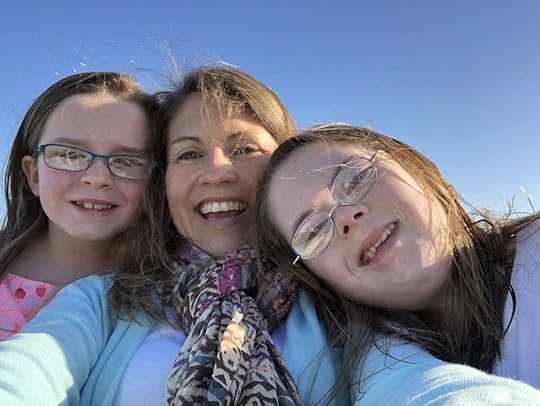
Once a week I compile the reflections I’ve offered on Facebook into one blogpost. Here are the thoughts from the past five days:
Monday, April 23, 2018
Do you ever feel like you have too much doubt to have faith? Too many questions about God and not enough encounters with God? I had a chance to preach at our church yesterday about the disciple I call “faithful Thomas.” He is more often known as “doubting Thomas,” but I see him as a model of faith and encouragement for all of us who have questions and also hold on to hope that God is real and cares about us. Here’s the link so you can listen along.
Tuesday, April 24, 2018
It’s so easy for people to think of people with disabilities in terms of deficits, challenges, weaknesses. Our medical and therapeutic and educational systems assume it. Any evaluation, even those done by the most sensitive and caring professionals, will come up with a list of all the areas in which a child with a disability doesn’t measure up. I need to prove Penny’s deficits in order for her to qualify for certain programs and supports. There is purpose in all of this, of course, but it also contributes to a false cultural narrative that assumes people with disabilities are, well, unable to function, unable to contribute, unable to bring meaning and value and joy and light to the world.
The church is another example of an institution which in general has a desire to show compassion and care for people with disabilities but has often failed to recognize the gifts and possibilities inherent in every human life, including the lives of those with disabilities.
SO I am thrilled to announce that I wrote a cover story for Christianity Today called “Willing and Able: the ministry of the disabled” (The “of” is supposed to be in italics, but Facebook doesn’t have that feature–the point is that this isn’t ministry TO or FOR, but ministry done by people with disabilities for others.).
In this article, I reflect on the ways Penny has her own ministry in our community, and I also tell stories about churches, individuals, a L’Arche community and a Friendship House–all places where people with autism, Down syndrome, and other developmental disabilities care for and support and minister to the people around them.
The photos for this piece are beautiful, and the stories testify to the tremendous gift all people can be to those around them, if only we start to assume we need one another, every one of us.
(P.S. The photo comes from a short trip Penny and Marilee and I took last week to South Carolina . It was a sweet time for us all together–lots of time in the pool, lots of laughter, lots of good food, and so many reminders of the blessing of our life as a family. It was a week characterized by fullness and joy.)
Wednesday, April 25, 2018
Here are the stages of writing a non-fiction, memoirish book:
1. Live the story
2. Struggle to write the story
3. Publish the story and learn even more when people respond and ask questions and ask you to talk about it more
I’m nearing the very end of stage 2 right now, where White Picket Fences has gone from ideas in my head to notes on paper to rejected drafts of chapters to more rejected drafts of chapters to edited Word document to what is called the “First pass.”
The picture here is the “first pass” at not just the words the book will contain but the way those words will look on the page. Here’s a sneak peek at the Table of Contents.
Thursday, April 26, 2018
Bryan Stevenson’s willingness to hope for a good future in the midst of a horrific past depends upon our collective willingness to face the pain of the present moment.
Stevenson is the leader of the Equal Justice Initiative, and his organization has recently unveiled a monument that reckons with America’s history of lynching. The images in this article convey some sense of the power and thoughtfulness of the way the monument has been constructed.
I read Stevenson’s book Just Mercy a few years ago, and I was struck not only by the tragedy of injustice he describes, but also by his faith that God is at work even in the midst of that despair, even in the midst of a sordid history.
As Campbell Robertson writes for the New York Times:
“Mr. Stevenson, whose great-grandparents were slaves in Virginia, has written about “just mercy,” the belief that those who have committed serious wrongs should be allowed a chance at redemption. It is a conviction he has spent a career arguing for on behalf of clients, and he believes it is true even for the white America whose brutality is chronicled by the memorial.”
In Stevenson’s own words, “I’m not interested in talking about America’s history because I want to punish America… I want to liberate America.” Just as Stevenson argues for both mercy and justice when it comes to men and women who have committed crimes, this monuments stands as an argument for both mercy and justice as we reckon with the brutality of our past.
Friday, April 27, 2018
Facebook friends, I need your help! I’m working on refreshing my website, and I’d like to have a better sense of who reads what I write and why you read it. Will you give me two minutes of your time right now and answer a few questions? Here you go.
April 20, 2018
Worry is a Prayer We Pray to Ourselves

Once a week I compile the reflections I’ve offered on Facebook into one blogpost. Here are the thoughts from the past five days:
Monday, April 16, 2018
Such a wonderful time at the Festival of Faith and Writing at Calvin College last week. I moderated a panel called “Family Business: the Perils and Possibilities of Writing about our Kids” (or something like that!). Micha Boyett, Beth Adams, and Grace Ji-Sun Kim joined me and shared their wisdom.
I talked about my own desire to shape the imagination of people who haven’t ever seen photos and read stories about children with Down syndrome and their families. I also talked about the temptation to “sanitize” our experience, mainly because it feels like I’m violating our children’s privacy to share the hard stuff, even though I don’t want to portray an image of a “perfect” family.
I also talked about writing as hospitality, as a way of letting other people know that “You are not alone.” You are not alone in having a temper tantrum right back at your kids. You are not alone in drinking too much wine. You are not alone in aching when your child is excluded. You are not alone in celebrating the tiniest milestone. You are not alone in your fear or your hopes. You are not alone.
Wednesday, April 18, 2018
“Worry is prayer that we pray to ourselves instead of to God.” I was listening to the Renovare Podcast yesterday, and Chris Smith said something along those lines and it struck such a chord with me. When I worry, it is as if I am having a negative conversation with myself on repeat. I cannot answer my own thoughts with anything other than more worry.
Perhaps the inverse of this thought is that “Prayer is worry that we bring to God.” And the difference is that God actually receives that worry and returns peace instead. Over and over in the Bible, God offers an exchange by which we give our worry and God gives us peace.
For example:
Matthew 11:28 “Come unto me, all you who are weary and burdened, and I will give you rest.” (We bring Jesus our burdens, he gives us rest.)
Philippians 4:6 “Do not be anxious about anything, but in everything, by prayer and petition, present your requests to God. And the peace of God, which transcends all understanding, will guard your hearts and mind in Christ Jesus our Lord.” (We bring our anxiety, God gives us peace that we can’t even understand)
John 14:27 “Peace I give to you. My peace I leave with you. Do not let your hearts be troubled and do not be afraid.” (We put down our troubles and fears. Jesus gives us peace.)
Who are you praying to today? Yourself, or to the God who can take your worries for you and give you peace in exchange?
Thursday, April 19, 2018
A simple, compelling, and surprisingly unusual argument that it is unethical to abort babies with Down syndrome.
I’ve written before about how the politics of abortion can distract us from the ethics of abortion, and I’m encouraged to see not only this opinion piece in The New York Times but also that this author has a book coming out about the subject.
April 13, 2018
Eight Ideas to Help Your Child Develop a Love of Reading
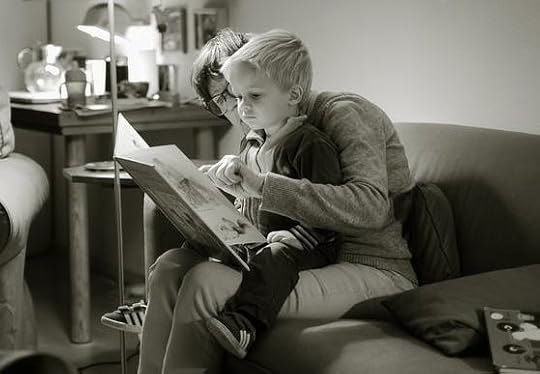 Once a week I compile the reflections I’ve offered on Facebook into one blogpost. Here are the thoughts from the past five days:
Monday, April 9, 2018
In my new ebook, A Serious Pleasure, (available for free) I include 10 book recommendations from each of our children. Over the weekend, I asked Penny to share some of her overall favorites. She chose 6 to highlight in this 5-minute video. And some of you have asked what we did to teach Penny to read and love reading. I’ll share more on that later this week!
Tuesday, April 10, 2018
As a follow up to yesterday’s post, here are 8 ideas for how to help your child enjoy reading more than they do right now. (Lots of people asked me how Penny became such a strong reader and whether we used any specific programs. As I reflected on a post about reading with kids with Down syndrome, I realized that we’ve done the same thing with all three kids, so these are more broad suggestions. I hope they are helpful.)
1. Be a reader.
Kids imitate their parents. I remember once when Penny was three, walking in on her in our bathroom. She was standing on a stool brushing her teeth, with TIME magazine in her hand. She couldn’t read a word of it, but she knew what she saw her mother doing every morning! If you want to raise kids who are readers, let them see you reading.
2. Read with your kids every day, even if it’s only for five minutes.
I used to be intimidated by the idea that we needed to read a lot. I’ve since realized that if I am going to live in reality and read with my kids, it won’t be for a lot of minutes.
3. Read books out loud that stretch them…
Penny doesn’t love fantasy or history. She gravitates towards social stories about girls in middle school, which is to say, girls just like her. But when I read out loud, it is often a novel with a plot that will challenge her, either because of the reading level being more advanced than what she would read on her own or the subject matter being outside of her comfort zone. The fact that we can pause and talk about what’s happening helps. But within this idea of stretching, I do try to offer enough comfort that it doesn’t feel foreign. So we’ll read Little Women because it is historical (a stretch) and about girls (Penny’s favorite). Or we’ll read Fish in a Tree, which was above Penny’s comprehension level when we read it but about a girl with a learning disability in school, so easy for her to relate.
4. …but encourage them to read books on their own that feel easy.
I remember encouraging Penny to tackle Charlotte’s Web when she was in second grade. After hearing her struggle through the first paragraph, I looked a little more closely at this beloved story and realized that yes, indeed, this author used to write children’s books and essays for The New Yorker and might well have used the same vocabulary! After that, I let her choose her own books to read alone, and to the degree that she wanted my help, I steered her towards familiar books or books that would be easy for her.
5. Put graphic novels to work.
For kids who are struggling to read, graphic novels can offer a terrific bridge. The illustrations allow a different part of their brain to work and do some reinforcing of the words they might stumble over. Penny loved the Smile, Drama, Sisters books as well as Dork Diaries (not my favorite, but…). William felt such a sense of accomplishment when he finished The Invention of Hugo Cabret because it was so long, even though much of it is filled with pictures. Marilee, my emerging reader who still struggles a lot with chapter books, is far more determined to read the graphic novel version of A Wrinkle in Time.
6. Take turns reading out loud.
We do a lot of “page by page” reading out loud, where I read the left side and they the right or vice versa. When we are reading together, I also rarely let them work hard at a word. The point is for them to enjoy it and become more fluid, not to get it all right and not for it to take so long it feels frustrating and impossible for us both. Unless it’s a word I know they can get easily with another look, I fill in the blanks for them to help the reading move along and feel enjoyable.
7. Reward reading with reading.
If your child needs an incentive to read on their own, then you can reward them for reading a set amount. Marilee is currently obsessed with “Land of Stories” on audible, so she needs to read with me or on her own for either one chapter or one picture book before she gets to listen to Land of Stories again. Similarly, when Penny is in a rut of reading the same book over and over again, I’ll push her to branch out by reading one chapter of a new book before she can go back to the old.
8. To sum it all up: make reading feel as easy and successful as you can.
We haven’t found a special program or an app that works. We’ve tried keeping reading logs and journals. We’ve tried post-it notes at the end of every chapter. But the things that have helped us become a family of readers comes down to spending time doing it, together, in a way that we truly enjoy. If there are any “tricks” to helping your child learn to read and keep reading it is spend time reading, with them, in a way that you both enjoy.
Wednesday, April 11, 2018
Overheard at our house this week:
One child says, “How can you be 100% sure that God exists?”
Another child responds, “Oh I know. Just Google it.”
April 6, 2018
Practicing Easter Every Day
 Once a week I compile the reflections I’ve offered on Facebook into one blogpost. Here are the thoughts from the past five days:
Monday, April 2, 2018
I had a chance to write for the Washington Post’s Acts of Faith newsletter for Easter Sunday. If you’re interested in the newsletter in general, I’ll share a link to signup in the comments section. Meanwhile, here’s what I wrote:
I’ve been thinking about inviting friends to my monthly Bible study. I love this group. We eat dark chocolate covered almonds with sea salt and drink tea and seltzer. We share high and low points from the previous month. And we open up Bibles (and Bible apps) and talk through our thoughts and questions and doubts and revelations as we read about Jesus. I want to invite others to join because I am so grateful for the spiritual growth, the friendship, the laughter, and the honesty I’ve experienced through this group.
But as I’ve considered inviting others, I’ve also realized how many barriers even this simple invitation—“Do you want to join us for Bible study?”—could erect. First, there’s the notion of “studying” the Bible, as if there might be a test involved. Then there’s the thought that many people don’t own Bibles, and even if they do, they might never have read them, or might have a translation that makes the stories inaccessible. When I did invite a friend to join our Bible Study and told her we were reading Mark, she responded that she didn’t know what “Mark” was or how to find it.
In one of his letters to the church in Corinth, Paul writes that Jesus will be a “stumbling block” to many. To Paul’s point, plenty of appropriate barriers get in the way of following Jesus. There’s the whole question of God’s existence, not to mention God’s existence in the form of a Jewish carpenter who died and rose again. Jesus also calls his disciples, then and now, to leave everything behind and follow him. He calls people to turn away from sin and self. Submitting to Jesus as Lord presents a legitimate barrier to entering into the Christian fold, an appropriate “stumbling block.”
But when I use phrases like “Bible Study” and make reference to “Mark” or other unfamiliar ancient texts, I’m erecting unnecessary barriers. When people come to church for the first time all year on Easter Sunday and don’t know how to look up a hymn or when to kneel or what to do during communion or why “confession” is a part of the “good news” about Jesus, we have erected unnecessary barriers. When a new person comes to a church service and no one says hello, we have erected an unnecessary barrier. When Christians condemn people outside the church for their sexual decisions, or their political affiliation, we have erected unnecessary barriers. When Christians use insider language like “sin nature” or “repentance” or “worship,” without explaining what we mean, we have erected unnecessary barriers.
On Easter morning, Christians proclaim the radical notion that God became man out of love for human beings, eradicated the power of sin and death through succumbing to brutal torture and execution, proved the conquering power of love through rising from the dead, and finally offered that same power and new life to all who turn to him in faith. Those propositions are each stumbling blocks in their own way. The Biblical writers invite us not to stumble over language or culture or politics, but over Jesus, that he might become the capstone of our lives.
Tuesday, April 3, 2018
Monday morning arrived, and with it another snowstorm. We’ve had ten snow days so far this year. But I looked outside, and for once I was struck with gratitude for the beauty of the day instead of struck with self-pity for the inconvenience a snow delay would hold for my plans. It helped that the day before was Easter. As I looked at the snow with a word of thanks, I was practicing resurrection.
Lent precedes Easter, and it provides 40 days for Christians to practice fasting of some sort—abstaining from alcohol or sugar, or for meat on Fridays, or from shopping or cursing or some other habit. It’s a way of reminding ourselves of our mortality, our humanity. It’s a season of self-denial that might draw us into understanding Jesus’ self-sacrifice on the cross in a deeper way.
But I often forget that Easter is not just one day, at least not according to the church calendar. Easter is an ongoing celebration. There are 50 days of Easter. The feast, the rejoicing, the thanksgiving, extends until Pentecost, when it just revs up even more with the day that recognizes and rejoices in the gift of the Holy Spirit.
What if Christians approached Easter the way some of us approach Lent? As a daily practice of celebration, of gratitude, of new life, of hope. Practicing Easter, practicing resurrection, could be as simple as saying thank you for one new thing each day of the season. It could be as overtly spiritual as reading verses from the Bible about new life. It could be as celebratory as choosing one fun activity each week to do as a family. It could be as delightful as listening to a new piece of music, or reading a poem, or looking at a piece of glorious artwork, or spending five minutes noticing something beautiful about the creation outside our doorsteps. It could be a gentle and unnoticed act of kindness day by day.
On Easter morning at our church, the cross held a white cloth. Flowers adorned the altar. We sang soaring hymns and heard the message of Jesus raised from the dead and took communion and celebrated. We were practicing resurrection. (Pastor and writer Eugene Peterson has a booked called Practice Resurrection. I’ve read other books by Peterson, though not this one, but the phrase lodged in my head when I first heard it, and it inspired this post.)
Afterwards, friends and family came back to our house. We took out our sliver and china, adorned the house with flowers, and turned on dance music. The kids jumped on the trampoline and ate handfuls of jellybeans. The adults feasted on champagne, decadent food and dessert, and joyful company. We were practicing resurrection.
Christians practice self-denial in Lent as a physical way to turn our attention toward Jesus’ death on the cross. This Easter season, I am also going to practice resurrection and turn my attention toward Jesus’ gift of new life.
Wednesday, April 4, 2018
Today we remember Martin Luther King’s legacy as a Civil Rights leader, and we remember the tragedy of his murder fifty years ago in Memphis. David Brooks wrote recently about the ways we still live–especially when it comes to our close social connections–segregated lives:
“Three-quarters of American whites have no close nonwhite friends. A study from the Public Religion Research Institute found that if you looked at the average white person’s 100 closest friends, you would find that 91 would be white. If you looked at the average black person’s 100 closest friends, 83 of them would be black.”
Brooks suggests that schools were not the ideal place to start the social change of relationships. Rather, he says, we still need change to happen on neighborhood levels, in families (through interracial marriages) within workplaces, and within places of worship. When adults start to form real friendships and mutual dependence across racial lines, then schools (and society at large) will change too.
I think many of us are now in a place where we want this type of change. We want Dr. King’s vision of little black girls and little white girls hand in hand. But we are either unclear on how to make the change happen, or we feel powerless, or we just don’t take the time to think or do much about it. This type of change happens intentionally before it begins to happen naturally. So a mostly-white church would need to make a conscious effort to reach out to non-white neighbors. Any organization with primarily white leadership could ask how to create leadership opportunities for people of color and then make changes so those opportunities become realities.
Again to quote David Brooks, “The big shift, of course, has to be psychological. Everybody laments how divided America is, but how many of us are part of an organization that lets us meet once a week with others who are very different from ourselves? Integration doesn’t mean losing the essence of what makes each group special; it just means connecting fervently with a fellow American.”
I would add, connecting fervently with a fellow American who, through their different life experience and background, will enrich and challenge and deepen your own experience (and vice versa). What friendships that cross expected boundaries have blessed you? What needed to happen in order for that friendship to be possible?
Friday, April 6, 2018
Evangelicals are in the news a lot these days, primarily due to the fact that 80% of self-described evangelicals voted for President Trump and continue to support him. Evangelical leaders continue to praise President Trump’s policies. I’ve written already (for the Washingon Post last fall) about how I no longer call myself an evangelical, but how I’m also not adopting another label.
I don’t want to distance myself from my evangelical brothers and sisters so much as I want to recognize the breadth of the Christian experience and tradition. I want to align myself with Catholics and Protestants, Episcopalians and Anglicans, Presbyterians and Quakers, Eastern Orthodox and Baptists, around the central tenets of the Christian faith–knowing that we will disagree about plenty, hoping that we can hold on to a common love for Jesus.
I’m hopeful about this broader connection. But I’m also sad that the word evangelical has come to be so inextricably bound to one particular political party and even one person. Michael Gerson has written for the Atlantic about the social and political forces that have given rise to such a close alignment between a set of religious convictions and a political agenda. Reading that article in conjunction with Christianity Today’s tribute to Billy Graham makes me move from hopefulness to sorrow.
I’m sad because evangelicalism used to move across divides instead of creating them. It used to unite people according to theological convictions instead of dividing people according to party lines. It used to be a point of contact I had with people from different socio-economic, denominational, and cultural backgrounds who nevertheless shared the same faith in the personal care and salvation offered by God through Jesus and the conviction that the same God was at work in our lives and in the world in an ongoing way.
I do not grieve the loss of a label, and I am grateful for the ways I can see God at work in and through all Christians. But I grieve the loss of a broad coalition of Christians around the globe and across denominational and racial lines . I grieve the loss of connection with Christians who are coming together not to win in the political arena but to participate side by side and hand in hand in proclaiming the good news (the evangelion) of Jesus’ ongoing work to bring new life, forgiveness, hope, joy, love and peace to individual lives.
March 30, 2018
A Serious Pleasure: Ebook (for free) with 30 Book Recommendations to Read with Your Children
Once a week I compile the reflections I’ve offered on Facebook into one blogpost. Here are the thoughts from the past five days:
Monday, March 26, 2018
“Religions can be the cause of oppression and injustice, but they also will be part of the solution.”
So writes Publisher’s Weekly in a long and detailed list of current and forthcoming titles from religious publishers who have lined up titles that address racism, privilege, and sexism. I was encouraged to see White Picket Fences mentioned among these other noteworthy books.
One of the things I write about in WPF is how I used to think I needed to choose between critiquing the past and feeling grateful for the past. Now I believe I can do both, and it sounds like many of these writers are similarly trying to reckon with the beauty and hurt of the past in order to participate in healing for the present.
Tuesday, March 27, 2018
I have known white people who do drugs for most of my life. Not, generally, “hard drugs,” and not, generally, for long stretches of time. But when I was in high school and college, lots of people I knew smoked pot. And it isn’t unusual now, knowing lots of high school kids still, to hear about kids who have been caught with illegal substances in their systems.
I have never known a white kid who went to jail or prison.
I thought about those kids recently when I read Locking Up Our Own by James Forman Jr. I recommend it to anyone who wants to try to understand how we ended up in a nation with such a high prison population and an ongoing escalation in drug activity and all the subsequent consequences for individuals and communities. Forman traces the racist history of American policing and imprisonment, but he also talks about the role the African American community played in calling for stricter laws related to both gun possession and drug sale and use.
Forman’s book doesn’t let white Americans off the hook when it comes to the injustices we still see, but he fills out the picture and calls upon all of us–white and black–to call for different systems that won’t result in so many young black men (in particular) behind bars. He doesn’t use the words restorative justice, but especially for juvenile offenders, that is one solution he hints at.
Back to those white kids I know who make bad decisions about smoking pot and doing other drugs. When they get caught, it rarely involves the police. It often involves serious consequences, like suspension from school, notifying colleges of their wrongdoing, and probation. The hope is that these consequences give the kid a sense of the serious nature of what s/he has done as well as a chance to make different choices in the future.
Don’t most kids–black or white, rich or poor–deserve the chance to make mistakes and learn from them?
Wednesday, March 28, 2018
“Don’t think you need to become a bookworm in order to enjoy these books or this time with your kids. Just read, a little bit, and see where it takes you.”
These words come from my new (free!) ebook A Serious Pleasure: 30 Books for Families to Enjoy. Click here to sign up for a copy (and please let other people know about this free resource if you think they’d enjoy it).
I’ve had parents say before that the reason they don’t read with their kids is that finding 30 minutes before bed seems impossible. I agree! But finding 10 minutes seems like something that could happen, and 10 minutes every day really adds up. Some nights that’s all we have. Some nights we don’t even do that. And some nights we’re so entranced by whatever story we are reading that we plow through bedtime to find out what happens.
But the time, no matter how small or large, gives us a way to share a story. It gives us something in common, that cuts across the generations and whatever arguments we were having earlier in the day. It gives us a moment of peace and rest and delight.
Friday, March 30, 2018
“Daughter, your faith has healed you. Go in peace and be freed from your suffering.”
–Jesus’ words as recorded in the Gospel of Mark 5:34.
This woman has been bleeding–which is to say, she has been a social outcast, a religious outcast, and in physical pain–for twelve years. She has also spent all her money on doctors who didn’t make her better. She could easily be hopeless, or bitter, or angry. She could easily have lost faith in a God who loves and cares for her.
But then Jesus comes to town, and she hears that he heals people. So she risks mockery and more heartache by sneaking into his presence, attempting to lose herself in the crowd around him, and reaching out to touch his cloak. Immediately, she knew she was healed.
The story could end there. She knows Jesus is the real deal–powerful in word and deed, a conduit of God’s unending care and might, a healer. It seems that the woman tries to sneak away, relieved that she wasn’t caught in the act of stealing Jesus’ healing.
But Jesus doesn’t let her go. He insists that whoever touched him proclaim herself. She’s afraid. What if she was wrong about him, and he wants to shame her? What if he will be angry that she–a poor, bleeding (which is to say, unclean) woman–dared to touch him? What if he condemns her for her actions?
Still, she has the courage to expose herself to Jesus, and from there come his words: “Daughter, your faith has healed you. Go in peace and be freed from your suffering.”
This might sound like a lovely Hallmark-style sentimental word, but it would be more accurate to call it a shocking statement.
First, Jesus calls her daughter. He names her as related to him (and to God, whom Jesus routinely calls Father) in a tender and intimate way. The story surrounding this one is of Jairus, a religious leader in that town, who is begging Jesus to come heal his daughter. When Jesus calls this outcast woman “daughter,” it comes as a direct comparison to Jairus. Just as Jairus was willing to humiliate himself by asking Jesus to come, just as Jairus would do anything for his beloved child, so too Jesus loves this woman.
Second, it would be really easy to think that Jesus’ power healed the woman. And on some level that’s true. Without Jesus’ healing power, she couldn’t have been healed. But that’s not what Jesus says. He says, “your faith has healed you.” He gives her credit. He affirms her. He empowers her.
Third, in doing all of this publicly, he invites her restoration to her family and community. No longer is she an outcast. No longer is she a victim. Rather, she is a daughter, and a daughter who has powerful faith.
There is certainly a chance that God doesn’t exist and that love like this isn’t possible. But if God does indeed exist, and if God does indeed demonstrate who He is through Jesus, then this is the God I want to worship. This is the love I want to proclaim. This is the relationship I want to say yes to. And this is the story I want to invite everyone else into.
“Daughter, your faith has healed you. Go in peace and be freed from your suffering.”
March 23, 2018
Celebrating Our Daughter, and Her Exceptional Community, on World Down Syndrome Day
 Once a week I compile the reflections I’ve offered on Facebook into one blogpost. Here are the thoughts from the past five days:
Monday, March 19, 2018
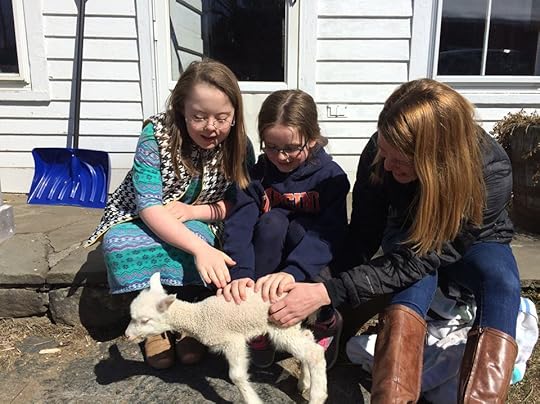
Penny and Marilee and I had a girls’ day yesterday. They had a friend sleep over, which involved milkshakes and making up dances and watching High School musical. We all went to church, and then one of the girls’ favorite babysitters invited us over to her house so they could feed a newborn lamb. We proceeded from there to Bounce, where the girls scampered and jumped and argued and helped each other out. That evening, we enjoyed some Lenten music at our church, ate leftovers, read a chapter of A Wrinkle in Time and went to bed.
Nothing extraordinary. A lovely day.
But it was also a day that got me thinking about an article I read last week in the Washington Post, an article in which Ruth Marcus wrote about how women need the right to abort babies with Down syndrome. Marcus wrote in opposition to recent laws various states have passed to ban abortion on the heels of a prenatal diagnosis of Down syndrome.
She writes, “Most children with Down syndrome have mild to moderate cognitive impairment, meaning an IQ between 55 and 70 (mild) or between 35 and 55 (moderate). This means limited capacity for independent living and financial security; Down syndrome is life-altering for the entire family. I’m going to be blunt here: That was not the child I wanted. That was not the choice I would have made. You can call me selfish, or worse, but I am in good company. The evidence is clear that most women confronted with the same unhappy alternative would make the same decision.”
I’ve written before about why I disagree with these laws (http://bit.ly/2Fwlbrj–paywall)), and I could write an entirely separate post to refute some of the logic embedded in this article and even just these sentences.
But what I realized when I read this article was how much I want to stop arguing about the legality of abortion.
It’s not that I want to stop talking about abortion altogether. The bearing of all human life is meaningful, life-altering (to quote Ruth Marcus), frightening, and filled with potential for sorrow and joy. It is crucial that we talk about what it means to conceive life, and when and whether we ever should end life.
But I wonder whether all the heated rhetoric about the legality of abortion keeps us from discussing the ethics of abortion. I wonder whether we are so focused on legislating what a woman is allowed, or not allowed, to do during pregnancy that we neglect to have conversations, tell stories, ask questions, and invite women to explore the possibilities available to them.
I’m not writing this to argue a political pro-life or a pro-choice position. But I am writing to ask women to consider whether the day I described with our daughters — a day that involved, friendship, community, laughter, physical exertion, good food, and fun–might serve as a way to imagine life with a child with Down syndrome in different terms than the ones used by Marcus above?
Instead of “unhappy,” “limited,” and “not wanted,” I say happy, possibilities, and deeply loved.
Again, I don’t share this story in an attempt to challenge a law, and I certainly don’t share it in an attempt to bring shame or fear or guilt to any woman who has faced a prenatal diagnosis of Down syndrome. But I do believe we need to stop letting our political positions dictate the arguments we have about abortion and allow space for an ethical discussion of the value of human life, the rights of women, the role of society in supporting women and children, and the role of society in supporting children and adults with disabilities. Maybe if we talked more about stories and less about the law, we would compel (but not coerce) more women to choose life.
Tuesday, March 20, 2018
So this story about a girl performing on American Idol with the support of her best friend, a young man with Down syndrome, sums up a lot of what I try to write in words about the gifts inherent in every human being, if only we have the eyes to see them, if only we take the time to notice them, if only we believe those gifts are present, and if only we have the humility to receive them.
Wednesday, March 21, 2018
Today is World Down Syndrome Day! I had the chance to write about why we don’t just celebrate Penny but her whole community for abcnews.com.
“For a long time, I liked the idea that Penny was exceptional. When she, for instance, won a spot in her school’s spelling bee in 3rd grade, I was tempted to pat myself on the back for all those books we had read together. When she overturned expectations through minor achievements — learning to tell time, having a sleepover, rinsing the conditioner out of her hair, competing in a swim meet — I was inclined to believe she had won some genetic lottery. Penny’s disability produced plenty of challenges, but her hard work paid off. When we worked toward a goal, she met it, slowly but surely.
But I have come to realize that Penny’s relative independence and her sense of confidence and well-being have arisen not because she comes from overachieving parents or because she has good genes. According to standardized tests, Penny has an intellectual disability that usually translates to less independence, confidence and learning. But while IQ scores offer one data point about an individual, a loving and supportive community matters much more.”
Read more here and please share with anyone who might enjoy!
Wednesday, March 21, 2018

Wednesday, March 21, 2018
On World Down Syndrome Day, Marilee is feeling a little bit, shall we say, overshadowed. Penny pipes up, “Let’s have a World Marilee Day!”
Marilee agrees: “Everyone can be very happy. That’s what my name means.”
(At which point, Penny reminds her of the times we need to call her Grumpilee.) (Photo of Marilee on a cold night at the beach. We have called her our barefoot girl for many years now.)
Thursday, March 22, 2018
Two more resources on the heels of World Down Syndrome Day:
One, Micha Boyett, Heather Avis, and Mercedes Lara have just launched a new podcast called The Lucky Few, featuring stories and interviews and advocacy around Down syndrome. Here’s the first episode.
Two, Jenni Newbury and Camp PALS launched a new, beautiful book called “The Congratulations Project.” It is filled with gorgeous photographs of people with Down syndrome and their friends and families alongside letters they have written to new parents of babies with Down syndrome in order to offer their congratulations. I showed Penny this book online because she has written notes to people in the past (including Micha Boyett, mentioned above!) to congratulate them and offer a little advice when their children were born. She ended up enjoying this book in its own right. So whether you are a new parent (or know a new parent) or just enjoy seeing people with Down syndrome living their lives, this book is a great gift (you can also donate a copy to someone who needs it).
Thursday, March 22, 2018
Marilee and I just finished reading A Wrinkle in Time together, for the second time. She doesn’t remember it from when she was four, and this time we were both equally riveted by the drama of a family separated by forces of darkness and the desperate hope that love is stronger than hate. I wrote an essay about A Wrinkle in Time and the way it–and other books–can introduce our kids to the concept of evil and offer ways to try to understand, or at least engage the topic of, the darkness that erupts daily in our world. That essay, along with three others and along with 30 recommended books to read with your children, is all included in a new ebook I’ve put together called A Serious Pleasure: 30 Books for Families to Enjoy. This book is free, so please claim your copy using the link in the comments below and spread the word!