Amy Julia Becker's Blog, page 126
January 19, 2020
William’s Book Recommendations for Martin Luther King Jr. Day
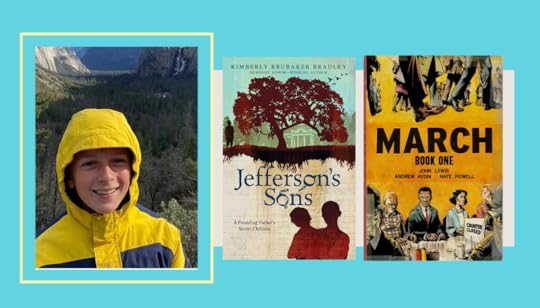
Book recommendations for Martin Luther King Jr. Day! Here are some of William’s book picks (plus a few bonus recommendations).
One of the fun things about our Civil Rights tour was the gift shops at the end of each tour stop. At every location along our way, we looked for magnets, and we found some great ones in these museums (Rosa sat so that Martin could walk, Martin walked so that Barack could run, Barack ran so that all our children can fly…), but we also picked up some terrific books related to African American (which is also to say, American) history.
The girls read Who Was Rosa Parks? and Who Is Barack Obama? and Who Was Maya Angelou? They say they recommend these books, but that’s all I could get from them.
Book Recommendation: Jefferson’s Sons
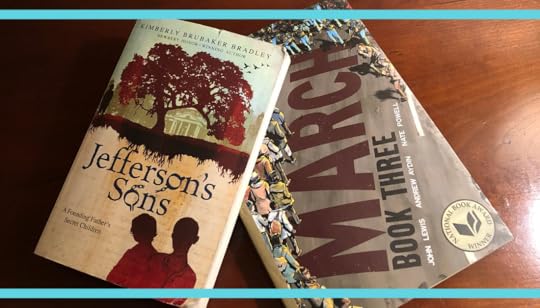
William (age 11) read Jefferson’s Sons by Kimberly Brubaker Bradley. He says:
“Jefferson’s sons is a historical fiction novel about Thomas Jefferson and his secret children that he had with one of his slaves, Sally Hemmings. It goes through their lives living at Monticello knowing that their father is owning them and hardly pays attention to them. I think that this is a good book for middle schoolers, but I think that adults might enjoy it as well. I think that this is a very good book.”
(I read this one too and thought it was extremely well written. Although it is very much historical fiction—we don’t know much about Jefferson’s relationship with Hemmings or their children—it imagines what it would be like to grow up with an enslaved mother and a white father who is also the President. I recommend this for all adults as well!)
Book Recommendation: March
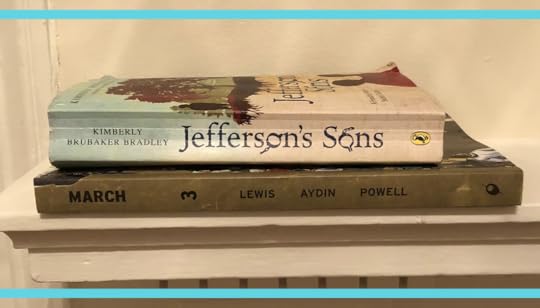
William also read the three-part graphic novel March by John Lewis. He says,
“The March series is a series of graphic novels written by congressman John Lewis of Georgia. He describes in these books what it was like to be a young man in the south during the civil rights movement, He was a strong Civil Rights activist and also led many of the important marches during the movement. I think that this would be a great book for middle schoolers. It is not a particularly hard read, but the content is intense.”
Podcast Recommendation: Love in Action
I haven’t read the March books, but I did just listen to an interview between John Lewis and Krista Tippett that I also highly recommend. In it, he talks about what it looks like to put love into action. It is rare for me to catch a glimpse of what it means to put Jesus’ words into action so clearly.
On this day when we celebrate the Rev. Dr. Martin Luther King Jr.’s life, it seems worthwhile to also celebrate the life of Congressman John Lewis, who was mentored by King and spoke alongside him during the march on Washington.
I’d love to hear your recommendations for Martin Luther King Jr. Day.
If you haven’t already, please subscribe to receive regular updates and news. You can also follow me on Facebook , Instagram , and Twitter .
The post William’s Book Recommendations for Martin Luther King Jr. Day appeared first on Amy Julia Becker.


January 16, 2020
Civil Rights Tour Itinerary
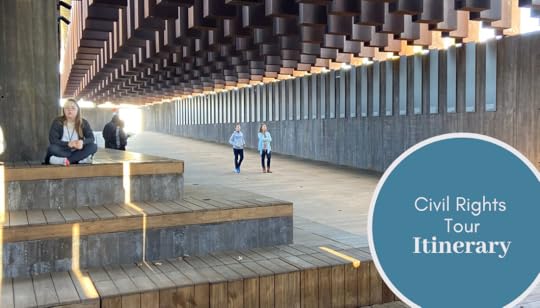
Here is a potential Civil Rights tour itinerary for anyone wanting to embark on a quick tour to learn about the legacy of slavery, Jim Crow, and Civil Rights in the southern United States. Our family learned so much through following this itinerary on our Civil Rights tour during our sabbatical trip.
1. The Whitney Plantation
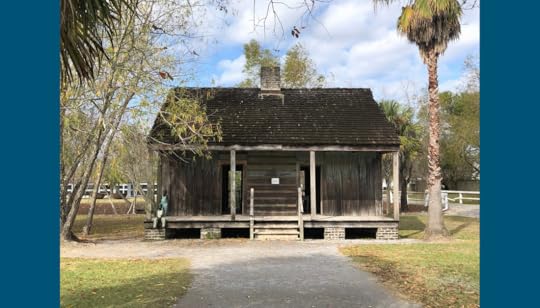
The Whitney Plantation in Wallace, Louisiana, (less than an hour from New Orleans) offers a 90-minute narrated/guided walking tour from the perspective of an enslaved person on a working sugar cane plantation.
2. The Rosa Parks Museum
The Rosa Parks Museum in Montgomery, Alabama, tells the story of the beginning of the modern Civil Rights movement through Rosa Parks’ refusal to give her seat on a city bus to a white man. Her refusal led to a bus boycott that eventually integrated the city transit system. This museum is right in downtown Montgomery, and the streets surrounding it hold many historic sites, so an hour of wandering around that area will lead to Martin Luther King’s first pulpit, the capital building where the march from Selma ended, the site of the telegram that started the Civil War, and more.
3. The Lowndes Interpretive Center
The Lowndes Interpretive Center in between Montgomery and Selma tells the story of the march from Selma to Montgomery, nearly a decade after Rosa Parks. This march—met with fierce and violent resistance initially—eventually led to the passing of the Civil Rights Acts.
4. The 16th Street Baptist Church and Birmingham Civil Rights Institute
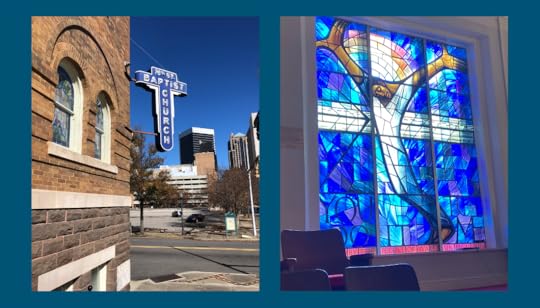
The 16th Street Baptist Church and Birmingham Civil Rights Institute in Birmingham, Alabama. These sit across the street from one another and tell of the horror of the loss of four young girls through a bombing on a Sunday morning as well as the wider history of Birmingham, Freedom Summer, and nonviolent protests throughout the Southeast up to and during the 1960s.
5. The Legacy Museum
The Legacy Museum in Montgomery, Alabama, begins with the history of slavery as far as family separation, violence, and forced labor. It details the horrors of lynching as a way to exert terror and control black Americans even after the Civil War. And it brings the story into the present day with stories of injustice within America’s criminal justice system.
6. The National Memorial for Peace and Justice
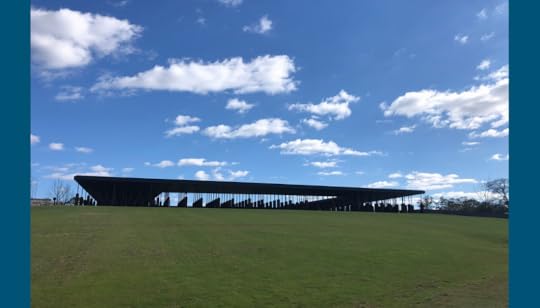
The National Memorial for Peace and Justice in Montgomery, Alabama, is a memorial to the more than 4,000 victims of lynching throughout the century following the Civil War. It creates a space to reckon and reflect on the horrors of our history and the possibilities for healing.
Recommended Book for Civil Rights Tour Itinerary
We appreciated Jim Carrier’s A Traveler’s Guide to the Civil Rights Movement as we explored these locations, and his guide contains information on sites that range much farther than the area we explored.
If you follow this itinerary or take your own Civil Rights tour, I’d love to hear about your experience!
If you haven’t already, please subscribe to receive regular updates and news. You can also follow me on Facebook , Instagram , and Twitter .
The post Civil Rights Tour Itinerary appeared first on Amy Julia Becker.
January 15, 2020
Our Four-Day Civil Rights Tour
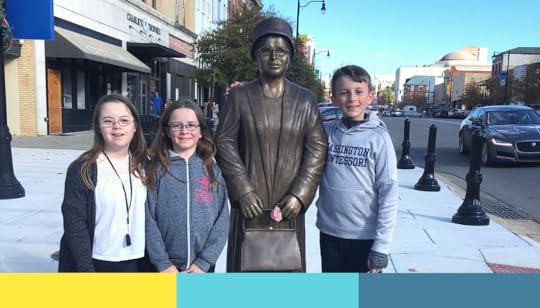
Our family took a short civil rights tour through the southeast that included stops at a plantation in Louisiana and various sites and museums in Montgomery, Selma, and Birmingham, Alabama. As we look ahead to Martin Luther King Day, I’m thinking back on what our trip taught us about our history, our present moment, and how we can participate in love.
The Hub of Our Civil Rights Tour
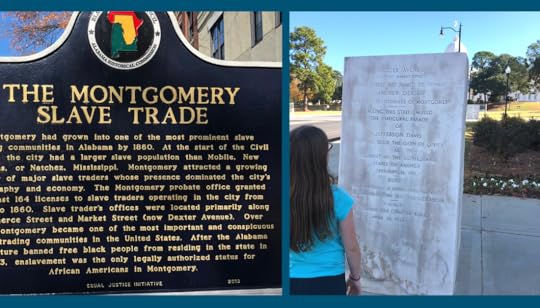
It was Saturday, November 30, and we were in Montgomery, the hub for our “Civil Rights tour” through the southeast. We set out with a guidebook and started reading placards that lined the sidewalk: Here is the site of the slave market. Here is the site of the bus stop where Rosa Parks refused to give up her seat. Here is the spot where a telegram was sent that began the Civil War. Here is a timeline of Civil Rights history. Here is the capital building, a mammoth structure of white marble at the head of the main street, to which protestors marched from Selma, 45 miles away, to advocate for voting rights. And here is Rev. Dr. Martin Luther King Junior’s first pulpit, a small brick church one block away from the halls of power.
As we approached this church, Dexter Avenue Baptist, we noticed people gathered out front. We soon learned they were celebrating Rosa Parks’ Day. One woman invited us to join.
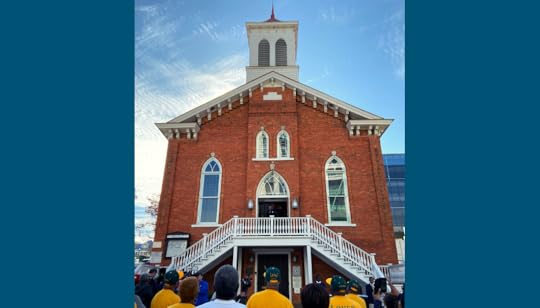
We stood among a crowd of mostly African American Christians and listened to a sermon about Esther (who, like Rosa Parks, was an unlikely hero, the concubine of the king of Persia risking her life on behalf of the Jewish people). We listened in awe to the powerful voice of a woman who initiated the march with the words of a mournful Negro spiritual, “Hold On.” This call to persevere carried into the street as a reminder that as much as there is to celebrate when it comes to civil rights in America, there is still a long way to go.
A Few Days Earlier – Whitney Plantation
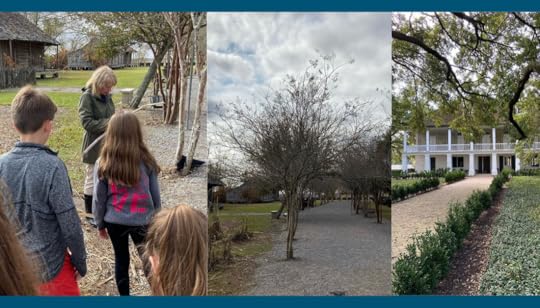
A few days earlier on our civil rights tour, we had visited the Whitney Plantation, a site 45 miles west of New Orleans designed to tell the story of the majority of the people who lived and worked there—enslaved African men and women for the first fifty years of its existence, then sharecropping African American farmers who remained for the next century.
I learned later that scholars have begun to call plantations “forced labor camps” because those words are more accurate ways to describe these sites and how they operated for hundreds of years. Still, many are now tourist attractions. Our hotel in New Orleans featured a brochure with a white woman in a white dress with a small hoop skirt and a white parasol. The image alone was an invitation into a fantasy land from long ago, when white masters enjoyed balls and parties and were waited on by polite and contented “servants.”
Marching in Montgomery
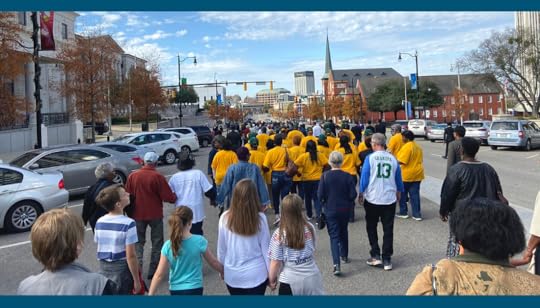
This march down the streets of Montgomery, with the tone of both celebration and mourning, was a fitting next step in introducing our family to the history of African American people within the United States. When Rosa Parks stayed in her seat in the 1950s, it was nearly one hundred years after emancipation, and African American people did not have the right to seats on public buses or to cast votes in local elections.
As we marched, a part of me felt like an imposter—who was I to stand shoulder to shoulder with these women and men? I was a white moderate from the North who had never marched for any cause. I was a woman who had never felt the sting of injustice or prejudice directed at me. We were a family whose history does not contain rejection or oppression.
The woman marching next to me struck up conversation. She had noticed William’s sweatshirt with the name of his Montessori school. This woman’s daughter had been in a Montessori school for years, so we shared stories about why we loved what it offered for our kids. I did not deserve to be on this street, honoring Rosa Parks, having this conversation. But we were included. We were welcomed.
Civil Rights Tour–Selma and Birmingham
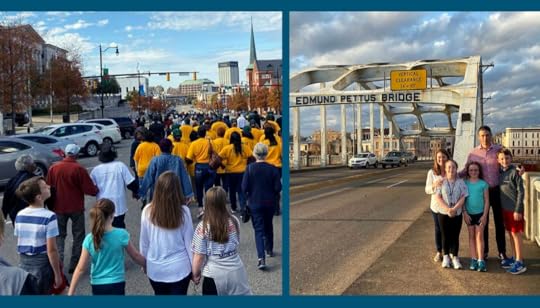
That afternoon, we learned the history of the bus boycott. We drove to Selma and walked across the Edmund Pettus Bridge, where the march for voting rights began, where men like John Lewis faced the brutality of a mob of policemen.
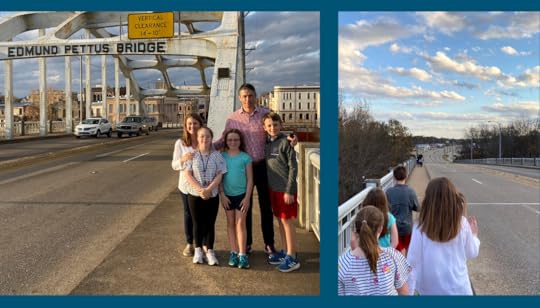
The next morning, we traveled to Birmingham on our civil rights tour and attended worship at the 16th Street Baptist church, site of the 1963 bombing that killed four young girls.
It all progressed like a story, from enslavement to Jim Crow and lynching, to the NAACP and Dr. King’s introduction of nonviolent resistance in the name of love, to the bus boycott and protests in Birmingham and Freedom Summer, and then this bombing.
Peter and I had learned all this history in school, and we had heard it repeated for years in articles and books, but it was different to be there in person. Yes, it was different because of what we saw: the black patent leather shoe of one of the girls who died, a stark reminder of her innocence in the face of hatred; the juxtaposition of the monument to Jefferson Davis, President of the Confederacy, and the monument to Martin Luther King and the Voting Rights March; the videos and timelines and testimonies that stitched together the disparate events into a story.
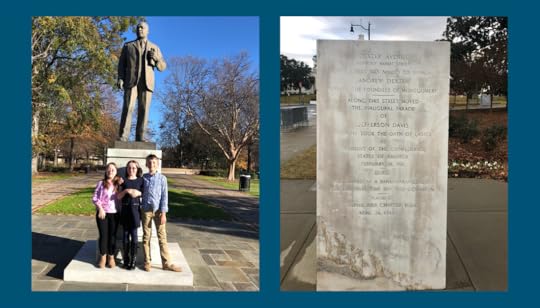
Civil Rights Tour–Being Physically Present
But it was also different because being physically present directed our attention. For four days, we paid attention to the story of African American people in Louisiana and Alabama, and it changed the way we see ourselves.
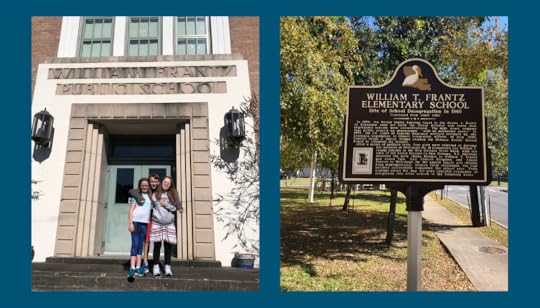
The Whitney Plantation allowed us to imagine the experience of enslaved Africans two hundred years ago. It prompted us to think about Peter’s family—white farmers in Louisiana who owned enslaved people. It was hard to deny the generational impact of those divergent stories, impossible to deny that we had received economic benefits from the brutal treatment of fellow human beings, and that those repercussions could be felt to this day. And then the monuments and museums articulating the struggle for basic equal rights as Americans reminded us of our shared humanity with these ordinary heroes, these men and women struggling in the name of Jesus, for freedom.
Trip Conclusion
We concluded our civil rights tour at the Memorial for Peace and Justice, which commemorates the thousands of women and men who lost their lives to lynch mobs across the nation.
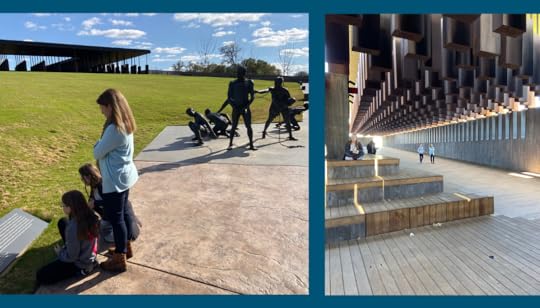
And we visited the Legacy Museum, which not only tells a complicated and disturbing history of enslavement but brings that legacy to the present day and specifically to the unjust workings of our criminal system.
Dr. Martin Luther King Jr. insisted repeatedly that the subjugation of African American people harmed everyone. Because it so violently and irrevocably demeaned and distorted the personhood of the black women and men and children in its grip—and because it did so purely for profit and power, out of fear—it also necessarily distorted and demeaned the white masters and the white onlookers. It warped everyone. With Peter’s heritage from Louisiana and mine from Connecticut, we represent both the masters and the onlookers.
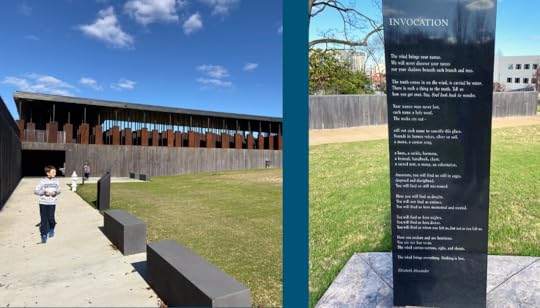
We left not just acknowledging the harm of the past, but with a conviction that we need to reckon with that harm personally.
Justice is Love
In his speech about the Montgomery bus boycott, Dr. King said, “It is not enough for us to talk about love… There is another side called justice. And justice is really love in calculation. Justice is love correcting that which revolts against love.”
Justice is love correcting that which revolts against love.
Taking this trip was one step closer to correcting all that revolts against love in my own soul, in my own community, and in this nation. The call to seek justice, the call to acknowledge the brutal pain and evil of our past, the call to work against ongoing injustice, the call to give of time and money and energy towards healing–it is not a call for punishment, guilt, or shame. It is a call that invites us, much like the men and women marching through the streets of Montgomery, to participate in love.
If you haven’t already, please subscribe to receive regular updates and news. You can also follow me on Facebook , Instagram , and Twitter .
The post Our Four-Day Civil Rights Tour appeared first on Amy Julia Becker.
January 12, 2020
We All Need Healing from Racism
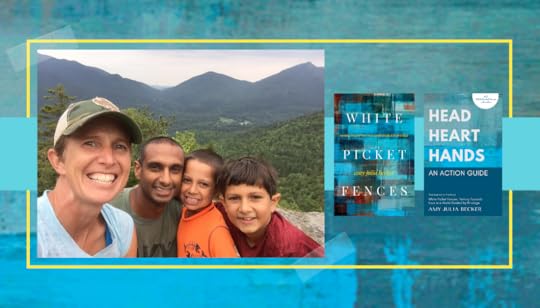
We All Need Healing from Racism is part of a series of posts I’m sharing, written by people who read White Picket Fences and responded to the themes of the book in their local community. I’ve recently published an Action Guide to accompany WPF (you can download it for free here), and these posts will also offer real-life examples of how people are participating in the long, slow, healing work to overcome the harm of social divisions and racism. Today Lawson Wijesooriya talks about her experiences in Richmond, Virginia.
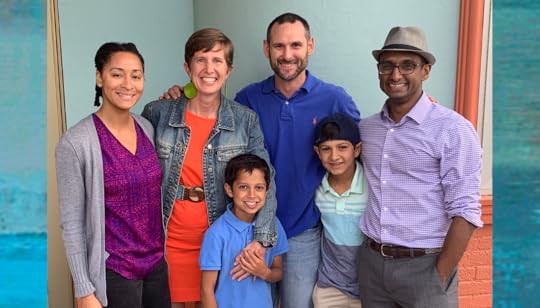
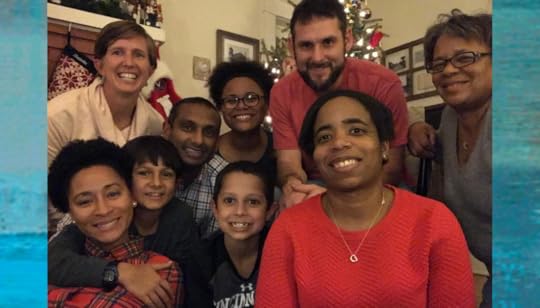
I am a white, wealthy, 39-year-old woman, married to a Sri Lankan man, raising two bi-racial sons, loving an adopted adult black daughter, partnering in business with a 62-year-old black man, and co-housing with a black mother and her two daughters. The power of race and wealth are palpably present for me every single day . . . on purpose. So when I first picked up White Picket Fences, I already knew a great deal about its topic of privilege. I generally approached the book the way a tenured professor would enjoy a book written for a group of Privilege 101 students. I fully expected to affirm its content with a nice pat on the back, but not be personally moved by it.
Doing Harm, Intending to Love
But then, as I was reading, two people who I love very much told me that I had done them grave harm by not seeing them fully. They each identified my racial and economic lens as a part of the problem. I initially felt crushed and hopeless. I wondered how it would ever be possible for me to feel reconciled across differences if I had harmed these particular people after years of relational work, honest exchanges, trust building, and yes, love. I was uncomfortable accepting feedback about how I had done harm when my intention was to love. I could not hold two seemingly paradoxical truths simultaneously—that these relationships were loving, mutual, and “good” at navigating our differences, and that those same relationships were causing harm, unequal, and divided by race and class.
A Journey of Tension
I was uncomfortable experiencing the weak position of needing forgiveness. I was uncomfortable that my effort and my goodness were not enough to heal or overcome large cultural divides and a history of mistrust in these personal one-on-one relationships. I was living in the tension of a “world divided by privilege,” and I wanted to retreat to safe ground where I was good and woke and not responsible.
The words of WPF broke me wide open because Amy Julia was also on a journey of tension—“standing in the discomfort of the grief and gratitude of who I am as a child of privilege.” Through her stories she was standing tall, facing her eye twitch, and beckoning me not to be afraid of the tension. The book then became a fellow traveler, a trusted friend with whom to process the very real, specific stories and relationships of my life. God knew that despite my many years of study and practice of racial reconciliation, I still longed for more ways of naming and being with tension. And longing is the beginning of healing.
Discomfort of Tension
So I read more books, had more conversations with friends, cried more tears, and prayed more prayers. I also took an on-line learning class called “How to Hold Whiteness Responsibly” taught by Laura Brewer. Through that class, I identified the ways I escape the discomfort of tension unhealthily through judgment or paralysis. If a paradox presents itself in my life, especially one that threatens my identity of “being good,” I quickly pass judgment on who/what was right and who/what was wrong. Once I can categorize right and wrong, I feel more settled, consistent and in control. This works even when I judge that I was wrong, because then I am back feeling good about being the one who could admit that I was wrong! If I cannot get comfortable through judgment, then I simply feel overwhelmed and give up on the tension all together by paralysis of action and emotional reflection. This past year I literally have practiced “holding” paradox and tension without using judgment or paralysis to return to comfort.
Open the Conversation About Race and Privilege
So as I ate humble pie to come down from my professorship pedestal, I was surprised to find that WPF was also beautifully speaking to some of my favorite Privilege 101 people too, most notably my mother. The invitational approach of storytelling in WPF shifted everything for my mom.
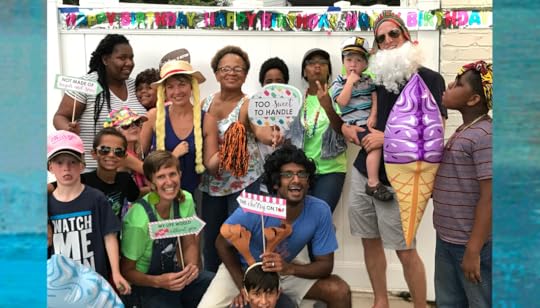
She has always been a thoughtful, self-reflective woman who wants to make the world a better place, but she also often felt insecure, afraid, or overwhelmed by conversations about race and privilege, especially with her peers. WPF gave her courage. My white, wealthy, plantation-owning mother invited my husband and me to host a talk and WPF book discussion with 30 of her white, wealthy, plantation-owning (they do not all own plantations!) friends last spring.
She invited her friends by encouraging them to read WPF and to come hear her daughter and son-in-law share about our life living in a low-income, primarily African American neighborhood. It was the most wonderful, courageous, revolutionary act, and I was privileged to be included in my mother’s bridge-building efforts. She wrote her peers by saying, “I hope to gather together to have a conversation about some of our community/nation’s most difficult/divisive issues with the goal of learning, sharing and connecting in positive ways.” Amy Julia’s courage to open the conversations had emboldened my mother to do the same, and I am so grateful!
Healing from Racism
I now see more ways that God has called me into my life of cross-cultural living for both my healing and the healing of others. Lilla Watson is credited with saying, “If you have come here to help me, you are wasting your time. But if you have come because your liberation is bound up with mine, then let us work together.” I now affirm more deeply and truly (and with great tension!) that my liberation is bound up with the freedom and equality of the ones my privilege has harmed.
I believe that we are all sick with the disease of racism and resource hoarding, and that while we experience different symptoms of that disease, every single one of us needs healing. I believe God brought me to the inner city of Richmond to heal me, and that in receiving that gift of healing, healing will spread to others in my community.
 Lawson Wijesooriya lives in Richmond, VA with her husband, two sons, and others in pursuit of beloved community. She spends her days at soccer fields with her boys, leading her “house church” group, fighting for integrated public education, managing a small ice cream business, and working at expanding access to affordable housing in her neighborhood.
The other guest posts in this series focus on the long, slow work of healing that comes through the full participation of our heads, hearts, and hands .
If you haven’t already, please subscribe to receive regular updates and news. You can also follow me on Facebook , Instagram , and Twitter .
The post We All Need Healing from Racism appeared first on Amy Julia Becker.
January 7, 2020
4 Things I Learned from Going Away for 40 Days
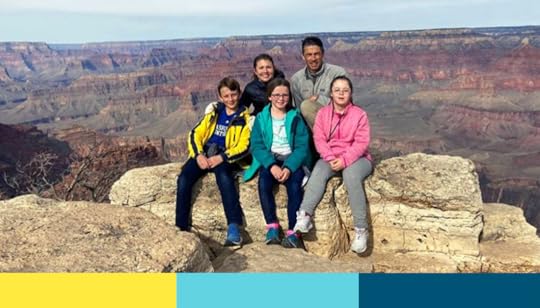
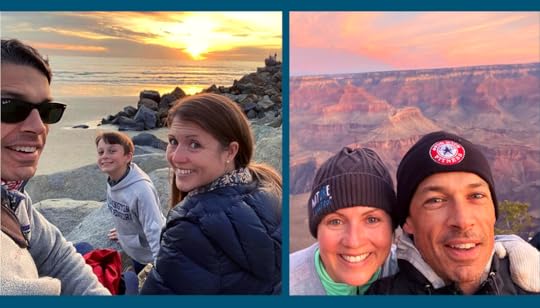
Going away for 40 days! As regular readers of this blog will remember, in late November, our family went away for 40 days, embarking on a six-week journey around the country. We turned off our computers, packed our bags, celebrated Thanksgiving and Christmas and Penny’s 14th birthday, and now we are home. Home to ballet, basketball, dirty laundry and dirty dishes, homework and bills to pay. Home to friends, family, familiarity, and the stark beauty of a New England winter.
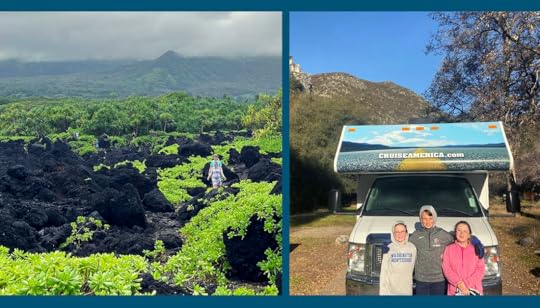
In the upcoming weeks, I’ll share thoughts about our 40 days away, including our Civil Rights tour through Louisiana and Alabama, our visits to six different churches on the Sundays of our trip, and our week as a family of five in a 24x12x10 foot recreational vehicle exploring national parks.
But for today, I’m looking back on our experience of going away for 40 days through the lens of four things I learned that might be helpful for all of us as we look ahead to 2020:
1. I am still me, wherever I go.
I am a goal setter, and heading off for this trip was no exception. I wrote down goals for the average amount of alcohol I would consume each week and how much I wanted to run and how often I wanted to pray. I wrote down rules like “no french fries.” I had similar structures for the kids—questions to reflect on in their journals, rules about how many Cupcake Diary books the girls could read before turning to something I deemed more substantial, expectations for Penny and William around the newfound ability to text friends and family during our 40 days away.
The truth is, even with the stated goal, and even with the time and space to implement it, I ate a lot of french fries. I consumed more wine than I said I would. I got fidgety while trying to experience contemplative prayer. I got anxious every day that we moved from one place to another. In other words, no matter where I am, I take me with me. The good news was, I had more time and space to see myself (and those around me), love myself (and those around me), and begin to learn what it might look like to change and grow.
2. Love happens in proximity.
During the time we were on the road, we lived in hotel rooms, an Airbnb with no walls (a loft in Los Angeles), and an RV. We ate almost every meal together. If I wanted “quiet time” to read or pray, I needed to put in headphones to signal that I was unavailable. We confronted the annoying things about one another day in and day out, with no place to retreat.
For example, William hates it when Penny cracks her knuckles. Penny hates it when William hums. They yelled at each other about these habits until Marilee finally came up with a solution: “Every time Penny cracks her knuckles, William gets to hum a song. And vice versa.”
Being so close together and spending so much time together meant either being irritated with Penny for taking longer than anyone else to get ready, or choosing to love her and feeling grateful for a little more time. It meant either doubting Peter’s ability to plan for the National Park portion of our trip or trusting him with it. It meant critiquing myself at every additional french fry or giving myself grace.
Uninterrupted time and space forced us to choose whether to be repulsed by each other or to love each other, and the lack of pressure meant that most of the time we could choose love.
3. Hearts and souls whisper.
I was able to spend every day with at least an hour, if not two or three, with some combination of prayer, reading, and contemplation. I practiced the Ignatian examen, scanning through each day and asking myself where I experienced the presence and goodness of God and where and when I felt far away from that goodness.
Over time, I began to notice things. I noticed how hard I can be on myself. I noticed how critical and judgmental I can be of other people. I noticed how worried I can become over simple things. I noticed how much I depend on food and drink to regulate my mood.
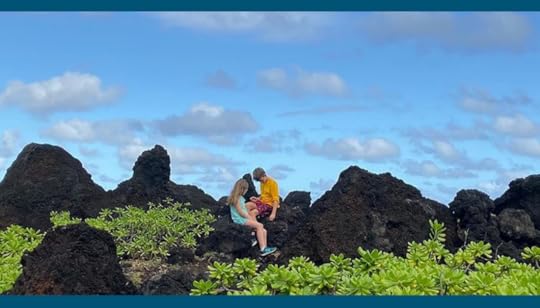
I also noticed that I love being outside, and that I love learning. I noticed my longing to connect with other thinkers who are pursuing God’s healing work in the world. I noticed the different ways our children laugh. I noticed the trees in their simple, diverse beauty.
And through it all, I heard whispers. Slow and simple. Be. Love. My heart and soul, and the voice of the Spirit, only emerge with time, and space, and quiet.
4. We get to be a part of something small and local and meaningful.
It was a gift to get away. I want to continue to practice slowing down with short periods of time every day, with intentional Sabbath time every week, and with regular times of retreat. I want to visit more national parks, more cities, more museums. But what I also learned from being away is how important it is to be home.
We learned about the injustices and abuses of slavery and Jim Crow and mass incarceration in Louisiana and Alabama. But how am I going to respond to ongoing injustice and economic and educational disparities in Connecticut?
We went to churches that represented five different denominations in five different cities. It was beautiful to see the ties that hold together progressive and conservative, praise songs and hymns, liturgy and spontaneous prayer. But the place where we can experience the transformative work of the Holy Spirit is in our local church.
We got a greater appreciation for the grandeur of the earth when we visited Yosemite and the Grand Canyon. We saw wind farms and solar arrays and recycling systems in Southern California, more advanced than anything where we live. But the way we can steward our resources well is by protecting and preserving the land nearby and advocating for environmentally conscious policies in our backyard.
A Glimpse of Our World
We only caught a glimpse of a big, wide, wonderful world in our 40 days away.
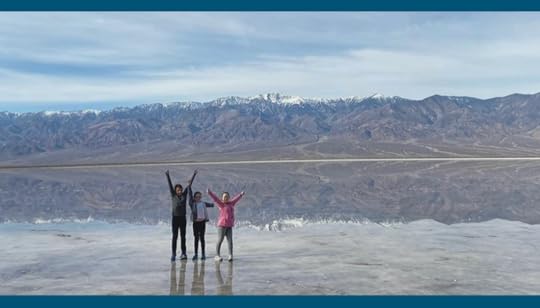
That glimpse was enough to fill me with gratitude for all we have been given, not just in the vastness of creation, but also in the small corner of that vastness that we call home. It was enough to give me a vision of who I want to keep becoming: a person who listens to the gentle, quiet voice of love and allows that love to lead me every step of the way.
If you haven’t already, please subscribe to receive regular updates and news. You can also follow me on Facebook , Instagram , and Twitter .
The post 4 Things I Learned from Going Away for 40 Days appeared first on Amy Julia Becker.
January 5, 2020
Creating a More Equitable World
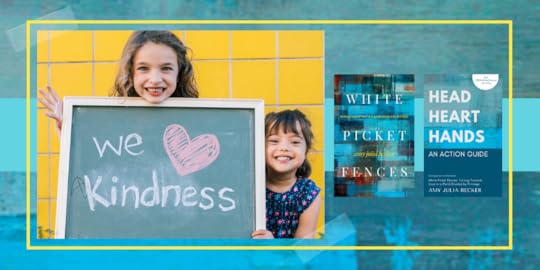
Creating a More Equitable World is part of a series of posts I’m sharing, written by people who read White Picket Fences and responded to the themes of the book in their local community. I’ve recently published an Action Guide to accompany WPF (you can download it for free here), and these posts will also offer real-life examples of how people are participating in the long, slow healing work to overcome the harm of social divisions. Today I’ve invited Katie Kishore to share a bit of her story.
As a widow with two young daughters, including Kiran, my five-year-old with Down syndrome, books often sit on my bedside table longer than I’d like to admit. I am certainly not one to read books twice, unless it is the Llama Llama series at the request of my daughters. But I flew through White Picket Fences once and then felt compelled to read it again. I then ordered 20 books to give away to friends over the holidays.
An Inequitable World
Like Amy Julia, I grew up achieving, working hard to be the best, and receiving praise for my efforts. But Amy Julia seems to have spent more time at the library with paper and pen in hand while I spent countless hours on soccer fields and basketball courts. And while Amy Julia lived in a world of private schools and fancy vacations, I am the daughter of two public school teachers.
However, I too, have been immersed in a world of race and class privilege from birth. I worked hard and excelled in a variety of ways, and as a child I was quick to frame my achievements as badges of merit, but as I grow older it became clear that my childhood narrative is an oversimplification of the truth. My life, like so many others around me, has benefited from and continues to benefit from unfair institutional and cultural systems that lift up some and oppress many.
Creating a New World
Like Amy Julia, I have a daughter with Down syndrome who has stolen my heart and continues to amaze me, challenge me, and reveal a new world to me. Her presence in my life has prompted me to rethink the assumptions I’ve always accepted as truth, like the need to be in motion (aka hustle and be busy), the pursuit of individual successes (aka work hard to be the best) and a commitment to right over wrong (aka assuming there are only two options – right and wrong). I’ve begun to recognize that these cultural values are evidence not only of my able body but also evidence of the white dominant culture within which I was raised. Kiran has helped me to see the value in slowing down, prioritizing community, and recognizing complex truths for what they are.
I want to be a part of creating a more equitable world where our social structures provide opportunities for everyone to participate and also create healthier and happier communities and individuals. As I move forward in my personal and professional endeavors I often think of Amy Julia’s statement that this work requires patience, humility, and full participation from our heads, hearts, and hands.
With My Head
With my head I am heeding the advice of a trusted friend who identifies as Chicana and teaches college courses on racism. She advises, “Read books by people of color, click on the articles about injustice, find out more about the history of our city and take the time to learn.”
I’ve been reading more authors of color, been consciously naming race and injustice with my girls, and researching communities that include adults with and without disabilities. I’m investigating how we (white, able-bodied adults) are harming ourselves by not allowing others to fully contribute to and shape our culture.
With My Heart
With my heart I am remembering the work and life of Jean Vanier who established 147 L’Arche communities around the world where adults with and without disabilities live in community. As Vanier would encourage, I’m seeking connection with those who are different than I am.
Sometimes those actions seem very small—consciously introducing myself to parents of color at a birthday party and back to school night, learning the names of retail workers with intellectual disabilities when I encounter them. Sometimes that means slowing down and sometimes that means being uncomfortable, but it has led me to a deeper understanding of our shared humanity.
These connections and friendships have provided me with a greater appreciation of what marginalized communities have to offer dominant culture when we create the space.
With My Hands
Finally, with my hands I’m finding small ways to engage in work that seeks to create a world where all people are treated with dignity and provided opportunity. I host Raising Race Conscious Children webinars, participate in the work of inspiring black women neighbors (check out Lashundra Morsberger and Bellamy Shoffner), and am starting a nonprofit coffee shop that will employ adults with cognitive disabilities—Kindness Cafe + Play.
While I recognize that a world with real equity is unlikely and significant change requires generations of work, my community and I also know that to simply stand in the river is no longer an option. We don’t want to float down this stream. We want to walk upstream, even if slowly. We are seeking justice, equity, and healing.
Thank you to White Picket Fences for opening our hearts, challenging our minds, and inspiring our hands.
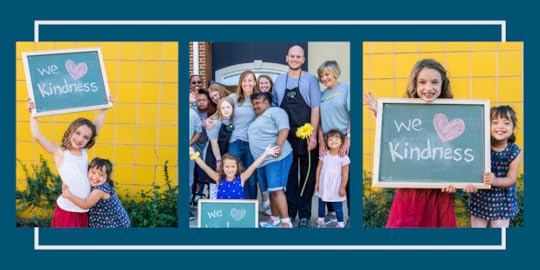
Katie’s younger daughter loves books, singing, and her grandparents. Her older daughter loves art, playing soccer, and her cousins. They are all looking forward to the opening of Kindness Cafe + Play in early 2020 in Charlottesville, VA.
……..
The guest posts in this series also focus on healing from racism and resource hoarding (tomorrow’s post), as well as the long, slow work of healing social divisions .
If you haven’t already, please subscribe to receive regular updates and news. You can also follow me on Facebook , Instagram , and Twitter .
The post Creating a More Equitable World appeared first on Amy Julia Becker.
January 2, 2020
The Long, Slow Work of Healing
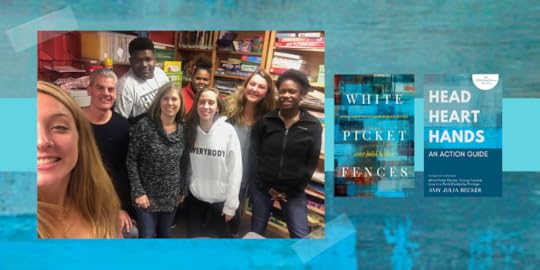
The Long, Slow Work of Healing is part of a series of posts I’m sharing, written by people who read White Picket Fences and responded to the themes of the book in their local community. I’ve recently published an Action Guide to accompany WPF (you can download it for free here), and these posts will also offer real-life examples of how people are participating in the long, slow healing work to overcome the harm of social divisions. Today Amy Moreau talks about her experiences in Raleigh, NC.
Crossing Chasms
Last fall, I had just helped create a student leadership program called “Crossing Chasms” with a friend at Neighbor To Neighbor, a mentoring organization in downtown Raleigh. The idea was to invite a small group of high school students from different socioeconomic backgrounds to build relationships with each other over a semester, as they explored together the “chasms” of class, culture, and poverty that often keep them apart. Having worked with students from affluent backgrounds for the past 15 years, I was longing to create opportunities for connection between groups in our community that seldom interact, thinking both were missing out by not knowing and hearing from each other.
White Picket Fences and Healing
Around the same time, I heard about Amy Julia’s new book White Picket Fences. I really wanted her to come to Raleigh even before I read it. I had a feeling she would be able to give voice to the thoughts I often found difficult to articulate about the long, slow work of healing. So we planned a great event to introduce Amy Julia and WPF to about 60 people. We considered the event a success, but the real success came afterwards, as we invited smaller groups to read & discuss White Picket Fences together, using Amy Julia’s discussion guides.
I personally participated in three different book discussions, one group made up of parents of teenagers, one group of neighbors, and one group of younger women.
Book Group—Parents of Teenagers
The parents of teenagers all had children attending private schools. One parent reflected:
Reading this book gave us the chance to discuss a topic rarely discussed in our meeting places which are generally very white and privileged. One question we wrestled with was how to develop genuine relationships with those from different cultural, ethnic, or socio-economic backgrounds. I realize I have been much more deliberate over the past year about putting myself in situations to do that, such as joining a racial reconciliation lunch club, shopping at a different grocery store outside of my neighborhood, attending a church with a little more diversity. . . I’m praying for big changes and doing what I can on a daily basis to connect.
Book Group – Neighbors
In our group of neighbors, the book gave us a platform for deeper discussion and relationships, even though we still at times have different opinions about what “turning towards love” and the work of healing looks like in our community and world. One neighbor commented that the book:
…acted as a catalyst for a much needed conversation and allowed me to step back and reflect on my own experiences and look on them with a new perspective. I now move through life with different eyes and I believe I owe much of this to White Picket Fences and the conversations we have had since.
We still meet monthly for lunch, and we share opportunities to engage and be proactive around these issues.
Book Group – Young Women
The third group of younger married women, some with young children, was more focused on how to provide their own families with different experiences and relationships than what they had growing up. This group wrestled with questions like: “How can I make different choices going forward, not only for myself but for my family? How do the choices I make now—where I live, work, attend church, shop, send my kids to school, or participate in activities—create or cut off opportunities with others I need to know? How am I missing out on the fullness of living in community when I am isolated from large sectors within my own city?”
A Long, Slow Work
White Picket Fences left us all wrestling with a question: “Do you want to get well?” As I look around my community, I still see so much that needs to be done—battles over affordable housing and gentrification, political divisions, public schools overwhelmed and under resourced, churches still largely segregated. I also see signs of hope and healing at a pivotal time in our growing community: women showing up weekly at a homeless shelter for coffee and conversation and working to find housing for their new friends; men leading free workout groups at a residential recovery shelter and building friendships; parents helping first generation high school grads make college accessible; a high school student selling t-shirts to provide books for children with limited resources; and increased student interest in our “Crossing Chasms” student leadership project, now in its second year.
As I think back over the past year and ponder what difference White Picket Fences has made to me and my community, I am grateful all over again for a tool that has opened up so many new conversations around a difficult topic. There are threads of its impact and subtle influence everywhere.
“Do you want to get well?” As I look around my community, I am hopeful that we do.
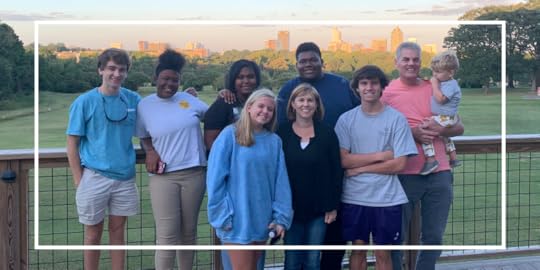
Amy Moreau has been ministering to students in her community for the past 30 years. She lives in Raleigh with her husband and two teenage children. In addition to leading “Crossing Chasms,” she is involved with several other projects tackling divisions in her community.
………………
Next week’s guest posts will focus on healing from racism and resource hoarding, as well as the healing that comes through the full participation of our heads, hearts, and hands.
If you haven’t already, please subscribe to receive regular updates and news. You can also follow me on Facebook , Instagram , and Twitter.
The post The Long, Slow Work of Healing appeared first on Amy Julia Becker.
January 1, 2020
Announcing Head Heart Hands
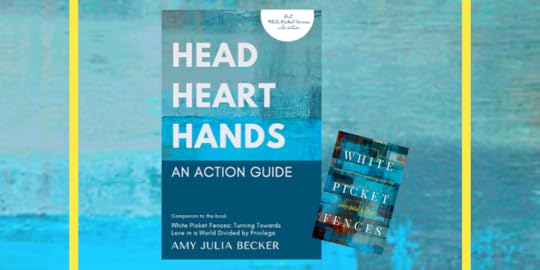
Today, here on my blog and over on my podcast, I’m announcing the publication of Head Heart Hands—a new, FREE resource to accompany White Picket Fences. Head Heart Hands is an action guide designed to equip anyone who wants to respond to the harm of privilege.
Download HHH
Reasons
There are so many reasons people don’t get involved in the work of righting social wrongs, fighting against injustice, and participating in the healing of society’s wounds. We’re busy enough with our own everyday problems. We’re overwhelmed and paralyzed by the scope of the need. We’re scared of what it would cost in terms of time, energy, and emotional fortitude. We don’t think our little efforts will make any difference. We aren’t aware that the need exists.
I Don’t Know How
Spoiler alert: the last sentence of White Picket Fences is “Do we want to get well?” I wanted readers to wrestle with this question, and I’m still glad I ended there. And yet I was also struck by the insistent, “Yes. We want to get well,” that I heard from readers again and again. Over the course of this past year, I’ve heard the same message from people who have said, I want to respond to the injustices and wounds of privilege and social division. And I don’t know how.
Holistic Response
So as I traveled around the country last year, I began to speak about a holistic response to the wounds of privilege. I talked about how we respond with our whole selves, in community, over a long period of time. I talked about the head, the heart, and the hands all working together to give us what we need in order to participate in sustained and transformative healing work over time.
Action Guide: Head Heart Hands
Today I’m announcing the publication of a new, free resource to accompany White Picket Fences. Head Heart Hands is an action guide designed to equip anyone who wants to respond to the harm of privilege. It walks through the problems of “fixes” and then offers ways to engage your head, heart, and hands.
You can download this free guide here. I hope it equips and empowers you to participate in ongoing healing work.
If you haven’t already, please subscribe to receive regular updates and news. You can also follow me on Facebook, Instagram, and Twitter, and you can subscribe to my podcast on Apple Podcasts, Google Podcasts, and Spotify, as well as other platforms.
The post Announcing Head Heart Hands appeared first on Amy Julia Becker.
December 30, 2019
Overcoming Social Divisions
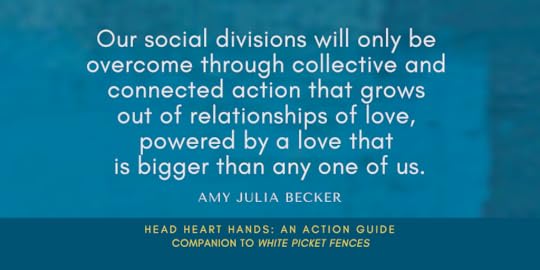
Our social divisions will only be overcome through collective and connected action that grows out of relationships of love, powered by a love that is bigger than any one of us.
An exciting announcement is coming soon about the release of a free action guide, which is a companion to White Picket Fences!
If you haven’t already, please subscribe to receive regular updates and news. You can also follow me on Facebook, Instagram, and Twitter.
The post Overcoming Social Divisions appeared first on Amy Julia Becker.
December 29, 2019
Three Heroes of 2019
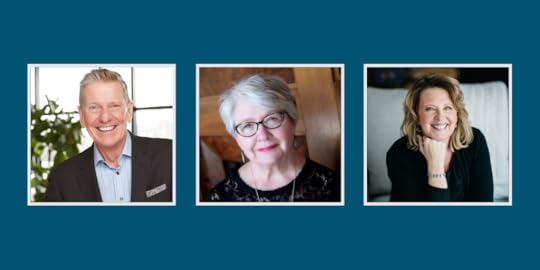
My three heroes of 2019! I’m someone who really enjoys looking back on what has already happened and planning ahead for what is to come. So I think it’s fun to turn the corner into a new year not because of parties and confetti but because of lists and calendars. I like having the chance to assess and evaluate and set some goals for the future. As I look back on this past year, it’s clear to me that three people have had a significant impact in how I have grown and in who I am becoming.
Three Heroes
As you look ahead to 2020, I want to offer these three people as trustworthy guides towards a deeper understanding of self, God, and how to live a purposeful life:
Michael Hyatt. Michael Hyatt is a leadership and productivity guru of sorts, and since I’m usually reading spiritual books or literary fiction, he doesn’t fit into my typical sets of recommendations. But I’ve been using his Full Focus Planner for two years now, and I’ve watched his accompanying videos and even bought Your Best Year Ever to do a deeper dive into how he recommends setting goals and planning my days, weeks, quarters, and years. I should add that I’ve been using his system to set goals for two years now, and in the beginning, I didn’t achieve any of my goals. Sell 20,000 copies of White Picket Fences. Didn’t happen. Maintain summertime weight throughout holiday season. Didn’t happen. Write monthly for a nationally recognized publication. Didn’t happen. Eventually I learned that I can only work on 2-3 goals at a time, and it usually takes longer than I want for those goals to be achieved. And throughout it all, I appreciated the weekly discipline of looking back and looking ahead. Even though I “failed” more than I succeeded in 2019, the past two years have been more productive with less stress than years before.
Suzanne Stabile. If Michael Hyatt laid an orderly table, Suzanne Stabile is a hero who cooked a nourishing feast for me in 2019. If you aren’t familiar with her, Stabile is a lifelong teacher of the Enneagram, a personality system that offers insight and guidance into how we can become who God has created us to be. I have enjoyed her podcast and her books, but I most highly recommend her MP3 teaching series that goes into even greater depth about the Enneagram. (For instance, she talks a lot about how your Enneagram number relates to how you process information, your orientation to time, and how you see the world, all super helpful in understanding yourself and others.) She’s a great writer and interviewer, but at heart Suzanne is a storyteller and a teacher, and those qualities come out in a lifegiving way through her teaching.
Ruth Haley Barton. If Michael Hyatt laid the table and Suzanne Stabile offered a nourishing feast, Ruth Haley Barton is a hero who sat with me and provided the most rich and sustaining conversation I could imagine. I first heard about her book, Sacred Rhythms , last March. Since then in 2019 I have read that book along with Invitation to Silence and Solitude and Invitation to Retreat , and I’ve listened to every season of her podcast. Barton is so real and lively and honest that I don’t feel intimidated by the fact that she is also deeply grounded in spiritual practices that keep her connected to God. She can write about going away for a 10-day silent retreat (I can’t manage to get a 24-hour retreat on my calendar, though it shows up as a goal in my Michael Hyatt planner every quarter!), and I just feel encouraged to try again. Barton combines Biblical insight and traditional Christian spirituality and applies it to our everyday lives in a distracting and fast-paced world.
Good Resources for All
I should note that my husband, Peter, has appreciated all three of these heroes as well, so I am pretty sure they are good resources for both men and women.
I’d love to hear from you—who are the people who have shaped you over the past year? And I hope these three offerings will serve you in the year to come.
If you haven’t already, please subscribe to receive regular updates and news. You can also follow me on Facebook, Instagram, and Twitter.
The post Three Heroes of 2019 appeared first on Amy Julia Becker.