Amy Julia Becker's Blog, page 136
September 5, 2019
Inclusive Blessing – How to Express Gratitude and Lament
 How do we acknowledge, confess, and lament the sorrows and crimes of our heritage while also honoring and expressing our gratitude our forebears?
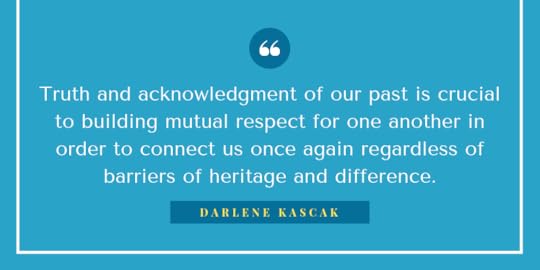
I heard Darlene Kascak, of the Schaghticoke Tribal Nation, welcome a crowd of people to a ceremony, and I was struck by the truth and love in her words, so I wanted to share them as a model of how to talk about the past:
“Every community owes its existence to the courageous and brave generations before them. Our ancestors sacrificed their hopes and dreams to create the history that has led us to this exact moment in time. Some ancestors left their homes from far away places in search of a better life, some were brought here against their will, never to see their homelands again, while others have lived continuously on this land for more generations than can be counted. We must honor and respect our elders for it is important for us as people to understand our place within the history of this land and recognize the circumstances that brought us here. Truth and acknowledgment of our past is crucial to building mutual respect for one another in order to connect us once again regardless of barriers of heritage and difference.”
I hope that you might be able to use these words and that they would be a blessing to you – and way to help you find gratitude in light of our complicated histories.
If you aren’t already, please subscribe to my newsletter to receive regular updates and news. You can also follow me on Facebook , Instagram and Twitter .
The post Inclusive Blessing – How to Express Gratitude and Lament appeared first on Amy Julia Becker.


September 3, 2019
Q Ideas 2019: The Harm of Privilege
My Talk at Q Ideas 2019: The Harm of Privilege
It was a tremendous honor to speak about privilege in front of the audience at the Q Ideas conference last spring, where leaders from around the nation and globe gathered to hear over 40 different speakers speak on topics as far ranging as gun violence, personal health and well being, disability, education, and justice.
I only wish I had been able to hear more of the other speakers while I waited for my own 9 minutes under the lights. (And can I share candidly that I spent more hours preparing for those 9 minutes–which included a countdown clock on stage that the audience could also see–than I did for the hour-long talk I was giving later on in the week!) The whole talk is available if you subscribe to Q Media (as are countless other great talks and resources).
The post Q Ideas 2019: The Harm of Privilege appeared first on Amy Julia Becker.
September 2, 2019
First Day of School: Penny Starts Eighth Grade – In Her Own Words
 I always thought
middle school
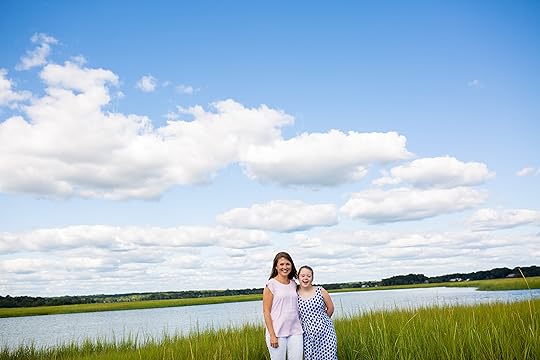
would be the time when life for a child with Down syndrome got hard. The infant and toddler years held their share of medical challenges. The pre-school and elementary school years included moving and learning to read and making friends and generally a healthy, happy life. I thought that would all change with the social struggles of the tween years. But Penny starts 8th grade today (!!!), and although there have been plenty of bumps along the social road of middle school, it has also been a better experience than what I could have imagined for her.
I always thought
middle school
would be the time when life for a child with Down syndrome got hard. The infant and toddler years held their share of medical challenges. The pre-school and elementary school years included moving and learning to read and making friends and generally a healthy, happy life. I thought that would all change with the social struggles of the tween years. But Penny starts 8th grade today (!!!), and although there have been plenty of bumps along the social road of middle school, it has also been a better experience than what I could have imagined for her.
I asked Penny to write about what she’s expecting as she looks forward to the school year:
Eighth grade will be a huge part of my life because there will be different teachers and different students. I think new students will come into the building and say “wow this is bigger than I thought it would be”. Especially a girl who I know from ballet who will be entering school and will be a new Sixth Grader. If I were her I know that I would be nervous. Its her first time at a new school.
I know from the future that it would be the same but different in cool new ways. Gym for example. I might have a different teacher than everybody else because I have special needs and they might think I need extra help than the others. I am also a little bit nervous because they usually have a red carpet on the first day of school and that for me is kind of nerve racking. When you walk into school on the first day there is a red carpet. Teachers will be on the sidelines cheering you on.
What I am looking forward to about 8th grade is seeing friends, seeing all the same teachers and or maybe different, and seeing familiar friends and to meet new friends.
My favorite parts of the school day Are lunch seeing old and new friends
Language arts maybe the same teacher maybe not
I also enjoy math
I also enjoy chorus
The most challenging part is science.
Since the start of 7th grade, I have been expanding new friendships and having a friend group to hang out with. I had one particular friend who I had a lot of fights with. One particular fight I do not want to mention but believe me when I say this after the fight we stopped being friends. I have another friend group who is very popular they all hang out with each other and gossip about other kids not including me whom I sit with at lunch everyday if they have enough room at the table I mostly just sit there and eat lunch.
All in all the start of school will be a blast.
Well there you have it. Penny’s learning a little bit in her classes and a lot at the lunch table.
At each stage of her life, I’ve confronted fears about what’s next, and at each stage I have been surprised and grateful to see that although there are plenty of struggles and challenges to face, she has also been surrounded by supportive and kind friends and teachers. I keep remembering what I say I believe–that love is stronger than fear.
PS: My friend, Stephanie Meredith, a mom with a teenage son with Down Syndrome, wrote an excellent guest post for my blog earlier this summer called 10 Tips for Raising a Cool Kid with Down Syndrome (even if you’re a nerdy parent like me). Her son Andy is older and further down the road than Penny, and I found her ideas and advice deeply encouraging as we enter the teen years. Be sure to check out that post as well.
If you aren’t already, please subscribe to my newsletter to receive regular updates and news. You can also follow me on Facebook , Instagram and Twitter .
The post First Day of School: Penny Starts Eighth Grade – In Her Own Words appeared first on Amy Julia Becker.
Understanding The US Immigration Crisis: 14 Recommended Resources

I feel very disconnected from the immigration crisis at the US southern border. I live in Connecticut, far away from detention centers and checkpoints.
So when I was invited to see what is happening at the border up close, I felt that this was an opportunity I couldn’t turn down. I’ll be heading to El Paso tomorrow alongside a group of other Christian women to visit officials and immigrants in Mexico and Texas who are living in and responding to this crisis. We’ll speak first hand to asylum seekers, people applying for refugee status, lawyers attempting to navigate an increasingly murky legal process, and officials tasked with a growing list of responsibilities.
I know the politics and the legal issues at stake are complicated, but the human need on view also cries out for attention and care. For me, the question is whether/how to best engage with immigrants and deal with the immigration crisis from thousands of miles away. How do we truly respond in love?
I’ll write about the trip and what I learned when I return, but in anticipation of this visit, I wanted to share this list of recommended articles, podcast episodes, and books that I received from our trip organizer. Perhaps you will find these resources helpful as I did.
Articles:
Border Crisis Questions Answered – Part 1
Border Crisis Questions Answered – Part 2
Fact Sheet: U.S. Asylum Process
Infographic: Remain In Mexico Impacts
Immigration lawyers: We saw what’s happening at the US-Mexico border. It’s a tragic farce.
US moves to abolish child migrant custody limits
Infographic: Alternatives to Detention
Jesus at the Border
Podcast Episodes:
From the podcast “Only in America” with Ali Noorani:
“Bearing Witness Along the Border” Reverend Beth Cossin
”They’re Children First, and Immigrants Second” Wendy Young (Kids In Need of Defense – KIND)
“Embrace Immigrants the Way Scripture Calls Us To” Jenny Yang & Matt Soerens (World Relief)
Books:
Welcoming the Stranger: Justice, Compassion & Truth in the Immigration Debate by Soerens, Yang, and Anderson
Christians at the Border: Immigration, the Church, and the Bible by Daniel Carroll
Love Undocumented: Risking Trust in a Fearful World by Sarah Quezada
Sort of Related: If you’re looking for resources for kids that feature diverse authors and characters, I have a list here . Let me point out in particular, Jennifer Grant’s lovely picture book Maybe I Can Love My Neighbor, Too .
If you aren’t already, please subscribe to my newsletter to receive regular updates and news. You can also follow me on Facebook , Instagram and Twitter .
The post Understanding The US Immigration Crisis: 14 Recommended Resources appeared first on Amy Julia Becker.
September 1, 2019
Defining Privilege Part Two: What Privilege Is
In my previous post , I discussed what privilege is not. In this post I will define what privilege is.
What exactly do we mean when we use the word “privilege”? The phrase “check your privilege” can sound–at least to some people–like an accusation. The word itself can become a barrier to conversation rather than a way to engage the challenging but important topics of racism, socio-economic class distinctions, gender inequity, and the different ways our social structure favors some groups of people over others.
The word privilege originally comes from Europe, where it was used as a legal designation. Certain groups of people had different legal rights than others. In this country, voting rights serve as a good example of a privilege that is extended to a certain group of people and not others. Originally, the privilege of voting went to landowning white men. Over time, that privilege expanded to include women, African Americans, and other people of color.
Although the word privilege still applies in this legal context, we also use the word in a social context. Privilege in this sense means unearned social advantages. I, for instance, as a white woman who was born to married, affluent, educated parents, was born into privilege. I had opportunities to learn and grow that were not afforded to some of my peers. When I use the word privilege, I am referring to this set of unearned social advantages.
We often hear the word “white privilege,” and countless studies demonstrate the ways in which being perceived as “white” in America offers social advantages. To cite a few examples, people see white athletes as more intelligent than black athletes, even when offered the same verbal description of their intelligence. Employers are more likely to invite people with “white-sounding” names to interview for jobs. The history of housing in America is a history of exclusion based upon racial classification that has privileged white people above others.
And yet whiteness is only one aspect of privilege. Social privilege is a Venn diagram with overlapping pieces and parts that can include race, gender, sexuality, religion, immigration status, and so forth. My friend Niro, for instance, considers herself a person of privilege. She has married parents who are both doctors. She is also a first-generation Sri Lankan American who has experienced discrimination for her appearance as a woman with brown skin. Our daughter Penny experiences the privilege of whiteness and wealth. She was also born into a history of discrimination and exclusion as a person with an intellectual disability.
“Privilege” can easily be oversimplified.
And then there is a second definition of privilege, which is the feeling of unearned and undeserved favor. As I write in White Picket Fences, rather than trying to deny or escape privilege, one gift of my journey as a person of privilege has been to understand privilege differently:
“It makes sense to talk about privilege in terms of access to private clubs and schools and bank loans and preferential treatment by authorities. It makes sense to expose the injustices of privilege and call for them to be rectified. But there is also the privilege of cleaning the wounds of people you love, of participating in healing and new life, of becoming vulnerable and needy and receiving love and care. There is another type of privilege, privilege that connects instead of divides, that shimmers through the air like a line of light, available if only we stop counting the coins and look up.”
The more we understand, acknowledge, and respond to the first kind of privilege, the more we will be able to receive the second kind, the privilege of being human beings created to love and be loved.
To read my post on what privilege is not, go here.
If you aren’t already, please subscribe to my newsletter to receive regular updates and news. You can also follow me on Facebook , Instagram and Twitter .
The post Defining Privilege Part Two: What Privilege Is appeared first on Amy Julia Becker.
August 30, 2019
Defining Privilege Part One: What Privilege Is Not
As important as it is to understand what privilege is, it is also important to clarify what privilege is not. Privilege is not an accusation that you have done something wrong to be who are. Privilege is not an accusation that you haven’t worked hard. And privilege is not an accusation that you have had an easy life.
My book that explores privilege, White Picket Fences, was the all faculty read at the Indian Mountain School (a coed boarding school in Salisbury, Connecticut) this summer.
I spoke to the faculty and staff up at Indian Mountain School on Wednesday morning, and before we started a conversation about White Picket Fences, before we considered whether institutional change was possible and desirable, I wanted to be sure to define my terms. So we talked about what privilege is (see Part Two) and what privilege is not.
1. Privilege is not an accusation that you have done something wrong to be who you are:
I was speaking at an event in Raleigh, NC about these topics when a white man in the back of the room raised his hand. “There are days when I wish I could just put a paper bag over my head when I go out the door,” he said. His comment embodied the sense of both shame and paralysis that can come for people who do have unearned social advantages and become aware of the ways those things have worked to their benefit and to the detriment of other people.
But shame and paralysis do not change our condition. For people of privilege, instead of hiding or denying it, we are invited to acknowledge it and consider how to respond with humility, love, and hope. Is it possible to use our privilege not only to advance our own interests but to participate in healing in our own lives, communities, and world?
2. Privilege is not an accusation that you haven’t worked hard:
It’s well-documented that people of privilege value hard work and achievement. In the September Atlantic, Daniel Markovits wrote a piece called “Meritocracy’s Miserable Winners.” He details the intense hard work of the “meritocracy” (a term that designates a new type of aristocracy that values hard work but also passes along its advantages from one generation to another) from pre-school through grad school and into work life. He writes, “What, exactly, have the rich won? Even meritocracy’s beneficiaries now suffer on account of its demands. It ensnares the rich just as surely as it excludes the rest, as those who manage to claw their way to the top must work with crushing intensity, ruthlessly exploiting their expensive education in order to extract a return.”
Markovits overstates the situation, but many people who are born with unearned social advantages (aka privilege, more on that definition in my other post) work very hard to maintain their status. Privilege is not earned by hard work, but many privileged people work very hard.
3. Privilege is not an accusation that you have had an easy life:
One friend of mine put it this way: “It did not feel like a privilege to grow up in my family.” She grew up in a dysfunctional household with parents who fought and eventually divorced, with substance abuse and eating disorders and mental illness. She also grew up with whiteness and wealth and access to social networks and capital that made it easier to attend college and graduate school. The reality of social privilege did offer her advantages. But they did not mean she had lived an easy life. Feeling privileged and being privileged are different things.
In order to cut through the strong negative responses people often have to the concept of privilege, understanding what it is not and what it is will help us to also identify the way privilege functions in our own lives and the world around us, for good and for ill, and to take steps towards meaningful change and social healing.
Stay tuned for Defining Privilege Part Two: What Privilege Is.
If you aren’t already, please subscribe to my newsletter to receive regular updates and news. You can also follow me on Facebook , Instagram and Twitter .
The post Defining Privilege Part One: What Privilege Is Not appeared first on Amy Julia Becker.
August 28, 2019
Summer Rewind: How Christians Should Talk About Sex

Last year the Atlantic reported on the fact that people are having less sex across all demographic sectors in America. Meanwhile, the sexualization of everything and seeing sex as a commodity to be bought and sold has only continued. It is as easy today as it was for me five years ago to put on my church lady hat and start scolding people about this state of things, but as I reread Paul’s first letter to the Corinthians again this summer, I was reminded that Christians are not called to talk to the wider culture about sex. We are called to talk about God’s love expressed through the life and work of Jesus Christ, as I wrote about a few years back for Christianity Today.
This post originally appeared on Amy Julia’s blog for Christianity Today, Thin Places, in April 2014.
I’m starting to feel like an old lady. I shook my head at Miley Cyrus at the MTV Music Awards and at Beyonce’s performance for the 2013 Super Bowl halftime show. I went out for a drink with friends on my 37th birthday, and we talked for an hour about how to protect our sons and daughters from our pernicious sexual culture. And then I read a report in Rolling Stone about the sexual norms among “young people” in America, and my eyes nearly popped out.
Maybe you’re like me—old enough to feel some combination of bewilderment, shock, and sadness about the state of sex in America. The Rolling Stone piece, “Tales from the Millennials’ Sexual Revolution,” begins like this: “By the end of their dinner at a small Italian restaurant in New York’s West Village, Leah is getting antsy to part ways with her boyfriend Ryan, so that she can go meet up with her boyfriend Jim.” Wait, what? Yes—you got it, she has two boyfriends and they all know about each other and they are all okay with that.
But the article goes farther than simply profiling an unusual relationship. It notes that only 20 percent of 18–29-year-olds are married (in 1960, that number was 59%), and that the average age at which people get married has increased by 6 years, but also that teenagers are waiting longer (on average) to have sex, and that the rates of teen pregnancy are declining. It considers the impact of pornography and the hookup culture. Though it is quite explicit, it offers a good overview of sex and sexuality among the millennial generation, and the overall picture includes lots of unconventional attitudes.
There is a part of me that wants to respond to these changes in sexual norms by constructing arguments in favor of traditional sexual morality. I want to write about how grateful I am to be faithfully married to a man who has also been faithful to me. But I know that my words of conventional sexual norms will do little to change our culture. Such words might even cause harm, might alienate me as one who judges and condemns rather than holding out faithful love as a beacon of hope.
It’s funny, because although I want to hold out a biblical ideal of sex, I want to do so in very unbiblical terms. The apostle Paul wrote to a culture that, when it came to sexual ethics, rivaled ours. I remember walking around the ruins of Pompeii, a city in the Roman Empire of Paul’s time. Preserved amongst the ashes are some of the mosaics that once hung in entryways to grand houses. Many of these images would still be considered pornographic—naked men and women, naked men and men, in the act of having sex. As Paul’s letters to the Corinthians attest, the Gentile culture of his time involved adultery, promiscuity, and pederasty. But Paul’s response to his culture wasn’t exactly what I might have expected.
From the records we have, we can deduce that Paul talked about sex with people who were already within a church community. He didn’t stand up on Mars Hill in Athens and preach about immorality. He told the story of Jesus, the one who rose from the dead. He didn’t argue about “lifestyle issues” with pagans. If he argued about anything, it was about grace and truth and love. And then he told the story of Jesus again. (See Acts 13, and Acts 17 for two examples.)
Of course Paul writes plenty about sex, but again, he does so to people in Christian communities and he almost always does so in the context of whole-life change. Sex is one moral issue amidst a host of others. Paul assumes that for these Christians to change—whether in what they eat or who they sleep with or how they talk or anything else—Paul assumes change will be radical, positive, and ongoing. He assumes it will only happen with the help of the Spirit, in the context of Christian community, and only as they grow up in the knowledge and love of Christ.
So if Paul serves as my example, I don’t need to get on my soapbox about sexual morality any time soon. In fact, I should probably avoid it. And I certainly should avoid any sense that I can claim any moral superiority to Miley Cyrus or the young people depicted in Rolling Stone. Instead, I should keep the story of Jesus close at hand, the story that reminds me that the God of all goodness and truth and beauty and light has raised Jesus from the dead and offers us hope and healing and new life, the story that reminds me that I once was lost but now am found.
If you aren’t already, please subscribe to my newsletter to receive regular updates and news. You can also follow me on Facebook , Instagram and Twitter .
The post Summer Rewind: How Christians Should Talk About Sex appeared first on Amy Julia Becker.
August 27, 2019
What Training for a Half Marathon Teaches Me about my Soul
 It still surprises me to note that I am training for a half marathon. Last year, I ran one for the first time and it was my first experience of running a race. Ever. And I liked it. So I’m doing it again this year, this time with a little bit more understanding of what I’m getting myself into as well as a little more motivation to train towards a specific goal. (Last year the goal was to run 13.2 miles without stopping.)
So I looked up training plans for people trying to run a half marathon in less than two hours (that’s a 9:09 pace, which may or may not be possible for me, but seemed reasonable to attempt). The training sessions surprised me. It’s 4 days a week of running, and typically one longer run each week. The surprising part is that for the vast majority of those days, I’m supposed to run at an “easy” pace, which is to say, at least 30 seconds slower than the intended pace on the day of the race. One day a week, I’m running at or above that pace. This week, for instance, I’m supposed to run a total of 23 miles. Only for three of those miles am I supposed to run at the 9:09 pace.
I wonder whether there’s something to learn here about the pace of life. Yes, there are moments when it is appropriate to push, moments when working harder than usual and leaning into the discomfort of extra effort is worth it. And those moments aren’t just appropriate but even necessary as preparation for pressures that will inevitably arise–at work, at home, in relationships. But the vast majority of the time, pushing hard is just a way to get injured.
All of this has led me back to wondering about not just my inclination to run harder, run faster in a literal sense, but also in a more holistic way. What if I stopped pushing hard all the time when it came to our schedule of activities? What if I stopped working so hard to produce content? What if I worked deliberately–with occasional bursts of extra energy–on family, friendships, and writing?
I haven’t run this race yet, so I don’t know whether the training plan will work. But if it does, I know it will have taught me more than just how to run a half marathon in less than two hours.
If you aren’t already, please subscribe to my newsletter to receive regular updates and news. You can also follow me on Facebook , Instagram and Twitter .
The post What Training for a Half Marathon Teaches Me about my Soul appeared first on Amy Julia Becker.
August 25, 2019
Review: The Peanut Butter Falcon | by Amy Julia Becker
This weekend was the opening of the movie The Peanut Butter Falcon. As parents of a child with Down syndrome, my husband Peter and I were curious and excited to see a narrative film starring an actor with Down syndrome. The first thing I will say is: go see this film. Below are the rest of my thoughts on the The Peanut Butter Falcon.
A young man named Zack (played by Zack Gottsagen) is longing for freedom from his imprisonment within a nursing home. He has Down syndrome. His family has abandoned him. He has become the responsibility of the state.
A young man named Tyler (played by Shia LaBeouf) is longing for freedom from his imprisonment to grief. He has lost his brother. He has resorted to theft and anger.
They find each other when they are both running away, and the result is The Peanut Butter Falcon, a new film about friendship and healing and love.
This film is not really about Down syndrome, although the portrayal of a person with Down syndrome struck me (and my husband Peter) as accurate and refreshing. Zack is competent, funny, smart, loving, vulnerable, needy, and strong. It’s really a film about the ways in which human connection–and perhaps especially unexpected human connections–can draw forth the best of who we are and help us believe in ourselves again.
It’s unusual to see a friendship between two men depicted on film in general, but the physicality of the relationship between Zack and Tyler struck us as particularly important. They establish a bond through their conversations and shared experiences, but they also build their friendship through hugs and high fives and dancing and working out. There is nothing sexual about their relationship, but it is still a relationship that contains a lot of physical touch. Friendship develops through the mind, the body, and the spirit, and to watch that happen is just one of the beautiful aspects of this film.
I don’t want to give away the most poignant and true scenes of this movie, but the conversations Zack and Tyler have about how Tyler has been treated as a person with Down syndrome and the conversation they have about whether they are good guys or bad guys were particularly moving.
Tyler also accuses Eleanor (played by Dakota Johnson), Zack’s helper from the nursing home, of calling him “retarded.” She takes great offense. She has never used that word and she is devoted to Zack and his care. Nevertheless, Tyler persists, every time she “helps” him by suggesting he should be more careful, every time she insists he eat and drink when he doesn’t want food or water, she is playing into the same narrative that the rest of the world imposes upon Zack. She belittles him with her care. It is the “soft bigotry of low expectations.” (a phrase popularized by President Bush in reference education, but relevant here).
I have one critique of the film–the three African American characters in the film are all tropes of different sorts. None are fully realized, and all are used rather than developed, in contrast to all the white characters. In a film that clearly is concerned with establishing our common humanity and the ways we can bless each other through friendships that overcome social divisions, it was disappointing to see the filmmakers take these shortcuts.
Nevertheless, I unreservedly recommend The Peanut Butter Falcon. It is a well-acted, beautifully shot, poignant story about friendship and hope.
Additionally, If you’re interested in other movies starring a person with Down syndrome, let me recommend the compelling documentary film Normie.
…
If you aren’t already, please subscribe to my newsletter to receive regular updates and news. You can also follow me on Facebook , Instagram and Twitter .
The post Review: The Peanut Butter Falcon | by Amy Julia Becker appeared first on Amy Julia Becker.
August 23, 2019
The Porter’s Gate Worship Project – New Single “Nothing to Fear”

I got to participate in the The Porter’s Gate Worship Project in Nashville back in January, where a diverse group of singer/songwriters joined together to write worship songs based on the themes of community and loving our neighbor. I was invited to attend to give a talk about how race and privilege impact community. I was one of several speakers who came to share ideas that would set the tone for the weekend.
Then we got to watch several beautiful worship songs come together right before our eyes (and ears). It was truly an honor to watch these amazing artists at work using their God-given gifts creating music to bless all of us. The album will be released in October, and the first single, Nothing to Fear, from Porter’s Gate featuring Audrey Assad “drops” today.
As the team at Porter’s Gate says: “This first single from the new album emerged out of conversations about how fear keeps us from loving and welcoming our neighbors sacrificially. The refrain of this song is God’s promise “There is nothing to fear, for I am with you always.”
I look forward to hearing the rest of the album. In the meantime, this song will be on repeat.
Click the here and listen on the platform of your choice! And here for the video.
The post The Porter’s Gate Worship Project – New Single “Nothing to Fear” appeared first on Amy Julia Becker.