Amy Julia Becker's Blog, page 137
August 21, 2019
Summer Rewind: Why We Still Go To Church
 Summertime is the hardest time for us to convince our kids, and ourselves, to go to church on Sunday mornings. They want to go to the beach. They want to play with their cousins. I’m often with them. I like the idea of a long bike ride or a few hours on the porch with a few books at my side. (Penny, I should add, is the exception here. She always wants to go to church in the summer because we attend a different church than the rest of the year and she loves the music.) And yet, week after week, when we pile into the minivan and I feel awkward leaving the rest of the family and like I’m missing out on what the rest of the world is doing, I end up feeling grateful. Grateful for the music and the rituals and the sermon. Grateful for the people who love us and love our kids. I wrote a post for Christianity Today a number of years ago about why our family still goes to church, and I’m sharing it here today as a reminder to myself and an invitation to others to consider becoming a part of a community of faith.
This post originally appeared on the Christianity Today website in October 2014.
According to a 2010 Gallup poll in 2010, 32 percent of people in the state of Connecticut attend church weekly or nearly every week. The numbers look similar for the rest of New England. In our small Connecticut town, about 60 people show up to church on a typical Sunday, representing close to 2 % of our population. Our other local churches aren’t filling their pews either.
It would be easy for us to join our neighbors and spend those precious Sunday morning hours differently. We could stay in our pajamas and read the paper while the kids watched cartoons. We could take a family hike. We could (and sometimes do) say yes to the birthday parties and soccer games. We could go out for brunch. And we could avoid the ordinary but difficult task of keeping our three wrigglers still and attentive for their thirty-minute stint in the sanctuary.
Most Sunday mornings involve a low level of irritation. Penny, age 8, opens the hymnal and starts reading the words to herself during prayers. William, age 6, lies down on the pew’s red cushion to color, feet behind him in the air. Marilee, age 3, slides off my lap and starts pulling things out of my pocketbook. I try to keep my whispering admonitions calm. I try to pay attention to the Scripture reading, the prayer of confession, the expressions of praise and thanksgiving from the choir. I am often relieved when our kids scamper out of the service to Sunday school, and I am often relieved when we head out the sanctuary doors to a more restful afternoon as a family.
And on those afternoons, I sometimes think it would be easy to abandon church not only for the sake of convenience, but even to abandon church for the sake of spirituality. We take a walk in the woods, and Marilee points out the color of a leaf and asks me if I remember when the angels were singing outside her window. William points to the lichen on a rock and says, “Mom, I think that’s part of the decomposer group. Like a mushroom.” Penny holds my hand and says, “Tell me a story.” The irritation has disappeared. We connect to one another, to the world around us, and it feels easy and peaceful and nice.
And yet we return to our somewhat harrowing Sunday mornings, week after week after week. We go to church because we believe in Jesus, and one way we express that belief is through worship and confession. But we could worship and confess on our own without asking our children to behave themselves. We also go to church because we believe that God is known through the diversity of the people around us—old and young, able-bodied and walking with a cane, rich and poor and in the economic middle, brown skin and white skin and every other color too. We know God better through that diversity of divine expression. And because God is a God of love, of giving and receiving, we know God more fully when we do not only receive, but when we also are asked to give of ourselves. Church asks more of us than our hike in the woods. In time, I believe it gives more to us also.
I know that many people have experienced rejection from the church, and many others feel as though the last thing they can bring to a sanctuary on a Sunday morning is neediness and vulnerability. But because we are one of the only young families in our church, every time we go, we depend upon the grace of the other people around us. They don’t just tolerate our wrigglers, they routinely give thanks, publicly, for these children of ours who could easily be seen as disruptive agents of chaos in an otherwise orderly service. These men and women model God’s grace to us.
I can only hope my children remember our neediness, and the warm welcome we receive when they are older. I cannot predict what my children will believe as they grow up. I know that sitting in the pews cannot guarantee their faithfulness or even their intellectual assent to the creeds of Christianity. But one thing I can predict is that my children will encounter hardship. Their hearts will be broken. Someone they love will die. They will suffer taunts and disappointments and illness. They will experience failure and rejection. My hope and prayer is that at those times, they will remember a place where they were always welcome, a place where the net of God’s faithfulness will catch them as they fall.
If you are interested, here is a previous post I wrote about talking to my children about faith.
And if you aren’t already, please subscribe to my newsletter to receive regular updates and news. You can also follow me on Facebook , Instagram and Twitter .
The post Summer Rewind: Why We Still Go To Church appeared first on Amy Julia Becker.


August 19, 2019
Sitting in Silence
I stumbled across a new podcast today called Encountering Silence and started with an interview with Richard Rohr on the topic of silence. I’ve been reading and practicing a lot of contemplative spirituality these days, and again and again, I read or hear people say to start with 20 minutes of sitting in silence two times a day. Every time I hear it, I come close to deciding to abandon it altogether because who on earth can find that type of time?
I will say that I have been grateful for my more modest attempts at silence once a day for ten minutes.
But I was even more grateful for Rohr’s comment around minute thirty of this podcast. He says,
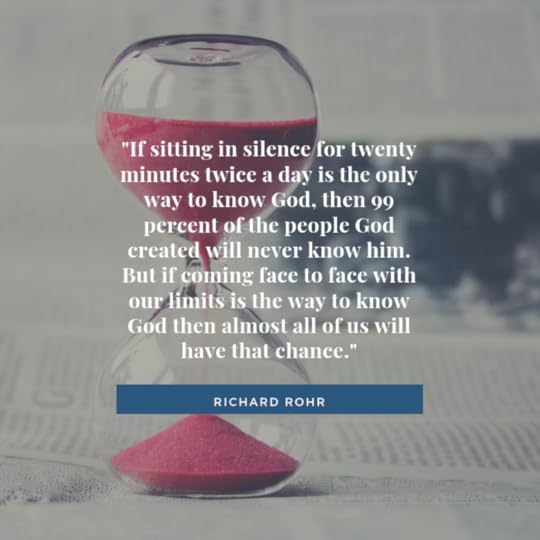
“If sitting in silence for twenty minutes twice a day is the only way to know God, then 99 percent of the people God created will never know him. But if coming face to face with our limits is the way to know God then almost all of us will have that chance.”
Listen to Fr. Richard Rohr, OFM: Silence, Action, and Contemplation (Episode 19) from the Encountering Silence Podcast on Apple podcasts here.
If you’d like to know about some of my other favorite podcasts, check out this post.
Oh, and if you aren’t already, please subscribe to my newsletter to receive regular updates and news. You can also follow me on Facebook , Instagram and Twitter .
The post Sitting in Silence appeared first on Amy Julia Becker.
August 18, 2019
Love in the Midst of the Mess
You may be familiar with the words of 1 Corinthians 13: “Love is patient. Love is kind. It does not envy. It does not boast. It is not rude…” I have these words framed in my office. For a long time, they hung on the wall of the girls’ bedroom. We memorized this passage as a family a few years back. This past year I’ve spent hours thinking and praying about love.
Love as the ground of our being. Love as the only way to heal social divisions.
Love as the power that fuels the universe and fuels growth and life and transformation.
My mind went back to 1 Corinthians 13 again and again, but I realized I didn’t really know this passage in its context. I remembered a little bit about this letter to the early church in Corinth from my seminary days, but I decided to go ahead and read it again and think about what led to the soaring rhetoric that has made it onto my walls and into countless wedding ceremonies across the globe. The short answer is that the church in Corinth was a mess. People were bickering, sleeping around, accusing each other, arguing about everything, and just generally being petty and messy and sinful human beings. That’s the context.
It is out of this incredibly realistic portrayal of humanity that we receive Paul’s words, “And now I will show you a more excellent way.”
It is in the midst of yelling at my kids because they are late to camp again that I hear, “Love is patient.”
It is in the midst of the summer vacation with relatives who I am judging silently in my heart that the words, “Love is kind” apply.
It is in the midst of the regret of two glasses of wine and mindless entertainment last night that I hear, “Love keeps no record of wrongs.”
It is in the midst of the mess that love enters in.
The post Love in the Midst of the Mess appeared first on Amy Julia Becker.
August 16, 2019
Summer Rewind: Five Books that Have Challenged Me about Race and Justice
I’ve offered a number of book lists related to race and justice this past year since the publication of White Picket Fences (link to those lists). There’s one more from 2016 I want to post here because it offers a different list of books that I was reading as I wrote White Picket Fences, books that challenged me to see our racial and social divides, and my part in them, differently.
This post originally appeared on my blog in November 2016.
I have been concerned about racial injustice and inequality in our nation for nearly forty years now. I grew up in a small town in eastern North Carolina. Growing up, the gentility of southern culture with its magnolias and manners offered me safety and comfort. And I noticed the discrepancy between my life–my education, our economic status, our freedoms–and the lives of the African American men and women in our lives. It wasn’t until I was much older that I could put any thoughts to my experience, and I am still working to sort out the blessings of my childhood and the brokenness of the racialized climate in which I grew up. In light of the recent focus on race and justice in our nation, I wanted to mention five books that have challenged me, troubled me, and ultimately helped me to understand our nation’s history and my own history, while also holding out hope for a transformed future:
 Playing in the Dark by Toni Morrison: This collection of essays from the 1990s explores the presence of African Americans within “classic” (which is to say, white) American literature. Morrison’s critique of and generosity towards these classics not only helps me to grow as a reader but also helps me to see the entire American narrative from a different point of view.
 The Warmth of Other Suns by Isabel Wilkerson. Wilkerson spent fifteen years researching this history of the migration of African Americans from the Jim Crow South to the rest of the country. She traces three lives personally while offering intricate and thorough–and thoroughly heartbreaking and infuriating–details about the reality of the unjust system under which African Americans lived in the south and, later, to a lesser but still pronounced degree, in their new homes. I also highly recommend Wilkerson’s recent interview with Krista Tippet.
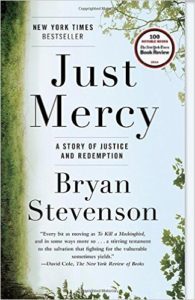 Just Mercy by Bryan Stevenson. Stevenson’s memoir of his ongoing work as a lawyer for defendants on death row demonstrates the tragic nature of our legal system, but it also offers a story of hope. Stevenson not only demonstrates his own commitment to the cause of justice and mercy, but he tells stories of men and women–both white and black–who join in this commitment.
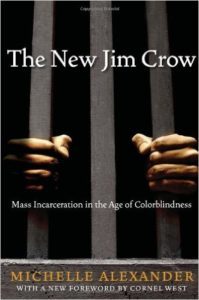 The New Jim Crow by Michelle Alexander.
I am listening to this book now, and each chapter offers a devastating critique of the policies of the past forty years when it comes to the “war” on drugs. Alexander makes a compelling case that the war on drugs has effectively served as a way to control the lives of “black and brown” men (and by extension, women and children and communities). She has convinced me that the current system of mass incarceration, minimum sentencing laws, and the prosecutorial and penal systems are in need of tremendous reform in order for justice to be served in our nation.
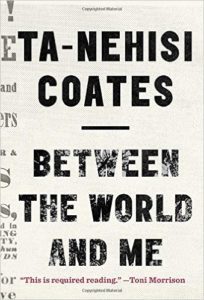 Between the World and Me by Ta Nehisi Coates. Coates’ memoir is a small and powerful manifesto that identifies the ongoing plight of African American people in America. Coates writes in lyrical prose with passion and intelligence. Although I wish his words held more hope, part of what I need to reckon with as a white person in America is the hopelessness that many African Americans face in light of our nation’s history.
These are tough books that confront difficult truths. My hope and prayer is that they also help lead us towards meaningful action and change.
If you aren’t already, please subscribe to my newsletter to receive regular updates and news. You can also follow me on Facebook , Instagram and Twitter .
The post Summer Rewind: Five Books that Have Challenged Me about Race and Justice appeared first on Amy Julia Becker.
August 15, 2019
Remembering Toni Morrison
Toni Morrison was a mentor from afar to me, first as a writer of fiction, later as a professor for a course I took at Princeton, and then through her essays. Morrison’s fiction is haunting, and haunted, horrific in the truths they tell and yet careful and lyrical in the way they tell it. Her impeccable prose and deeply thoughtful insights have changed the way I see myself as an American, the way I see our history, and even the way I see popular culture.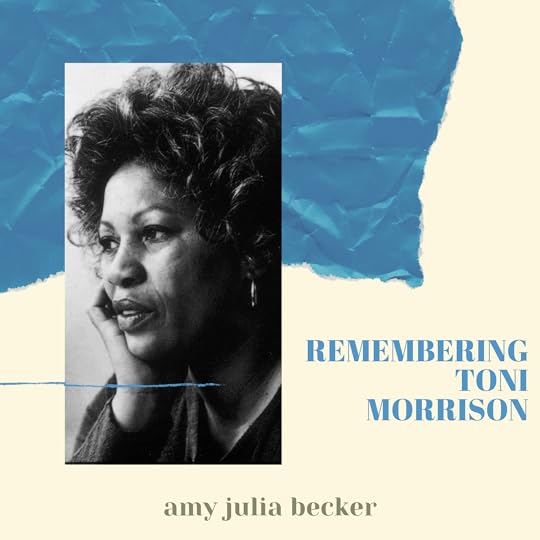
As a child who grew up in North Carolina with a romanticized version (a la Gone with the Wind) of the south before the Civil War, Toni Morrison’s Beloved offered me a new and far more true depiction of the reality, and horror, of slavery. I will never forget the scene in which Baby Suggs feels her heart beating for the first time when she stands on free ground because it was a moment that captured the ways in which life as an enslaved person is the equivalent of a living death.
After I read Playing in the Dark (her collection of essays about great works of the American literary canon) in college, I wrote a paper about the way African American bodies are viewed and treated in action movies. I watched The Rock, Con Air, and some other more forgettable films – films I had always enjoyed and had never examined before. I saw the black characters with entirely new eyes, eyes that Morrison had given me. I saw the way each black character was employed as a comedic figure or as a disposable prop. It was a hard and sobering realization, but it was also an important step in learning how to see.
She also taught me that American literature written by Americans of European ancestry has shaped white Americans understanding of ourselves as pure and beautiful and good through the contrast with those of African ancestry, whom authors have often portrayed as dirty, ugly, evil or dark. Morrison writes in Playing in the Dark,
“Africanism is the vehicle by which the American self knows itself not as enslaved, but free; not as repulsive, but desirable; not helpless, but licensed and powerful; not history-less, but historical; not damned, but innocent; not a blind accident of evolution, but a progressive fulfillment of destiny.”
I am grateful for Toni Morrison’s words, ideas, insights and legacy.
Her book Playing in the Dark makes my list of Five Books That Have Challenged Me On Race and Justice. Read about it and the other four here.
If you aren’t already, please subscribe to my newsletter to receive regular updates and news. You can also follow me on Facebook , Instagram and Twitter .
The post Remembering Toni Morrison appeared first on Amy Julia Becker.
August 10, 2019
Scary Mommy Post: When My Daughter Wanted to Quit Dance Class, We Did This Instead

Read to find out what happened when Penny wanted to quit hip-hop this summer:
https://scarymommy.com/teen-down-syndrome-quit-dance-class/
If you aren’t already, please subscribe to my newsletter to receive regular updates and news. You can also follow me on Facebook , Instagram and Twitter .
The post Scary Mommy Post: When My Daughter Wanted to Quit Dance Class, We Did This Instead appeared first on Amy Julia Becker.
What My Blog is About
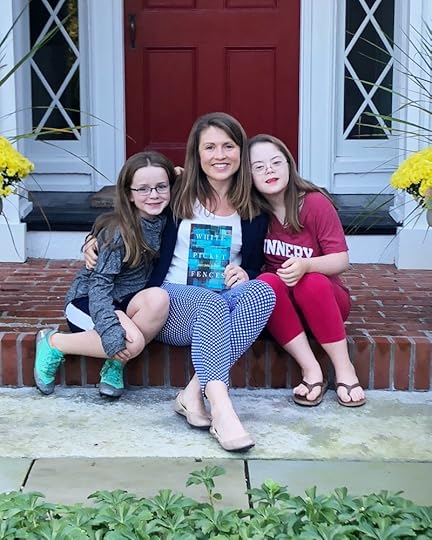 (not pictured: my son William and husband Peter)
If you are new to my blog, welcome! I blog about family, faith, disability, privilege, culture and the intersection of all of these realities. I tend to use events and stories from my life and the lives of my friends, family and neighbors as a way to begin conversations about what really matters.
I hope my words will encourage us all to think and feel and act in ways that move us towards honesty, humility, hope, and healing. From places of increasing health and wholeness, we can participate in a wider and broader work of healing in the lives of our friends and neighbors and even in our larger communities and culture.
Week to week, you’ll find that one day I’m writing about prayer and the next about one of my three kids or sharing thoughts about how raising a child with a disability has shaped my views on privilege and racism.
Even with that somewhat diverse range of topics I hope that you’re able to see the through-line: Namely, we as humans, may be broken and limited, but we are also deeply loved and called to love.
I’ve learned over the years that love is stronger than fear, and I hope anyone who reads my books and blog or hears me speak will be encouraged to believe and act and think in love.
Please consider signing up for my newsletter to receive updates including highlights of my recent blog posts, news about my books, and upcoming speaking events.
You can also follow me on Facebook , Instagram and Twitter .
Thanks,
Amy Julia
The post What My Blog is About appeared first on Amy Julia Becker.
August 9, 2019
Reflections on Suffering… and Love
 Last week, I spoke with a group of women about the age-old question of how a good God could allow acts of senseless terror and undeserved suffering in this world. In our case, we were thinking about personal tragedies that end in death–cancer, premature birth, degenerative illness. And yet these same thoughts extend outwards to the horrific news we face once again with yet another series of mass shootings.
There is much to say, and debate, about gun restrictions and mental illness and how and why individuals and communities break apart and the role of white nationalism and anti-immigration rhetoric. I don’t think I have anything new to add to that conversation, though I hope and pray that we are able to agree on a common purpose of human flourishing even if we disagree about how to achieve that purpose.
But this conversation from the other night might have something to offer in how we think about God’s role in these horrors. The simplest answer is love. God is love, and each of us is called to both receive that love and give it away. If and as we do that, if and as we participate in God’s love, we participate in bringing light and life and healing to this broken world. This love works itself out in everything from first responders who put their own lives in danger to parents who comfort children to policy makers who debate new legislation. This love shows up in the form of baked chickens and vegetable casseroles and art and music and friendship.
The conundrum of love is that by its nature, love does not control. Rather, love invites. It patiently, insistently, faithfully, eternally invites us to receive, and then to participate. But it does not demand or insist that we (or any of our fellow broken human beings) receive or participate in it. All ongoing brokenness is the result of rejected love. All healing is the result of love received.
Theology is little comfort in the wake of tragedy. But each and every one of us can look for ways that we can turn away from hatred and turn towards love.
You can listen to a sermon I gave recently on Jesus and his healing response to suffering here, a podcast I did with Matt Miller on hope and healing here, and a much(!) older post I wrote for First Things about cancer and hope here.
***
If you aren’t already, please subscribe to my newsletter to receive regular updates and news. You can also follow me on Facebook, Instagram and Twitter.
The post Reflections on Suffering… and Love appeared first on Amy Julia Becker.
Guest Sermon: Salem Covenant Church
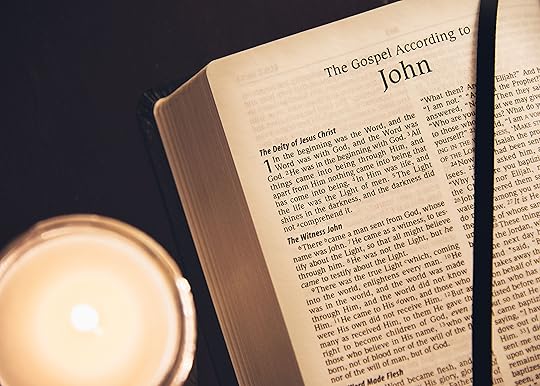
The 4 Things John 5 teaches us about healing, which is to say, about God
“Biblically speaking, health isn’t the absence of illness. Health isn’t the absence of anything. It is the presence of God.”
I recently had the chance to reflect on that thought and the nature of Jesus as one who heals in a recent sermon I preached at our local church. Here, I’m quoting theologian John Swinton. In my sermon, I spoke about John 5, the story of a man who has been ill for 38 years and has an encounter with Jesus. The audio is available here, and you can hear me talk about four aspects of Jesus’ ministry as a healer:
Jesus is not afraid of suffering
Jesus heals unconditionally
Jesus’ healing is disruptive
Jesus is always healing
The post Guest Sermon: Salem Covenant Church appeared first on Amy Julia Becker.
August 7, 2019
Vacation Recipe: Gazpacho
 I am not a chef. I do not make complicated dishes. I repeat tried and true recipes to the point that guests will say things like, “Oh good! I really like this one.” I have made a point of never learning how to grill so that at least one area of food preparation in the summertime is entirely dependent upon my husband. I’m also like Sally (Meg Ryan’s character in the film When Harry Met Sally). Which is to say I tend to adjust (improve?) orders in restaurants and recipes, so I’m pretty particular about how things come out.
My friend Elizabeth has been visiting our family this week, and she pointed out that one reason she looks forward to coming to our house in the summer because I always have a huge bowl of my own take on gazpacho in our fridge. She’s asked me for the recipe, as have countless other friends. It’s a very chunky “vegetable forward” version of gazpacho that I’ve tweaked (and dare I say perfected) over the years.
As I head into a few weeks of vacation, I wanted to share this recipe so that you too can enjoy this simple, truly delicious, experience of summer.
A couple of notes:
Tomato quality matters. The better the tomatoes, the better the gazpacho, so don’t skimp on the tomatoes. You can even use grape or mini-tomatoes so long as they have flavor.
This tastes even better a day later as the flavors have had a chance to combine. I often make it the night before I plan to serve it.
AJ’s Gazpacho Recipe
Ingredients:
½ of a red onion, diced
2 cups tomato juice
The juice from 2 limes (microwave for 20 seconds first to extract the max amount of juice and just to make the juicing process easier)
2 tsps minced garlic (about 1 large clove)
¼ cup olive oil
Salt and pepper to taste
2 cups of good tomatoes (2-3 medium sized tomatoes or 2 cups of heirloom grape tomatoes), cubed
2-3 red, yellow or orange bell peppers, cleaned and cubed (for the aesthetic I prefer orange)
2-3 medium cucumbers, peeled and cubed
4 ears corn, cooked (I usually just cook 4 extra ears the night before so everyone can enjoy corn on the cob and then taste that deliciousness again the next day)
Optional Add ons:
Avocados (I add right before serving. ¼ to ½ an avocado per person, diced)
Cilantro to taste (I almost always add this)
Tabasco to taste (my husband Peter particularly likes this variation)
2 cups black beans, rinsed and drained (to make it more hearty)
Greek Yogurt (in lieu of sour cream, or sour cream, if that’s your preference!)
Directions:
First, dice ½ red onion and soak in a medium bowl of ice water. Set aside for at least 30 minutes while you prepare the other ingredients to make the flavor more mild. Combine in a large bowl the tomato juice, lime juice, garlic, olive oil. Chop and add the tomatoes, peppers, cucumbers. Slice off the kernels from the ears of corn, allowing them to stay in larger chunks and add. Drain red onion and add. If adding black beans, rinse and drain before adding. Cilantro and Tobasco sauce can be added at this stage or left for individual servings. Salt and pepper to taste. If you have time, allow gazpacho to sit in the refrigerator for a few hours or overnight. Serve in bowls and add avocado, yogurt and other optional ingredients to each serving as desired. Enjoy!
The post Vacation Recipe: Gazpacho appeared first on Amy Julia Becker.