Amy Julia Becker's Blog, page 12
February 14, 2025
A Commitment to Hope
I want to start out by saying: The work I do is not about politics, and I’m going to try hard to make sure it doesn’t become about politics. That said, my work, including my podcast and this newsletter, is about Reimagining the Good Life, and, at the start of every episode, I say that we are here to challenge assumptions about what makes life good, proclaim the inherent belovedness of every human being, and envision a world of belonging where everyone matters. So when politicians say or do things that undermine the inherent belovedness and belonging of everyone, or when they challenge the idea that everyone matters, I want to talk about it.
The podcast (and this newsletter) is also not about current events. But the events of recent weeks—both President Trump’s Executive Orders related to diversity, equity, inclusion, and accessibility, and his comments in the wake of the tragic and fatal plane crash in Washington, D.C. a few weeks back—prompted me to want to talk with David Bailey, a long-time friend of the podcast.
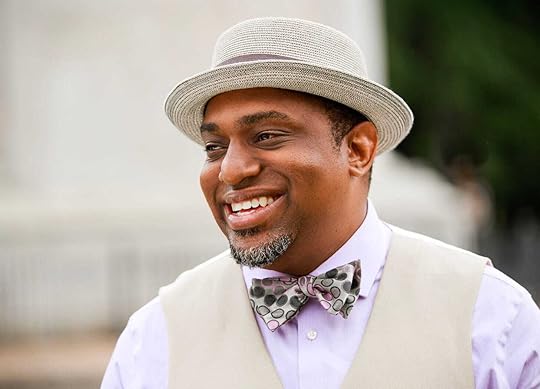
David M. Bailey is the Founder and CEO of Arrabon, a spiritual formation ministry that equips the American Church to actively and creatively pursue racial healing in their communities. David and I had a great conversation about what it looks like to be faithful to truth and grace in what he calls “peculiar and heartbreaking times.”
We discuss:
the consequences of dismantling DEIA initiativesthe implications of colorblindness and meritocracythe role of the church in advocating for justicethe importance of maintaining hope and engagement amidst societal polarizationthe need for critical thinking and compassionpractical steps for hope and community involvementAs David reflects:
“ Meritocracy is a mythology. In a broken, fallen world, that’s just not the way the world works. Let’s not pretend that’s how it is. But when you’re actually kingdom people, because we know the world doesn’t work that way, we’re folks that try to live an interdependent life where we try to bear one another’s burdens.”
I hope you’ll watch or listen to the entire conversation (and please share it!), but I wanted to take time here to focus on some practical advice David offers for stepping forward in faithfulness when we’re tempted to retreat:
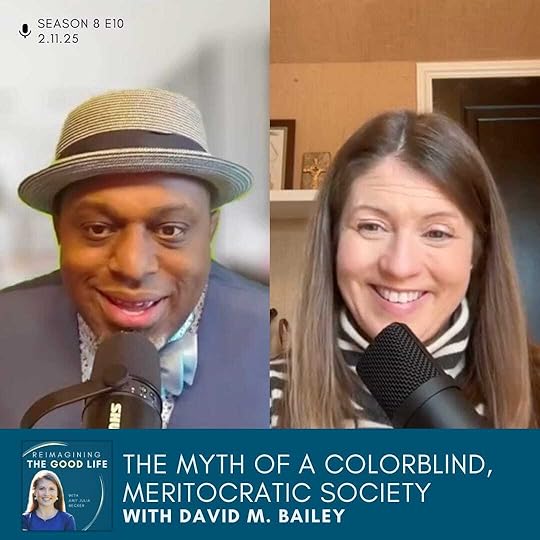
Listen on Apple | Listen on Spotify | Watch on YouTube
Love Without Rationing Generosity – In the parable in Luke 10, the Good Samaritan illustrates love for neighbor by caring for the stranger on the side of the road without judgment for the vulnerable, without questioning worthiness or status, without rationing generosity according to “theological, ethnic, and social taboos.”
Resist Dehumanization as a Political Strategy – Political powers often use fear and division to demonize certain groups, desensitizing us to suffering and distracting from real issues. Refuse to live with a mindset of fear toward “the other and the person that they’re demonizing.” As David says:
“Everybody’s made in the image of God… It’s our job to learn how to pay attention to the suffering of those who are bleeding on the side of the road.”
Engage with Wisdom – The flood of news and information requires that we are both discerning and compassionate. “We need to engage in critical thinking without having a critical spirit.”
Maintain Hope in the Chaos –
Fast from overwhelming media consumption.For people of faith, feast on God’s Word and engage in prayer.Feast on what is beautiful and brings joy.Be mindful of anxiety and fear tactics used to manipulate public perception.Discern what you can do within your sphere of influence and “choose that thing to be faithful in.” A commitment to justice and hope requires long-term endurance.Thank you for listening (or watching). I’d love to hear what you think. How are you maintaining hope and engagement amidst our cultural polarization?
MORE WITH AMY JULIA:
Free Resource: From Exclusion to Belonging
(a free guide to help you identify and create spaces of belonging and welcome)
Let’s stay in touch. Subscribe to my newsletter to receive weekly reflections that challenge assumptions about the good life, proclaim the inherent belovedness of every human being, and envision a world of belonging where everyone matters. Follow me on Facebook , Instagram , and YouTube and subscribe to my Reimagining the Good Life podcast for conversations with guests centered around disability, faith, and culture.
The post A Commitment to Hope appeared first on Amy Julia Becker.


February 12, 2025
Advocacy: A Bridge to Belonging
A parent recently made a suggestion to me that I hadn’t ever thought of before. I was speaking about Reimagining Family Life with Disability and the importance of connecting to community.
There are lots of reasons why parents of kids with disabilities feel alone. It’s hard to navigate the maze of agencies who might support you. Parents of typically developing kids don’t understand what it’s like to know the way to the local children’s hospital by heart. Sometimes it feels like the very people who are supposed to help you—the doctors, therapists, and teachers—are making it impossible for your child to thrive.
It’s easy to feel alone and overlooked and overwhelmed. Which is why it is also so important for us to connect to community. There are all sorts of ways to connect to community, from taking a few minutes to linger after school with other parents at the playground or joining a book club or hosting a party or finding a support group online.
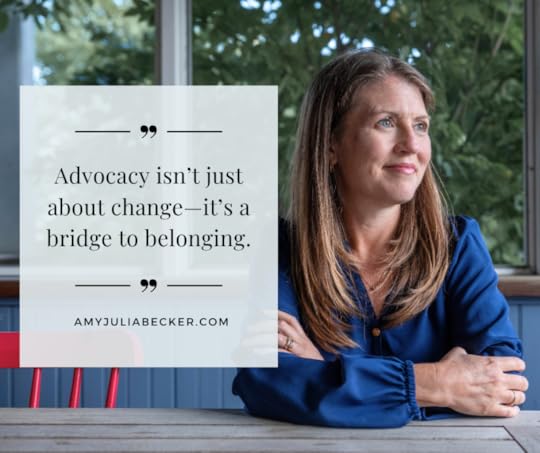
But what this parent offered was another way to connect to community—through advocacy. I loved her point because advocacy not only connects us to other people who care about the same thing, but it also makes a difference on behalf of our families.
So, with thanks for the suggestion to the mom who offered this idea, if you are a parent of a child with a disability who feels alone, maybe finding a group of people who want to work together towards a common cause on behalf of your family is just what you need.
MORE WITH AMY JULIA:
Free Resource: From Exclusion to Belonging
(a free guide to help you identify and create spaces of belonging and welcome)
Let’s stay in touch. Subscribe to my newsletter to receive weekly reflections that challenge assumptions about the good life, proclaim the inherent belovedness of every human being, and envision a world of belonging where everyone matters. Follow me on Facebook , Instagram , and YouTube and subscribe to my Reimagining the Good Life podcast for conversations with guests centered around disability, faith, and culture.
The post Advocacy: A Bridge to Belonging appeared first on Amy Julia Becker.
I Wish More Churches Would Love Their Neighbors Like This
Take delight in who you are (and/or in who your child is).
Connect to community.
Take the next step towards a good future.
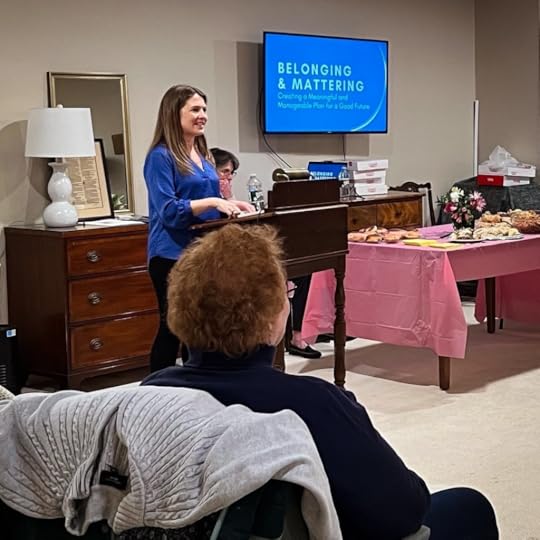
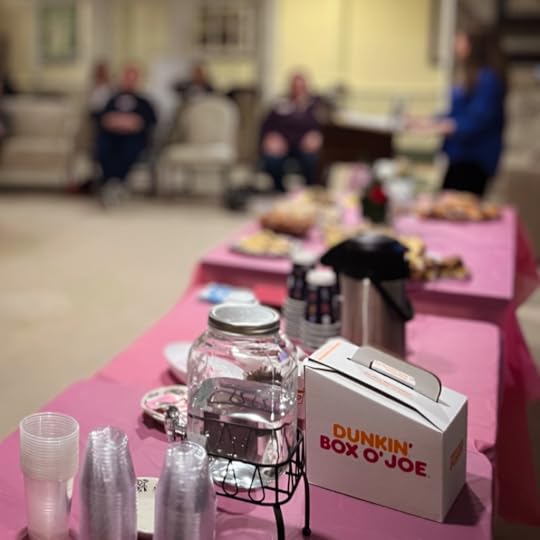
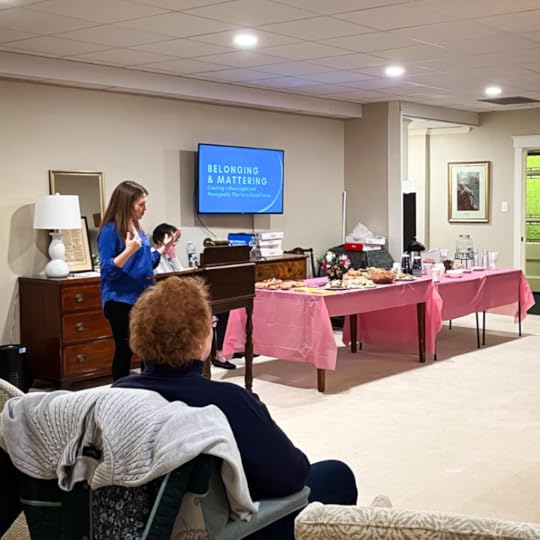
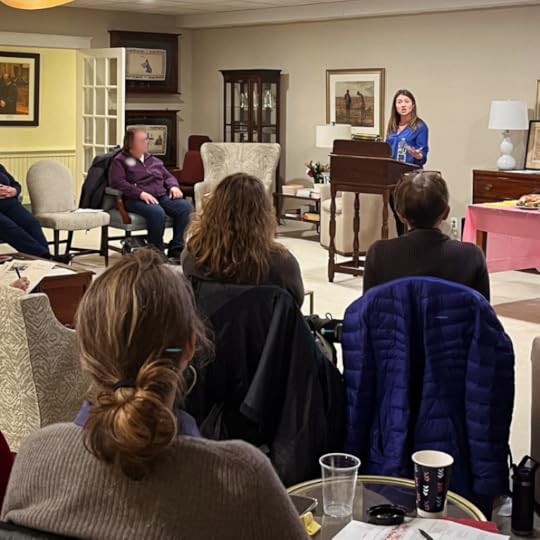
I had the chance to share this message of belovedness and belonging with a group of disabled adults and their family members at the First Presbyterian Church of Haddonfield, NJ last week. I always love speaking and receiving questions, but what I loved even more about this event was the way the organizers structured the day.
Loving Our Neighbors With DisabilitiesHere’s why I loved the way this event was structured:
For the CommunityFirst of all, they hosted an event for their community. Church members were, of course, welcome, but it was an event intended to “love their neighbors” with disabilities by bringing them together and offering them support.
Offered Local ResourcesSecond, they invited local service providers to come for the event. The local service providers shared ways people could receive support and make connections.
Message of WelcomeAnd, third, while there was no pressure at all for people to come to church, there was a clear message and posture that everyone was welcome as they are.
I would love for more and more churches to love their neighbors in a similar way.
If you’re interested in scheduling an event like this, contact me on my Speaking page.
MORE WITH AMY JULIA:
Free Resource: From Exclusion to Belonging
(a free guide to help you identify and create spaces of belonging and welcome)
Let’s stay in touch. Subscribe to my newsletter to receive weekly reflections that challenge assumptions about the good life, proclaim the inherent belovedness of every human being, and envision a world of belonging where everyone matters. Follow me on Facebook , Instagram , and YouTube and subscribe to my Reimagining the Good Life podcast for conversations with guests centered around disability, faith, and culture.
The post I Wish More Churches Would Love Their Neighbors Like This appeared first on Amy Julia Becker.
February 10, 2025
Dry January and Lent
I just finished Dry January, which is to say, I abstained from alcohol for the month of January. It was hard at first, and then it became good, and it was revelatory the whole time. It showed me all the different reasons I use alcohol—for enhancing pleasure and numbing loneliness and slowing down my overactive brain. It gave me time and space to build new habits. And it actually made me somewhat eager for other periods of time where I intentionally abstain from something, such as during the church season of Lent.
Lent starts on March 5th and is kind of like Dry January on steroids. I say that both because it is longer—40 days. And because it has been around for centuries, unlike the recent Dry January trend.
Lent is a time of somber self-examination (punctuated, beautifully, by feasting on Sundays). It’s a time in which we engage with suffering and hardship and grief and injustice. A time for lament and turning to God with our frail humanity and our very mortal selves. It’s a time for turning towards the love and hope and goodness of God.
I have two Lenten devotionals/guides available for you!
On the Way: Walking With Jesus Through the Season of Lent is a devotional that offers:
Daily Scripture verse(s) and reflection on themes like prayer, peace, suffering, and justice.Weekly questions that correspond to that week’s theme and a selected Psalm.And the To Be Made Well Lenten Bible Study is a small-group video series that explores:
Physical and emotional painPain in the communityDistraction and shame as barriers to healingStatus as a barrier to healingParticipating in person and collective healingAnd more!Join me in walking with Jesus through the season of Lent.
MORE INFOLet’s stay in touch. Subscribe to my newsletter to receive weekly reflections that challenge assumptions about the good life, proclaim the inherent belovedness of every human being, and envision a world of belonging where everyone matters. Follow me on Facebook , Instagram , and YouTube and subscribe to my Reimagining the Good Life podcast for conversations with guests centered around disability, faith, and culture.
The post Dry January and Lent appeared first on Amy Julia Becker.
February 6, 2025
How to Navigate the Pressures of Modern Family Life
Our front hall table is still covered in holiday cards. There are the uber-organized people who sent their cards at Thanksgiving, then the steady stream of happy faces that arrived throughout the month of December. There are cards like ours, which may have landed in mailboxes on December 23 or 24, just in time for Christmas. The ones that trickled in after the fact, and then those that didn’t pretend and just proclaimed, “Happy New Year!” I’m waiting for a few Valentine’s Day stragglers.
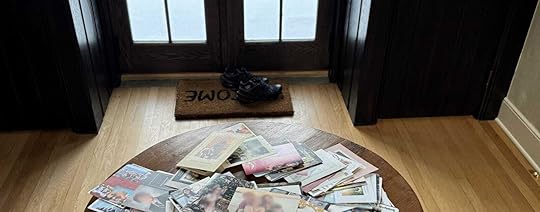
Last week, I traveled to the Church of the Incarnation in Dallas, Texas, to talk about reimagining the good life for our children. I started my talk with this table of holiday cards.
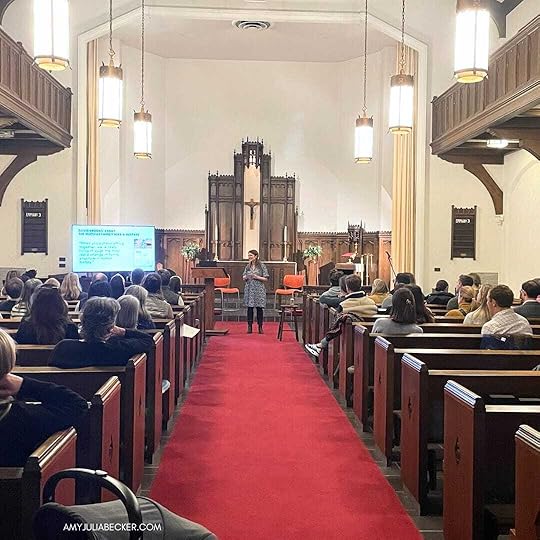
The cards tell a story of happiness and order, with kids in matching outfits and so many big, bright smiles. Our family’s card sends the same message—that all is bright and cheery and well with us. There’s truth to the cheer—and there’s also a darker side, to each of our individual families, and to the state of American families in general. (I wrote, for example, about the isolation that Penny, our daughter who has Down syndrome, has experienced at various points in her life, which of course our Christmas card does not convey.)
Books like Jennifer Breheney Wallace’s Never Enough and Jonathan Haidt’s Anxious Generation detail the increasing rates of anxiety, depression, self-harm, and pressure adolescents feel. Reports like Vivek Murthy’s “Parents Under Pressure” underline the way parents also feel more stress than ever before. There’s a disconnect between our cheery posts and cards and the stress both teenagers and parents express when asked.
Is there another way?
For families under pressure…As any regular reader of this newsletter knows, I keep circling back to the idea of “reimagining.” That’s where I landed with this talk in Texas too. That yes, there is a different way to navigate the pressures of modern family life, but it takes reimagining. Reimagining who our kids are and our role in their lives. Reimagining who God is and God’s role in our lives. And reimagining our identity as a family so that we are moving not toward success but toward flourishing.
Reimagining Our ChildrenI heard Alison Gopnik talk about her book The Gardener and the Carpenter with Ezra Klein years ago, but I finally bought it to read for myself because the concept aligns so deeply with the way I want to see our kids. They aren’t construction projects that I fashion in my image. Rather, our kids are seeds that already contain material to become who they are. But they need good conditions in order to flourish. My job as a parent is to tend their growth—spiritual, mental, emotional, physical—well. To notice the things they love and the times they seem anxious (for our kids, that shows up more with stomach aches and colds than with a direct expression of feeling stressed out). To encourage self-reflection. To embrace their limitations and explore their possibilities. To reimagine who they are, beginning with their belovedness.
Reimagining GodI wrote extensively about this in To Be Made Well, but it’s worth repeating that the primary way Jesus addresses God (and invites us to address God) is as a good, loving father. (This of course can be really hard for some of us when we’ve had absent/distant/neglectful or abusive fathers, but the image is meant to convey a father who is present, safe, and unendingly loving.) As parents, we are invited to know ourselves as needy, dependent, beloved children. We are invited to reimagine ourselves as ones who don’t have to get it all right. As ones who don’t have to be in control. As ones who need to receive our own belovedness repeatedly so we can live from that place.
Reimagining Family IdentityReimagining who our kids are and reimagining who God is allows us to also reimagine our families. Instead of being stuck in a constant state of striving to prove ourselves through appearance, ability, and awards, we can take delight in who we are becoming in love. We can show compassion rather than judgment when we—or our children—don’t seem to measure up to our peers.
Growth, not PerfectionI loved meeting with parents of kids with disabilities and parents of typically developing kids and realizing that all of us are seeking to love our kids well. None of us will do it perfectly. All of us will regret things we say or do. But if and as we return to love—our own belovedness and the belovedness of each of our kids too—we will grow into the people we are created to be.
How have you nurtured growth over perfection in your family? In what ways do you want to reimagine family life? I’d love to hear from you!
Blessings,
Amy Julia
P.S. I was asked a few great questions at the end of the gathering in Dallas, including, “What are some specific things I can do to delight in my child?” You can read my answer here.
MORE WITH AMY JULIA:
Free Resource: From Exclusion to Belonging(a free guide to help you identify and create spaces of belonging and welcome)
Let’s stay in touch. Subscribe to my newsletter to receive weekly reflections that challenge assumptions about the good life, proclaim the inherent belovedness of every human being, and envision a world of belonging where everyone matters. Follow me on Facebook , Instagram , and YouTube and subscribe to my Reimagining the Good Life podcast for conversations with guests centered around disability, faith, and culture.
This post contains affiliate links.
The post How to Navigate the Pressures of Modern Family Life appeared first on Amy Julia Becker.
January 31, 2025
January 2025 Favorites
Marilee and I have been enjoying Heretics Anonymous on car rides together. It’s the story of a group of high school students who decide to anonymously disrupt their Catholic school’s systems. It’s also a story about an atheist who confronts the hypocrisy and wisdom inherent within Christianity.
Fahrenheit 451Marilee also prompted me to reread Fahrenheit 451, Ray Bradbury’s novel from 1950 that anticipates so much of our culture today. The book is eerily prescient, with people absorbed by screens, listening to their own soundtrack through little devices in their ears, disconnected from one another and depressed as a result. It also holds out hope for the power of ideas and the beauty of stories.
The Life Impossible by Matt Haig.I’m enjoying The Life Impossible by Matt Haig. It’s kind of like a British version of magical realism, with some metaphysics thrown in alongside compelling characters and a little bit of intrigue. I loved Midnight Library, also by Haig, and this novel also prompts me to think about regret, eternity, and what really matters right now.
PODCASTS:What if Our Democracy Can’t Survive Without Christianity?I was so intrigued by David French’s conversation with Jonathan Rauch. French, a self-described conservative evangelical, and Rauch, a self-described gay Jewish atheist, talk about Rauch’s new book (Cross Purposes: Christianity’s Broken Bargain with Democracy) where he argues that we need Christianity in order for democracy to flourish.
Tom Holland on How Christianity Remade the WorldI was also intrigued and encouraged by Bari Weiss’ conversation with Tom Holland about the way Christianity has shaped—and continues to shape—the western world and pretty much every aspect of the culture wars, including the parts that seem antithetical to it.
Podcast: James Clear: Building & Changing Habits (#183 rebroadcast) .I listened to a podcast last week about goal-setting, and I loved one way James Clear and Peter Attia talked about how you move forward with a goal in mind. They talked about how all you need to know is “A, B, and Z.” You need to know A, which is to say, you need to know where you are right now. You need to know Z, your ultimate desired destination. Other than that, all you need to know is B, the next step to take. (And then you figure out C, and D, and on down the line, keeping Z in view.)
352: Don’t Feel Bad for Not Having ClarityI’m making a lot of decisions about what to do next—professionally and personally—right now. I really appreciated Emily P. Freeman’s words around how to experience clarity in the midst of decision-making.
SHOWS: Slow Horses .Peter and I also made it through all of Slow Horses, a British crime drama (beware—there are some gory parts). If you like shows with crisp dialogue, intriguing backstories, and deep if infuriating humanity on display—not to mention suspense, drama, and spy stories—this show is for you.
Gentleman in Moscow .Peter and I just finished this lovely 8-episode telling of Amor Towles bestselling novel. I liked the show even more than the book, especially in the way it explores love, loyalty, and humanity.
Movies Barbie .
On Monday afternoon, with both girls home from school, we didn’t watch the inauguration. We didn’t talk about the legacy of Dr. King. We snuggled up on the couch and made popcorn and watched Barbie. I thought I was letting us ignore the inauguration, and I felt guilty about also ignoring the significance of MLK Day. As it turned out, watching a satire that denounces the patriarchy meant watching a social commentary both on Dr. King’s legacy and on Donald Trump’s Presidency. Assuming you’ve seen it before, I recommend watching Barbie again, especially as masculinity seems to reassert itself.
Essays This Day Calls for Martin Luther King’s Vision .
I’m grateful for the life and witness of Dr. Martin Luther King to the transformative power of hope. (And grateful to Esau McCaulley for pointing it out in this essay):
The Anti-Social Century“If Dr. King’s life taught us anything, it is that hope is most useful when the evidence runs the other way toward despair. Set against dark times, hope points us toward something better.”
We aren’t just lonely, we are also designing a world in which we do more and more things alone. There’s so much important thought in this article about the way technological changes (the car and the television in particular) have shaped (and deformed) our world.
I was particularly struck by the thought that we’ve become closer to our very immediate circles of people and to the broad “tribes” with whom we associate online, but more and more distant from our villages, the local communities of people who might disagree with us politically but with whom we have shared needs. It got me thinking about how to connect and participate more within my own village. It strikes me that both churches (and other faith communities) and schools are great ways to participate in a village. And it got me thinking about how the people who are the most affected by our increasing social isolation are the ones already most vulnerable.
Special ed students benefit from being integrated at school. It doesn’t always happen .I get questions all the time from parents who think their kids should be included in a general education classroom, and whose schools say their kids need to be segregated into a special education classroom. Here’s yet another article that demonstrates why the inclusive setting is good for all kids.
The Bishop Who Pleaded With Trump: ‘Was Anyone Going to Say Anything?’I’m grateful to Bishop Budde for drawing attention to the divergent views among Christians on issues like immigration and protections for our most vulnerable citizens. As the New York Times put it, “one representation of Christianity began speaking to another” in the National Cathedral last week. We need more of this type of speech—careful but courageous, humble but firm, slow to anger and quick to listen, turning to the words of Jesus—outside of the pulpit and within the pews.
Get my favorites delivered to your inbox each month!
Subscribe here!
More Favorites and AJB Recommends
If you use a link from here to purchase something I recommend, it sometimes earns me a small commission, which enables me to continue the work I do here. So thank you! (As an Amazon Associate, I earn from qualifying purchases.)
The post January 2025 Favorites appeared first on Amy Julia Becker.
Why I don’t want to respond to President Trump’s baseless, inaccurate, and unjust accusations about who caused the plane crash into the Potomac
Yesterday, President Trump held a press conference where he suggested that the reason an army helicopter crashed into a passenger plane in Washington, D.C. was because of Diversity, Equity, and Inclusion efforts within the FAA. He also implied that the fault for this disaster lay with people with intellectual disabilities:
“We have to have our smartest people… It matters, intellect, talent. You have to be naturally talented geniuses.”
He goes on to quote a Fox News article:
“The FAA’s diversity push includes hiring people with severe intellectual and psychiatric disabilities.”
And then another,
“The FAA is actively recruiting those who suffer severe intellectual disabilities.”
He’s wrong. Although the FAA has instituted a program to hire people with physical and intellectual disabilities—a program which was, by the way, in effect throughout Trump’s first term in office—that program did not result in people with intellectual disabilities working as air traffic controllers. The Washington Post points out:
“Before being hired, air traffic controllers go through mental and physical testing so rigorous that few make it through the training. They have to pass an entrance exam, attend an academy, and achieve certification for every position they hold.”
But the problem with President Trump’s statement isn’t only that it is inaccurate and unjust. The problem is first, that his statements distract us from the terrible sorrow of 67 lives lost. And second, that President Trump’s statements provoke a defense of the value of people with intellectual disabilities. In order to refute his statements, I need to play into the power game behind them. I need to concede to his terms, terms that imply a hierarchy of humans in which some people are winners and others are losers. I need to prove that people with intellectual disabilities haven’t been hired as air traffic controllers. That they will stay in their proper place on the hierarchy.
Trump is correct that the job of air traffic controller requires particular skills and abilities. He is wrong that people with intellectual disabilities caused this tragic mistake. And he is wrong to look for a simple scapegoat that sets him up as a strongman and reasserts a social system that devalues the most vulnerable people among us.
Trump conflates identity and human value with achievement and ability and appearance and accolades. But our identity and our inherent worth does not arise from what we do. It arises out of who we are. And once we know who we are—limited, needy, dependent, beloved, gifted, filled with possibilities—then we can explore what we can do, what we have to offer, in this broken world of ours.
Trump wants to simplify the world into winners and losers, and he wants the category of losers to include all sorts of people who in his mind aren’t like him. Right now, we need to grieve the lives cut short by tragedy and carefully assess why this tragedy happened. Arguing about whether or not people with intellectual disabilities could become air traffic controllers only plays into a dehumanizing understanding of who we are. And it only diverts us from our own humanity.
MORE WITH AMY JULIA
Free Resource: From Exclusion to Belonging(a free guide to help you identify and create spaces of belonging and welcome)
Let’s stay in touch. Subscribe to my newsletter to receive weekly reflections that challenge assumptions about the good life, proclaim the inherent belovedness of every human being, and envision a world of belonging where everyone matters. Follow me on Facebook , Instagram , and YouTube and subscribe to my Reimagining the Good Life podcast for conversations with guests centered around disability, faith, and culture.
The post Why I don’t want to respond to President Trump’s baseless, inaccurate, and unjust accusations about who caused the plane crash into the Potomac appeared first on Amy Julia Becker.
January 30, 2025
How to Delight in Our Children
As humans, we need to know that other people delight in who we are. Psychologists tell us it’s a core need, and they say we actually can never have too much of it. We are designed with a need to know that other people delight in us.
As parents, we have the opportunity to delight in our children. I first learned the importance of delight with our daughter Penny, who has Down syndrome, but it is equally true with all three of our kids. It’s so easy as parents to become frustrated with our kids. And it’s easy to see their areas of weakness and think it’s our job to correct or strengthen those areas. Often, if we focus on those deficits we start a cycle of irritation and an experience of mutual failure. Instead, we can focus on who they are, which begins a cycle of mutual enjoyment.
So what does it look like to delight in our children?
When I was a kid, my grandfather was the one who delighted in my presence. When I walked into a room, his arms opened wide, his face literally lit up, and he welcomed me with a greeting like, “Hello, beautiful!” followed by an embrace and a sincere question about something that mattered to me. That brief but regular interaction gives such a beautiful guide to us as parents in how we can delight in our kids.
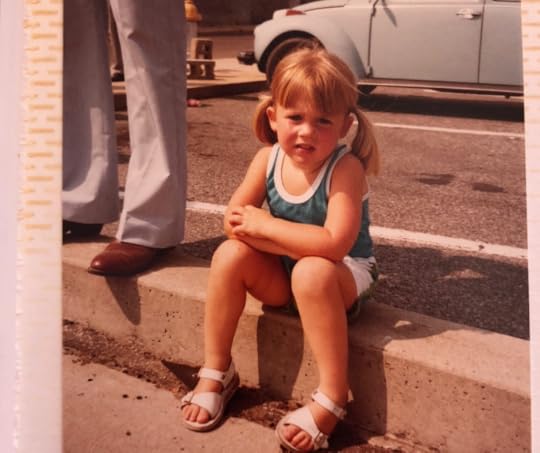
First, we can demonstrate delight through our faces. We literally smile at them and in their presence.
Second, we show delight through our bodies–we open our arms, we receive them into our laps when they are little and onto our shoulders when they are big.
Third, we delight in them with our words. We name the things we love about them. We say their names with warmth.
And finally, we demonstrate delight through our attention. We pay attention to what matters to them, to what they care about, and to how they receive love.
We can build a foundation for them that says they matter for who they are, delightful, beloved. And the cool thing is, it is delightful to delight in other people. We get to experience the delight we offer to them.
MORE WITH AMY JULIA:
Free Resource: From Exclusion to Belonging(a free guide to help you identify and create spaces of belonging and welcome)
Let’s stay in touch. Subscribe to my newsletter to receive weekly reflections that challenge assumptions about the good life, proclaim the inherent belovedness of every human being, and envision a world of belonging where everyone matters. Follow me on Facebook , Instagram , and YouTube and subscribe to my Reimagining the Good Life podcast for conversations with guests centered around disability, faith, and culture.
The post How to Delight in Our Children appeared first on Amy Julia Becker.
January 29, 2025
Connect to Community | It Makes All the Difference!
Peter and I have often received praise for our parenting when people meet Penny, our daughter who has Down syndrome. That’s all very nice, but it’s clear to me that our parenting is not the only reason Penny is who she is.
Penny has grown up in a community committed to knowing and loving and supporting her as she becomes the full and vibrant human being she was created to be.
A community of love and support makes all the difference for a flourishing life.
It makes all the difference to connect to a community that:
 supports growth
and encourages giftedness
and provides care when there are needs
and offers help
and encourages interdependence
It makes all the difference to connect to a community that says “we aren’t us without you.”
I spend a lot of time focused on how to connect to community in the Remaining Family Life with Disability workshop. I offer practical tips and strategies that have helped our family. Explore possibilities with me! Register today.
When an entire community believes in a child, that child thrives, learns, and grows. I want to help other families find and connect with a supportive community like that.
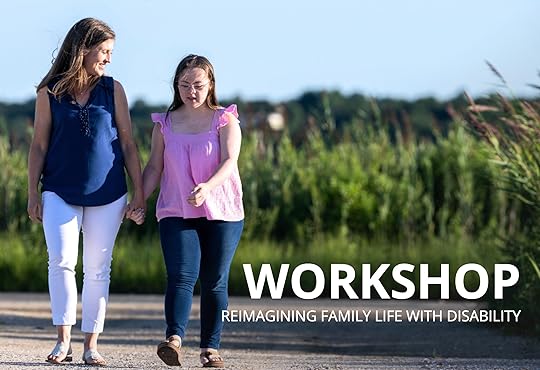
Register for the Reimagining Family Life with Disability Workshop!
Get the free download: From Exclusion to Belonging
(a guide to help you identify and create spaces of belonging and welcome)
get the download
Let’s stay in touch. Subscribe to my newsletter to receive weekly reflections that challenge assumptions about the good life, proclaim the inherent belovedness of every human being, and envision a world of belonging where everyone matters. Follow me on Facebook , Instagram , and YouTube and subscribe to my Reimagining the Good Life podcast.
The post Connect to Community | It Makes All the Difference! appeared first on Amy Julia Becker.
Cultivating Connection One Word at a Time
I once shared a post that included a story from someone who identified as a “person with autism.” To respect their choice of words, I used the same term in my post. Later, someone who hadn’t seen the original story commented, suggesting that I should have used the term “autistic person” instead. This isn’t the first time I’ve been corrected online. I’ll admit, knowing which words to use can sometimes feel confusing—there isn’t always a straightforward answer—but it can also be a beautiful, expansive process. I’m reflecting here on words directly connected to disability, but speaking with care is a far-reaching practice that nurtures connection and shapes our culture in many different contexts.
Our words matter. The language we use often reveals our assumptions about disability. When our culture talks about disability as a “tragedy,” or when a disabled person is called “inspirational,” we can detect assumptions and even biases behind those words.
If you’re like me, you’re not always sure what to say or which words to use to cultivate spaces of belonging. Maybe you’re feeling a little cynical—like there’s too much “language policing” and we should move on to more important issues. Or maybe you feel despair—you worry that you’ll keep saying the wrong things and unintentionally hurt people.
Carrie Hahn, a pediatric speech-language pathologist and mother, joins me on the podcast to talk about her book Beyond Inclusion: How to Raise Anti-Ableist Kids. Her stories and suggestions offer ALL of us a way to put a reimagined life into practice.
Here are just a few things she offers:
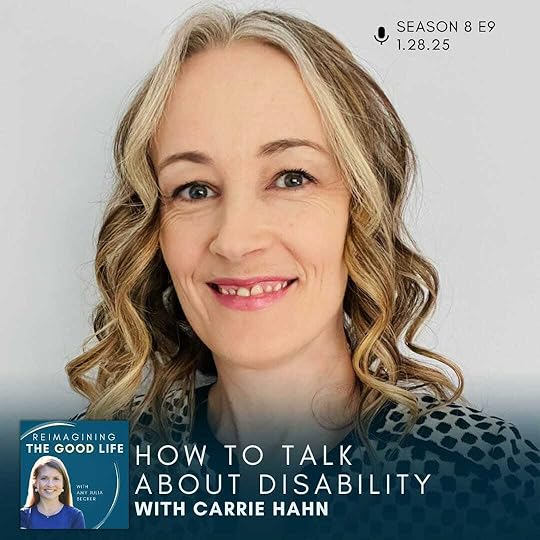
Listen on Apple | Listen on Spotify | Watch on YouTube
Carrie reminds us that “people don’t fit in little neat boxes… A person who was born blind has had a very different experience than a person who had vision and then lost their vision.” Because every individual’s experience and preferences are different, it’s important to focus on agency, “making sure that the disabled person is in control of their own narrative and their own story.” For example, does someone identify as “an autistic person” or “a person with autism”? Respecting each individual’s choice of words is one way to cultivate spaces of belonging.
When we do get the language wrong…
Commit to Connection:Carrie explains that she used to feel ashamed when she said the wrong thing, which led her to withdraw and distance herself. This shame created a barrier in her relationships. Over time, she’s learned to stay engaged, listen with humility, and prioritize connection over perfection.
“I’m going to try to stay in this space. Even if I feel like I might be getting it wrong, I want to continue to listen.”
It’s essential to communicate that “I care about you more than I care about the fact that I got called out.”
Expanding Our WorldWhile evaluating our words is important, this is not a restrictive exercise. Rather, the process of choosing words that cultivate belonging is a development of the heart that actually expands our world. It brings a different sense of self and a recognition of the beauty and wonder of the humans with whom we’re interacting.
I hope you’ll watch or listen to this interview! We also discuss:
The complexities of navigating ableismHow to cultivate inclusion and belonging one word at a timeWays to respond when we get the language wrongWhy recognizing individuality mattersSimple tips to make spaces more welcoming and accessible (like how to plan a birthday party that welcomes all kids {25:34})After you listen, let me know what you think. Leave a comment or reply to this email. And please share this episode with a friend.
Free Resource: From Exclusion to Belonging(a free guide to help you identify and create spaces of belonging and welcome)
Let’s stay in touch. Subscribe to my newsletter to receive weekly reflections that challenge assumptions about the good life, proclaim the inherent belovedness of every human being, and envision a world of belonging where everyone matters. Follow me on Facebook , Instagram , and YouTube and subscribe to my Reimagining the Good Life podcast for conversations with guests centered around disability, faith, and culture.
The post Cultivating Connection One Word at a Time appeared first on Amy Julia Becker.