Amy Julia Becker's Blog, page 10
April 12, 2025
On Eagle’s Wings
I’ve been reading through the biblical book of Exodus this Lent, and nearly every day I learn something that helps deepen my understanding of God’s love. Today that was reading some notes on Exodus 19. In that passage, God makes reference to bearing the people up “on eagle’s wings.”
I’ve heard that phrase throughout my life as a Christian. It comes up in the Psalms and Isaiah. I’ve sung inspirational songs about it. But I’ve never wondered what the image conveys. The commentary I was reading connected me to Deuteronomy 32, which expands on the image:
“As an eagle stirs up its nest and hovers over its young, as it spreads its wings, takes them up, and bears them aloft on its pinions, the Lord alone guided him…”
So the idea is that a mother eagle with baby birds in the nest “stirs up the nest” so that the baby birds will try to fly. And then, when they can’t sustain the flight, the mother “bears them aloft.” She pushes them out of the nest and makes them take a risk they aren’t entirely ready for. She also swoops in to rescue them as they fall.
What an image of God. Teacher. Mother. Rescuer.
Let’s stay in touch. Subscribe to my newsletter to receive weekly reflections that challenge assumptions about the good life, proclaim the inherent belovedness of every human being, and envision a world of belonging where everyone matters. Follow me on Facebook , Instagram , and YouTube and subscribe to my Reimagining the Good Life podcast for conversations with guests centered around disability, faith, and culture.
The post On Eagle’s Wings appeared first on Amy Julia Becker.


April 11, 2025
Disrupting the Status Quo
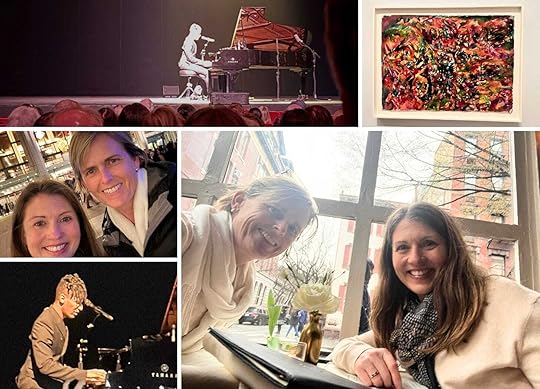
My friend Patricia and I spent two nights in NYC this past weekend. We walked a gazillion steps, ate a gazillion calories, spoke even more words, and gave thanks for decades of friendship. We also had a chance to see the Jack Whitten exhibit at the MOMA, which was beautiful and disturbing and profound.
And we saw Jon Batiste at Lincoln Center. There’s so much I could write about the show, but what struck me most was how he disrupted the status quo with joy and peace. These days, the status quo is disrupted often with fear and anger. But I didn’t expect to be singing and clapping alongside thousands of other people.
I didn’t expect to be disrupted by joy.
The post Disrupting the Status Quo appeared first on Amy Julia Becker.
April 10, 2025
Honoring the Good, the Hard, and the In Between
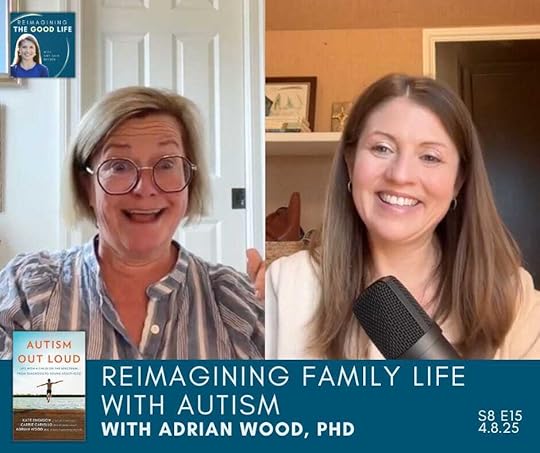
There’s something special about connecting with a person who not only lives in the small town where you grew up, but also shares a similar parenting journey. That’s how I feel about Adrian Wood.
Adrian has a PhD in Educational Research and is the creator of the vlog Tales of an Educated Debutante and co-author of Autism Out Loud—and she lives in my childhood town. We’ve connected online for years, and this week she joined me on the podcast to discuss community, belonging, disability, and how we have grown up with our children.
LISTEN OR WATCH:
Apple
 |
Spotify
|
YouTube
|
Spotify
|
YouTube

We also share some of the ways we honor the good, the hard, and everything in between:
Honor needs and limitations, for yourself and others.Being human means living with limitations—that’s part of the human experience. Adrian points out,
“You can’t have it all. You can’t do it all. You can’t be it all.”
We have to make space to live within our limits as humans. Having a child with obvious limitations has invited us to be much gentler with our own limitations, rather than pretending they don’t exist. Sometimes, that means letting go of our own discomfort or the urge to be efficient, and when we do, it opens the door to human connection that expands who we are. Something deeply beautiful grows when we honor each other and are patient with each other—and with ourselves—instead of forcing our way through the world.
Change the narrative—share what’s good and what’s hard.Adrian grew up in a small town and attended a private school. She didn’t know anyone with a disability, so it’s unsurprising that, as an adult, she looked at families growing up alongside disability with a mix of awe and pity, not realizing that both emotions were rooted in a narrow understanding of disability. “I wish I had known—disabilities aren’t bad,” she says. “I think everybody has something in their life that is not what they planned. But it’s a good life. I wouldn’t trade it.” Adrian shares her family’s story—the good and the hard—to offer a narrative that goes beyond toxic positivity or tragedy.
Recognize that being present in a local community is important, and can be difficult.Having a disability and being present in the local community isn’t always easy. A few weeks ago, Adrian was grocery shopping with her son Amos, who is in the 4th grade and on the autism spectrum. As Amos roamed the aisles and rolled on the floor, a person in the store made assumptions about Adrian’s parenting and called the police. Adrian says, “Sometimes you’re going to get burned. It’s not going to be easy, but it’s important [to be present in the community].” Surprisingly, that phone call was not the end of the story. What started as an uncomfortable encounter in the grocery store turned into a series of meaningful conversations with the person who had called the police. Perspectives changed.
Last week, Adrian wrote on social media:
“You represent the world. You’re going to be at a game or the grocery store or a school play or maybe even at church and you’re going to see a person with autism. Maybe an adult or child who is not following the rules—maybe being too loud or rolling on the floor or struggling to hold it together.”
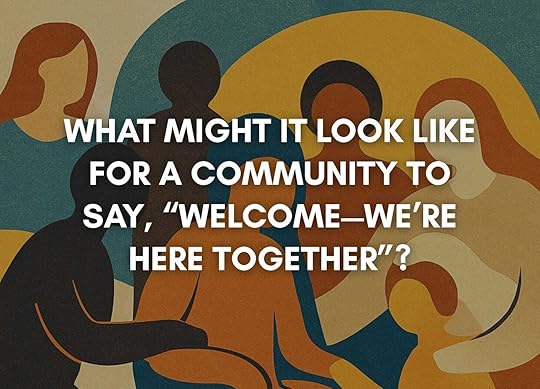
In that moment, Adrian hopes stories like this will help you to smile rather than judge. Our stories—of both the good and the hard—can begin to reshape our world into communities that say…
“Welcome! We’re here together.”
Please listen to (or watch) and share this episode. And I’d love to hear from you. How did you think about disability when you were growing up? Has that changed at all? If so, why and how?
Let’s stay in touch. Subscribe to my newsletter to receive weekly reflections that challenge assumptions about the good life, proclaim the inherent belovedness of every human being, and envision a world of belonging where everyone matters. Follow me on Facebook , Instagram , and YouTube and subscribe to my Reimagining the Good Life podcast for conversations with guests centered around disability, faith, and culture.
The post Honoring the Good, the Hard, and the In Between appeared first on Amy Julia Becker.
April 7, 2025
What would I say now to a doctor who responded negatively to a prenatal (or postnatal) diagnosis of Down syndrome?
What would I say now to a doctor who responded negatively to a prenatal (or postnatal) diagnosis of Down syndrome?
I was asked this question at an event in Chicago after I explained that a recent study showed that many doctors still exhibit a lot of bias in how they present prenatal diagnoses. The truth is, as I said in Chicago, I would probably feel flustered and get red in the face and still struggle to find words if a doctor spoke to me in biased terms about Penny.
BUT that wouldn’t be the end of the story. I would also follow up with a letter that identified the problematic language or experience and suggested a different way forward. (I did that once, in a new ob-gyn office when I was pregnant with Marilee. They had me fill out a form that included a question about whether our family had a history of “mongolism,” which is to say, an outdated and offensive term about Down syndrome.) And, even now, we participate in a program that provides medical students—both doctors and nurses—with an encounter with families experiencing disability.
Even when we don’t react the way we want to in the moment, there are other opportunities to respond.
Let’s stay in touch. Subscribe to my newsletter to receive weekly reflections that challenge assumptions about the good life, proclaim the inherent belovedness of every human being, and envision a world of belonging where everyone matters. Follow me on Facebook , Instagram , and YouTube and subscribe to my Reimagining the Good Life podcast for conversations with guests centered around disability, faith, and culture.
Book: A Good and Perfect Gift: Faith, Expectations, and a Little Girl Named Penny
Free Resource: 5 Things I Wish I’d Known When Our Daughter Was Diagnosed With Down Syndrome
The post What would I say now to a doctor who responded negatively to a prenatal (or postnatal) diagnosis of Down syndrome? appeared first on Amy Julia Becker.
3 Ways to Reimagine the Good Life
Last year, we came up with a new way to capture the work I’m trying to do. We used the words “Reimagining the Good Life.” We renamed this newsletter, and my podcast, and I began speaking about the idea of reimagining the good life, reimagining family life, and reimagining disability.
There’s so much in our world that is disillusioning right now, so much that suggests the work of reimagining will be an exercise in futility. And it’s exactly in that context that we need the work of reimagining.
Reimagining is an act of hope. It is the work of believing that we can envision a good future for ourselves, for our loved ones, for our communities, for our world. It is the work of stepping towards that future.
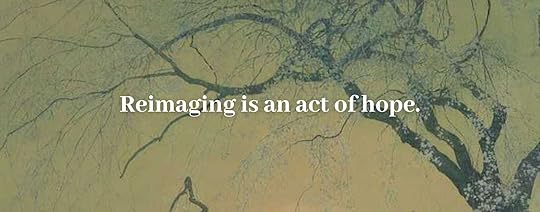 Hiroshi Yoshida | Memories of Japan | Detroit Institute of Arts
Last week, I had the chance to speak in a few different places about reimagining. First, I visited Elim Christian Services and Trinity Christian College, outside Chicago. I then flew back to New York and spoke at the Women’s Conference at Christ Church in Greenwich, Connecticut. The audiences ran the gamut—from a group of paraprofessionals who work one-on-one with kids with disabilities to a group of college students to a chapel full of moms and grandmothers. All of them were ready to consider a new way of being in this world.
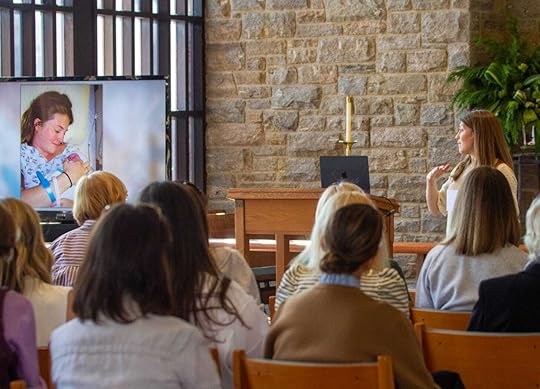 Photo courtesy of Joanne Bouknight
I spoke for over four hours when you add it all up, so it’s hard to summarize, but I thought you might appreciate some thoughts on how we reimagine the good life, with the Beatitudes (Matthew 5:3-10) as our guide.
It’s one thing to point out the ways the American idea of the good life isn’t working. It’s another to practice a different way.I offered the women at Christ Church six ways to reimagine the good life. I’m going to share three of them with you here:
3 Ways to Reimagine the Good LifeReceive belovedness.Our culture tells us we are worthy of the good life if we look good, work hard, and achieve a lot. One way we can reimagine the good life—one way we can live differently—is to know that we are beloved before we’ve done anything right and after we’ve done all sorts of things wrong. (If you’ve been around here for a while, you’ll recognize this refrain as a cornerstone for me, and you can access this PDF guide if you want more thoughts on how to receive belovedness.)Lament.
The American Good Life tells us to keep the images of beauty, ease, and success front and center. A reimagined good life includes the hard realities of being human, with suffering and hardship and confusion. The practice of lament is the practice of crying out honestly to God when we experience hurt, anger, sorrow, and when nothing makes any sense. It is telling God that this is not okay, while holding on to the slightest glimmer of hope that somehow it might be someday.Use Your Spiritual Imagination.
If we don’t resist it, the influencers and celebrities and people in powerful positions get to tell us what a good life looks like—whether that’s the good life of materialism with fancy houses and cars and clothes or the good life of moralism with religious piety or keto-diets or kids who get into the best colleges. Our imaginations are shaped and formed by these ideals. But when we instead turn to the good life articulated and embodied by Jesus, we receive a different imagination. We can cultivate that renewed imagination by meditating on passages from the gospel where Jesus shows us what his version of the good life looks like. (For example, in the session I taught recently, we considered Matthew 5:3-10 and Luke 14:1-24. I asked the women to consider who they might invite over for dinner with Jesus’ reimagined way of hospitality.)Q&A
I loved being able to share my thoughts with all these people, but I also loved the thoughts and questions they shared with me. Here were a few of my favorites.
Let’s stay in touch. Subscribe to my newsletter to receive weekly reflections that challenge assumptions about the good life, proclaim the inherent belovedness of every human being, and envision a world of belonging where everyone matters. Follow me on Facebook , Instagram , and YouTube and subscribe to my Reimagining the Good Life podcast for conversations with guests centered around disability, faith, and culture.
The post 3 Ways to Reimagine the Good Life appeared first on Amy Julia Becker.
April 3, 2025
What do I think about ads, TV shows, and movies that include people with disabilities?
At a recent event, one woman asked me what I think of advertisements that include people with Down syndrome and other visible disabilities. Another man asked me what I think of television shows with disabled characters. They both wondered whether the ads/shows seemed either exploitative or self-congratulatory to the companies producing them.
I was so grateful for these questions because they highlight some important tensions in how disability is portrayed in our culture. I gave a few thoughts in response.
One, we can see these ads/shows as “too little too late” or as “better late than never.” I tend to take the latter view.Two, while these are certainly glorified representations of disabled lives—whether that’s the ability to verbalize words clearly with characters in Down for Love or the airbrushed images of babies on the walls of Target—so are all the images we see in advertisements and comparable television shows. The images we encounter on a daily basis on billboards and online ads and tv shows communicate who belongs in our everyday lives. I’m glad images of people with disabilities are a part of our collective imagination.And finally, in the past 20 years it isn’t only advertisements that have portrayed disabled characters. Increasingly we’ve seen these characters in children’s books, novels, movies, and shows. I have to wonder whether a documentary like Crip Camp or a film like CODA or books like A Storm of Strawberries and The Long Call would exist without these advertisements and shows.Let’s stay in touch. Subscribe to my newsletter to receive weekly reflections that challenge assumptions about the good life, proclaim the inherent belovedness of every human being, and envision a world of belonging where everyone matters. Follow me on Facebook , Instagram , and YouTube and subscribe to my Reimagining the Good Life podcast for conversations with guests centered around disability, faith, and culture.
The post What do I think about ads, TV shows, and movies that include people with disabilities? appeared first on Amy Julia Becker.
March 31, 2025
Spring Break With Our Teenagers
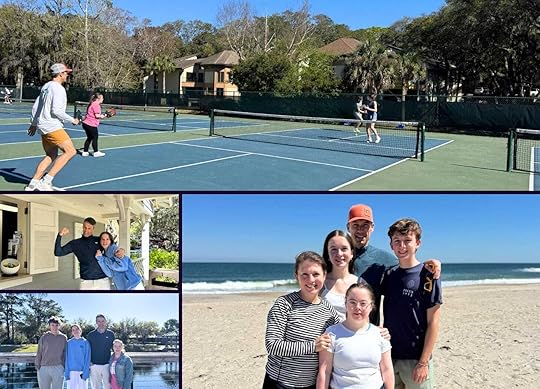
I am perhaps one of the rare parents who LOVES parenting teenagers, and being with all three of them for a few uninterrupted days in Florida was glorious. We played mini golf, they swam in the ocean, I walked on the beach, we laughed a lot, and we rotated between Crazy 8s, Hearts, and Game that Song as our current favorite family games. So sweet.
I also started the college process with William. It’s one of those “put your money where your mouth is” seasons. We get to guide him without pressuring him to find a few different schools that could fit his interests and abilities and then to hold it all really loosely, with confidence that closed doors are as much a sign of answered prayer as acceptance letters.
Let’s stay in touch. Subscribe to my newsletter to receive weekly reflections that challenge assumptions about the good life, proclaim the inherent belovedness of every human being, and envision a world of belonging where everyone matters. Follow me on Facebook , Instagram , and YouTube and subscribe to my Reimagining the Good Life podcast for conversations with guests centered around disability, faith, and culture.
The post Spring Break With Our Teenagers appeared first on Amy Julia Becker.
March 28, 2025
Show Up With Care
I’ve been concerned by the resurgence of the r-word in our culture. I’ve felt anxiety over political policies and news stories, and I’ve dug into data about our culture’s epidemic of loneliness. It’s easy to worry or complain about our culture, but my friend Andy Crouch has challenged me over the years to consider this truth:
“We’ve been very good at complaining about culture. We’ve been very good at consuming culture—and being conformed to culture by consuming it—but we haven’t been very good at cultivating it and creating it.”
From making an omelette to organizing a presentation to planting seeds to sending an email—we spend most of our days making or sustaining some aspect of human culture, although we don’t often think of it that way. How can we be thoughtful and careful as we seek to create, change, and cultivate culture?
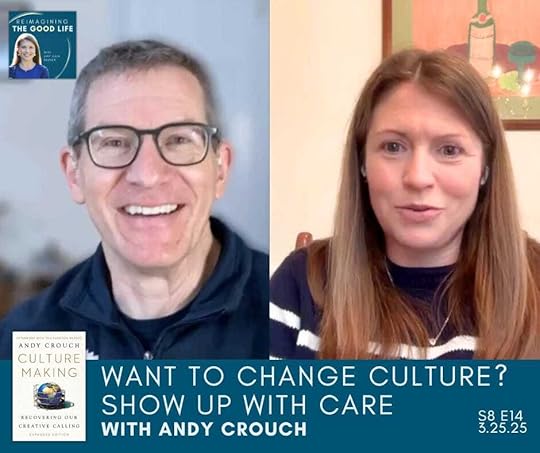
Listen on Apple | Listen on Spotify | Watch on YouTube
Andy joined me on the podcast to examine some important questions about culture making:
What does the recent rise of the r-word tell us about our culture?How does language, both careless and careful, shape our world?What is the connection between social status and the words we choose?How does technology influence our understanding of culture and control?I hope you’ll listen to (or watch) our full conversation.
Show Up With CareI loved how Andy returned again and again to the importance of showing up with care in our culture—in our words and in our actions:
1. Careful language makes a difference—and it takes courage.Language shapes culture, but not just through the meaning of words. Andy says, “Maybe the deepest level of how language shapes culture—is there care behind it? And by care, I mean both kindness, but also attention.” Care makes all the difference.
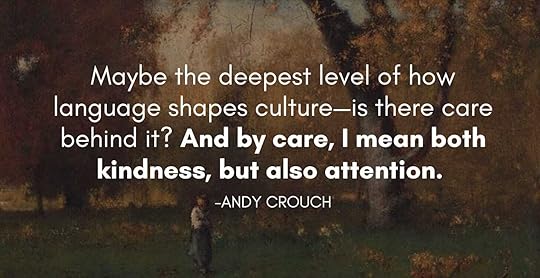 George Inness, Landscape, 1888, oil on canvas, 22 1/8 x 27 9/16 in. The Cleveland Museum of Art, Gift of the Estate of Charles F. Brush 1929.464
Andy points out,
“It takes courage to continue to use words carefully when you see language being corrupted and used to damage and used to convey contempt. It’s so much easier to damage things than to repair them. And it’s so much easier to create an environment of coarseness and destructiveness than it is to build beauty in the midst of that.”
But our commission is to
2. Careless words often stem from the pursuit of status and belonging.“go on using words carefully when everyone around you is using them like bombs.”
Andy explains that when someone feels insecure, it’s tempting to use harmful language, such as the r-word, to put others down and elevate one’s own social status. “We are living in a time of incredible insecurity where people just don’t feel like they have enough power. And so you’ve got to trot out the diminishing, degrading rhetoric to establish that you, and people like you, count.”
3. Show up with care in relationships.Whether it’s attending—paying attention with kindness—to an elderly parent or a teenage child or a neighbor or even ourselves, we have opportunities within our days to participate in relationships of love and the work of love in the world. As we show up with care, we resist technology’s attempts to commodify relationships. Every month, Andy makes a long trip to sit with his mom, who has dementia. He points out that being present with care in those moments “produces nothing. I’m not in control of anything that matters most. And it’s probably the most important thing I do… to be there.”
4. Show up with care in our work and creativity.Andy acknowledges that “the space in which one can create worthwhile things has greatly diminished in our world in certain ways.” There’s no guarantee that thoughtful, careful, creative work will be valued or protected in our current culture. “But,” he says, “it’s still what we have to do… And so you do that thing well and faithfully.”
After you listen, I hope you’ll share this conversation. And I’d love to hear from you. How have you found ways to show up with care?
And if content from the Reimagining the Good Life podcast has been helpful to you, would you take a moment to rate and review the show on your favorite podcast platform? Your feedback helps more listeners find these interviews that challenge assumptions about the good life, proclaim the inherent belovedness of every human being, and help envision a world of belonging where everyone matters. Plus, we love hearing what you think! Thank you!
Let’s stay in touch. Subscribe to my newsletter to receive weekly reflections that challenge assumptions about the good life, proclaim the inherent belovedness of every human being, and envision a world of belonging where everyone matters. Follow me on Facebook , Instagram , and YouTube and subscribe to my Reimagining the Good Life podcast for conversations with guests centered around disability, faith, and culture.
The post Show Up With Care appeared first on Amy Julia Becker.
March 27, 2025
March 2025 Favorites
Favorite books, essays, podcasts episodes, and more that I enjoyed in the month of March, plus recent political news that I’m paying attention to…
Books: Memoir: Memorial Days by Geraldine BrooksThis beautiful and haunting memoir traces the days immediately following Geraldine Brooks’ husband Tony’s unexpected death from a heart attack alongside her own time of grief a few years later. Brooks gives us permission to grieve, to love, and to keep living.
Podcast Episodes:Episode 88: An Alternative to Body Positivity with Leah CaseYet again, so much beautiful wisdom from Katherine Wolf and Leah Case about how to live and live with hope and purpose in these very real, aging, beautiful, and broken bodies of ours.
A Poet and a Preacher: A Conversation with David Whyte“Most people think their burnout comes from being tired when it often actually comes from being brokenhearted.” In this beautiful conversation, Russell Moore and poet David Whyte discuss faith and burnout and wholeheartedness. It brought peace to my soul just to listen to them talk. “The antidote to exhaustion is wholeheartedness…”
Department of EducationI’m also paying a lot of attention to what’s happening with the Department of Education, and I’m concerned that moving oversight of special education and disability services to Health and Human Services will harm people with disabilities both by taking away recourse for civil rights abuses and also by treating disability as a medical issue rather than a social one. Here are a few places to learn more:
The Lucky Few podcast: 292. What’s going on with the Department of Education? (w/guest host Ashley Barlow)CNN: Dismantling the Department of Education will strip resources from disabled children, parents and advocates sayThe ARC: Why Moving IDEA to HHS Could Harm Students With DisabilitiesProPublica: Massive Layoffs at the Department of Education Erode Its Civil Rights DivisionThis recent essay I read by ProPublica is concerning. The Trump administration has closed 7 of 12 Offices of Civil Rights for the Department of Education. These are the offices that receive complaints by disabled students when schools refuse to make proper accommodations, and over half of the 12,000 complaints that were under review had been submitted by disabled students and their families. I’m concerned that there are important voices missing from the tables where those decisions are made.Essays:Article: “The Trump Administration Said These Aid Programs Saved Lives. It Canceled Them Anyway.”
Here’s one more article that describes—in pretty devastating detail—the repercussions of our abrupt freeze on all foreign aid.
NYT: “Americans Are Unhappier Than Ever. Solo Dining May Be a Sign.”I’m so struck by how much we need each other, as the recent data around the United States’ place on the global happiness index demonstrates. Short version is, we need to eat meals with each other.
Movies/Shows:Movie: The Perfect DatePenny chose this recent Netflix movie for us to watch together. It was sweet, clean, and entertaining with a good message about learning to be yourself instead of who other people want you to be.
Movie: EzraI loved this film about a family affected by disability. Ezra is autistic, and his divorced mother and father aren’t in total agreement about how to care for him. There’s also his grandfather (played by Robert De Niro). All of them are learning to love each other, and themselves, better. The plot is a little fantastical, but Ezra’s ability to unearth the deeper truth within the humans he encounters rings very true.
Get my favorites delivered to your inbox each month!
Subscribe here!
More Favorites and AJB Recommends
If you use a link from here to purchase something I recommend, it sometimes earns me a small commission, which enables me to continue the work I do here. So thank you! (As an Amazon Associate, I earn from qualifying purchases.)
The post March 2025 Favorites appeared first on Amy Julia Becker.
March 26, 2025
When Talking About Feelings Is Hard, Try Writing
Penny has always loved reading and writing. She realized years ago that sometimes she can’t use words to talk about her feelings or thoughts, but she can write about them. That used to look like questions and answers written back and forth while we sat side by side.
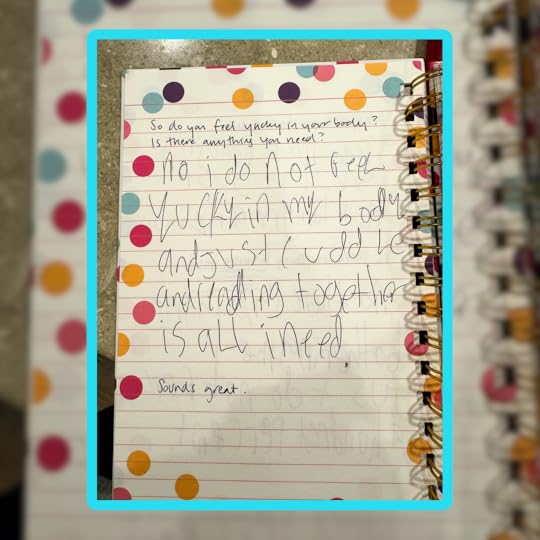
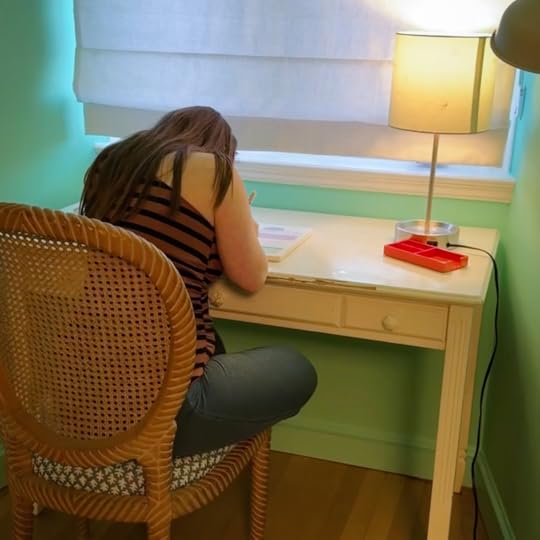
There are still times when we use Google docs to communicate. And this year, she started the habit of journaling a few days a week. She’s growing her inner world and ability to express herself through something she already loves to do.
When talking is hard, try writing.
Let’s stay in touch. Subscribe to my newsletter to receive weekly reflections that challenge assumptions about the good life, proclaim the inherent belovedness of every human being, and envision a world of belonging where everyone matters. Follow me on Facebook , Instagram , and YouTube and subscribe to my Reimagining the Good Life podcast for conversations with guests centered around disability, faith, and culture.
Free Resource: From Exclusion to Belonging
(a free guide to help you identify and create spaces of belonging and welcome)
The post When Talking About Feelings Is Hard, Try Writing appeared first on Amy Julia Becker.