Amy Julia Becker's Blog, page 13
January 27, 2025
Family Formation: What is “the good life” for our children?
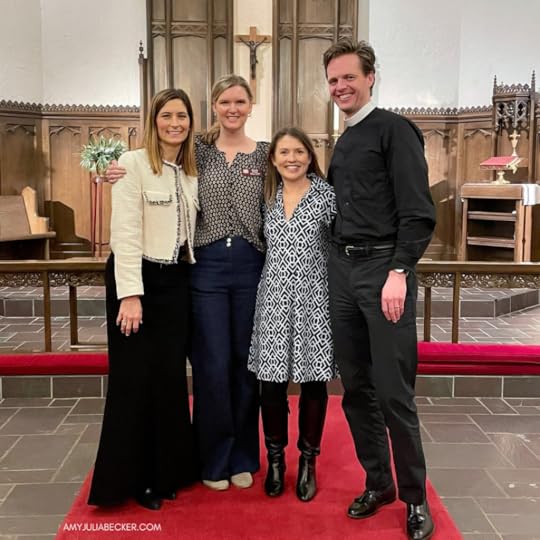
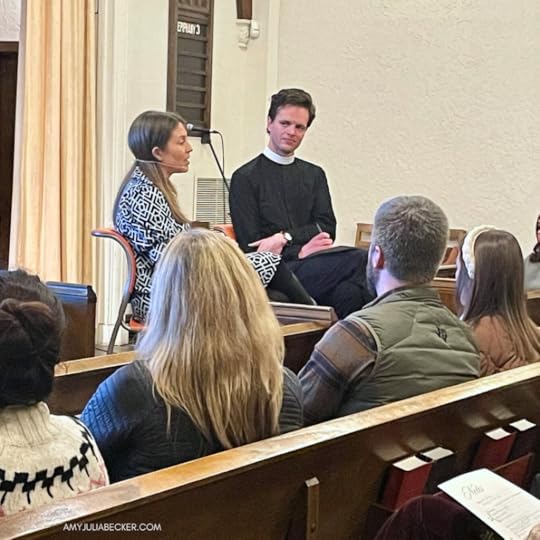
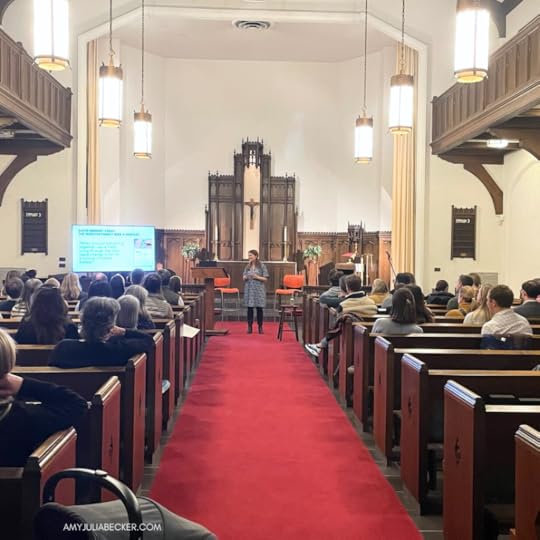
I loved getting to speak yesterday at Church of the Incarnation in Dallas about Reimagining Family Life. Our topic for their Family Formation evening was: What is “the good life” for our children? I’d love to speak at your next event!
I speak online and across the country at conferences, retreats, churches, universities, schools, and colleges as a keynote speaker, workshop and retreat presenter, and panel guest. Topics include:
Reimagining family lifeReimagining church lifeReimagining “the good life”Why disability matters to all of usReimagining family life with disabilityHow we can become communities of belongingHow to change our mindset around disabilityReceiving our identity as belovedYou can find out more info and schedule here!
MORE WITH AMY JULIA:
Invite Amy Julia to speak at your next eventFREE RESOURCE: 5 Ways to Experience God’s LoveWorkshop: Reimagining Family Life with Disability
Let’s stay in touch. Subscribe to my newsletter to receive weekly reflections that challenge assumptions about the good life, proclaim the inherent belovedness of every human being, and envision a world of belonging where everyone matters. Follow me on Facebook , Instagram , and YouTube and subscribe to my Reimagining the Good Life podcast.
The post Family Formation: What is “the good life” for our children? appeared first on Amy Julia Becker.


January 24, 2025
Belonging Begins With an Invitation
One of the most heartbreaking aspects of being a mother is watching our kids get excluded. I’ve seen it at times for all three of them, but exclusion happens most regularly for Penny, our daughter who has Down syndrome. There were the years without invitations to birthday parties and getting-ready-before-the-event gatherings and sleepovers. There was the time I was with her to take pictures before a dance at school and no one asked if she wanted to stand by them and pose for the camera. There were the basketball games when she sometimes sat alone. There were the times she told me about sitting by herself in the cafeteria.
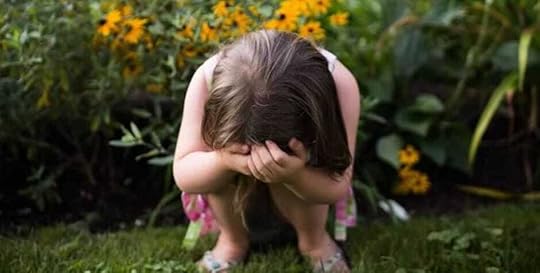
I watched those moments of exclusion, or heard about them, and I wanted to scream and cry and shake the other teenagers (the other awkward, trying-to-find-themselves-and-just-be-okay teenagers) and tell them that all they needed to do was say, “Hey, Pen, do you want to sit with us?” She won’t be a bother. I promise.
My anger was coupled with compassion. It feels risky to reach out to the person on the margins. It’s hard to know whether I’m keeping my position within the social group as it is. I get it. And yet I also know there’s a better way. I know there’s a way of belonging that blesses everyone.
I’m writing these words on Martin Luther King Day, and I’m aware that the exclusion many people have experienced within the United States—Black people, other people of color, disabled people, members of the LGBTQ+ community—has been far worse than the loneliness our daughter experienced at a basketball game. I’m grateful for the past 60 years of legislating and living out a new way of coming together.
Our family has been the willing recipient of a school system rebuilt on inclusion, where Penny had the same opportunities as her typical peers to learn and participate in sports and become a part of the community. And let’s be clear, there are a few standout teenagers who went out of their way to invite Penny to eat lunch and get ready for prom and hang out together.
Exclusion—In A Passive, Looks-Nice Way—Still ReignsStill, it’s almost embarrassing to acknowledge how important those individuals have been. I’ve recorded each and every one of those singular invitations in my journal, with desperate hope that more will follow. I don’t even want to admit the number of prayers we’ve prayed for friendship. Or the rawness of my heart when those prayers seem to go unanswered time and again.
In general, on a social level, exclusion—in a passive, looks-nice way—still reigns. None of these kids (or their parents, back in the day when the parents had more to do with the inviting) intentionally wants to exclude Penny. None of them are mean or rude.
And, at the same time, none of them wants to take the risk to issue an invitation. None of them wants to tolerate her presence, much less include her, much less do the risky, vulnerable work of creating a space of belonging.
Belonging Begins HereJesus tells a story in the Gospel of Luke (chapter 14) where he says when we throw a party, we should start by inviting all the people who are the least likely to be invited. In his words, invite “the poor, the crippled, the lame, and the blind.” He goes on to say that after they’ve been invited, the host should go on out and invite everyone else.
Jesus isn’t saying that only one group of people belongs. He’s saying that the only way everyone ends up at the party is if you start by inviting the ones who haven’t belonged in the past, the ones who get overlooked and forgotten, the ones who don’t have high social status, the ones on the outskirts.
Belonging begins with an invitation. And it begins with an invitation to the ones you didn’t expect.
My friend and colleague Erik Carter created a wheel of belonging to help churches assess their willingness to fully incorporate people with disabilities within their congregations.
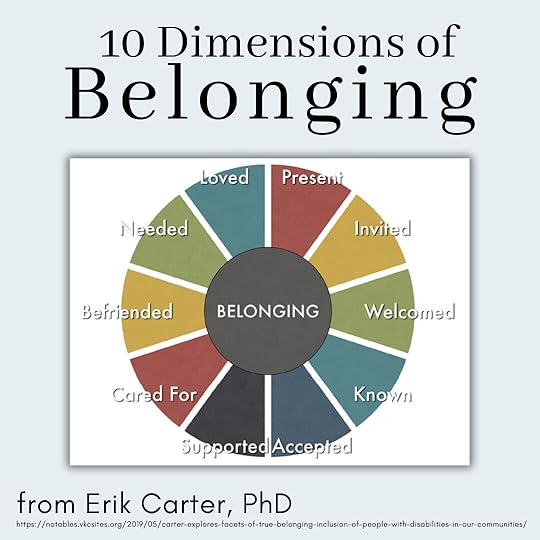
I find the wheel helpful in all sorts of institutional and social spaces. Technically, his wheel begins with presence, and it is worth considering whether we ever reside in spaces without people with disabilities or other social differences. But the next spoke of the wheel is “invited.” It seems to me that belonging begins here, with an invitation to participate, to connect, to engage.
I’m looking for opportunities to issue invitations. I’m teaching my kids the power of invitations. And I’m grateful for the stories like Luke 14 that remind me that we are all invited, as we are, to feast at God’s table.
How have you experienced the power of invitations? I’d love to hear from you.
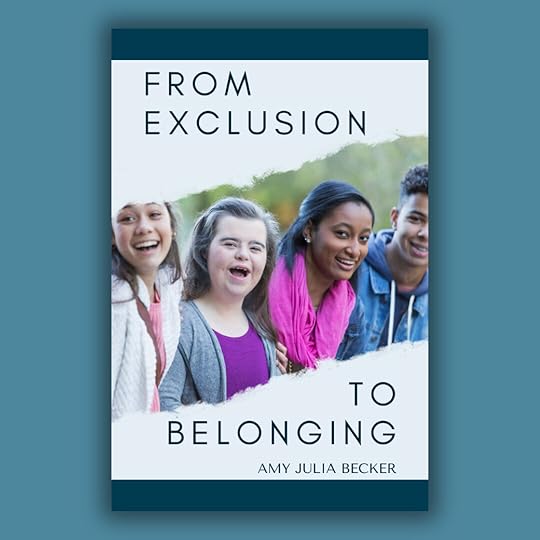
FREE RESOURCE! FROM EXCLUSION TO BELONGINGOur communities tend to exist on a continuum, from exclusion to tolerance to inclusion to belonging.
Here is a free download to help you explore how to create spaces of welcome and belonging. Get the download!
Let’s stay in touch. Subscribe to my newsletter to receive weekly reflections that challenge assumptions about the good life, proclaim the inherent belovedness of every human being, and envision a world of belonging where everyone matters. Follow me on Facebook , Instagram , and YouTube and subscribe to my Reimagining the Good Life podcast.
The post Belonging Begins With an Invitation appeared first on Amy Julia Becker.
January 22, 2025
Discouraged and Stuck? Let’s Reimagine!
I have felt discouraged and stuck.
If I looked back through my journals, I’d find similar feelings detailed over the years, but that statement isn’t mine. A parent of a child with a disability wrote those words to me—in a note about navigating family life with disability.
I understand how they felt. Many of us parents experience similar emotions, similar anxieties, similar fears. We’re navigating similar worries and asking the same questions:
Am I doing enough for my child?Will our family always feel isolated?What will the future look like?Does our family matter?How can I connect with our community?Is our family a burden?How do I plan for the future?Will I ever stop feeling overwhelmed?How do I get un-stuck?Where does my child belong?This parent who wrote to me was actually writing a response to my Reimagining Family Life with Disability workshop. Here’s what they went on to say:
“I have felt discouraged and stuck, and the invitation to ‘Reimagine’ seemed like a lifeline—hope that a new perspective for our family was possible. I definitely received that and more!”
My next live, virtual workshop begins in February. I hope you’ll join me. In case you’re undecided, I’m sharing more responses from parents about the workshop. I hope their words will encourage you. If you feel discouraged and stuck, join me in February, and together let’s reimagine family life with disability. REGISTER TODAY!
MORE PARENT AND CAREGIVER RESPONSES:
I gained so much from this workshop. I was able to take a step back and see the whole picture of disability instead of losing sight in the day to day challenges and joys. I was able to put words to thoughts and challenge my mindset.
I felt like I could keep listening and soaking up all the information. But I also really appreciated the workbook and questions for reflection to further process and contextualize the material throughout the week.
Amy Julia’s workshop made me think differently about the future my daughter can have… Also it was wonderful to see like minded people sharing their journey. I highly recommend this course!
I felt your warmth and care in the presentation and I’m thankful that I signed up and found you!
This workshop provided encouragement for me to look at our family in new ways and helped provide action steps for me to follow up and improve our lives.
“This workshop has been so transformational for me and my family. I wish that we had encountered this information so much earlier in our journey with disability. It is truly reshaping how I think about disability and more importantly, how I relate to and love my child.”
This workshop has given me hope that the journey, no matter what it looks like or where it takes us, will be good and worthwhile.
I am moving from a place of focusing only the deficits and goals we have to work on and more toward a place of delighting in who my child is. Thank you, Amy Julia, for sharing your knowledge, perspective, and experiences with us.
It helps me to identify some of the things I’m feeling that I have trouble articulating and to see that there are other perspectives and ways to think about our situation and about disability. I’m really loving this workshop!
I highly recommend this workshop! I was encouraged to move forward in positive ways to help my son as he approaches adulthood.
It was a timely and thoughtful opportunity for me and my family as we navigate our diagnoses in a world that isn’t always accommodating… Each session was thoughtful, compassionate, and left me with so much to think about and consider.
The post Discouraged and Stuck? Let’s Reimagine! appeared first on Amy Julia Becker.
January 17, 2025
The key to a flourishing life isn’t more effort.
Every New Year, it’s the same message on repeat: Try harder. Work harder. Think harder. We hear it everywhere—from fitness apps and social media gurus to life-hack enthusiasts and even friends. I’ve often said it to myself.
But here’s the catch: while society glorifies effort and productivity, it also hands us endless ways to coast through life as passive consumers. So, how do we break free? How do we live a creative, fulfilling life that isn’t defined by productivity or dulled by endless entertainment?
That’s what I explore with my friend and artist Carey Wallace on the podcast. She shares insights from her new book, The Discipline of Inspiration, offering three ways to shift from mindless consumption and relentless production to a space of receptivity and creativity.
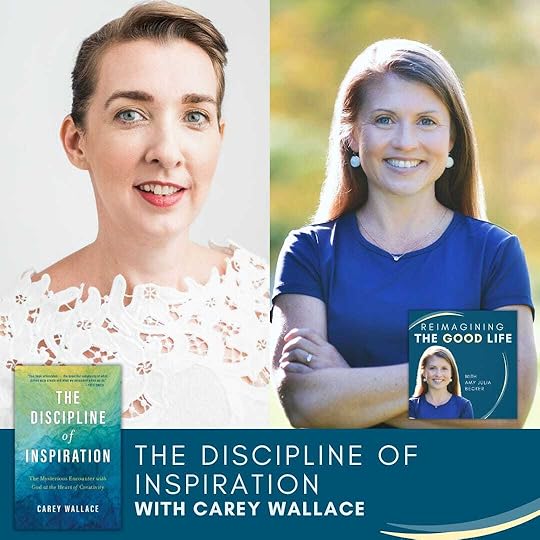
Listen on Apple | Listen on Spotify | Watch on YouTube
1. Get better at consumption. Carey says consuming entertainment is going to happen, but she believes we can approach it more intentionally. Instead of just consuming, she suggests framing entertainment as an opportunity for confrontation or conversation. It’s a healthier, more engaging way to experience it.
2. Start creating. Before you protest, “But I’m not an artist,” Carey says all humans can explore their creative potential and embrace the joy of creation. Creating is not limited to those with world-class talent.
“How sad it is that we have commodified art to the point that people think that they shouldn’t sing if they are not Aretha Franklin.”
She goes on to say,
“We watch a lot of cooking shows where we don’t get to eat anything. We watch a lot of home shows that aren’t actually us in our own homes, doing things with the people we love. I think [these shows] can be their own art form… [but ultimately] wonderful things happen when we actually make stuff, when we actually do stuff, when it’s not just about consumption.”
We embrace the joy of creation when we experiment with a recipe. When we sing a song. When we plant a garden in our backyard and imagine whom we can share it with.
Which brings us to…
3. Allow inspiration to be a part of imagination.
Lest creating and making pull us toward culture’s message of “try harder, think harder,” Carey reminds us that
“The central activity of creation is not to think, but to pay attention; not to concentrate, but to yield; not to speak, but to listen. The action that welcomes inspiration is surrender.”1
She says, “I realized that the fundamental gesture then of an artist is not drawing the line or singing the note, but surrendering to that thing that is trying to come through us.” The truth is, our culture is great at offering productivity tools but teaches little about surrender. That’s why Carey has turned to spiritual practices like prayer, silence, solitude, and community. These disciplines nurture the art of surrender, and surrender welcomes inspiration’s animation of a creative and flourishing life.
“You need imagination to love—because you need to think about what the other person’s experience is. You need imagination to make choices about your life—because you need to imagine where that is going to take you. And I think our imaginations can be very limited unless we allow inspiration to be part of that. And when we allow inspiration to be part of that, all of those choices can turn into art forms. Our relationships can turn into art forms.”
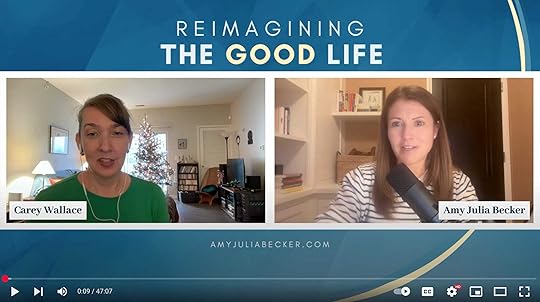
I hope you’ll watch or listen to—and share—this conversation as we explore how to expand our imagination for what is good, what is life, and what is mutually beneficial in the world.
Let’s stay in touch. Subscribe to my newsletter to receive weekly reflections that challenge assumptions about the good life, proclaim the inherent belovedness of every human being, and envision a world of belonging where everyone matters. Follow me on Facebook , Instagram , and YouTube and subscribe to my Reimagining the Good Life podcast.
The post The key to a flourishing life isn’t more effort. appeared first on Amy Julia Becker.
January 16, 2025
Goal Setting: From A to B to Z
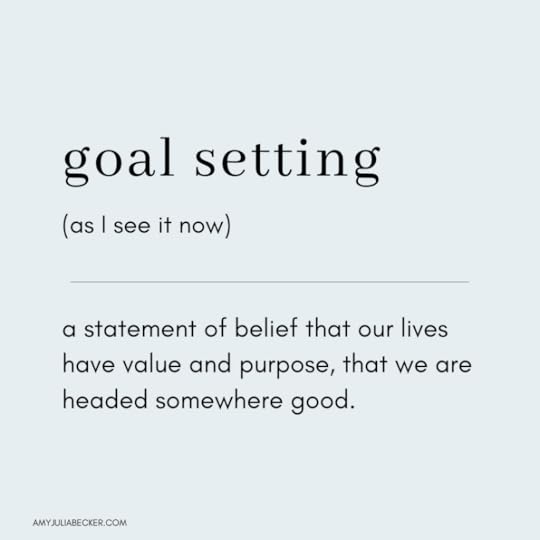
I used to hate setting goals for Penny. It felt like I was measuring her worth based on how quickly she achieved them. Now I see goal setting—for her and for me—as a statement of belief that our lives have value and purpose, that we are headed somewhere good.
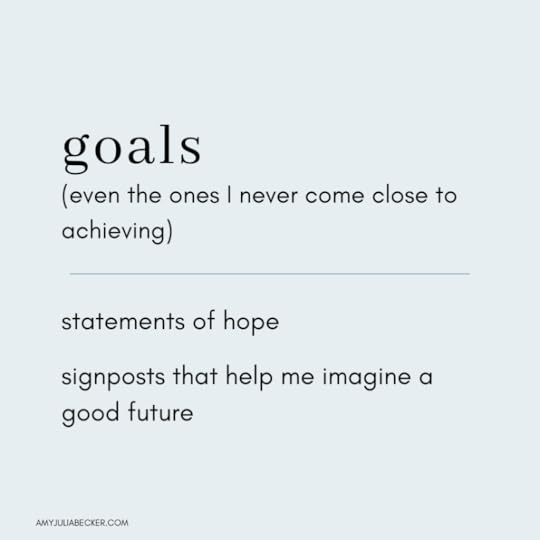
January is a season of resolutions and goal-setting for lots of people. For families affected by disability, articulating goals and objectives is an even more regular occurrence. There are plenty of goals I never come close to achieving, and the same is true for Penny. I still see them as statements of hope, as signposts that help me imagine a good future.
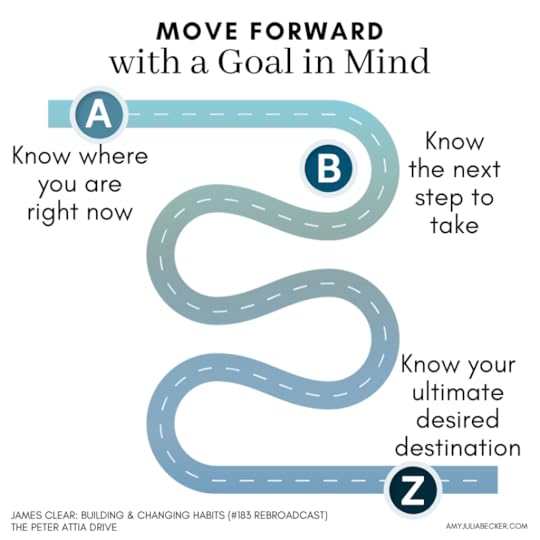
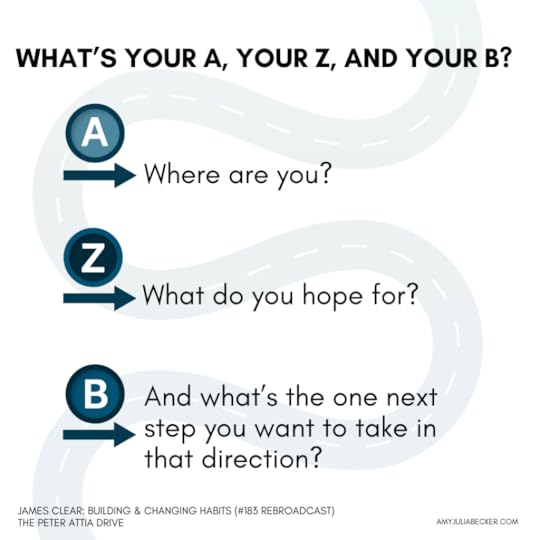
I listened to a podcast this week about goal-setting, and I loved one way James Clear and Peter Attia talked about how you move forward with a goal in mind. They talked about how all you need to know is “A, B, and Z.” You need to know A, which is to say, you need to know where you are right now. You need to know Z, your ultimate desired destination. Other than that, all you need to know is B, the next step to take. (And then you figure out C, and D, and on down the line, keeping Z in view.)
So, what’s your A, your Z, and your B? Where are you? What do you hope for? And what’s the one next step you want to take in that direction?
For families affected by disability, articulating goals and objectives is a regular occurrence. That’s why my live, virtual workshop gives you transformational tools for creating a manageable plan for a good future. Join me! More info…
MORE WITH AMY JULIA:
Why Rachel Handlin’s Art Exhibit Prompted Me to Change My PrepositionsWorkshop: Reimagining Family Life with DisabilityFREE RESOURCE: 10 Way to Move Toward a Good Future (especially for families affected by disability)
Let’s stay in touch. Subscribe to my newsletter to receive weekly reflections that challenge assumptions about the good life, proclaim the inherent belovedness of every human being, and envision a world of belonging where everyone matters. Follow me on Facebook , Instagram , and YouTube and subscribe to my Reimagining the Good Life podcast.
The post Goal Setting: From A to B to Z appeared first on Amy Julia Becker.
January 10, 2025
Why Rachel Handlin’s Art Exhibit Prompted Me to Change My Prepositions
Happy New Year!
We’ve taken down our tree and put away the gnomes and nutcrackers. The kids are back at school. We reviewed the highlights of the past year as a family. I’ve set goals and embarked upon Dry January. I also had a chance to talk with the Lucky Few podcast about goal-setting in 2025, and when they asked me to articulate a goal related to our daughter Penny, who (as many of you know) has Down syndrome, I said that I want to change my prepositions. Instead of doing things “for” her, I want this to be a year of doing things “with” her.
I want to organize her room with her instead of for her. I want to bake and cook with her instead of for her. I want to set goals with her instead of for her. Yesterday, she wrote down a series of things she wants to do in the year ahead: use Uber, make a nail appointment, handle her own checking account, put her hair in a ponytail every day, improve her kitchen skills, use the stove, and chop vegetables.
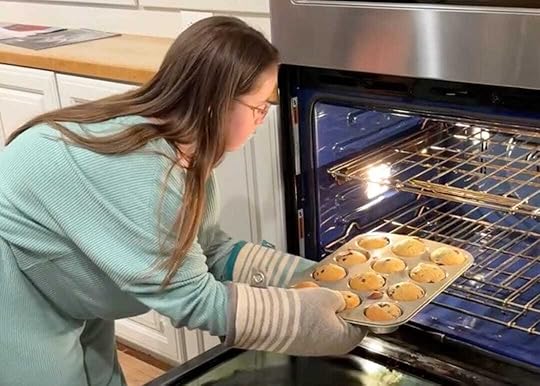
I want to stand alongside her as she takes these steps forward. For Penny, for myself, for our other kids too—as we set goals, I want to both believe in the possibilities inherent in who we are and live within our human limitations.
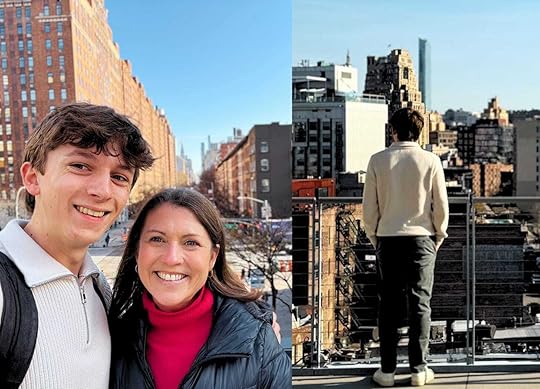
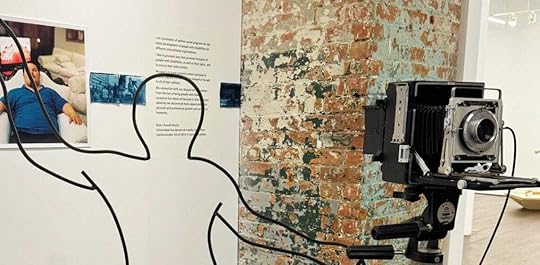
In December, our son William and I had a chance to visit an exhibit in lower Manhattan featuring the work of Rachel Handlin, an artist who has Down syndrome. I learned about the exhibit through a profile in the New York Times. From the article, I expected to see a series of sculptures where Handlin portrayed the invisibility she experiences as a person with Down syndrome who is often overlooked and undervalued.
Those sculptures were present (and powerful—there’s a whole other essay to write about Penny’s similar experience of invisibility), but the focus of the exhibit was Handlin’s photography and the stories she tells of people with Down syndrome from around the globe who have completed their college degrees.
 Confronted with the Possibility of a Different Narrative
I found myself comparing Penny to these other people with Down syndrome and wondering why she wasn’t doing the things they are doing. I started thinking I should have pushed her more, restricted the screens more, drilled her on vocabulary more. Thankfully, I’ve learned to notice my old ways of thinking, and pretty quickly I quelled that voice. Handlin’s stories of these young women and men with Down syndrome soon prompted me to consider the possibilities for Penny that I might easily overlook or fail to support. She confronted me with the possibility of a full and flourishing life.
For much of this first semester of Penny’s first experience of a college program, she has spent hours and hours after school at home staring at her computer or phone, watching YouTube videos and Netflix shows. It’s been lonely. And it has felt impossible to change.
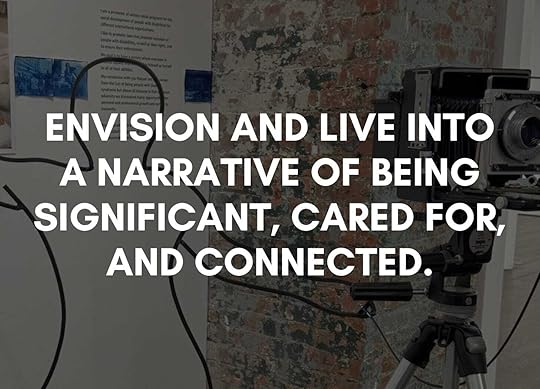
Whether it’s the experience of depression or loneliness or anxiety or addiction, so many of us fall into thinking that nothing can ever change. And for those of us whose families are affected by disability, so many of us—myself included!—fall into a narrative of being overlooked, overwhelmed, and alone. Handlin’s exhibit reminded me to envision and live into a narrative of being significant, cared for, and connected.
So Penny and I sat down to talk about her goals for 2025. The number one goal she set for herself was not an academic one. Her number one goal is to become more socially connected. The number one way in which I want to stand alongside her in this coming year is in helping her develop social skills, understand social situations, and just hang out with people.
Penny has taken the first steps. She reached out to the leader of her school’s program to ask about forming an after-school club that meets weekly to help develop friendships. We’ll see what happens from here.
In February, I’ll be running my live, virtual workshop, Reimagining Family Life with Disability. This workshop helps parents and caregivers move from being:
overwhelmedoverlookedundervaluedto:
knowing our family mattersfinding spaces of belongingtaking the next step toward a good future for our familyI would love for you to join me! Register now and enjoy 25% off with code FEB25 at checkout.
MORE WITH AMY JULIA:
Let’s stay in touch. Subscribe to my newsletter to receive weekly reflections that challenge assumptions about the good life, proclaim the inherent belovedness of every human being, and envision a world of belonging where everyone matters. Follow me on Facebook , Instagram , and YouTube and subscribe to my Reimagining the Good Life podcast.
The post Why Rachel Handlin’s Art Exhibit Prompted Me to Change My Prepositions appeared first on Amy Julia Becker.
January 8, 2025
Penny’s 19th Birthday
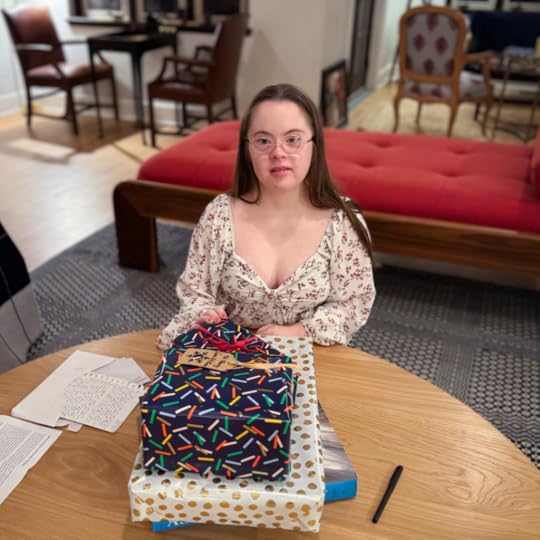
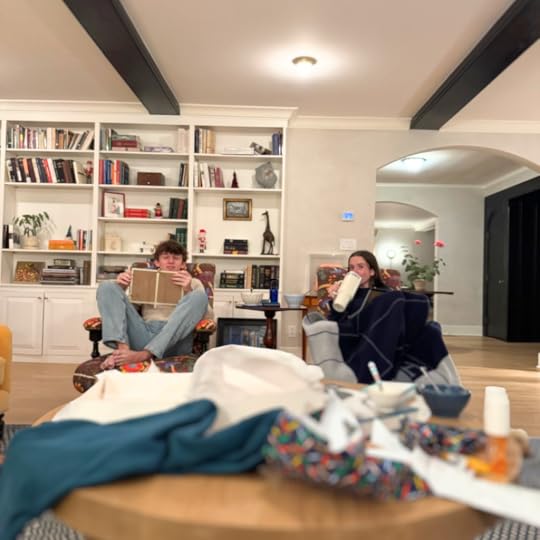
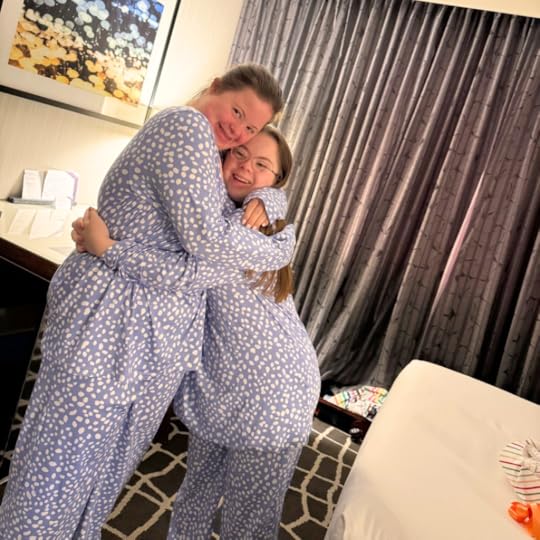
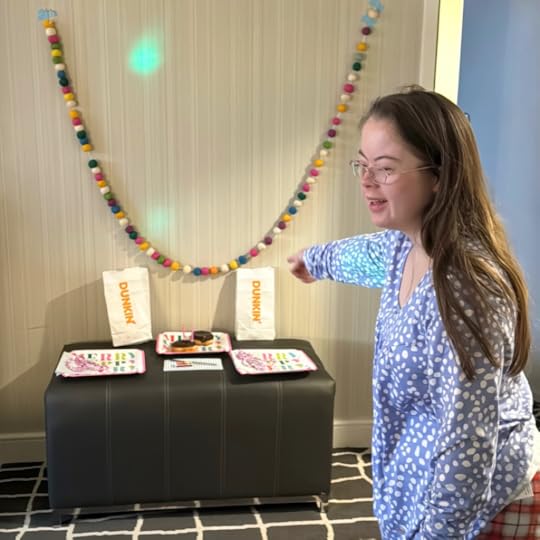
We celebrated Penny’s 19th birthday in stages last week, first with a trip to NJ to see her friend Rachel and—a few days late—with our whole family. The best part about it was Penny putting her events planning skills into action. She prepared a “who knows me better?” game, complete with individual white boards, and challenged us to compete against each other. Our favorite question was “what is one secret I’ve never told anyone?” There was also her celebrity crush, favorite color, favorite song, and greatest fear. Even though we got a lot of the answers wrong, we are so grateful to be the ones who know her best. Happy birthday, Pen!
The post Penny’s 19th Birthday appeared first on Amy Julia Becker.
January 6, 2025
Baking at Her Own Pace
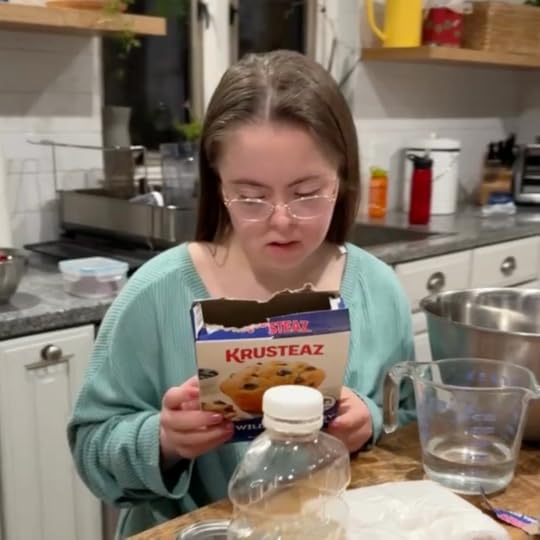
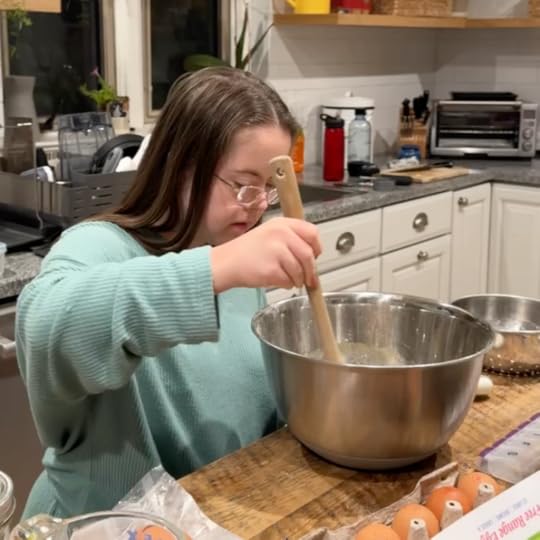
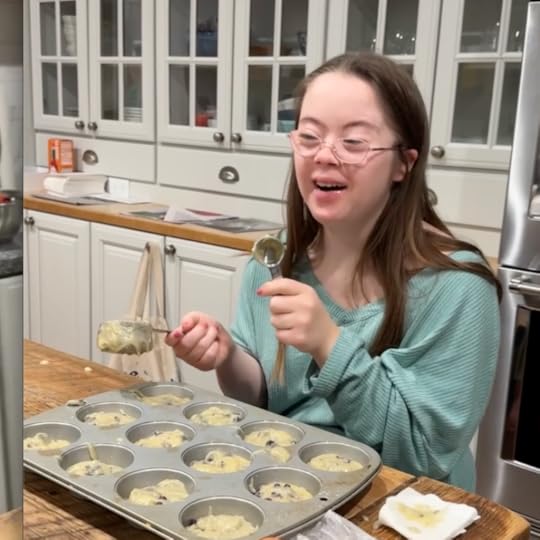
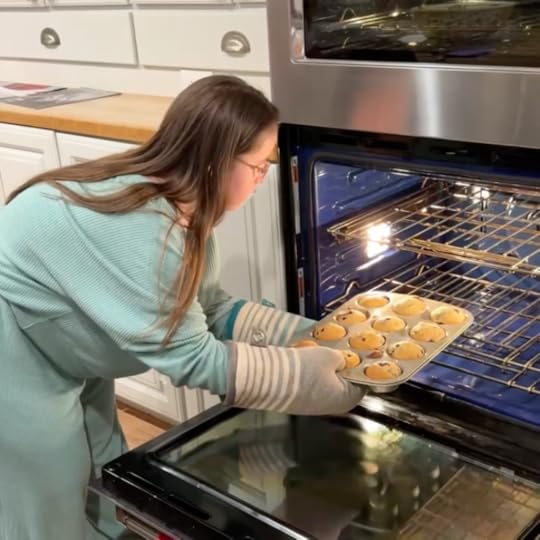
Penny wants to work on cooking and baking skills this year. Usually, we are rushing around, so it is hard to let her work at her own pace. But over the winter break, she and I had an unscheduled evening at home together, and she decided to make blueberry muffins. She showed me—and herself—what she can do when she’s given the time she needs.
View this post on Instagram
A post shared by Amy Julia Becker | Author, Speaker (@amyjuliabecker)
MORE WITH AMY JULIA:
Workshop: Reimagining Family Life with DisabilityFREE RESOURCE: 10 Way to Move Toward a Good Future (especially for families affected by disability)Let’s stay in touch. Subscribe to my newsletter to receive weekly reflections that challenge assumptions about the good life, proclaim the inherent belovedness of every human being, and envision a world of belonging where everyone matters. Follow me on Facebook , Instagram , and YouTube and subscribe to my Reimagining the Good Life podcast.
The post Baking at Her Own Pace appeared first on Amy Julia Becker.
December 31, 2024
Questions for the New Year {Plus my 2024 favorites}
I love this pause in the year, these days between Christmas and New Year’s, between shopping and going back to school. It’s one of the only times that everything seems to slow down to a more human pace. We light fires and work on puzzles and go for walks in the cold and take naps. It gives me space to look back and look ahead. It gives me time to offer up the burdens and griefs of the past year and turn toward the invitations to light and life in the year to come. Here are some of the questions I’m asking:
What gave me life and joy and hope this past year?When did I offer life and joy and hope to others this past year?How and where can I offer life and joy and hope in the year ahead?What distractions and actions turned me away from love this past year?When and why did I experience grief, anger, and fear?When did I cause grief, anger, or fear?Do I need to ask forgiveness of anyone, of God, or of myself?Do I need to do any work of repair?What do I need to say no to this year? (especially if I want to say yes to other things… see the next question)What do I want to say yes to this year?And now on to my 2024 favorites…
BOOKSNon-Fiction Slow Productivity by Cal Newport.This self-help book includes lots of terrific stories to get at three points: do fewer things, work at a natural pace, and obsess over quality. I left it encouraged and empowered to approach my work differently by dividing my time into projects and tasks, working on fewer things at one time, and trusting that good things will emerge from the work, even when it takes a long time.
The Serviceberry by Robin Wall Kimmerer.This small, easy-to-read book is a delightful and challenging reminder of our interdependence. Kimmerer imagines a world in which our human relationships mirror the way of nature, where we approach one another from the perspective of abundance, reciprocity and gift.
Four Thousand Weeks by Oliver Burkeman.An appropriate companion to Slow Productivity, Oliver Burkeman underscores the point that yes, it (life/everything) is always too much. He explains that philosophers looking at humans and our relationship to time agree: “…the core challenge of managing our limited time isn’t about how to get everything done–that’s never going to happen–but how to decide most wisely what not to do, and how to feel at peace about not doing it.”
Cultures of Growth by Mary C. Murphy.For anyone interested in how the idea of “fixed” and “growth” mindsets affect communities (and not just individuals), this book is a fascinating read with implications for personal and institutional life.
The Anxious Generation by Jonathan Haidt.Haidt’s mega-bestseller claims that we have: “overprotected children in the real world and underprotected them in the virtual world.” Haidt’s analysis helps put data to our experience, but what was most helpful to me in reading this book is his insistence that a phone-based life does spiritual harm. The disembodied, asynchronous, self-centered world of social media and internet entertainment and material consumption pulls us away from some of our most crucial needs. Instead of being pulled down through screens, he says we need to be “lifted up”—through friendships and experiences of awe and moments of transcendence.
Memoir Blessed Are the Rest of Us by Micha Boyett.I’ve always loved Micha’s writing (her Slow Way newsletter is one of my favorite Substacks), and this book does not disappoint. She weaves together her experiences as a mother, with Ace, her son with a dual diagnosis of Down syndrome and autism, and her exploration of the Beatitudes, Jesus’ words of blessing. Beautiful, profound, moving. It’s a great one. (You can learn more in my conversation with Micha here.)
It. Goes. So. Fast. by Mary Louise Kelly.For anyone with high school or college-aged kids, this is a great read about the years just before the empty nest by NPR correspondent Mary Louise Kelly.
The Buddhist on Death Row by David Sheff.
A fascinating first-person account of a man convicted of murder who converts to Buddhism and seeks to live differently.
Lovely One: A Memoir by Ketanji Brown Jackson.I don’t always remember that Supreme Court Justices have personal lives. But in this memoir, Jackson walks us through the complications of recognizing the needs of her older daughter, Talia, who is autistic, as well as pursuing career dreams with two loving and highly capable and ambitious working parents.
Being Heumann by Judith Heumann.I’ve heard Judith Heumann’s name for years because she was such a significant member of the disability rights movement. Her memoir is funny, witty, and infuriating. For anyone who likes memoirs and who might be interested in learning—without feeling like you’re really learning too much—I recommend Being Heumann as an entry point into disability history disguised as a memoir.
The Country of the Blind by Andrew Leland.Andrew Leland’s exploration of his own story of blindness as well as the broader social and historical context of blindness was both poignant and fascinating. I learned so much, and I appreciated the way he wrestled with the beauty and hardship of life with a disability. (You can learn more in my conversation with Andrew here.)
A Measure of Intelligence by Pepper Stetler.Stetler weaves together her own story as the mother of a child with Down syndrome, and her deep dive into the history of the IQ test and our social obsession with intelligence. (You can learn more in my conversation with Pepper here.)
An Ordinary Future by Tom Pearson.Anthropologist and father Tom Pearson learned his daughter Michaela had Down syndrome after she was born, and his initial reaction was to reject her. He fairly quickly fell in love with her, and instead of rejecting her, he began to reject the ideas that had shaped him into someone who didn’t have an imagination for a good life for someone like Michaela. This is another fascinating exploration of the history of anthropology and the story of a father and his child. (You can learn more in my conversation with Tom here.)
Fiction Touching Spirit Bear by Ben Mikaelsen.Fifteen-year-old Cole is banished to an island after he severely injures a classmate at school. This survival story is about reckoning with his family, and with himself, on a path to greater self-awareness and acceptance. That all makes it sound kind of fluffy and vague, but I loved the way it embodied themes of resilience and the need for a mind/body/spirit integration. (Disclaimer: there are a few super violent scenes in the beginning of the book.)
Our Missing Hearts by Celeste Ng.Celeste Ng’s Our Missing Hearts is the dystopian story of a young boy searching for his mother. This beautiful and haunting meditation on what happens when the state controls our families and the power of art as protest stuck with me all year. (This is a great one for teenagers.)
The Storied Life of A. J. Fikry by Gabrielle Zevin.I couldn’t sleep the other night, so I downloaded this book on Kindle and raced through half of it. The good news was, I really love the characters and the story. It’s charming and winsome and sad and sweet, and most of it takes place in a bookstore. The bad news is that it was far too interesting to put me to sleep!
The Frozen River by Ariel Lawhon.This riveting murder mystery set in the 1700s, is told from the perspective of a woman who serves as a midwife to her community. Even better—it is based on the journals of a real midwife and offers a fascinating look at New England culture in the 18th century.
MOVIES The Holdovers.Okay, The Holdovers was nominated for Best Picture by the Oscars, and I want to submit that it is a deeply Christian film about disruptive grace. (For more of my thoughts, go here…)
Wildcat.I also finally had a chance to watch Wildcat, Ethan Hawke’s film about Flannery O’Connor. It was weird and arresting and challenging and contained everything I love (and also kind of hate) about O’Connor’s writing. If you want to challenge your assumptions about the good life, this film is a great place to start!
Rustin.I’ve never even thought about the amount of organizing that needed to happen in order for the march on Washington to take place. Rustin tells that story with intimacy and depth through the experience of Bayard Rustin, the lead organizer. This film prompted me to ask questions about what I believe and how I am willing to put those beliefs into practice.
Nyad.The amazing true story of Diana Nyad’s determination to swim from Cuba to Florida offers such a visual commentary on the power of mindset to overcome obstacles. And Annette Benning and Jodie Foster are awesome in it.
DOCUMENTARIES Daughters.This film follows a group of girls and their dads—the dads are all imprisoned—and their reunion at a father/daughter dance within the prison walls. This story underlines the terrible injustices of our prison system, even as it offers a beautiful story of love and hope.
Greatest Night in Pop.Okay, for anyone born in the 70s, watching the footage of dozens of the pop and rock stars who gathered to record “We are the World” is just so cool. And the feat of imagination and coordination it took to pull this off is also worth watching.
The Disruptors.What makes a disorder a disorder? Does it harm us to label each other with disorders? Or does it help us to identify areas where people need support? The Disruptors, a recent documentary, helped me understand the particularities of ADHD, attention deficit hyperactivity disorder. This film raised great questions about how we label ourselves and construct identities.
Show/Series All the Light We Cannot See.Set in France at the end of WWII, this series (based on the bestselling novel) is riveting in a high-stakes plot and sympathetic characters. It also contains an awesome, subversive message about disability and, ultimately, about humanity. (Read more thoughts here…)
Your Favorites and QuestionsWhat have you loved in 2024? What questions are you asking to end this year and start the next?
Get my favorites delivered to your inbox each month!
Subscribe here!
More Favorites and AJB Recommends
The post Questions for the New Year {Plus my 2024 favorites} appeared first on Amy Julia Becker.
December Favorites {2024}
Here are books, podcasts, movies, shows, and essays that I enjoyed this December:
1. Episode 287: Julia Watts Belser – A Jewish Perspective on Disability.Here’s a helpful perspective on disability in the Bible.
2. Slow Productivity by Cal Newport.I recently finished this book by Cal Newport. It’s a self-help book that includes lots of terrific examples and stories of people who have discovered or contributed great ideas. I loved the stories, but I also felt encouraged and empowered to approach my work differently by dividing my time into projects and tasks, working on fewer things at one time, and trusting that good things will emerge from the work, even when it takes a long time.3. The Serviceberry by Robin Wall Kimmerer.This small, easy-to-read book is a delightful and challenging reminder of our interdependence. Kimmerer imagines a world in which our human relationships mirror the way of nature, where we approach one another from the perspective of abundance and reciprocity and gift. (And here’s the podcast episode I shared last week about the book.)Shows and MoviesWe started A Man on the Inside as a family, and it is a sweet, easy, funny show that we all like. Peter and I are also enjoying Slow Horses, a (sometimes-gory) spy drama with intrigue and compelling character development amidst a plot that keeps us guessing.
Oh, AND, we also went to The Best Christmas Pageant Ever as a family. I’m still an even bigger fan of the 1980s made-for-tv, low-budget, low-quality, 48-minute version, BUT four out of the five of us cried (I won’t tell who) in the theater, and we were glad we saw it.
Get my favorites delivered to your inbox each month!
Subscribe here!
More Favorites and AJB Recommends
The post December Favorites {2024} appeared first on Amy Julia Becker.