Amy Julia Becker's Blog, page 11
March 21, 2025
In the Room Where Decisions Are Made
I will never forget the day that our daughter Penny said to me, “It doesn’t only matter what you think.” We were shopping for a dress, and I was being a (slightly?) overbearing mother with (strong) opinions. That day, she bought the dress she wanted, and she reminded me of two things: one, that her opinion matters, a lot. And two, that I can easily lose sight of her significance.
A recent international awareness campaign on behalf of people with disabilities echoes this sentiment. It starts with a young woman with Down syndrome who says (sings), “I want to be where the decisions are made.”
Her parents are picking out clothes for her to wear for a wedding. They have great intentions. They love their daughter. But they have no framework for listening to her. They have no imagination for her as a person with agency over, say, her clothing choices.
The ad goes on to demonstrate all sorts of places where decisions are made without the breadth of human experience in mind—the stairs on a new building that ignore or forget about people using wheelchairs, the shelves that fail to accommodate the height of little people, the touchscreens impossible for blind readers to navigate.
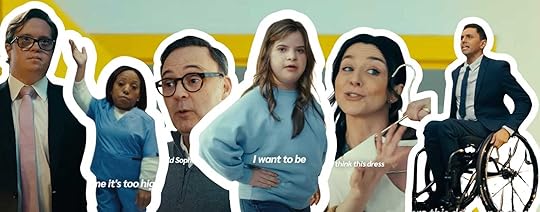
This ad embeds multiple ideas about disability (which is to say, about humanity) within its simple message:
Universal design. The idea behind universal design is to create spaces that are accessible to everyone. Curb cuts on city sidewalks offer a great example. Fifty years ago, those cuts were not ubiquitous. Now, we expect them at every crosswalk. They were created to allow people using wheelchairs to navigate cities, but it turned out they also benefit parents wheeling strollers, passengers rolling a suitcase, and kids on a tricycle, to name a few.The social model of disability. This scholarly way of thinking about disability sees disability not as a description of individual bodies and minds with impairments, but instead as a social structure that excludes some people through physical and cognitive barriers. For me, the most helpful starting point in understanding the social model of disability has been eyeglasses. We don’t tend to think of people who wear glasses as disabled. They have a physical impairment, but the social access to and acceptance of wearing glasses has made that disability irrelevant as a category. This ad prompts us to ask how our built spaces and decision-making processes create disability rather than seeing individuals with physical and cognitive differences as impaired.Self-determination. In disability circles, this idea means not that people with disabilities should be able to do everything for themselves, but that they should be able to determine for themselves what they want. It doesn’t take away our need for one another or insist that we should all be independent and autonomous, but rather that individuals have as much of a “say” as possible in their own lives.The dignity of risk. I’ve written about this idea before, but it comes down to parents and other caregivers allowing their disabled kids (and typical kids, for that matter) to take appropriate risks even if they might get hurt. In this case, the daughter with Down syndrome selects her own clothes. Instead of a conservative, young-looking dress, she chooses a black top and purple skirt. I’m guessing that feels like a risk to the parents. (I’ve been there.)All of these ideas about disability have shaped my understanding of how we want the world to work, with the breadth of human experience in mind and with the voices that represent those experiences at the table.This ad makes the recent essay I read by ProPublica all the more concerning. The Trump administration has closed 7 of 12 Offices of Civil Rights for the Department of Education.
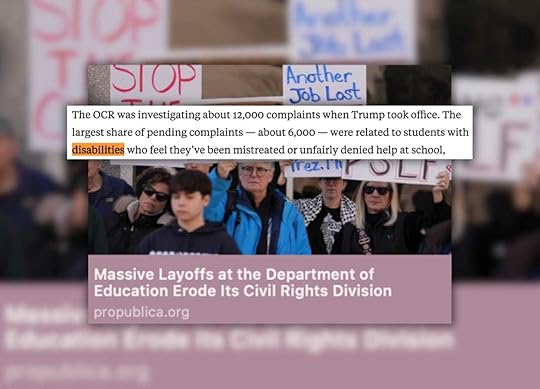
These are the offices that receive complaints by disabled students when schools refuse to make proper accommodations, and over half of the 12,000 complaints that were under review had been submitted by disabled students and their families. I’m concerned that there are important voices missing from the tables where those decisions are made.
March 21 is World Down Syndrome Day. I’m excited to celebrate Penny and millions of other people with Down syndrome around the globe by imagining and building a world where more and more of us know that we belong and matter.
MORE WITH AMY JULIA:
Let’s stay in touch. Subscribe to my newsletter to receive weekly reflections that challenge assumptions about the good life, proclaim the inherent belovedness of every human being, and envision a world of belonging where everyone matters. Follow me on Facebook , Instagram , and YouTube and subscribe to my Reimagining the Good Life podcast for conversations with guests centered around disability, faith, and culture.
Free Resource: From Exclusion to Belonging
(a free guide to help you identify and create spaces of belonging and welcome)
Book: A Good and Perfect Gift: Faith, Expectations, and a Little Girl Named Penny
Free Resource: Missing Out on Beautiful: Growing Up With a Child With Down Syndrome
The post In the Room Where Decisions Are Made appeared first on Amy Julia Becker.


March 19, 2025
College Campus Tour
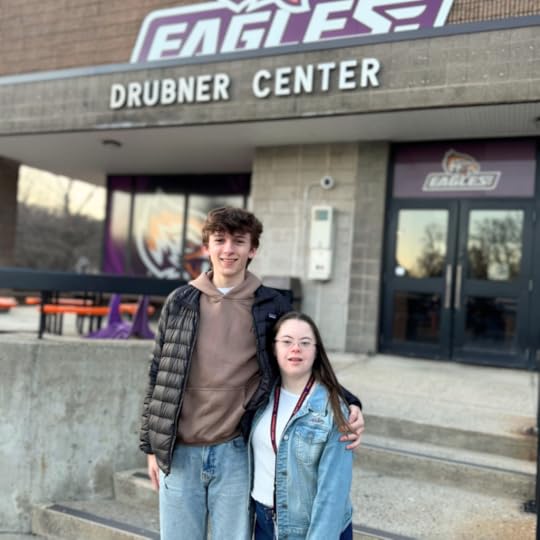
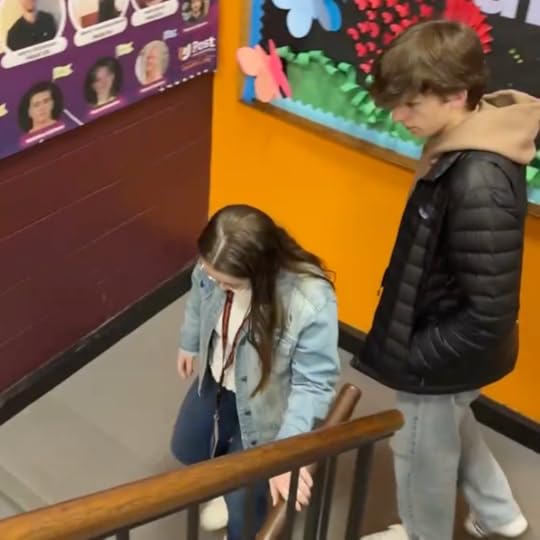
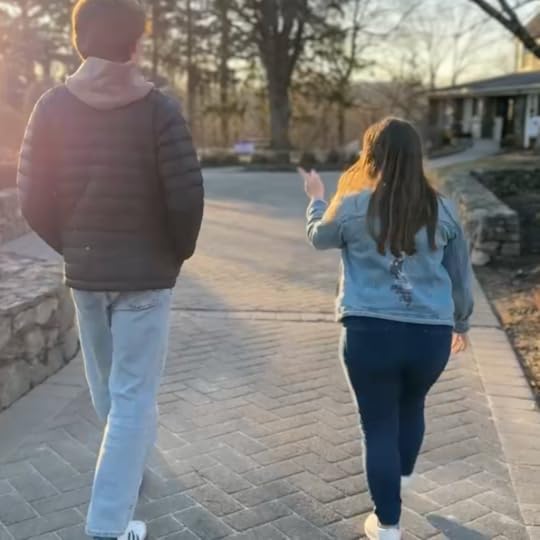
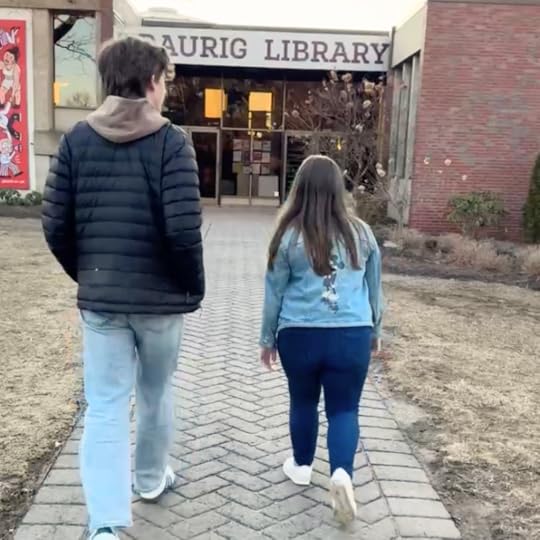
William was home for spring break, and he mentioned to Penny that he hadn’t actually seen where she goes to school. She gave us both a tour of her college campus.
It reminded me again of how grateful I am that programs exist that allow students with intellectual disabilities to keep learning and growing after high school.
It also reminded me that each of us has limitations and possibilities. So often, we only see each other in terms of one or the other: limitations or possibilities. The Emerging Pathways Program at Post University, and others like it, offers a way forward for Penny that honors her full humanity, and we are so grateful for it.
Let’s stay in touch. Subscribe to my newsletter to receive weekly reflections that challenge assumptions about the good life, proclaim the inherent belovedness of every human being, and envision a world of belonging where everyone matters. Follow me on Facebook , Instagram , and YouTube and subscribe to my Reimagining the Good Life podcast for conversations with guests centered around disability, faith, and culture.
The post College Campus Tour appeared first on Amy Julia Becker.
March 14, 2025
Learning From Silence
In 1990, as towering flames closed in around his California home, author Pico Iyer picked up his mother’s cat and ran to the car, hoping to escape the raging wildfire. He soon realized they were trapped—fire ahead, fire behind, with no way out. Death seemed inevitable, until a Good Samaritan appeared. Having spotted the fire from the freeway, he drove his water truck up into the hills toward the blaze, ready to help.
“He wasn’t a monk or a holy person necessarily, but he was a good person. And his commitment to goodness saved my life.”
Those are Pico Iyer’s words to me as he described the wildfire that destroyed his home and nearly took his life.
After the fire, and after sleeping for weeks on a friend’s floor, Pico found silence and rest at “a small Benedictine hermitage high above the sea in Big Sur, California.” He’s returned to the solitude of the monastery more than 100 times.
Life is full of devastation and loss and beauty and goodness. How do we hold it all together? What can solitude give us after a catastrophe?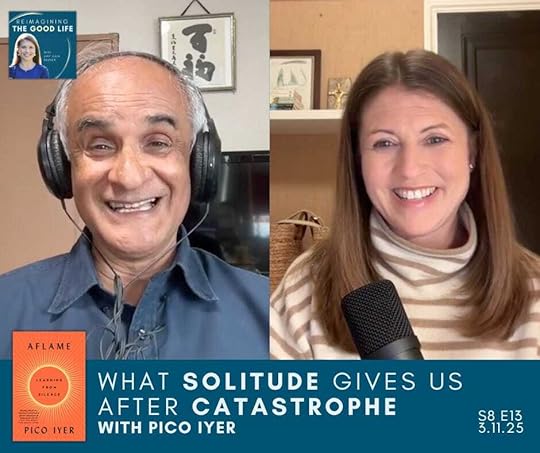
Listen on Apple | Listen on Spotify | Watch on YouTube
Pico joined me on the podcast to explore these themes at the heart of his latest book, Aflame: Learning from Silence. He reflects on his time spent in monasteries and how he grounds the ethereal idea of silence in the very earthy realities of everyday life—life filled with deadlines, relationships, and the (sometimes devastatingly) unexpected.
I asked Pico why he wrote this book at this time, and he gave three reasons: distraction, division, and despair.
He says:
“I’ve never seen the world in such a state of distraction…
“I’ve never seen the planet and our nation so furiously divided…”
“I’ve never heard my friends so despairing and so anxious as they are now in the midst of climate change and wars and technologies that are racing out of our control.”
He then went on to detail why devoting time to silence and solitude is especially important in light of these three realities. I hope you’ll listen to (and share) this conversation, which is full of his wise and beautiful insights.
How to Return to Stillness and SilenceAt one point, I asked Pico for some practical ways to return to stillness and silence for those of us who aren’t able to take regular retreats to monasteries. Here are four practices he incorporates into his life:
1. Find places of silence close at hand.
He says:
“Take a walk or go and see a friend without your cell phone or just sit quietly in your room for 20 minutes every morning without your devices. If you’re in a busy city, step into a church. Or go for a walk along the river. The beauty of silence is it’s available to everybody. It’s non-denominational. And it’s available at some level wherever you happen to be. It is a kind of medicine that’s going to help you deal with the clamour of the world.”
2. Practice Lectio Divina.
Pico says he spends 15 minutes at the start of each day reading and meditating on something that speaks to his soul, such as writings from monks or poets.
“It sets the tone, like striking a bell at the beginning of the day. Everything that follows is only going to be as rich as the extent to which I’m grounded. And everything in my outer life is only going to be as deep as my inner life is.”
3. Give undivided attention—read a book.
Every afternoon, after spending five hours at his desk, Pico spends an hour immersed in a book—either a novel or a thoughtful work of nonfiction. He says that after that hour “I can tell I’m much deeper, more nuanced, more attentive. I’m a much better version of myself just by giving my undivided attention.”
4. Instead of killing time, restore it.
Pico began a practice of turning off the lights and listening to music while he waited for his wife to get home from work, rather than filling the time with TV or online scrolling. He says:
“Just by disabling my senses and giving myself a break and filling myself with something beyond the reach of words, I was amazed I felt so much fresher. I slept much better. I woke up much less jangled. Instead of using that time fruitlessly, I’m actually restoring myself in some way I can barely explain, but I can feel that listening to the music is going to be better than filling myself with the latest tweets or updates from CNN.”
After you listen to (or watch) this episode, let me know what you think. How have you incorporated silence and solitude as regular rhythms into your life? You can reply to this email or leave a comment. I’d love to hear from you, and please share the episode with someone who could use these words of hope in our distracted, divided, despairing world.
FREE RESOURCE: 5 Ways to Experience God’s Love
Let’s stay in touch. Subscribe to my newsletter to receive weekly reflections that challenge assumptions about the good life, proclaim the inherent belovedness of every human being, and envision a world of belonging where everyone matters. Follow me on Facebook , Instagram , and YouTube and subscribe to my Reimagining the Good Life podcast for conversations with guests centered around disability, faith, and culture.
The post Learning From Silence appeared first on Amy Julia Becker.
After the Fire
In 1990, as towering flames closed in around his California home, author Pico Iyer picked up his mother’s cat and ran to the car, hoping to escape the raging wildfire. He soon realized they were trapped—fire ahead, fire behind, with no way out. Death seemed inevitable, until a Good Samaritan appeared. Having spotted the fire from the freeway, he drove his water truck up into the hills toward the blaze, ready to help.
“He wasn’t a monk or a holy person necessarily, but he was a good person. And his commitment to goodness saved my life.”
Those are Pico Iyer’s words to me as he described the wildfire that destroyed his home and nearly took his life.
After the fire, and after sleeping for weeks on a friend’s floor, Pico found silence and rest at “a small Benedictine hermitage high above the sea in Big Sur, California.” He’s returned to the solitude of the monastery more than 100 times.
Life is full of devastation and loss and beauty and goodness. How do we hold it all together? What can solitude give us after a catastrophe?Listen on Apple | Listen on Spotify | Watch on YouTube
Pico joined me on the podcast to explore these themes at the heart of his latest book, Aflame: Learning from Silence. He reflects on his time spent in monasteries and how he grounds the ethereal idea of silence in the very earthy realities of everyday life—life filled with deadlines, relationships, and the (sometimes devastatingly) unexpected.
I asked Pico why he wrote this book at this time, and he gave three reasons: distraction, division, and despair.
He says:
“I’ve never seen the world in such a state of distraction…
“I’ve never seen the planet and our nation so furiously divided…”
“I’ve never heard my friends so despairing and so anxious as they are now in the midst of climate change and wars and technologies that are racing out of our control.”
He then went on to detail why devoting time to silence and solitude is especially important in light of these three realities. I hope you’ll listen to (and share) this conversation, which is full of his wise and beautiful insights.
How to Return to Stillness and SilenceAt one point, I asked Pico for some practical ways to return to stillness and silence for those of us who aren’t able to take regular retreats to monasteries. Here are four practices he incorporates into his life:
1. Find places of silence close at hand.
He says:
“Take a walk or go and see a friend without your cell phone or just sit quietly in your room for 20 minutes every morning without your devices. If you’re in a busy city, step into a church. Or go for a walk along the river. The beauty of silence is it’s available to everybody. It’s non-denominational. And it’s available at some level wherever you happen to be. It is a kind of medicine that’s going to help you deal with the clamour of the world.”
2. Practice Lectio Divina.
Pico says he spends 15 minutes at the start of each day reading and meditating on something that speaks to his soul, such as writings from monks or poets.
“It sets the tone, like striking a bell at the beginning of the day. Everything that follows is only going to be as rich as the extent to which I’m grounded. And everything in my outer life is only going to be as deep as my inner life is.”
3. Give undivided attention—read a book.
Every afternoon, after spending five hours at his desk, Pico spends an hour immersed in a book—either a novel or a thoughtful work of nonfiction. He says that after that hour “I can tell I’m much deeper, more nuanced, more attentive. I’m a much better version of myself just by giving my undivided attention.”
4. Instead of killing time, restore it.
Pico began a practice of turning off the lights and listening to music while he waited for his wife to get home from work, rather than filling the time with TV or online scrolling. He says:
“Just by disabling my senses and giving myself a break and filling myself with something beyond the reach of words, I was amazed I felt so much fresher. I slept much better. I woke up much less jangled. Instead of using that time fruitlessly, I’m actually restoring myself in some way I can barely explain, but I can feel that listening to the music is going to be better than filling myself with the latest tweets or updates from CNN.”
After you listen to (or watch) this episode, let me know what you think. How have you incorporated silence and solitude as regular rhythms into your life? You can reply to this email or leave a comment. I’d love to hear from you, and please share the episode with someone who could use these words of hope in our distracted, divided, despairing world.
FREE RESOURCE: 5 Ways to Experience God’s Love
Let’s stay in touch. Subscribe to my newsletter to receive weekly reflections that challenge assumptions about the good life, proclaim the inherent belovedness of every human being, and envision a world of belonging where everyone matters. Follow me on Facebook , Instagram , and YouTube and subscribe to my Reimagining the Good Life podcast for conversations with guests centered around disability, faith, and culture.
The post After the Fire appeared first on Amy Julia Becker.
March 12, 2025
COGNOSCENTI | The Trump administration’s rhetoric about disability diminishes us all
Grateful to write today for Cognoscenti/WBUR, Boston’s NPR station: “The language we use and the stories we tell shape our behavior, writes Amy Julia Becker. And whether it is the overtly offensive mockery of the R-word or the suggestion that disability threatens our collective health and safety, this administration is telling a misleading and inaccurate story of disability as defect.”
Keep Reading: The Trump administration’s rhetoric about disability diminishes us all
This rhetoric sets up a hierarchy of human value in which the disabled fall to the bottom of a competitive heap. The Trump administration is telling a false story not only about disability, but about who we are as humans.
I’m particularly attuned to the language surrounding disability because our 19-year-old daughter Penny has Down syndrome. When she was diagnosed at birth, doctors and nurses gave us words like birth defect, chromosomal abnormality and intellectual disability to describe her condition. The initial story I was told about our daughter was framed in the language of deficit and problem.
Over time, our family learned a different way of understanding Down syndrome, which began with getting to know our daughter…
The Trump administration’s use of accusatory and demeaning language for people with disabilities creates a narrative that calls their worth into question. The language of defect leads easily to divisive and dehumanizing policies.
MORE WITH AMY JULIA:
Free Resource: From Exclusion to Belonging(a free guide to help you identify and create spaces of belonging and welcome)S8 E6 | A Life Worth Living? Reimagining Life, Choice, and Disability with Rosemarie Garland-Thomson, Ph.D.S8 E10 | The Myth of a Colorblind, Meritocratic Society with David M. Bailey
Let’s stay in touch. Subscribe to my newsletter to receive weekly reflections that challenge assumptions about the good life, proclaim the inherent belovedness of every human being, and envision a world of belonging where everyone matters. Follow me on Facebook , Instagram , and YouTube and subscribe to my Reimagining the Good Life podcast for conversations with guests centered around disability, faith, and culture.
The post COGNOSCENTI | The Trump administration’s rhetoric about disability diminishes us all appeared first on Amy Julia Becker.
March 7, 2025
Spread the Word to End the Word
To my knowledge, no one has ever called our daughter Penny by the most common slur used to demean people with intellectual disabilities, the r-word. I’m glad she hasn’t been the target of bullying or abuse. But I’m still alarmed by the rising prevalence of this word after years of its decline.
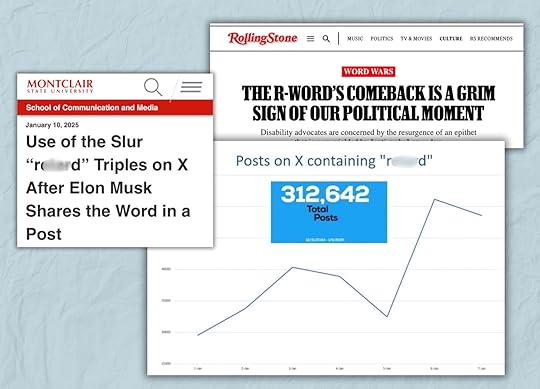
Rolling Stone documented a recent increase in the word across social media platforms. A recent study published by Montclair University showed a sharp increase in usage of the r-word on X (formerly Twitter) after Elon Musk used the word repeatedly. It seems that Musk has provided a permission structure. Words can be contagious.
In 2009, the Special Olympics designated the first Wednesday in March as a day to “spread the word to end the word.” The campaign highlights the emotional impact of this word on people with intellectual disabilities.
But this word—and other words like it—aren’t only problematic for the people they ostensibly target. The r-word deforms us all.
When Elon Musk uses the r-word, he typically intends it as an insult to another typically developing person. He’s using it to insult, for example, an astronaut, or “the woke left.” He isn’t using it to target someone with Down syndrome or another intellectual disability. The same was true when, for example, my friend dropped her fork and said, reflexively, “I’m so r-ed.” Or when the high school kids in the movie Bring It On trade put-downs.
The Harm of the R-WordAnytime the r-word is used as an insult—whether or not it is directed at someone with an intellectual disability—it envisions a world in which some people are more important than others. It equates intellect (and speed) with human value. It turns humans into objects who need to defend their right to exist based on their abilities, achievements, and economic productivity.
It also provides a rhetorical shortcut. Instead of explaining why I disagree with you, instead of opening up a dialogue in which I assume we might be able to learn from one another even across our divisions, I simply insult you. The word dehumanizes its recipient, and it cuts off the possibility of engaging as humans.
The Reason Not to Use the R-WordThe reason not to use the r-word is not political correctness or wokeness. The reason is not even empathy for the disabled.
The reason not to use the r-word is because how we name one another shapes and forms us into the people we want to become. And when we use language that seeks to honor and understand, to connect and engage, we not only protect vulnerable people from becoming the butt of jokes, we protect our own humanity.
The Point Is not PerfectionI should also say I don’t expect any of us to get our language “right” all the time. It has meant the world to me when friends have used the r-word in my presence and later followed up to apologize and talk more about it. I’ve used language in other settings that I later regretted or thought better of, and I too have needed to return and have more conversation.
The point is not perfection. The point is to use language that builds up instead of tears down, to honor and respect one another’s humanity, and to seek, however imperfectly, to use language that shapes our imagination for a world of belonging.
MORE WITH AMY JULIA:
Why Changing the R-Word Only Matters So MuchFree Resource: From Exclusion to Belonging(a free guide to help you identify and create spaces of belonging and welcome)Book: A Good and Perfect Gift: Faith, Expectations, and a Little Girl Named Penny
Let’s stay in touch. Subscribe to my newsletter to receive weekly reflections that challenge assumptions about the good life, proclaim the inherent belovedness of every human being, and envision a world of belonging where everyone matters. Follow me on Facebook , Instagram , and YouTube and subscribe to my Reimagining the Good Life podcast for conversations with guests centered around disability, faith, and culture.
The post Spread the Word to End the Word appeared first on Amy Julia Becker.
March 4, 2025
S8 E12 | Americans & Foreign Aid: A Crisis of Compassion? with Dr. Matthew Loftus
When U.S. foreign aid is frozen, what happens to the people who depend on it? In this episode, Dr. Matthew Loftus and Amy Julia Becker dive into the effects of USAID cuts, including:
The life-or-death consequences for HIV patientsThe difficult choices clinics and hospitals now faceThe political and religious divisions driving the debateWhat it means to be pro-lifeHow concerned Americans can respond SHOW NOTESMENTIONED IN THIS EPISODE:
Amy Julia’s Substack email newsletter about USAID: Caring for Humans is Slow, Messy, and BeautifulNYT opinion essay by Leah Libresco Sargeant, Matthew Loftus, Kristin M. Collier, and Kathryn Jean Lopez:“As Fellow Pro-Lifers, We Are Begging Marco Rubio to Save Foreign Aid”ProPublica article:
“The Trump Administration Said These Aid Programs Saved Lives. It Canceled Them Anyway.”Washington Post articleMatt’s thesis: Discipline and Flourish African Mission Healthcare Subscribe to Amy Julia’s weekly email
WATCH this conversation on YouTube by clicking here.
_
ABOUT:
Matthew Loftus lives with his family in East Africa, where he has taught and practiced Family Medicine since 2015. He is especially passionate about Family Medicine education and mental health care in mission hospitals. He grew up in a family of 15 children and did all of his medical training in Baltimore. He also holds an M.A. in Theology from St. Mary’s Ecumenical Institute in Baltimore and has written for several publications, including Christianity Today, Mere Orthodoxy, First Things, and The New York Times. You can learn more about his work and writing at www.matthewandmaggie.org
TRANSCRIPTNote: This transcript is autogenerated using speech recognition software and does contain errors. Please check the corresponding audio before quoting in print.
Amy Julia Becker (00:05)
I’m Amy Julia Becker and this is Reimagining the Good Life, a podcast about challenging the assumptions about what makes life good, proclaiming the inherent belovedness of every human being, and envisioning a world of belonging where everyone matters. You can subscribe to my newsletter, receive weekly updates about this podcast, as well as other thoughts that help us to reimagine the good life at amyjuliabecker.com backslash subscribe.
Today you’ll notice this is an extra episode for people who are subscribers because I wanted to address a really important recent topic that actually came up in the newsletter and many of you responded to. Today I’m talking with Dr. Matthew Loftus, a family medicine physician who serves at a mission hospital in East Africa. We are talking specifically about the recent funding and personnel cuts to USAID.
And we’re going to talk about the reasons for those cuts, the repercussions of those cuts, and the ways in which our imaginations, whether that’s a Christian imagination, a humanitarian imagination, or a political imagination, the ways those imaginations shape our beliefs about policy and aid and what should happen. We’re also talking about how those of us who are concerned about those cuts can respond.
Matthew Loftus lives with his family in East Africa where he serves at a mission hospital. He’s taught and practiced family medicine there since 2015. He also holds an M.A. in theology from St. Mary’s Ecumenical Institute in Baltimore. He has written for Christianity Today, Mirror Orthodoxy, First Things, and the New York Times. I actually reached out to Dr. Loftus who has been a guest on this podcast before.
after I read an essay that he and some colleagues wrote for the New York Times in January. There they were asking for the Trump administration to maintain funding for PEPFAR and to spell out that acronym. It’s the United States’s President’s Emergency Plan for AIDS Relief, which is a global initiative to fight the HIV AIDS epidemic. So you will hear us talk about PEPFAR.
on how evangelical Christians played a major role in bringing PEPFAR into being. You’ll also hear us talk about USAID, and that acronym stands for the United States Agency for International Development. All right, last thing I’ll say before we get to this conversation, Dr. Loftus and I recorded this conversation on Wednesday, February 27th.
And in the days since we recorded, I want to just read an update from an article in ProPublica, and we will link to this article in the show notes. quote, Secretary of State Marco Rubio completely ended nearly 10,000 aid programs in one fell swoop, including those that he had granted waivers just days earlier, saying the programs did not align with Trump’s agenda. The move consigns untold numbers of the world’s
Dr. Matthew Loftus (03:28)
Thanks
Amy Julia Becker (03:29)
It’s grim
news, but again, what we’re talking about is not only the severity of the repercussions of these cuts, but also how we can imagine a good way forward.
and how we can all participate in that even in our small ways. So here is my conversation with Dr. Matthew Loftus. Well, Dr. Matthew Loftus, thank you so much for joining me today.
Dr. Matthew Loftus (03:55)
I’m honored to be here.
Amy Julia Becker (03:56)
So a few weeks ago, you co-authored an opinion piece for the New York Times. I’m gonna read the title here. The title was, As Fellow Pro-Lifers, We Are Begging Marco Rubio to Save Foreign Aid. So could you give a little bit of the backstory for people who don’t know what might have prompted that piece in general, and then also what prompted you in particular to write it?
Dr. Matthew Loftus (04:22)
Yeah, thanks. So for decades now USAID more generally and PEPFAR more specifically on HIV and AIDS has been using US government money and taxpayer dollars to fund a variety of development projects overseas. A lot of that is in health and education. For PEPFAR it’s very specifically zeroed in on HIV.
and AIDS prevention and treatment, especially providing antiretrovirals. With a little bit of tuberculosis, those two things tend to go together very closely, and especially in sub-Saharan Africa. I think one of the challenges here is that we talk about USAID and PEPFAR together, but they’re two different programs. And I mean, even how PEPFAR came to be like back in 2003.
There was a George W. Bush initiative. There was a turf war, honestly, between CDC and USAID. And it ultimately kind of got put in the State Department because the people who were doing it wanted to try to avoid some of the pitfalls associated with being USAID. So the op-ed was, think, very specifically trying to focus on PEPFAR because it’s a very special program.
focused program, it I think is not vulnerable to some of the criticisms that I think USDAID is vulnerable to. And it’s very, you know, it’s a very kind of open and shut. design of the program is really focused around how do we treat HIV, prevent it from spreading and help people who have HIV live healthy lives. And so if it doesn’t fall under that very kind of narrow rubric, it’s
It doesn’t go in that far. And how far politically, it was really this merger of two worlds. You have Paul Farmer, hero of global public health, but training at Harvard, very left wing and gay and lesbian activists of the 90s. know, so the sort of the original activists who had really pushed for greater research and development for HIV drugs in the first place.
that move, that activist movement moved very quickly from thinking about helping people with HIV in developed Western countries to helping people with HIV in non-Western, less developed countries. And there was, so was that, that, that was one side. But on the other side, you had conservative Christians, like this was the era in which the summer, the summer mission trip was becoming more more popular. There were more and more
I think evangelical Christians who were getting to know more ministries over in Africa, medical missionaries are watching the HIV pandemic just like slaughter people. so you have these two worlds advocating together for more HIV treatment. So there’s kind of two moments I feel like I sum it up in the history. One is this USAID administrator.
who is testifying before Congress and actually kind of in opposition to providing antiretroviral drugs to treat HIV in Africa. And he says, well, know, in Africa, people don’t wear watches. There’s not the same concept of time. So if you tell people you got to take a drug twice a day, they’re not really going to understand that. And there was outrage.
you know, if it had happened in the age of social media, he would have been canceled. mean, people did attempt to cancel him. There was, there was definitely some, some ire there. so that’s kind of, that’s one moment. He was the expert that that was, had been summoned to Congress to talk about this. and then the other, I think really powerful moment, I think that sticks out in history is, somehow there’s this African HIV positive mother who brought her baby.
into Senator Jesse Helms office and Senator Jesse Helms, the crustiest of conservative Christians. he holds this little tiny African baby in his arms and he just kind of melts. And he writes this op-ed in the Washington Post a few weeks later saying we should
as a nation, should really tackle the problem of HIV in Africa, and we should be aggressive, and we should spend a lot of money on it. And, you know, I’m not someone who likes to spend a lot of government money, you know, it’s not my thing. But I think that this is an important enough issue. Paul Farmer was was also working a lot behind the scenes Bono, that is a broader context of PEPFAR and how PEPFAR started. Yeah. And really PEPFAR has remained very true to that mission of
we’re going to treat HIV, we’re going to prevent the spread of HIV. HIV prevention, I think, have always been a little contested. And that was always a flash point. And I think it almost sunk the original issue because you had, I think, people on one side who were all about the safe sex and whatnot and condom distribution. And you had conservatives on the other side who were basically like, well, can we just tell people to keep it in their pants? Right. And they managed to find some compromises.
in terms of how the messaging that was going to go out, right? Because you cannot just simply hand out medication, right? You have to build a whole infrastructure around delivering the medication. You have to have people who can counsel. Receiving a diagnosis of HIV is, of course, one of the most devastating emotional moments in someone’s entire life. So you need to have a whole trained cadre of people who are able to like…
get people in, get people started on their medications, talk to them about how to live with HIV, how to prevent it from spreading to anyone else, like how to deal with the community. Again, PEPFAR’s mission is very much, is it about treating or preventing HIV? Then yes, they’ll pay for it. But anything else, like it does not fit.
Amy Julia Becker (10:52)
terms of the just understanding PEPFAR a little bit more. Yeah, you’ve given us a little bit of what was motivating people. But what was the argument as far as like why, whether it’s a Christian argument or not, like why American taxpayer dollars should fund HIV and AIDS, you know, prevention or, I don’t know, in Africa? Like, why was that even something that we would argue was good to do?
Dr. Matthew Loftus (11:20)
Um, because it was possible. People are dying. Yeah. We have the drugs to prevent people from dying. Um, you know, they’re really powerful image was that Paul Farmer was walking around with like before and after pictures of people that he had treated in Haiti because he had found some private and grant things to, uh, to treat people in Haiti. And, you know, he had just had these before and after pictures of what they call the Lazarus effect. Um, and so it really was just people are dying.
This is an entirely preventable, treatable disease and we can find the money for it. And so it really was just a very simple humanitarian. I mean, I think, you know, the it was the same time as the Iraq war. And I think that there was this very, you know, now in retrospect, like we should be suspicious of this, but this idea that like we could really transform the world for the better using American power. So PEPFAR is very narrow focus.
But it was also revolutionary at the time. Whereas USAID has been around for a lot longer since the 60s. I think pre-Great Society, it was more with the John F. Kennedy anti-communism, the idea of like, we have to engage the entire world. Every other place in the world is going to be a battlefield between Western freedom, capitalism versus communism and all of that.
So because of that, USAID has a much broader scope. And so it can be used for things that people find outrageous. I think one of the things that people keep yelling at me about is some sort of transgender opera.
Amy Julia Becker (13:05)
Which I don’t think was really a thing. think it was like from what I read that was fact-checked and it was like actually no that’s not what it was.
Dr. Matthew Loftus (13:14)
It
is at the very least conceivable that someone in a democratic administration might think that this was a good idea. And certainly like USAID, think it’s also there is a lot more fraud, waste and corruption in that system because it is malleable. It’s sort of like if the intelligence community is trying to do something in another country, they might use the USAID project to do that. Now, at the same time, I know that there are
American missionaries who have gotten into very close countries under the pretext of working for USAID. And certainly a lot of missionaries have worked on USAID funded projects. So like most of the mission hospitals that I know of in Kenya, for example, had at least one building, you know, that was built by USAID. And it might have been an eye clinic, you see the USAID logo on roads. You know, they do feeding programs, they do education programs.
So they just have a much broader scope, much broader mandate, which I think opens them up to more political criticism. And I think also there’s a lot more just shady stuff that happens in terms of, you know, a USAID project. When it gets implemented on the ground somewhere, very well might, some of that money gets siphoned off to different places and things like that.
Amy Julia Becker (14:39)
Okay, and we’ll circle back to some of this, but again, just in terms of making sure I understand what’s happened. A few weeks ago, the Trump administration placed a freeze on USAID, which included PEPFAR. Can you explain, bring us into the current moment?
Dr. Matthew Loftus (14:56)
The stop work order was for all foreign aid, anything and everything that could be considered, I guess, money going from the US government to someplace other than America. I’m assuming that they excluded embassies from that. I mean, you can’t shut down embassies. mean, well, I say you can’t and then there’s all these terrible things that have happened in the last couple of weeks that I did not think were really possible.
That stop work order was just sort of a blanket. If there’s money going from the US to somewhere else under any pretext of any aid anywhere, it stops. And so that included USAID and that included PEPFAR. Anything that counted as foreign aid got stopped.
Amy Julia Becker (15:47)
Gotcha. And my understanding is that the freeze was theoretically lifted when it comes to PEPFAR, but that has not necessarily played out on the ground. I’ve already mentioned this in my intro of you, but I’m just realizing that I should let you speak for just a minute about the work you do on the ground and why it is that we are talking about.
Dr. Matthew Loftus (16:11)
Yeah, so I am a medical missionary. I work at a mission hospital in Kenya near in the central highlands near Mount Kenya. I’ve been in East Africa since 2015 working at a couple different mission hospitals during that time. I see patients every day whose medications are paid for by PEPFAR. Really the biggest thing that USAID does or did that
that kind of interacts with my work is they were funding a medication supply chain. They were funding this institution that was an initiative of the Christian Health Association of Kenya. It’s called MEDS, Mission for Essential Drugs and Supplies. And basically it was just logistics and infrastructure so that hospitals, so when my hospital wants to order a great big truckload of IV
solution, normal saline that we use every day in the hospital, right? That there is a warehouse somewhere that USAID helps to pay for that, helps to subsidize the cost of the medication, helps to pay the people, the bean counters who keep track of where the medicines are, how many we have, how many we need to order, those kinds of things, to get that medicine to where we are.
And then, you know, like I said, there’s a bunch of other USAID projects that do other all kinds of different things, but that’s kind of the one that comes to mind as sort of like my day to day work. So Marco Rubio, Secretary of State, put out a waiver within the week to say like, okay, so anything that’s like life saving, absolutely necessary kind of work that’s exempt from the foreign aid freeze. So in the first couple of days when the waiver came out, everyone was like,
Well, that applies to us, right? And then just kind of waiting for that confirmation. And then a couple of days later, was sort of there was more detailed confirmation that came out. The problem is, number one, you could say, OK, the medication, those are under the waiver. But like, is the bean counter right in the warehouse? He’s like responsible for making sure the medications get from point A to point B. Yes. Is that person also counted?
And I think there’s been a lot of back and forth in it. I think it was even more complicated by the fact that at the same time, the DOJ, the Department of Governmental Efficiency, whatever, they were deliberately trying to destroy USAID as quickly as possible. so anyone who might be like approving the payments, anyone who might be like coordinating the logistics,
anybody who might be like answering the emails that say, Hey, does this waiver apply to us or not? Like all like they were, you know, trying to drive people out of their offices, right? Shut down the networks, right? Even, you know, I have not seen any other reporting confirming this, but Washington Post put out something yesterday saying that like there were some there was someone going around in the computer system, like manually trying to stop the light saving.
you know, the payments that were approved under the waiver, like manually trying to prevent that money from flowing from, you know, a US government account to an account in Africa or whatever.
Amy Julia Becker (19:45)
And so what are you hearing from the hospital where you work, where I know you aren’t physically right at this moment, but in terms of what this has meant for them on the ground, it’s been about a month now.
Dr. Matthew Loftus (19:58)
Yeah, so I mean, I think when the stop work order came, there was a whole lot of chaos and confusion. And then when the waiver came through, a lot of people said, great, we’re going to keep moving with what we have now, depending on sort of how someone’s money flows. Like so one hospital in Eswatini was explaining like, you know, they kind of they work on like a they pay and then the US government pays them back. And they they were fronting the money for the next
couple of months, but they don’t have anything in their account right now. So they’ve had to of divert, you know, shut down some of their like eye surgeries, for example, in order to try to use that money. They’ve had to send, you know, a lot of hospitals sent some staff home, because basically they knew that the core thing was going to be getting the drugs to the people because once you, if you stop, if someone is on HIV medication, then they stop taking it.
then that really puts them at high risk for developing a resistant strain of HIV, which is then much harder to treat. Gotcha. so there’s a very strong priority focused on, all right, so we know, like we don’t have the money, we’re not getting the money right now. We don’t know when we’re going to get the money. So we’re gonna basically cut things down to a skeleton crew of staff. you know, most of the mission hospitals that I talked to,
They basically said, so we are used to these staff getting paid from the US government. That money is not coming in through now. So we will sort of front the money now to keep people from losing access to their HIV medications now. think for some, especially for pregnant women, they basically said, we don’t know when we’re gonna get restocked.
with the medication, so why don’t you just go ahead and take a two month supply?” Yeah, so those are the kinds of things. That’s basically what they did is they sort of rearranged on the fly, but they sent a lot of staff home. Anyone who wasn’t doing anything besides handing out medication basically got sent home. Some clinics closed altogether.
Certainly any clinic where there was like a little bit of PEPFAR and a lot of USAID, you know, those places are shut down. You know, of the warehouses are, you locked, staff are furloughed, sent on administrative leave, like all kinds. And I think that one of the challenges is that, like, I reached out to one of the bigger institutions that has connections with a university in the U.S. It’s kind of this
big partnership. I the US University probably just from the university alone gives that hospital a million dollars a year or more. And they also send people back and forth. They have a lot of research projects. I was trying to contact them and they said basically they did not want anyone to talk to anyone in the media, say anything. And so I think a lot of people are really afraid to say what
happening because they fear either that will kind of make them a target for recalibration. Everybody kind of can see that like whatever happens, you know, the overall pipeline of funding is going to get smaller. That’s really inevitable. Even whatever turns back on is going to be less than before. So I think that there is a general sense of the people who keep their heads down the most.
are the ones who are most likely to get their funding restored. Or someone who sort of is known for speaking out about what’s happening right now might be targeted to be excluded from that.
Amy Julia Becker (24:00)
This is so helpful in terms of just getting a picture that is both as you just gave us like historic in scope as well as pretty broad but specific about what’s happening right now. So thank you for all of that. I wanted to also ask you about kind of the role of Christians within this turn of events in the past month, because I think one of the things that has felt confusing has been this sense of, OK, on the one side, you just told us the story, whether it’s PEPFAR.
Or USAID supporting just like mission hospitals. The sense of my understanding is many, both the Catholic charities around the world, as well as many evangelical charities around the world are getting a lot of funding from USAID. Like there’s a pretty strong Christian presence as well as ongoing relationship of support specific both to PEPFAR and USAID. And many Christians, you whether that’s you or me or, you know,
people writing for the New York Times, for other places saying, we want to advocate for this type of humanitarian aid because of our understanding of the value of human life in this world. yet there are other Christians who are really, I we know that it was because essentially of white evangelical Christians that President Trump was elected, just kind of demographically. So there’s a lot of Christian support for him.
and even specifically for these types of actions. And so I’m just curious what you see or what you think about why there’s this because it’s one thing to have political divides, right? It’s thing within a kind of worldview or ethos of Christianity to be pretty polarizingly. I don’t know if that’s a word, but I’m very, very starkly opposite sides of this issue.
Dr. Matthew Loftus (25:48)
Yeah, yeah, no, that’s a good question. And that is one of the things I’m trying to figure out for myself as I’m writing and thinking about like, how, what can I say that will help convince people of the value of this or that? You know, so there’s a couple different, I think, streams. One is whatever we’re calling them these days, the shock jock Christians who I think are just really
just negatively polarized against everything. I don’t know. mean, how they resolved the contradiction of feeling like Elon Musk is their guy. mean, honestly, some of it just, it seems like at least based on what they say to me on social media, I think they kind of have this really evil thrill at the idea of dark skinned people dying in another country because it
makes liberals cry or something like that. And I really hope that that is a very, very, very small number of people and that the vocal nature of their responses is disproportionate to their actual numbers. I think that but that is certainly a vocal segment. You know, I think that there are a lot of people they you know, who
Once they heard that the that there was a waiver like in their minds. It just it was just like, okay Well, we saw the problem. The problem has been solved. Yeah We will only have the good things and we will take away the bad things Yeah, and I think a lot of them are a lot of people are concerned About how the government is spending its money And I think that that’s a fair concern to have I think that there is
plenty in the world of foreign aid when it comes to waste, fraud and corruption that could be combated. No, but I think there’s a difference between taking a tree to the sawmill and taking it to the wood chipper. And I think that, you know, for them, it’s I think it’s related to the broader sense in which, you know, the Republican Party and Donald Trump are sort of like somewhere between
you know, God shows an instrument of judgment and unnecessary evil, right? To get anything done. Yeah. And so, you know, I mean, it’s hard to tell sometimes based on, know, because now people’s news ecosystems are so vastly different from each other that there is someone who for whom like a stop work order did not even connect to the idea that there would be like cessation of
medications at mission hospitals, that those those two things would like happen together. You know, polls often show that people believe that the US government spends about 25 % of its budget on foreign aid, people think that needs to come down to 10%. When in reality, it’s 1%, right? Like, it’s hard to tell how much of that simple, like misapprehension is is playing a role in this.
And there’s a lot of people I think who who are you know, who if they know are either genuinely upset But don’t really have any place to change it since a lot of this is happening At the hands of unelected unaccountable, you know deep state bureaucrats who they won’t even say who it is sometimes And so there’s a certain amount of powerlessness of like even if I called my Congress
could my congressman even do anything? Yeah, so I think that there’s there’s there’s different layers. And certainly, I mean, I think in general, there’s a sense in which, you know, people felt like the previous presidential administration went too far in a lot of ways. And so kind of any, any way of reining that in is good for the country. And I think that’s that’s the most cogent argument that’s being made to me is
Amy Julia Becker (29:39)
Yeah.
Dr. Matthew Loftus (30:07)
is and the most sympathetically that I can kind of steal me on that argument is right you know like yes we’re throwing the baby out with the bath water but the bath water is disgusting it’s talking that you can’t you can’t you can’t baby can’t be saved
Amy Julia Becker (30:18)
Right, the bath water
Right, right. All right. Well, so let’s just also make the case in an explicit terms for a Christian support of PEPFAR and USAID, which is not to say Christian support of corruption and waste and graft and all those things. in terms of, yeah, can you just articulate the other side for me?
Dr. Matthew Loftus (30:44)
Yeah, I think that God has blessed America richly and that American power and American wealth are just simply unparalleled in the world and in the history of the world and there is still so much good that can be done and it I mean I think it is still conceivable that just as we you know cured polio and put a man on the moon
right that we got rid of smallpox and we got rid of polio. Yeah. Well, I mean, almost got rid of polio. Like it’s so close. I know. Right. That you can do the same thing for HIV. And there are now these long acting ARV injectables, which is basically like it’s I mean, instead of like having to take a pill every day, you get this injection and it lasts for six months to a year. Yeah, yeah, it is. It is.
Amy Julia Becker (31:38)
I did not know that.
Dr. Matthew Loftus (31:42)
It was going to be the next big thing. I hope it is still the next big thing. hope, you know, that 20 years, you know, by the before I die, like, you know, my there, I mean, there will probably still be millions of people getting these injections. But like, you know, we might be talking about HIV in the same way that we talk about polio now of, you know, well, there’s a few cases happening somewhere out there.
But you know, we pretty much have it locked down. And as long as we keep it locked down, we’re going to be good. And, you know, one of the things that got shut down were these trials that were, you know, working on these medications, the long acting medications, trials of vaccines for HIV and things like that. So, you know, I think in just the sense of which in in a global in a in a a world in the world where
We count on our stuff that makes our life comfortable coming from all over the world. And we count on our things being cheap because they are made by people all over the world. America has a certain duty to the rest of the world to relieve suffering. I think God, I think from a Christian perspective, God is glorified.
when you know, a young mother does not die of HIV and AIDS, but lives and sees her children and her grandchildren graduate from high school. And so I think, like, it’s great when Christians can do that through their private charity. And, you know, I think that’s another dimension is I think a lot of Christians are like, well, yes, it’s good to help people. But like, that should be the church helping people and like,
the government helping like there’s something suspicious about the government. Yeah. I and I get that and I like, you know, it annoys me to no end when I see like a politician who does not otherwise care about the Bible, like quoting from Matthew 25, whatever you did to the least of these. I’m like that. I appreciate, know, your heart is in the right place. Your brain is missing in action. Right. Like, like we cannot map
Christian obligation to love on to like the political powers, but at the same time like going back to Augustine like love is still an organizing principle deep at the heart of Christian political theology. Yeah. And you know for anyone who really wanted to nerd out about this I wrote this is what I wrote my master’s thesis about. You can find on my website.
trying to spin out some of these things when it comes to healthcare. yeah, so I think God is glorified when the kingdom of Satan has manifested and the power of death is pushed back. I think it is an incredibly, from a more rational, like real politic kind of thing, I think that it is worth
the US government and the political power to invest in the stability of these countries. think if you look demographically, you know, even God forbid, even if we were to go back to 2000s, know, the 90s era death from HIV in Sub-Saharan Africa, like Sub-Saharan Africa is still going to be the most populous continent on the world.
in the next 20, 30 years. And the demographics, like that’s just sort of demographically how the world is going to look in the next few decades. And I think that, you know, there’s resources, natural resources that we want. is, you know, this is now getting even more like cynical, right? But like your political interest in
in Sub-Saharan Africa is still going to be very dependent on those countries being like stable and not constantly watching their youngest citizens just get wiped out by this entirely preventable illness. And then I think from a public health perspective, viruses don’t respect borders. The first cases of HIV in Western countries almost certainly came from
Western travelers in Africa who brought them back to their families and other people in Western countries. the way, you know, like even if, you know, America pursues a very like zealous America first agenda, all it takes is like one super mutated HIV virus from someone in Africa who goes and works in another country.
And then someone from the US goes and there’s virus spreads like that. That’s what happens. And so if we don’t want super resistant HIV showing up within our borders, we should be invested in not letting the disease run rampant.
Amy Julia Becker (37:16)
Yeah, I mean, I’m hearing you give both, I think, a kind of Christian argument as well as a national self-interest argument. I was thinking about that even when you were describing the, know, just driving around and seeing the literal signs that say USAID. I mean, it’s like a PR campaign. It is, yeah. In addition to and that, again, in terms of how globally interconnected our world is, we could make, again, a Christian argument for caring for our neighbors.
But we also could make just a political argument for why in an interconnected world we want people to actually say, I’m grateful for the United States of America because I want to stay on their side. Like that makes a lot of sense. And I think all of these things do kind of speak to the ways in which the money and programs and people, the ways in which we utilize those in the world are shaping a story and an imagination.
Not only about who America is, but also about who we are as humans, who we are as neighbors, as citizens. And right now, at least it seems to me, they’re again, as you mentioned, maybe this is just a really loud voice on social media, but there’s a lot of dehumanizing rhetoric that is trying to put a certain type of American at the top of the human heap as a victor.
Dr. Matthew Loftus (38:32)
Yeah.
Amy Julia Becker (38:39)
and the rest are kind of weak and don’t deserve attention. And then I think there’s another strong voice in America and around the world that says, actually, that’s not what it means to be human. In fact, there is value to I mean, I think about that story you told of Jesse Helms, right? Like, I see this little baby and I’m like, no, no, no, we if we can do something to value this life, we we got to do it right now. And, know, I appreciate your voice speaking into exactly that place.
As we come to a close, do have one kind of final question, is you may not have more of an answer for, but I wanted to circle back to that question of, OK, if you are a concerned American who’s listening to this podcast right now, is there anything to do? Is this just a wait and see? Yeah. Is there any way to respond?
Dr. Matthew Loftus (39:28)
Yeah, I mean, think probably the best way to respond is, know, well, so two things. think one is that until the inter-Nation squabbles within the highest echelon’s power are worked out, right, that there are going to be mission hospitals and Christian organizations that are going to be working very hard to fill in the gap. And so I think the one organization that I always recommend people is
the African Mission Healthcare Foundation, and they are just absolutely fantastic people. support mission hospitals in a wide variety of settings, and they have not launched any kind of official thing, but they’re sort of like my go-to recommendation for like how to support Christian healthcare missionary work, because a lot of the hospitals they support are PEPFAR funded sites.
And so, you know, they’re going to be trying to help them fill in the gaps. The I mean, and then the other thing is that I think people should be contacting their representatives in Congress because it the the the fight to reauthorize PEPFAR is still going to happen in Congress. And once all this shakes out, like, you know, at the Doge level or whatever, Congress will.
still be able to say like, this is the amount of money that we’re giving to PEPFAR this year. And one of the other things is that there has been concerns that PEPFAR funds might be used to promote abortion. There was an incident that happened where they realized that there were some providers in Mozambique that were paid by PEPFAR that had actually performed abortions. And, you know, there was a whole like,
accountability response to that, that I think, you know, just kind of demonstrates the rigor and the structure of the program. You know, our congressional representatives do need to hear like, yes, please continue to protect PEPFAR. American Christians do care. We want to see PEPFAR reauthorized. We want to see it fully funded. You know, it is
still a very small amount of the overall budget. Cutting PEPFAR does not plug the gap in, and is not going to fix the hole in social security or medic, you know, it’s not going to balance the budget, right? It’s still a relatively small amount of money every year, you know, had like, in terms of number of lives saved, dollars invested is just, you know, one of the best bargains on the planet.
in a very, again, very like tightly run chip. I think that those are kind of the two focuses is like, let’s give sacrificially to fill in the gap at the moment, you know, with it for the people who are really doing their absolute best to make bricks without straw at the moment. And but also like looking ahead to the future telling our representatives, hey, please, you know, let’s preserve Kapfar.
Amy Julia Becker (42:47)
Thank you. Thank you for those very practical words as well as for the bigger picture that you were able to invite us into historically and in the present moment. And thank you for the work that you do. And then I know you’re returning to do on behalf of some of the most vulnerable people in the world. We’re really, really grateful.
Dr. Matthew Loftus (43:08)
Thank you for what you do. Tell them stories about the things that people really need to hear about.
Amy Julia Becker (43:14)
Thanks as always for listening to this episode of Reimagining the Good Life. I would love to stay in touch with you and hear from you. The best way for us to do that is for you to subscribe to the Reimagining the Good Life newsletter. That’s amyjuliabeckard.com backslash subscribe. There you will receive weekly updates with my thoughts about Reimagining the Good Life. You also will receive receive updates as a part of those weekly updates about this podcast.
got some upcoming conversations I would love for you not to miss one with Pico Eier another with Andy Crouch and in those weekly newsletters you also see my favorite recent books, movies, shows, podcasts. I love to offer recommendations and I always love to hear those from you. So please do send any questions and suggestions for interviews my way. I would love for you to share this conversation with others and to rate and review it when you take a few seconds.
just to click on those little buttons that say what you thought about this conversation. It actually helps the algorithm decide to show other people this podcast. So you can do that personally by sending it to people who you think would benefit from this conversation, but you also can help just by saying what you thought about the podcast itself.
As we conclude, want to thank Jake Hansen for editing and Amber Beery, my social media coordinator, for doing all the behind the scenes work to make sure this podcast happens. And I want to thank you for being here. I hope this conversation helps you and me to challenge assumptions, proclaim the belovedness of every human being, and envision a world of belonging where everyone matters. Let’s reimagine the good life together.
SUBSCRIBE TO PODCAST
[image error]Apple Podcasts[image error]Spotify[image error]CastBox More!
More!
Learn more with Amy Julia:
To Be Made Well: An Invitation to Wholeness, Healing, and Hope S8 E10 | The Myth of a Colorblind, Meritocratic Society with David M. BaileyS8 E5 | How to Be Christian During Election Season with Corey Widmer, Ph.D.Let’s stay in touch. Subscribe to my newsletter to receive weekly reflections that challenge assumptions about the good life, proclaim the inherent belovedness of every human being, and envision a world of belonging where everyone matters. Follow me on Facebook , Instagram , and YouTube and subscribe to my Reimagining the Good Life podcast for conversations with guests centered around disability, faith, and culture.
The post S8 E12 | Americans & Foreign Aid: A Crisis of Compassion? with Dr. Matthew Loftus appeared first on Amy Julia Becker.
February 28, 2025
It’s Worth Seeking After Truth
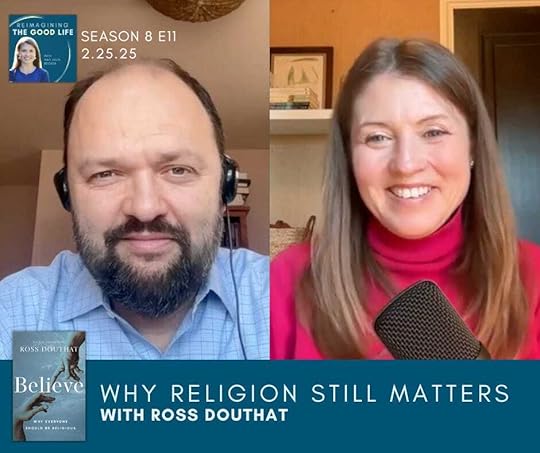
Have you listened recently to the 1970s song Imagine by John Lennon? New York Times columnist Ross Douthat was on my podcast this week, and he brought up the song as he talked about how some people feel “a kind of lifting of weight” in the absence of religion.
He says, referencing the song, “Imagine there’s no heaven. Imagine there’s no God. We’re just alone here—that’s it. Clearly, there is some kind of relief that people can feel in that initial sense of, ‘Okay, God is not judging me all the time. These punitive rules don’t actually apply. I don’t have to swallow some mythological conceit.’”
Here in the US we’ve gone through a time of growing secularization, with fewer people attending church or identifying with a specific religion. We talk on the podcast about how this could be broadly connected to declining trust in institutions in general, and religion in particular. Scandals, such as the sex abuse crisis in various church denominations, along with other controversies in religious communities, have led many to feel disillusioned.1 Ross points out that it’s fair to say that America is becoming less religious overall.
And yet, while Americans have become less religious, this reality has not led to the euphoric experience imagined by Lennon 50 years ago.
Listen on Apple | Listen on Spotify | Watch on YouTube
Ross says, “I’ve really noticed, especially in the last three to five years, this sense of disappointment—angst—in the post-religious landscape, maybe especially among younger people.”
The challenge, according to Ross, is:
“What do you do next? What is the actual source of meaning and purpose in your life if there is no God?”
What does it mean to be human? Does God exist? Is the universe good? Is there order and purpose to human life? These are the types of questions that help to shape our imagination about our individual lives and our life together. Ross and I begin to dive into these questions as we discuss his latest book, Believe: Why Everyone Should Be Religious. Our conversation explores:
the rise of secularism and the disappointment many face in a post-religious worldthe importance of engaging with religious questionshow individuals can begin their journey of seeking meaning and purposeThe Relationship Between Religion and PoliticsRoss’ book does not include any political punditry or commentary (and I read every word of it!). That was intentional on his part, even though he often writes about politics in his NYT column. But I did take time in our conversation to ask him about the proper relationship between religion and politics.
Here are some of his insights:
Identify what has worked.The American model of politics has worked relatively well in that it discourages using state power to impose specific religious beliefs on others.Acknowledge history.
Core moral debates in American history have been deeply influenced by religious ideas. Examples include the abolitionist movement and the work of Martin Luther King Jr. and others in the Civil Rights Movement.Identify what has changed.
Social priorities have shifted. For example, parents today tend to be much more concerned if their child is marrying a member of a different political party than if their child is marrying a member of a different religion. Several decades ago, the opposite was true. This reality reflects a shift toward an unhealthy politicization of identity.Identify a proper balance.
Take care not to confuse your politics with your religion. “As religion declines, people pour religious kinds of energy more and more into partisan politics and invest partisan politics with moral and theological significance, when the correct balance is to have a moral and theological perspective that’s more important to you than your politics—that informs your politics but doesn’t confuse your politics with your religion.”Becoming a Seeker
At one point in his book Ross writes, “It’s worth becoming a seeker.” I love that idea. It’s worth seeking after truth and goodness and beauty and justice and all these things that I hope religion ultimately stands for. I hope you’ll watch or listen to (and share) this episode. What do you think about the importance of religion? Do you see yourself as a seeker? I’d love to hear from you.
MORE WITH AMY JULIA:
FREE RESOURCE: 5 Ways to Experience God’s LoveS7 E18 | Exploring the Good Life with Meghan Sullivan, Ph.D.S6 E17 | Questions for a Life Worth Living with Matt CroasmunLet’s stay in touch. Subscribe to my newsletter to receive weekly reflections that challenge assumptions about the good life, proclaim the inherent belovedness of every human being, and envision a world of belonging where everyone matters. Follow me on Facebook , Instagram , and YouTube and subscribe to my Reimagining the Good Life podcast for conversations with guests centered around disability, faith, and culture.
The post It’s Worth Seeking After Truth appeared first on Amy Julia Becker.
February 27, 2025
February 2025 Favorites
Favorite books, essays, podcasts episodes, and more that I enjoyed in the month of February…
Books: The Long Call by Ann Cleeves.I don’t typically gravitate towards murder mysteries, but I’m glad I read this one. The writing is great, the characters sympathetic, and the story intriguing. I picked the book up because one of you recommended it since the story contains two young women with Down syndrome. They had distinct personalities from each other, and Cleeves demonstrated both their limitations and gifts in a way that felt true and right.
A Disability History of the United States by Kim Nielsen.If you are looking for a book that is exactly what its title suggests, here you go: A Disability History of the United States by Kim Nielsen. This book will stay on my shelf as an engaging, well-written primer on this topic. It left me wanting to learn more about the history of disability within medicine and education.
Book: One of Us Is Lying by Karen M. McManus.This teen murder mystery was a great one to listen to with our 14-year-old daughter Marilee. I was surprised by how much I appreciated the character development in this book. What I particularly liked about it was the way having a painful secret exposed actually helped each character grow into themselves. When what seemed like the worst thing about them became known, they learned they were still loved (by some, and rejected by others). (Warning for parents who take my recommendations to heart: there’s plenty of older high school material in this one!)
Podcasts: This Anti-Social American Life .I appreciated Derek Thompson’s thoughts on why (and how) we need to take action to overcome our age of isolation.
Resetting Our Minds: Andy Crouch on Technology’s Grip .I always appreciate insights from Andy Crouch and Curtis Chang, and this conversation about technology was no different.
Episode 87: My Body Is Not a Prayer Request with Dr. Amy Kenny .There were so many gems in this conversation between Katherine Wolf and Amy Kenny. Here’s one:
Essays: Looking for Faith? Here’s a Guide to Choosing a Religion.“My disabled body is not an impediment to being an image bearer but a channel of the image of God…”
I’m looking forward to having Ross Douthat on the podcast in a few weeks to talk about the reasons for faith.
The Cruel Attack on USAID .Pete Wehner puts my feelings about the abrupt end to USAID well.
A Lawsuit Threatens the Disability Protections I’ve Known My Whole Life .This whole article by Rebekah Taussig is helpful in explaining the threats to disability rights at the moment. I loved her conclusion:
“And while the politicians are still reciting the same script, our revolutionary predecessors gave us a new story. We are a valuable part of our communities, we belong here, and we’ve been shown how to fight.”
Get my favorites delivered to your inbox each month!
Subscribe here!
More Favorites and AJB Recommends
If you use a link from here to purchase something I recommend, it sometimes earns me a small commission, which enables me to continue the work I do here. So thank you! (As an Amazon Associate, I earn from qualifying purchases.)
The post February 2025 Favorites appeared first on Amy Julia Becker.
February 22, 2025
Caring for Humans is Slow, Messy, and Beautiful
Our family relies on the provision of support from the government by way of education and therapies for our daughter Penny. If we were in a more vulnerable financial position, we would also rely on the government for support for her health care. We are grateful recipients of this support. I’m also glad to be a taxpayer who can contribute towards care for valuable and vulnerable members of our community.
Having kids in general has helped us recognize how slow and messy and complicated our lives are, how unproductive and time-consuming it feels to care for other humans. And Penny’s life has also helped us recognize our interdependence, that all of us have needs and gifts. When we offer our gifts in mutual care for one another, our needs can be met in beautiful ways.
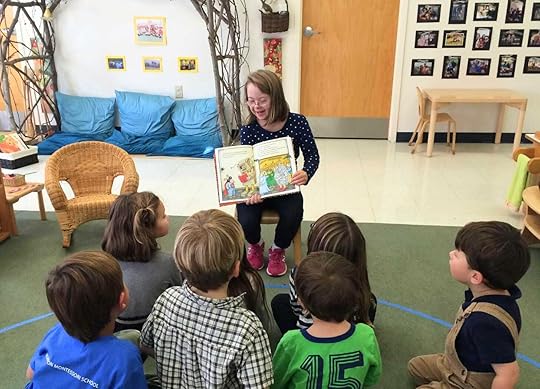 2015
2015Our experience of support and care has helped me see how much vulnerable babies, kids, and adults matter.
The political news of the past few weeks has become personal, because the sudden and comprehensive freeze on USAID spending puts vulnerable kids and adults at immediate risk.
This aid amounts to about one percent of all government spending. It provides food and medicine and clean water, which not only serves our national interest but also demonstrates who and what we value.
What It’s Like on the GroundPenny’s life has connected us to other people with disabilities around the world, including our friends who lead the Special Hope Network, a non-profit that provides community care centers in Lusaka, Zambia for families with intellectually disabled kids. I reached out to Holly Nelson, co-founder of Special Hope, to ask her how the freeze on USAID spending would affect their work. She wrote back that her biggest concern is for mothers who are HIV positive:
“If moms are HIV positive (often due to a philandering husband they had no idea about), and they can’t get ARVs (antiretroviral medications), we will have children with intellectual disabilities who have nowhere to go for safe living. Extended families don’t want to take them due to their special need. We are opening an emergency foster care home this year, but it is meant to only have 6 children, due to the complicated nature of each different child’s disability and the specificity of the needs of each child. I can’t imagine 180 kids at our Centers with parents not healthy enough to care for their children. We are living a potential nightmare here if this decision is carried forward. ”
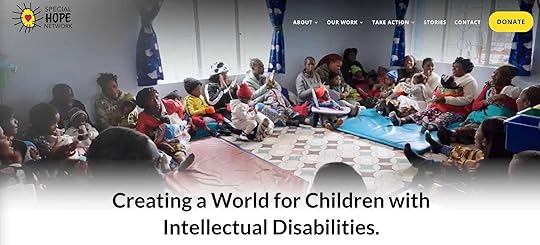
Holly gives us an inside view of just one city in just one country, but the repercussions extend beyond those kids in that city. Right now, 500 million dollars worth of food is in danger of spoiling rather than going to its intended recipients. Christian missionaries across the world rely on grants through USAID to provide anti-malaria medications and clean water.
Caring for Vulnerable HumansUSAID includes waste and graft that should be corrected. But that waste and graft should be corrected with a scalpel, not a sledgehammer. The sledgehammer is falling on the lives of impoverished and vulnerable people across the globe. And let’s be clear: disabled children are often the most vulnerable in any community. Let’s also be clear that caring for human lives is inefficient. We don’t want the most vulnerable to die in the name of efficiency.
Penny is at greater risk for various diseases, injuries, and abuse than our other kids. She’s more medically and socially vulnerable. And she lives within the comforts of affluent American life, protected with health insurance and education and all sorts of government and community supports.
But kids like Penny who live in communities without those supports have just seen a lifeline removed.
As an American, as a mother, as a Christian who follows the one who told us to care, above all else, for “the least of these,” I am heartbroken at the recklessness and cruelty of such hasty action.
How to Respond When We Feel HopelessIt’s easy to feel hopeless and powerless in the face of this suffering. But there are ways to respond to this news—and to other decisions our government is enacting right now—that do make a difference:
Lament.For people of faith, we are invited to cry out in prayer, to demand that God break through the suffering—to stay engaged with the pain even when we can’t see any way that my words or actions or intentions matter. Lament is an act of engaged protest. Of defiant hope. Of insistence that the “least of these” matter and deserve our care.Speak up, sometimes.
The best advice I’ve received is NOT to speak up about all the news stories and executive actions and speeches that seem problematic. Rather, speak up about one or two topics that I can devote enough attention to really understand. For me, that means paying particular attention to issues related to disabled kids and families, both in the United States and around the globe.Have difficult conversations.
Our nation is so polarized, yet most of us still have relationships with people who hold opposing political views. We can chip away at the polarization when we engage opposing views with respect, generosity, curiosity, and a desire to understand, even when we continue to disagree.Call your senator and representative.
Each of our individual voices helps our representatives know what to argue for on behalf of their constituents.Respond instead of react.
When we take a moment to wonder about the deeper issues at stake with any news story that inflames our passions, we can respond with grace and hope instead of reacting with anger and fear.And finally, remember what you are for, not only what you are against.
Pay attention to beauty and goodness and love in this broken world and let that beauty and goodness and love animate your action.
How are you feeling about our current news cycle? What ways have you found to respond? I’d love to hear from you!
MORE WITH AMY JULIA:
Free Resource: From Exclusion to Belonging(a free guide to help you identify and create spaces of belonging and welcome)S8 E10 | The Myth of a Colorblind, Meritocratic Society with David M. BaileyWhy I don’t want to respond to President Trump’s baseless, inaccurate, and unjust accusations about who caused the plane crash into the Potomac
The post Caring for Humans is Slow, Messy, and Beautiful appeared first on Amy Julia Becker.