Amy Julia Becker's Blog, page 9
May 9, 2025
Does Disability Mean Tragedy?
Is disability a tragedy? Is it a gift? What place is there for grief and for joy in this story of disability so many of us are living within our families?
After RFK Jr., the current head of the Department of Health and Human Services, made public remarks in which he called autism a tragedy that destroys families, I reached out to Matthew Mooney, co-founder of 99 Balloons. I contacted him because, on the one hand, I wanted some help naming the problematic thinking behind RFK’s remarks. On the other hand, I wanted some help considering why so many parents of disabled kids might find solace in what he had to say.
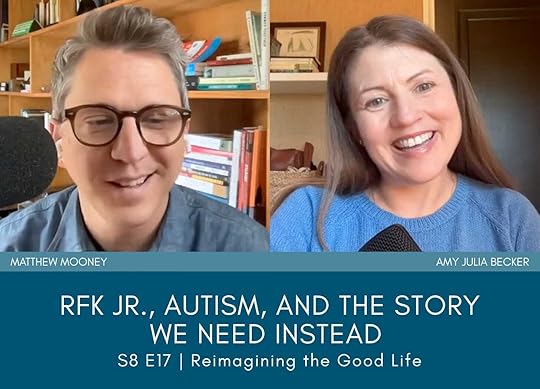
LISTEN OR WATCH:
Apple
 |
Spotify
|
YouTube
|
Spotify
|
YouTube

I read a beautiful essay by Emily May, titled “Kennedy Described My Daughter’s Reality.” She writes:
“[RFK’s] remarks echo the reality and pain of a subset of parents of children with autism who feel left out of much of the conversation around the condition. Many advocacy groups focus so much on acceptance, inclusion and celebrating neurodiversity that it can feel as if they are avoiding uncomfortable truths about children like mine.”
I’ve been thinking about these issues for many years. Will Penny have Down syndrome in heaven? is a question that I asked myself after she was born, and one that many people ask me regularly. I wrote an essay for Vox a few years back about whether or not I would “cure” Penny of Down syndrome if I could. All this pondering, plus the lived experience of a child with an intellectual disability and our introduction to the disability community more broadly, has led me to a few conclusions amid all my ongoing questions:
One, that human brokenness and human limitations are not the same thing.
Two, disability and suffering are not the same thing.
Three, that every human has limitations, brokenness, and possibility.
And, finally, four, that I will never have all the answers to all the questions, which leads me back, as Matt speaks about in this episode, to the relationships at the heart of the matter.
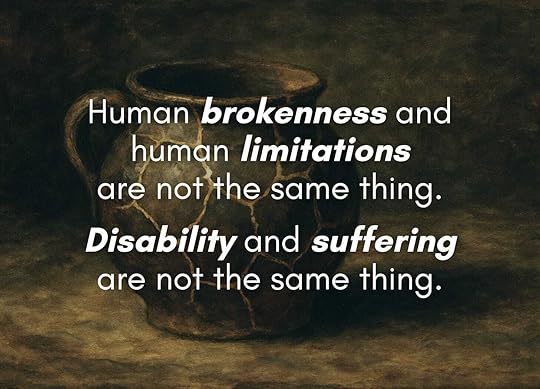
Our approach to disability as a society needs to make space for both lament and celebration, sorrow and joy, grief and embrace. I hope this conversation at least helps us head in that direction. Please listen (or watch) and then share this episode with a friend. And I want to hear from you. What did you think of RFK Jr’s comments? What place do you see for grief and for joy in this story of disability?
Let’s stay in touch. Subscribe to my newsletter to receive weekly reflections that challenge assumptions about the good life, proclaim the inherent belovedness of every human being, and envision a world of belonging where everyone matters. Follow me on Facebook , Instagram , and YouTube and subscribe to my Reimagining the Good Life podcast for conversations with guests centered around disability, faith, and culture.
The post Does Disability Mean Tragedy? appeared first on Amy Julia Becker.


Reimagining Family Life with Disability—In Person!
Not a tragedy. Not alone. Not without hope.
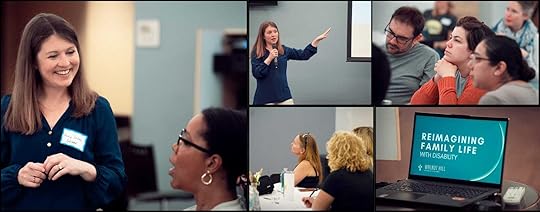
These were the ideas I shared with the families at Walnut Hill Community Church in my first live, in-person Reimagining Family Life with Disability workshop last Saturday.
Our family stories are different. We represented parents of children from six months to 33 years old and with a whole range of disabilities. But all of us were grateful to talk about the truth of who our families are and how we can delight in our children, give and receive support in community, and envision and walk towards a good future.
Thank you, Walnut Hill, for hosting this beautiful morning!
The post Reimagining Family Life with Disability—In Person! appeared first on Amy Julia Becker.
May 6, 2025
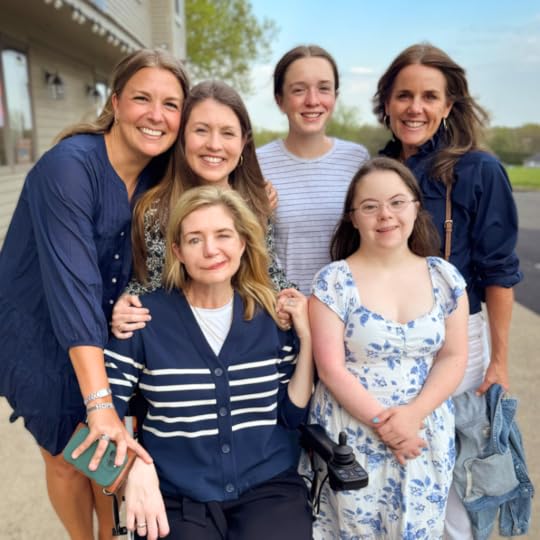
Intergenerational and Interability Friendships
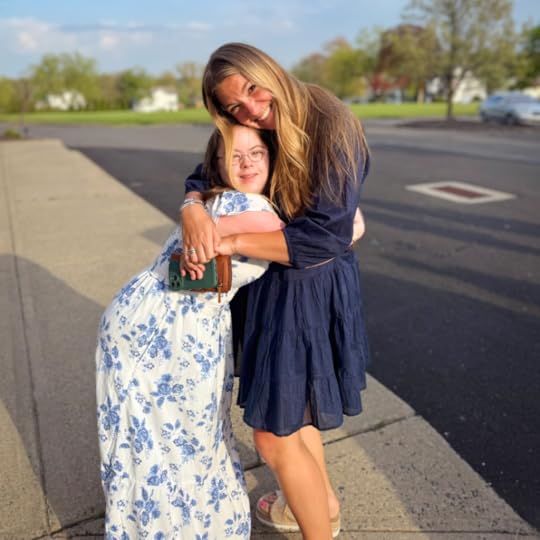
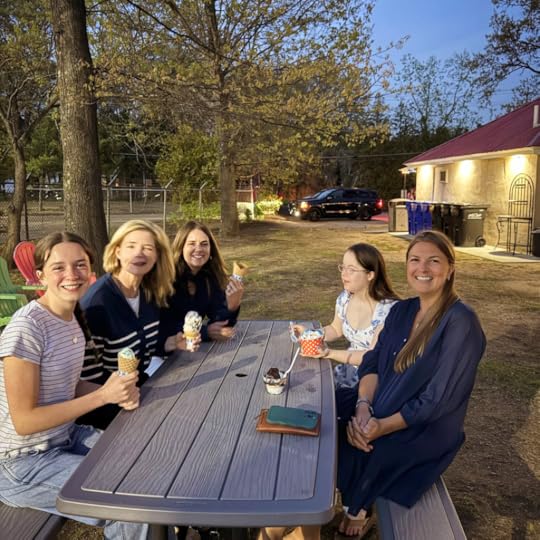
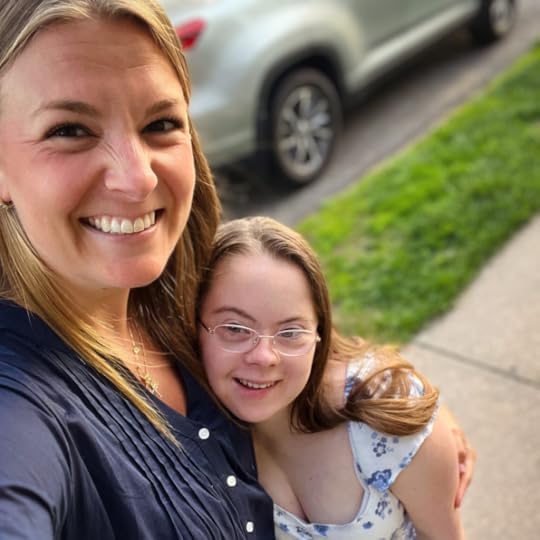
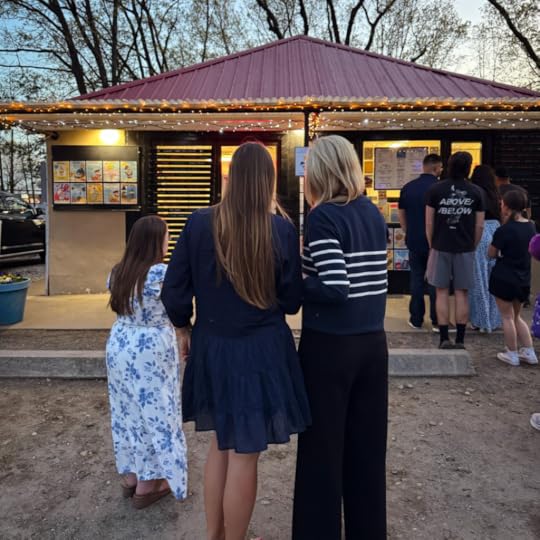
Let’s stay in touch. Subscribe to my newsletter to receive weekly reflections that challenge assumptions about the good life, proclaim the inherent belovedness of every human being, and envision a world of belonging where everyone matters. Follow me on Facebook , Instagram , and YouTube and subscribe to my Reimagining the Good Life podcast for conversations with guests centered around disability, faith, and culture.
The post Intergenerational and Interability Friendships appeared first on Amy Julia Becker.
May 2, 2025
The Next Step Matters
I used to hate setting goals for Penny. It felt like I was measuring her worth based on how quickly she achieved something I arbitrarily decided for her. I wanted to get off the treadmill of measuring worth by achievement.
In time, I started to see it differently.
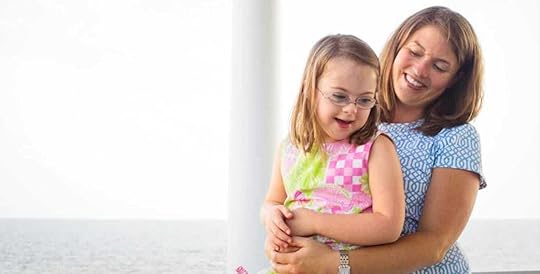 2012Now I see goal setting—for her and for me—as a statement of belief that our lives have value and purpose, that we are headed somewhere good.
Earlier this week, I sat with Penny, who now attends college, in a PPT (Planning and Placement Team) meeting. This annual meeting includes all the teachers, therapists, and other administrators responsible for implementing Penny’s IEP (Individualized Education Plan). We gather to discuss her progress and goals for the future. This year, Penny took the lead. She articulated her desire to take a writing class and to work on initiating conversations. Other team members remarked on the ways she’s grown this year and the areas where she can keep learning. I mentioned Penny could use some help finding a summer job.
For years, even once I became hopeful about it, this type of planning felt really overwhelming. I still get scared about Penny’s future—will she be able to live outside of our home? Should we petition for guardianship? How much should we push her to get a job?
You Need to Know A, B, and ZAmidst the swirling questions, I bring myself back to the podcast I’ve mentioned here before in which James Clear and Peter Attia talked about how, when setting goals, all you need to know is “A, B, and Z.” You need to know A, which is to say, you need to know where you are right now. You need to know Z, your ultimate desired destination. Other than that, all you need to know is B, the next step to take. (And then you figure out C, and D, and on down the line, keeping Z in view.)
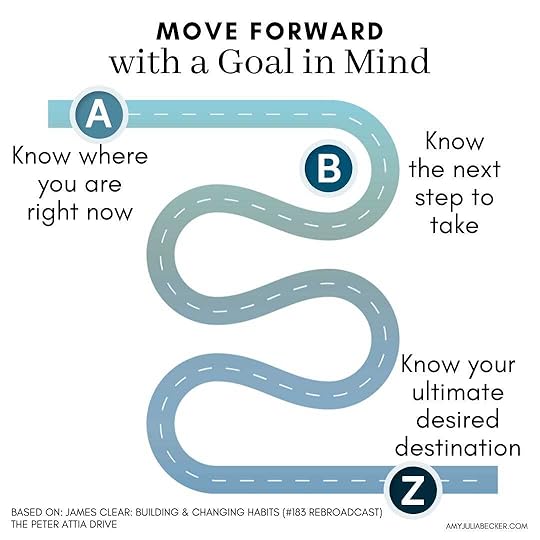
Penny knows her A, B, and Z. She registered for an English class. We received a form from school about job placement possibilities. For today, that’s what we need.
There are plenty of goals I never come close to achieving, and the same is true for Penny. I still see those goals as statements of hope, as signposts that help us to imagine a good future.
So, what’s your A, your Z, and your B—for yourself, or your child? Where are you? What do you hope for? And what’s the one next step you want to take in that direction?
Let’s stay in touch. Subscribe to my newsletter to receive weekly reflections that challenge assumptions about the good life, proclaim the inherent belovedness of every human being, and envision a world of belonging where everyone matters. Follow me on Facebook , Instagram , and YouTube and subscribe to my Reimagining the Good Life podcast for conversations with guests centered around disability, faith, and culture.
The post The Next Step Matters appeared first on Amy Julia Becker.
April 30, 2025
April 2025 Favorites
Favorite books, essays, podcasts episodes, and more that I enjoyed in the month of April, plus recent cultural news that I’m paying attention to…
Books MEDITATIONS FOR MORTALS BY OLIVER BURKEMAN“We… feel that we need to get things done not only to achieve certain ends, or to meet our basic responsibilities to others, but because it’s a cosmic debt we’ve somehow incurred in exchange for being alive.”
It gobsmacks me every time. That we don’t need to earn the right to be alive. We don’t need to prove ourselves worthy of existence. In fact, the very reality of our existence is itself an affirmation. I just finished Oliver Burkeman’s Meditations for Mortals, and I’m grateful for the reminder that accepting our limits as humans opens up so many possibilities for humility, love, and grace.
NOVEL: TRUE BIZ BY SARA NOVICI enjoyed the story and learned a lot while reading this novel set in a boarding school for the Deaf. I didn’t know, for example, that ASL (American Sign Language) is exactly that: American Sign Language. In other words, Deaf members of other cultures have developed their own sign languages too. I’m kind of amazed by my ignorance about facts like this one, as well as the history of Deaf culture in the United States. The characters and plot are interesting and keep the book moving, but I also loved being invited into a different way of being in the world and learning so much.
NOVEL: YOU ARE HERE BY DAVID NICHOLLSThis novel is a lovely love story set in the English countryside. I don’t even know how to say more about it except that the characters are just so real and likeable and their story is carried along through beautiful writing.
MEMOIR: REBECCA SUE: A SISTER’S REFLECTIONS ON DISABILITY, FAITH, AND LOVE BY KATHLEEN NORRISAs I wrote in my endorsement for this new memoir:
DocumentaryPBS: CHANGE, NOT CHARITY: THE AMERICANS WITH DISABILITIES ACT“Kathleen Norris has always written with embodied, honest, human faith. In Rebecca Sue, Norris brings her insight into the human condition to her relationship with her disabled younger sister. The result is an invitation for all readers to discover their own humanity and to glimpse the hidden hand of God in all things.”
This 53-minute documentary tells the story of how the ADA (Americans with Disabilities Act) was passed in 1990. There’s so much to say about this film, and I highly recommend it. It feels especially helpful right now in demonstrating how much the legislation around disability changes the place of the disabled within our society.
PodcastsSERIES: THE EXODUS WAYI’ve been reading through the Book of Exodus during this season of Lent, while also listening to the Bible Project’s recent podcast episodes about the exodus story as a pattern that repeats throughout both the Hebrew Bible and the Christian story. There’s so much I could say here, but the thing that has struck me the most is the way I tend to think of the story of the exodus as a story that moves from slavery to freedom, from oppression to the promised land. I skip the wilderness. I skip the desert, where the Israelites wandered for 40 years. But this time, I’m starting to see the wilderness as a very intentional—and even good—part of God’s plan for the people. It’s the place where they learn how to trust in God’s abundance. It’s the place where they receive the guidance of the Ten Commandments. It’s the place where they get scared and grumble and forget what they believe over and over again. Kind of like me. Most of us live in between the oppression of Pharaoh and the milk and honey of the promised land, and I’m starting to be grateful for life in the wilderness and the glimpses of God’s glory that I get to see here.
EPISODE: ‘OUR KIDS ARE THE LEAST FLOURISHING GENERATION WE KNOW OF’Many of you have read Jonathan Haidt’s Anxious Generation, or at least you are familiar with his arguments about the problems of a phone-based childhood. I recommend this conversation with Ezra Klein because Klein pushed Haidt on a number of points, including the problems adults have with these devices and also the problem all of us face—not just the kids—when it comes to attention and living a good life.
EPISODE: 213: LESSONS FROM NETFLIX’S “ADOLESCENCE”I have not watched the show Adolescence in its entirety, but Marilee and her friends are all talking about this hard story of a teenage boy accused of murdering a female classmate. The show has created buzz and sparked conversation because of the role of social media in the story and in the lives of our children. This podcast conversation with therapist Lisa Damour is a helpful guide to the show and why it matters. (And if you aren’t going to take six hours to watch the show, at least these 30 minutes will help you know what it’s about and why parents and kids are talking about it.)
EPISODE: THE BLESSING OF LIMITATIONS WITH KELLY KAPICI love the way Kelly Kapic reminds us of the gifts of our limitations.
EPISODE 94: YOU’RE MORE THAN YOUR MIND WITH DR. JOHN SWINTONThis episode is full of such rich, deep, pastoral goodness for any of us wrestling with what it means to be humans with vulnerable bodies and minds living in time. I think my very favorite moment was John Swinton’s comment that we think our stories construct our identities when actually: “It’s not so much our story that makes us who we are. It’s God’s story.” {GoodHard Story with Katherine Wolf}
EPISODE 294: WHY DOWN SYNDROME ISN’T SOMETHING TO “CURE”I so appreciated this thoughtful conversation about what we are talking about when we talk about a “cure” for Down syndrome. And I can’t stop thinking about Heather Avis’ words at the end—that the hope is not for a cure for Down syndrome. Rather, our kids with Down syndrome are what bring hope. {Lucky Few podcast}
EPISODE: MAKING AS A SPIRITUAL PRACTICE WITH MAKOTO FUJIMURAThis beautiful Trinity Forum conversation got me thinking about how much we need to pay attention to beauty and goodness and love and truth right now, not as an escape or alternative to attending to the dehumanizing forces all around, but as a reason to hold onto hope and as a reason to engage those very forces.
EssaysTHE ATLANTIC: “WHAT THE COMFORT CLASS DOESN’T GET”I found this essay by Xochitl Gonzalez for the Atlantic really helpful in understanding the social divides we are experiencing in America right now: What the Comfort Class Doesn’t Get.
NYT: THE PANDEMIC IS NOT THE ONLY REASON U.S. STUDENTS ARE LOSING GROUNDI appreciated this exploration of why the kids who are struggling with math and reading in school aren’t seeing any meaningful improvements. (It’s more nuanced than Covid or smartphones, and it doesn’t have to be this way.)
NPR: DOGE ABRUPTLY CUT A PROGRAM FOR TEENS WITH DISABILITIES. THIS STUDENT IS ‘DEVASTATED’Students with disabilities deserve support in imagining and taking steps towards a good future, but the Trump administration is cutting off funding for programs that provide such support. For the past eight years, we’ve been working with our daughter Penny on a plan for her future that includes going to college, having a job, and living with friends. Step by step, she’s moving towards those goals. And there’s no way she would be taking those steps without a web of support, including programs designed to help her with the transition from high school to employment. Penny’s program remains intact, but others like it are being cut.
THE ATLANTIC: THE BIGGEST SURPRISE ABOUT PARENTING WITH A DISABILITYWhen we see disability as “brokenness,” we miss the ways it confounds our categories. Jessica Slice writes beautifully about how being disabled prepared her well for motherhood:
NYT: WERE YOU RAISED IN A CHURCH THAT FEARS THE WORLD OR LOVES ITS NEIGHBORS?“I now believe that being disabled and learning from disability culture both prepared me for the challenges of early parenthood and ultimately set me up to be a more creative and flexible caregiver.”
I love the distinction David French makes between “fear-the world” churches and “love-your-neighbor” churches.
NYT: AMERICANS HAVEN’T FOUND A SATISFYING ALTERNATIVE TO RELIGIONAs more and more researchers tell us that spirituality and religion are key to human flourishing, I’m wondering if (and hopeful that) churches will develop compelling ways to welcome the “nones”:
NYT: “ KENNEDY DESCRIBED MY DAUGHTER’S REALITY ”“America’s secularization was an immense social transformation. Has it left us better off? People are unhappier than they’ve ever been and the country is in an epidemic of loneliness. It’s not just secularism that’s to blame, but those without religious affiliation in particular rank lower on key metrics of well-being. They feel less connected to others, less spiritually at peace and they experience less awe and gratitude regularly.”
I wrote a response to RFK Jr’s remarks about autism in which I said he misunderstands autism, disability, and what it means to be human. I continue to believe that rhetoric like his perpetuates false messages about disability that diminish and devalue any number of people who do not conform to “the norm.” Disabled lives—including those that exist far outside the norm—include love and purpose and beauty and joy and all sorts of possibility. But there’s another angle on the story—of autism, of disability, of humanity—that needs to be told. That’s the angle that includes hardship and suffering and pain and lament. This essay by Emily May captures the deep sadness and love experienced by parents who desperately want to help their children who have been diagnosed with autism.
Organization SupportNowSupportNow is a website that allows people experiencing some sort of need to provide updates and receive help of all sorts. It’s kind of like Meal Train, Gofundme, and Caringbridge all in one, but with better tech and also more options. For example, in addition to bringing a meal, receiving a health update, or helping with financial needs, people could sign up to give one of your kids a ride to practice or walk a dog or something like that.
Also on the site, they have a free database of grants for families who need support. You can search it by state and diagnosis and see whether anything is available.
For any family in need of support, this site has lower fees associated with it, provides a more comprehensive platform than any other site I know of, and combines more opportunities for support.
Get my favorites delivered to your inbox each month!
Subscribe here!
More Favorites and AJB Recommends
If you use a link from here to purchase something I recommend, it sometimes earns me a small commission, which enables me to continue the work I do here. So thank you! (As an Amazon Associate, I earn from qualifying purchases.)
The post April 2025 Favorites appeared first on Amy Julia Becker.
April 29, 2025
Formation in the Wilderness
One of the things Cara and I talk about in this podcast episode is an oversimplified version of Christianity. I’ve been reading through Exodus lately, and I’ve realized how often I think of God’s work in our lives through an oversimplified perspective. I think about the Israelites in Egypt, and then I skip ahead to the Promised Land.
If I give any thought at all to their 40 years in the desert, I tend to think of those years as unfortunate. But those 40 years were the years of formation. They were the years of depending on God for manna in the desert, of forming a social order, of receiving the law that would guide them into life, of seeing God’s glory. Those years were intentional and good. So much of our lives here on earth are years in the wilderness, and we deceive ourselves—and disappoint ourselves—if we expect to skip from oppression to the promised land.
I’ve been so grateful to think of the goodness and purpose embedded within even a time of wandering in the wilderness.
Let’s stay in touch. Subscribe to my newsletter to receive weekly reflections that challenge assumptions about the good life, proclaim the inherent belovedness of every human being, and envision a world of belonging where everyone matters. Follow me on Facebook , Instagram , and YouTube and subscribe to my Reimagining the Good Life podcast for conversations with guests centered around disability, faith, and culture.
The post Formation in the Wilderness appeared first on Amy Julia Becker.
April 24, 2025
Church Camp: Belonging, Betrayal, and New Beginnings
Roasted marshmallows, campfire stories, shaving cream battles—for some of us, Christian summer camp is where we felt most at home. But for campers at white Evangelical church camps in particular, camp was also often the place to inherit an image of God—and of each other—that was incomplete at best and toxic at worst. My friend and author Cara Meredith explores these tensions in her latest book, Church Camp: Bad Skits, Cry Night, and How White Evangelicalism Betrayed a Generation. She joined me on the podcast to talk through:
Personal experiences of church camp, including joy, exclusion, and betrayalComplexities of faith and belongingEmotional manipulationReconstructing faithDeciding if church camp is right for your child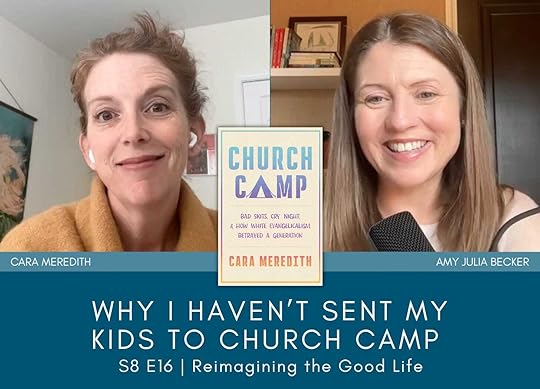
LISTEN OR WATCH:
Apple
|
Spotify
|
YouTube
Early on in her book, Cara describes herself as “the girl who once called church camp the greatest place on earth, who is now the woman who doesn’t know if she can send her own kids there.” This statement prompted us to explore what we want to pass along to our children when it comes to matters of faith, and how we want to do that:
Faith Begins with BelongingCara wants her children to know that “they are loved beyond a shadow of a doubt by God for exactly who they are as they are.” It is a gift to our children to create a foundation of unconditional love and belonging, not rooted in fear or performance. In her words, “I want belonging that is built on nothing except for the simple fact that God loves them.”There’s Room for Doubt
Rather than shielding her kids from questions, Cara embraces doubt as a vital part of a healthy, growing faith. She says, “They may have big doubts and questions, and yet that is also exactly what I want them to have.” Questions and uncertainty aren’t failures of faith; they’re an essential part of forming a meaningful spiritual life.The Sacredness of the Ordinary
Church camp is full of spectacular moments, but quiet rhythms of faith—receiving Communion, hearing a parent’s voice in worship—can be powerful spiritual moments. They affirm that deep faith is often formed not in emotional highs, but in everyday acts of love and presence. God is doing very ordinary work in our very ordinary lives.
I hope you’ll listen (or watch) and then share this episode with a friend. And I want to hear from you. Did you attend church camp as a kid? What was your experience?
Let’s stay in touch. Subscribe to my newsletter to receive weekly reflections that challenge assumptions about the good life, proclaim the inherent belovedness of every human being, and envision a world of belonging where everyone matters. Follow me on Facebook , Instagram , and YouTube and subscribe to my Reimagining the Good Life podcast for conversations with guests centered around disability, faith, and culture.
The post Church Camp: Belonging, Betrayal, and New Beginnings appeared first on Amy Julia Becker.
April 22, 2025
S8 E16 | Why I Haven’t Sent My Kids to Church Camp with Cara Meredith
For some of us, Christian summer camp is where we felt most at home. But for campers at white Evangelical church camps in particular, camp was also often the place to inherit an image of God—and of each other—that was incomplete at best and toxic at worst. This is how author Cara Meredith introduces her latest book, Church Camp: Bad Skits, Cry Night, and How White Evangelicalism Betrayed a Generation. She joins Amy Julia Becker to talk about:
Personal experiences of church camp, including joy, exclusion, and betrayalComplexities of faith and belongingEmotional manipulationReconstructing faithDeciding if church camp is right for your childWorkshop with Amy Julia: Reimagining Family Life With Disability
Free resource: 5 Ways to Experience God’s Love and Practice Peace
SHOW NOTESMENTIONED IN THIS EPISODE:
Amy Julia’s Live, In-Person Workshop on May 3: Reimagining Family Life with DisabilityFree resource: 5 Ways to Experience God’s Love and Practice Peace Surprised by Hope: Rethinking Heaven, the Resurrection, and the Mission of the Church by N.T. WrightWATCH this conversation on YouTube by clicking here.
ABOUT:
Cara Meredith is a speaker, public theologian, and development director who found home at a church camp in the Santa Cruz Mountains. After serving in various roles, she continued as a speaker for two decades at camps up and down the West Coast. With a master of theology (Fuller Seminary) and a background in education and nonprofit work, she is also the author of The Color of Life. Her writing has been featured in national media outlets such as The Oregonian, The New York Times, The Christian Century, and Christianity Today, among others. She lives with her family in Oakland, California. CONNECT with Cara on her website (carameredith.com) or on Facebook and Instagram.
___
Let’s stay in touch. Subscribe to my newsletter to receive weekly reflections that challenge assumptions about the good life, proclaim the inherent belovedness of every human being, and envision a world of belonging where everyone matters.
TRANSCRIPTNote: This transcript is automatically generated and does contain errors. Please check the corresponding audio before quoting in print.
Amy Julia (00:05)
Amy Julia Becker, this is Reimagining the Good Life, a podcast about challenging the assumptions about what makes life good, proclaiming the inherent belovedness of every human being, and envisioning a world of belonging where everyone matters. For some of us, Christian summer camp is where we felt most at home when we were kids. But for campers at white evangelical church camps in particular, camp also might have been the place we inherited at worst a toxic
and at best an incomplete image of God and of each other. Author, speaker, public theologian, Cara Meredith joins me today to talk about her new book, Church Camp, Bad Skits, Cry Night, and How White Evangelicalism Betrayed a Generation. We explore our own experiences of Church Camp. We’re going to talk about the way we talk about Christianity, the way we pass our faith along to others, including our children. We are going to talk about reconstructing faith.
and deciding whether church camp is the right thing for your own child. If you are indeed like I am, someone who might be thinking about sending your kids to camp now in 2025. I also wanna mention before I get to this conversation, I have an in-person workshop, Reimagining Family Life with Disability. That’s happening in Bethel, Connecticut on May 3rd. And we will provide a link in the show notes and would love to see you there.
I’m also providing a link in the show notes to a free resource called Five Ways to Experience God’s Love. One of the things that has been a tremendous gift to me as an adult, which relates to this conversation with Cara Meredith, has been recognizing the love that God has for each and every one of us as beloved creatures. And I would love for you to have some ways to experience that as well. So please check the link in the show notes for a free resource if that resonates with you.
And now to my conversation with Cara Meredith.
Tara Meredith, welcome to Reimagining the Good Life.
Cara (02:11)
Amy Julia Becker, so excited to be here.
Amy Julia (02:15)
So I should probably tell listeners that Cara and I are friends. are both actual friends, but also like writing friends and have kind of grown up together in this world of thinking about faith and writing and culture, race and privilege, all sorts of good topics. And we are here today because Cara has written a new book. This title of this book, I’m just going to start with the title. We’ll get to the subtitle in a minute. Title is Church Camp.
And Cara, thought maybe this could be like a way to introduce yourself to the audience by talking about your experience, like what is church camp, but also your experience with church camp, like your history with it.
Cara (02:56)
Yes.
Well, church camp and this particular facet of church camp, which we’ll talk more about too, but this particular facet of church camp, which was within white evangelical or evangelical church camps, was something I spent a long, good, while, good part of my life in. I started going to camp when I was nine years old in 1988. So listeners can do the math there.
And I stayed really for the next 25, almost 30 years, not just as a camper, but then I started working at camps. I was a volunteer and then I was a summer staffer, meaning that I was a ropes course instructor for the summer, or I was the program director.
And then after I finished college, I became a high school English teacher, but I still wanted to stay at camp, although I didn’t want to necessarily be there for the whole summer. So then I became a camp speaker. And that really took up the last 15, almost 20 years of my life in camping. I still had other jobs. I was never a full-time year-round employee, but…
I spent my summers as a camp speaker, going to different denominational and non-denominational camps, as well as Young Life camps and speaking. And that’s what I did. So those were some of my identities in the church camp world of which hundreds of thousands of children and perhaps some listeners as well, spend their summers now. It is a huge part of American culture, camping in general, but religious camps in particular are a huge part of our culture at large.
Amy Julia (04:39)
So let’s start with what you love about church camp because obviously there was something that drew you back over and over and over again well into your adult years and yet this book also is uncovering some of the reasons that you now have a lot of hesitation about church camp. So, but I thought we’d start with just what you love. Like what, kept you going?
Cara (04:58)
Yeah. As I say in the book, camp is one of the dearest places to me. It is one of the most formative places for who I am now. I would not be who I am if it weren’t for church camp. So many of my best friends came from that place. And for me, church camp
was a place of belonging, but it was a place of identity. It was a place of fun and silliness and goofiness. It was campy. It was full of God and spirituality and Jesus and was just the most beautiful place that I felt like I could be my silliest, goofiest, most spiritual self as well. So it was a place that rewarded me as an extrovert.
It was a place that I thrived and it was a place that I found a home in for a long time. I didn’t always love the food. Sometimes camp food is good. Sometimes it’s bad. I loved the songs. One thing I lamented in this book, I wanted to start every chapter with a song, but I am not a millionaire and I cannot afford the rights to so many of the songs. But singing, I mean, that was something we did.
throughout, I mean, was like we started the day singing and we ended the day singing. So those are some of the things I loved. And I hope that readers, when they read it, they also hold the tension of the both-and, including a lot of those positive parts.
Amy Julia (06:33)
Yeah, I would imagine for some readers, this book is going to be like a big relief because they have are going to feel seen and named in terms of both what you said. Like, yeah, that was a place where I felt a lot of belonging and that was a place where I felt whether it was exclusion or like this was oversimplified or I felt manipulated or whatever else. I think there’ll be others, though, who because of just having really, really fond memories of church camp who might be like.
I don’t understand like what is going on here because then this takes us to the subtitle. The subtitle is, so we’ve got titled Church Camp, subtitled Bad Skits, Cry Night, and How White Evangelicalism Betrayed a Generation. So obviously there’s some things that you feel, you know, maybe you don’t love about Church Camp. And I think that word betrayal might be a good one. And I wanted to ask if you could talk about like what…
What do you see as betrayal embedded within church camp, but also like that word in particular, because there’s a deep emotion underneath the word betrayal, at least in my understanding of it. And it’s not, again, it’s not just like a rational critique. It’s like a heartfelt, really hard thing to feel betrayed. I don’t know that we can be betrayed by someone or something that we don’t already love. So.
Could you just speak about the subtitle in general, especially that idea of betrayal?
Cara (08:00)
Yeah, we went back and forth on the subtitle a lot. And I will say just from the outset, before I get to the betrayal piece, there is a lot in the subtitle. I wanted it to convey both a lightheartedness and a heaviness, because I think that’s actually part of the reality, not only of this conversation, but of the book and of paradox as a whole. So you have bad skits, which are so often a
part of this campy environment. You have Cry Night, which I unpack in the book that was an almost universal experience for everyone that I interviewed. I interviewed almost 50 people for the book and whether it was called Cry Night or some other name, there was always some variation of that. And then you have again how white evangelicalism betrayed a generation. And I love how you just defined it in saying that you can’t necessarily have
a betrayal unless it really is of your heart. And so for me, when I think about that betrayal, there’s a betrayal that happens or happened in that happens now, certainly, but also happened then not only to a number of people, but also to the institution as a whole. So a lot of this book was birthed out of the harm that I saw happen and or starting to happen that really had been there all along.
but that was happening to three people groups in particular, to women, to people of color, and to the LGBTQ community. At the place in which there should be the most belonging, there was oftentimes exclusion. And it happened in different ways to, again, the aforementioned groups. But to me, that is a betrayal of who God is. It’s a betrayal of the person of Christ that is so often proclaimed.
from the front of the stage that children, campers, kids, humans in general are being invited to give their lives to and walk alongside to put this invitation to belonging out there, which is an invitation of the heart. And then to say, but you can’t actually belong, and I’m putting my hand up here, but you can’t actually belong unless you believe these things, unless you are this thing. So I think that’s part of where the betrayal
happens or starts for me when I think about the book.
Amy Julia (10:23)
Can you give like a couple of examples, maybe a story or two, either from your own experience or from some of the interviews you did? You mentioned three different groups, so whether with one of those groups or all three, I just would love to kind of flesh out a little bit of what you’re saying there.
Cara (10:37)
Yeah, I mean, I can go down the list. So for women, this was in particular in chapter two. The reality is that camps, a lot of these camps, as they fall under the evangelical umbrella, oftentimes there’s a message that’s proclaimed from the front and it’s an invitation to believe in or to follow the figure of God. So we might introduce people to the Trinity.
campers to the Trinity. But the way in which God is proclaimed is 100 % male, is oftentimes solely as a father figure. And for me, as someone who, I do still believe in God. I do still, I am still part of the Christian tradition. I’m on the other side of the pond now as an Episcopalian, but I do still find a home in the Christian church.
I also believe that God is not nor should God solely be constructed by male terminologies, that it actually does harm. So in a camp setting, if we are limiting God to this one particular facet, we’re not only limiting who God is, the image or idea or person of God, but we’re also then limiting the people, the listeners who are hearing it. So we’re…
we’re effectively saying there’s only those who are most accepted in this environment are those who are like God, which is to say men or males. think that’s where we get patriarchal values are very much a part of it. We could also look at complementarianism that denotes certain roles for men and women, for boys and girls, those who are most celebrated, most valued, and those who are then not. And it also really plays into
purity culture. That comes out quite a bit, which purity culture is hugely detrimental to women in particular because of what women or girls are asked to do.
Amy Julia (12:40)
Some of my listeners, I’m guessing, don’t know what purity culture is. And so there some who are going to be like, ding, ding, ding, ding, ding, and others who are like, what is she talking about? So you just say a little bit there as well. And again, for anyone who’s interested, you’ve got more on all of these in the book. But.
Cara (12:56)
Well, let me just read you a paragraph in the book if that’s okay. Whenever purity culture rears its supposedly innocent blemish free head, women are made to feel responsible for the sexual thoughts, feelings and choices men make. And so must dress, walk and talk in just the right way so as not to inspire sexual thoughts, feelings and actions in them. So you have within this purity culture, a movement that really
came into being within evangelicalism in the 90s. There’s an invitation into purity, but there’s an invitation that comes at the expense of women. And it shows up at an in camp. I think those are, I think that’s just within the women’s side when it comes to queer or LGBTQ identifying people.
because camps are religious institutions, they’re effectively allowed to discriminate. And so they can discriminate both against campers and against staff members. So there were multiple instances of people that I interviewed and of stories certainly that I found online, but of queer identifying people who were kicked out, who were not allowed to come. And then when it comes to people of color, the reality is that church camps were…
started, church camps started in the late 19th century. You had these movements of getting young white men out of cities, out of urban environments, into the woods. And the reality of that happening 150 years ago, the reality of that is that church, church camps have continued, religious camps have continued to benefit people who are white. And even though
I would say almost universally, most church camps have policies that do not allow discrimination toward people of color. This particular facet of the church camp environment, which is not to say camps overall, but within religious Christian camping, nearly 85 % serve and or are served by those who identify as white. And to me, when I look at that, that shows us that there’s something that’s
that’s awry, that’s off a little bit. And that’s not even to say, that’s not even to bring in some of the stories of racism and discrimination that are oftentimes experienced by people of color in these environments.
Amy Julia (15:27)
Yeah, so there’s all of you know, again all of those things that Are both in terms of a history as well as a more recent lived reality might go into that idea of betrayal because of the other realities of christianity as a religion that says Love is at the core Everyone belongs Welcome, welcome, welcome. And honestly, I think church camp in particular is trying
to at least my understanding of it, provide a pretty basic message that is meant to be accessible to people who have not heard about this, what is called good news about Jesus before. So that was one of my questions because I think this is, guess, backing up in the subtitle to the cry night idea, because one of the aspects of your book that is laced throughout, but also I talked to some other people who’ve.
had church camp experiences and asked them about this? Like, did you feel manipulated essentially by the way the message was conveyed? I mean, again, my very handful of people I happened to talk to were like, yeah, absolutely. And that I will say, as someone who went to church camp, I did not have the experience of emotional manipulation, but I do think that is a common one. So I’m curious about that experience, I guess, but also about how we…
do explain the Christian faith in a way that holds onto the simplicity, but also like a deeper nuanced truth or invitation. So I’m curious just how you think about, you know, the way your book is structured is like this basic message of, you know, God, sin, Jesus, the cross, the resurrection, the Holy Spirit, or how, you know, some formula essentially of like how to get to know the basics of Christianity. And it’s not a bad thing to give people a primer on like,
Here’s what you need to know. And yet that can also kind of go awry. So how do we talk about Christianity or explain the Christian faith in a way that is both simple and true?
Cara (17:30)
Yeah, I’ll start with cry night and then I’ll I’ll get to that point. this was one of the so I think we have to go back to the origins. So I talk about this in the very beginning of the book in Chapter one, the reality for so many church camps across denominations and those that identify as non denominational and parachurch organizations. The reality under this umbrella of white evangelicalism is that the point of church camp is to convert.
The point of church camp is to see conversion. And that is not something I would have stated or even believed 20 years ago when I was deep in the trenches of it. I would have said, well, we’re introducing kids to Jesus. And of course, we would love to see them come to know Christ on the other side. But the reality is that everything that is preached from the front, everything that everyone else does is to complement this idea of
introducing and hopefully converting children or campers or humans to the Christian faith. This is what donors are most attracted to. This is what donors give to. This is why camps count numbers at the end of every week and then give those numbers to donors at the end of a summer camping season because that’s what they give their dollars to. So in that you have this idea of how do we get from point A to point B or maybe it’s point A to point Z.
which is to say to conversion. If we want to get to conversion, then we have to have a message that will convert. And so there were so many folks that I talked to. And this again was, I was like, I just interviewing the same people? But I wasn’t. I was interviewing folks from a wide range of traditions, those who saw absolutely nothing wrong with church camp and those who wanted to burn it all down.
those who had incredible experiences, those who held the tension of paradox. And within this, there were so many folks who just said, well, the reason why this universal message that is not only of Christianity, I would say, but of evangelical versions of Christianity was preached is because it is the one that works. that’s where you have Bill Bright, 1956, Campus Crusade for Christ. He introduces
or creates what’s called the four spiritual laws that I’m sure at least folks from more evangelical denominations will remember. But it’s when you then have the tract that was handed out and you had God on one side and man, it was never a woman, but man on the other side of two cliffs and how desperately they wanted to get together, but sin stood in the way. And the only way that sin could be remedied, that God and man could be together was through Jesus on the
And so with that, the way that story was also told, and the way I would say that it was made most convincing in order to convert was through a theory called penal substitutionary atonement that errs heavily on the side of a wrathful, angry God that needs to be appeased for the death of his son. And from that, that’s where you oftentimes get
what some may now see as emotional manipulation, as group think ideologies, as emotionality at large, where for kids or campers at a week at camp, we’re going to use this particular theory to introduce Jesus because we know also that it’s gonna have a response. But from that, I think there’s scarring that happens along the way.
I think that it is not, to then get to the second half of your question, the only way to introduce God. So for those who might be theology nerds, and I know you and I can be theology nerds. Yeah. But for me, I remember one of the most eye-opening times in, I don’t even remember what theology class it was. It was probably a systematic theology course, but was realizing or learning that there was more than one atonement theory.
Amy Julia (21:26)
Definitely in that camp.
Cara (21:45)
There was more than one way to describe, there are literally hundreds, if not thousands of ways to describe what happened or to theorize about what happened to Jesus on the cross. But within evangelicalism, the one that is most readily employed is the one that works and is the one that gets the most converts, which is penal substitutionary atonement. And I would argue it’s not the only way.
So I think as far as what we can do or what we can say, I think first we just say, well, what would it look like instead to not have that need to count heads of those who dedicated their lives or rededicated their lives or said they would get baptized or whatever it was? What if we just let God be God in an environment like this? There’s so much power. You and I spend a lot of time outdoors. Half the times that we speak to one another.
One of us, we’re walking, we’re walking outside and we are basking in nature. And to me, there’s, when we do that and when we let ourselves be enveloped by the beauty of that which is around us, which Christians might call creation, we don’t actually need to do very much because God is already doing the doing. So what would it mean in the same way to simply let kids
go and be in these spaces in which they are separated from screens, in which we are just opening up this place, which is already so full of beauty, and saying, just go and encounter God. I think then it doesn’t have to be about convincing. It can simply be about giving the message. What would it look like instead to simply say from the front of the stage, God loves you. You are God’s beloved every single night.
What would it look like to employ a Christus Victor, right? That’s what the Lutherans, what ELCA tradition, that’s what they believe in. They’re just like, Christ is the Victor and that’s all that matters. And here it is. So there are so many different ways that the gospel can be presented and it doesn’t have to be presented in a way that makes kids or campers feel horrible about themselves. Like they killed Jesus and the only way they can right this wrong is to
pay back the debt that God paid for them. There are other ways.
Amy Julia (24:13)
Yeah, I remember actually it’s funny because again, I had pretty positive experiences with church camp, although again, in a different kind of realm of the church on some level than what you’re talking about. And I remember one person saying to me, know, there are multiple ways in which we can come to understand God’s love for us. And sometimes that is through the path of sin. Like we recognize our own.
shortcomings and then we realize God loves us and that’s kind of this overwhelming, I can’t believe it and I’m so grateful. The other way is just to be like, God loves me? Well, that’s wonderful. How great. And he wasn’t saying, and therefore, if you feel that way, you don’t have any questions about sin in your life. But also that there’s not, it was the first time, I guess, that I was kind of introduced to that idea of there are multiple ways in which we come to understand truth about who God is.
And I think the other thing that I appreciate about and appreciated when I first learned to your point that like there are multiple ways to understand what happened on the cross is that actually part of that is because God doesn’t work in formulaic ways. We can’t put the work of God in a box or in a tract or in a set of laws and that there’s actually a mystery to that. And so we can with humility give lots of different explanations and say,
just as Jesus did with parables. Well, here’s one way to think about it. And they’re all kind of giving you angles on something that is like deep and mysterious, but it doesn’t mean that they are like, that God is therefore completely inscrutable or unknowable, but actually just that there’s a real multiplicity and mysterious expansiveness to who God is. And that, think, as you said, it’s not that that could not be presented in some compelling invitational way.
but it would be a lot harder to, maybe it would be harder to mass produce, to say, here’s what I need you to do, week after week and day after day, because it’s under just a bigger umbrella. And I wonder, maybe this gets to our next question. So one of the things that you mentioned is that often in the camp narrative, there’s a lot of emphasis on the cross with less emphasis on the resurrection.
And I wanted to ask you about that. And I thought it might have something to do with this sense of mystery, but maybe there’s other aspects of that story that you feel like, yeah, kind of works better in the camp context from the cross rather than the resurrection. I don’t know. What do you think?
Cara (26:49)
Yeah, I think for me, this was part of my, this conversation of the resurrection was actually part of what started to turn the wheels in my mind away from, I’m starting to mix metaphors, but away from that which I had been enveloped by and that which I had enveloped within the camp world.
But I remember reading N.T. nerding out on theologian N.T. Wright at one point. And I mean, so many of his books are about this. he in what is it? Surprised by hope, think. His phrase, he just says the resurrection and Christianity at large and what this whole thing is about, it’s about life after life after death. The resurrection is the most important part. And yet so often within Christian narratives,
The cross trumps everything else. Here we are, you and I, recording during Holy Week, which for those who are a part of the Christian tradition is the high week of the year. In a couple of days, we’re going to have Good Friday, which we would say, Christians might say, Good Friday is the cross day. It is one of the saddest days of the year. I have not always gone to a Good Friday service because a lot of times it is emotionally heavy.
And yet the reality is that Easter, which comes two days after Good Friday, trumps Good Friday every time. Like Easter then becomes the most important part. So oftentimes within a camp context, it’s because the cross, which we might say Good Friday, because the cross is the most important part, because of the system that we’re buying into, the theory that we’re buying into.
about how this has to be proclaimed becomes the most important part. The resurrection becomes an afterthought. It’s a side note to the bigger thing. And to me, that’s where, mean, literally as a camp speaker, I would give this big emotional camp talk. And the reality is that kids will come to know Jesus. A lot of times because they were sad, they felt bad about what Jesus had done. They wanted to say thank you. But I would forget.
to even mention from the stage until the next night. BT Dub, by the way, he’s not dead anymore. Like he rose again. Like again, that being the most important part. So within this conversation, and I’ve forgotten the thread now, but here’s one more quote. If death is a beaten enemy, and this is NT Wright.
then God is doing more to transform an unjust world than merely handing over a single admission ticket to the biggest, longest, and most ethereal show of all. So it becomes bigger than that one night. It becomes bigger than individualized versions of Christianity. It becomes global and collective because that’s what the resurrection does.
Amy Julia (29:59)
Yeah, I think one of my biggest kind of, I guess, critiques as an adult when I look back on my church camp experience and I also worked for a pair of church ministry that I still really love and I’m grateful for, but was an overly simple understanding of Jesus and Jesus’s work on the cross that really came down to the individual. And so I’m like all for a personal relationship with Jesus.
I like having one. would like to offer said relationship to many other people. And I think that it does so little to actually honor the story of the whole Bible, but also the story of God’s work in the world, which is sure individual in love and care and
cosmic in proportions. it’s so funny to think back to, you know, an opening night at camp where you’re talking about creation and yet you’re going to hone in on just like a 14 year old, you know, being a jerk to his parents as like what sin means in the world when it’s like, actually, actually, sin is the power of suffering, death, disease, everything evil, like the worst things that have ever happened in all of human history.
And maybe the fact that you were mean to your parents or your sister or whatever hints at that. Maybe. But like, please tell me there’s more going on when we talk about the work of Jesus on the cross, that it’s not it is overcoming the power of sin and death. Like, that’s unbelievable. It’s so big in its proportions. then to your point about the resurrection. Sure, this is about life after life after death for you. But guess what? God’s care and concern extends.
far beyond you. I don’t know. think for me that invitation when I finally realized, yes, I was being invited personally, but I was being invited to something that was so much more than me personally. And there was a mystery to that, but also like a beauty and then again, an expansiveness and really a tremendous wonder to the idea that God would continue to be at work in and among.
all of us and for us in this really big way. So I’m curious for you, like as you look back, I mean, that’s me sharing some of the ways, I wouldn’t even necessarily say my beliefs have changed as much as have like just really grown, you know, like there’s just been this tremendous expansion. And I’m curious to ask the same thing of you, like whether beliefs for you have changed, whether some have stayed the same as you kind of look back on this journey through the.
the wilderness or maybe not of church camp.
Cara (32:46)
Yeah, no, mean, my beliefs have morphed and evolved and changed. And also, I am who I am. And I am all the ages I have ever been, as Mylon Winkle once wrote. For me, spiritually, there has been movement from, as I previously mentioned, from more of an evangelical understanding of who God is to
to finding a home in the Episcopal Church and an understanding under the Anglican umbrella, which those are two wildly different ways of viewing God and of viewing Christianity at large. For me, the very last class I ever took in seminary, I don’t know if you know this, but it was a class on Anglican studies. And I would say that I was actually, I was on my way out at that point, but I hadn’t yet fully embraced it or realized it.
I wasn’t working in an evangelical space anymore. I used to be in full-time ministry with an evangelical organization. And so six months after I left working for this organization, I took this course and I remember just going, my gosh, I finally found what I’m looking for. You know, like it was one of those that I was like, this is what I believe. This is what makes sense. I remember the mystery, the embrace of mystery had never been a…
part of what I had understood as more black and white simplistic versions of faith, of right or wrong, of good and evil. And there was such gray to be enveloped that I appreciated. I oftentimes have, when I was writing this book, I thought to myself, well, is this just another deconstruction memoir? And the reality is that I hate the word deconstruction.
I think it’s overused. I have my own feelings around this, but I also recognize that there was a tearing down and a building back up. So maybe this is my reconstruction memoir. But I am a different person from who I used to be. And like I said before, I also hold with tenderness.
who I was and that which I believed and that which I proclaimed and was complicit in and When I’m when I’m falling asleep or when I’m scared It’s one of those that like some of the same songs that I sang like, know 30 years ago now are the songs that that begin to sing over me like right I start singing in my head as the deer and I’m sitting there going I don’t want to sing the song but it is the song that I sing or see key first like
sing Siki first right now. And yet that is the lullaby that plays over me because that is how God met me in song when I was 10 years old. And that is how God now meets me as a 46 year old woman. So yeah.
Amy Julia (35:53)
Yeah, and I really appreciate that. And I think that is one piece of all of this that is tempting for us as humans is to think that it’s only worthy of our attention and participation if it’s completely right. And there’s so much, in fact, everything we do as humans that is right.
Cara (36:16)
In fact, everything.
Amy Julia (36:21)
And I and I do think it’s important for us to remember the ways in which God works in messy, broken people who are also quite beloved. And that includes everyone who was, you know, speaking at cry night or who was, you know, there’s just, think, tremendously good intentions and desires, even amidst very fair critique of some of the outcomes as well some of the motivations, you know, on the the front end of that. And I think it’s important to name those things.
but also to name, and I’m sure again, for many listeners, they’re either like really happy memories of being at church camp or the equivalent, or even just like deep gratitude for what happened in our lives and in our stories. I wanted to end by asking actually a question for you as a mom, because there’s early on in the book, call yourself the girl who once called church camp the greatest place on earth.
who is now the woman who doesn’t know if she can send her own kids there. And I just wanted to ask you, you can speak to this however you want, whether it’s specific about church camp, but or more broadly, like, what is it that you want to pass along to your children when it comes to matters of faith? And how do you want to do that, especially if it’s not by sending them to camp?
Cara (37:39)
Yeah, no great question. When it comes to matters of faith, I want my children, I have two boys, I want my boys to know that they are loved beyond a shadow of a doubt by the God who loves them, who loves them for exactly who they are as they are. We are raising them in the Christian tradition. We are raising them in an Episcopal church.
They do go forward when we show up to church on a Sunday morning, which is not over Sunday morning. They go forward and they put their hands up at the altar for bread and for wine. And the priest blesses them and they receive that. they may not, they may have big doubts and questions and yet that is also exactly what I want them to have.
I realize and I recognize how so much of the environment in which I was raised, which is to say this evangelical environment, because it was an environment of right and wrong, of black and white, of certain versions of faith, of what you needed to believe in order to be most loved by God, that there were almost caveats of belonging that came with the Christian faith. And to me, I want the opposite.
I want belonging that is built on nothing except for the simple fact that God loves them. As far as that particular quote, part of it, I still have not sent my kids to camp. We had this thing around and across the globe called the pandemic. I felt like I…
Amy Julia (39:18)
With
camp plans, I mean.
Cara (39:20)
It did kind of get in the way, but it was one of those that that would have been a prime time to start sending my kids to camp in those years. And yet we didn’t start because we couldn’t. And now on the other side, they don’t necessarily have a desire to go to camp. But it’s also one of those that the reality is that a lot of the camps that are the biggest and brightest and funnest, if I can make that a word, are
these camps that fall under alignment with what I’ve written about. And yes, I could have conversations with my kids before and after camp as far as what we believe and just putting that firm foundation there. But I also recognize for my children who are mixed race, who identify either as mixed race or as black, that this may not be the best environment for them.
And that is something that their racial identity is just as big a part, if not sometimes more a bigger part than their spiritual identity. And I don’t want or need that discounted or stomped upon. So that’s also part of my own reckoning is just realizing this may not be the best environment for them. If they are one of…
you know, 15 % of kids of color, is that really the best environment for them to be in?
Amy Julia (40:51)
Yeah. And I also think, you know, one of the, as you said, well, I wonder how much the experience and, know, some researcher can probably tell me this, but of that more regular and less fun and less spectacular experience of standing at the altar rail or sitting in the pew or hearing your mom sing Siki first in the background.
But those things do shape and form our children, even if they don’t have these dramatic moments very often. We don’t want to discount the very ordinary work of God in our very ordinary lives. Well, Cara, thank you so much for giving us this time and also for the work that has gone into both researching and writing this book. Again, I’m really sure there will be listeners to this podcast and readers out there who are very, very grateful.
that you wrestled with this topic. And again, yes, it’s about camp, but it’s also about, think for anyone who, has come of age within a religious system that has a lot of certainty that feels maybe like it shouldn’t have been quite so certain. but who also wants to hold onto that sense of the deep love and mysterious welcome that God offers us. So thank you for doing that work.
Cara (42:15)
Thank you, my friend.
Amy Julia (42:20)
Thanks as always for listening to this episode of Reimagining the Good Life. Again, I would love to see you at the in-person workshop for Reimagining Family Life with Disability happening in Bethel, Connecticut on May 3rd. I’d also love for you to take advantage of the free resource, Five Ways to Experience God’s Love. You can find both of those in the show notes. I’m excited for the rest of this podcast season. Got some upcoming conversations with Emily Hunter McGowan.
In Miroslav Volf, we’re going to be talking about faith and family, as well as about the cost of ambition. You can always send questions or suggestions my way. My email is amyjuliabeckerwriter at gmail.com. I would love for you to continue to share this and other conversations with other people and rate or review it so that more people know that it’s out there and get to be a part of thinking and talking about these matters.
Thank you, Jake Hansen, for editing this podcast. Thank you, Amber Beery, for doing all the things to make sure that it happens. I hope that this conversation helps all of you to challenge assumptions, proclaim belovedness, and envision a world of belonging where everyone matters. Let’s reimagine the good life together.
SUBSCRIBE TO PODCAST
[image error]Apple Podcasts[image error]Spotify[image error]CastBox More!
More!
Learn more with Amy Julia:
To Be Made Well: An Invitation to Wholeness, Healing, and HopeFREE RESOURCE: 5 Ways to Experience God’s Love
S7 E 13 | When Your Church and Political Group Turn on You with Nancy French
If you haven’t already, please subscribe to receive regular updates and news. You can also follow me on Facebook, Instagram, Twitter, Pinterest, YouTube, and Goodreads, and subscribe to my podcast on your favorite podcast platform so you don’t miss an episode.
The post S8 E16 | Why I Haven’t Sent My Kids to Church Camp with Cara Meredith appeared first on Amy Julia Becker.
April 18, 2025
When Survival Mode Feels Endless
I didn’t give a great answer to a question I received at an event a few weeks ago. During the question and answer time at the Church of the Incarnation in Dallas, Texas, one person asked, “What do I do if I’m in survival mode?”
It was an anonymous question, so I don’t know any of the details behind it. I don’t know if survival mode came because of a hard diagnosis or crisis. Or if survival mode arose out of the daily challenge of little humans who need their noses wiped and fingernails clipped alongside our own bodies and souls that need attention and care.1 Or if survival mode has to do with existential angst over our political moment or a sick family member or climate change or a crisis of faith.
What I do know is that all of us find ourselves in survival mode sometimes, and when we are there, it can feel endless.
In Dallas, I gave a vague answer that left me unsatisfied.
Ask for HelpWhat I wish I had said was,
“When you find yourself in survival mode, ask for help.”
Tell someone that you aren’t okay. Pray honest prayers of anger or lament or disbelief. Cry out—to God and to humans. Let yourself not be okay, and assume that there are other people who can, and will, and will want to, come alongside you.
Allow something from outside the closed system of your own efforts to enter in, to be with you in the hardship of it all, and, eventually, to help break open new possibilities.
The Inevitable Cycle of Survival ModeI took our son, William, to see the musical Hadestown for his birthday last year.

It’s a beautiful, moving, haunting story based on the Greek myth of Orpheus and Eurydice. What struck me most about it was the Greek understanding of fate. There’s a tragic cycle that continues again and again. There’s an inevitability to the suffering of life. There’s no way out.
This way of thinking contains a deep truth. Things fall apart. We seem doomed to repeat our worst mistakes. We pass along pain from generation to generation. And when we live within a closed system, when there is no room for God, no room for love, no room for hope, that cycle of ultimate despair (with moments of joy and beauty along the way) is all we’ve got.
The Possibility of HopeBut there’s another way of thinking about how the world works, where hope is possible, where love can break into the repetitive cycles of dishes and diapers and broken bodies and animosity and hurt. This way of thinking opens up the circle of fate to the possibility of redemption and repair. It’s this way of thinking that gave rise to the oft-quoted line, “The arc of the moral universe is long, but it bends towards justice.”2
When we find ourselves in survival mode—feeling stuck, hopeless, and without the time or energy to do anything to change our circumstances—there are little things we can do to make things better. We can give thanks. We can take one minute to pray. We can take five minutes to consider the next right thing and do it.
We Need an InterruptionBut the most important thing we can do is ask for help. Ask for an interruption to the cycle. Let grace break in. Let ourselves not be able to figure it out and make it work and persevere. Let ourselves receive what we need.
When we are in survival mode, we need an interruption. We need love to break into the cycle of heaviness and hopelessness. When we are in survival mode, we need help.
For Christians, this week is Holy Week, the week in which we remember and reenact the story of a God who came to earth in order to enter into the brokenness and hopelessness of this human life, to suffer with and for us, and to break open possibilities for new life through love.
If you are in survival mode, this is exactly the right time to ask for help and wait for love to break through.
Let’s stay in touch. Subscribe to my newsletter to receive weekly reflections that challenge assumptions about the good life, proclaim the inherent belovedness of every human being, and envision a world of belonging where everyone matters. Follow me on Facebook , Instagram , and YouTube and subscribe to my Reimagining the Good Life podcast for conversations with guests centered around disability, faith, and culture.
The post When Survival Mode Feels Endless appeared first on Amy Julia Becker.
April 17, 2025
A Response to RFK Jr’s Statements About Autism
The Director of the Department of Health and Human Services, RFK Jr., recently made a series of false statements about autism. He said that autism destroys families. He called autism an individual tragedy. And he offered a list of things that kids would “never do,” beginning with paying taxes.
So first of all, he’s just plain wrong. Plenty of autistic people do all the things he says they never do.
Second of all, he misunderstands the experience of families affected by disabilities. Yes, families need medical and therapeutic supports. But they also need social support and acceptance of different ways of being in the world and a recognition of the particular contributions autistic kids can make.
Third, he misunderstands what it means to be human. Our suffering or happiness is not measured by our ability to pay taxes. Happiness comes from relationships. Our value as humans does not arise from being able to write a poem. Our value arises out of our belovedness, not our potential to produce.
Our daughter Penny has Down syndrome, and when she was born I needed to reconsider the ways I valued humans. I wrote something back then that I wish I could say to RFK Jr. now:
“Can Penny live a full life without reading Dostoevsky? Without solving a quadratic equation? I’m pretty sure she can. Can I live a full life without learning to cherish and welcome those in this world who are different from me? I’m pretty sure I can’t.”
Let’s stay in touch. Subscribe to my newsletter to receive weekly reflections that challenge assumptions about the good life, proclaim the inherent belovedness of every human being, and envision a world of belonging where everyone matters. Follow me on Facebook , Instagram , and YouTube and subscribe to my Reimagining the Good Life podcast for conversations with guests centered around disability, faith, and culture.
The post A Response to RFK Jr’s Statements About Autism appeared first on Amy Julia Becker.