
W. Terry Whalin's Blog, page 30
May 10, 2020
Where To Begin Publishing

By Terry Whalin @terrywhalin
Recently I got a direct message from someone working on a Master's degree with an interesting topic. She wanted to know where to start the process of publishing. I'm fairly certain when she asked this question, she was thinking about how to get her thesis published as a book. I'm going to answer this question in this article but first let me say sending a direct message is often not the best way to reach me. I have my email address in my twitter profile and prefer email to direct messages. I may miss a direct message but do not miss my emails.
I understand the confusion about where to begin the publishing process. There are many options. My go-to option is to suggest you begin with a magazine article. Anyone can publish anything online like in a blog and the standard of excellence is higher for a print publication. Magazine writing is a great place to learn the skill of publishing. You learn to choose an intriguing title. Also you have to have an interesting first sentence to pull the reader into your article. Magazine articles have a structure and form and expected length. In the process of writing a magazine article, you craft a beginning, solid middle and an ending with a single point for the reader. This point is often called “a takeaway” because it is what you as the author want the reader to take away from reading your piece.See all the various writing skills you gain writing for magazines? And in this process, you are working with a 1000 to 1500 word piece of writing instead of a 60,000 to 100,000 word document (a typical book manuscript).
In general, the print magazine community has a high standard for publication. Online has a lesser standard. Anyone can write a blog or a piece online but it takes work and effort to craft a magazine article. Those of us in the publishing community understand this effort and respect the work involved in getting published in magazines.
There are many possible magazines. Like any submission, I recommend you google their submission guidelines, read the publications online or write for the guidelines and a sample of the publication. Then write a query letter or complete manuscript and send it to the appropriate editor for consideration.
Here's several other action steps besides selecting a few magazines to pitch.
1. Persistence and consistency counts. If you get rejected (and everyone including me gets rejected), try again. The people who only try once or twice typically don't get published. Persistence will pay off for you with magazine editors.
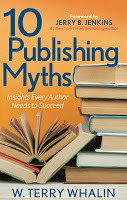
2. Be learning about book publishing and one of the best places I recommend for you to have a realistic expectation is in my most recent book, 10 Publishing Myths . Visit my website and get it from one of the several different options I give on my website. Beyond getting the book, read it and study it and apply the lessons to your own writing goals. I have a number of books on my shelf that I've purchased and never read. 10 Publishing Myths will help you more if you read it and apply the lessons.
Where do you suggest people begin the publishing journey? Where did you begin? Are there other tips you would suggest? Let me know in the comments below.
Tweetable:
Where do you begin publishing? It's probably not where people typically answer. Get the details here from this prolific editor and writer. (ClickToTweet)



May 3, 2020
How To Handle the Perfect Storm

By Terry Whalin @terrywhalin
Last week I got an unexpected
phone call. The project I was spending hours on every day suddenly was
cancelled. The same day a literary agent called me to cancel a book contract
with Morgan James. Yes it was the perfect storm. From my reading in publishing,
I know this sort of thing is happening on many different fronts and
places.
I went through the different
stages of grief—anger, looking for revenge, and finally acceptance and moving
on. I went through the various stages pretty quickly. Why? Because I've faced
these storms before—not recently—but in other parts of my writing career. I've
had other books cancelled. I've been fired from companies and I've had an unjust
senseless lawsuit to defend (which cost thousands). In the face of these storms,
some days I wish I
had selected another profession. Yet at my age and experience, it is too late to
change. I've spent many years in publishing working with hundreds of authors on
many different books.
Not every day is easy and there
are hard days in the publishing business. One of the best steps I've learned in
these situations: to pivot to something else and keep going and keep moving. If
you do nothing, then nothing happens. Even if you do a little bit on a project,
keep that project moving.
I'm grateful for the diversity in
my writing life. I'm still working with authors on their Morgan James
books—something I've been doing for eight years. I'm still writing books for
other people and still working on my online business. I recently wrote this article about the importance of diversity. Every writer
needs multiple streams of income so when you face the perfect storm (as I did
last week), you can still continue.
I'm refocused on other projects
and other priorities. I'm also knocking on new doors every day and seeing if
something else will open for my writing—as well as continuing on the projects in
front of me. Also make sure you celebrate the victories. I received my
27th review on Amazon for 10 Publishing
Myths. The review came from one of my long-term friends who has written a
number of New York Times bestsellers. To my surprise, this author
bought my book and wrote a five star Amazon review. I was grateful for this
encouragement.
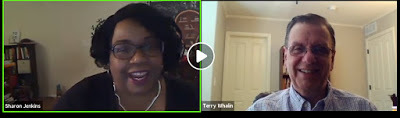
Sharon Jenkins & Terry Whalin on Facebook Live talking about 10 Publishing Myths.
Books changed lives and are
essential. Last week I did about a 45 minute Facebook Live video with Sharon Jenkins about 10 Publishing Myths.
We talked about all of the various myths including the 11th Myth. I hope you
will follow the link and watch this free workshop. We covered a lot of ground
about publishing in our conversation.
This season is a different one in
our lives and writing life. We will get through it but keep going. In the
comments below, let me know how you are handling the perfect storm.
Tweetable:
How do you handle the perfect storm? Get insights and ideas from this prolific author and editor. (ClickToTweet)

April 26, 2020
Look for Creative Solutions

By Terry Whalin @terrywhalin
This week I was working on a
writing project. I have reference books related to it in various places near my
desk to reach them and work on this project. One of the books I put precariously
on the bookshelf above my desk. It fell and smashed into my keyboard. I checked
out the book—which was perfect and went on without a thought.
This morning I got to my desk and
realized the smashed book has broken one of the two supporting arms for my
keyboard. I tried to get it fixed with some super glue, then tape and nothing
was working. Normally at this point, I would get in my car and drive to my
office supply place and get a new keyboard—but these are unusual times with
social distancing and staying indoors. It forced me to look for a more creative
solution.
Suddenly I remembered this
keyboard was recently replaced. I am a hard typist and had worn out several of
the the keys of that old keyboard but had not thrown it away (yet). I
temporarily kept it propped in a corner of my office closet. I pulled out my old
keyboard and checked out the little supporting arms. It matched the same one
whch was broken. In a few minutes, I replaced the broken arm and my keyboard is
working fine again. The solution didn't involve going anywhere and yet repaired
my keyboard. I could
have probably used cardboard or other materials to repair my keyboard but the
replaced arm from my previous keyboard was a quick fix and something no one will
notice when they see my office.
These days call for creative
solutions to different situations. As another example, we have been staying
outside of the grocery stores—even though we have some shops very near where we
live. Instead I have learned to order groceries online from stores like Target.
Also a local restaurant has changed into a online grocery store. We've ordered
meat, vegetables and fruit from them. The cost is about the same as going to the
grocery and the quality of the food has been excellent. It is another creative
solution to this situation where we staying away from going inside stores.
Several things came out of these
experiences:
1. You have creative ideas and
need to tap into these ideas.
2. Use your writing research
skills that you've developed to look for a creative solution.
3. The persistence that you pour
into your writing can help you find a creative solution.
These days are different and yet
you can find the way if you persist and look for it.In addition, I hope you are
using this time to diversity your streams of income. There are many different
ways to earn money as a writer, I encourage you to look at this article I wrote for Writers on the Move last
week. Follow the various links in it to learn even more.
Let me know in the comments below
what sort of creative solutions you are using these days.
Tweetable:
Are you looking for creative solutions to your life challenges? Get the details here. (ClickToTweet)

April 19, 2020
The Importance of Routine

By Terry Whalin @terrywhalin
These days are different. During
two days this past week, I shoveled snow—not what you would expect but welcome
to spring in Colorado. With the worldwide pandemic and lock down, I've had to
use my online skills to figure out how to get food and renew prescriptions
without going inside the stores. It took some some time but I've managed to work
out these details. It's just one indicator of how our world is changing. Instead
of going to my doctor's office for an appointment, I had a session with him
online through an app on my phone. Everyone is learning new ways to get things
done in our ever- changing world.
With businesses closed, I've been
thinking about the importance of routine. Do you have a daily routine? If not, I
encourage you to use this time to develop one. For example, as an acquisitions
editor at Morgan James a key part of my regular routine is to work with authors,
answer emails, return phone calls, negotiate contracts. While much of the world
has been disrupted, I continue doing this work. Yesterday I had a phone session
with an author and her literary agent. Today I will have a couple more of these
sessions with authors. It's been a part of my routine and is something that I
continue doing.
As a part of my daily routine,
here's a running list of some of my activities—and they are not in any
particular order or preference:
learn new ways of doing
things.
read books and write
reviews
listen to books and write
reviews
continue to post on social media
write these articles for the
Writing Life
write every day on my current
writing projects
answer emails and knock on new
doors of possibilities
These items are just a few of my
regular routines—which are mostly the same as last month and the month before
that. My encouragement to you is to establish a routine and stick with it even
with our ever-changing world. Even if you are isolated and stuck inside, you can
get up, get dressed and still accomplish a great deal at home. Yes I've had some events
cancelled and postponed. I've had to cancel some airline trips and delay other
projects. But I've also had authors sign their contracts and move their books
forward into production with Morgan James. Also in recent weeks, I've completed
writing projects and started new ones.

In these different times, I
encourage you to have a routine. If your business has changed or shut down for
now, look to diversity your income stream. Do you have a topic that you can
teach? Then create an online course and I have a simple product with a risk-free
money back guarantee called the Simple Membership System. Also look at affiliate income
possibilities. If yo don't know what I'm talking about then get this free Ebook I've
created. Do you have an email list? If not, create one and get this
inexpensive ebook called the List Building Tycoon to start an email list.
Long after this different period,
books will continue to be published. Magazines will need writers for articles
and online publications will need your writing. Radio shows and podcasts
continue to need guests with relevant topics. These needs continue and you can
fill them with a writer—if you are continuing your routine.
Are you continuing your routines
or starting new ones? Let me know in the comments below.
Tweetable:
While our world is changing, learn the importance of routine from this prolific editor and author. Get the details here. (ClickToTweet)
April 12, 2020
The Best Place to Buy Used Books

By Terry Whalin @terrywhalin
Physical bookstores are
temporarily closed. The local libraries are closed at the moment. Where do you
order your books during this season when we are sheltering inside our
homes?
My local newspaper, The Denver
Post, had an article about how to buy used books. While the article made
a number of suggestions to readers, it did not use the resource I'm going to
give you here. Some people buy all of their books (and other things) on Amazon.
One of my long-term friends in publishing told me he buys all his books on
Amazon. Don't get me wrong. I use Amazon but I don't buy all of my books on this
site.
Last night I watched an author
interview on YouTube. It was a podcast and I was fascinated with the author and
learned about her new book. As I watched, I wrote down the author and the name
of her book. I looked at the book on Amazon, read a few pages inside the book,
noticed when the book published, the publisher and the length of the book
(number of pages). While I found the information on Amazon, it was not
where I purchased the book.
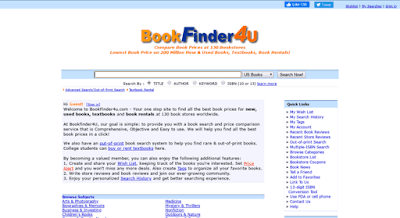
Instead I returned to my favorite
book purchase place: BookFinder4U.com In seconds, this book searches 130 online
bookstores, then ranks the book with the lowest price (including the shipping)
at the top of the page. I don't always buy the lowest—but often I do. Many of
these low price books are used. I tend to buy a number of used
books.
For my search today, the lowest
price location was a site I've frequently used: Abe Books. Amazon owns Abe
Books but from my experience, the books come quickly and are often in excellent
shape. Occasionally a hardcover book is missing the jacket or that jacket is
torn. For other books, it looks like it has not been read and is in brand new
shape. Yes it is a bit of a gamble but I've had good experiences using this
online store. Because I've used Abe Books before, my information is already in
the site when I log on the site. With only a few clicks, I purchase my book and
it is on the way.
BookFinder4U.com is my
best place to buy used books. It is not perfect. Sometimes I search for the book
and don't find it. Other times I look for a brand new book and it is too
expensive (to me). As consumers, we have many choices where we buy
books.
Maybe you have another favorite
place to purchase books. Let me know in the comments below.
Tweetable:
Where is the best place to buy used books? Get the insights in this article. (ClickToTweet)

April 5, 2020
How Do You Handle Different?

By Terry Whalin @terrywhalin
I suspect I'm like most of
you. I am not real keen on change. I love my routines and patterns. Through the
years I've worked hard at things like consistency and persistence.
Yet our world has changed with
the worldwide pandemic, the isolation and sheltering in place. It is all
completely outside of our control but also things each of us can
control. I've watched others shun the “order” and gather on the beach or in
groups. I have had some events cancelled. Others have been moved online. Last
night I taught a local writers group instead of being in a home, we were on
zoom. The technology worked well and we enjoyed the interaction and
fellowship—even if it was a very different way for us to connect.
The good news is that long after
this temporary situation has passed, books continue to be made and sold. I've
continued working with new authors through my work at Morgan James to get their
submissions processed and books contracted and published. In fact, our book
sales are up from everything I hear from our publishing leadership.
I continue to write on books
which will be published in the days ahead. I've got a couple of my books under
contract with deadlines. These deadlines keep me focused on these manuscripts
and moving them forward toward completion. My encouragement to you is that the
work must continue and you are a key part of that writing since there are
stories to be written that only you can write.
I encourage you during this time
to:
1. Continue
writing. Whether you make notes in a journal or write books or write
______. I encourage you to seize the day and continue writing—whether you
publish it or not. I have a sense of urgency about the time we have and the
need to seize it.
2. Keep
creating book proposals. Even if you self-publish, you need a book proposal.
Why? Because the proposal is your blueprint and business plan about your target
market and how you will reach that market with your book. I know it takes lots
of time and energy to put together a complete book proposal. From my experience
the time will be well-spent and is encouraged.
3.
Keep finding places for
your work to be published. You have to be working at new connections,
new pitches and new relationships to succeed. If your books aren't reaching
people, can you take part of that information and repurpose it as a magazine
article or an online article? There are many possibilities and yes it takes work
but you can do it and find places to publish.
4. Keep trying new
things, new ways to consume books and new publications. You have to
take action to pursue these things but don't get discouraged and keep trying new
possibilities.
Why? The world needs your words.
As I've written before your stories and your words can change lives—but not if
it is only in your head. So get it out of your head and on paper then out to the
world.
Yes our world is different with
this worldwide pandemic. Your actions and how you handle it, will be key.
What steps are you taking? Let me know in the comments
below.
Tweetable:
When the world is different how do you handle it? Get ideas from this prolific editor and author. (ClickToTweet)

March 29, 2020
An Unusual Editing Story
By Terry Whalin @terrywhalin
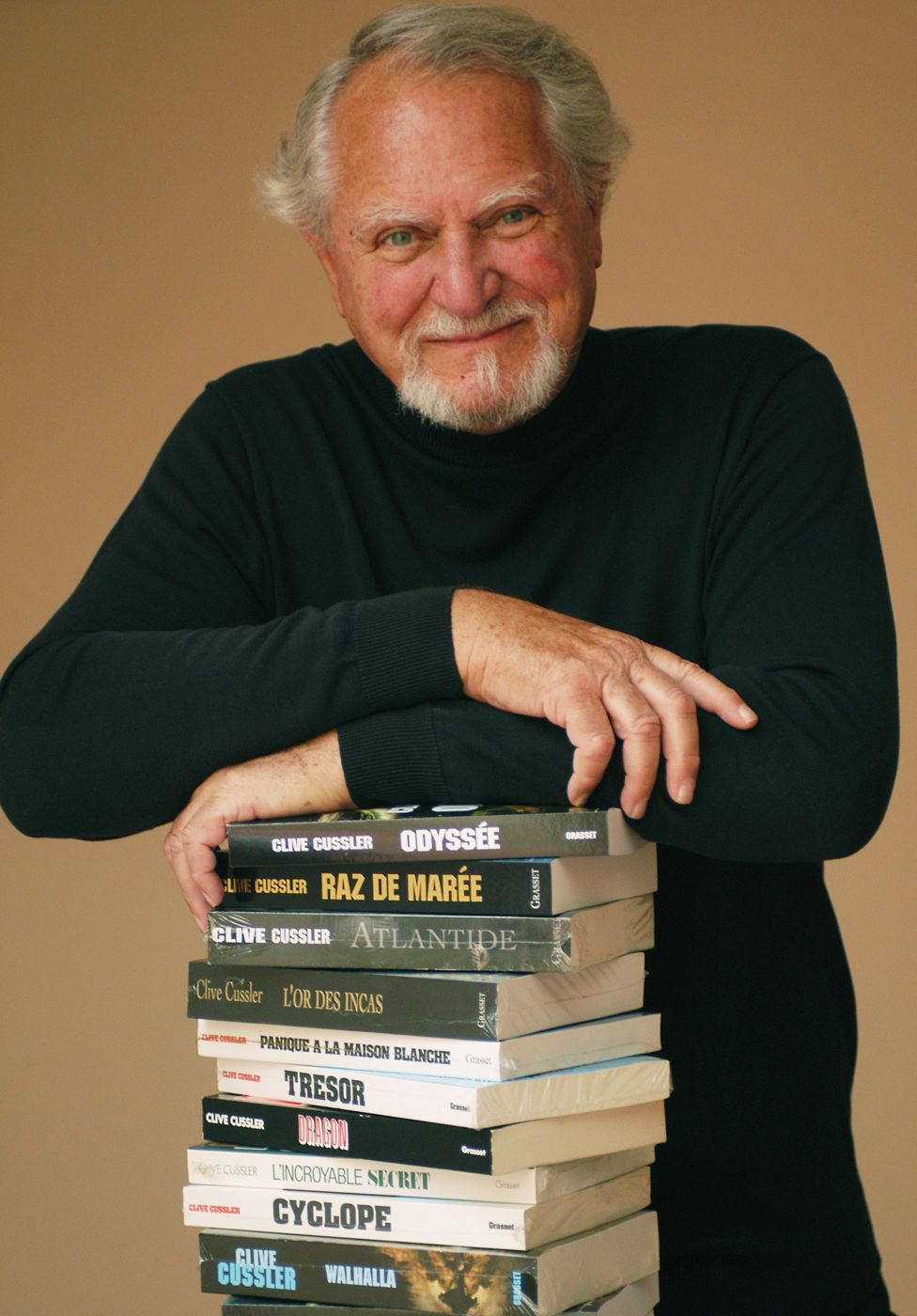
If you love thrillers and
adventure stories, a legendy writer of these books recently passed away. I'm
talking about Clive Cussler. Recently in Publishers Weekly, one of
Cussler's long-time editors, Neil Nygren wrote a fascinating article, “An Editor Remembers Clive Cussler” (follow the link to read
the full article). The full article is great but there is one paragraph I want
to highlight here. Speaking about Cussler, Nygren wrote:
“The last time he’d switched
publishers, he said, it was to a major house with a justly famed editor. When
Clive turned in his first manuscript, however, it came back heavily
revised—pencil marks all over the pages. This did not please Clive. He took the
manuscript and, on the top of the first page, he wrote one word: stet. Nothing
more. And then he wrote the same word on the top of every page in the entire
manuscript. And then he sent it all back. A couple of days later—as he told it
to me—he got a panicked call from the editor asking him to come to the house’s
New York office to talk. Clive declined, stating that “it would be...
inconvenient.” That book was published the way he wrote it.”
I pulled this paragraph to point
out some editorial details to you:
1. Cussler knew his
readers and what they wanted with his books. Most writers are
not in touch with the needs and desires of their readers. I'm certain
this information came over time but Cussler knew the expectations of his readers
and when he wrote, he was focused on meeting those needs.
2. As a best-selling
author, Cussler knew not to change because of the editor's
suggestions. Make sure you notice some of the other details in
Nygren's story: Cussler was with a major publisher and working with a famous
editor who put pencil editorial marks on all of his pages. The novelist did
review the ssuggested editorial changes but could see these changes were going
to change the fabic of his story and he was going to lose more than he was going
to gain.
3. Most writers do not
fall into such rare territory. i call this an unusual editing story
because from my years in publishing, the opposite is normally true. Editors are
focused on readers and producing and excellent product. Their detailed insights
are important for you as a writer to pick up on and respond to their directions.
This sort of team work produces excellent manuscripts. I don't want to pretend
it is easy because it is not but it an important part of the editorial process
to produce excellent work. Cussler was an exception more than the
norm.
I've worked with writers who want
to debate their editor over every single word changed. These writers are not the
type that editors love and want to work with on another book project. The word
about the writer's reaction is quick to get out to others in this small
community. Editors are not your enemy but should be your colleague to help you
produce an excellent book.
Admittedly Clive Cussler was
unusual about how he handled this edited manuscript. What lessons and insights
have you gained as you have worked with different editors? Let me know in the
comments below.
Tweetable:
Read about an unusual editing story about bestselling novelist Clive Cussler and some insights from long-time editor and prolific author. (ClickToTweet)

March 22, 2020
Some Keys for Being Active on Social Media

By Terry Whalin @terrywhalin
For years, I have worked at
developing a large social media following—over 200,000 Twitter
followers, over 18,000 LinkedIn Connections and over 4,900 Facebook
friends. These types of numbers do not happen overnight but are something
every author can do—with consistent work. I continue to expand and
develop these areas.
In this article, I want to give
you several keys for doing your own social media. Yes you can hire others to
do social media.
From my experience no matter how much you train them, they will
not do it like you do it. Your passion needs to show through. I have always done
my own social media posts.
1. Control Your Social
Media Time. It's easy to waste hours on your Facebook feed or Twitter
feed or LinkedIn feed. I do go over to these places but my time is controlled
and not very long at any time.
2. Have the Mindset
Your Social Stream Is Like a Magazine. If you follow me on Twitter or
Facebook or LinkedIn, you notice I have a great deal of variety on my social
media streams. Yet everything is focused for people interested in publishing. My
mindset when I put together my posts are like I am putting together a print
magazine targeted to a particular audience. I will keep you on track with what
you are putting out.
3. Work Ahead. I
use the paid version of Hootsuite to post consistently throughout each day. The
majority of my posts come from other people and each one has an image and a link
to more resources, The only exception is the quotation and photo I use to begin
each day. In general, once a week I fill out my plans for the entire week and it
often takes me about 20 to 30 minutes for this task.
4. Create A Grid for Your
Scheduled Posts. No one but me probably knows the pattern of my social
media posts. I begin each day with a quotation and a photo of that person. I
follow that with a couple of posts to my own material such as a free ebook or a
product that I'm selling. These posts are followed by six hours of posts from
others—yet to my target audience. I close the day with a couple of personal
posts to a blog article or a free resource. You could create a formal grid (I
haven't) but I recommend you make a pattern for yourself and then it is
automatic and something you do rather than work to create.
A recent Pew Poll has proven that
80% of the tweets on Twitter come from 20% of the people. Because I tweet 12 to
15 times a day, I believe I'm in the 20%. Here's an extra truth about social
media: Not
everyone reads every post but people are reading your posts. I can see from
the comments and reactions.
These are some of my keys for
being active on social media. What are your keys in this area? Let me know in
the comments below.
Tweetable:
Learn some of the keys for being active on social media from this prolific author and editor. Get the details here. (ClickToTweet)

March 15, 2020
Courage to Face the Changes

By Terry Whalin @terrywhalin
I'm writing these words from a hotel room in Nashville. Later today, I'm flying home from a several day Morgan James event for our authors. It is my ninth trip to this city in the last four years. Yet it was my first time to walk the red carpet with my fellow Morgan James Publishing authors. It was in celebration of my new book, 10 Publishing Myths. While I've watched others be interviewed in the past, it was fun and exciting to be interviewed and be able to tell others about my book. I'm including a photo. I understand in a few weeks I will have a video clip of my time on the red carpet.
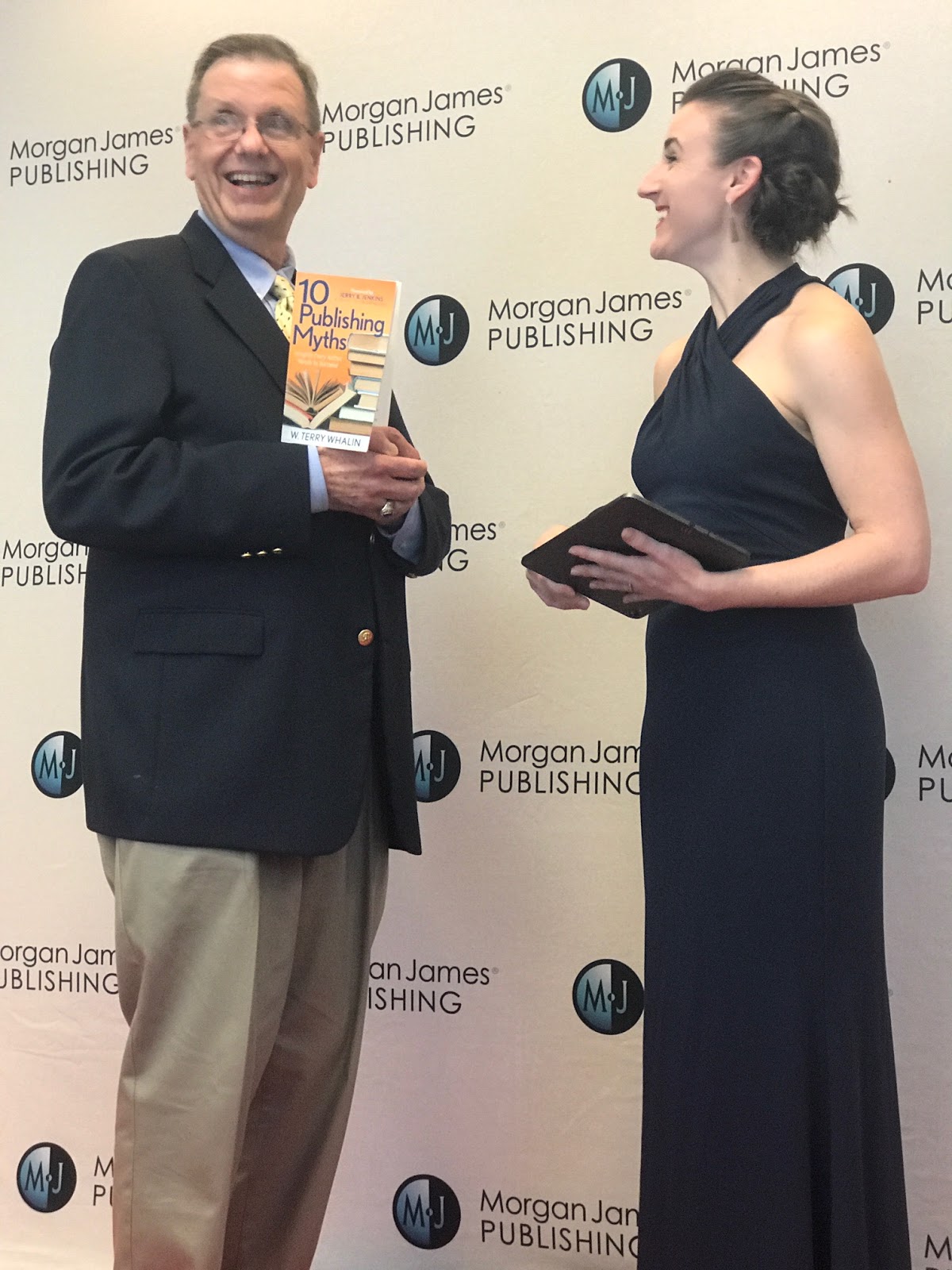
By the way, my flight home was "different." My plane backed up from the gate, then they told the passengers the ski resorts in Colorado had closed. The plane returned briefly to the same gate and about half the plane got off since they were headed to ski but now couldn't. The airline wouldn't remove their luggage but straightened that out later. It was something in all of my years of traveling, I had never seen.
The news is full of changes in our world. Events are being cancelled and because of this coronavirus pandemic and the uncertainty, many plans are changing.
For example, last Thursday night I planned to see one of my publishing friends who lives near Nashville. She and her husband didn't come to the event so I texted her to ask if she was coming. Her response was telling about our current situation. She leads a large Christian organization with a huge annual conference in June (several thousand people normally attending). She had only slept a few hours all week and been consumed with leading her organization. She was not coming to our event.
While I was on the road, I received an email about the cancellation of a convention in April which I often have attended over the years but was not planning to attend this years. It is probably the first time in the long history of this organization that they have cancelled their national meeting.
In this article, I want to give several ways to find courage in face of these changes. This time in history is an unusual time but publishing is always changing--now more than usual.
1. Have courage and continue writing. Books and magazine articles will continue to be published. Deadlines still need to be met and you will stand out from others if you continue to produce and write. Some people will be stuck and not write so if you do, you will be different.
2. Use your common sense about protecting yourself and keeping yourself healthy in the midst of these changes. The news is full of advice about cleaning and washing your hands and just simple actions you can take.
3. Eventually the situation will pass and everything will return to normal. History shows us this will be the case even though it might not feel like it at the moment.
4. Look for opportunities in the midst of the changes. Is there an online way for you to do something which you can't do face to face? Many teaching opportunities are moving in this direction.
5. Keep learning from others and growing in your skills and craft of writing. I have some new things I'm trying and learning. I will be showing you these new skills in the coming days. I hope you will take this type of action as well.
The world needs the stories only you can tell and only you can write. Yes there are many changes in our world but I encourage you to keep your fingers on the keyboard and find the courage to face these changes and keep going.
Let me know what steps you are taking to handle the changes and keep going in the comments below.
Tweetable:
How do you find the courage to face the changes? Get ideas from this much published author and editor. (ClickToTweet)

March 8, 2020
How to Handle Editorial Trauma

By Terry Whalin @terrywhalin
Over the last few days, I have
been in editorial trauma. It has happened to me over and over in my years in
publishing. I don't like to be here but it is a reality of this business. Every
writer needs an editor (or maybe a series of editors) to help you with your
blindspots, raise questions where information is missing and improve what you
are publishing. Whether you are writing for a traditional publisher or
self-publishing, this editor is a critical partner in producing excellent
work.
Months ago on deadline, I
completed a book manuscript, which is one of the first books in a series from
this publisher. My book will be published later this year and during those
silent months, the publisher was evaluating and talking about the pattern for
their series. Whenever you write one of the first books in a series of books,
there will be revisions and bumps in the process. I've been working through
those bumps this past week and it has not been easy work.
No matter who the publisher or
editor, the process is fairly straightforward. You write your manuscript in
Microsoft Word, then the editor turns on the tracking feature in Word and edits.
If they have questions or need you to fix something, then the editor adds a
comment into the margin which looks like a little post-it on the screen. As the
writer, my role is to go through these questions and answer each one to the best
of my ability. When I am asked for additional information, I add it. When
something needs clarification, I clarify. It's the detailed and important work
for the book to be excellent. While I understand this truth, it doesn't make the
process any easier to complete successfully.
It has been months since I
focused on the content for this book. The publisher eliminated some of the
features (narrowed them) and added a section or two (which now I have to
complete).
Several lessons for you when you
are in the middle of this editorial process:
1. The editor's questions
are professional and not personal. It is all about the work and
producing excellent work for the reader. I've worked with this editor for years
and admire his editorial skill—even if I don't like answering all of the
questions—I answer them anyway and rewrite and improve my book.
2. The process is messy
at times. I've had to do additional research to answer some of the
questions and dig into some reference books on my shelf. I've worked long hours
at my keyboard with a screen covered with questions and editorial
marks.
3. It is all part of the
process of making excellent books which touch lives and help readers.
It does not have to be easy (because it isn't). If it were easy, everyone would
do it.
4. I know I will get
through this editorial trauma—eventually. As much as I've been through
this process over the years, I look at some of those questions and to myself
say, “Enough with all these questions.” Then I get up and take a few minutes
away from my screen. I return to it and keep moving forward and making the
requested changes and adjustments. The mansucript is finite and I will get
through it.
5. Excellent publishing
is a team sport. You can certainly design your own cover, edit your own
book and self-publish. Unless you are a multi-talented person, I suspect your
book will be hard to sell, receive little positive feedback and probably few
sales. There are exceptions to these statements but overall we need each other
to succeed. However you publish, you will have different people on your team who
are experts in their part of the process.
6. I learn a great deal
each time I go through this process. I've published many articles and
books over the years but I am still growing as a writer and learn as I answer
these questions. Months ago I worked hard on the manuscript that I turned in—but
now with this additional work, it will be even better. I can absorb the lessons
from the questions and improve my next manuscript.
I'm going back to my editorial
work and determined to keep moving through it and answer every question to get
this manuscript back to my editor. Then the book can move into copy editing,
proofreading and eventually printing then distribution to the bookstores.
The reality is we don't have to
like every part of the publishing process—but we do need to understand it and
work our way through it to produce an excellent book. I hope this article has
helped you understand it is not easy to produce excellent books but each of us
with persistence (and some patience) can do it.
Have you been through this
editorial trauma process? What tips and insights do you have to get through
it? Let me know in the comments below.
Tweetable:
It is rarely discussed but producing an excellent book is challenging at times. Learn how to handle the editorial trauma from this much published author and editor. (ClickToTweet)



