
W. Terry Whalin's Blog, page 26
February 7, 2021
You Must Seize Opportunity

By Terry Whalin @terrywhalinThe subject line of the email worked and performed it's function. It got my attention saying, “Can I promote you?” Yes I opened the email and read it. A CEO was looking for case studies for people using his product (which I use). I hit reply and crafted a pitch or response. Will I get selected? I don't have any idea but I seized the opportunity and made a relevant and timely pitch. One of the basic principles of publishing is that to secure any work or deal, you have to pitch. It might be as simple as returning a phone call or email. Or the process might mean learning how to create a book proposal then crafting a 30 to 50 page document that you send to literary agents and editors. Another way to express opportunity is through a series of doors. As a writer, you need to be knocking on different doors for the right one to open. From my years in publishing, I believe every writer has many opportunities. For example, there are many radio shows and podcasts who are booking guests every day on their programs to talk about their topic and promote their books in this process. Will every pitch I make succeed? No, but like the homerun baseball player, I have to bat (or pitch) to get consideration.
Here are several keys in this process: 1. Awareness is the first step and the necessity to respond. 2. Read your email and look at your social media feeds to look for opportunities. 3. Take action when you find an opportunity and craft your pitch. For example, last week I received an email about a conference where I've been on their faculty several times (but not in several years). They were asking for proposals for their 2022 conference and gave a deadline. When I spotted this opportunity, I printed the page and have been thinking about my pitch/ proposal. It is the same process each of us have to do as writers—whether we've written many books or no books. 4. While taking action in a timely way is important, follow-up is also important. For example, I've been working with a potential Morgan James author on a contract. We were emailing back and forth. Their lawyer came back with some questions. We responded to their questions and then for several weeks, the dialogue ended. My phone calls and emails were ignored without response. Today I decided to use text to reach my contact and get some information. I learned the lawyer was recovering from COVID-19 (something I had no idea about), their manuscript was several months away from being final and the “author” was out of the country. Each of these bits of information helped me understand the delay in their response. My point is be a good communicator and let the other person know what is going on. Your follow-up and communication is an important part of the process. Are you making an intentional effort to respond to the opportunities which cross your desk? Let me know in the comments below. Tweetable:
 Get 10 Publishing Myths for only $10 +FREE shipping + over $200 of free bonuses.


January 31, 2021
Awareness of A Fine Line

By Terry Whalin @terrywhalin
Within publishing as you approach or pitch editors and agents, there is a fine line between being creative and interesting in your pitch—and being strange (asking for rejection). Editors and literary agents are actively looking for creative and interesting submissions. Even if you are getting rejected with your pitches, I know they are actively reading their emails and looking at their mail submissions for excellent submissions. Recently a novelist approached me to possibly edit their book. As I reviewed the book, it was a clean, well-written novel but had several issues. First, it was substantially longer than a novel I could publish at Morgan James Publishing. We have a limit of 100,0o00 words which is typical for many publishers and based on our experience (sales) and the price point for the novel and other elements. This particular novelist had written a 145,000 word novel (way over our limitation). I pointed out this challenge to the novelist but I also told him about another “different” feature in his novel. Throughout the book for emphasis, he created words from his characters with extra letters. For example, he took the word “buzz” and would add letters so it became “buzzzzzz.” While such action was creative, it also bordered on strange and gave the gatekeeper (agent or editor) a reason to reject the novel. In the rejection process, we don't give such reasons to the author (not our role or responsibility). The author will likely never learn the reason for the rejection. This author was asking me for a critique or edit. As I examined the work, I didn't find anything worthy charging or critiquing so instead I sent a brief email with a few observations and suggestions. The experience reminded me of several important principles that as writers we need to be aware: 1. We need to pour creativity into our submission but not cross into strange. Don't give that editor or agent a reason (even if unspoken) to reject your work. Instead give them reason to keep turning the pages and reading. This process is a careful balancing act. 2. Follow the guidelines from the agent or editor and even take a few minutes to review them before sending off your submission. Does your submission fit what they are looking for? If not, don't send it and find another place. 3. Your pitch or proposal is important and needs to be complete and excellent. Every publisher is looking for authors who are connected to their readers or what some people call their “tribe.” If you are beginning or don't have this group of readers, then start immediately to gather it. As I've written in the past, every author should have their own email list. You also need to have a social media presence (not every social media place but select a couple where you will work at building your presence). For example, I have invested a great deal of energy into Twitter and LinkedIn. Admittedly these sites are “rented” and not anything that I control or own. Any editor or agent with a few key strokes can check out your presence or lack of it on these places. The look and numbers are important to these editors and agents as they make their decision about working with you (or not). Publishing is a complex business that looks easy and simple on the surface but isn't. As a writer, you are lookng for the right connection. Finding this connection will take effort, education and insight but can pay off to advance your publishing career and also garner sales of your book. From my decades in publishing, it much better to work with others and produce excellence, than to do it on your own (self-publish). This simple principle explains why there are so many strange self-published book. There are plenty of companies that will take your money, publish your book and not give you honest help in the process. My advice is to choose carefully, ask many questions and avoid the missteps. Are you aware of the fine line between creative and strange? What steps are you taking to get help from an editor or agent? Let me know in the comments below. Tweetable: Get 10 Publishing Myths for only $10 +FREE shipping + over $200 of free bonuses.
January 24, 2021
Like A Frog in a Kettle
By Terry Whalin @terrywhalin
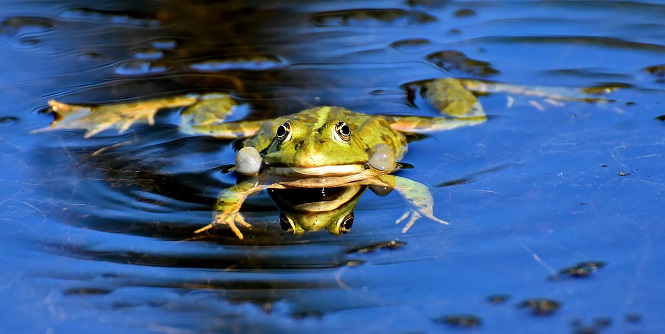
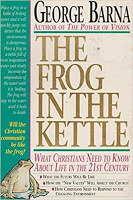 It happened over months so I didn't notice it. I'm talking about the slowness of my computer. In the mornings, it took forever to get on a website and other functions. My computer was acting like a frog in a kettle. Let me explain. Many years ago, I interviewed George Barna about his book,
The Frog in the Kettle
(which has a subtitle with the year 2000 so you know it is dated). George told the story in his book. If you put a frog in water, the frog will not notice if you raise the temperature of the water. Eventually the frog will die because he is unaware of the rising temperature of his water. I was having a “frog in a kettle”-like experience with my computer. Without being aware of it, the computer was getting slower. Finally last weekend, the slowness built to a crisis. My Google Chrome browser crashed. I could not get on a single new website. Thankfully I had a version of Internet Explorer on my computer and it allowed me to get online. Several years ago I began to use the Geek Squad. In fact, every year I pay them an annual fee. They are on call 24 hours a day seven days a week. I called their toll-free number then followed the instructions to reach them online. I explained my tech problem and the technician remotely took over my computer. He analysized my problem, cleaned up my computer and reinstalled Google Chrome. The process took several hours but everything was working when he finished. Also I knew the Geek Squad would probably need to reboot my browser. Before I reached out to them, I made sure I saved open files on my computer so no matter what someone else did, I would not lose any information in this process. The surprising result is my computer came back to life. The slowness disappeared and everything is workng faster and better. Be aware of these types of issues for your own computer. I'm going to make a note in my reminders to contact the Geek Squad for a general maintenance at least every quarter. I'm paying annually for their expertise but I need to proactively ask for their help. Take a few minutes to think about your own writing life. What frog in the kettle experience are you having? Maybe your writing is getting harder to do each day. Maybe you are struggling to sell your book and need to change something in this area. There are several keys in this process: 1. Awareness. Without awareness, you will continue on the same path. 2. Asking for help. Many situations we can't handle on our own and need to ask others for help. 3. Taking action to make a change. You need to take action to change your situation. 4. Regular maintenance. Take preventive steps so this situation does not happen in the future. No one wants to be a frog in a kettle but it happens. Have you ever had this situation happen to you? Let me know in the comments below. Tweetable:
It happened over months so I didn't notice it. I'm talking about the slowness of my computer. In the mornings, it took forever to get on a website and other functions. My computer was acting like a frog in a kettle. Let me explain. Many years ago, I interviewed George Barna about his book,
The Frog in the Kettle
(which has a subtitle with the year 2000 so you know it is dated). George told the story in his book. If you put a frog in water, the frog will not notice if you raise the temperature of the water. Eventually the frog will die because he is unaware of the rising temperature of his water. I was having a “frog in a kettle”-like experience with my computer. Without being aware of it, the computer was getting slower. Finally last weekend, the slowness built to a crisis. My Google Chrome browser crashed. I could not get on a single new website. Thankfully I had a version of Internet Explorer on my computer and it allowed me to get online. Several years ago I began to use the Geek Squad. In fact, every year I pay them an annual fee. They are on call 24 hours a day seven days a week. I called their toll-free number then followed the instructions to reach them online. I explained my tech problem and the technician remotely took over my computer. He analysized my problem, cleaned up my computer and reinstalled Google Chrome. The process took several hours but everything was working when he finished. Also I knew the Geek Squad would probably need to reboot my browser. Before I reached out to them, I made sure I saved open files on my computer so no matter what someone else did, I would not lose any information in this process. The surprising result is my computer came back to life. The slowness disappeared and everything is workng faster and better. Be aware of these types of issues for your own computer. I'm going to make a note in my reminders to contact the Geek Squad for a general maintenance at least every quarter. I'm paying annually for their expertise but I need to proactively ask for their help. Take a few minutes to think about your own writing life. What frog in the kettle experience are you having? Maybe your writing is getting harder to do each day. Maybe you are struggling to sell your book and need to change something in this area. There are several keys in this process: 1. Awareness. Without awareness, you will continue on the same path. 2. Asking for help. Many situations we can't handle on our own and need to ask others for help. 3. Taking action to make a change. You need to take action to change your situation. 4. Regular maintenance. Take preventive steps so this situation does not happen in the future. No one wants to be a frog in a kettle but it happens. Have you ever had this situation happen to you? Let me know in the comments below. Tweetable:
 Get 10 Publishing Myths for only $10 +FREE shipping + over $200 of free bonuses.
January 17, 2021
Is Advertising Your Book Worth Trying?

By Terry Whalin @terrywhalin
Some of the bestselling authors use advertising as a solid portion of their strategy to sell books, build their email list and bring traffic to their sites. Yet you have to be wise about how you use these advertising tools. Otherwise you can waste a lot of money with little results.One of the authors who is known to succeed at advertising is Mark Dawson. I’ve heard Mark rave about Facebook ads that he has not found anything where he can spend $1 and get $10 in return (sales). Each week he spends thousands of dollars on Facebook ads. This self-published author has sold many books—and teaches other authors how to follow the same path through his online courses. These courses have limited enrollment and are only open a few weeks a year. There are many different places online for authors to advertise—yet which places are the most effective and how do you learn the most effective practices so you succeed in this effort. From my experience in publishing, if you are going to advertise, you need to learn from others who are successful in this effort and follow their guidance so you can have the best possible result.
I am currently taking Mark Dawson’s course and working through the various lessons. One of the advantages to such a course is you get lifetime access. These advertising platforms are notorious for modifying their systems. Dawson updates his programs and teaching as the systems change—so even with changes, you will remain effective in what you are learning through his courses.
Currently Mark Dawson’s course Ads for Authors to advertise on Amazon is open for enrollment. Use this link to check it out. If you read this entry and the course is not active, then sign up for their waiting list and you will be notified when it is open again. To help you learn more about Ads for Authors, Dawson has launched a free mini-course with an Amazon ads expert Janet Margot. Margot is a former Amazon employee and part of the team which established the Amazon ad program. She recorded three short videos which are now available. These videos help you take a look at the program and see if you have done the preparation work necessary to start advertising. In this article, I’m going to include the links to all three of these videos.

In the first video of the series - PRODUCT - you’ll learn how first impressions count. Janet considers the factors you need to bear in mind when it comes to the product that you are advertising – your book – and the ways in which you can make your ads more “clicky.” You’ll see how a reader’s first look can convert to sales and what might stop them from clicking buy. And the video is available today. Click to watch it.

Part 2 of our series covers just that: how do you find TRAFFIC? We’ll review the internal and external mechanisms to attract pre-qualified customers to your book page. And we’ll learn what you can do to influence the fabled Amazon algorithm and get readers to engage with your author brand.You can watch the video here

Part 3 of this series is AD STRATEGIES. We’ll share insight on prioritizing which titles to advertise, the difference between strategy and tactics, timing, and what you need to consider when creating your budget. Learn what questions must be asked and answered in order to build a solid foundation in order for your Amazon Ads strategy to be successful. This year start your ads off on the right foot with a plan that can help unstick your author business. You can watch this video here. I encourage you to watch all three videos then consider taking Mark Dawson's course Ads for Authors and learning the details about advertising your books on different platforms. Get guidance from others who are successful with their advertising then follow their suggestions and see how it works for your books. It's a strategy which others are using successfully with their books and hopefully will work for your books. It will never work if you don't try it—and I encourage you to get some training, then try it with your book. Have you tried advertising for your book? Let me know about your experience in this area in the comments below. Tweetable:
 Get 10 Publishing Myths for only $10 +FREE shipping + over $200 of free bonuses.
January 10, 2021
When You Update a Book

By Terry Whalin @terrywhalin
While I've worked in publishing
for decades, I have only updated an existing book twice .
From my experience
in working in publishing, it is rare to update a book. Of course, you will be
updating a book every year if it an annual reference book. But I've not worked
with those types of books. While in publishing, I've worked with hundreds of
authors and written over 60 books.
In 2009, I self-published my only
book, Jumpstart Your Publishing Dreams . The content
for this book started in my blog articles, The Writing Life. While a
blog has a target audience, the articles are written about random topics for the
audience. I took those random topics and organized them into a series of
chapters which became Jumpstart Your Publishing Dreams . In
the book business, it is called a blook when you take random blog entries and
organize them into a book. While you may have some of your basic content, I
learned such an effort was detailed and time-consuming. I worked hard to create
an attractive and professional self-published book.
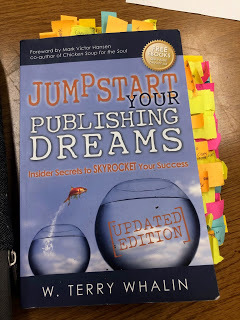 Several years later, I edited
 through the contents and moved the book to Morgan James Publishing with the
updated edition. If you want to see the first chapter (follow this link) to
download it. I'm grateful for the feedback I continue to receive about this book
and how it helps people. Here's an image from a recent reader who marked
different sections as he read the book.
Book Proposals That Sell, 21
Secrets to Speed Your Success is the second book that I've
updated and revised. Originally I wrote Book Proposals That
Sell in 2004 as a frustrated editor who wanted to help
writers. This book has over 130 Five Star reviews on Amazon and has helped many
writers through the years. Yet much has changed in publishing during the last
15+ years. In recent weeks, I've gone through my book in detail and updated
everything. In a few more months, the updated edition will be available. I'm
working on new endorsements and a foreword. The original book didn't have a
foreword.
Have you updated a book? What
process did you go through to make the changes and get the updated edition into
the market? Let me know in the comments below.
Tweetable:
It is rare to update a book according to this
prolific editor and writer—yet he has done it twice and gives the details
here. (ClickToTweet)
 Get 10 Publishing Myths for only $10 +FREE shipping + over $200 of free bonuses.
January 3, 2021
What Changes Will You Make?

By Terry Whalin @terrywhalin
Let's be honest for a minute: the
older I get, the harder it is to make changes—anywhere. It's much easier to
continue doing my same habits over and over—even if they are not working. The
definition of insanity is doing the same thing over and over expecting a
different result. We simply don't get different results unless we
change.
Last February, I took an
intensive three-day workshop where I learned how to build and launch this series
of pages for 10 Publishing Myths . Our instructors told us
these pages have the goal of selling 500 to 1,000 copies of of my book every
week. No one could have predicted a worldwide pandemic would change our world
drastically starting the next month. That goal simply hasn't been realized
yet—but I believe it is still possible. I'm taking responsibility and moving
forward with several plans for the coming months. Yes I'm making some changes
and learning some new insights which I believe will increase these sales. Only
making the effort and changes will show me whether it happens or not. I have
watched other writers succeed with such tools and believe it is possible for me
as well.
I tell you this story to help you
see that you too will have to make changes in your life to find the right
opportunity for your writing. As I have done, it may involve trying numerous
things—and failing—yet continuing to try other things before you hit on the
right combination. The path to success is different for each of us but there are
traces of success from others that will help guide us in this
process.
One of my changes started several
months ago—my eating habits. I'm not making these changes alone (one of the keys
from my experience) but doing it with my wife. We've changed our eating habits
and both lost weight in this process and my overall health has improved. It has
not been easy and involves many daily decisions but is something that I will be
continuing to work on in the days ahead.
Last year I started (and paid
for) several training courses which I have not completed. I still believe in the
importance of these trainings and will be continuing to devote time and effort
to completing them—and then putting the lessons into practice with my writing.
Maybe you have take similar steps with your writing life. Are there courses
you've started but never completed? Take a hard look at these trainings and see
if you need to return to them, complete them and take action.
In the days ahead I have several
books in the works. Some of these books I'm writing for other people. Some of
these books are my books which need to be completed. Some of my books need a
fresh marketing push so more people know about them. If your book isn't selling
like you want, it is normal to blame others: your publisher, your editor or
whoever else other than yourself. I encourage you to look inside first and see
what you can be doing to reach new readers and potential buyers for your book.
One of the truths of publishing is publishers can create and sell into the
bookstores beautiful and amazing books. Yet it is the author who drives readers
(in many different ways) into those bookstores to buy the books. I encourage
each of us to take our own responsibility for these actions and make the
necessary changes in your life to take action.
The steps are not easy—for any of
us—but completely possible. I believe in you and your work. If I can help you,
don't hesitate to reach out to me. Great days are ahead for us. Let me know
about the changes you will be making in the comments below.
Tweetable:
 Get 10 Publishing Myths for only $10 +FREE shipping + over $200 of free bonuses.
January 1, 2021
Resolutions for Writers

By Terry Whalin @terrywhalinI don't normally post a new article on a Friday but it is the first day of the year. Happy New Year, everyone. I'll be back next week at my normal time. As we turn the calendar to a new year, I reflect how 2020 was a strange year on many fronts. I'm glad to turn the calendar page. As a writer, what I like to do is think about the year ahead and make plans. Years ago I used to make resolutions but most of them were broken before I reached February. Now I make resolutions which I can keep. Do you make New Year’s Resolutions? If you are like me, you have goals, dreams and plans for the New Year. I encourage you to write down these resolutions or plans or goals. You want to make them specific actions so you can hold yourself (or your partner can hold you) accountable to carry them out. Over 25 years ago in 11 days I wrote a diet book by Carole Lewis called First Place. I took such a crazy writing deadline because the publisher was determined to have the book inside the bookstores for January. If you look at bestseller lists, often in January there will be several diet books about losing weight. In our overweight society, many people resolve to lose some pounds in the New Year. They begin with such great resolve and commitment. To become a proactive author, I want to suggest several resolutions or goals that you can keep throughout the months ahead. I encourage you to use these ideas to create your own goals. Make sure you make each one specific, measurable and action oriented. 1. Plan to consistently talk with others about your books or products. As the author, you should take the primary responsibility to market and tell other people about your books. There are dozens of tools and ways to do it. Your method should be a way that serves other people (helps them) and doesn’t pound them with “buy me” messages. The “buy me” message is a turn off and the service to others is an attraction. Can you take your book and create a teleseminar or take chapters from your book and turn them into magazine articles or blog posts? 2. Resolve to Persevere. Are you trying to publish something which is getting rejected? You are in good company. Just check out this article from bestselling novelist James Scott Bell called Rejecting Rejection. Possibly you have not made the right connection to get your work published. Are you consistently submitting your work? Often when I ask writers about this detail, I find they haven’t been consistently working on getting their book pitch to the right editor at the right time and the right place. I don’t believe that I’m a great writer. I work hard at improving my storytelling and writing—yet I am persistent and preserve. I’m determined to a fault. Nurture this quality in your own life in the weeks and months ahead. 3. Resolve to take better care of yourself. Over the last few years, I’ve worked hard at getting more consistent sleep, taking a daily multiple vitamins and a commitment to regular exercise. Also I attempt to watch my weight and eating patterns to be in balance. Am I perfect? No, but I continue to consistently work at these elements and build regular patterns into my life. With a pandemic this year, my weight increased but several months ago my wife and I began changing our eating patterns and working on weight loss. Currently I'm at my lowest weight in over 20 years and my blood pressure has lowered and other health benefits. It's all part of my resolution to take better care of myself and something I encourage you to do too. Your goal will be different for your lifestyle and situation but do consider this area of your life. 4. Resolve to learn a new skill then practice it repeatedly. Maybe you want to develop your storytelling skills. Or maybe you can learn from a how-to book or take an online training. I use all of these methods to keep growing in my abilities and skills. 5. Resolve to do more writing. It takes more than a resolution to increase your writing. You need a plan. Do it consistently and set a reasonable word count then do it day after day. No little elves come out and write your words. You have to sit in your chair, get your fingers moving on the keyboard and do it. 6. Resolve to do more reading. Writers are readers. Read widely and varied types of books. I read but also learn from listening to audiobooks.
 I’m expecting great things will happen in the coming months. How about you? Are you setting goals and moving in this direction? Take action today. As you look at the new year, are you creating resolutions you can keep? Let me know in the comments below.
Tweetable:
W. Terry Whalin is an acquisitions editor at Morgan James Publishing. His work contact information is on the bottom of the second page (follow this link). He has written for over 50 magazines and more than 60 books with traditional publishers. His latest book for writers is 10 Publishing Myths, Insights Every Author Needs to Succeed. Get this book for only $10 + free shipping and over $200 in bonuses. One of Terry's most popular free eBooks is Straight Talk From the Editor, 18 Keys to a Rejection-Proof Submission. He lives in Colorado and has 190,000 twitter followers.
December 27, 2020
The Importance of Story

By Terry Whalin @terrywhalin
During the holidays, I was
speaking with one of my relatives who I don't see often. She is a prolific
reader and was talking with me about various books she was reading. Then she
turned the conversation toward my books. “I loved reading your book
Sojourner
Truth ,” she said. “I was amazed to learn in about a freed
slave in upper state New York and her role in American history.”
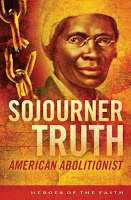 Of the many books I've written, I
 was surprised with her choice. I wrote this book over 20 years ago. My name
isn't on the cover or the spine of the book (something the publisher
controlled). I wrote this book during a season when I was writing a number of
books each year (and many of them were work made for hire—like this one—no royalties). This book is
still in print and occasionally I will receive letters from school children
about it.
 Why did my relative love it? It
 was simply the unusual nature of the story. The role of story is important in
every book and every magazine article. How do you learn to tell these stories? I
believe it comes from years of writing (practice) and reading good
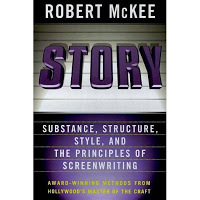
stories. You can also learn about story through reading and studying how-to
books like Story by Robert McKee.
One of the key ways to practice
is writing short stories or magazine articles. These types of writing are not 40,000 to
50,000 word pieces but more like 800 to 1500 word pieces which make them easier
to produce yet effective to learn and reach readers. If you haven't written for
magazines, I recommend you carefully study this article I wrote about the basics of a
magazine article. While writing these shorter articles you will
learn:
how to create an effective
headline
how to draw the reader into your
story with an opening
how to move the reader along with
the middle section and maintain interest
how to draw the reader to a
single point or takeaway
how to write to a word count of
the publication (read their guidelines)
and many other related
skills
What type of stories can you
write?
I recommend you begin with the
personal experience story. Each of us have personal experiences and some of
those incidents can be woven into interesting magazine articles. Almost every
type of publication will take these types of stories. You can use a market guide
or search online for guidelines to see which places. If writing for the
Christian market, make sure you have the latest edition of the guide since a lot of this
information changes every year. Then you can submit the article or write a
query to get it published. Yes it takes effort and time to learn the skill
of telling good stories and getting them into print—but it is a key part of the
writing life.
It might even take you into
American history to write about someone like Sojourner Truth .
How have you learned the importance of story for your writing? Let me know in
the comments below.
Tweetable:
Isaiah is one of the best-loved Old Testament prophets. Check out this new Isaiah Study Guide for the Passion Translation by Brian Simmons (@BrianWSimmon) I was honored to write a portion of this book and highly recommend it. (If you like the little video and want to get the same for your book, check out this tool.
December 20, 2020
Improve Your Book Images With This Tool
By Terry Whalin @terrywhalin
I'm a writer and (if I'm honest)
not the best person when it comes to visual presentation and graphic design.
When I need a graphic, I get help from others. In recent days, I discovered a
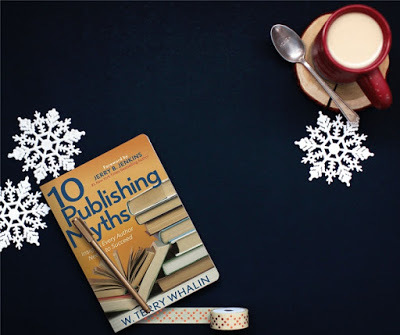
tool called MockupShots which is easy to use and has great diversity. The
templates and designs are varied for many different types of authors and books.
I've been using it and wanted to pass this experience along to you in this
article.
 MockupShots is simple to use because it is basically point and
 click. In seconds, any author can load their book into the template and the
program generates hundreds of images (no exaggeration). The creators include
short videos which illustrate how their program works. Right now, there is a
special on this tool and I gained lifetime access for only $80. For
someone like me with multiple books, it made perfect sense.
 You add your book to the program,
 select a design to download, then use it on your website, social media
locations, your email list and anywhere else you need an image. Some of the
designs are specific to a holiday or season while others are generic which you
can use on other occasions. Beyond the stationary images, MockupShots also generates GIF images (which move when
displayed). Also this tool generates short videos with your book. There are many
different options to easily select, download then use.
Because I am writing this article
just before Christmas, I'm going to include holiday illustrations for several
different books. From my view, this tool is perfect for:
authors
publicists
book reviewers
editors
literary agents
anyone who writes about books and
uses book covers
MockupShots includes a 30 day money back guarantee. In a few
days of use, I've also written their customer support several times. I've been
impressed with their responsiveness and quickness to correct anything wrong with
their program.
 I've only been using MockupShots for a few days and still have much to learn about
 this tool. Hopefully you can see the diversity and importance of this tool for
the Writing Life.
I'm enthused about the multiple
uses for this MockupShots tool. If I've missed some aspect, let me know in
the comments below.
Tweetable:
December 13, 2020
Advantages to Being Organized

By Terry Whalin @terrywhalin
It is true confession time. I
tend to be a bit of a “pack rat” (which my wife can affirm). For example, I save
magazines. Recently I sorted through a large stack of Publishers
Weekly—which arrives every week. I saved a few issues but most of
them I tossed and it felt great to get more organized. Through the years I've
learned that being organized saves time and stress. If I need something, if I've
organized it and put it in its place, then I can easily reach the particular
item. Otherwise I waste time searching for it. Admittedly it is easier to put it
in a pile—but that is not a productive action.
In the past, I used to create
little piles of paper and other things to be filed. My wife would come to my
office and wonder how I could accomplish anything since I was surrounded
with piles (and it looked chaotic). I've learned the hard way that it's better
to process and organize as I work and it makes it easier to find something as
well as takes care of it in a timely manner. It also helps my focus because I
work in an orderly and neat environment instead of chaos. Now I'm not obsessive
compulsive about the order but it is a regular part of my daily
activities.
There are an endless area of
places that need to be organized: books, magazines, articles, conference
information, book projects, book pitches and proposals from authors and much
more. Some of this material is physical and in my office. Other elements are
electronic and I need to be able to access them easily on my
computer.
I suggest you tackle organizing
different areas at different times. Maybe one day you organize a single drawer
in your desk then the next day you work on organizing your books. One of the
ways you keep from being overwhelmed is to do it a little at a time. With my
books, I have my reference books in one place and my how-to-write books in a
different area. I don't have my books organized alphabetically (like one of my
publishing colleagues used to do). I do have an area on my shelves where I keep
the majority of my autographed books. I have another area on my bookshelves
where I keep new books that I am reading and reviewing. I encourage you to
organize your books in a way which will work for you and your work habits. As
you organize, the books will be easier to locate. For example, I have several
writing how-to books about contracts and others about marketing or publicity. I
group these books together so they can be easily used.
After you get the material
organized, it is important and generally easy to maintain this order. If you
don't do maintenance, then the paperwork and other things can easily stack up
and bounce you right back to where you started organizing. The organized writer
is a productive writer and gets things done and meets deadlines. If you don't
have this skill, I encourage you to learn it and implement it in your writing
life.
From my experience in publishing,
if you are organized, it will save you time, stress and effort. What other steps
are you taking to be organized? Let me know in the comments below.
Tweetable:
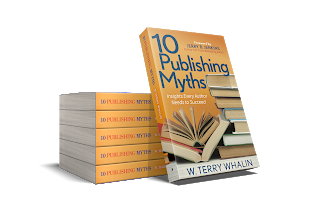 Get 10 Publishing Myths for only $10 +FREE shipping + over $200 of free bonuses.


