
W. Terry Whalin's Blog, page 25
April 18, 2021
Four Reasons I Write at a Keyboard

By Terry Whalin @terrywhalin Some of writers prefer to begin writing on a legal pad with a pen. They believe there is something important for them in this process. I'm a fan of novelist Daniel Silva and I've heard him say he writes his novels on a yellow pad with a certain type of pencil. Each of us need to experiment and figure out the best way for us to write. As a young journalist with some steep deadlines (in an hour or two for the newspaper), I learned the skill of composing at the keyboard on my typewriter. There wasn't time to write something longhand or dally around with the wording of something. Instead you had to create the outline for the story in your head, then put your fingers on the keys and move. As I look back, I learned a valuable writing skill that I've been using for many years. I learned to type taking a summer school course—and did not do well. I recall getting a C for that class (probably a lack of applying myself) yet this skill is something I've used daily for decades. While I understand the writers who begin with a legal pad, for me, I use a keyboard for several reasons. 1. Readability. To be honest, my cursive writing is unreadable and I've been printing my writing for years. Sometimes I will handwrite a note that I mail and I have to slow myself down to make the letters readable. When I interview people on the phone or in person, I always record to capture everything) but I also take notes. I don't trust my recorder and countless times have had it not work for often some weird reason. In recent years, I've found those notes growing in difficulty to read so even my printing is pretty unreadable. Writing at the keyboard is much more dependable and something I know I will be able to read later when I turn to it. 2. A Faster way to write. I'm a fairly quick typist and have been composing my thoughts on the keyboard for decades. These days I do most of my writing in my office on my desktop computer. Other times I use my laptop computer. While I've watched friends who text with both thumbs, I am not quick at texting so that is not my method.
 In other entries about The Writing Life, I've mentioned using an AlphaSmart 2000. This old technology runs on three batteries and is a full size keyboard—not connected to the Internet. It holds over 80 pages of text. I've used mine in hotel rooms, outside on my porch and in airplanes (even if the person in front of you puts the seat back you can still type). If you want to try one, I recommend going to Ebay. In general they are inexpensive. I've written many pages on my AlphaSmart and it easily transfers to my regular computer. 3. Preserves My Writing. Using a keyboard gives me flexibility in how I use the results. I can write an email or an article or a chapter in a book or any number of other things. I like the flexibility and possibilities which are open if I have the material in print rather than just my poor printing. 4. Helps my organization. It's one of the key skills every writer needs—organization. If you can quickly find something you've created, then you can open it and move it forward in the publication process. Scraps of paper can be lost but if I've used a keyboard for a file, I can save these files and easily access them. The details of how I have these files organized will have to wait for another article. How do you begin the writing process? On paper or on a keyboard? Let me know your method and why in the comments below. Tweetable:

Get 10 Publishing Myths for only $10 +FREE shipping + over $200 of free bonuses.


April 11, 2021
Writing in the Cracks of Life

By Terry Whalin @terrywhalinWhen do you write? Early in the morning? Late at night or in the cracks of life? For me, it often depends on what I have that needs to be written. If I'm writing on a book, then I will often figure out how many words I need to write in order to meet the deadline. Often I will add a few days of cushion into this process because interruptions and unexpected things always happen. If I'm on a book deadline, then I will write for an extended period of time (several hours). It doesn't matter if it is in the morning, afternoon or late at night. For some of my deadlines when I had a full-time job at an office, I've written all night long to meet a writing deadline. While it is nice to have a big block of time to write, I also have written in small portions of time or in the cracks of life. Maybe I will have a few minutes in the morning to write a few paragraphs. Or I will have some time in the late afternoon to write a few more paragraphs on a piece. In general, I scratch out a few phrases as an outline first, then I write from that outline and in my mind I have an idea where I'm going with the piece and how it will come together. After years of tackling these questions as a writer, I believe some of the issue is mindset. If you tell yourself that you are a morning person and can only write in the morning, then you will be challenged to write late at night. If you are a night owl and tell yourself that you don't think well in the mornings, then you will find it hard to write in the mornings. My counsel is not to play these sort of mind games with yourself. If you can write, then you can write whenever you have the opportunity to write. I have no preconceived notions and that is a key part of my writing mindset. Another element is to learn when you do your best creative work. For some people it is early in the morning. For other people they need to be at a coffee shop with people around them (sort of like writing in a newsroom of a newspaper). Sometimes I write on my Alpha Smart (especially when I travel). Admittedly for a year I have not been in hotel rooms or airplanes with a world-wide pandemic. But this situation is beginning to change as I'm starting to traveling again. For my small deadlines (like these weekly articles about The Writing Life), then I write in cracks of time. Do you have a system or method or manner about your writing? Let me know in the comments below. Tweetable:
 Get 10 Publishing Myths for only $10 +FREE shipping + over $200 of free bonuses.
April 4, 2021
The Importance of Consistent Action
By Terry Whalin @terrywhalin
Early on a Saturday morning before the sun had risen, I was working on my social media posts for next month (May). Why? It's part of my consistent pattern of collecting then posting content for my social media feeds on Twitter, LinkedIn and Facebook. Through the years I've posted thousands of entries. It takes consistent action to get results. No everyone reads every one of your posts on social. Sometimes someone will email me about an interview I've posted—like they are hearing it for the first time—when I recorded this interview months earlier but I'm consistently putting it into my social media posts. It's all about taking consistent action. Often in these articles, I've written about the importance of taking consistent action with your writing life. You may not see the results immediately (or ever) but the fact you are consistent will pay off. Recently I was one of the speakers at a virtual writing conference. One of the people attending the event was a writer in Nigeria. He learned about the event from one of my tweets on Twitter. Which tweet? I have no idea but the fact I was posting consistently paid off and this writer saw my words and took action and attending the event. Because of the time difference, many oif the sessions were in the middle of the night in Nigeria but this writer saw the importance of attending the event—and he came because of one of my social media posts. I am writing consistently—like the hundreds of entries in this blog on The Writing Life. Like clockwork, I write something new every week. Are you consistently blogging or writing for something else? Besides these blog articles, I regularly write for several other blogs. Sometimes I write an original article. Other times I repurpose and rewrite older articles and use them. Each article includes links to resources where people can subscribe to my email list, buy my books or other strategic ties. Sometimes from these consistent efforts, people buy my books. Yet not everyone buys my books from these articles. I know someone has to hear about your book 8 to 12 times before they buy it. These articles might be one of those exposure times. It's not always about book sales but consistent action will pay off in other areas of your writing life—even if you can't see the results. Often in these articles, I've written about the importance of reading for writers. While I love to read, several years ago I began to write reviews on the books that I read (or if I hear the audiobook version) I've done it so often, writing a review only takes me a few minutes. I've written over 1,100 reviews on Amazon and over 700 reviews on Goodreads. While that is a large amount of reviews, it didn't happen overnight but through consistent action. What consistent actions are you taking with your writing life? Let me know in the comments below. Tweetable:
 Get 10 Publishing Myths for only $10 +FREE shipping + over $200 of free bonuses.
March 28, 2021
Why I Don't Review My Publisher's Books

By Terry Whalin @terrywhalin
For years I have consistently reviewed books. In fact, I've written over 1,100 Amazon reviews and over 700 reviews on Goodreads. I've frequently written in these articles about the importance of reviews to support other authors and how every day readers use these important reviews to make buying decisions. I've alwo written about my work with Morgan James Publishing acquiring (or finding) the books to be published. Sometimes my authors will ask me to review their book—and I respectfully decline. Why not? In this article, I want to give some of these reasons and it will help you understand. As a trained journalist, I understand the dangers of conflict of interest. I can't acquire or find an author for Morgan James and then when their book is published, read and write a review because it is a clear conflict of interest. It's the primary reason I don't review books from my authors. I don't acquire every book that Morgan James publishes so at times I do review some of these books. There are good reasons to be careful in this process. Amazon and Goodreads monitor their reviews (often through an algorithm or bot). If you mention you are a friend or a relative, your review may be deleted or never appear in the first place. Be wise and careful about these issues as you write reviews. I read and review many different types of books such as nonfiction, Christian and general market books, children's books, and occasionally a novel. I write these reviews for fun and no one pays me for them. Yes from the publisher or author I receive a review copy of the book or Advanced Reading Copy, but these books come into my mailbox in an almost daily stream. It is way more reading material than anyone could possibly do—even if they did it full-time (which I don't). I'm selective about what I read and review. I'm fairly certain I disappoint some authors who don't understand the volume of books I've received over the years. Just to give you a visual, there is a church library in Kentucky where I donated the majority of their books and years ago the mayor of the town in appreciation declared a “Terry Whalin Day.” From an early age, I learned to love books. I'm in publishing because I know firsthand books change lives. Years ago I wrote a magazine article about it called Two Words That Changed My Life (and follow this link to read it). How do you select the books that you read? Do you write reviews? Why or why not? Let me know in the comments below. Tweetable:
Get 10 Publishing Myths for only $10 +FREE shipping + over $200 of free bonuses.
March 21, 2021
The Dangers of Being Pushy
By Terry Whalin @terrywhalinFrom working with many different authors over the years, I know some authors can be pushy. They may or may not be aware of the way they come across (to give them the benefit of my doubts). Yet they still come across as pushy and demanding. In this article, I want to caution you about such an attitude and hopefully you will take a few minutes to look inside and see if this is how you come across—and make steps to change. There are several aspects of the publishing world that may seem common sense at first—but I need to make explicit in this article. While you may think there are many people in this community, in some ways it is a small community—and we talk with each other (at events, through email and on the phone). Also within a publishing company like Morgan James Publishing, we are speaking with each other about our authors. Most of the time those exchanges are positive but not always. As you work with your editor or assigned person within the publishing house, I encourage you to be aware that you are making an impression—positive and negative. When I worked inside another publisher, I always remember the complaints the “editorial assistant” who answered the phone took from prospective authors. This editorial assistant worked in the next cubical and sometimes I could overhear her side of the conversation. These pushy authors were making an impression—and not a good one. If you are an author with multiple book prujects that you want to publish, that is normally a good thing. Publihers and literary agents are looking for authors with multiple projects. Here's the exception to this general rule: pushy authors, difficult authors, demanding authors—do not get another opportunity. Hopefully you see the danger. In the heat of the moment, you were pushing on some aspect (timing of your book, the cover design, the title, or whatever) and this conversation made an impression—and not the one you wanted. Now fast-forward in time to when you pitch your next book to this agent or publishing house, you get an unexpected “no thank you.” The response is surprising because you wanted to continue the relationship—yet it has suddenly gone into a pause. You've forgotten the easiest answer for any editor or agent is no thank you. Yes takes time and is built (at least partially) on your relationship with this person. If you are pushy, that action plays into future books. Here's some basics in this area: 1. Never burn a bridge to a relationship. None of us can see our future and that person may be important to you or your work at a later time. Always keep extending not limiting your relationships. 2. Every interaction is important so have respect. Whether a person is brand new or been in the industry for decades. Your interaction is important so treat others with respect. 3. Kindness and respect is always valued and remembered. Your actions may not have an immediate returtn but will pay off in the long-run. Always express appreciation and gratitude—verbally, throuigh notes and many other ways. I've rarely seen this aspect of publishing discussed but it is important. Maybe I'm missing a basic concept or something you have learned. I look forward to your comments and feedback. Tweetable:
 Get 10 Publishing Myths for only $10 +FREE shipping + over $200 of free bonuses.
March 14, 2021
How to Help Others Promote Your Book
By Terry Whalin @terrywhalinAs an author, I understand thousands of new books enter the marketplace every day. It is a real challenge for every author to get any attention for their book. Most of us are introverts and don't like to market and tell others about our books. Yes I included myself in this category. Yet I know the truth of the
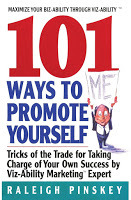 statement from P.T. Barnum, “Without promotion, something terrible happens. Nothing.” Raleigh Pinskey, author of the book
101 Ways to Promote Yourself
taught me this quote. In the early days of her public relations career, Raleigh promoted rock and roll groups. Learn more about Raleigh and take a free teleseminar (follow this link). In simple terms promotion or marketing means including others. As the Bible says in James 4:2–3, “You have not because you ask not.” I've often heard David Hancock, the founder of Morgan James Publishing summarizes this verse saying, “Don't ask don't get.” A key part of the process is asking or including others in your marketing or promotion. There are many simple yet significant ways to as others to help you. For example, in the final pages of
10 Publishing Myths
, I ask readers to post a review on Amazon, Goodreads, Barnes & Noble.com and other places. I've seen many other authors use this strategy. In addition to asking for their help, I include a simple link where the reader can get a book review template to help them know what to write for a review. I got my template from my friend and public relations expert Sandra Beckwith. Yes I purchased this product which comes with the rights to use it for your own promotion. I created a page for
10 Publishing Myths
with resources and ideas to help people tell more people about my book. You can see the variety of resources and suggestions at this link.
statement from P.T. Barnum, “Without promotion, something terrible happens. Nothing.” Raleigh Pinskey, author of the book
101 Ways to Promote Yourself
taught me this quote. In the early days of her public relations career, Raleigh promoted rock and roll groups. Learn more about Raleigh and take a free teleseminar (follow this link). In simple terms promotion or marketing means including others. As the Bible says in James 4:2–3, “You have not because you ask not.” I've often heard David Hancock, the founder of Morgan James Publishing summarizes this verse saying, “Don't ask don't get.” A key part of the process is asking or including others in your marketing or promotion. There are many simple yet significant ways to as others to help you. For example, in the final pages of
10 Publishing Myths
, I ask readers to post a review on Amazon, Goodreads, Barnes & Noble.com and other places. I've seen many other authors use this strategy. In addition to asking for their help, I include a simple link where the reader can get a book review template to help them know what to write for a review. I got my template from my friend and public relations expert Sandra Beckwith. Yes I purchased this product which comes with the rights to use it for your own promotion. I created a page for
10 Publishing Myths
with resources and ideas to help people tell more people about my book. You can see the variety of resources and suggestions at this link.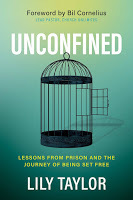
One of my Morgan James authors Lily Taylor has a new book called Unconfined . She created this page (follow the link) with various ideas and resources. Notice she has created a free study guide for her book and also given readers a place to ask for prayer. I call these two book examples to your attention to give you ideas for your own book. It doesn't matter if your book is brand new or has been out for a while. Every author can create such a page of resources to help their readers tell others about their book. Have you created a page to help others promote your book? What does it include? Let me know in the comments below. Tweetable:
 Get 10 Publishing Myths for only $10 +FREE shipping + over $200 of free bonuses.
March 7, 2021
The Value of Reading Plus Action

By Terry Whalin @terrywhalin
Writers are readers and reading is a wonderful way to get ideas and find opportunities for your writing. Years ago I read about Disney Dollars in my local newspaper. Since my childhood, I've been interested in coins and at that time I subscribed to a publication called The Numismatist. The Numismatist is the monthly publication of the American Numismatic Association I crafted a short query letter pitch to the editor and got an assignment to write an article about Disney Dollars. With my magazine assignment in hand, I approached the media office at Disneyland and scheduled an interview with a vice-president on the backlot of Disneyland. As you can see from this story, I turned reading a short newspaper article into a published magazine article. I did more than read the article. I used the article as a springboard to approach a magazine, get an assignment, then publish a magazine article. The process began with reading my local newspaper. I found my idea through regular reading of my newspaper. Your ideas may come from an experience or reading a magazine or a book. I encourage you to read broadly—different genres and types of books and blogs and publications. You never know where the idea will come so be open. While reading is the foundation, it takes more than reading. You have to take action on what you have read. While I've been blogging regularly since 2008, it's only in the last few years that I've included a ClickToTweet link toward the bottom of each entry. On a regular basis, I read Edie Melson's The Write Conversation blog. Over four years ago, she wrote a detailed entry with a Screencast about ClickToTweet. I carefully read that article and applied it to my own blogging. I began using ClickToTweet. As I monitor my social media feeds, I've seen many others use my ClickToTweets as an easy tool to pass on my article to others. Reading was my path to learn about this tool but I did more than simply read it, I took action.
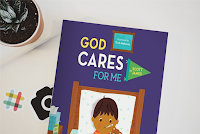 Almost daily, authors and publishers mail books that they want me to read and review. I receive more material than anyone could possibly read—even if they read all the time. My own time to read is limited and something I do for fun and to support other writers and good books. If I read a book, then I write a short book review which I post on Goodreads (where I've written over 700 reviews and have 5,000 friends) and Amazon (where I've written over 1,100 reviews). I also post about my review on social media and tell the author or publicist about my actions. For example, last week I read Dr. Scott James children's book, GOD CARES FOR ME, HELPING CHILDREN TRUST GOD WHEN THEY'RE SICK. Here's my post about it.
 In other articles, I've written about using Hootsuite to post 12–14 times a day on various social media platforms. You may wonder if people read these posts. Recently I spoke at the
 Faith Writers Writing Conference (virtual). One of the participants was in Nigeria—because he read one of my tweets about the upcoming event. This coming week, I'm speaking at the Carolina Christian Writers Conference (virtual). There is still time for you to come to this event so just follow the link or click on the image. How are you applying your reading into your writing life? For example, you can read about list building and the importance for every author but it does you little good if you don't apply this information into your writing life and work. Let me know how your reading brings value to your writing in the comments below. Tweetable:
 Get 10 Publishing Myths for only $10 +FREE shipping + over $200 of free bonuses.
February 28, 2021
What Action Do You Take When You Fail?

By Terry Whalin @terrywhalin
I have many aspects of my work in publishing which fail to yield many results (if anything). Failure and rejection is a consistent part of this business. As a writer, I've been published many times in magazines and books but I've also failed in this process. In this article I want to give you some examples and what I do in these situations. I write this information in hopes, it will encourage you to keep going inspite of these situations. The worst action you can take when failing is to stop and give up. I've watched many others stop writing or trying to get their work published. Here's just a few of the ways I have failed: I craft and send emails that don't get a response (silence). It happens whether I'm pitching an editor on a magazine article or a book editor on a proposal or writing a friend to endorse my book or promoting somethng to my email list. These situations are a part of my life and in a sense a failure—but only a failure if I let it stop me from continuing the journey. I work with authors and my publishing colleagues at Morgan James Publishing to send them a book contract—which they never sign and return. I understand authors have many options where their book is published and we are not always the best fit for them. It is frustrating to invest the time and energy into another person then have them not respond or not sign their contract (even though I follow-up with them). Sometimes the reason is simply a timing issue. In recent weeks, I've had a couple of authors where I offered them a publishing contract several years ago and they did not sign it, but now the timing is right and they are going to sign their contract and move forward. Through the process, I've learned we only see what we see and not all of the dynamics in the other person's situation. It may look like failure. Or maybe I launch a marketing campaign for a book or a product with few results or no sales. These are only a few examples of things I try and little happens. When you face a failure, what actions do you take? Here's some of the things I do: 1. I change the pace and write something different. The writing world has many possibilities for you to write. If you need some ideas, check out the free chapter of my Jumpstart Your Publishing Dream book. Follow this link to get it. 2. I pitch someone else with my rejected project. Use Google or your market guide to find other places for your pitch then get that project back into the marketplace for consideration. You are looking for the right fit and that process often takes multiple times to find. 3. I read a how-to book for ideas and motivation. I read how-to books all the time for ideas, insight and motivation. While I've written several of these books (see the offer below), these books often move me into a different mindset and I'm ready to try again and take action. 4. I make some new connections on LinkedIN or another network. Often in publishing, it is who you know as much as what you know. LinkedIn will suggest people for possible connection. As you expand your network, you also expand your possibilities for writing opportunities. Editors and others move around in the publishing world, but they take their LinkedIn accounts with their change. I've only given a few ideas about what to do when what I try fails. There are many other ways. What actions do you take? Let me know in the comments below. Tweetable:
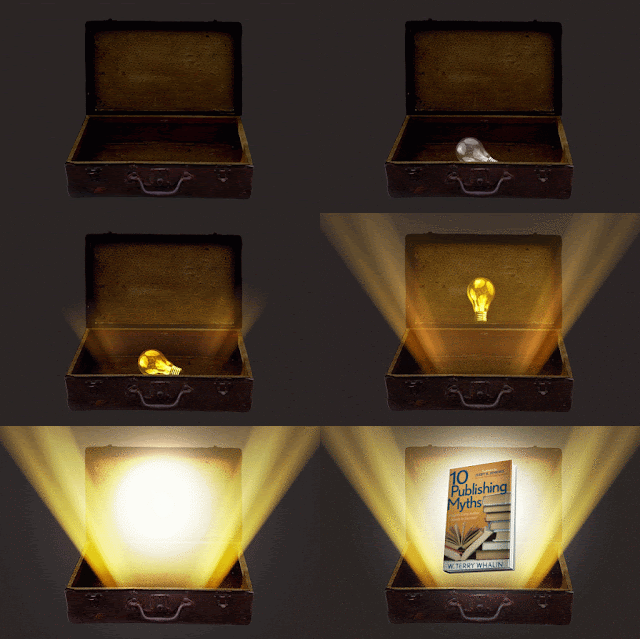
Get 10 Publishing Myths for only $10 +FREE shipping + over $200 of free bonuses.
February 21, 2021
Don't Play the Blame Game

By Terry Whalin @terrywhalinWhen things go wrong (and they often do in the publishing world), it is easy to blame someone else.
As an editor, I hear writers who are disappointed with their book sales. They blame the publisher for not doing enough marketing and pushing on their book. Yet when we look to see if we've heard anything from this author in the last few months, often we find nothing but silence. We can't be promoting the author if we don't hear about their marketing activity. Are they marketing (hopefully so) but then they also have the responsibility of telling their publisher about their marketing efforts. In my detailed calls with authors, one statement that I always make sure and include is: “80% of the marketing is up to the author.”
This statement is true no matter who publishes your book—whether they pay you a large advance or a small advance. 80% of the marketing is up to the author and the author's activity. Your publisher may be able to sell the book into a brick and mortar bookstore but it is the author's activity (marketing) which drives people into that bookstore to buy the book. When you point your finger, think about the way your different fingers are pointing. One is extended but the other four are directed back to you. A pointed finger is a good illustration of what authors need to think about when it comes to blaming others for something not happening. My key message in this post is rather than blame others, take your own actions and responsibility. If you aren't getting enough sales, what are you doing to tell people about your book? Are you booking yourself on podcasts? Are you collecting the recording and continuing to use the recording to market your book? There are many different ways to market your book? You can be on talk radio. You can write print magazine articles on a related subject to your book. You can write blog posts on your blog. You can write blog posts on other people's blogs as a guest blogger. You can advertise on Facebook or some other platform. You can market your book to your email list. You can write a newsletter and send it to your list. You can market your book on social media (various platforms and methods). You can market your book in person to others and also when you speak. The list of possibilities and opportunities are endless and only limited by your own imagination and energy. Have you hired a publicist to promote your book? You still have to market and can't give the entire responsibility to the publicity firm. Many of these places charge $3,000 to $5,000 a month. One of my authors told me that last year she spent $50,000 with a firm and wasn't going to do that again. When I heard that information, I thought to myself, “Wow, that is a huge investment and would have to sell many books to get a return on that investment.” It was not a wise move in my view. During my conversation, I affirmed that she needed to do something different in the future. Bestselling author Jack Canfield has studied what it takes to be successful and wrote his book, The Success Principles . The first principle is I will take 100% responsibility for my own success. I suspect no one wants to take 100% responsibility for their own success (I don't) but it is the best course of action for every author. If you take this responsibility, then you don't play the blame game and point the finger at others. Instead, get busy and take action yourself to make things happen. Have you played the blame game in your conversations, writing or thoughts? What steps are you going to take to move in a different direction? Let me know in the comments below. Tweetable:
When something goes wrong with your book (which often happens in publishing), do you play the blame game? This prolific editor and author helps you take a different path with your situation. Get the details here. (ClickToTweet)

Get 10 Publishing Myths for only $10 +FREE shipping + over $200 of free bonuses.
February 14, 2021
The Details Matter

By Terry Whalin @terrywhalin
Last week I taught a zoom class at a local writer's group. I selected a topic that I've taught before with a prepared handout and solid information. I did not carefully review all the links in my handout before the workshop (a normal part of my practice). Several of the links didn't work and I had to rework my handout after the workshop and upload the corrected handout to my server. These details matter. I prepared a series of emails and social media campaign. I crafted a social media post and used it a number of times (each with a different image). From my active role on social media, I know that not everyone sees every posting. You need to post at various times and places because you never know who will be reading your work. In my carefully written post, I discovered a single word which was misspelled. I scheduled it in my Hootsuite program to post repeatedly over the next week. While it was time consuming that no one sees, I carefully edited each posting and fixed that single misspelled word. The details matter. One of my writer friends purchased a product that I was promoting several months ago and could not find the place to login and use the program. She sent me a short email about it. Why? She knew I would respond (which I did). The first link I sent her did not work, then I thought of a second link to send her (more email exchanges). The second link worked and she got into her product. The details matter. There is the ever-changing world of technology. Hard coded program that I use the operating system failed and needs to be reworked. Adobe flash stopped at the end of last year and several of my sites are not working properly and need to be revised. The list goes on but it's all part of the writing life—and using what you have in front of you. Not easy but the details matter. Handling these types of details is time consuming and somewhat annoying but part of being a professional writer. As writers, our lives are often filled with mundane tasks like reading and answering email, engagement on social media, even doing social media, answering and returning phone calls and many more such tasks. I recall what I've heard about elite sports figures and how they practice their craft over and over during days no one sees them or knows about their workouts. Yet such routines feed into their excellent results. It's the same in the world of publishing. The details have to be handled and matter. Are you resisting or mired in details with a writing project or task? Why do the details matter in your work? Let me know in the comments below. Tweetable: Get 10 Publishing Myths for only $10 +FREE shipping + over $200 of free bonuses.


