
W. Terry Whalin's Blog, page 23
September 5, 2021
Help Me Launch My Next Book

By Terry Whalin @terrywhalinIn 2004, as a frustrated editor, I wrote Book Proposals That $ell, 21 Secrets To Speed Your Success . This book has over 100 Five Star reviews and has helped many writers find a literary agent and land a publishing deal. One of my key reasons for writing it was to help more writers succeed in publishing and also to help agents and editors (like myself) to receive better submissions.
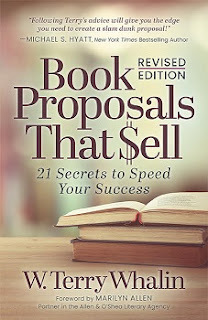 Publishing has changed a great deal since that book was published. In recent months I've revised the content, gathered new endorsements. The revised edition includes a foreword for the book from literary agent Marilyn Allen who has worked with Ken Follett, Stephen King, John Gray and many others. Literary agent Steve Laube told me at a recent conference, my revised edition fixed a key flaw with my original book. At that time I was focused on nonfiction. Some fiction writers used the first edition and it helped them. The reality in today's publishing world, I believe every author needs to write a book proposal—fiction, nonfiction, children's book—even if you self-publish. Why? Your proposal is essentially your business plan how you are going to sell your book and it contains information which never appears in your manuscript yet is critical to the publishing process. I worked with Misty Taggart at Trailer to the Stars to create a 60–second book trailer and you can watch it here. In addition, I've reworked my old website with new information and a new free book proposal checklist ebook. In recent years I have participated in different launch teams for new books. I'm working with launch manager Tammy Karasek on the details of this book launch. I'm writing to ask if you will join my launch team for
Book Proposals That $ell
which releases on October 5th. My launch team will have a limited number of people. You will have access to our private Facebook group, drawings for prizes, special images to use and much more. The first step in this process is to fill out the launch application (which should only take you a few minutes). Through the years, I've helped a number of other authors as I've read and reviewed their books. I hope you will consider helping me to successfully launch Book Proposals That $ell. You have to apply to join the launch team and fill out the launch application. Thank you in advance for your consideration and help. Hope to see you in our private Facebook group. Have you ever launched a book with a launch team? Or maybe you have participated in a launch team? Let me know in the comments below. Tweetable:
Publishing has changed a great deal since that book was published. In recent months I've revised the content, gathered new endorsements. The revised edition includes a foreword for the book from literary agent Marilyn Allen who has worked with Ken Follett, Stephen King, John Gray and many others. Literary agent Steve Laube told me at a recent conference, my revised edition fixed a key flaw with my original book. At that time I was focused on nonfiction. Some fiction writers used the first edition and it helped them. The reality in today's publishing world, I believe every author needs to write a book proposal—fiction, nonfiction, children's book—even if you self-publish. Why? Your proposal is essentially your business plan how you are going to sell your book and it contains information which never appears in your manuscript yet is critical to the publishing process. I worked with Misty Taggart at Trailer to the Stars to create a 60–second book trailer and you can watch it here. In addition, I've reworked my old website with new information and a new free book proposal checklist ebook. In recent years I have participated in different launch teams for new books. I'm working with launch manager Tammy Karasek on the details of this book launch. I'm writing to ask if you will join my launch team for
Book Proposals That $ell
which releases on October 5th. My launch team will have a limited number of people. You will have access to our private Facebook group, drawings for prizes, special images to use and much more. The first step in this process is to fill out the launch application (which should only take you a few minutes). Through the years, I've helped a number of other authors as I've read and reviewed their books. I hope you will consider helping me to successfully launch Book Proposals That $ell. You have to apply to join the launch team and fill out the launch application. Thank you in advance for your consideration and help. Hope to see you in our private Facebook group. Have you ever launched a book with a launch team? Or maybe you have participated in a launch team? Let me know in the comments below. Tweetable:



August 29, 2021
The Constant Juggling of the Writing Life

By Terry Whalin @terrywhalinAs a writer and editor, my day to day life is a constant series of juggling between long-term priorities and the immediate. Today I am writing a regular newsletter which goes out every week (a recent new assignment for me). I'm working with my authors as an editor at Morgan James Publishing. I'm writing some book reviews (something I do for fun if I read or hear a book). Plus I'm pitching some article ideas and handling other details like incoming emails. It's just a glimpse at my writing life which to some would be stressful but I've tried to learn to roll with the changes and attempt to handle each detail methodically and deliberately (sometimes I succeed better than others). Also I'm constantly working on getting some regular exercise, hydrating with water, monitoring my food intake and diet along with other details called life. What happens when you miss something? I'm keenly aware of the importance of meeting deadlines, showing up at the right time and place and keeping things moving with excellence (all key aspects of being a freelance writer). Yet my actions are not always perfect and at times I miss something. While I strive for perfection, I don't always achieve it. When I do make an error or mistake, there are several key actions that I take: 1. I admit the error and apologize. Good communication is always a high priority with me. 2. I attempt to correct the mistake or error (if possible—and it is not always possible). 3. I resolve to do better in the future. My attitude is a critical aspect of these situations. To feel bad and inadequate will ultimately not move things forward. Instead, I try and move forward—sometimes easier said than done. While to some people outside of publishing, the community seems large. Overall, it is a small group of relationships. Each of us need to maintain, keep and expand these relationships. Your actions and response is an important part of this process. Part of my reputation is people know I'm always eager to do whatever is needed and right. Are you juggling different priorities and balls throughout your day? How do you handle it? What insights do you have for this process? Let me know in the comments below. Tweetable:
 Get 10 Publishing Myths for only $10 +FREE shipping + over $200 of free bonuses.
August 22, 2021
Consistent Experimentation

By Terry Whalin @terrywhalinAs a writer are you consistently trying new things? I've been doing this work for decades. As a part of it, I'm always trying new things. Recently my son, Tim, told me about substack (which I had never visited or heard about). I explored the website which publishes free and paid writing. I decided to join the site and create a publicatikon. What topic would make my writing distinct and stand out? For decades, I have been a freelance writer and I know making money is always a popular topic. I called my publication, Making Money Freelance Writing. Like these articles which are always about some aspect of publishing, Making Money Freelance Writing is going to be about the various ways and skills needed to make money as a freelance writer. In this process, I will be consistently publishing articles on this subject. The regular writing on the focused topic is one of the keys to building an audience. I'm working through the different tools on the site such as an About Page. Notice I filled out this page and included links to introduce the reader to my work in publishing. Any time you start a new website, it is important to fill out the various introductory materials. Also I saw the site gives the ability to create an enviroment or look for your publication. This aspect is still in process but I've reached out to a designer on Fiverr.com and I'm working on changing the look. If you join me in this process, then you can watch this transformation and learn from the articles I will be publishing on the site. As I write new articles and promote this publication I will be growing my readers. Like every publication, I have a small audience. I'm writing this article to ask you to join me in this journey at Making Money Freelance Writing. I'm going to be learning something from this process and hopefully you will as well. I encourage you to explore substack and see if there is something you want to create and promote. It's another step in my writing life. Experimentation is a constant part of the writing life. What type of experiments are you making? Let me know in the comments below. Tweetable:
 Get 10 Publishing Myths for only $10 +FREE shipping + over $200 of free bonuses.
August 15, 2021
A Friendly Reminder

By Terry Whalin @terrywhalinRecently I dropped into my local library. I was looking for some reference books like Literary Market Place and Writer's Digest Market Guide. Almost every public library in the country gets these much-used reference books. I located these books which from my experience are not normally allowed to be checked out. To My surprise, I could check out these large reference books and take them home. For several days, I brought the books to my office, found the information I needed, photocopied a few pages then returned them. When the due date for a library book gets near, my library will send an email “friendly reminder.” This week I got one about the two-volume Literary Market Place which I had returned several weeks earlier. Something went wrong on the check-in system. To my surprise, I was still responsible for these expensive reference books. Literary Market Place retails at $449.50 for this two-volume set of books. I planned to call the library in a few hours when they opened but worried about what I might hear from this “friendly reminder.” When I reached a librarian, I gave her my card number and she understood my question then put me on hold for a few minutes (which seemed like an eternity). Finally when she returned, she told me they had located the books and check them back into the library. While I had returned these books in the normal place, apparently reference books like these are handled differently. To get them checked in, I was supposed to take them directly to the reference librarian when I returned them. I ended that phone call in relief these expensive reference books had been found and I was no longer responsible for them. I learned something new about how to check out reference books from my local library. I tell you this story for several reasons: 1. I'm a frequent user to my local library, checking out and using a variety of types of books. I love access to the audiobooks in my library through Overdrive. Also sometimes when I can't locate a book, I can fill out a request form and the library will order the book and because I suggested it, when it arrives, I will be the first person to check it out. 2. The library “friendly reminder” email system triggered my call to the library to locate these missing books which I had returned. Do you use your local library? As writers, we need this important resource. Let me know how you use your library in the comments. Tweetable:
 Get 10 Publishing Myths for only $10 +FREE shipping + over $200 of free bonuses.
August 8, 2021
Writers Must Wear Many Hats

By Terry Whalin @terrywhalinAs a writer, I get a lot of enjoyment telling stories—whether the stories of others or my own stories. Crafting those details on my computer screen is a lot of fun. Yet as a writer, the task is much more diverse than just telling stories. As writers, we must wear many different hats and play many different roles. Many years ago as a young journalist, I learned a life-long lesson about myself and what I do. I love to write, craft stories and put these words on paper then figure out how to share them with the world. Admittedly many others want to do this skill as well and at times it is a challenge to make a living in this work—but possible. There are many ways to use your writing. Many people focus on books but your writing can be used in many different ways. I detail some of the possibilities in the first chapter of Jumpstart Your Publishing Dreams . Get this free chapter here and look at the different writing possibilities. I've written more than a dozen books for other people as a co-author and a ghostwriter. As a part of that writing process, I get to pretend to be in the mind and shoes of that other person. This little mind trick is one of the ways to successfully write those stories for others. As a part of my writing life, I spent 17 years with Wycliffe Bible Translators. Ten of those years were in linguistics then I returned to my writing and began writing for magzines and eventually my first book was published. During this period, my children were small and I would do some of my writing at the Wycliffe office—often on a Sunday afternoon. Almost no one was at the office during this period. I noticed a light on in the director's office. On the way to my office I walked past to see who was there. To my surprise it was bestselling author Jamie Buckingham. Twice a year without any fanfare, Jamie came to our office and wrote the donor letter and various articles for our Wycliffe director. His name never appeared on these articles but Jamie was the storytelling pen behind this writing. He would tell me, “Terry, today I'm a jungle pilot in the jungles of Peru, South America.” I met people who gave to many different missions and said they normally tossed the donor letters and did not read them—but every time they read the Wycliffe donor letter. They loved trhe storytelling in that letter and behind it was the pen of Jamie Buckingham. As a writer, we need to learn to pitch our work to the media, to editors and to literary agents. We have to learn to write documents called “book proposals” and others called “query letters” in this pitch process. Some people would call this pitching process, marketing. Your writing just stays on your own website or your own notebooks if you don't learn to pitch. It's another skill you need to learn and develop as a writer. Also writers have to become editors—at least of their own writing. I will often write something, set it aside for several hours or days, then return to it and rewrite or edit it. Editng your own writiing is a skill each of us have to develop and then use over and over as writer. Writers are also researchers to compile information and find interesting facts and statistics. We have to learn to ask good questions to get the stories and information that we need from others. As our books get published, we have to become proofreaders (or hire an expert at this point in the process). Also in this process we need to gather endorsements and have to be connected to others in order to get these endorsements. Networking and your connections to others as a writer is another important skill or hat. In this article, I've given you a starting point. We need a diverse set of skills in this business or wear multiple hats. Which hat are you wearing today? Have I missed some roles or hats? Let me know in the timments below. Tweetable:
 Get 10 Publishing Myths for only $10 +FREE shipping + over $200 of free bonuses.
August 1, 2021
Why You Need The "Right" Help

By Terry Whalin @terrywhalin
Earlier this year I wrote about my Frog in the Kettle experience. In a very slow process, my computer and browser continued to grow slower and work poorly. I turned to the Geek Squad and they took over my computer and fixed it. Then a few weeks later, it slowed again and I was back to the same process. I could not understand what was going on and causing continual problems with the use of my computer. Finally I got to the “right” technical person on the Geek Squad. He looked at my situation and realized I needed something additional that I did not have: a firewall. As an individual, I had never thought about needing a firewall but I did to prevent the computer attacks from others. I don't understand why others would want to install malicious material on my computer but it is definitely a part of our world. A few days ago, I had the Geek Squad install this firewall protection.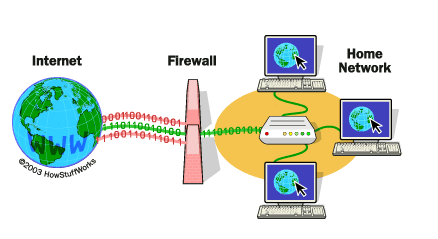
It's been a few days since I made this change and the experience has transformed my desktop computer (and the firewall helps all of my devices including my phone). My computer is more responsive and I'm getting more done without the frustration of my browser spinning on my screen. I've been doing this long enough to realize I will still have glitches in this process. Overall this change has resulted in less stress and better performance. It happened because I persisted and finally got to the right technician who could help me with my situation. My lesson for you is to stress the importance of asking for help but in addition, you need to find the “right” help for your situation. Keep asking and looking until you find it. As writers, we are on a constant search for answers. We have many choices along the path and you need wisdom and insight to make the right choices in this process. We are looking for the right editor, the right experienced person to guide you in the publishng process, the right marketing effort for your books, the right publisher and even the right topic for your book in the first place. Each of us have numerous choices. in this process. Last year, as an editor, I met a writer who had a well-done nonfiction book which she had professionally edited. I offered her a Morgan James Publishing contract but after numerous emails and conversations, she decided to publish with another company. I wished her well but I knew this other company. This company touts their connection to a well-known publisher but that's not the “whole” truth. In reality, this company is a part of a larger entity which is only online and publishing over 50,000 titles a year. I've met authors who have spent $20,000 with this company (something they will never earn back through book sales)—essentially a scam. My reason for telling you this story is to encourage you to be careful with these choices and get the right help. There is no single best path for each of us in this publishing journey. Every writer has to experiment, fail and keep trying in this process. Let me know about your experiences finding the right help in the comments below. Tweetable:
Get 10 Publishing Myths for only $10 +FREE shipping + over $200 of free bonuses.
July 25, 2021
Reading Habits

By Terry Whalin @terrywhalin
Whether we are conscious of it or not, we are creatures of habit. It is certainly true in my life in publishing. Since a small child, I have loved reading books. Yes I have a reading habit and I encourage every writer to read in many different areas and styles of books. In my case, most of what I read is nonfiction. It seems natural because I've written over 60 nonfiction books. I listen to audiobook—all nonfiction. I do most of my reading in a comfortable leather chair in my office. I have a once-a-year indulgence (which I wrote about several years ago) reading the current Daniel Silva book. The latest book, The Cellist launched last week and is the 21 Gabriel Allon book. In early May, I ordered my signed copy (still available as of this writing follow the link) because I receive his email newsletter and knew it was available. The signed copy costs exactly the same as the regular book but includes a page called a tip-in. On a Facebook Live, I heard Silva say it took him several days to sign all these pages and return them to his publisher for the printing process. Each of these sales are pre-sales and count toward the sales of the first week of release. Daniel Silva made several television appearances like on The Today Show plus a Facebook Live interview. The Cellist will be the #1 fiction book on the New York Times bestseller list this week.
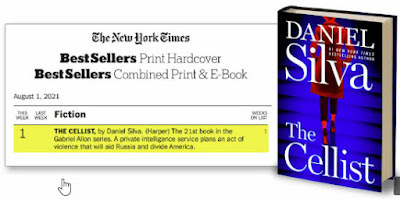 In my office bookshelf, I have a number of signed Daniel Silva books but only one of them was actually signed with my name on it:
The Rembrandt Affair
. For the release of that book, I lived in Scottsdale, Arizona and attended a signing at the Poisionous Pen Bookstore and Daniel Silva spoke and signed books. Before the pandemic, he regularly traveled to various key cities when his book releases. Hopefully this pattern will return in future years but this year he handled the release with virtual events and still landed on the bestseller list (which shows his strong fan base—including me). From listening to different author interviews, I learned Silva's parents were schoolteachers and reading has always been a part of his life and habits as well. He loves
The Great Gatsby
and said that
1984
by George Orwell was his favorite novel. I enjoyed the Facebook Live interview and learning his writing routine on a legal pad with a pencil on his office floor. Plus he is already working on the next novel with about 65 pages in the works on that book. I'm currently reading
The Cellist
. I love the storytelling and find it a page turner (hard to stop reading). I often do this sort of reading in the evenings. What are your reading habits? Do you have a particular type of book you read? Where do you read? Let me know in the comments below.
In my office bookshelf, I have a number of signed Daniel Silva books but only one of them was actually signed with my name on it:
The Rembrandt Affair
. For the release of that book, I lived in Scottsdale, Arizona and attended a signing at the Poisionous Pen Bookstore and Daniel Silva spoke and signed books. Before the pandemic, he regularly traveled to various key cities when his book releases. Hopefully this pattern will return in future years but this year he handled the release with virtual events and still landed on the bestseller list (which shows his strong fan base—including me). From listening to different author interviews, I learned Silva's parents were schoolteachers and reading has always been a part of his life and habits as well. He loves
The Great Gatsby
and said that
1984
by George Orwell was his favorite novel. I enjoyed the Facebook Live interview and learning his writing routine on a legal pad with a pencil on his office floor. Plus he is already working on the next novel with about 65 pages in the works on that book. I'm currently reading
The Cellist
. I love the storytelling and find it a page turner (hard to stop reading). I often do this sort of reading in the evenings. What are your reading habits? Do you have a particular type of book you read? Where do you read? Let me know in the comments below.Tweetable:
 Get 10 Publishing Myths for only $10 +FREE shipping + over $200 of free bonuses.
July 18, 2021
Why Writers Should Care About Contract Details

By Terry Whalin @terrywhalinOne of the important elements in every book deal is the publishing contract. Yes I can see you possibly yawning and clicking away but I hope you will hang in there with me. First, I am not an attorney but I have studied publishing contract law and read numerous books on the topic—plus I've signed over 60 book contracts. Two of these contracts were lengthy with six-figure advances—and yes from well-known publishers. I've learned some hard lessons in this process and often I hire my own literary attorney to review an agreement before I sign it because of those hard lessons. Most contracts are buried in file cabinets and not in the public domain to show you for this article. The exception that I'm going to show you in this article is because this contract is in the public domain from a court case. As a writer, I get a lot of enjoyment telling stories—whether the stories of others or my own stories. Crafting those details on my computer screen is a lot of fun. Yet as a writer, the task is much more diverse than just telling stories. As writers, we must wear many different hats and play many different roles. One of these roles is to carefully read and review our contracts and ask questions and clarifications. If I need help in this area of contracts, then I turn to my literary attorney or The Author's Guild. Even if you have never published a book, if you have a contract, you can join the author's guild. As a part of your membership, you can get their feedback and suggestions for your publishing contract. The time to get these clarifications and understanding for your contract is before you sign it. Some publishers have lengthy contracts for a reason. Normally some author before you has caused an issue, so the resolution to that issue is an additional clause to their contract. For this reason, many of these agreements are lengthy and can have some innocent words with big meaning behind them. Part of the reason many publishing contracts are lengthy is because some author ahead of you has caused a challenge for the publishing company and they added a clause so this situation does not happen in future books. The exact words are important and another reason why you want an expert (someone who is looking out only for your interest) that you get to review the contract before signing. Every publishing contract has an “aceptability” clause where the publisher gets to determine if the writer has delivered a manuscript which is acceptable to be published. This issue is why one of these dusty contracts is in the public domain and something I can show you in this article. The contract was done in the pre-computer days so it has crossed out sections and handwritten sections. It includes a four million dollar advance for two novels. Hopefully I've given you some motivation to look at this Joan Collins agreement. You can follow this link to see the agreement from the public domain. As I understand the story, her agent crossed out the acceptability clause and she did not deliver a novel to the specified requirements. Random House balked at paying the remainder of the advance and the parties went to court. Because this acceptability clause was crossed out in the signed agreement, Random House lost the case—and publishers will always have this clause in their contract. How did I get a copy of this contract to show you? Years ago, I chaired a workshop at the American Society of Journalists and Authors annual conference in New York. I had three literary attorneys and a literary agent on my panel. One of those panelists was the former deputy consul at Simon and Schuster and brought this story and gave me the electronic version. When I heard these details, I pay attention. I also attend conferences and learn (something I recommend to every writer). Admittedly I've scratched the surface of a complex topic but hopefully given you some things to consider when you sign a contract in your future. How do you process your publishing contracts? Let me know in the comments below. Tweetable:

Get 10 Publishing Myths for only $10 +FREE shipping + over $200 of free bonuses.
July 11, 2021
Productive Social Media

By Terry Whalin @terrywhalin
How in the world do I post on social 12–15 times a day? To some people it appears that I spend hours each day on social media—when in fact I don't. The truth is I have created my own system. In this article I want to give you some details about what I do in hopes you can adapt it to your own social media plans. I use a scheduling tool. There are several types of these tools but I use the professional version of Hootsuite because I quickly maxed out the free one. Throughout my week, I'm reading and learning from other writers, then adding their content into my social media scheduled posts. The bulk of my posts every day are from others and not my own writing. I envision this section like I am back in my magazine editor days. On my social media feed, here's my mindset for what I'm doing: I'm essentially running a magazine about publishng for anyone who wants to learn about it. I'm several weeks ahead in my scheduling of these posts. It's something that most people do not do and I'm fairly certain my author friends appreciate that I use their material (at least from the limited feedback I receive from them). I read each of these articles as I schedule them and it adds to my own knowledge and information about the publishing world. Once a week and often on a Tuesday, I return to my scheduled posts and fill in the rest of them. As with the other posts, I've created my own pattern or system in this process. For example, I have a series of lead magnets or resources I've created to help others. Each of these resources, ask the reader to give me their first name and email address so they are added to my email list when they get the free resource. Many authors use this method but I make sure I don't use it too much so use one of these resources in the morning and one in the afternoon. Each of my posts include an image, a short link to the resource or article (because otherwise sometimes they are broken when posted) and a hashtag. Notice I have created a standard or pattern for each of these posts. If the posts are related to my work like a blog post, a free offer, a book I'm promoting through stressing the benefits or something else related to my own work, I have saved a series of these posts. They are stored in a text file which I use each week. Also I have a series of royalty-free images that I've pulled over the years and stored in a file on my computer. I use this method to repurpose and promote these articles from The Writing Life, which has over 1500 searchable entries (a great deal of content). As a reminder, I've created a search tool for my various blog entries (scroll down to find it) but I use this tool often to find my own articles. These are some of the details that I open and use in this once-a-week process. If I'm traveling or going to be away from my office, then I schedule even more than a week's worth. Because I do this process on a consistent basis, it runs even if I'm away from my computer. As I mentioned, I look at my social media feeds like running a magazine. If I see a potential article and it speaks about a holiday or a deadline earlier than where I'm scheduling, then I use it earlier (often that day) in my social media feed. I've given you a number of the details which I have not written about before but use each week in my social media feed. I've created my own system—and know you will have to create a system that works for you and your plans. Do you have a plan or system for your social media? Let me know in the comments below. Tweetable:
 Get 10 Publishing Myths for only $10 +FREE shipping + over $200 of free bonuses.
July 4, 2021
The Importance of Systems and Habits

By Terry Whalin @terrywhalinAs a writer and editor, I'm involved in a number of different projects each week. Many of these tasks are routine and something I do over and over. For example using Hootsuite, I post on social media 12–15 times each day. I write and each week I post an article for The Writing Life. I read books and write book reviews. I speak with authors about their submissions to Morgan James and many other tasks. One of the ways these various projects get done is tied to my habits and various systems that I've created. Do you have such patterns in your own writing life? I encourage you to create habits and systems using tools to be consistent. I've written in these articles about the importance of being consistent. How does consistency happen? From my experience, one of the key ingredients is to develop a habit or system. Here's a few of the habits and systems I've created in my writing life: --I consistently read books and after reading the book, I write a short review and post it on Amazon and Goodreads. --Also I am consistently listening to audiobooks, writing a review and posting it. Each of these actions are intentional.--Regularly calling people or emailing and looking for new opportunities.--Consistently emailing or calling and inviting authors to submit their book manuscripts or proposal to Morgan James.--Also I follow-up consistently with potential Consistent follow-up with my potential Morgan James authors. The Difference Maker There are many functions that I do over and over. Consistent completion is important for many of these tasks. For example, I have a number of monthly writing deadlines. I enter the task in my reminders which helps me complete the task on the deadline. Meeting deadlines is a critical element for every professional writer. You do not want to be asking your editor for more time to meet your deadline. It is not a good impression you are making on them. For almost any task that I do on a regular basis, I often create a system or method which as I do it over and over and eventually it becomes a habit. I’m always looking for ways to streamline and improve the system with a new tool. The result is these tasks get completed. Are you using systems to create these habits for your writing life? Or are you reinventing it each time? Completing these tasks is important for several reasons:
1. Professionalism
2. Dependability
3. Your Reputation as a Writer
4. To Add to your body of work as a writer
5. To get additional work or assignments From my experience in this business, nothing happens without taking consistent action which involves regular communication (phone or email or in the mail or text). How important are creating systems or habits in your writing life? Let me know in the comments below.----Last week, Glyndon Greer at the Adazing Podcast published our interview about publishing and how authors can succeed with their books. Listen on Spotify or Apple. Tweetable:

Get 10 Publishing Myths for only $10 +FREE shipping + over $200 of free bonuses.


