
W. Terry Whalin's Blog, page 20
April 3, 2022
Where Is the Easy Button for Publishing?

By Terry Whalin @terrywhalinWriting is easy. You sit at your keyboard, open a vein and bleed. This statement has been attributed to Ernest Hemingway. On the surface, publishing looks easy. You write a book and publish it. People are looking for something easy—an easy button. One of my friends, Joel Comm, was selling easy buttons that you could have on your desk and push when you needed it. Yet the button only went up and down—and didn't do anything. From my decades in publishing, there is no easy button and instead the days are full of many “minor” decisions which will make a huge difference in the success or failure of your book. In the pages of these entries, I've told the story about Mark Victor Hansen and Jack Canfield, co-authors Chicken Soup for the Soul (one of the most successful series of books in the English language). People often forget these books were rejected 140 times before they finally found a small publisher. That is a lot of rejection. Mark tells the story in the foreword to my book Jumpstart Your Publishing Dreams . Just follow this link to download and read the foreword and first chapter. Last year, on The Write Conversation blog, I told the story of Andy Andrews and his struggle to get published and then how he became a New York Times bestselling author. Follow this link to read this article but the key fact is to notice the persistence and perserverance Andy did to finally succeed with his books and writing. There was nothing easy about it. A great deal of publishing is being in the right place at the right time with the right stuff. Those qualities of persistence and perserverance are key elements for every writer. Here's some ideas of action steps you can take—no matter where you are on your publishing journey: 1. Write shorter pieces or magazine articles and be pitching them to editors. It takes skill to write a book and it also takes skill to write a shorter article. I would rather be learning on the shorter article than the longer book. Plus you will reach many more people with an article than most books. I continue to write for magazines and have been doing it for many years. 2. Be making connections consistently through LinkedIn. Millions of people are on this business network and I ignored it for years but today I have over 19,000 connections. Last week I called a long-time friend's cell number and someone else answered. I checked the number with a colleague—and they had the same wrong number. I went to LinkedIN and found a different number in this friend's contact area—so I called it and left a message. I was reaching him with an old number which was forwarded to him—and apparently dropped during the last month. Repeatedly LinkedIN has been a great source of information because generally when people move or change positions, they take their LinkedIN account with them. Each of us need the right connection and you can be expanding your network through LinkedIN. If we aren't connected, then send me a connection invitation (use the link) You might not need it today but maybe you will need to connect at a later point. 3. Get to an event and make new connections. After two years of a pandemic, live events are returning. I will be at two of them this month and another in June. In May I will be teaching and meeting authors at a vircual event. Follow this link to see my schedule and possibly meet. This week an author who attended one of my workshops in 2018 reached out to me with some questions. She was going to attend the Write His Answer conference in May (which will be virtual and a combination of the Philadelphia and Colorado Christian Writer Conferences). This author was surprised that I answered her email and questions. Even four years after an event, I continue to be in touch with people that I met. Your persistence and consistency is important—even in the face of rejection like Jack Canfield, Mark Victor Hansen and Andy Andrews. Keep moving forward is my encouragement—whether you find the easy button or not. If I'm missing the easy button for publishing, let me know in the comments below. Tweetable:
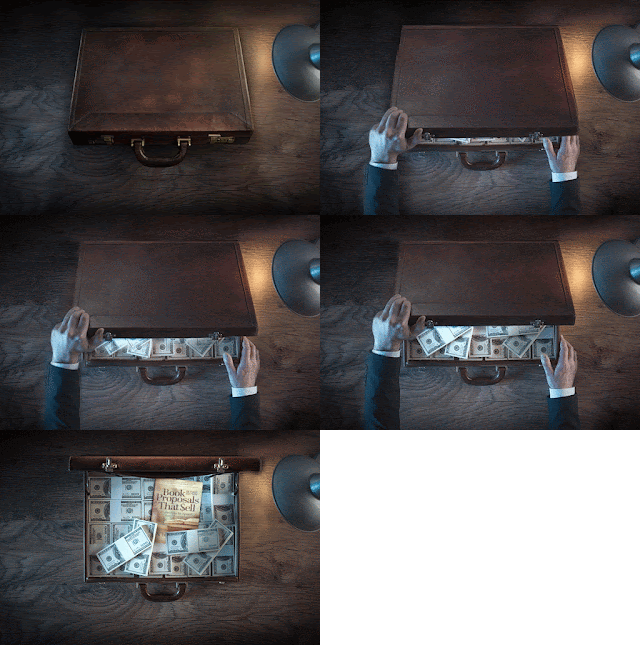 Does your fiction or nonfiction have a business plan? Every type of book needs a proposal—even if you self-publish. Get this resource.


March 26, 2022
Where Do You Get Educated About Publishing?

By Terry Whalin @terrywhalinFor years I've been studying the publishing world. A key part of the process is building relationships with editors and agents and others in the community such as publicity people. Something you can't control is timing but you can continue to be submitting or pitching and building relationships. Then you can be at the right place at the right time with the right material. The publishing community is always changing and I can illustrate it with one of my 21 “secrets” in the first edition of Book Proposals That Sell : always enclose an SASE (self addressed stamped envelope). At that time, there was no electronic submissions. Publishers received thousands of submissions (as they do today) and if you didn't include the return postage, then your submission was thrown away and not returned. Today everything is electronic and if an editor is interested, they will request you to send the full manuscript as an attachment. How can get educated about publishing? It is an on-going process but in this article I want to give you several resources. My first resource is to read the articles in my Twitter stream or that I post on LinkedIn. It is a steady stream of information about various aspects of publishing and education. I read all of these articles which are in this steam and learn from them.
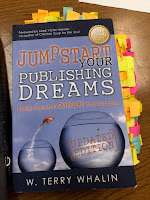 The second way to learn about publishing is to study how-to-write books. For years I've been reading at least one how-to-write book a month and learning from them. You can get them from your public library and read them. I've written three how-to-write books. Originally I self-published
Jumptart Your Publishing Dreams
but now the revised edition is available in bookstores online and brick and mortar stores. Follow this link for a free sample. This book has helped many writers learn more about publishing. Check out the illustration from a reader who marked different sections to study with post-it notes. I also wrote
10 Publishing Myths
to help writers have a realistic view of publishing. You can get my book for only $10 including shipping plus over $200 in bonuses if you follow this link. Or you can get it at any bookstore whether online or brick and mortar. I encourage you to get the 11th myth as a free download. Finally the revised edition of
Book Proposals That Sell
will help you understand the book publishing world and many authors have used this book to find a publisher or a literary agent. At the book website, you can get a free book proposal checklist (the pop-up when you go to the book site). Another means to get educated about publishing is to attend a writer's conference. There are some excellent events and opportunities for you to meet personally meet editors and agents. I'm headed two two of these live events next month and would love to meet with you during these events. The publishing world is full of opportunity for every writer but you must take action, learn what the editor or agent wants and expects, then make appropriate pitches. Each of us can get educated about publishing and I've given you some seasoned places to explore and improve your possibilities. In this article I gave you a number of different means to get educated about publishing. Are there other ways you would suggest? Let me know in the comments below. Tweetable:
The second way to learn about publishing is to study how-to-write books. For years I've been reading at least one how-to-write book a month and learning from them. You can get them from your public library and read them. I've written three how-to-write books. Originally I self-published
Jumptart Your Publishing Dreams
but now the revised edition is available in bookstores online and brick and mortar stores. Follow this link for a free sample. This book has helped many writers learn more about publishing. Check out the illustration from a reader who marked different sections to study with post-it notes. I also wrote
10 Publishing Myths
to help writers have a realistic view of publishing. You can get my book for only $10 including shipping plus over $200 in bonuses if you follow this link. Or you can get it at any bookstore whether online or brick and mortar. I encourage you to get the 11th myth as a free download. Finally the revised edition of
Book Proposals That Sell
will help you understand the book publishing world and many authors have used this book to find a publisher or a literary agent. At the book website, you can get a free book proposal checklist (the pop-up when you go to the book site). Another means to get educated about publishing is to attend a writer's conference. There are some excellent events and opportunities for you to meet personally meet editors and agents. I'm headed two two of these live events next month and would love to meet with you during these events. The publishing world is full of opportunity for every writer but you must take action, learn what the editor or agent wants and expects, then make appropriate pitches. Each of us can get educated about publishing and I've given you some seasoned places to explore and improve your possibilities. In this article I gave you a number of different means to get educated about publishing. Are there other ways you would suggest? Let me know in the comments below. Tweetable:
 Does your fiction or nonfiction have a business plan? Every type of book needs a proposal—even if you self-publish. Get this resource.
March 20, 2022
Publishing Takes A Team

By Terry Whalin @terrywhalin On the surface, it is often not clear but sucessful publishing takes a team. The work of a writer is a solitary task where you understand your target audience (reader) and craft your words into a manuscript for various publications. As I've mentioned in the pages of these entries, your relationships with others is a critical part of this process. I understand many writers have chosen to self-publish which is definitely a choice but in this article I want to give several examples of why you need a team.
 The team can get your book reviewed in respected journals. For many years, I've read the monthly Cox Report from Midwest Book Review. On their site, they have submission guidelines and I've sent a few of my books to them but (like every review outlet), they receive thousands of books and only pick a few to review. Months ago, Morgan James Publishing submitted my
Book Proposals That Sell (The Revised Edition)
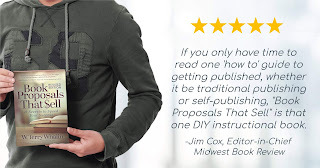
to Midwest Book Review. Getting the book to the right person is a critical part of this process. Jim Cox selected my book to review. As I read the Cox Report, I grateful for the team and that my book was reviewed. You can read the full review here but here's the section that stood out to me: “Critique: Simply stated, if you only have time to read one 'how to' guide to getting published, whether it be traditional publishing or self-publishing, "Book Proposals That Sell: 21 Secrets to Speed Your Success" is that one DIY instructional book. Exceptionally well written, organized and presented, it can help the aspiring writer to avoid costly and time consuming mistakes with respect to getting published and having that published book brought to the attention of its intended readership.” To get such a review was a feat of the team effort, but using this review on an on-going effort for the book is also important. I continue to use the review from time to time in my social media feed and other places plus I used some of the words to create a unique image. You can use these tools as well and get lifetime access if you follow this link. I use this tool several times a week so it has become an important part of my regular work.
The team can get your book reviewed in respected journals. For many years, I've read the monthly Cox Report from Midwest Book Review. On their site, they have submission guidelines and I've sent a few of my books to them but (like every review outlet), they receive thousands of books and only pick a few to review. Months ago, Morgan James Publishing submitted my
Book Proposals That Sell (The Revised Edition)
to Midwest Book Review. Getting the book to the right person is a critical part of this process. Jim Cox selected my book to review. As I read the Cox Report, I grateful for the team and that my book was reviewed. You can read the full review here but here's the section that stood out to me: “Critique: Simply stated, if you only have time to read one 'how to' guide to getting published, whether it be traditional publishing or self-publishing, "Book Proposals That Sell: 21 Secrets to Speed Your Success" is that one DIY instructional book. Exceptionally well written, organized and presented, it can help the aspiring writer to avoid costly and time consuming mistakes with respect to getting published and having that published book brought to the attention of its intended readership.” To get such a review was a feat of the team effort, but using this review on an on-going effort for the book is also important. I continue to use the review from time to time in my social media feed and other places plus I used some of the words to create a unique image. You can use these tools as well and get lifetime access if you follow this link. I use this tool several times a week so it has become an important part of my regular work.
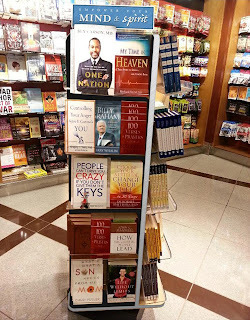 As I've mentioned in these articles, thousands of books are published every day. Many books never appear inside a brick and mortar bookstore and are only sold online. As someone who has been in publishing for years, you want your book in many different places—brick and mortar as well as online. You have to be with the right publisher to get your book inside a bookstore. Several years ago, I was going through the Philadelphia airport and missed my connection. I spent the bulk of that day inside the airport waiting for my next flight. Out of sheer boredom, I went into the airport bookstore to look around and found my
Billy Graham
biography. Notice this picture from inside the airport bookstore. Over the years, I've seen numerous Morgan James Publishing books inside the bookstore. You have to be working with the right publisher for this placement to happen. Over the last ten years, I've brought numerous authors and books to Morgan James Publishing (follow this link and my contact information is on the bottom of the second page—email and direct phone). If I can help you, don't hesitate to reach out to me. I'm always looking for the right authors and books. I hope through these examples, you understand publishing is a team effort and you need to be with the right team. How have you seen publishing takes a team? Let me know in the comments below. Tweetable:
As I've mentioned in these articles, thousands of books are published every day. Many books never appear inside a brick and mortar bookstore and are only sold online. As someone who has been in publishing for years, you want your book in many different places—brick and mortar as well as online. You have to be with the right publisher to get your book inside a bookstore. Several years ago, I was going through the Philadelphia airport and missed my connection. I spent the bulk of that day inside the airport waiting for my next flight. Out of sheer boredom, I went into the airport bookstore to look around and found my
Billy Graham
biography. Notice this picture from inside the airport bookstore. Over the years, I've seen numerous Morgan James Publishing books inside the bookstore. You have to be working with the right publisher for this placement to happen. Over the last ten years, I've brought numerous authors and books to Morgan James Publishing (follow this link and my contact information is on the bottom of the second page—email and direct phone). If I can help you, don't hesitate to reach out to me. I'm always looking for the right authors and books. I hope through these examples, you understand publishing is a team effort and you need to be with the right team. How have you seen publishing takes a team? Let me know in the comments below. Tweetable:
 Does your fiction or nonfiction have a business plan? Every type of book needs a proposal—even if you self-publish. Get this resource.
Check out this article:
Each month I write an original article for the BRMCWC blog. Writer, What Is Your Side Hustle? I hope it gives you some new ideas for your own writing life.
March 13, 2022
Put Your Spin On Your Writing

By Terry Whalin @terrywhalin
Within the writing world, there are countless stories to be told in many different formats such as blog posts, magazine articles and books. As a writer, I enjoy helping other people shape and write these stories. It gives me a chance to put my own spin on these stories and get them out into the world. Each of us have an endless supply of such stories and personal experiences. One of the keys is to get your fingers on the keyboard and create them in the first place, then do the work to get them out into the world so other people can read them. Without pitching and making that right connection to an editor or agent, it remains something in your mind but not into the world. Like the picture of the the spinning top in this article, the toy does not spin without someone taking action. Action is what we do as writers—day in and day out—especially if we want our words to get into the world. In this article I want to give you a couple of examples of how I put my own spin on my writing. Social Media Posts Through the years I've posted thousands of times on social media. In these articles, I've told about using tools like Hootsuite and ClickToTweet in this process. These tools help me be consistent and ClickToTweet gives others an easy way to pass on the article. In my social media plans, I will highlight articles and other writings from others. Each time I post, I make sure to include an image (since this image often draws people to read the words with the post). If the article I am highlighting has an image, I will use that image or if not, I will quickly find one to use with it. For my social media posts, behind the scenes I've created my own “standard” and it's something I encouorage you to do as well. In addition to a photo with each post, I attempt to include the name of who wrote the article along with their Twitter handle (not everyone has a Twitter name but I search for it and try to add it each time). If the person has a tool to pass on the article, I use that as a starting point, then I add the name, shorten the link and if not there (add a couple of relevant hashtags). It does not take a lot of time to meet this standard but it brings consistency to my various social media posts—and yes I put some effort into these posts—something I encourage you to do as well. Most of the time, I hear little from my social media posts (12–15 times a day) but then someone will comment or share or indicate some way they have read the post. Sometimes these posts are new and other times they have been out there for a long time. The interaction shows me that people read this material—whether they say anything or not. Don't be surprised if you don't get a lot of response. The key is go keep on going and be consistent. Book Reviews I've been writing book reviews for a long time with over 1,100 on Amazon and over 700 on Goodreads (follow this link if you want to see some of them). My reviews are my own spin or perspective on a particular book. Often I will quote part of the book (especially on print and not so much on audiobooks) which shows the reader that I've actually read the book and found a relevant quote to include in my review. Throughout any week, I receive many more books that I can possibly read—much less write about—but I continue doing some of them on a regular basis (even though no one pays me for these reviews). If you read a book or listen to it, I encourage you to take a few minutes and write a review. It will be a way to support the author and also good for your writing life. How are you putting your spin on your writing? Let me know in the comments below. Tweetable: Does your fiction or nonfiction have a business plan? Every type of book needs a proposal—even if you self-publish. Get this resource.
March 6, 2022
Hooking Your Reader

By Terry Whalin @terrywhalinLast week a friend who purchased a couple of my books made some comments on Facebook to show me how she read those books. My Billy Graham biography which she read in one evening. Then my Book Proposals That Sell , she had planned to skim the contents and pick and choose what to read. But she was reading every page. Such reader feedback is important to every writer. When I read it, I knew that these books were achieving a basic for every piece of writing: you must hook the reader and pull them into your writing. Each of us have a wide variety of media (incljuding print) which pulls for our attention. Everyone has limited time to read. It's the task of the writer to pull that reader into the material through a story or a series of questions or pointed content. I want to give you some ideas how to do this basic writing skill. In my journalism classes, this skill is called “Hooking Your Reader.” There are probably other names this skill is called as well but I'm referring to the conscious awareness of what draws your reader to your writing. As you write, you need to be aware of the power of word choice and sentence construction which could make a difference whether your words are read or ignored. From my years of writing, I want to give you five aspects to consider: 1. It takes practice. The writing world has a strange mixture between natural talent and a taught skill. Each of us can learn how to write a query letter or a book proposal. But that natural talent you have to bring to the table. None of us know if you have this talent or not unless you are using it. There are many places to write—not just books but magazines, online publications and many other places. In the first chapter of Jumpstart Your Publishing Dreams , I wrote about the early days of my writing and give a series of possible places to publish your writing. If you haven't seen this list, I encourage you to follow the link and explore it. There is no opt-in and this link will go right to it). What actions are you taking to practice your writing? 2. Use Stories. Everyone loves a good story to pull or hook you into the writing. These stories can be your personal stories or you can tell someone else's story. The skill of good storytelling is something again that will come with practice and a skill you can learn to include elements like dialogue, description, and other elements. A good story will keep your reader moving forward through your words. 3. Write in the Active Tense. It may have been years since you thought about tense in grammar but this element makes a difference whether people keep reading or not. Years ago when I was doing academic writing, I wrote many passive sentences (a pattern for this type of writing). Active tense pulls the reader into your work. Make sure every sentence is in the active tense. 4. Seize Every Opportunity. You need to learn to hook your reader in every type of writing, whether long or short. If you are writing back cover copy for your book, hook the reader. If you are writing a social media post, hook your reader. Every writer needs to learn the variety in their skills and take every opportunity to practice this skill. 5. As you write, always focus on the reader. Some writers lose sight of who will be reading their work—readers. Always keep this reader in mind as you write for clarity and also to keep them turning pages. What methods do you use to hook your reader and keep them reading? Let me know in the comments below. My Articles in Other Places Each month I write for a couple of other online locations. Here's some recent articles on other topics:
 Do you know your competition? Every author should know their competition as a part of their business plan--even if they self-publish.
 Every Writer Needs A Safety Net In the ups and downs of writing, I encourage every writer to have a safety net and you can read this piece to learn the details.
 My Speaking Schedule I'll be speaking at a few conferences in the coming months. Follow this link to learn the details. Hope to see you in person at an event. Tweetable:
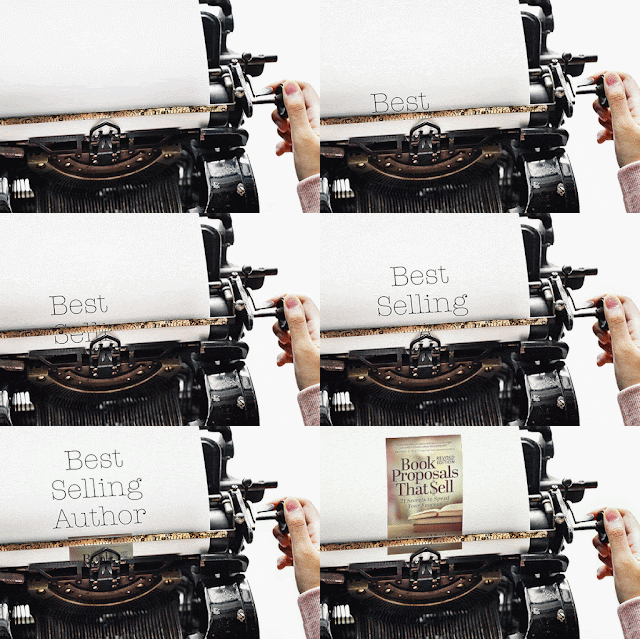 Does your fiction or nonfiction have a business plan? Every type of book needs a proposal—even if you self-publish. Get this resource.
February 27, 2022
Small Things Matter
By Terry Whalin @terrywhalinLast week an online group had a discussion about small or short writing projects. Do they matter and do they lead to longer writing projects? Yes they do and in fact the small things matter. Many forget big doors turn because of little hinges. A small or short writing project can lead to bigger things. In this article I want to give you some specific examples and ideas for your own writing life. Your relationships with others in the writing community is important. Often who you know as much as what you know or pitch is weighted with importance. For example, people recognize birthdays and anniversaries on Facebook. Do you particpate and say something? If you do it's a way for you to be back in the thoughts of that person. When someone passes, do you say something on Facebook? Do you mail a physical sympathy card? I have a box of these cards and when I see that someone's relative has passed, I will often reach for a card, fill it out and mail it. It doesn't take much time but the gesture is appreciated and remembered. In these articles I've talked about getting your book into libraries and the importance of promoting these books to others so the books get checked out and used. It's a small effort but I have a series of social media posts that I've created to promote my own books to a local writer's group. I don't use them very often but from time to time I post that my books are available at our local library. In my short post, I include a link which goes to the place where they can check out my book and use it. I make this small effort occasionally but it helps others to know about and use my books in the library. Recently I noticed one of my long-term writing friends is speaking at a nearby church. We had not seen each other in decades but I reached out to him and we arranged to meet for coffee. During the time we have known each other, this writer has published about 30 different books. He was telling me about one of his books which consistently sells about 50,000 copies a year. I don't have any idea about the sales of his other booksl but this one book has consistently earned year after year. You may have written many books but if you write one like my friend with consistent sales, then that book will be a small portion of your overall books but something huge for you personally. Follow-up Opportunities. Often throughout the day I will think about a social media post or an email to send or a phone call to make. Everyone is busy and often it takes a gentle follow-up with this person. I use the word gentle because if you push, you can easily hear no response. Are you taking action when these ideas come into your mind? To have the idea in the first place is great, but the people who take action are the ones who get it done. Write Reviews and Articles. The ability to write a short book review or short magazine article is a different skill than writing a longer book project (nonfiction or fiction). I don't want to get rusty in this skill I've developed over the years. I continue to write book reviews (over 1,100 on Amazon and over 700 on Goodreads). I continue to write articles for magazines and blogs. I encourage you to write these shorter pieces as well. In the world of publishing, there are many other important yet small actions which matter. What small actions are you taking which matter? Let me know in the comments below. Tweetable:
 Does your fiction or nonfiction have a business plan? Every type of book needs a proposal—even if you self-publish. Get this resource.
February 20, 2022
Try Something New

By Terry Whalin @terrywhalinWithin the world of publishing, people fill many different roles such as writer, editor, agent, publicist and many others. Recently one of my writing friends released a new book from a major Christian publisher. As I've mentioned in these articles, this release event happens with about 4,500 books every week. The Advanced Reading Copies (ARC) for this new book arrived at the author's home the day before the release date (late to be of much use since the book is out). I have not seen this particular ARC but typically these books are created in advance of the book release, have different information about the book and release date on the back cover and printed in small numbers for book reviewers, the press and a few other categories. These books are costly to create because of the small printing numbers. With over 4500 new books published every day, ARCs are reserved for a few titles the publisher believes is important and worthy of the limited marketing dollars to create these specialized books. My friend told me about the late arrival of his ARCs and on my own I offered to ask some writers if they would read and review, then compile a list of addresses to send to this friend. It's something I've never done before and I have no financial gain from promoting this book. I was simply willing to help. I turned to a couple of Facebook groups with Christian writers. I wrote a short post about the author, the book. I asked the writer to email their mailing address and willingness to post the review on at least Amazon but hopefully some other places as well. These groups had many members and I had no idea the response. 16 people responded. These people get a free copy of the book and the opportunity to make a new relationship with the author (who will be grateful for their help). I encourage you to look for these opportunities and take advantage of them because they can be the start of something else in your writing life. I've been reading ARCs from publishers for decades. My first time was at an American Bookseller convention in Los Angeles in 1987. At the Doubleday booth, I picked up an ARC for a new book called Covenant House . The meeting was in May and the book released in the fall or at least six months before the release. I was interested in reading the book (always the first step because not always the case). I thought, “I can write about this new book.” I wrote a query letter to a Christian magazine (no longer in print) and asked if I could review Covenant House . As I look back on my query, it was not in perfect alignment with this evangelical magazine. Covenant House was from a Catholic priest who was rescuing homeless children. Yet my pitch to the editor worked. He said yes (probably on speculation) and gave me a deadline and a word count. I read the book, crafted my review and sent it to the magazine. It was accepted and published for my first published book review. I began to write more book reviews. For years, I reviewed each month for a Christian trade publication. I've also written book review columns for a couple of magazines (no longer in print). I selected the books for these magazines (which reached thousands of readers). Publishers added my name and address to their list for new releases and the books poured into my mailbox. Back to my friend and the late ARCs on his new book. I emailed him the addresses from those who volunteered to read his book and review it—something I had never done before but I was trying something new. Notice I've left out some details in my story—the author, the title of the book and the publisher. I tell the story so you will see there are many missed opportunties in this business. I don't want to do anything to hurt my own relationship with the publisher or author—who will be around hopefully for many years in the future. As I've mentioned in the past, you never want to publish anything to hurt your relationship. While it may seem big on the surface, the publishing community is small and interconnected. What are you going to try that is new? There are many opportunities in publishing but you have to pitch and take action for them to actually happen. You could publish in a newspaper, a magazine, be on a podcast or radio station or any number of other possible things. You have to reach out to that editor or the person running the radio station or podcast and make a compelling pitch. Throughout publishing, there are many opportunities but you have to take the first step. This prolific editor and aiuthor details trying something new. What new things are you trying? Let me know in the comments below. Tweetable:
Are you trying something new? This prolific editor and author gives the details here. (ClickToTweet)

Every book (fiction or nonfiction) needs a business plan. Get this resource.
February 13, 2022
What Is Your Back Up Plan?

By Terry Whalin @terrywhalinSometimes even the best plans have hitches. For example, these weekly articles I write about the writing life. For many years, I've been writing and putting up these articles. Ahead of time I write the article, set up the details and check it. Then early on Sunday morning, I check to see if it worked. Last week, I went to my blog—and nothing was posted. Behind the scenes, I checked and my post had a headline but nothing else. The day before I had carefully written my article, added links like my ClickToTweet and others. I had checked everything and scheduled it to go live online. Yet my article was not there. It was completely blank.
Many writers in this situation would panic. I did panic for a few minutes but then I sat down and went to work—because I had a back up plan. While I rarely use this back up plan, it is there and something I'm going to explain in this article so you can create your own back up plan. For years, I've been writing my original articles in a different program—reviews, articles and blog posts. My back up didn't have everything—but had the majority of the information. Years ago for my blogging, I began to use a program called BlogJet and that's where I had my original article. In fact, I use this program to keep my ideas and notes for future blog articles.
Some of these notes are never used. Throughout my day when I get an idea for an article, I will often go to BlogJet and create a new file, then scratch a few words of an outline. Later I use this outline to craft my article. When I looked for my blogpost and nothing was there, I turned to my article on BlogJet which had most of my original article. I still had to re-do some of my work but not all of it to put it into place. Back-up Is For More Than Blog Articles I've written over 1,100 reviews on Amazon and over 700 reviews on Goodreads. I begin the process writing my review in a Word document—not online. I craft my review in this document, sometimes even print and read it later then rewrite before I post it on Amazon and Goodreads. I create my reviews in this way because it gives me a back up place. Through my decades in publishing, there have been a few rare times I've lost writing and it is painful to have to recreate something. I've learned the hard way the importance of planning a back up plan ahead of time. It's a simple concept to write and preserve your material in another location than the online place but a regular part of my practice. Then when the rare day like last week happens, I don't panic and can still meet the deadline. I captured this experience in this article as a part of my writing life to help you. What do you have as a back up plan for your writing or online work? Let me know in the comments below. Tweetable:
 Whatever you write, every book needs a business plan. Get this resource.
February 6, 2022
An Important Attitude for Every Writer
By Terry Whalin @terrywhalinWriters hear the word no a great deal. It maybe a submission or a pitch to a podcast or radio station or magazine. You may not even get a response to your pitch and hear only crickets. How do you keep moving forward inspite of the rejection?
From my experience, it takes persistence and consistency to find the right connection. Remember Jack Canfield and Mark Victor Hansen were rejected 140 times before they published the first book Chicken Soup for the Soul. Mark tells that story in the foreword to my book, Jumpstart Your Publshing Dreams . You can follow this link to read the foreword and first chapter. It is free and no opt-in. It doesn't take much to find the negativity in our world. Just watch the news for a few minutes and you will hear the variety of challenges in our world. In this article I want to emphasize an important tool each of us have to shift our attitude: gratitude. Many people talk about gratitude in the month of November because of the Thanksgiving holiday but this attitude is something you can be exercising every day. As you express your gratitude, it can shift your focus to the positive. Bestselling author Joyce Meyer has released a book to help us understand the biblical attitude shift to gratitude with The Power of Thank You: Discover the Joy of Gratitude . Meyer has written twelve, easy-to-read chapters with a combination of personal stories, Scriptures, and stories about others. As she writes in the introduction, “My goal in this book is to birth in you a fresh revelation of the power of being thankful and urge you to make a new and firm commitment to being more thankful than you have ever been. I truly believe that the words thank you contain power that will change your life.” (page viii)
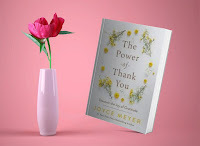 As I read this book, I found it was filled with practical insights like about why we experience difficulties: “I have come to believe that we would have no appreciation or gratitude for life’s good times if we never experienced difficulties. Many of us are extremely grateful for all that God has done for us in Christ because we did have difficult and painful lives.” (Page 31)
The Power of Thank You
is filled with ideas for every Christian to become more grateful. In addition to this book, I want to give several more practical ideas to increase your gratitude: 1. Begin a gratitude journal. Several years ago in November, Darren Hardy suggested starting a gratitude journal. I began to daily write a number of things for which I am thankful. It is a habit which stuck and a daily part of each day when I read my Bible and pray. It doesn't have to be anything fancy or complicated but it is a simple way to add more gratitude into your every day life. 2. Get a box of thank you notes and use them regularly. Many years ago when my first book released, I was at a convention and interviewed bestselling author Richard Foster. I showed Richard my new book. To my surprise a few weeks later, I received a handwritten thank you note from him. I decided to incorporate this practice into my life. When authors send me a physical copy of their book, I will write a short thank you note and put it into the mail. It is a simple but powerful way to express gratitude. How do you express gratitude on a regular basis? Let me know your ideas in the comments below. Tweetable:
As I read this book, I found it was filled with practical insights like about why we experience difficulties: “I have come to believe that we would have no appreciation or gratitude for life’s good times if we never experienced difficulties. Many of us are extremely grateful for all that God has done for us in Christ because we did have difficult and painful lives.” (Page 31)
The Power of Thank You
is filled with ideas for every Christian to become more grateful. In addition to this book, I want to give several more practical ideas to increase your gratitude: 1. Begin a gratitude journal. Several years ago in November, Darren Hardy suggested starting a gratitude journal. I began to daily write a number of things for which I am thankful. It is a habit which stuck and a daily part of each day when I read my Bible and pray. It doesn't have to be anything fancy or complicated but it is a simple way to add more gratitude into your every day life. 2. Get a box of thank you notes and use them regularly. Many years ago when my first book released, I was at a convention and interviewed bestselling author Richard Foster. I showed Richard my new book. To my surprise a few weeks later, I received a handwritten thank you note from him. I decided to incorporate this practice into my life. When authors send me a physical copy of their book, I will write a short thank you note and put it into the mail. It is a simple but powerful way to express gratitude. How do you express gratitude on a regular basis? Let me know your ideas in the comments below. Tweetable:

January 30, 2022
Get Informed About the Media

By Terry Whalin @terrywhalinIf you have a book or a message or a product that needs to get into the world, where do you learn about how the news media works? There are many different ways and resources but in this article I want to highlight some insights from a new book from journalist Alison Maloni Just like as writers we need to keep the needs of our reader in mind as we write, it's the same with the media. When you pitch a journalist, you have to know where they are coming from and a book like Maloni's book helps you gain this insider perspective. Every business or person selling a product (like a book) needs to reach the media. The media has the ability to reach a broad audience. Journalist Alison Maloni has been working with the media for decades and pours her experience into the pages of BREAKING IN THE NEWS. In the opening pages, Maloni explains a key fact, “I have put all of my tips and knowledge from being a journalist, publicist, and business owner into this short, simple book—something you can read quickly and apply immediately to your business. While there is a ton of information here, it is only good if you do the work. It is all up to you, and if you put in the work, I guarantee you will see an increase in your media exposure.” (Page 5)
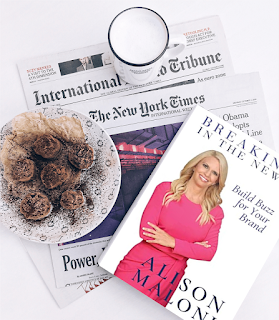 Each chapter is packed with valuable insights and ends with a “Chapter Roundup” which highlights the action points. Scattered throughout the book are “Pro Tips” from other journalists and media experts. Whether you want to understand the difference between publicity and advertising or why local publicity can prepare you for the national stage or how to write the perfect pitch, you will find valuable insights in these pages. Here's some more nuggets in this book: “You can and should have goals to be in the big media outlets, but I want you to think about starting small and having realistic goals in the beginning. PR takes time.” (Page 24) or “As a former local news reporter and now contributor and ahchor for a national news outlet, I have had the chance to sit in on editorial and producer meetings. Unless you are in the newsroom, it's hard to understand how the crazy world of news works. It is not like any other industry, and it's very important to know how the industry works before you pitch them. If yuou have that first-hand knowledge, the local reporter and assignment editors will recognize it, and that's bit bonus points for you.” (Page 27) When you get the interview or program, Maloni writes, “If you say yes and do a good job, they will look to call you for the next time they need an expert in your industry to speak to. The reporter will even share you rcontact infcormation with other reporters in the newsroom if they are looking to do a story related to your industry.” (Page 33) If you get this book, I encourage you to mark pages and highlight, then go back and do what Maloni says in her opening pages: “do the work.” Understanding the perspective of the media is a terrific first step and this sort of valuable insights fills the pages of BREAKING IN THE NEWS: BUILD BUZZ FOR YOUR BRAND. I found the information approachable, easy to understand and apply and well-written. Every writer can profit from a careful reading and application of this book. Also I encourage you to follow Alison Maloni on Twitter or Facebook or LinkedIn. Her short video series that she calls “The Tip of the Day” is also filled with ready to apply insights.
The first step when you approach journalists or anyone in the media is understanding what they need then delivering it to them. How are you developing your relationships with journalists and others in the media? Let me know in the comments below.
 Last week, a podcast launched that I recorded with bestselling author Christine Kloser about why every author needs a book proposal (even if you self-publish). I encourage you to follow this link and listen to it. Tweetable:

Are You Missing A Key Element to Publish Your Book? Get the details here.


