
W. Terry Whalin's Blog, page 19
June 12, 2022
How to Prepare for a Conference

By Terry Whalin @terrywhalinSome of my most significant relationships in the publishing world started at a writer's conference. These events can be a huge boost to your writing life. As a writer, you can pitch your book ideas to editors and literary agents during these conferences. Also you can gain insights from their workshops, sit with them at meals and learn from them. Each event is different but many of them have keynote speakers who give inspirational messages. Often they have panels where the audience can ask questions and you can gain additional information. I've been attending and speaking at these types of events for years. With the pandemic many of these events turned virtual but as I've written about recently, live events have returned. This coming week I travel to Chicago and the campus of Wheaton College for Write to Publish. I've met a number of writers at these events and Morgan James Publishing has published their books. It's also an opportunity for the various faculty members to reconnect and catch up with each other during the event. If you want the best results from attending such an event, then you need to prepare for them. In this article, I want to give you some ideas about what steps I take for preparation to help your writing life. Several weeks ago, I noticed I was low on print copies of my latest book, Book Proposals That Sell. I ordered more some more copies which arrived before I'm leaving for the conference. The supply chain issues have affected the amount of time for books to print and reach you. I take books to sell at these events and it is an important part of the preparation process. At every conference, it is important to have business cards to exchange with attendees and faculty. Earlier this spring, I created a new business card and got them printed. I will pack a qualtity of these cards and other print material to bring to the conference. Countless times during the years, I've met a new faculty member and exchanged cards. The other person will often dig through their wallet or purse and tell me they have forgotten business cards and give me one of the few they happened to have. No matter what your role at the conference, I encourage you to bring plenty of cards to exchange. At Write to Publish, I'm teaching three workshops. While I've taught these workshops in other places, each time I review my handout to make sure all of the websites and extra material are up to date and working properly. I'm teaching on five ways to build a platform, social media and also understanding an negotiating contracts. These workshops are recorded and I always attempt to build great value into my handouts through links to extra material. The conference has arranged pick me up at the airport and transportation to Wheaton College. I've been given the name of my driver and their cell number (which I put into my phone). It's all a part of the preparation for the conference. You may have to make travel arrangements or other important aspects to make sure you arrive and leave at the right time. Another key in your conference preparation is to review the various faculty and their workshops. There are a number of other possibilities for attendees during each of my workshops. If you have reviewed these options ahead of time and made your selection, then you will be prepared for the conference. Also this review helps you know what the different editors and agents are looking for and who to pitch and what to pitch them during the event. I'm looking forward to this event and the unplanned yet special conversations which happen during each of these conferences. I hope this article has given you some ideas and action steps to take as you prepare to attend a conference. What additional steps do you take or what feedback can you give me about this article? What steps are you taking? Let me know in the comments below. Tweetable:
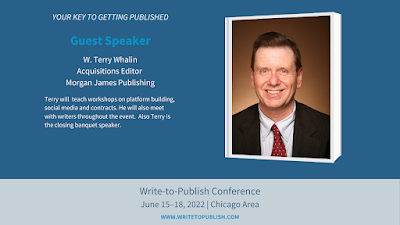
This week Terry will be teaching on social media, contracts and platform building. Also he is speaking at the closing banquet and and meeting with authors at Write to Publish. Hope to see you at this wonderful event.



June 5, 2022
The Writer's Relief

By Terry Whalin @terrywhalinThere is a feeling of relief for writers. It is hitting the send button and sending off a newly written article or a chapter or any number of other things that we have to send as writers. The bulk of these types of communications are done electronically these days.
In recent days, I have sent a number of completed writing projects to editors or co-authors. To complete your deadline in a timely fashion is an important aspect of being a professional writer. In this article, I want to give you several steps that I take in this process in hopes it will give you some ideas for your writing life. 1. Keep track of your deadlines. It's easy to miss a deadline if you don't keep track of it. I use the reminder portion of my phone. I set a reminder and it allows me to hit these various deadline. For example, last week, my handouts for Write to Publish were due. Each time I teach at a conference I rework my handouts to make sure the various resources still work and everything is up to date. Hope to see some of you at this terrific conference on the campus of Wheaton College. 2. If you are going to be late (which does happen) then I encourage you to communicate as soon as you know this information. As I've written in other entries, publishing is a team effort and in general, your lateness will affect other people. Clear and transparent communication is a critical part of the process. It's an important part of the process. 3. Plan for interruptions and delays. From working in publishing for decades, I understand interruptions and delays are a normal part of the process. You will still be able to meet your deadline if you understand this situation and plan it into your writing schedule. 4. Continue to move forward despite any setbacks. Rejection is a part of publishing. You are looking for a place that will be a fit for you and your writing. As an editor, authors will decide not to sign the contract that I've offered them. Other times my colleagues at Morgan James will decide to pass on the book and not offer a contract. I've had projects cancel or go on hold or any number of other things happen in this writing life. When these situations happen, I see the choices as simple. You can quit and do something else outside of publishing. I've watched many people make this choice over the years. Or you can continue writing, continue knocking on doors and looking for those opportunities. I have chosen to follow the second path which is often less traveled. I hope you will be on it as well. In these days with electronic communication, before I hit the send button, I often will hold something in my “draft” folder or take one more look at it before I send it. Are there typos? Is there something which can be changed and said with greater clarity? I confess my communication is not perfect and there are times where I send it too quickly. It is key to keep sending it—even if imperfect. The writer's relief is when you meet a deadline—whether for a publication, a book project or even sending your handouts for a writers' conference. It is a terrific feeling to meet another deadline and send another piece of writing into the market. How are you on meeting deadlines? Have you had that feeling of the writer's relief wash over you after you have sent a submission? Let me know in the comments below. Tweetable:
 This month Terry will be teaching on social media, contracts and platform building. Also he is speaking at the closing banquet and and meeting with authors at Write to Publish. Hope to see you at this wonderful event.

May 29, 2022
The Value of A Routine

By Terry Whalin @terrywhalinConsistency is one of the most important characteristics of a productive writer—at least from my decades of working in publishing. For example, I've been writing an original blog post every week for years. I write it and post it at the same time so people expect it—and read it. Not that I get a lot of feedback about them and often I hear nothing (crickets) yet I continue writing them. It is one of my consistent routines. Another one of my consistent routines involves my posting on social media. I post 12–15 times every day and have been following this pattern for years. As I've mentioned in these posts I use Hootsuite. Because I use this scheduling tool, my posts appear whether I am in my office or traveling and away from my computer. Some days I don't get a lot of engagement with these posts but I know people are reading them. I encourage you to create your routines carefully and if you do, it will have tremendous value to your writing life. In this article, I want to use the details of my social media posts to give you ideas about when you create your writing habit or routine. Each day, I've created a pattern for my posts. The bulk of my posts are from other people yet they are focused on helping you improve your skills as a writer (in the broadest sense of the word). At the beginning and end of each day I post something personal. The bulk of my posts from others go into specific spots in my grid for the day. It may appear random but I've pre-determined the spot for the majority of these posts. Because I've developed a routine or habit and considered these details, I don't use any decision time about where the posts go and instead simply put them into place. As an example, each day I begin with an inspirational quotation. Every one of my social media posts also includes an image becasue they have proven an image will draw the eye to the words. Admittedly it takes a bit of effort to find an image for each post but this effort pays off in increased readership. My social media routine brings consistency. If you read my social media stream on a regular basis you cfan get educated about the world of publishing and grow in your writing career. From my decades in publishing I've learned there is always more to learn. I wrote this post to encourage you to create your own routines. What routines have you created for your writing life and are you aware of the value? Let me know in the comments below. Tweetable:
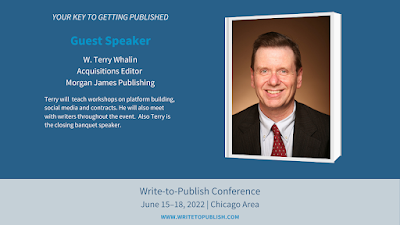

May 22, 2022
You Can Always Find A Way

By Terry Whalin @terrywhalin As writers we love to make excuses and procrastinate. It’s one of the reasons that writers are notoriously late on their book deadlines. As an editor, I’ve heard every possible excuse when writers call or email me to extend their manuscript deadline or their deadline for a magazine article during my magazine editor days.
Every writer needs persistence and perseverance. In this article, I’m going to tell some personal stories for your encouragement. If you want to get published, you need to use your creativity to find your way forward through the task ahead of you. There is always a way even if it is not your first choice. Last week I logged on my PayPal account and it was zero and a shock because it was supposed to have much more in it. I had a dozen transactions that I did not make. I reported these transactions and some of these funds are being restored. A day later I watched on my phone as another charge (which I did not make) came into my email, then several more emails which were suddenly deleted and my trash was emptied (to cover their tracks). All of my devices including my desktop, laptop and phone were hacked or controlled by an outside force. I took action and changed some critical passwords then I took my computers to be fixed.
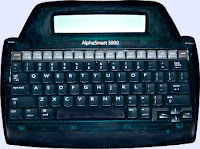 I’m without my computers for a couple of days in this process but still using my phone (which has been made secure). I’m writing these words on my AlphaSmart 3000 which is not hooked to the internet and can hold up to 150 pages of text.
 While I have no computer, I’m still writing pages today and moving forward on several different writing projects. I have found a way to overcome the situation. If I can find that way in this situation, then I know that you can also find a way forward with your writing. Like many things in life, these steps are conscious choices.
I’m also currently facing a family situation where a family member is recovering from surgery and a short stay in the hospital. Yes, this fact consumes some of my day but I’m continuing to find a way to work and move forward. It’s part of my “no excuse” mentality and determination to keep moving forward—even if some days I’m only making small amounts of progress.
Planning Is Critical.
Before I turned in my computers for repair, I set up the majority of my social media posts for the week using Hootsuite. I’ve also made several other communication steps to move forward on projects and plan ahead. This type of effort keeps my various projects in motion. Without my computer, there are certainly some things which are not happening, but these can be done later or are not significant and don’t matter in the long run. Each of us can only do what we can do but you have to be persistent and keep moving forward.
I’ll be doing some new functions on my phone today because it is the only way I can do these tasks. In other cases, I’m sending email to explain the delays and I continue communicating even in the middle of these situations. I encourage you to keep clear communication because again these actions are some of the keys to keep your work and projects moving forward.
Our lives as writers are filled with challenges which maybe work related or personal. How do you handle these situations in your own life? Let me know in the comments below. Tweetable: You can always find a way to accomplish your tasks according to this prolific editor and author. Get the details here to make no excuses. (ClickToTweet)
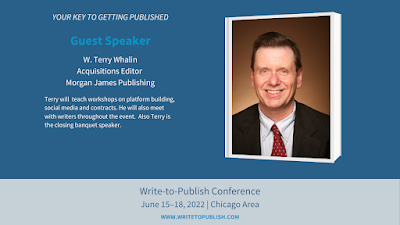 Next month Terry will be teaching and meeting with authors at Write to Publish. Hope to see you at this wonderful event.
Other articles I've Recently published:
Writers on the Move: What Drives your publishing?

The Blue Ridge Mountains Christian Writers conference blog: Adding Consistent Action To Your Writing

The Pro-Active Author on The Wordsmith Journal: The Unexpected Value of Free

Does your fiction or nonfiction book have a business plan? Every type of book needs a proposal—even if you self-publish. Get this FREE resource.
May 15, 2022
What To Do With a New Book Review

By Terry Whalin @terrywhalinLast week I got an email from our author support team at Morgan James Publishing. I'm intentionally starting the story here because from my years in publishing, it is important to select and work with a team who helps you in unexpected ways. The email told me about a new review for Book Proposals That Sell (the Revised Edition) . As an acquisitions editor, I watch many authors choose not to have a team but there are unexpected benefits from working with a team. The author support email told me about a new review from a trade magazine. The team sends out review copies so I have no idea how the publication got my book for review. Typically publications receive many more books to review than they can possibly assign and publish. Many authors would like for their book to appear in a local newspaper yet that newspaper may only publish six or seven reviews a week—like what happens in my local Denver Post. These few published reviews come from hundreds of books which they receive. Anytime you get a printed review it is rare. In this article, I want to tell you about what I did next. You can use this information for any review for your book such as an online review which are public information just like my print review. I could have celebrated it and put it into a file. Instead I took additional actions and encourage you to do the same. It often takes author work to get reviews. The main way to get reviews is to ask people to review your book. I have a free teleseminar about getting reviews (just follow the link for this teaching). When I rceived the review from the Morgan James author support team, the email had the text of the review in the email but they also sent the print review which included the entire publication. I could have cheered to myself and then filed the review and forgotten about it. But I didn't. Instead I loaded a program that I have called Corfel PDF Fusion. Google the name to purchase it or you may use another tool. This program allowed me to load the PDF, then separate out the single page with my review. After isolating the single page of my review, I carefully read the review several times and isolated a couple of glowing sentences from the review. Because I had isolated a single page for the review, I uploaded this page to my website (so it will always be there and not disappear). For my next step, I loaded a program called Author Lab. Follow the link to learn more and gain lifetime access for only $80. For my work in publishing, I use this program almost daily. It has royalty free stock photos for example that I use on my blog.
One of the tools in this program is called Testimonial Builder. I read the review several times and look for a glowing statement or two. Then I opened Testimonial Builder. In a few mouse clicks, you can select a background and image (I selected a woman since it was a woman who reviewed my book). Then this tool allows you to add a sentence and her name, then save the image. I am not a designer but in a matter of minutes I created a professional image with a sentence from the review. For my final step in the process, I created several social media posts (check here and here), then scheduled them on Hootsuite for release. Notice my social media post includes a link to the full review where I got the sentence for the image. I will be using these posts on a regular basis in the days ahead.
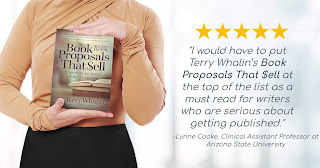
Every day potential customers are reading reviews and making buying decisions about your book. A key part of my personal philosophy is every author has to take 100% responsibility for their own success. I encourage you to take similar actions with your reviews to get them into the market. What actions do you take with a new review? Let me know in the comments below. Tweetable:
 Does your fiction or nonfiction book have a business plan? Every type of book needs a proposal—even if you self-publish. Get this resource.
May 8, 2022
When You Fall Behind

By Terry Whalin @terrywhalinAs writers, each of have the same time constraints—24 hours. Within that time, there are family responsibilities and other things which cut into our work time. A week ago I went to a live event in Louisville, Kentucky with over 850 people in attendance. I spent the majority of those days meeting and connecting with new people to see if they will be potential authors for Morgan James Publishing. Through the years, I've been finding many of my authors for Morgan James through live events. With a pandemic, these events haven't been happening but have returned. I'm grateful for these opportunities but when I seize them, I understand that I fall behind in other aspects of my work. Also I understand the initial meeting is important but the real work happens through the follow-up emails and phone calls—which require even more time and energy which makes me fall even further behind. When you fall behind, you have two basic choices. You can get overwhelmed and stalled so little happens during your day. The other choice is the one is to lean into these opportunities. Every day I write a few of these new contacts and follow-up on my conversations with them. Also I continue to do my social media posts and work on my current writing projects. Here's some other “truths:” --you have to take your own responsibility for your own success--if you don't do the work, it simply does not get done—follow-up emails, phone calls and other aspects--you have to chip away at the work one day at a time until it gets done As I've mentioned in some of these entries, every day I leave with work which did not get done—pages that didn't get written, phone calls that did not get made and emails that did not get answered. I'm grateful for the work but this reality is inherent in the process. No one can be a master of every aspect of the publishing work. We have to make choices what we write or create or do. Because of those choices, other things are not able to happen. Life is a balancing act and each of us have to find our place in the world. Here's some things I've learned which help: --use tools like your phone and scheduling tools like Hootsuite to be consistent--continue to work at growing in your craft and storytelling ability--your commitment to communicate clearly and learn new techniques will help The publishing journey is complicated for each of us and filled with many twists and turns. The people who continue in the marketplace are the ones who have learned how to handle the bumps and the delays and the feelings of being behind. These people continue to keep their fingers on the keyboard and produce in spite of the rejection—and every one of us (including me) gets rejected. This rejection is business and not personal (even if on the surface it feels personal). My encouragement is for you to continue moving forward—even when you fall behind. How do you handle your writing life when you fall behind? Let me know in the comments below. Tweetable:
Each of us only have limited time and energy for our writing life. What happens when you fall behind? Get some insights from this prolific editor and author. (ClickToTweet)
 Does your fiction or nonfiction book have a business plan? Every type of book needs a proposal—even if you self-publish. Get this resource.
May 1, 2022
A Writer's Reality Check

Today I want to write about several realities of the freelance life. First, there is a basic principle: always be pitching. Without pitching or proposing or telling others about your idea, nothing happens. If you want to get more speaking opportunities, then you need to be pitching your speaking topics to different leaders and organizations. If you want to write more magazine articles, then you need to be pitching these article ideas. Or maybe you want to be on more podcasts as a guest, then you carefully target these podcasts. As you target your pitches, the podcast hosts know you understand their audience and why you have valuable information for their audience.
If your calendar is not full of activity such as writing projects and speaking opportunities, then you need to take action and pitch more speaking or other types of activities.
I like what one of my bestselling writer friends, Bodie Thoene, told me about writing novels—and it applies to every other aspect of publishing: “No little elves come out of my closet to write 650 manuscript pages. Some mornings I don’t feel like writing, but I do it out of obedience to God.” In some cases, you can hire a publicist with connections to pitch you on radio shows or television or podcasts. Or you can do it yourself, but you must take action.
I’ve been in publishing for decades. If my phone isn’t ringing off the hook with opportunities, I expect yours is not either. Always be expanding your network of connections. Who you know is often as important as what you know. Be reaching out to these people, checking in, learning what new projects they are working on and is there something they need that you can help them with? This innocent question can turn up opportunities for you, but you have to raise or ask the question in the first place.
Also you have to follow-up. Recently I was at an event in Colorado Springs. I had dozens of conversations with people and we exchanged business cards. I need to follow-up on those conversations and connections. It is because of follow-up that ideas turn into reality and projects. Sadly, many people never follow-up and they miss out on these opportunities.
Another reality: a lot of the work is repetitive and, in some ways, boring. I’m writing these words in an airplane on the way to another conference. I’m grateful live events have returned. But to prepare for this live event, I scheduled the majority of my social media posts for the entire week. Yes, it took some planning and effort, but my audience is expecting my posts and they will be happening even if I’m away from my computer.
At Morgan James Publishing, we are publishing new books every week. This process doesn’t happen randomly but involves a chain of events. As an Acquisitions Editor, I’m working on the front end of this process. An author reaches out to me with an idea about their book or maybe it is a query letter or maybe they send a proposal or a full manuscript or part of a manuscript. The key action is they have something they would like to publish. I respond and get their material into our internal system for processing and things start to move forward. The author has to make the initial pitch in this process. Sometimes an editor will have an idea of something they want written—but that is extremely rare from my decades in this business. The more typical path is for the writer to create and pitch their idea.
Over the years I’ve read thousands of submissions (no exaggeration) and out of my frustration as an editor, I wrote Book Proposals That Sell in 2004 to help writer understand the publishing process and also (selfishly) so I could receive better submissions. My original book helped many writers and has over 130 Five Star reviews. But publishing has changed over the years.
Last year the revised edition of Book Proposal That Sell released. One of my original 21 secrets was to always include an SASE (self-addressed-stamped envelope) because in the pre-internet days there were no electronic submissions. To receive a response from a publisher—even a printed rejection letter—you needed to send them the return postage.
Today submissions are electronic, but editors and agents are leery of clicking on attachments from people they don’t know. You need to approach the editor or agent via email then get their permission to send your material as an attachment. It’s a completely different process and one every writer needs to understand to get into the submission process. It is simply another reality of our lives as a writer.
As an author another reality is consistent promotion of your book. You bear the greatest passion and responsibility for telling others about your book. There are many different ways to be effective in this process but if you stop promoting, then your book sales will tank (in general). My advice is not to stop but weave appropriate promotion into your life every day. If you follow my social media feeds on Twitter or LinkedIn, you will notice that I promote several of my books every day with different images and different messages yet continually pointing toward my book. Someone has to hear about your book at least a dozen times before they will purchase your book. You can be actively involved in getting these various messages out into the market. It’s another reality of our life as writers.
I see the world as full of opportunity. For me the glass is half full rather than half empty but you have to move for something to transpire.
When you face discouragement and rejection (as we all do—including me), understand it is not personal, but you are looking for the “right” opportunity and the “right” fit. That search will take some time and effort on your part. Nothing happens without effort—another reality check for the writing life. What resonates with your writing life? Let me know in the comments below. Tweetable:

Does your fiction or nonfiction book have a business plan? Every type of book needs a proposal—even if you self-publish. Get this resource.
April 24, 2022
A Favorite Place to Read

By Terry Whalin @terrywhalinConsistent reading is one of the important skills for every writer to maintain and develop. To write for a particular mnagazine, you want to read this publication either in print or online to know what they are publishing. Publications have guidelines and you want to read those guidelines and follow them before sending in your query or article. This information is critical to give your submission the best chance of getting published. Also in the book area, you want to be reading books like you want to write. If you want to write children's books, you need to be aware of what is getting published and if you are writing fiction, you need to be reading what others are doing in your area. While reading is an important skill, do you have a favorite place to read? Many years ago when I worked at Christianity.com and lived in northern California, my wife surprised me with a brown leather chair for my office. We've moved a number of times but this chair has been a consistent part of my office and it's where I've been reading for years. In my current office, the movers struggled to get this chair into the room. They had to manuever a narrow hallway and turn it to get it into this room—not an easy process but they got it done. My leather chair is an important part of my office equipment. I read some things on my computer screen but for concentated reading or reading for pleasure, I physically move from my desk to my leather reading chair. For me, the physical movement from my desk to my reading chair is also a mental mind shift from writing to reading or consuming information. There are several things which are important about in my writing life about this physical shift:1. It is a consistent habit2. when I get books to read and possibly review, I know how to handle it3. when I read magazines I know where I will read them and put them beside my reading chair. I have a plan and don't clutter my desk or mix it into other paperwork.4. It helps me keep organized and orderly in my office. In general an organized writer is a productive writer. A reading chair is a consistent part of my writing life. Do you have a favorite place to read? Let me know in the comments below. Tweetable:
 Does your fiction or nonfiction book have a business plan? Every type of book needs a proposal—even if you self-publish. Get this resource.
Other recent articles I've written:
 Five Reasons to Review Books In a related topic to this one about my reading chair, I encourage every writer to review books with five different reasons for such action.
 Every Writer Must Build An Audience In this article, I give details about the mysterious word “platform” and why every writer needs to find their audience and what it takes to build one.
April 17, 2022
Why Live Events Are Valuable

By Terry Whalin @terrywhalinAfter a two-year delay because of the pandemic, last week the Evangelical Press Association meetings took place in Colorado Springs, Colorado. While I'm a former board member of the EPA and have worked planning a number of their conventions, I had not been to one of their meetings in 20 years—because I'm mostly in the book world with some continuing magazine work. It was a great experience to return to a live event. In this article, I want to give you some of the distinctions and value of these opportunities. The Give and Take Conversations Whether you are standing around drinking coffee at a break or meeting people around you during a workshop, there is a give and take in the conversation that does not happen on the phone or virtually but does happen at live events. I saw a number of old friends and had the opportunity to get an update, hear about their work, tell them about some of my work and exchange business cards (because this information often changes over the years). A number of these people I had not encountered face to face in years and the exchanges were priceless in my view. As I've often said in this publishing business, who you know is almost as important as what you know. These types of exchanges happen over and over during these types of events. Meeting and Making New Friends Whether I was sitting at a meal at the event or any other place, these events give the opportunity to get acquainted and learn about each other and exchange business cards. In a publishing world that is often saying “no” or sending a silent rejection (no response), I was one of the few (if not the only book acquisitions editor) at this event. I made a point to often say and show that I am actively looking for new authors and new books. Who knows what will come from it but I was certainly trying in my conversations and actions to open the doors of opportunity. The Opportunity to Teach At the EPA meetings, I taught two workshops—one on social media and a second on book proposals. The first one on social media was a part of the overall conference with a much larger attendance. The second one about book proposals was added to the schedule when the overall event was delayed two years with the pandemic. For each of my handouts and presentations, I appreciated the opportunity to give back to others and provide value from my resources and experience. I also appreciated the opportunity to hear other speakers and workshop leaders. I found great value in attending different workshops during the event. Open to the Unexpected I made a point to introduce myself to several of the main speakers at this event. To my surprise, one of them followed my work on social media and was appreciative of what I do in this area. Until I had this exchange face to face, I had no idea that he was aware of me and my work. I suspect there will be opportunity to work together in the days ahead—particularly if I follow-up (which I will). From attending live events for years, I know the follow-up emails and other connections are some of the most important actions for anyone attending these events. In the next few weeks, I will be attending other events. Follow this link to my schedule and I hope to see you at one of these events and talk face to face. There were many more things which come from these live events but these are a few of the distinctions from these opportunities. What am I missing? Let me know in the comments below. Tweetable:
 Does your fiction or nonfiction book have a business plan? Every type of book needs a proposal—even if you self-publish. Get this resource.
April 10, 2022
The Unexpected Value of Free

By Terry Whalin @terrywhalinIt's one of our favorite words: free. When you write any advertising copy for an email or a social media post or an article, I encourage you to use this word because it will attract readers and keep people reading your material. Copywriters use the word free and sprinkle it into their work. I've used this word frequently in my lead magnets which can be an audio file or a PDF document or a teleseminar. For the reader to get the free resource, I ask them to give me their first name and email address in exchange for access. These types of resources are called lead magnets because they drive people to subscribe to your email list—which is one of the most important tools for a writer to create and control. I've written about lead magnets in the past and encourage you to follow this link to see a variety of images and lead magnets which I am using in this area.
 Besides lead magnets, writers need to develop and grow their email lists. Recently I spoke with an author who told me that she had 250 subscribers to her email list and that she was working to grow it. I also spoke with another author who had an email list of 60,000 subscribers. It's easy to see which one of these two authors would be more attractive to a publisher. I encourage you to be working to grow your email list through events, promotion on business cards, pop-ups on your website and any number of other methods. If you need more help in this area, I have an inexpensive resource called List Tycoon and hope you will check it out. In other articles about the Writing Life, I've told you about the importance of a book proposal—even if you are going to self-publish. Your proposal is your business plan for your book. I've launched a free page for you to get the Ebook version of
Book Proposals That Sell
.
Here's where you can get this free ebook in whatever version you need (Kindle, iPad, Nook, etc). In the process of getting this free ebook, you will give me your email address. Why would I give away a book which came out last October?
Besides lead magnets, writers need to develop and grow their email lists. Recently I spoke with an author who told me that she had 250 subscribers to her email list and that she was working to grow it. I also spoke with another author who had an email list of 60,000 subscribers. It's easy to see which one of these two authors would be more attractive to a publisher. I encourage you to be working to grow your email list through events, promotion on business cards, pop-ups on your website and any number of other methods. If you need more help in this area, I have an inexpensive resource called List Tycoon and hope you will check it out. In other articles about the Writing Life, I've told you about the importance of a book proposal—even if you are going to self-publish. Your proposal is your business plan for your book. I've launched a free page for you to get the Ebook version of
Book Proposals That Sell
.
Here's where you can get this free ebook in whatever version you need (Kindle, iPad, Nook, etc). In the process of getting this free ebook, you will give me your email address. Why would I give away a book which came out last October?
 If you download the free ebook and begin to read it, statistically there is a high probability that you will buy the print version of the book at wherever you purchase print books. We've learned about this principle from the actions of other authors like Morgan James author Russell Brunson. All over Facebook (and on his own website—just follow the link), Brunson has ads for
Dotcom Secrets
and
Expert Secrets
. The ads say if you send me the postage of $9.95 then you receive a free copy of the physical book. Every year, Brunson gives away 100,000 copies of each title. Not everyone buys his book from those Facebook ads. Some people watch the ad and decide to buy the book in their local bookstore. Year after year, Brunson sells a six-figure volume of books in the bookstore and makes royalties on those sales. I tell this story to show you lose nothing when you give away the ebook version. Instead, you build your email list and potentially drive more people to purchase your print book. Are you giving away your book for free? Do you have other ideas about the value of free? Let me know in the comments below. Tweetable:
If you download the free ebook and begin to read it, statistically there is a high probability that you will buy the print version of the book at wherever you purchase print books. We've learned about this principle from the actions of other authors like Morgan James author Russell Brunson. All over Facebook (and on his own website—just follow the link), Brunson has ads for
Dotcom Secrets
and
Expert Secrets
. The ads say if you send me the postage of $9.95 then you receive a free copy of the physical book. Every year, Brunson gives away 100,000 copies of each title. Not everyone buys his book from those Facebook ads. Some people watch the ad and decide to buy the book in their local bookstore. Year after year, Brunson sells a six-figure volume of books in the bookstore and makes royalties on those sales. I tell this story to show you lose nothing when you give away the ebook version. Instead, you build your email list and potentially drive more people to purchase your print book. Are you giving away your book for free? Do you have other ideas about the value of free? Let me know in the comments below. Tweetable:
 Get 10 Publishing Myths for only $10 +FREE shipping + over $200 of free bonuses.


