
W. Terry Whalin's Blog, page 2
September 21, 2025
The Challenge of Writing Choices

By Terry Whalin @terrywhalin
As writers, we have many choices for our writing. Sometimes it does not take much to stand out and distinguish yourself from others. In these entries, I’ve been talking about appearing on podcasts and using PodMatch which is connected to over 90,000 podcasts. During the last eight months, I’ve booked or recorded over 60 podcasts. This past week a couple of those podcasts launched online and I recorded another podcast and booked another one. One of the keys is always looking for these opportunities then pitching the podcast host why they should book you on their podcast.
When these podcasts launch, do you promote them to your readers and on your social media connections? Recently I attended a webinar about podcasting. The instructor has her own podcast but has been a guest on hundreds of podcasts. She mentioned it is rare for these podcast guests to promote her podcast when the episode appears. I was surprised to hear this information. Whenever one of my podcasts appears, I write a short social media message and post it to my followers on three different platforms along with an image connected to that episode. Also I add it to these blog articles as you can see below this article.
In addition, I’ve created a system to continue to promote these podcasts and the episodes. My actions are simple and do not consume lots of time or energy but they are consistent and repetitive. You can take these sorts of actions and stand out to the podcast host. Then when you pitch them to be scheduled as a return guest, they will be more likely to read and respond positively to you. Your actions make you the exception.
As you can see from the image at the top of this article, we have many different choices as writers. How do you make the right ones? How do you know what to write each day? How do you develop writing habits? How do you take action to pitch and follow-up and move your writing forward? I'm not going to be able to answer all these questions in this single article but I will give you some links and ideas to move forward with your choices. One of the critical elements is understanding what you can do to be effective. Knowledge is fine but the real action is to apply this information to your own writing life and your goals as a writer.
 Reader MarkedIn the first chapter of
Jumpstart Your Publishing Dreams
, I list a series of writing possibilities. Follow this link to get the chapter. Each one of these possibilities could be a career or complete business for your writing life. Originally I self-published Jumpstart Your Publishing Dreams and the basic content came from these blog articles. I reworked them, added practical application and cartoons. After selling several thousand copies of my self-published book, I moved the updated edition to Morgan James Publishing. Recently I reworked this website and the variety of places where you can get this book.
Reader MarkedIn the first chapter of
Jumpstart Your Publishing Dreams
, I list a series of writing possibilities. Follow this link to get the chapter. Each one of these possibilities could be a career or complete business for your writing life. Originally I self-published Jumpstart Your Publishing Dreams and the basic content came from these blog articles. I reworked them, added practical application and cartoons. After selling several thousand copies of my self-published book, I moved the updated edition to Morgan James Publishing. Recently I reworked this website and the variety of places where you can get this book. If You Want to Write Books
Most writers when they begin a book manuscript, they face the blank page, put their fingers on the keyboard and begin. Whether they are writing a novel, a nonfiction book, a children’s book, or any other type of book, they start with the manuscript. Instead I encourage you to take a different action. Create a book proposal as your first step in the creation process. Your book proposal helps you think through your reader, audience, title, outline, competitive titles and your marketing plans. Every author has to market and tell people about your book no matter how you publish it. Even if you self-publish your book, you still need a business plan. I've written two book proposals received traditional contracts with a six-figure advance. I’ve reviewed thousands of submissions during my years in publishing and I built those insights into my Book Proposals That Sell book. Get a free copy here or use my website to buy a print version.
If You Want to Write for Magazines
I understand many writers want to create a book, but the reality is you can reach more readers with a magazine article than most of us will reach with our books. There are a few book authors who become bestselling authors and reach many people but the majority do not. With a magazine article, it is easy to reach 100,000 or even 500,000 readers. It's one of the reasons I’ve written for more than 50 publications (actually I stopped counting and it is many more than 50). Many authors have not tried writing for magazines.
The steps are simple. First, get a market guide like the Christian Writer ’ s Market Guide or go to your local library and look for the Writer’s Digest Market Guide . Find some publications where you could pitch your article. Then go to their writer’s guidelines (on their website) and see what types of articles the editor wants to receive and the specifics (word count and focus). Then write and pitch to them what they are asking to receive. It is that simple because many writers never do these important first steps, your submission will stand out and be considered--and maybe accepted and published.
Some publications require you write a query letter with a one page pitch of your idea and other details. Learn to write this important tool and use it. Other publications want to receive the entire manuscript in the submission. Each magazine is different what they want and expect. If you do what they ask, you will get published.
Editors and literary agents are looking to publish books from writers who have been published. Writing for print publications is a way to capture more attention and response from these book editors and literary agents.
The Bottom-Line Actions
There are several key actions in this process. First, you will be rejected so expect it and keep pushing forward. As writers we have to grow some thick skin regarding rejection and understand that it is timing and reaching the right person with your pitch. That takes continued effort and searching.
Also some other steps is to read and follow their guidelines. Keep looking for the right connection and building new relationships. Meet your writing deadlines and be consistent as well as preserve your relationships. It will pay off for your publishing efforts but takes continued effort.
I encourage you to follow the links in this article to other information and keep moving forward on your writing life journey. What am I missing or other ideas do you have? Let me know in the comments below.
Tweetable:
As writers, we have many choices for our writing. In this article, this prolific author and editor gives some specific steps and actions you can take for your writing life. (ClickToTweet)
New Podcasts:
In these articles, I’ve encouraged you to use PodMatch or some similar tool to book and record podcasts. Last week two more podcast recordings launched:

Billy Dees (@BillyDees) and I spoke about 10 Publishing Myths, Insights Every Author Needs to Succeed on the Billy Dees Podcast. Listen at: https://bit.ly/47L65do

Byran White and I spoke about writing, publishing and owning your success on the Did I Write That? The Story Behind the Story Podcast. Listen at: http://bit.ly/46tEScz

During my years in publishing, I’ve reviewed thousands of submissions and spoken with many authors about their plans and dreams for their book. I’ve found many of these authors have unrealistic expectations about what will happen with their published book. From my experience, many aspects of the details of publishing are outside of anything an author can control. I wrote 10 PUBLISHING MYTHS to give authors practical help. You can get decades of insights in 10 PUBLISHING MYTHS for only $10, free shipping and over $200 of bonuses.
Subscribe to Terry’s Newsletter:
During the last year, once a week I’ve been sending a short free newsletter. Just follow this link to subscribe. When you are added to the newsletter, you will receive a FREE 87-page Ebook which is packed with insights for every writer.
Get these articles on your email:
Since 2004, I have blogged about The Writing Life over 1,700 entries and one of the top 27 content writers. With this simple form, each week you can get my new articles, encouragement and insights at: https://t.co/W6uU64u6aA


September 14, 2025
Get The Right Connection

By Terry Whalin @terrywhalin
From my years in publishing, I understand while on the surface publishing a book may look simple, it is full of complexity. One of the ways to cut through this complexity is to find the right guide or mentor with the right connection. Sometimes finding this right connection can take years.
In this article, I want to give you some ideas how to find the right connection for you and your publishing. Maybe you’ve read Malcom Gladwell’s bestselling book, The Tipping Point . In 2019, I wrote this article asking Where Is Your Tipping Point? on the Writers on the Move blog. The book highlights four personality types and when I read it, I understood that I’m a connector. Even if you aren’t a connector, you can understand the importance and grow your connections.
As I think about it, my connections come from many different places such as conferences, LinkedIN, podcasts and many other places. It’s important as you make these connections to keep track of your data such as their email and cell phone number. I have several places including my address book and my phone where I will add someone's contact information. It takes a few extra minutes but whenever I need the information (and that may be years later), I’ve made it easy to locate and use. If you don’t have a system or habit or practice for such details. I encourage you to create one that will work for you.
Years ago I exchanged business cards with people at conferences, connected them with a rubber band and brought them home and put them into a drawer in my desk. The information is there but not in an “easy to use” format. Through the years, I’ve gathered thousands of business cards.
When you return from a conference or gathering, I encourage you to take a few minutes and add the details into an address book that you can search, save and find when you need it.
Sometimes the right connection takes time and even years to happen. As an example, I’ll tell about a pair of my Morgan James Publishing authors with a forthcoming book. Their editor and ghostwriter is one of my long-term friends and one of my former editors from Penguin / Random House. She is no longer there. The authors are expert in a current topic and snagged the attention of a literary agent. For over a year, this agent shopped their excellent book proposal to publishers. In a few cases, they came close but no contract was offered from a traditional house and their agent gave up on shopping it because she could not find the right connection.
These authors had not tried an independent publisher so my editor friend reached out to me. I loved the authors, the topic and their book proposal and book. Through a process, my colleagues agreed and offered these authors a book contract. They signed and now their book is in production. In November both authors will be speaking at a large conference in Boston. We are on track for them to have books to sell at that event. Several months ago, this opportunity to sell books was not going to happen. Also this timely book will release next year in the bookstores. This process begins with finding the right connection and that takes work.
I’ve got many of these types of stories but the bottom-line is: to make the right connection every author has to be in the right place, at the right time with the right stuff. Yes, there were three rights in that last sentence. It takes work and continued effort to make that connection. If someone gives up, the connection doesn't happen.
Action Steps:
1. Take a hard look at how you process emails and phone numbers from whoever you meet. Do you have a consistent habit with this information? If not, create one and begin the habit.
2. If you don’t have a profile on LinkedIN, then make one and completely fill it out (a critical element including your photo), then make new connections. Are we connected on LinkedIN? Follow this link to my profile and check. If not, then send me a connection invitation. Publishing professionals move around but they take their LinkedIN profile with their move. When I want to reach someone I’ve not connected with in years, LinkedIN is one of the first places I turn to see their contact information. Use this resource to get the right connection.
3. It takes persistence and patience to find the right connection. Last spring I taught at several writers’ conferences. I’m still adding these new connection to my address book and following up with these authors. In my view, it is never too late to restore and renew a connection with someone. Make it a part of your writing life.
What steps are you consistently taking to make the right connection? What steps have I not included? Let me know in the comments below.
Tweetable:
A key element in publishing is making the right connection. In this article, a prolific author and editor gives you the stories and details how to find that connection. (ClickToTweet)
New Podcasts:
In these articles, I’ve encouraged you to use PodMatch or some similar tool to book and record podcasts. Last week two more podcast recordings launched:

Ruth Douthitt and I spoke about publishing myths on the Writer’s Day Podcast. Listen at: https://bit.ly/4n4Etoh

Carol Graham and I spoke about what are the 10 Publishing Myths You Need to Know and Understand on the Never Give Up Hope Podcast. Listen at: https://bit.ly/4mzGyYp

Even if you self-publish your book, you need to be cautious about your decisions and who you choose to work with for your book production. I’ve met authors who have spent thousands of dollars in the self-publishing process and unknowingly worked with someone in the Philippines and produced a terrible looking book which is only sold online. I’ve heard the unrealistic expectations of writers. I wrote 10 PUBLISHING MYTHS to give authors practical help. You can get decades of insights in 10 PUBLISHING MYTHS for only $10, free shipping and over $200 of bonuses.
Subscribe to Terry’s Newsletter:
During the last year, once a week I’ve been sending a short free newsletter. Just follow this link to subscribe. When you are added to the newsletter, you will receive a FREE 87-page Ebook which is packed with insights for every writer.
Get these articles on your email:
Since 2004, I have blogged about The Writing Life over 1,700 entries and one of the top 27 content writers. With this simple form, each week you can get my new articles, encouragement and insights at: https://t.co/W6uU64u6aA
September 7, 2025
Too Good to Be True

By Terry Whalin @terrywhalinLast weekend I got two different email pitches about reviewing my books. I answered each of them and exchanged several emails until I reached the actual pitch from these individuals. At that point, I passed on their offer because it sounded too good to be true. Another way to put it, these offers were a high priced scam for authors.
In this article, I want to give you some of the details then you too can avoid and not fall into an offer which is too good to be true. If you take these offers, you will potentially waste a lot of money and energy. Finally I’m going to show you a better way to get these reviews which is old fashion yet effective.
The Pitch
Each of these emails approached me with a pitch about getting reviews for one of my books. The person writing me intentionally selected one of my books which had zero or only a few reviews. Even though I’ve written a number of articles about the importance of my reviews. A few of the books that I wrote early in my career do not have any or few reviews. In general these are children’s books that I wrote as a work-made-for-hire where I was paid upfront for my writing with no additional earnings. Because they were work-made-for-hire, as an author I had little inventive to encourage reviews (ask others) or do any promotion on these books.
The person pitching me had no idea of the work-made-for-hire element with these books. The approach was strictly about the lack of reviews. Here’s part of their pitch (both email pitches used similar language):
“Let me say this upfront, I’m not a promoter or marketer. I already work in real estate (houses by day 🏡, books by night 📖). But my love of reading grew into a community of over 2,000 readers who follow along with me.
Here’s what we do: we look for books that deserve more attention, especially those with few reviews, and we simply read them. Afterward, we share our honest thoughts on Amazon or Goodreads. That’s all. No campaigns, no social media, no ads, just genuine reading and feedback.
Think of it like shopping for a shirt. If there are no reviews, people hesitate. Books are the same. Readers want reassurance before taking the leap, and that’s where our group comes in.
I know authors sometimes feel cautious when someone reaches out, but this isn’t promotion. It’s simply readers helping readers discover your story.
Would you like me to introduce Never Too Busy to my reading group and save it a spot on our upcoming list?” ---
The pitch sounds interesting and like something to explore--so I responded. Her second email to me gave a little more info:
“I want to encourage you with this: many successful authors I’ve come across both new voices and household names didn’t rely on ads or campaigns at first. What moved their books forward was simply readers finding them, reading them, and talking about them. Competitors who understood this principle often pulled ahead, not because their books were better, but because their reviews made them more visible.
I always remind authors:“A great book without reviews is like a lighthouse with no light—built strong, but unseen by the ships that need it most.”
The small gesture we give readers isn’t about paying for opinions it’s about valuing their time so they can read for fun without pressure. The reviews remain 100% genuine. That’s why this approach works and why authors often see their books finally break through Amazon’s invisible wall.
Even if this doesn’t seem like the right fit today, I’d love to keep the door open for Never Too Busy. Sometimes it only takes 20–30 voices for Amazon to start treating a book differently. And with the heart of your message, I believe it deserves to be discovered by more readers.
Would you be open to me keeping Never Too Busy on my community’s “watch list,” so if you reconsider, we can bring it forward?” ---The third email gave the details and huge potential expense:
I noticed Never Too Busy currently has no reviews, which is a good foundation but still leaves so much room for momentum. As I often say: “One review is a whisper, but a collection of reviews becomes a choir that even Amazon can’t ignore.” 🎶
Here’s how my group works: I run a community of 2,000+ readers and reviewers. We don’t pay for reviews. Instead, we tip each reader $15–$20 not for the review itself, but simply as a coffee-and-cinnamon-roll thank-you for taking the time to read. Every reader has their own business and life, so this helps them enjoy the process while reading purely for fun.
Authors I’ve worked with often begin with 20–50 fresh reviews, and that alone can shift how Amazon positions the book in its algorithm. It really depends on how many readers you’d like to start with.
The usual process is simple: you’d send me a PDF of Never Too Busy so I can read it first, then I share it with selected readers in my group. From there, the reviews grow organically, one honest voice at a time.
Would you like me to save a spot for Never Too Busy and get this started?” ---I passed on using this pitch. Something about it felt wrong to me--and the large potential expense stood out. If I “tipped” 50 people $20 each, that is a $1,000 expense. Follow this link to learn more details about Amazon reviews and their terms.
The Better Way for Reviews
1. Ask fans and readers to write a review.2. Use a launch team to gather reviews at the release off your book.3. Encourage people who have never written a review to use a book review template.4. Write a page on your website and encourage reviews. Follow this link for a detailed example from one of my books.
These methods take time and effort from the author but do not violate the Amazon terms and do not have a large expense tied to them.
I hope this cautionary tale helps you with your book. If the pitch is too good to be true without additional explanation, then it probably is a lie and something you should avoid. Have you received these types of emails? Or maybe you have another suspicious pitch, then let me know in the comments below.
Tweetable:
If you get a pitch that is too good to be true, you should be cautious according to this prolific writer and editor. In this article, he gives a detailed example related to book reviews. (ClickToTweet)
New Podcasts:
In these articles, I’ve encouraged you to use PodMatch or some similar tool to book and record podcasts. Last week another podcast recording launched:

On the Accents Podcast, Katerina Stoykova (@Katya_Stoykova) and I spoke about best practices in book promotion and more on WUKY Radio. Listen at: https://bit.ly/3HIizrz

During my decades in publishing, I’ve co-authored over a dozen books and reviewed thousands of submissions (no exaggeration). As a part of the process of working with these authors, I speak with them about their dreams and plans. Many of these authors have unrealistic expectations about what will happen with their published book. Many aspects of the publishing process are outside of anything an author can control. I wrote 10 PUBLISHING MYTHS to give authors practical help. You can get decades of insights in 10 PUBLISHING MYTHS for only $10, free shipping and over $200 of bonuses.
Subscribe to Terry’s Newsletter:
During the last year, once a week I’ve been sending a short free newsletter. Just follow this link to subscribe. When you are added to the newsletter, you will receive a FREE 87-page Ebook which is packed with insights for every writer.
Get these articles on your email:
Since 2004, I have blogged about The Writing Life over 1,700 entries and one of the top 27 content writers. With this simple form, each week you can get my new articles, encouragement and insights at: https://t.co/W6uU64u6aA
August 31, 2025
A Simple Reason Why

By Terry Whalin @terrywhalin
Can you articulate in a single sentence, why you write and work in publishing? When you discover and can verbalize your “why,” it can serve as a motivator for consistent action in your writing life.
In this article, I will tell the story of my “why” and how every day it movitates my work in publishing. I have a simple motivation for my work in publishing. Day and and day out I do this work because books change lives. I know this fact firsthand because as a sophomore in college, I read a book which changed the direction of my life.
I chose to study journalism at Indiana University on the main campus in Bloomington with over 30,000 students. Early in the semester I joined the writing staff of The Indiana Daily Student newspaper. Six days a week we produced a full-sized newspaper and gained a great deal of practical experience through this work. I was rebelling from my upbringing and joined an active social fraternity. One night I had been out late partying and was hung over in the city room sitting at an old Royal typewriter (in the pre-computer days) and could not get my fingers on the right keys. When you made a mistake (and I was making plenty), you backed up, x’ed out and continued writing. I knew my copy was going to look terrible and my editor would be telling me about it. Each time I made a mistake, I muttered to myself, “Jesus Christ.”
Finally the blonde-haired girl sitting next to me could not stand my cursing and said, “Don’t say that, Terry, because one day when you need Jesus you will call out for him and he will not be there.”
I thought to myself, “Not true. I’m a Christian. I go to church when I’m at home. I even read the Bible in church when I am at home.” I had no personal relationship with Jesus.
She encouraged me to check out a bookstore two blocks off the campus which had pretty cards and posters. “Maybe you will find a book which interests you,” she said.
A few days later, I wandered down to this bookstore and bought a book called Jesus, the Revolutionary . I wondered how Jesus could be a revolutionary. At that time I was rebelling from my family and how I was raised. I read this book and it showed me a different side of Jesus than I’d ever seen before. About that time, I was invited to a Jesus people gathering in downtown Bloomington. Everyone sat on the floor on scraps of carpet in this open area with little candles as lights. The people in that room had something that I didn’t have. I bought a Bible and decided to change the direction of my life.
Initially I was planning to be a newspaper reporter on the Indianapolis Star or some other newspaper. Instead when I completed my degree, I joined Wycliffe Bible Translators and studied linguistics. I spent several years in Guatemala working among the Southwest Cakchiquel people and celebrated with them in 1990 at the publication of their New Testament.
I began to write for magazines and attended a writers’ conference and met an editor who liked my idea for a children's book called When I Grow Up, I Can Go Anywhere for Jesus which was published in 1992. In the decades since I’ve written more than 60 books for traditional publishers and I continue to write and work with many authors on their books. I’m acquiring or finding books at my third publisher, Morgan James Publishing, where I’ve been for the last 13 years.

As I began this article, my “why” is simple: I work in book publishing because books change lives. It drives what I do every day. In 1998, I published this little story in an article called Two Words That Changed My Life (follow the link to read it). Books can go places that we will never go as writers and influence lives that we will never touch this side of heaven.
Take some time and think about the reason you are writing. Can you capture it in a short sentence? If you can do this, let me know in the comments below.
Tweetable:
To motivate your consistent work in publishing, this prolific writer and editor believes you must have a simple reason why. Read the story and understand how to create your own why. (ClickToTweet)
New Podcasts:
In these articles, I’ve encouraged you to use PodMatch or some similar tool to book and record podcasts. Last week two more podcast recordings launched:
Wisdom Okonkwo interviewed me about how you should stop waiting for someone else to create your success on the Relatable Wisdom Podcast. Listen at: https://bit.ly/4oWYb6H

Roy Coughlan (@Poleire) and I spoke about Podcasts Can Help Promote Your Book on the PodFather Podcast. Listen at: https://bit.ly/41uLBBC
My Writing In Other Places:
With these articles, I encourage you to publish your work beyond your blog in other places. Below are three articles which were published in other online locations than this blog.

Once a month, I guest blog for the Blue Ridge Mountains Christian Writers Conference blog. This month I encoruaged writers to be open to a world of possibilities then provides a partial list for our writing. https://bit.ly/3HwqxDZ

Also once a month I blog for Writers on the Move. This month I wrote about how publishing has many pitfalls. My article gives a cautionary tale and a series of actions for every author: https://bit.ly/45NDzpT

In addition, once a month I blog about book proposal creation for Almost An Author. This month I wrote about how an excellent proposal involves hard work at: https://bit.ly/4muNo1X
New Podcasts:
rewrite Much of the publishing process is outside of the writer’s control. 10 Publishing Myths helps writers have a realistic perspective and take action. Get 10 Publishing Myths for only $10 +FREE shipping + over $200 of free bonuses.
Subscribe to Terry’s Newsletter:
During the last year, once a week I’ve been sending a short free newsletter. Just follow this link to subscribe. When you are added to the newsletter, you will receive a FREE 87-page Ebook which is packed with insights for every writer.
Get these articles on your email:
Since 2004, I have blogged about The Writing Life over 1,700 entries and one of the top 27 content writers. With this simple form, each week you can get my new articles, encouragement and insights at: https://t.co/W6uU64u6aA
August 24, 2025
Every Book Author Needs a Team

By Terry Whalin @terrywhalin
In the publishing community, there is an explosion of self-publishing. Author struggle to build reader connections or a platform--click for an explanation). They struggle to write a proposal which catches the attention of a literary agent and a traditional house. They decide to follow the bandwagon of others and self-publish. What they don’t consider is that because they self-published, they have established a visible sales record for others in publishing to see through bookscan. This record could affect the response from agents and editors when they pitch another book project.
One of the greatest challenges for those who self-publish is what actions to take when something goes wrong. Where do they turn and what sort of extra time and money do they have to spend to fix this situation? In this article I want to tell a couple of stories and give you some reasons for having a team.
The Value of a Team
As an acquisitions editor, I work with my Morgan James Publishing authors until they sign and return their contract. At this point, other colleagues take over the responsibility for producing the book. I’m still available to my authors but often I don’t hear from them unless there is some issue.
One of my children’s book authors reached out to me about the pre-sale information in her book listings had some misspellings. I wasn’t sure how to fix this issue so I reached out to a colleague and asked for her help. She quickly pinpointed the issue was in the metadata. This technical information is data that our team creates about the book then disperses it to a series of online bookstores throughout the world. With the work of producing almost 200 books a year, one of our team members works on metadata full-time. In a short amount of time, this team member fixed the metadata and showed us her revision. When she sent the revision, she told us that it would take several days for this information to populate the different bookstores and if it wasn’t resolved in three or four days, to reach back out to her again. The revised metadata corrected these misspellings so my author could promote her book on these bookstores without concern about the incorrect words for her book.
It took me a bit just to explain what steps we took to correct this metadata error. Now imagine if you were self-publishing and trying to fix it. The task would be huge without a team to help you.
I want to tell you about another Morgan James author I connected with during a writers’ conference. With a lot of distress, she told me about a series of typos in her book. This author paid an editor to fix these errors yet they were in her printed book. I empathized with her situation but wanted to know the details before I did anything. I asked this author to send me a copy of her book and mark the various errors in her book.
When this author followed through and mailed a print copy of her book (an important part of the process for every author--follow through), I learned she had 15 errors in a book that was published several years ago. Armed with these details I reached out to my Morgan James colleagues to see how we could fix these errors. When this happens, the author normally pays for these corrections. For this author, I learned we didn’t have a lot of copies in the warehouse or bookstore. Also this book was agressively priced when released and the price of paper has increased so it would be a help to the author and Morgan James to raise the retail price on this book. The typos could be fixed in this process. I gathered the necessary internal documents and sent them to this author. It took a few weeks but she filled out the paperwork and returned them. Now these corrections are in production along with other details such as the raised retail price.
I told this story for several reasons. Every author needs a team to help them with the details for their book. It takes cooperation from multiple people to fix these situations. At the end of the day, the author will have positive feelings about Morgan James and her book to be marketing and promoting it (which every author must do no matter when your book was published). At the conference, this author told me she was writing a second book. Before these errors were fixed, I dolubt she would have considered publishing again with Morgan James but now hopefully she will give us another opportunity to work with her. The relationship and the details are important.
Finally, every author needs a champion inside the publishing house to help them navigate the relationships. I’ve published where my champion (acquisitions editor) has left the company. Within publishing we call this book an orphaned situation (not where any author wants to be with their book). Without a champion, many details on that book were lost and it did not succeed/ sell.
As a book author, do you have a team? If not, how can you build or find one? If you want to explore working with Morgan James Publishing (follow this link because my contact information is at the bottom of the second page). I look forward to your comments and insights.
Tweetable:
Every book author needs a team to help them handle the publishing details according to this prolific editor and author. Read the stories and get some action ideas. (ClickToTweet)

A key part of the writing life is a word I don’t really like but do: the discipline of consistently writing. A blog is an important part of this process for me. Many authors have an unrealistic idea about the details of publishing. 10 PUBLISHING MYTHS is a practical easy reading book to help you. Get my decades of insights in 10 PUBLISHING MYTHS for only $10, free shipping and over $200 of bonuses.
Subscribe to Terry’s Newsletter:
During the last year, once a week I’ve been sending a short free newsletter. Just follow this link to subscribe. When you are added to the newsletter, you will receive a FREE 87-page Ebook which is packed with insights for every writer.
Get these articles on your email:
Since 2004, I have blogged about The Writing Life over 1,700 entries and one of the top 27 content writers. With this simple form, each week you can get my new articles, encouragement and insights at: https://t.co/W6uU64u6aA
August 17, 2025
Forgotten Follow-up

In some ways, my continual pitching podcast hosts is like putting together a puzzle. You have to turn the different pieces around so they fit into the right picture. If you’ve done puzzles, sometimes toward the end you discover you are missing a key piece.
I’ve had this sort of experience with PodMatch which has a database of over 90,000 podcasts. I reached out for help from support and for a couple of days, I had more matches of podcast hosts to pitch. In fact, I booked a couple more podcasts, then the matches again stopped. I asked support what else could I do and received a short list of suggestions.
The first suggestion almost leaped off the page:
1. Go through your messages and send some follow-ups.
During the months I’ve been with PodMatch, I have not gone back to any of the podcast hosts who did not respond and follow-up with a second pitch. I had forgotten to follow-up. I’m aware there are many reasons why I didn’t get a response. Some of those podcast hosts didn’t see my pitch as a fit for their show. But there are many other reasons why they didn’t respond and a second pitch may generate interest. Here’s a few of the other reasons (speculation on my part) why they didn’t respond: --Maybe they never received my pitch--Possibly the pitch went into their spam--Or my pitch arrived at the wrong time when their schedule was stacked.--Or maybe they were distracted and rushed when they read my first pitch and didn’t give it careful consideration.
Through PodMatch, I do not have their email address to follow-up. I do have the ability to send a follow-up message. My plan is to return to the first matches (even six months ago) and craft a second follow-up pitch. In my pitch, I’m going to highlight my own connections and how I promote each podcast. The suggestion from the PodMatch help support was brilliant and worth some of my effort.
Sometimes in these articles, I confess to being behind as an acquisitions editor processing the flurry of Morgan James Publishing submissions. In some cases, I’m many weeks behind in reaching out to an author and processing their work. Last week I got a creative follow-up email from an author. He reached out and said it had been weeks since we communicated and he believed my silence told him that we were not interested in his submission. Then he said he was leaning toward self-publishing.
His unusual and pointed follow-up caught my attention. For the first-time I looked at his submission and scheduled a time to explore publishing this book. He used a brilliant and attention getting strategy.
As editors we have mounds of material to process and a simple gentle follow-up is a good way to catch the editor’s or literary agent’s attention. Everyone needs to follow up no matter what you are pitching--books, magazine, speaking gigs or anything else.
Each of us have limited time to pitch our books or our writing. There are also crazy things that happen which prevent others getting our pitches. Timing is a huge element with pitches--which is another reason a gentle follow-up is important.
What are you neglecting to follow-up? Do you have other ideas about follow-up? I look forward to your comments.
Tweetable:
Follow-up is one of the most important skills for every writer according to this prolific editor and author. Read the stories and learn the details here. (ClickToTweet)

Many authors have an unrealistic idea about the details of publishing. 10 PUBLISHING MYTHS is a practical easy reading book to help you. Get my decades of insights in 10 PUBLISHING MYTHS for only $10, free shipping and over $200 of bonuses.
Subscribe to Terry’s Newsletter:
During the last year, once a week I’ve been sending a short free newsletter. Just follow this link to subscribe. When you are added to the newsletter, you will receive a FREE 87-page Ebook which is packed with insights for every writer.
Get these articles on your email:
Since 2004, I have blogged about The Writing Life over 1,700 entries and one of the top 27 content writers. With this simple form, each week you can get my new articles, encouragement and insights at: https://t.co/W6uU64u6aA
August 10, 2025
Practice Short Writing

By Terry Whalin @terrywhalin
Thousands of new books are published every day. Two of my bestselling author friends released a new book over four weeks ago. I heard about the book and requested a review copy which they sent. I have read the book and I’m trying to find a few minutes to write my review. I checked Amazon and Goodreads for this book and they have zero reviews.
Why are these reviews important? It’s been proven that 98% of people who purchase a product online have read a review before they buy it. In general, book reviews are short articles and can be written in a brief amount of time. It’s an important skill to write a book review and every writer can learn this skill. In these articles, I’ve written a number of articles about book reviews (follow this link to easily find some of them).
Another bestselling author friend hired me to write some profiles for a large project. As we spoke, she admitted that her skill was writing longer pieces of writing like books but not in the shorter profiles. This friend was placing limitations on her writing through her resistance to write the shorter pieces. When you write a short piece, you learn to write for a particular audience. You also gain the insight of which sentences are extra or fluff and can be easily eliminated. You improve as a writer and a commuicator through the continual practice and execution of these short articles.
After a recent writer’s conference, another writer reached out to me asking where she could publish her writing. I suggested magazine articles because they are short pieces and when published you can reach thousands of readers. As we exchanged emails, this author was a grief chaplain and wanted to know where to publish her writing.
Without knowing it, this chaplain had a wealth of writing possibilities. As a former magazine editor, I know editors are actively looking for writers. It’s why they publish writer’s guidelines (use google to find them). I encouraged this author to use her Christian Writer’s Market Guide which had over 150 magazines in their listing. You need a current guide because a great deal of the information changes every year. Editors move and magazines close or new publications begin. The current guide gives you the best possible chance with your pitch. Some publications require a query letter (learn how to write one) while others want the full manuscript.
The chaplain asked me what she could write? Almost every magazine will publish personal experience stories. This writer had a vast number of experiences that she could easily write into a 500 to 1200 word article. Yes, she would have to learn how to write a magazine article and how to properly format it and pitch it to the editor. Each of these skills can be easily learned. At the end of your articles, you have a simple statement like: Terry Whalin is the author of more than 60 books including 10 Publishing Myths, Insights Every Author Needs to Succeed . (with a link to my book and website)
If you follow these simple steps, you get published. Then editors and literary agents will be more interested in your submissions because you move from an unpublished author into a professional writer.
There are many types of short pieces that you can learn, practice and submit over and over including (but not limited to) book reviews, devotions, jokes, short filler pieces, magazine articles, quotes, and short social media posts. The possibilities and the opportunities are endless.
My bottom-line emphasis in this article is that short pieces of writing is a valuable skill which can be learned and exercised over and over throughout your writing career. What am I missing here? Does it stir some ideas for your writing? Let me know in the comments below.
Tweetable:
What is the value of writing short pieces? How can you expand your publishing efforts and reach more readers? This prolific author and editor gives the details and the reasons here. (ClickToTweet)
New Podcasts:
In these articles, I’ve encouraged you to use PodMatch or some similar tool to book and record podcasts. Last week another podcast recording launched:

Mike Wagner and I spoke about publishing expectations on The Mike Wagner Show. Listen at: https://bit.ly/4oniMkn

Many authors have an unrealistic idea about the details of publishing. 10 PUBLISHING MYTHS is a practical easy reading book to help you. Get my decades of insights in 10 PUBLISHING MYTHS for only $10, free shipping and over $200 of bonuses.
Subscribe to Terry’s Newsletter:
During the last year, once a week I’ve been sending a short free newsletter. Just follow this link to subscribe. When you are added to the newsletter, you will receive a FREE 87-page Ebook which is packed with insights for every writer.
Get these articles on your email:
Since 2004, I have blogged about The Writing Life over 1,700 entries and one of the top 27 content writers. With this simple form, each week you can get my new articles, encouragement and insights at: https://t.co/W6uU64u6aA
August 3, 2025
Find Grit Instead of Fear

By Terry Whalin @terrywhalin
Grit is rarely discussed but important for every writer. If I’m honest, I face the same fears as the next writer and get rejected a great deal. The best way to get through my fears is to keep moving forward or use my grit. If I let the fear grip my thinking and stop me from continuing to try, then nothing happens.
Today I want to tell you some stories about grit and encourage you to keep trying. As I’ve often said in these entries, nothing happens by learning about it or thinking about it. The only way your writing will get published is to get it out of your head with your fingers on your keyboard and writing words. Getting the words out is the first step, but then you have work and rework those words until they make sense, then actually send them to someone to possibly get it published.
For example, I’ve been writing about using PodMatch to book and be a guest on podcasts. This week I booked three more podcasts which are on my schedule for the future. In the last six or seven months, I’ve booked or been on over 50 podcasts. PodMatch has over 90,000 podcasts in their system. Using your profile and keywords, they will match you to possible podcasts where you can guest. My issue is the matches were not happening for several weeks. I changed my keyboards and still the matches didn’t happen. I filled out a support ticket and asked for help. Because of this assistance, PodMatch began to give me some matches. During the last few days, I have booked three more podcasts. Also I have some new matches to read about the podcast then pitch that host about why they should book me on their program.
Each time I get a match, I need to read the podcast host’s profile to see if I’m a good fit to be on their program. If so, then I need to craft a pitch to this podcast host. I make sure I personalize my pitch and show that I’ve read the details about their audience and who they want to have on the podcast. Even doing this preparation, some podcast hosts will decline and others simply do not respond. It takes grit and determination to continue. I want to be booked on more podcasts so I continue pitching.
Some Action Steps
Where are you dreaming about going with your publishing? Are you looking for a literary agent? Are you looking for a publisher? If what you are trying is not working, what action steps can you take to change and go in a different direction that will give you the opportunity to find more success? Or can you reach out to someone and ask for their help (like I did with PodMatch)?
I find many authors who are looking for a traditional book deal. Yet if they are honest, they have few connections to sell books (platform) and it will be hard for a traditional publisher or literary agent to represent their work and sell it. Many of these authors feel like their only alternative is to self-publish. I’ve seen authors spend thousands of dollars to self-publish then they are only selling their book on their own website and Amazon. Instead, I encourage you to explore independent publishing with Morgan James Publishing. The exploration process costs nothing (except a little time) and it could open a new world of opportunity for you and your writing.
Resolve today to move out of fear and inaction into using grit and determination to find your opportunity. I believe it is there but it doesn’t just float into your life. You have to be actively moving forward to find it.
Resources to Learn More About Grit
If you want to learn more about grit and how to find it, I recommend this article from Amy Bernstein. For over two years, she has been pitching to find the place for her next book. She continues using sheer grit--and you should too.
Literary agent and long-time friend Dan Balow wrote recently about why are traditional publishers so picky? He called publishing a failure business. Read his full article to understand more of the reasons and find your own grit.
Finally I encourage you to read or listen to bestselling author Angela Duckworth’s book, Grit: The Power of Passion and Perserverance.
Use these stories and resources to find your own grit and determination to keep moving forward, seize opportunities and find the right path for your words. What am I missing from your view? Let me know in the comments below.
Tweetable:
In the face of fear about his writing, this prolific writer and editor encourages you to choose grit and determination. Read the details in this article. (ClickToTweet)
New Podcasts:
In these articles, I’ve encouraged you to use PodMatch or some similar tool to book and record podcasts. Last week another podcast recording launched: Harry Vashisht and I spoke about my vision on the Vision Pros Podcast. Listen at: https://bit.ly/4ohF3Qr
Publishing is a complex business and much of the process is outside of anything an author can control—no matter how they publish. I wrote 10 PUBLISHING MYTHS to give authors realistic expectations and practical help. You can get decades of insights in 10 PUBLISHING MYTHS for only $10, free shipping and over $200 of bonuses.
Subscribe to Terry’s Newsletter:
During the last year, once a week I’ve been sending a short free newsletter. Just follow this link to subscribe. When you are added to the newsletter, you will receive a FREE 87-page Ebook which is packed with insights for every writer.
Get these articles on your email:
Since 2004, I have blogged about The Writing Life over 1,700 entries and one of the top 27 content writers. With this simple form, each week you can get my new articles, encouragement and insights at: https://t.co/W6uU64u6aA
July 27, 2025
You Need a Valuable Bonus

By Terry Whalin @terrywhalin
Through the years, I’ve purchased a number of products online. Many of them include a bonus or several bonuses as an incentive to buy the product. From my experience, often these bonus items are disappointing and not useful to me. In this article, I want to emphasize how I took a different path with a bonus and why you need to get this book--and the bonus.
In early 2020, right before the pandemic, I was one of a small group of authors who took a three-day book funnel bootcamp in Boulder, Colorado. At that time I lived in Highlands Ranch, Colorado, but during the bootcamp I stayed in a hotel in Boulder. Before arriving at the event, I filled out a detailed questionnaire or advanced homework to make sure I brought what I needed to the bootcamp.
At this practical bootcamp, we learned how to create an attractive offer for our book along with adding bonuses to the offer. As a group, we worked long hours to get feedback and refine our offer.
Throughout the bootcamp there was a great deal of learning to use new tools, short lectures from the leaders then practical application of the instruction to your own book funnel. The book funnel involved signing up and using some behind-the-scenes tools to process the book sale. While I’ve seen several of the participants drop the product they produced, I’m still working and promoting my product. Throughout the process, I gathered a large folder of questions that I answered and tools that I can use when I create my next funnel (which has not happened).
As I brainstormed my bonuses for the book funnel, I recalled interviewing one of my author friends who has sold thousands of his self-published books to public libraries. There are over 9,000 libraries who have budgets to buy books for their patrons. Online this author located a public list of the contact information for libraries. Taking several hours each day, my friend spent several hours a day calling the library and connecting with the reference librarian on the phone. Then he pitched the benefits of his book with some persuasive bullet points. As he closed his oral presentation, he asked the librarian for the sale and got the information he needed for his invoice. Each day, he would fill out the invoices, package his books and take them to his post office. Throughout my interview, this writer gave me the specifics of what he did to sell thousands of his books to libraries. These details are included in the audio bonus from my book funnel. It is a valuable bonus because any author (no matter how they publish) can use this system to sell their book to libraries.
As you read these details of selling books to libraries, you may be thinking: making all those phone calls and selling my book is a lot of work. From my experience there is no simple way to sell books that does not involve a lot of hard work. To achieve these sales, you will have to step out of your comfort zone, develop an oral presentation about the benefits of your book and sell it to the reference librarian. Your persistent and consistent effort will pay off and sell thousands of books.
It’s another reason for you to order my 10 Publishing Myths book directly from me for only $10 including the shipping along with over $200 in free bonuses (including this audio about how to sell to libraries).
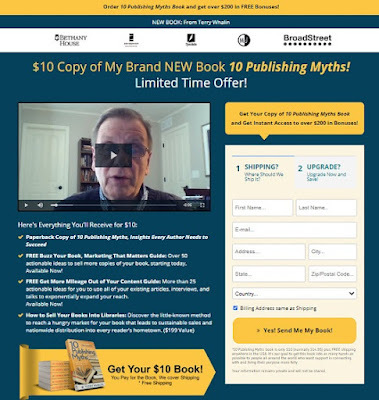
Through the years, I’ve written a number of articles about libraries and the importance for authors. Check out these articles: Get Your Book into Libraries or Learn How to Reach the Library Market. I encourage you to follow these links to the article but also to the additional information and lnks in each article. It is not easy or simple for any author but the opportunity and the possibility is there for you--if you do the work.
How do you determine the free bonuses that you offer with your products? Do you brainstorm them with other writers or do it on your own? Let me know in the comments below.
Tweetable:
When you create a product, you need a valuable bonus. This prolific author and editor gives an example and the details here. (ClickToTweet)
My Writing In Other Places:
With these articles, I encourage you to publish your work beyond your blog in other places. Below are two articles which were published in other online locations than this blog.
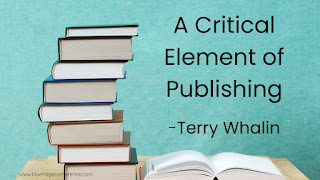
Once a month, I guest blog for the Blue Ridge Mountains Christian Writers Conference blog. This month I wrote about A Critical Element of Publishing at: https://bit.ly/4lTPV5H

Also once a month I blog for Writers on the Move. This month I wrote about The Hidden Costs of Publishing. Read the details here: https://bit.ly/40ghu05

In addition, once a month I blog about book proposal creation for Almost An Author. This month I asked, Trying to Get A Literary Agent? here: https://bit.ly/4f8e3Pb
New Podcasts:
In these articles, I’ve encouraged you to use PodMatch or some similar tool to book and record podcasts. Last week another podcast recording launched: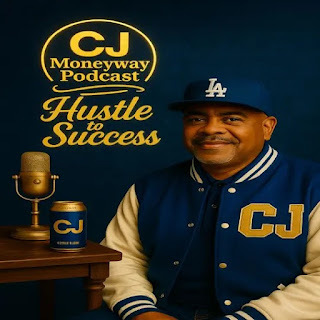
CJ Johnson (@cj_moneyway) and I spoke about Publishing Success Starts Here: Terry Whalin on the 10 Myths Every Aspiring Author Must Break on The CJ Moneyway Podcast. Listen at: https://bit.ly/4fc2nev

A great deal of the publishing process is outside of our control as writers. When I speak with authors, I find many of these authors have unrealistic expectations. I wrote 10 PUBLISHING MYTHS to give authors practical help. You can get decades of insights in 10 PUBLISHING MYTHS for only $10, free shipping and over $200 of bonuses.
Subscribe to Terry’s Newsletter:
During the last year, once a week I’ve been sending a short free newsletter. Just follow this link to subscribe. When you are added to the newsletter, you will receive a FREE 87-page Ebook which is packed with insights for every writer.
Get these articles on your email:
Since 2004, I have blogged about The Writing Life over 1,700 entries and one of the top 27 content writers. With this simple form, each week you can get my new articles, encouragement and insights at: https://t.co/W6uU64u6aA
July 20, 2025
Honest Writing Feedback

From my experience in publishing, it’s hard to find honest feedback about your writing. If we ask our family about our writing, they love our words and will be reluctant to give their honest feedback. In general, it’s the same with our friends who don't want to hurt our feelings. In this article, I want to give some ideas and resources so you can get honest feedback to make improvement in your writing before you send it out to an editor or a literary agent.
At a writers’ conference, they will often provide a way to get critiques from professionals. Sometimes these sessions are a part of the event and other times you can pay extra for detailed feedback. Because I’ve often been on the giving side of the critique process, I know to give honest feedback is somewhat tricky. The editor or professional wants to be honest yet also encouraging to the conferee who has paid to be at the event.
Occasionally at a conference, you will find an editor to give you the straight story about your book. Years ago I interviewed a couple who started a successful marriage ministry. I’m always fascinated with storytelling. The husband told me about the duality in his public appearance as a leader and pastor yet behind the scenes having a combative relationship with his wife. One day the tension in this couple grew extreme. Their television antenna on their roof needed adjustment. In the rain, this man climbed on his roof and when lightening struck he was shocked into changing his relationship and behavior. I called the article Shocked Into Service and crafted a magazine article and a query letter.
As I pitched this story, I could not find anyone to publish it. I found the story and the marriage ministry worth telling but I could not understand the rejection. At a conference in a one on one meeting with a top magazine journalist, he looked at me and said, “It’s the conflict and duality in this story. Even if true, no one wants to know their pastor is bickering with their wife on the way to church then showing a completely different side of their personality in public. The shocked story is the reason for your rejection.”
I was open to the honest feedback and suddenly I understood my rejection. I took my article and stopped sending it out and trying to find a place to publish it.
Another place to get honest insight about your writing is through a writer’s critique group. I've been in groups which function well and I’ve been in some others which do not provide this honest feedback. As with a publisher, the writer has to search for the right group. It is a solid option and use the links to find out more details.
Other writers will hire a developmental editor or a writing coach to give this feedback. Another option is to have another writer as an accountability partner where you exchange writing and commit to giving each other honest insight for improvement of your writing. There are many different choices and options. I’ve only scratched the surface of possibilities.
When You Get Honest Feedback
While it is a challenge to find this feedback, the writer has another choice in this process. They can discount the feedback and not make any changes. Or they can lean into the insight and improve their work. Bestselling novelist James Scott Bell recently wrote an excedllent article about Taking Criticism (follow the link to get his teachng and insights). Notice how he reacted to criticism, putting it away for several days before he mustered the courage to read the information and apply it to his writing. It’s a process that I’ve often done when someone criticized my work.
The process of producing excellent storytelling is not easy but a journey that each of us as writers are on. We need the honest feedback and insights to improve our storytelling. What steps do you take to get honest feedback and improvement in your work? Let me know in the comments below.
Tweetable:
As a writer, it’s often hard to find honest feedback about your writing. In this article, this prolific author and editor gives some stories and possible options. (ClickToTweet)
New Podcasts:
In these articles, I’ve encouraged you to use PodMatch or some similar tool to book and record podcasts. Last week another podcast recording launched:

Greg Danielson (@simplisatisfied) and I spoke about Unveiling the Myths of Publishing on the Simply Satisfied Podcast. Listen at: https://bit.ly/3IvErX6
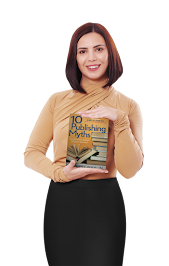 Publishing is a complex business and much of the process is outside of anything an author can control—no matter how they publish. I wrote 10 PUBLISHING MYTHS to give authors realistic expectations and practical help. You can get decades of insights in 10 PUBLISHING MYTHS for only $10, free shipping and over $200 of bonuses.
 Subscribe to Terry’s Newsletter:
During the last year, once a week I’ve been sending a short free newsletter. Just follow this link to subscribe. When you are added to the newsletter, you will receive a FREE 87-page Ebook which is packed with insights for every writer.
Get these articles on your email:
Since 2004, I have blogged about The Writing Life over 1,700 entries and one of the top 27 content writers. With this simple form, each week you can get my new articles, encouragement and insights at: https://t.co/W6uU64u6aA


