
W. Terry Whalin's Blog, page 7
October 6, 2024
It Boils Down to Choice

By Terry Whalin @terrywhalin
As writers, we live in a world of many choices. Do you write this story or this online article or this screenplay or this book? In this article I want to give a personal story and practical example of a choice and change I have made in my own life.
Throughout any day, each of us make many choices. One of the most personal choices relates to what you eat and drink. Through the years, I have made poor choices in this area. During my 29 years of marriage, my wife has watched my weight go up and then down. As I’ve grown older, she wondered if I would ever go down again. A few months ago, I made a decision to change what I was eating. I’ve eliminated sugar and carbs in my diet and focused on my eating. It has not been an easy choice because I love to eat many of the things I have not been eating. Like many things we do, the process is slow and takes time. During the last few months, I’ve dropped 30 pounds and I’m at one of my lowest weights in about 15 years.
As an example, I am not drinking sodas but instead I am drinking more water. For a snack, I am not eating chips, popcorn and cookies as in the past but instead eating vegetables or a hard boiled egg. I make these simple food choices every time I eat something. Over time, I have dropped the weight or pounds. I don’t pretend that these choices are simple but they have to be made consistently and the results compound over time.
I understand every day and each meal is a choice what I eat and do not eat. I’ve decided for the benefit of my health and the longevity of my life to continue on this course for the rest of my life. Yes occasionally I can make a different eating choice but overall I’ve come to a peace with this choice. Many of my relatives and ancestors made a different choice and were known as “big” men (read heavy). I’m certain that choice took years off their lives and daily health. I’m determined to make a different choice in this area and continue this pattern.
In many ways it is like our writing life, there are many choices. Do you watch a TV show or write more words on your current book project? The choices we make determine what we will accomplish during our lifetime. Many people wonder how I’ve written over 80 books and for more than 50 publications. I’ve had incredible opportunities and I’m grateful for each one. A lot of it boils down to choice and making the right choice for you day in and day out.
As I’ve written in the past, writing is like the age old question, how do you eat an elephant? The answer is simple: one bite at a time. Just like eating an elephant, we write one sentence and one paragraph and one page at a time. As we keep writing pages, after a while, those pages turn into a book manuscript or a book proposal or a magazine article. We accomplish it sitting at our keyboard and putting words on our screen.
Throughout this article, I’ve been writing about how what we accomplish in our writing or our lives boils down to choice. What choices are you making in your personal or writing life? Let me know in the comments below.
Tweetable:
According to this prolific author and editor, many of the results of our life will boil down to choice. Get the details about his choice here. (ClickToTweet)
 Much of the publishing process is outside of the writer’s control. 10 Publishing Myths helps writers have a realistic perspective and take action. Get 10 Publishing Myths for only $10 +FREE shipping + over $200 of free bonuses.


September 29, 2024
Failure To Be Consistent

By Terry Whalin @terrywhalinEach week for years, I’ve been writing these articles about the writing life and my work in publishing. With each article, my intention is to capture some important detail which I can use to encourage you in your own publishing journey.
In this piece, I want to admit a failure and a commitment to change and improve. Here’s a reality in the publishing world, you can align most of the pieces of a project--but if you neglect or forget one step, it can affect the results. I compare it to following a recipe to bake a cake and leaving out a key ingredient, then wondering why the cake tastes strange and does not work. The same principle is true in the book business.
For many years, I’ve gathered email addresses and have a newsletter list. It’s one of the critical elements for every writer to connect with readers. An email newsletter is something you control as an author and is not a “rented” space like a social media site such as X or Facebook or LinkedIN. Repeatedly I’ve learned that I have no control over these social media sites--especially when they change their rules and don’t tell you (which happens often).
Every author needs to create an email newsletter and gather email addresses then they need to consistently use their newsletter or send valuble information to their readers. Over the years, I’ve worked hard to create various lead magnets or ways people will sign up for my newsletter. I’ve grown my list and my visibility in the marketplace (all important steps for every writer).
Here’s my confession in this piece and where I’ve failed to be consistent: with an inconsistent pattern, I’ve used my newsletter. Sometimes I go several months without sending anything to my readers. The experts say you can’t overuse your email list. I’m on a few lists which email daily. If it becomes too much then I unsubscribe. These same experts tell us if you use your newsletter too infrequently, your reader forget that they have subscribed to your list and don’t open it or simply delete it when it arrives.
In the past, I’ve used my newsletter to promote a product where I’m an affiliate or I use it to promote a new product or book. These are good uses for a newsletter but I was missing the consistent and steady use to my readers.
Here’s another failure related to the details of my newsletter articles. I wrote each one on target and relevant to my readers but I included a variety of connections to other websites. This failure watered down the effectiveness of my communication and didn’t help the reader focus and go to a single location or single resource.
From my years in publishing, I understand failure is a key part of the journey. Also when you fail, you need to learn and then change or make adjustments to your process. As a writer, I’m committed to continuing to learn and grow--and I encourage you to take the same approach.
In recent months, I’ve been taking Rob Eagar’s online course Selling Books on a Shoestring Budget. This course is currently closed but will open again next year. One of the advantages of taking Rob’s course is the ability to email him a question and get his answer. It’s been great to have such a resource and insight. From this course, I’ve learned how to pitch and appear on more podcasts. It’s an ongoing process to pitch and appear on these events. Often these podcasts are recorded at one time then launched later. For example, I recently appeared on Hungry Authors Podcast and The Writing for Immortality Podcast.
Also Rob’s course encouraged me to use my newsletter on a more consistent basis and to focus it with one link in each newsletter. I’ve started sending these newsletters on Wednesday and I begin each subject with [A Publishing Insight]. As of this writing, I’ve sent newsletters for six straight weeks but I’ve scheduled content for about a dozen newsletters. I will be creating more newsletters in the days ahead. In this consistent action for my newsletter, I’m using one of the principles from The Compound Effect by Darren Hardy. If you make small changes on a consistent basis, they can compound to give you the success that you desire.
Here’s another key principle of the publishing journey. It’s important to learn what others are doing and gain that knowledge. But that knowledge doesn’t add anything to your life and work if you don’t take action and apply it to your writing life. Keep taking action and some will fail but some will succeed. It’s a journey not a defined path.
Change is not easy but I’m determined and a work in progress. Watch and see but also apply these principles of consistency to your own writing life and see if you find the success that you seek. There is not a straightforward road or path. If there were such a thing, then every book would be successful. Instead the process involves consistent experimentation, change and adjustment. I’m commited to this process and hopefully you are as well.
Are there areas of your writing life where you have failed to be consistent? Let me know in the comments below and how you are making changes. I look forward to reading your comments.
Tweetable:
Some say, “Confession is good for the soul.” Prolific author and editor Terry Whalin admits failure to be consistent and gives the details of his changes and improvements in these details. (ClickToTweet)
 Much of the publishing process is outside of the writer’s control. 10 Publishing Myths helps writers have a realistic perspective and take action. Get 10 Publishing Myths for only $10 +FREE shipping + over $200 of free bonuses.
September 22, 2024
Why You Need the Author Basics

By Terry Whalin @terrywhalin
We live in an age with an explosion of publishing. Thousands of new books are entering the market every day and in a rate impossible for anyone to monitor and keep up. Publishers are releasing new books every week and bookstores are hopefully selling them. It took me years to learn this truth: it is the author’s activity that moves books from the bookstore into the hands of readers. If the author doesn’t do anything, then beautiful books don’t get read.
Recently one of my long-term publishing friends reached out to me. She mentioned her novel had been out two years and she knew she had done little promotion or marketing for her book. She asked, “Is it too late?”
This author spent several years in careful research that she built into the construction of her story. When it came out, she told me about it and even mailed me a signed copy (which I appreciated and thanked her but I have not read). I have skimmed the story and see that it is well-told. The cover (front and back cover) as well as the interior is beautiful and professional. I looked at the details such as the barcode on her book and even that detail was handled correctly. Many authors don’t think about the barcode but if anyone is going to scan your book to sell it (like a retailer), then barcode needs to include the retail price). Like many of these publishing details, there is a right and a wrong way to execute it. Yet without some simple promotion, the book will be limited in reaching readers.
This author has stirred about 19 Five Star reviews on a large online retail site and I applauded this effort. When I checked some other retail sites like Barnes & Noble, this book is available (great) but no reviews (an issue). I found the book in five libraries which was terrific but there are over 123,000 libraries in the US. The libraries are another missing and important market for this novel.
As I’ve mentioned before American psychologist and bestselling author Dr. Robert Cialdini said that 98% of people who purchase a product online, have read a review before they buy it. These reviews are important to get on as many websites as you can get them. It’s another reason why you need to be asking people and pointing them to these places.
In many ways, I cheer this author for getting this important novel out of her head and into the world. She has laid a great foundation for her book and put it into the market.
To answer her question, it is never too late to promote a book. This publishing friend also asked me, “What do you think about a website?” This friend is on a couple of social media platforms which again is terrific. Yet she is not talking about the benefits of her novel to her connections on a regular basis. I recommend every author take these consistent actions. Someone has to hear about your book seven or eight or a dozen times before they will purchase your book. It’s one of the reasons publishers are interested in your social media numbers.
 As I write these words, I reflect back to in 2007 when Mark Victor Hansen, co-author of
Chicken Soup for the Soul
invited me to Mega Book Marketing University. I attended as a literary agent and joined about 500 people to hear the various speakers and presentations. At that point, I had written about 50 books with traditional publishers, received advances (two over six-figures) and only had a single website (www.terrywhalin.com). I had no online presence and was doing little to market my books. I decided to change and began to build my online presence (including over 1700 entries in this blog on The Writing Life). If I can build that presence, you can do it too. No matter where you are on the publishing journey, you can take action and turn around your lack of readers, sales and a “platform.” If you follow this link, you can get my free ebook: Platform Building Ideas For Every Author.
As I write these words, I reflect back to in 2007 when Mark Victor Hansen, co-author of
Chicken Soup for the Soul
invited me to Mega Book Marketing University. I attended as a literary agent and joined about 500 people to hear the various speakers and presentations. At that point, I had written about 50 books with traditional publishers, received advances (two over six-figures) and only had a single website (www.terrywhalin.com). I had no online presence and was doing little to market my books. I decided to change and began to build my online presence (including over 1700 entries in this blog on The Writing Life). If I can build that presence, you can do it too. No matter where you are on the publishing journey, you can take action and turn around your lack of readers, sales and a “platform.” If you follow this link, you can get my free ebook: Platform Building Ideas For Every Author.I advised my friend to build her website and also begin a newsletter list then use that list on a consistent basis to build an audience and readers. I have an inexpensive product about list building called The List Building Tycoon. Also when my publishing friend sells her book on her website, I recommend she point to several different places to purchase it--including directly from the reader. Don’t single out one online bookstore. I also encouraged her to write a free ebook that was tied to her novel with a connection. She can give the ebook when someone subscribes to her newsletter.
Also I encouraged my friend to get help if she needs it to build the website and start her newsletter list. If she paid a virtual assistant for a few months, she could make a lot of progress on these missing elements.
While it’s important to build these basics such as a website and a newsletter, it is also critical use the newsletter on a regular basis. Another author basic is to select a couple of social media connections, fill out your profile on them then post content on those sites on a consistent basis.
From my experience, there are no quick fixes to build a platform and it will take patience and consistency but your actions will be a difference maker. A few weeks ago, I recommended you get the hardcover and audio book of The Entrepreneur Roller Coaster for only $6.95 (follow the link).
Recently I re-read this book cover to cover and it reminded me that our lives as freelance writers has many ups and downs (like a roller coaster). As a part of these ups (success) and downs (failure). When you succeed no one remembers your failures but I encourage you to celebrate your consistent efforts. Keep on keeping on.
There is always more to be done whether you are publishing your first book or your 50th book. It’s not the knowledge that you need. What every author needs to do is take consistent action and reaching readers with the benefits and availability of your book. I encourage you to take some marketing action every day to reach new readers. This effort might only take a few minutes but the consistent action will pay off for you.
Every author needs to handle the author basics then keep moving forward. The next bestseller might be you--if you do it. If something isn’t perfect, still get it out there and try to open new doors through your actions. You will be amazed what can happen if you take action on the author basics or beyond.
Where are you on the publishing journey? Am I missing something? Let me know in the comments below.
Tweetable:Every author needs some basics according to this prolific editor and author. Get the details in this article. (ClickToTweet)
 Much of the publishing process is outside of the writer’s control. 10 Publishing Myths helps writers have a realistic perspective and take action. Get 10 Publishing Myths for only $10 +FREE shipping + over $200 of free bonuses.
September 15, 2024
Writing for An Audience of One

By Terry Whalin @terrywhalinHave you ever been the only person in a large room with a speaker in the front? I recall speaking at a large writers conference with multiple sessions at the same time. I was teaching over several days and when one of my classes began, I had a single person listening to me. It was strange but I knew the conference was recording my session so I went ahead and spoke to the entire room (including the one person) and taught my session.
Some of my workshops have been completely full with every seat filled and people sitting on the floor in the back. Yet I have taught a few workshops with only one or two people. The experience is awkward but I’m glad to have someone in the room rather than just speaking an empty room (and the tape recording).
When you speak, you can look at your audience and interact with them. When you write, it is a different experience yet you still have an audience. How do you focus on the reader? It’s what I want to examine in this article.
Who is the audience for your writing? Why are you telling your story or article or novel? One of the key basics for every writer is to have a clear picture of your audience as you write words. For example, for these blog articles, I’m focused on anyone interested in publishing. I’m using the word in a broad sense whether you are writing online, in print, for magazines or books. There are a broad sweep of people who are interested in the various aspects of publishing.
From my years of writing, I have found it hard to write for a nameless crowd of people. Instead in my mind, I need to focus on an audience of one. Who is that person that is listening to you as you write? Can you visualize them sitting there reading your work or listening to you speak? Who is this person and what do they look like? What are they wearing and how are they reacting to your words? Are they leaning into the words and eager to see the next one or do they look distracted? What feelings is that person in your audience experiencing? Are they joyful or in some sort of pain or somewhere in between those extremes? Can you image their reaction to your words and your story? Keeping the audience in mind is a key element for every writer.
For example, a children’s book will have different words and a different tone depending on the age of that child in your audience. A fiction story will have a different audience than a nonfiction book. After I get the article written, I will read through it and make sure it will also work for a broader target audience.
One of the easiest places to learn this aspect of writing for a particular skill of writing for an audience is when you write magazine articles. When I worked at Decision magazine (circulation 1.8 million at the time), I was amazed that people would submit articles that were way off track of our audience and anything that we would possibly publish. With a glance, these types of submissions were rejected. It’s the same with your book pitches. If you are pitching a fantasy novel to an agent who has zero interest or experience in fantasy, then your pitch will be immediately rejected.
Do you set aside your writing for a bit then return to it and re-read it and make adjustments? Or maybe you have a critique partner who reads your work and gives you honest feedback? Or maybe you are a part of a small critique group in person or online that gives you feedback about the audience and your writing?
Writing is something that most of us do in isolation but each of us need feedback from others about our words--and we need to have that audience firmly in mind as we write. How do you determine your audience? Let me know in the comments below and I look forward to it.
Tweetable:

Much of the publishing process is outside of the writer’s control. 10 Publishing Myths helps writers have a realistic perspective and take action. Get 10 Publishing Myths for only $10 +FREE shipping + over $200 of free bonuses.
September 8, 2024
Why Re-Read Some Books

By Terry Whalin @terrywhalin
Do you have some books on your shelf that you re-read from time to time or maybe even once a year? One of my friends re-reads The Lord of the Rings every year. Through each reading experience, she sees something new about the story.For many years, I have been reading and re-reading a single book, The Bible. Reading The Bible is how I begin my day. Each year I choose a different version and this year, I’m reading The Daily Bible NLT . With each reading, I learn something different.
There are merits to re-reading and that’s what I want to examine in this article and give you a couple of resources to read and then re-read. If you follow me on one of my social media platforms like X/Twitter, you know I am a follower and fan of Darren Hardy and his Darren Daily. For years, I have posted them five days a week, because I watch them each time and believe in his encouragement to become “better every day.”
As I’ve written in these articles, new books for my limited reading pour into my office several times a week. I rarely re-read a book but recently I re-read
 The Entrepreneur Roller Coaster
by Darren Hardy. I got this bestselling book directly from the author--and you can too if you follow the link. For the postage of $6.95, you will receive the book but also the audio version. As I read through the book again, at the same time, I listened to the words. Each time I go through the book, I have different insights about how to apply the information to my writing life. I hope it will be a resource for your writing life.
The Entrepreneur Roller Coaster
by Darren Hardy. I got this bestselling book directly from the author--and you can too if you follow the link. For the postage of $6.95, you will receive the book but also the audio version. As I read through the book again, at the same time, I listened to the words. Each time I go through the book, I have different insights about how to apply the information to my writing life. I hope it will be a resource for your writing life. With personal stories and insights, Darren Hardy gives the honest truth about how to survive and thrive in the middle of the ups and downs of life as an entrepreneur--and every writer is an entrepreneur (whether you call it that or not). Hardy compares it to the thrill of riding a roller coaster. The book also includes worksheets and other resources for you to apply the information to your life.
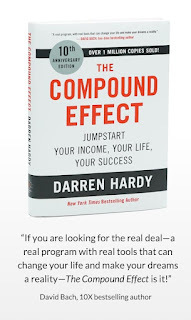
After re-reading The Entrepreneur Roller Coaster , I returned to Darren Hardy's first book, The Compound Effect . If you follow the link, you can also get the hardcover version and the audio book of The Compound Effect for only the postage of $6.95. As I re-read the book, I’m listening to the audio of each chapter. I’ve learned to download them to my phone and can listen to them anywhere. I love the flexibility and the insights for my writing life from listening and reading this information.
The essence of the compound effect is how making small incremental changes in your life, can give you the edge you need to find success. The book is aligned with Darren Hardy's hashtag for Darren Daily #BetterEveryDay. If you make small changes in an area of your life, it can have big results. For example, no one sits at their desk and writes a complete 50,000 or 100,000 word book. Instead you write a page, then a chapter, then another chapter over a series of days and weeks until you complete the manuscript. The writing process is a mirror of what Hardy is discussing throughout The Compound Effect .
Do you re-read books on a regular basis? Which books and why? Let me know in the comments below.
Tweetable:
Some books are worth re-reading. This prolific author and editor gives a couple of examples and some resources for every writer. Read the details here. (ClickToTweet)
 Much of the publishing process is outside of the writer’s control. 10 Publishing Myths helps writers have a realistic perspective and take action. Get 10 Publishing Myths for only $10 +FREE shipping + over $200 of free bonuses.
September 1, 2024
The Work Behind A New Path

By Terry Whalin @terrywhalinIt begins with a dream and a goal. Since 2004, I’ve been blogging each week in these articles about The Writing Life. It’s grown into a large body of work and I’ve been recognized as one of the top 27 content writers with millions of blogs. About 400 people get these articles on their email and many others read it online. Yet I want to reach more people. How can that happen?
The first step is to create a plan, and then execute your plan, test it and keep telling others. I began to look for new places and ways to tell others about how to subscribe to my blog.
For example, I am active on Facebook and I’ve joined a number of private groups. Overall I do not actively post in any of these groups. I read their posts but do not issue any of my own. Some of these groups are small and others have thousands of members. I crafted some words and worked on refining them off and on for several weeks. Finally I settled on these words:
“Since 2004, I have blogged about The Writing Life over 1,700entries and one of the top 27 content writers. With this simple form, each weekyou can get my new articles, encouragement and insights at: https://t.co/W6uU64u6aA”Notice my straight-forward explanation and I send the reader to a single place. Also each time I used an image to draw the reader’s attention to my words.
Some of my posts to these groups posted immediately. Others required an administrator to approve them. For some of these groups with administrators, my post got rejected because they saw it as an ad or spam or overly self-promotional. A couple of administrators rejected my post but pointed out a different place I could post my words. The rules are different for each group but overall my words have gone out to many different writing groups and I will see if my campaign or effort increases my number of blog subscribers (my goal).
Also my campaign is not limited to this one strategy, I’ve written a short email that I will be sending out to my newsletter list as another tool to use in my campaign.
Some of these efforts will work and some will fail. From my years in publishing I have learned this simple truth which is pointed out in this quotation from P.T. Barnum: “Without promotion, something terrible happens. Nothing.”
If you don’t try, then it will not fly. What area of your writing do you want to grow? Your newsletter list? Your speaking engagements? Your radio interviews and podcast interviews? Or maybe it writing articles for print magazines or your next book with a publisher?
The key is to create the goal, then plan how to reach a new audience. I hope the details of how I’m trying to grow my blog subscribers is helpful information to stir your own action and application to your writing life. It’s not easy and takes planning, execution, failure then adjustment. It does not happen without your actions. What area do you need to do this type of work and follow a new path for your own growth? Let me know in the comments below.
Tweetable:
How can you reach a new audience and new readers? This prolific author and editor writes about the work behind a new path in this article. Read these details. (ClickToTweet)
 Much of the publishing process is outside of the writer’s control. 10 Publishing Myths helps writers have a realistic perspective and take action. Get 10 Publishing Myths for only $10 +FREE shipping + over $200 of free bonuses.
August 25, 2024
Writers Are Readers

By Terry Whalin @terrywhalinI’ve been making regular trips to my local library since I was a young reader. As a child, I read stacks of biographies from the local library on different well-known people. My bent toward reading such stories, has influenced my own writing and partially explains how I’ve written a number of biographies on people like Billy Graham, Luis Palau, Chuck Colson, Billy Sunday, Samuel Morris, John Perkins, Sojourner Truth and others. Throughout the US, there are thousands of libraries. Do you use them on a regular basis?
When I speak with writers about their manuscripts, I will often ask if they read books in their particular area of expertise. Years ago I met an older author who had written a romance novel. Romance is the largest genre of fiction and a popular area. When I asked if he read romance novels. He said, “No, but I write romance.” His weak response did not help his pitch for his romance manuscript.
As a general rule, writers are readers. To support other writers, as I read a book or even hear an audio book, I will write a short review and post it on Goodreads (almost 900 reviews) and Amazon (over 1,000 reviews). No one pays me for these reviews and I do them outside of my work time and in my free time. Publicity expert Brian Feinblum has written about how to support books and authors. Some people estimate over 11,000 new books are published every day (including the self-published books). Each of these authors need people to read their books and write a review. To help people in this area, I created a free teleseminar (follow the link).
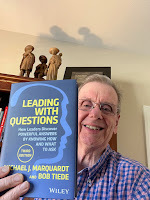 Do you have a To Be Read (TBR) pile of books? I know some people have several stacks of TBR books. On a regular basis, authors and publishers will send books to me. Here’s a couple of books which arrived last week. Bob Tiede offered to mail six books and knowing my volume of books TBR, I encouraged him to only send a couple. One of the books he sent was
Leading With Questions
. He asked me to take a photo of myself with the book and send it to him (which I did). Then he also asked me to post my photo on social media (which I also did). At this point, I’m still working on whether I’m going to read and review this book or not. Even if I were reading full-time and getting paid for it, I would not be able to read and review all of the books which come into my home. It is simply impossible.
Do you have a To Be Read (TBR) pile of books? I know some people have several stacks of TBR books. On a regular basis, authors and publishers will send books to me. Here’s a couple of books which arrived last week. Bob Tiede offered to mail six books and knowing my volume of books TBR, I encouraged him to only send a couple. One of the books he sent was
Leading With Questions
. He asked me to take a photo of myself with the book and send it to him (which I did). Then he also asked me to post my photo on social media (which I also did). At this point, I’m still working on whether I’m going to read and review this book or not. Even if I were reading full-time and getting paid for it, I would not be able to read and review all of the books which come into my home. It is simply impossible.  I opened a package of books and it included a hardcover copy of
The Dragon
’
s Prophecy: Israel, the Dark Resurrection, and the End of Days
wrapped in this package. Notice this book does not release in the bookstores until September 3rd. I’m unsure if I will read it or not since in general I do not read or write about books on Biblical prophecy. I do applaud the creativity of the publicity people sending this package. It definitely caught my attention.
I opened a package of books and it included a hardcover copy of
The Dragon
’
s Prophecy: Israel, the Dark Resurrection, and the End of Days
wrapped in this package. Notice this book does not release in the bookstores until September 3rd. I’m unsure if I will read it or not since in general I do not read or write about books on Biblical prophecy. I do applaud the creativity of the publicity people sending this package. It definitely caught my attention. 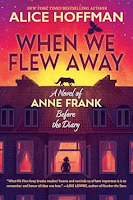 Sometimes a publisher will send me an Advanced Reading Copy (ARC) of a forthcoming book. Scholastic Press sent me an ARC of
When We Flew Away, A Novel of Anne Frank Before the Diary
by Alice Hoffman which releases September 17th. This 8 to 12 year old book from a bestselling novelist looks intriguing and like something I “might” read. As of this writing, I’m uncertain. These books are just a few of the ones which came into my mailbox this past week and show the variety of books.
Sometimes a publisher will send me an Advanced Reading Copy (ARC) of a forthcoming book. Scholastic Press sent me an ARC of
When We Flew Away, A Novel of Anne Frank Before the Diary
by Alice Hoffman which releases September 17th. This 8 to 12 year old book from a bestselling novelist looks intriguing and like something I “might” read. As of this writing, I’m uncertain. These books are just a few of the ones which came into my mailbox this past week and show the variety of books.Do you read in the area where you are writing? What is on your To Be Read pile? Do you support other authors and write reviews? In the comments, let me know and I look forward to reading your experiences.
Tweetable:
This prolific author and editor explains how writers are readers. He gives the details about why this simple habit is important for every writer. (ClickToTweet)
 Much of the publishing process is outside of the writer’s control. 10 Publishing Myths helps writers have a realistic perspective and take action. Get 10 Publishing Myths for only $10 +FREE shipping + over $200 of free bonuses.
August 18, 2024
Critical Editorial Decisions

By Terry Whalin @terrywhalinAs an acquisitions editor at a New York publisher, I’ve read many submissions from potential authors. It’s one of my main tasks to read these submissions and speak with the author to see if they are the right fit for the publishing house. Often these authors have received little feedback about their submission.
From my decades of experience in this business and writing for many different publishers, I know firsthand how submissions are handled. The editor or literary agent is reading the submission for their own needs. If it looks like something they could use in their bsuiness, then they will reach out to the author. If not, they will not respond and instead press on to the next submission. The author is left with little to zero feedback about what can be done to improve the submission so it could fit the needs of the publishing house.
Understanding these foundational details is a critical part of the publishing process. It’s like the concrete in the image above in this article. The concrete mixture has to be correct or the foundation of the building will not be a strong one. It's the same process in publishing. Every writer must have the right mixture in their submission to hit the right target. From my experience, I will see something different from another person. There is definitely a process and the author needs to enter this submission process.
As an editor, I’ve watched writers make critical editorial choices which affect the results of their work. Because they are new to the business, often they will not understand these critical junctures until months or even years after the fact. In this article I want to give some detailed examples in hopes it will help you become more aware and sensitive to the importance of these decisions.
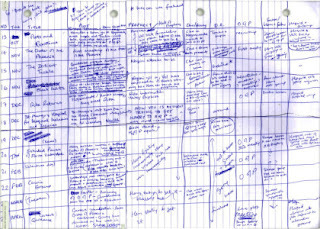 The book writing process begins with a well-designed foundation. Bestselling novelist James Scott Bell talking about this element in this article, The Art of the Outline. It’s worth studying the patterns and habits of other writers to see how you can improve your own creation process. Notice the creativity that is poured into this storytelling and how it is the foundation of their manuscript. Just look at the detailed planning that J.K. Rowling poured into her Harry Potter books.
Some of the basics why your submission is getting rejected or no response:
--Your word count is too large. For a nonfiction book, the ideal length is 50,000 to 60,000 words. For a fiction submission, it is around 60,000 to 80,000. If your novel is 100,000 words (a common length), you are going to get rejected with no idea why. The published book will be too large and require a high retail price (affecting sales). The word count details are important.--Is the submission poorly written or not appropriate for the publishing house? If so, you are asking for silence or rejection.--The editor or literary agent doesn’t understand the title or the overview or the pitch. This situation happens and can why you are getting rejected.
Recently a novelist sent a submission to Morgan James Publishing. He had worked on this novel for years. It was a good length and had an interesting pitch and storyline. The story was something we would possibly publish. I put the submission through our system. The internal feedback was a pass (for now). This author needed a developmental editor to improve his manuscript and change the pass to a contract offer. We recommended an excellent developmental editor who this author hired to help him. He got the feedback from the editor and the path to get his revised work was steep and required a lot of changes and revision. He set everything aside and self-published.
I understood what this author did but his choice greatly limited the reach of his novel. He has some other writing possibilities so we are still exploring them. My key point is achieving excellence and good storytelling is hard and sometimes as authors we have to choose the hard path. I’ve watched this process happen with many authors through the years.
If you are in this situation, here’s some actions to take:
--join a critique group with some honest feedback--use some honest beta readers and get their feedback--hire an experienced developmental editor and follow their suggestions and feedback. There are many different editors and potential costs for this process. I encourage you to ask around and choose carefully. A novelist told me that he had hired some well-known editor and was paying $500 a chapter for editing (excessive in my view). Each author should make careful editing choices.
The publishing process is filled with critical decisions. During each stage, you need to make wise choices to have a solid foundation and find the right publisher. What critical editorial decisions did I miss? Let me know in the comments below.
Tweetable:
This prolific author and editor details some critical editorial decisions made in publishing. Learn the insights here. (ClickToTweet)
 Much of the publishing process is outside of the writer’s control. 10 Publishing Myths helps writers have a realistic perspective and take action. Get 10 Publishing Myths for only $10 +FREE shipping + over $200 of free bonuses.
August 11, 2024
Pitching Failures

By Terry Whalin @terrywhalin
While I’ve been reading pitches and making pitches for decades, sometimes I miss the mark. A pitch are some carefully selected words targeted to a decisionmaker to get a specific result. There are many different types of pitches because you have a variety of possible results. You pitch a magazine article to an editor. Or you pitch a book idea in a proposal or a query letter.When you pitch, it is not about you. Readers don’t care about you. They care about themselves--so focus on the reader and what they want--their needs, the benefit to them and these sorts of details. The focus of your pitch is a critical aspect so you make the right presentation and aim at the right target.
Each week I get an email from an author who has a large email list. In this email, she encouraged people to pitch her something that she will include in a future email. I crafted a pitch and sent it to her.
Here’s my pitch to her:
I launched a weekly blog in 2008 and have been consistently writing each week with over 1700 entries. I found this article which listed my name as one of the top 27 content producers: https://izea.com/resources/top-blog-content-writers/ Here’s the link where you (and others) can receive the entries in their email: https://t.co/W6uU64u6aA
My pitch caught her attention (good) and she responded (also good). My pitch failed because I neglected to focus on her readers and her audience. In her response, she called me on it and pointed out my pitching failure. I understood and rewrote my pitch with the right focus.
Here’s my second pitch:
Millions of book ideas are circulating in publishing offices. The majority are ghosted without even a form rejection letter. New York publisher acquisitions editor Terry Whalin is one of the top content producers with his weekly blog, The Writing Life. You can gain his insights and teaching on email. Subscribe at: https://t.co/W6uU64u6aA
Notice my second pitch has the right focus on her readers and only includeds a single focus point or website link. My first pitch did not have this proper focus. What happened with my revised second pitch? Nothing. I was ghosted and she didn’t respond a second time. I didn’t get another opportunity.
My commitment to you in these articles about The Writing Life is to tell you about these experiences and what I’ve learned--for myself but also to help you. Here’s some of those lessons from my pitching failures:
1. First impressions count. You only get one chance to make a good first impression. You can’t redo that first pitch. Sometimes you get grace from the decisionmaker and a second opportunity, but you should not expect to receive it. The other person has no obligation or responsibility to tell you why your first pitch didn’t work. I recognized that I was given a gift of a response. The same sort of expectation should be involved with a submission to an editor or literary agent. If you get a response, it is likely a generic pass letter. That professional is not responsible to tell you what was missing and why they made their decision (nor do they have time for such answers). If you get the information (and occasionally you do) then recognize those words as a valuable gift from that person.
2. Haste makes waste. I cranked out my pitch and fired it off on email--and it failed. It would have been better if I drafted the pitch and then held it for a day or two. I could have reviewed and edited that pitch to refine it and make sure it was focused on the reader.
3. There is value in a thoughtful pitch. If you draft the material and hold it for several days, it gives you an opportunity to make sure it is complete and not missing some element. For example, for my work with Morgan James Publishing, authors will often send me their book proposal. It is common to find their proposal is missing a critical section or is incomplete in a section. If the author had held it for a few days, then he could have filled in those missing pieces and presented a thorough proposal instead of a partial proposal.
How do you find a missing section in your proposal? The most difficult thing to see is something that is not there. It’s why checklists have value because they point out missing sections. I have a free book proposal checklist (just follow this link).
4. Keep pitching. The only way you can permanently fail in your pitching is to quit or stop. It takes work for you to find the right fit and the right place for your pitches. I encourage you to continue forming new relationships and connections at writers’ conferences, online and through LinkedIN. As you make these connections look for new opportunities. I suspect these opportunities are all around you but you aren’t aware of them and not pitching or making the right pitch.
As I’ve said before in these entries, if I can help you, let me know. My personal email address is in the top of my X/Twitter profile. What steps do you take with a pitching failure? Let me know in the comments below.
Tweetable:
When your pitching fails, what actions do you take? This prolific author and editor gives the details about his pitching failure and what he learned for the next time. Get the details here. (ClickToTweet)
 Much of the publishing process is outside of the writer’s control. 10 Publishing Myths helps writers have a realistic perspective and take action. Get 10 Publishing Myths for only $10 +FREE shipping + over $200 of free bonuses.
August 4, 2024
Like Herding Cats

By Terry Whalin @terrywhalinIn my work as an acquisitions editor, I speak with many first-time authors. These authors have little concept of the steps to get published and likely do not understand the limited time editors and agents will take with their pitch. These professionals receive many email pitches and are looking for reasons to click delete and press on to the next one. If you pitch the wrong book, wrong length, and other wrongs, you will never know the reason. Instead of a response, you will not receive anything (ghosted) or you will receive a form rejection letter which is more and more rare.
In this article, I compare this editorial process to herding cats. There is almost nothing you can do to control the process but continue forward. From my seasoned experience, it is frustrating but all I can do is look for the people open to my insights and willing to do the necessary work to refine their pitch and find the right connection. It’s not easy but possible if the details line up.
For example, a recent author submitted a Christian nonfiction book with a word count of over 115,000 words. As an editor, I speak with the author as a part of our submission process. I planned to tell this author he was pitching a book with a printed page count of over 400 pages. As I was preparing to speak with this author, he looked at the Morgan James Publishing website and decided not to meet with me and instead to press on to other publishing options. I had a scheduled conference phone call with this author and shortly before our call, he emailed and cancelled. I attempted to encourage him to continue but he would not change his mind.
Another author with a devotional book submission withdrew her submission because she had signed with a literary agent. For decades, I have worked with literary agents. I have numerous friends who are agents and believe in their work and the importance of it. I have a free list of over 400 agents that I give away (just follow this link to get it).
Here’s a little publishing detail that agents will not tell you because it doesn’t help them: they don’t sell all their books which they are pitching. In fact, agents get rejected more than anyone else in this business because they hear “no” many times when they simultaneously send a single submission to multiple places. Here’s another detail to factor into the process of working with an agent. If your agent does locate a publisher and get you a book contract, it is likely to be at least 18 to 24 months before that publisher will get the book into the bookstores. Many authors are in a rush to get their book into the marketplace. With a traditional publishing model, it would be unusual for them to get your book out any quicker because of how books are sold into the bookstores. I was prepared to possibly tell this information to the author who signed with an agent but she withdrew her submission and dismissed me.
For each of these two author situations, I encouraged the author to reach out to me down the road and hope we can work together in the future. If potential authors are treated with respect and kindness, I often find these authors will reach out to me at a later point in time. As an editor I was frustrated with each of these situations because the author failed to explore their possibilities which I could see but they could not. At times I find the acquisition process like herding cats--not possible.
How can authors avoid these missteps and possibly get the attention of an acquisitions editor or literary agent? No matter how the professional responds to your pitch, each of us are actively looking for another bestselling author. We are reading online. We are listening to our phone conversations and most importantly reading our email (the major way people pitch these days).
My straight forward advice about finding the right publisher:
--explore all your options without limitations or preconceived ideas. You are looking for the best way to get published and the answer may surprise you if you are open to it.--get publishing insights from anyone who offers it--in person on the phone or at a writers’ conference or reading their how-to books--knock on many different doors and listen to see what opens
Am I missing something that you have experienced in the submission process? Let me know in the comments below.
Tweetable:
According to this prolific editor and writer, at times, the process of working with authors on their submissions is like herding cats. Get the specifics here. (ClickToTweet)
 Much of the publishing process is outside of the writer’s control. 10 Publishing Myths helps writers have a realistic perspective and take action. Get 10 Publishing Myths for only $10 +FREE shipping + over $200 of free bonuses.


