
W. Terry Whalin's Blog, page 9
May 19, 2024
If You Are Stuck...

By Terry Whalin @terrywhalinAs an author, there are many times when you can get stalled or stuck. When you face this type of situation, where do you turn? Throughout my years in this business, I have often been stuck or stalled. In this article, I want to tell a few stories, give you some ideas and action steps.
Several weeks ago, one of my Morgan James Publishing authors was in the final stages of production on his book. The pages were set in type and he showed those pages to one of his friends. This “friend” carefully reviewed the book and sent several single-spaced pages of editorial changes. This friend knew nothing about the process of book production. The rule of thumb is the closer you get to a final book to print, the less changes you want to make because that change process can become costly to the author. With these editorial suggestions, my author was stuck and trying to determine what to do.
From my work in publishing, I understand that many editorial choices such as where to put a comma are subjective and will vary from editor to editor. To help this author, I called an editorial friend and asked if she would review the changes and give me a suggestion who could fix it. To my relief, she agreed and a few days later validated that many of these suggestions needed to be fixed. This expert gave me several recommended people to correct these suggestions. I sent the information to my author. He investigated and came back with a range of costs and timeframes for each of these experts. Again, he reached out to me and was stuck. I made some suggestions. I know this author and even if it was going to cost him financially at the end of the day he wanted his book to be in the best possible shape when it released this fall to the bookstores.
Notice how this author took action when he got stuck. He reached out to his acquisitions editor (me). I made some suggestions and used my resources to help him. Then he made a decision to get unstuck and move forward.
You may be stuck for a number of reasons. Maybe you want to do more podcasts and radio interviews to promote your book. You need to ask an expert to help you or learn to craft the pitch yourself and book interviews. Maybe you want to break out of self-publishing and get your book into the bookstores. It's possible but you need to explore your options and meet the right person to help you. Possibly you need to plan to attend a large writers’ conference and meet the right person. Possibly you need to learn how to write a book proposal to improve your pitch. There are many directions to head but you need guidance to make a wise decision. First, understand you are not on your own unless you make this decision. There is a writing community and experts who can give you good options--if you explore these possibilities.
In the end, my author made some wise decisions which are going to cost him financially. The interior type for his book will be reset and all of the corrections fixed so an excellent book will be released this fall.
If you are stuck, here’s some ideas:
1. Switch to something else. Sometimes your mind will continue working on the challenge as you work on something else and the right idea will come to you.
2. Move out of your chair and take a walk. Exercise will clear your mind and help you make a better decision.
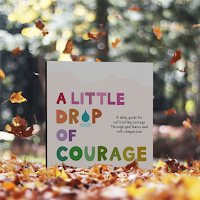 3. Read a book for inspiration and a fresh perspective. This week the publisher sent me a little book called
A Drop of Courage
. I don’t know about your situation but on a daily basis I could use more courage. This little 120 page book is packed with ideas and inspiration. You can open to any colorful page and read a few pages, then return to where you are stuck. It’s a new book which will remain on my shelf and be used often.
3. Read a book for inspiration and a fresh perspective. This week the publisher sent me a little book called
A Drop of Courage
. I don’t know about your situation but on a daily basis I could use more courage. This little 120 page book is packed with ideas and inspiration. You can open to any colorful page and read a few pages, then return to where you are stuck. It’s a new book which will remain on my shelf and be used often. 4. Call or email a friend for help. You have to put away your pride to do this process but understand others are eager to listen to your need and you can get unstuck.
Our world is filled with possibilities and opportunities. I follow these steps often in my daily work in publishing. Take action and move forward. It could be just the step you need to take instead of feeling stuck. What did I miss? How do you get unstuck? Let me know in the comments below. I look forward to learning from you.
Tweetable:
 Much of the publishing process is outside of the writer’s control. 10 Publishing Myths helps writers have a realistic perspective and take action. Get 10 Publishing Myths for only $10 +FREE shipping + over $200 of free bonuses.


May 12, 2024
Authors Must Prime the Pump

By Terry Whalin @terrywhalinWhen I begin a new nasal spray for my allergies, I have to spray a couple of times to prime the pump. Then it will work properly. For this article, I’m adding an image of an old-fashion pump. For this pump to give water, you have to pump it a number of times. Through taking action, you bring the water up from the well until it runs out of the pump.
Authors have to prime the pump to sell their books and in this article I want to give you some ideas and details about actions in this process.
Someone must hear about your book dozens of times before they purchase it. The author is the person with the greatest passion for their topic--and it is up to you to drive this exposure or prime the pump--with social media, stressing the benefits of your book, telling stories, sending emails, writing magazine articles, shooting videos, going on podcasts and radio shows and many more actions--hopefully you get the idea.
Recently David Hancock, the founder of Morgan James Publishing, and I were talking about the presale process. He said at 13 months bestselling author Dave Ramsey will begin talking with his audience about a forthcoming book and the content of it. He will tell his readers that he is writing the book and a bit of what it will contain. When Ramsey talks about this forthcoming book, he is peaking the interest of his readers and priming the pump for them to prepare to purchase it.
In other articles on The Writing Life, I’ve mentioned that I’m a Daniel Silva fan of his writing. Each year, Silva writes a single novel which is released in July. Almost a year ahead, he will announce the title in his newsletter then a few months later, he will show the book cover. A few months later he will announce the book is ready to be pre-ordered. His next newsletter will announce that readers can order a signed copy of this forthcoming book. How does he sign these books? His publisher sends him a page of the book and Silva signs these pages then returns them to the publisher. They are bound into signed copies. It’s called a book tip-in and is used to drive pre-sales for the forthcoming novel.
 I ordered my copy of
A Death in Cornwall
on April 3rd and the book will not release until July 9th. Whether you order your book from your favorite independent bookstore or an online bookstore like Target, no copies of the book will ship until the release day. I’ve already ordered my signed copy.
I ordered my copy of
A Death in Cornwall
on April 3rd and the book will not release until July 9th. Whether you order your book from your favorite independent bookstore or an online bookstore like Target, no copies of the book will ship until the release day. I’ve already ordered my signed copy. According to David Hancock, “The best time to begin marketing and telling people about your book is the moment you decide to write it or today--which ever day comes first.” As David told me, there are three reasons bookstore buyers purchase a book. First, you’ve compared your book to other books on your topic or category. Because other readers have bought X number of that book, the bookstore will order your book for their customers. The second reason for bookstores to order your book is you are the right person, talking about the right topic at the right time. Yes, there were a number of rights in that last sentence but you can sell books if they line up. The final reason is that you as the author are consistently talking to your reader about this topic. That consistent effort pays off with a steady stream of book sales in the bookstore.
Every Author Must Cross Two Bridges
As David Hancock recently told me, every author with their book needs to cross two bridges. The first bridge is:
1. The Authority Bridge. The public must perceive you as the right person talking about the content of your book. You show you are an authority through consistently talking about the topic of your book. Also you bring the audience along on your publishing journey as you write the book, look for a publisher, get rejected, keep trying and eventually get accepted.
2. The Permission Bridge. Most authors don’t build this bridge. Instead the hold their content close to themselves then begin to share it when their book comes out. If you have built the permission bridge you have shared your content and expertise on the topic and earned the right to ask your readers permission to buy your book. You’ve not only created a book but created associated products such as a reader’s guide with study questions or a journal or have launched an online course associated with it. What else can you build in addition to your book? Can you create a keynote speech tied to your content which you give to various groups and settings? As David Hancock said, readers beget readers.
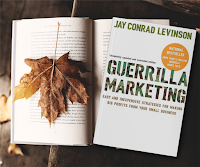 As you build the authority bridge and the permission bridge, then you begin to build the community or tribe who love your content and your work. As Jay Conrad Levinson, the creator of
Guerrilla Marketing
in the 80s often said, he made $35,000 on his book but $10 million because of it and the related products from it.
As you build the authority bridge and the permission bridge, then you begin to build the community or tribe who love your content and your work. As Jay Conrad Levinson, the creator of
Guerrilla Marketing
in the 80s often said, he made $35,000 on his book but $10 million because of it and the related products from it. During my conversation with David Hancock, he also gave me the top four best practices to sell books:
1. Word of Mouth. People talk about the books they are reading. How did the book change them? Give them access to your content and they will talk about you and your book.
2. Consistent Email. It sounds old fashion but here's the truth. Not everyone has a Facebook page but everyone has an email address. David suggested sending one email a month and this regular communication on your topic will build your audience.
3. Podcasts. There are millions of podcasts and they need authors who can speak with authority and passion about their topic. Learn how to pitch and get on these podcasts
4. Social Media. Many writers will groan at this final one because in general there is a lot of noise on social media. David advises you to be consistent, be a real person and it takes patience.
In this blog post, I want to give you an unedited recording of my interview with David Hancock which is about 35 minutes. This recording will provide more details than this article. Follow this link and download the audio to your computer and save it. There are three vertical dots on the right side of the recording. Click the top dot of the three on the right and it will let you download the audio then listen to it.
What steps are you taking on a consistent basis to prime the pump with your audience? What am I missing? Let me know in the comments. Tweetable:
 Much of the publishing process is outside of the writer’s control. 10 Publishing Myths helps writers have a realistic perspective and take action. Get 10 Publishing Myths for only $10 +FREE shipping + over $200 of free bonuses.
May 5, 2024
Don't Overuse This Word and Get Blacklisted

By Terry Whalin @terrywhalinWords have incredible power to influence and affect our life and work in the publishing community. There is a common word which authors will often use but in this article I want to give specific examples and discourage you from overusing this word and having the retailers blacklist your book.
Years ago when I was on the faculty of the San Francisco Writers Conference, I spoke with a bookseller and learned not to use this word in my conversation. I showed this retailer the first edition of Book Proposals That Sell and in my pitch I told him the book had over 100 Five Star Amazon reviews. Instantly he frowned and told me that he didn’t care about Amazon reviews. Yes the single word not to overuse is Amazon.
Instead of touting that you have an Amazon bestseller, you can say your book was a bestseller in _____ category. Instead of saying you have 56 Amazon reviews, you can promote your book has 56 Five Star reviews (or whatever number of Five Star reviews you have received). It is a slight revision but a significant one.
Amazon is a large player in the book retail market but many bookstore people believe Amazon has destroyed their business. The book market has made dramatic shifts and Amazon has been a factor in those changes. For example, at Morgan James Publishing, Amazon accounts for about 24% of our overall business. When I meet an author who has only published on Amazon, I tell them they are missing 76% of how Morgan James can distribute and sell their book. Our books are in 98% of the bookstores in North America including the brick and mortar bookstores. Recently I was looking for a book cover image on one of our novels and the first place I located it was at Target.com. Morgan James sells our books at Target along with over 180 other online retailers.
Give Your Readers Options
When you set up your website and the page to sell your book, what link or links do you include? I was looking at the books from a long-time author friend. He writes a new blog each week and sends it like clockwork. I admire and respect this type of consistent action from any author. Today I checked his book sales page. Each book had a single button that said, “Click Here to Buy on Amazon.” He used a publishing company to create his book and I didn’t recognize the name of his publisher. Yet he was giving his readers one option to buy the book: Amazon. As I’ve been saying in this article, it’s the one word you don’t want to overuse.
Instead of sending your readers to a single place like Amazon, I encourage you to give them options like Barnes & Noble, Books A Million, their local independent bookstore or getting it directly from you (even encouraging readers they can get a signed copy from you). It’s how I set up my sales pages and here’s a couple of examples for some of my books. The sales page for Book Proposals That Sell is here. The sales page for 10 Publishing Myths is here. The sales page for Billy Graham, A Biography of America’s Greatest Evangelist is here. The reader is going to buy the book where they normally purchase books. As an author, you want to give them options and don’t just send them to a single place.
A Little Known Bookselling Fact
While on the surface, the community of booksellers looks large with thousands of bookstores from chains like Barnes & Noble and independent bookstores. Most of the sales people for these chains have been in the book business for many years. As a part of their work, they cultivate and maintain relationships with owners, authors, editors and many other people in the industry. These sales people know each other and have developed friendships. On one level they are competitors but on another level they are colleagues. These colleagues speak together and share information. When an author is only focused on sending readers to Amazon, these sales people notice and can blacklist your book from the brick-and-mortar bookstores. According to my recent conversation with David Hancock, the founder of Morgan James Publishing, such a blacklist practice is happening.
Sometimes You Can’t Avoid the Word
 In 2019, Morgan James Publishing released Steve Anderson’s book, The Bezos Letters: 14 Principles to Grow Your Business like Amazon. Even before the release date, this book garnered a great deal of attention. The Morgan James foreign rights person sold the book into multiple languages including the highest advance received in this area for a book in the 21-year history of the company. The Bezos Letters has hundreds of Five-Star reviews and a USA Today and Wall Street Journal bestseller. It’s unusual for a book to achieve this level of success which translates into many book sales.
 Yet this book could not avoid using the word Amazon. According to David Hancock, “The brick-and-mortar bookstores blacklisted The Bezos Letters from the release in 2019 until this year. Now in 2024, the brick-and-mortar bookstores began to order and sell this title.” The success and continued sales of this title eventually removed it from the blacklist. At the end of the day, retailers want to stock and sell books which will move off their shelves and into the hands of buyers. The steady and continued sales of The Bezos Letters eventually won over the retailers who want to serve their customers and sell books.
What actions will you take?
I’ve written this article to encourage you as an author to take action for your website and sales pages. Will you remove the word Amazon in your social media and promotion efforts? Will you give your readers a wide variety of bookstore options to purchase your book? What actions are you going to take? Let me know in the comments. Tweetable:
 Much of the publishing process is outside of the writer’s control. 10 Publishing Myths helps writers have a realistic perspective and take action. Get 10 Publishing Myths for only $10 +FREE shipping + over $200 of free bonuses.
April 28, 2024
Unfulfilled Dreams (And How to Move Forward)

By Terry Whalin @terrywhalinDo you have dreams and plans for your future which have not happened? It’s true in my life and work in the publishing community. I have books to write, places to speak, articles to write and pitch, authors that I want to get into print and much more. In this article, I want to give you some ideas about unfinished dreams, how to handle them and keep moving forward to achieve them. As I go through some of my unfulfilled dreams, I encourage you to think about your own writing life and the things you have not accomplished but still want to complete.
As an acquisitions editor:--I have authors who have submitted their work to Morgan James and I need to process and move it forward. Working for a New York publisher as I’ve been doing for the last 12 years, there is an internal process to follow and I’m the person to drive these authors and get them a book contract.--I have meetings to set up with these authors and move their submission ahead in the process.--I have to make follow-up calls and emails to authors who have received a contract yet not made a decision about whether to sign it or not.--I have many other unfulfilled tasks and dreams for the authors I’ve brought into the publishing house and need to encourage.
As a writer and author:--I have several books that I’d like to write and publish. The stories are mostly in my mind and not on paper (not a good thing). --I have books that need need to get in front of more people to help them know about them and purchase them. --I have articles to pitch and write for various publications--in print and online.--I have stories from others that I want to help get into print and into the world.
As an online marketing author:--I have websites and products that I need to do more promotion and reach different audiences with them.--I have some websites and online courses which are not working properly and need correction.--I have online websites I’ve purchased and not built or launched the planned products on them.--There are many more elements I could add here but you get the idea of the unfinished business.
As a learner:--I have online training courses (some of them an expensive investment) which I have not heard or used.--I have training that I have read or heard yet not applied the information to my marketing and writing life. I know getting the information is only the first step but the real work is in the implementation.
As an author:--I have books from other authors and publishers that I have not read nor written reviews.--I have books that I want to learn from but haven't read nor applied to my life. --I have audiobooks that I plan to hear and learn from the information.
As a person:--I need to get outside and increase my movement or exercise for my health.--I need to drink more water and better monitor my food intake.--I need to become a better listener and increase my love and devotion to God and my family.
Even if you skim this lengthy list of unfulfilled dreams, you can see there are large numbers involved.
How to Move Forward
While I work hard on these different tasks and goals, I'm realistic and understand that I end each day with unfinished tasks. My method is to keep inching my various tasks forward. Some of them will be more rapid than others but every day I keep chipping away at the various unfulfilled dreams.
None of us can predict our future, our health, the lives of our family and much more. Each of us have the same 24 hours in a day and can’t go back and redo yesterday. Instead we have to seize each day with celebration and gratitude. What is your way forward for your unfulfilled dreams? Let me know in the comments below.
Tweetable:
 Much of the publishing process is outside of the writer’s control. 10 Publishing Myths helps writers have a realistic perspective and take action. Get 10 Publishing Myths for only $10 +FREE shipping + over $200 of free bonuses.
April 21, 2024
A Different Author Strategy

By Terry Whalin @terrywhalinSome publishing experts estimate 1,000 new books are published every day. This estimate includes the self-published books and it can be overwhelming when you consider the volume of print material which is entering the world.
How can an author standout, be different and sell books? In this article, I want to give some strategy ideas and action steps. Upfront, I will tell you each of these methods are not quick and easy. They require effort and work to sell books.
As you read and study the path of other authors, you need to understand success leaves traces. If you study the details of the success of others, you can discover the path for your own success and sales of your book. First, you have to gather some basics. What type of book are you writing? In general the techniques and path for a children’s book will be different from a novel from a nonfiction self-help book. Each of these types will often follow a different strategy and path to sell their books.
Several years ago I interviewed an author friend who self-published a nonfiction book. In the creation process, he created a book which was well-written with an attractive cover. He crafted the back cover copy and made sure there was a publishing logo on the spine and the barcode on the back was perfect. This friend paid attention to the details as he self-published and produced a book which when placed along side any other book would be accepted. Many people self-publish but they slip on these production details.
This author targeted book sales to libraries. The American Library Association says there are over 123,000 libraries in the United States. He located a list of these libraries with the phone numbers. For several hours every day, he called the libraries, introduced himself and had a brief pitch for his book. He got the librarian interested in his book, got their name and with their consent, mailed a book with an invoice. It took hours of work and the development of a plan and execution of that plan, but he sold thousands of books in this process. If you want more of the details, I have this interview in the extra products when you purchase my 10 Publishing Myths book. This strategy to sell books worked for this author and you could learn from his success.
I follow the teaching and stories from book marketing expert John Kremer, author of 1001 Ways to MarketYour Book . Recently he made a bold claim encouraging authors to make up to $150,000 before your book is published! The strategy of pre-sales is one every author can learn about and practice.
If you have published or plan to publish a children’s book, then look at the information and actions in this section from John Kremer. As with the other strategies in this article, you can learn and then implement the practices for your books.
Have you heard of bestselling novelist Terry McMillan who has several movies including Waiting to Exhale and How Stella Got Her Groove Back. As John Kremer said, “Her first novel was published by a large New York publisher, but they didn’t do much with it. This was in 1987. They sent out press releases. They sent out some review copies. But Terry was a first-time novelist, so media didn’t care. Nothing much happened.” How did Terry turn around this experience? John gives the details in the Rule of 3,000. McMillan handwrote personal letters to 3,000 bookstores. It was a huge commitment of time and energy but it got attention and paid off. Few authors would make this sort of effort but it launched a bestselling novelist. Maybe you want to follow this path for your book.
John wrote some additional details saying, “The response was so great that she ended up doing a 39-city book tour. Her efforts gained her plenty of rave reviews for her book as well as two reprintings in six weeks. That’s a major success for a first-time novelist. Her publisher got behind her once they saw that the book was selling, and it was worth reprinting again and again. The key point to this story is not who Terry sent letters to, but how many letters she sent. It’s a numbers game, and what happens with most authors, even though I’ve told them this story many times, is that they ignore this crucial advice. Write a lot of emails.”
One of my Morgan James Publishing authors published a personal story with a tie to the pro-life issue. She mailed 1,000 copies of her book to Crisis Pregnancy Centers around the United States. The effort was a financial and time investment in her book. One of the keys for her success will be the strategy behind it. Did she offer bulk sales to these places and how is she following up on the mailing? Each of these strategies have different details which are important for them to succeed.
My encouragement is for you to learn about these different author strategies for selling and marketing your book. Try some of them and see if they work for you. If they work, then do it some more. If not, then press on to another one. There is not one path to success but many paths and as an author you have to select the one for you. If there was a single path, every book would be a bestseller. Instead we know some books have dismal sales and others succeed.
My encouragement is to try a different author strategy to sell your book and keep doing it over and over until you find success. Is there another strategy that you have used to successfully sell books? Let me know in the comments. Tweetable:
 Much of the publishing process is outside of the writer’s control. 10 Publishing Myths helps writers have a realistic perspective and take action. Get 10 Publishing Myths for only $10 +FREE shipping + over $200 of free bonuses.
April 14, 2024
Why Social Media Is Important

By Terry Whalin @terrywhalinWhen writers begin to submit to book publishers, they are often surprised with the questions about social media and their specific numbers on various platforms. Isn’t social media a waste of time? I often hear this waste of time push back from writers about social media. In addition, I’ve read other articles from those inside publishing who say social media does not sell books. In this article, I want to give a series of reasons and insights why every writer needs to be on social media yet also control their time on it so it is productive and not wasted.
At first glance, social media looks like a huge time waster for writers. If you use it well, it can yield great connections and even book sales. Like a lot of publishing, the results for you as an author are buried in the details.
Choose Your Platform
There are dozens of social media platforms. You want to choose the ones where your target audience is active and using. You can't be on every platform and it’s unproductive if you are trying to be on everything. Instead select two or three of these websites. Recently I noticed one of my author friends had dropped off Twitter/ X. When I asked her about it, she confirmed that her audience was not on this website and she had deleted her account and instead was emphasizing some other sites. I could see the wisdom in such a decision.
Complete Your Profile and Plan
After you select the sites, fill out all of the details on the profile such as photo, bio and other fields. Each one is different so look at others on the platform and learn from their actions.
The next step is creating a consistent plan for posting on the selected platforms. Your posts should be interesting, contain an image (for visibility and to increase readability) and diverse. Have you been on radio or podcasts? Do you save those recordings on your own website? If you control them, they will not disappear. Then use those live recordings over and over to promote your book and yourself.
Create A System and Use Tools
For years, I’ve posted thousands of times on three social media sites. On average, I post 12-15 times a day. I’ve created a system for myself, a plan and a pattern. As I’ve mentioned in these articles I use a scheduling program called Hootsuite. The other common program is Buffer. My encouragement is to create a system which will work for you to be consistent and regular yet effective. You may decide to post three times a day or five times a week or some other schedule. Whatever number of posts that you select, be consistent and do it over and over.
Sometimes I do not get a lot of response or engagement. It makes me wonder if anyone is reading my posts--yet I continue in my same pattern of posting. Then out of the blue, someone will reach out to me or respond to a post. Your consistency pays off.
Here’s the key reason you need to share the benefits of your book over and over. It’s been proven in the marketing world that someone needs to hear about your book at least seven or eight times before they purchase your book. The exposure and highlight of the benefits of your book are a part of the promotion process for your book. Here’s another key fact, your publisher may place the book inside a brick and mortar bookstore (which is excellent) but if you don’t encourage or drive a reader to go to the bookstore and buy your book, then eventually the book gets removed from the store and returned to the publisher.
The average return rate for a traditional publisher is 40%. At Morgan James Publishing, most of our books are running around 15%. Last week I checked on the sales from one of my authors who is pitching a second completed novel and synopsis. Admittedly, it took a lot of this author's writing time and effort to produce a second novel manuscript. His return rate from the bookstores for the first novel was 73%! This author needs to make some radical changes in his actions to sell that first novel. If he doesn’t take action, he is unlikely to get a second book contract to publish with Morgan James. Authors forget each published book is producing a sales track record. The author is the one who drives this track record through their continued promotion to readers.
Emphasize Benefits for Continued Exposure
As you create your plans to promote your book, look at your different resources. Use live radio and podcast recordings along with other resources to emphasize the benefits of your book to your readers. Also create and use different images with your books and social media posts. In these articles, I’ve mentioned using Mock-up Shots for this effort. Follow the link to get lifetime access and use it for your books. Almost every day I use this tool.
Take 100% of Your Responsibility
Some of you reading these words wonder if you have to do it yourself. Couldn’t you hire someone or some organization to handle your social media? There are virtual assistants and social media consultants and companies which you could handle your social media. I’ve met a number of these people through the years yet I’ve chosen to continue to handle it myself. I’ve often written in these articles about the first principle of success: I will take 100% responsibility for my own success. The process takes regular and focused effort but is important to reach your readers and attract publishers to your work. The first step is to get the insight, wisdom and knowledge from others. For example, read my 10 Publishing Myths book and see the special offer at the end of this article. After reading it, you must take action for your own writing life. From my experience knowledge without action doesn’t give any results.
I hope I’ve helped you understand why social media is important and some action steps to take for your books. What am I missing that you could add? Let me know in the comments. Tweetable:

Much of the publishing process is outside of the writer’s control. 10 Publishing Myths helps writers have a realistic perspective and take action. Get 10 Publishing Myths for only $10 +FREE shipping + over $200 of free bonuses.
April 7, 2024
Is It Time for Spring Cleaning?

By Terry Whalin @terrywhalinI love the freshness of spring. Baseball season starts. We freshen up our place from the trials of winter and plant flowers for spring along with other activities. The darkness of winter fades and we celebrate the newness of life with new growth and flowers.
As I ask in this article, is it time for spring cleaning? I’ve found that the more I’m organized and block different parts of my schedule, then it increases my productivity and output. As I’ve mentioned in past entries, almost daily books pour into my mailbox. In general, I unpack them and put them on my bookshelf but over the last few weeks the area for this book has filled. As a part of my spring cleaning, I sorted through some books and took a hard look at each one. Do I have the time to read it? I will look at a few pages and see if the writing is going to hold my interest. If “no” is the answer to these questions, then I remove the book from my shelf and get the books ready to go to a good home elsewhere. This book sorting process is a necessity to organize my office several times a year including spring.
Creating a Pile Doesn’t Work
Like my bookshelves, I do the same evaluation process with the papers on my desk. From my experience, it doesn’t work to take a piece of paper or a stapled article and put it into a pile. Instead I have developed a system to know exactly where I’m keeping that article and why I’m keeping it.
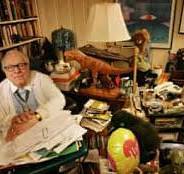 I admit every author is different in this area. One of the most prolific writers was Ray Bradbury. Recently an article about Bradbury came across my screen with a photo of his office with piles of paperwork. This novelist created a different system for organization which worked for his writing life. My encouragement is for you to create a working system for how you organize your desk, paperwork, books and other tasks so you continue moving forward each day.
 If You Are Stuck in a Rut...
I have a couple of projects which have been stuck on my desk and have not moved--which is a problem if I want them to get published. I’ve been stuck in a rut and proscratating on this work. I suspect you have a pitch or two which is also stuck. Spring cleaning is a great time to plot and take a new course of action.
First determine what you want to accomplish? Do you want to increase your speaking? Do you want to sell more books? Do you want to publish more magazine articles? To achieve these goals, you have to take action and increase the amount of your pitches. Maybe you want to be on more podcasts or radio shows? These programs can be an effective way to sell more books and don’t require travel or other elements. The key to booking a radio broadcast or a podcast is pitching to the decision maker? Craft your pitch and even use a pitch template from someone else if you need some ideas. Then get these pitches into the world.
When you pitch, you will get turned down (rejected). This process happens to all of us including me. As I’ve written in these articles in the past, you are looking for the right fit and this process involves getting a number of rejections before you get acceptance. Learn what you need to do from others, then continually pitch. It sounds simple but takes consistent effort for it to actually happen.
When You Haven’t Received a Response
Spring is a great time of year to do follow-up work where your pitches went into a black hole without a response. Did the other person receive the pitch? As editors and agents, we lose things and they get stuck in our email and never processed. I encourage you to use the gentle follow-up approach to prod that other person. Many writers are afraid to follow-up then they wonder why nothing is happening. One of the critical steps for every writer is to follow-up.
Here’s some other ideas and approaches for your spring cleaning:Use a current market guide to make new pitchesPlan to get to a writer’s conferenceMake new connections on LinkedIN Join an online writer’s group and participateEach of these actions will take effort on your part as a writer but could yield great results. As I’ve written in the past, it will not fly if you don’t try and try on a consistent basis.
Each of us have the same amount of time or 24 hours. How you use that time will affect your results. Is it time for you to take some spring cleaning actions? Let me know in the comments. Tweetable:
 Much of the publishing process is outside of the writer’s control. 10 Publishing Myths helps writers have a realistic perspective and take action. Get 10 Publishing Myths for only $10 +FREE shipping + over $200 of free bonuses.
March 31, 2024
The Right Fit Takes Persistence

By Terry Whalin @terrywhalinChange is the only constant in the publishing world. It’s like playing the childhood game of musical chairs. The players are constantly in motion and change positions and roles. It’s one of the reasons for writers to read the trade publications which report significant personnel changes. Editors become literary agents. Literary agents change and work for a publisher or they become a freelance editor. These examples are just a couple of the continually shifting landscape.
As a writer, you have a dream and a desire to publish your words. It takes a lot of perserverance and persistence to find the right publisher for your work. The Chicken Soup for the Soul series is one of the bestselling series in the English language. Most people have forgotten their challenging beginning. Jack Canfield and Mark Victor Hansen were rejected 140 times before they located a publisher. That is a lot of rejection in the search to find the right fit.
There is only one way your book doesn’t get published or your story doesn’t appear in print or your book stops selling. It’s when you as a writer give up on your dream and stop. * You stop meeting new editors at a conference or on LinkedIN or through an online group.* You stop reading about new publishing houses and new publications. Change can mean opportunity for your book and your writing--if you don’t stop.* You stop pitching your writing or your book to literary agents and editors* You stop writing a book proposal and query letter. If you haven’t read my Book Proposals That Sell (The Revised Edition) , I encourage you to download the free ebook then read it and take action on the information.
I don’t encourage anyone reading these words to stop but instead to choose to keep going until you find the right fit for your writing.
Last week I heard a published author with an agent tell about her devotional going out to numerous publishers (40 is the number I recall) and getting rejected. The agent and author could not find the right place to publish this idea. Then one of the editors moved to a different publishing house. This editor remembered the author’s pitch and asked for the proposal. It was published along with three additional books. Her persistence paid off with four published devotional books.
Also last week I met a new magazine editor. One of my friends had written an original story for that magazine and never received a response. Her experience was a common one. When I asked this editor about another editor who attended last year. I learned he was no longer with the magazine. I asked if my friend could resend her article to the publication. The editor said this friend should send it directly to her and use my name with the submission. Will it get published? I don’t know if it will happen but now my friend has another opportunity. As with the book author, it takes persistence to find the right fit.
In these articles, I’ve mentioned how books pour into my mailbox for possible review and from other authors. The volume is way more than anyone could possibly read but I’m grateful for each one and the opportunity. I was sorting books which is an ongoing process to keep them organized and limited so it doesn’t overwhelm. In the sorting process, I realized that I had two copies of a book. I reached out to another writer asking if she wanted it and she did. Then I packed up the second copy and put it into the mail. I tell you this little story to ask what is sitting on your bookshelf unused that you can pass along to someone else. No matter where you are in the publishing world--a beginner or a seasoned professional--each of us have opportunity. I encourage you to be aware of it and take action.
Many writers are following the “Field of Dreams” action plan. I’m referring to the movie where they build a baseball field then players and people come to it--even in an Iowa cornfield. Writers believe if they pitch to the right literary agent, their book will get traditional published. They believe if they build a great website, people will come. Or writers have many other fantasy ideas which are not based in reality. You have to actively be looking for the right connection and the right fit through your email, phone calls and much more. When you locate a possibility, take action and explore it. For example, last week I spent a chunk of time reaching out to the writers I met at a conference. One of those people emailed me back which was great. She pulled my email out of her spam or junk folder. What is sitting in your spam folder that could be an opportunity?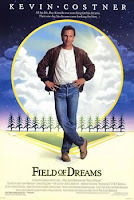
Do you see the opportunity in publishers and publications when the personnel changes? If you seize the moment, change can provide a fresh opportunity. How have you learned that it takes persistence to find the right fit? Let me know in your comments. Tweetable:
 Much of the publishing process is outside of the writer’s control. 10 Publishing Myths helps writers have a realistic perspective and take action. Get 10 Publishing Myths for only $10 +FREE shipping + over $200 of free bonuses.
March 24, 2024
Preparation To Teach

By Terry Whalin @terrywhalinFrom the opening sentences, the workshop looked like a disaster. The speaker began with a story about their computer and how it crashed on the way to the conference. They had a detailed presentation but could not get their laptop and their powerpoint to work. It was disappointing and the content of the workshop went downhill from that moment. As a member of the audience, it was painful to see this workshop leader struggle with their topic. Throughout my years in the publishing community, I’ve been in a number of these types of sessions with technology issues. Sometimes these glitches consume the entire workshop and I’ve walked out regretting the wasted time. I could have chosen to go to a different workshop but didn’t make that choice. Recently on Jane Friedman’s blog, author and book coach Andromeda Romano-Lax cautioned writers about workshops and retreats.
Because I’ve been attending and teaching at workshops for years, I've heard some remarkable speakers, stories and information about the publishing world. I celebrate each opportunity to learn and listen to these leaders in our industry. For my own speaking and teaching, I’ve made a number of decisions.
1. Don’t Depend On Technology. I do not use a computer or powerpoint or any other technology which could crash and not perform for the workshop.
2. Use Old School Handouts with a Twist. Instead, I use paper and online handouts with the information. Also I make a point to include website links to information which is not in my presentation yet will be valuable to the various members of the audience. My goal with each handout is to make it the most valuable piece of information they take home from the event.
As I write this article about preparation to teach, I’m preparing for a couple of workshops. One workshop is online and I will be traveling to another one for a live event over several days. Because I often teach on a particular topic, it would be simple to pull out my folder with my handouts and teaching notes. I could cut down the preparation time and use my previous materials--but that is not what I do. I’m writing this article to show that I do much more than this minimun preparation. To show you the creative energy I pour into my handouts, here’s a recent example.
For each workshop, I think through what I will be teaching. Have I had a recent experience that I can add a story to the workshop? Your personal stories add interest to your audience and keep them engaged in the workshop. Is there a new resource you’ve learned about which you can highlight as you teach?
Finally I review my handout. Is the information what I want to teach? Do my links to additional information work? Is the additional information updated and current? I keep this online information on my own website instead of pointing to one which someone else controls and could instantly change. This decision reassures me that the information will be available and accessible to the workshop participant.
While each conference is different, I will send my updated handout to the conference coordinator. Often they have a place on their website for workshop handouts. Sometimes this place is password protected and other times anyone can access it. What they do in this area isn’t a concern to me. I’m eager to get my information to as many people as possible. Some conferences print copies for their workshops. Other conferences will estimate your audience and ask you to bring these handouts. I print a number of these handouts, put them in my teaching folder and bring them to the event. For each handout, I include my email and other contact information so I can be easily reached. It is always interesting to get handouts from other instructors who barely have their name on the handout--much less their contact information. It’s all a part of the process of pouring creativity and thought into your handout.
I encourage you to have high expectations and goals for your own teaching. My personal goal each time is that my workshop will be one of the most significant experiences for that participant during the event. I understand that it costs time and money to attend a workshop. I want them to feel like their entire investment in the conference was earned through my single workshop.
Often these sessions are recorded and through the years, writers will email and tell me they have listened to my recordings and taken action from my teaching. Whether you are aware of it or not, there is a long-term ripple effect from your teaching. As others have taught into my life, I’m passing along my experiences and insights to others. It’s our way of serving and helping others which will last beyond anything you will ever know about--which is remarkable to me.
Do you teach other writers at workshops or conferences? What is your preparation process and what insights can you add to this article? I look forward to your comments. Tweetable:
 Much of the publishing process is outside of the writer’s control. 10 Publishing Myths helps writers have a realistic perspective and take action. Get 10 Publishing Myths for only $10 +FREE shipping + over $200 of free bonuses.
March 17, 2024
How To Handle Editorial Feedback

By Terry Whalin @terrywhalinIt may be strange to make this admission. As a writer, I don’t enjoy getting editorial feedback--especially the most helpful kind. The most useful feedback is when your manuscript isn’t published and is still being improved and refined but will often take a lot of work on my part to adjust it.
When I work with an editor, they often use the tracking changes feature of Microsoft Word, which in general is a standard program within the publishing community. Yes, there are other programs like WordStar and WordPerfect but in general writers who use these older programs are stuck and don’t want to learn to use Word. One of the most famous authors in this category is George R. R. Martin who writes the Game of Throne novels. Follow this link to see the extent that he is maintaining his old writing pattern. Most of us don’t have such an option.
Several years ago, I was contracted to write a book. This particular book involved working on a short deadline and multiple editors reviewing and making editorial suggestions on my manuscript. If you have a single editor, the Word changes appear in a single color. If you work with multiple editors, each editor has a different color and the manuscript looks like a rainbow of colors with many things to address in each paragraph. Multiple editors and a short deadline to review and return this material made this book a challenge. At that time I was not just a freelance writer but also working a fulltime day job at a publishing house. With a dose of persistence, I completed the book and it was published but the editorial process was grueling.
When you get editorial feedback, there are basically two ways to handle it. Initially when I get this feedback I fume and mutter to myself that I don’t want to do it. I’ve learned not to respond but to give myself a day or two to think about it. Usually during this cooling off period, I determine the truth in the feedback and the need for revision. I decide to do what the editor asked me to do.
Because I’ve worked in publishing for many years, I’ve seen the opposite reaction. Authors write lengthy retorts about why they wrote something the way it was written. Some authors will battle over every single word changed in their original work. These authors do not endear themselves to the editor or publisher or agent. Instead of an author you want to help, they become someone to delay, avoid and reject because of their lack of teachability and being coached.
The editorial process is designed to produce an excellent work for the reader. Some authors forget this important detail in the back and forth process. Admittedly the process is subjective and has room for dialogue and discussion but at the core is the search for an excellent book.
One of the best ways for every writer to get editorial feedback is to join a critique group. Early in my days as a writer, I joined a small group of four people who met every month for breakfast. We wrote something each month for the group. Maybe it was a short magazine article, a query letter, part of a book proposal or a chapter in a book. Each person got the manuscript at least a week before our meeting date. As a member of the group, your task was to print the material and mark it up with editorial suggestions for improvement. During the meeting, we quickly ordered our breakfast, then took 15 minutes with each person. The focus of our time was not to visit or chat about anything other than the work that we were critiquing. At the end of the meeting, each person went home with three versions of their work.Then you can take the input and see if you agree (make the change) or ignore it.
As writers, we grew in our writing and learned from each other in this editorial process. I found it gave valuable insight. If you are not in a critique group or want to improve your group process, I have much more detail in this article.
As an acquisitions editor at Morgan James Publishing, every day I’m involved in this editorial process. Recently the feedback for one of my novel authors was she needed to get a developmental editor then resubmit her work before getting a contract. This particular novelist had published a number of nonfiction books but this manuscript was her first novel. She needed some professional help before the foundation of her story would be excellent for publishing. It’s not easy to tell authors such decisions and encourage them to move forward to get an excellent book--yet it is all part of the process of producing excellent books.
Another option for writers to get editorial feedback is to hire an outside editor before sending your material to an agent or publisher. If you use this option, it can be an expensive way to get an excellent manuscript but if you learn from the editor as they make suggestions, it can be a valuable part of your growth as a writer.
It’s not easy or straightforward for any writer to handle editorial feedback but it is a necesary part of the process of producing an excellent book. How do you handle this process with your writing? Tell me about your experiences in the comments. Tweetable:
 Much of the publishing process is outside of the writer’s control. 10 Publishing Myths helps writers have a realistic perspective and take action. Get 10 Publishing Myths for only $10 +FREE shipping + over $200 of free bonuses.


