
W. Terry Whalin's Blog, page 13
August 6, 2023
A Critical Difference Maker

I’ve written about my consistent action to write book reviews for the books that I read or hear in audio format. In fact, I’ve developed a detailed system about how I handle such books and after writing my review, promote them to others. No one pays me for such actions and it’s a way I support other authors.
In this article, consistent action is the critical difference maker that I’m writing about today. Opening books then stacking them doesn’t count. It’s the same with writing. When you think about writing, that doesn’t count. The only action which counts on the writing front is putting your fingers on the keyboard and creating sentences, paragraphs and pages of cohesive writing.
For example, I’ve been thinking about writing another book. I’ve created a title, audience, shape and theme--even imagined the book proposal and other elements in it. Yet my work on this future book is all in my head. I have not taken the actions which will lead to an actual book: writing at my keyboard. Without the actual writing, this future book is simply a daydream and not a forthcoming reality.
As writers, we play many mindgames with our work and at the end of the day your actions (writing) moves everything forward so something happens.
There are many different types of writing. In the first chaptger of Jumpstart Your Publishing Dreams , I have a detailed list of possibilities. If you need some more ideas, I encourage you to download this chapter (follow the link which does not have an opt-in). If you are writing a book (fiction or nonfiction), you need to write a book proposal or a business plan--even if you self-publish. Get a free copy of Book Proposals That Sell (the Revised Edition)
Whatever you are writing, take action and do a little bit every day. As you set personal and professional deadlines, you can make daily progress on your writing. This process is not a sprint but a marathon. Your persistence and consistency will pay off in the long run. There is a saying which is filled with truth about the writing life: “Inch by inch, it's a cinch.”
Finally, keep building new relationships in the publishing community with editors, agents, publicists and other professionals. I encourage you to continue to pitch new ideas with these relationships. When you get an opportunity, take action and seize it. It’s the path that I’ve been taking for many years.
When I was in school, I often used the Encyclopedia Britannica which has an entry: Carpe Deim and says, “carpe diem, (Latin: “pluck the day” or “seize the day”) phrase used by the Roman poet Horace to express the idea that one should enjoy life while one can.” If you want to get published, there are many steps along this journey but at the most basic level, each of us have to seize the day and take action and get some words into our computer.
With this article, I pictured a rock climber. Just like a writer, he will never be able to scale the top if he doesn’t take action and begin to scale the wall. Your dreams of writing and publishing will never happen if you don’t sit in your chair and keep your fingers moving on the keyboard. Action is the critical difference maker for every writer. What steps are you taking with this critical difference maker? Let me know in the comments below.
Tweetable:
 Much of the publishing process is outside of the writer’s control. 10 Publishing Myths helps writers have a realistic perspective and take action. Get 10 Publishing Myths for only $10 +FREE shipping + over $200 of free bonuses.


July 30, 2023
Kindness Always Counts

By Terry Whalin @terrywhalinThe incident happened years ago when I worked at a different publishing house. I don’t recall the author but the reaction of our editorial assistant is seared into my memory as well as the internal discussion.
“What a rude author,” she exclaimed. Our editorial team worked in an area with cubicals and the various editors could easily hear such an outburst. This author made a lasting impression on each of us and marked themselves as someone no one wanted to work with on any additional books.
While infrequent, these types of conversations happen within the publishing house. In these articles, I’m committed to write about my journey as an editor and writer. As writers and authors, we only see our side of the interaction yet with each exchange you are making an impression. It’s the focus of this article that kindness always counts.
As an acquisitions editor, some authors submit a second book. To my surprise my colleagues will respond with details about this author like “they were not happy with anything we did for them” or “no way we want to do another book with this author.”
From working with different editors and publishers as a writer, I understand many details in the process are outside of our control as authors. It’s why I wrote 10 Publishing Myths to give authors realistic expectations and action steps every author can take to suceed with their book. Follow this link for a special offer to get it.
Here’s some insights for authors as you interact with editors and agents:
--Realize every conversation counts. If you are upset or angry or fiesty about something, walk around the block or some action to calm down before you unload on the unsuspecting editor or agent.
--Publishing Is A Small Circle. While to the outside, the publishing community appears large and diverse, it is actually small and inter-connected. As a member of this community, I understand how we speak with each other online, email and phone conversations. I’ve watched one bestselling author couple bounce from publisher to publisher with fewer books selling each time. The difficulties were always someone else rather than the author. These authors have faded from the marketplace and if you asked them probably don’t understand it. They would blame others when the challenges are their own actions.
--Never burn a bridge or relationship. No matter what happens to you, take whatever necessary steps to preserve and continue the relationship. I have a long-time publishing friend who brought me into a publishing deal then months later called to cancel my publishing agreement. The experience hurt and cost me financially--yet my relationship continues with this friend. Since that experience, we've done other work in the publishing community. I encourage you to think about each relationship as you start them and as you continue them.
--Don’t be a knucklehead. While likely unknowingly, some authors have made a bad impression. Internally they may be called a “knucklehead” or something worse. With each conversation you are making an impression whether good or bad.
It is not easy to write these details but my emphasis and reason for writing them is to affirm kindness always counts. We need each other and I encourage you to keep expanding your relationships within and outside of the publishing community.
As you read my article, what am I missing or what else comes to mind? Let me know in the comments below.
My Recent Articles In Other Places
In various articles, I have encouraged you to publish outside of your blog. It's a practice I do on a regular basis and here's three recent articles as examples:
 One of the most important relational skills for every author: An Important Skill for Writers: The Gentle Follow-up.
 If you want to be published, every author needs to learn: How To Write What The Editor Wants.
  On the surface it may seem like a simple distinction but writers need to learn this aspect: The Difference Between a Fiction or Nonfiction Proposal.
 Tweetable:

Much of the publishing process is outside of the writer’s control. 10 Publishing Myths helps writers have a realistic perspective and take action. Get 10 Publishing Myths for only $10 +FREE shipping + over $200 of free bonuses.
July 23, 2023
Getting to Yes
 By Terry Whalin @terrywhalinAs a writer, it takes some careful effort to get a yes from an editor or a literary agent. For magazine work, you have to learn how to write a query letter. For a book contract, you have to learn how to write a query letter and a book proposal. Pitching the right person at the right time at the right place is a key part of the process. As I’ve often written in these entries, who you know is almost as important as what you know.
 As an editor, I’m looking for books that Morgan James can publish. Because I’ve been doing this role for about ten years, I know my colleagues are looking for with submissions and authors. As I speak with the authors, I want their submissions to succeed and get a contract offer. This basic desire on my part sometimes forces me to have some difficult conversations with authors.
When I have these conversations, the author has two options. They can listen to my suggestions and make changes until I receive something that will work for the publisher and my colleagues. Or they can discount my suggestion and go elsewhere to publish their book.
Recently I’ve had a series of difficult conversations. It’s part of my role as an editor to diplomatically explain why their book got rejected. If the author is open to it and makes suggested changes, I can go back to my colleagues and try again (but this rarely happens).
Also this week I had an author with a powerful book and the resources to become a bestseller, return our contract completely rewritten. I dug out the audio recording of a call with this author in late May--which I assume his attorney never heard. I sent back some diplomatic yet stern comments about the contract and how it needed to be lightened with marks for it to actually go forward. I’ve seen such actions in the past and essentially it is a deal killer for that author. I did not write the deal killer words to the powerful author but I did use this language with his writer who sent me the deal in the first place. I’m unsure what will happen in this situation yet I am hopeful this unknown attorney will rework the red-lined contract. I tell this story so you know each of us are looking for the right fit to publish our books. Either side (the author or the publisher) can walk away. It’s a delicate dance and I use my decades of experience in these issues to advocate for our publishing program--which is different and exceptional. These emails are not easy to write but essential to get to yes and a part of my responsibility from being in this business for a long time.
I went through a season where I worked mostly with authors of adult fiction and nonfiction. These days, I’m also working with a number of children’s authors which have their own unique challenges. My colleagues passed (rejected) a children’s book because the story didn't connect with the illustrations. I had encouraged this author to reach out to an editor for children’s books and get her suggestions and help. The author didn’t do this work and my colleagues picked up on the mis-matched text and illustrations then passed on offering a contract. I could see the rejection was coming but wasn’t able to prevent it which is frustrating.
I’ve written about why word count matters. I continue to get submissions from adult authors who submit books which are massive in length and will not sell unless they cut--divide or cut the current story. I’ve referred these authors to editors who can help them get fresh perspective and the revision they need--but they have to reach out to these editors then be willing to listen to the changes. These actions are hard ones for authors who care about every word in their manuscript. Yet this sort of reality is necessary for them if they want to successfully publish their book.
To get the author a contract from my colleagues, I often have to ask the right questions and give the right information. During these conversations, I don’t always say or ask the right questions. In fact, I fail as much as I succeed. The longer I’m in the publishing world the better I ask good questions and have the right words. The process isn’t easy for any author or editor. What challenges have you experienced to get a yes? Let me know in the comments below.
Tweetable:
Much of the publishing process is outside of the writer’s control. 10 Publishing Myths helps writers have a realistic perspective and take action. Get 10 Publishing Myths for only $10 +FREE shipping + over $200 of free bonuses.
July 16, 2023
How to Locate a Hard to Find Book

By Terry Whalin @terrywhalinSeveral years ago I started writing a daily gratitude journal. I believe each of us as writers need to incorporate gratitude into our lives. For this purpose, I used a blank journal which I picked up at a bookseller convention. With the changes during the last few years, this convention doesn’t exist any longer. I am coming to the end of my current journal and needed to locate another blank one. I wanted it to match the others I have used for several years.
In this article, I want to show the tools and process I went through to find this book. I believe anyone can use this process to locate a hard to find book--and not pay a fortune for it. I use this processs. When I’m searching for a book from the library, I use a different process. If you aren’t going to buy the book, I recommend you get it from your local library--which is an often overlooked option.
Preparation Ahead of Your Search
Before starting my search, I have taken several steps which prepared the way for locating the book. First, like millions of people I am an Amazon prime member which means I get free shipping if I order something directly from Amazon.
Also I am a member in good standing on Ebay. Over the years I have purchased items on Ebay, paid for them properly through PayPal and received a good customer rating on this website.
Finally I have also purchase books on Barnes & Noble with a solid customer track record. These three preparation steps will play into my results below. I suspect many of you have done these steps for your own online shopping experiences.
My Search for The Hard to Find Book
I started my search on Amazon. Some people stop and start at Amazon for buying books. I’m suggesting you take some additional steps. On Amazon, I learned I could purchase a new copy of the book and there were some used copies available.
Keeping my Amazon tab open, I went to a new tab on my browser and went to BookFinder4U.com. This site compares over 100 online bookstores and ranks them based on the cheapest price combined with the postage. It is my go-to place to find inexpensive books.
For this particular book, the site didn’t work for me because the various options and postage appeared too expensive. Instead I typed the title into Google and used the shopping tab to bring up different options. I purchased one copy through Amazon, then I located a second copy on Ebay and purchased it. Finally I found a third copy which I ordered from Barnes & Noble. Each of these books cost different amounts but were relatively inexpensive and are from dependable online retailers which reassure me that I will get what I have ordered in a timely fashion.
A key part of this process is to consider the purchase price of the book combined with the postage. Also I used different online retailers to find what I needed. What am I missing in this process? Or what process do you use to locate a hard to find and purchase a hard to find book? Let me know in the comments below.
Tweetable:
 Much of the publishing process is outside of the writer’s control. 10 Publishing Myths helps writers have a realistic perspective and take action. Get 10 Publishing Myths for only $10 +FREE shipping + over $200 of free bonuses.
July 9, 2023
The Details Matter

By Terry Whalin @terrywhalinOften in the writing community, I see someone who has missed the details and they matter. Inside a publishing company, there are many steps in the process (and through the years these steps seem to grow in detail). For example, if I don’t put a manuscript or proposal into our internal system (which means responding to my email), then it does not get a letter of acknowledgement in the mail and then I don’t process it for a possible contract. If I miss this particular detail the author and their submission doesn’t get considered. Because of the large volume of submissions I have missed sometimes despite my best attempts to promptly communicate and keep these submissions moving forward.
These details matter throughout publishing. In this article, I want to give you some specific examples that I have seen recently. I write these stories to emphasize and encourage you to take care of the details in your own publishing. The best publishing is also a team effort. It’s not my sole decision whether a submission is published or not. I have to champion your book to my colleagues, then each of them have to respond about the book. Sometimes I get a contract and other times the group decides to pass on a submission inspite of my best efforts to get the author a contract. From my years in publishing, I understand and respect this team effort.
Recently another author reviewed one of my books on Goodreads. I was grateful for this positive review. When I read it, I noticed his incomplete profile on Goodreads which didn’t even have his photo. I was in the same position several yerfs ago. I took action and updated my profile, connected it to my blog and many other details. Today some people read these articles from my blog over on Goodreads. It’s not where I would read it but as authors we need to have our material accessible to people wherever they want to read it.
 For a variety of social media sites, other authors will use the ClickToTweet which I’ve added and share it with their audience. I’m always grateful for the additional exposure. Many of these people are missing a key detail: the royalty-free image from my article. It’s been proven that adding an image to your social media posts will increase your readership. People are drawn to the image then read the words. If you are like me and have no graphic design skills, I recommend getting lifetime access to MockUp Shots (follow the link). In a matter of minutes, you can have instant access to hundreds of images.
 Another simple way to get more attention with your posts is to tag the various people named in the post. I will often see these types of post on social media with this missing detail.
As I read various blogs and online articles, I’m looking for valuable content. If I find it, I look for an easy way to share this information on my various social media networks. While there are many different tools to easily add this information to your blog or article, I find many content creators have missed this important detail. Because it is missing, it is much more time-consuming to share the story. It takes a bit more cutting and pasting, but I often go ahead and add the article or blog post to my social media feed.
As an editor, I’m constantly receiving and processing new submissions from authors. Often I see where the author is missing some critical information such as their mailing address, phone number or word count. Because of the missing address and phone information, I’m forced to write the author and ask for it. Without it, I can’t get their submission into our internal system to move forward. I suggest before you submit your material, take one last look to make sure you aren’t missing such a detail. Your editor will appreciate your additional effort.
I’ve given a number of different types of examples where the details are important. Can you think of another area where the details matter? Let me know in the comments below.
Tweetable:

Much of the publishing process is outside of the writer’s control. 10 Publishing Myths helps writers have a realistic perspective and take action. Get 10 Publishing Myths for only $10 +FREE shipping + over $200 of free bonuses.
July 2, 2023
Getting Reviews Is Hard But Possible

By Terry Whalin @terrywhalinThis week I looked at the reviews on a major online bookseller site for a children’s book which released several weeks ago. It had three five star reviews. This beautiful book was from a major publishing house which sends review copies to various people ahead of the release date. I know because I’m one of those people who receive these releases. Just seeing this lack spurred me to get my review written and posted. It also showed me the challenge for every writer to get reviews.
To understand this process, there are several basics. First write and produce an excellent book. Your book should not look homemade or self-published. Your writing should be excellent with an attractive cover, well-written back cover, endorsements and all of the markings on your book just like something from Random House with a proper barcode including the price, a publisher imprint on the spine and other important details.
Also understand getting reviews is hard for every writer but you have to constantly work at it. For example, add a page in the back of your book and ask readers to write a review. Just including this page takes planning but will spur some readers to write a review.
Another important step for every author is to be a part of the solution--write reviews. As you read a book or even listen to an audiobook, take a few minutes and write a review. As you become a part of the community of reviewers, when you ask others to review your book, they will be more inclined to write a review.
People who are readers and not writers likely need your help to write that review. They have no idea of the importance or even what to say for a review. In this situation, you need to provide a template or tool for these readers. I’ve mentioned this resource in other articles but my friend and PR Expert Sandra Beckwith has created an inexpensive reader review form. I purchased both the fiction and nonfiction templates. The form comes with the rights for you to give the template to others and use it yourself.
For years, I’ve been writing reviews. As a result, publishers and authors send their books for me to read and review. Way more material pours into my mailbox than I could ever read and review. While I’m grateful for these opportunities, it bothers me that I can’t do it all--yet it does not keep me from continuing to chip away at it, write and post reviews.
Another tool I use when I write reviews is MockUp Shots. There are numerous tools in this package but one of them allows up to upload the book cover, then create a variety of images with the book. I use this cover on social media to tell others about my review and also post it with my Amazon review.
It’s not simple for any writer to get reviews. My encouragement is to not shy away from it but lean into it through asking others and also writing reviews. How have you gathered reviews for your book? I’d love to hear your ideas in the comments below.
Tweetable:

Much of the publishing process is outside of the writer’s control. 10 Publishing Myths helps writers have a realistic perspective and take action. Get 10 Publishing Myths for only $10 +FREE shipping + over $200 of free bonuses.
June 25, 2023
Encourage A Writer--Today

By Terry Whalin @terrywhalinEvery writer gets discouraged. While I’ve been in publishing for decades, it happens to me. I send emails which are targeted and specific yet are ghosted or not answered. I make phone calls and leave voicemail which is not returned. I make pitches to hosts of radio programs which are unanswered. These rejections can feel like I’m spinning my wheels and not making any progress. Instead of wallowing in those discouraging feelings, I understand every writer faces such actions but the ones who get published and accomplish something persist and perservere inspite of it.
Not everyone returns calls right away. Not everyone answers their email and sometimes they ignore it. Not every pitch gets a response or gets accepted. These facts are reality and as writers we need to face life realistically.
Wherever you are in the writing life, you can help other writers. In this article, I want to highlight some simple yet important actions you can take to encourage a writer today. I've selected actions every writer can take no matter where you are in the writing journey--whether you are not published or have written many articles and books.
Who do you know that someone else needs to meet? Finding the right connection is a challenge for many of us in publishing. Often people will introduce someone to me and I will help them. Or I introduce a couple of people to each other to help them. It's a matter of thinking about your connections, then writing a short email to introduce people to each other. I've often said that who you know is as important in this business as what you know. Introduce some people to each other.
If you are a writer, you are a reader of others books. As you read a book, take a few minutes and write a review and post that review online. As I've mentioned before 97% of the people who buy a product like a book online, have read a review before they buy it. Recently I went to the page of an author I met at a recent conference. This author and his co-author had about 14 reviews for their book which released several years ago but had not had any new reviews for months. I ordered the book and now I'm reading it so I can post a review. It's a smple action anyone can take to help others.
I have purchased a box of simple thank you notes and another box with sympathy cards. There are always people to send a brief note of thanks and another group who have experienced the loss of a parent, spouse or other loved one in their life. In these computer-driven days, a physical note can mean the world to someone else. It's something anyone can do in a few minutes.
As you read blog posts and articles from others who influence your life, take a minute to write a sentence or two of appreciation or add something to their article. Since 2008, I've been blogging and it's pretty rare someone will comment on these articles. Several times a week, I make a point to comment on other people's blogs or articles.
Throughout your day when some else comes to mind, call them or send a short email of encouragement. If you have written books, can you mail a book to someone to encourage them?
These are a few ideas but there are many other ways to encourage another writer. What else comes to mind? Let me know in the comments below.
Tweetable:
Much of the publishing process is outside of the writer’s control. 10 Publishing Myths helps writers have a realistic perspective and take action. Get 10 Publishing Myths for only $10 +FREE shipping + over $200 of free bonuses.
June 18, 2023
Four Ways to Handle Feeling Overwhelmed
 By Terry Whalin @terrywhalinSome days the emails and opportunities pour into my life. I feel overwhelmed with the volume of submissions and wonder how to tackle this on-going and interesting work.
Recently I spoke at the Blue Ridge Mountains Christian Writers Conference and have a lot of follow-up work to do with the various people I met. Also while I was away the submissions didn’t stop but continued to pour into my email. From my years in publishing, I understand the importance of following up on the various contacts and people I met at the conference yet I have the tension of these submissions which also require time and need to be processed sooner rather than later.
These are some of my tensions which are creating a feeling of being overwhelmed. The issues in your writing life will be different but maybe you are feeling overwhelmed. How do you handle it? I have written about this feeling before which is not a surprise since this blog has over 1600 entries. My previous article about feeling overwhelmed was written in the early blog days of 2008 and covers different points.
In this article, I want to give you four key action steps and help you keep moving forward.
1. Don’t get stalled and instead chip away at it. One of the worst ways to handle overwhelming feelings is to go into stall and not do anything. If you stall, the work just continues to pile up and those feelings will only grow. Instead I encourage you to take daily action on this work. Maybe you can’t do the same volume as in the past but you can do something to keep moving forward.
2. Touch base with people and communicate. People will give you grace if you are in communication with them. The lack of communication doesn’t help you. Send a short email just to let them know you are still working on it and moving forward (even if not as quickly as in the past).
3. Reach out and get help. In my view, the best type of publishing is a team effort like we have at Morgan James Publishing. I reached out to my colleagues and let them know I had too many submissions to handle alone. I moved a number of submissions for a colleague to handle instead of feeling crushed under the load of these submissions. It helped me to feel less overwhelmed. I still have a healthy pile of work but it’s not as high now because I got help.
4. Be grateful for the opportunities. I am grateful for each submission and the chance to speak with them about their book and how we publish at Morgan James. I encourage you to seize each day and keep moving forward with your writing and work in the publishing community. Your attitude of gratitude, consistency and persistence will pay off in the long run.
As I told my class when I taught at the conference, we live in one of the greatest times in human history with vast opportunities all around us. Our responsibility is to be faithful and seize those opportunities. We need to keep our fingers on the keyboard and keep moving ahead--inspite of feeling overwhelmed.
I’ve given you some actions to take when you feel overwhelmed. What am I missing? What steps do you take? Let me know in the comments below.
Tweetable:

Much of the publishing process is outside of the writer’s control. 10 Publishing Myths helps writers have a realistic perspective and take action. Get 10 Publishing Myths for only $10 +FREE shipping + over $200 of free bonuses.
June 11, 2023
The Important Search Tool

By Terry Whalin @terrywhalinSeveral times a week, writers will ask a question about something related to writing and I turn to an important search tool. It’s right in plain sight but I suspect few people know about it or use it. In this article, I want to call attention to this important search tool which is on my blog.
To locate this too, you have to go to my blog on The Writing Life then scroll down to find the tool. Here's what you are looking for:
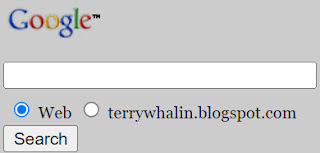
After you find it, change the search button from web to my blog. Then type in your specific word or phrase to locate entries which have this information.
Since 2008, I’ve been writing each week about publishing and the writing life. I’ve covered many different topics from my perspective as a working writer and an acquisitions editor at three different publishers. Often throughout my week, I will be talking with writers about publishing. I will use this search tool to find specific articles which I email to them.
Over the years, I’ve written about different attributes of writers like consistency and persistence. Also I’ve covered writing for magazines, devotional writing, book publishing, proposals, query letters, work made for hire, contracts, marketing, social media and much more. You can use this search tool to look for these articles and learn for your own writing life.
No single person has all of the answers to your various questions but I believe we can learn (and continue to learn) from each other. Through the years, I have written about my various editorial and publishing experiences in these entries. I encourage you to tap into this search tool as another consistent source and tool to gain publishing insights and wisdom.
Do you have a search tool on your blog? Why or why not? I encourage you to add it and make it easy for others to search your blog. It is simple HTML which I added to my blog years ago and continue to use often. Let me know what you think about this search tool and how you can use it on your website or blog in the comments below.
Now that you know about this hidden gem, you can use it too. Tweetable:

Much of the publishing process is outside of the writer’s control. 10 Publishing Myths helps writers have a realistic perspective and take action. Get 10 Publishing Myths for only $10 +FREE shipping + over $200 of free bonuses.
June 4, 2023
The Pros and Cons of A Pen Name

By Terry Whalin @terrywhalinWith surprising frequency, as an editor, I get submissions where the author wants to use a pen name. One of my first questions to the author is why? Then I listen to the answer.
Often they don’t have much of a reason for using a pen name. I find many of these authors wrongly believe it is easier to use a pen name. From my years in publishing, it is better to build your online presence using your own name rather than a pen name. The online world is full of false names and sometimes fake profiles. People have more confidence and trust if they can see from multiple sources the person is real and using a real name.
There are pros and cons to this critical decision. In this article I want to lay out some of those issues.
Pro
If you use your actual name, you can use a real photo and other information which helps the reader know your expertise and background.
I’ve met some writers who have been through a protracted and horrible divorce. They used a pen name to hide their identity from this spouse.
Con
If you use a pen name then you have to build everything online using that pen name. Your website, your blog, your various social media accounts and other places would be built with this pen name.
You often have to use a fake photo since you don't want to use your actual photo.
This entry is shorter than some of my articles because I’ve been away from my computer at a conference with limited time to write. Hopefully I make up for this lack with the links below to some of my other recent articles published in other places (outside my blog).
Have you used a pen name? Let me know in the comments and add to my information about using a pen name.
My Articles in Other Places
In these entries, I encourage you to write articles for other places. Here's some of my recent articles:
 Beginning Writers Do Get Published
Some writers believe (wrongly) that only professional writers get published. In this article I debunk this myth.
Beginning Writers Do Get Published
Some writers believe (wrongly) that only professional writers get published. In this article I debunk this myth. Should I Self-Publish? I speak with many writers going in this direction and explain the reasons not to go in this direction from my years in this business.
  Brainstorm An Excellent “Working” Book Title
Many writers assume the publisher will select the title. In this article, I encourage writers to put a lot of energy into pitching an excellent title in their submission and why.
Brainstorm An Excellent “Working” Book Title
Many writers assume the publisher will select the title. In this article, I encourage writers to put a lot of energy into pitching an excellent title in their submission and why.
Tweetable:
 Writers often have unrealistic expectations about publishing. Get 10 Publishing Myths for only $10 +FREE shipping + over $200 of free bonuses.


